Cryptocurrency Posts
Crypto Briefing
The missile attacks heighten regional tensions, testing defense systems and potentially destabilizing global oil markets amid ongoing conflicts.
The post Iran launches multiple ballistic missiles toward US targets across the Middle East appeared first on Crypto Briefing.
Polkadot's potential adoption of dotUSD could enhance DeFi integration, reduce reliance on external stablecoins, and increase DOT demand.
The post Polkadot holders vote on dotUSD stablecoin proposal with $5M backing appeared first on Crypto Briefing.
Polkadot's surge amid Fed rate hike expectations highlights potential shifts in crypto market dynamics and investor sentiment towards legacy tokens.
The post Polkadot leads market rotation into legacy layer-1 tokens as Fed rate hike bets grow appeared first on Crypto Briefing.
ARK's SEC approval could revolutionize fund distribution, paving the way for broader adoption of tokenized shares in regulated markets.
The post ARK Investment Management seeks SEC approval for tokenized share class appeared first on Crypto Briefing.
Rising oil prices and geopolitical tensions could lead to inflationary pressures, impacting interest rates and broader economic stability.
The post US stocks fall as oil prices surge amid geopolitical tensions appeared first on Crypto Briefing.
Bitcoin Magazine
Bitcoin Magazine

Lummis Blasts Democrats Ahead of Clarity Act Vote — But Adds Bill Can Get Passed
Republican Senator Cynthia Lummis has again slammed Democrats over the long-awaited crypto Clarity Act.
Writing on X on Tuesday, the pro-crypto lawmaker responded to an article from Semafor that reported Republican senators saying the bill was likely to fail when the senate returns next week.
Lawmakers were hoping a crucial vote on the long-awaited crypto market structure bill would go ahead in August before their five-week recess. But it was delayed and the Senate will now vote on it next week.
JUST IN:
— Bitcoin Magazine (@BitcoinMagazine) September 8, 2026U.S. Senate will hold a procedural cloture vote on the Clarity Act one week from today.
Senator Cynthia Lummis says if they fail to pass it next week, "we will not get another realistic shot at this before the end of the decade"
Pass itpic.twitter.com/BIejUDw0Tu

“If this bill fails it won’t be because of ethics, it will be because Democrats didn’t join Republicans in embracing a bipartisan bill that protected consumers, cements America’s leadership in digital assets, and empowered law enforcement to clamp down on illicit finance,” wrote Lummis.
She said that Democrats were continuing to “demand changes” that could allow future regulators to “kill the crypto industry.”
“If we can bridge those gaps I’m confident we can pass Clarity, but they require further compromise from Democrats, not the White House,” added Lummis.
Lummis previously said that if the Clarity Act dies, it will be because of the Democrats. Lummis and other pro-crypto lawmakers have blasted politicians who they think are deliberately holding back the bill.
The Clarity Act drafts a framework to formally divide oversight between regulators, distinguishing which digital assets are securities, commodities or stablecoins.
Though passed by the House of Representatives last July, it has been stalled this year, mostly because the banking lobby clashed with crypto companies over paying customers stablecoin yield.
A new draft tackling the issue of ethics started circulating in July, banning government officials from promoting or making money from crypto — something Democrats have criticized the Trump family for doing.
Despite the changes, a group of Democrats said the bill fell short and wanted amendments.
President Donald Trump has urged lawmakers to get the legislation over the line. In August, he said that in order for the U.S. to remain the “undisputed leader in Bitcoin and crypto,” they had to pass the “very, very powerful legislation.”
This post Lummis Blasts Democrats Ahead of Clarity Act Vote — But Adds Bill Can Get Passed first appeared on Bitcoin Magazine and is written by Mathew Di Salvo.
Bitcoin Magazine
CoinCorner Launches Lloyd’s-Insured Multisig Bitcoin Vault with AnchorWatch
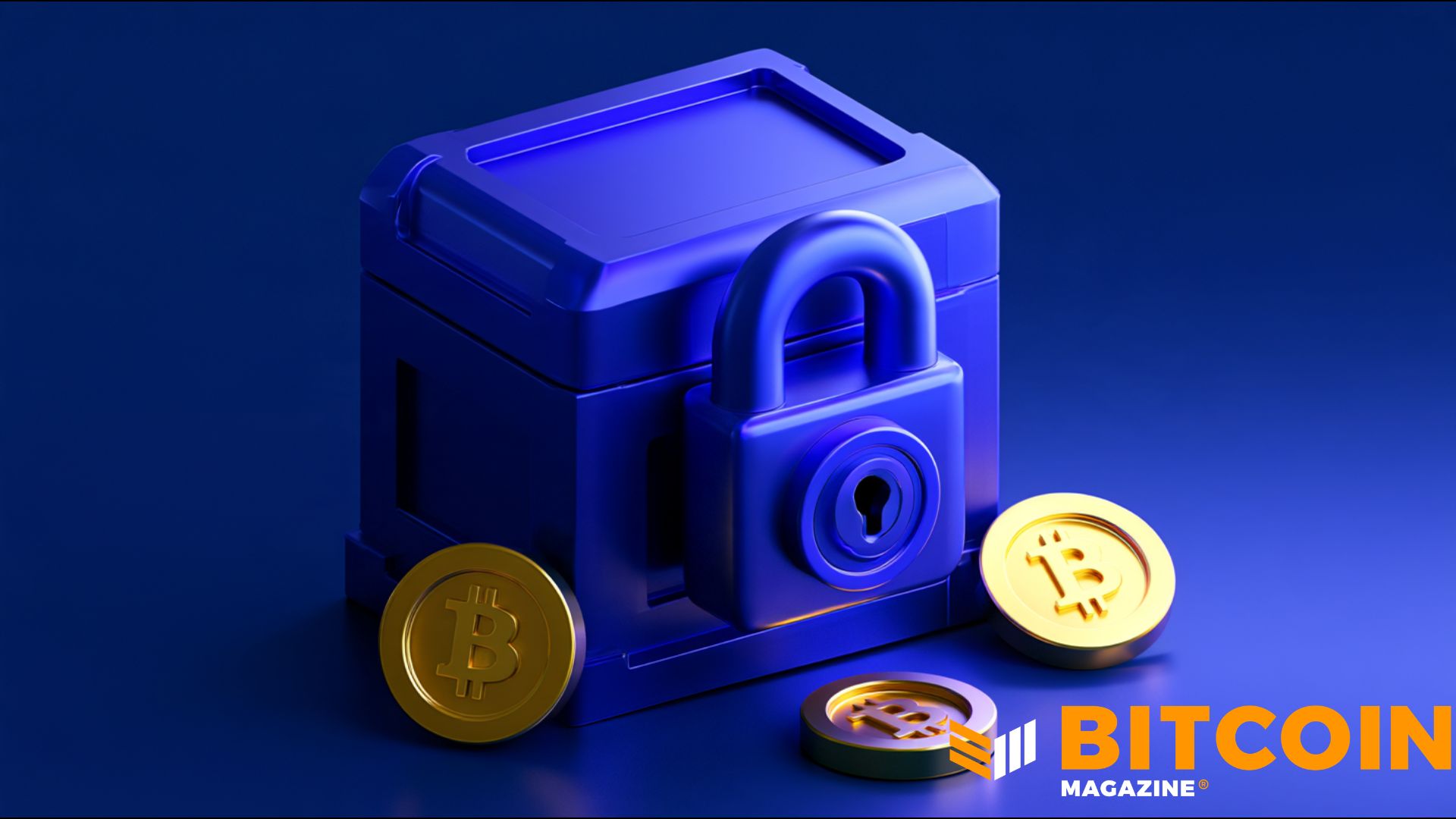
British bitcoin exchange CoinCorner has debuted a multisig BTC custody service that splits control of customer keys between the Isle of Man exchange and its US partner AnchorWatch — with holdings insured by Lloyd’s of London.
The service charges 1.5% a year and is pitched at owners who want cold-storage security without managing hardware themselves, the Isle of Man-based company announced Tuesday.
Its new service comes following the Coldcard wallet hack — where bitcoin holders using a single signature wallet lost funds after hackers were able to exploit the popular products due to a firmware bug in the devices that lead to a weak seed generation. About $115 million was lost in the theft.
“Vault offers a simple non-technical setup for customers, and partnering with AnchorWatch means we can offer fully insured, multi-signature custody with the simplicity our customers expect from CoinCorner,” CoinCorner CEO Danny Scott said in a statement.
Customers can open a Vault and deposit whatever amount they choose, but the bitcoin doesn’t move into the insured wallet immediately, CoinCorner said.
Rather, transfers typically happen on the first working day of the following month, and holdings are verifiable on-chain via a wallet address CoinCorner provides.
Top-ups are allowed anytime, the companies said, Customers define their own identity verification rules before funds can move.
CoinCorner added that it is the first service of its kind globally.
Multisig has long been the security-conscious Bitcoin holder’s answer to single-key risk but has also been dismissed as too fiddly for anyone but the technically committed: setting one up traditionally means assembling several hardware devices, generating and backing up multiple private keys and keeping track of which key sits where.
CoinCorner and AnchorWatch are aiming to simplify things. Vault handles key distribution on the customer’s behalf, leaving them with the security properties of multisig without the setup that has kept most people away from it.
This post CoinCorner Launches Lloyd’s-Insured Multisig Bitcoin Vault with AnchorWatch first appeared on Bitcoin Magazine and is written by Mathew Di Salvo.
Bitcoin Magazine

Capital B Buys 376 Bitcoins in Its Biggest Purchase of 2026
European bitcoin treasury Capital B has announced a BTC buy, snapping up 376 coins — one week after it said Blockstream boss Adam Back was investing in the company.
The Euronext Growth-listed company said Tuesday that it now owns 3,521 bitcoins — worth over $277 million at today’s prices — making it the 25th biggest publicly traded bitcoin treasury in the world, according to Bitcoin Treasuries data.
Capital B’s buy was for €25.3 million (over $29 million), according to its announcement.
— Capital B (@_ALCPB) September 7, 2026
Capital B confirms the acquisition of 376 BTC for €25.3 million, the holding of a total of 3,521 BTC, and a BTC Yield of 2.17% YTD
Full Release (EN): https://t.co/PQDwqfWX9a
Full Release (FR): https://t.co/SrVf8lvp8Q
BTC Strategy (EN): https://t.co/P5j3GA76kt

Just last week, the company said that top bitcoiner Adam Back, who heads up bitcoin infrastructure company Blockstream, had invested €7.6 million ($8.8 million) in Capital B to help with its buys.
The firm in August said it had raised €21 million ($24 million) in a private placement backed by Back and asset manager TOBAM.
The bitcoin treasury’s stock was trading 2% lower on Tuesday.
Capital B built most of its bitcoin position through fundraising rounds during the first half of 2026.
In May, it snapped up 192 coins for €13 million after completing three capital raises.
The company, which calls itself “Europe’s first Bitcoin treasury company,” is trying to build a bigger bitcoin position as other treasuries look to raise funds and accelerate their buys.
Capital B says on its website that it wants to eventually hold 210,000 bitcoins. “Our objective is simple: accumulate 1% of Bitcoin’s total supply by 2033,” it reads.
Digital asset treasuries became big in 2025 as more publicly traded companies tried to follow in the footsteps of Nasdaq-listed Strategy (formerly MicroStrategy), which started buying bitcoin in 2025.
Hundreds of publicly traded companies started buying bitcoin — with many buying other cryptocurrencies — to boost their stock prices. But since the price of bitcoin started dropping, a number of them are now under water or have had to sell their holdings.
Strategy, the largest corporate holder of the asset, has this year slowed down its bitcoin buys and instead pivoted to building a stronger cash balance and buying back its stock as the price of its shares has tumbled.
This post Capital B Buys 376 Bitcoins in Its Biggest Purchase of 2026 first appeared on Bitcoin Magazine and is written by Mathew Di Salvo.
Bitcoin Magazine

Castle Opens Its Bitcoin Savings Stack to Individuals
Castle, the company behind an automated bitcoin financial stack for businesses, has said it is opening its platform to individuals, bringing its high-yield product to personal accounts along with a first for the category: the option to take dividend income in bitcoin at whatever ratio the customer picks.
The yield comes from STRC, Strategy‘s perpetual preferred stock, which Castle added earlier this year and which currently pays a 12% annual dividend on a semi-monthly schedule.
Holders can take 100% of that payout in cash, 100% in bitcoin, or anything in between, according to a Tuesday statement. Most Castle customers land in the middle, the company said, covering operating expenses with cash while the remainder compounds into bitcoin automatically at every payout.
“Investors have long faced a choice between earning steady yield and holding bitcoin. Castle eliminates that trade-off,” co-founder and CTO João Almeida said. “By enabling a portion of dividend income to be automatically converted into bitcoin, so customers get both cash flow and long-term upside.”
The broader pitch is consolidation: Castle puts operating cash, fixed income, and bitcoin accumulation on one platform, cutting out the shuffle between a bank, an onramp, and a brokerage. The system is built automation-first: users define a strategy once and the platform executes it.
Until now, Castle served business entities exclusively — restaurants, gyms, churches, accounting firms, e-commerce shops, auto dealers, SaaS companies, real estate, and non-profits among them. The push into personal accounts came from those same customers.
“Feedback we heard over and over from business owners was: ‘I love this stack — when can I use it personally?'” co-founder and CEO Stephen Cole said. “Today we’re answering that. The same automated bitcoin-powered financial stack that runs their company’s balance sheet can now run their personal finances.”
Castle was founded by Cole and Almeida and is backed by Boost VC and Winklevoss Capital. More information about the company’s product can be found here.
This post Castle Opens Its Bitcoin Savings Stack to Individuals first appeared on Bitcoin Magazine and is written by Mathew Di Salvo.
Bitcoin Magazine

Strategy Halted Its Bitcoin Buys Again Last Week
Bitcoin treasury Strategy has halted stacking sats — again.
Just one week after resuming its bitcoin buying following a 10-week hiatus, the Nasdaq-listed company has put its BTC purchases on hold again.
Instead, the firm continued buying back its stock, repurchasing $176 million of STRC and increasing the size of its digital credit securities repurchase program from $1 billion to $2 billion, according to a Tuesday regulatory filing and announcement from founder and chairman Michael Saylor.
The company still holds 845,050 bitcoins worth over $66 billion at today’s prices and $6.5 billion in dollar reserves. The bitcoins were bought at an average price of $63.73 billion, according to Tuesday’s filing.
Strategy shares (NASDAQ: MSTR) were trading more than 3% lower Tuesday morning in New York.
The company paused its bitcoin buys in June, instead focusing on building a cash buffer, buying back its stock and even sometimes selling some of its holdings.
Strategy has defended its bitcoin sales, with CEO Phong Le saying that the company now has a “bullet-proof balance sheet” because of the move, and that it was the “right trade at the time” to sell when it did.
In the company’s quarterly earnings in July, Strategy posted a $8.22 billion loss. But Le reassured investors that the firm’s current paper loss was nothing to worry about.
“We’re the J.P. Morgan of the crypto economy, so whether we sell 1,000 Bitcoin out of 840,000 to me is irrelevant to the conversation,” Le said.
Strategy — formerly MicroStrategy — is an enterprise software company that pivoted to buying and holding bitcoin in 2020.
It first bought the cryptocurrency to protect its shareholders from inflation. Since then, it has aggressively bought the asset and pivoted to being a bitcoin treasury.
Investors can now buy its shares to get heightened exposure to the cryptocurrency, or get paid a yield via its digital credit products.
This post Strategy Halted Its Bitcoin Buys Again Last Week first appeared on Bitcoin Magazine and is written by Mathew Di Salvo.
HTTP error 429 on https://cryptoslate.com/feed/
Failed to fetch feed: https://cryptoslate.com/feed/
Failed to fetch feed.
CryptoTicker.io
If you bought your crypto assets before December 31, 2026, or buy them by that date, then on the current state of the draft nothing changes for them: hold for a year, then sell tax-free. Only crypto assets acquired or received after December 31, 2026 would fall under the new treatment as investment income. That is what a draft bill from Germany's Federal Ministry of Finance dated mid-August says, first reported by WELT on September 8, 2026 and reproduced with an explicit source citation by the specialist outlet Blocktrainer. None of it has been passed into law, and those two halves together describe your position: a dated cut-off in a paper that still has the whole legislative route ahead of it.
This article sets out what the draft means for an ongoing savings plan, for staggered purchases and for coins from staking and lending, which records you should secure now, and why our own report from yesterday appears at first glance to say the opposite.
Crypto Holding Period, Grandfathering and Cut-Off Date: German Tax Law in 2026
As long as no law is in force, today's rules continue to apply unchanged. Gains from the sale of cryptocurrencies held privately are taxable under Section 23 of the German Income Tax Act (EStG) if less than a year lies between acquisition and sale. Hold for more than a year and you sell tax-free. This one-year holding period applies to Bitcoin just as it does to any other coin held privately.
For crypto investors that means, quite practically: the draft bill changes nothing about your 2026 tax return. Crypto gains you realise this year within the one-year window are still taxed at your personal income tax rate, and sales after the period has run remain tax-free. The tax change under discussion here would affect acquisitions from 2027 at the earliest.
The difference between short-term speculation and long-term holding matters, because today it decides the tax bill and the draft would level it out. That is exactly what turns the cut-off into an arithmetic problem for Bitcoin holders with large crypto positions: the value of the old rule rises with every year a position sits untouched anyway.
What the German Draft Bill Actually Lays Down on the Crypto Holding Period
A Referentenentwurf, or ministerial draft bill, is the working version of a law written by a specialist unit inside the responsible ministry before the cabinet, the Bundestag and the Bundesrat are involved at all. It is not law in force, but the first place where a political intention acquires sections and dates.
According to the WELT report, this draft contains three provisions that were not public before. First, gains from the sale of crypto assets are to be taxable in future regardless of the holding period and to fall in principle under the flat-rate withholding tax as investment income. Second, the law is to enter into force on January 1, 2027. Third, the new provisions are to cover only crypto assets acquired or received after December 31, 2026.
The reasoning the draft supplies, per the report, is remarkably sober: because of their speculative use, their high liquidity and their lack of wear, crypto assets resemble classic capital investments more than ordinary economic goods. That removes the doctrinal basis of today's treatment. Until now, Bitcoin and other coins held privately count as "other economic goods", the sale of which is a private disposal transaction under Section 23 of the Income Tax Act.
Why December 31, 2026 Is the Decisive Cut-Off Date
The one-year holding period, often called the one-year rule or speculation period, is the span between acquisition and sale after which a gain on privately held assets remains tax-free. That period hangs on the acquisition date of the individual coins, not on your sale date and not on the calendar year.
That is precisely why the cut-off in the draft acts like a dividing line straight through your portfolio. A Bitcoin you bought in March 2025 would be a legacy holding. A Bitcoin you buy on December 15, 2026 would also be a legacy holding, even though its one-year period does not run out until December 2027. A purchase on January 3, 2027 would be a new holding and therefore taxable under the draft, however long you leave it sitting.
For you that means: what counts is the day you buy, not the day the period expires. Anyone who was planning to add to their position in the first quarter of 2027 anyway now has an argument, on the current draft, for bringing that purchase forward. Anyone deciding a wealth question of that size should nonetheless keep two things apart: the cut-off sits in a draft, whereas your purchase decision is real and costs money.
A second point is often overlooked in the debate. The exemption limit of 1,000 euros for private disposal transactions under Section 23 EStG is a threshold, not an allowance: exceed it by one euro and you tax the entire gain, not just the excess. That threshold hangs on today's system. If crypto assets move into investment income, the saver's lump-sum allowance applies there instead, which covers all investment income together and which many investors already use up on interest and dividends.

Is There Grandfathering for Your Existing Holdings in Germany?
Grandfathering means, in tax law, that a new rule applies only to future circumstances and that positions already acquired are treated under the old law. On the reporting so far, the ministerial draft provides for exactly that: the federal government would forgo applying the change retroactively to existing holdings.
That is the most important substantive news in this draft, and it is the all-clear for everyone who has been holding for years. Until September 8, 2026 it was open whether legacy holdings would be protected at all. The specialist portal extraETF had explicitly called the question unresolved in July and named grandfathering "the most important question for many investors". The draft answers it for the first time with a date.
Legally the route is an obvious one. Protection of legitimate expectations is a constitutional principle that permits burdensome retroactivity only within narrow limits, and the legislator has already applied it in comparable reforms. When the flat-rate withholding tax was introduced in 2009, legacy holdings of shares and funds stayed under the old speculation period. The parallel is no guarantee, but it explains why a draft with a cut-off is more likely than a reform that reaches back over everything.
When Would the Crypto Holding Period End, and When Would Withholding Start?
The draft separates two dates that regularly get conflated in public debate. The law itself is to enter into force on January 1, 2027. The actual withholding at source, where crypto service providers deduct the tax directly and pass it to the tax office, is not to begin until January 2028 according to the report.
That transition period is not generosity but a technical concession. An exchange can only withhold correctly if it knows when and at what price you acquired your coins. For holdings deposited from your own wallet or from another platform, it does not know. The draft therefore provides that service providers may partly rely on your own statements of acquisition date and acquisition cost.
And if those details cannot be established? Then a flat assessment base is to apply: withholding on 50 percent of the proceeds from the sale. What is meant is not a tax rate of 50 percent, but the assumption that half your sale proceeds were gain. Sell a position with a small price gain and produce no records, and you would pay considerably too much tax and have to claim the money back through your tax return. That is the real reason your acquisition records are worth money from now on.
What the Cut-Off Means for Your Running Bitcoin Savings Plan
A savings plan does not buy once but every month, and each of those executions is a separate acquisition with its own date. If your savings plan runs across the 2026/2027 turn of the year, on the current draft it splits into two groups: every instalment up to and including December 2026 would be a legacy holding with a holding period, every instalment from January 2027 a new holding under the flat-rate withholding tax.
In practice that mainly means bookkeeping. On a sale, crypto assets in the same wallet are usually treated on the FIFO principle, under which the coins bought first count as sold first. When two tax regimes sit side by side, the allocation decides whether a sale is tax-free or subject to the withholding tax. We worked through how holding period, FIFO and the exemption limit interact with monthly purchases in detail in our guide to the Bitcoin savings plan and tax.
A clean record of your purchases is therefore no longer just diligence for the tax return, but the proof of which pot a position belongs in. Anyone who would rather not keep that in a spreadsheet will find programs in our comparison of crypto tax tools and portfolio trackers that pull acquisition data from the exchanges automatically and allocate FIFO sales correctly.
Staking, Lending and Airdrops: What Arrives Counts From the Cut-Off
On the reporting, the draft covers more than purchases. Income from classic lending, that is, lending coins out at interest, and from passive staking, where you pledge coins to secure a network and receive new units in return, is to be taxed as investment income in future. A transitional rule tied to the same cut-off is evidently envisaged for that as well: it covers crypto assets received after December 31, 2026.
The difference from a purchase lies in the word "received". A staking reward has no purchase date that you choose yourself; what counts is the day the units land within your power of disposal. Anyone who leaves their rewards sitting in the contract for months and only claims them later may thereby push the receipt beyond the cut-off. Whether that reading holds depends on the final version of the law and on the question of when power of disposal arises for tax purposes. For a decision on larger amounts, that is a case for a tax adviser, not for a rule of thumb.

Which Crypto Assets the Draft Expressly Excludes
The new category the draft is built around is called "exchange crypto assets" in the report. Not every digital asset falls under it. Excluded are to be, among others, non-fungible tokens, that is, non-interchangeable tokens representing a single digital object, plus security tokens, which digitally represent a securitised right such as a bond or a share, as well as other crypto assets intended to convey a real-world value. Certain stablecoins are also not to fall into the new category.
This delimitation is more than a footnote, because it helps decide which part of your portfolio would be affected at all. At the same time it is the point at which a draft, in experience, changes most in the further procedure: definitions that include or exclude an entire asset class attract the most comments during consultation.
Why Our Report From Yesterday Says Something Different, and Both Are True
On September 7, 2026 we reported that the Income Tax Reform Act 2027, which the federal cabinet waved through on September 2, leaves Section 23 EStG untouched and that the crypto holding period therefore stays for now. That was correct and remains so. A cabinet decision concerns precisely the law that is on the table, and that law said nothing about the holding period.
The ministerial draft at issue here is a different paper from a different procedural stage. According to the report it is in what is known as early coordination, that is, in the early alignment between the Federal Chancellery and the ministries involved, and it was not the subject of the cabinet decision on September 2. Two statements that appear to contradict each other therefore describe two different processes.
This double track is typical of crypto taxation in Germany and the reason why headlines on the subject so often stand against one another. The political intention has been documented since the government draft of the 2027 federal budget, which Finance Minister Lars Klingbeil explained himself at the federal press conference in July 2026. The route there runs through several legislative projects in parallel, and only one of them carries the crypto rules at any given moment.
A simple sequence helps in placing it. At the start stood the budget draft with the announced crypto tax reform. Out of that comes a ministerial draft inside the ministry, as now documented for mid-August 2026. Out of that, after inter-ministerial coordination, comes a government bill adopted by the cabinet, and only that goes to the Bundestag and Bundesrat as a bill. Each of those stages can still shift deadlines, definitions and the grandfathering.
Anyone wanting to gauge the consequences for their own crypto gains should therefore not read every headline as a decision, but pay attention to which stage a report is describing. We are following this procedure further in our crypto taxation cluster and recording the dates there.
Will There Be a Crypto Tax in Germany From 2027?
A crypto tax as a levy of its own does not exist and is not to exist under the draft either. What would change is the classification: away from private disposal transactions under Section 23 EStG, towards investment income with flat-rate withholding tax. Gains from crypto are already taxable today if you sell within a year and exceed the exemption limit.
For the question of whether the new rules from 2027 affect you at all, only one thing counts: the acquisition date of your coins. If they do affect you, the effect would cut both ways. The flat-rate withholding tax with its uniform rate can be cheaper than the personal income tax rate that a sale within the one-year window triggers today. The tax exemption after one year, which legacy holdings would keep, beats both.
What You Should Document by December 31, 2026
Whether or not the draft becomes law, one thing gains value in every scenario: a complete record of when you acquired what and at what price. If the cut-off becomes law, that date decides the pot. If it does not, you need the same records for the holding period.
So secure the complete transaction histories of every exchange you use as a file on your own computer, still this year. Platforms do not reliably provide old data after a change of provider or an account closure, and for holdings in your own wallet there is no body keeping it for you in any case. Record the acquisition date, quantity, acquisition cost in euros and the origin for each position, and document every transfer between your own addresses so that a move does not later look like a sale.
How seriously the legislator takes this subject is shown by a second front: through the European reporting obligations, the tax authorities are receiving increasing amounts of data from the platforms anyway. Anyone who knows their own figures can explain discrepancies. Anyone who does not is dependent on whatever the exchange has reported.
Crypto Holding Period and the December 31, 2026 Cut-Off: What to Take Away
- Check which of your positions fall before the cut-off. Pull the acquisition dates together from every exchange and wallet and mark everything bought before December 31, 2026. A tool from our comparison of crypto tax tools and portfolio trackers takes the collecting off your hands and allocates FIFO sales automatically.
- Decide deliberately about planned purchases for next year. If you wanted to add to your position in 2027 anyway, then on the current draft the question of bringing the purchase forward is a tax question, not a speculative one. How staggered purchases can be implemented is set out in our comparison of Bitcoin savings plans.
- Secure your records where you keep them. Download the complete transaction histories of your trading venues before accounts or providers change. Which platforms supply usable exports is shown by our crypto exchange comparison.
The draft is a working version, not a law. Until it is passed, a good deal can still change both on the abolition of the holding period and on grandfathering. What does not change is the value of clean acquisition data.
Sources for further reading: the report by the specialist outlet Blocktrainer on the ministerial draft of September 8, 2026, which reproduces the WELT report, and the assessment of the government draft of the 2027 federal budget at extraETF.
(As of September 8, 2026. This article is not investment advice. Prices and fee structures change; check the terms with the provider before you buy.)
A crypto loan is liquidated as soon as the loan-to-value ratio crosses a limit set by the lender. The maths behind it fits on a single line: the loan amount divided by the current value of the coins you have pledged. That ratio is called the loan-to-value ratio, or LTV for short. When the price falls, the LTV rises, and once a published threshold is reached the lender sells your collateral without asking for your consent first.
Bitcoin traded at $78,741, or 67,719 euros, on September 8, 2026. We pulled that price the same day from CoinGecko's public price interface, together with daily prices for the past twelve months. The one-year high was $124,740 on October 7, 2025, the one-year low $58,566 on July 1, 2026. There are 113 percent between those two marks, and that spread is what decides who can sleep soundly today and who has to post more collateral.
This analysis was compiled by cryptoticker.io on September 8, 2026.
Loan-to-Value Ratio: The One Number That Decides a Crypto Loan Liquidation
The loan-to-value ratio is the relationship between your outstanding debt and the market value of your collateral. Borrow $5,000 and pledge Bitcoin worth $10,000 and you start at 50 percent. The loan amount stays fixed, the value of the collateral moves minute by minute. That makes the LTV a moving measure: you set it when you take the loan out, and the market updates it from then on.
The key shift in perspective is simple, and it is still rarely made. You do not want to know what your LTV is today. You want to know at which Bitcoin price it reaches the liquidation threshold. For that you need two figures: the ratio on the day you borrowed, and your provider's liquidation threshold.
The Formula That Gives You Your Own Liquidation Price
Liquidation price equals opening price times starting LTV divided by liquidation threshold. An example with the numbers collected today: borrow at a Bitcoin price of $100,000 with a 50 percent ratio, with a provider that liquidates at 80 percent, and the liquidation sits at 100,000 times 50 divided by 80, or $62,500. Put differently, the price can fall by 37.5 percent before things get tight.
The same formula produces a table that holds for every loan, whatever the amount. Start at 50 percent and the 80 percent threshold sits 37.5 percent below the opening price, the 90 percent threshold 44.4 percent below it. Start at 60 percent and you have only 25 percent of headroom left before the 80 percent mark. Start at 70 percent and you lose your collateral after a decline of just 12.5 percent. The starting ratio therefore decides a good deal more than the size of your payout.
Bitcoin at $78,741: Who Is Close to the Threshold Today
Because we have the daily prices for the past twelve months in hand, this can be worked through for specific borrowing dates. Each case assumes a loan taken out on the day named at a 50 percent loan-to-value ratio, neither repaid nor increased since. Interest is not included in this calculation; it pushes the LTV up further.
- Borrowed on October 7, 2025 at the one-year high of $124,740: LTV today 79.2 percent.
- Borrowed on January 15, 2026 at $96,899: LTV today 61.5 percent.
- Borrowed on December 1, 2025 at $90,360: LTV today 57.4 percent.
- Borrowed on June 1, 2026 at $73,599: LTV today 46.7 percent.
- Borrowed on August 1, 2026 at $62,820: LTV today 39.9 percent.
The first case is the remarkable one. A loan taken out at the October high stands at 79.2 percent today, eight tenths of a percentage point below the 80 percent mark at which one of the two providers with a published threshold liquidates automatically. Translated back into a price: that limit would be reached at $77,962. That is 0.99 percent below the level of the afternoon of September 8. A single weak trading day is enough.
At a liquidation threshold of 90 percent, the same position looks far more relaxed. There the limit would sit at $69,300, twelve percent below the current price. Same loan, same collateral, a difference of eleven percentage points in the terms and conditions, and out of that comes the difference between a quiet day and a total loss of the position.
Why the Price Is Under Pressure Right Now
The occasion for this calculation is the ongoing decline. Bitcoin fell below the $79,000 mark on September 8. finanzen.net attributed the pressure the same day to rising bets on a rate hike by the US Federal Reserve at its September 16 meeting, and put the probability read off the CME FedWatch tool at around 60 percent. On top of that comes an oil price close to $100. Whether that reading holds is an open question; for your loan it makes no difference either way. All that matters is that the buffer between today's price and your personal threshold has become thin.

The Ledn Thresholds: Warning at 70, Liquidation at 80 Percent
The provider Ledn publishes the full ladder on its product page, readable without an account. Loans typically start at a 50 percent loan-to-value ratio, so roughly two dollars in Bitcoin have to be pledged for every dollar borrowed. From 70 and from 75 percent the firm sends out warnings. An automatic top-up kicks in at 70 percent and pushes the ratio back to 68 percent using Bitcoin from the settlement account, provided there is a balance there.
From 80 percent Ledn liquidates automatically and irreversibly, by its own account, selling as much collateral as is needed to cover the outstanding debt, charging a trading spread of 0.50 percent and refunding the surplus. The standard term is twelve months, the minimum loan $500, and there is no early repayment penalty. Automatic renewal is only considered if the LTV is at 65 percent or below.
One point belongs alongside this for context: on the same page Ledn names Canada and the United States as its coverage area. For you in Germany the firm is therefore not an option, but its published thresholds are the most clearly documented benchmark against which other terms can be measured. What you can do with these numbers is turn them into a question for your own provider.
Debifi: Three Margin Call Levels and a 5 Percent Liquidation Fee
The ladder is graded far more finely at Debifi, a marketplace where lenders and borrowers find each other directly and the Bitcoin sits in a multisig escrow. The terms are set out in the public FAQ and name four levels: at 75 percent the first margin call goes out, at 80 percent the second, at 85 percent the third. Only at 90 percent does liquidation begin.
Two qualifications sit right next to that and matter more than the headline figure. First, the individual lender may set a stricter limit, with 85, 80 and 75 percent named explicitly; which one applies is stated in the respective offer. Second, liquidation carries a fee of 5 percent. So anyone relying on the standard threshold of 90 percent without having looked at their own offer can be off by up to fifteen percentage points.
The 2 Percent Buffer on Margin Top-Ups
One detail from the same source is useful in practice: anyone posting additional collateral has to pledge slightly more than the arithmetic requires, because Debifi says the system demands a 2 percent buffer above the target value. The reason is obvious, because without that gap a small price move immediately after the top-up would trigger the next call. Calculate too tightly and you pay in a second time the same day.
Collateral is valued through an in-house price service. That is standard practice in the industry and still a point worth knowing: what counts is the price your lender applies, and it can differ from the one your trading app displays. In calm markets that goes unnoticed. In a fast decline it does not.
Nexo and Firefish: What the Providers Do Not Publish About Their Liquidation Threshold
At Nexo the loan landing page is open and lists the loan-to-value ratios by collateral: Bitcoin and Ethereum at 50 percent each, the in-house token at 15 percent, the dollar stablecoins Tether and USD Coin at 90 percent each. More than 100 assets are accepted as collateral. On liquidation the page says the firm automatically repays part of the credit line out of the collateral once a certain threshold is reached. Which threshold that is does not appear on the page we retrieved; the link leads to a help section that we could not load on the day of collection.
Firefish, a European platform based in the Czech Republic, makes a statement elsewhere that may be more relevant to you than a percentage. In the footer the company discloses an authorisation under EU Regulation 2023/1114, that is, under MiCA, and states explicitly what it covers: the operation of the Bitcoin escrow environment, the liquidation swap of the collateral and the associated on-chain transfers. It states just as explicitly that other services on the platform are not covered by that authorisation. The specific thresholds are in an FAQ that is loaded only after the page itself, which is why it came back empty in our collection.
That leaves the most important finding of this survey: of eleven providers checked, two publish a complete ladder up to liquidation that is readable without an account. A third at least names its starting ratios. For the remaining eight, the number that matters could not be established through the public pages on the day of collection. If you have a loan running, the route to your number therefore runs through your own contract document. Our comparison of crypto lending providers gives an overview of the field.
Post Collateral or Repay in Part: What Actually Lowers Your LTV
Once the margin call is in your inbox there are exactly two levers, and they work differently. The first is additional collateral: you transfer more Bitcoin, the denominator of the ratio grows, the LTV falls. The second is partial repayment: you pay back part of the debt, the numerator shrinks, and the LTV falls as well. Both providers with published thresholds name both routes.
The difference lies in the risk afterwards. Post more collateral and you have more Bitcoin at stake, so a further decline costs you correspondingly more. Repay and you shrink the position and with it the potential gain, but you stand on firmer ground. Which route fits better depends on whether you set the loan up as short-term bridging or as a permanent structure.
An Automatic Top-Up Is No Safety Net
The automatic top-up described by Ledn only works as long as there is Bitcoin sitting in the linked settlement account. If it is empty, the mechanism reaches into nothing and the ladder runs on to liquidation. Anyone relying on such a feature should therefore check regularly whether the reserve it draws on is actually still funded.

Liquidation and Tax: Why a Sale by Your Lender Concerns You
Taking out a collateralised loan is not in itself a sale. Ledn words this carefully on its own page and points out that a liquidation or a repayment out of the collateral may well constitute a disposal. For you in Germany that is the point at which a price question turns into a tax question: the sale of your Bitcoin by the lender is a disposal, even though you did not trigger it.
That is particularly awkward because liquidation typically arrives when the price has fallen sharply, that is, at the worst possible moment. Under the one-year holding period of Section 23 of the German Income Tax Act, gains from the sale of privately held crypto assets are tax-free after more than a year of holding; below that they count as private disposal transactions. Whether a gain or a loss arises in an individual case depends on your acquisition costs and on how the sold holdings are allocated. We looked at the tax view of a sale triggered by someone else in a separate article on forced sales at crypto exchanges in August 2026. For documenting the affected holdings you should keep a clean record of the acquisition date and acquisition cost of each position. This text is no substitute for tax advice.
Custody of the Collateral: Escrow, Rehypothecation and Counterparty Risk
Alongside the threshold, the form of custody decides what happens to your coins if the worst comes to the worst. Debifi describes a multisig escrow in which several keys are needed to move the collateral, and names an authorised key holder alongside lender and borrower who takes part in the liquidation. Firefish describes an escrow environment whose operation is expressly part of its MiCA authorisation. Ledn advertises verifiable proof of reserves and distinguishes loan types by custody model.
The question to look for in the terms is this: may the provider lend out my pledged Bitcoin while the loan is running? Where that is permitted, an additional counterparty risk hangs on your collateral that has nothing to do with the price. Anyone wanting to avoid that construction altogether keeps their holdings in self-custody; which devices are suitable is set out in our hardware wallet comparison.
Maturity Without a Grace Period: The Second Reason for Liquidation Besides Price
The price threshold makes it easy to overlook that a loan can also end without any price move at all. For the maturity date Ledn states explicitly that there is no grace period: if the loan is not repaid, not refinanced and does not qualify for renewal, the collateral is liquidated on the due date. And for renewal the ceiling of 65 percent loan-to-value mentioned above applies.
That produces an uncomfortable coupling. A fallen price drives the LTV up and can therefore rule out automatic renewal at the same time, even though the liquidation threshold has not been reached. Someone sitting at 79 percent is one percentage point away from liquidation and fourteen away from being eligible for renewal. If your term ends in the coming weeks, that is the date to note down first.
Getting Collateral Released Again
The way back is regulated too, and tied to conditions. Ledn allows a release of excess collateral when the LTV falls below 30 percent, and then releases down to a target of 40 percent. The loan has to be more than 60 days old, must not be within 30 days of maturity and must not have had another release in the past 60 days; the ceiling is $100,000 per 60 days. So anyone waiting for a recovery gets their coins back under rules written into the contract, not automatically.
How We Calculated: Method, Providers Checked and the Limits of the Survey
The collection date is September 8, 2026. We retrieved the publicly reachable product, terms and FAQ pages of eleven providers of collateralised crypto loans using a browser identifier and a session store, 23 addresses in total, noted the HTTP code and searched the visible text without the HTML scaffolding for the terms LTV, loan-to-value, margin call, liquidation, top-up and collateralisation. The prices come from CoinGecko's public price interface, daily values over twelve months, likewise retrieved on September 8.
The providers checked were Nexo, Ledn, Debifi, Firefish, CoinRabbit, YouHodler, Bitpanda, Coinbase, Wirex, BlockFi and Relai. Two could be evaluated with a specific threshold figure, one more with published starting ratios. The rest could not be evaluated: partly because pages were missing, partly because automated requests were refused, partly because the answers are only loaded once the page is in a browser.
What this survey does not deliver belongs here too. We hold no customer accounts and could therefore not check any view that appears only after logging in. The threshold actually agreed is in your contract and may differ from the published one, expressly so in marketplace models. We left interest, fees and accrued costs out of the worked examples; they increase the debt and thereby the LTV as well. And the price examples are point-in-time calculations, not a forecast.
Checking Your Crypto Loan: What to Take Away
- Get hold of your three numbers. Opening price, starting LTV and the liquidation threshold in your contract. If the threshold is not in the contract, ask the provider for it in writing; without it you cannot put a figure on your risk. Which firms are worth considering at all and what their terms look like is shown in our provider comparison for crypto lending.
- Work out your liquidation price and write it down. Opening price times starting LTV divided by liquidation threshold. If the result is less than ten percent below today's price, decide now whether you post more collateral or repay in part, rather than waiting for the second warning. Note the maturity date in the same breath.
- Prepare for the tax case before it arrives. A liquidation is a disposal, even though you did not trigger it. Keep the acquisition dates and acquisition costs of the pledged holdings to hand; the tax and portfolio tools in comparison help with the allocation.
(As of September 8, 2026. This article is not investment advice. Prices and fee structures change; check the terms with the provider before you buy.)
Primary sources: Ledn, terms for Bitcoin-backed loans and Debifi, FAQ on margin calls and liquidation, both retrieved on September 8, 2026.
If you are holding Steelcoin (STEEL) on Bitpanda, a single date matters: September 30, 2026, 23:59 CET. Until then you can sell your tokens yourself, and without any selling fee. After that, the trading platform switches the sell button off for good. On October 1, 2026, all remaining holdings are converted into euros automatically and credited to your fiat wallet.
Your money is not gone. What you lose after September 30 is something else, and for the value of your holding it can matter a great deal more: the choice of moment. Sell for yourself and you pick your price. Wait, and you get whatever the market pays on the day of the forced liquidation.
That is the complete set of instructions, and it fits into a single paragraph. The rest of this article answers the questions that come afterwards, the ones that have had no answer in the German-speaking market so far. Why is a regulated product being withdrawn when nobody is insolvent? Is there a swap into the successor? What about the Steelcoin ETP in your securities account, which carries the same name and is still a different thing? And why can a payout of one euro be unreachable in practice?
The process is also a lesson in a mechanism that affects every holder who keeps coins with a broker instead of in their own wallet. A listing is not a permanent state. When a platform drops an asset from its programme, what follows is almost always the same pattern: buying stops, a selling window opens, and then automatic disposal. We have written that sequence up in general terms in Delisting explained: what happens when your token can no longer be traded. If you want to spread your custody risk on principle, you will find the licensed providers in our comparison of regulated crypto exchanges.
The three Steelcoin delisting dates at a glance
Bitpanda keeps a timeline in its helpdesk article that carries the whole process, last updated on August 31, 2026. This is how it stands:
| Date | What happens |
|---|---|
| September 8, 2025, 13:00 CET | Buying STEEL was switched off. That step is already a year in the past. |
| September 3, 2026 | All holdings worth less than one euro were liquidated automatically. The accounts affected received a flat payment of one euro. |
| September 30, 2026, 23:59 CET | Last moment to sell for yourself. The selling fee inside this window is zero percent. After that, the sell function is disabled permanently. |
| October 1, 2026 | Final liquidation of all remaining holdings at the prevailing market price. The proceeds go into the Bitpanda fiat wallet. |
Two of these four dates have already passed at the time of writing. The only one that calls for action is the line in the middle, and it leaves you a good three weeks.
What happens if you do nothing at all?
Then the forced liquidation applies. Forced liquidation means the platform sells your position without your consent and credits you the euro equivalent. Bitpanda words it in its helpdesk as the holding being converted on October 1, 2026 at the, literally, “live market price”.
That half-sentence carries the only economic difference between the two routes. For an asset whose buy side has been switched off for a year and whose trading is running out, the prevailing market price is not a particularly robust figure. It may be above today's price on October 1. It may also be below it. Nobody who is honest can predict that for you, and this article does not try.
What can be said is something else, and it needs no forecast: when you sell for yourself, you control a variable that you hand over in an automatic disposal. That is not a statement about the price. It is a statement about who pulls the trigger. The same constellation came up in August at another trading platform, and we described it in Kraken delisting with forced liquidation.
One common misunderstanding belongs out of the way at this point: a delisting is no expropriation. Your tokens are not taken away without compensation, you receive their equivalent value. The loss investors are afraid of is created by the price at which the process happens, not by the process itself.
Security token, utility token and ETP: three wrappers for the same steel promise
To understand why this product is disappearing, you have to keep three terms apart that all appear in the Steelcoin case and are regularly confused.
A security token is a security mapped onto a blockchain. Legally it falls under capital markets law rather than crypto law, which is why it usually needs a prospectus approved by a regulator. A utility token, by contrast, certifies no investor right but a claim to use something, a good or a service. Since the European regulation on markets in crypto-assets took effect, it falls under MiCAR and needs a whitepaper in place of a prospectus. An ETP, finally, is an exchange-traded bearer instrument that you hold in an ordinary securities account and buy through your bank or your broker, with no crypto account at all.
Tokenising a commodity can therefore come in very different legal forms, and the name on the packaging says nothing about which one it is. Steelcoin carries that name in at least three versions, and only one of them is affected by the Bitpanda deadline. Anyone tidying up their assets by the name instead of by the wrapper is tidying up in the wrong place.

Why Bitpanda is delisting Steelcoin: the capital markets prospectus has expired
The reason is stated word for word in the trading platform's FAQ, and it is remarkably unspectacular: “The validity of the prospectus for STEELCOIN has run out, and the asset can no longer be listed on Bitpanda as a result.”
A capital markets prospectus is the document approved by the competent supervisor that allows a security to be offered publicly. Under European law it is valid for twelve months. After that it has to be updated and approved again, otherwise the basis for the public offer falls away. If that does not happen, the product disappears from the shelf without anyone having to have made a mistake.
That makes this case more interesting than an ordinary delisting. The usual reasons an asset is dropped by a platform are thin volume, regulatory pressure or a problem at the project itself. Here it is an expired deadline inside an administrative procedure. The product is not failing, it is losing its authorisation. For you as a holder the outcome is the same; for how the case should be read it is not, and for the question of whether a successor product deserves your trust it certainly is not.
The one-euro flat payment meets the ten-euro minimum withdrawal
On September 3, 2026, Bitpanda automatically wound up all STEEL holdings worth less than one euro and credited the accounts affected with a flat one euro. That sounds like a generous rounding up, and taken on its own it is exactly that.
It becomes interesting in combination with a second rule on the same platform. Its helpdesk states that the minimum amount for deposits and withdrawals in fiat currencies is ten euros. So anyone who holds one euro in their account because of this flat payment and nothing else cannot have it transferred to their bank account. The balance exists, it is simply trapped below the threshold at which a withdrawal can be triggered at all.
In practice that means the one euro works as a balance you can go on using inside the platform, on your next purchase for instance, rather than as a payout. If you were planning to close your account anyway, factor that in. And anyone still holding a larger STEEL position has one more reason not to push the sale to the last minute, because the proceeds land in that same fiat wallet first and not in your current account.
Is there a swap into Steelcoin X (SCX)?
Everyone who has read the delisting notice asks this question, because the name lives on. The issuer, SC Steelcoin GmbH, based in Vienna, today runs Steelcoin X (SCX). By its own account the company is an independent subsidiary of the Frankstahl group, a European steel trader in business for some 140 years, and is run by its founder Marcel Javor.
What matters is the legal form of the successor, because it is a different one. The company page describes Steelcoin X as a “MiCAR-regulated utility token” that gives its holder the right to obtain hot-rolled strip steel. One token stands for one metric tonne of steel; a full coil takes roughly twenty to thirty tokens depending on weight, and physical delivery is provided for across the entire European Economic Area. Access is limited to investors from the EU and the EEA.
An investment product under capital markets law has thereby become a right to obtain goods under MiCAR. That goes beyond a change of label: the rulebook under which you hold your claims is a different one.
No swap offer for legacy holdings can be found on the issuer's publicly reachable pages. On September 8, 2026 we called up the provider's addresses for its legal information, for the ETP and for the ETP's FAQ. All three now redirect to a single landing page for Steelcoin X. Anyone looking there for the old prospectus or for a redemption rule for STEEL will no longer find them. For you as a holder, the practical answer to the opening question follows from that: do not count on being able to grow into the new product. You have the selling window, and if the commodity still interests you, entering SCX is a separate, fresh purchase with due diligence of its own.
If you want to switch platforms for such a fresh start anyway, our comparison of the best crypto brokers is worth a look before you tie yourself to the first provider you come across. Fees for buying, custody and withdrawals differ far more between houses than the advertising suggests.
How long does a payout at Bitpanda take?
A clean distinction pays off here, because in the context of the delisting the question can mean two completely different things.
The first step is the conversion of STEEL into euros, and that happens either the moment you sell for yourself or automatically on October 1. After that the amount sits as a fiat balance in your account on the platform. The second step is the transfer of that balance to your bank account, and only there do the rules for withdrawals apply: the minimum of ten euros mentioned above, plus the daily limits that depend on your verification status and your chosen payment method. How long the transfer itself takes depends on the method and on the banking route, not on the delisting.
The practical advice is therefore this: think of the process in two stages. If you really need the proceeds in your current account, do not leave the sale to the last day, but plan both steps one after the other.
Steelcoin ETP (ISIN DE000A3G9Q60): why your securities account is a separate question
Alongside the token on the trading platform there is a second product of the same name, and many German investors hold that one rather than the token: the Steelcoin ETP with the ISIN DE000A3G9Q60 and the WKN A3G9Q6. It is an exchange-traded bearer instrument with no maturity and no interest that tracks the performance of certain steel products, listed on the Stuttgart stock exchange since November 29, 2023 and likewise issued by SC Steelcoin GmbH. The price sheets name a future on Northern European hot-rolled strip steel as its underlying.
That is a different instrument in a different wrapper, bought through a bank or a broker and held in a securities account. The Bitpanda deadline of September 30 does not affect it. The trading platform's notice speaks explicitly of STEEL holdings on Bitpanda and mentions the ETP nowhere.
What follows from that for the instrument itself cannot be answered credibly from the outside, and here honesty matters more than a tidy answer. Whether the expiry of the prospectus also touches the ETP's listing we were unable to establish: the issuer's legal information page is, as described above, no longer reachable, and the trading venue's own pages answered our requests on September 8, 2026 with an access block. So we claim neither that the ETP is affected nor that it is not.
What we did measure is the state of the freely accessible price sheets, and you should know it if the instrument is sitting in your account. On September 8, 2026, at around 12:40, a common financial portal showed no ask price for the ETP, meaning no price at which anyone is selling. The most recent bid shown there, at 11.84 euros, carried a timestamp of August 14, 2025. Daily turnover stood at zero.
For you that means: a security with no quoted ask price and no turnover is, in case of doubt, not sellable within seconds, whatever your account statement says it is worth. If you hold this ETP, the right next step is a question to your custodian bank about tradability and current pricing, rather than a hunt for a deadline. That is a question for your broker, not one for Bitpanda.
The date trap: deadlines from 2025 no longer apply
Search for this topic and you quickly run into a second pair of dates, and it leads you astray. The delisting is running in two waves. Back in the autumn of 2025 there was already a selling deadline and a withdrawal deadline, in September and October of that year respectively. Those dates have passed and carry no meaning for you.
What counts is the current timeline alone, which Bitpanda itself describes as the conclusion of the process begun in October 2025. If a search engine summary or an older forum post sells you a date from 2025 as current, ignore it. Check the provider's notice in the original instead, and look there for the field with the update date. Where deadlines are concerned, that care is no luxury. This is why we keep the running key dates in a list of their own, see Crypto deadlines and key dates at a glance.
What this case shows about tokenised securities
The launch of Steelcoin in October 2024 was a media event, accompanied by an opening ceremony and by coverage in major business newsrooms. The ending is taking place without an audience. At the time of writing, no German-language media house has reported on the wind-down, not even those that covered the launch in detail. Comparison pages at large business titles are still promoting the product.
From that follows a lesson that reaches beyond this one case and that you can apply to any tokenised product you come across. Attention is at its greatest at the launch and at its smallest at the end. If you hold a product tied to an authorisation, you are responsible for the expiry of that authorisation yourself, because nobody has an economic interest in reminding you of it.
There are three questions you should be able to answer up front for any tokenised security. Which rulebook governs it, capital markets law or MiCAR? How long does the authorisation run, and who renews it? And what happens to your position if the platform drops the product from its programme? The answers are in the prospectus or in the whitepaper, not in the product advertising. If you cannot find them, you already have an answer.
One last point that is easily overlooked: for tax purposes a forced liquidation is a sale like any other. Whether it produces a taxable gain depends on your holding period, your acquisition history and your personal situation. Secure the settlement as soon as it is available, and clarify the assessment with a tax adviser.
Checking the Steelcoin deadline: what to take away
- Put September 30, 2026 in your calendar, not October 1. Until 23:59 CET you can sell STEEL yourself free of charge and set the moment. After that, the automatic disposal decides. If you are rethinking where you keep your assets anyway, compare the licensed providers in our overview of regulated crypto exchanges.
- Check which Steelcoin wrapper you actually hold. The token on the trading platform, the ETP in your securities account and the new utility token SCX are three different things, and only the first of them has a deadline now. If yours is the ETP, address your question about tradability and pricing to your custodian bank; which houses offer which terms is shown by the crypto broker comparison.
- Document the process before the position disappears. Secure your purchase receipts, your holdings statement and the settlement of the sale or the liquidation while they are still retrievable. For keeping track of such events across several platforms, the tools in our comparison of crypto tax tools and portfolio trackers will help.
The primary sources to read up on: the delisting notice in the Bitpanda helpdesk with the full timeline, and the company page of the issuer SC Steelcoin on the successor product.
(As of September 8, 2026. This article is not investment advice. Prices and fee structures change; check the terms with the provider before you buy.)
Bitcoin mining in Austria: when rewards are taxed at 27.5 percent and when at the income tax rate
Anyone who receives bitcoin through mining does not automatically end up with tax-free coins in Austria. Tax law treats the acquisition of cryptocurrencies through a technical process for transaction processing as current income from cryptocurrencies as a matter of principle.
As long as the activity can still be assigned to private asset management for tax purposes, crypto income of this kind is in principle subject to the special tax rate of 27.5 percent. If, by contrast, the mining becomes a commercial business by its nature and scale, different rules apply.
Mining rewards are valued as soon as they are received
Unlike in certain staking or airdrop situations, with mining it can be the receipt of the new bitcoin itself that is taxable. What matters, in principle, is the market value of the coins received at the time they are received. That value then also forms the acquisition cost of the bitcoin received for tax purposes.
Example:
- mining reward on receipt: 1,000 euros
- taxable current crypto income: 1,000 euros
- acquisition cost of the bitcoin for tax purposes: 1,000 euros
If the value then rises to 1,500 euros and the bitcoin are sold, a further capital gain of 500 euros can arise.
When does the 27.5 percent rate apply?
Income from cryptocurrencies is in principle subject to the special tax rate of 27.5 percent. That covers both current crypto income and later realised gains in value, provided no statutory exception applies. A smaller mining setup is therefore not automatically taxed at the progressive income tax rate.
When does mining become a commercial business?
The decisive line runs where the activity goes beyond pure asset management by its nature and scale.
The Austrian Ministry of Finance points out explicitly that income from a commercial business can then be present.
The following can be relevant, for example:
- the scale and organisation of the mining,
- substantial use of your own infrastructure,
- sustained professional activity,
- entrepreneurial organisation,
- overall economic scale.
There is, however, no simple statutory threshold along the lines of "commercial from three mining devices upwards". What is decisive is the overall picture.
Commercial mining changes the taxation
If the activity is classified as a commercial business, the mining proceeds become part of business income. The general income tax rate and the rules on determining business profits can then become relevant.
Costs such as hardware, electricity or depreciation can also be treated differently from the way they are treated for private investment income. That is a material difference: for investment income taxed at the special rate, the restrictions on deducting running expenses are considerably tighter.
Which bitcoin price is used?
The coins received have to be valued in euros for tax purposes. In principle an available exchange price is used for this. If no suitable exchange price exists, the Austrian rules provide for further valuation options via crypto dealers or recognised price sources.
Miners should therefore document on a regular basis:
- the time the reward was received,
- the BTC amount,
- the euro value,
- the price source used,
- the wallet address,
- mining pool statements.
Conclusion
Bitcoin mining does not become relevant for tax in Austria only when the coins are sold. Mining rewards can already be taxed as current crypto income when they are received. As long as the activity remains within asset management for tax purposes, the special tax rate of 27.5 percent is in principle the one to consider.
If the mining grows into a commercial activity, on the other hand, the progressive income tax rate can apply. With larger mining setups in particular, this distinction should be clarified early.
On September 21, 2026, the swap window from STPT to AWE closes for good. Anyone still holding the old STPT tokens in self-custody after that date can no longer exchange them for AWE. The AWE set aside for those tokens but never collected will then be decided by a vote of token holders. You are affected only if your STPT sit in a wallet you control, or on an exchange that did not carry out the swap in spring 2025.
This guide answers four questions: whether you need to act at all, how the swap works through the official portal, why your personal deadline can fall a week earlier depending on the network, and how the process is treated for tax purposes. In that order.
What happens to your STPT tokens on September 21, 2026
Since its rebranding, the project behind the token has been called AWE Network; before that it ran as STP Network. On August 20, 2026, it set the closing date in a blog post of its own: after September 21, 2026, STPT is no longer eligible to be swapped for AWE. The swap window has been open since May 2025, it is now being closed, and after that there is no official route left from the old token to the new one.
A quick definition: a token migration is the exchange of an old project token for a new one, usually because the project is switching blockchain or changing its name. The old token loses its role and the new one takes it over. Here the ratio is 1 STPT on Ethereum to 1 AWE on Base. The project charges no fee of its own for the swap; you pay the network fees on both chains yourself, and on Ethereum those are noticeably higher than on Base.
One detail is missing from the primary source, and no text should invent it: the blog post gives no time of day and no time zone for September 21. The safe reading follows from that. Treat September 20, 2026 as your last working day and do not plan the swap for the final hour. Anyone who starts on the deadline itself is relying on it still being midnight somewhere in the world.
Are you affected? The five-minute check for wallet and exchange account
The large majority of holders have nothing to do, and that is why the topic has gone unnoticed in the German-speaking market so far. The project names the venues that handled the swap automatically in 2025 in its official migration guide: Binance, Upbit, HTX, MEXC, Gate, Bitget and Bithumb. If your balance sat with one of them during that period, you have held AWE for a long time and can stop reading here.
You need to act in three situations. First, if STPT sit in a wallet of your own, whether software or hardware. Second, if your exchange did not support the swap and still displays an STPT balance for you. Third, if you withdrew STPT from an exchange in 2025 and have not looked at them since. That third group is the one that regularly slips through in deadline cases: the money is not gone, it has merely dropped out of sight.
The check takes a few minutes. Open your wallet and look for STPT in the token list. If your wallet only displays known tokens, check the balance through a block explorer for the address you traded under in 2025. The relevant contract on Ethereum carries the address 0xde7d85157d9714eadf595045cc12ca4a5f3e2adb; on Base there is a second, older version of STPT at 0x4489d0a0345eCB216A3994De780d453c7fA6312C. Both addresses appear in exactly that form in the project's technical documentation. If you are sorting through your holdings anyway, the hardware wallet comparison lists the devices that allow such a check without the detour through an exchange.

Why the Ethereum contract still reports 1.94 billion STPT
Here lies the misunderstanding that leaves most holders feeling safe. The project states that around 99 percent of the tokens have already migrated. That figure comes from the project itself and has not been independently verified by us. It also describes AWE claimed on Base rather than STPT destroyed on Ethereum. The old contract is in fact not reduced by the swap at all.
You can check that arithmetic yourself. On September 8, 2026 at 06:38 UTC we queried the totalSupply() function of the STPT contract through a public Ethereum node, at block 25,930,906: the result reads 1,942,419,283.03 STPT at 18 decimal places. For comparison we queried the same function on the AWE contract on Base, at block 51,030,084: a round 2,000,000,000 AWE there. The supply of the old token therefore stands unchanged in the books of the chain.
totalSupply denotes the total quantity of a token that a contract reports. If that value stays constant through a migration, the swap is a portal exchange and not a burn, meaning there is no destruction at contract level. In practice that means your STPT will not disappear from your wallet on September 21. The tokens stay visible, keep their number and lose only their claim to the new token. A glance into your wallet after the deadline will therefore reassure you about something that no longer holds true.
How the swap works through the official swap portal
For self-custody holders the route runs through the project's official portal, reachable at the address upgrade.stp.network. A swap portal is a web application operated by the project, to which you send the old token and through which you then collect the new one. The process has three stations: you deposit your STPT on Ethereum through the portal, wait for the automatic confirmation, which the project puts at around three minutes, and then claim your AWE on Base through the same interface.
The migration guide stresses two points explicitly, and both are security points. There is no separate contract address to which you are supposed to send tokens manually. And you should not use third-party bridges. Anyone who transfers STPT on their own initiative to some address that another person has given them has no claim to AWE and, as a rule, no one left to talk to either.
If you would rather take the detour through an exchange: a few venues folded the swap into their own processes at the time. Whether that is still offered today, shortly before the deadline, is for each exchange to decide and can change at short notice. Check it in your provider's support section instead of assuming it. And if you are thinking about switching venues anyway, the overview of crypto exchanges in comparison helps with the question of which venue handles such changeovers cleanly in the first place.
The hidden deadline: seven days of bridge time for STPT on Base
This calculation has not appeared in German anywhere so far, and it is the most practically important part of this text. There is an older version of STPT on Base. Anyone holding it cannot swap directly, because a Base-to-Base swap does not exist. The guide prescribes the route: first you have to bridge your STPT from Base back to Ethereum, then you can submit them through the portal and claim your AWE on Base.
A bridge is an application that transfers tokens from one blockchain to another. For the return trip from Base to Ethereum the project explicitly names a waiting period of seven days and urges you to factor it into your planning. Those seven days are not an estimate by the project; they are the usual challenge period for return routes of this kind.
September 21 minus seven days of bridge time makes September 14, 2026 the realistic last starting date, and only if everything goes smoothly. Anyone who discovers STPT sitting on Base on September 18 will not make it, arithmetically speaking. Anyone whose holdings are on Ethereum has an easier time and is well served by September 20. So clarify first of all which chain your balance sits on, because your calendar depends on it.

What happens to unclaimed AWE after the deadline?
The project puts it this way: unclaimed AWE that was earmarked for the migration will become the subject of a community governance proposal once the window closes. A governance proposal is a motion that the holders of a token vote on; the outcome then binds the project. Which options will be put to the vote is open. Destruction, redistribution or a lock-up over a longer period are all conceivable. The project intends to publish further details after the deadline.
For you as a holder this amounts to a plain shift of responsibility. Until September 21 you decide whether to collect your share. After that a vote decides, one you cannot take part in with an unswapped token, because voting rights attach to AWE and not to STPT. That is no reproach to the project; it is the normal mechanics of windows like this one. It is, however, the reason why working through such a deadline pays off even when the balance is small.
What the swap means for taxes
Caution is warranted here, and this section does not replace tax advice. The starting point: on March 6, 2025 the German Federal Ministry of Finance published a circular on individual questions of the income tax treatment of crypto assets. It confirms the familiar line that swapping one crypto asset for another within the one-year holding period triggers a private disposal transaction, while gains remain tax-free after a year has elapsed.
Whether a pure one-to-one migration even counts as a swap in that sense is answered inconsistently in the specialist literature. Tax firms and crypto tax providers largely take the view that in a migration the acquisition date and acquisition costs carry over to the new token, and that no taxable event therefore occurs. That view is well founded, but it is an interpretation and not an explicit statement by the ministry on this precise case.
In practice what mainly follows from this is a duty to document things for yourself. Record when you originally bought STPT, what quantity you submitted and when, and when you claimed AWE, together with the transaction identifiers on both chains. A tax tool with portfolio tracking takes that matching off your hands and carries the old holding period correctly over to the new position. Anyone who reconstructs it only next spring will be searching two blockchains for transactions they no longer remember.
How to tell a genuine migration page from a fake
Deadlines that create pressure to act are the preferred setting for counterfeit portals, and that applies to every migration. Four checks cost you under two minutes in total and rule out the most common cases.
- Take the address from the source, not from a search. Open the portal address via the project's blog post or documentation and, if in doubt, type it out. Paid search ads on typed brand names are a known attack route.
- Never enter your recovery words. A swap portal never asks for your seed. It connects to your wallet and lets you confirm a transaction, nothing more.
- No manual transfers to addresses someone names. The project's guide states explicitly that there is no separate deposit address.
- Read the approval you are signing. Check in your wallet which contract you are approving for which amount, and cap the approval at the amount you actually intend to swap.
Anyone who observes these four points has cleared away the largest part of the risk that lies in your own hands during a migration at all.
What this deadline has in common with the year's other migration dates
The STPT case is no one-off; it is the latest in a series. In August we covered the VANRY migration to Base, where the swap window likewise dragged on for weeks and self-custody holders were the real target group. In early September we checked nine crypto deadlines this autumn in an overview; September 21 was not among them at the time and is now the next of those to fall due.
The pattern repeats with remarkable regularity. An exchange or a project announces a changeover, the large trading venues handle it automatically for their customers, coverage ends at that point, and what remains is precisely the group that did everything right: the self-custody holders. Anyone who takes their tokens into their own keeping also takes on the dates that an exchange would otherwise work through in the background. That is the price of independence, and it is low as long as you know about it.
From this follows a habit worth more than any single deadline: go through your self-custodied holdings once a quarter and check, for every project you have not watched for a while, whether there has been an announcement. For dormant positions, half an hour per quarter is a good trade.
Checking the STPT swap: what to take away
- Check today whether you hold STPT at all, and on which chain. If the balance sits on Base, your starting date is September 14 because of the seven-day bridge time, and not September 21. If you find in the process that your custody arrangements have become hard to survey, the hardware wallet comparison lists the devices that handle such checks without an exchange account.
- Swap through the official portal and plan for September 20 as your latest date. Check your exchange's support section beforehand to see whether it will handle the swap for you; the comparison of crypto exchanges shows which venues see changeovers through reliably.
- Document the process immediately, and not at tax return time. Acquisition date, quantity, both transaction identifiers. A tax tool with portfolio tracking transfers the holding period to the new position instead of leaving you to guess in the spring.
Two sources for further reading, both from the project itself: the announcement on the close of the swap window dated August 20, 2026 and the official migration guide setting out the process for self-custody holders, exchange customers and liquidity providers.
(As of September 8, 2026. This article is not investment advice. Prices and fee structures change; check the terms with the provider before you buy.)
Decrypt
NYU's Tristan Buckmaster accuses OpenAI's Sébastien Bubeck of racing to claim credit for a Navier-Stokes proof after learning about his unpublished work with Anthropic's Levent Alpöge.
The hackers have returned 3,400 of the roughly 4,000 BTC drained from the sidechain, but about 600 BTC remains outstanding—and some doubt the actors' "white hat" claims.
Bitcoin is defending its golden zone support while the S&P 500 grinds inside its tightest range yet, both waiting on Friday's inflation report before the Fed's September 16 rate call.
The payment processor giant is pairing payment settlement data with blockchain lending tools to help fintechs and stablecoin-linked card programs access working capital.
The Vivek Ramaswamy-founded asset manager added 1,375 BTC last week, its third straight week of 5%-plus growth.
U.Today - IT, AI and Fintech Daily News for You Today
Major crypto asset manager 21Shares is pushing back against one of XRP’s oldest controversies, arguing that Ripple does not control the XRP Ledger despite its deep ties to the cryptocurrency.
The CLARITY Act is facing a serious risk of failure as Republican senators warn that a lack of compromise over ethics rules could sink the landmark crypto bill.
Shiba Inu logs explosive surge in burn activity over the last 24 hours as nearly 47 million tokens were permanently destroyed from circulation within the period.
Mexican authorities have dismantled a massive clandestine crypto mining farm in Puebla equipped with around 300 computers and allegedly powered through stolen electricity linked to a federal hydroelectric complex.
5.5 billion XRP suddenly added to Coinbase balance with real trigger explained.
Blockonomi
The crypto market just received another major political warning, as Senator Cynthia Lummis says failure to pass the CLARITY Act in the current Congress could push the next serious attempt at U.S. crypto market-structure legislation all the way to 2030. The Senate is facing a crucial 60-vote cloture test on September 15, while the bill has already passed the House by 294 to 134. With the regulatory clock tightening, even established names such as Shiba Inu (SHIB) are part of a market where policy developments could shape the next wave of crypto attention.
While regulation takes center stage, the countdown is over, and Apeing is officially live. Its official presale has opened doors, with Stage 1 now at $0.0001. If you are watching the meme coin presale space for fresh projects entering the market, Apeing has now moved into its first active stage, with Banana Drop featuring a limited allocation.
Apeing’s Meme Coin Presale Is Now in the Banana Drop Stage
Apeing’s first official presale stage is live, bringing its meme culture, community energy, and utility into focus. With the project now in its active presale phase, attention is turning to the limited opening allocation. The Apeing meme coin presale is currently in Banana Drop Stage 1 at $0.0001, with a planned listing price of $0.01. With limited availability, the opening stage is already underway, giving you a reason to act while it lasts.

Bring One Ape. Build Your Place in the League.
Apeing’s referral system turns community growth into an active part of the presale, giving buyers and referrers rewards when purchases are completed through referral codes. The Ape Referral League takes that idea further with a live leaderboard that tracks referral activity throughout each monthly cycle. That creates a constantly changing contest where new referrals can shift positions and give active apes another reason to stay engaged. With Stage 1 underway, the league is ready to become part of the action from day one.
For someone choosing $300, the stated 10,000% ROI would represent $30,000 in potential profit if achieved, putting the total value at $30,300. The attraction of entering during a live opening phase is having the opportunity to participate while the presale is actually underway, rather than simply watching its progress from the outside.
How to Buy Apeing: Join Stage 1 in a Few Steps
Getting started with Apeing is simple. Visit the official website, connect your compatible wallet, choose your Stage 1 allocation, and complete the purchase using the supported payment option. Once you are in, you can also explore Apeing’s referral system and Ape Referral League, where sharing your referral code can add another layer of community participation.
SHIB Gains 0.33% as Exchange Flows Put the Recovery Under Pressure
Shiba Inu is pushing higher as fresh market activity gives its recovery another twist. SHIB is trading at $0.055451, up 0.33% in 24 hours, with a $3.21 billion market cap and $68.64 million in daily volume, which has jumped 24.74%. The volume-to-market-cap ratio stands at 2.13%, while recent on-chain data shows roughly 75 billion SHIB moved onto exchanges in a single day, raising questions about the amount of supply becoming available for trading.
The latest exchange-flow shift arrives as SHIB continues trying to build on its recent recovery. CoinMarketCap’s latest analysis says buyers are defending the $0.0000052 area while short-selling activity has declined, creating a tighter setup around nearby resistance. At the same time, the large inflow of tokens to exchanges introduces a counterpoint, as increased available supply could make it harder for the recovery to accelerate.
SHIB Buyers Are Back: Can This Recovery Build Real Momentum?
Technical signals are offering a more constructive backdrop. Investing.com currently rates SHIB’s technical setup as Strong Buy, with 10 technical indicators showing buy signals and RSI around 58.5. CoinLore also describes the broader setup as neutral but notes that SHIB has moved back above its 50-period EMA and recently formed a bullish engulfing pattern.
Volume Is Rising, Support Is Holding: Is SHIB Ready for More?
That leaves SHIB at an interesting crossroads. Rising volume and improving technical readings are supporting the recovery narrative, while elevated exchange flows add another variable to the setup. If buyers continue defending the current support structure, the latest move could develop into a stronger recovery attempt rather than simply another short-term bounce.

Meme Coin Presale Enters a New Chapter as Apeing Stage 1 Goes Live
Apeing brings a live meme coin presale built around meme culture, community engagement, and utility, while Shiba Inu continues to maintain its established role in the meme coin news sector. Shiba Inu’s community and ecosystem keep it relevant across ongoing meme coin news, while Apeing is now creating its own story through its active presale and Stage 1 Banana Drop.
The Apeing presale has officially started; Stage 1 is now live at $0.0001, with a limited allocation. If you are following the current meme coin presale activity, this is the active stage to watch rather than a future opening. Keep connected with official Apeing channels for the latest announcements and follow the live Stage 1 presale while the current allocation remains available.

For More Information:
Website: Visit the Official Apeing Website
Telegram: Join the Apeing Telegram Channel
Twitter: Follow Apeing ON X (Formerly Twitter)
FAQs About the Meme Coin Presale
What is a meme coin presale?
A meme coin presale is an early token sale where a crypto project makes its tokens available before a planned public listing or later market phase.
Is the Apeing meme coin presale live?
Yes. Apeing’s official presale started on September 8, and Stage 1, Banana Drop, is currently live at $0.0001.
What is a meme coin presale?
A meme coin presale is an early token offering where a project makes its tokens available before a planned exchange listing. Presales can use multiple stages with different prices and allocations.
How do you buy into a presale?
You typically visit the project’s official platform, connect a compatible crypto wallet such as MetaMask or Phantom, and use supported cryptocurrencies like ETH, BNB, or SOL to purchase the presale tokens.
The post The Apeing Meme Coin Presale Is Getting Attention: Can Its 10,000% ROI Target Stand Out as Lummis Warns of CLARITY Act Delays? appeared first on Blockonomi.
TLDR
- CHYM surged 10.38% after hours as Chime agreed to acquire Stride Bank for $590M.
- Chime will pay $590 million in cash to acquire longtime banking partner Stride Bank.
- The Stride deal could deliver more than $100 million in net synergies for Chime.
- Chime lifted its full-year 2026 revenue guidance to as much as $2.77 billion.
- The Stride Bank acquisition is expected to close during the first half of 2027.
Chime Financial shares surged after hours after the company agreed to acquire Stride Bank for $590 million in cash. CHYM closed at $32.31, down 4.30%, before jumping 10.38% after hours to $35.67. The deal gives Chime direct control of a national bank charter and strengthens its banking infrastructure.
Chime Financial, Inc. Class A Common Stock, CHYM
Chime Moves Toward Full-Stack Banking
Chime will acquire Stride Bank, its banking partner for seven years, through a cash agreement. After closing, Stride will become Chime Bank, N.A. and operate as Chime’s wholly owned subsidiary. The structure gives Chime a faster route to bank ownership than seeking a new charter.
Stride was founded in 1913 and operates from Enid, Oklahoma, with established banking and compliance capabilities. The bank already supports many Chime accounts, which contribute significantly to Stride’s deposit base. That relationship should help Chime integrate banking functions without rebuilding its operating model.
Chime expects bank ownership to remove partner fees, reduce funding costs, and improve unit economics. The company also plans to connect its ChimeCore technology stack with Stride’s banking infrastructure. As a result, Chime expects faster product development, simpler regulatory processes, and more direct account management.
$100M Synergies Support CHYM Stock Rally
Chime expects the acquisition to increase earnings per share immediately after the transaction closes. The company forecasts over $100 million in net synergies from fee savings, lending growth, and cheaper funding. Chime values Stride at about 1.5 times tangible book value and will use existing cash.
The company plans to keep its payments-led, asset-light model while gaining more control over banking operations. Direct ownership should also support lending growth through lower funding costs and integrated underwriting. Meanwhile, Chime expects to keep bank assets below $10 billion for the foreseeable future.
Chime serves more than 10 million active members through its digital banking and payments platform. Its business has relied on partner banks to hold deposits and provide regulated banking services. Buying Stride shifts key infrastructure inside Chime while preserving its consumer-focused operating strategy.
Chime Raises 2026 Revenue Guidance
Chime also raised third-quarter guidance, adding further support to the after-hours CHYM stock rally. The company now expects $705 million in revenue, representing about 30% year-over-year growth. Adjusted EBITDA should reach $117 million to $120 million, implying a margin near 17%.
For 2026, Chime projects revenue between $2.76 billion and $2.77 billion. That range represents annual growth of about 26% to 27% under the updated outlook. Adjusted EBITDA should reach $481 million to $489 million, with margins between 17% and 18%.
The transaction should close during the first half of 2027 after receiving required federal approvals. The OCC and Federal Reserve must approve the ownership change before Chime completes the deal. Both boards approved the transaction, while Stride will mainly support Chime’s consumer business after closing.
The post Chime Financial, Inc. (CHYM) Stock: Surge as $590M Stride Bank Acquisition Fuels Rally appeared first on Blockonomi.
TLDR
- Rocket Lab launches IMM Apex with 31.5% efficiency for space power systems.
- IMM Apex cuts solar cell mass by 40% while reducing reliance on germanium use.
- Rocket Lab targets higher satellite demand with scaled solar cell production.
- More than 1,100 satellites already use Rocket Lab solar power technologies.
- RKLB closed 2.51% higher as Rocket Lab expanded its space systems portfolio.
Rocket Lab expanded its space power business by releasing the new IMM Apex solar cell for production. The product combines higher efficiency, lower weight, and less dependence on germanium for spacecraft systems. RKLB closed at $65.87, up 2.51%, before falling 0.18% after hours to $65.75.
Rocket Lab USA, Inc., RKLB
IMM Apex Raises Space Power Efficiency
Rocket Lab designed IMM Apex with 31.5% beginning-of-life solar conversion efficiency for space missions. The company also cut cell mass by 40%, increasing specific power for satellites and exploration spacecraft. Higher specific power lets spacecraft builders generate more electricity without adding similar system weight.
The new design removes germanium substrates used in conventional multi-junction solar cells across the industry. Rocket Lab reduces exposure to rising material costs and supply constraints affecting germanium. The change also gives production teams more flexibility when planning larger manufacturing volumes.
Rocket Lab made IMM Apex compatible with mechanical and electrical systems built for germanium-based cells. As a result, customers can integrate the product without major redesigns or costly manufacturing changes. This approach simplifies adoption across established spacecraft platforms while preserving existing engineering processes.
Rocket Lab Expands Solar Cell Production
Rocket Lab improved manufacturing methods and invested in equipment to support demand for space power hardware. The company can produce IMM technology at volumes reaching several hundred kilowatts for customer programs. That capacity supports larger satellite fleets and exploration missions requiring reliable solar power systems.
Rocket Lab has developed and tested its IMM technology through more than a decade of space operations. Earlier IMM cells powered NASA’s Ingenuity Mars Helicopter during its historic mission on Mars. The technology has also supported satellites operating in orbit for more than ten years.
The company continues advancing IMM products for civil, commercial, security, and scientific space applications. Rocket Lab has completed extensive testing and qualification work across demanding mission environments. IMM Apex now enters production as the company expands solar manufacturing and customer reach.
RKLB Stock Reflects Broader Space Systems Push
Rocket Lab’s solar operations extend its business beyond launch services and strengthen its space systems portfolio. Its products have supported the James Webb Space Telescope and NASA’s Artemis lunar exploration program. The company has also supplied power technology for national security and interplanetary science missions.
More than 1,100 satellites currently use Rocket Lab solar products across commercial and government programs. IMM Apex adds a lighter option while addressing supply risks facing traditional solar cell production. Its germanium-free structure also supports more predictable sourcing, manufacturing schedules, and production costs.
RKLB stock finished higher as Rocket Lab added another product to its expanding space systems lineup. IMM Apex gives the company a new offering tied directly to satellite and exploration power demand. Future sales will depend on customer adoption, production scale, and growth across global spacecraft programs.
The post Rocket Lab (RKLB) Stock:Surge as New IMM Apex Solar Cell Targets Space Power Growth appeared first on Blockonomi.
TLDR
- ExxonMobil stock gains 1% as Pioneer launches a $2.1 billion senior debt tender.
- Pioneer targets $1.1 billion of 2030 notes and $1 billion of 2031 senior notes.
- Tender pricing will use Treasury yields plus fixed spreads of 30 and 35 basis points.
- Both tender offers expire September 14, with final pricing set for the same day.
- Settlement is expected September 16, while accepted notes will be cancelled.
ExxonMobil (XOM) stock rose 1.00% to $161.07 on Tuesday after recovering from an intraday low near $159.00. The gain came as subsidiary Pioneer Natural Resources launched tender offers covering $2.1 billion of outstanding senior notes. The transaction gives Pioneer a route to repurchase debt due in 2030 and 2031.
Exxon Mobil Corporation, XOM
Pioneer Targets $2.1 Billion of Outstanding Senior Notes
Pioneer Natural Resources offered to purchase all outstanding notes across two separate senior debt series. The offer covers $1.1 billion of 1.900% senior notes scheduled to mature in 2030. It also includes $1 billion of 2.150% senior notes due in 2031.
ExxonMobil owns Pioneer following its major acquisition of the shale producer, which expanded its Permian Basin operations. Therefore, the tender process forms part of financial activity within ExxonMobil’s broader corporate structure. Pioneer will cancel any notes that it successfully purchases through the offers.
The company placed no minimum principal requirement on either tender offer. Therefore, the transactions can proceed regardless of the total amount submitted by eligible noteholders. However, Pioneer must still satisfy or waive applicable conditions outlined within the formal offer documents.
Tender Pricing Will Track Treasury Yields
Pioneer will calculate the payment for accepted notes using Treasury yields and predetermined fixed spreads. The 2030 notes carry a fixed spread of 30 basis points over the reference Treasury security. Meanwhile, the 2031 notes carry a 35-basis-point spread over the same reference security.
Both series use the 4.375% United States Treasury security due August 31, 2031, as their pricing benchmark. Pioneer will determine the applicable reference yield using the bid-side yield reported through Bloomberg. The resulting repurchase yield will combine that Treasury yield with each series’ fixed spread.
Holders will also receive accrued and unpaid interest for notes accepted under the tender process. Pioneer will calculate that interest through the settlement date, excluding the settlement date itself. Interest will then stop accruing once the company completes payment for accepted notes.
September 14 Deadline Sets Tender Schedule
Both tender offers will expire at 5:00 p.m. New York City time on September 14, 2026. Pioneer may extend or terminate the offers earlier if the transaction conditions allow such action. Holders must submit valid tender instructions before the stated expiration deadline.
The company expects to determine final pricing at 2:00 p.m. New York City time on September 14. Pioneer expects settlement to occur on September 16, two business days after the scheduled expiration date. However, any extension of the offer could also shift the settlement schedule.
Holders may withdraw submitted notes before the expiration deadline under the tender terms. After that deadline, submitted tenders generally become irrevocable unless applicable law provides additional withdrawal rights. Banks and brokers may also impose earlier internal deadlines for processing tender instructions.
The post ExxonMobil (XOM) Stock: Surge as Pioneer Launches $2.1 Billion Senior Notes Tender appeared first on Blockonomi.
TLDR
- QUCY falls 8.99% as Quantum Cyber adds NVIDIA A100 compute for defense systems.
- Quantum Cyber will use the cluster to power its developing Swarm Operating System.
- The company plans to run AI training, simulations, and autonomy testing in-house.
- Quantum Station will coordinate multiple drones through a battlefield command layer.
- Bridgeport operations now combine drone manufacturing, compute, and command systems.
Quantum Cyber N.V. (QUCY) Shares expanded its artificial intelligence infrastructure by acquiring a Lambda Hyperplane 8-A100 compute cluster. Meanwhile, QUCY stock traded at $1.4472, down 8.99%, after a sharp intraday decline. The company plans to use the system for autonomous defense platforms and its developing Swarm Operating System.
Quantum Cyber N.V., QUCY
Quantum Cyber Adds NVIDIA A100 Compute Capacity
Quantum Cyber plans to install the new compute cluster at its manufacturing facility in Bridgeport, Connecticut. The system uses eight NVIDIA A100 Tensor Core GPUs for demanding artificial intelligence and autonomy workloads. Consequently, Quantum Cyber will place its computing infrastructure beside its drone production operations.
The company intends to use the cluster as the main computing backbone for its Swarm Operating System. It will also support autonomy functions planned for Quantum Station, the company’s battlefield command platform. Therefore, Quantum Cyber can develop and operate critical systems using infrastructure under its direct control.
Quantum Cyber has already used the system to train models for automated detection and target locking. These models cover both aerial and ground targets without requiring constant operator input. As a result, the company aims to coordinate several battlefield tasks through one command platform.
Swarm Operating System Expands Autonomous Defense Strategy
Quantum Cyber introduced Quantum Station in June 2026 as part of its wider autonomous defense strategy. The portable command system connects communications, software, and hardware across aerial, ground, and maritime platforms. Now, the company plans to add more automated decision-making capabilities through its dedicated computing system.
The Swarm Operating System aims to coordinate tens or hundreds of connected platforms through one Quantum Station operator. Meanwhile, participating platforms could share battlefield information and coordinate routes during operations. The system could also support target identification and mission decisions across multiple connected vehicles.
Quantum Cyber has also created simulation tools and synthetic-data processes using its new computing infrastructure. These systems allow development teams to test autonomy software without relying entirely on physical flight testing. Therefore, engineers can move more development work from field trials into computer-based testing.
Quantum Cyber Builds Integrated U.S. Defense Platform
Quantum Cyber produces autonomous drone platforms at its Bridgeport facility while developing its command technology at the same location. The new computing system adds another internal layer to the company’s growing defense technology structure. As a result, the company now combines manufacturing, computing, and command development within its domestic operations.
Quantum Station will receive models developed through the company’s dedicated computing infrastructure. Those models will also support drones connected through Quantum Cyber’s wider command network. Accordingly, the company wants one operator to coordinate several autonomous platforms instead of controlling each vehicle separately.
The expansion also comes as U.S. defense agencies increase attention on drones and autonomous warfare systems. Federal policy has placed domestic drone production and advanced autonomous technology among national security priorities. Quantum Cyber believes its manufacturing and computing strategy positions the company within that broader defense modernization effort.
The post Quantum Cyber N.V. (QUCY) Stock: Falls as NVIDIA A100 Cluster Powers AI Defense Push appeared first on Blockonomi.
HTTP error 429 on https://cryptopotato.com/feed/
Failed to fetch feed: https://cryptopotato.com/feed/
Failed to fetch feed.