Cryptocurrency Posts
Crypto Briefing
Tesla's Cybercab launch in Texas marks a pivotal step in autonomous vehicle evolution, potentially reshaping urban transport dynamics.
The post Tesla unveils two-seater Cybercab in Texas, advancing driverless strategy appeared first on Crypto Briefing.
The Fed's steady rate approach may stabilize markets, allowing for a thorough assessment of inflation trends amid evolving economic data.
The post Morgan Stanley expects Fed to hold rates steady despite Warsh’s hawkish tone appeared first on Crypto Briefing.
The incident exacerbates EU-Russia tensions, potentially influencing military strategies and market perceptions of regional stability.
The post Germany accuses Russia of sabotage after Leipzig airport drone attack appeared first on Crypto Briefing.
Citigroup's brokerage approval in China could enhance global financial integration, influencing diplomatic and economic relations significantly.
The post Citigroup expects approval for China brokerage unit this month appeared first on Crypto Briefing.
Ukraine's maritime strategy escalation impacts Russian logistics, affecting oil exports and market perceptions of Crimea's recapture likelihood.
The post Ukrainian sea drone destroys Russian ship vital to CPC oil repairs appeared first on Crypto Briefing.
Bitcoin Magazine
Bitcoin Magazine

Bitcoin Bear Market May Not Yet Be Over, Says Fidelity
Bitcoin may be rallying but that doesn’t mean the bear market is over. Not yet, anyway.
A new report from asset manager Fidelity said that while bitcoin was behaving like it did in previous cycles, it could still hit a bottom in November.
Bitcoin started rallying in mid-August after the U.S. Treasury Department said it would more than double the size of its government debt repurchases. The asset’s price recently stood at close to $81,639, up nearly 30% over a 30-day period.
Some have since argued that bitcoin is out of its bear market. The coin touched a record high in October last year, hitting $126,080.
“Given bitcoin’s recent performance, the bottom could already have occurred in July,” Chris Kuiper, Vice President of Research at Fidelity Digital Assets, wrote.
“It could also drop again to make another new low in November or later,” he continued, adding that bitcoin cycles have historically not been precisely four years long, so they “aren’t reliable for timing the market.”
Throughout most of June and July, bitcoin’s volatility was particularly muted, and the coin traded below $65,000.
But that all changed in August after the Treasury Department’s announcement, which has since brought the so-called debasement trade back in the picture again.
To get an idea of where bitcoin moves next, Kuiper argued that investors should pay attention to what happens with the crypto Clarity Act. Proponents argue it could provide “greater regulatory certainty and support continued innovation in the U.S. digital asset ecosystem,” he wrote.
President Donald Trump in August urged lawmakers to get the long-awaited crypto market structure bill over the line, helping spur bitcoin’s run. The president called the draft “very, very powerful” after meeting with crypto industry bigwigs at the White House.
The digital asset industry has long called for clear rules on how regulators should treat bitcoin, stablecoins and other cryptocurrencies.
Lawmakers will vote on the bill this month.
This post Bitcoin Bear Market May Not Yet Be Over, Says Fidelity first appeared on Bitcoin Magazine and is written by Mathew Di Salvo.
Bitcoin Magazine

Bitcoin-Gold Correlation Hits Six-Year High as Debasement Fears Mount
Bitcoin’s correlation with gold is at its highest in six years as investors increasingly look for ways to hedge against currency debasement.
That’s according to a new report from Bitwise, which this week pointed out that the precious metal and leading cryptocurrency are trading in lockstep because the U.S. government has “materially intervened in the macro picture.”
Bitcoin started surging last month, after the U.S. Treasury Department said it would more than double the size of its government debt repurchases. The coin had its best run in three years and third best August ever.
JUST IN: Bitcoin's correlation with gold hit a six-year high, according to Bitwise
— Bitcoin Magazine (@BitcoinMagazine) September 3, 2026
"The last time it was this high was 2020, after the Covid stimulus."pic.twitter.com/fHtQUlR9Ol

“The last time the bitcoin-gold correlation was that high was in 2020, following the rounds of fiscal and monetary stimulus during the Covid crisis,” Bitwise’s European Head of Research, André Dragosch, wrote.
He added that bitcoin’s correlation with the stock market dropped to a one-year low, “implying some kind of decoupling between hard assets and the stock market.”
Bitcoin has been pushed as “digital gold” for years but has sometimes traded with tech stocks as a “risk-on” asset.
But the so-called debasement trade — when investors buy an asset as a way to hedge against a currency losing value — was a much-talked about investment strategy last year and appears to be back.
The reason is down to the government intervening in markets, Dragosch argued. When the Treasury said it would try to rein in long-term borrowing costs, the dollar’s value slid and sent investors flooding back to gold — and bitcoin.
The Treasury the same week also said the U.S. public debt exceeded $40 trillion for the first time. Excessive debt also undermines confidence in the dollar.
“Investors are no longer asking whether to hedge currency debasement with gold or bitcoin. They’re simply hedging with both,” the report added.
“Bitcoin spent its first fifteen years being priced as a risk asset. If this correlation trend with gold holds, the next fifteen may look very different.”
The leading cryptocurrency again rallied this week, and was recently trading for close to $81,438 after jumping nearly 6% over a 24-hour period.
This post Bitcoin-Gold Correlation Hits Six-Year High as Debasement Fears Mount first appeared on Bitcoin Magazine and is written by Mathew Di Salvo.
Bitcoin Magazine
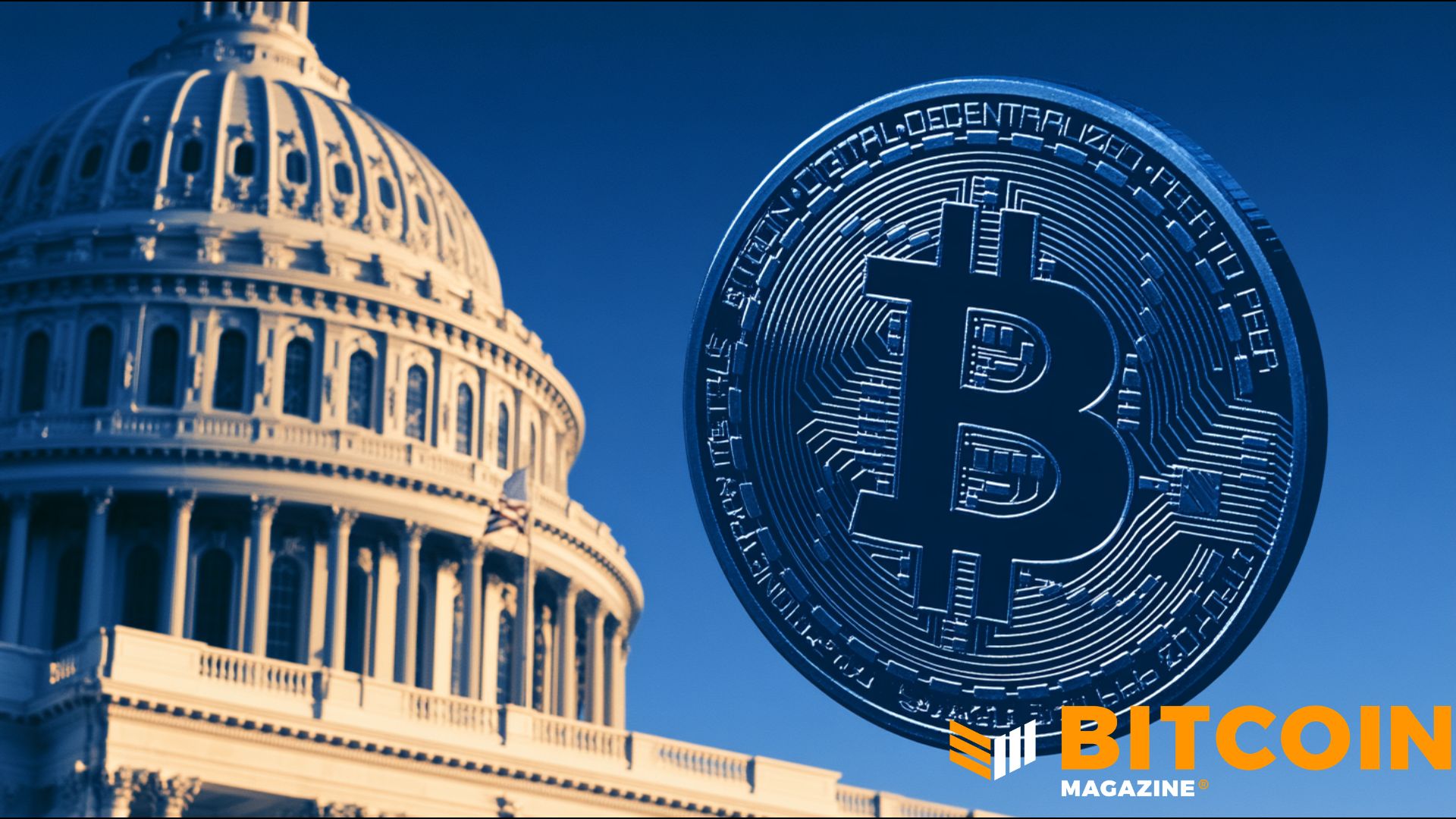
French Hill Eyes Bipartisan Path for Clarity Act Ahead of September Vote
U.S. congressman French Hill expressed the importance of bipartisan support to get the long-awaited crypto market structure bill, the Clarity Act, over the line before the midterms.
The lawmaker told Fox Business Thursday that Democrats and Republicans have come to “narrow their differences in getting the bill drafted.
Pro-crypto lawmakers were hoping the Clarity Act passed before Congress departed for August recess. After a delay, a vote will now go ahead on September 15.
“Can Democrats work with Republicans and make sure America leads the world in distributed ledger technology and financial services?” Hill said.
“This one remaining significant issue is the ethics provision, and that is best solved by passing the legislation because everybody — no matter what family they belong to, the Trumps or not — would then be under a regulatory framework fully scrutinized by the United States government in commodity and securities and banking regulators,” he added.
The Clarity Act was first introduced by Hill, the House Financial Services Chairman, last year.
Crypto companies have long called for clear regulations for the industry. The Clarity Act drafts a framework to formally divide oversight between regulators, distinguishing which digital assets are securities, commodities or stablecoins.
The House of Representatives passed the bill last July but it has been stalled this year, mostly because the banking lobby clashed with crypto companies over paying customers stablecoin yield.
A new draft tackling the issue of ethics started circulating in July. It bans government officials from promoting or making money from crypto — something Democrats have criticized the Trump family for doing.
A group of Democrats said the bill fell short and wanted amendments. Some were accused of deliberately holding it back by Republicans like Cynthia Lummis.
Some have praised the bipartisan work that has already gone into the bill, namely Coinbase, America’s biggest crypto exchange. The company’s Chief Policy Officer, Faryar Shirzad, said in July that while some Democratic lawmakers were holding back the long-awaited legislation, younger Democrats wanted to pass it.
President Donald Trump in August said that in order for the U.S. to remain the “undisputed leader in Bitcoin and crypto,” lawmakers had to pass the “very, very powerful legislation.”
This post French Hill Eyes Bipartisan Path for Clarity Act Ahead of September Vote first appeared on Bitcoin Magazine and is written by Mathew Di Salvo.
Bitcoin Magazine

Kraken and SoFi Link Crypto Trading To Banking Rails
Payward, the parent company of crypto exchange Kraken, and fintech company SoFi Technologies on Thursday announced a deal to route SoFi customers’ crypto orders through Kraken’s institutional trading platform and list SoFi’s stablecoin on the exchange.
Under the agreement, SoFi will send its digital asset order flow to Kraken Prime, Kraken’s prime brokerage arm, which launched in 2025.
Rather than filling trades against a single order book, Kraken Prime uses smart order routing to compare prices and depth across multiple venues and execute where the fill is best. SoFi said customers will see no change to the app itself.
Payward is also joining the SoFi Exchange Network, the bank’s real-time settlement system, and will list SoFiUSD — SoFi’s bank-issued stablecoin — on Kraken.
Kraken Prime’s institutional and business clients will in turn gain access to SoFi’s business banking services and round-the-clock fiat settlement. The companies said qualified custody services would follow later.
SoFi holds a national bank charter and has 15.8 million members. The partnership is the latest in a series of tie-ups between Kraken and established financial firms, following arrangements with Deutsche Börse on foreign exchange and derivatives infrastructure, Nasdaq on a tokenized equities gateway, and Franklin Templeton on tokenizing exchange-traded funds.
The news comes after SoFi, a purely digital lender, last year became the first nationally chartered bank in the United States to launch crypto services for retail customers.
The company’s new SoFi crypto platform allows members to buy, sell and hold bitcoin directly within their bank accounts.
Kraken — like other crypto exchanges — is pushing into the traditional finance world, allowing users to trade stocks, bonds and other assets. The company has sold its app as a “primary account for everything.”
This post Kraken and SoFi Link Crypto Trading To Banking Rails first appeared on Bitcoin Magazine and is written by Mathew Di Salvo.
Bitcoin Magazine
Bitcoin Rallies Over $81,000 — And Brings BTC-Related Stocks With It
Bitcoin surged on Thursday — but industry-related stocks rose even quicker as a rally that started weeks ago again picked up steam.
The price of the biggest cryptocurrency hit as high as $81,282 on Thursday morning in New York, a nearly 3% increase over a 24-hour period.
Over the past 30 days, the bitcoin price has surged over 23% following both positive regulatory news and announcements from the U.S. Treasury Department regarding debt buybacks.
JUST IN: $80,139 Bitcoin
— Bitcoin Magazine (@BitcoinMagazine) September 3, 2026
But other major crypto company stocks rose quicker. Bitcoin treasury Strategy (NASDAQ: MSTR) was trading more than 13% higher on Thursday. The company on Monday resumed bitcoin buys after a 10-week pause to reshuffle its cash balance sheet.
America’s biggest crypto exchange, Coinbase, also saw its stock shoot up. Nasdaq-listed COIN was trading 11% higher in the same time period.
Elsewhere, bitcoin mining companies had a boost too. Top public companies in the space — including the Nasdaq-listed HIVE Digital, MARA, and CleanSpark — all were up on Thursday.
HIVE Digital led the pack with a 13% jump, while MARA Holdings was up more than 10% on the day.
Clean energy bitcoin miner CleanSpark jumped by 9%; IREN, which is slowly phasing out its mining operations to focus on AI-compute, was up by 4%.
Bitcoin had a phenomenal run in August — its third best such month in its history — after the U.S. Treasury Department said it would more than double the size of its government debt repurchases.
The announcement, aimed to tame surging yields not seen in nearly 20 years, hurt the dollar but has benefited non-yielding assets like bitcoin and gold.
Soon after, President Donald Trump urged lawmakers to get the long-awaited crypto Clarity Act over the line — digital asset legislation the industry has long called for.
Investors rushed back into bitcoin exchange-traded funds as a result, throwing over $2.8 billion at the vehicles — the most since October, when the coin hit a new all-time high.
Bitcoin had spent a lot of the year trading below $80,000 per coin, with June and July mostly below $65,000. The coin hit a new record of $126,080 in October. It is now nearly 40% below that number.
This post Bitcoin Rallies Over $81,000 — And Brings BTC-Related Stocks With It first appeared on Bitcoin Magazine and is written by Mathew Di Salvo.
HTTP error 429 on https://cryptoslate.com/feed/
Failed to fetch feed: https://cryptoslate.com/feed/
Failed to fetch feed.
HTTP error 429 on https://cryptoticker.io/en/feed/
Failed to fetch feed: https://cryptoticker.io/en/feed/
Failed to fetch feed.
Decrypt
Adam Aron says AMC Entertainment has no connection to the tokens and is putting outside securities counsel on the case.
Privacy advocates say the law raises First Amendment questions the courts have yet to address.
The projected revenue requires two contract extensions, while an option for more computing capacity could bring the total above $3 billion.
PONS, the token behind Robinhood Chain's biggest meme coin factory, flipped CASHCAT to become the chain's largest cryptocurrency by market cap—and its chart looks like a hockey stick.
The forthcoming bill would pause advanced AI development, create a federal regulator, and threaten violators with up to 20 years in prison.
U.Today - IT, AI and Fintech Daily News for You Today
Shiba Inu was close to the recovery, but a severe volume drop leaves the rally unfueled.
An active Satoshi-era wallet counters a $293B lawsuit by moving 40 BTC with a 2,571,899% gain, challenging claims of abandoned property.
The market is witnessing rise of new generation of memes and Cash Cat is leading the way.
Ripple CEO Brad Garlinghouse says the United States can still become the global “crypto capital.”.
The crypto market is attempting to extend its recovery, with XRP gaining on BIS-related news, Ethereum approaching a key bullish crossover and Tron reaching $28 billion in TVL.
Blockonomi
TLDR
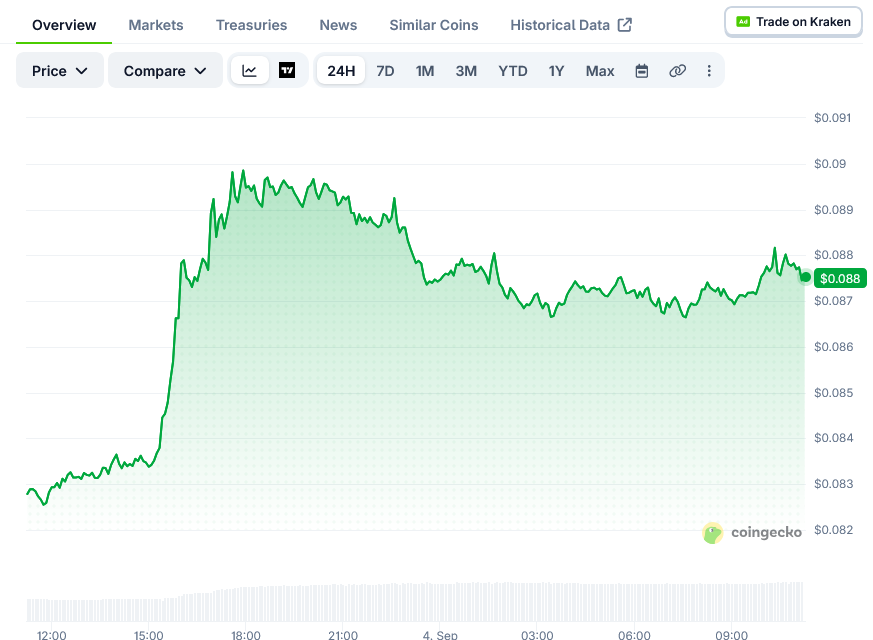
- DOGE fell more than 17% from its August 22 high near $0.1007, dropping toward $0.0828.
- A daily TD Sequential buy signal is flashing on Dogecoin’s chart, according to analyst Ali Charts.
- A morning doji star pattern has formed, a classic sign that selling pressure may be fading.
- Whales have reportedly bought 400 million DOGE over the past five days near support.
- The $0.0813 zone is key; holding it could open a path to $0.1552 and $0.1774.
Dogecoin has pulled back sharply from its recent highs. The drop has traders watching closely for signs the slide is ending.
DOGE hit roughly $0.1007 on August 22. It then fell more than 17%, landing near $0.0828.
That decline pushed the price closer to a zone where big buyers have stepped in before. Chart watchers say this area has a history of attracting demand.
One of the signals getting attention is the TD Sequential indicator. It is designed to flag when a trend is running out of steam.
TD Sequential Signal and Chart Pattern
Analyst Ali Charts posted on X that Dogecoin’s daily chart just printed a new TD Sequential buy signal. This tool is built to spot exhaustion after a long price move, not to guarantee an instant turnaround.
Ali Charts also pointed to a morning doji star forming on the daily chart. This candlestick pattern typically shows up after a period of selling, when the market shifts from clear bearish control toward uncertainty.
In the same set of posts, Ali Charts noted that these signals often appear before buyers start to regain control. The analyst framed the pattern as an early clue, not a confirmed reversal.
Traders generally want to see follow-through buying before treating a single signal as reliable. That confirmation hasn’t fully arrived yet.
Whale Accumulation Near Support
On-chain activity is adding another layer to the story. Large holders have reportedly bought around 400 million DOGE over the last five days.
This buying has taken place near a support zone many traders are watching. Roughly 35 billion DOGE previously changed hands in this same area, based on on-chain data cited in the report.
That kind of volume can mark a zone where holders are less willing to sell. Renewed buying there can also add liquidity if broader sentiment turns positive.
Right now, $0.0813 is being treated as the line in the sand. Holding above it keeps the reversal case intact.
A break below that level would weaken the bullish pattern described above. So far, buyers have managed to defend the area.
If DOGE stabilizes and buying continues, the next targets mentioned are $0.1552 and $0.1774. Reaching those levels would require clearing resistance in between first.
As of the latest update, DOGE remains near the $0.0828 to $0.0813 range while traders watch for confirmation of the reversal signals.
The post Dogecoin (DOGE) Price: Whale Buying and Chart Signals Point to a Possible Bounce appeared first on Blockonomi.
TLDR
- A 20.5 BTC stash linked to the 2026 Coldcard hardware wallet theft moved through 34 THORChain swaps into Ethereum on September 2 and 3.
- Bitquery traced the funds from a “reported” attacker address tied to what it calls Wave 3 of the theft.
- Most of the traced value, 20.15 BTC, landed at one Ethereum address that later showed an outgoing drop of about 5 ETH.
- Most of the stolen Bitcoin, over 1,400 BTC, remains parked and untouched in identified addresses.
- Researchers including Galaxy Research say they still cannot confirm whether all theft waves trace back to one person or group.
A stash of Bitcoin linked to the 2026 Coldcard hardware wallet theft began moving this week. Blockchain data provider Bitquery tracked the funds as they crossed into Ethereum.
The move shifted the case from a mostly parked stash of stolen coins into an active cross chain trail. Investigators had watched much of the stolen Bitcoin sit untouched for months.
The activity started on September 2 when 20.49703196 BTC left an address linked to the theft. Bitquery’s classification file lists the address as reported and tied to what it calls Wave 3.
The coins passed through two fresh Bitcoin addresses. Both were later emptied, according to Bitquery’s tracking data.
Bitquery places the origin address in its reported tier, one step below its confirmed list. The person or group controlling the funds has not been identified.
Bitcoin Routes Through THORChain to Ethereum
THORChain is a tool that lets users swap coins across different blockchains. Bitquery’s live tracker recorded 34 swaps on September 2 and 3 that sent 20.45 BTC of traced value into Ethereum.
The tracker’s broader total reached 20.69 BTC across 36 swaps. That figure includes two earlier swaps worth 0.24 BTC that happened back on August 2.
Most of the funds, 20.15 BTC across 26 swaps, ended up at one Ethereum address. A smaller amount, 0.30 BTC, moved through eight swaps to a second address.
The two August swaps sent funds to a third address. Bitquery’s records show THORChain swap memos naming the main destination for the September transactions.
That main Ethereum address held about 649.5 ETH with no outgoing transactions when Bitquery checked at 16:15 UTC on September 3. About an hour later, at 17:25 UTC, a balance check showed 644.4974 ETH.
The drop of roughly 5 ETH marked the first outgoing activity from that address since the funds arrived.
Most Stolen Bitcoin Remains Untouched
Not all of the stolen Bitcoin has moved. At block 965,339, Bitquery counted 1,402.59 BTC still sitting in identified addresses linked to the theft.
Of that total, 1,396.33 BTC has never moved since it was stolen. Bitquery tracks the 20.69 BTC that went through THORChain as a separate category, now watched on Ethereum.
A separate dataset built from Bitcoin block data breaks the theft into waves. It counts Waves 1 through 3 apart from a fourth wave of 64.90373764 BTC, and says the blockchain alone cannot confirm whether one group is behind all of them.
Galaxy Research has also said it cannot fully link every wave of the theft to a single source. The firm has estimated total losses from the Coldcard theft at 1,700 BTC or more.
As of the latest check, the main Ethereum address tied to the September swaps still held about 644.5 ETH. The rest of the traced Bitcoin has yet to move beyond the two Bitcoin addresses used in the swap.
The post Coldcard Bitcoin Theft Funds Move to Ethereum Through THORChain Swaps appeared first on Blockonomi.
TLDR
- Tesla shares jump 5% as Cybercab broadens the company’s global robotaxi strategy
- Cybercab launch opens a path for third-party fleet buyers and robotaxi operators
- New interest form signals Tesla may scale robotaxis with more outside partners
- Tesla revisits its robotaxi model as autonomous fleet competition keeps growing
- Cybercab targets sub-$30,000 pricing and operating costs below $0.20 per mile
Tesla (TSLA) shares closed 5.42% higher at $376.37 after the company unveiled its Cybercab robotaxi. However, TSLA fell 2.32% to $367.65 in pre-market trading on Friday. The launch also revealed a broader plan that could bring outside operators into Tesla’s robotaxi network.
Tesla, Inc., TSLA
Tesla Cybercab Launch Expands Robotaxi Strategy
Tesla introduced the Cybercab without a steering wheel, pedals, or rearview mirrors. Instead, the vehicle depends entirely on Tesla’s Full Self-Driving system for operation. The design shows Tesla’s push toward a purpose-built vehicle for fully autonomous ride services.
The company targets a Cybercab price below $30,000 and operating costs under $0.20 per mile. These targets support Tesla’s plan to run autonomous services below conventional ride-hailing fleet costs. However, the company has not confirmed final pricing or commercial fleet terms.
Tesla also limited the launch event mainly to influencers, drawing criticism from some market analysts. Some analysts expect the restricted event format to pressure sentiment after Thursday’s sharp stock gain. Even so, the Cybercab launch moved Tesla’s robotaxi plans closer to commercial deployment.
Third-Party Fleets Could Support Tesla Network Growth
Before the launch, Tesla released an interest form for companies considering participation in its robotaxi network. The form includes Cybercab fleet purchases, mobility hubs, infrastructure support, and event partnerships. As a result, Tesla may be preparing a model combining company operations with outside participation.
Tesla has not confirmed that third-party operators will directly purchase Cybercab vehicles. Still, the form gives businesses a formal way to express interest in fleet ownership and network support. That approach could help Tesla scale faster without funding every vehicle and facility itself.
The strategy could also create opportunities for fleet managers, charging providers, property owners, and mobility companies. Tesla could retain control over vehicle technology while partners support deployment and local operations. Such a structure would move the robotaxi business beyond a fully in-house model.
Tesla Revisits Earlier Robotaxi Fleet Ambitions
Elon Musk first described a broader Tesla Network concept in 2016. Under that plan, Tesla owners could eventually place self-driving vehicles into a shared ride-hailing service. The company later repeated the idea during its 2019 Autonomy Day presentation.
Tesla never launched the owner-operated robotaxi network described during those earlier presentations. Instead, the company shifted toward operating its own autonomous fleet with Model Y vehicles. Tesla now plans to use Cybercab for larger-scale robotaxi expansion.
Competition is also growing as companies build businesses around autonomous fleet operations. Moove already manages Waymo fleets in several United States cities and plans further expansion. Tesla’s third-party interest form suggests it may adopt a broader operating model as the robotaxi market develops.
The post Tesla (TSLA) Stock: Surges 5% as Cybercab Launch Opens Door to Third-Party Robotaxi Fleets appeared first on Blockonomi.
TLDR
- El Salvador told the IMF its Bitcoin gains since June 2025 came from private donations, not public money.
- The IMF reached a staff-level agreement on El Salvador’s combined second and third program reviews.
- Approval could release about $140 million to El Salvador under its $1.4 billion loan program.
- Majority control of the Chivo wallet has moved to a private operator, while the government kept a minority stake.
- The IMF said it does not expect El Salvador to add more Bitcoin beyond the donations already reported.
The International Monetary Fund said El Salvador funded its recent Bitcoin gains through private donations rather than public money. The statement came in a Sept. 3 announcement about the country’s loan program.
IMF staff and Salvadoran officials reached a staff-level agreement on the combined second and third reviews of El Salvador’s Extended Fund Facility. The deal still needs approval from the IMF’s Executive Board.
The Fund said El Salvador provided documentation showing that Bitcoin added to government wallets since June 27, 2025, came from private donors. It said no public resources were used for the purchases.
The disclosure addresses questions raised after wallets tied to El Salvador’s Strategic Bitcoin Reserve appeared to grow. Some observers had asked whether the government kept buying Bitcoin despite its commitments to the IMF.
How the Bitcoin Donations Were Verified
Blockchain records can show coins moving into a wallet, but they do not explain where the coins came from. They also cannot show whether coins were bought, donated, or moved between government accounts.
In July 2025, the IMF said the total Bitcoin held by the government had not changed. It explained that some reported increases actually came from moving coins between different state-controlled wallets.
The new documentation adds another layer of explanation. It states that any accumulation after the first review came from private gifts, not government purchases.
The IMF also said it reached an understanding with El Salvador that no further Bitcoin buildup is expected beyond the donations already reported.
What the Loan Agreement Means for El Salvador
If the IMF’s Executive Board approves the reviews, El Salvador could receive close to $140 million. That amount equals about 101.96 million Special Drawing Rights.
The country has already received 172.32 million Special Drawing Rights under the program. The IMF approved the 40-month loan arrangement in February 2025, with total access of about $1.4 billion.
The Fund said El Salvador’s economy has performed better than expected. It projects economic growth of 4.5 percent in 2026, helped by investment, spending, remittances, tourism, and money flowing into the country.
IMF staff also called for continued spending discipline. They want the government to keep working on lowering public debt toward 80 percent of the size of the economy by 2030.
As part of the program, El Salvador has cut back on its own role in the Chivo wallet. Majority ownership and daily operations have shifted to a private operator whose name has not been made public.
The government kept a minority stake and stayed responsible for holding customer funds safely. The IMF said work continues to make Bitcoin holdings across various wallets easier to track.
The original loan terms made Bitcoin acceptance optional for businesses. They also required taxes to be paid in U.S. dollars and limited how much the government could take part in Bitcoin activity.
Both sides also agreed to update El Salvador’s rules for digital assets. The plan includes stronger oversight and risk controls for any Bitcoin the public sector holds.
The IMF’s Executive Board has not yet voted on the reviews. Until it does, and until El Salvador finishes the required steps, the extra $140 million will stay unavailable.
The post El Salvador Bitcoin Purchases Came From Private Donations, IMF Confirms appeared first on Blockonomi.
TLDR
- Bitcoin’s price could reach $250,000 to $840,000 in three to five years under a bullish model.
- The forecast relies on 20%-40% of global portfolios allocating 2%-4% to bitcoin.
- That level of adoption could mean $1.3 trillion to $5.3 trillion in new inflows.
- Financial advisers holding bitcoin rose from 22% in 2024 to 32% in 2025.
- 29 of the top 30 U.S. investment advisers now hold bitcoin, though allocations stay small.
Bitcoin’s price could climb sharply over the next three to five years, according to a new adoption model from research firm River. The model looks at how much money could flow into bitcoin as more portfolios add it.
River shared the findings in a post on X, walking through the math behind the projection. Analyst River pointed out that bitcoin ownership today is still low compared to how much wealth exists worldwide.
Only about 4% of the global population owns any bitcoin. Institutional investors hold even less, with investment advisers allocating just 0.008% of assets to the asset on average.
That gap between current ownership and potential future ownership forms the base of River’s forecast. The firm argues there is room left for adoption to grow.
How Wall Street Could Push Bitcoin Higher
River’s model assumes that 20% to 40% of global portfolios eventually allocate 2% to 4% to bitcoin. This range matches guidance many banks and asset managers already give clients.
Some firms recommend allocations between 1% and 7%. If adoption reaches River’s assumed range, bitcoin would shift from a niche holding to a common part of many portfolios.
The world’s financial assets add up to about $333 trillion. Under River’s assumptions, that would send $1.3 trillion to $5.3 trillion of new money into bitcoin.
Bitcoin’s fixed supply matters here. Unlike stocks or commodities, no new bitcoin can be created to meet rising demand, so new money entering the market has fewer places to go.
Adviser data backs up the idea that adoption is already moving in this direction. The share of financial advisers holding crypto climbed from 22% in 2024 to 32% in 2025.
Another 56% of advisers said they plan to add crypto exposure or are weighing it. Separately, 29 of the 30 largest U.S. registered investment advisers now hold bitcoin in some form.
Their median allocation sits at only 0.10% of assets, though. Adoption is spreading, but the amount of money involved per adviser remains small so far.
What Inflows Could Mean for Bitcoin’s Price
River’s model uses a multiplier to estimate how new money in bitcoin affects the price. It assumes every $1 of net inflow adds about $3 to bitcoin’s total market value.
That figure is based on past bitcoin cycles. Previous periods saw market value rise by $4.50, $3.30, and $3.10 for every dollar that flowed in.
Using the more conservative 3x figure, $1.3 trillion to $5.3 trillion in new capital would push bitcoin’s market value to between $5.5 trillion and $17.5 trillion.
That range works out to a bitcoin price of about $250,000 to $840,000 per coin, according to the model.
River noted the forecast depends on adoption trends continuing at the pace described. Slower adoption or smaller allocations would lower the outcome.
As of now, the most recent data shows 29 of the top 30 U.S. investment advisers hold bitcoin, with a median allocation of 0.10% of assets.
The post Bitcoin (BTC) Price: Model Shows $250K-$840K Range if Adviser Allocations Grow appeared first on Blockonomi.
CryptoPotato
The wild nature of the cryptocurrency markets has returned for some major altcoins, such as the privacy coin leader, Zcash (ZEC). The token skyrocketed to a new multi-year peak of just over $1,000 earlier today.
The move caught many traders, including Garrett Jin, unprepared. Data from Lookonchain outlined his massive loss due to a short squeeze.
The analysts provided a screenshot from a wallet linked to Jin, showing that he had entered a massive short for 32,760 ZEC (currently worth over $33 million) at prices well below the current level of $444.
Given the asset’s substantial rally in the past several days, Jin had to add to his short position over time before ultimately realizing a loss of over $18.5 million.
As $ZEC broke above $1,000, Garrett Jin (@GarrettBullish) has lost over $18.5M on his 32,760 $ZEC ($33.11M) short.https://t.co/bLk5NAoS2r pic.twitter.com/YiAA6oySEo
— Lookonchain (@lookonchain) September 4, 2026
The privacy coin is among the top performers in the past 24 hours. Its daily gains stand at over 21% as of now, as its price jumped to $1,020 for the first time in eight years. Moreover, ZEC’s value has doubled since the market broke out on August 19, when it traded at around $500.
Data from CoinGlass indicated that the total value of wrecked ZEC positions is up to $36 million, meaning Jin’s wipeout accounted for half of it.
The post Garrett Jin’s ZEC Short Bleeds Over $18M as Zcash Explodes Past $1,000 appeared first on CryptoPotato.
Pi Network’s native token has soared by 11% over the past month and has recently drawn mixed price predictions.
Ethereum seems ready to post substantial gains in September, while Shiba Inu may not fare so well this month.
PI’s Next Targets
The token has rebounded by roughly 35% from its July historic bottom and currently trades at around $0.095 (per CoinGecko). It remains among the most discussed cryptocurrencies, and, as expected, many industry participants have paid attention to its recent price performance and made interesting predictions.
X user OxNeena noted that PI is holding a key support zone around $0.09-$0.10 after a long consolidation, envisioning a massive uptrend above $0.30 if bulls reclaim $0.20.
Nakamoto Files argued that “something is moving behind the scenes” at Pi Network, while CT News believes that if the next altcoin rotation reaches PI, the coin could climb much faster than most think.
“The sleeping giant may not stay asleep forever,” they added.
Meanwhile, there has been growing speculation that the team behind Pi Network intends to implement a burning mechanism that could positively impact the price. However, the X account BSCN and other users rejected the development.
ETH in September?
The second-largest cryptocurrency jumped by nearly 5% over the past 24 hours, once again exceeding the psychological $2,500 mark. Some important factors, including strong demand from institutional investors, suggest that the coming weeks may deliver further gains.
SoSoValue’s data shows that spot ETH ETFs posted 12 consecutive green days before the run paused on September 2. The momentum quickly returned, with the following 24 hours adding another strong inflow.
The amount of ETH stored on cryptocurrency exchanges is another bullish element. Several days ago, the figure plunged to roughly 14.9 million coins, the lowest since the summer of 2016. Later on, there was a slight move north, yet the total remains below 15 million. Such a development signals that many investors prefer to avoid centralized platforms, thereby reducing immediate selling pressure.
At the same time, Ethereum’s seasonal performance serves as a warning. The asset has ended 7 of the past 11 Septembers in the red, and there hasn’t been a year in which both August and September closed with gains. Recall that last month delivered a 32% price increase for ETH.
SHIB’s Perspective
Unlike ETH, the self-proclaimed Dogecoin killer appears more likely to underperform in September than to post a major rally. The worrying signals include Shibarium’s stalled activity, the declining burn rate, and others.
Moreover, September has been a predominantly poor month for SHIB, with its valuation finishing the timeframe in the red three out of five times.
There is still a glimmer of optimism. Back in 2021, both August and September closed in the green, giving the SHIB Army hope that history could repeat itself, especially since the meme coin pumped by 7.5% last month.
The post Recent Pi Network (PI) Price Forecasts, Ethereum’s (ETH) Potential, and More: Bits Recap September 4 appeared first on CryptoPotato.
The largest altcoin is on the move again alongside the rest of the market, surging by over 4% daily to $2,150 as of press time. It even tapped $2,530 earlier today before it was stopped.
Its market cap has risen to well over $300 billion, but this has provided some market participants with a proper exit opportunity.
Lookonchain has repeatedly reported on a major whale who has been disposing of their ETH tokens for days. The selling spree began at the start of the month, when the unknown entity received $408 million worth of the altcoin before transferring $174 million to exchanges.
The deposits continued in the following days, with another major transfer of $253 million to multiple trading platforms. The latest was reported earlier today, which culminated in the sale of all 167,855 tokens ($408 million), meaning that the whale has disposed of the entire ETH fortune in just five days.
Insane!
This mysterious #Ethereum whale has sold off all 167,855 $ETH($408M) in the past 5 days.https://t.co/PdCiRP6taI pic.twitter.com/YbajyBEhLf
— Lookonchain (@lookonchain) September 4, 2026
Despite this substantial sell-off in just days, the underlying asset has rebounded swiftly from its dip below $2,400. It’s up by more than 4% daily and now sits above $2,500 with a market cap of $305 billion.
Its market dominance has also increased lately, going past 11% on CoinMarketCap.
The post Ethereum Whale Keeps Offloading as ETH Price Rockets Past $2.5K appeared first on CryptoPotato.
Bitcoin, once again, climbed above $80,000 after surging by 4.3% on Friday. The recent strength comes as a welcome change, as the crypto market spent much of the third quarter under pressure before a sharp rally in late August changed the tone. BTC, for one, recorded its strongest monthly gain since November 2024, which led some investors to believe the bear market may have ended.
But according to Fidelity, there is no guarantee that’s the case yet.
Possible November Bottom?
One factor in focus is Bitcoin’s historical four-year market cycle. The crypto asset has generally formed major bear-market bottoms and bull-market tops about four years apart. Since the previous bear market bottom came in November 2022, this pattern could point to another potential low around November 2026 if the cycle continues.
While Fidelity stressed that the four-year cycle is not guaranteed to repeat and that Bitcoin’s bottom may already have occurred in July, it still speculated that the cryptocurrency could fall again and set another low in November or later.
There are several catalysts that could also influence whether the crypto bear market ends. The financial giant pointed to more crypto-friendly regulation, changes in government monetary policy, the emergence of an unexpectedly popular crypto use case, and increasing institutional adoption. Price volatility is another factor the firm is watching.
Bitcoin’s previous bear markets have historically ended with a period of relatively low volatility followed by higher volatility and an upward expansion in price. Fidelity said the market experienced relatively low volatility from June through mid-August, which indicated that sellers may have become exhausted.
During that period, its analysis showed BTC and other crypto assets were trading toward the lower, or “value,” end of their historical price ranges. In late August, volatility increased sharply, with Bitcoin rising more than 25% during the third week of the month. Ethereum gained around 34% over the same period, while Solana rose 28%. Fidelity said this price behavior does not confirm that the bear market is over, but it is consistent with one possible historical pattern.
Meanwhile, events that might normally have pushed prices lower, including the Coldcard hardware wallet security exploit and the stalling of the CLARITY Act, did not result in further declines. This could support the narrative that cryptocurrencies are near a market bottom and may now be waiting for a new positive catalyst.
Crypto adoption continued to expand despite weak market sentiment. Bitwise Investments reported in early July that stablecoin transaction volume had reached 2.3 times Visa’s volume. MetaMask also reported in July that the real-world asset market had grown faster in 2026 than in any previous year.
Fidelity said this created a disconnect between adoption and prices, as activity in parts of the crypto industry kept increasing while the overall market remained in a bear market. The recent recovery could indicate that adoption and price have started to “recouple” again. An exact pattern occurred during the 2021-2022 bear market and the subsequent new bull market that began in late 2022.
CLARITY in Focus
Regulation remains another key factor for the market. The industry is still awaiting further action on the CLARITY Act, which aims to create a broader US regulatory framework for digital assets and clarify the responsibilities of federal regulators. The bill has passed the House but remains under consideration in the Senate, which leaves its timing and outcome uncertain.
The SEC also proposed Regulation Crypto Assets, which would address when certain early-stage crypto asset offerings could qualify for exemptions from securities registration requirements. The proposal is still subject to public comment and is not final, but Fidelity described it as an important step toward a more “tailored regulatory approach.”
The post Bitcoin Is Back Above $80,000, But Fidelity Says the Bear Market May Not Be Over Yet appeared first on CryptoPotato.
XRP’s spot trading volume climbed to its highest level since February during August, and the token’s price is now up roughly 8% in the last day to trade near $1.45.
The pickup in trading activity landed as the broader crypto market came back to life, with Bitcoin clearing $80,000 for the first time in a week and altcoins moving right along with it.
Volume Returns Across Major Exchanges
Data shared by CryptoQuant contributor Arab Chain showed XRP’s spot trading volume rising across several major exchanges last month, reaching its highest point since February.
Binance accounted for the largest share, logging about $7.28 billion in XRP trades during August, followed by Upbit at around $4.68 billion and Bithumb Korea at close to $2.59 billion.
Bybit processed about $1.40 billion, Gate.io around $1.33 billion, and KuCoin near $1.23 billion, while Bitget and Coinbase each came in just under the billion-dollar mark, at $918.5 million and $915.4 million, respectively.
On its own, a jump in trading volume does not point to higher or lower prices ahead. It simply means more buyers and sellers are active. Still, hitting a six-month high on volume points to a real improvement in liquidity around XRP, and if that pace holds, it could help the token absorb bigger price swings going forward.
Price Follows the Rest of the Market Higher
XRP is changing hands around $1.45 as of this writing, up more than 6% in the last 24 hours, per CoinGecko. The token has traded between $1.35 and $1.48 in the last day and between $1.31 and $1.48 in the last week, and the weekly change of just 1.4% suggests most of the recent gain came in one quick move rather than a steady climb.
Looking further out, XRP is up around 36% on the month, though it still sits about 49% below where it was a year ago and roughly 60% under its all-time high of $3.65, reached in July 2025.
The move ties into a wider rebound that took hold on Thursday, when Bitcoin pushed past $80,000 for the first time in a week, as CryptoPotato reported earlier, after briefly dipping to a 10-day low near $76,200 amid tension in the Middle East.
XRP was among the bigger movers in that stretch, gaining 9% on the day and clearing $1.40, ahead of ETH’s climb toward $2,500 and BNB’s push above $720.
The post XRP Trading Activity Hits Highest Level Since February as Price Jumps 8% appeared first on CryptoPotato.