Cryptocurrency Posts
Crypto Briefing
Gold's decline amid a strong dollar and inflation fears highlights potential volatility in commodities, impacting investment strategies and economic forecasts.
The post Gold hits three-week low as stronger dollar, inflation fears weigh appeared first on Crypto Briefing.
Rising diesel prices may strain logistics and heating sectors, reflecting broader economic impacts from geopolitical tensions and supply risks.
The post US diesel prices hit highest level since April amid US-Iran tensions appeared first on Crypto Briefing.
The deployment of advanced drones may shift military dynamics, impacting Ukraine's defense strategies and altering conflict outcomes.
The post Russia deploys jet-powered drones, challenging Ukraine’s air defenses appeared first on Crypto Briefing.
Hegseth's leadership shift may signal a move towards more aggressive US military strategies, impacting global stability and market perceptions.
The post Hegseth takes Pentagon helm, halts promotions amid global conflicts appeared first on Crypto Briefing.
Rising US-Iran tensions may heighten geopolitical risks, influencing global economic stability and potentially driving long-term oil price volatility.
The post Asian markets fall as US-Iran tensions drive oil prices, bond yields higher appeared first on Crypto Briefing.
Bitcoin Magazine
Bitcoin Magazine
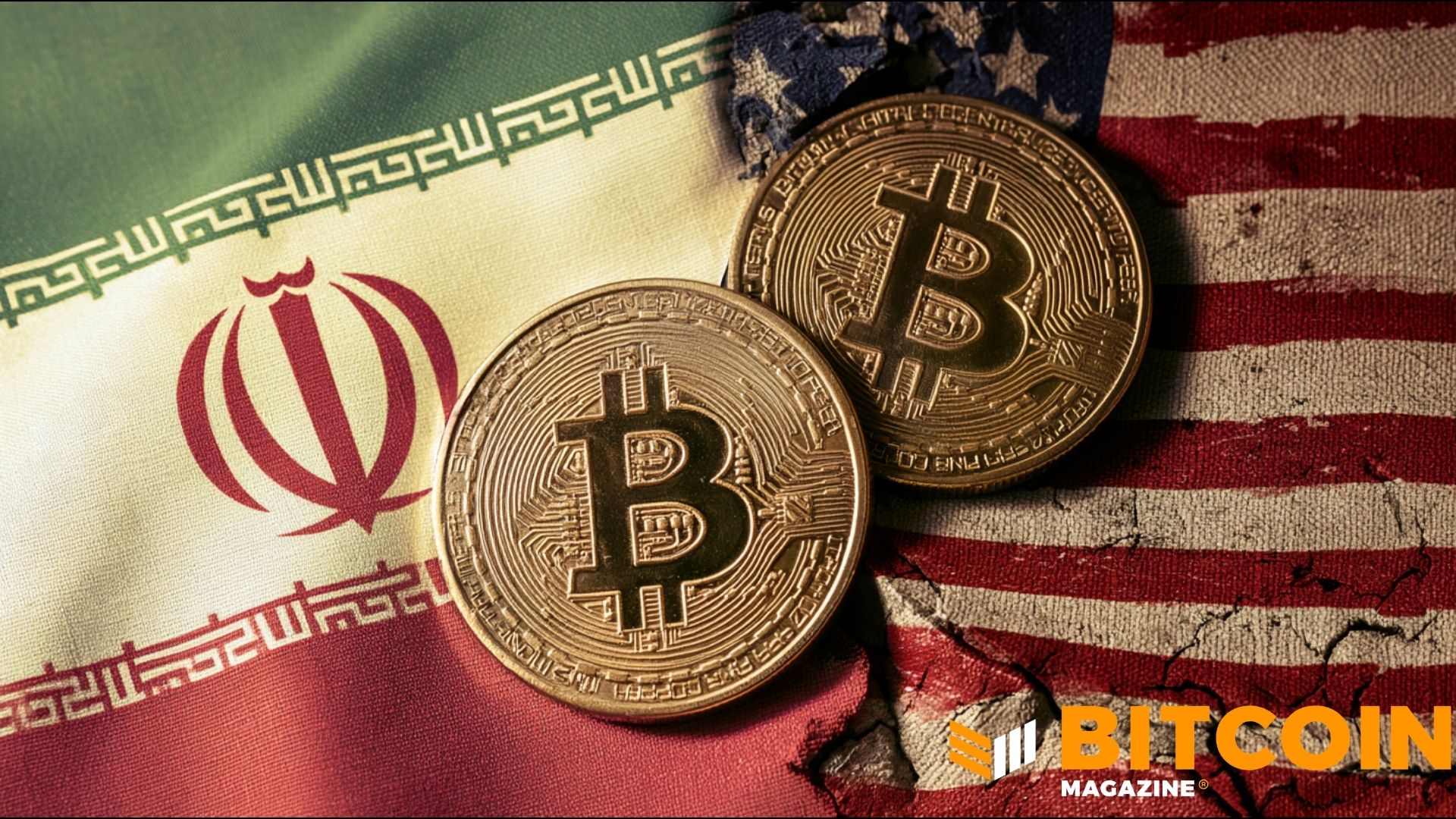
Bitcoin Slides as US-Iran Tensions Escalate
Bitcoin slid on Tuesday after investors went into “risk-off” mode following escalating attacks between the U.S. and Iran.
The largest cryptocurrency had initially shrugged off President Donald Trump’s threats to the Middle Eastern nation, as well as the first strikes.
But things heated up on Tuesday, and bitcoin’s price slid. It was recently down more than 2% on the day, trading for $77,363. The coin had pushed past as high as nearly $81,282 on Friday.
The Tuesday attacks from the U.S. were because Iran tried to put mines in the Strait of Hormuz, and also because of an attack on an American military base in Jordan, according to President Trump.
U.S. Central Command said on X that Iran had also attacked commercial ships.
“The strikes follow recent attempted attacks by the Islamic Revolutionary Guard Corps against commercial shipping in the Strait of Hormuz and against American service members deployed to the region,” the post read.
Iran responded with a “decisive operation” against U.S. military bases, according to Iranian media. Oil surged on the news.
Bitcoin’s price has been sensitive to geopolitical tensions this year — especially after Iran and Israel attacked Iran. The cryptocurrency has typically faced downward pressure on news of war, only to then rally when Trump raised hopes of a ceasefire.
Despite Bitcoin’s price being relatively muted, in recent months, it has made more wild swings since mid-August.
Bitcoin’s immediate reaction to rising oil prices is to drop: more expensive energy means higher inflation, and higher inflation typically means the U.S. central bank will postpone rate cuts, which can restrict the liquidity that bitcoin needs to gain momentum.
The Federal Reserve’s chair, Kevin Warsh, last week gave his first major speech as leader of the central bank and said that inflation in the world’s largest economy had not come down enough.
Traders are now no longer pricing in an interest rate cut this year, instead expecting a hike. Bitcoin has typically performed well in the past in low interest rate environments.
Still, the coin had one of its best runs in August after the U.S. Treasury said it would at least double the size of its liquidity-support buyback operations, in response to surging borrowing costs.
The announcement hurt the dollar but non-yielding assets like bitcoin and gold have benefited.
This post Bitcoin Slides as US-Iran Tensions Escalate first appeared on Bitcoin Magazine and is written by Mathew Di Salvo.
Bitcoin Magazine
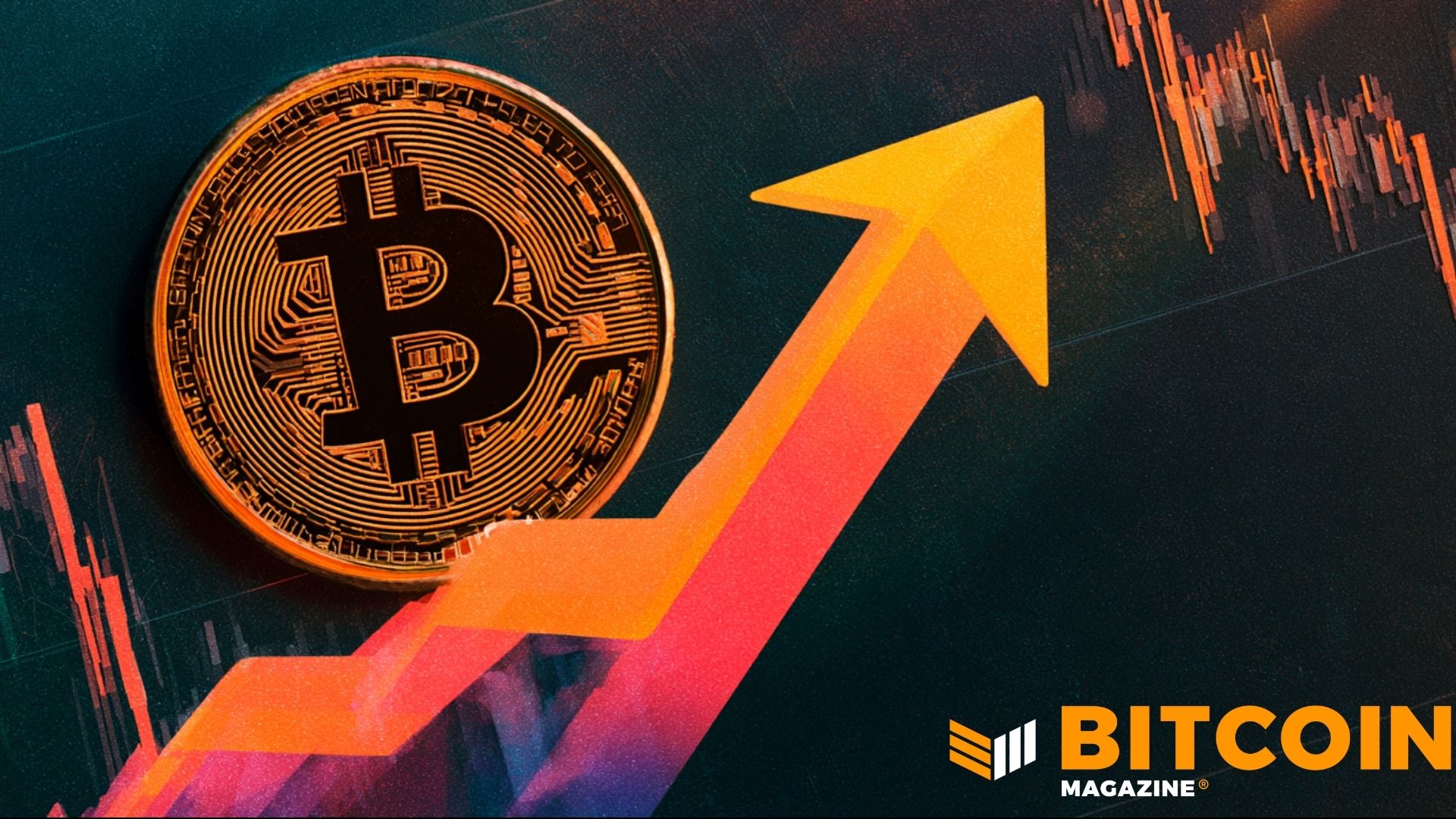
Bitcoin Defies Seasonal Slump With Third-Best August Ever
Bitcoin is known for its summer slumps. But August was different.
In fact, the leading cryptocurrency had its third best August ever.
As highlighted on Tuesday by Bitwise’s European Head of Research, André Dragosch, bitcoin delivered returns of 25% last month.
“No ‘summer lull’ so far,” Dragosch wrote on X, highlighting that the only better Augusts the coin has had were in 2017 when it gave investors returns of nearly 66%, and 2013, with close to 31%.
OFFICIAL: August 2026 is in the books and it's been the 3rd best August in bitcoin's history.
— André Dragosch, PhD
August 2017: +65.6%
August 2013: +30.7%
August 2026: +25.0%
No "summer lull" so far. pic.twitter.com/jwHt2VP5Sk(@Andre_Dragosch) September 1, 2026

Multiple analyses point to the months of June-September showing weaker average returns than the rest of the year.
Throughout most of June and July, bitcoin’s volatility was particularly muted, and the coin traded below $65,000.
But that changed in mid-August after the U.S. Treasury Department said it would more than double the size of its government debt repurchases due to fixed income markets under pressure and yields surging to levels not seen in nearly 20 years.
Lower long-term yields reduce the opportunity cost of holding non-yielding assets like bitcoin and gold, and generally support risk-on sentiment.
Investors flooded into bitcoin as a result.
Positive news soon followed, with President Donald Trump urging lawmakers to get the long-awaited crypto Clarity Act over the line. The digital asset industry has long called for clear rules on how regulators should treat bitcoin, stablecoins and other cryptocurrencies.
Despite a delay in a vote on the legislation, Trump called the draft “very powerful.” The president made the comments after having met with crypto industry bigwigs and CEOs.
Investors also rushed back into ETFs in August, throwing over $2.8 billion at the vehicles — the most since October, when the coin hit a new all-time high.
Bitcoin in August had its best run in three years — and is up nearly over 20% over the past month.
The asset reached as high as $81,281 last week before sliding again on Friday.
Bitcoin’s price recently stood at $76,883, nearly down 3% over a 24-hour period.
This post Bitcoin Defies Seasonal Slump With Third-Best August Ever first appeared on Bitcoin Magazine and is written by Mathew Di Salvo.
Bitcoin Magazine
BlackRock’s iShares Bitcoin Trust Is Beating Top S&P 500 ETF
BlackRock’s iShares Bitcoin Trust exchange-traded fund has delivered better returns since its 2024 launch than Vanguard’s popular S&P 500 fund.
That’s according to Bloomberg data highlighted by the firm’s senior ETF analyst, Eric Balchunas, who said that the BlackRock product’s cumulative percentage return was only slightly ahead of Vanguard’s in the time period.
BlackRock’s bitcoin ETF is up 71% since its January 2024 debut, while Vanguard’s S&P 500 ETF up 66% on a total-return basis.
The iShares Bitcoin Trust — IBIT — started trading in 2024 after the Securities and Exchange Commission gave the green light to 11 spot bitcoin ETFs following a decade of denials.
“IBIT’s path to 70% looks like the El Toro roller coaster at Great Adventure (I needed two Advil last time I rode that thing) while $VOO was a walk in the park in comparison,” wrote Balchunas on Tuesday.
U.S. investors now have several funds to choose from to buy shares that track the price of bitcoin managed by the likes of Fidelity, Grayscale and Morgan Stanley. But BlackRock’s product is the most successful: It currently manages $61.4 billion in assets, according to its website.
By comparison, the second biggest bitcoin ETF, the Fidelity Wise Origin Bitcoin Fund, manages nearly $11 billion.
BlackRock, which manages over $15 trillion in assets, sent shockwaves through the crypto space after it applied for a spot bitcoin ETF in 2023. Its fund now allows more traditional investors to get exposure to bitcoin; its product also experiences more day-to-day trading action than the other ETFs.
Investors piled back into ETFs in August, which has also helped bitcoin’s price. From August 17 to 27, investors threw over $2.8 billion at the vehicles — the most since October, when the coin hit a new all-time high.
Bitcoin reached as high as $81,281 last week before sliding again on Friday.
The price of the biggest cryptocurrency recently stood at $77,539, nearly down 1% over a 24-hour period.
Bitcoin started a phenomenal run two weeks ago — its best in three years — and is up nearly 30% over the past month.
This post BlackRock’s iShares Bitcoin Trust Is Beating Top S&P 500 ETF first appeared on Bitcoin Magazine and is written by Mathew Di Salvo.
Bitcoin Magazine
South Korea’s Bitcoin ‘Kimchi Premium’ Returns
Bitcoin is up this month but there’s one place where it’s more significantly more expensive: South Korea.
The so-called Kimchi Premium — when bitcoin costs more on Korean exchanges — is back as retail investors pile back into the coin. Bloomberg first reported the news and CoinGecko data shows that bitcoin’s price is nearly 1% higher on Upbit, Korea’s biggest exchange, than Binance.
Named after a popular dish in the Asian nation, the phenomenon comes down to Korea’s market being partly walled off. Prices have historically run higher there because of strong local retail demand combined with strict capital controls and trading regulations.
As a result, the Bitcoin/won trading pair is more common in South Korea compared to the Bitcoin/U.S. dollar pair in other places. When there is demand for the asset, it will naturally be higher in the country as compared to other places.
The phenomenon has been described as a retail FOMO indicator, since Korea has few notable crypto funds and tight capital controls. The premium has reached as high as 21.5% in 2022.
Bitcoin was recently trading for $78,287, unmoved over the past 24 hours. It’s also at the same price it was seven days ago, but over the past month, the coin has rallied by 24%.
The price of the biggest digital asset started surging after the U.S. Treasury in August said it would at least double the size of its liquidity-support buyback operations. The announcement hurt the dollar but non-yielding assets like bitcoin and gold have benefited.
President Donald Trump also said the same week that the long-awaited crypto Clarity Act was an important piece of legislation, and urged lawmakers to get it over the line.
JUST IN: There's now a 59% chance Bitcoin will be above $82,500 this month, according to Polymarket.com
— Bitcoin Magazine (@BitcoinMagazine) September 1, 2026pic.twitter.com/kTYEZsxQvk
Crypto industry bigwigs have been calling for clear rules for distinguishing between digital assets that are securities, commodities or payment stablecoins, and news that regulators will soon have such a framework has typically benefited crypto markets.
Speculators are now betting on Polymarket that there’s a 59% chance bitcoin will be above $82,500 this month, leading some to call an end to the bear market.
This post South Korea’s Bitcoin ‘Kimchi Premium’ Returns first appeared on Bitcoin Magazine and is written by Mathew Di Salvo.
Bitcoin Magazine
BlackRock Re-Underwrites Bitcoin, and the Portfolio Math Still Holds
Bitcoin’s roughly 50% decline from its October 2025 high has created a useful test for the institutional investment thesis. It is relatively easy to make the case for a new asset while prices are rising, correlations are favorable and capital is flowing into the market. The more revealing exercise comes after a major drawdown, when investors can revisit the original assumptions and determine which were structural and which were simply products of the preceding cycle.
That is effectively what BlackRock has done in its latest research, Re-Underwriting Bitcoin: Still a Portfolio Diversifier. Rather than treating the recent drawdown as evidence for or against Bitcoin in isolation, the firm returns to the question most relevant to an allocator: how has Bitcoin actually affected the risk and return characteristics of a diversified portfolio?
The results are more consequential than the headline return figures suggest. In BlackRock’s rolling 10-year analysis through May 29, 2026, a traditional 60/40 equity and fixed-income portfolio generated an annualized return of approximately 9.9% with annualized standard deviation of roughly 10.1%. Introducing a 1% Bitcoin allocation increased annualized return to approximately 10.9%, while volatility moved only modestly higher to roughly 10.3%. At a 2% allocation, annualized return reached approximately 11.8%, with standard deviation of about 10.6%.
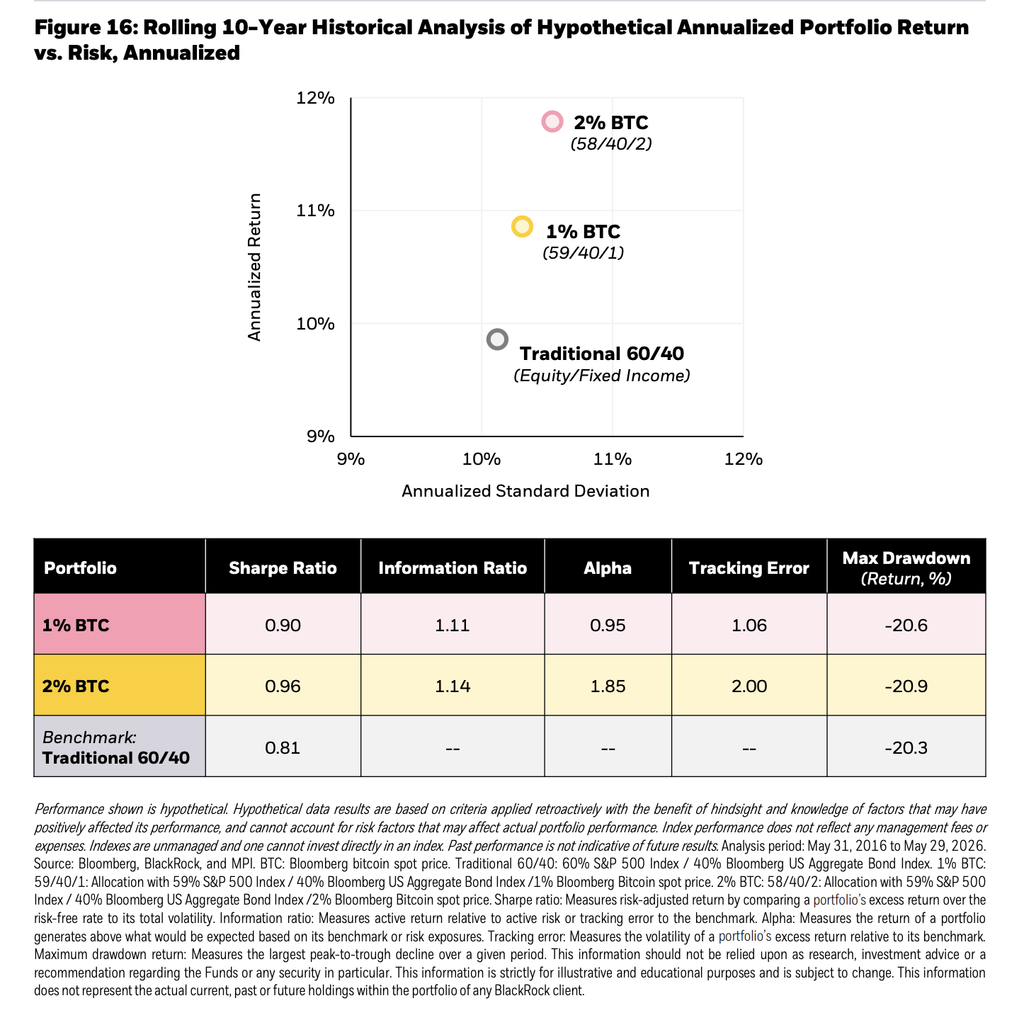
Put differently, the 2% allocation added roughly 190 basis points of annualized return relative to the traditional portfolio while increasing annualized volatility by approximately 50 basis points. The portfolio’s Sharpe ratio improved from 0.81 to 0.96, while maximum drawdown changed from -20.3% to -20.9%. Those figures are hypothetical and backward-looking, but they illustrate why judging Bitcoin primarily by its standalone volatility can produce an incomplete assessment of its portfolio impact.
The more relevant question is how that volatility interacts with everything else an investor already owns. BlackRock continues to characterize Bitcoin as having risk and return drivers that are fundamentally different from traditional assets, rooted in its fixed supply, decentralized structure and independence from any sovereign issuer. Those characteristics do not prevent Bitcoin from trading alongside risk assets during periods of deleveraging, but BlackRock’s research suggests those correlations have historically been episodic rather than permanent.
That distinction helps explain the portfolio results. A modest allocation does not import Bitcoin’s standalone volatility into a portfolio on a one-for-one basis. What matters is the marginal contribution of that allocation to total portfolio risk relative to the return it has historically generated. In BlackRock’s analysis, that trade-off remained favorable at 1% and 2%, even after incorporating one of Bitcoin’s most significant recent drawdowns.
Why 1–2% keeps appearing in BlackRock’s work
This is not the first time BlackRock has arrived at this range. Its earlier portfolio research approached Bitcoin sizing through risk contribution, concluding that a 1–2% allocation could represent a reasonable range for investors willing and able to accept Bitcoin’s risk. At those weights, BlackRock found that Bitcoin could contribute a similar share of overall portfolio risk as an individual mega-cap technology holding in a conventional 60/40 portfolio. Beyond 2%, however, Bitcoin’s contribution to total portfolio risk begins to increase disproportionately.
The new analysis approaches the same question from the opposite direction. Rather than asking how much risk Bitcoin contributes, it examines what investors historically received for assuming that additional risk. The improvement in Sharpe ratio from 0.81 for the traditional portfolio to 0.90 with 1% Bitcoin and 0.96 with 2% Bitcoin suggests that the incremental return historically more than compensated for the additional portfolio-level volatility.
This does not establish 1% or 2% as an optimal allocation, and BlackRock does not present it that way. The appropriate exposure will depend on liquidity requirements, investment horizon, governance constraints and risk tolerance. What the analysis does provide is a more rigorous framework for the discussion. The allocation question can increasingly be evaluated in terms of marginal risk, correlation, drawdown and portfolio efficiency rather than through a binary debate over whether Bitcoin itself is too volatile to own.
BlackRock has also seen the demand firsthand
There is another dimension to BlackRock’s latest analysis that is difficult to separate from the firm’s experience in the market.
BlackRock launched the iShares Bitcoin Trust, IBIT, in January 2024. Less than a year later, it had accumulated more than $50 billion in assets, making it what BlackRock itself has described as the largest exchange-traded product launch in history. It reached that milestone roughly five times faster than the previous record holder.
Its significance has only grown since then. BlackRock now describes IBIT as the world’s largest and most traded Bitcoin ETP, and the fund became the firm’s highest-revenue ETF in 2025 despite competing within a global BlackRock lineup of more than 1,000 products.
The concentration within the U.S. spot Bitcoin ETF market is equally notable. According to current ETF holdings data tracked by Bitcoin For Corporations, U.S. spot Bitcoin ETFs collectively hold approximately 1.25 million BTC, representing nearly 6% of Bitcoin’s fixed 21 million supply. IBIT alone accounts for roughly 775,000 BTC, or more than 60% of the Bitcoin held across the U.S. spot ETF complex.
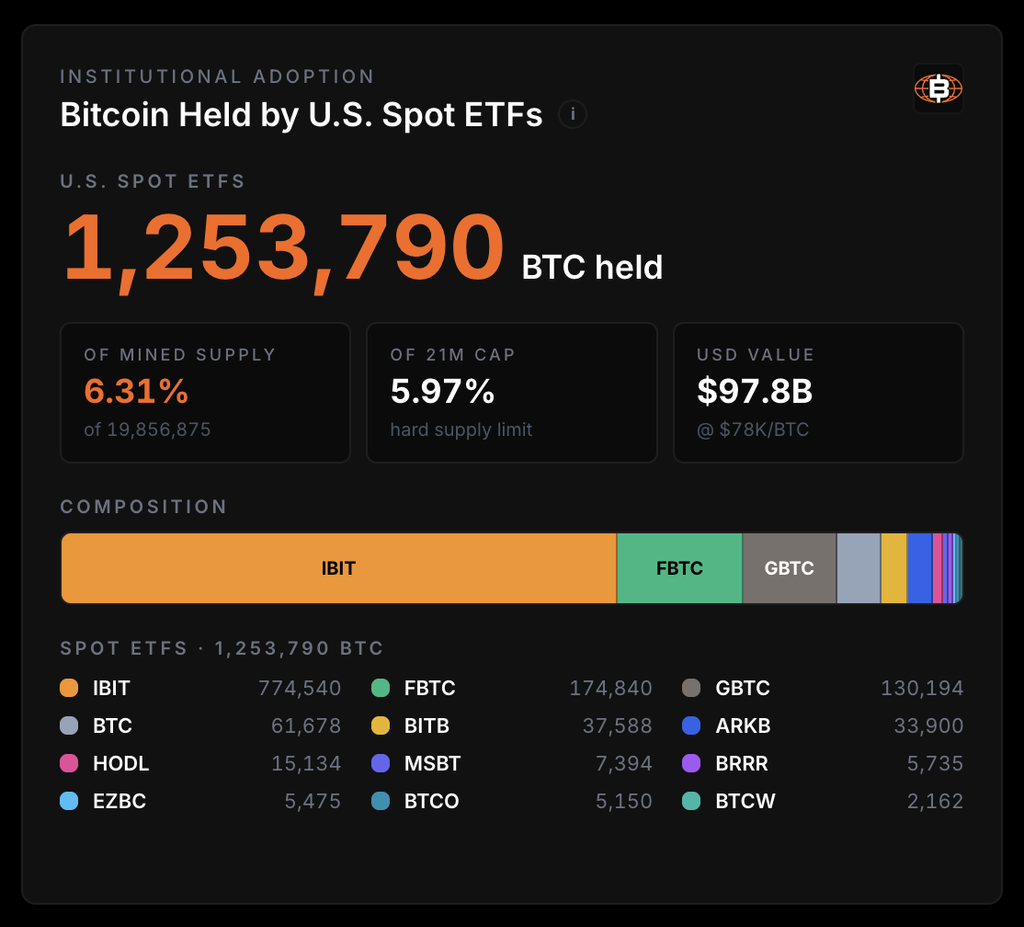
View the full Bitcoin ETF Dashboard.
That does not make BlackRock’s research independent of commercial context; IBIT is an important and increasingly valuable BlackRock product. That context should be understood rather than ignored. But it also means the firm’s reassessment is occurring alongside more than two years of observing how investors actually use Bitcoin exposure at scale.
The distinction is useful. The theoretical case for Bitcoin as a portfolio asset is increasingly being accompanied by observable allocation behavior. Investors have now had access to Bitcoin through familiar brokerage, advisory and institutional infrastructure across multiple market regimes, including periods of rapid appreciation and severe drawdowns. IBIT’s growth suggests that demand has persisted well beyond its initial launch window.
A drawdown is precisely when a thesis should be re-underwritten
The timing of BlackRock’s report may ultimately be more informative than the portfolio simulation itself.
Bitcoin is not being reassessed at an all-time high. BlackRock published the analysis after an approximately 50% drawdown from Bitcoin’s October 2025 peak, a period the firm associates with leveraged positioning being unwound, slowing ETP flows and weaker demand from companies accumulating Bitcoin. Its conclusion is that these forces represented a positioning correction rather than a fundamental change in Bitcoin’s investment case.
That is what re-underwriting is supposed to accomplish. An investment thesis should not survive because investors are attached to it; it should survive because its underlying assumptions continue to hold when conditions change.
For Bitcoin, those assumptions extend beyond historical returns. The asset remains scarce by design, globally liquid, independent of a sovereign issuer and structurally different from the liabilities that dominate traditional portfolios. BlackRock argues that concerns around fiscal sustainability, monetary stability and geopolitical risk may therefore become increasingly relevant to Bitcoin’s long-term adoption.
The portfolio evidence does not prove what Bitcoin will return over the next decade, nor does IBIT’s success establish what an appropriate allocation should be. What the two developments show together is that the institutional conversation has advanced considerably. Bitcoin is no longer being evaluated solely as an unconventional asset that institutions may or may not choose to own. It is increasingly being evaluated through the same disciplines applied elsewhere in capital allocation: sizing, risk contribution, correlation, liquidity, drawdown and expected return.
What this means for corporate leaders
For CFOs, boards and corporate operators, that evolution may be the most important takeaway from BlackRock’s work.
The relevant decision is not whether Bitcoin is volatile; that is already known. Nor does a corporate allocation need to resemble the concentrated Bitcoin strategies pursued by companies that have explicitly built their capital structures around the asset. Between zero exposure and a Bitcoin-centric balance sheet sits a much broader spectrum of possible allocations.
BlackRock’s research provides a useful framework for thinking about that spectrum. A relatively small allocation was sufficient to materially alter the historical return characteristics of a conventional portfolio without producing a comparable increase in portfolio-level risk. At 2%, approximately 190 basis points of additional annualized return came with roughly 50 basis points of additional annualized volatility in the period studied. The allocation was small; its effect was not.
For corporate leaders, the implication is less about adopting BlackRock’s specific allocation range than adopting the discipline behind the analysis. Bitcoin can be underwritten like any other strategic allocation: define its purpose, determine an acceptable risk contribution, establish liquidity and governance requirements, size the position accordingly and periodically revisit the assumptions.
That is a considerably more mature question than whether a company should simply “buy Bitcoin.”
As Bitcoin becomes more deeply integrated into institutional portfolios and financial infrastructure, the burden of analysis is shifting. The question facing the C-suite is increasingly not whether Bitcoin belongs in the conversation, but what allocation, if any, can be justified by the company’s objectives, constraints and cost of capital.
BlackRock has now re-underwritten that question after another full market cycle and a roughly 50% drawdown. Its historical portfolio math still makes the case that, in measured amounts, Bitcoin can improve the equation. For corporate decision-makers, that is the takeaway worth bringing into the boardroom.
Disclaimer: This content was prepared on behalf of Bitcoin For Corporations for informational purposes only. It reflects the author’s own analysis and opinion and should not be relied upon as investment advice. Nothing in this article constitutes an offer, invitation, or solicitation to purchase, sell, or subscribe for any security or financial product.
This post BlackRock Re-Underwrites Bitcoin, and the Portfolio Math Still Holds first appeared on Bitcoin Magazine and is written by Nick Ward.
HTTP error 429 on https://cryptoslate.com/feed/
Failed to fetch feed: https://cryptoslate.com/feed/
Failed to fetch feed.
HTTP error 429 on https://cryptoticker.io/en/feed/
Failed to fetch feed: https://cryptoticker.io/en/feed/
Failed to fetch feed.
Decrypt
The North Carolina Republican bought less than $1,000 of contracts on her own race and drew a three-year ban.
The open-source agent framework that started the "autonomous AI" hype cycle just shipped its biggest update ever, almost by accident, and it's coming for the enterprise now.
The deal, part of MediaTek's record $3.9 billion bond offering, ties Nvidia's chip ecosystem to a Taiwanese rival building its own AI accelerator business.
Trading on the Ethereum Layer 2 climbed 61% in a matter of days as DeFi deposits and stablecoin holdings approached $800 million.
Bitcoin has lost ground in eight of the last 13 Septembers. The stock market's had the same problem since 1928. Here's the case for the curse, what broke it last year, and what's coming in the next round.
U.Today - IT, AI and Fintech Daily News for You Today
Remixpoint liquidates all XRP, ETH, and Solana to pocket a ¥117 million profit and pivot entirely into Bitcoin.
Hyperliquid is being pressured by institutional investors who add more to the sell-side liquidity.
Another fake Grand Theft Auto VI leak is putting crypto users at risk.
Robinhood CEO Vlad Tenev has fueled fresh speculation that the trading platform could expand its memecoin offerings.
The amount is not the Bitcoin bull's personal debt, but the disclosure is very notable nonetheless.
Blockonomi
TLDR
- Crypto funds pulled in $3.2 billion last week, the largest weekly inflow since October 2025.
- BlackRock’s IBIT led the pack with $928 million, adding to $1.3 billion the week before.
- Ethereum, Solana, XRP, Hyperliquid, and Dogecoin funds all kept their inflow streaks alive.
- Crypto funds have averaged $1.3 billion in weekly inflows for four straight weeks.
- Bitcoin funds saw a brief outflow, pointing to a possible shift toward altcoins.
Crypto funds took in $3.2 billion last week. This is the biggest weekly inflow the sector has seen since October 2025.
The data comes from The Kobeissi Letter, which tracks fund flows across the crypto market. It shows investors are putting money into both crypto and gold funds at the same time.
BlackRock’s IBIT fund led the way. It brought in $928 million last week alone.
That follows $1.3 billion the week before. Together, IBIT pulled in more than $2.2 billion over two weeks.
Bitcoin was not the only asset getting attention. Ethereum, Solana, XRP, Hyperliquid, and Dogecoin funds also kept their inflow streaks going.
Four Weeks of Steady Inflows
Crypto funds have now averaged $1.3 billion in weekly inflows for four straight weeks. That is the strongest four-week pace the market has seen in about ten months.
The steady pace suggests demand has held up over time. It has not been a single spike.
But there is a twist in the data. Money appears to be moving from Bitcoin toward other coins.
A Shift From Bitcoin to Altcoins
U.S. Bitcoin funds saw a nine-day inflow streak come to an end. That week, they recorded $202 million in outflows.
Even so, Bitcoin funds still pulled in $925 million for the week overall. IBIT alone brought in $938 million during that stretch.
Ethereum funds told a different story. They saw $824 million in weekly inflows.
An extra $102 million came in on August 28. That extended Ethereum’s inflow streak to 10 sessions in a row.
Solana and XRP funds also picked up fresh money during the same period.
This pattern has led some analysts to suggest investors are shifting toward altcoins. The move appears to be happening ahead of what traders call the “September effect.”
Scott Melker, known online as “The Wolf of All Streets,” commented on the trend. He said, “The bid rotated. It did not reverse.”
His comment points to a change in where money is going, rather than a drop in overall demand.
The latest weekly numbers show crypto funds are still pulling in cash across the board. Bitcoin, Ethereum, Solana, XRP, Hyperliquid, and Dogecoin funds have all posted inflows in recent weeks.
The four-week streak of $1.3 billion in average weekly inflows remains intact as of the most recent data. Whether the rotation from Bitcoin to altcoins continues will depend on flows in the coming weeks.
The post Crypto Funds See $3.2 Billion Weekly Inflow, Largest Since 2025 appeared first on Blockonomi.
Key Highlights
- ARK Invest divested 7,450 AMD shares valued at approximately $3.4 million from two separate funds on September 1
- Over two consecutive trading sessions, ARK accumulated more than 700,000 Rocket Lab shares totaling approximately $44.5 million
- ARK acquired 456,059 Block shares valued at $38.1 million during a market dip
- To finance these acquisitions, ARK liquidated roughly $26 million in Palantir holdings along with positions in Tempus AI and Shopify
- Analyst consensus rates both AMD and Rocket Lab as Strong Buys, with price targets of $647 and $110.60 respectively
On September 1, Cathie Wood’s ARK Invest executed several significant portfolio adjustments, reducing exposure to certain technology names while deploying substantial capital into Rocket Lab and Block.
Rocket Lab USA, Inc., RKLB
Strategic Reductions in AMD and Palantir Positions
The investment firm offloaded a total of 7,450 Advanced Micro Devices shares from its ARKQ and ARKX portfolios. With AMD closing at $459.61, these transactions represented approximately $3.4 million in total value.
Despite this trimming, ARK maintains a significant AMD position valued at roughly $160 million across its exchange-traded funds. This represents a modest portfolio adjustment rather than a complete divestment.
Following AMD’s impressive performance trajectory, ARK appears to be capturing gains through standard portfolio rebalancing practices.
Additionally, the firm liquidated approximately $26 million worth of Palantir stock, alongside smaller holdings in Tempus AI and Shopify, generating capital for reinvestment elsewhere.
Substantial Capital Deployment in Rocket Lab and Block
ARK’s September 1 activity included purchasing over 504,000 Rocket Lab shares distributed across ARKK, ARKQ, and ARKX funds, representing approximately $31.6 million in value. This followed ARKK’s acquisition of another 200,303 shares the previous day for roughly $12.9 million. Combined, these transactions totaled more than 700,000 Rocket Lab shares.
Rocket Lab’s stock price has declined over 58% from its May peak. Wood’s buying activity suggests she’s capitalizing on the downturn.
Recent headwinds have weighed on the aerospace company’s valuation. NASA’s decision to award a Mars communications contract valued at up to $700 million to Jeff Bezos’ Blue Origin—bypassing Rocket Lab—disappointed investors. Additional concerns have emerged regarding insider stock sales and possible timeline extensions for the Neutron rocket initiative.
Despite these challenges, Rocket Lab delivered strong Q2 results with revenue climbing 62% to a record $234 million. The company’s backlog expanded 137% to reach $2.36 billion. Management continues to target Q4 2026 for Neutron’s arrival at the launch facility.
Simultaneously, ARK purchased 456,059 Block shares totaling $38.1 million as the stock declined 1.9%. This extends a sustained accumulation pattern that included approximately $21 million in purchases during early August and $15.4 million in mid-August.
Block’s second-quarter results showed gross profit reaching $3.17 billion, marking a 25% increase, with Cash App contributing 31% growth. The company achieved record adjusted operating income of $864 million.
Management elevated its 2026 gross profit projection to $12.51 billion and now anticipates adjusted earnings per share of $4.02, representing 70% year-over-year expansion.
Wall Street analysts maintain Strong Buy recommendations on both AMD and Rocket Lab. The consensus price target for AMD stands at $647.19, indicating 41% upside potential. Rocket Lab’s average analyst target of $110.60 implies possible gains of 77% over the next twelve months.
The post Cathie Wood’s ARK Invest Loads Up on Rocket Lab (RKLB) and Block While Reducing AMD (AMD) and Palantir (PLTR) appeared first on Blockonomi.
Crypto casinos use loyalty programs to reward players for continued activity, rather than just for signing up. There are different kinds of programs, and all of them are suited to different kinds of players, while having both benefits and downsides. The most common of these are: rakeback, cashback, VIP levels, loyalty points, and competitive leaderboards.
All of the programs provide some sort of benefit to the players, but before choosing which one to use, players should carefully consider how they use the casinos.
What Is a Crypto Casino Loyalty Program?
A crypto casino loyalty program is a rewards system that gives players benefits based on their activity. No KYC casinos don’t require players to verify their identity, but they do keep track of players’ activity and provide benefits for those who are regular customers.
Casinos have varying systems based on their policies. Some take into account the total wagering volume as the main qualification factor, while others take into account deposits or net losses and winnings. As players accumulate more activity, they unlock new tiers of benefits.
In a typical system, a player places wagers, and the casino keeps track of their contribution towards the loyalty program. Once they reach a milestone, a reward is awarded regardless of the player’s wins or losses.
Rakeback: Getting a Portion of Your Betting Activity Back
Rakeback is the most common loyalty system. It gives players a percentage of the casino’s theoretical house edge generated by their eligible wagers back. Unlike cashback, it’s not connected to betting activity, but rather to whether the player finishes a session with an overall loss.
It’s important for players to understand the calculation since the advertised percentage can be misleading. If a player makes $10.000 worth of wagers, they won’t get $500 if the rakeback applies. The percentage may instead apply to the theoretical house edge.
Players with a VIP status can also increase the rakeback. Some casinos credit it automatically, while others require players to claim their rewards. Certain products come with wagering requirements, while others allow players to make a withdrawal right away.
Cashback: A Reward Based on Losses
Cashback doesn’t reward every qualifying bet. Instead, it uses a player’s net losses over a defined period as its basis. The period ranges from days to months depending on the casino.
For example, if a player wagers $ 3,000 and loses $300 and there’s a cashback of 10 percent, the player will get $30 back. This means cashbacks are most profitable when the player loses. However, this doesn’t mean that cashback is cash you can withdraw and use right away. In many cases, it comes in the form of bonuses that have wagering requirements, maximum payouts, qualifying games, or other restrictions.
VIP Levels: How Players Move Up the Loyalty Ladder
VIP levels add a tier system to the loyalty program. Players normally progress through levels as they accumulate qualifying wagering or loyalty points. Casinos have different names for these tiers, but they are commonly known as Bronze, Silver, Gold, Platinum, and Diamond.
The most common benefits of VIP levels include:
- Higher rakeback rates
- More cashback offers
- Level-up bonuses
- Reload promotions
- Exclusive tournaments
- Dedicated VIP managers
- Higher limits
The biggest mistakes players can make are treating VIP status as a target in itself. If reaching the level requires the player to wager more, the rewards may not be worth the amount needed to achieve it. The program should reward normal play over time.
Leaderboards: Turning Gambling Into a Competition
Leaderboards add a competitive element to loyalty programs. The players don’t accumulate points. Instead, they are competing with others for position on a ranking table.
The qualification rules vary from one casino to another. Some do it based on wagering volume, wins, points, or activity during a specific promotion. Prizes can also differ based on the casino’s policy. Some offer crypto payments, bonus funds, free spins, and combinations of all of those prizes, as well.
What to Check Before Joining a Loyalty Program
There are a few main features that players should check before deciding to use a loyalty program. These are public, and the casinos are obligated to be transparent about them. Players should know if the rewards have an expiration date, if there are minimum wagering requirements, a maximum cashback or rakeback amount, and if there are withdrawal restrictions.
Conclusion
Casinos offer a variety of different loyalty programs to reward their players for coming back to the games and services they provide. These come in different forms, and they have strings attached. Players should be aware of those when choosing which systems to apply for and use.
The post Crypto Casino Loyalty Programs Explained: Rakeback, VIP Levels, Cashback and Leaderboards appeared first on Blockonomi.
TLDR
- Brent crude advanced to $95.55 while WTI climbed to $90.73 per barrel on Wednesday, marking three consecutive sessions of increases
- Fresh U.S. military operations targeted Iranian installations; Tehran responded with drone and missile attacks on American installations in Jordan and Bahrain
- Two crude-carrying supertankers sustained damage from unknown projectiles while transiting the Strait of Hormuz earlier this week
- Tehran’s crude shipments have plummeted dramatically, falling from approximately 2 million barrels daily in March to just 220,000-255,000 in August
- Treasury Secretary Scott Bessent suggested the Strait of Hormuz may become “worthless” within 24 months as regional producers develop alternative pipeline routes
Energy markets extended their rally for a third consecutive trading session on Wednesday as renewed military confrontations between Washington and Tehran heightened concerns over potential supply disruptions from one of the world’s most critical oil transit routes.
Brent crude futures advanced 0.9% to settle at $95.55 per barrel, after reaching an intraday peak of $97.04. West Texas Intermediate climbed 0.6% to close at $90.73 per barrel. Both major benchmarks had posted gains of nearly 5% during the previous trading session.
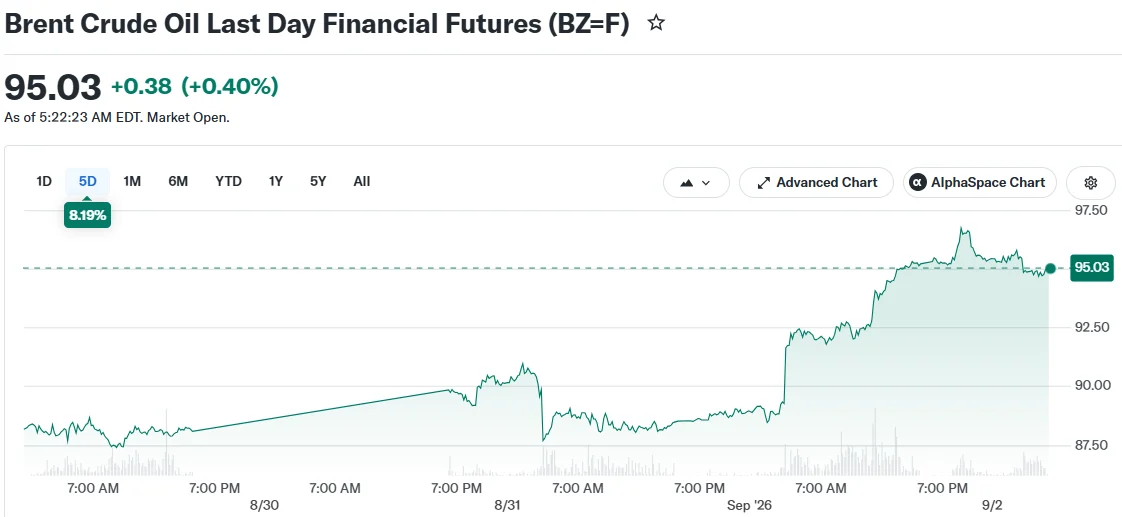
American military forces executed additional strikes on Tuesday, targeting facilities associated with Iran’s Revolutionary Guard Corps in the vicinity of Bandar Abbas and Chabahar. Tehran’s forces countered with missile and drone assaults directed at U.S. military installations stationed in Jordan and Bahrain.
President Trump characterized the operations as a response to Iranian efforts to deploy mines throughout the Strait of Hormuz and previous attacks on American positions in Jordan. He issued warnings of more substantial strikes should Iran choose to retaliate further.
Iranian officials communicated through government-controlled media channels that countermeasures would be forthcoming, identifying U.S. military installations and commercial interests throughout the region as possible targets.
Critical Waterway Faces Growing Threats
The ongoing military confrontations have intensified concerns surrounding crude shipments transiting the Strait of Hormuz, which historically facilitated approximately one-fifth of worldwide oil trade.
Earlier this week, a pair of supertankers transporting Saudi crude sustained hits from unidentified projectiles during their passage through the strategic waterway. Both vessels had been loaded with approximately 2 million barrels each at Saudi Arabia’s Juaymah export terminal.
“Despite the ongoing standoff between Washington and Tehran, we’ve observed continued oil movement through the Strait of Hormuz, but escalating tensions clearly elevate the risks for vessels making these crossings,” ING analysts noted.
The U.S. energy secretary reported that 17 million barrels successfully navigated the strait on Monday. Nevertheless, market analysts indicated that vessel-tracking information suggested lower actual volumes.
Tehran’s Crude Shipments Crater
Iranian crude shipments have experienced a dramatic decline since hostilities commenced. Reuters analysis revealed that loadings plunged to between 220,000 and 255,000 barrels per day during August, compared to approximately 2 million barrels per day in March.
Crude production from Persian Gulf nations has rebounded to roughly two-thirds of pre-conflict levels, according to Goldman Sachs estimates. A substantial portion of this oil is currently being transported through pipeline networks to Red Sea and Gulf of Oman terminals.
Treasury Secretary Scott Bessent indicated that Gulf producers, including the UAE, Saudi Arabia, and Iraq, are aggressively expanding pipeline infrastructure to bypass the strait entirely. He projected the waterway could become “worthless” within the next two years.
American crude stockpiles declined by 2.6 million barrels during the week concluding August 28, the American Petroleum Institute reported. This drawdown reversed a 4.2 million barrel build recorded the previous week.
ING analysts cautioned that middle distillate crack spreads, a crucial profitability indicator for refiners, are expected to remain elevated and unpredictable, particularly as seasonal consumption patterns accelerate.
The escalating conflict is also influencing U.S. monetary policy expectations. Market participants now assign approximately 70% probability to a Federal Reserve rate hike in September, as rising energy costs threaten to reignite inflationary pressures. The Fed’s upcoming September policy meeting has become a focal point for market observers.
The post Crude Oil Surges for Third Consecutive Session Amid U.S.-Iran Conflict in Persian Gulf appeared first on Blockonomi.
TLDR
- Two Thai businessmen sued Tether in a New York federal court over 42.4 million USDT frozen in October 2025.
- The plaintiffs say Tether blacklisted their wallets after an informal request from a Homeland Security agent, without a warrant.
- A seizure warrant arrived months later, in February 2026, but the plaintiffs’ specific tokens were still frozen when they filed suit.
- Prosecutors separately traced more than 61 million USDT to wallets linked to investment fraud schemes.
- The plaintiffs want the blacklist removed, their tokens returned, and damages if the funds are destroyed.
Two businessmen from Thailand have taken Tether to court. They filed a lawsuit on August 31 in the U.S. District Court for the Southern District of New York.
The men, Nutthawat Rukthammachalern and Natthawat Kasamvilas, say Tether froze their crypto without proper legal authority. The amount involved is about 42.4 million USDT.
According to the complaint, Tether blacklisted ten Ethereum addresses on October 30, 2025. Those addresses held exactly 42,417,785.62 USDT.
How the Freeze Happened
The plaintiffs claim Tether acted after getting an informal request from a Homeland Security Investigations agent. They say there was no warrant, court order, or subpoena at the time.
Kasamvilas found out about the freeze when he tried to make a transaction. It did not go through.
He then contacted Tether. The company allegedly pointed him to an HSI agent’s email instead of explaining the legal reason for the block.
Tether used a function in its smart contract called addBlackList. This stops tokens at certain addresses from moving.
The plaintiffs say they got the tokens through normal business deals on the secondary market. They claim they never had a direct account with Tether.
Their argument is that Tether having technical control over the contract does not mean it has legal rights over tokens owned by someone else.
The Warrant Came Later
A seizure warrant was issued on February 19, 2026, by a magistrate judge in North Carolina. The warrant told Tether to burn the USDT at the flagged addresses.
It also said Tether should mint new tokens and send them to a wallet controlled by the government.
Five days after the warrant, prosecutors announced they had seized more than $61 million in USDT. They said the funds came from wallets tied to investment scams, often called pig-butchering schemes.
Investigators said the case began with a tip from a victim. They traced the money through several wallets meant to hide where it came from.
The Justice Department thanked Tether for its help. Tether confirmed it took part in the $61 million operation.
But the new lawsuit says the plaintiffs’ 42.4 million USDT was still frozen when they filed their case. Court records do not show that these specific tokens were sent to the government wallet.
The lawsuit raises a bigger question. It asks whether a stablecoin company can freeze tokens based on an informal request, before any court gets involved.
The plaintiffs also argue the February warrant cannot retroactively make the October freeze legal. They are asking the court for an injunction, damages, and the return of any income earned from the frozen reserves.
Tether had not filed a public response to the lawsuit as of September 2. The claims include conversion, trespass to chattels, and unjust enrichment.
This is not an isolated freeze. Tether reportedly froze $514 million across 370 addresses in one month earlier in 2026.
Separately, the plaintiffs told the New York court they had already filed a request in North Carolina on July 31, asking for their USDT back. That request has not been decided either.
The post Tether Sued Over Frozen $42.4 Million USDT appeared first on Blockonomi.
HTTP error 429 on https://cryptopotato.com/feed/
Failed to fetch feed: https://cryptopotato.com/feed/
Failed to fetch feed.