Cryptocurrency Posts
Crypto Briefing
The EU's investment in Greenland strengthens geopolitical ties, countering US interests and highlighting the strategic importance of the Arctic.
The post EU invests €200M in Greenland to strengthen ties amid US claims appeared first on Crypto Briefing.
Aave's integration of USDe rewards in Ethena could enhance DeFi liquidity, attract yield-seekers, and stabilize synthetic dollar systems.
The post AAVE activates USDe rewards in Ethena ecosystem market on Ethereum appeared first on Crypto Briefing.
Osimhen's injury could disrupt Galatasaray's momentum, impacting their early-season performance and Champions League aspirations.
The post Victor Osimhen faces three-week absence after adductor strain in Galatasaray win appeared first on Crypto Briefing.
Stablecoin wallets' rise signals a shift in financial ecosystems, emphasizing integrated solutions and challenging traditional banking norms.
The post Stablecoin wallets challenge traditional bank accounts as main money hub appeared first on Crypto Briefing.
The surge in privacy coins highlights growing demand for anonymity in crypto, potentially reshaping market dynamics and regulatory focus.
The post Privacy coins rise 213%, leading crypto sector gains: Glassnode appeared first on Crypto Briefing.
Bitcoin Magazine
Bitcoin Magazine
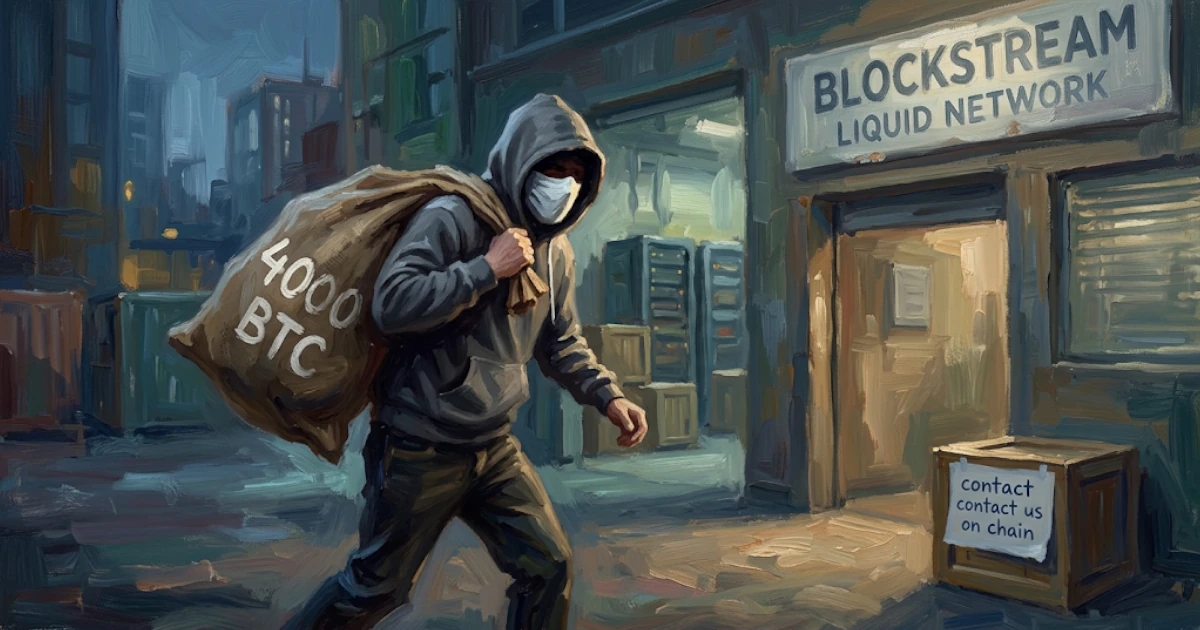
Alleged White-Hat Hackers Withdraw 4,000 bitcoin from Blockstream’s Liquid Network Federation Reserves
The Liquid Network said Sunday that purported white-hat hackers withdrew about 4,000 bitcoin, worth about $320 million, from the federation wallet that backs L-BTC. Bridge nodes were disabled, and the sidechain was paused. Other issued assets, including USDT, DePix and RWAs, were unaffected, the official account said on X.
The Liquid Network is a federated sidechain of Bitcoin, founded by Adam Back’s Blockstream. The Liquid chain issues a variety of assets such as LBTC, which it backs with BTC on the Bitcoin main chain, held in a large multisig of 15 corporate and known members. 11 of the 15 members need to sign a valid multi-signature transaction to move coins from the treasury. Before the hack, the treasury held over 4200 BTC; after the hack, Blockstream’s proof of reserves page reports a little over 207 BTC left.
The hackers withdrew 4,019.4 BTC from the reserve address in a peg-out transaction using the SideSwap Peg-out Authorization Key. SideWap is a bridge exchange and a member of the Liquid Federation. While details on the mechanism of the hack are not confirmed yet, it appears an inflation bug on the LBTC side chain was exploited by the hackers to create over 4,000 LBTC that did not exist before, and cash them out for on-chain bitcoin from the federation. Because the transaction appeared as valid, given the consensus bug, the federation members’ HSM security servers signed the BTC withdrawal transaction, worth roughly 320 million at the time.
The hacker moved the funds to an address ending in 6gyqjlte, from which they quickly signed a new transaction with a message on the OP_RETURN arbitrary data field saying “we are whitehats. contact us on chain.” Those coins were still at that address at the time of writing.
A small mainnet transaction to the hacker address followed by an OP_RETURN saying “Please contact security@blockstream.com”, presumably from a Blockstream public address, though that remains unconfirmed. A later OP_RETURN spend from the hacker address carried “Please contact us on Signal @m671aw.70”, however, this may be spam and does not share a link to the address with the stolen funds.
In response to the breach, exchanges were told to pause L-BTC deposits and withdrawals. Bridge nodes on the Liquid Network have been paused, limiting access to the side chain, which continues to produce blocks.
JAN3 CEO Samson Mow said Aqua’s Liquid features were affected and that on-chain bitcoin still worked. Other wallets in the industry that use the Liquid Network are expected to be affected. Users holding LBTC now effectively have their savings at risk, since the underlying BTC is currently not redeemable. Given the private nature of the Liquid chain, user onchain analytics are scarce and not much public information is known about how much LBTC is held by retail users versus corporations of Blockstream itself. Nevertheless, should the funds not be returned, it would be a heavy blow to the Liquid Network’s user base.
Users of LBTC don’t have many options but to wait for conversations with the hackers to resolve. Given the size of the hack, it would be difficult for the hackers to get away with stealing all that bitcoin, though perhaps not impossible. What may happen is that the hackers ask for a finder’s fee and return the majority of the funds.
This post Alleged White-Hat Hackers Withdraw 4,000 bitcoin from Blockstream’s Liquid Network Federation Reserves first appeared on Bitcoin Magazine and is written by Juan Galt.
Bitcoin Magazine
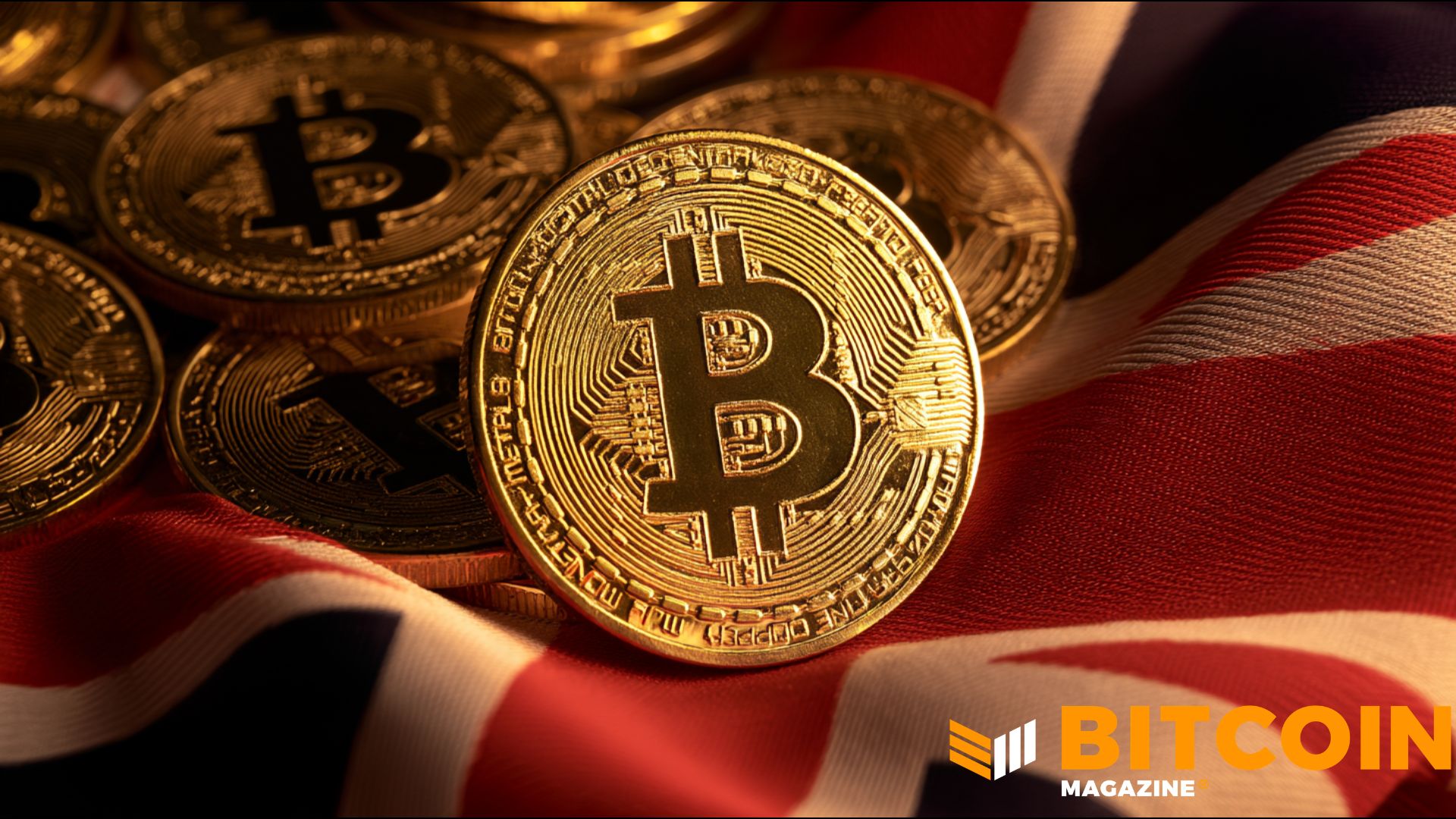
Hargreaves Lansdown Reverses Course, Rolls Out Bitcoin Trading
British financial services firm Hargreaves Lansdown is letting retail investors buy bitcoin — nearly one year after it said the cryptocurrency was “not an asset class.”
The Bristol, UK-based investment firm’s website said it was offering bitcoin and other crypto exchange-traded notes to investors. ETNs are investment funds which trade on stock exchanges and track the prices of digital assets.
It comes after the firm, which manages nearly £173 billion (over $233 billion) in assets, last year warned customers about buying bitcoin.
NEW:
— Bitcoin Magazine (@BitcoinMagazine) September 4, 2026U.K.'s largest investment platform Hargreaves Lansdown is now offering Bitcoin products to 2 million clients!
pic.twitter.com/GgdeHK8vyM
“While longer-term returns of Bitcoin have been positive, Bitcoin has experienced several periods of extreme losses and is a highly volatile investment — much riskier than stocks or bonds,” the firm said at the time.
“The HL Investment view is that Bitcoin is not an asset class, and we do not think cryptocurrency has characteristics that mean it should be included in portfolios for growth or income and shouldn’t be relied upon to help clients meet their financial goals.”
Now, a number of ETNs tracking the price of bitcoin and other cryptocurrencies are available. The firm warns users that “crypto ETNs are considered high-risk and may be volatile.”
U.S. regulator the Securities and Exchange Commission in 2024 approved bitcoin exchange-traded funds for investors after a decade of saying no to the products.
The funds had the most successful debut in the history of ETFs as investors previously unable to buy exposure to the asset class rushed in to buy the products.
Run by top asset managers and banks like BlackRock, Fidelity, and Morgan Stanley, the investment vehicles now collectively manage over $100 billion in assets.
This post Hargreaves Lansdown Reverses Course, Rolls Out Bitcoin Trading first appeared on Bitcoin Magazine and is written by Mathew Di Salvo.
Bitcoin Magazine
Trezor Breach Worse Than Reported: Another 67,000 US Customers Exposed
Hardware wallet manufacturer Trezor has said that a data breach first announced last month is worse than originally reported.
The Prague, Czech Republic-based company said Friday that an additional 67,000 U.S. customers had their names, emails, phone numbers, shipping addresses and order numbers leaked. The leaked data came from orders made between November 2019 and August 2021, according to Trezor.
Trezor first announced in August that data from 11,742 customers from the U.S., UK, Sweden, Colombia, Brazil, Italy, and Portugal had been exposed — with names, emails, phone numbers and shipping addresses leaked.
Another 1,947 customers just had their names, cities and emails exposed in the breach.
In Friday’s announcement, Trezor said that its third-party fulfillment partner, ShipMonk, had falsely reassured the company about deleting customer data.
“Throughout our entire relationship with ShipMonk, we repeatedly requested and received written assurance confirming the deletion of the data, in line with our contract, data policy, and past communications,” Trezor wrote.
“We are very disappointed that, despite receiving this confirmation, the data was not deleted in their systems.”
Neither Trezor nor ShipMonk immediately responded to Bitcoin Magazine’s questions.
Trezor first announced in August that the data had been leaked because ShipMonk experienced “unauthorized access to their systems containing customer data.”
The company added that it had directly emailed all customers involved in the breach. Trezor’s parent company, SatoshiLabs, told Bitcoin Magazine last month that it was investigating the incident.
Trezor is one of the most popular Bitcoin hardware wallet solutions, and also has support for storing other cryptocurrencies.
Bitcoiners’ personal data has been targeted by cybercriminals in the past: back in 2020, an unauthorized party accessed popular hardware manufacturer Ledger’s e-commerce and marketing database, leaking over 1 million email addresses and the personal contact data of nearly 10,000 customers.
At the start of this year, customers reported receiving emails from Global-e, Ledger’s payment partner, that a data breach at its cloud systems leaked sensitive customer data.
This post Trezor Breach Worse Than Reported: Another 67,000 US Customers Exposed first appeared on Bitcoin Magazine and is written by Mathew Di Salvo.
Bitcoin Magazine
El Salvador Isn’t Buying Bitcoin With Public Money, Says IMF
El Salvador has not used public funds to accumulate bitcoin since the International Monetary Fund’s last review of its loan program, the fund said Thursday.
In a report Thursday, the body said that the Central American country had instead received bitcoin from private donations, citing documentation from the government. It added that “no further Bitcoin accumulation beyond the documented donations is expected.”
El Salvador made headlines in 2021 when it became the first country in the world to make bitcoin legal tender. Salvadoran president Nayib Bukele in 2022 said the country would buy one bitcoin per day but it was never clear where the money was coming from — or if he was actually buying at all.
“Documentation has been provided verifying that Bitcoin accumulation since the first review reflects private donations and that no public resources were used,” the IMF release said.
“Understandings were also reached on steps to modernize the legal, regulatory, and supervisory framework for digital assets and to further strengthen the governance and risk-management arrangements for public-sector crypto-asset holdings. Going forward, no further bitcoin accumulation beyond the documented donations is expected.”
The report added that public participation in the government-sponsored bitcoin wallet has been largely wound down, with majority ownership and operational control handed to a private operator.
El Salvador in 2021 debuted a state-sponsored wallet called Chivo for its citizens as part of its plan to increase bitcoin adoption in the country.
“IMF staff thank the Salvadoran authorities for the constructive discussions and excellent collaboration,” the report added.
The IMF El Salvador entered a $1.4 billion loan agreement at the end of December but the fund asked for the country to scale back certain aspects of its bitcoin strategy.
Institutions like the World Bank and the IMF have long criticized President Bukele’s Bitcoin law, which also asked businesses to accept the cryptocurrency if they had the technological means to do so.
President Bukele in 2024 admitted that Salvadorans weren’t using the cryptocurrency to buy things as expected, but always boasted that the government was still stacking sats.
Since launching a crime crackdown to tackle the country’s notorious crime gangs, murder rates in El Salvador have plunged. The country was once the most dangerous place in the Americas but President Bukele is now trying to turn it into a tech hub.
Crypto companies like Tether have since relocated to its capital, San Salvador.
This post El Salvador Isn’t Buying Bitcoin With Public Money, Says IMF first appeared on Bitcoin Magazine and is written by Mathew Di Salvo.
Bitcoin Magazine
Bitcoin Dips Below $80,000 on Strong US Jobs Report
Bitcoin slid Friday after a better-than-expected labor report showed that the U.S. job market accelerated in August.
The leading cryptocurrency was recently trading for close to $79,764 after dropping as low as $78,706 earlier in the morning in New York. It’s currently down over 1% over a 24-hour period. On Thursday, the coin soared above $82,000.
The Federal Reserve is typically more likely to raise interest rates when the labor market is strong, because more people employed means more spending, and more spending can push inflation up.
Federal Reserve Chair Kevin Warsh last week gave his first major speech as head of the U.S. central bank and said he had “more work to do” to fight inflation. Bitcoin has typically done well in a low-interest rate environment.
Traders currently view a U.S. Federal Reserve interest rate hike at the upcoming September 15–16 policy meeting as roughly a 50% to 60% probability.
But U.S. President Donald Trump on Friday demanded the Federal Reserve slash interest rates.
Writing on his social media platform Truth Social, Trump said: “Lower the interest rates because the U.S.A. is a much stronger credit than it was just a short time ago!”
He added: “We should have the LOWEST RATE of any country in the World, like ‘the old days.'”
Bitcoin has decoupled from stocks recently as investors have renewed concerns around dollar debasement.
The cryptocurrency started surging last month, after the U.S. Treasury Department said it would more than double the size of its government debt repurchases. The coin had its best run in three years and third best August ever.
The much-talked about debasement trade is back in the spotlight, and bitcoin has been trading in lockstep with gold, according to analysts. The so-called debasement trade is when investors buy an asset as a way to hedge against a currency losing value.
News dropped last month that U.S. public debt exceeded $40 trillion for the first time too. Excessive debt also undermines confidence in the dollar, making assets like bitcoin and gold attractive.
This post Bitcoin Dips Below $80,000 on Strong US Jobs Report first appeared on Bitcoin Magazine and is written by Mathew Di Salvo.
HTTP error 429 on https://cryptoslate.com/feed/
Failed to fetch feed: https://cryptoslate.com/feed/
Failed to fetch feed.
CryptoTicker.io
On the Liquid Network, the best-known Bitcoin sidechain, around 4,000 Bitcoin drained out of the shared reserve on September 6, 2026. The network has been halted since then, L-BTC currently cannot be swapped back into real Bitcoin, and several trading venues have stopped deposits and withdrawals of the token. If you hold L-BTC or use a wallet that supports Liquid, your most important task today is taking stock rather than trading.
The incident is unusual because no key was stolen. The payout was cryptographically valid. That is precisely what makes the case interesting for anyone who holds Bitcoin through a second layer.
What happened on the Liquid Network on September 6
According to several specialist outlets, between 3,998.5 and 4,019.4 Bitcoin were withdrawn from what is known as the federation wallet of the Liquid Network. At the time of the outflow the value stood at roughly $319 million to $320 million. The range arises because individual newsrooms draw the boundaries of the movement differently: tftc.io counts 3,998.5 BTC based on the on-chain data, while Bitcoin Magazine cites 4,019.4 BTC. The Liquid team itself officially speaks of around 4,000 Bitcoin.
Cryptopolitan dates the decisive transaction to Bitcoin block 965,783, confirmed on September 6, 2026 at 14:28:56 UTC. According to the analysis by tftc.io, 207.275 BTC remained in the federation wallet afterwards. Before that there were around 4,200 BTC. So roughly five percent of the reserve was left standing.
Shortly afterwards the network pulled the emergency brake. The bridge nodes were shut down, and new deposits and withdrawals between Bitcoin and Liquid are blocked. The sidechain itself continues to produce blocks, but the route back into the Bitcoin network is closed. No date for a restart has been given so far.
Peg-out, federation and PAK: how the Liquid Bitcoin bridge normally works
To understand why this case is different from an ordinary exchange hack, you need three terms.
A sidechain is an independent blockchain that is docked onto a main chain and represents its coins in wrapped form. L-BTC is the Bitcoin proxy on Liquid: a token that is meant to be backed one to one by real Bitcoin held jointly by a group of companies. That group is called the federation, and it is the actual custodian.
The way in is called a peg-in, the way out a peg-out: you lock real Bitcoin, are credited with the same amount of L-BTC, and can reverse the process later. In a peg-out the L-BTC on the sidechain are destroyed and the federation releases the real Bitcoin in return. So that no single party can do this alone, Liquid requires, as tftc.io describes it, a multisignature from eleven of the fifteen federation members plus authorisation via an allow list, the Peg-out Authorization Key, or PAK for short. A PAK is therefore the registered key that determines which Bitcoin address may be paid out to at all.
On September 6 the payout ran through the PAK of the SideSwap service. The network stresses that this key was not compromised, and that no key otherwise fell into the wrong hands. The signatures were genuine, the authorisation formally correct, and the federation did what it was built to do. The gap sat one layer earlier.
The flaw was in the software, not in the keyring
Several reports trace the process back to a bug in Elements, the open-source software Liquid is built on. The accounts differ in detail, and that difference is worth knowing rather than skimming past.
Bitcoin Magazine describes an inflation bug: more than 4,000 L-BTC are said to have been created without real Bitcoin behind them, and these were then paid out via the SideSwap PAK. A second reading, quoted in several reports, describes the sequence as an apparently regular process in which L-BTC were properly burned and just under 4,000 real Bitcoin were released as a result. Both variants lead to the same outcome: the sidechain's accounting and the federation's actual Bitcoin holdings no longer matched.
A conclusive technical post-mortem by the operators was not available at the time of writing. As long as it is missing, any statement about the exact place in the code is conjecture, and we treat it as such here.

"We are whitehats": what this on-chain message actually proves
In a follow-up transaction the other side left the message "we are whitehats. contact us on chain". In IT security a white hat is someone who finds a vulnerability and discloses it instead of exploiting it. Here the label is a self-description, no more than that.
What can be established: according to consistent reports, the Bitcoin are sitting untouched at the receiving address. Blockstream and the Liquid team are trying to make contact through signed on-chain messages. One of the reports states that the other side has held out the prospect of returning most of the sum once the Elements vulnerability is closed network-wide. That undertaking is not confirmed, and no repayment has been made to date.
For you as a holder, the choice of words changes nothing. Whether someone calls themselves a white hat does not decide whether your money comes back. Only the actual return decides that.
L-BTC is frozen: what holders should check right now
The unpleasant news first: anyone holding L-BTC can do little at the moment. The peg-out is blocked, so a swap into real Bitcoin is not possible for the time being. There is no button that solves the problem for you.
An orderly stocktake still makes sense. Open your wallets and look at whether there is any Liquid balance among them at all. The wallets mainly affected are those that support Liquid, such as SideSwap, Blockstream Green or Aqua, along with balances at trading venues that list L-BTC. If you are unsure whether a holding sits on Liquid or on the Bitcoin base layer, a look at the address format and the block explorer used will help. Note down the position with date and time so that you have a solid starting figure later, should any settlement arrangement come about.
Refrain from attempting new peg-ins now. As long as the bridge nodes are switched off, the best case is that you are sending Bitcoin into a queue whose resolution nobody can schedule. And treat offers that promise you a quick payout of your L-BTC for a fee with caution. Situations like this tend to attract fraud attempts posing as support.
USDt, DePix and RWAs on Liquid: why these assets are affected differently
Liquid carries more than wrapped Bitcoin. The official network account has stated that other issued assets are unaffected, among them the stablecoin USDt, the Brazilian DePix and tokenised real-world assets.
That is technically plausible: these tokens do not hang on the federation's Bitcoin reserve, and their backing sits with the respective issuers. The outflow from the federation wallet therefore does not touch them. In practice a problem remains, because as long as the network is halted you can move these assets only to a limited extent as well. Being unaffected and being freely available are two different things at the moment.
Exchanges halt L-BTC deposits and withdrawals: where to check the status
Several trading venues have suspended deposits and withdrawals of L-BTC or announced that they will. What counts here is solely the status page of your own provider together with its announcements, and not the summary in a news feed. That is where you will find whether only transfers are affected or trading too, and whether withdrawals in real Bitcoin remain possible by another route.
In a situation like this, pay particular attention to which networks a provider supports for deposits and withdrawals at all, and how quickly and openly it communicates about disruptions. Anyone with balances spread across several venues should go through this check today for every one of them, and not only for the one they use daily.
Sidechain, bridge, wrapped token: the counterparty risk behind every wrapped Bitcoin
The sentence that sticks from this case comes from the analysis by tftc.io: L-BTC holders had no direct claim on the underlying Bitcoin, and their risk was against a consortium of companies rather than against the Bitcoin protocol.
This is not a peculiarity of Liquid. It applies to every wrapped Bitcoin on every foreign chain. A wrapped token is a placeholder that represents on one blockchain the quantity of a coin held somewhere else. Its value hangs on two conditions: the backing has to exist, and redemption has to work. If either falls away, you hold a claim whose enforceability you may well not know.
Sidechains and bridges buy you something with real advantages in return: faster and cheaper transfers, confidential amounts, applications that do not run on the Bitcoin base layer. Anyone using them should make that trade deliberately rather than in passing. A useful rule of thumb: what sits on a second layer is working capital. What is meant to stay put for the long run belongs on the base layer in your own custody, as we described after the Coldcard incident in our assessment of the hardware wallet choice.
What the case means for your own custody
The key difference between this incident and a classic theft is the point of attack. Storing good keys well was of no help here, because the keys were fine. What broke is the rule that decides when those keys are allowed to sign.
From that follows an uncomfortable insight: the security of your holdings does not end at your own wallet. What matters is the whole chain of systems standing between you and the base layer. For a Bitcoin in your hardware wallet that chain is short. For an L-BTC in a software wallet, backed by a federation, secured through an allow list, paid out via a service with its own registered key, it is long.
In practice that means three things. Keep the amount on second layers small enough that a total loss does not knock you off course. For every wrapped token, check who the custodian is and whether one is even named. And document your holdings regularly, so that in an incident you have figures rather than memories.
What remains open
Three points were unresolved at the time of writing. There is no date for the network to restart. There is no commitment from the operators on how L-BTC balances will be handled if the Bitcoin do not come back. And there is no independent confirmation that the other side will actually repay. Anyone telling you today that the case is settled knows more than can be evidenced.
Liquid peg-out and checking your L-BTC: what to take away
- Establish and document your holdings. Open every wallet and every account today and record whether and how much L-BTC or other Liquid balance is sitting there, with date and time. Our crypto exchange comparison helps when you reconcile the networks and withdrawal routes of your trading venues.
- Send nothing new into the blocked bridge. Avoid peg-ins as long as the bridge nodes are switched off, and read the status exclusively at your provider and at the network operator. Which wallet supports Liquid at all, and how transparently it discloses that, is shown in our software wallet comparison.
- Bring long-term holdings onto the base layer. Separate working capital from reserves and self-custody the part that is meant to stay put. Which devices come into question and how to tell them apart is in our hardware wallet comparison.
(As of September 7, 2026. This article is not investment advice. Prices and fee structures change; check the terms with the provider before you buy.)
Filecoin's vesting of Protocol Labs and the Filecoin Foundation ends on October 15, 2026. It is the largest inflow channel for new FIL since mainnet launched, and it dries up completely on that day. Gross emission, meaning the volume of FIL that enters circulation each year, falls by roughly 75 percent as a result: from about 88 million to about 22 million tokens a year. As a holder you need to do nothing on that date. No deadline expires, no swap is required. What changes is the mechanism behind it, and that is worth understanding before the day arrives.
The Filecoin price stood at $0.8173, or €0.7034, on September 7, 2026 at 06:36 UTC, up 1.69 percent over 24 hours, with a market capitalisation of around $676 million (source: CoinGecko API, own query at that time). Circulating supply was 826,950,326 FIL. That figure is the denominator for everything that follows, because emission numbers say little without a reference to circulating supply. If you hold FIL or want to build a position, what matters most is where you buy and how cheaply you get in: our comparison of the best crypto exchanges shows which venues list FIL and what they charge in fees.
What happens to Filecoin vesting on October 15, 2026
Vesting describes a lock-up period over which allocated tokens are released step by step instead of becoming available all at once. At Filecoin it covers the allocations to the development team Protocol Labs and to the Filecoin Foundation. The official documentation states the period in plain terms: a defined share of the FIL minted at genesis is released to Protocol Labs teams and the Filecoin Foundation over six years, and to SAFT investors over three years (docs.filecoin.io).
Six years from the mainnet launch land in precisely this October. Mainnet started at epoch 148,888, which corresponds to October 15, 2020 at 14:44 UTC. The announced end date therefore follows straight from a schedule that has sat in the protocol since 2020. Nothing about it is new except the fact that it now comes due.
Where new FIL has come from so far: vesting and block rewards
New FIL arises from two sources at Filecoin. One is block rewards, the payments storage providers receive for supplying and proving storage capacity. The other is that vesting. According to figures from the project source FilecoinTLDR, vesting from Protocol Labs and the Filecoin Foundation contributes around 66.7 million FIL a year, block rewards around 21.7 million. Together that is just under 10 percent of circulating supply per year, as the source puts it.
Measured against current circulating supply, the figure holds up: 66.7 million equals 8.07 percent of 826,950,326 FIL, and the 22 million from block rewards equal 2.66 percent. Together, 10.73 percent. For anyone who prefers a daily number: at 88.4 million FIL a year that works out at roughly 242,000 new FIL per day, after which about 60,000 remain. The difference of some 182,000 FIL a day was worth about €128,000 on September 7.
Why gross FIL emission falls by roughly 75 percent
The arithmetic behind it is unspectacular. Of the two inflows, the larger one disappears and the smaller one stays. 66.7 out of 88.4 million is a good 75 percent, and that is exactly how the primary source states it: on October 15 this source dries up and cuts gross emission by about 75 percent. What remains is block rewards alone, around 22 million FIL a year, or a little over 2 percent of circulating supply.
Gross emission here refers exclusively to the inflow: everything that newly enters circulation, without netting off what leaves it. This distinction is the heart of the whole topic, and it gets lost in most headlines.
Vesting, emission and circulating supply: the terms kept apart
Three terms are regularly thrown together around this date. It helps to pin each of them down.
Circulating supply is the volume of FIL that is freely tradable. On September 7 that value stood at 826,950,326 tokens. Total supply of all FIL ever minted is 1,957,088,873 tokens, so roughly 42 percent of it is in circulation. Emission describes the speed at which new tokens are added. And net supply is emission less whatever disappears from circulation.
Only emission changes on October 15. Circulating supply does not fall that day; it simply grows more slowly afterwards. Anyone waiting for a jump in the statistics in October will wait in vain. The effect shows up as a flatter curve over months rather than as an edge on a single day.

Why lower emission does not automatically mean less FIL supply
This is where the real stumbling block lies, and the project source spells it out itself: the end of vesting changes what comes into circulation, but not what circulating supply does afterwards. Burns and the locking of collateral decide the rest.
That is not a footnote but the condition attached to every statement about future supply. A network can halve its emission and still have more liquid tokens in the market if locked holdings are freed at the same time. The reverse also holds: available supply can shrink at unchanged emission when more tokens are locked or destroyed than are added.
Collateral locking and burns: the other side of the FIL supply calculation
Two mechanisms continuously withdraw tokens from Filecoin circulation. The first is collateral locking: storage providers have to post FIL as collateral before they may offer storage capacity, and that pledge stays locked for the term of the storage commitment. As long as the volume of offered storage rises, the locked balance grows with it. The second mechanism is burns: part of the network fees is destroyed permanently, and collateral is forfeited when storage commitments are breached.
Both quantities depend on actual use of the network, and they move independently of the vesting calendar. That is why the October 15 date supports no statement about how the freely tradable volume of FIL develops afterwards. What can be said is this: the one large factor that has so far pulled reliably in a single direction falls away, and the remaining calculation is settled by demand.
What the FIL supply simulation says and what it expressly is not
On future net supply, FilecoinTLDR cites a range from its own tokenomics simulator: depending on the state of the network, daily net growth in supply could sit some 86 to 119 percent below the August 2026 level by the end of 2027. At the upper end of that range the daily balance turns negative, meaning more FIL would leave circulation than enters it.
The source flags these figures in the same breath as modelled scenarios and expressly not as forecasts. The outcome hangs on factors such as demand within the network, block rewards, collateral and burns. Anyone passing this range on as a price target has suppressed the source's own framing. We therefore reproduce it exactly as it stands there: an arithmetic exercise under assumptions, and no statement about the market.
That caution is the exception in the German-language space. On the emission date itself there is so far practically nothing in German, while search results on Filecoin are dominated by chart technicals and price targets. Precisely for that reason, the distinction between mechanism and forecast matters more here than any single number.
FIP-0118 Solstice: the second change to Filecoin economics in Q4
The vesting date is not the only change to the economics of the network this quarter. The improvement proposal FIP-0118, named Solstice, was accepted in September and is waiting to be scheduled into a network upgrade. The state of the specification we refer to here is that of September 1, 2026, and details may still change before delivery.
Substantively it concerns the question of what block rewards are paid out for. Today storage providers receive rewards based on their storage performance, regardless of whether anyone pays for that storage. Under Solstice a share of block rewards would flow to services that bring paying usage into the network, and that share would only be paid out if the payment volume settled through Filecoin Pay reaches targets set in advance. If the targets are missed, the corresponding share is burned instead of paid. In addition, the human review in the Fil+ process would fall away: every new sector would start automatically with the tenfold quality-adjusted power multiplier.
For the supply side this means a further part of emission would be tied to actual demand, with burning as the fallback. Whether and when this arrives is still open.
How demand for Filecoin storage is developing right now
Because future net supply hangs on usage, the figures the project publishes on it are worth a look. The annualised run rate of Filecoin Pay, through which payments in the network are settled, rose from $663 in January to $59,327 at the end of August 2026, according to FilecoinTLDR. The number of actively paying addresses grew from 73 to 119 over the same period, and the number of active settlement channels stood at 865 in August.
That is growth from a very small base, and it should be read that way: a run rate in the low five-figure dollar range sits against a market capitalisation of around $676 million. Alongside it, Fil One has offered an S3-compatible object store since June, priced at $4.99 per terabyte per month with no charges for outbound data transfer. Whether that turns into paying demand on a scale that noticeably drives burns is open, and it can be tracked through exactly these figures.
How to check the date and the FIL emission yourself
You do not have to take any report on trust to verify the date. Filecoin writes a block every 30 seconds, and these blocks are numbered consecutively. Epoch 0 falls on August 24, 2020 at 22:00 UTC. From the current block height, any date can be calculated in either direction.
On September 7, 2026 at 06:36 UTC the chain stood at height 6,348,552, retrieved via the public Glif node. Counting up from epoch 0 at 30 seconds per block lands exactly on that time, so the calculation holds to the second. October 15, 2026 at 00:00 UTC corresponds to epoch 6,457,200. Between the two points lie 108,648 epochs, or 37.7 days. If you want to follow the number yourself, pull the block height and divide the difference to the target moment by 30 seconds.
The second verifiable quantity is circulating supply. Note it down today and compare it in November: at an emission of around 88 million FIL a year, circulation grows by about 7.4 million a month, and at 22 million a year by only some 1.8 million. You will see that difference in the data set of any major market data source within a few weeks. We have described at length how to recalculate such release volumes yourself instead of trusting an aggregator, using one concrete unlock as the example: recalculating a token unlock. The method is the same here, only the direction is reversed.
Do FIL holders need to act before October 15?
No. There is no deadline that expires for you, no swap, no registration and no freeze on deposits or withdrawals. The date concerns the release of tokens to the team and the foundation behind the project, and not the holdings of investors. Anyone with FIL sitting on an exchange or in their own wallet can do exactly the same on October 15 as on the 14th.
This is the point where the date differs from those events that do create pressure to act. With an announced trading halt or a withdrawal deadline at an exchange you have to react, otherwise your balance is blocked. Here it works the other way round: doing nothing costs you nothing. It is still worth knowing the difference between the two cases, because headlines tend to treat them alike.
What the date means for custody and tax
Indirectly there are two points of contact. The first concerns custody. If you want to hold FIL for years because the supply mechanism convinces you, the question becomes where those tokens sit. Holdings on a trading platform belong to you economically but carry the platform's risk. Anyone who wants to separate the two holds their own coins and needs a wallet that supports FIL at all. Not every device does, and the differences lie less in the price than in which networks the manufacturer maintains.
The second point is tax. In Germany, selling crypto assets after a holding period of more than one year is tax-free for private individuals, and within that period the exemption limit for private disposal transactions applies. Anyone reallocating because of an expected supply squeeze may trigger a taxable event by doing so, regardless of whether the expectation is borne out. Clean records of acquisition dates are therefore the precondition for knowing what a sale actually costs.
How this date fits the run of FIL supply events
At many projects, releases and lock-ups shape supply more strongly than any partnership announcement. Usually the subject is additional tokens coming to market, as with the monthly releases we last worked through using LayerZero and its ZRO token. Filecoin now stands at the other end of that pattern: here an inflow ends that ran reliably for six years.
For context that means two things. First, the effect is structural and works over months, whereas a single unlock is measurable on one day. Second, the end of an inflow is the weaker of the two statements, because it touches only one half of the equation. What counts in the end is the balance of inflow, locking and burning, and at Filecoin that balance depends more heavily on network usage from mid-October than ever before.
Filecoin vesting: what to take away
- Check the date yourself instead of taking it over. The block height and the 30-second epochs give you the date to the second, and circulating supply will show you from November whether emission has actually flattened. If you need a venue that lists FIL for this, you will find the terms in our crypto exchange comparison.
- Keep emission and supply apart. The 75 percent refers to the inflow, and not to the tradable volume. Anyone holding for the long run should set up custody accordingly; the differences between devices are in our hardware wallet comparison.
- Factor in tax before you reallocate. If you sell on a supply expectation, you should know the holding period of each individual purchase. Tools that track this automatically are in our comparison of tax tools and portfolio trackers.
(As of September 7, 2026. This article is not investment advice. Prices and fee structures change; check the terms with the provider before you buy.)
Bitcoin's oldest sidechain just lost almost everything it was holding, and the person who took it is asking politely how to give it back.
On Saturday, 6 September 2026, roughly 4,000 $BTC worth about $320 million left the federation wallet that backs Liquid Network, the Blockstream-built Bitcoin sidechain that has been running since 2018. The wallet held around 4,200 BTC before the incident. It now holds a little over 200. That is about 95% of every Bitcoin ever pegged into Liquid, gone in the space of 23 minutes.
Then things got strange. The attacker attached a message to a Bitcoin transaction announcing himself as a white hat and inviting Blockstream to get in touch. Blockstream did. The two sides have spent the weekend negotiating a $320 million return in public, one small Bitcoin transaction at a time.
What Actually Happened In The Liquid Network Hack?
The timeline is unusually clean, because most of it is on the Bitcoin blockchain.
At 14:05 UTC on 6 September, a customer sent 4,000 L-BTC to SideSwap's peg-out service. SideSwap is a Liquid Federation member and a normal, approved route for converting L-BTC back into real Bitcoin. It processed the order like any other: the L-BTC was burned on Liquid, a valid peg-out authorisation was attached, and 23 minutes later the federation paid out roughly 3,996 BTC on the Bitcoin mainchain.
Nothing about that transaction looked wrong. It was confirmed in Bitcoin block 965,783 at 14:28:56 UTC, and the coins landed in a single address holding just under 4,000 BTC.
Shortly afterwards, that same address broadcast a tiny second transaction carrying an OP_RETURN message: the sender identified himself as a white hat and asked to be contacted on-chain. Blockstream replied the same way, sending 1,000 satoshis to the address in block 965,822 with a message pointing to its security contact. The conversation has since moved into PGP-signed notes passed back and forth.
Liquid disabled its bridge nodes and paused the network. Exchanges were notified, and several have suspended L-BTC deposits and withdrawals.
How Did The Elements Bug Let 4,000 BTC Out?
This is the part that should worry people more than the missing money.
Liquid's security model looks solid on paper. The Bitcoin backing L-BTC sits in an 11-of-15 multisig controlled by vetted federation members, and peg-outs back to Bitcoin are gated by a second layer called Peg-out Authorisation Keys. Neither of those layers broke. No key was stolen, no signer was phished, no hardware security module was tricked.
Instead, Blockstream has attributed the incident to a software bug in Elements, the open-source codebase Liquid runs on. Independent analysis points to a consensus-level inflation bug in how confidential transaction rangeproofs were cached. A cache key that left out asset and script context meant a previously verified proof could be reused, which let unbacked L-BTC be created out of nothing and accepted by a subset of nodes.
From there the attacker did not need to hack anything else. He simply redeemed his counterfeit L-BTC through the front door. SideSwap has said it had no way to tell the exploit-created coins apart from real ones, so it treated them the same, and the federation's HSMs signed a withdrawal that was perfectly valid under Liquid's consensus rules at the time.
The uncomfortable footnote: a fix had reportedly already been merged into the Elements repository days earlier, but had not yet shipped in a tagged release.
Is The Liquid Network Hacker Really A White Hat?
He says he will return most of the funds once the bug is patched and every node has updated. He has not said how much "most" means, has not given a deadline, and has not revealed who he is. As of Monday, the Bitcoin has not moved.
Plenty of people in the industry are not buying the framing. Ledger CTO Charles Guillemet pointed out that genuine white hats disclose a flaw before moving hundreds of millions in collateral, not after, and compared the situation to the Ronin bridge hack and the Euler Finance attacker's post-exploit change of heart. Draining a bridge and then asking for a chat looks less like responsible disclosure and more like leverage.
Former Blockstream CSO Samson Mow added another wrinkle, saying a Signal contact request that surfaced during the negotiation did not come from the address actually holding the coins. Which is a good reminder that in a public negotiation with an anonymous counterparty, anyone can pretend to be either side.
What Does This Mean For Bitcoin And L-BTC Holders?
Bitcoin itself is fine. The exploit never touched the base layer, and BTC has been sitting comfortably near $80,000 through the whole episode. This was a bug in a system built on top of Bitcoin, not in Bitcoin.
The damage is concentrated where you would expect: L-BTC liquidity, and any business or token that depends on Liquid as a settlement layer. Liquid exists to give exchanges fast settlement by issuing L-BTC against locked Bitcoin, and a reserve that is 95% empty is not a functioning peg. Until the coins come back, or the federation explains how it will cover the hole, L-BTC redemptions are stuck.
There is also a broader point about federated bridges. Liquid's federation did nothing wrong in the sense that everyone followed the rules. The rules themselves were wrong for a few blocks, and that was enough. For anyone holding assets through a bridge, custodian, or wrapper, a protocol-level bug in a shared reserve is a risk no amount of personal opsec can audit away.
What Happens Next?
Three things to watch:
- A confirmed return transaction. Nothing else counts. Until Bitcoin moves from that address back to the federation, the promise is just text in an OP_RETURN field.
- Blockstream's post-mortem. The company has not yet published a full technical account, including exactly how the peg-out cleared normal controls and why the Elements fix had not shipped.
- Reconciliation. Even in the best case, someone has to explain the gap between 4,000 BTC and "most" of 4,000 BTC, whether any of it is being kept as a self-awarded bounty, and how the remaining reserves are accounted for.
This story is not over when the hacker says nice things. It is over when the Bitcoin is back and the numbers add up.
Gifting bitcoin to children: the tax rules that apply in Austria
Transferring bitcoin to your own children is generally possible in Austria without the gift alone triggering income tax on any price gain accrued up to that point. There is no general gift tax either.
Even so, a larger transfer is not automatically without tax consequences. For one thing, a gift reporting obligation can arise. For another, in the case of a genuine gift the child generally takes over the tax history of the bitcoin, including the parent's acquisition costs.
The 50,000 euro threshold applies to parents and children
Children belong to the circle of relatives covered by the Austrian gift notification rules.
Gifts between relatives are generally exempt from the reporting obligation as long as the fair market value of the transfers between the same persons within one year does not exceed 50,000 euros in total. If that threshold is exceeded, the gift generally has to be reported.
Example:
- A parent gifts bitcoin worth 30,000 euros: generally no report on the basis of this gift alone.
- Later in the same relevant period, further bitcoin worth 25,000 euros follow.
- Total value: 55,000 euros.
The reporting threshold may thus have been exceeded.
Which bitcoin value counts?
For the gift reporting obligation, what generally counts is the fair market value at the time of the transfer. With bitcoin this can regularly be determined from a traceable market price.
- The following should therefore be documented:
- date and time of the gift,
- the amount of BTC transferred,
- the euro price used,
- the price source,
- wallet addresses,
- transaction ID.
This data can also help later on to demonstrate the origin of the bitcoin to the tax office.
The child does not get a new tax cost base
The later taxation is particularly important.
A genuine gift does not mean that the bitcoin market value on the day of the gift automatically becomes the new acquisition cost. Under the Austrian income tax guidelines, the recipient instead continues the acquisition costs of the donor.
Example:
- The parent bought bitcoin for 10,000 euros.
- At the time of the gift they are worth 30,000 euros.
- The child later sells them for 40,000 euros.
- The tax base value generally remains 10,000 euros, not 30,000 euros.
With taxable new holdings this can produce a gain of 30,000 euros on the later sale.
Legacy holdings also remain relevant for tax
The same principle makes the date of acquisition particularly relevant. If the transferred bitcoin were already acquired before March 1, 2021, their status as legacy holdings for tax purposes can likewise remain significant. A gratuitous transfer generally does not simply reset that history. Parents should therefore hand the child not only the bitcoin but also the historical purchase records.
Three months to file the report
If the reporting threshold is exceeded, the gift generally has to be reported within three months. If the threshold is only exceeded through several transfers, the deadline starts with the gift that pushes it over the line. The report is generally filed with the Austrian tax office, regularly via FinanzOnline. Wilfully failing to report can carry consequences under fiscal criminal law.
Conclusion
Bitcoin can generally be gifted to children in Austria without the gift alone realising a bitcoin price gain. With larger amounts, however, the gift reporting obligation has to be observed. For relatives the relevant threshold is generally 50,000 euros within one year. More important still for a later sale: in the case of a genuine gift the child generally takes over the parent's acquisition costs for tax purposes. Purchase date, cost basis and transaction history should therefore be documented together with the bitcoin.
Harmony is giving up its own blockchain. On September 6, 2026 the team behind the network announced that it will shut down the mainnet it launched in 2019 and reissue the ONE token as an ERC-20 token on Ethereum. For you as a holder, one point matters above all: if your ONE sit inside a smart contract, meaning a liquidity pool, a multisig wallet or a DeFi position, you have to pull them out beforehand. Those positions do not travel with the migration. Balances in an ordinary wallet and on an exchange, by contrast, are captured by a snapshot and credited again on Ethereum without you having to apply for anything.
The window is tight. Reports name both September 9 and September 10, 2026, and they do not name them consistently. Anyone affected should therefore not wait until the last day.
Harmony mainnet shutdown: what happens on September 9 and 10, 2026
A mainnet is the productive main network of a blockchain, where real balances and real transactions live, as opposed to a testnet. Harmony runs such a mainnet as an independent layer 1 chain. Layer 1 describes a blockchain that settles and secures its transactions itself instead of attaching itself to another chain.
That independence is now ending. According to the announcement, the final blocks are to be processed on September 9, 2026; validators may shut down their nodes afterwards. On the exact cut-off date the available reports diverge, and you should know that rather than have it smoothed over: The Block writes that users should exit all smart contracts before September 10, 2026, and names September 10 as the day validators are allowed to cease operations. ETHNews describes September 9 as the day of the final blocks and September 10 as a hard boundary after which funds in certain positions are lost. The Chinese-language industry outlet WuBlockchain names September 9 in its summary as the deadline for exiting smart contracts.
In practice the spread means this: anyone holding a position on Harmony has until September 8 to unwind it safely. After that it depends on whether the chain is still producing blocks, and that is not something to rely on when money is at stake.
Why Harmony is abandoning its own chain: the cross-shard exploit of August 12
The trigger lies four weeks back. On August 12, 2026 Harmony was attacked through a flaw in what is called cross-shard verification. Harmony splits its network into shards, several parallel sub-chains that settle transactions among themselves via receipts. The attacker was able to have valid receipts redeemed more than once. The result was new ONE with no offsetting entry: the attack touched not a single smart contract. It struck one level deeper, at the consensus layer, the place where the network's nodes agree on the valid state.
The scale is the reason an in-flight repair was ruled out. The first confirmed wave covered around 4 billion ONE, which against a total supply of roughly 15.01 billion works out at about 26 percent. Reconstructing the full attack, the security firm Verichains arrived at roughly 3.01 trillion forged ONE. The two figures do not contradict each other; they describe different stages of the post-mortem.
Harmony then opted for a rollback, winding the chain back to a state before the attack. Shard 0 was reset to block 92,730,034 and shard 1 to block 94,978,278; both checkpoints carry the same timestamp, 23:25:37 UTC on August 11, 2026, shortly before the first confirmed forgery. More than 141,000 consecutive blocks and over 109,000 regular transactions were discarded, 109,441 exactly according to ETHNews, along with several hundred staking operations. What such a reversal means for your own holdings and for your holding period is set out in our explainer on the blockchain rollback after an exploit.
The reasoning behind the current shutdown reaches beyond this single case. In the project's words: “The threats posed by state actors and AI agents are too great.” That is the team's assessment, not a verified fact, and it stands that way in the announcement.
Snapshot and airdrop: how ONE becomes an ERC-20 token on Ethereum
A snapshot is a point-in-time record of all balances at a defined block. Harmony intends to take that record at the chain's final block and then distribute new ONE as an ERC-20 token on Ethereum to the same addresses. ERC-20 is the standard on which the vast majority of tokens on Ethereum are built; it defines how a token is transferred and queried, so that wallets and exchanges can support it without special handling.
For the majority of holders that is the good news: there is no claim process, no form, no redemption deadline. Anyone holding ONE in a self-custodied wallet whose address also works on Ethereum will be credited the new tokens there automatically. Total supply and issuance rate are to remain unchanged. Newly issued tokens are to be allocated to Harmony's own new venture, an initiative around AI-assisted video production that the team describes as a “remix economy”. Whether that pivot carries is an open question, and not a decisive one for the deadline at issue here.
Not every address is alike: the difference between the ONE and Ethereum formats
Harmony uses two notations for addresses: the familiar Ethereum format beginning with 0x, and its own format with the prefix one1. Both denote the same key, merely encoded differently. If you hold your ONE in a wallet where you own the private key or the seed phrase yourself, that is uncritical for the migration, because the same key also controls the matching 0x address on Ethereum.
It becomes critical somewhere else: with addresses that belong to a program and not to a key. That is exactly what the next section is about.
Balances on an exchange: why you usually have nothing to do here
If your ONE sit on a centralised trading platform, the address belongs to the exchange, not to you. According to the announcement the snapshot also captures holdings on centralised exchanges, and Harmony intends to switch the listings over to the new token. In that case the exchange credits you the ERC-20 token once it has worked through the changeover.
Even so, you should not rely on that blindly. A chain shutdown is a separate operation for every platform: it has to halt deposits and withdrawals on the old network, add the new contract and trigger the credit. Experience shows that exchanges announce this in their announcements section, often only a few days in advance, and that the suspension of deposits usually comes first. So check your platform's notices, and move no ONE to or from it in the days around the cut-off. If in doing so you find that your exchange does not list the token at all, or that its communication stays thin, a sober look at the alternatives helps: our comparison of the best crypto exchanges shows which providers handle changes of this kind cleanly on a regular basis.
Liquidity pools, multisig and DeFi: what the migration leaves behind
This is where the actual work lies. According to the announcement, multisig safes, liquidity pools and on-chain applications cannot be migrated. Users are told to exit all smart contracts before the cut-off date.
A liquidity pool is a contract into which several users deposit two tokens so that others can swap between them for a fee; your share of it is represented by a dedicated pool token. A multisig safe is a wallet that requires several signatures for a payout, technically also a contract rather than an ordinary address. What both have in common is that program code sits behind the address instead of a private key. That is precisely why a snapshot can allocate nothing to you there: on Ethereum that contract does not exist, and no one can rebuild it for you.
The task is therefore clearly defined. Go through the applications in which you have ever deposited anything on Harmony, and pull the holdings back to an address whose key you hold yourself. That applies to pool shares as much as to collateral posted in lending contracts, to wrapped tokens and to anything you brought onto the chain via a bridge. If you no longer remember where everything sits, the chain's block explorer helps: it lists all token balances for your address and the contracts you have interacted with.
For the wallet you pull everything back into, one plain rule applies: it has to be an address whose seed phrase you own. An address inside an application that has never shown you the private key is not a safe choice for this purpose.
Staking delegations and validators: where the rewards end up
Anyone who has staked ONE has as a rule delegated them. Delegation means assigning your tokens to a validator who takes part in consensus on your behalf, without you giving up control over them. The validator in turn is the operator of a node that proposes and confirms blocks and is rewarded for doing so.
A special rule applies to these holdings, and it is the point at which many holders are likely to be unpleasantly surprised: delegated stakes and rewards not yet claimed are not to flow directly to wallets, but into governance treasuries, referred to in the announcement as governor vaults. A treasury in this context is a jointly managed pot whose use the community decides on. Your delegated ONE will therefore not land automatically in your wallet as a freely available ERC-20 token.
If you want to keep control, undelegate before the cut-off date and claim your outstanding rewards, so that both sit as ordinary balance on your own address. Bear in mind that unwinding a delegation carries a waiting period on many networks. Check in your wallet menu how long yours runs before you count on the final day. Harmony has pledged to support validators in moving into roles within the new venture; for you as a delegator that is no substitute for exiting yourself.

ONE in trading: what our count of trading venues on September 7 shows
This analysis was carried out by cryptoticker.io itself on September 7, 2026. At 03:50 UTC we retrieved CoinGecko's public dataset on Harmony (HTTP 200) and counted every trading pair listed there, each with its trading venue, currency pair and reported daily volume.
The result is sobering, and directly relevant to the question of how you act now. Thirty trading pairs across 23 trading venues were recorded. The price stood at $0.00073244, or €0.0006309, the market capitalisation at around €9.38 million, rank 1168. For comparison: before the attack ONE was still traded as a project with a billion-dollar valuation. The dilution from the forged tokens and the rollback have all but wiped out the market value.
Two things stand out when you look at the venues. First, volume is heavily concentrated: Binance accounted for around $481,000 in daily volume with ONE/USDT and around $212,000 with ONE/TRY, followed by Pionex, OKX, Gate, KuCoin and MEXC in the mid five-figure to low six-figure range. Second, there is almost no euro access: among the 30 pairs we found exactly one euro pair, ONE/EUR on OKX, with a reported daily volume of around $533. Providers through which German investors usually trade did not appear in the list at all.
What we could not check belongs here too: we did not evaluate the announcement pages of the individual trading venues one by one, so we cannot say which exchange has already committed to the switch to the ERC-20 token. Three entries were flagged as anomalies in the dataset and one more as stale; we left them in the count but did not use them as a reliable volume figure. And the volume figures come from the trading venues themselves, they are not independently audited.
What follows for you is above all an expectation: selling larger holdings in euros will founder on these volumes. Anyone wanting to sell has to go via a stablecoin, and anyone unwilling to do that holds the position and waits for the migration.
Tax and holding period: what the swap can trigger for German investors
Caution is warranted here, and in both directions. The framework is settled: in Germany, gains from selling crypto assets held as private assets count as a private disposal transaction under section 23 of the Income Tax Act, with a holding period of one year, after which a disposal gain remains tax-free. The Federal Ministry of Finance last set out the cooperation and record-keeping obligations for crypto assets in more detail in its circular of March 6, 2025.
What is not settled is how this particular event is classified. Whether crediting a new ERC-20 token after the original chain is shut down is to be treated for tax purposes as a swap that starts a fresh holding period, or as a mere continuation of the same asset, has not been decided for this case. We are not asserting a legal position that does not exist in this form. What you can do in practice is document: record which holdings you had at which point in time on which address, when the credit occurred and at what price. Without those records, any later classification, whichever way it falls, is barely traceable. Only a tax adviser can give you binding advice on your own case.
Layer 1 shutdown as a risk: how to spot an endangered chain early
The Harmony case stands at the end of a development that is visible across several smaller chains. From the sequence of events you can derive markers that you can check on any chain where you hold meaningful balances.
How many validators actually carry the network?
A rollback across 141,000 blocks presupposes that a manageable number of operators can agree on a new version within days. That is practical when an attack has to be repelled, and at the same time it shows how narrow the circle is that decides on the valid state. Check how many independent validators there are and how much stake falls to the largest among them.
How much of your holdings sits in contracts rather than in a wallet?
The expensive part of this migration hits positions in smart contracts and nothing else. Anyone simply holding a balance in a self-custodied wallet gets through by doing nothing. This asymmetry applies to almost every chain wind-down. On a small chain the extra yield from a liquidity pool is rarely worth the risk of no longer being able to pull it out when it matters.
How quickly do the trading venues react?
For most holders the exchange is the real lifeline, because it goes through the snapshot and handles the changeover. The fewer venues list a token, the greater the chance that nobody takes on the work. Our count above shows how thin that cover has become for ONE.
Is there a bridge, and where does it end?
A bridge connects two blockchains and gives you on the destination chain a claim on a holding that is locked on the origin chain. If the origin chain is switched off, the value of that claim depends on whether anyone can still release the lock. Wrapped tokens are therefore among the positions you unwind first.
Checking the Harmony shutdown: what to take away
- Open your wallet today and look for contract positions. Pool shares, collateral in lending contracts, wrapped tokens and multisig holdings all go back to an address whose seed phrase you hold yourself. If you notice in the process that your current wallet setup does not even show you what you have deposited where, that is the real finding: our software wallet comparison ranks the common applications by exactly that question.
- Undelegate your staking positions and claim outstanding rewards. Delegated holdings and unclaimed rewards are to go into governance treasuries, not into your wallet. Factor in the waiting period when unwinding. For amounts you then want to hold longer term, separate custody is the soberer choice; which devices are suited to it is covered in the hardware wallet comparison.
- Check your exchange's notices and move nothing in the days around the cut-off date. Deposits and withdrawals on the old network are, in experience, halted first, and a transfer that falls into that window is the most common way to lose holdings. If your platform is regularly late or silent on changes like this, the exchange comparison lists the providers that handle it more reliably.
You can read the announcement itself in the project's own channel: Harmony on X, September 6, 2026. A detailed write-up of the figures on the rollback and the compensation has been published by ETHNews; it also puts a number on the compensation of $1.372 million, which is to be paid out over four quarters.
(As of September 7, 2026. This article is not investment advice. Prices and fee structures change; check the terms with the provider before you buy.)
Decrypt
Keys are going into rented boxes alongside cash, watches and passports, Ireland’s Criminal Assets Bureau says.
The attacker built 293 separate vaults for the stolen Bitcoin and is emptying them in order of size, largest first.
Blockstream and the hackers are engaging with each other through PGP-signed messages in Bitcoin transactions.
Early testers spent OpenAI's launch weekend pushing Astra through 3D cities, playable games, Bach chorales and research papers.
The multi-year deal will place the XRP logo on the field at Ben Hill Griffin Stadium starting this season, extending Ripple's push into college athletics.
U.Today - IT, AI and Fintech Daily News for You Today
Cardano unveils key network developments anticipated in the coming months.
Shiba Inu might enter reversal periods way sooner than most of us anticipated.
Key crypto updates for Sep. 7: Lummis warns on 2030 freeze, XRP holds $1.40 against Fed hikes, GPT-6 Astra sparks AI rally, and ETFs cross $101 billion.
Ripple appears to be deflating the supply of RLUSD on the XRP Ledger while pumping the supply on Ethereum, as a massive cross-chain movement involving the stablecoin was noticed.
Shiba Inu gets head start with Japan’s crypto ETF door finally opening.
Blockonomi
TLDR
- TTE stock slips as Papua LNG cuts project costs to $14B before final approval.
- Papua LNG completes EPC tendering after securing nearly $4B in project savings.
- ExxonMobil takes Papua LNG operatorship as TotalEnergies reduces its project stake.
- TotalEnergies keeps 20% of Papua LNG while retaining its planned LNG offtake share.
- New LNG marketing and offtake deals strengthen Papua LNG’s path toward financing.
TotalEnergies (TTE ) shares ended Monday lower as Papua LNG advanced several commercial steps toward a final investment decision. TTE closed at $88.59, down 0.74%, before slipping 0.38% after hours to $88.25. The project also reduced planned capital spending to about $14 billion after major design and bidding changes.
TotalEnergies SE, TTE
Papua LNG Cuts Costs and Completes EPC Tendering
Papua LNG has completed its engineering, procurement, and construction tendering process after a broad review of project costs. The project team has prepared contract award recommendations, which now require approval from the participating joint venture partners. Since 2024, design changes and renewed bidding have generated close to $4 billion in estimated savings.
TotalEnergies said the savings came from project optimization and a wider group of Asian engineering and construction bidders. The partners also developed an alternative condensate plan that can use existing links with the nearby PNG LNG project. These measures lowered estimated Papua LNG capital expenditure to around $14 billion from earlier project assumptions.
The updated cost structure also supported changes to the existing gas agreement with Papua New Guinea’s government. The revised agreement reflects the lower project budget while protecting long-term fiscal returns for the state. It also aims to maintain stronger project economics during periods of weaker LNG market conditions.
ExxonMobil Takes Operatorship as TotalEnergies Reduces Stake
The Papua LNG partners agreed to transfer project operatorship from TotalEnergies to ExxonMobil to increase operating synergies. Both companies will manage the transition while maintaining ongoing project work and existing commitments in Papua New Guinea. The change will connect Papua LNG more closely with ExxonMobil’s existing PNG LNG operations during construction and production.
TotalEnergies will also sell a 9.1% project interest to existing Papua LNG partners after the state back-in process. The company will retain a 20% stake after completing the transaction and related ownership adjustments. However, TotalEnergies will keep its existing LNG offtake share despite reducing its direct equity position.
After the changes, ExxonMobil will hold 34.1% and operate the project, while Santos will own 21.0%. ENEOS Xplora will hold 2.4%, while Kumul Petroleum and MRDC will jointly control 22.5%. The final ownership structure also leaves TotalEnergies with its planned 20% interest in Papua LNG.
LNG Marketing Deals Support Financing and Asian Supply
TotalEnergies and Papua New Guinea state-linked entities also formed a joint venture to market Papua LNG production. The venture will commercialize 2.4 million tonnes annually from the project’s expected 5.6 million tonnes annual output. This structure aims to strengthen project financing by creating a defined marketing channel for a large production share.
TotalEnergies also signed an offtake heads of agreement with the new LNG marketing joint venture. The arrangement gives TotalEnergies access to 1.5 million tonnes of LNG annually for its global portfolio. That volume supports the company’s supply position across Asian markets where long-term gas demand remains significant.
Papua LNG still requires a final investment decision before full project development can move forward. However, the completed tendering, revised gas agreement, ownership changes, and marketing deals remove several major commercial hurdles. For TTE stock, the latest project progress contrasts with Monday’s modest decline in regular and after-hours trading.
The post TotalEnergies SE (TTE) Stock: Drops as Papua LNG Milestones Bring $14B Project Closer to Final Investment Decision appeared first on Blockonomi.
Quick Summary
- European equity markets declined on Monday following military confrontations between U.S. and Iranian forces near the Strait of Hormuz, sending Brent crude prices beyond the $90 per barrel threshold
- Tehran announced intentions to establish a restricted military zone in the vicinity of Hormuz following weekend U.S. military operations targeting three Iranian oil vessels
- Market participants anticipate a 25 basis point rate increase from the ECB on Thursday, while Deutsche Bank projects an additional hike in December
- Novartis shares declined more than 3% following disappointing results from a high-profile clinical trial of its cholesterol medication
- Upcoming U.S. inflation data this week will prove critical in determining Federal Reserve policy direction for the September meeting
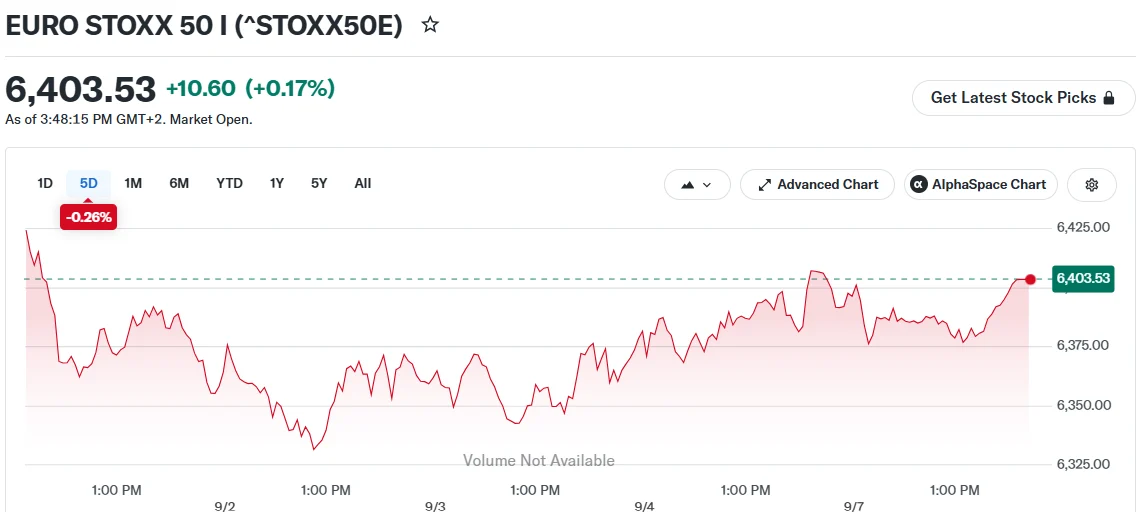
European stocks commenced the trading week with downward momentum Monday as escalating military tensions between Washington and Tehran disrupted energy markets while market participants braced for the European Central Bank’s upcoming policy announcement.
The continent-wide STOXX 600 index fluctuated between modest advances and declines, remaining close to recent multi-week lows. Germany’s benchmark DAX index retreated 0.3% while France’s CAC 40 similarly traded in negative territory.
Switzerland’s primary equity benchmark declined 1.2%, weighed down predominantly by pharmaceutical giant Novartis, which shed more than 3% following unsuccessful results from a highly anticipated clinical trial of its experimental cholesterol treatment.
Energy Prices Jump on Persian Gulf Security Concerns
Brent crude oil advanced more than $1 per barrel during Monday trading, building on a nearly 10% rally from the previous week to maintain levels firmly above $90.
The price surge followed weekend U.S. military strikes that disabled three Iranian oil tankers. The Pentagon characterized the operations as a response to an Islamic Revolutionary Guard Corps ballistic missile assault on two U.S. Navy vessels operating in the area.
Tehran’s response included announcements of plans to establish a restricted military zone beyond the Strait of Hormuz in the coming days.
Approximately 20% of the world’s seaborne oil and natural gas passes through the Strait of Hormuz. Supply disruptions in this critical waterway heighten the potential for elevated energy expenses to contribute to broader inflationary pressures.
European energy sector equities provided one of the few positive performances, advancing 1.2% alongside rising crude prices.
Central Bank Policy Decision Approaches Thursday
Financial markets broadly anticipate the ECB will increase its benchmark interest rate by 25 basis points during Thursday’s policy deliberations. The move reflects Eurozone inflation’s acceleration to 3.3% in August, with energy component costs surging 14.3%.
Deutsche Bank analysts now forecast the ECB will complement the September adjustment with an additional quarter-point increase in December. Market pricing also indicates expectations for at least one further rate elevation in 2027.
Higher interest rate expectations have maintained German 10-year bond yields near multi-year peaks, creating headwinds for interest rate-sensitive industries including real estate and construction.
Germany’s domestic political landscape contributed additional uncertainty. The far-right AfD party secured 44% of votes in Saxony-Anhalt’s state elections during the weekend, representing a setback for Chancellor Friedrich Merz, despite the party’s failure to achieve an absolute majority.
Italy’s Lottomatica defied the broader trend, climbing 6.8% after releasing details regarding how its planned merger with Spanish counterpart Cirsa would expand its digital operations. Cirsa shares appreciated 7%.
Investor confidence throughout the Eurozone reached its strongest level in more than four years during September, according to survey results published Monday.
Market attention now shifts toward U.S. Consumer Price Index figures scheduled for release later this week. Stronger-than-expected inflation readings could solidify expectations for a Federal Reserve rate increase at its September 15-16 policy meeting, potentially intensifying pressure on global equity markets.
The post European Markets Decline as Hormuz Crisis Drives Oil Beyond $90 Amid Rate Hike Expectations appeared first on Blockonomi.
Key Takeaways
- The carrier reduced its FY2027 passenger forecast to 214 million from 216 million to minimize unhedged fuel exposure during winter operations.
- Shares have declined 23% year-to-date in 2026, mirroring widespread airline sector challenges amid climbing oil prices.
- The company maintains 80% fuel hedging coverage for this fiscal year, providing significant cost protection versus competitors.
- Citi analysts set a €31.50 price objective on the European-listed shares, representing 38% potential appreciation; Barclays assigns an Overweight rating with €28.50 target for 25% upside.
- Current trading price of $55.36 represents a 6.7% discount to the GF Value assessment of $59.31.
The airline industry has faced considerable headwinds throughout 2026. The U.S. Global Jets ETF has retreated 13% since early July, coinciding with a 33% surge in Brent crude futures during the same timeframe. Ryanair’s American depositary receipts have similarly suffered, declining 15% this quarter and posting a 23% year-to-date loss.
Ryanair Holdings plc, RYAAY
Major U.S. carriers have experienced comparable declines. Southwest Airlines and American Airlines have both dropped over 20% since July began. United Airlines shares fell 18%, while Delta Air Lines declined 14%. Industry-wide pressures continue to mount.
The ADRs currently trade near $55.36, approximately 6.7% beneath the GF Value estimate of $59.31. This valuation gap suggests a modest safety cushion based on GuruFocus metrics.
The company recently revised its FY2027 passenger volume projection downward from 216 million to 214 million. Management cited the need to curtail exposure to unhedged fuel expenses during anticipated unprofitable winter scheduling.
Strategic Hedging Provides Competitive Buffer
Ryanair has secured 80% fuel hedging protection for the ongoing fiscal period. This positioning sharply contrasts with numerous industry peers.
CEO Michael O’Leary highlighted competitor difficulties with unit economics during the July fiscal Q1 earnings discussion. “Their costs are escalating wildly. And the cost gap between us is getting wider and wider,” O’Leary stated.
Management expressed concern that inadequately hedged competitors may face capacity reductions or potential market exits during the approaching winter season. Should smaller operators withdraw from routes, Ryanair would be positioned to capture displaced market share.
Citi analyst Conor Dwyer noted that winter pressures would disproportionately impact smaller carriers with compromised balance sheets and narrow profit margins. His €31.50 price target on the European-listed equity suggests 38% appreciation potential from Monday’s closing price.
Analyst Perspectives and Outlook
Barclays analyst Andrew Lobbenberg recognized that near-term sentiment may remain subdued. However, he emphasized: “For investors with long term time horizons, we think building a position in Ryanair is rational.”
Barclays maintains an Overweight rating alongside a €28.50 price objective, indicating 25% upside from Monday’s levels.
Beyond established cost efficiency advantages, Lobbenberg identified five strategic tailwinds: potential relaxation of European environmental regulations, expansion into holiday package services, increasing operational insourcing, pre-funding aircraft deliveries to enhance shareholder distributions, and CEO O’Leary’s compensation structure designed to maximize share price performance by July 2028.
The company earned a GF Score of 88 out of 100, featuring a financial strength rating of 9/10 and a perfect 10/10 valuation score. The balance sheet reflects minimal leverage with a debt-to-equity ratio of merely 0.02.
Current dividend yield stands at 1.62%, supported by a conservative 23% payout ratio. Dividend expansion has remained stagnant over the previous three-year period.
Institutional participation continues, with 9 premium gurus maintaining positions, though recent trading activity indicates net position reductions. Corporate insiders have liquidated approximately $3.4 million in stock during the trailing twelve months, with zero insider purchases recorded during this span.
The post Ryanair (RYAAY) Stock: How Strategic Fuel Hedging Creates Competitive Advantage Amid Industry Turbulence appeared first on Blockonomi.
TLDR
- Semaglutide helped 40.4% of children move below the obesity threshold in STEP Young.
- NVO stock fell 1.92% as Novo Nordisk reported positive STEP Young trial results.
- STEP Young met its main goal with stronger BMI reductions than placebo at week 68.
- No new safety concerns emerged for growth or puberty in the STEP Young trial.
- Novo Nordisk will present STEP Young results at ObesityWeek 2026 in November.
Novo Nordisk (NVO) shares closed at $46.60, down 1.92%, while after-hours trading slipped to $46.55. The move followed new results from the company’s STEP Young phase 3 obesity trial. Semaglutide helped about 40% of treated children move below the study’s obesity classification threshold.
Novo Nordisk A/S, NVO
STEP Young Trial Meets Primary Endpoint
Novo Nordisk tested once-weekly semaglutide in children aged six to under 12 years with obesity. The trial paired treatment with a reduced-calorie diet and increased physical activity. Researchers compared semaglutide against placebo for 68 weeks and measured changes in body mass index.
The study met its primary endpoint after semaglutide produced a greater BMI reduction than placebo. At week 68, 40.4% of treated children no longer met the study’s obesity classification. Meanwhile, no children receiving placebo moved below the obesity threshold during the same period.
More than 85% of participants had class II or class III severe obesity at baseline. Researchers used CDC age-specific and sex-specific BMI growth charts to classify the children. Semaglutide moved many treated participants into normal-weight or overweight categories.
Trial Covers 165 Children Across Multiple Countries
STEP Young enrolled 165 children in a randomized, double-blind, placebo-controlled multinational phase 3 trial. Participants received semaglutide or placebo alongside diet changes and increased physical activity. Novo Nordisk used weight-based dosing, with maximum semaglutide doses of 1.7 mg or 2.4 mg.
The primary endpoint measured the percentage change in BMI from baseline through week 68. A secondary endpoint assessed whether children improved their BMI classification during treatment. Other endpoints covered cardiovascular risk factors, glucose metabolism, body measurements, and body composition.
Novo Nordisk designed STEP Young to meet post-marketing requirements for its semaglutide development program. The program follows earlier phase 3 studies involving adults and adolescents with obesity. Novo Nordisk will present detailed results at ObesityWeek 2026 in Washington from November 14 through November 17.
Safety Findings Match Earlier Semaglutide Studies
Novo Nordisk reported no new safety concerns during the STEP Young trial. The company said safety and tolerability matched earlier semaglutide and liraglutide studies. Researchers also identified no safety concerns involving growth or pubertal development.
Childhood obesity carries immediate and long-term risks for physical and mental health. The condition can increase cardiovascular risks and often continues into adulthood without effective treatment. Global estimates counted 177 million children aged five to 19 living with obesity in 2025.
That figure could reach 228 million by 2040, increasing demand for effective pediatric obesity treatments. Semaglutide could expand treatment options when lifestyle changes alone do not produce sufficient results. The STEP Young data strengthens Novo Nordisk’s pediatric obesity program as NVO shares remain under pressure.
The post Novo Nordisk A/S (NVO) Stock: Drops as Semaglutide Helps 40% of Children Exit Obesity Classification appeared first on Blockonomi.
Key Takeaways
- Bloom Energy (BE) will enter the S&P 500 index, taking the place of Molson Coors Beverage during the quarterly index rebalancing scheduled for approximately September 21.
- The Saudi Central Bank expanded its BE holdings by 127.9% during Q2, pushing total institutional ownership to 77.04% of outstanding shares.
- Q2 financial results showed revenue reaching $1.07 billion, representing a 165.5% year-over-year increase, while EPS of $0.78 significantly exceeded the $0.39 analyst consensus.
- Wall Street maintains a “Moderate Buy” consensus with an average price target of $248.05, despite recent target reductions from several research firms.
- The company faces legal challenges through a securities class-action lawsuit claiming misrepresentation regarding Chinese export control exposure and U.S. tariff impacts.
Bloom Energy has earned its ticket to the S&P 500. The fuel cell technology provider will take over Molson Coors Beverage’s position in the benchmark index during the forthcoming quarterly reshuffling, with implementation anticipated around September 21. BE shares started Monday’s session at $252.84.
Bloom Energy Corporation, BE
This index promotion exposes Bloom Energy to a significantly broader universe of passive investment capital and index-replicating funds, potentially generating continuous buying momentum as these vehicles adjust their portfolios to mirror the updated index structure.
Institutional appetite for the stock was accelerating even before this development. The Saudi Central Bank expanded its BE holdings by 127.9% during the second quarter, acquiring an additional 10,606 units to reach a total position of 18,899 shares valued at roughly $5.7 million. Multiple other institutional players also established fresh positions during this timeframe.
Institutional ownership currently stands at 77.04%, demonstrating the level of conviction professional investment managers have developed around Bloom Energy’s investment thesis.
Exceptional Quarterly Performance Supports Optimistic Outlook
The S&P 500 promotion follows impressive quarterly results. Bloom delivered Q2 revenue of $1.07 billion, substantially surpassing analyst projections of $826.13 million. This represents a 165.5% increase versus the comparable quarter in the prior year.
Earnings per share reached $0.78, comfortably beating the consensus forecast of $0.39. During the same period twelve months earlier, the company generated just $0.10 per share.
Looking forward, Bloom has established FY2026 EPS guidance between $2.55 and $2.85. The analyst community currently expects $1.92 EPS for the present fiscal year, indicating the company may be outpacing Street-wide projections.
The investment thesis hinges on artificial intelligence data center expansion. Power infrastructure bottlenecks are forcing data center operators to consider on-premises power generation alternatives, and Bloom’s solid oxide fuel cell technology is positioned as an attractive solution for this application.
Challenges and Headwinds Persist
Several cautionary signals warrant attention. Company insiders have divested 89,464 shares valued at $22.1 million across the past three months. This includes Board Director Jeffrey Immelt, who liquidated 30,000 shares at an average price of $238.91 in August, decreasing his stake by approximately 13%.
Legal proceedings also cloud the outlook. A securities class-action complaint is actively recruiting investors who acquired BE shares between February 27, 2025, and July 8, 2026. The litigation claims the company provided misleading information about its vulnerability to Chinese export restrictions and U.S. tariff policies. The lead-plaintiff filing deadline falls on September 28.
Wall Street sentiment varies considerably. BTIG maintains a buy recommendation with a $295 price objective. Susquehanna expresses optimism at $298. However, Wells Fargo reduced its target from $217 down to $176 while maintaining an equal weight stance, and Truist lowered its target from $250 to $218 with a hold rating.
The Street consensus settles at “Moderate Buy” with a $248.05 average price target. The stock has traded between $52.00 and $351.28 over the past 52 weeks and carries a beta of 3.80.
The post Bloom Energy (BE) Stock Surges 7% Following S&P 500 Index Addition Announcement appeared first on Blockonomi.
HTTP error 429 on https://cryptopotato.com/feed/
Failed to fetch feed: https://cryptopotato.com/feed/
Failed to fetch feed.