Cryptocurrency Posts
Crypto Briefing
Investor confidence in private credit funds may wane, potentially impacting future capital inflows and market stability.
The post Morgan Stanley limits redemptions at $7B private credit fund for third straight quarter appeared first on Crypto Briefing.
ProEnergy's ambitious IPO could reshape the energy sector, highlighting the growing importance of energy transition infrastructure investments.
The post ProEnergy seeks $50B valuation in US IPO backed by Energy Capital Partners appeared first on Crypto Briefing.
Altman's UN briefing could elevate OpenAI's global tech policy role, potentially boosting its strategic partnerships and market valuation.
The post OpenAI’s Sam Altman to brief UN Security Council next week appeared first on Crypto Briefing.
Trump's UN address may signal a shift towards diplomacy, potentially altering US-Iran relations and impacting geopolitical stability.
The post Trump to address UN on Iran, Gaza conflicts next week appeared first on Crypto Briefing.
He Lifeng's U.S. visit may enhance diplomatic ties, potentially setting the stage for Xi Jinping's future engagement and impacting global markets.
The post China vice premier He Lifeng to lead US trade delegation Sept. 19-23 appeared first on Crypto Briefing.
Bitcoin Magazine
Bitcoin Magazine
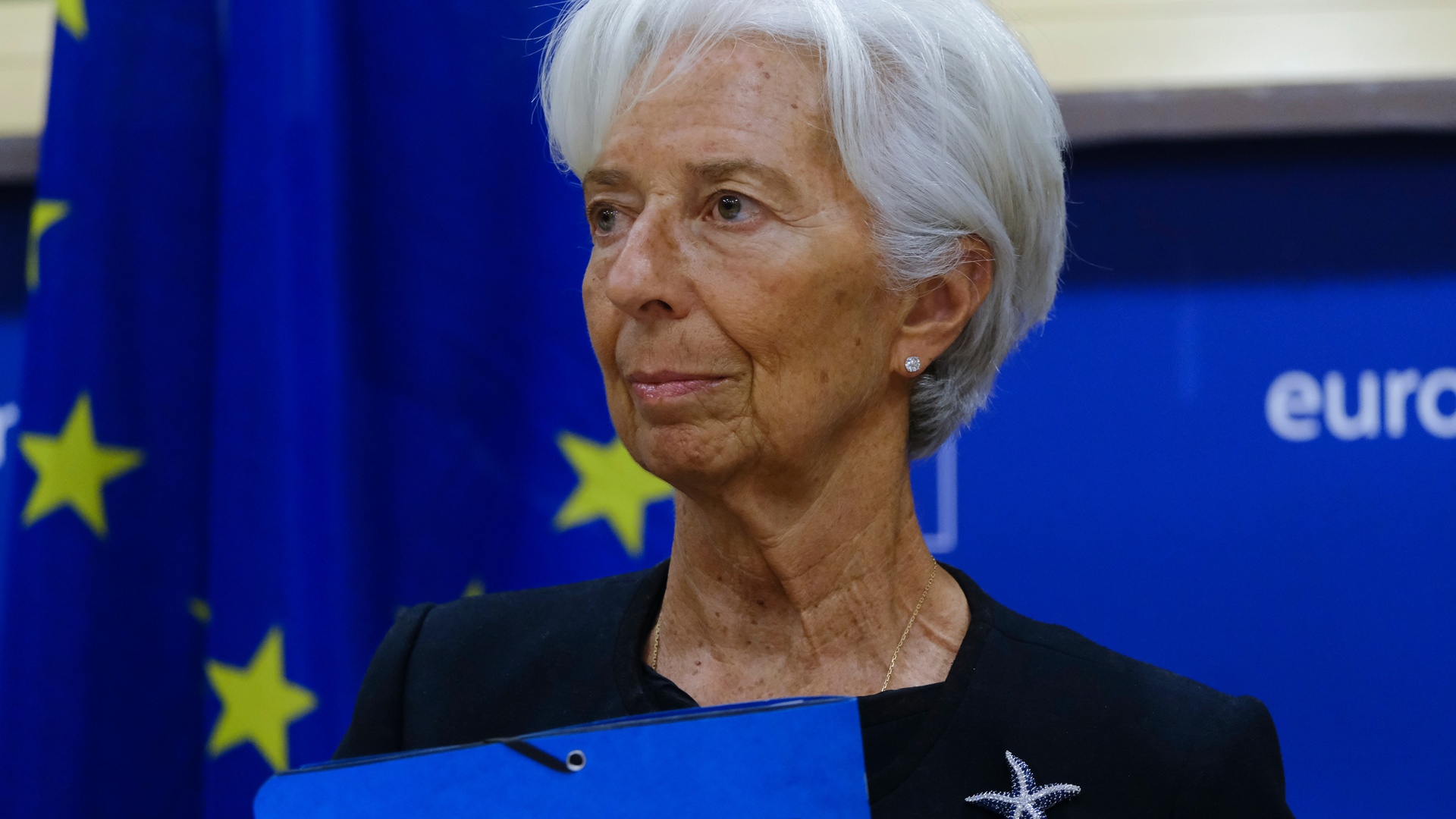
European Central Bank President Blocked Binance’s EU Entry: Report
European Central Bank President Christine Lagarde stopped Binance from operating in the European Union, according to a Wall Street Journal report.
The newspaper on Thursday reported that the top crypto exchange was on the cusp of operating in the trading bloc but then was told it couldn’t after the central bank chief waded in.
EU law requires that local Crypto-Asset Service Providers (CASP) have a MiCA license. Binance does not. Binance in June withdrew its MiCA application in Greece.
“Lagarde wanted to keep the controversial crypto exchange, which pleaded guilty to financial-crime violations in the U.S., out of the European Union,” the newspaper report said, citing interviews with officials.
Lagarde has long been anti-Bitcoin and pro-central bank digital currencies. Back in 2021, Lagarde said that the leading cryptocurrency was “a highly speculative asset” used for money laundering. She also criticized cryptocurrencies as a whole and said central banks would never hold bitcoin.
On CBDCs, though, Lagarde takes a different approach. A CBDC is a digital form of fiat money, like the US dollar or euro; nations around the world are in different stages of researching and releasing them.
The EU under Lagarde is fast moving forward with a digital euro. Lagarde has described the digital euro as key to Europe’s financial autonomy while taking aim at privately issued stablecoins.
CBDCs have been criticized by bitcoiners and others in the crypto industry who think they could be used to surveil citizens. U.S. President Donald Trump signed an executive order banning CBDCs when he took office.
The WSJ report added, citing various interviews, that Lagarde was worried Binance would embed the dominance of dollar-based stablecoins in Europe, instead of encouraging euro counterparts.
Binance is the world’s biggest crypto exchange and billions of dollars in stablecoins are traded on its platform daily.
A controversial company, Binance and its CEO, Chanpeng Zhao, in 2023 pleaded guilty to anti-money-laundering violations and paid a record $4.3 billion fine.
Binance in June said it was still working to pursue MiCA authorization in another EU Member State.
This post European Central Bank President Blocked Binance’s EU Entry: Report first appeared on Bitcoin Magazine and is written by Mathew Di Salvo.
Bitcoin Magazine
CFTC Sends Proposal To Regulate Crypto Transactions Following Clarity Act Fail
The Commodity Futures Trading Commission on Thursday sent a proposal to the White House to regulate crypto transactions and markets.
It isn’t clear what the regulations will look like from the post on the Office of Management and Budget’s website. The proposal is titled “Regulation Crypto Asset Transactions and Regulation Crypto Asset Markets.”
The CFTC’s move comes after lawmakers blocked the long-awaited crypto legislation Clarity Act on Tuesday. Despite the law not advancing, both the CFTC and Securities and Exchange Commission have said they would go ahead with crypto rulemaking anyway.
CFTC Chair Mike Selig said on Wednesday that while the Clarity Act didn’t move forward, the watchdog would still help U.S. President Trump “get the job done” in regulating the crypto space.
“The outcome of yesterday’s Senate vote was unfortunate,” Selig wrote on X, adding that the CFTC was “locked in and ready to ship its rules for the new frontier of finance.”
Before the procedural vote on the legislation this week, Selig had said would proceed with rulemaking whether or not the Clarity Act is enacted — with the aim of finalizing rules before the administration’s term is out.
Senators last year approved Selig as the regulator’s chair. Formerly chief counsel at the SEC’s Crypto Task Force, Selig was described by White House’s Crypto and AI Tsar, David Sacks, as “instrumental in driving forward the President’s crypto agenda”
President Trump campaigned on a ticket to help the crypto space after regulators under the previous administration hit digital asset businesses with lawsuits — mostly for allegedly selling unregistered securities.
Since Trump became president, the SEC and CFTC have taken a much friendlier approach to watchdogging the space.
The CFTC isn’t the only regulator going ahead with rulemaking: the SEC earlier this week approved tokenized stocks trading. In August, it also proposed its own framework for crypto asset offerings, pressing ahead while the landmark legislation stalled.
President Trump last month urged lawmakers to pass the Clarity Act, calling the legislation “very powerful” — but Republicans said that Democrats were deliberately holding it back.
Democrats mainly took issue with the ethics side of the bill. Trump received backing from major industry players while campaigning and since becoming president, his family has made money from digital asset ventures.
Some lawmakers have alleged conflicts of interest. The White House has always denied any wrongdoing.
A new draft of the bill started circulating in July tackling the issue of ethics and banning officials from making money from crypto. But some Democrats said it didn’t go far enough.
The Clarity Act wants to formally divide oversight between regulators, distinguishing which digital assets are securities, commodities or stablecoins.
This post CFTC Sends Proposal To Regulate Crypto Transactions Following Clarity Act Fail first appeared on Bitcoin Magazine and is written by Mathew Di Salvo.
Bitcoin Magazine
Bitcoin Price Surges Over $81,000 Despite Clarity Act Fail and Interest Rate Hike
Bitcoin’s price on Friday shot above $81,000 — despite a week of setbacks for the crypto industry.
The biggest coin was recently trading for $80,982, after jumping as high as $81,055 at one point Friday morning in New York. Over the past 24 hours, it has risen by nearly 6%.
Its surge comes after lawmakers on Tuesday blocked long-awaited crypto legislation, the Clarity Act, and the Federal Reserve on Wednesday hiked interest rates.
JUST IN: Bitcoin surges to $81,000
— Bitcoin Magazine (@BitcoinMagazine) September 18, 2026pic.twitter.com/EQi5apUlxU
Digital asset industry bigwigs had long called for clear rules to regulate the crypto space and the Clarity Act — which wants to divide oversight between regulators — aimed to do that. But lawmakers blocked the landmark digital asset market structure bill in a procedural vote.
And the Federal Reserve increased borrowing costs for the first time due to skyrocketing inflation in the U.S. The central bank’s chair, Kevin Warsh, said that price stability in the U.S. was the Fed’s number one priority.
“The plain fact is that inflation is too high, and has been for too long,” Warsh said. “This summer’s inflation readings do not tell me that underlying trends have meaningfully improved.”
Bitcoin has in the past done well in a low interest rate environment because it means there is more liquidity to trade the asset.
While Bitcoin’s price dipped initially news of the Clarity Act blockage and Fed’s move, it shot up on Friday.
Bitcoin exchange-traded funds in the U.S. have so far this week experienced net negative flows, with investors cashing out nearly $427 million from the vehicles, according to Farside Investors data.
Flows on Thursday turned positive, with investors chucking nearly $160 million at the funds following two days of consecutive outflows.
In a research note Thursday, asset manager Grayscale said that it didn’t expect bitcoin’s price to be hurt by the Fed’s decision because the move reflects a mid-cycle adjustment, not a cyclical change.
And despite lawmakers blocking the Clarity Act, regulators like the SEC are already pushing ahead with pro-crypto regulation.
This post Bitcoin Price Surges Over $81,000 Despite Clarity Act Fail and Interest Rate Hike first appeared on Bitcoin Magazine and is written by Mathew Di Salvo.
Bitcoin Magazine

Bitcoin Community Recognizes Quantum Computing Risk: VanEck
Quantum computing is a risk to Bitcoin but the community recognizes the issue, according to asset manager VanEck’s Head of Digital Assets Research.
Speaking to CNBC on Friday, Matthew Sigel said that while progress on addressing the issue may be slow because of the crypto network’s decentralized nature, the community was working on it.
The crypto community has sounded the alarm about hypothetical advancements in quantum computers that could in the future be able to break Bitcoin’s cryptography.
Some in the space — including Bitcoin developers — have started preparing for a post-quantum future by testing quantum-resistant signatures on live sidechains.
“It’s a risk,” he said. “But the community has recognized the scope of the issue. There’s a lot of talent that’s now come together with a framework of how to upgrade the system.”
He added: “The upgrades don’t happen as fast because there’s no CEO who can tell the devs, ‘hey, do it now.’ There’s a governance process — it takes more time, it’s a little bit messier, but there are technological paths for quantum resistance, and I think you’ll see more of that over the next couple of years.”
Quantum computers do exist but make mistakes and a machine that can break Bitcoin’s cryptography currently does not exist. Bitcoin currently is the biggest computer network in existence.
Major companies in the space — including America’s biggest crypto exchange, Coinbase, and Bitcoin infrastructure firm, Blockstream — are already working on solutions.
Back in July, Coinbase said it plans to deliver a post-quantum signing pipeline using secure enclaves and threshold cryptography.
A Bitcoin Security Consortium — made up of BlackRock, Fidelity Digital Assets, Block, and others — formed in July and donates funds and dedicates engineers to open-source work supporting proposals like BIP-360, which aims to introduce a new transaction output type to reduce long-exposure quantum computing risks.
This post Bitcoin Community Recognizes Quantum Computing Risk: VanEck first appeared on Bitcoin Magazine and is written by Mathew Di Salvo.
Bitcoin Magazine
The Next 3-5 Years of Bitcoin Lending
SALT Lending CRO Hunter Albright says a growing number of Bitcoin holders may eventually borrow against their bitcoin rather than sell it, creating a new relationship between bitcoin, credit and stablecoins.
Bitcoin-backed lending could become an increasingly important part of how holders access the value of their bitcoin without selling it, according to Hunter Albright, Chief Revenue Officer of SALT Lending.
Speaking on BMTV, Albright said he expects borrowing against bitcoin to become more common as the market matures and holders become more comfortable using bitcoin as collateral.
“I’d like to think we will see a growing percentage of the population of bitcoin holders borrow against it,” Albright said.
For Albright, that shift could also change how bitcoin and stablecoins function alongside one another.
“I do believe people borrowing against their bitcoin and leveraging stables is the difference between money in motion and money at rest,” he said. “The speed of conversion really creates a utility and advantage for people willing to operate in that ecosystem.”
In that framework, bitcoin increasingly becomes “money at rest” – an asset held for the long term – while stablecoins serve as “money in motion,” providing liquidity that can be transferred and used more easily without requiring holders to sell their bitcoin.
A Behavioral Shift for Bitcoin Holders
Getting there, however, will require more than simply building lending products.
Albright said greater education around both Bitcoin itself and the mechanics of borrowing against bitcoin will be necessary before the behavior becomes mainstream – something SALT Lending has made part of its own efforts in the market.
It also requires a change in how Bitcoin holders think about the value stored in their assets.
Instead of viewing bitcoin only as something to accumulate and eventually sell, holders can potentially use it as collateral to access liquidity while maintaining their bitcoin exposure.
That model is already common elsewhere in finance, where owners of real estate, equities and other assets regularly borrow against their holdings rather than liquidating them.
For Bitcoin holders, there can also be tax advantages. In the U.S., borrowing against an asset generally does not itself constitute a taxable sale, whereas selling appreciated bitcoin can trigger capital gains taxes. Individual tax consequences depend on the structure of the transaction and the borrower’s circumstances, readers should consult a tax advisor.
Albright sees that combination – long-term bitcoin holdings, growing stablecoin adoption and easier access to credit – as part of a broader shift in how Bitcoin holders may eventually use their wealth.
Rather than bitcoin needing to move every time its value is put to use, bitcoin can remain at rest while liquidity moves around it.
SALT Lending is the Official Liquidity Sponsor of BMTV. Learn more about borrowing against your bitcoin and explore SALT’s BMTV offer at https://saltlending.com/bmtv/?utm_source=bmtv&utm_medium=article&utm_campaign=52783658-BMTV%20article&utm_term=BMTV
Disclaimer: SALT Lending is a paid sponsor of BMTV and serves as BMTV’s Official Liquidity Sponsor. This article is sponsored content and does not necessarily reflect the views or opinions of Bitcoin Magazine. The information provided is for promotional purposes and should not be considered financial advice. Readers are encouraged to conduct their own research before making any investment decisions related to Bitcoin or other financial products mentioned herein.
This post The Next 3-5 Years of Bitcoin Lending first appeared on Bitcoin Magazine and is written by Josh Plischke.
CryptoSlate
Anthropic’s Claude helped three security researchers breach OpenAI accounts and reach an internal code repository within 72 hours.
Researchers at cybersecurity startup Hacktron chained an image-processing vulnerability with a flaw in OpenAI’s identity infrastructure in July to gain access to multiple employees’ ChatGPT and Codex accounts.
One compromised Codex account was connected to OpenAI’s GitHub organization, giving the researchers a path into the company’s internal software environment.
The team stopped after instructing the compromised employee’s Codex account to create a harmless pull request inside OpenAI’s private openai/openai monorepo. Hacktron said the researchers did not inspect proprietary source code.
This week, Hacktron disclosed the vulnerabilities and ended further testing.
OpenAI reportedly fixed the identity-side flaw roughly 14 hours after receiving the report and later paid the company a $6,500 bounty.
Anthropic's Opus 5 cleared a hurdle its predecessor could not
The OpenAI attack accelerated after Anthropic released Claude Opus 5, which overcame an exploitation hurdle that its predecessor had repeatedly failed to solve.
Hacktron began examining the image-upload pipeline used by OpenAI’s Discourse community forum on July 23. HEIC and HEIF files were processed through ImageMagick and the underlying libheif decoding library, giving attacker-controlled images a path into vulnerable code.
The researchers supplied Claude Opus 4.8 with a Discourse Docker image and asked it to inspect the installed libheif package for security weaknesses. The model identified missing fixes that left a heap buffer overflow, enabling out-of-bounds reads and writes.
By July 24, Opus 4.8 had produced an exploit that achieved code execution when address space layout randomization (ASLR) was disabled. But repeated attempts to make the exploit work reliably against Discourse’s normal configuration with ASLR enabled failed.
Anthropic released Opus 5 later that day, giving the researchers another route.
Hacktron opened a fresh session with the new model, which produced a working ARM64 exploit for a local Mac within about three hours. The researchers then asked it to adapt the exploit to the x86-64 architecture and jemalloc memory configuration used by Discourse.
By 6 a.m. on July 25, the team had a working exploit that could execute code through a malicious image upload.
With that foothold established, the researchers next tested whether Claude could reproduce the attack against a remote environment with less human intervention.
Hacktron placed the model in an autonomous loop against its own Discourse Cloud instance. The company said Claude initially refused to develop an exploit directly against a remote system, prompting the team to proxy the test environment so it resembled a capture-the-flag security challenge.
Four hours later, the agent had reproduced the attack against the remote test environment.
The researchers then used the resulting exploit against OpenAI’s community forum, where they gained administrative access. A separate weakness in OpenAI’s single-sign-on system allowed them to move from the forum into ChatGPT and Codex accounts.
One compromised employee had connected Codex to OpenAI’s GitHub organization, creating the path the researchers later used to demonstrate access to the company’s internal repository.
Hacktron co-founder Mohan “s1r1us” Pedhapati said the episode showed how quickly AI was compressing exploit-development timelines that once required far more specialized labor.
He said:
“Our main takeaway from hacking OpenAI: AI is reducing the amount of scarce expertise needed to develop exploits. Work that once took months can now take days. Even leading AI labs can be vulnerable.”
However, Hacktron stressed that the operation still depended on experienced human researchers. The company noted:
“This was not completely autonomous hacking, and skilled human guidance remained important.”
Robert Reith, founder of blockchain security firm Accretion, said experienced researchers still supplied much of the judgment needed to turn AI-generated work into a successful attack, but warned that the advantage may erode as models improve.
According to him:
“There’s still a large gap between what skilled researchers + AI can do vs. general population + AI. The scary part is that this gap may become smaller as AI absorbs this knowledge and intuition over time.”
AI Coding agents expand the blast radius of a compromised account
The same coding agents that accelerated the exploit also increased its potential reach once the researchers gained control of an OpenAI employee account.
ChatGPT and Codex can connect to external services, meaning a compromised account may expose whatever integrations a user has authorized. Hacktron cited GitHub, Slack, and email as services that could become reachable, depending on an account’s configuration.
In this case, the employee’s GitHub connection provided the path into OpenAI’s internal repository.
Security agents warned that this concentration of permissions around AI coding tools could make them increasingly attractive targets as Codex, Claude Code and similar agents become more deeply embedded in corporate development workflows.
Codey Blakeney, research lead at Arcee, said:
“The more popular Codex and Claude Code get, the more people are going to try and target them.”
Blakeney said the risk could grow if software development becomes concentrated around a small number of AI providers, creating broader points of failure across engineering teams.
He noted that if regulation moves us to fewer players, it means less choice and more single points of failure. Blakeney added:
“The entire way software engineering works at most places has completely changed with coding agents, and if just one company has a bad day, it’s going to mess up your roadmap and timelines.”
Maxime Fournes, CEO of AI safety advocacy group PauseAI, said the breach also highlighted a longstanding imbalance between attackers and defenders that could become more consequential as AI lowers the cost of developing sophisticated exploits.
According to him, attackers need to find one overlooked weakness, while defenders must secure a much broader attack surface. He noted:
“It’s massively harder and more expensive to defend against all possible flaws than to exploit a single one.”
OpenAI tightened access after the disclosure, while Discourse prepared a patch by July 27 and added further sandboxing around its image-processing system.
The post Anthropic’s Claude helped 3 researchers breach OpenAI in under 72 hours appeared first on CryptoSlate.
The Bank of England has committed to remove £368 billion of gilts held for monetary-policy purposes by September 2034, even as the first market response pointed toward easier conditions in long-dated UK debt.
The figure covers the portfolio left after the Bank separated £120 billion of longer-dated gilts to back banknotes. The Monetary Policy Committee said the remaining stock will fall by an average £46 billion a year through bond maturities and £20 billion of annual active sales.
Quantitative tightening shifts bonds from a central bank's balance sheet toward private investors. That can lift the extra yield investors demand to hold longer-dated debt, tightening financial conditions even when the policy rate stays unchanged.
The rate and balance-sheet decisions were separate votes. Six MPC members kept Bank Rate at 3.75%, while Megan Greene, Catherine Mann and Huw Pill preferred an increase to 4%. All nine members backed the multi-year gilt unwind.
Bitcoin and the slow-burn tightening channel
Implementation begins with fewer active sales to the market. The Bank's market notice said APF auctions will pause while it reviews a possible arrangement involving HM Treasury and the Debt Management Office. Operational details are due by April 2027, and the sales-to-Government model remains subject to a final decision. Gilts will continue to mature.
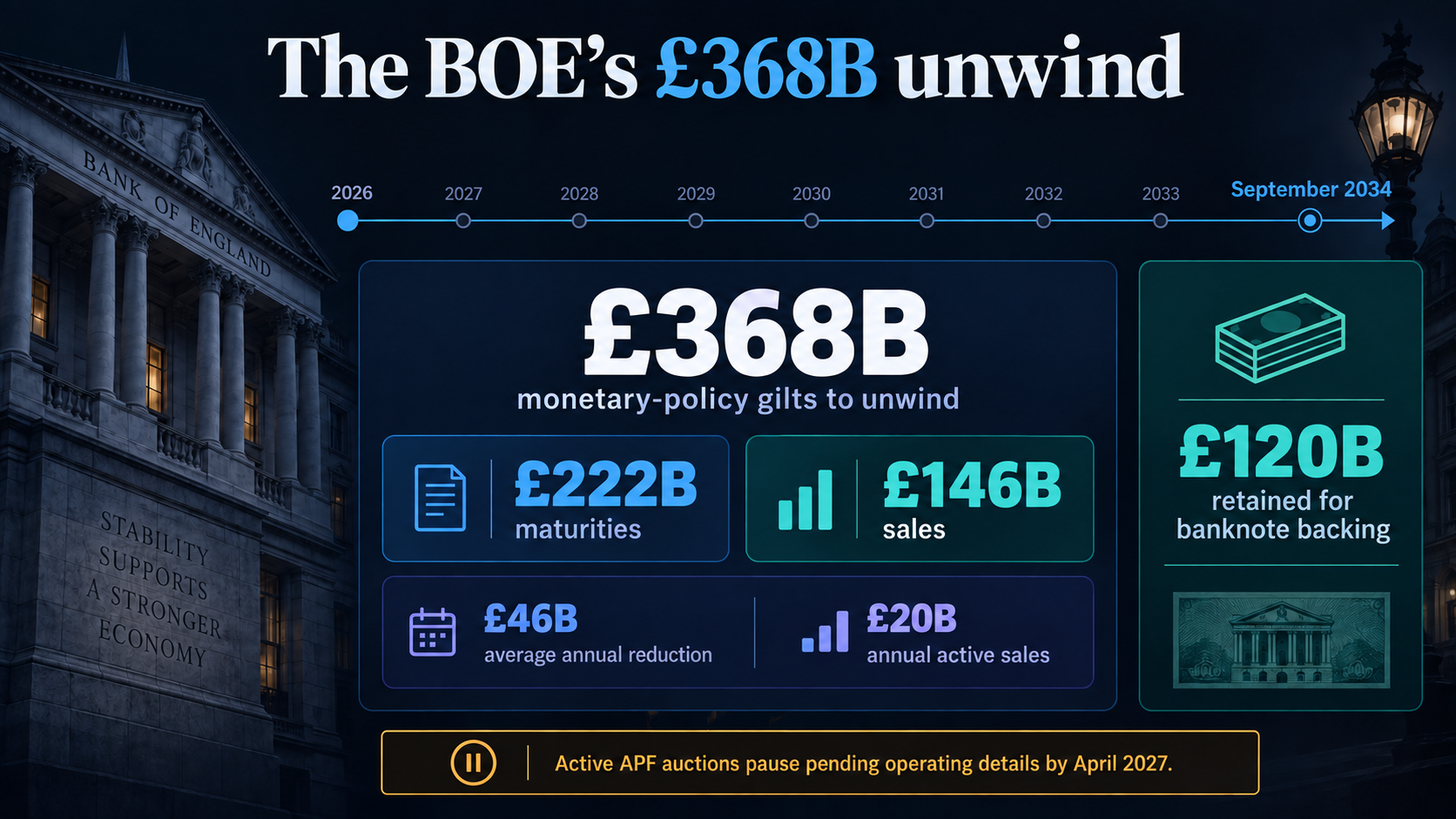
The planned sales pace is close to recent practice. The Bank sold £21 billion over the previous 12 months, compared with £20 billion a year under the new plan. Average total runoff, including maturities, falls to £46 billion from the previous year's £70 billion reduction.
Reuters reported that the 10-year gilt yield fell more than 7 basis points and the 30-year yield nearly 10 basis points by early Thursday afternoon. The Bank's yield-curve data provide the broader rates backdrop, though one trading session cannot identify how much each policy detail contributed.
The BOE also sees the cumulative QT effect as modest. Its July assessment estimated that QT accounted for 20 to 30 basis points of an approximately 200-basis-point rise in long-term gilt term premia since 2022. Global uncertainty, heavy sovereign issuance and structural changes in UK demand explained most of the increase.
Bitcoin's connection runs through the same broad rates and risk-appetite channel. IMF research found that US monetary tightening can depress a common crypto-market factor. The finding concerns US shocks, so it offers a limited analogy for the BOE plan rather than evidence of a UK-driven Bitcoin move. Earlier CryptoSlate analysis similarly described the opposing pressures from tighter liquidity and demand for assets outside sovereign finance.
Bitcoin traded near $78,000 on CryptoSlate on Friday, with Coinbase showing a similar level. Both were rolling snapshots and cannot isolate a reaction to Thursday's announcement.
The BOE's decision therefore creates a long-run test: whether predictable central-bank withdrawal adds enough pressure to global yields and risk appetite to reach Bitcoin, while the auction pause and falling gilt yields make the first response comparatively mild.
The post Bitcoin faces an eight-year rates test as the BOE unwinds £368 billion appeared first on CryptoSlate.
The Bank of Japan announced a policy-rate increase to about 1.25% on Sept. 18, yet the visible Bitcoin and currency response showed limited signs of a disorderly yen-carry unwind.
The BOJ voted 7-2 to lift its target for the uncollateralized overnight call rate by 25 basis points, from about 1% to about 1.25%. The new target and related facility rates take effect Sept. 24, so the decision changed the policy path before it changed the official operating rates.
That separates a scheduled funding-cost change from the market’s reaction to the announcement. Positions can adjust before implementation, and the BOJ’s next signal could matter as much as Sept. 24 because the bank tied further increases to its economic and inflation outlook instead of a fixed timetable.
That distinction matters for yen-funded trades. Investors can borrow yen to buy higher-returning assets elsewhere. A higher Japanese rate reduces the trade’s interest-rate advantage. If the yen appreciates, overseas borrowers must buy a more expensive currency to repay yen-denominated debt, increasing repayment costs in their home currency. Both forces can pressure leveraged risk positions, including crypto exposure.
The available evidence leaves the amount of Bitcoin exposure financed in yen unquantified. Coinbase Institutional’s review of the 2024 carry episode identified several simultaneous catalysts, including weak US economic data and pressure on technology stocks. Yen funding is one transmission channel among several that can shape crypto moves.
Bitcoin’s first response stayed orderly
At the BOJ’s 02:54 UTC release time, Coinbase one-minute data put Bitcoin’s closing price at $76,961. At 03:30 UTC, the one-minute close was $77,383. Bitcoin rose across those 36 minutes and continued throughout the day to reach as high as $81,000 intraday.
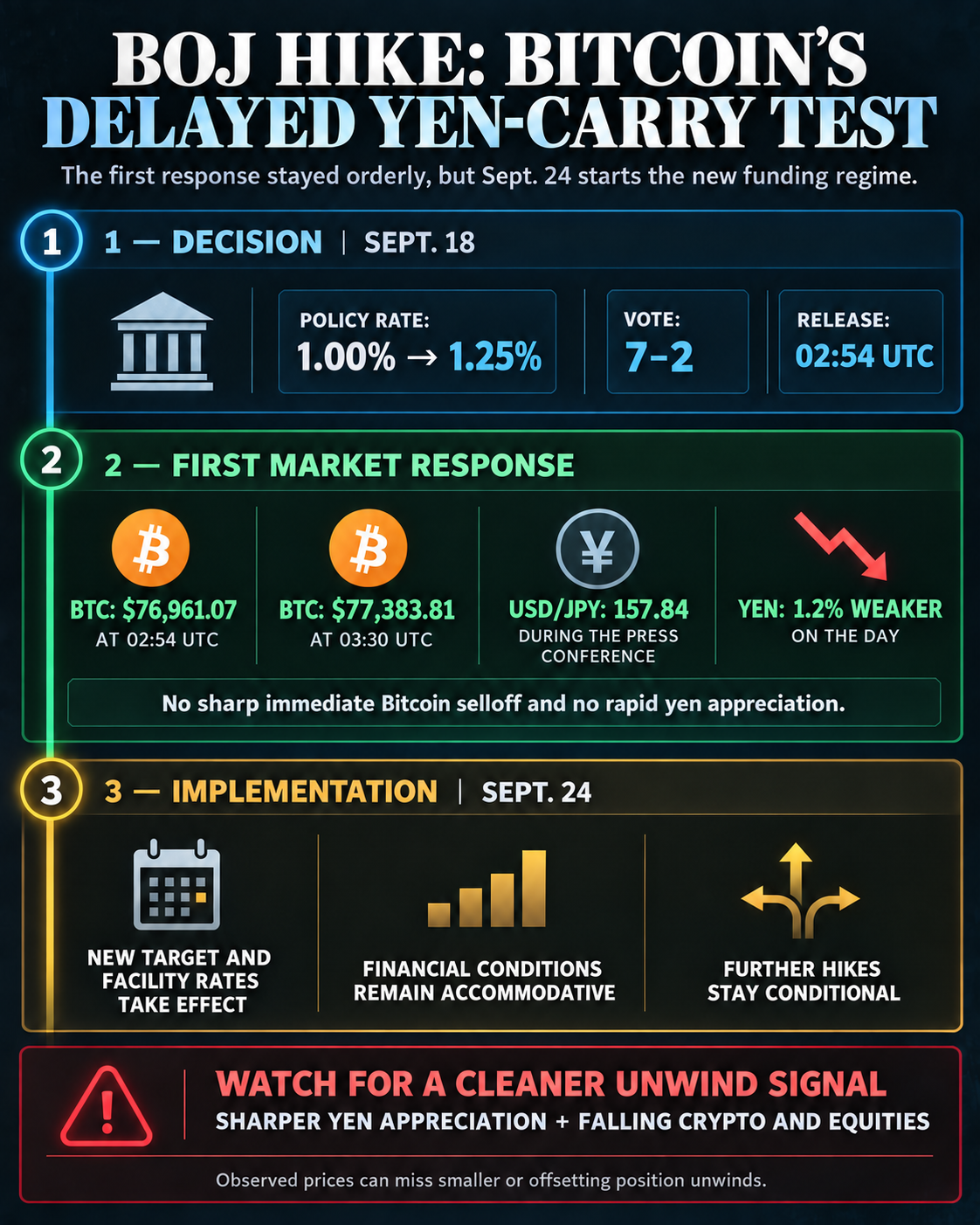
The currency move also ran against the simplest carry-unwind pattern. Reuters reported that the dollar climbed to a two-week high of 157.84 yen during BOJ Gov. Kazuo Ueda’s press conference, leaving the Japanese currency 1.2% weaker on the day. A visible synchronized unwind would more likely pair rapid yen appreciation with falling risk assets.
The initial reaction points to limited immediate unwind pressure in the observed markets. Longer-term risk remains open as the new rate takes effect and the BOJ considers its next steps.
The BOJ said financial conditions would remain accommodative, while retaining a conditional path toward additional rate increases if its economic and inflation outlook is realized. Sept. 24 starts implementation of the new setting. More diagnostic warnings would be sharp yen appreciation alongside falling crypto and equities, or a fresh signal that the BOJ will tighten again sooner than markets expect.
The post Bitcoin rallies after BOJ’s 1.25% hike, but the real yen-carry test starts next week appeared first on CryptoSlate.
Dtcpay, a Singapore payments company, has completed a $25 million Series A with SBI Group joining as a strategic investor, giving its stablecoin payments business fresh backing for product and merchant expansion.
The company announced the close on Sept. 18, naming SBI Ventures Asset Pte Ltd and the SBI-NTU-Kyobo Digital Innovation Fund as the Japanese group's investment vehicles. Genedant Capital and existing investor Kwee Liong Tek also participated. Vertex Ventures Southeast Asia & India led the initial tranche.
The funding will support a revamped business portal for enterprise customers, additional consumer features in the dtcpay app and expansion of its merchant network, the company said. Those priorities put the financing behind the tools businesses and customers use to transact, as dtcpay seeks to widen the use of stablecoins in everyday commerce.
The $25 million figure is the total Series A, rather than the size of SBI's investment alone. Dtcpay did not disclose its valuation or the amounts contributed by individual investors.
In the announcement, SBI Ven Capital CEO Eiichiro So described the investment as the start of a strategic partnership. He linked it to SBI's ambition to expand digital-asset origination between Japan and Southeast Asia through regulated financial infrastructure.
The investment connects SBI's regional ambitions with dtcpay's existing payment business. Dtcpay's stated priorities include deeper financial-institution relationships and further product development, alongside merchant expansion. SBI's participation adds a strategic investor to that effort, although the announcement does not allocate individual funding amounts to those objectives.
The cross-border ambitions remain plans for the partnership; the announcement did not include a date for a dtcpay launch in Japan.
Dtcpay founder and CEO Alice Liu framed the financing around changing how money moves across borders. Co-founder and group chairman Band Zhao identified stronger infrastructure, deeper financial-institution partnerships and entry into additional regulated markets as priorities.
SBI's participation follows the earlier Vertex-led financing. Vertex published an announcement on March 17 describing a $10 million Series A for dtcpay. That release already set out product improvements and European expansion as objectives, putting the latest close within an existing international growth plan.
Funding the products around stablecoin payments
Dtcpay says its infrastructure lets businesses and individuals accept, store and transact in stablecoins, with a swap engine connecting stablecoin and fiat settlement. Its product range includes direct merchant acceptance and card-based spending, giving customers different ways to use digital balances.
The company identifies Singapore department store Metro and hospitality business Capella Singapore among its commerce relationships. It also describes an integration with WalletConnect. These examples show the types of retail and payment connections the company is building on as it expands its merchant network.
Its Visa card offers another route to spending. Dtcpay says the card enables transactions across fiat currencies and stablecoins at more than 150 million merchant locations worldwide. That figure describes card acceptance reach, not the number of merchants directly signed up to accept stablecoins through dtcpay.
Direct merchant acceptance and card spending give dtcpay two channels for reaching customers. The release describes both as part of its business but provides no payment-volume figures, leaving the scale of activity through those channels undisclosed.
Dtcpay describes its regulatory footprint as including a Major Payment Institution license from the Monetary Authority of Singapore and an Electronic Money Institution license in Luxembourg. Both were described in the earlier Vertex announcement, which connected the Luxembourg license to plans for European market entry.
The funding follows that earlier push toward European market entry and adds SBI's stated Japan and Southeast Asia ambitions. Dtcpay's near-term product priorities remain the enterprise portal and consumer app, alongside its merchant network. The announcement ties the financing to those practical improvements without specifying how the capital will be divided between products and markets.
The post Why SBI just put millions behind a Singapore startup’s stablecoin push appeared first on CryptoSlate.
The UK Financial Conduct Authority says overseas crypto providers can fall inside the country's incoming authorization regime when they serve British consumers, even when the business is established abroad.
A “UK consumer” for this purpose means an individual in the UK acting outside a trade, business or profession. The definition is a statutory territorial concept and can differ from client categories elsewhere in the FCA Handbook.
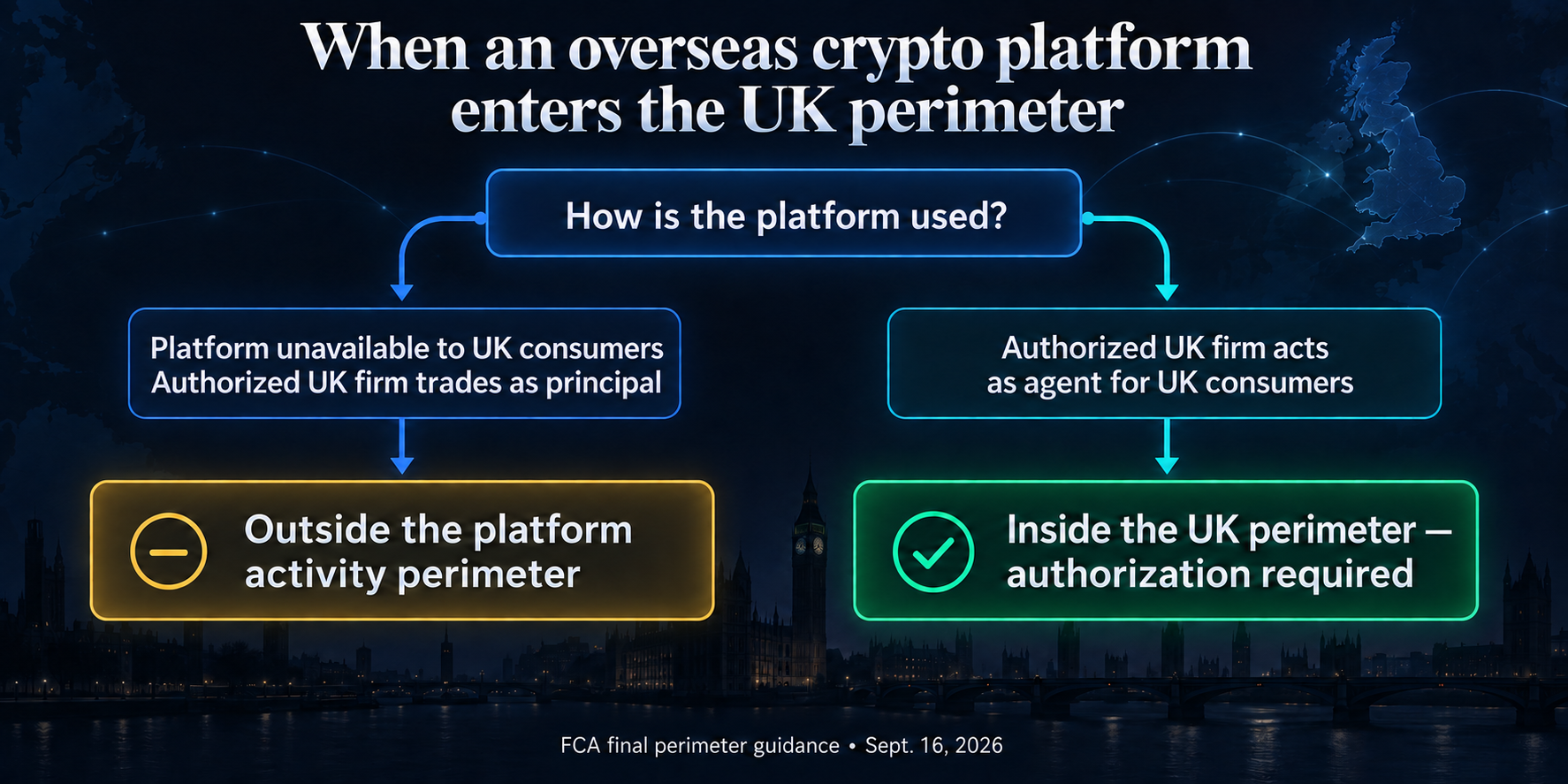
The regulator published its final cryptoasset perimeter guidance on Sept. 16. It explains when firms carrying on the new regulated cryptoasset activities may need FCA authorization from Oct. 25, 2027. The application window opens Sept. 30, giving overseas platforms, custodians and staking providers less than two weeks to map how UK consumers reach their services.
Consumer access sets the boundary
Under the FCA's territorial guidance, a business first applies ordinary territorial principles. Section 418 deeming provisions can then bring certain activities involving a UK consumer within the perimeter when the provider is established overseas.
The FCA gives two outcomes for an overseas qualifying cryptoasset trading platform. A platform unavailable to UK consumers remains outside the platform activity perimeter when an authorized UK firm trades on it as principal under the relevant permission.
The overseas operator falls inside the perimeter when that authorized firm instead accesses the platform as agent for UK consumers. The platform guidance says the operator then requires authorization. Consumer access and the UK firm's trading capacity determine the result in this example.
Other services have activity-specific conditions. An overseas provider safeguarding cryptoassets or arranging staking for a UK consumer can be deemed to operate in the UK when it acts independently of a person authorized for that activity. Acting at the authorized person's direction places the arrangement outside that deeming provision.
Automated-protocol interfaces require case-specific assessment. The FCA focuses on whether an identifiable person carries on the elements of a regulated activity by way of business in the UK.
Applications for transitional arrangements run from Sept. 30, 2026 through Feb. 28, 2027. The new activities enter the perimeter on Oct. 25, 2027. Automatic conversion of existing registrations and permissions is unavailable, so an already authorized firm may need to vary its permission when its current scope omits the new activities.
The boundary depends on each service's functions and structure. PERG explains the FCA's interpretation of legislation and lacks binding force in court, leaving exchanges, custodians, staking services and DeFi interfaces to apply the guidance to their particular facts.
The post FCA draws the UK boundary for offshore crypto platforms ahead of 2027 rules appeared first on CryptoSlate.
CryptoTicker.io
The price of Uniswap (UNI) rose to $9.05 on September 18, 2026, a gain of 18.67 percent within 24 hours and of 48.8 percent over a week. Two things lie behind the jump that have nothing to do with each other and yet coincide on the same day: a rebuild of the protocol's fee logic that has been running for months and burns UNI by design, and an exemption granted by the US securities regulator the day before that lets tokenised stocks into automated trading pools for the first time. Which of that matters to you depends less on the price than on three practical questions: where you can buy UNI in Germany in a compliant way at all, how the tax office treats a swap on a decentralised exchange, and what you actually hold as a holder.
The UNI price at a glance: these are the figures currently on the screen
All the values that follow come from our own query of the CoinGecko API on September 18, 2026 at 20:51 UTC. UNI is quoted at $9.05, or 7.87 euros. Over the past 24 hours the high was $9.39 and the low $7.52. That is a range of around 25 percent within a single day, and it says more about the state of the market than the closing level does.
Over seven days there is a gain of 48.8 percent, over 30 days one of 155.59 percent. Market capitalisation stands at $5.62 billion, which puts UNI in 21st place among the largest crypto-assets. Trading volume over the past 24 hours was $2.13 billion. There are 621.0 million UNI in circulation out of a total of 888.2 million.
One figure is missing from most reports of the day, and it puts the rest in perspective: UNI's all-time high is $44.92 and dates from May 2, 2021. At the current level that is 79.9 percent away. This week's jump is therefore a strong recovery out of a very deep valley, not a return to old record levels.
Why the daily range matters more than the daily gain
Anyone who bought today at the high of $9.39 and sells tomorrow at the low of a similar day loses around a fifth without anything having changed in the news. With moves of this magnitude, the moment of entry within a single trading day decides more money than the entire fundamental story. That is no argument against buying, but it is an argument against a market order at the peak of a move.
What the fee switch at Uniswap actually does
The term fee switch describes a switch in the Uniswap protocol with which holders of the UNI token can decide by vote that part of the trading fees flows to the protocol itself instead of remaining entirely with the liquidity providers. The switch has existed since the launch of Uniswap v2 but was turned off for years.
The specific split is described in the proposal named UNIfication, which Uniswap Labs and the Uniswap Foundation published on November 10, 2025. For v2 pools the fee for liquidity providers falls from 0.30 to 0.25 percent, with the remaining 0.05 percent going to the protocol as a protocol fee. Anyone providing liquidity therefore earns slightly less per trade after the change than before.
On top of that comes a one-off item: a retroactive burn of 100 million UNI from the protocol's treasury. The amount is an estimate of what would have been burned had the fee switch been in force since the token launched. A burn is the permanent disabling of tokens by sending them to an address from which nobody can ever move them again.
Uniswap governance voted on the proposal. According to CoinDesk reporting of December 26, 2025, the result was practically unanimous, with more than 125 million votes in favour and 742 against. The changeover has been proceeding step by step since then: according to the UNIfication document, the feeds for v2, v3 and Unichain are in operation, while the connections for v4, aggregator hooks and the bridges to further networks are still open and have to pass governance individually.

TokenJar and Firepit: why fees only come out against burned UNI
The mechanism behind it is unusual enough to be worth knowing before you credit the token with a valuation. The fees collected do not land directly in a till that somebody could draw on. They flow into an immutable contract named TokenJar and accumulate there.
They can only be taken out through a second contract named Firepit, and exclusively in exchange for the destruction of UNI. Anyone who wants the accumulated fees has to burn tokens for them. The circulating supply therefore falls to the extent that the protocol earns fees and somebody collects them.
For the valuation of the token this is the real difference from before. A pure governance token entitles the holder only to vote, and voting has no calculable value. A token whose circulating supply shrinks with the use of the protocol, by contrast, can be modelled like a security with a buyback programme. That is precisely why the market has valued it 155 percent higher over the past 30 days.
What this model does not deliver
A burn is not a distribution. No money flows to you, and you have no claim to anything. The value arises purely arithmetically from the fact that fewer tokens represent the same protocol value. If usage falls, the effect disappears immediately, without any notice period. Ethena operates a comparably built model for its ENA buyback; there, too, the entire effect hangs on the protocol's ongoing revenue.
The SEC exemption for tokenised stocks and what it has to do with Uniswap
The second trigger dates from September 17, 2026. The US Securities and Exchange Commission issued an exemption which its own announcement calls an innovation exemption. The core of it: trading venues for tokenised securities may trade tokenised US stocks through automated market makers and liquidity pools for five years without counting as an exchange within the meaning of the Securities Exchange Act of 1934.
An automated market maker, AMM for short, is a program that forms prices from the inventory of a liquidity pool according to a fixed formula and manages without an order book. Uniswap is the best-known representative of this design, which is why the market reads the decision as a tailwind for precisely this business model.
The exemption comes with conditions. It includes caps on the number of tradable symbols and on volume, requires auditable smart contracts, synchronised trading halts, public announcements, record-keeping duties and technical safeguards. Holders of tokenised stocks are to have the same rights as holders of the original share. Liquidity providers who put their own capital into such pools are at the same time exempted from the duty to register as dealers. The SEC combined the arrangement with a request for comment.
For you as an investor in Germany little follows from this for now. The exemption applies to US trading venues and US stocks under US law. It opens no access for you and changes nothing about your tax position. How a tokenised security is treated for tax here depends on its specific structure and should be clarified in advance if in doubt. What the SEC decision actually moves is the expectation of future trading volume on AMM infrastructure. Expectation is the right word for it: volume that does not yet exist generates no fees yet either, and without fees nothing burns.
Our own count: this is how large Uniswap's share of DEX trading really is
On days like this, market share figures circulate that hardly anyone recalculates. We therefore counted for ourselves. cryptoticker.io compiled this analysis itself on September 18, 2026.
Method: query of the public DefiLlama interface for the overview data set of decentralised exchanges on September 18, 2026 at around 20:55 UTC, HTTP status 200, followed by summing the 24-hour volumes per protocol. All 1,365 protocols listed in that data set were checked.
Result: the total 24-hour volume of all recorded decentralised exchanges was $10.06 billion. Of that, $3.06 billion fell to Uniswap across all versions, split into 1.64 billion on v3, 1.36 billion on v4, 56.2 million on v2 and $103,641 on v1. That gives a share of 30.44 percent. The next largest single competitor in the data set came to 5.42 percent.
Uniswap is therefore by a clear margin the largest decentralised exchange, but it does not hold a majority of total volume. Almost 70 percent of trading runs elsewhere, spread across a great many small venues. Anyone basing a valuation on the assumption that Uniswap captures the lion's share of DEX trading is calculating with too large a slice of the cake.
What this count cannot deliver: it rests on the figures of a single data provider, it does not capture centralised exchanges, and it cannot strip out artificially inflated trading volume. An independent check against a second source is outstanding.

Buying UNI from Germany: regulated exchange or directly onchain
There are two routes, and they differ in almost every respect. The first runs through a centralised exchange with an authorisation under the EU Markets in Crypto-Assets Regulation, MiCA for short. That authorisation obliges the provider, among other things, to separate client assets from its own assets, to operate complaints procedures and to publish an information sheet for the crypto-asset concerned. Which providers hold this authorisation for the German market can be found in our continuously maintained overview of the best crypto exchanges.
The second route leads straight to the protocol, that is, into the wallet and into a pool. There is no provider there who is liable for anything. There is no deposit protection, no support, no reversal in the event of a mistake. If you send to a wrong address or hit a cloned contract, the money is gone. In exchange you get direct access with no intermediary, and your tokens sit in your own custody.
How to recognise a cloned interface
The most common damage on the protocol route arises not from price losses but from fake trading interfaces that rank high in search engines. Check the address of the contract your wallet is to work with before you sign an approval, and never grant an unlimited spending allowance for a token when you only intend a single swap. The same applies by analogy to trading venues without EU authorisation: where no regulator has jurisdiction, there is also no body you could turn to in a dispute.
Tax on UNI: why every swap is a sale in Germany
This is the point at which a rally of 155 percent in 30 days can become expensive. Crypto-assets count as other assets in Germany. Gains from their sale fall under private disposal transactions within the meaning of Section 23 of the Income Tax Act. If more than a year lies between acquisition and disposal, the gain is tax free. If it is less, it is taxable at your personal income tax rate as soon as the sum of all private disposal gains in a year reaches the exemption threshold of 1,000 euros.
The decisive term is disposal. Swapping one crypto-asset for another is, for tax purposes, a sale of the first and an acquisition of the second. Anyone swapping Ether for UNI on a decentralised exchange has thereby sold the Ether, even though no euro ever moved. Swapping back later is another sale. With several switches inside a week, twenty tax-relevant events quickly arise, none of which appears on a bank statement.
Unlike at a German broker, nobody withholds tax. There is no capital gains tax at source and no annual statement. Working out the figures and declaring them in the Anlage SO is entirely down to you, as is the duty to provide evidence. Anyone not recording the transactions as they happen reconstructs them laboriously from transaction hashes later. Tools that automate exactly that and track holding periods for each individual lot are compared in our comparison of crypto tax tools.
The special case of providing liquidity
Anyone putting UNI or other tokens into a pool does more than hold. They generally swap them for proof of a share in the pool and receive a running share of the fees. The tax treatment of these events has not been conclusively settled on points of detail to this day, and the classification of the income depends on the specific structure. If you are considering this step, that is the point at which tax advice pays for itself, and before you act rather than after.
Governance and custody: what you actually hold as a UNI holder
UNI is a governance token. It carries a voting right in the protocol's votes and nothing else. No claim to profit, no pool of liability, no share in a company. Even after the switch to the fee switch, no income flows to you as a holder; the mechanism works through the reduction of the circulating supply.
In practice, a say means little for small holders. The vote on UNIfication passed with more than 125 million votes. Against a large address holding millions of tokens, a holding of a few hundred carries no weight. Anyone buying UNI is in practice buying a bet on the use of the protocol and on the effect of the burn mechanism, hardly on their voting right.
For custody the same applies as for any token based on a smart contract. If it sits on an exchange, it belongs to you in an insolvency only as the legal system of the provider concerned allows. If it sits in your own wallet, everything hangs on securing your recovery words. For longer holding periods, and the one-year holding period suggests a longer holding period, self-custody is the obvious choice.
What argues against the rally: three points that can be documented
First, the basis of the valuation. The burn mechanism only works as long as fees accrue. Our own count above shows a Uniswap volume of $3.06 billion in 24 hours. A decline in overall crypto trading drags that figure down immediately, and with it the arithmetical effect on the circulating supply.
Second, the scope of the changeover. According to the UNIfication document, the feeds for v2, v3 and Unichain are in operation, while v4, aggregator hooks and the bridges to further networks are still outstanding. v4 in particular contributed $1.36 billion of daily volume in our measurement. A considerable part of the trading therefore does not yet feed the mechanism, and every further step needs a governance vote of its own.
Third, the reach of the SEC decision. It applies for five years, under conditions, with caps on symbols and volume, and it is combined with a request for comment. Whether appreciable trading volume on AMM infrastructure arises from it is an open question. The price has priced in an expectation whose fulfilment will only be readable from figures in the coming quarters.
On top of that comes the obvious: an asset that has risen 155.59 percent in 30 days and whose daily range today was 25 percent can give a considerable part of that back in an equally short time.
Fee switch and the UNI rally: what you should take away
- Separate the trigger from the mechanism. The SEC exemption of September 17 is an expectation of future volume, whereas the fee switch is a running mechanism with documented figures. Only the latter can be recalculated today. If you want to buy on that basis, do it through a provider with EU authorisation; which ones those are is in our comparison of regulated crypto exchanges.
- Settle the holding period before you swap. Every swap on a decentralised exchange is a sale with a period of its own. Set up your record-keeping before you trigger the first transaction, not next spring. The tools for it are in the comparison of crypto tax tools.
- Do not buy into the daily peak. There were 25 percent between today's low and high. An order split into partial amounts over several days costs a few fees more and takes precisely this risk out. Where those fees are lowest is shown by the comparison of the best crypto exchanges.
(As of September 18, 2026. This article is not investment advice. Prices and fee structures change; check the terms with the provider before you buy.)
Primary sources: the UNIfication proposal by Uniswap Labs and the Uniswap Foundation and the SEC announcement on the innovation exemption of September 17, 2026.
The Bank of Japan raised its key rate by 25 basis points to 1.25 percent on Friday, September 18, 2026. That is the highest level in 31 years. Two days earlier, the US Federal Reserve had lifted its target range by the same amount to 3.75 to 4.00 percent. Two tightenings within three days, and the crypto market is still higher than the day before: Bitcoin was quoted at around $80,978 on the evening of September 18, 5.8 percent above its level 24 hours earlier, with Ether at around $2,613 and a gain of 6.5 percent (own query at CoinGecko on September 18, 2026 at about 18:52 UTC).
The short answer to the question this raises: a rate move by the Japanese central bank is only dangerous for crypto investors if it triggers an unwinding of yen-funded positions. That is precisely what failed to happen this time, and the reason can be read off a handful of figures you can look up yourself. This article explains which ones they are, and what to check on your own position while the tightening round continues.
What the Bank of Japan decided on September 18, 2026
The Japanese central bank raised the uncollateralised overnight call rate from 1.00 to 1.25 percent. The decision appears in the Bank of Japan's overview of monetary policy releases as Change in the Guideline for Money Market Operations under the date September 18, 2026. It is not this year's first move: the same list already shows a change to the same guideline for June 16, 2026. Some media reports on Friday spoke of the first increase of the year, which does not hold up against the central bank's own list of decisions. The defensible wording is the one Al Jazeera also uses: the first increase since June.
The central bank cites persistent inflation as its reason. The core rate of consumer prices in August was close to the target value of two percent. Bloomberg reports that the vote on the policy board was split seven to two; the central bank's own statement does not disclose the split in the publicly linked short version. For the market effect this point matters more than it sounds, and it becomes clear further down why.
What a yen carry trade is and why it moves crypto prices
A carry trade is a transaction in which an investor borrows in a currency with a low interest rate and puts the money into assets with a higher expected return. The yen was the first choice for this for decades, because Japan was the only major industrialised country to keep rates near zero. Anyone funding themselves in yen and investing in US bonds, technology shares or indeed crypto-assets earns on the difference.
The catch lies in the currency. If the yen appreciates, repaying the debt becomes more expensive, regardless of how the asset purchased performs. If the yen rises sharply and quickly, leveraged players have to close their positions to service the funding. What gets sold then is whatever can be sold fastest. Crypto-assets trade around the clock and at weekends, which is why they are regularly hit first in such moments.
A rate move by the Bank of Japan is therefore not in itself a crypto event. It only becomes an event through the exchange rate.
Why the yen fell after the rate increase instead of rising
On Friday the opposite of what the textbook suggests happened. The yen weakened after the announcement. The figures in the reporting diverge: Bloomberg gives a depreciation of 0.8 percent to 157.145 yen per US dollar, while Euronews puts the rate at around 155 yen per dollar. The direction is the same in both accounts; the exact size differs depending on when the measurement was taken.
The reason for the weak currency reaction lies in the two dissenting votes. A split vote tells the foreign exchange market that further moves are contested on the board. The market reads a slower pace into that, and a slower pace means the interest rate gap between Japan and the United States is not closing as fast as an increase on its own would suggest. The carry trade therefore remains attractive on paper, and no pressure to unwind positions arises.

The US and Japan interest rate gap: the figure that shows how sustainable the trade is
The interest rate gap is the distance between the key rate of the country you borrow in and that of the country you invest in. This difference is the most important metric for any carry trade, because it determines the running return on the transaction.
After this week's decisions, 1.25 percent in Japan faces a target range of 3.75 to 4.00 percent in the United States. The gap therefore amounts to 2.50 to 2.75 percentage points, depending on which end of the American target range you take. Both central banks raised by 25 basis points each in the same period, which is why the double tightening left the gap practically unchanged. That is the real news of the week for crypto investors, and it lies not in the level of the two rates but in the difference between them.
Things only become dangerous for leveraged positions once that gap narrows noticeably, that is, when Japan raises while the Fed cuts or pauses at the same time. That constellation was not in place on Friday.
August 2024 as a comparison: how a real unwind could be recognised
The reason a rate decision in Tokyo makes headlines in the crypto industry at all lies a good two years back. In early August 2024 the Bank of Japan raised rates unexpectedly, the yen appreciated strongly, and investors unwound yen-funded positions on a large scale. Bitcoin fell from around $62,000 to about $49,000 within a few days. cryptoticker.io covered the slump as it happened on August 5, 2024; this assessment comes from our own reporting and does not replace external confirmation.
Three conditions were in place at the same time back then: the decision came as a surprise to the market, the yen appreciated markedly, and positioning was heavily leveraged. The decisive difference from today lies in the second point. An appreciation of the yen is the signal that counts, and on September 18, 2026 it did not materialise.
Funding rate and open interest: the market figures that show an unwind first
The funding rate is a balancing payment that flows regularly between the long and the short side in perpetual futures so that the contract price does not detach permanently from the spot price. If it is positive, buyers pay; if it is negative, sellers pay. Open interest denotes the sum of all open contracts and thus measures how much capital sits in leveraged positions in total.
These two values are more useful than any headline, because they show an unwind while it is happening. You recognise an unwind by open interest falling while the price falls: positions disappear instead of merely changing hands. If the funding rate tips into negative territory at the same time, the short side is pushing, and the selling pressure comes from the futures market rather than the spot market. Both metrics are public at the large trading venues, and anyone working regularly with perpetual contracts will also find in our comparison of perp DEX platforms the details of how the individual exchanges calculate this rate and at what intervals it is settled.
On Friday the market showed the reverse picture: rising prices in both major assets. That argues against a forced unwind.
What the rate move means for your leverage and your liquidation distance
For a leveraged position, a rate decision changes two things. First, funding costs rise when the general level of interest rates goes up, for crypto loans as much as for contracts with a funding rate. Second, volatility increases around meeting dates, and higher volatility eats up the distance between entry price and liquidation price faster.
The liquidation distance is the price move your stake can withstand before the exchange closes the position by force. How to calculate it for long and short positions, what role maintenance margin and mark price play, and why isolated margin and cross margin lead to different results is set out in detail in our article on calculating the liquidation price. For this article the practical consequence is enough: if you have not recalculated the distance since the last meeting date, you do not know your risk in the current tightening round.
For retail investors in Germany the room for manoeuvre is limited in any case. Contracts for difference on crypto-assets are subject to a leverage cap of 2:1 in the European Union, a requirement going back to the product intervention measures of ESMA and adopted by BaFin for the German market. Anyone using higher leverage with providers outside that framework loses the regulatory protection and, in the event of a dispute, also carries the risk of having to enforce their claims abroad.

Holding period and loss offsetting: what Section 23 of the Income Tax Act changes in a slump
This is the point at which the macro picture becomes concrete for German investors. Crypto-assets held privately fall under private disposal transactions within the meaning of Section 23 of the German Income Tax Act. A period of one year lies between purchase and sale. If you sell after that, a gain remains tax free.
That rule has a flip side which suddenly matters in a falling market: if a gain is tax free once the one-year period has expired, then a loss after the expiry of the same period can no longer be used for tax either. Losses from private disposal transactions can moreover only be offset against gains from the same category of income, not against salary and not against investment income from a securities account. On top of that comes the exemption threshold: if your total gain from private disposal transactions in the calendar year stays below 1,000 euros, it remains tax free, and once it is exceeded the entire amount is taxable.
No advice to sell anything follows from this. What follows is a check worth doing before the next meeting date brings movement: which of your positions are down, and for which of those does the one-year period expire in the foreseeable future? Anyone who does not document this cleanly cannot prove it later. The tools that track acquisition dates and holding periods automatically and generate a statement for the tax return from them are compared in our overview of crypto tax tools.
Spot holdings and savings plans: why a rate decision usually changes nothing there
For unencumbered holdings in your own custody, a rate decision in Tokyo or Washington changes nothing at all directly. There is no funding that becomes more expensive, no margin to top up and no deadline running out. The price fluctuates, and that is all that happens.
Anyone buying regularly on fixed dates will find the considerations on the meeting day, the execution time and the question of whether pausing before a central bank date achieves anything at all in our article on the Fed rate decision and the Bitcoin savings plan of September 14, 2026. It was written before the September 16 date, and the mechanics it describes still apply unchanged.
The distinction that matters therefore does not run between cautious and bold investors but between funded and unfunded positions. Anyone who has borrowed nothing has nothing to do this week either.
What will make the difference in the coming weeks
The tightening round is not over. The Bank of Japan has signalled that it will continue normalisation, and another meeting date is due for the Fed later this year; the central bank publishes the dates in its public meeting calendar. What is decisive for the crypto side is not who raises by how much, but whether the gap between the two rate levels narrows.
A second signal is the exchange rate. As long as the yen weakens on an increase, the market reads a hesitant pace into it, and the carry trade stays intact. If, on the other hand, the yen starts appreciating markedly on weak US data, exactly the 2024 constellation arises. It is then worth looking at open interest and the funding rate, and doing so before the headlines arrive.
Checking the yen carry trade: what you should take away
- Recalculate the distance to your liquidation price before the next central bank date. What counts are the maintenance margin, the mark price and the margin mode of your exchange. If you work with perpetual contracts, also compare how the platforms settle the funding rate; the differences are in the perp DEX comparison.
- Look at which of your positions are down and when the one-year period expires for them. After expiry a loss can no longer be used for tax, and losses from private disposal transactions are only offset against gains of the same kind. A complete statement of acquisition dates is delivered by the tools in the tax tool comparison.
- Watch the yen exchange rate, not the rate headline. An increase with a falling yen is harmless for the crypto market, a sharp appreciation is the warning sign. Anyone wanting to trade such moves through leveraged products instead of spot should check the terms and the investor protection of the providers beforehand; an overview is in the broker comparison.
The full wording of this week's two decisions is available from the US Federal Reserve and in the Bank of Japan's overview of decisions.
(As of September 18, 2026. This article is not investment advice. Prices and fee structures change; check the terms with the provider before you buy.)
If your hardware wallet is gone, your coins are almost never gone. Your holdings are still on the blockchain, exactly where they always were. The device never stored them; it only kept the keys you use to dispose of them. That is why a single question decides everything: do you still have your recovery phrase?
If the answer is yes, the rest is routine and done in half an hour. If it is no, the second and more uncomfortable question arises, and this article is mainly about that one: can you at least write the loss off against tax? The short answer for investors in Germany, under current administrative practice, is no. A lost key is not a sale, and without a sale German income tax law recognises no deductible loss on crypto-assets held privately. There are counter-arguments, they deserve to be taken seriously, and they appear further down. Do not rely on them.
This article takes you through both halves of the problem: first the technical rescue, then the tax position along with the evidence you need for it.
Hardware wallet lost: why the device is not your coins
A hardware wallet is a small device that generates and stores your private keys offline and signs transactions without ever handing the key to the computer. The private key is the secret number that allows a transaction to be signed with legal effect. Whoever holds it controls the coins. Whoever does not hold it can watch, but move nothing.
The holdings themselves sit in the public ledger of the blockchain concerned. With Bitcoin you can look up your address in any block explorer and see your balance still standing there while the device lies in a moving box or at the bottom of a lake. That is precisely why a lost device is, as a rule, not a financial loss.
Financial loss only arises once nobody can reconstruct the key any more. And the key does not sit in the device; it sits in your backup.
Recovery phrase to hand? How to restore your wallet under the BIP39 standard
The recovery phrase, often also called the seed phrase, is a sequence of usually twelve or twenty-four words from which all the private keys of a wallet can be recalculated. The underlying standard is called BIP39 and comes from the Bitcoin ecosystem, but almost every common device and software wallet supports it. The words come from a fixed list of 2,048 terms, which is why a single typo stands out and can often still be corrected.
The restore procedure is always the same. You obtain a new device or a reputable software wallet, choose the restore option during setup instead of the option for a new wallet, type your words in the correct order and wait until the wallet has synchronised with the chain. Your balance is then back.
Two points are non-negotiable here. First, you enter the words only on a device you trust, never on a website and never in a support chat. Second, you are not tied to the manufacturer of the lost device: the standard is open, and a phrase created under BIP39 can as a rule also be loaded at another provider. We have described the pitfalls involved in detail in our guide to restoring a seed phrase with a different manufacturer. If you need a new device anyway while you are at it, our hardware wallet comparison will help you choose.
Passphrase, Shamir backup and derivation path: why a restore fails despite the phrase
When the words are right and an empty account still appears, one of three technical peculiarities is almost always behind it.
The passphrase is a self-chosen additional word that some devices offer as a twenty-fifth word. That additional word turns the same sequence of words into a completely different wallet. Anyone who set a passphrase and later forgot it faces an empty balance despite a complete phrase, because there is no recovery for that one word.
The Shamir backup, standardised technically as SLIP39, splits the backup into several parts, of which a defined minimum number has to be brought together. Anyone who finds only one part has precisely nothing. Such fragments also cannot be typed into a device that only understands BIP39.
The derivation path, finally, is the calculation rule by which the individual addresses are derived from the phrase. Different wallets use different defaults. If an empty account appears after a restore, it is worth looking into the advanced settings before panic breaks out: the balance is frequently on a different path of the same phrase.
Only once phrase, passphrase and path have been exhausted is access really lost. From that point on, a technical problem becomes a tax problem.

Why Section 23 of the Income Tax Act sees no disposal in a lost key
Crypto-assets held privately belong to the category of so-called other assets. Under Section 23(1) sentence 1 no. 2 of the German Income Tax Act, a private disposal transaction is one in which no more than a year lies between acquisition and disposal. The Federal Fiscal Court confirmed this classification in its judgment of February 14, 2023 under case number IX R 3/22 and declared gains from the sale and the exchange of currency tokens within the one-year period taxable.
That very classification works against you in the event of a loss. The statute attaches to a disposal, that is, to a transaction in which an asset changes owner for consideration. A device that ended up in household waste changes nothing. There is no acquirer, no disposal price and therefore, on the wording of the provision, no gain and no loss. The same applies to theft: there, too, a disposal transaction is missing, which is why tax offices regularly refuse to recognise such losses.
This is the position you have to prepare for. It is unsatisfactory, because gains in the same window are very much taxed. It nevertheless remains the starting point of any realistic planning.
The one-year period of Section 23 also decides the fate of your loss
The one-year holding period works in both directions. Anyone who held their coins for longer than a year pays no income tax on the gain. Read the other way round, the same sentence means that a loss is worthless for tax purposes once that period has expired, even if it hurts economically.
For your case this means: lost access can only become relevant for tax at all if less than a year lies between the purchase of the coins and the moment access was finally gone. With a device that sat in a cupboard for years, the question is usually answered before it is asked.
One widespread worry can be crossed off at this point. The extension of the disposal period to ten years, which the statute provides for assets generating ongoing income, does not apply to crypto-assets in the view of the tax authorities; the current letter from the Federal Ministry of Finance devotes its own section to this point, headed "Keine Verlängerung der Veräußerungsfrist auf zehn Jahre", no extension of the disposal period to ten years. So anyone who staked or lent stays with the one-year period.
What tax lawyers argue in favour of recognising the loss
The legal position is less clear-cut than the wording of the statute sounds, because an express rule for crypto-assets that have gone missing is still absent today. In a specialist article of March 10, 2025, written by Malika May, the WINHELLER law firm collected several arguments in favour of taking such losses into account for tax purposes.
The first is an analogy to the case law on shares: the Federal Fiscal Court has recognised the uncompensated withdrawal of shares following a capital reduction to zero for tax purposes, and both cases concern privately held assets that perish through no fault of the owner. The second is the principle of taxation according to economic capacity, from which it is hard to justify why gains are taxed while losses are ignored. The third is the risks inherent in trading crypto-assets, from attacks on wallets to the technical loss of access credentials.
The same source openly names the limit of that argument: recognising losses that only materialise after the one-year period has expired is likely to be hard to justify. The counter-position, which dominates the practice of the tax offices, remains the simpler one: no disposal transaction, no loss.
In practical terms this means that your case will, in case of doubt, only get anywhere with an appeal and with professional support. Expect resistance, budget for the effort, and treat recognition as a possibility rather than as a tax saving you have already banked.
Realise the loss instead of hoping: what a sale at token amounts achieves
For holdings that have become worthless but are still accessible there is a viable route: anyone who actually disposes of the coins, even at a symbolic price, thereby creates the transaction the statute requires. We have worked through in detail how that functions with delisting, worthless tokens and an insolvent exchange in our guide to writing off a total crypto loss.
That route is precisely what a lost key closes off, and therein lies the decisive difference between the two groups of cases. You cannot sell what you cannot sign. Anyone offering to unlock "blocked" coins against an advance payment, or to buy them from you without ever gaining access, is running a well-known scam. Do not transfer money to recovery services in this situation.
If access to part of your holdings remains intact, a sober calculation across the whole tax year is worthwhile. Realised losses from other positions can reduce gains from private disposal transactions in the same year, and that effect is often larger than the prospect of eventually having the lost key recognised.
Duty to provide evidence: what you have to document after the Ministry letter of March 6, 2025
On March 6, 2025 the Federal Ministry of Finance published a revised letter on individual questions on the income tax treatment of certain crypto-assets, file reference IV C 1 - S 2256/00042/064. New compared with the previous version is a main section of its own on tax return, cooperation and record-keeping obligations, with a subsection on the cooperation and retention obligations for privately held assets as well as separate sections on wallets, keys and transactions, on transaction overviews and on tax reports.
The thrust of those sections is unambiguous: anyone declaring income from crypto-assets must be able to document the path the coins took. For a loss case that means a burden of proof you can only meet in advance, because you will no longer produce the records after the loss.
So while you still have access, secure the following: the purchase receipts with date, quantity and price, the withdrawal from the exchange to your own address with the associated transaction ID, your public addresses or the public master key of your wallet, and an export of your transaction history. If the worst happens, you add a coherent account of the events with a date, plus everything that documents the incident, from the correspondence with the manufacturer to the police report. A tax report from a portfolio tracker makes this work considerably easier; our comparison of crypto tax tools and portfolio trackers shows which tools are up to the job.

DAC8 and the German crypto tax transparency act: why the tax office knows your purchase but not your loss
Since January 1, 2026 the Crypto-Asset Tax Transparency Act, KStTG for short, has applied in Germany. It implements the European DAC8 directive and obliges providers of crypto-asset services to report details about their users and their transactions to the Federal Central Tax Office. The act regulates in separate sections the reporting obligation, the reporting period, which corresponds to the calendar year, the information to be reported and an electronic reporting procedure using an officially prescribed data record; breaches carry fines.
For those affected this creates an imbalance worth knowing about. The purchase of your coins on a reporting platform is documented and travels into the data holdings of the tax authorities. So does the withdrawal to your own wallet. What happens there afterwards is invisible to everyone: a lost recovery phrase generates no report, and an address nobody can access any more looks, from the outside, no different from an address where someone is waiting patiently.
That is no reason for alarm, but it is a reason for care. If your data shows an inflow with no sale to match it, you should be able to explain why. Clean documentation is no formality here; it is the difference between a query and an estimate.
Loss offsetting and loss carry-forward under Section 10d: what happens to recognised losses
Suppose your case is recognised, or you realise losses elsewhere: a tight set of rules then applies. Losses from private disposal transactions may only be offset up to the amount of the gains you made from private disposal transactions in the same calendar year. They cannot be set against your salary, against interest or against dividends.
What is left over is not forfeited. Through the reference to Section 10d of the Income Tax Act, such losses reduce the income from private disposal transactions of the immediately preceding year or of the following years. A loss year therefore lives on until it meets a year with gains. The condition is that the loss is declared and formally assessed; nobody carries it forward on their own initiative.
Note the exemption threshold of 1,000 euros as well: gains from private disposal transactions remain tax free if the total gain for a calendar year stays below it. Anyone already under that threshold gains nothing from an elaborate argument about losses.
Theft, hack or fraud: where the line to a lost device runs
For tax purposes all these cases end up at the same problem, the missing disposal transaction. In practice they differ considerably, and the difference decides what you do first.
If only the device has disappeared and your recovery phrase is safely stored, nobody has access and you have time for a clean restore. If your words have fallen into someone else's hands, however, through photos in the cloud, a phishing call or a break-in, every minute counts: you then transfer your holdings immediately to a freshly generated wallet whose phrase the attacker has never seen. If the coins have already gone, the case is a criminal offence with everything that entails. How to proceed and why a police report makes sense even without any prospect of recovery is set out in our guide to what to bear in mind with stolen crypto-assets and the police report.
Keep the distinction clean, including towards the tax office. A self-inflicted loss of the backup, a theft and an investment fraud are three different sets of facts, to be described differently and documented differently.
Prevention: what to change today so the case never arises
The best way to handle this topic is never to need it in practice. Four habits do the bulk of the work.
Never store your recovery phrase digitally, neither as a photo nor in a password manager that sits in a cloud. Keep it in two physically separate places so that water damage or a fire does not catch both copies; a stamped metal plate survives considerably more than paper. Test the restore once with a small amount before you move larger sums, because a backup that has never been checked is a hope and not a backup. And keep your tax records up to date alongside, because in an emergency they serve the same function as the backup itself.
If you are reorganising your custody anyway, our overview of software wallets compared will help with the question of which amounts belong on a device at all and which are better kept elsewhere.
Hardware wallet lost and tax: what you should take away
- Rescue first, calculate later. Check the recovery phrase, the passphrase and the derivation path before you treat the loss as final. A new device following the open BIP39 standard is enough for that; you will find suitable models in our hardware wallet comparison.
- Secure the records while you still can. Purchase receipts, transaction IDs, addresses and an export of your history are the only documents that allow any argument to be made later. A tax report from one of the tools in our comparison of crypto tax tools and portfolio trackers handles that continuously instead of once a year.
- Keep your tax expectations low. Without a disposal the tax authorities regularly refuse to recognise the loss, and once the one-year period has expired even a recognised loss becomes worthless. Reorganise your custody instead, for instance with the help of our software wallet comparison, and plan your tax around the positions you can still move.
(As of September 18, 2026. This article is not investment advice. Prices and fee structures change; check the terms with the provider before you buy.)
A return shown on a fraudulent trading platform can be taxable even if not one euro ever reached your account. That is the most unpleasant news for anyone who has just realised their money is gone: a tax demand can follow the loss. Whether it arises depends on a single question, and your own paperwork can answer it.
The trigger is the regulator's ongoing series of warnings. Between September 11 and September 16, 2026 alone, BaFin published thirteen consumer notices, seven of which concern offers with a crypto-asset connection. One of them describes the second stage of the damage precisely: a website offering victims the recovery of lost crypto-assets.
Crypto investment fraud: what BaFin reported this week
The regulator publishes such notices on the basis of Section 37(4) of the German Banking Act and Section 10(7) of the German Crypto Markets Supervision Act. This is neither a judgment nor an indictment. It is the information that, according to the authority's findings, a provider is conducting business requiring authorisation without holding that authorisation. For you as an investor it is the most important advance warning available, and it costs nothing.
The notice of September 16, 2026 on the trading platform arbitpad(.)de puts it in the typical wording: there is a suspicion that the unknown operators are offering financial services and crypto-asset services there without the required authorisation. The same day brought a warning about xlla(.)tech, whose operators according to BaFin present themselves as a fictitious company based in Switzerland, as well as a warning about a series of near-identical websites that all work with the same advertising copy about a supposed AI investment.
Two days earlier it was berlinbank(.)eu, where, as the regulator describes it, banking business and crypto services are provided without authorisation, including the opening of bank accounts and investments in crypto-assets. The name sounds like a German institution. That is exactly the purpose.
Our count: thirteen BaFin warnings, seven involving crypto
cryptoticker.io compiled this count itself on September 16, 2026. Method: we called up the overview page of BaFin consumer notices, opened every notice listed there with a publication date in September 2026 individually and checked the text of each notice for the terms crypto-assets and crypto. Objects checked: thirteen notices from the period September 11 to 16, 2026, each retrievable with HTTP status 200.
The result: seven of the thirteen notices explicitly name crypto-asset services or investments in crypto-assets. Four of them date from September 14 and 16 alone. In four of the seven cases BaFin speaks of unknown operators, in two cases of identity abuse at the expense of German companies that really exist. One notice describes the recruitment of money mules through Telegram chats, in which those affected are asked to pass other people's money through their own account and exchange it into crypto-assets.
What this figure does not give you: the value describes the volume of notices in a single week on a rolling overview page, not the total number of all warnings in the month, and certainly not the number of investors actually affected. BaFin does not publish how many people paid into the sites named. We also evaluated only the visible text of the notices, not case files.
Phantom gains explained: why the number on the dashboard is not money
A phantom gain is a return that a platform credits to you although no real investment and no real income lies behind it. A growing number appears on the screen while nothing at all is held in the account. In the classic variant, the Ponzi scheme, the few amounts actually paid out come from the deposits of investors who joined later.
The crypto variant works the same way but seems more credible because it mirrors real price data. You see a chart that looks like the real market and, next to it, your supposed holding. Anyone wanting to verify the price history will find the real data for the largest asset on any reputable site anyway, for instance in our Bitcoin price prediction. The prices on the fraudulent platform are often even correct. The only thing that is wrong is the assumption that a coin stands behind your position.
The warning sign that almost always appears first
As a rule the fraud does not come to light when you pay in, but when you try to take money out. As long as you are sending money, everything runs smoothly. As soon as you want to withdraw, a condition appears: a supposed withholding tax, an unlocking fee, a verification payment, a deposit for the bank. Every one of these demands serves the same purpose, namely a further payment.
A reputable platform offsets fees against the withdrawal amount and does not demand payment in advance for handing you your own money. No German tax office collects taxes through a trading platform abroad.
Phantom returns and tax: what the Federal Fiscal Court decided
This is where it becomes bitter for victims. The Federal Fiscal Court has ruled several times that phantom returns credited in Ponzi schemes are in principle taxable, even if they were never paid out. What decides the matter is the operator's position at the time of the credit: would they have been willing and able to pay, had the investor demanded payment? Whether money actually flowed in the end is secondary.
In its judgment of October 27, 2020 (case number VIII R 3/20) the Eighth Senate took this further for withheld capital gains tax: the settlement effect under Section 43(5) sentence 1 of the German Income Tax Act also applies where the fraudster withheld the capital gains tax but never registered or remitted it to the tax office. In doing so the Senate takes the perspective of the investor, who was entitled to assume the withholding was proper.
For you this means two things. First, a mere credit entry in the platform account can be an inflow for tax purposes. Second, a great deal depends on what your paperwork says, because the case law attaches to details that emerge only from statements, e-mails and bank records.
When no tax arises after all
An inflow is ruled out if the platform was demonstrably unable to pay at the time of the credit. This is precisely the lever for those affected: anyone who can show that payment was already being refused systematically at that time has an argument against an inflow for tax purposes. The proof lies in the correspondence, in rejected withdrawal orders and in the answers from support.
The case also lies differently where the platform never pretended to offer an interest-bearing capital claim and only ever showed price gains on a coin supposedly held. The question is then no longer investment income under Section 20 of the Income Tax Act but the rules for private disposal transactions under Section 23. How this distinction turns out in an individual case is decided by the tax office on the basis of the contractual documents, and it is the reason why blanket answers are worth little here.

Payout against an advance fee: the pattern behind the second payment
Anyone who has paid once counts as a good contact in this industry. That is why the damage rarely ends with the first transfer. On September 14, 2026 BaFin warned about offers on the website finanzforensik(.)com and the associated e-mail address. According to the authority's findings, the recovery of crypto-assets and their payout to a wallet or a bank account is offered there.
Two points in the notice matter for detection. According to BaFin, the unknown operators claimed to be cooperation partners of the authority, which the regulator expressly denies. And in their imprint they used the company data of a real firm from Hesse. The regulator calls this identity abuse; the genuine company has nothing to do with the offer.
How to spot a recovery offer
The scheme has fixed features. Contact comes unprompted, often shortly after the loss, by e-mail, telephone or messenger. The provider promises a success rate that no lawyer and no authority could seriously quote. It demands an upfront fee, a file-reference charge or a deposit. It invokes cooperation with an authority, with a bank or with a law firm that you have not checked yourself.
Authorities do not work with private recovery services on a contingency basis, and nobody can reverse a blockchain transaction that has already gone out by paying a fee. What actually helps is a criminal complaint, securing the evidence and notifying your bank, provided a direct debit or card payment is still inside the chargeback window.
BaFin company database: how to check a provider in three minutes
The regulator keeps a public register of all companies to which it has granted authorisation. It sits in BaFin's company database and is searchable without registration. The procedure takes a few minutes and is the same for every new provider.
Start with the exact company name from the imprint rather than the brand name of the website. Then compare the registered office and legal form with the details on the site. If you find nothing at all, that in itself is already a reason not to transfer any money. If you find a hit, check whether the authorisation listed matches what is being offered to you: a licence as a payment institution does not cover crypto-asset services. A detailed guide to this is in our article BaFin warning: how to check a crypto provider in three minutes.
Anyone wanting to save themselves this step should stick to trading venues with demonstrable European authorisation. A provider listed in the regulator's register can still be expensive or unsuitable; it is at least tangible, and that is the difference that counts here.
The features that keep recurring in this week's notices
Unknown operators with no tangible people in charge. An imprint carrying the data of an unrelated company that really exists. An invented registered office in a country with a good reputation. A series of websites with an almost identical structure under dozens of domains. Advertising copy telling of a new AI investment supposedly tested by an editorial team. Contact through a messenger app in place of a business address.
None of these features proves a criminal offence on its own. Taken together, however, they describe quite precisely what the regulator warned about thirteen times this week.
Losses from investment fraud: what works for tax and what does not
The obvious hope goes like this: if phantom gains are taxed, then at least let the loss be deductible. It is not that simple. For crypto-assets held privately, Section 23 of the Income Tax Act applies in principle, and it requires a disposal. Where nothing was sold because the money simply flowed away, that event is missing. This is why the tax authorities generally do not recognise theft and fraud as a deductible disposal loss.
Things can look different if the investment was structured as an interest-bearing capital claim. A loss in the area of investment income then comes into consideration, subject to the offsetting restrictions that apply there. This distinction decides a difference of several thousand euros and belongs in the hands of a tax adviser who can see the contracts.
Regardless of that, it is worth looking at what belongs in your tax return anyway: realised losses from real sales. Anyone who has documented their transactions without gaps argues considerably better before the tax office, and in both directions, when offsetting losses as well as when fending off a demand for income that was never received. The right tools for that are in our comparison of crypto tax tools and portfolio trackers.
Police report, evidence, deadlines: what counts in the first few days
As soon as the suspicion arises, speed counts, and in this order. Stop every further payment, even if you are told that only this one amount stands between you and the payout. Then secure everything you will need later: bank statements, transfer receipts, transaction hashes, the complete e-mail and chat history, screenshots of your account balance on the platform including the date.
File a criminal complaint with the police; with most state criminal police offices this is also possible online. Inform your bank if payments ran through direct debit or credit card, because depending on the procedure recovery options may still exist there. Report the case to BaFin through its consumer contact point, because the regulator feeds such tips into its warning practice.
And plan for the tax side instead of pushing it away. If in a previous year you declared income from the platform that never existed, correcting the tax return concerned is the right way. Set up a file for it in which deposits, credits and every rejected withdrawal appear in chronological order; that very sequence later decides the question of the inflow.
Crypto investment fraud: what you should take away
- Check the provider before you transfer. Enter the company name from the imprint into the BaFin company database and match the type of authorisation against the offer. If that is too much trouble, stick to trading venues with documented authorisation from our comparison of the best regulated crypto exchanges.
- Never pay for a payout. Fees, taxes or deposits that fall due before your own balance is transferred are the most reliable identifying feature of the fraud. The same applies to every offer to recover lost coins against an advance fee. How withdrawals actually work at established trading venues is shown by our comparison of the best crypto exchanges.
- Settle the tax question actively. Check whether you declared income from the platform in earlier years, and collect the evidence for rejected withdrawals. For the ongoing documentation of your real transactions, a tool from our comparison of crypto tax tools and portfolio trackers helps.
(As of September 16, 2026. This article is not investment advice. Prices and fee structures change; check the terms with the provider before you buy.)
NEAR rose to $3.68 on September 18, 2026, around 21 percent higher than 24 hours earlier. The trigger is documented and comes in two parts: near.com has launched confidential perpetual futures that run on Hyperliquid's infrastructure, and alongside it set off an incentive programme that puts 333,333 tokens in prospect. Payout only follows once the three-day average price reaches the $3.33 mark. For you in Germany, three practical questions hang on this: whether you can legally reach the product at all, what 40x leverage does to your position when it goes wrong, and how the tax office sorts incentive tokens and perp gains.
NEAR price on September 18, 2026: these are the documented figures
The data behind this article comes from CoinGecko's public market interface, retrieved on September 18, 2026 at 19:52 UTC. At that moment NEAR was quoted at $3.68. The 24-hour gain stood at 20.8 percent, and the trading range over the same period ran between $2.99 and $3.82. The 24-hour volume was $2.03 billion and market capitalisation $4.81 billion, which placed NEAR 23rd among the largest crypto assets by market value.
Anyone laying several sources side by side today will see different percentage figures, and that is not a contradiction but a feature of rolling time windows. Four minutes before the retrieval named above, the same interface returned $3.72 and a gain of 23.6 percent, because the 24-hour window then began at a different point. The trade publication The Crypto Times reported $3.50 and a daily gain of 30.8 percent on a volume of $1.79 billion on the same day, earlier in the trading session. What holds up is therefore the range: a daily gain somewhere between roughly 21 and 31 percent, depending on when it is measured.
Two figures put the jump in context. Over seven days NEAR is up 45.6 percent, over 30 days 120.3 percent. The rise did not begin today. At the same time the all-time high of $20.44 from January 16, 2022 still sits around 82 percent above the current price, calculated on the same CoinGecko values. Both perspectives belong together if you want to assess a position.
What is behind the NEAR price jump: confidential perps and an incentive programme
On September 17, 2026, near.com enabled trading in confidential perpetual futures. On the product page the provider advertises access to more than 50 markets and leverage of up to 40. The order books and the liquidity do not come from near.com itself, but through a direct connection to Hyperliquid. near.com contributes the confidential settlement of deposits and withdrawals.
Perpetual future: a futures contract without an expiry date
A perpetual future, perp for short, is a futures contract on a price which, unlike a classic future, has no fixed expiry date and can therefore run indefinitely. You deposit collateral, the margin, and trade a multiple of your stake with it. Because there is no expiry, a running settlement payment between the buy and sell sides keeps the contract price close to the spot price. That payment is called the funding rate.
Confidential means a hidden link, not a vanished position
The product page carries the sentence that nobody can trace a position back to you. That is a claim by the provider, and it is worth reading closely. What is hidden is the connection between a deposit address and a specific leveraged bet. The position itself continues to exist in Hyperliquid's trading environment and is liquidated there as well when the collateral no longer suffices. Confidentiality towards blockchain analysis is also something entirely different from confidentiality towards the German tax office, a point the tax section below returns to.
The technical basis for this is a service called NEAR Intents, which according to the provider's announcement now connects more than 30 chains. What is meant is a procedure in which you as the user state only the desired outcome, and so-called solvers handle the execution.

NEAR@3.33: how the incentive programme distributes the 333,333 tokens
The second part of the trigger is a programme the provider calls NEAR@3.33. The key terms are set out in an announcement dated September 17, 2026, 10:00 local time in New York. When the assets tied up in the confidential mode passed the $70 million mark, that set off a snapshot of the balances, the first-stage snapshot. In response, 333,333 so-called milestone tokens are distributed.
Eligible is anyone who held a confidential balance of more than $100 on the cut-off date and had carried out at least one confidential swap. A cap of two percent of the distribution applies per wallet, which is meant to limit concentration on a few large addresses. The tokens are claimed through near.com. The decisive point is the last condition: the milestone tokens remain locked and are only converted into tradable NEAR once the volume-weighted average price over three days reaches or exceeds $3.33.
Alex Shevchenko, general manager of NEAR Intents, is quoted in the announcement saying that confidentiality is rapidly becoming a core requirement of the industry. That is the provider's assessment of its own product, not an independent market observation.
Why the three-day average matters more than the spot price
This is where the programme becomes interesting for price formation. What counts is not the price you see on screen right now, but a volume-weighted average over three days. The VWAP, the volume weighted average price, weights each traded price by the corresponding volume and therefore reacts sluggishly to a single jump.
A look at CoinGecko's daily values shows how wide the gap is. On September 15 NEAR stood at $2.47, on September 16 at $2.34, on September 17 at $2.62, and the daily value of September 18 opened at $3.15. An average across the past three days therefore sits well below the $3.33 trigger, even though the spot price passed it long ago. The exact calculation is carried out by the provider itself, and the volume weighting can shift the result relative to these plain daily levels. The direction of the statement is unaffected by that.
From this follows a quirk you should know before you buy: the programme rewards a price that it helps to create itself. Anyone entitled to the locked tokens has an immediate interest in the average reaching the mark and staying there. Such feedback incentives can extend a move and can end just as abruptly once the distribution has happened and the reason to hold falls away. That is expressly not a forecast, but a description of the mechanism.
MiCA and Hyperliquid: what applies to your money without an EU licence
The near.com product page states that the perps are not available to US persons and in further restricted jurisdictions. As matters stand today, Germany is not among the excluded countries. Accessibility and regulatory protection, however, are two different things.
MiCA in one sentence
The EU Markets in Crypto-Assets Regulation, MiCA for short, requires providers addressing customers in the EU to hold authorisation from a European supervisory authority, and attaches to it obligations on own funds, custody and complaint handling.
Hyperliquid holds no such authorisation. We set this out in detail in our article using Hyperliquid from Germany of September 15, 2026. In practice that means there is no German complaints body, no deposit protection and no supervisor you can turn to if a withdrawal is stuck or a liquidation is disputed. If that framework is too thin for you, our comparison of regulated crypto exchanges lists the providers that can show a European licence. Anyone still looking for leveraged trading should know the cost models we set against each other in our overview of the best perp DEXs.
Leverage and liquidation: what 40x does to your position
Leverage of 40 means that 1,000 euros of collateral carries a position of 40,000 euros. The flip side is arithmetically inevitable: an adverse move of 2.5 percent in the underlying wipes out the entire stake on paper, because 2.5 percent of 40,000 euros is exactly those 1,000 euros. Liquidation, the forced closure by the trading platform, in practice sets in earlier, because a safety buffer is retained.
How little 2.5 percent means on this asset is shown by today's trading session itself. The range between $2.99 and $3.82 amounts to a move of around 28 percent within one day. A position with 40x leverage would have been knocked out several times in that window, in both directions.
Funding rate: the running fee that does not show up on the price chart
The funding rate is a settlement payment that flows between the long and short sides at short intervals and keeps the perp price glued to the spot price. In an overheated upward move the long side usually pays, because that is where the crowd is. These costs run regardless of whether your price moves in the right direction. The near.com product page gives no figures on this, which means you have to look up the actual rates in the application yourself before your first trade.
Buying from Germany: exchange, custody and staking in view
For the simple case in which you want to hold NEAR and use no leverage, today's news changes little about the procedure. You buy through an exchange licensed in the EU and then decide on custody. A balance at the exchange is convenient and remains a claim against a company. Your own wallet shifts the responsibility to you and to how you secure your keys. Which trading venues can show a European licence and at what fees they work is set out in our overview of regulated crypto exchanges.
NEAR runs on a proof-of-stake procedure, so you can delegate tokens and receive ongoing rewards for it. Bear in mind that staked tokens are subject to a notice period depending on the provider and cannot be sold immediately in a fast market. Anyone taking today's jump as an occasion to build a position should first answer the question of whether the coins need to be available within minutes if things turn.
We produced an assessment of the value independent of the day's news in August; the question of whether NEAR is a good buy at the prevailing price is answered there on the data available on August 27, 2026, and therefore before this move.
Tax on NEAR, incentive tokens and perp gains: three separate pots
The three things coming together today are treated differently for tax purposes. Drawing that distinction cleanly saves you work and queries later on.
If you buy and sell NEAR in your own holdings, it is a private disposal transaction under section 23 of the Income Tax Act. After a holding period of one year the gain is tax free; below that your personal tax rate applies. Since 2024 an exemption limit of 1,000 euros per year applies to all private disposal transactions taken together. If it is exceeded by one euro, the entire gain is taxable, because an exemption limit works differently from an allowance. The administrative view on this is set out in the Federal Ministry of Finance circular of May 10, 2022, in the supplemented version of March 6, 2025.
If incentive tokens such as the 333,333 milestone tokens accrue to you, that is not covered by the above. Tokens that accrue to you for an activity or for holding are regularly valued by the tax administration at their market value at the time of accrual, and that value is taxable in the year of accrual. With a programme whose distribution is tied to a price condition, there is the additional question of when accrual takes place at all: at the time of the snapshot, of the claim, or of the actual conversion into tradable tokens. That classification depends on the contractual terms in the individual case and belongs in the hands of a tax adviser. Until then, document the date, quantity and price of every accrual without gaps.
Gains from perpetual futures fall into a third pot. Forward transactions are charged under section 20 of the Income Tax Act with the flat-rate withholding tax of 25 percent plus the solidarity surcharge, and there is no holding period there. Whether a perp traded on a decentralised platform falls under that provision in every case is disputed among specialists. What is certain is the practical side: with a provider that has no German paying agent, nobody withholds tax for you. The declaration runs through the KAP annex, and you have to supply the evidence yourself. This is exactly where the advertising claim of confidentiality becomes a trap if you misunderstand it. A hidden link on the blockchain releases you from not a single tax obligation. Which tools automatically consolidate transactions and keep count of holding periods is shown in our comparison of crypto tax tools.
Levels above and below: what to anchor your next step to
Instead of price targets plucked from the air, it is worth looking at levels that come from documented data. On the upside that is first of all the daily high of $3.82 from September 18, 2026. Above it begins new ground out of this move, and the next reference point lies far away at the all-time high of $20.44 from January 2022.
On the downside three values are within reach. The daily low of $2.99 marks the point at which today's jump began. The daily value of September 17 at $2.62 corresponds to the level before the announcement. And the programme mark of $3.33 is special in that below it the incentive for those entitled persists, while above it selling pressure can arise once conversion has taken place. None of these values is a prediction. As points on which to anchor your own decision, they serve better than waiting for a round number.
If you take a position, set in advance the price at which you will give it up again, and write it down. That sounds banal and, in a move with a daily range of 28 percent, is the difference between a decision and a reaction.
Checking the NEAR price jump: what to take away
- Separate the trigger from the valuation. The jump has a documented cause, a new product and an incentive programme with a price condition. Whether NEAR therefore belongs in your portfolio is a different question. Buy through a trading venue with an EU licence; the providers are listed in our comparison of regulated crypto exchanges.
- Work through the leverage before you use it. At 40x, an adverse move of 2.5 percent consumes the stake on paper, and today's daily range was around 28 percent. Compare fees and funding models beforehand in our overview of the best perp DEXs.
- Set up your bookkeeping before the tokens accrue. Holding period, exemption limit and the KAP annex concern three different matters. Record the date, quantity and price of every accrual; the right tools are listed in our comparison of crypto tax tools.
The primary sources for this article are the product page for near.com's confidential perpetuals and the announcement on reaching the $70 million mark and on the NEAR@3.33 programme of September 17, 2026.
(As of September 18, 2026. This article is not investment advice. Prices and fee structures change; check the terms with the provider before you buy.)
Decrypt
The filing seeks CFTC approval for contracts giving US traders 24/5 leveraged exposure to individual stocks without ownership.
A new upgrade would cut Zcash block time from 75 seconds to 25, while quietly rewriting how the network pays for its own security after 2031.
Kevin O'Leary believes Bitcoin could hit $1 million if crypto beats its quantum computing problem, and explained why he's ditching Ethereum.
XRP is roaring back as Bitcoin claws its way above $800,000 again, but the charts continue to give traders mixed signals.
The agency submitted a prerule on crypto asset transactions and markets to the White House for review, signaling it will build a derivatives framework on its own authority after the Clarity Act's collapse.
U.Today - IT, AI and Fintech Daily News for You Today
UNI and NEAR extend powerful breakouts while HYPE tests record territory and Bitcoin pushes back toward a critical resistance zone.
XRP surged more than 8% to reclaim the $1.40 level, triggering over $8 million in short liquidations as bearish traders were caught off guard by the sharp move higher.
Solana jumped 11% to $112 on Thursday, hitting its highest level since January as strong ETF activity, a massive short squeeze and growing institutional adoption added fuel to the rally.
Bloomberg senior ETF analyst Eric Balchunas believes Bitcoin ETFs could eventually grow to three times the size of the gold ETF market.
Barry Silbert mirrors his early BTC and Zcash strategies, shifting institutional DCG capital to back Bittensor (TAO) as the next major AI scarcity play.
Blockonomi
NEW YORK, September 18, 2026 – Can established networks like Solana maintain their critical technical thresholds, or is the smartest capital already migrating toward early ground floors? While SOL navigates a crucial test around the $100 battleground alongside shifting market sentiment, savvy participants are shifting their focus to a new crypto presale where exponential growth remains mathematically possible.
The answer lies in securing positions before foundational pricing windows close for good. Right now, this high-octane movement is turning heads across the Ethereum network as momentum accelerates into Stage 4. Entering this active movement at current pricing secures an allocation before subsequent tier increases push costs higher toward the targeted public launch.
Apeing: Unleashing the Power of a New Crypto Presale on Ethereum
The market moves at a blistering pace, and right now, attention is firmly fixed on a high-octane new crypto presale unfolding on the Ethereum network. The Apeing presale is officially LIVE, and current allocations are vanishing faster than late-cycle market pumps. Operating as an ERC-20 powerhouse with a strictly capped supply of 16.75 billion tokens, the project bypasses tired tropes to deliver a robust economic design built for serious participants.

Stage 4, known as the Banana Hoarders tier, is actively underway, but this window is rapidly narrowing as volume floods in. What makes this phase unmissable is the combination of aggressive tokenomics and community-driven utility. Participants are actively locking down tokens to tap into tiered staking rewards ranging from 10% up to 85% APY, while simultaneously leveraging a 10% buyer bonus paired with a 10% referrer reward. With unsold stage tokens permanently burned upon closure and a targeted listing price set at $0.01, the momentum driving this movement is undeniable.
$APEING Presale Records $97K+ in Funding
The operational mechanics are straightforward, designed to get participants positioned before the next tier triggers a price hike. Stage 4 meme coin presale is currently live at a price of $0.0005, offering a stark contrast to the upcoming Stage 5 price of $0.00055 and the eventual $0.01 listing target.
| Metric | Current Data |
| Active Stage | Stage 4 (Banana Hoarders) |
| Current Token Price | $0.0005 |
| Next Stage Price | $0.00055 |
| Tokens Sold | 455M+ |
| Total Raised | $97K+ |
| Holder Count | 360+ |
| Stated Listing Price | $0.01 |
Consider a targeted position: securing a $5,000 allocation at the current $0.0005 stage price translates to approximately 10,000,000 tokens before network fees. At the stated $0.01 listing price, those holdings point to a theoretical value of $100,000 once public trading commences.
How to Buy Apeing Presale
Participating in the movement of buying Apeing is streamlined and direct for anyone ready to secure their allocation.
- Connect Your Wallet: Link a standard Ethereum-compatible wallet like MetaMask or Trust Wallet. Keep in mind that smart or passkey wallets are not supported.
- Choose Payment: Fund your transaction using supported cryptocurrencies or a Visa/Mastercard. Card transactions still require an active Ethereum wallet connection.
- Enter Your Amount: Input the desired fiat spend or the specific quantity of tokens you wish to acquire.
- Buy: Double-check your payment currency, connected wallet, and transaction details, then click Buy Now to confirm the transfer.
- Activate Referrals: Qualifying purchases of $25 or more instantly unlock a personal referral code to share with others.
Sol Price Today: SOL Holds $100 as Bullish Trend Meets Fading Momentum
Sol price today is trading near $100.08, with the $100 level emerging as a key battleground between an intact daily uptrend and weakening momentum. SOL remains above its 20-day EMA at $99.54, 50-day EMA at $93.08, and 200-day EMA at $89.39, maintaining a technically bullish structure. However, the daily MACD histogram has slipped to -1.3, signaling that momentum is cooling, while the RSI14 reading of 53.15 remains broadly neutral. The broader crypto market is also offering limited support, with total market capitalization down 1.36% and Bitcoin dominance rising to 58.3%.
SOL Faces Key Resistance Near $100–$102
The immediate technical picture is centered on the $99.64 daily pivot, with resistance at $100.80 and support at $98.91. SOL is also trading below the daily Bollinger mid-band at $101.78, while the upper and lower bands sit at $106.48 and $97.07, respectively. On the one-hour chart, SOL remains below the $100.52 EMA200, despite a positive MACD reading and RSI14 of 63.66. The 15-minute chart shows a bullish structure but an almost flat MACD, suggesting limited short-term momentum. Meanwhile, Solana’s on-chain activity remains notable: reported 30-day DEX fees have risen 206.79% on Raydium and 176.31% on Orca, while HumidiFi, BisonFi and PumpSwap have also recorded increases.
The broader market remains mixed, with the Fear & Greed Index at 50, indicating neutral sentiment, while SOL accounts for roughly 2.23% of total crypto market capitalization. A move above the $100.80–$101.78 zone would put the focus on higher technical levels, including the $106.48 Bollinger upper band, while a loss of the $98.91 support could bring the $93.08 daily EMA50 into focus. With daily ATR14 at 4.09, SOL continues to face the potential for sizeable daily swings. Overall, the data presents a market with conflicting signals: the longer-term daily structure remains positive, while momentum indicators point to a cooling phase around the $100 level.

Conclusion
While mainstream networks like Solana navigate crucial technical checkpoints, capital is rapidly flowing toward high-velocity ground-floor opportunities where structural growth potential remains wide open. Established assets experience natural consolidation ranges, but early-stage positioning offers an entirely different magnitude of participation.
The new crypto presale event for Apeing is moving at an exceptional pace, driven by strict allocation scarcity and a tiered pricing structure that rewards swift action. Built around high-yield staking, aggressive community mechanics, and a fixed supply framework, this movement is designed to capture maximum market attention. Secure your Solana News perspective insights and lock down your $APEING allocation today before the current stage sells out and the price increases!

For More Information:
Website: Visit the Official Apeing Website
Telegram: Join the Apeing Telegram Channel
Twitter: Follow Apeing ON X (Formerly Twitter)
FAQs About New Crypto Presale and Sol News
What is driving interest in the current digital asset market?
Traders are closely monitoring key support levels on major tokens while rotating capital into early-stage ground floors for maximum positioning upside.
How does Solana perform in the current market environment?
SOL continues to hold critical technical thresholds near $100, supported by surging on-chain DEX volume across key protocols despite cooling short-term momentum indicators.
What network is Apeing built on?
Apeing operates securely on the Ethereum network as an ERC-20 utility asset with a fixed total supply of 16.75 billion tokens.
What stage is the Apeing presale currently in?
The Apeing presale is live in Stage 4, offering early participants an entry price of $0.0005 before subsequent stages push the price upward.
How do participants benefit from Apeing’s tokenomics?
Holders can access tiered staking rewards up to 85% APY, earn extra tokens via the referral system, and benefit from automatic token burns on unsold stage allocations.
The post [Solana News] Apeing Meme Coin Presale Blasts Past 455M+ Tokens Sold with $97k+ Raised as Solana Fights to Hold the $100 Line appeared first on Blockonomi.
Zoomex, the global cryptocurrency derivatives exchange known for its Easy to Use interface and Transparent by Design fee structure, has relaunched its popular Zero-Fee TradFi campaign, giving traders a fresh opportunity to access global markets at no cost. Running from September 11, 2026, 10:00 AM UTC through October 11, 2026, 10:00 AM UTC, the event rebates 100% of actual trading fees paid on eligible TradFi products, capped at 100 USDT per account, reinforcing Zoomex’s commitment to Fair Access & Rule-Based Execution for every trader on the platform.
The campaign covers three categories of assets available directly on Zoomex: Stock Contracts spanning more than 200 global stocks, indices, and ETFs; Commodity Contracts on gold, silver, crude oil, and other widely traded raw materials; and Stock Tokens offering flexible exposure to popular US equities and ETFs. All three product lines now sit inside the upgraded TradFi Hub, live on the Zoomex app, which brings stocks, indices, ETFs, gold, and crude oil together in a single, streamlined venue built around Zoomex’s Refined Brand & Trading Experience.
How the Zero-Fee TradFi Event Works

Participation follows three simple steps, consistent with the straightforward, no-friction design traders have come to expect from Zoomex:
- Register for the Event. Users complete registration directly on the campaign page during the promotional window to qualify for the 0% fee rebate.
- Trade TradFi. Once registered, traders can open positions across any Stock Contract, Commodity Contract, or Stock Token available on Zoomex, going long or short with leverage, 24/7.
- Collect the 100% Fee Rebate. All eligible trading fees incurred during the campaign period are refunded in full, up to the 100 USDT cap per account.
Rebates are calculated and settled every Sunday, with funds credited back to eligible accounts within three business days of settlement. That weekly cadence keeps the process visible and predictable rather than leaving traders guessing when a rebate will land, reflecting the same rule-based, transparent settlement logic that underpins Zoomex’s broader derivatives offering, where balances, funding, and execution follow clearly published mechanics rather than opaque, discretionary adjustments.
Why It Matters for TradFi Traders on Zoomex
Traditional finance instruments such as stocks, commodities, and ETFs have become one of the fastest growing corners of the crypto native trading world, and Zoomex has positioned its TradFi Hub as a direct bridge between the two. By letting traders go long or short on more than 200 global stocks, indices, and ETFs with leverage, around the clock, Zoomex extends market access well beyond the limited hours of traditional exchanges. Commodities traders get the same continuous flexibility on gold, silver, and crude oil, all from a single account and a single, unified interface, without needing to juggle separate brokerage platforms for equities and raw materials exposure.
The Zero Fee TradFi campaign removes one of the most common frictions in active trading, the cost of simply placing trades, and lets users test Zoomex’s TradFi offering at effectively no cost up to the rebate cap. For a platform built around Fair Access & Rule Based Execution, a rebate that applies uniformly to every eligible, registered participant, rather than being reserved for a select group of high volume accounts, is a natural extension of that philosophy. It also gives newer traders a lower risk way to explore Stock Contracts, Commodity Contracts, and Stock Tokens side by side before committing larger positions.
Key Terms of the Campaign
A few conditions are worth noting for anyone planning to participate:
- Eligibility requires completing registration on the campaign page during the promotional period. Only registered accounts qualify for rebates.
- The 100% rebate applies to actual trading fees paid on Stock Contracts, Commodity Contracts, and Stock Tokens, capped at 100 USDT per user. Fees beyond the cap are not rebated.
- For Stock Token trades, on chain gas fees are excluded from the rebate and remain the trader’s responsibility.
- Fees already waived or offset through bonus vouchers, discount coupons, or other promotions do not qualify for the rebate.
- Zoomex reserves the right to disqualify accounts and forfeit rewards where fraudulent activity is detected, including batch account registration, wash trading, self dealing, or volume manipulation, keeping the event aligned with fair, rule based participation for genuine traders.
- Campaign timing and task schedules may be adjusted based on operational needs, with updates communicated through official Zoomex channels. Zoomex retains final interpretation rights over the event.
About Zoomex
Founded in 2021, Zoomex is a global cryptocurrency trading platform focused on derivatives trading. The platform serves over 3 million users across 35+ countries and regions, offering access to 700+ trading pairs. Built around easy to use, transparency, fairness, and speed, Zoomex provides a clear and efficient trading experience for users worldwide.
Through its high-performance matching engine, clear asset and order displays, and transparent fee and rule mechanisms, Zoomex helps users better understand their account status, order execution, trading costs, and results. Zoomex maintains registrations, licenses, and regulatory statuses across multiple jurisdictions, including the U.S. MSB, Canada MSB, U.S. NFA, and Australia AUSTRAC, and has completed security audits conducted by blockchain security firm Hacken. The platform also continues to strengthen its trust framework through Proof of Reserves, Security & Transparency, Compliance Information, and Fees / Rules Transparency initiatives.
Beyond trading, Zoomex builds a refined brand experience through elite sports partnerships, including the TGR Haas F1 Team, World Cup-winning goalkeeper Emiliano Martínez, and world-class tennis events such as Wimbledon. The values of speed, precision, discipline, fair play, and rule-based execution are closely aligned with Zoomex’s approach to derivatives trading.
At Zoomex: Easy to Use. Transparent balance. Fair access to your earnings.
Frequently Asked Questions
- What is Zoomex?
Zoomex is a global crypto derivatives platform founded in 2021, serving over 3 million users across more than 35 countries and regions with 700+ trading pairs. - How does Zoomex work?
Zoomex operates through a high-performance matching engine with transparent asset and order displays, allowing users to execute trades and track outcomes with full visibility into their balances and results. - What can you trade on Zoomex?
Zoomex offers 700+ trading pairs spanning cryptocurrencies such as BTC, ETH, and SOL, as well as stock-linked contracts like NVDA and AAPL and gold exposure through XAUT. - How does Zoomex compare to other exchanges?
Zoomex differentiates itself by not issuing a platform token, avoiding venture capital or incubation deals, and holding security certifications from Hacken alongside regulatory licenses in multiple jurisdictions, positioning the platform around transparency and fund safety rather than token incentives. - Where is Zoomex headquartered?
Zoomex operates as a global cryptocurrency exchange with regulatory registrations including Canada MSB, U.S. MSB, U.S. NFA, and Australia AUSTRAC, reflecting its multi-jurisdictional compliance approach. - Is Zoomex available in my country?
Zoomex serves users across more than 35 countries and regions. Availability can vary by local regulation, so traders should check the official Zoomex website for country-specific access and requirements.
The Upgraded TradFi Hub
Alongside the fee rebate campaign, Zoomex has rolled out an upgraded TradFi Hub inside the Zoomex app, unifying stocks, indices, ETFs, gold, and crude oil into one dedicated section. The redesign is meant to make moving between crypto derivatives and TradFi assets feel seamless, so traders don’t need to switch platforms or manage separate accounts to diversify across asset classes. It’s a further step in Zoomex’s push to be Focused on Derivatives while still giving users a genuinely broad set of markets to trade from a single login.
Media Contact
Contact: Catherine
Company: Zoomex
Address: 306 Victoria House, Victoria, Mahé, Seychelles
Website: www.zoomex.com
Email: catherine.shi@zoomex.com
Publication Partner: ZM Newswire – Powered By Zeest Media
The post Zoomex Relaunches Zero-Fee TradFi Campaign for Traders appeared first on Blockonomi.
TLDR:
- Bitcoin rebounded above $80K after regulatory, rate, and security fears pressured market sentiment.
- The Fed raised rates 25 bps to 3.75%-4.00%, adding fresh pressure to crypto risk assets.
- BTC faces key resistance at $82K-$84K, while $75K remains a critical support zone.
- A sustained move above $85K-$86K could shift attention toward the $88K-$95K range.
Bitcoin has rebounded above $80,000 after three major fear narratives dominated crypto markets this week.
BTC now trades at $81,137.97, up 6.05% over 24 hours and 4.30% over seven days. Its 24-hour trading volume stands at $42.20 billion, according to the latest CoinGecko data.
The rebound follows heavy market pressure around U.S. crypto legislation, interest rates, and security incidents. Santiment Intelligence said these themes dominated crypto-related social discussions as Bitcoin fell toward the mid-$75,000 region.
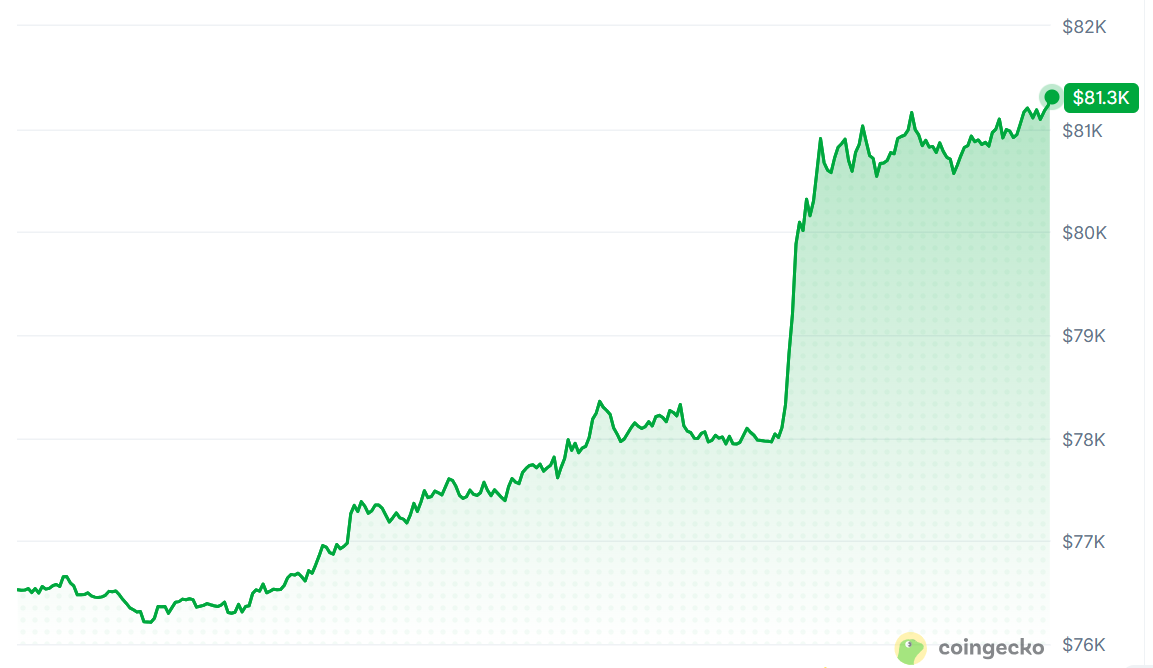
Bitcoin Price Rebound Follows a Wave of Market Fears
The first major catalyst was the Senate’s failure to advance the CLARITY Act on September 15. The procedural vote on H.R. 3633 failed 49-50, leaving the legislation unable to move forward at that stage.
The setback added regulatory uncertainty for the crypto industry. However, Bitcoin’s subsequent recovery suggests traders absorbed the news without extending the sell-off indefinitely.
Crypto spent the week digesting three dominant fear narratives.
CLARITY Act disappointment, higher interest rates, and fresh hack/security concerns all surged across social channels while Bitcoin slid toward the mid-$75K area.
The policy shocks were real. The Senate… pic.twitter.com/5vuy4iFkqq
— Santiment Intelligence (@SantimentData) September 18, 2026
Interest rates added another source of pressure one day later. The Federal Reserve raised its benchmark rate by 25 basis points to 3.75%-4.00% on September 16. The move marked a return to rate hikes after the previous increase in July 2023.
Higher rates can tighten financial conditions by increasing borrowing costs across markets. They can also reduce the appeal of riskier assets when safer yields become more attractive.
Security concerns further weighed on sentiment. Santiment pointed to the Symbiosis Bitcoin Bridge exploit and the Revolut breach involving personal information from crypto customers.
Despite those narratives, Bitcoin moved back above $80,000. Santiment suggested that larger buyers may have entered as fear became widespread.
That interpretation remains market analysis rather than confirmed evidence of specific buying activity.
What Bitcoin Price Action Suggests Around $80K?
Bitcoin’s current structure remains closely tied to several technical levels identified by market analysts.
Crypto Patel described an 8-hour bullish flag, with $80,000 serving as the key breakout trigger. The analyst identified $82,250 and $98,000 as potential upside levels after confirmation.
The bearish setup begins below $75,000, according to Patel. A breakdown could expose Bitcoin to $71,000 and then $68,000.
Bitcoin Bullish Flag Pattern: Could $BTC Rally Toward $98,000 Next?
8H TECHNICAL STRUCTURE: #BTC Is Currently Trading Inside A Bullish Flag, A Classic Continuation Pattern Following The Previous Impulsive Move.
BULLISH SCENARIO: Break + 8H Close + Hold Above $80,000 → Flag… pic.twitter.com/8HVDDAWlLQ
— Crypto Patel (@CryptoPatel) September 18, 2026
KillaXBT presented a different risk-management approach around the same range. The analyst said a move toward $82,000-$84,000 could trigger a 50% hedge against a continuation long.
Killa also identified $85,000-$86,000 as an important area. A sustained reclaim could leave the $88,000-$95,000 region as the next area under consideration.
These levels represent individual trading frameworks rather than established market outcomes. Bitcoin’s next move, therefore, depends on whether price confirms a breakout or returns toward range support.
The broader mechanism is straightforward: negative headlines can accelerate selling, but that pressure can weaken once sellers become exhausted. Bitcoin’s move above $80,000 shows that sentiment can shift quickly when price absorbs adverse news without breaking key support.
The post Bitcoin Price Hits $81K as BTC Shrugs Off Regulatory and Rate Fears appeared first on Blockonomi.
TLDR
- Disney stock drops 2.52% as Karandeep Anand joins as chief technology officer.
- Disney creates a new CTO role to oversee technology, data, product, and engineering.
- Anand joins from Character.AI after senior roles at Brex, Meta, and Microsoft.
- Disney expects Character.AI technical employees to follow Anand into the company.
- The leadership move supports Disney’s broader push to modernize digital operations.
The Walts Disney (DIS) shares fell 2.52% to $102.69 on Friday after a sharp mid-morning decline. The move followed Disney’s appointment of Karandeep Anand as its new chief technology officer. Disney created the role as it expands technology, data, product development, and engineering across the company.
The Walt Disney Company, DIS
Disney Stock Extends Losses After Leadership News
Disney created the chief technology officer position to strengthen company-wide technology leadership. Anand will start on October 2 and report directly to Chief Executive Officer Josh D’Amaro. His role will cover enterprise technology, infrastructure, data platforms, product development, and engineering.
Disney shares remained under pressure after the earlier decline accelerated during mid-morning trading. The stock closed down 2.52%, keeping market attention on Disney’s near-term share performance. Meanwhile, management continued outlining a broader plan to modernize technology across its businesses.
Disney also wants to connect its entertainment businesses through stronger digital systems and shared technology. Disney+ remains central as management builds more direct relationships with audiences worldwide. The company plans greater coordination between technology teams serving streaming, parks, entertainment, and other operations.
Karandeep Anand Takes New Technology Role
Anand joins Disney after serving as chief executive officer of Character.AI. He led the company during a period of strong platform growth and expanding consumer engagement. Before Character.AI, Anand served as president and chief product officer at financial technology company Brex.
Earlier, Anand held several leadership positions at Meta, including roles overseeing advertising and business products. He also spent 15 years at Microsoft in senior product and engineering positions. During that period, Anand worked on teams involved in building the Azure cloud platform.
Disney expects several members of Character.AI’s technical team to join the company with Anand. Their arrival could strengthen Disney’s engineering resources across several business areas. However, Disney has not provided specific roles or responsibilities for those incoming technical employees.
Disney Expands Technology Strategy Under D’Amaro
D’Amaro has placed technology among Disney’s main priorities since becoming chief executive officer. His approach combines storytelling, stronger technology support, and closer coordination across the company. Management also wants technology to create more connected experiences across Disney’s major consumer businesses.
The new structure gives Anand company-wide oversight instead of responsibility for one operating division. That setup could help Disney standardize infrastructure, data systems, engineering practices, and product development. It also places one senior executive in charge of coordinating major technology projects across Disney.
Disney faces strong competition across streaming, entertainment, gaming, and other digital platforms. The company has relied more heavily on digital distribution to support engagement and direct customer relationships. Anand’s appointment adds experienced technology leadership as Disney continues reshaping operations around connected products and services.
The post Disney (DIS) Stock: Plunges as Character.AI CEO Joins as Chief Technology Officer appeared first on Blockonomi.
TLDR
- Amazon’s air cargo network prepares for a major Airbus A330 fleet expansion
- ATSG receives its first Amazon-ready A330 and targets operations in 2027
- ABX Air plans new pilots and maintenance staff for the expanding A330 fleet
- Amazon has committed to multi-year leases covering four Airbus A330 freighters
- ATSG expands beyond Amazon through new Latin American cargo operations
Amazon (AMZN) stock traded at $253.20 as its air cargo network prepared for a wider Airbus A330 rollout. The expansion will gradually reduce reliance on Boeing 767 aircraft across Amazon’s cargo operations. Meanwhile, Air Transport Services Group is preparing its first A330 for Amazon service in 2027.
Amazon.com, Inc., AMZN
Amazon Prepares for A330 Expansion
ATSG received its first A330 freighter modified from a passenger aircraft for Amazon’s cargo network. The company expects ABX Air to begin operating the aircraft during the first quarter of 2027. Meanwhile, Amazon has committed to multi-year operating leases covering four A330 aircraft.
ABX Air must complete Federal Aviation Administration programs before adding the A330 to its operating certificate. These programs cover pilot training, aircraft operations, and maintenance procedures for the new type. Therefore, ATSG plans to hire additional pilots and maintenance workers as A330 capacity increases.
ATSG currently operates 56 aircraft within Amazon’s fleet of more than 100 planes. The company has supported Amazon since 2016 using Boeing 767-200 and 767-300 freighters. Meanwhile, Alaska Airlines operates 11 Airbus A330 freighters for Amazon.
ATSG Builds a New Freighter Fleet
The A330 expansion reflects the declining supply of mid-life Boeing 767 passenger aircraft available for cargo conversions. Boeing no longer produces the 767, while older passenger aircraft continue to leave commercial service. As a result, ATSG has pursued the A330 as its next medium-widebody freighter platform.
ATSG plans to acquire and convert 30 A330 aircraft as part of its broader cargo fleet strategy. Airbus aftermarket affiliate Elbe Flugzeugwerke performs the passenger-to-freighter conversion work. However, supply chain problems have slowed the conversion program and delayed some planned deliveries.
EFW has delivered two converted A330 freighters to Turkey-based ULS Airlines Cargo so far. ATSG also plans to support its new aircraft through maintenance operations in Ohio and Florida. The company is developing an Airbus maintenance program at Wilmington Air Park and in Tampa.
Amazon Cargo Network Expands
ABX Air has also added a new cargo customer as ATSG expands its business beyond Amazon and DHL Express. Miami-based Global Aviation Link hired ABX Air to operate a Boeing 767-300 to Latin America. Under the one-year agreement, ABX Air provides the aircraft and operates the service.
The service began flights between Miami and Quito on September 2 and operates six days each week. Global Aviation Link plans to expand service toward Venezuela and Peru, which export flowers and fruit. The company already provides scheduled cargo service between Miami and Bogota using Boeing 767 aircraft.
ATSG also announced three executive appointments as it continues changes following its 2025 acquisition by Stonepeak. Mike Hough became group president for airlines and services, while Tim Schulze joined as chief risk officer. Doug Belding also joined as vice president for enterprise performance and operating systems.
The post Amazon (AMZN) Stock: Air Cargo Network Prepares for Airbus A330 Expansion appeared first on Blockonomi.
CryptoPotato
Christine Lagarde personally asked Greek Prime Minister Kyriakos Mitsotakis to block Binance’s bid for a license to operate across the European Union, according to a Wall Street Journal report citing people familiar with the discussions.
The intervention came after Greek regulators had all but signed off on the application, raising an obvious question about how much sway the ECB president can exert over a process she has no formal authority over.
What Lagarde Reportedly Knew, and When She Acted
Binance had applied through Greece’s Hellenic Capital Market Commission (HCMC) for a license under the EU’s Markets in Crypto-Assets framework, the kind of approval that, once granted by one country, covers the entire bloc.
By early June, the application had cleared its technical review. The mandatory 40-day assessment period ended without objections, the HCMC’s anti-money laundering officer had signed off favorably, and notifications to other member states were reportedly already being prepared.
Then, sometime between June 7 and June 15, that changed. An HCMC official later told Binance that Lagarde opposed the license, and the Journal reported she had signaled as much to Mitsotakis directly during a May meeting, a position that overrode Greece’s own finance minister.
Some of that willingness to go along, the report suggested, may have had as much to do with Greek election timing as Binance’s case itself.
Her stated reasoning traced back to two things: Binance’s earlier guilty plea to US money laundering and sanctions violations, and a fear that letting the exchange into Europe would push more people toward dollar stablecoins right as the ECB was trying to get its own digital euro off the ground.
One legal expert described the episode as “political interference” in a licensing decision that legally belongs to an independent national regulator, since the ECB has no formal say over MiCA approvals at all.
A Retreat That Ended in France
Reuters first surfaced the Greek rejection risk in mid-June, and Binance pushed back hard at the time, insisting that HCMC’s review had found its application compliant and pointing to a compliance team that has grown to roughly 1,500 people since its 2023 US settlement.
That pushback did not hold. The firm later issued a statement indicating that it had decided to stop the license application process in Greece and was looking for authorization from other member states.
According to reports at the time, regulators in Ireland and Latvia had also turned the exchange down, citing its past penalties and complex structure.
Coinbase had already picked Luxembourg as its home base, and Kraken already held EU approval, with Binance leaning on France, where it holds a smaller registration and is in talks with the country’s financial markets regulator, Autorité des Marchés Financiers (AMF), as its remaining shot at a MiCA license covering all 27 member states.
The post Report: ECB President Personally Blocked Binance’s EU License appeared first on CryptoPotato.
Binance users should prepare for a temporary interruption to some main services at the start of next week due to scheduled maintenance.
On the bright side, the disruption is expected to last only about an hour, after which all operations should return to normal.
Cause for Concern?
Binance announced it will perform an infrastructure wallet upgrade on September 22 and, to support the process, will temporarily stop deposits and withdrawals. The company said token trading will not be impacted during the maintenance. It also assured that everything will return to normal once the system is deemed stable.
Such endeavors are quite frequent and shouldn’t trigger panic across the community. Earlier this summer, for example, Binance briefly halted deposits and withdrawals on the Bitcoin (BTC) network to perform wallet maintenance.
Before that, it temporarily paused such operations on the Ethereum blockchain; other ecosystems affected by support for certain improvements include Cardano, BNB Chain, Tron, and others.
The outages have lasted from minutes to a few hours, with no reports of major issues or user complaints.
The Previous Updates
Just a few days ago, Binance disclosed that it will remove the following cross-margin pairs: ENJ/USDC, GENIUS/USDC, CVX/USDC, and VANA/USDC, as well as the isolated-margin pair GENIUS/USDC. It also vowed to terminate access to the BREV/USDC, COOKIE/USDC, LA/USDC, and QNT/USDC spot trading pairs. The delistings are scheduled for today (September 18).
The announcement caused little to no volatility for the involved cryptocurrencies. However, when Binance disallows all trading services for certain tokens, it is usually a completely different story. This August, for instance, Across Protocol (ACX), Hashflow (HFT), PIVX (PIVX), Vulcan Forged PYR (PYR), Vanar (VANRY), and Viction (VIC) collapsed by double digits after the exchange waved them goodbye.
On the other hand, backing has the opposite effect. The latest example is PONS, whose price spiked substantially after the company added it to its Binance Alpha section.
Besides its listings and delistings, the company issued a scam alert about phishing attacks targeting crypto investors. It warned that attackers send fake text messages that seem official, such as “Your account settings were changed:” or “Suspicious login detected,” to trick users into clicking malicious links that could result in painful losses.
“Remember: Binance will never ask you to tap a link in a text message to “verify” or “secure” your account,” the alert reads.
The post Major Binance Warning: The Exchange Will Briefly Suspend Deposits and Withdrawals Next Week appeared first on CryptoPotato.
The failure of the CLARITY Act in the US Senate has been a major setback for the crypto industry. The outcome raised new questions about the future of regulation in the country and whether the setback could hurt Bitcoin and other digital assets.
But Bitwise Chief Investment Officer Matt Hougan believes the vote may not be enough to derail the broader crypto market rally.
Wall Street Isn’t Waiting
Hougan said the CLARITY Act would have been useful for the industry. The legislation was designed to provide a clearer regulatory framework for digital assets. It also aimed to strengthen investor protections and create rules that could remain in place beyond the current administration. Despite this, the exec said Bitcoin’s latest rally did not depend on the bill’s chances of passing.
According to Hougan, Bitcoin bottomed at about $57,950 on July 1. It then climbed above $80,000 by September 4. During the same period, Polymarket odds of the CLARITY Act becoming law this year fell from 39% to 18%. The two trends moved in opposite directions. For Hougan, that suggests crypto investors were not waiting for Congress to provide regulatory clarity.
Wall Street has also continued moving into the sector. For instance, Robinhood has launched its own blockchain. Morgan Stanley has launched a Solana ETF. The Depository Trust & Clearing Corporation, or DTCC, has also completed its first batch of tokenized stock settlements.
At the same time, US regulators have been working on rules outside Congress. In August, the SEC proposed Regulation Crypto Assets. This does not mean the loss of the CLARITY Act is unimportant. Agency rules can be changed by a future administration. Congress is also needed to give the CFTC broader authority over spot crypto markets.
Bitcoin fell after the Senate vote, which added short-term market pressure. But Hougan believes the setback is more of a speed bump than a roadblock.
“Crypto spent its first 17 years without core market legislation. Without Clarity, it has managed to go from a fringe idea to a $2.5 trillion asset class that’s reshaped everything from global payments to capital markets.”
Shift Back to Buying
US-based Bitcoin ETFs returned to net inflows after two days of heavy withdrawals. The funds attracted more than $159 million on Thursday. BlackRock’s IBIT was the only ETF to report a net inflow. Interestingly, HYPE also recorded $4.25 million in inflows.
Ethereum ETFs, on the other hand, moved in the opposite direction after posting $39.2 million in net outflows. These investment vehicles extended their losing streak to three days. Market analyst Darkfost said the end of the week appears “calmer” for the ETF market.
The post Here’s Why Bitwise CIO Believes Crypto Could Keep Rallying Without Congress appeared first on CryptoPotato.
SOL has followed the green wave sweeping through the broader cryptocurrency market, surging 6% in the past 24 hours to $105.
Many analysts believe the asset’s rally might be just starting, with one envisioning a potential explosion to as high as $1,300.
Parabolic Jump on the Way?
Earlier this week, the landmark crypto bill known as the CLARITY Act failed in the US Senate and could not advance to formal discussion. The development caused a brief correction for the crypto sector, with Ali Martinez noting that SOL plunged from $101 to around $95.60.
However, he argued the asset found solid support despite the pullback and outlined several bullish factors. First, he pointed to strong institutional demand, with spot SOL ETFs recording several consecutive green weeks and attracting over $200 million in the past month alone. Martinez also mentioned that 3 million tokens were withdrawn from exchanges in the last 30 days and that network growth remains “elevated.”
Shortly after, the analyst opined that a breakout is near, spotting a potential bull flag forming on SOL’s 4-hour chart. He said the key level to watch is $105 and claimed that a sustained close above could confirm the bullish breakout and open the door to an ascent to $130.
Most recently, Martinez claimed that the asset is “ready to go parabolic.” He opined that SOL has spent the last few years building a massive cup-and-handle pattern, with the neckline sitting near $360.
“A confirmed break above that level could mark the beginning of a much larger expansion toward $1,300,” he maintained.
Additional Forecasts
X user CRYPTOKRALI argued that SOL has started to “look interesting” again. The analyst noted that after weeks of compression, the price has finally broken above the descending resistance that kept rejecting every attempt higher. They said $98 has held repeatedly as support, and the strong daily candle through the trendline provides the necessary confirmation.
“Now the key is whether SOL can hold above the breakout and turn that old resistance into support. If it does, I’d be watching $110 first, with room for a bigger continuation if momentum follows through. The downtrend is breaking. Now we see how far the next leg can run,” the analyst added.
Scient also weighed in. The market observer expects one more leg up to around $130, saying they will then de-risk 50% of their spot bags and look to reload if the price dips to $90.
The post Solana to Go Parabolic? Here’s Why SOL Can Explode by 1,100% appeared first on CryptoPotato.
ETH witnessed a notable recovery after briefly plunging near $2,350 this week. The leading altcoin has since climbed over $2,480. At the same time, its transaction fees have fallen sharply, making the network cheaper to use.
The average cost per ETH transfer has dropped to around $0.095 from this year’s peak of $0.72 on April 21, according to Santiment’s findings.
Ethereum Gets Cheaper
The decline comes as mainnet demand softened during the bearish summer. However, network upgrades have also increased Ethereum’s capacity. Fusaka, higher blob throughput, and a 60 million gas limit have helped the network handle more activity. At the same time, Layer 2 solutions are processing large amounts of transactions that previously competed for Ethereum’s mainnet blockspace.
Lower fees could make Ethereum more accessible for users and developers, according to Santiment. Swaps, transfers, DeFi activity, stablecoin movements, and ERC-20 transactions can now be completed at a lower cost.
The analytics platform said that cheap transactions do not necessarily mean demand is recovering. But it is important to note that lower costs remove one of Ethereum’s long-standing barriers. With ETH prices having recovered, cheaper network activity could provide a more favorable environment for Ethereum-based projects.
Meanwhile, Ali Martinez observed that the asset is trading within a defined 4-hour channel despite recent market volatility. ETH has reached the lower boundary of the range, following which the $2,570 level has come into focus. Martinez expects a potential rebound toward the middle and upper end of the channel. A strong 4-hour close above $2,570, supported by higher trading volume, could signal a breakout. He added that the next stops would be $2,700 and then $3,000.
The Long Investor believes Ethereum remains a buy despite an almost 45% rise over the past three months. The investor said buying before ETH moves above $3,000 may put investors ahead of late buyers. They also pointed to the 200-week moving average as a strong long-term reference.
Supply Drain
Less ETH on exchanges is helping the recovery. Recent estimates revealed that only 6.06 million units now sit on exchanges, down from 22.9 million at the June 2020 peak. That is a 73% decline in readily available supply. The drop reflects more ETH moving into staking, ETFs, treasury holdings, and long-term custody.
Validators are also locking ETH to help secure the network. Lower liquid supply may increase the impact of buying activity. Even without a major rise in demand, smaller waves of buying can have a stronger effect when fewer coins are available on exchanges.
The post Ethereum Gets Cheaper: Network Fees Collapse Over 85% as ETH Price Rebounds appeared first on CryptoPotato.