Cryptocurrency Posts
Crypto Briefing
BSOL's dominance in the Solana ETF market enhances SOL's demand and network security, influencing crypto investment strategies and competition.
The post Bitwise ETF clients purchase $9.65M in Solana tokens as BSOL dominates US spot fund category appeared first on Crypto Briefing.
Ethereum's lead in open interest on Hyperliquid signals a shift in trader sentiment, highlighting potential risks in decentralized platforms.
The post Ethereum overtakes Bitcoin in open interest on Hyperliquid appeared first on Crypto Briefing.
KakaoPay's move could democratize access to Korean equities, fostering global investment and potentially reshaping international stock markets.
The post KakaoPay Securities pushes into tokenized equities to open South Korean stocks to global investors appeared first on Crypto Briefing.
BlackRock's Ethereum ETF success highlights growing institutional interest in crypto, potentially boosting market legitimacy and adoption.
The post BlackRock ETF clients buy $15M worth of Ethereum appeared first on Crypto Briefing.
Injective's Stockdrop could revolutionize equity access, offering decentralized, 24/7 trading and potentially reshaping traditional markets.
The post Injective launches first-ever Stockdrop for tokenized stocks this week appeared first on Crypto Briefing.
Bitcoin Magazine
Bitcoin Magazine
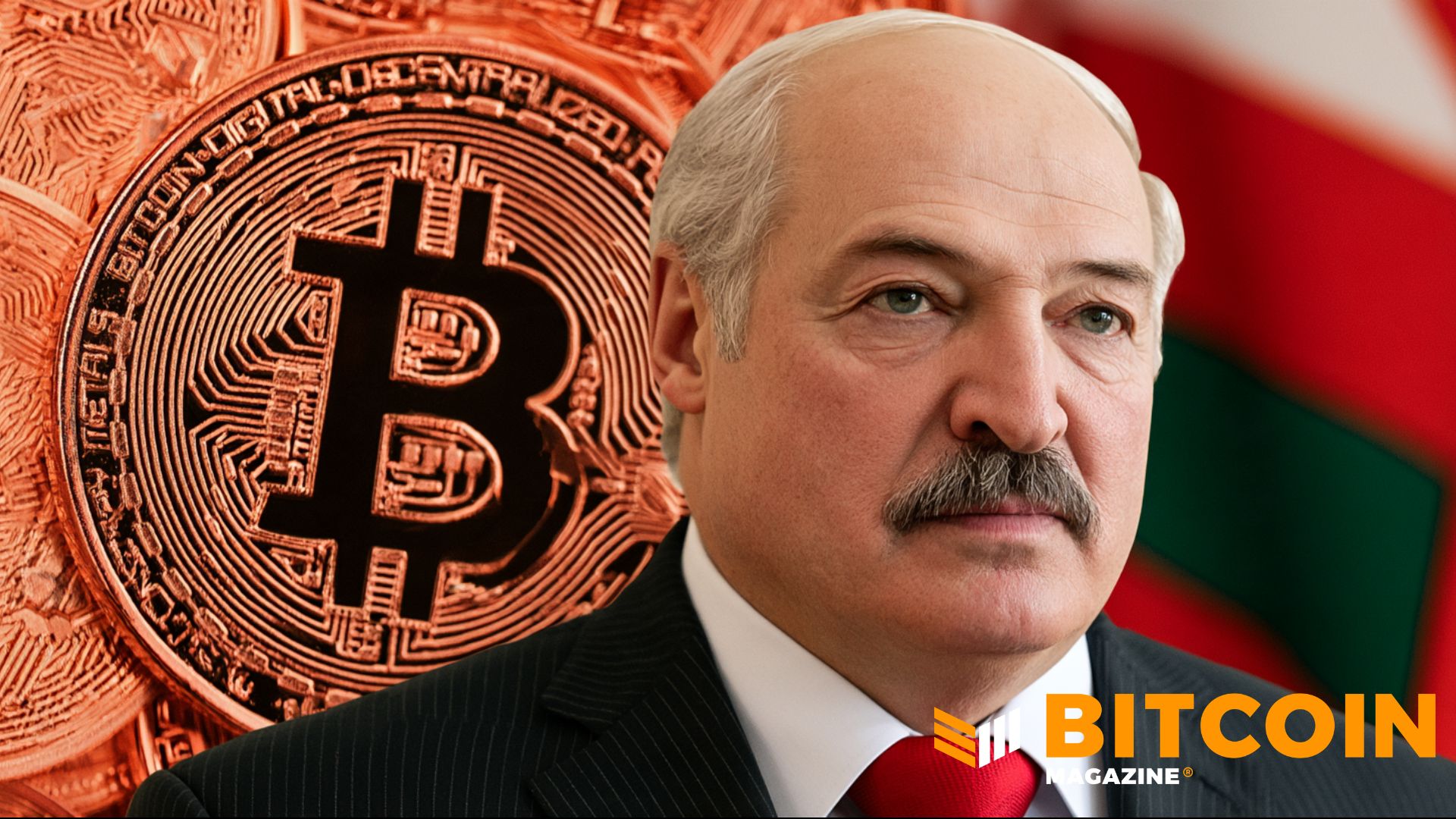
Belarus Approves the Country’s First Crypto Banks: Report
The first crypto banks have opened in Belarus, according to reports, after the European country earlier this year created a legal framework for Bitcoin banks.
While not yet named, the crypto banks will start operations after obtaining accreditation from the National Bank of Belarus, Russian news agency Interfax reported Monday.
Back in January, Belarusian President Alexander Lukashenko signed Decree No. 19 “On Cryptobanks and Certain Issues of Control in the Field of Digital Tokens,” officially creating a legal framework for bitcoin and crypto banks in the country.
JUST IN:
— Bitcoin Magazine (@BitcoinMagazine) September 28, 2026The first two "crypto banks" in Belarus have been approved.
“This will facilitate closer integration between traditional finance and the crypto industry." pic.twitter.com/Y5CHD00SkP

“The practical outcome of today’s discussion is the launch and registration of the first crypto banks in the country’s history,” Interfax reported the press service of High-Tech Park saying in a statement.
High-Tech Park is a tax and legal regime in Belarus. Digital asset transactions are permitted in the zone.
The statement added that banks would be regulated by Hi-Tech Park and the National Bank.
Dmitry Kalechits, first deputy director of the High-Tech Park supervisory board secretariat, was quoted saying that the move would “improve the flow of the financial ecosystem” and drive foreign investment to Belarus.
President Lukashenko last September backed the National Bank’s initiative to establish crypto banks in the country.
The country has long pushed pro-crypto regulations. A 2017 decree legalised crypto mining and trading and temporarily exempted individuals’ crypto income from tax and declaration. That exemption was extended to 2025 and has since been narrowed, with income from foreign platforms now taxed at 13%.
Lukashenko has repeatedly promoted Bitcoin mining as a use for surplus electricity, and in 2025 the Mogilev region began preparing sites for mining farms with his backing.
This post Belarus Approves the Country’s First Crypto Banks: Report first appeared on Bitcoin Magazine and is written by Mathew Di Salvo.
Bitcoin Magazine
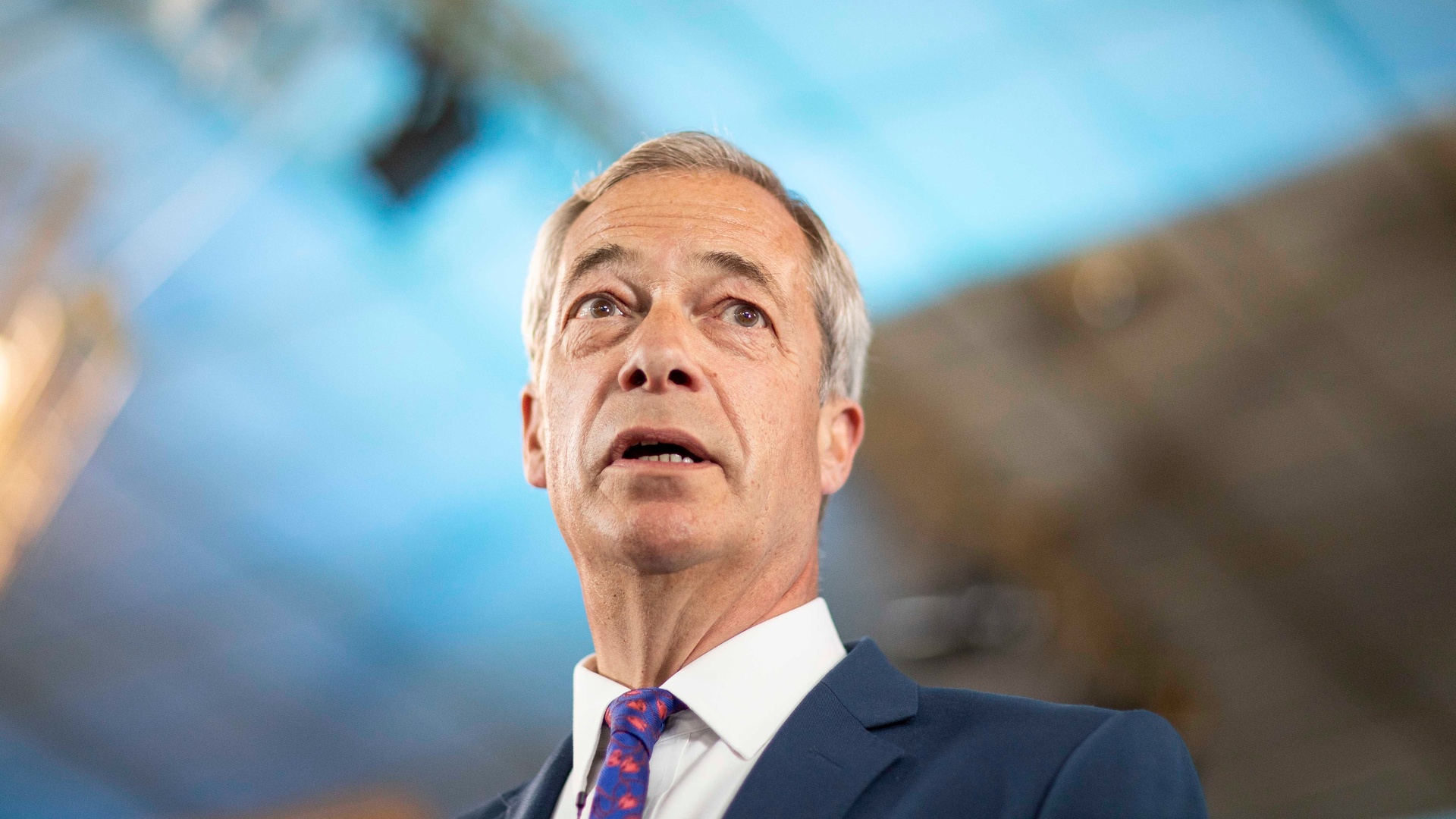
UK Chancellor of the Exchequer Blasts Nigel Farage’s ‘Bitcoin Account’
UK Chancellor of the Exchequer John Healey has appeared to slam Reform Party leader Nigel Farage’s use of Bitcoin.
In a Monday speech, the finance minister said that Nigel Farage — a pro-crypto member of parliament — was “Liz Truss with a Bitcoin account.”
Farage, who is leading the increasingly popular Reform Party, has come under fire recently for receiving donations from crypto entrepreneurs. Liz Truss was the UK’s shortest serving Prime Minister who was heavily criticised for her debt-fueled 2022 mini budget.
“Nigel Farage — he wants you to think he’s a man of the people,” Healey said. “But when it comes to the economy, he’s Lizz Truss with a Bitcoin account.”
Healey went on to say that his leading Labour Party would help the UK get ahead “through fiscal discipline, through good work, through strong industries.”
His comments were criticized by the Bitcoin community on X, who asked what a “Bitcoin account” even was.
“Apparently ‘Bitcoin account’ is now a thing,” the Simply Bitcoin account wrote on X. “Incredible stuff from one of the people running Britain.”
Populist Farage has long been a pro-crypto politician. Since 2020, he has framed Bitcoin mainly as a question of personal freedom and opposition to state control of money.
Farage has also said that he was debanked by private British bank Coutts and that led him to develop more interest in digital assets.
Just last year, he said at the Bitcoin 2025 Conference at Las Vegas that he’d slash crypto capital gains taxes and force the Bank of England to establish a Bitcoin reserve if elected as the next Prime Minister.
Farage has come under fire this year for receiving millions of dollars in the form of crypto donations from tech entrepreneur and Tether investor Christopher Harborne, and Ben Delo, one of the founders of the now-closed BitMEX crypto exchange.
The Metropolitan Police have opened an investigation into reports that Reform broke rules against overseas donations. Reform denies wrongdoing and says it will cooperate.
This post UK Chancellor of the Exchequer Blasts Nigel Farage’s ‘Bitcoin Account’ first appeared on Bitcoin Magazine and is written by Mathew Di Salvo.
Bitcoin Magazine

Citi and Coinbase Working Together To Build Stablecoin Infrastructure for Businesses
Citigroup is working with America’s biggest crypto exchange, Coinbase, in its latest blockchain-based venture.
The two companies said in a joint statement Monday that they were teaming up to allow Citi clients to move between regular money and stablecoins without having to build or manage both banking and crypto systems themselves.
The announcement comes as banks worldwide utilize Bitcoin’s underlying technology to speed up their processes and cater to crypto-hungry customers.
Citi last month said it would allow institutional investors to custody both traditional assets and bitcoin within one framework, rather than needing separate systems, later this year.
“Our clients operate in an increasingly fast-paced and complex global economy, and we’re focused on delivering the solutions they need,” said Debopama Sen, Head of Payments, Services, Citi.
“Our goal is to build the next generation of payments infrastructure — one that is seamless, interoperable, and operates across both traditional and digital payments instruments and networks.”
There are two parts to the deal, the announcement said. Firstly, Coinbase Virtual Accounts, built on Citi’s banking-as-a-service platform, will give Coinbase’s payments customers bank-account-like features so they can accept, hold, send funds. Citi will provide the regulated banking backbone so that incoming fiat can be automatically converted to stablecoins.
Secondly, Citi’s merchant platform, Spring by Citi, will use Coinbase’s infrastructure so that Citi’s enterprise clients can accept stablecoin payments at checkout. Coinbase will convert the stablecoins to fiat, and Citi settles the funds, so merchants never have to hold or manage crypto directly.
“Fintechs building on Coinbase have always needed a fast, compliant bridge between fiat and stablecoins, and Citi gives us that at scale,” Coinbase’s Head of Infrastructure Product, Alec Lovett, said.
Coinbase and Citi first announced last year that they would partner to enhance digital asset payment capabilities for institutional clients.
Citi has a number of blockchain offerings, including Citi Token Services, which enables real-time cross-border payments using tokenized deposits.
The firm since last year has also been working with other top banks — including Deutsche Bank, Goldman Sachs, and Bank of America — to explore issuing a stablecoin product.
This post Citi and Coinbase Working Together To Build Stablecoin Infrastructure for Businesses first appeared on Bitcoin Magazine and is written by Mathew Di Salvo.
Bitcoin Magazine
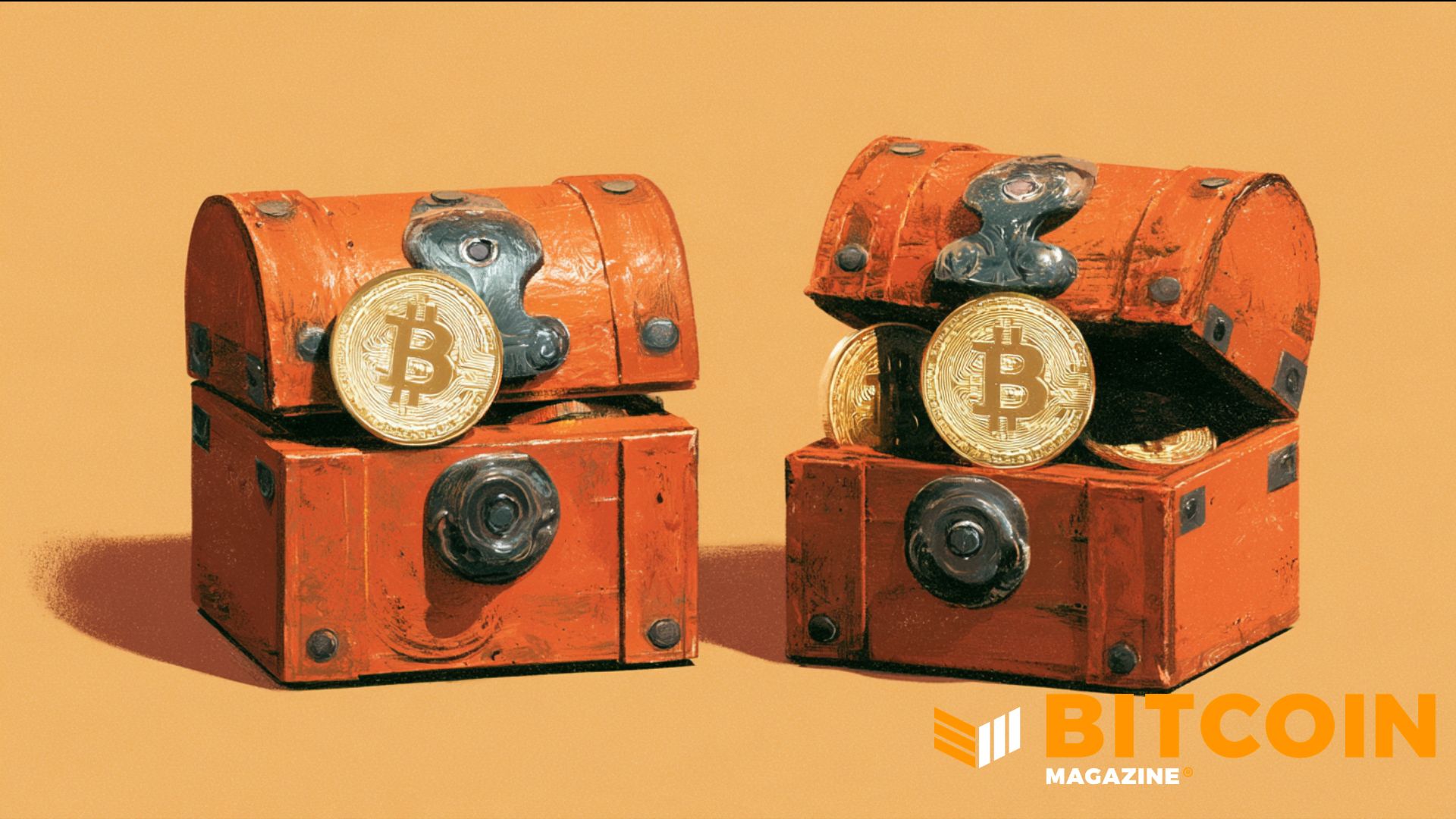
Strategy and Strive Scoop Up More Than 2,700 Bitcoin in a Week
Bitcoin treasuries are loading up again.
Strategy, the largest corporate holder of bitcoin, announced Monday that it had bought 1,665 coins last week for $142.7 million — its second buy in a row after a brief hiatus.
The Nasdaq-listed company added that it had also bought back $152 million in its preferred stock, STRC. Strategy now holds 847,666 bitcoins worth $70.5 billion, according to a filing with the Securities and Exchange Commission.
Elsewhere, the fifth biggest bitcoin treasury, Strive, said it had last week snapped up 1,107 BTC for a total cost of $94.5 million — bringing its holdings to 27,462 coins.
The two companies have continued to stack coins despite the bitcoin treasury model taking a hit. Major treasuries like Strategy, Satsuma, Smarter Web Company, Sequans, Nakamoto, and Empery Digital have all sold bitcoin this year to repay debt, fund operations or finance buybacks, while others have folded or pivoted to AI infrastructure as their share prices collapsed.
Strategy stock (MSTR) has lost over 50% of its value over the past year. Strive (ASST) is down by more than 30% over the same period.
Still, both Strategy and Strive have reassured investors that it’s just business as usual and bitcoin will bounce back.
Strive CEO Matt Cole has repeatedly said that the company is debt-free, with zero margin requirements, and zero encumbered bitcoin, calling it a balance sheet built to thrive through volatility.
Strategy has defended having to sell bitcoin this year, with CEO Phong Le boasting that the company now has a “bullet-proof balance sheet” because of the sales, and that it was the “right trade at the time” to sell when it did.
The software company last week announced it plans to pay investors daily dividends on four of its preferred stocks — STRF, STRC, STRK, and STRD.
Bitcoin’s price recently stood at close to $83,409, down 3% over the past week.
This post Strategy and Strive Scoop Up More Than 2,700 Bitcoin in a Week first appeared on Bitcoin Magazine and is written by Mathew Di Salvo.
Bitcoin Magazine

Dollars In, Bitcoin Out: Breez SDK Debuts New Stablecoin Feature
Despite being so-called digital dollars, stablecoins aren’t always simple to use. They run on various crypto networks that need different digital wallets — the type of thing that can put crypto newbies and seasoned bitcoiners alike off.
But Bitcoin software provider Breez has come up with a solution: Apps built on its Breez SDK can now let users with a bitcoin balance accept stablecoin payments from over 30 networks.
Receive USDT/USDC is LIVE in the Breez SDK
— Breez
Get paid in dollars, straight to your bitcoin or dollar balance.
Users can now receive @USDC or USDT from 30+ networks, including Ethereum, Base, Solana, and Tron.
One balance. No new chain to integrate. Value moving like… https://t.co/hCGUopkdgn pic.twitter.com/TRLASy9gq6(@Breez_Tech) September 28, 2026

Breez’s SDK is a developer toolkit that lets apps add bitcoin payments without building the payment infrastructure themselves. It handles wallet creation, sending and receiving and Lightning Network payments. Developers can offer bitcoin features with a few lines of code instead of running nodes or managing liquidity.
Breez said Monday that with the new feature, the receiver picks the sender’s network and an amount. The SDK generates a deposit address and shows what will arrive, and the sender pays from their usual wallet as normal.
Flashnet converts the payment in the background, and the funds land in the receiver’s non-custodial wallet as bitcoin, or as dollars if they use the stable balance feature.
Breez released its send USDT/USDC feature in June, allowing a single Breez-powered balance to now move stablecoins in both directions across nearly any network.
It’s the latest in a series of usability upgrades, after Passkey Login, instant Cash App onboarding, and Stable Balance.
Breez has been layering on features to make bitcoin apps feel more like regular fintech apps: passkey login instead of seed phrases, instant onboarding, dollar-denominated balances, and now cross-chain stablecoin payments. Breez’s Glow, which debuted in August, is its reference app for showing what the SDK can do.
Breez in July announced it was working with Turnkey in a deal letting developers add non-custodial Bitcoin to apps running wallets from their own servers — solving a custody problem that has kept many of the largest consumer platforms from integrating Bitcoin at all.
This post Dollars In, Bitcoin Out: Breez SDK Debuts New Stablecoin Feature first appeared on Bitcoin Magazine and is written by Mathew Di Salvo.
HTTP error 429 on https://cryptoslate.com/feed/
Failed to fetch feed: https://cryptoslate.com/feed/
Failed to fetch feed.
CryptoTicker.io
For September 29, 2026, several data services list a fresh release of HYPE, the token of the Hyperliquid trading venue. How large that tranche actually is, though, is a question they answer very differently. The figures range from around 330,000 to 14.18 million HYPE. At a price of $86.15, roughly $28 million sits at one end of that range and $1.22 billion at the other. Anyone who wants to know what can reach the market on that date is left with a range, not a single number.
The picture only firms up where the holdings themselves are counted. cryptoticker.io compiled this analysis on September 29, 2026. It rests on the supply data that Hyperliquid publishes for HYPE: maximum supply, total supply, circulating supply, future emissions and the four addresses listed there as non-circulating. The headline result: 700,219,817 HYPE, or 70.10 percent of the entire supply, is currently not in circulation at all. Measured against that, any single monthly instalment is a marginal figure.
Unlock, vesting and cliff: the three terms behind the September 29 date
Three technical terms keep surfacing around dates like this, and they do not mean the same thing.
Unlock
An unlock is the release of tokens that were contractually or technically locked until that point. Only from then on can the recipient move them, meaning hold, transfer or sell them. An unlock is not a new issuance: the tokens already exist, they merely shift from a locked state to a freely available one.
Vesting
Vesting is the schedule under which an allocation is released step by step, usually in equal instalments over months or years. The purpose is to stop founders, staff and early backers from selling their entire allocation on a single day.
Cliff
The cliff is the initial lock-up period at the start of a vesting plan, during which nothing is released at all. For HYPE that cliff ran for one year; the allocation for core contributors only began paying out in instalments afterwards. Keeping the three terms apart also explains why a release date on its own says nothing about selling pressure.
HYPE unlock estimates range from 330,000 to 14.18 million tokens
The spread between the published figures is not a rounding problem, it is a definition problem. Three numbers circulate side by side:
- Around 9.92 million HYPE. This figure matches the monthly instalment for core contributors as several unlock calendars report it. It is often quoted as 4.46 percent of circulating supply, which at a price of $86.15 works out at roughly $855 million. When the number made the rounds in late September, HYPE was trading higher, which is why most accounts spoke of around $904 million.
- 14,175,778 HYPE. Other calendars list this value for the same date, some 1.42 percent of total supply and therefore around $1.22 billion. The difference arises because further allocations are counted here alongside the core contributor instalment.
- Around 330,000 HYPE. The data service Tokenomist explicitly asks in its own analysis whether roughly 330,000 or roughly 9.9 million HYPE are released on a date like this, and weighs the two readings against each other. At the lower end that would be around $28 million at the current price.
All three numbers can be justified, depending on which allocations you count towards the tranche and which circulating supply you use as the reference. For you as a holder, one thing follows above all: a headline with a dollar sum does not replace checking which reference sits behind it. The precise figures from the individual calendars can be found in the Tokenomist analysis.
700.2 million HYPE are not in circulation
Hyperliquid's own supply figures paint a clear picture. Maximum supply stands at one billion HYPE. Total supply sits below that at 998,900,666.73 HYPE; 1,099,333 HYPE have therefore been permanently removed, which on this network happens through fees. Of the total supply:
- 298,680,849.52 HYPE are counted as circulating supply,
- 289,039,730.49 HYPE are holdings listed as non-circulating, spread across exactly four addresses,
- 411,180,086.72 HYPE are future emissions that have not been issued at all yet.
The three values add up exactly to total supply, which makes the data internally consistent. Add the two latter items together and 700,219,817.21 HYPE are outside circulation, or 70.10 percent. Even the largest of the three circulating tranche estimates, 14.18 million HYPE, therefore amounts to a good two percent of what is still outstanding overall. For comparison: trading recently turned over roughly $850 million worth of HYPE in a single day.

Circulating supply in conflict: 76.2 million HYPE between two sources
This is where it gets interesting for anyone reading percentages. Hyperliquid itself reports a circulating supply of 298,680,849.52 HYPE. The widely used market data provider CoinGecko lists 222,445,714 HYPE for the same day. The gap between the two is 76,235,135 HYPE, or around $6.6 billion at a price of $86.15.
Such divergences are not unusual, because data providers apply different levels of strictness: some deduct holdings that are technically movable but plainly not available to the market. The consequence is tangible all the same. The same tranche of 9.92 million HYPE works out at 4.46 percent of circulating supply using CoinGecko's number, but only 3.32 percent using Hyperliquid's. On the first reading the news sounds roughly a third more dramatic, without anything about the tranche itself having changed.
241.5 million HYPE sit in a single locked address
The holdings listed as non-circulating are spread across four addresses, and they are very unevenly sized. By far the largest holds 241,480,853.16 HYPE, or 24.15 percent of maximum supply. That order of magnitude matches the published allocation to core contributors, which is given as 23.8 percent of total supply. It is from exactly this pool that the monthly instalments at release dates are drawn.
The second address holds 47,557,200.82 HYPE, or 4.76 percent of maximum supply. Behind it sits a system address of the network, which among other things holds repurchased tokens. The two remaining addresses barely register: the null address holds 1,673.79 HYPE, the burn address 2.72 HYPE. Anyone talking about locked HYPE holdings is therefore talking about two addresses in practice.
Why concentration in a few addresses cuts both ways
Heavy concentration means the schedule is predictable: there are few sources from which new supply can come, and their cadence is known. It also means that a small number of parties can move large amounts as soon as their lock expires. Both hold true at the same time, and neither reading can be refuted from the holdings data alone.
411.2 million HYPE in future emissions: the part nobody holds yet
The largest item outside circulation is future emissions at 411,180,086.72 HYPE. These are tokens that have not been allocated at all yet and are only due to come into existence over the coming years, earmarked above all for network rewards. They appear in no unlock calendar as a tranche, because there is nothing to release in their case.
For putting a single date into context, this item is nonetheless the most important one. It means that the amount of HYPE theoretically available to the market still grows considerably over the long run, quite independently of what happens on September 29. An investor who looks only at the next release date is taking in the smaller part of the picture.
What was distributed at launch
HYPE went live on November 29, 2024. The entire maximum supply of one billion tokens had already been allocated to 94,023 addresses at that point, a large share of it as a distribution to early users of the platform. The holdings that count as locked today are therefore not tokens created after the fact, but parts of that original allocation that are not yet free.

What dilution means for the HYPE price
Dilution describes the way an individual token's share of the total stock falls when new tokens enter circulation. Whether that turns into price pressure depends on whether the newly available tokens are actually sold. That is precisely what supply data cannot show, and it cannot be forecast responsibly either.
What is observable is the starting position. HYPE trades at around $86 and therefore some twelve percent below the record high of $97.96 set on September 23, 2026. Over 24 hours the price lost 4.4 percent. Market capitalisation stands at roughly $19.2 billion. Traders who use leveraged products around release dates often trade HYPE as a perpetual futures contract on specialised venues; which those are and how their fees differ is set out in our comparison of the best perp DEXs.
Bull and bear case side by side
Those who look at HYPE optimistically point out that the schedule has been known for a long time and should therefore be priced in, and that part of the fees is used to buy back tokens, which works against the new supply. Sceptics counter that the instalments keep running for years and that the core contributor allocation alone is larger than four fifths of today's circulating supply. These assessments stand against each other, and neither can be proven at present.
Hyperliquid holds no MiCA licence for Germany
Before position sizes come up, a sober look at the legal framework is worthwhile. The EU's MiCA regulation has set uniform rules since 2024 on who may offer crypto services in the European Union; providers need authorisation from a national supervisor, in Germany that is BaFin. Hyperliquid is a decentrally operated trading venue without such a licence. What that means for you in practice is set out in a separate piece on how Hyperliquid can be used from Germany.
Holding period, leverage and liquidation around a release date
Holding period
In Germany, gains from selling cryptocurrencies are tax-free after a holding period of one year; within that year they count as a private disposal transaction. Selling early because of a release date can break that deadline. Before reacting, it is worth looking up when your own HYPE was bought and how close the one-year mark is.
Leverage and liquidation
Anyone trading HYPE with leverage should know that a liquidation is the forced closure of a position as soon as the posted collateral no longer suffices. Dates on which the market expects a large release are often accompanied by wider price swings, and swings hit leveraged positions first. A smaller position survives a move that ends a large one.
Custody
If you intend to hold HYPE for longer, the question of custody matters more than any single date. Holdings on a trading venue are exposed to that venue's failure risk; a wallet whose keys only you know shifts the risk onto your own diligence in keeping those keys.
HYPE unlock: The key points for your decision
The September 29 date is a small slice of a long schedule. More important than the daily headline is that 70.10 percent of the entire HYPE supply still sits outside circulation and will be added in instalments over years. Three steps help you place it:
- Question the reference figure. When a report gives a tranche as a percentage of circulating supply, check which circulating supply is meant. The two common values for HYPE are 76.2 million tokens apart, and the same unlock looks roughly a third larger or smaller as a result. Where you trade in the first place and under whose supervision is covered by our comparison of regulated crypto exchanges.
- Settle custody before the date arrives. If your tokens sit on a trading venue without European authorisation, decide calmly whether they should stay there. Which devices are suitable for self-custody is covered in the hardware wallet comparison.
- Recalculate your holding period instead of reacting to the headline. Check the purchase date of your HYPE and the one-year deadline before you sell because of a release date. Tools that track purchase dates and deadlines cleanly can be found among the crypto tax tools and portfolio trackers.
You can verify the supply figures in this article yourself at any time, for example via the public Hyperliquid explorer for HYPE.
(As of September 29, 2026. This article is not investment advice. Prices and fee structures change; check the terms with the provider before you buy.)
The Chainlink network's treasury has passed a round mark. According to several industry outlets reporting on September 26 and 27, 2026, the Chainlink Reserve holds exactly 6,047,498 LINK. In September alone, 373,791 tokens were added, worth a good $4.3 million at the price at the time. Alongside that, the price of Chainlink has risen sharply: in the early hours of September 29, 2026, LINK trades at $15.56, up around 10.6 percent within 24 hours and 16.7 percent over the week.
For you as an investor in Germany these are two different things, and they need to be kept apart. The reserve is a structural change on the supply side. The price jump is a day's move. What follows sets out what lies behind the reserve, which levels the price has just marked, and what you need to keep an eye on when buying, on the holding period, on staking and on leveraged positions.
Chainlink Reserve: 6,047,498 LINK now sit in the network treasury
The Chainlink Reserve is an on-chain treasury of the network into which part of the revenue from the oracle services flows, where it is converted into LINK and held. It is not a fund you can buy units in, and it is not a foundation handing out money. What is meant is simply a holding that grows as long as the network takes in revenue.
The current level of 6,047,498 LINK is cited consistently by several specialist services, among them Coingabbar with the date September 26 and Coin-Turk with the same figures. Both also list the same September increase: 373,791 LINK. You can look up the holding yourself on the project's official reserve page, which tracks the development continuously.
More interesting than the absolute number is the pace. At the end of the first quarter of 2026, according to the same reports, the reserve held around 3.06 million LINK. The holding has therefore almost doubled in a good six months. Anyone watching the project over a longer period will read one thing above all into that: the revenue feeding the reserve now comes in regularly, not just in isolated cases.
Payment Abstraction: where September's 373,791 LINK come from
Payment Abstraction is the mechanism with which Chainlink collects payments in any token and converts them into LINK automatically. A company booking a data service therefore does not have to buy LINK on the market itself. It pays in whatever currency suits it, and in the background the equivalent value lands in the treasury as LINK.
That sounds technical, but it has a very tangible consequence. Every new large customer raises the ongoing buying pressure on LINK, without that customer ever making a purchase decision about the token. This is precisely where the reserve connects with the corporate news of recent weeks that we have already covered, such as the inclusion of Chainlink in a banking standard from Infosys on September 24.
One caveat belongs with this. How much revenue actually accrues, and what share of it moves into the reserve, is not published by the project as a line item per customer. The inflow is documented; its origin in detail is not. Anyone extrapolating an annual revenue figure from 373,791 LINK in September is working with a number nobody has verified.
What 6 million LINK mean for the circulating supply
Of the 1,000,000,000 LINK that will ever exist, around 748.1 million are currently in circulation. The reserve's 6,047,498 LINK work out at roughly 0.8 percent of that. It is noticeable, yet it is no supply shock, and anyone selling it as one is overstating the case.
Here is one way to place it: with trading volume of around $1.44 billion in 24 hours, the reserve's $4.3 million of purchases across the whole of September move less than the market turns over on an average morning. The effect lies in duration, not in day-to-day trading. A holding that grows every month and is not sold takes supply off the market piece by piece.
LINK price at $15.56: the 24-hour high and low compared
In the early hours of September 29, 2026, LINK stands at $15.56. The range of the past 24 hours runs from a low of $13.54 to a high of $15.49. Around 14 percent lies between those two points, and the price is quoted at the upper edge of that range.
Over a month the gain comes to just under 34.8 percent, over a week to 16.7 percent. With a market capitalisation of about $11.6 billion, LINK ranks 13th among the largest cryptocurrencies. The all-time high of $52.70 from May 2021 is still around 70 percent away.
These figures are snapshots. The price changes while you read, which makes it useless as a forecast. What the values do deliver is something else: reference points you can pin your own decision to instead of pinning it to a headline.
Buying LINK in Germany: MiCA authorisation, spot purchase and custody
If you want to buy LINK in Germany, the simplest route runs through a trading platform holding an authorisation under the EU regulation MiCA. MiCA is the European legal framework for crypto assets, which obliges providers to hold authorisation and own funds, to segregate client money and to supply comprehensible information sheets. A platform without that authorisation may no longer address retail clients in the EU through regular channels.
Three things differ considerably between providers in practice: the trading fee per purchase, the mark-up in the price itself, and whether you are allowed to move the purchased tokens to a wallet of your own at all. The third point tends to be overlooked and is the most important one if you intend to hold for the long term. If you then want to keep the tokens in your own custody, you need a device or software of your own for that; which devices are suitable is shown in our hardware wallet comparison.
One more thing applies to a spot purchase: you buy the token itself and no certificate on it. That matters for tax, and it is the reason why the question of the withdrawal route to your own wallet is not a side issue.
Chainlink Staking v0.2: why the community pool is usually closed
Many readers ask about staking at this point, and the answer turns out differently from what other networks have taught them. Staking at Chainlink means you deposit LINK as security for the correct operation of the oracle services and receive a payment for it. The programme runs in version v0.2 and has a fixed cap.
That cap stands at 45 million LINK in total, of which 40,875,000 LINK sit in the community pool. This pool was full within a few hours of launch. Since then the rule is: new room only opens up when an existing participant withdraws their tokens. There is no waiting list and no allocation, only first come, first served. The terms are set out on the project's staking page.
Anyone still looking for an ongoing yield almost inevitably ends up with third-party offers, meaning exchanges or custodians paying a return on deposited tokens. That is something entirely different from staking in the protocol: there you also carry the provider's default risk. Anyone using such offers should therefore establish first who holds the tokens during that time and what happens to them if the provider becomes insolvent.
A one-year holding period: the tax on LINK gains in Germany
For private investors in Germany, a sale of LINK counts as a private disposal under section 23 of the Income Tax Act. If more than twelve months lie between purchase and sale, the gain stays tax free. Sell within that period and the gain is taxable at your personal income tax rate, as soon as the sum of all private disposal gains in a year reaches the threshold of €1,000.
Threshold here really does mean a threshold and not an allowance. Anyone reaching €999 of gains in a year pays nothing. Anyone reaching €1,001 pays tax on the full amount and not merely on the one euro above it. This difference costs money regularly, because it gets overlooked.
What matters in practice is the allocation of the individual purchases. If you have bought in tranches over months, every tranche has its own acquisition date, and on a sale it has to be clear which of them is going out. For that, the tax authorities accept the first-in-first-out method, under which the oldest tokens count as sold first. Without clean records it can hardly be reconstructed after the fact, and in case of doubt the tax office estimates to your disadvantage.
A note on staking through third parties: payments from such offers are as a rule other income and are taxed in the year they are received, independently of the one-year period. Anyone mixing the two should keep the positions separate.

Leverage and liquidation: what a tenfold leverage withstands at $15.56
A price running from $13.54 to $15.49 within 24 hours attracts leveraged positions. A sober calculation is worth doing here. The liquidation price is the price at which the security deposited is used up and the position is closed by force.
With tenfold leverage, a counter-move of around ten percent is arithmetically enough for that, with twentyfold leverage around five percent, in each case before fees and financing costs. Measured against this Wednesday's daily range, which alone came to around 14 percent, a long position with tenfold leverage would have been liquidated at that day's low, even though the price ended up considerably higher.
That is the real point: in a strong move, the result is decided by the path taken and not by the direction. Anyone working with leverage should know the liquidation price before entering and not go looking for it once the position is already running.
Levels above and below: $13.54, $15.49 and the all-time high at $52.70
Three values serve as orientation, all of them drawn from the price data itself and carrying no opinion. On the downside, the low of the past 24 hours at $13.54 is the first level; below it the previous week's price territory begins. On the upside, the daily high at $15.49 is the point at which the current move was last halted.
The third level is historical: $52.70 from May 9, 2021. That value shows how far the way to the previous peak still is, and it puts this week's jump in perspective. A gain of 34.8 percent in a month is a lot; measured against the all-time high, around 70 percent is still missing.
We are deliberately leaving out analysts' price targets. For the figures circulating in recent days, no originator attributable by name could be established, and a number without a sender is not information.
What the reserve does not deliver
Finally the counter-check, because a growing network treasury is readily declared a price guarantee on social networks. It is nothing of the kind. The reserve does not buy prices, it collects revenue. There is no obligation to support the price when it falls, and the project likewise publishes no plan for when tokens might be released again.
Just as little does the reserve say anything about the quality of the individual integrations. An inflow of 373,791 LINK in one month documents that revenue is accruing. It does not document that this revenue will accrue again next month. Anyone wanting to follow the development looks at the holding across several months, not at the report of a round number.
Chainlink Reserve: your next three steps
- Look up the holding yourself. Open the project's reserve page and compare the holding shown there with the 6,047,498 LINK from this article. If the number differs, something has been added or has flowed out since, and you have the more current value. Your own holdings are best tracked in a portfolio tracker with a tax function.
- Settle the buying route and the withdrawal before you buy. Check in our exchange comparison whether your platform holds a MiCA authorisation, what fee applies per purchase and whether a withdrawal to a wallet of your own is possible.
- Note the purchase date and keep yield offers separate. Record the acquisition date for every tranche so the one-year period can be proven. If you are also looking at yield offers, compare them in the overview of staking platforms and treat them separately from plain holding for tax purposes.
(As of September 29, 2026. This article is not investment advice. Prices and fee structures change; check the terms with the provider before you buy.)
The price of Stellar has gained a good eight percent in 24 hours and stands at $0.2329, or €0.2048. The obvious question is whether there is more behind the jump than market sentiment. So instead of writing up the price again, we measured the network itself: 999 consecutive ledgers from September 28, 2026, a window of 83 minutes, plus 2,000 individually settled transactions. Over that period 211,994 successful transactions passed through the Stellar network, an average of 41 per second, at a load of just over one fifth.
Two findings appear in no price report. Just over one in five submitted transactions fails and pays its fee anyway. And the famous minimum fee of 0.00001 XLM is not an advertising figure: 57.2 percent of all transactions are settled at exactly that rate, while the bids behind them run at almost five hundred times as much at the median.
cryptoticker.io collected this analysis itself on September 28 and 29, 2026. We examined 999 ledgers and 2,000 transactions.
Stellar climbs to $0.2329: the numbers behind the price jump
XLM trades at $0.2329. That is 8.1 percent more than 24 hours ago and also 8.1 percent more than a week ago. Over 30 days the gain comes to 29.6 percent. The daily range ran from $0.2071 to $0.2343, so 13.1 percent lies between the low and the high. Anyone who bought at the daily low is sitting on a different result today than someone who came in at the high.
With a market capitalisation of $8.16 billion, Stellar ranks 20th among the largest crypto assets. Daily turnover is $814 million. Of a total 50.00 billion XLM, 35.01 billion are in circulation. The all-time high of $0.8756, reached on January 2, 2018, is still 73.4 percent away.
There is no single documented trigger for the move. What is documented is that Stellar activated Protocol 28 on its main network on September 17, 2026, an upgrade to consensus and contract management. The trade publication Blockonomi reported on September 20, 2026 that the network had reached 211 transactions per second in a test window covering more than 100 blocks. Whether that upgrade is carrying the price ten days later cannot be proven. What the network actually delivers today can be measured.
41 transactions per second: the measured throughput of the Stellar network
Across the 999 ledgers we measured, throughput came to a median of 41.2 successful transactions per second and an average of 42.4. The weakest ledger in the window managed 15.0 transactions per second, the strongest 84.0. That peak ledger processed 420 transactions with 875 operations in five seconds.
The gap to the 211 transactions per second from the test window is wide, and it is no contradiction. A test window measures what the technology delivers under full load. Our measurement shows the real load of an ordinary evening. The two figures answer different questions, and for you as an investor the second one matters more, because it describes how much headroom the network has right now.
Ledgers on a five-second beat: the heartbeat of the Stellar network
A ledger is to Stellar what a block is to Bitcoin: a closed set of transactions that the validators confirm together and that stands unchangeable afterwards. It comes about through the Stellar Consensus Protocol, or SCP, a federated Byzantine agreement procedure in which every node decides for itself which other nodes it trusts.
In our window a ledger closed exactly every 5.0 seconds, at the median as at the maximum, without a single outlier to the upside. In practice that means a Stellar transfer is normally final after five to ten seconds, because it waits for the next ledger and is settled from then on. Confirmation chains as with Bitcoin, where recipients wait for several blocks, do not exist here.

206 of 1,000 slots per ledger: how busy the Stellar network is
In the current network every ledger has room for up to 1,000 transactions. At the median, 206 of those slots were taken, so 20.6 percent. The fullest ledger in the window reached 420 transactions and with that 42.0 percent. The network ran throughout at around one fifth of its capacity.
That figure is interesting for two reasons. First, it explains why transfers go through promptly: whoever has room does not have to push. Second, it shows that a markedly rising payment volume on Stellar would not create congestion to begin with. Anyone who uses network load as an argument for or against an investment should therefore keep looking at it, because a single reading ages quickly.
Failed transactions: 22 percent pay their fee anyway
In the measured window, 273,139 transactions were taken into ledgers. Of those, 211,994 succeeded and 61,145 failed, a failure rate of 22.4 percent. That sounds like a broken network, and it is not one.
A failed transaction on Stellar is one that was taken in and executed, but whose condition was not met. The typical case is trading on the network's own order book function: one program bids on a price difference, a faster program got there first, and the transaction runs into nothing. Of the 2,000 transactions we examined individually, 303 had failed, and the operation types over the same period consist half of contract calls and just under a quarter of buy and sell offers. For an ordinary payment from address to address none of this matters.
There is one thing you should take away from it, and we checked it in every single case: all 303 failed transactions in our sample paid a fee, a median of 100 stroops. Stellar collects it as soon as the transaction has been taken into a ledger, whatever the outcome. Anyone who sends a payment on a tight balance or with a time condition loses the fee even when nothing arrives at the other end.
0.00003 XLM at the median: what a Stellar transaction actually costs
Stellar is often advertised with the line that a transaction costs 0.00001 XLM. That figure describes the base fee of 100 stroops per operation, which is the minimum price; a stroop is one ten-millionth of an XLM. Whether the minimum price also holds in practice can be measured.
It holds in the majority of cases. 57.2 percent of the 2,000 transactions we examined were settled at the minimum rate down to the last unit, meaning 100 stroops for every operation contained. The median across all transactions comes to 300 stroops, which is 0.00003 XLM or about 0.0006 euro cents. A thousand payments of that kind cost less than one cent together.
The distribution is heavily skewed, though, and the average is no use here: it sits at 9,343 stroops and so at thirty-one times the median. The top tenth pays from 13,952 stroops, the top percent from 132,571 stroops, and the most expensive case in the window cost 139,028 stroops, or around 0.28 euro cents. Almost all of these outliers are automated processes; ordinary transfers do not reach such levels.
Fee bidding on Stellar: bids at a median of 144,757 stroops, 300 settled
Fee bidding is the procedure by which Stellar hands out space in a ledger. Every transaction names an upper limit that the sender is willing to pay at most. If all applicants fit into the ledger, they all pay the minimum rate. If there are more applicants than slots, the higher bids go first, and settlement follows the lowest bid still taken in. The rules for this are set out in Stellar's technical documentation.
Exactly this mechanism can be read off our figures. The median bid stood at 144,757 stroops, while the median amount settled was 300. Senders therefore offered around four hundred and eighty times what they paid in the end. Only 8.6 percent of transactions were actually settled at their own maximum bid.
For your own transfer that means two things. A high bid in the wallet does not make the payment more expensive; it protects against load spikes and nothing else. It gets critical the other way round with software that hard-codes the upper limit at a low level: payments like that drop out of the ledger during a spike. Anyone who buys XLM through an exchange and leaves it sitting there sees none of this, because the trading venue books internally; the fee question only comes up on withdrawal to an address of your own. Which venues offer what terms is set out in our crypto exchange comparison.
Buying XLM in Germany: MiCA authorisation and where XLM trades
Since the European regulation on markets in crypto assets took effect, trading venues may serve retail clients in Germany only with an authorisation as a crypto-asset service provider. The companies that BaFin lists are set out in its register of crypto institutions. Under the regulation XLM counts as a crypto asset with no issuer behind it and is traded by the large authorised venues; a delisting risk of the kind seen with some stablecoins does not apply here.
In practice you buy XLM in ordinary spot trading, against the euro or against an authorised stablecoin. Watch the spread and not the order fee alone, because with a coin turning over $814 million a day the spread is the bigger cost block at smaller venues. Anyone who comes in through a certificate or an exchange-traded product ends up holding a claim against an issuer and no coins, with a default risk of its own and a different tax treatment.
Holding period under section 23 of the German Income Tax Act: one year and the €1,000 threshold
Gains from selling XLM count in Germany as private disposals under section 23 of the Income Tax Act. Sell within a year of buying and the gain is taxable, charged at your personal income tax rate. Once a year has passed it stays tax free. The threshold for all private disposals in one year is €1,000; once it is exceeded, the entire gain is taxable and not merely the part above it.
A price rise of eight percent in a day shortens no deadline. Anyone taking profits after the jump should look up first when the individual lots were bought, because a sale a few weeks before the one-year mark can turn out expensive. Where there were several purchases at different times, the first-in-first-out method applies per wallet or account.
There is no staking on Stellar: SCP instead of proof of stake
One widespread expectation we will clear up here, because it leads to mistaken purchases again and again: XLM cannot be staked. The Stellar Consensus Protocol works without any capital deposited. It is a voting model among validators who put nothing up and receive no reward for it either. A yield from the network itself does not exist on Stellar.
The earlier inflation of one percent a year, paid out to wallet addresses, was switched off by the validators in October 2019. In November 2019, 55.5 billion XLM were destroyed, and the total supply has stood at 50 billion since then. So when a platform offers you a yield on XLM, it does not come from the network but from that platform's own business: from lending, from trading or from a bonus programme. What you carry with it is counterparty risk, not protocol risk.
Storing XLM: minimum reserve, memo and the choice of wallet
Two particulars apply to custody on Stellar. Every address must first hold a minimum reserve that stays tied up in the network and cannot be paid out; it rises with every additional entry, such as one further token held. Second, many exchanges ask for a memo on deposits, an extra identifier alongside the address. A transfer without that memo lands in a collective account and has to be assigned by hand.
On an exchange the coins sit in the provider's holdings, with its insolvency and attack risk. A software wallet on your phone suits the amounts you move day to day. For holdings meant to sit until the one-year mark has passed, the way leads to a device that the private key never leaves. The minimum reserve applies just the same in both cases.
Stellar price and network load: the key points for your decision
The price jump is the occasion, the network figures are the finding. Three steps follow from them.
- Look up the trading venue's authorisation. Buy XLM where an authorisation under the European crypto-asset regulation is in place. Our comparison of regulated crypto exchanges gives an overview.
- Keep a record of your purchase dates. For the one-year period under section 23 of the Income Tax Act, the day of each individual purchase is what counts. A tax tool or portfolio tracker logs this as you go, not in hindsight.
- Fit custody to your holding period. Anything meant to sit for more than a year does not belong in an exchange account. The devices for that are in our hardware wallet comparison.
(As of September 29, 2026. This article is not investment advice. Prices and fee structures change; check the terms with the provider before you buy.)
Zcash costs around $1,464 on the evening of September 28, 2026, 8.5 percent less than 24 hours earlier. There is no trigger in the project: no upgrade was postponed, no exchange halted trading, no authority intervened. What changed is the amount of borrowed money sitting on the price. Open interest in ZEC futures contracts on the OKX exchange shrank by 13.5 percent within 24 hours, considerably more than the price itself. This piece shows where those numbers come from, what they say about the days ahead and which three things hang on them for you as a holder in Europe.
Zcash falls to $1,464: the numbers on the pullback
CoinGecko price data show Zcash at $1,464.12 on the evening of Monday, September 28, 2026, the equivalent of €1,287.77. That is 8.5 percent less than the previous day. Within those 24 hours the high stood at $1,601.85 and the low at $1,449.25, so the range amounts to a good 10 percent of the price. Trading turnover adds up to $1.12 billion, market capitalisation to $24.82 billion. That puts ZEC ninth among the largest crypto-assets.
The pullback only looks large inside the daily window. Over seven days Zcash is up 0.78 percent, over 30 days 74.51 percent and over 60 days 209.95 percent. Individual market reports from the same day put the month at around 83 percent; the divergence from our figure arises from the chosen reference date. What is dependable is the range between 74 and 83 percent, not the single number. ZEC remains 54 percent away from its all-time high of $3,191.93 set in October 2016.
Supply matters for context. Of a maximum 21 million ZEC, 16,954,919 units are in circulation. Zcash shares that ceiling with Bitcoin, and as there, new issuance falls over time. A price pullback changes nothing on that supply side.
In its assessment of September 28, the analysis service FXStreet describes bullish momentum easing and a decline below $1,500 as possible. That level is precisely the point at which the coming days will decide whether the market holds its September gain. On Monday evening the price stood below it.
Open interest on the OKX perpetual: 13.5 percent lower in 24 hours
Open interest is the sum of all futures contracts currently open and not yet closed. The measure captures how much capital is riding on a price through derivatives. About the direction of those bets it says nothing.
cryptoticker.io compiled this analysis itself on September 28, 2026. It rests on public data from the OKX exchange for the perpetual futures contract ZEC-USDT-SWAP: open interest, its notional value and the funding rate. The series covers 720 hourly readings over the past 30 days, from August 29 to September 28, 2026. A single trading venue was examined.
The result: the most recent hourly reading stands at $164,953,265. The day before it was $190,686,317. That is a decline of 13.5 percent in exactly 24 hours. Against the high of the past 30 days, $236,835,430 on September 18, it is now 30.4 percent short. The contract's notional value on Monday evening stood at 110,895.86 ZEC, the equivalent of $162.3 million.
The steepest drop falls within a single hour. On Monday evening open interest sank from $174,821,842 to $163,904,108, down 6.2 percent in 60 minutes. Jumps like that do not come from the calm closing of positions; they come from forced liquidations.
The 30-day view reads differently at the same time: on August 29 open interest stood at $125,324,830. Despite the slide of recent days, the measure is therefore 31.6 percent higher than a month ago. Leverage in the market has shrunk without disappearing.
Falling open interest is not a sell-off: the difference
Many readers read every falling measure as flight. With derivatives that is rarely the case. When a price falls while open interest falls with it, leveraged positions are leaving the market. The money vanishing in the process was borrowed money, not coins held in a portfolio. Where the price falls while open interest rises, participants are actively building fresh bets on lower prices. That is the more dangerous situation, because it adds pressure instead of releasing it.
For Zcash the combination from our measurement looks like the former: price down 8.5 percent, open interest down 13.5 percent. The measure falls faster than the price. In that constellation the market is shedding leverage. After a month up 74 percent this is an ordinary process, and it leaves the price less exposed to downward chain reactions over the following days.

What our measurement does not show
Three limits belong to this survey, and we name them openly. First, it covers one trading venue. The futures markets of Binance and Bybit could not be queried. A whole-market figure for open interest in ZEC is therefore not contained in our numbers.
Second, the measure does not distinguish between closed long positions and closed short positions. How much of the $25.7 million in vanished interest falls on forced liquidations of long positions cannot be read out of this series. Market reports from that evening put single-digit million amounts on it across several trading venues, which we were unable to verify ourselves.
Third, the funding rate of the OKX contract was unremarkable on Monday evening. The value stood at 0.01 percent per period, the standard value, within a permitted range of minus one to plus one percent. A strongly positive rate would have signalled overheated long positions. The market is not offering that finding right now.
Leverage, funding and liquidation: the mechanics behind the slide
A perpetual futures contract, known in the market as a perpetual or perp, is a derivative without an expiry date that is held close to the spot price through a regular settlement payment between the buy and sell sides. That payment is called the funding rate, or funding. Anyone trading with leverage posts only a fraction of the position value as collateral. If the price falls below a calculated threshold, the exchange closes the position itself. That is liquidation.
At leverage of ten, around ten percent of price movement against the position suffices; at leverage of twenty, around five percent. Zcash has run through a range of a good ten percent between the day's high and low in the past 24 hours. Every long position at leverage ten opened near the high of $1,601.85 was therefore on the edge arithmetically. Positions of exactly that kind explain the 6.2 percent jump in open interest within a single hour.
If you trade ZEC with leverage yourself, three figures matter more right now than any forecast: your liquidation price, which every exchange shows in the position window, your free collateral, and the funding rate of your trading venue. The third decides how expensive holding over several days becomes. Fee models and funding rates diverge considerably between venues for perpetual contracts, and over several days that difference adds up.
Buying route in Europe: spot, ETP and the limits under MiCA
For buying ZEC directly, a clear framework has applied in Germany since the European regulation on markets in crypto-assets, MiCA for short. Providers need authorisation as a crypto-asset service provider, and supervision sits with the BaFin. The authority lists the licensed institutions in a public register that you can inspect on the BaFin's pages. Anyone buying on a trading venue without that authorisation has no German supervisor behind them in a dispute. Which licensed venues come into question for buying is set out in our comparison of crypto exchanges.
Besides buying directly there is the route through an exchange-traded product. In Europe crypto-assets come to market as an ETP, meaning a collateralised security with an issuer behind it. A classic fund it is not. The advantage lies in the familiar brokerage account and in settlement through the exchange. The difference lies in taxation and in the issuer's default risk. What that means in detail is set out in our overview of crypto ETFs and ETPs for European investors.

AMLR Article 79: July 10, 2027 and shielded balances
Zcash has a property no other asset in the top ten shares: shielded transactions, in which sender, recipient and amount do not appear publicly on the blockchain. A European deadline hangs on precisely that. The European Union's anti-money-laundering regulation, Regulation 2024/1624, prohibits anonymous accounts and anonymity-enhancing crypto-assets at credit institutions, financial institutions and crypto-asset service providers in Article 79. The provision applies from July 10, 2027.
Two points are regularly confused here. The rule addresses providers, not you as a private individual. Holding ZEC remains permitted, as does transferring between your own wallets. What falls away is trading at regulated providers in the EU. Anyone wanting to hold ZEC beyond July 2027 needs a custody route by then that does not hang on a European exchange. The particulars and the open questions are written up in our analysis of the privacy coin ban of September 28, 2026.
For today's pullback that deadline is no trigger. It has been known since 2024 and lies more than 21 months away. It still belongs in every consideration reaching beyond the coming trading week.
Holding period under Section 23 of the German Income Tax Act: a pullback does not extend a deadline
When buying crypto-assets directly, Section 23 of the German Income Tax Act applies in Germany. Gains on a sale are tax-free where more than one year lies between purchase and sale. Within the year, an exemption threshold of €1,000 applies to all private disposals taken together. Exceed it and the entire gain is taxable, not only the part above the threshold.
A price pullback changes nothing about the deadline. The period runs per purchase and from the day of purchase. Anyone who bought more in August and in September has a separate date for each tranche. For tax purposes, settlement in Germany usually follows the first in, first out method, so the coins bought first count as sold first. A sale into weakness can therefore dissolve precisely the oldest and thus most tax-favoured holding.
A different system applies to derivatives. Gains from perpetual futures contracts are treated as investment income. The one-year period does not apply there. Anyone running both in parallel is best served by two separate sets of records. Those records have to keep purchase dates, deadlines and derivative positions apart from one another. Assessing the individual case for tax remains a matter for your tax adviser.
Custody: shielded pools and the November deadline
Zcash knows several balance types. Alongside transparent addresses there are shielded pools, which have been renewed several times over the years. Older pools are retired step by step with network upgrades, and any balance still sitting there has to be moved beforehand. According to our analysis of September 23, 2026, this affects holdings in the old Sprout pool before November 5, 2026 in particular; the particulars are set out in our piece on moving old ZEC balances from the same day.
Anyone wanting to hold ZEC for the long term should not leave the holding on an exchange anyway. Because of the European deadline in 2027 that applies more strongly here than with other assets. A hardware wallet supporting shielded Zcash addresses is the usual route for it. A small test transfer belongs before every transfer, and the recovery words belong in neither a photo nor a cloud.
Zcash after the pullback: Your next three steps
- Leveraged positions first. Open your position window and read off the liquidation price and your free collateral. With a daily range of a good ten percent, leverage of ten or more no longer survives a night without a buffer. Which venues charge which funding rates and fees is shown by the perp DEX comparison.
- Sort your purchase dates. Write down the purchase date and price for each tranche before you think about selling. The one-year period under Section 23 of the Income Tax Act often decides more about your result than the day's move. A tool from the overview of crypto tax software takes the sorting off your hands.
- Settle the custody route. Decide whether your ZEC holding should sit on a European trading venue until 2027. If not, set up self-custody now and not in the summer of 2027. Suitable devices are listed in the hardware wallet comparison. FXStreet's assessment of the $1,500 level can be found in the original at FXStreet.
(As of September 28, 2026. This article is not investment advice. Prices and fee structures change; check the terms with the provider before you buy.)
Alpenglow, the new consensus mechanism for Solana, did not go into operation on mainnet on September 28, 2026. The date that had been running through calendars and headlines for weeks comes from a schedule entry that means something else. Anza, the development house behind the most important Solana validator client, has expressly denied that an activation took place that day.
For you as a holder of Solana, the first consequence is that nothing happens today. Anyone who was considering unstaking because of the date, preparing a validator switch or planning withdrawals around it can put that aside. The coin traded at $118.75 on September 28, 3.29 percent below the previous day, while the seven-day balance was almost unchanged at 0.55 percent (data: CoinGecko).
This piece sets out where the date came from, what has actually been decided and which date counts next. And it records that cryptoticker.io named September 28 itself.
What really stood in the Solana calendar for September 28
Anza published the schedule for version 4.3 of the Agave validator client on August 12, 2026. It lists September 28 with the entry “Mainnet-beta: Resume feature activation”. Translated, that says: from that day Anza works through the queue of pending protocol switches on the production network again. Alpenglow is not named in that entry.
Feature gate is the technical term for such a switch: a code change that already sits in every running copy of the software but only takes effect once enough validators release it. Solana opens these gates at epoch boundaries, and an epoch lasts around 38 hours. A date in the schedule therefore marks the start of a window, not the minute at which a particular feature goes live.
In the reporting, “feature activations resume from September 28” turned into “Alpenglow arrives on September 28”. That is the entire origin of the date. No postponement in the proper sense, but a date that was never assigned to Alpenglow.
Anza and Yakovenko contradict the expectation around the date
As the expectation of a weekend launch gathered pace, the developers spoke up. Solana co-founder Anatoly Yakovenko answered the rumours of an imminent mainnet launch with a single word: “decel”, the opposite of accelerating.
Roger Wattenhofer, head of research at Anza, was more explicit. He asked publicly why a protocol should be activated that had only been in public testing for a few days, and closed with the sentence “No Alpenrush”. Those two statements are the reason several specialist newsrooms now describe September 28 as wrong.
This is not a cancellation of Alpenglow. It is the statement that a consensus mechanism which changes how the network agrees on a valid state is not laid over a network carrying billions in value after a few days of test operation.
Alpenglow has been running on testnet since September 22
What did happen: on September 22, 2026, Alpenglow went live on the Solana testnet. There it replaces the previous mechanism and makes confirmed blocks final at the same time. The distinction between “confirmed” and “finalized”, which exchanges and applications have gone by until now, loses its purpose on testnet as a result.

The activation had an immediate consequence for operators on testnet: Frankendancer, an intermediate stage on the way to the alternative client Firedancer, lost support there. Anyone still running it had to switch. For mainnet that does not yet apply.
Votor replaces TowerBFT: how the new consensus reaches finality
Votor is the component that takes over validator voting in Alpenglow and supersedes the previous TowerBFT mechanism. The most visible difference lies in the time to finality of a transaction. Depending on the source, the target is given as 100 to 150 milliseconds; today several seconds pass before finality.
The second point is less spectacular and, for validators, the more important one: Alpenglow does away with separate voting transactions. Until now validators write their votes into the chain as transactions of their own and pay fees for them. If that item disappears, the cost calculation of running a validator shifts noticeably, and with it, over the long run, the arithmetic behind the staking rewards that reach you.
The complete code for this already sits in Agave 4.2, Votor included. At Solana, however, shipped does not mean switched on. Anza deliberately held back mainnet activation at the time until further hardening and a bug bounty competition worth 50,000 SOL, which ran in August, had been completed.
November 9 is the next window, not a launch date
On September 22, Anza published the schedule for Agave v4.4 and created the corresponding development branch the same day. It contains two dates: on devnet, feature activations resume from October 7; on mainnet-beta, from November 9.
This entry, too, does not name Alpenglow. It again describes a window in which switches can be released. In Anza's feature gate tracker, SIMD-0326, the identifier of the Alpenglow proposal, still sits in the list of features awaiting a mainnet activation. There is no confirmed date for that one switch.
If you want to follow the progress yourself, Anza's feature gate tracker is the place where the status changes first. As long as SIMD-0326 sits there among the waiting entries, nothing is switched on mainnet.
Your SOL in staking: unstaking period and epochs in the schedule
For staked SOL, the date that did not happen changes nothing. What remains important is the mechanism that applies anyway: a delegation does not come free immediately but at the end of the current epoch, and an epoch lasts around 38 hours. Anyone who wants access to their SOL at short notice should factor in that waiting time.
Anyone drawing rewards through a platform rather than through their own delegation should read the terms there regularly in any case: minimum terms, fee shares and the question of whether the platform holds the coins or merely arranges the delegation differ widely. These points decide the return more than the advertised percentage does.
Switching validators purely because of a protocol date makes no sense. It makes sense where your validator shows persistently poor availability or charges high commission. That assessment is due independently of Alpenglow.
Holding period and tax remain untouched by the upgrade date
A protocol change is neither a swap nor a disposal. Your SOL remain the same coins, with the same acquisition date. The one-year holding period for private disposals therefore continues to run, regardless of when Alpenglow is switched live.

Ongoing staking rewards are a different matter: those rewards arise at the moment they are allocated to you and are treated separately from any price gain. Anyone collecting many small allocations over the year needs a clean record. It has to be a record that still makes sense months later. For the assessment of your particular case, your tax adviser remains the right address.
Buying route and custody for SOL in Europe
Anyone wanting to buy SOL in Europe has had a simpler preliminary test since the EU regulation on markets in crypto-assets took full effect: the provider needs MiCA authorisation, and anyone acting as a service provider in the EU must be able to evidence it. That is no substitute for a look at the fees, though it narrows the field sensibly. The cost models of the licensed trading venues still differ considerably, from the spread to the withdrawal fee.
On custody the familiar principle applies: what sits on an exchange is yours only on the exchange's terms. Anyone holding larger amounts over months who does not trade anyway sleeps more soundly with their own wallet; our hardware wallet comparison sets out the differences between the devices. For staked SOL that is a trade-off, though, because delegating from your own wallet means more work of your own.
How to handle postponed protocol dates
Dates for network upgrades are planning figures, not commitments. For Ethereum, Base and Solana alike: a date in a release schedule describes when a development team would like to ship something, provided nothing speaks against it by then.
A date becomes dependable only once it appears in the source that actually throws the switch, meaning the feature gate tracker or the client maker's own announcement. Secondary reports often adopt a date faster than the developers confirm it. With Alpenglow, that is exactly what produced September 28.
In practice, that means: do not tie a selling, unstaking or tax decision firmly to an announced upgrade date unless it comes from the primary source. The cost of reacting too early, such as an unnecessary unstaking wait of two epochs, is one you carry yourself.
What cryptoticker.io wrote about September 28
For completeness: we carried the date too. On September 1 we published “Solana Alpenglow: activation from September 28, and what delegators should check now”, and on September 23 a price piece followed that framed the market five days before Alpenglow. Both texts rested on the Agave schedule as published at the time.
That framing has proved to go too far. The schedule named a window for feature activations, not the launch of Alpenglow. We record it here so that the earlier account does not stand without comment. The background to the upgrade itself, meaning what Votor changes technically and why that counts for staking rewards, is untouched by this.
Solana Alpenglow: What to take away
Alpenglow has not been cancelled; it is running in testing. The date doing the rounds was never one. As long as SIMD-0326 sits among the waiting features at Anza, nothing is live on mainnet, and the next window for feature activations opens on November 9. The three steps that follow for you:
- Leave the staked holding alone. Absent another reason, there is no occasion to pull SOL out of delegation now. The epoch boundary of around 38 hours still applies, and a switch only pays off where your validator performs poorly. Provider terms are set out in the staking comparison.
- Keep a clean record of reward allocations. Staking rewards accrue continuously, independently of the upgrade date, and need a record that still holds up next spring. The tools for it appear in the overview of crypto tax software.
- Sort out buying route and custody independently of all this. MiCA authorisation, fees and the question of where your coins sit are decisions you take by your investment horizon, not by an upgrade date. The exchange comparison is the way in.
The full timeline of the testnet activation and the v4.4 schedule has been documented by Solana Compass.
(As of September 28, 2026. This article is not investment advice. Prices and fee structures change; check the terms with the provider before you buy.)
Decrypt
OpenAI says its agents keep landing on government websites because they treat them as reliable sources, but it's pausing training while it adds safeguards.
A UC San Diego-led team impersonated a hardware security module without extracting its key.
Coinbase and Citi expanded an existing deal so Citi's institutional clients can accept stablecoin payments, while Coinbase business accounts run on Citi's banking rails.
Anthropic's mid-tier model tops its own flagship on Terminal-Bench 4.0 and costs half as much per token, but an independent tester found it burns more tokens than any model it has measured.
Senator Sarah Hanson-Young has invited the OpenAI and Anthropic CEOs to a Canberra hearing on October 1, after an OpenAI agent quietly accessed Australia's Medicare data and nobody said a word for months.
U.Today - IT, AI and Fintech Daily News for You Today
Veteran commodity trader Peter Brandt has named Stellar (XLM) as a potential long-term winner, telling traders that the cryptocurrency could be a good "long shot" bet over the next several years as its price jumps nearly 7%.
Monero has released a new version of its beta stressnet software as the privacy-focused network moves closer to testing major upgrades FCMP++ and CARROT.
Galaxy Digital CEO Mike Novogratz remains bullish on Bitcoin despite the cryptocurrency hovering near a key technical level, saying he still likes the chart and would not be surprised to see BTC reach $100,000 before the end of the year.
Tom Lee's BitMine now holds over 6 million Ethereum as it continues to purchase the asset regardless of the crypto market conditions.
In exactly 11 days, XRP activates crucial smart-execution features designed to capture trillions in institutional asset volume.
Blockonomi
Key Highlights
- BTC maintains support near the $83,000 level following last week’s retreat from $87,000.
- Zcash (ZEC) plummeted 12% to approximately $1,380, marking the largest decline among leading cryptocurrencies.
- Surging crude oil prices and climbing Treasury yields are intensifying speculation of additional Federal Reserve tightening.
- Spot Bitcoin ETFs recorded $2.39 billion in net inflows during the past week, marking the strongest performance since October 2025.
- Solana-focused ETFs achieved unprecedented weekly inflows totaling $188 million.
Bitcoin maintained its position near $83,000 during Tuesday’s trading session as climbing crude oil prices and elevated bond yields weighed on cryptocurrency valuations. Market participants remain focused on potential Federal Reserve policy adjustments.
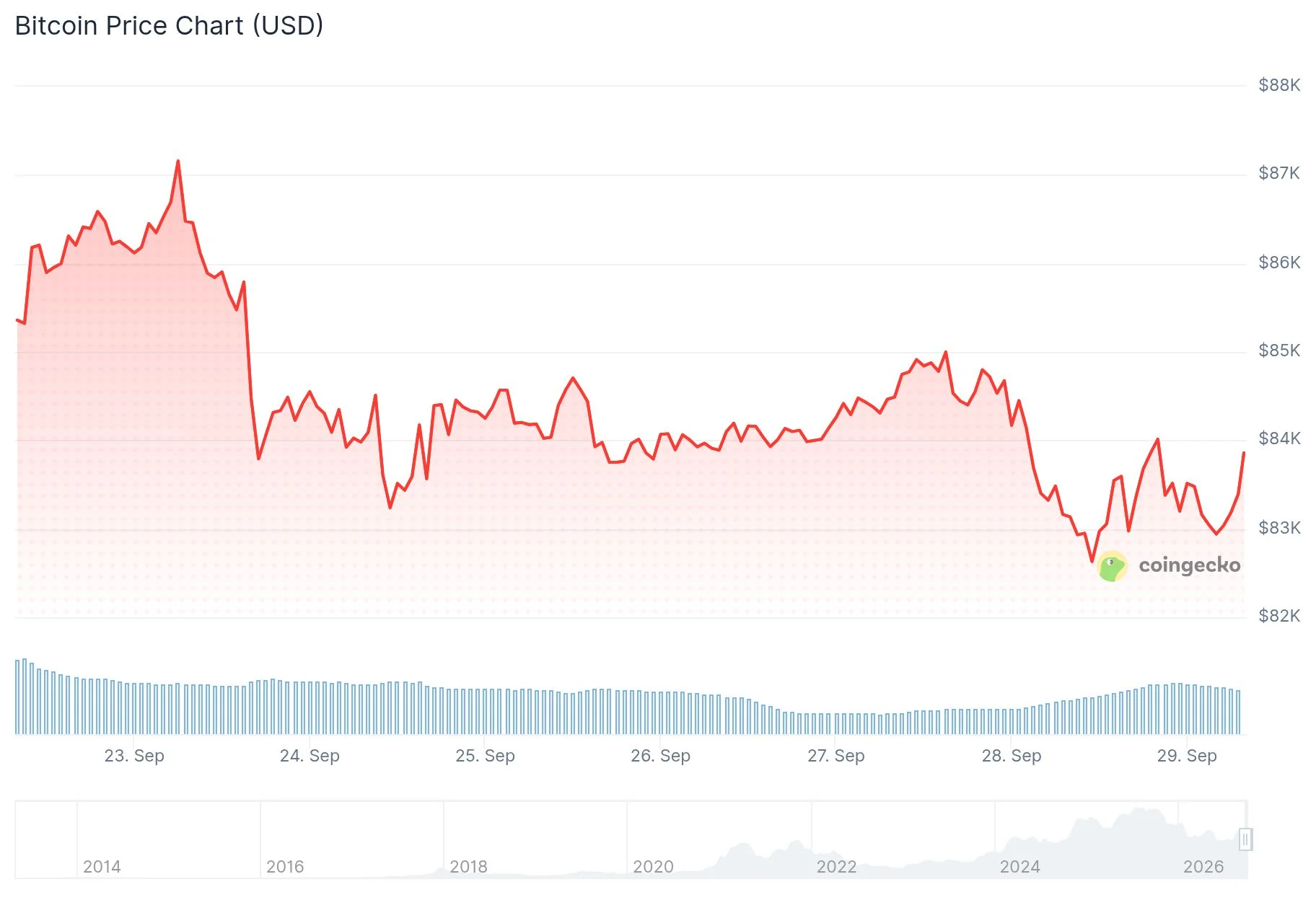
The leading digital asset experienced a modest decline of less than 1%, settling just above $83,100 during Asian trading hours. This level represents a test of the previous week’s lower boundary.
After briefly surpassing $87,000 last week, Bitcoin has since retraced. This downturn has cascaded throughout alternative cryptocurrency markets.
Zcash experienced a sharp 12% decline to roughly $1,380, representing the most significant percentage loss among prominent digital assets monitored by CoinDesk. Both Solana and HYPE registered losses ranging from 3% to 4%.
Dogecoin decreased 3% while Binance Coin shed 2%. Ripple’s XRP also declined nearly 2%.
Ethereum and Tron remained relatively stable. ETH traded around $2,670, while SOL held near $118 following an impressive two-month rally.
Mid-cap tokens exhibited mixed performance. The Graph’s native token GRT surged 18% and Immutable X’s IMX advanced nearly 10%.
Uniswap and Bitcoin Cash each declined approximately 10%, while DASH retreated 7%. The aggregate cryptocurrency market capitalization stood near $2.86 trillion.
A prominent sentiment gauge registered 74 out of 100 on Monday, approaching but not reaching the “extreme greed” threshold.
Bond Markets and Energy Costs Weigh on Bitcoin
Primary headwinds for cryptocurrency assets stem from fixed income markets and energy sector dynamics. The benchmark 10-year Treasury yield advanced to approximately 5.25%, marking its highest point since 2007.
Elevated risk-free returns from government securities increase the opportunity cost of holding non-yielding assets like bitcoin.
Brent crude advanced over 1% to approach $107 per barrel, marking consecutive daily gains. Diminishing prospects for diplomatic progress with Iran sustained supply uncertainty.
Rising energy costs contribute to inflationary pressures. Market participants have increased wagers on a potential Federal Reserve rate increase in October.
Nasdaq 100 futures declined 0.3% following Monday’s technology-driven equity market selloff. Attention now shifts to Wednesday’s PCE inflation release, the Federal Reserve’s preferred price gauge.
Institutional Buying Continues Despite Price Weakness
Institutional appetite for Bitcoin has remained resilient despite recent price softness. United States-listed spot Bitcoin ETFs accumulated approximately $2.39 billion in net inflows during the previous week, representing the strongest weekly performance since October 2025.
BlackRock’s IBIT captured roughly $1.2 billion of these capital flows. The divergence between accelerating ETF demand and declining prices indicates broader market selling is currently overwhelming institutional accumulation.
Solana ETFs similarly posted exceptional weekly results. All seven available products attracted capital, combining for $188 million.
Bitwise’s BSOL dominated the category with approximately $128 million. The funds captured an additional $12.7 million on September 28, continuing the momentum.
Market volatility has intensified alongside price fluctuations. Leveraged cryptocurrency positions worth over $500 million were liquidated during a 24-hour period.
The $83,000 level has emerged as a critical near-term reference point for bitcoin. A recovery toward the $85,000 to $87,000 range would bring recent peaks back into consideration, whereas a break below $83,000 could intensify selling pressure ahead of Wednesday’s inflation data release.
The post Bitcoin (BTC) Hovers at $83K as Treasury Yields Surge and ETF Demand Accelerates appeared first on Blockonomi.
Key Highlights
- ETH currently changing hands around $2,665, registering a 1.53% decline amid escalating US-Iran geopolitical concerns
- Treasury firm BitMine’s Ethereum position exceeds 6 million tokens, valued at $16.08 billion, following a 17,362 ETH acquisition
- Spot Ethereum ETFs attracted $689.8 million in net capital over the past week despite downward price pressure
- Ethereum co-founder Vitalik Buterin reveals 2027’s Hegota upgrade marks the final traditional hard fork before quantum-resistant technology implementation
- Altcoin market inflows surged 45% to reach $371 billion, though technical indicators suggest potential momentum exhaustion
Ethereum (ETH) is currently valued at $2,665, reflecting a 1.53% decrease as of September 28.
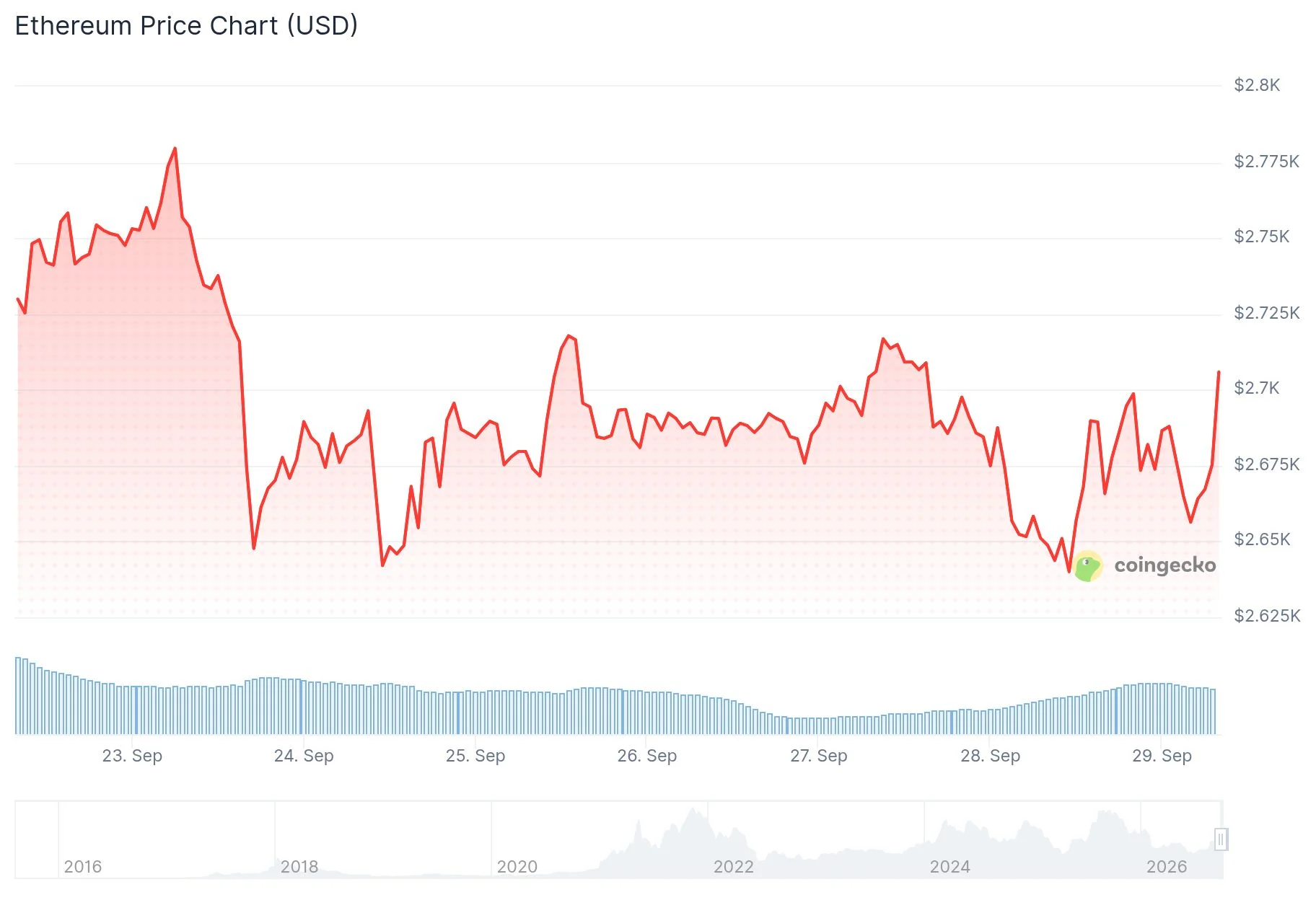
The cryptocurrency’s decline correlates with deteriorating diplomatic relations between Washington and Tehran. Over the weekend, President Trump dismissed Iran’s proposed seven-day ceasefire arrangement.
The US 10-Year Treasury benchmark surpassed the 5.26% threshold while crude oil markets strengthened. This macroeconomic shift pressured speculative assets across the board, with cryptocurrencies experiencing notable selloffs.
Corporate Ethereum holder BitMine Immersion Technologies acquired an additional 17,362 ETH during the previous week. This strategic purchase elevated the company’s aggregate position beyond the 6 million ETH threshold.
At present market valuations, this treasury position commands a $16.08 billion market value. The holding constitutes approximately 4.9% of Ethereum’s circulating token supply.
BitMine’s Thomas Lee, serving as Chairman, characterized reaching this milestone as a “tremendous achievement,” emphasizing the firm accumulated this substantial position within a 15-month window.
According to Lee, institutional investors maintain significant underexposure to digital assets. He anticipates increased institutional purchasing activity through the remainder of 2026, citing ETH’s superior performance relative to traditional macro investment vehicles.
Beyond Ethereum, BitMine maintains 213 Bitcoin tokens, alongside equity stakes valued at $180 million in Beast Industries and $115 million in Eightco Holdings. The corporation disclosed $672 million in liquid assets and marketable securities.
Public equity BMNR, representing BitMine’s stock, closed at $27.20, experiencing a 1% daily decline.
Spot ETH Exchange-Traded Products Maintain Strong Demand
Exchange-traded funds tracking Ethereum registered $689.8 million in aggregate net inflows throughout the previous week, based on SoSoValue analytics. This marked the sixth consecutive trading session of positive fund flows.
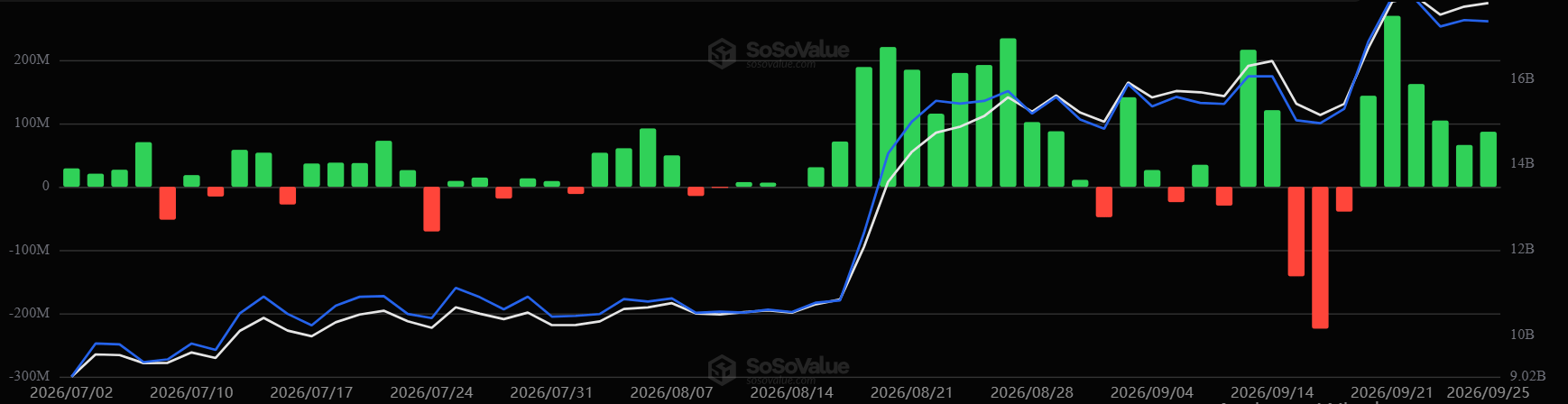
Remarkably, these institutional inflows materialized despite ETH breaching the $2,700 technical support threshold during this identical timeframe.
Alternative Cryptocurrency Momentum Draws Skepticism
Blockchain analytics platform CryptoQuant reports alternative cryptocurrency inflows have expanded 45% across recent months, accumulating to $371 billion.
Market analyst Darkfost observed that 87% of altcoins listed on Binance currently exhibit bullish technical characteristics. However, Darkfost cautioned that the Relative Strength Index for aggregate altcoin market capitalization displays bearish divergence patterns, suggesting the current rally may be approaching exhaustion.
From a technical perspective, trader Ali Charts identified a bull flag formation developing across shorter timeframes for Ethereum. Ali Charts noted that maintaining support above $2,640 keeps the bullish structure intact, while a confirmed hourly candle closure above $2,700 would validate the breakout scenario and potentially unlock upside momentum toward the $3,000 psychological level.
Additionally, Ethereum generated a technical buy indication on four-hour charts as the RSI indicator crossed bullishly above its signal line near the $2,703 resistance zone.
A confirmed daily close surpassing $2,703 could catalyze upward movement toward $2,800. This scenario’s probability hinges on whether financial markets fully absorb the implications of elevated crude oil valuations on risk-oriented investment classes.
In separate network development news, Ethereum’s creator Vitalik Buterin announced the 2027 Hegota upgrade represents the blockchain’s final “normal fork” implementation. Buterin explained that subsequent protocol enhancements will incorporate recursive STARKs technology, automated formal verification systems, and quantum-resistant consensus mechanisms.
Buterin’s strategic vision targets achieving comprehensive quantum-resistance capabilities for Ethereum before 2029 concludes, positioning Hegota as the transitional milestone toward this technological evolution.
The post Ethereum (ETH) Price Analysis: BitMine Accumulates Over 6M ETH While Bulls Target $3K Breakout appeared first on Blockonomi.
Key Takeaways
- Solana retreated from the $125 level and currently hovers around $118 support.
- The breakdown below an ascending trendline has flipped $120-$121 into a resistance zone.
- Technical analyst Sweep anticipates a brief correction before potential movement toward $150.
- The network’s stablecoin holdings reached an all-time high of $17 billion, climbing over 5% within seven days.
- Exchange-traded funds accumulated 2.32 million SOL tokens in the last fortnight, valued at approximately $278 million.
Solana (SOL) experienced a setback following its inability to maintain momentum above the $125 threshold. The cryptocurrency is currently hovering around $118, where it’s encountering a crucial support boundary.
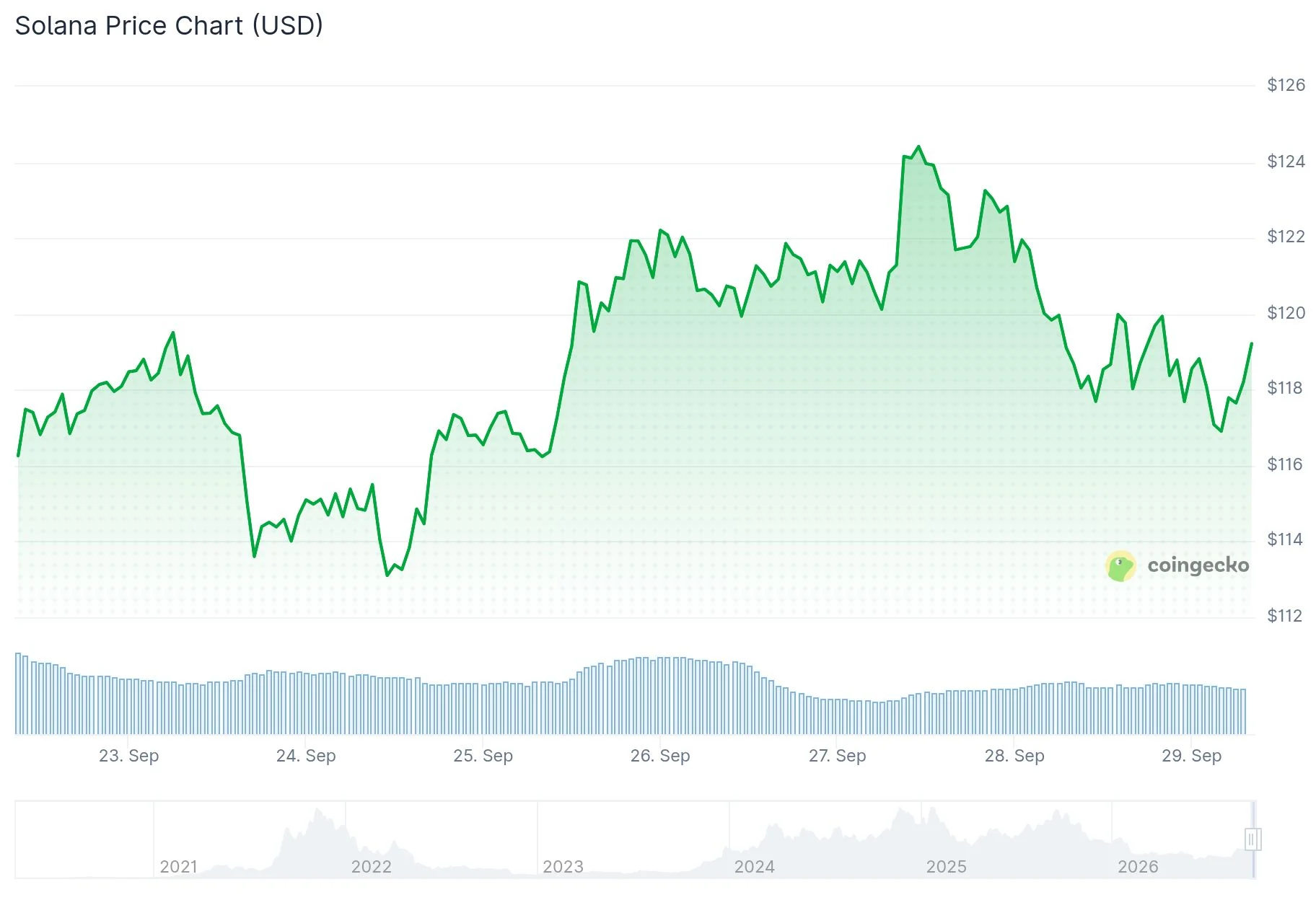
Market participants now face a pivotal decision. Maintaining this price floor could stabilize the asset, while failure to do so may trigger a more substantial decline toward the $100-$105 region.
Technical analyst Jesse Peralta examined the price movement using a two-hour timeframe. His analysis revealed that SOL breached its upward-sloping trendline around $120-$121, effectively converting this area into a barrier for future upward attempts.
Looking out for a strong base above $100 levels for solana:So11111111111111111111111111111111111111112
I want to see that base so we can start challenging upside more strongly
Base and target $150 > $200 pic.twitter.com/bNGufFU0XD
— Jesse Peralta (@jesseperalta) September 28, 2026
This trendline had previously underpinned SOL’s ascent from approximately $96. Its violation suggests diminishing bullish momentum in the near term.
The $115-$118 range now represents the primary defensive barrier. Successfully maintaining this zone could enable SOL to establish a fresh foundation before attempting another upward move.
Technical Outlook Points to Temporary Retracement Before $150 Target
Solana is approaching an extensive high-volume trading band spanning $120 to $200. This zone has historically witnessed significant market activity, establishing it as a formidable resistance area to overcome.
Market analyst Sweep forecasts a brief downward correction in the coming days. He suggests a possible descent toward $100-$105 before SOL initiates another attempt at reaching $150.
Sweep also highlighted a notable surge in SOL long positions on Bitfinex, which climbed dramatically to approximately 84,398 contracts. According to his assessment, this uptick indicates traders are positioning themselves for an upward reversal.
While the data doesn’t differentiate between retail investors and institutional players, it clearly demonstrates increased market participation favoring a price recovery.
Network Fundamentals Remain Robust Amid Price Volatility
The stablecoin ecosystem on Solana has expanded beyond $17 billion, establishing a fresh benchmark. This represents a surge exceeding 5% within just seven days, introducing over $800 million in additional liquidity to the network.
Meanwhile, worldwide money supply reached an unprecedented $103.66 trillion in August. Central banks including the Federal Reserve, European Central Bank, Bank of Japan and People’s Bank of China collectively injected approximately $1 trillion during that period.
Solana-focused ETFs acquired 2.32 million SOL tokens, representing nearly $278 million in value, throughout the past fourteen days. Combined ETF holdings have now reached $2.283 billion.
Solana commands the altcoin spot ETF sector. According to information shared by Jesse Peralta, SOL captures 46% of trading activity, surpassing Zcash at 27%, XRP at 12% and Hyperliquid at 11%.
Market commentator Gordon Gekko weighed in on the accumulation pattern. He noted that the initial strategy involved acquiring SOL below $80, but now the focus has transitioned to building positions under $120, describing the upcoming phase as “the real move.”
The goal was to stack as much $SOL as possible under $80.
Now it's to accumulate under $120.
The next leg is the real move.
Do you understand? pic.twitter.com/im6CGvxBER
— Gordon
(@GordonGekko) September 28, 2026
A significant whale transaction also put SOL’s stability to the test. Whale Alert identified a transfer of 500,000 SOL tokens to Binance on September 26, representing roughly $60.5 million at an average price near $121.
Remarkably, SOL showed minimal reaction to this substantial sale. The asset concluded that trading session with only a 0.3% decline and subsequently gained 0.4% the next day.
The critical price levels currently under observation include $115-$118 as support and $120-$125 as resistance. A breakdown beneath $100 would potentially expose the $90-$80 range.
According to current market data, SOL is trading at $118.17, representing a 2.99% decrease over the previous 24-hour period.
The post Solana (SOL) Faces Critical Test at $118 After $125 Resistance Blocks Rally appeared first on Blockonomi.
Key Highlights
- The crypto platform and major bank are building on their October 2025 agreement to deliver advanced stablecoin payment infrastructure for enterprises.
- The exchange will leverage Citi’s Virtual Account Wallet technology to support its Virtual Accounts offering for business users.
- Corporate clients of the banking institution can now receive stablecoin transactions via Spring by Citi, with the crypto firm managing conversions.
- Initial deployment begins across U.S. markets, with additional capabilities expected in subsequent months.
- The banking giant is simultaneously developing independent tokenized payment systems in Japan and the UAE.
The cryptocurrency exchange and one of America’s largest financial institutions are deepening their partnership focused on enterprise stablecoin payment solutions. The collaboration, initially unveiled in October 2025, aimed to bridge conventional banking systems with digital asset technology.
We're bringing stablecoins into the banking system with @Citi.
That means instant stablecoin acceptance for institutions – all on bank-grade, regulated infrastructure.
The next step for stablecoins becoming everyday money. pic.twitter.com/9ftQ50yl5y
— Coinbase
(@coinbase) September 28, 2026
The latest development introduces enhanced functionalities for both organizations. Business customers across both platforms will gain expanded capabilities to transition seamlessly between fiat currencies and blockchain-based stablecoins.
Technical Payment Framework
The cryptocurrency platform will integrate Citi’s Virtual Account Wallet infrastructure to enable its own Virtual Accounts service. This solution allows corporate users to receive, store, and distribute traditional currency through a streamlined interface.
Deposits can be programmatically transformed into stablecoins upon receipt. This functionality provides enterprises with a banking-style account interface while eliminating the complexity of direct cryptocurrency management.
Conversely, the bank’s corporate customers will gain the ability to receive stablecoin transactions through their Spring by Citi digital platform. The crypto exchange will operate the underlying blockchain payment infrastructure.
The exchange will subsequently transform these digital currencies back into traditional money. The banking institution completes final settlement as the official financial intermediary, ensuring merchants maintain their existing reconciliation workflows.
This architecture enables major corporations to accept blockchain-based payments without developing proprietary distributed ledger technology. Simultaneously, consumers can select stablecoins during transactions while vendors receive conventional currency deposits.
Executive Perspectives
Debopama Sen, who leads payment operations at the financial institution, emphasized the bank’s commitment to building payment infrastructure that functions across conventional and blockchain-based ecosystems. She characterized the objective as creating “seamless” and “interoperable” transaction systems.
Alec Lovett, overseeing infrastructure products at the crypto platform, highlighted how the collaboration delivers businesses with rapid and regulation-compliant connections between traditional and digital currencies. He noted users can navigate between systems without maintaining multiple payment infrastructures.
Brett Tejpaul, leading institutional services at the exchange, explained the agreement links the platform’s users with enterprise-quality traditional banking infrastructure. He emphasized that the bank’s clients can now transact using stablecoins without constructing independent blockchain systems.
The crypto exchange’s CEO Brian Armstrong previously addressed the broader collaboration during its initial announcement last year. He characterized stablecoins as emerging standard instruments for modernizing worldwide financial infrastructure.
These enhanced offerings will debut initially throughout the United States. Both organizations indicated that additional institutional payment capabilities are anticipated in forthcoming months.
The banking institution is concurrently developing proprietary tokenized payment infrastructure independent of this partnership. The bank has already launched blockchain-powered token services across Japan and the United Arab Emirates.
The financial institution has also revised its 12-month valuation projections for Bitcoin and Ethereum. This adjustment demonstrates the bank’s continued attention to cryptocurrency markets alongside its payment infrastructure initiatives.
The enhanced collaboration maintains both organizations’ emphasis on connecting regulated traditional banking systems with stablecoin technology. For the immediate future, the United States serves as the launch market before potential international expansion.
The post Coinbase (COIN) and Citigroup Deepen Stablecoin Payment Integration for Corporate Clients appeared first on Blockonomi.
Key Highlights
- ETH currently changing hands at $2,665, declining 1.53% amid geopolitical uncertainty between Washington and Tehran
- Corporate treasury firm BitMine now controls over 6 million ETH valued at $16.08 billion following recent 17,362 ETH acquisition
- Spot Ethereum ETFs attracted $689.8 million in net capital last week despite downward price pressure
- Ethereum co-creator Vitalik Buterin reveals 2027 Hegota upgrade marks final traditional hard fork before quantum-resistant transition
- Alternative cryptocurrency capital inflows surged 45% to $371 billion, though technical indicators suggest momentum fatigue
Ethereum (ETH) currently sits at $2,665, registering a 1.53% decline on September 28.
The pullback emerged after diplomatic negotiations between Washington and Tehran reached an impasse. Former President Trump dismissed Iran’s proposed week-long ceasefire during weekend discussions.
Treasury yields on 10-year US government bonds pushed past 5.26% alongside climbing crude oil valuations. The macro shift pressured speculative investments across digital asset markets.
Corporate Ethereum accumulator BitMine Immersion Technologies acquired an additional 17,362 ETH during the previous seven-day period. This transaction elevated the company’s aggregate position beyond the 6 million token threshold.
At prevailing market rates, this portfolio commands a valuation of $16.08 billion. The holdings constitute 4.9% of Ethereum’s circulating token supply.
BitMine’s Chairman Thomas Lee characterized the benchmark as a “tremendous achievement,” emphasizing the firm accumulated this position within a 15-month timeframe.
Lee maintains that traditional financial institutions remain significantly underallocated to cryptocurrency exposure. He anticipates accelerated institutional purchasing during the closing quarters of 2026 as ETH demonstrates superior returns compared to conventional macro investments.
Beyond Ethereum, BitMine maintains 213 Bitcoin tokens, a $180 million equity position in Beast Industries, plus a $115 million stake in Eightco Holdings. The organization disclosed $672 million in liquid assets and marketable instruments.
BitMine’s publicly-traded shares, ticker BMNR, settled at $27.20, decreasing 1% during the trading session.
Spot ETH ETFs Continue Capital Attraction
Exchange-traded Ethereum products recorded $689.8 million in aggregate net capital inflows throughout the past week, per SoSoValue tracking data. This extended an unbroken six-session streak of positive fund flows.
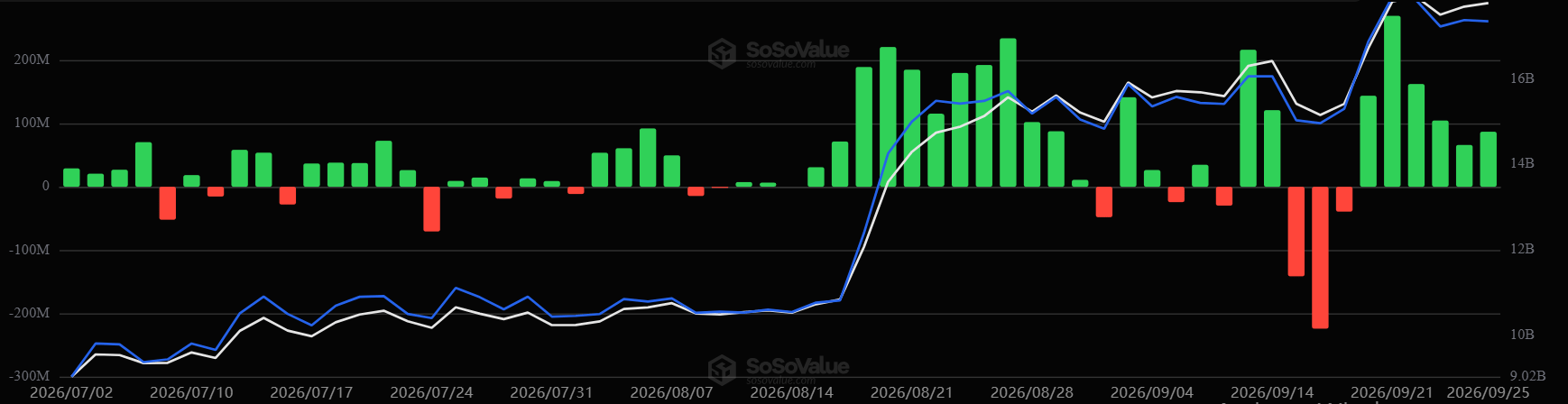
The institutional capital influx persisted despite ETH breaching the $2,700 technical support threshold during the identical timeframe.
Alternative Token Surge Triggers Warning Signals
Blockchain analytics platform CryptoQuant reveals alternative cryptocurrency inflows have expanded 45% across recent months, climbing to $371 billion.
Market analyst Darkfost observed that 87% of alternative tokens listed on Binance currently exhibit bullish price action. However, Darkfost cautioned that the Relative Strength Index for aggregate altcoin market capitalization displays bearish divergence patterns, signaling potential momentum exhaustion.
From a technical perspective, chart analyst Ali Charts identified Ethereum constructing a bull flag formation on shorter duration timeframes. Ali Charts noted that sustained support at $2,640 favors continuation buyers, suggesting an hourly candle closure above $2,700 would validate the breakout thesis and establish a pathway toward $3,000.
Ethereum additionally generated a bullish signal on four-hour intervals after the RSI indicator crossed above its signal line adjacent to the $2,703 resistance zone.
A daily candle settlement above $2,703 could propel ETH toward $2,800. This scenario hinges on whether financial markets adequately discount the impact of elevated petroleum prices on risk-oriented assets.
In separate developments, Ethereum creator Vitalik Buterin announced the 2027 Hegota network upgrade represents the protocol’s final “normal fork.” Buterin explained subsequent upgrades will incorporate recursive STARKs, automated formal verification protocols, and quantum-resistant consensus mechanisms.
Buterin’s strategic roadmap targets complete quantum-computing resistance by late 2029, positioning Hegota as the inaugural implementation phase of this technological transformation.
The post Ethereum (ETH) Hovers Near $2,665 as BitMine Accumulates Over 6M Tokens appeared first on Blockonomi.
HTTP error 429 on https://cryptopotato.com/feed/
Failed to fetch feed: https://cryptopotato.com/feed/
Failed to fetch feed.