Cryptocurrency Posts
Crypto Briefing
The proposal's outcome could set a precedent for wealth taxation, influencing economic policies and political strategies nationwide.
The post California billionaire tax proposal gains attention ahead of vote appeared first on Crypto Briefing.
The FTC's probe into AI safety could reshape competitive dynamics and regulatory landscapes, impacting market confidence and partnerships.
The post FTC investigates OpenAI, Anthropic over AI safety concerns: Axios appeared first on Crypto Briefing.
Geographic scheduling of Solana validators could enhance network efficiency, but may raise privacy concerns and impact validator participation.
The post Anza’s SIMD-0675 would schedule Solana validators by geography appeared first on Crypto Briefing.
Bitcoin's sensitivity to macroeconomic data highlights its evolving role in financial markets, with institutional demand showing structural resilience.
The post Bitcoin gains as rate hike expectations ease after soft PCE data appeared first on Crypto Briefing.
The transition to Aero's integrated automation may streamline liquidity management but leaves a temporary gap for users reliant on Autopilot.
The post Mellow winds down Autopilot as Aerodrome prepares for Aero launch appeared first on Crypto Briefing.
Bitcoin Magazine
Bitcoin Magazine
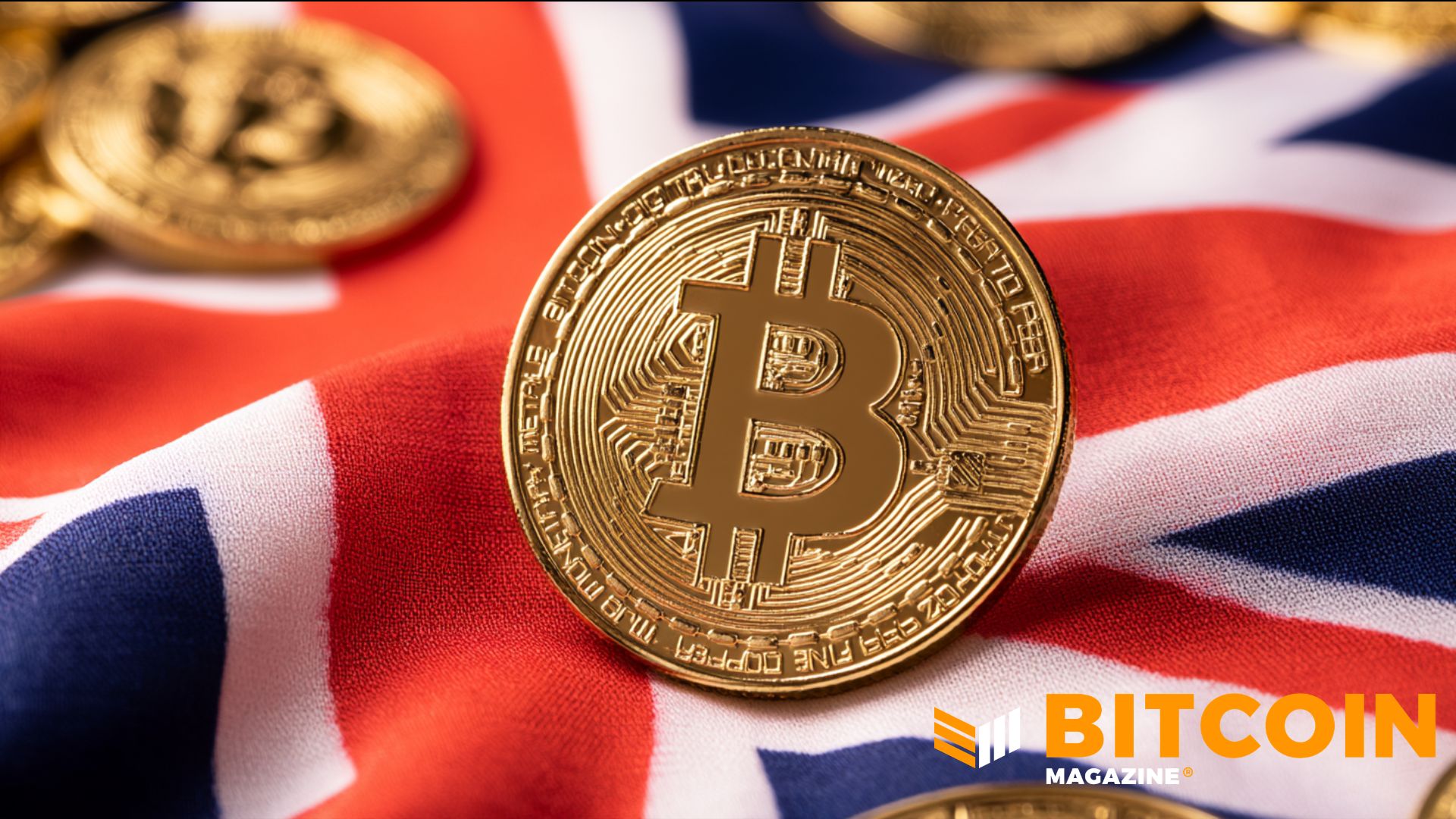
UK Brings Crypto Under Full FCA Oversight for the First Time
The UK’s Financial Conduct Authority has opened applications for crypto firms to become authorized, bringing the sector under full regulation for the first time.
In a Wednesday announcement, the watchdog said companies can apply so that the crypto industry has “clarity and legitimacy.”
The UK is in the process of drafting a sweeping new crypto bill. The FCA finalized its regulatory framework for cryptoassets in June, and the regime is due to take effect in October 2027.
“The UK’s new crypto regime will give consumers greater protections and firms a clear framework to operate in. Firms can now apply for authorisation and start preparing for regulation,” Dominic Cashman, director of authorisation at the FCA, said in a statement.
The statement added that firms will have to demonstrate that they meet requirements covering consumer protection, customer-asset safeguarding, market integrity and financial resilience.
Britain is pushing ahead with digital asset legislation since last year recognizing bitcoin and other digital assets as property. The reform came from a 2023 recommendation by the Law Commission, which argued that digital assets did not fit neatly into existing legal categories.
Despite the FCA’s announcement, the UK currently is trailing behind Brussels and Washington with digital asset regulation.
The EU’s Markets in Crypto-Assets regulation has applied to service providers since 30 December 2024.
And the U.S. under President Donald Trump signed the GENIUS Act into law in July 2025, establishing a federal framework for dollar-backed tokens.
Despite lawmakers blocking landmark legislation the Clarity Act last month, U.S. regulators like the Securities and Exchange Commission have pushed ahead with rulemaking regardless.
This post UK Brings Crypto Under Full FCA Oversight for the First Time first appeared on Bitcoin Magazine and is written by Mathew Di Salvo.
Bitcoin Magazine
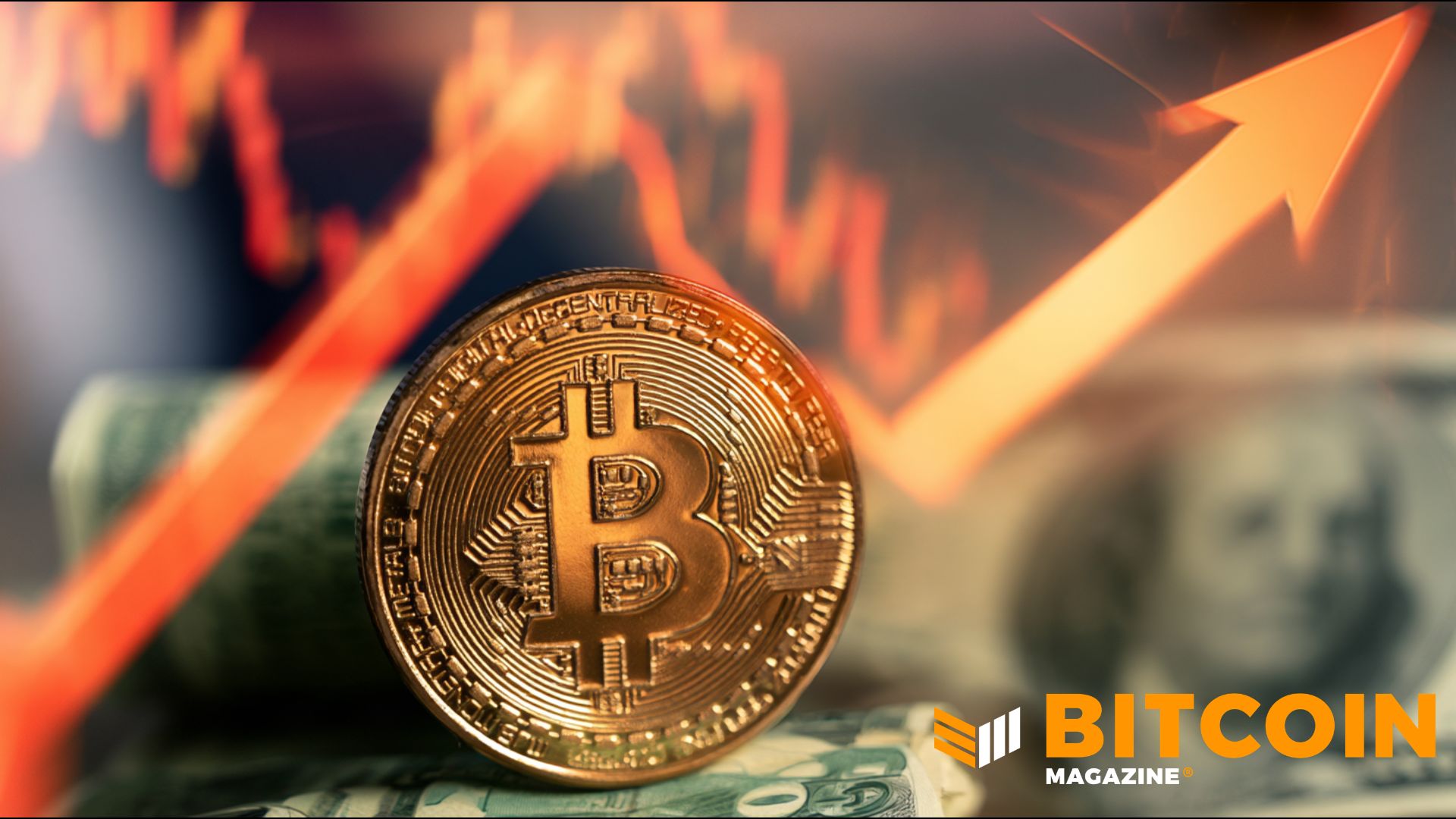
Bitcoin Surges 40% in Its Best Quarter Since Late 2024
Bitcoin is having one of its best quarters ever — another indication that the biggest cryptocurrency is in a bull market.
As noted by the The Kobeissi Letter this week, the price of bitcoin is now up close to 30% since August 19, when the U.S. Treasury announced it planned to more than double the size of its government debt repurchases.
Over the past quarter, the bitcoin price has surged by 40% — its best quarterly performance since Q4 2024.
Bitcoin’s price recently stood at nearly $83,698, unmoved over a 24-hour period but up 6% over a 30-day period.
The coin has benefited from news that the Treasury would try to lower bond yields — which have soared to highs not seen since the 2000s.
Bitcoin has done well with lower long-term yields because it reduces the opportunity cost of holding non-yielding assets like bitcoin and gold, and generally supports risk-on sentiment.
But despite the Treasury stepping in to try and tame the bond market, yields have continued to stay high.
Bitcoin investors don’t seem that bothered. The asset is still doing well as the dollar continues to slip. The so-called debasement trade — where investors throw money at an asset to hedge against a currency losing its value — is hot again after total U.S. debt topped $40 trillion for the first time in July.
The price of Bitcoin had been battered since notching a new all-time high of $126,080 in October, dropping by over 50%. Still, it has experienced the shallowest bear market — so far — in its history.
CryptoQuant said in a report last week that bitcoin was back in a bull market after crossing above its 365-day moving average — the “definitive technical signal” that has marked the start of Bitcoin’s bull markets in past cycles.
The coin has shrugged off the Federal Reserve raising interest rates and lawmakers blockage of landmark crypto legislation, the Clarity Act.
This post Bitcoin Surges 40% in Its Best Quarter Since Late 2024 first appeared on Bitcoin Magazine and is written by Mathew Di Salvo.
Bitcoin Magazine
Bitcoin Is More Than Just an Asset, Says TD Cowen
Investment bank TD Cowen has said that Bitcoin is more than an asset — and will be increasingly used as financial infrastructure to underpin institutional products.
Writing in a Tuesday note, TD Cowen said that after attending a BitcoinTreasuries Conference this week in New York, it noticed institutions were more than interested in just accumulating the leading cryptocurrency.
The comments come as major banks around the world delve deeper into the technology that underpins Bitcoin, with firms offering — and using — crypto products for customers and to streamline their own services.
JUST IN: Investment bank giant TD Cowen says Bitcoin "is evolving from an asset into a capital markets ecosystem"
— Bitcoin Magazine (@BitcoinMagazine) September 30, 2026
"The conversation has shifted from adoption to implementation"pic.twitter.com/Kzi6jXY1q6

“Bitcoin increasingly appears to be moving beyond its role as an investable asset and toward a broader role as financial infrastructure capable of supporting new capital-markets activity,” the report read.
“In our view, the most interesting conversations were not necessarily about bitcoin itself, but about the ecosystem being built around it,” the report continued.
It added that Bitcoin could be used in its next phase by “supporting capital markets infrastructure.”
Nasdaq-listed Bitcoin treasury Strategy has long argued that the leading cryptocurrency will underpin other products in the financial sector. The company, which is the largest corporate holder of bitcoin, currently offers preferred stocks which pay investors dividends.
TD Cowen said that bitcoin custody was becoming more institutional as “larger pools of capital enter the ecosystem.”
U.S. and European banks have spoken about or started offering bitcoin custody services in recent years.
BNY Mellon in 2022 became the first major U.S. bank to offer digital asset custody services. And this month, German multinational Deutsche Bank said it would debut a bitcoin custody service for European corporate and institutional clients later in 2026.
“We believe these developments suggest that bitcoin is continuing to evolve from a standalone asset into a broader financial ecosystem capable of supporting increasingly sophisticated institutional participation,” TD Cowen added.
TD Cowen is a division of multinational TD Securities.
This post Bitcoin Is More Than Just an Asset, Says TD Cowen first appeared on Bitcoin Magazine and is written by Mathew Di Salvo.
Bitcoin Magazine

Bitcoin’s Price Jumps Above $85,000 on Lighter-Than-Expected Inflation Data
Bitcoin’s price rose — albeit slightly — on data Wednesday showing that inflation had risen slower than expected.
The Fed’s main inflation gauge, the personal consumption expenditures price index, increased in August by 3.4% on headline and 3% for core — both well below estimates.
Bitcoin’s price recently stood at $84,246 after jumping as high as $85,518 at one point Wednesday morning in New York.
The news means the Federal Reserve is less likely to hike interest rates in October. High inflation is causing the U.S. central bank to take a more hawkish approach to managing monetary policy.
In his first speech since he became Fed chair, Kevin Warsh in August said the U.S. central bank had “more work to do” to fight inflation.
Then, in September, the bank raised interest rates. “The plain fact is that inflation is too high, and has been for too long,” Warsh said at the time.
Still, bitcoin’s price appeared to shrug off the move and had a good run in the week following the central bank’s move.
The coin surged as high as $87,158 earlier this month. Some analysts have said that investors are shrugging off the move as they don’t expect the Fed to change policy and start hiking rates successively.
Bitcoin has rallied since the U.S. Treasury announced plans to more than double the size of its government debt repurchases.
JUST IN:
— Bitcoin Magazine (@BitcoinMagazine) September 30, 2026US Treasury Department to buy back up to $6 billion in longer-term debt AGAIN tomorrow
Buy Bitcoin
Bitcoin’s price has in the past performed well in a low interest rate environment, along with other “risk-on” assets.
U.S. President Donald Trump has repeatedly put pressure on the Federal Reserve to lower interest rates.
Last year, Trump threatened to fire ex-Fed Chair Jerome Powell and said he did a “bad job” for not lowering interest rates.
This post Bitcoin’s Price Jumps Above $85,000 on Lighter-Than-Expected Inflation Data first appeared on Bitcoin Magazine and is written by Mathew Di Salvo.
Bitcoin Magazine
Tax on Bitcoin Gains? Dutch Government to Introduce Capital Gains Tax From 2028
Dutch people could soon be paying tax on their bitcoin gains — if they sell.
The Dutch government on Tuesday announced that it was planning to introduce a capital gains tax starting from 2028.
If approved, gains on investments would be paid when they are realized, rather than imposing levies on assumed returns or unrealized increases in value, a Tuesday the Dutch cabinet to the House of Representatives read.
“The earning capacity of the Dutch economy calls for a way of taxing wealth that facilitates investment,” the letter read.
It added that most financial instruments would be taxed from 2028 while remaining assets would transition two years later. The letter wasn’t clear whether digital assets would be taxed in 2028 or from 2030.
Bitcoin and digital assets in the Netherlands are currently taxed based on an assumed annual yield rather than your actual or realized profits. Tax authority currently assumes assets earned a notional 4% return, regardless of what you actually earned.
Regulations in Europe regarding crypto and taxes are mixed but on the whole stricter than the U.S.
Since January, the European Union’s DAC8 directive has required crypto exchanges to collect detailed data on their users and transactions and report it to national tax authorities, much like banks already do for ordinary accounts.
But not all countries within the trading bloc are strict: Germany still exempts crypto held for more than a year, and Portugal does the same after 365 days.
This post Tax on Bitcoin Gains? Dutch Government to Introduce Capital Gains Tax From 2028 first appeared on Bitcoin Magazine and is written by Mathew Di Salvo.
HTTP error 429 on https://cryptoslate.com/feed/
Failed to fetch feed: https://cryptoslate.com/feed/
Failed to fetch feed.
CryptoTicker.io
The European securities watchdog ESMA submitted its response to the review of the crypto regulation MiCA to the EU Commission on September 30, 2026. In it the authority calls for, among other things, stricter advertising rules where crypto assets are promoted by influencers, disclosure duties for staking, lending and borrowing, and the power to shut down fraudulent websites and to freeze crypto assets.
None of it applies today. These are recommendations from an authority to the legislator, submitted on the final day of a consultation. This piece sets out what ESMA specifically demands, which of the points would affect your crypto account in Europe, and how long the road is from this paper to binding law.
The submission of September 30: ESMA answers the EU Commission
The EU Commission opened a targeted consultation on the review of MiCA over the summer, asking where the regulation should be improved. The deadline ran out on September 30, 2026, at 23:59 Central European Summer Time. What the Commission had asked we wrote up in the article on the MiCA review and the proposed changes; the deadline itself was the subject of our piece on the consultation and its submission date.
On the last day ESMA filed its answer, a 16-page document with the reference ESMA75-113276571-1721. The authority summarises its aim itself as follows: simplify the framework, improve investor protection and capture new business models such as decentralised finance applications, staking, lending and borrowing.
MiCA is the EU regulation on markets in crypto assets. Since 2024 the regulation has governed step by step who may trade, hold in custody and issue crypto assets in the EU, and it applies directly in Germany, where BaFin grants the authorisations. What duties follow from it for providers is set out in our overview of the MiCA licence.
Advertising by crypto influencers: stricter rules for third parties
The first block of the response concerns investor protection. ESMA proposes stricter requirements for the marketing of crypto assets, explicitly where these are promoted by influencers and other third parties. Today MiCA bites above all at the authorised providers themselves. Anyone advertising a token as a third party often falls through the net in practice.
Alongside that demand the authority names more transparency on costs. Both aim at the same point: whoever makes a purchase decision should know beforehand what it costs and who was paid for the recommendation.
For a reader this is the part with the most immediate bearing on everyday life. If it came in this form, paid posts about individual tokens would have to be more clearly recognisable as advertising, including where the sender is not an authorised provider but a single person.

Staking, lending and borrowing: disclosure before the investment
The second point concerns services MiCA has so far covered only at the margins. ESMA calls for proportionate requirements for staking, lending and borrowing, explicitly including disclosure duties. Named in that context are costs, risks, returns, collateralisation and possible losses, and all of it before an investment decision is taken.
Staking means depositing tokens for the operation of a blockchain and receiving a reward for it. Lending means lending out crypto assets against interest; borrowing is the other direction, taking them up against collateral. The three services differ considerably in risk but are often offered side by side in the interfaces of trading venues.
How things stand in Germany today, which providers need an authorisation and how returns are treated for tax we set out in the piece on staking under MiCA. The ESMA demand would change nothing about the tax there, but it would change what a provider has to give you in writing in advance.
A new licensed service for access to DeFi protocols
The third block is the furthest reaching. ESMA suggests setting clearer criteria for when an activity actually counts as decentralised. In addition it recommends creating a new licensable crypto service: for firms that give users access to DeFi protocols.
DeFi stands for decentralised finance applications, meaning trading, lending or derivatives through programs on a blockchain instead of through a company. The operator of a web interface to such a program is today hard to get hold of in regulatory terms in the EU. That is exactly the gap the proposal aims at.
How unclear the situation currently is shows in the case of a well-known trading platform for perpetual futures, which we described under use without a MiCA licence from Germany. If the new service type came, the question of authorisation there would be answered unambiguously.
Shutting down fraud sites and freezing crypto assets: new supervisory powers
In the section on supervision ESMA asks for more operational enforcement rights. Specifically the authority names the ability to detect, block and shut down fraudulent websites and to freeze crypto assets where there is a suspicion of market abuse or terrorist financing.
This is the point at which a widespread unease would gain an official basis for the first time. A freeze would be tied to a case of suspicion and would concern not arbitrary balances but assets connected to a specific proceeding. How such a power would be shaped and limited is not in the press release; that would be a matter for the legislative process.
Part of the picture is that the authority justifies the same paragraph with the aim of making supervisory action in the EU faster and more uniform and of reducing the scope for shopping between member states.
Third-country providers without a MiCA licence: a tightening on reverse solicitation
Closely connected to that is the call for strengthened supervisory powers over firms from third countries that approach EU investors without being authorised under MiCA. What is meant is so-called reverse solicitation, the exception under which a provider without an EU authorisation may serve whoever seeks it out of their own accord.
ESMA had already set this topic as a focus of its supervisory programme from 2027. What follows from that for users is in our article on reverse solicitation in the ESMA programme for 2027. The response now goes one step further and asks for the matching legal instruments as well.
In practice that affects everyone holding an account at a trading venue outside the EU. A tightening would not forbid the account, but it would narrow the advertising and outreach channel of such providers into the EU.
Stablecoins without MiCA compliance: a ban planned for regulated providers
The fourth block of demands concerns stablecoins. ESMA proposes explicit rules prohibiting regulated crypto firms from offering services around stablecoins that do not meet the MiCA requirements.
A stablecoin is a token whose value is pegged to a currency and which is meant to be covered by reserves. For stablecoins offered in the EU, MiCA requires an authorisation of the issuer and a filed whitepaper. In practice several large tokens of this kind have already been taken off authorised trading venues in the EU.
An explicit rule would end the question of interpretation that has stood so far. For holders this would be the point with the most concrete risk: anyone holding a non-compliant stablecoin at a provider authorised in the EU would have to reckon with trading or custody there being wound down. Which trading venues carry an EU authorisation as things stand is shown by our overview of regulated crypto exchanges.
Hybrid tokens and binding classifications: ESMA wants rules on categorising
A further proposal concerns the categorising of tokens. ESMA recommends rules for how crypto assets are to be classified, explicitly including new products such as hybrid tokens. On top of that the authority would like to receive the power to issue binding opinions on the classification of individual tokens.
The background is a practical one. Whether a token falls under MiCA or is treated as a financial instrument under securities law is today decided by each national supervisor for itself. The same product can be classified differently in two member states. A binding ESMA opinion would end those divergences.
Hybrid tokens are tokens combining features of several categories, for instance a utility function and at the same time a share in revenue. Such tokens are the most common reason for classification disputes, because they fit cleanly into none of the existing boxes.
Simplification and less red tape: less duplication on whitepapers and licensing
Not all the proposals tighten. A section of its own in the response follows the EU's simplification agenda. ESMA proposes simplifying the notification procedures for crypto whitepapers, reducing duplicate authorisation requirements for firms that are already regulated, and framing the prudential own-funds requirements more uniformly.
A whitepaper in the MiCA sense is not a piece of marketing copy but a mandatory document with prescribed information on issuer, rights, risks and technology, which is notified to the supervisor before a public offering. The notification routes for it are regarded in the industry as laborious.
For investors this block is the least conspicuous, but it explains why the response is not to be read simply as a tightening. The authority bundles relief and new duties into one paper.

What already applies today and what is only a proposal
The most important distinction on this topic is the one between binding law and a recommendation. MiCA applies. The authorisation requirement for trading venues and custodians applies, the whitepaper applies, the rules for stablecoin issuers apply.
The six blocks of demands from this response do not apply. Those blocks are the contribution of a supervisory authority to a consultation in which associations, companies and other authorities have answered too. Not one of these demands obliges anyone to anything today.
Anyone reading a text that turns these points into duties already in force is reading a confusion. That goes in particular for the advertising rules and the freezing of crypto assets, because both are easy to present as already decided.
The timetable: from the consultation to a legislative proposal
The further route is laid down in the EU procedure, but it carries no dates. After the close of the consultation the EU Commission evaluates the answers and decides whether and in what form it puts forward a legislative proposal. It has published no date for that.
If a proposal comes, it goes through the ordinary legislative procedure with the European Parliament and the Council. Only after that follow transition periods, which with MiCA itself ran to several years between adoption and full application. A realistic window for changes therefore lies beyond 2027, without that being provable at present.
ESMA itself looks beyond the MiCA review in its response and points to the need for a framework for tokenised securities and for settlement on the blockchain. That is a legislative topic of its own and not part of this review.
MiCA reform: What to take away
The response is a signpost, not a deadline. The paper shows where the European supervisor wants to push the framework, and in doing so names the areas in which something is most likely to change in the coming years. Three things are worth drawing from it.
- Keep an eye on the authorisation status of your provider. The stablecoin proposal and the tightening on reverse solicitation both aim at the line between authorised and unauthorised providers. Which trading venues carry an EU authorisation is in the overview of regulated crypto exchanges.
- Read the terms of staking offers now as closely as the disclosure duty would demand in future. Costs, collateralisation, lock-up periods and possible losses are not everywhere set out with equal clarity today; the differences are shown by the overview of staking platforms.
- With advertising, separate the source from the claim. Until stricter rules for third parties arrive, the judgement stays with you. Anyone wanting to hold crypto assets independently of a provider will find the devices for it in the hardware wallet comparison.
(As of September 30, 2026. This article is not investment advice. Prices and fee structures change; check the terms with the provider before you buy.)
Ethereum Glamsterdam does not start on the mainnet on October 6, 2026, but on the Sepolia testnet. For your ETH on an exchange or in a wallet that day therefore means precisely nothing: no swap of balances, no new address, no pressure to act. When Glamsterdam will reach the real Ethereum network is open. To this day the Ethereum Foundation names only the quarter.
That matters because on this day several financial outlets claim something else. Anyone searching for the upgrade on September 30 finds headlines saying Glamsterdam has already launched. This piece separates the two: what actually happens on October 6, what Glamsterdam changes technically, and how you will recognise the real mainnet date when it comes.
Sepolia fork on October 6, 2026: a testnet, not a mainnet launch
The developers have set the Glamsterdam fork for October 6, 2026, on Sepolia. Sepolia is one of the public testnets of Ethereum: a complete image of the network running the same software, but in which no money of any value moves. The ETH on Sepolia is play money and is handed out from a faucet, not bought.
Testnet in this context means an independent blockchain whose sole purpose is to try out protocol changes under real conditions before they reach the main network. If something goes wrong on Sepolia, nobody loses assets. That is exactly the point. Anyone running a node there has to update both the execution client and the consensus client before activation; the Ethereum Foundation has pointed that out explicitly.
A fork on a testnet is the normal case before every larger Ethereum upgrade and not an event that touches the price or the availability of ETH. Our earlier article on the originally scheduled Sepolia date still named September 28; that date has passed, the valid one is October 6.
The mainnet date is not fixed: the Ethereum Foundation names only the fourth quarter
On the official Glamsterdam page of the Ethereum Foundation, the upgrade status reads Testing on devnets, the expected mainnet activation reads Q4 2026, and behind it, in the same field, sits the addition Date not yet confirmed. The only next milestone listed there is the Sepolia fork on October 6, 2026.
For Hoodi, the testnet tailored to validators that usually comes after Sepolia, there is no date either so far. That leaves two intermediate steps missing before a mainnet date can be set at all. Anyone reading a specific calendar day for the mainnet activation today is reading an estimate, not a commitment.
Mainnet is the productive Ethereum network in which real ETH moves and on which the exchanges, wallets and applications depend. Only an activation there touches balances, fees and applications. Everything before it is preparation. In our overview of crypto dates in the fourth quarter the Sepolia fork therefore carries a date and the mainnet activation does not.

Devnet, testnet, mainnet: the three stages in the Ethereum roadmap
An Ethereum upgrade passes through three stages, and the order explains why October 6 is not a launch date.
Devnets are short-lived developer networks set up specifically for an upgrade and switched off again afterwards. This is where Glamsterdam currently stands, according to the Ethereum Foundation. At this stage the interplay of the different client programs is tested, meaning the independent software implementations with which participants run the network.
Public testnets such as Sepolia and Hoodi are the second stage. Networks like these run permanently, carry real applications in test form and have a public audience. A fault shows up here before it costs money.
Mainnet is the third and final stage. The date for it is set only once the testnets have run through cleanly. That sequence is the reason the Foundation names a quarter and not a date: between October 6 and a mainnet activation lies at least one further testnet fork whose own date is still open.
ePBS: proposer-builder separation moves into the protocol
The most conspicuous change in Glamsterdam is called enshrined proposer-builder separation, ePBS for short, filed technically as EIP-7732. Today an Ethereum block is built in two roles: a proposer, meaning a validator whose turn it is, proposes the block; a builder assembles the content. That handover has so far not been part of the protocol but runs over intermediary software from third parties, which both sides have to trust.
ePBS pulls that handover into the protocol itself. The builder's payment is thereby settled without trust, and intermediary software such as MEV-Boost is no longer needed for the basic case. At the same time the Foundation points out that builders and proposers can continue to use external services voluntarily, as long as they need functions the protocol does not cover.
The practical gain sits in one number: the window in which a block can propagate through the network grows, according to the Ethereum Foundation, from around two to about nine seconds. That allows considerably larger volumes of data to be carried per block without overloading the network. For staking providers the change means adjustment work on their own architecture; the Foundation describes the staking user experience afterwards as improved, because the selection of the builder is regulated more cleanly.
Block-level access lists: the map for parallel processing
The second large change is block-level access lists, BALs for short, technically EIP-7928. Today Ethereum works through transactions strictly one after another. The reason is banal: the network does not know in advance which data a transaction will touch. If it were to execute several at the same time, two of them might want to change the same place.
A block-level access list is a kind of table of contents that records, before execution, which accounts and storage slots a block touches and which values end up there. From that list you can read off which transactions do not get in each other's way. Such transactions can then be processed simultaneously. The block header carries only a checksum of that list, so that the block itself stays lean.
A second benefit concerns new participants: because the list also contains the final values, a freshly started node can adopt the network state without recomputing every transaction again. The accompanying EIP-8159, filed in the network protocol as eth/71, makes sure the nodes can send each other these lists, and it is mandatory for all execution clients.
EIP-8037: new gas prices for permanent storage in the reservoir model
The third construction site is unspectacular and, for application developers, the most consequential. Data that sits permanently on Ethereum has to be held by every computer in the network for an indefinite time. The fees for it have so far reflected that effort only imprecisely. Rolling out a large smart contract is considerably cheaper per byte than writing to individual storage slots.
EIP-8037 ties the cost to the actual volume of data and sets a fixed price per byte. The aim is a predictable growth of permanently stored data of around 120 gibibytes a year, so that Ethereum can continue to run on commodity hardware. On top of that comes a separate pot: computation and permanent storage no longer share the same gas limit. Developers can therefore roll out larger applications, as long as they fill the storage pot sufficiently.
For existing applications this is the point with the greatest need for testing. Contracts working with hard-wired gas amounts may react differently after the change; the Ethereum Foundation has pointed that out explicitly, according to Cointelegraph. That is exactly what the testnet stage is for.

ETH on an exchange: the Sepolia fork does not touch your balance
The most common worry with an Ethereum upgrade is whether balances have to be swapped, frozen or moved. With Glamsterdam the answer for October 6 is unambiguous: nothing changes on the mainnet that day, because the upgrade is not activated there.
The later mainnet activation is a protocol upgrade too and not a currency conversion. No new tokens arise, ETH keeps its addresses, and holders have nothing to apply for or confirm. What can actually happen with a mainnet fork are short maintenance windows at individual providers: some trading venues halt deposits and withdrawals for a few hours while their own nodes run through the fork. Trading itself usually stays open.
Anyone wanting to know how their own provider handles this will find the announcement in the status area or the blog of the trading venue, usually a few days before the date. How the larger trading venues differ on fees, custody and authorisation is shown by our comparison of crypto exchanges. For October 6 you need to do nothing there.
Stakers and node operators: Sepolia requires both clients up to date
One group is very much in demand on October 6: everyone running a node or a validator on Sepolia. There both client programs have to be updated before activation, the execution client and the consensus client. Anyone who misses that drops out of the valid chain after the fork.
The same task is coming on the mainnet as soon as the date there is set, and then for all validators. Which version levels fit together and where the pitfalls lie we have written up in the article on client readiness for Glamsterdam. The procedure stays the same, only the version numbers move on.
Anyone staking ETH not themselves but through a provider has nothing to do with the client question. There the operator handles the update, and the reward keeps running. More relevant for that group is the ePBS change, because staking providers have to adapt their infrastructure to it.
Three provable signals for the real mainnet date
A mainnet date does not appear out of nowhere. It comes about in a fixed order, and a news report can be measured against it.
First, the Hoodi fork. As long as no date is set for Hoodi, the testnet tailored to validators, a mainnet date is not plausible. That step comes between Sepolia and the main network.
Second, the status line on the roadmap page of the Ethereum Foundation. It carries the upgrade status, the expected mainnet activation and the next milestone. Once the addition Date not yet confirmed turns into a date, the date is set. As long as it sits there, there is none.
Third, the epoch number. An Ethereum fork is not activated by clock time but at a fixed epoch, meaning a numbered section of the chain. A solid announcement names that number. A report without an epoch and without client versions describes a plan, not an activation.
Headlines of September 30: what is wrong with “starts today”
On September 30, 2026, several German-language financial outlets wrote that the Glamsterdam upgrade was starting that day, in some cases tied to a price target. Neither claim holds up against the primary source: no fork took place on September 30, and the mainnet activation has no date.
A second point concerns dates circulating online. Individual specialist sites carry a specific date in November 2026 for the mainnet activation of Glamsterdam as confirmed. The roadmap page of the Ethereum Foundation contradicts that on the same day with the note that no date is confirmed. We follow the primary source here and therefore name no calendar day.
For classifying upgrade reports, one simple question helps: does the text name a network? Reports describing Glamsterdam without the addition Sepolia, Hoodi or mainnet leave out the decisive difference. Out of that comes the impression of a launch that does not exist in that form.
After Glamsterdam comes Hegotá: the developers are aiming at 2027
Glamsterdam is not the end of the roadmap. The following upgrade carries the name Hegotá and is, according to Cointelegraph, targeted at 2027. Ethereum co-founder Vitalik Buterin has described it as possibly the last ordinary fork before development shifts more strongly towards cryptography topics such as recursive STARKs, automated formal verification and quantum-safe methods.
The name follows the same logic as Glamsterdam, which is put together from Amsterdam for the execution layer and Gloas for the consensus layer. Anyone looking for the wider arc will find it in our article on what has already been decided for Hegotá.
For classifying Glamsterdam that means: the changes to block production, parallel processing and storage prices are preparatory work for higher gas limits. The Ethereum Foundation names a lower bound of 200 million gas per block as the target figure, while testing currently runs with a reference value of 150 million.
Glamsterdam: What to take away
October 6, 2026, is a testnet date. For ETH holders it is a date to note, not a date to act on. Three steps are worth taking anyway.
- Settle where your ETH sits. With a later mainnet activation a provider may briefly halt deposits and withdrawals, while self-custody remains untouched by it. Which devices come into question and what they cost is in the hardware wallet comparison.
- Look at your staking chain. If you stake yourself, both clients belong on the current version before every fork. If you stake through a provider, a glance at its status page is enough; the differences between providers are shown by the overview of staking platforms.
- Measure future reports against the primary source. A mainnet date is only one once it stands on the roadmap page with an epoch and client versions. Anyone looking for a trading venue in the meantime is best off comparing fees and authorisation through the overview of crypto exchanges.
(As of September 30, 2026. This article is not investment advice. Prices and fee structures change; check the terms with the provider before you buy.)
The security firm CertiK published its monthly tally on September 30, 2026, and it reads worse than any month before it this year: crypto platforms and their users lost around $766.4 million in September through exploits and phishing. That is roughly three and a half times the August figure of $215 million, and it is at the same time the month with the highest number of individual incidents in 2026.
For an investor in Europe the sum is at first a number from another world. It gets interesting once you take it apart. The $766 million did not accumulate out of hundreds of small fraud cases but came, to more than 92 percent, from exactly two events. And both of them hit a place where your balance could be sitting too.
CertiK counts $766.4 million in damage for September 2026
CertiK puts the total damage at $766,451,111. Of that, around $270.6 million counts as returned or frozen, which leaves roughly $495.8 million actually lost. For comparison: in the first half of 2026 CertiK counted $1.32 billion across 344 incidents, a figure that was 46.8 percent below the first half of 2025. September has caught up with that calmer trend in a single month.
Exploit here means the abuse of a technical weakness in software or infrastructure, as distinct from phishing, where a user is talked into granting approval. The large sums almost always arise in the first case, the number of incidents grows in the second.
The market reacted remarkably little. Bitcoin traded at around $83,800 on September 30 according to CoinGecko data, practically unchanged from the previous day. That is a recurring pattern: hacks rarely move the price, they move the question of where your money sits.
Two incidents account for 92 percent of the monthly total
The single largest item is the attack on the exchange Bitget on September 24 and 25. The figures on the size of the loss diverge: CertiK and BleepingComputer name $387.5 million, while Bitget itself spoke of $351.6 million in an earlier statement. The range stands as long as no final accounting is available.
The second large item dates from September 6 and struck the Liquid Network, a Bitcoin sidechain run by the company Blockstream. Around $319 million to $320 million disappeared there, the equivalent of roughly 4,000 bitcoin. That makes the Liquid incident, on figures from TRM Labs, the largest single theft of the whole of 2026.

Liquid Network: a flaw in the rangeproof cache created uncovered bitcoin
On September 6 an attacker exploited a weakness in the open-source software Elements, on which the Liquid Network runs. What was affected was the way Liquid nodes cache the verification of so-called rangeproofs. A rangeproof is the cryptographic proof that a hidden amount lies within a valid range, meaning it is neither negative nor arbitrarily large. If that proof effectively drops away through a caching error, a transaction can pass verification even though its output amount is covered by no inputs at all.
That is exactly what happened: the attacker created synthetic, unbacked Bitcoin tokens on the sidechain and then redeemed them for real bitcoin. Blockstream has publicly described the flaw in its own assessment and halted the network; it remained paused as of the latest information.
The second part of the story is unusual. The attackers presented themselves as whitehats, negotiated with the Blockstream team over on-chain messages and, after the patch, sent back around 85 percent of the haul, some $272 million. Roughly $47 million stayed with them. Whether that remainder is a finder's fee or theft is a matter of perspective; legally it has not been settled.
Bitget hack: a zero-day in a third-party security product opened the wallets
The Bitget case is different. The exchange said the attackers had come in through previously unknown weaknesses in bought-in security products. A zero-day is a gap for which no patch exists at the time of the attack, because the manufacturer does not know about it either. The analysis firms SlowMist and Mandiant classified the compromised systems in their reports as security appliances; the earliest conspicuous activity dates to August 31.
Through those systems the attackers obtained, on Bitget's account, credentials for the internal network and were then able to falsify transaction data, so that the exchange's approval processes waved through the outflows from the hot and warm wallets. Affected were ETH, XRP, BNB, AVAX, USDT and USDC among others, across the Ethereum, XRP Ledger, Arbitrum, Avalanche, Optimism, BSC and Base networks. Bitget attributes the attack, by its own account, to North Korean actors and bases that on IP patterns and on-chain analysis. Independent proof of that is not publicly available.
The exchange suspended withdrawals, set up a recovery bounty programme with a five percent reward and has since reopened operations step by step.
The month's attack vectors by size of loss
CertiK sorts the September damage by point of entry. The distribution is instructive because it shows where money is really lost:
- Weaknesses in third-party services: $387.5 million
- Faulty signature and proof verification: $324.7 million
- Compromised wallets: $20.1 million
- Errors in permission management: $13.3 million
- Reentrancy bugs in smart contracts: $2.2 million
The top two lines correspond to the two major incidents. The third is the notable one: $20.1 million from directly compromised wallets, spread across considerably more cases. That is the category retail investors end up in: little headline, many people affected.
The $270.6 million return rate distorts the monthly balance
That a good third of the September total came back or was frozen sounds like an all-clear. It is, however, mostly the result of a special case. The lion's share of the return came from the Liquid incident, where the attackers transferred voluntarily. A rate like that is not a property of the system you can rely on.
In the Bitget case the recovery ran along a different route: analysis firms and infrastructure providers flagged and blocked partial amounts before they could be swapped. That works with stablecoins and with tokens that have a central controlling body, and it does not work with Bitcoin. The closer your holdings sit to freely transferable coins, the less this mechanism helps you.
A protection fund is not deposit insurance
After every large exchange incident the word protection fund comes up. Bitget points to such a fund of more than $300 million, and the state of payouts was moving again as of September 30, 2026. What matters is the legal classification: a protection fund is a voluntary reserve held by the company. It is not a legally secured promise and it is not deposit insurance.
Statutory deposit insurance in Germany covers bank balances in euros up to 100,000 euros per customer and institution. Crypto assets do not fall under it, not even when you hold them at a platform supervised in Germany. Anyone who believes their crypto balance is protected like a current account is wrong in an expensive place.
Counterparty risk with exchange balances, software wallet and hardware wallet
September delivers its own argument for each of the three usual forms of storage. On an exchange you hold a claim against a company; the keys are there. That is convenient, and it concentrates your risk at exactly the point that is most worthwhile for attackers. In the Bitget incident it was not your behaviour that decided the outflow but the software of a supplier you have probably never heard of.
A software wallet on your phone or in the browser gives you the keys back but shifts the risk onto your device. That is precisely where the $20.1 million from compromised wallets sits. A hardware wallet separates the key from the internet-capable device and demands a physical confirmation for every transaction. It does not help against a lost recovery phrase, and it does not help against a malicious approval you sign yourself.
A workable rule of thumb from the month of September therefore runs: what you want to move in the coming weeks sits on the exchange. What is meant to sit longer belongs under your own control. How far you go with that depends on the amount, not on enthusiasm for technology.

What your exchange's MiCA licence covers and what it does not
Since January 1, 2026, only authorised providers may supply crypto asset services in Germany; the German transition period under the Crypto Markets Supervision Act ended at the close of December 31, 2025, and therefore earlier than in other EU states. A MiCA licence is the supervisory authorisation of a crypto service provider under the EU regulation on markets in crypto assets.
What that licence achieves is regularly overestimated. What is required are organisational minimum standards, the separation of client and own holdings, requirements for custody, complaint channels and reporting duties towards the supervisor. What the licence does not achieve: compensation when coins are stolen. An authorisation lowers the probability of a total failure through poor organisation, it does not replace insurance.
In practice that means the authorisation is a sensible minimum requirement when choosing a platform and no reason to leave larger sums sitting there permanently.
Stolen coins in the tax return: what the tax office accepts
One point goes missing after every hack: for tax purposes a theft is not a sale. That means a loss from stolen coins cannot simply be offset against gains in Germany, as it would be with a realised price loss. What is decisive is the documentation of the event, and in case of doubt you have to supply it yourself. Which pieces of evidence come into question we have gathered in a separate article on stolen coins and the tax office.
Anyone affected in September should secure the record now, regardless of the tax question: download the exchange's transaction statements, keep the correspondence with the provider, note the time of the incident. Those documents can no longer be obtained later if a platform shuts down.
What October brings for holders in Europe
Two things remain open. First, the final accounting at Bitget: as long as the range between $351.6 million and $387.5 million stands, the September total itself is only as precise as its largest single item. Second, the restart of the Liquid Network, which was still halted as of the latest information. Anyone holding positions there cannot reach them until it is released.
For everyone else the lesson of the month is unspectacular. Neither of the two major incidents failed on weak passwords; both failed on software deep in the infrastructure. Against that class of error you can do nothing except limit how much of your holdings is exposed to it at all.
Crypto hack losses: What to take away
- Count up how much is sitting with third parties. Add up all balances on exchanges and at brokers and compare the total with what you really need there for short-term trades. If you are questioning the platform anyway, an overview of the regulated crypto exchanges with an EU authorisation helps.
- Pull out the long-term part. Move what you want to hold for months into your own wallet and test the route with a small amount first. Which programs come into question and where their limits lie is shown by the comparison of software wallets; from larger sums on, the route leads to hardware.
- Document the holdings before anything happens. Download the transaction statements of your platforms now and file them with a date. A portfolio tracker or tax tool takes that over continuously and makes you independent of whether an exchange is still reachable in an emergency.
(As of September 30, 2026. This article is not investment advice. Prices and fee structures change; check the terms with the provider before you buy.)
Sources: Blockstream, Liquid Network Security Incident Assessment and BleepingComputer on the Bitget attack.
Robinhood plans to offer eligible customers in the United States perpetual futures on eight cryptocurrencies, with up to ten times leverage on Bitcoin and Ethereum. The broker announced this on the evening of September 29, 2026, at its own HOOD Summit conference in Houston, alongside a whole series of further trading products. None of it is tradable yet: the statement names no launch date and speaks instead of the coming months.
For an investor in Europe the news is still more than a note about an American broker. Robinhood runs its perpetuals business in Europe over the same technical chain, and the leverage unlocked there differs sharply from the American figures. On top of that comes a point most reports leave out: for tax purposes a leveraged contract on Bitcoin is something entirely different from a Bitcoin sitting in your own account.
What Robinhood announced: eight perpetual futures, 10x leverage on BTC and ETH
According to the company statement, eligible US customers will be able to take long and short positions on Bitcoin, Ethereum, Solana, XRP, Dogecoin, Cardano, Chainlink and HYPE, with no expiry date. Leverage runs up to 10x on the Bitcoin and Ethereum contracts and 3x on the other six. Until the end of the year Robinhood says it will charge one basis point per trade, or 0.01 percent of the contract value. The contracts are offered by Robinhood Derivatives, a futures commission merchant registered with the US regulator, and run technically over the Bitstamp trading platform.
The announcement did not stand alone. In the same breath Robinhood presented an AI trading function built into the app, weekend trading for selected US equities, which is still subject to regulatory clearance, and so-called earnings contracts on the key figures of individual companies. Chief executive Vlad Tenev framed the package in the statement: Ownership doesn't work without markets, and markets don't work without traders.
The company, he said, is delivering tools that were once reserved for hedge funds, large banks and quant firms. The direction is on the record: more leverage, more automation, longer trading hours, and all of it for an audience of roughly 29 million customers.
The price backdrop is quiet. Bitcoin was trading at around $84,100 on September 30 at about 5:50 pm Central European time, a good one percent above the previous day, with Ethereum at about $2,680 (data: CoinGecko). No price reaction to the announcement can be read out of those figures, and for a product launch that is still months away none would be expected.
Perpetual futures without an expiry date: how the funding rate works
A perpetual future is a futures contract on an underlying asset that has no delivery date and no expiry. In theory you can therefore hold a position open indefinitely. To keep the contract price glued to the spot price anyway, there is the funding rate: a balancing payment that flows between the long side and the short side at fixed intervals. When the contract trades above the spot price, the longs pay the shorts; when it trades below, the payment runs the other way.
One basis point sounds small, the funding rate is the bigger item
The 0.01 percent trading fee is rarely the decisive cost block for a leveraged position. Anyone holding a long position for weeks pays the other side continuously in a market with a positive funding rate, and those payments add up regardless of whether the price moves in the desired direction. How that item works out is broken down in our explainer on perp DEXs. Before the first position it is worth looking at the funding history of the contract you want to trade instead of comparing only the fee line.
Robinhood Derivatives and Bitstamp: the chain of broker, clearer and exchange
Behind the single app sit several companies, and with derivatives that is not a formality. The customer holds the account at Robinhood Derivatives, a separate entity registered with the regulator for futures trading. The perpetual contracts are executed and settled over Bitstamp, the trading platform Robinhood took over in 2025. For you that means the counterparty to your position is not the broker whose interface you are operating.
Anyone who wants to know how well such a chain holds when it matters looks at two things. First, which company is supervised in which country, because that decides which investor protection applies at all. Second, what happens to an open position when a contract is discontinued. Coinbase struck ten perpetual futures at the end of August and force-settled open positions in the process; a provider taking a derivative off the market again is not a theoretical case. An overview of the venues that offer perpetual contracts, and of their terms, is in our comparison of perp trading venues.

Liquidation price and stop-loss: where leverage ends the position
Robinhood states explicitly in the announcement that customers can set stop-loss and take-profit orders, see their liquidation price in real time and receive a warning when a position comes under threat. That is standard for leveraged products and should not be mistaken for safety. The liquidation price is the level at which the posted margin is used up and the trading platform closes the position without asking.
The arithmetic behind it is uncomfortably simple. At ten times leverage a price move of roughly ten percent against the position is enough to eat up the stake; at three times leverage it takes around 33 percent. Bitcoin has repeatedly shown daily moves of that size in recent years. Anyone treating leverage as a return amplifier passes over the fact that it shortens the holding period you can sit through in purely arithmetic terms. A stop-loss only helps if it sits far enough away from the liquidation price to take effect first.
Perp futures in Europe: 3x leverage over Bitstamp, not 10x
The ten times leverage in the announcement applies to US customers. Robinhood has been offering crypto perpetuals in Europe since 2025, routed over the perpetual futures exchange of Bitstamp, and there leverage was capped at three times. Ten times has so far been reached in Europe only in a different product group: since July 2026 there have been perpetual contracts on commodities, ETFs and currencies, on gold, silver, crude oil and the euro-dollar pair among others, and for these the provider names up to 10x.
Whether you get the offer at all is a second question. Robinhood says it has extended its platform to 30 European countries, but publishes no public list of which contracts are enabled in which country. What applies to you is in the terms of business shown to you when the account is opened, not in a press release out of Houston. You make that comparison before the deposit, not afterwards.
MiCA covers spot, MiFID II covers derivatives: the legal framework for European investors
Here lies the difference that is missing from most reports. The European crypto regulation MiCA governs trading in crypto assets themselves, meaning the purchase of a coin against euros and its custody. A perpetual future on Bitcoin is not a crypto asset in that sense but a financial instrument: it falls under the markets directive MiFID II and, in Germany, under the Securities Trading Act. Robinhood itself describes its European platform as regulated under MiCA and MiFID II, which maps exactly that split.
Classification as a futures contract, and investor protection
In practice that means the duties arising from MiFID II apply to derivatives trading, from the appropriateness test through cost transparency to the key information documents. Conversely, the MiCA rules on the custody of client assets help you little with an open futures position, because there you own no coin but a claim under a contract. What obligations the regulation imposes on providers in the crypto business, and where its limits lie, we have written up in our overview of the MiCA licensing duties.

Open around the clock: the weekend without a closing bell
Perpetual futures on cryptocurrencies trade continuously, at night and at the weekend as well. That is convenient and it is a risk many notice only the second time around: a leveraged position can be liquidated on a Sunday morning while the account holder is asleep. That is precisely why Robinhood has the real-time display of the liquidation price and the warning message in the package. Neither replaces a position size that can survive a night without supervision.
The planned weekend trading for US equities points in the same direction, but is still subject to regulatory clearance and initially covers a selected list of stocks. For European investors that is for now a piece of news about the American market. The trend behind it, the disappearance of the closing bell and of the weekend, is not reaching the crypto market only now; it has shaped it since its beginnings.
Tax: the holding period applies to spot, not to perpetual futures
This point costs the most money in practice, and it is regularly overlooked when the eye is on leverage and fees. If you buy Bitcoin and hold it privately, Section 23 of the German Income Tax Act applies: after a holding period of one year the disposal gain stays tax free. A perpetual future, by contrast, is a futures contract. Gains from it count as investment income under Section 20 of the Income Tax Act and are charged at 25 percent withholding tax, plus the solidarity surcharge and, where applicable, church tax. A holding period after which something becomes tax free does not exist there.
Anyone implementing a price view through a leveraged contract instead of through the coin itself is therefore trading a possible tax exemption after twelve months for a fixed charge on every gain. With a short-term position that is irrelevant, because within the first year the spot gain is taxable too. With a position you wanted to hold for a long time anyway, it is an expensive detour.
Losses from futures contracts since the 2024 Annual Tax Act
One detail has shifted in favour of investors. For years, losses from futures contracts could be offset only up to 20,000 euros a year and only against gains from similar transactions, a separate loss pot under Section 20 paragraph 6 of the Income Tax Act. The legislator scrapped that restriction outright with the Annual Tax Act 2024, promulgated in the Federal Law Gazette on December 5, 2024, retroactively for 2024 and for all open cases. Losses from perpetual futures have since been offsettable against the remaining investment income. How you document the positions for that in the first place is a task of its own, and an account with a foreign broker will not hand you a German tax certificate.
What the announcement already confirms and what is still open
Confirmed is the content of the announcement: the eight underlyings, the leverage steps of 10x and 3x, the one basis point fee until the end of the year, the entities Robinhood Derivatives and Bitstamp, the protective functions named. It can be read in the statement of September 29, 2026.
Open, by contrast, is more than the headlines suggest. Robinhood names no launch date, only the coming months. Who the eligible customers are is not in the statement. Whether and when the American leverage steps get a European counterpart is likewise open, and that would be a supervisory question, not a technical one. Several news sites reported the announcement on September 30 as a completed launch; the primary source does not support that. If you want to trade the contract, the enablement in your own account is the only reliable proof.
Robinhood perp futures: Your next three steps
- Look at what your account actually releases. Leverage step, available underlyings and fee model are in your provider's terms, not in the press release. Which houses offer crypto derivatives to customers in Europe, and under whose supervision they stand, is shown by our broker comparison.
- Settle the tax side before the first position is open. Futures contract or spot decides on holding period and withholding tax, and you have to keep the documentation yourself. Tools for that are in the overview of crypto tax software and portfolio trackers.
- Work out the liquidation price, not the price target. Set the position size so that a night without supervision does not end it, and compare funding rates instead of only trading fees. The terms of the individual venues are in the comparison of perp trading venues.
(As of September 30, 2026. This article is not investment advice. Prices and fee structures change; check the terms with the provider before you buy.)
The information provided in this article is for informational purposes only and does not constitute financial advice. Investing in cryptocurrencies carries a high level of risk.
A virtual portfolio is a portfolio without money: you buy at real prices, the portfolio books quantity, price and fees, and after a few weeks you see what would have become of your selection. For equities and ETFs, many banks and financial portals offer this. For crypto the choice is narrower, and a crypto virtual portfolio works differently from a securities one in three respects: the market never sleeps, the swings are larger, and tax follows different rules. Here is what a virtual portfolio can do, where the line runs to a watchlist and a portfolio tracker, and how to set up a crypto virtual portfolio without registering.
Crypto virtual portfolio: the key points in brief
- A virtual portfolio is a simulated portfolio with real prices and play money. It books purchases and sales and shows the performance without any money moving.
- Virtual portfolios from banks and financial portals are built for securities: equities, ETFs, funds, bonds. Crypto mostly appears there only as a security, for instance as an ETN.
- A crypto virtual portfolio without registration is possible in CryptoTicker's trading simulator: 10,000 euros of play money, 50 coins, real prices, as of September 28, 2026.
- Crypto trades around the clock, 365 days a year. A virtual portfolio shows you on Monday what happened over the weekend.
- Watchlist, virtual portfolio and portfolio tracker are three different tools: observing, practising, managing real holdings.
- For tax purposes only real ownership counts: coins held privately are tax-free in Germany after a holding period of one year, and below that an exemption threshold of 1,000 euros a year applies (Section 23 of the Income Tax Act, as of 2026).
What is a virtual portfolio?
A virtual portfolio, also called a simulated or demo portfolio, replicates a real portfolio. You decide what you buy and how much of it, the virtual portfolio calculates at the current price, deducts the simulated fees and tracks the performance from then on. If you sell, the gain or loss is booked. There is no real money, no deposit and no withdrawal.
The benefit lies not in the result but in the process: you learn how an order feels, how fees change the outcome and how you react to a decline, without it costing anything. Anyone who later wants to open a real account will find providers, fees and licences for crypto in the exchange comparison.
How is a virtual portfolio structured?
A virtual portfolio looks like a bank's portfolio overview. Each line is a position, and the columns are almost everywhere the same:
- Quantity: how many shares, ETF units or coins you have bought. With crypto, fractions are usual, for instance 0.015 Bitcoin.
- Entry price: the price at which you bought, including the simulated fee.
- Current price: the price now. Some virtual portfolios show real-time prices, others prices delayed by 15 minutes; for practice either will do, for short-term trades it will not.
- Gain or loss: the difference between entry and current value, in euros and in percent.
- Share of the portfolio: what percentage of the total value this position accounts for. That column shows you when a single position has grown too large.
Added to that is the balance, the play money not yet invested. Anyone setting up a virtual portfolio should choose starting capital that matches their later stake, otherwise they practise with sums they will never move.
Watchlist, virtual portfolio, portfolio tracker, demo account: the difference
The four terms are often used interchangeably. They answer different questions:
| Tool | Question it answers | Real money | Books purchases with quantity and price |
|---|---|---|---|
| Watchlist | How are the prices I am interested in developing? | no | no |
| Virtual portfolio | How would my selection have developed? | no | yes |
| Demo account | How do I trade on a platform, including short-term and with leverage? | no | yes |
| Portfolio tracker | What are my real holdings worth, and what do I owe the tax office? | yes, it reads real holdings | yes, from real transactions |
The watchlist remembers prices, the virtual portfolio remembers decisions. A demo account is a virtual portfolio with the full toolkit of a trading account, that is, with stop loss, shorting and leverage; more on that in the guide to the trading demo account. A portfolio tracker, by contrast, is not a practice tool: it collects your real transactions from exchanges and wallets and calculates holdings and tax from them. Which trackers do that well is shown by the comparison of crypto tax tools and portfolio trackers.
Why a crypto virtual portfolio works differently
The market never sleeps
Equities are traded on weekdays during exchange hours. Bitcoin and the other large coins trade around the clock, including on public holidays. A crypto virtual portfolio therefore often only shows you on Monday that something happened on Saturday. For practice that means: decide in advance at which times you will look, and stick to it.
The swings are larger
Daily moves of ten percent are no exception among smaller coins. A virtual portfolio holding five small coins can halve or double within a week without your having done anything right or wrong. That is why the result of a single month serves poorly as evidence for a selection.
Security or coin
The virtual portfolios of banks and financial portals hold securities. Crypto appears there as a rule as an exchange-traded product, for instance as an ETN or ETP. That is not the same as the coin: an ETN is a debt instrument issued by an issuer, and it is treated differently for tax than a coin held privately. What you should check with such products is explained in the guide crypto ETNs in your portfolio. Anyone wanting to practise with the coin itself needs a virtual portfolio with coin prices.
Setting up a free crypto virtual portfolio: in three steps
The trading simulator in CryptoTicker's Trading Hub works as a crypto virtual portfolio without registration, as of September 28, 2026:
- Open the page. No account, no email address, no credit card. 10,000 euros of play money are ready, and your state stays saved in the browser.
- Select coins and buy. The 50 largest coins with more than 50 million US dollars of daily volume are available, at real prices. For a classic virtual portfolio you buy without leverage and hold.
- Follow the performance. The portfolio shows the balance, open positions and result. You only need an account once you want to continue on a second device; you can reset at any time.
One exercise: two virtual portfolios, one question
A virtual portfolio becomes valuable when it answers a question. One suggestion, expressly as an exercise with play money and not as investment advice:
- Portfolio A weights three large coins by their market capitalisation.
- Portfolio B spreads the same amount equally across the same three coins.
- Rule for both: look once a week at the same time, reset to the original weighting once a month, and book every reallocation with a fee.
After four weeks you compare not only the result but also the largest drawdown along the way. The question is not which portfolio won, but which one you would have endured. Anyone wanting to do the same exercise with short-term trades will find the fundamentals in the Learn Trading pillar.
Where to find the best virtual portfolio?
That depends on what you want to practise:
- Equities, ETFs and funds: virtual portfolios from direct banks and financial portals. They are mostly free but require registration with an email address.
- Coins at real prices, without registration: a crypto simulator such as CryptoTicker's.
- Active trades with stops, shorts and leverage: a demo account or paper trading on a charting platform.
- Your real holdings: not a virtual portfolio but a portfolio tracker.
You recognise a good virtual portfolio by three things: real or only slightly delayed prices, calculated fees, and starting capital that matches your later stake. Anyone practising with 100,000 euros and later investing 2,000 euros has learned position sizes they will never need.
The way from the virtual portfolio to your first own trade runs through the Learn Trading pillar, with order types, position sizing and a practice plan. Anyone who already owns real coins and needs an overview for tax will find the right tools in the comparison of crypto tax tools and portfolio trackers.
Sources
- Income Tax Act, Section 23, private disposal transactions, as of 2026.
- CryptoTicker Trading Hub, trading simulator, as of September 28, 2026.
- Guide to crypto tax in Germany on CryptoTicker.
Decrypt
An internal memo warned FBI staff that ShinyHunters, the group claiming it hacked the bureau's jobs site, may hold their private details.
The Coinbase-backed group's first Senate endorsements—Republicans Jon Husted and Ashley Hinson and Democrat Chris Pappas—come two weeks after the Clarity Act's collapse, as the industry's fight shifts to the campaign trail.
The attacker behind the $387.5 million Bitget heist has started hiding about $3.8 million in ZEC inside Zcash's Ironwood pool, after Near Intents turned their swaps away.
Ask the U.S. government's new AI chatbot about Minecraft and it produces a roughly 1,800-word bureaucratic remix of the game's ending poem. It's an easter egg, not a hallucination.
The two proposals would define event contracts as "swaps" while excluding "casino-style gambling products"—a bid to cement the agency's exclusive jurisdiction as states sue prediction-market operators over gambling claims.
U.Today - IT, AI and Fintech Daily News for You Today
The XRP Ledger has moved closer to launching its native lending infrastructure, with the LendingProtocolV1_1 amendment now open for validator voting.
Brazilian oil giant Petrobras is expanding its use of Cardano technology, with two new blockchain applications focused on sustainable aviation fuel and renewable Diesel R.
DogeOS deploys a ZK-Rollup layer on Dogecoin, bringing EVM smart contracts and DeFi apps to native DOGE holders.
Hyperliquid is set for a massive token unlock next month, with already about $856 million worth of HYPE in line to be unlocked in six days.
Crypto shorts face a 2,633% liquidation imbalance as BTC, ETH, and XRP shrug off sticky inflation and 5.2% US Treasury yields.
Blockonomi
TLDR
- HPE stock gained 5.14% after announcing Vultr’s $1.2 billion order
- Vultr will deploy AMD Helios AI Rack systems across US data centers
- HPE expands AI infrastructure with AMD computing and networking solutions
- The deal strengthens HPE’s position in large-scale enterprise technology
- AMD Helios supports advanced workloads with high-performance infrastructure designs
Hewlett Packard Enterprise Company (HPE) stock advanced after the company secured a $1.2 billion order from Vultr for AI infrastructure systems. The deal strengthens HPE’s position in large-scale computing solutions for advanced workloads. The company will deploy AMD Helios AI Rack by HPE systems across Vultr’s United States data centers.
The stock climbed to $64.65, gaining 5.14%, after breaking above the $61.49 support zone. However, shares moved toward the $65 resistance level and remained near session highs. The market reaction followed news of expanded demand for HPE’s infrastructure products.
Hewlett Packard Enterprise Company, HPE
The agreement marks HPE’s first order involving the AMD Helios system. It combines HPE networking technology with AMD computing solutions. The deployment will support model training and inference workloads for cloud customers.
HPE Expands AI Infrastructure With Vultr Partnership
HPE will provide AMD Helios AI Rack systems through its AI Data Center Solutions portfolio. The platform integrates computing, networking, software, and cooling technologies. It targets organizations requiring high-performance infrastructure.
The AMD Helios system supports large-scale model development and high-volume computing tasks. Each rack includes AMD Instinct MI455X GPUs and AMD EPYC Venice CPUs. It also features AMD Pensando Vulcano AI NICs and AMD ROCm software.
HPE Networking will provide scale-up Ethernet technology for the systems. The solution uses HPE Juniper Networking QFX5252 switch trays within each rack. This design connects GPUs with high bandwidth and low latency.
The partnership builds on nearly three years of collaboration between Vultr and Juniper Networks. HPE expanded its networking capabilities after acquiring Juniper Networks. As a result, the company continues integrating networking solutions into its infrastructure offerings.
Vultr operates cloud infrastructure services for businesses requiring scalable computing resources. The company has increased its focus on supporting artificial intelligence workloads. The HPE agreement supports its expansion into advanced data center services.
HPE and AMD Target Growing Data Center Demand
The AMD Helios AI Rack by HPE represents a broader push toward open infrastructure solutions. HPE designed the system to support large AI workloads through integrated hardware and software. The platform also focuses on efficiency, deployment speed, and operational management.
HPE will provide deployment support through its global services network. The company offers expertise in infrastructure installation and liquid cooling systems. This approach helps organizations manage complex computing environments.
AMD continues expanding its role in enterprise computing markets. The company provides processors, accelerators, and networking technologies for demanding workloads. HPE’s collaboration with AMD combines these technologies into a complete infrastructure solution.
The Vultr order highlights rising demand for advanced computing capacity. Cloud providers continue expanding infrastructure to support new applications. Therefore, HPE aims to capture additional opportunities through integrated data center systems.
HPE operates across enterprise technology markets, including networking, cloud, and computing solutions. The company helps organizations improve operations and manage growing data requirements. The Vultr agreement adds another major deployment to its infrastructure portfolio.
The post HPE (HPE) Stock: Surges After $1.2 Billion Vultr AI Infrastructure Deal appeared first on Blockonomi.
TLDR
- Synopsys stock rises after OpenAI partnership targets faster chip design workflows.
- OpenAI and Synopsys develop GPT-Synopsys for advanced semiconductor engineering.
- New AI tools aim to improve chip performance, verification, and design efficiency.
- Synopsys integrates AI capabilities into its existing semiconductor design platforms.
- Partnership strengthens Synopsys role in the evolving global chip industry.
Synopsys, Inc. (SNPS) stock traded at $425.06, up 2.40%, after recovering from an intraday low near $410. The shares moved toward the $440 resistance level before settling above the $425 support zone. The move followed news of a strategic partnership with OpenAI to advance semiconductor design workflows.
Synopsys, Inc., SNPS
Synopsys Expands Semiconductor Design Capabilities
Synopsys and OpenAI announced a multi-year partnership focused on improving chip design processes. The collaboration combines advanced artificial intelligence models with Synopsys electronic design automation tools. The companies aim to create faster and more efficient semiconductor development workflows.
The partnership will allow engineers to use automated systems for complex design tasks. These systems can analyze results, adjust designs, and improve performance targets. The process focuses on power efficiency, performance levels, and area optimization.
Synopsys will integrate the new capabilities into its Synopsys.ai platform and Autopilot environment. The company will provide access through enterprise infrastructure with security controls. Customer design information will remain protected through encryption and permission management features.
OpenAI Partnership Targets AI Native Chip Development
The agreement introduces a new approach to semiconductor engineering through automated design assistance. The technology will help engineers explore more design options during development cycles. It will also support verification tasks before chip production begins.
Synopsys stated that the partnership expands access to advanced design tools for semiconductor companies. The collaboration supports growing demand for more powerful chips across technology industries. Semiconductor complexity continues increasing as companies develop advanced computing systems.
The joint service will combine computing resources, specialized models, and Synopsys licenses. The offering will support customer systems while maintaining data protection standards. Early technology programs are already underway with semiconductor companies.
Synopsys Builds Position in Growing Chip Market
Synopsys provides electronic design automation software used across the semiconductor industry. Its tools help companies create, test, and verify chip designs before manufacturing. The company has maintained a major role in supporting global semiconductor development.
The OpenAI partnership strengthens Synopsys’ focus on automated engineering solutions. The agreement connects advanced computing models with established chip design expertise. Therefore, engineers can access additional support during complex development stages.
The collaboration arrives as demand rises for advanced semiconductor technology. Companies require faster design methods to support expanding computing applications. Synopsys continues developing solutions that address changing needs across the chip industry.
The post Synopsys, Inc. (SNPS) Stock: Surge as OpenAI Partnership Sparks AI Chip Design Revolution appeared first on Blockonomi.
TLDR
- Robinhood stock falls as HOOD Summit reveals major platform upgrades
- Company adds AI agents to improve research and trading experiences
- New perpetual contracts expand Robinhood’s market access strategy
- Social investing features aim to improve user engagement levels
- Weekend trading and options updates broaden platform capabilities
Robinhood Markets, Inc. traded at $112.82, down 2.93%, after the company unveiled new platform features at its HOOD Summit. The announcements included automated research tools, expanded trading options, and social investing updates. The company continues to expand beyond its traditional retail trading services.
Robinhood Markets, Inc., HOOD
Robinhood introduced several upgrades designed to cover more parts of the investment process. The platform added features for research, strategy development, and trade execution. The company increased its focus on automation and broader market access.
The HOOD Summit highlighted three major areas, including agents, perpetual contracts, and social trading. These developments show Robinhood’s plan to build a wider financial platform. The company also introduced weekend stock trading and expanded margin capabilities.
Robinhood Expands Trading Platform With Automated Tools
Robinhood has integrated automated agents directly into its application to support users. The tools aim to help customers process market information and research more efficiently. The company is moving toward a more connected trading experience.
Previously, Robinhood focused on allowing external automated tools through its Trading MCP system.The latest update places these capabilities inside the platform. This change gives users direct access to automated assistance during their investment activities.
The company sees automated systems as a way to connect users with financial information. As a result, Robinhood can provide more support throughout the trading process. The development reflects wider changes across financial technology platforms.
Robinhood’s automated features focus on improving how users discover and evaluate market opportunities. The company has not provided detailed financial projections from these updates. The long-term impact will depend on adoption and usage across its customer base.
Robinhood Adds Perpetuals and Broader Market Access
Robinhood also highlighted perpetual contracts as part of its platform expansion. The feature adds another trading product alongside existing stocks, options, and other financial services. The company continues developing tools for active market participants.
The expansion of trading products follows Robinhood’s efforts to increase engagement among users. The company has gradually added advanced features while maintaining its retail-focused approach. These changes aim to create a broader ecosystem within the platform.
Weekend stock trading and longer options hours also formed part of the HOOD Summit announcements. These updates increase the periods when users can access certain market activities. Expanded margin options provide additional flexibility for eligible customers.
Robinhood’s latest additions represent a shift toward a wider investment platform. The company continues adding services that cover different stages of the trading journey. The company’s future growth depends on successful execution of these features.
Robinhood Strengthens Social Investing and Platform Vision
Social investing remained another key focus during the event. Robinhood is developing features that allow users to interact more within the investment environment. The approach combines community elements with financial tools.
The company’s strategy connects research, decision-making, and execution within one platform. Robinhood aims to reduce the separation between information sources and trading actions. This approach could reshape how retail users manage investment activities.
Robinhood Chain and tokenization received less attention during the summit. The company continues exploring digital asset technology as part of its broader strategy. The latest announcements focused more on trading automation and user experience.
The HOOD Summit demonstrated Robinhood’s continued expansion across financial services. The company is building a platform that combines traditional trading with new digital tools. The stock market response reflected short-term pressure after the feature announcements.
The post Robinhood Markets, Inc. (HOOD) Stock: Platform Pushes Into AI Trading and Social Investing appeared first on Blockonomi.
TLDR
- Amazon introduces new shipping tools designed to reduce bulky item delivery costs
- AMZN expands logistics support with new options for heavy product sellers
- Amazon Buy Shipping adds less-than-truckload labels starting in October
- Sellers will access regional pricing and faster delivery options through Amazon
- Amazon strengthens bulky product fulfillment with Seller Flex expansion plans
Amazon.com Inc. (AMZN) stock traded at 251.72, up 2.05%, after the company introduced new shipping tools aimed at reducing costs for sellers handling heavy and bulky products. The stock recovered from the $246.70 support area and moved above the $251 level during the trading session. The company announced the updates during the Amazon Accelerate 2026 conference as it expands logistics support for merchants.
Amazon.com, Inc., AMZN
The new features will allow sellers to access less-than-truckload shipping labels for large shipments through Amazon Buy Shipping. The service will become available in October through Seller Central and supported third-party shipping software. Amazon designed the option to help merchants manage bulky deliveries through its existing shipping network.
The shipping upgrades focus on improving delivery options for large items such as furniture, appliances, and other heavy products. Amazon Supply Chain Services Vice President of Product and Software Development Ripley MacDonald presented the changes during the conference. The company said the tools will provide sellers with more shipping flexibility and additional delivery support.
Amazon Adds Regional Pricing and Local Delivery Support
Amazon plans to introduce regional delivery pricing for heavy and bulky items starting in early 2027. The feature will allow sellers to set different shipping fees based on delivery regions. Therefore, merchants can adjust prices according to their delivery locations and shipping needs.
The company will also connect large product sellers with local carriers that support same-day and next-day delivery within nearby areas. This service will focus on sellers operating warehouses that can support faster regional fulfillment. Amazon said the approach will expand delivery options for bulky product categories.
Additionally, Amazon will include heavy and bulky orders in its invite-only Seller Flex program. The program allows approved sellers to fulfill orders directly from their own warehouses. After sellers prepare orders, Amazon manages pickup, delivery, installation, customer service, and returns.
Amazon Expands Seller Flex for Heavy Product Orders
The Seller Flex expansion will provide sellers with more control over warehouse operations while using Amazon logistics services. The program supports products that require special handling because of their size and weight. Amazon said the service aims to improve delivery accuracy for customers.
Amazon reported that heavy and bulky products represent one of its fastest-growing merchant categories. The company continues to develop logistics solutions as demand increases for large household items. The updates follow broader efforts across the retail sector to improve bulky item delivery networks.
Other retailers have also expanded large-item delivery services as online demand grows. Costco expanded its Costco Logistics service for appliances and furniture deliveries in 2024. Wayfair also developed its CastleGate logistics network in 2025 to support large home goods shipments.
The Home Depot introduced real-time delivery tracking for large products, including lumber and appliances. The retailer uses delivery devices to provide customers with shipment updates. Amazon’s new shipping tools add another layer to the growing competition in large-item logistics.
The company’s latest updates strengthen its marketplace infrastructure for sellers handling complex deliveries. Amazon continues to build logistics services that support merchants across different product categories. The new features will roll out through 2026 and 2027 as part of its seller support expansion.
The post Amazon.com Inc. (AMZN) Stock: Launches New Shipping Tools to Cut Seller Costs appeared first on Blockonomi.
TLDR
- JPMorgan Chase stock trades lower as AI safety project gains attention
- Bank joins Nvidia collaboration focused on controlling AI agent actions
- OpenShell and Sentry tools aim to improve agent security measures
- JPMorgan and Citi explore shared technologies for banking workflows
- Valuation concerns remain as JPM stock trades above GF Value estimate
JPMorgan Chase traded at $332.76, down 0.66%, as the bank joined Nvidia’s open agent-safety collaboration. The move placed JPMorgan among financial firms exploring stronger controls for autonomous systems. Market pressure continued as shares faced valuation concerns after recent movements.
JPMorgan Chase & Co., JPM
The banking giant joined the project alongside other financial institutions to develop safer frameworks for advanced software agents. The collaboration focuses on setting limits around automated actions in sensitive banking operations. The initiative highlights the growing need for security standards in financial technology.
JPMorgan’s participation follows increasing adoption of automated tools across the financial sector. The partnership alone does not confirm immediate financial benefits for the company. The impact will depend on future use cases, cost reductions, and wider operational deployment.
JPMorgan Joins Nvidia Safety Project for Banking Automation
JPMorgan joined Nvidia’s open-source agent-safety project announced on September 28. The initiative focuses on creating systems that control how automated agents operate. The project addresses concerns around granting software access to important financial processes.
The collaboration introduces tools designed to manage agent permissions and restrict unwanted actions. OpenShell establishes boundaries for automated systems before they perform assigned tasks. Sentry can isolate an agent quickly when it moves beyond approved limits.
JPMorgan and Citi are developing shared safety technologies through the collaboration. The companies have not disclosed the project’s full scope or expected production timeline. The development shows how banks are building safeguards before expanding automated financial services.
JPMorgan Stock Faces Valuation Pressure After AI Move
JPMorgan stock remains under attention as the company advances its technology strategy. The bank has invested heavily in digital infrastructure and automation across financial services. Valuation remains a key factor influencing market sentiment around the shares.
The company’s stock trades above the GF Value estimate of $308.63. The valuation measure places JPMorgan shares at a premium compared with that estimate. Future performance may depend on whether new technology investments create measurable returns.
The AI safety collaboration could support JPMorgan’s long-term technology goals. The project must demonstrate practical benefits through improved efficiency or reduced operational risks. Market participants continue to assess whether these developments can translate into stronger business outcomes.
Banking Sector Expands Focus on Safer AI Systems
Financial institutions are increasing efforts to adopt automated solutions while maintaining strict controls. Banks require secure systems because automated tools may handle sensitive customer and financial information. As a result, safety frameworks have become an important part of technology development.
JPMorgan’s latest move reflects the wider banking industry’s approach toward controlled automation. Companies are seeking systems that provide efficiency while limiting operational risks. Technology partnerships are becoming a common method for developing these solutions.
The collaboration with Nvidia adds another step in JPMorgan’s technology expansion. The company will need successful implementation before the initiative affects earnings performance. The stock’s future direction may depend on both financial results and progress in digital transformation.
The post JPMorgan Chase (JPM) Stock: AI Collaboration Gains Attention Amid Market Pressure appeared first on Blockonomi.
CryptoPotato
Bitcoin (BTC) remains in a bull market after closing above its 365-day moving average last week, but recent on-chain data suggests momentum is slowing. CryptoQuant said in a recent research note that several indicators now point to higher selling pressure and weaker demand.
Despite these concerns, CryptoQuant’s Bitcoin Bull Score Index remains at 90, showing that most tracked indicators still support a bullish structure. BTC recently reached about $87,400, its highest level in eight months, before pulling back toward the low $83,000 range.
Profit-Taking Picks Up
One concern comes from short-term holders, whose unrealized profit margin has risen to 33%. The analytics firm said this is the highest level since December 2024 and that similar levels have preceded profit-taking.
That profit-taking is already showing up in realized gains, with Bitcoin holders cashing out about 25,700 BTC in profit on September 22. It was the largest single-day realized profit figure recorded in 2026, adding to evidence that some holders are selling after the recent price gains.
Selling signals are also appearing beyond Bitcoin, particularly in the altcoin market. Seven-day cumulative altcoin exchange inflows reached 76,000 transactions involving about 51,000 depositors, the highest levels recorded since October 17, 2025.
At the same time, demand is weakening in both the spot and futures markets. Apparent spot demand fell by roughly 170,000 BTC over the past 30 days. Speculative futures demand growth also slowed, dropping from about 164,000 BTC on September 14 to roughly 16,000 BTC more recently.
Key Support Levels Remain
Despite these signals, Bitcoin remains above several important on-chain support levels. CryptoQuant identified the 365-day moving average near $80,000 and the 200-day moving average around $71,000. The firm also identified the trader-realized price near $67,000 as a key level to watch.
According to the analytics firm, a decline toward these levels could signal consolidation. This would not necessarily mean a broader market reversal if support holds. However, continued weakness in demand alongside increased profit-taking could increase the risk of a deeper correction in the near term.
CryptoQuant described the market as still bullish but showing signs of fatigue. The next test will be whether buying demand returns to absorb selling pressure or whether Bitcoin moves closer to those support levels.
The post Bitcoin Bull Market Shows Signs of Cooling: CryptoQuant appeared first on CryptoPotato.
Bitcoin climbed above $87,400 last week, but the rally has since lost momentum. The world’s largest cryptocurrency then tested the $83,000 range before it surged past the upper boundary of its weekly range at $85,000.
Amidst the stagnation, larger holders are increasing their holdings again.
Whale Accumulation Returns
According to blockchain analytics platform Santiment, wallets holding between 10 and 10,000 BTC added 41,025 units over the past 10 days. Their total balance has now reached 13.64 million BTC, equal to about 67.93% of Bitcoin’s total supply. Santiment explained that these whale and shark wallets are now at their highest holdings since the market rally in mid-August.
There is a clear difference between large and small holders. Wallets holding less than 0.01 BTC have remained mostly unchanged during the same period. Santiment revealed that stronger market conditions have historically appeared when larger holders accumulate while smaller traders sell.
However, the analytics firm said the current pattern is not a guaranteed signal for Bitcoin’s price. Market watchers will likely focus on whether large holders continue adding BTC and whether retail investors begin reducing their positions. The trend could provide another indicator of changing market sentiment in the coming days.
Adding to the bullish picture, BIT Research said Bitcoin’s bear market may have already ended. The firm identified the cycle low in late July after the asset held above $62,900 and showed signs of weakening downside momentum. Since then, BTC has reclaimed key levels, including its 21-week moving average at $69,272, and moved above its March 2024 high of $73,084.
The report also highlighted Bitcoin’s cost basis. The True Market Mean currently stands at $76,897, which essentially means that the typical holder is back in profit. This could reduce selling pressure from investors looking to exit at break-even. The firm expects an upside range of $185,000 to $215,000 in its bullish scenario.
However, crypto analyst Doctor Profit speculated a short-term pullback before BTC’s next move higher. He pointed to bearish signals across several indicators, including RSI, MACD/PPO, and MFI, while also noting weaker trend strength on the ADX indicator.
ETF Inflows and Corporate Buying
Even as the market moves through a quieter stretch, institutional demand is still showing up. US-listed spot Bitcoin ETFs, for instance, attracted a whopping $2.4 billion last week. This week started at a slower pace, but the flow has remained positive. The funds raked in just over $31 million on Monday and another $66 million on Tuesday.
Corporate buyers have also stayed active. Strategy added another 1,665 BTC over the past week. The company paid an average of $85,681 per coin, taking its total holdings to 847,666 units. Strive has added to the buying activity as well. CEO Matt Cole said the company spent $94.5 million on 1,107 BTC at an average price of $85,400. Its total holdings have now reached 27,462.
The post Bitcoin’s Biggest Holders Ramp Up Buying While Retail Traders Remain Flat appeared first on CryptoPotato.
US midterm elections have a history of making investors nervous and markets more volatile. According to Ali Martinez, Bitcoin could face more volatility after this year’s highly anticipated event.
In a recent post, the analyst noted that BTC fell 72% after the 2010 midterms, 65% after 2014, 52% after 2018, and 27% after 2022. While this pattern does not prove the elections caused the declines, the historical moves are worth watching ahead of November 3, 2026.
Four Midterms, Four Drops
Martinez also highlighted Bitcoin’s fourth-quarter performance in previous midterm years. BTC gained 391% in Q4 2010 but fell 16.7% in 2014, 42.16% in 2018, and 14.75% in 2022. This data indicates the possibility of increased volatility as the fourth quarter begins.
$73,000 area was flagged as an important level to watch. According to his analysis, this zone represents Bitcoin’s short-term holder cost basis and could act as support if the market sees a post-election decline.
Prediction markets such as Kalshi and Polymarket show Democrats maintaining an advantage over Republicans. The latter’s loss in the 2026 midterms could create fresh uncertainty for the crypto market. Democrats could gain control of the House, Senate, or both, which would make crypto-friendly regulation harder to advance. The CLARITY Act, which aimed to create clearer and lighter rules for digital assets, already failed to clear the Senate in September.
Reset Soon?
Amid all the midterm uncertainty, a Bitcoin pullback appears to be on the cards. For instance, pseudonymous trader “bee” believes the crypto asset may be setting up for a larger move, but sees a possible pullback before the next major rally.
BTC is currently trading between the 50-week moving average near $77,600 and the 100-week moving average around $89,700. The 200-week moving average sits lower, near $66,000. Bitcoin could first hold its current range and climb toward $90,000. A break above the 100-week moving average may attract more liquidity and push BTC higher. However, the trader expects momentum could weaken around the $90,000-$95,000 area.
From there, BTC risks rotating back toward $75,000-$77,000. “bee” isn’t the only one anticipating a correction. Doctor Profit also expects the asset to retest $79,000 before continuing higher.
The post Bitcoin Fell After Four US Midterms: Could 2026 Break the Pattern? appeared first on CryptoPotato.
ZCash has been on a wild ride in the past year or so. The privacy-centric crypto asset has rallied by more than 1,000% within this timeframe, while most other alts have stalled.
Despite this short-term instability and stall near $1,400, ZEC accumulation continues.
More Room to Capture Market Share
A whale has been accumulating the cryptocurrency across multiple wallets over the past week, according to Onchain Labs. The main wallet received around 41,690 ZEC and moved about 18,730 out, which leaves a net balance of roughly 22,960 tokens, worth $31.7 million. The wallet also received another 4,200 ZEC, which is approximately $5.84 million.
Amidst this accumulation spree, Grayscale Head of Research Zach Pandl said that the token may have more room to grow. ZEC has climbed from around $60 to roughly $1,700 in a year before its most recent pullback. Pandl said the move does not necessarily mean the token has reached a valuation ceiling but reflects its low starting point and its potential market size.
Zcash and Bitcoin are both part of the Currencies Crypto Sector. This group includes blockchain projects focused mainly on digital currency use cases. Bitcoin remains the largest asset in the sector. Zcash, however, has increased its market share significantly over the past year. It was worth less than 0.1% of BTC’s market capitalization a year ago. Today, that figure stands around 1.5%.
According to Pandl, if ZEC continues to provide strong privacy capabilities, it could capture more market share from competing cryptocurrencies.
“We think Zcash can continue to capture market share.”
Pandl had previously said that artificial intelligence could trigger a new wave of concerns around financial privacy, and expects AI to create new privacy risks, especially for transparent public blockchains. Bitcoin transactions, for example, are publicly recorded and can potentially be linked to real-world identities. Pandl believes this could increase demand for privacy-focused blockchain solutions, with Zcash emerging as one potential option.
ETFs Face Fresh Pressure
The picture for US-listed Zcash ETFs has been less encouraging. These investment products recorded zero net flows for three straight days from September 23 to 25. Activity turned negative this week. The funds posted their largest single-day outflow so far on Monday, with around $8.12 million leaving.
Despite the recent outflows, the ETFs still hold about 3.75% of Zcash’s total supply, even though they launched only a month ago.
The post Zcash (ZEC) Gains 1,000% and Still Has Room to Grow, Grayscale Research Says appeared first on CryptoPotato.
Security firm SlowMist says North Korean hackers are laundering funds stolen from Bitget by pairing CoW Protocol orders with Chainflip deposit addresses and then converting the proceeds to Bitcoin.
The firm’s founder, who posts on X as Cos, argues that anti-money laundering checks are falling behind automated laundering scripts, even as Chainflip tried to block the flows.
SlowMist Traces the Attack Into Third-Party Systems
In a September 29 post, Cos said SlowMist had detected North Korea-linked hackers using CoW Protocol and Chainflip to move funds from Bitget. An automated script created CoW orders with the receiving address set to a pre-prepared Chainflip deposit contract. After execution, Chainflip handled the cross-chain swap, and the asset was converted to BTC.
Cos later described a broader pattern after tracking the funds for several hours. Chainflip was attempting to block the suspected laundering activity, but automated fragmentation and repeated attempts across different bridges could let the operators try another route when a transfer was rejected or returned.
The funds were ultimately converted to BTC before CoinJoin was used to obscure the movements further.
MistTrack, a crypto tracking and compliance platform built by SlowMist, reported that Chainflip had rejected one attempted deposit. The message returned was “Deposit rejected by the broker,” but the funds were refunded rather than frozen.
Recall that MistTrack had earlier highlighted that funds from the Bitget hack were flowing into THORChain for cross-chain swaps, arguing that the permissionless L1 should bear responsibility for handling stolen funds. However, the DEX claimed it was decentralized and permissionless and “doesn’t censor by design.”
SlowMist’s investigation traced the theft itself to activity that started before the transfers, with the earliest malicious acts in available logs dating back to August 31, when a service on one third-party product was compromised through a zero-day vulnerability.
The attacker later accessed a second product’s management platform on September 25 using an internal employee identity and attempted to inject commands and write malicious files.
Withdrawal Tool Connected the Attack to On-Chain Transfers
SlowMist also recovered a customized withdrawal tool from deleted files that was tailored to Bitget’s wallet withdrawal logic, forging risk-control parameters, constructing withdrawal requests, and invoking the withdrawal process.
Logs show it began executing the theft at 01:49 on September 25, with on-chain activity starting at 02:31 as 93 TRX was sent to the attacker’s address, followed 11 seconds later by 0.84 ETH arriving on Ethereum.
The transfers continued across several blockchains until 05:23, covering about 2 hours and 52 minutes. At the same time, the attacker also attempted to alter withdrawal records and trigger additional BTC withdrawals, according to the SlowMist report.
Bitget attributed the incident to a backend system in its wallet infrastructure rather than a stolen private key, and the exchange has said its User Protection Fund will cover those affected by the incident.
The post Stolen Bitget Funds Converted to BTC via CoW, Chainflip: Report appeared first on CryptoPotato.