Cryptocurrency Posts
Crypto Briefing
The operation highlights growing regulatory scrutiny on self-custody wallets, potentially influencing crypto security practices and policies.
The post Brazilian police seize $1.7M in crypto from phishing ring’s wallets appeared first on Crypto Briefing.
The selective inflow into Bitcoin ETFs amid broader outflows suggests a cautious investor sentiment, highlighting Bitcoin's relative appeal.
The post Bitcoin spot ETFs see $21M in net inflows on October 9 appeared first on Crypto Briefing.
The XRP Ledger bug highlights the critical need for robust security measures and swift response protocols to maintain trust in blockchain systems.
The post XRP Ledger discloses overflow bug that could have minted XRP beyond its supply cap appeared first on Crypto Briefing.
Bitcoin's reduced average volatility masks frequent extreme swings, posing increased risks for traders and altering investment strategies.
The post Bitcoin’s volatility is falling, but its extreme price swings now outpace 2018 appeared first on Crypto Briefing.
The potential rise in stablecoin usage in Asia-Pacific could drive financial innovation but also highlights the need for better consumer education.
The post Visa survey finds nearly half of Asia-Pacific consumers likely to use stablecoins appeared first on Crypto Briefing.
Bitcoin Magazine
Bitcoin Magazine
Bitcoin Life Insurer Meanwhile Raises $37.5M as Wealthy Families Look to Pass On Their BTC
Meanwhile, the first life insurer licensed to operate entirely in Bitcoin, has raised $37.5 million in new funding from its existing investors, the company announced.
Bain Capital Crypto led the round, with participation from Haun Ventures, Framework Ventures, Pantera Capital, Apollo, Northwestern Mutual Future Ventures and Morgan Creek Digital. The raise brings Meanwhile’s total funding to more than $180 million. Sam Altman is also among its backers.
The company said the round follows a surge in demand for its Bitcoin life insurance policies outside the US, particularly in Asia, Europe and the Middle East, amid broader macroeconomic instability.
“Wealthy families around the world already hold Bitcoin. What they haven’t had is a regulated way to pass it on,” Zac Townsend, Meanwhile’s co-founder and CEO, said in a statement.
“Brokers came to us because their clients kept asking. This round lets us keep up with them.”
In early 2026, Meanwhile launched BTC Life 1-Pay, a single-premium whole life policy aimed at high-net-worth clients outside the US. It is the company’s second product line, after BTC 10-Pay, which is designed for US taxpayers.
Under BTC Life 1-Pay, a client pays one premium in Bitcoin and receives a guaranteed death benefit in Bitcoin for life. The policy’s value grows in Bitcoin, and after the first year the owner can borrow up to 90% of it, with no repayment schedule and no margin calls.
Policies can be owned by individuals, trusts or companies, which the company says makes them suited to succession and estate planning.
Since launch, Meanwhile has signed 15 brokers serving wealthy families, including in Singapore, Hong Kong, the UAE and Switzerland. Partners include Lioner, an insurance, trust and family office group with offices in Hong Kong, Singapore and Zurich, and Apeiron Group, a marketplace for high-net-worth life insurance.
“We’re reaching a turning point where more high-net-worth clients are asking not just how to hold Bitcoin and digital assets, but how to plan around them and ultimately transfer that wealth to the next generation,” said Justin Man, CEO of Apeiron Group. Digital assets.
Meanwhile said its net long-term underwriting income has already passed last year’s total and is on track to more than double in 2026. The company did not disclose specific figures.
“Meanwhile owns every layer of a regulated life insurer and builds it like an AI-enabled startup,” said Stefan Cohen, partner at Bain Capital Crypto. “The growth this year proves the model, and we’re glad to back them again.”
The company’s operating entity, Meanwhile Insurance Bitcoin (Bermuda) Limited, holds the first Class IILT license granted by the Bermuda Monetary Authority. It received the license in July 2024 after two years in the regulator’s sandbox.
The insurer’s balance sheet, reserves and audited financial statements are all denominated in Bitcoin. Policyholder Bitcoin is held with regulated institutional custodians.
This post Bitcoin Life Insurer Meanwhile Raises $37.5M as Wealthy Families Look to Pass On Their BTC first appeared on Bitcoin Magazine and is written by Mathew Di Salvo.
Bitcoin Magazine
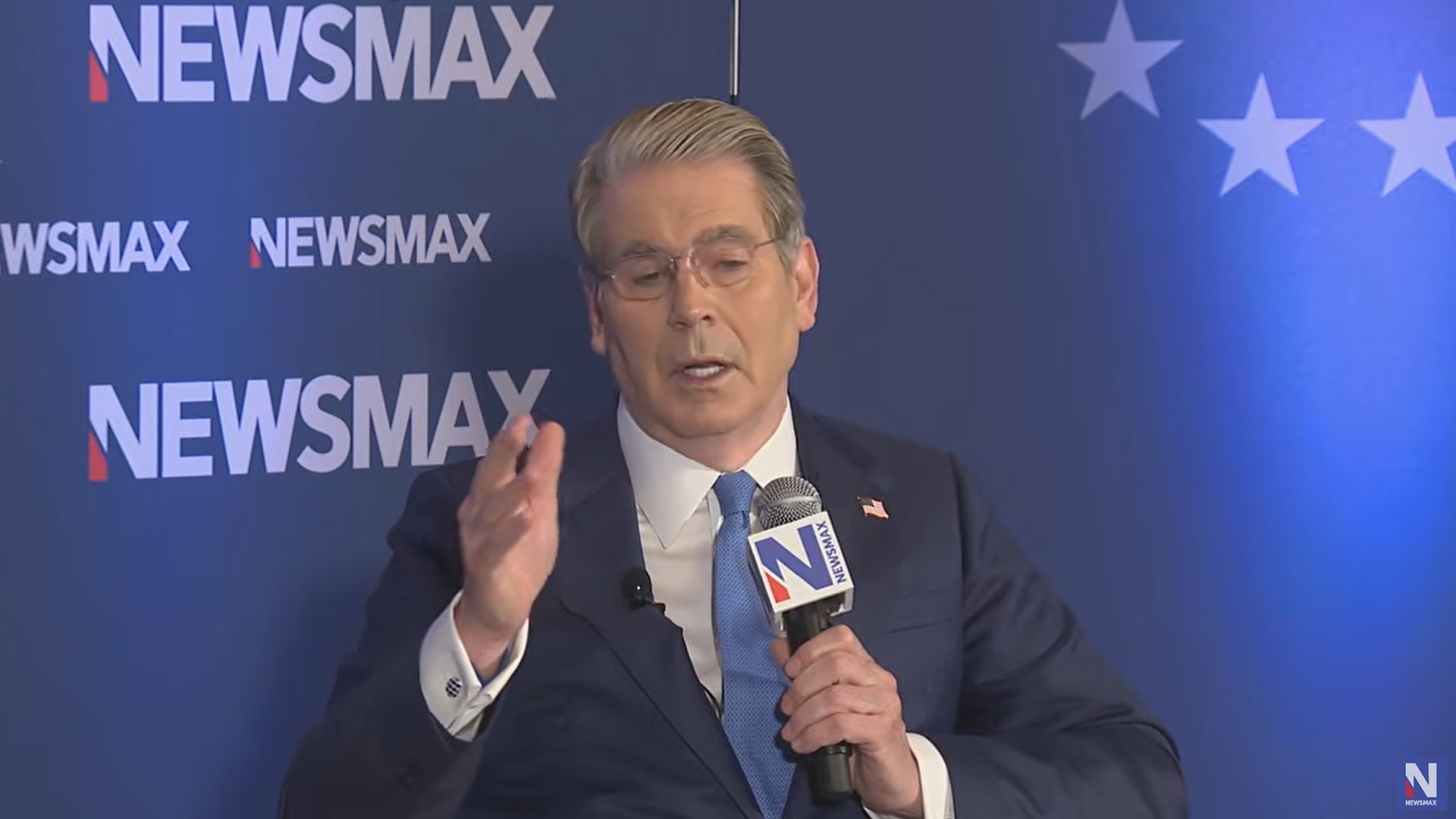
‘We Know Where It Is’: Treasury Secretary Threatens To Freeze $1B of Iran’s Crypto
U.S. Treasury Secretary Scott Bessent has said the American authorities will soon seize $1 billion in crypto from Iran.
Speaking on Newsmax’s NPolicy Summit in Washington, D.C. on Thursday, Bessent added that economic sanctions on the Middle Eastern country were working.
Iran has been using bitcoin — and other cryptocurrencies — to skirt around U.S. sanctions. The U.S. in April started targeting crypto wallets linked to the Iranian regime, Bessent said at the time.
“What we have done has never been seen before,” Bessent said Thursday on Iranian sanctions.
“We’re probably going to seize $1 billion of crypto this week,” he continued. “We know where it is. We are isolating them. We did have a maximum pressure campaign, now we have an absolute isolation campaign and it’s working.”
Bessent didn’t reveal what cryptocurrencies the U.S. will seize or how.
It would be very hard — if not impossible — for the U.S. to freeze Iran’s bitcoin unless it keeps it on a centralized exchange.
Bitcoin, being censorship resistant, cannot be frozen. But many other cryptocurrencies, including Tether’s USDT, can. Bessent previously said the feds had seized Iran’s crypto in the form of the popular stablecoin.
Iran started a bitcoin-backed insurance service for its counties shipping companies earlier this year.
The Financial Times last month reported that the Middle Eastern country was using bitcoin to settle cross-border transactions through Iranian crypto exchanges after the central bank advised its countrymen to do anything necessary to help the economy.
U.S. President Donald Trump revived his “maximum pressure” campaign weeks after returning to office. A national security memorandum signed in February 2025 put the Treasury on a sustained campaign against Iran’s shadow banking, money laundering and sanctions-evasion networks.
This post ‘We Know Where It Is’: Treasury Secretary Threatens To Freeze $1B of Iran’s Crypto first appeared on Bitcoin Magazine and is written by Mathew Di Salvo.
Bitcoin Magazine
Here’s How Not To Screw up Your Bitcoin Privacy
Just one transaction can compromise years of discreet Bitcoin activity, Cake Wallet’s chief operating officer has warned.
Speaking on the Bitcoin Rails podcast this week, activist Seth for Privacy talked about different ways of protecting one’s privacy when using Bitcoin and said that focusing on privacy was a must for the West.
Bitcoin privacy is a hot topic again ever since the developers of private coin mixer Samourai Wallet went on trial last year and were subsequently imprisoned.
But just this week, the U.S. Department of Treasury scrapped two long-stalled crypto surveillance proposals, handing a major win to privacy advocates and the digital asset industry.
“If you ever spend your no-KYC coins with one of your KYC coins — which if you just let the wallet do its thing, it could do because it doesn’t know the difference — you immediately connect all of the non-KYC Bitcoin that you spend in that with your identity,” Seth said, referring to UTXO management, also called “coin control” by some wallets.
Bitcoin wallets don’t hold a single balance but a collection of separate unspent transaction outputs — UTXOs — each one a discrete “coin” from a specific past transaction.
When you send a payment larger than any one UTXO, the wallet picks several and combines them as inputs to the same transaction — an easy mistake to make, Seth highlighted.
Seth added that unlike in the global South, where people have experienced more oppressive states, citizens in the West will need to “feel pain” in order to realize how important privacy is.
Still, he added that attitudes were changing and people were getting more serious about protecting their privacy.
“It has been shifting, in the last five or six years a lot of people — even in the West — are starting to think [privacy] really matters, we really need to think about this seriously now,” he said.
Cake Wallet is a privacy-oriented, self-custody, open-source wallet. The wallet earlier this year integrated Bitcoin’s Lightning Network into its platform.
Using the second layer solution is not only faster and cheaper, it also offers more privacy than Bitcoin’s main chain.
While Cake Wallet supports other cryptocurrencies, including privacy coin Monero, Seth for Privacy added that he’d love it if the digital coin didn’t exist.
“If Bitcoin’s privacy got good enough that you could use it and have at least almost as good privacy as Monero without massive hoops to jump through, and Monero ceased to exist, that’s fine,” he said.
“I would much rather the thing that more people use has better privacy than a more niche tool that has perfect privacy, and that’s something that less people are using because it’s less well known.”
This post Here’s How Not To Screw up Your Bitcoin Privacy first appeared on Bitcoin Magazine and is written by Mathew Di Salvo.
Bitcoin Magazine

Bitcoin ETFs Shed $729M in Two Days as Investors Reverse Course
U.S. investors this week reversed course, cashing out $729 million from spot bitcoin exchange-traded funds — putting downward pressure on the leading cryptocurrency’s price.
Funds managed by BlackRock, Fidelity, Morgan Stanley, and ARK 21-Shares all experienced significant outflows on Wednesday and Thursday, according to data from Farside Investors.
Investors had started the week by selling close to $90 million in shares but then bought nearly $119 million on Tuesday.
The rest of the week has seen outflows following news that the Federal Reserve may raise interest rates. Other negative news includes the price of Brent crude jumping following renewed attacks on tankers in the Strait of Hormuz.
U.S. President Trump also hinted that talks with Iran weren’t bearing fruit — a sign war in the Middle East could continue.
Bitcoin’s price recently stood at a little over $82,688, down more than 3% over a seven-day period. The leading cryptocurrency has rebounded slightly over the past day, jumping nearly 2% over 24 hours.
Still, the coin was fast closing in on $90,000 last week. Investors are expecting decent returns as the month dubbed “Uptober” has historically delivered for bitcoin speculators.
The price of bitcoin has been particularly sensitive to geopolitical headwinds this year — especially since the U.S. and Israel attacked Iran, leading to an oil price surge.
Oil prices going up tend to lead investors to bet on the Federal Reserve raising interest rates. And with higher interest rates comes less liquidity for the price of bitcoin to do well.
Still, that’s not always the case: the Fed last month talked tough on getting inflation down and raised interest rates by a quarter of a percentage point and bitcoin’s price rose in the following days.
Bitcoin’s price is 34% below the all-time high of $126,080 it touched in October. It has spent most of 2026 in a bear market but analysts are now increasingly pointing to evidence of a bull market following a rally in August and September.
This post Bitcoin ETFs Shed $729M in Two Days as Investors Reverse Course first appeared on Bitcoin Magazine and is written by Mathew Di Salvo.
Bitcoin Magazine

Ledger Warns Buyers Not to Set Up Wallets From Reseller After Users Report Losses
Hardware wallet manufacturer Ledger has said that it is investigating loss of user funds after customers in South East Asia reported issues with devices bought from a reseller.
The Paris-based company on Friday advised customers who’d bought from vendor CryptoBilis within the last 90 days to not set up their devices.
Ledger did not reveal how much money users had lost but one blockchain investigator, Specter, wrote on X that he’d traced theft addresses following social media posts and that over $86 million had been lost.
The issue comes following a number of data breaches this year in the crypto world and a huge hack of popular Coldcard hardware wallet devices in July.
“Ledger is investigating reports of loss of funds from users in South East Asia who purchased products from a reseller named CryptoBilis,” Ledger said via its support X account.
Ledger added that it had asked CryptoBilis to pause all sales and shipments of Ledger devices.
“If you have set up your Ledger device, consider moving assets to a new Ledger signer (with new seed). We will continue to inform customers of updates as the investigation progresses,” the company said.
In a statement to Bitcoin Magazine, Ledger said that based on the information to date, the incident is isolated specifically to this reseller in this specific market.
“No reports were made of products purchased directly from Ledger, and Ledger’s infrastructure, systems and services were not compromised,” the company added.
CryptoBilis is a Kuala Lumpur, Malaysia-based hardware wallet vendor, according to its website. The company did not immediately respond to questions from Bitcoin Magazine.
The crypto industry is still reeling after hackers in July were able to steal close to $120 million in bitcoin from Coldcard users.
The products, made by Canadian company Coinkite, had a firmware bug which led to faulty seed generation, allowing hackers to essentially guess investor seedphrases.
Galaxy Research said in the months following the attack various attackers were able to exploit the bug independently.
In a separate incident, hardware wallet manufacturer Trezor last month reported that close to 81,000 customers had their details leaked after its third-party fulfillment partner had data stolen.
Criminals have been targeting data this year, with scammers getting hold of customer information via crypto wallet Ledger’s payment processor Global-e to send phishing emails.
This post Ledger Warns Buyers Not to Set Up Wallets From Reseller After Users Report Losses first appeared on Bitcoin Magazine and is written by Mathew Di Salvo.
HTTP error 429 on https://cryptoslate.com/feed/
Failed to fetch feed: https://cryptoslate.com/feed/
Failed to fetch feed.
CryptoTicker.io
The buyback that has carried the price of Pump.fun (PUMP) through October is getting less money. The protocol's revenue, which funds half of it, stood at $1,585,235 a day on October 9. On October 5 it was still $1,887,798. That is 16.0 percent less in four days, and October 5 also marked the weekly high of the price. PUMP trades at $0.005426 on Saturday morning, at the bottom edge of the week.
If you hold PUMP or are weighing a purchase, that means the support beneath the price is not a promise but a function of the business figures. As revenue falls, so does the amount with which tokens are bought off the market and destroyed each day. This article sets the two side by side, names the documented levels and says what an investor in Germany can check along the way.
Pump.fun revenue: $1.59 million a day, 16 percent below the October 5 high
Protocol revenue is the income a blockchain application keeps from its users' fees, after deducting what is passed on to third parties. At Pump.fun it arises when users launch and trade new tokens on the platform.
The daily figures from October 1 to 9 draw a clear line. October 1 showed $1,748,972, October 2 $1,712,663, October 3 $1,711,103. Then it picked up: $1,780,189 on October 4, $1,887,798 on October 5 as the week's peak, $1,852,307 on October 6. From there it went down, with $1,720,253 on October 7, $1,631,179 on October 8 and $1,585,235 on October 9.
Over seven days that adds up to $12.17 million, over thirty days to $40.52 million. Since launch the platform has taken in $1.158 billion in revenue. These figures rest on the revenue data from DefiLlama for the Pump.fun protocol.
One qualification matters here, because summaries in circulation cite higher values, such as $18.6 million for a week and $60.7 million for thirty days. Our own count arrives at $12.17 million and $40.52 million. We are not smoothing the difference away but naming both ranges: depending on the counting method, weekly revenue lies between $12.2 million and $18.6 million. Which income types a source includes decides the result, and anyone hanging a valuation on it should know which figure they are using.
Buyback and burn: how 50 percent of net revenue takes PUMP out of circulation
A buyback means the project uses its own income to buy its token on the open market. A burn is the destruction of those tokens by sending them to an address from which nobody can move them again. Together the two reduce the quantity that can be traded at all.
Pump.fun announced the programme on X on April 28, 2026 from its own @Pumpfun account. The post speaks of a programmatic buyback and burn amounting to 50 percent of revenue for the coming year, after tokens worth roughly $370 million had already been burned. The Block and FXStreet reported the same step independently on April 28 and 29, 2026 and give the term as one year, so until April 2027.
Which income flows into the buyback
According to those reports, the revenue comes from three sources on the platform: the bonding curve through which new tokens are issued at launch, the platform's own trading venue PumpSwap and the Terminal product. A bonding curve is a fixed formula that automatically raises the price of a new token with every purchase. The other half of the revenue stays in the company, for operations, staff and product.
Applying the 50 percent to our measured revenue gives roughly $6.08 million in purchasing power for the past seven days and roughly $20.26 million for thirty days. That is a calculation from the revenue data and not a confirmation of individual purchases by the company.

171.08 billion PUMP short of the maximum supply: our own count
Maximum supply is the ceiling of tokens that can ever exist under the project's rules. For PUMP it stands at one trillion units. Total supply is currently given as 828.92 billion tokens, with 463.41 billion in free circulation.
The gap between maximum supply and total supply therefore comes to 171.08 billion tokens, or 17.11 percent of the ceiling. cryptoticker.io compiled this analysis itself on October 10, 2026; nine daily values of protocol revenue from October 1 to 9 were checked, along with the three supply figures for the token. The basis is the revenue data from DefiLlama and the supply and price data from CoinGecko.
On October 1, our report on the buyback and the SEC clarification put the figure at a sixth, so just under 16.7 percent. Nine days later it is 17.11 percent. The burned quantity keeps growing, then, but in small steps: the increase of roughly 0.4 percentage points in nine days corresponds to about four billion tokens. Anyone inferring scarcity from the burn should know that pace, because it hangs directly on revenue.
PUMP price: weekly high on October 5, weekly low on Saturday morning
PUMP stands at $0.005426 on Saturday morning. Over 24 hours that is 3.86 percent lower, over seven days 2.04 percent lower. Over thirty days there is still a gain of 33.11 percent, which shows how far the token had run in September.
Within the week, October 5 marked the high at $0.006518. The low sits at $0.005418 on Saturday morning, so at the current edge. That is 16.8 percent down from the weekly high. The daily range ran from $0.005249 to $0.005824. The all-time high of $0.008819 from September 2025 is 38.5 percent away. Market capitalisation comes to $2.51 billion, and tokens worth $192.6 million changed hands in 24 hours. All price figures come from CoinGecko as of Saturday morning.
The revenue high and the price high fell on the same day
Both series turn on October 5. Revenue reached its weekly peak there, and so did the price. Revenue has lost 16.0 percent since, the price 16.8 percent. That closeness is striking, and it has an obvious mechanical explanation: the more trading on the platform, the higher the revenue, the larger the daily buyback and the more demand meets the market. Run it the other way and that same demand disappears.
At the same time the reverse path holds just as well: a rising price draws attention to the platform and with it trading activity. Which direction moves the other first cannot be proven from two series over nine days. All that is documented is the shared turning point, and anyone following the coming days has in the daily revenue a figure that can move ahead of the price.
Trading volume offers a second angle. With $192.6 million in 24 hours against a market capitalisation of $2.51 billion, 7.7 percent of the holdings change owner in a day on paper. A token with that turnover rate reacts quickly, upwards as well as downwards.

Market capitalisation against annual revenue: PUMP costs roughly five times
Extrapolating the thirty days at $40.52 million to a year gives roughly $493 million. Set against the market capitalisation of $2.51 billion, the token therefore costs about five times the annual revenue so extrapolated.
This figure is an aid and not a company valuation. It assumes the current thirty days are representative of a year, and for a platform built on newly launched tokens that is a strong assumption: October ran better than September, and in the business of short-lived tokens one month barely predicts the next. As a yardstick over time it still serves, because it can be recalculated every month.
Note too that the extrapolated revenue accrues to the company and only half of it to the token. The other half funds operations. Reading the figure as a valuation of the token would therefore mean working with roughly $246 million a year, and then the multiple sits at about ten.
Our assessment: the burn carries the price only while revenue holds
From the editorial desk, the buyback is this token's strongest feature and at the same time its greatest dependency. Three documented points speak for it: the 17.11 percent of maximum supply destroyed, the programme's term fixed until April 2027, and the $1.158 billion the platform has taken in since launch. A project earning income on that scale has more than a story.
Against it stands the course of the past four days. Revenue has fallen 16.0 percent, and with it the amount able to buy each day. The business model hangs on the launch of new tokens, so on the most volatile part of the crypto market. Should activity there fall for weeks, the price support falls with it, and the term until April 2027 guarantees only the percentage, not the amount. Added to that is the risk of total loss, which remains with a token of this kind. None of this is a recommendation to buy or sell, but it does name the figure that counts: daily revenue.
Buying PUMP in Germany: what a MiCA-licensed exchange requires
MiCA is the EU regulation for crypto markets which, since the transition period ended on July 1, 2026, requires authorisation from every provider with EU clients. An authorised provider is called a CASP in official language, a crypto-asset service provider.
In practice that means two things. First, not every licensed exchange lists every token, and smaller Solana tokens appear on offer less often than the large ones. Second, the question of where a token is tradable is separate from whether the provider may operate here legally. Which platforms hold German authorisation and trade in euros is shown in our overview of the best crypto exchanges, with the fees compared.
On custody the usual trade-off applies. Leave the token on the exchange and you carry the provider's risk. Move it to a wallet of your own and you carry responsibility for the access words. For tax, Germany still applies the one-year holding period for private sales and the 1,000 euro exemption limit for gains in a year. The reporting duties under DAC8 change none of that; they only raise transparency towards the tax office.
Leverage and liquidation: what a perpetual on PUMP triggers in a revenue slump
A perpetual is a futures contract without an expiry date, used to bet on a price, often with borrowed money. A liquidation is the forced closure of that position as soon as the stake no longer covers the losses.
With a token turning over 7.7 percent a day and a daily range from $0.005249 to $0.005824, the distance between the daily high and low comes to roughly 11 percent. At ten-times leverage, a move of ten percent against the position is enough to consume the stake. A revenue slump that removes the price support can trigger such a move without any news being needed.
Anyone working with leverage regardless should know the liquidation level before entering rather than look for it after the first setback.
PUMP buyback: until April 2027 it runs only as long as revenue holds
- Watch the daily revenue, not just the price. Should it climb back above the $1.88 million of October 5, the purchasing power returns. Should it stay below $1.6 million, the buyback shrinks further. To cross-check through the futures market, the venues for it are in our comparison of the best perp DEXs.
- Put the holding period in the calendar. A sale within one year is taxable in Germany, beyond that it is not. Which tool carries purchase dates and deadlines per position is shown in the overview of crypto tax tools and portfolio trackers.
- Set your own levels. Above sits the weekly high at $0.006518, below the weekly low at $0.005418. Those two values are observable and documented; a price target they are not. To put alerts on them, suitable services are among the best crypto tools and analytics platforms.
(As of October 10, 2026. This article is not investment advice. Prices and fee structures change; check the terms with the provider before you buy.)
A vote is running on Cardano that touches every staking payout on the network. At stake is whether the fixed minimum fee of a stake pool drops from 170 to 75 ADA. An analysis of the Cardano chain's voting data from October 10, 2026 puts approval at 34.45 percent among the delegated representatives. The threshold is 67 percent. The last moment at which the proposal can still be accepted is the end of epoch 660 on October 11, 2026 at 21:44 UTC.
Anyone delegating Cardano notices nothing of this at first, because the fee is deducted before distribution and appears in no wallet display. It decides, however, whether a small pool can distribute anything at all. At the price of $0.2526 at which ADA trades on October 10, 170 ADA comes to roughly $43 per epoch and pool.
minPoolCost: the fixed fee every stake pool retains first
The protocol parameter minPoolCost is the minimum amount a stake pool may retain from its block rewards per epoch before anything is distributed at all. A pool can set more, not less. Only after this deduction does the operator's percentage margin apply, and whatever remains then flows to the delegators.
The sequence is the whole point. A pool producing a single block in an epoch has gross rewards in the order of 300 ADA. Of that, 170 ADA goes as a fixed fee, regardless of how many people are attached to the pool. A pool with thirty blocks per epoch spreads the same fixed amount across thirty times the volume.
Why the value was set in 2023
Today's 170 ADA stems from a recommendation by Intersect's parameter committee and took effect in epoch 445 in October 2023, so before the period in which protocol parameters could be changed on chain. The amount was originally calibrated at the Shelley launch against the ADA price of the time, the distribution curve of the time and estimated operating costs of a pool.
All three have shifted since. The rationale of the current proposal cites a decline in block rewards from about 1,800 to roughly 300 ADA, because the reserve from which distributions are made is emptying. The cost of servers and operations has not fallen over the same period.
170 ADA today, 75 ADA in the proposal: the core of PCP-006
The proposal carries the identifier PCP-006 and comes from the pool operator Cerkoryn, published on March 30, 2026 in the Cardano forum. It calls for the reduction to 75 ADA, a cut of roughly 55.9 percent, and by its own wording changes no other protocol parameter. Intersect's Technical Steering Committee backed the reduction on July 9, 2026 according to the proposal.
The proposal expressly sees itself as an interim step. The longer-term idea, not to lower the fixed fee but to work through a minimum margin, is still in development as a separate draft. Until then the lower fixed amount is meant to give small pools room to breathe.
What a block per epoch earns today
The rationale works with the appendix data of the predecessor proposal PCP-001 and gross rewards of about 300 ADA per block, measured in epoch 415. On that basis, the minimum fee amounts to roughly 113 percent of gross rewards at one block per epoch. Nothing remains for the delegators of such a pool in this calculation.
34.45 percent of 67: where the vote stands on October 10
The analysis of the Cardano chain's voting data shows 77 votes in favour and 32 against among the delegated representatives, plus 17 explicit abstentions. Counting, though, goes by the ADA weight behind the votes rather than by heads: 1.28 billion ADA sits on yes, 2.44 billion on no. That produces the 34.45 percent.
The threshold for this proposal is 67 percent. It applies to protocol parameters in the economic group, to which minPoolCost belongs. The gap is therefore not narrow but covers more than half of the approval required. On the constitutional committee, three of seven members voted in favour.
Stake pool operators do not vote on this parameter. Their vote is provided for on protocol changes only in the security-relevant group, and minPoolCost does not fall under it. The voting data accordingly contains not a single operator vote, even though the reduction concerns precisely them.
Deadline October 11 at 21:44 UTC: the end of epoch 660
A protocol proposal on Cardano lives for six epochs. This one was submitted in epoch 654, so it expires with the end of epoch 660. According to the state of the chain, that transition falls on October 11, 2026 at 21:44 UTC, which is 23:44 German time. Acceptance or rejection always happens at such an epoch boundary, not continuously.
In practice that leaves a good day in which approval could still shift. A jump from 34.45 to 67 percent would have to come from very large delegations, not from a handful of further yes votes. If the proposal fails, the parameter stays at 170 ADA, and the proposal would have to be resubmitted, including the deposit of 100,000 ADA that every protocol proposal requires.
Ten billion ADA on permanent abstention: the real brake
A look at the weights explains why a 67 percent threshold is so hard to reach on Cardano. Yes or no in this vote is decided by 3.72 billion ADA. Sitting on permanent abstention, by contrast, are 10.38 billion ADA, with a further 1.48 billion abstaining explicitly in this case.
Abstentions drop out of the calculation; they count neither as yes nor as no. That sounds harmless but shifts the balance of power: delegating ADA to the preset abstention option leaves the decision to a fraction of the network. Of the good 15.7 billion ADA represented in this vote at all, less than a quarter determines the outcome.
Where your own vote sits
Holding ADA in your own wallet and delegating means two separate delegations: one to a stake pool for the yield and one to a delegated representative for the votes. Many wallets quietly set the second to abstention during setup. If your ADA sits with an exchange, it does not vote in this procedure at all.
One block per epoch: the arithmetic of small stake pools
For choosing a pool, the fee structure produces a clear ranking. A pool with many blocks per epoch spreads the fixed amount across plenty of rewards, and the minimum fee barely registers there. A pool with one or two blocks spreads the same amount across almost nothing, and that is exactly where a cut from 170 to 75 ADA bites.
The second factor is saturation. Cardano caps the rewards per pool through a target of 500 pools, which sets the saturation limit. An overfilled pool spreads the same rewards across more delegation, and the yield per ADA falls. A heavily underfilled pool carries the fixed fee alone. Both ends cost yield, for different reasons.

Delegation and saturation: what the cut means for your ADA yield
Arithmetically the reduction is no great lever if you sit in a well-filled pool. There the lower fixed amount shifts the net yield by fractions of a percentage point. The difference arises at the other end: in a small pool the same step can turn a zero distribution into a distribution.
Indirectly the cut works on the diversity of the network. Small operators for whom running a pool does not pay at a 170 ADA minimum fee give up or consolidate. If it matters to you not to delegate to one of the largest providers, 75 ADA leaves more choice. An overview of providers and their terms is in the comparison of the best staking platforms.
Cardano staking in October: 2.1 to 2.7 percent against the new arithmetic
The net yield that actually arrives when delegating ADA in October 2026 lies, according to our analysis of October 7, in a range of 2.1 to 2.7 percent a year. That range rests on today's minimum fee of 170 ADA. Should the parameter fall to 75 ADA, the lower end shifts above all, because that is where the small pools sit.
What has been added since October 7
Compared with that analysis, the price situation has barely changed and the governance situation markedly. ADA is practically unchanged over seven days at plus 0.03 percent, but moved 8.17 percent higher over the past 24 hours, to $0.2526. What is new is that the deadline for the fee cut is now counted in hours rather than weeks.
A second governance event sits in between: on October 8, CIP-0113 took effect as the basis for issuers being able to freeze regulated tokens, which we assessed here. Both events show the same pattern, namely that on Cardano it is now the votes and not the announcements that set the pace.
Three open votes, two of them without prospect
For this article we counted all governance proposals open on Cardano as of October 10, 2026, three in number, and recorded the standing of each. cryptoticker.io compiled this analysis itself on October 10, 2026, based on the Cardano chain's voting data.
| Proposal | Type | Votes in favour | Approval | Threshold |
|---|---|---|---|---|
| Cut minPoolCost to 75 ADA | Protocol parameter | 77 | 34.45 percent | 67 percent |
| 11,787,063 ADA for the OpenZeppelin stack | Treasury withdrawal | 15 | 3.90 percent | 67 percent |
| Target from 500 to 1,000 pools, operator survey | Info action | 29 | 3.77 percent | none |
The fee cut is thus the only one of the three proposals anywhere within reach of a majority. The withdrawal of 11.79 million ADA from the treasury, just under $3 million at the price on October 10, stands at 3.90 percent and expires at the same epoch boundary. In mid-September the same proposal stood at 2.14 percent.
Our assessment: the threshold is the problem, not the amount
From the editorial desk, the evidence suggests the cut will fail on participation rather than on its substance. The proof: 77 in favour against 32 opposed is a clear majority among the votes actually cast, and the Technical Steering Committee backed the reduction according to the proposal. What is missing is weight, because 10.38 billion ADA sit on permanent abstention and therefore outside the calculation.
Against that stands the fact that 2.44 billion ADA voted explicitly against, more than twice as much as in favour. Substantive opposition on that scale cannot be explained by abstention alone. For a delegator both things follow: a cut by October 11 is unlikely on this reading, and the choice of pool remains the lever you hold yourself. None of this is investment advice, and ADA, like any cryptocurrency, can fall to total loss.
Cardano staking: until October 11 the fee stays at 170 ADA
- Look in your wallet to see which stake pool you delegate to, and set its fixed fee and margin against other providers. The terms of the common platforms are in the comparison of the best staking platforms.
- When in doubt, check whether your pool sits close to the saturation limit or well below it. Both situations cost yield, and a cut in the minimum fee changes only the second.
- If you want to add ADA or delegate for the first time, mind the custody: in your own wallet you vote and delegate yourself, with an exchange you do not. Which providers are licensed in Germany under MiCA is in the comparison of the best crypto exchanges, and the running state of the vote can be checked in the official voting tool yourself.
(As of October 10, 2026. This article is not investment advice. Prices and fee structures change; check the terms with the provider before you buy.)
NEAR Protocol trades at around $4.93 on October 10, 2026, 8.6 percent above the previous day. One day earlier the same price had slumped by 16.37 percent, from $5.33 to $4.46. Look only at the daily gain and you see a recovery. Go back two weeks and you see something else: over 30 days NEAR is up 97.5 percent, but over 14 days it is down 0.9 percent. The entire doubling sits in the first half of that monthly window; since then the price has moved violently without getting anywhere.
For anyone considering an entry, that is the real question. Not whether NEAR rises, but how much volatility a purchase at today's price brings into the portfolio. This article works through both: the movement of the past 13 days and where NEAR stands against the rest of the large cryptocurrencies.
NEAR price today: $4.93 and a daily gain of 8.6 percent
The day opened at $4.88 and peaked at $4.97, with a low of $4.50. That makes NEAR the strongest gainer among the 20 largest cryptocurrencies excluding stablecoins on October 10. Market capitalisation stands at $6.45 billion, which ranks 21st. Trading volume over the past 24 hours comes to roughly $0.89 billion.
The all-time high remains far away: $20.44 from January 16, 2022 sits almost 76 percent above today's price. The rally of recent weeks was a recovery inside a long decline, not a push into new territory.
The two levels grounded in the price history
On the upside it is the interim high of $5.39 from September 28, which none of the advances has reached for twelve days. On the downside it is the low of the slump at $4.46, marked on October 9 and not retested since. Those two values are 21 percent apart, and the price has spent the past two weeks inside that corridor.
Monthly and two-week balance: up 97.5 percent, down 0.9 percent
The contradiction between the two figures has a simple cause, and it lies in the chosen starting point. The 30-day window reaches back into the week when NEAR ran from below $2.50 to above $5. The two-week window begins only after that, and within it the price stands at $4.93 today against $5.04 on September 27.
In practice: buy five weeks ago and you are sitting on a doubling. Buy two weeks ago and you are flat, having lived through a 16 percent daily loss and a 9 percent daily gain along the way. Same position, same cryptocurrency, two completely different experiences. A monthly gain on the chart therefore tells you nothing about how an entry today will feel.
The most recent network change helps place this. On October 1, NEAR switched to burning gas fees in full; the price stood at roughly $5.34 at the time. It has lost 7.7 percent since, even though the change permanently lowers issuance. A supply squeeze on paper does not move a price against a falling broader market.

Volatility in the NEAR market: eight of 13 days above 5 percent
For this article we counted NEAR's daily prices over the past 14 days and calculated the day-to-day change. The result: on eight of 13 days the movement exceeded 5 percent, in both directions. The individual readings range from plus 9.44 percent on October 10 to minus 16.37 percent on October 9, with minus 10.60 percent on September 29 and plus 9.18 percent on October 1 in between.
cryptoticker.io compiled this analysis itself on October 10, 2026. It is based on daily price data from CoinGecko for NEAR Protocol over 14 days, from which 13 daily changes were counted.
What volatility means and what it does not say
Volatility describes the range across which a price travels back and forth over a period. Direction is a separate matter: a price can be highly volatile and end up exactly where it started. That is precisely the case with NEAR.
The reason shows up in the ratio of trading volume to market capitalisation. A daily turnover of $0.89 billion against a market value of $6.45 billion means that roughly one seventh of the entire valuation changes hands in a day. In a market that thin, mid-sized sales shift the price by several percent, and leveraged positions that are force-closed during such moves amplify the swing further.
Top 25 analysis: 17 of 20 large coins down for the week
NEAR leading on this one day says little by itself. It gains meaning next to the rest of the market. We went through the 25 largest cryptocurrencies by market capitalisation, stripped out five stablecoins and value-stable tokens, and compared the weekly balance of the remaining 20.
Three of 20 are up on the week: NEAR at 4.9 percent, Canton at 2.4 percent and Cardano at 0.4 percent. The other 17 are down, and for nine of them the weekly loss exceeds 6 percent. Bitcoin itself trades at around $82,483 and has lost 2.4 percent over seven days. cryptoticker.io compiled this analysis itself on October 10, 2026, based on market data from CoinGecko for the 25 largest cryptocurrencies.
NEAR thus belongs to a small group escaping the downward pressure. That is an argument for relative strength, and at the same time the argument against assuming a broad recovery is starting here: if 17 of 20 large coins are falling, the wider market is not carrying a weekly gain. Something specific to this coin is doing the work.
Bitwise NEAR ETF (NRR): a 0.75 percent fee and staking inside the fund
The one circumstance separating NEAR from other altcoins is an exchange-traded product. On September 29, 2026, Bitwise listed the Bitwise NEAR ETF under the ticker NRR on NYSE Arca, the first spot fund on NEAR in the United States according to the issuer. The management fee is 0.75 percent. The fund intends to stake the NEAR it holds; Bitwise cites a reference rate of about 5 percent, based on the annualised figure as of September 25, 2026, and states expressly that the rewards are not guaranteed and say nothing about the fund's performance.
Matt Hougan, chief investment officer at Bitwise, justifies the product by its proximity to two technology fields: "NEAR sits at the intersection of two of the biggest trends in technology: AI and crypto." That is the issuer's view and not a price forecast.
How staking inside a fund reaches the investor
Staking means tokens are committed to the network to confirm transactions, with new tokens continuously created as a reward. When NEAR sits in a fund that stakes, those rewards raise the value of the fund unit instead of reaching the investor as a distribution.
Note that NRR is a US product. Retail investors in the EU generally cannot trade US funds, because they lack the document required under the EU regulation on key information documents. What is open in Europe are exchange-traded products from European issuers. Which routes exist for fund products on crypto assets in Germany, and how they differ, is set out in our overview of crypto ETFs in Germany.
Circulating supply and issuance: 1.3087 billion NEAR with no unlock overhang
One point works in favour of the NEAR price and is rarely mentioned. The circulating supply is 1,308,552,140 NEAR, the total supply 1,308,552,147. The difference is seven tokens. In practice that means no early-stage holding remains that could reach the market in the coming months.
This sets NEAR apart from many projects of similar size, where monthly unlocks to the team and early investors create steady selling pressure. At Starknet, for instance, the unlock on October 15 was reason enough for a separate look. NEAR has no such calendar; new supply arises only through the network's ongoing issuance, and that was reduced on October 1 by burning gas fees in full.

Leverage and liquidation: a 16 percent day wipes out a five-times position
The volatility from the third section is not a theoretical quantity. For leveraged positions it has an immediate consequence. A liquidation is the forced closure of such a position by the exchange as soon as the posted capital no longer covers the loss.
Work it through for October 9. Anyone betting on a rising NEAR price with five-times leverage lost five times 16.37 percent on that single day, so more than 80 percent of the capital committed. In practice the position had closed earlier, because the safety buffer at most exchanges breaks well before that. The 9.44 percent the price won back the next day was of no use to that position: a liquidated position does not take part in the recovery.
With a cryptocurrency that moves more than 5 percent on eight of 13 days, leverage is therefore the riskiest variable in a portfolio. If you want to trade the move rather than hold it, you should at least know the price at which your own position would be closed, and whether the platform you pick is licensed in the EU at all.
Holding period and tax: one year separates tax-free from taxable
A gain on NEAR falls under private disposal transactions in Germany, governed by Section 23 of the Income Tax Act. Sell within a year of buying and the gain is taxable. Hold for longer than a year and it is not.
At this level of volatility that is a real decision and not a side issue. A 9 percent daily gain is tempting to take, but inside the deadline it costs tax on the whole gain, while a few months of patience could reach the threshold. Conversely, a price that falls twice by around 10 percent and once by 16 percent in two weeks may stand considerably lower in twelve months. Weighing the two against each other is the task, and without clean records of purchase dates it cannot be done.
One point matters with staking: when tokens are committed to the network and new ones arise continuously, those rewards are separate inflows with their own timing. The one-year clock starts afresh for them, not from the date of your original purchase.
Custody and self-custody: where NEAR stands after the Intents incident
An event from the start of the month belongs in the picture. On October 1, NEAR Intents, the cross-network swap function, halted deposits and withdrawals after roughly $3.8 million drained out through a flaw in the Omni system. The amount was returned in full according to the project. NEAR co-founder Illia Polosukhin described the incident as limited to USDT on BNB Smart Chain; the protocol itself, the NEAR token and the other applications were not affected.
The incident did not weigh on the price for long, and it is still informative for the custody question. What was hit was an application on the chain, not the chain itself, and specifically balances that users had deposited there. Self-custody means holding the keys to your own tokens yourself instead of leaving them with a platform. If you intend to hold NEAR for the long run and work towards the one-year threshold, keeping it on an exchange or in a swap application carries the extra risk that this very place fails.
Buying routes in Germany under MiCA: exchange, broker or ETP
Since the EU regulation on markets in crypto assets applies in full, providers addressing retail clients in Germany need authorisation as a crypto-asset service provider. In practical terms, the range of legally available routes is manageable and verifiable.
Three routes are open for NEAR. Through a licensed crypto exchange you buy the token directly and can withdraw it to a wallet of your own. Through a broker you also buy directly, but often cannot withdraw to an external address. Through an exchange-traded product from a European issuer you buy inside your bank account, but then hold a security rather than a token, with its own tax rules and no option for self-custody. If you want to collect staking rewards yourself rather than have a fund represent them, providers and terms are listed in our overview of staking platforms.
Our assessment: the volatility is the risk, not the monthly gain
From the editorial desk, NEAR is in better shape than most large altcoins and riskier than the monthly gain suggests. Three documented points speak for its strength: a spot fund in the United States since September 29 with a 0.75 percent fee, a circulating supply that matches the total supply to within seven tokens and therefore carries no unlock overhang, and a weekly balance of plus 4.9 percent in a market where 17 of 20 large coins lost ground.
Against it stands the measurement in this article. Eight daily moves above 5 percent in 13 days, a 16.37 percent slump and a two-week balance of minus 0.9 percent describe a market delivering plenty of risk for little progress. As long as the interim high of $5.39 is not reached again, the recovery of October 10 remains a counter-move inside the range rather than a break out of it. Entering at this level of volatility calls for a holding period that can absorb it, or a position size that can take another 16 percent day. Total loss is possible at any time with crypto assets.
NEAR price: without a return above $5.39 it stays sideways
- Settle the buying route and its licence. Confirm whether the platform you want to buy NEAR through is authorised as a crypto-asset service provider in the EU, and whether it permits withdrawal to an address of your own. The side-by-side view is in our crypto exchange comparison.
- Size the position to the volatility. Assume another day like October 9, so minus 16 percent, and check whether you would hold that at your intended size. With a range like this, better to skip leverage; how liquidations arise on futures markets is set out in our overview of perp DEXs.
- Document the holding period and staking. Note the purchase date and price, and record staking rewards separately, because the one-year clock starts afresh for them. Which tools carry that automatically is shown in our overview of tax tools.
(As of October 10, 2026. This article is not investment advice. Prices and fee structures change; check the terms with the provider before you buy.)
Buying crypto through Sparkasse costs DekaBank 0.99 euros in transaction fees per purchase and per sale, plus a spread that no document quantifies. Custody, delivery to an external wallet address and customer support are free of charge. The most important restriction appears only in the glossary of the product page, not in the price list: deliveries go exclusively to addresses of certain approved crypto-asset service providers, and your own hardware wallet is blocked as a destination.
These figures and conditions can now be sourced directly. DekaBank has published the contractual documents for "Krypto – powered by Deka", among them a document dated October 2026. Until then, pricing, selection and timetable came from the trade publication Platow, and our own assessment of the planned October launch had to flag exactly that. The number now sits in the original.
Transaction fee of 0.99 euros: what a purchase at Sparkasse costs under the price list
The "price information for crypto assets" issued by DekaBank Deutsche Girozentrale, dated September 2026, covers the crypto-asset business in three lines. The transaction fee for buying and selling is 0.99 euros. There is no minimum order size per transaction. The maximum order size per transaction is 250,000 euros.
A transaction fee is the charge a bank levies for executing a single order. It appears on the statement as a separate item, and at DekaBank it is a flat fee: the same amount on a 20 euro order as on a 20,000 euro one.
The effect of that flat fee varies enormously with order size. Measured against the order volume, it comes to 3.96 percent on 25 euros, 1.98 percent on 50 euros, 0.99 percent on 100 euros and 0.099 percent on 1,000 euros. For a saver putting a small amount to work each month, a flat fee is a percentage fee in disguise, and a steep one.
The same document lists what costs nothing: registration and identity verification, crypto custody including position keeping, the portfolio display in the Sparkasse app, delivery of crypto assets to an external wallet address, provision of documents in the electronic mailbox, order and transaction statements, and quarterly and annual reports on crypto holdings. Customer support by email and telephone is also free; the hotline is open Monday to Thursday from 8am to 6pm and Friday from 8am to 5pm.
No minimum order, but a 250,000 euro ceiling per transaction
The absence of a minimum order size is the more practically relevant of the two limits for newcomers. A ten euro purchase is formally permitted, even though the flat fee makes it expensive. Investors who want to put small amounts to work regularly are better served by longer intervals and larger individual amounts than by weekly micro-purchases.
The 250,000 euro ceiling per transaction affects few retail clients directly, but it says something about how the product is built: it is designed for volume business inside a banking app, not for block orders. Larger amounts would have to be split across several transactions, each carrying its own fee and its own ratio.

The request-for-quote model: DekaBank’s own spread appears in no price list
Trading runs on a request-for-quote basis, or RfQ, rather than through an open order book. RfQ means the client asks for a price, the bank names a quote binding for a limited period, and an order can be placed on that basis while the quote is valid. The product page describes this as a binding price guaranteed by DekaBank for a limited window.
What that price consists of is set out in the price information itself: the quote "is based on a market reference price (including real-time price data) plus a DekaBank-specific spread". It adds that with larger volumes or increased volatility the pricing may be adjusted, for instance through spread adjustments, shorter quote validity or a restriction on tradability.
The spread is the gap between the price at which an asset can be bought and the price at which it could be sold at the same moment. It never shows up on a statement as a fee, because it is not a charge but is built into the price. It is paid all the same. None of the published documents names a level, a range or a cap, and the wording on adjustments leaves open how far it may widen in a turbulent market. For cost comparison, that means the 99 cents are known and the larger part of the price is not. We reported this same finding for Sparkasse and Volksbank back in September, when not a single product page named a price; the commission has been documented since then, the spread has not.
99 cents or 1.5 percent commission: at an order volume of 66 euros the two models meet
DekaBank’s flat fee can be set against the model used by the cooperative banks. Volksbank Raiffeisenbank Würzburg charges 1.5 percent per purchase and per sale for crypto-asset trading under its schedule of prices and services, likewise plus a spread. The two models cost the same when 0.99 euros equals exactly 1.5 percent of the order volume, which happens at 66 euros.
Below that threshold the percentage commission is cheaper, above it the flat fee, and the gap widens quickly: on an order volume of 1,000 euros it is 99 cents against 15 euros. This calculation applies strictly to the quantified fees. Because both institutions also take a spread and neither discloses it, it is a partial sum and not a total price.
The alternatives deserve a look. Investors who want to compare will find the terms of trading venues licensed under the European crypto regulation in our overview; at several of them the fee is a percentage, but the spread is disclosed. Which model works out cheaper depends on order size and on how often you trade.
Delivery only to CASP addresses: your own hardware wallet is blocked as a destination
Delivery to an external wallet address is free of charge. The destination, however, is not free. The product page puts it in these words: "With Krypto – powered by Deka, delivery is possible only to wallet addresses of certain crypto-asset service providers (CASPs). Delivery to other wallet addresses is excluded."
CASP stands for crypto-asset service provider, meaning a crypto business licensed and supervised under the European crypto regulation MiCAR. Exchanges and custodians are covered, private individuals are not. A hardware wallet belongs to its owner rather than to a service provider, and that is precisely why it is not an eligible recipient address.
In practice, no route leads from the Sparkasse app straight to a device in your own drawer. To hold your bitcoin yourself, you need a detour through an approved provider that accepts the delivery and then allows a transfer on to an address of your own. Two transfers instead of one, two chances to transpose a digit in the address, and depending on the provider network fees on the second leg. If that is the route you intend to take, check the devices and how they handle in our hardware wallet comparison first, and confirm with the intermediary that it accepts deposits from a bank at all.

Minimum amounts for deliveries: five thresholds between roughly seven and 22 euros
Deliveries have a document of their own, and it is the most recent of the set: "minimum amounts for deliveries", dated October 2026. It lists, for each crypto asset, a quantity below which no delivery is made.
- Bitcoin: 0.0001
- Ethereum: 0.01
- Ripple: 10
- Solana: 0.1
- Polygon: 100
Expressed as quantities, these thresholds look arbitrary. Converted into euros at prices on October 10, they sit close together: around 7 euros for Bitcoin, about 22 euros for Ethereum, a good 12 euros for XRP, just under 10 euros for Solana and roughly 9 euros for Polygon. The bank has therefore set the limits by value, in a band of about seven to 22 euros, and not by quantity.
That is good news for small holdings and a warning for fractions: anyone holding 15 euros in Ethereum falls short of the delivery threshold and has to buy more or sell. Because prices move, those euro amounts move with them; the quantities in the document stay fixed.
Private keys in an omnibus wallet: custody in trust without a key of your own
How the holdings are kept is explained by the product page itself: under "Krypto – powered by Deka", the private keys are held in trust for clients in a jointly managed omnibus wallet.
An omnibus wallet is pooled custody: the holdings of many clients sit in the same blockchain addresses, and the bank tracks in its own books who is owed what. A private key is the secret key that grants access to crypto assets. In this model the bank holds it, not the client. There is no personal address to look up in a blockchain explorer and no key of your own to lock away.
What hangs on this for investors we have already set out at length on the question of keys: why there is no key of your own to the bitcoin at Sparkasse. The new documents confirm that design and add the delivery restriction to it.
Five tradable crypto assets, no deposit guarantee
According to the document "crypto assets supported by DekaBank", five assets can be traded: Bitcoin (BTC), Ether (ETH), Polygon (POL), Ripple (XRP) and Solana (SOL). That corrects a widespread impression: it is not just Bitcoin and Ether, but it is not a broad selection either. A token outside those five is not available here.
On risk the bank is explicit. Cryptocurrencies are frequently exposed to sharp price swings, with volatility that "can lead to total loss". Risks remain even under professional custody, for instance from attacks on blockchain infrastructure. In exceptional market situations, during technical disruptions or in maintenance windows, trading may be restricted, so that a purchase or sale is not always possible at the moment or the price intended.
The sentence that matters most to bank clients: "Unlike bank deposits, cryptocurrencies are not covered by the statutory deposit guarantee scheme." The crypto account sits in the same app as the current account, but the protection of the deposit guarantee stops at the border between the two.
Before the first order: how to check the three terms that affect you
The account is opened through the Sparkasse app, as Deka describes it: clients with a current account at a participating Sparkasse open the "Anlegen" section of the app and find the "Krypto – powered by Deka" offering there. Trading is secured with the app’s familiar tools, such as push TAN.
What remains open
The word "participating" carries weight. Each of the roughly 370 institutions decides for itself whether to switch the service on, and nothing in Deka’s documents implies that a particular Sparkasse already offers it. What is documented is that the terms are fixed and that the route runs through the Sparkasse app. What is not documented is whether it is already open in any specific place; only a look in your own app or a question to your own Sparkasse will show that.
Our assessment
From the editorial desk, this offering is a holding product inside the bank rather than an entry into self-custody. Much speaks for the fee: 99 cents on an order volume of 1,000 euros is 0.099 percent, while the Würzburg cooperative bank takes 1.5 percent. Against an overall verdict stands the fact that the spread is quantified in none of the four documents and may expressly be adjusted when volatility rises. The exclusion of third-party wallet addresses weighs more heavily than any fee, because it decides not the price but the control. The bank’s counter-argument holds up against that: the delivery itself is free, and the minimum amounts are low at seven to 22 euros. What is limited is the destination of a withdrawal, not its price.
Crypto at Sparkasse: the spread remains the unknown quantity
- Measure the total cost yourself. On a first small order, work out how far the quote shown deviates from the market price, and add the 99 cents. That difference is the real price. The price list of a licensed trading venue from our overview of regulated crypto exchanges serves as the benchmark.
- Settle the exit route before any money goes in. If the holding is later meant to move to an address of your own, you need an approved provider as a staging post. Pick the device in advance in the hardware wallet comparison and confirm with your exchange that it accepts deposits from a bank.
- Carry the tax side along from the start. Every purchase and sale is a tax-relevant event with its own date. DekaBank’s quarterly and annual reports are free and belong in your own archive; for ongoing record keeping, the tools in our comparison of tax software and portfolio trackers help.
The documents are available in full from the bank itself: the product page for "Krypto – powered by Deka" and the price information for crypto assets.
(As of October 10, 2026. This article is not investment advice. Prices and fee structures change; check the terms with the provider before you buy.)
When we opened Abstract's migration page on 9 October 2026, a counter was running there: "Chain Shutdown in 66d". Below it, the sentence that anyone who does not get their funds off the chain by 15 December will lose access to them. It is worth picturing that calmly. Someone has an accident and spends eight weeks in hospital. Someone takes a sabbatical, is on parental leave, or is so deep in a crisis at work that they do not open a crypto app for two or three months. At a bank or a regulated exchange, the money is still there afterwards. On Abstract it is gone.
That is not bad luck for a few individual users but a property of the system. And it is reason to ask again a question the crypto market likes to treat as settled: what exactly is decentralised, if a single company can decide in a post on X that a blockchain ends?
66 Days to Act: Why Even a Sabbatical Can Cost You Your Abstract Balance
Abstract is the Ethereum layer 2 of Igloo Inc., the company behind Pudgy Penguins. On 6 October the project announced the shutdown, by its own account because the chain was not growing and did not sustain itself as a pure network for everyday applications. Igloo chief Luca Netz wrote that the company had lost a double-digit million sum in US dollars over two years. That is understandable. Companies are allowed to fail.
What nobody has to accept is the way the risk of that failure is distributed. Counted from the day of the announcement, the deadline runs 70 days. Anyone who misses it expressly loses every claim under the new Migration Hub terms of service, and anyone unlucky while withdrawing is granted liability of at most $100 under the same contract. An obligation to notify users personally appears in the contract only where laws require it. Information goes out mainly via X and Discord. Anyone not reading along there may find out too late.
An Ethereum Layer 2 Without an Emergency Exit: What L2BEAT Shows About Abstract
The promise of a layer 2 is that it inherits its security from Ethereum. Ideally that means even if the operator disappears, every user can get their funds out via the main chain. The independent review site L2BEAT, by contrast, rates Abstract at Stage 0, the lowest maturity level. By its assessment, users can place transactions in a queue on Ethereum but cannot force their inclusion. Only authorised parties may report the state of the chain to Ethereum, and in an emergency a committee can change the contracts with no waiting period. If the operator fails, withdrawals freeze.
Put differently: the label "Ethereum layer 2" sounds like Ethereum, but the switches sit with a handful of participants. How quickly users are grasping that is shown by one figure from L2BEAT: the value secured on Abstract stood at around $30 million on 9 October, 44.5 percent less than a week earlier.

Centrally Regulated Against Decentrally Unregulated: What MiCA Demands When a Platform Winds Down
In Europe the central part of the crypto market has been governed since the end of 2024 by the Markets in Crypto-Assets Regulation, MiCA for short. An exchange or a custodian with MiCA authorisation has to hold its clients' crypto-assets separately from its own (articles 70 and 75); in an insolvency they do not form part of the estate. Anyone custodying or trading crypto-assets also needs a plan for an orderly wind-down (article 74). A supervisor such as BaFin checks that. And if a client dies or is unreachable for months, their account continues to exist, and heirs reach the assets with a certificate of inheritance. How that works in practice is in our article on passing on crypto-assets.
On Abstract none of that applies. The counterparty when withdrawing is a Delaware company, disputes go to arbitration seated in Miami, and there is no supervision of the wind-down. That is the real difference, and the market likes to blur it: the central part is now strictly regulated in Europe. The part that calls itself decentralised is often steered just as centrally, only without the rules. A wild west with a registered office.
Truly decentralised is whatever nobody can switch off. Bitcoin in your own wallet and ether on the Ethereum main chain are still where you left them after two years of silence. So anyone who wants self-custody should run it on a main chain. Anyone who does not want that is in better hands with a regulated provider holding MiCA authorisation than on a small layer 2 that calls itself decentralised.
Abstract, Pudgy Party, 9dcc: The Pattern of the Quick Wind-Down
Abstract is no isolated case, and the pattern behind it is what bothers us most about this one. Three examples from the past eighteen months:
- Pudgy Party: the mobile game from the Pudgy Penguins orbit launched in August 2025 and was discontinued in June 2026 after less than a year, with no wind-down phase. According to reports by Decrypt and other trade outlets, there were initially neither refunds nor any migration of purchased items. That in particular contradicts the core promise of Web3 games, that players own their items.
- 9dcc: the crypto fashion brand of the well-known NFT collector gmoney announced its end on 27 May 2025, effective at the end of that month, with a "heavy heart", headwinds in the market and the line that it had perhaps simply been too early. Holders got 90 days to redeem stored goods. The benefits of the "Admit One" membership NFTs ended at the same month end, on 9dcc's account at the third anniversary and thus as originally promised.
- Blast: the layer 2 that collected billions in 2024 with points and airdrop hopes announced its end on 2 October 2026. We wrote up the deadlines at Blast separately.
The script is similar every time: a letter of regret, a reference to the market, a short deadline, and responsibility for everything that follows rests with the user.
Our Own Experience With the Abstract Team: We Should Have Warned Earlier
We are not writing this comment from the outside. Cryptoticker applied to Abstract as a media partner and for the creator programme, we were active on the chain, and tokens we now have to move still sit in our own wallet there. Our experience with the team was the same throughout, on X as in meetings in person: commitments with no follow-through, contacts who did not reply, approvals for video applications that were never granted. Anyone wanting to apply as a creator did not even find Germany in the country list.
At the time we put that down to the teething troubles of a young project. Knowing what we know today, we see it differently, and we should have pointed our readers to it earlier. A team that already treats partners this way does not handle its users' money any more carefully. Our view after this autumn: many who present themselves as founders in this market are not building companies but taking opportunities. As long as the market is running, the difference is invisible. You see it at the end, in the deadline, in the contract, and in who carries the damage.
No blanket condemnation follows from that. What follows is a working rule we are setting ourselves and recommending to you: how a founder ends one project belongs in the assessment of every next project by the same people. Anyone who wants to know the history of Igloo and Luca Netz in more detail will find it in our profile, which we will publish in the coming days.
What to Take Away From the Abstract Shutdown for Your Crypto Holdings
- Take an inventory across all chains. Write down which networks you have ever bridged anything to, and check every address. Blast, Mint Chain and Abstract have shown within a few weeks that residual balances on small networks are a risk of their own. For Abstract, the route is in our guide to withdrawing your balance.
- Park nothing unused on small layer 2 networks. Whatever you do not actively need there belongs back on a main chain.
- Move long-term holdings into self-custody or to a regulated provider. For self-custody a hardware wallet is suitable, and you will find an overview of the models in the comparison of hardware wallets.
- Set up an emergency plan. Someone you trust should know where your crypto-assets are and how to reach them if the worst happens. Deadlines like the one at Abstract show why that counts not only in the event of death, but already during a longer stay in hospital.
- Check the founders' track record. Before going into a project, look at how the people behind it ended their earlier ones.
Disclosure: our newsroom itself holds PENGU and other tokens on Abstract and is currently withdrawing them. This article is a comment and not investment or legal advice. (As of October 9, 2026)
Decrypt
Executives are war-gaming the political fallout of a major AI-driven cyberattack and preparing to brief Congress fast if and when necessary.
Sen. Richard Blumenthal wants Cantor Fitzgerald to open its records on Tether and on how much Commerce Secretary Howard Lutnick's family has earned from its business deal.
The crypto platform filed for designated contract market and futures commission merchant licenses, which would let it run its own regulated event-contract venue instead of relying on overseas partners.
Bitcoin bounced after dipping to around $80,000. Traders are placing increasingly high odds BTC slips further before October is over.
Starknet is "actively considering" becoming its own blockchain, a move it says would make it the first fully quantum-resistant network by 2027.
U.Today - IT, AI and Fintech Daily News for You Today
Shiba Inu added a substantial volume to exchange balances which raises a possibility of a rapid market reversal.
Crypto majors and large-cap altcoins are consolidating after sharp pullbacks, with traders watching key moving averages for the next directional move.
A dangerous iPhone exploit continues to threaten crypto holders, with hackers targeting popular wallets such as Coinbase, MetaMask and Trust Wallet to steal sensitive data and recovery phrases.
Avalanche founder Emin Gün Sirer has warned that AI could uncover critical vulnerabilities in the XRP Ledger.
Binance founder Changpeng Zhao advises a two-week freeze on new devices after an $86 million exploit hits Ledger.
Blockonomi
TLDR
- Eli Lilly stock gains 0.62% as new Phase 3b findings highlight treatment gains.
- Combined therapy changes 482 proteins versus 140 with Taltz alone by Week 36.
- Gene activity shifts span 467 genes with both drugs, versus 16 on Taltz alone.
- Taltz and Zepbound deliver improved skin clearance and weight loss at Week 36.
- Researchers report consistent safety findings, but no new approved indication.
Eli Lilly and Company stock rose 0.62% to $1,176.80 on Friday, gaining $7.20 during the trading session. The company announced new Phase 3b findings showing broader biological responses from combined Taltz and Zepbound treatment. The results expand earlier evidence of improved psoriasis symptoms and weight reduction among adults living with psoriasis and obesity.
Eli Lilly and Company, LLY
Eli Lilly Reports Stronger Phase 3b Results for Taltz and Zepbound
Eli Lilly released new exploratory findings from its TOGETHER-PsO Phase 3b clinical trial examining two existing prescription medicines. Researchers compared the combined use of Taltz and Zepbound against Taltz alone in adults with moderate-to-severe plaque psoriasis. The study also included participants with obesity or overweight alongside at least one additional weight-related medical condition.
The latest analysis identified broader changes in proteins and genes among participants receiving both medicines compared with Taltz alone. By Week 36, researchers identified changes involving 482 proteins in the combination group, compared with 140 in the other group. Similarly, gene expression changes affected 467 genes with combined treatment, against only 16 genes with Taltz alone.
These biological differences appeared as early as Week 12, according to the pharmaceutical company’s newly released findings. Researchers also identified stronger reductions in inflammatory immune activity among participants receiving both treatments over the study period. Eli Lilly presented the findings at the 2026 Fall Clinical Dermatology Conference in Las Vegas.
Combined Treatment Improves Skin Clearance and Weight Reduction
The latest findings build on earlier clinical results showing better treatment outcomes among participants receiving Taltz alongside Zepbound. At Week 36, the combination delivered superior skin clearance and meaningful weight reduction compared with Taltz alone. Furthermore, participants maintained or improved these clinical benefits through Week 52, according to Eli Lilly’s previously reported findings.
The analysis also examined neutrophils, which play an important role in the body’s inflammatory immune response. Researchers found that combined treatment produced greater changes in inflammatory pathways associated with these immune cells. Changes in certain neutrophil-related markers partly explained the additional improvement in psoriasis severity scores among combination-treatment participants.
The TOGETHER-PsO trial included 274 adults across multiple clinical research centers, with participants divided equally between two treatment groups. One group received Taltz alone, while the other received Taltz and Zepbound through injections under the skin. Both groups also received guidance on reducing calorie intake and increasing physical activity throughout the clinical study.
Eli Lilly Expands Research Into Psoriasis and Obesity
Eli Lilly designed the study to examine the relationship between metabolic health and inflammatory skin conditions. Approximately 61% of Americans with psoriasis also experience obesity or overweight alongside another weight-related medical condition, according to Lilly. The findings provide additional research into how treatments targeting different biological processes may influence both conditions.
Taltz works by blocking interleukin-17A, an immune signaling protein involved in inflammation and several related inflammatory conditions. Zepbound targets GIP and GLP-1 receptors, helping regulate appetite and support weight management in eligible adults. The two medicines therefore act through different biological pathways, providing the basis for investigating their combined clinical effects.
Eli Lilly reported that the combination’s safety findings matched the established safety profiles of the individual medicines. The exploratory results do not establish a new approved indication for using the medicines together. The company continues examining the relationship between immune and metabolic processes as researchers assess broader approaches to psoriasis management.
The post Eli Lilly and Company (LLY) Stock: Rises as Taltz and Zepbound Show Promising Results appeared first on Blockonomi.
TLDR
- ASTS stock plunges 12.01% as BlueBird satellite deployment remains a key focus.
- AST SpaceMobile targets 45 satellites by early 2027 to expand mobile coverage.
- The company needs 45 to 60 satellites for continuous service in key markets.
- AST SpaceMobile reports $3.7 billion in funding to support satellite expansion.
- Commercial satellite service could generate nearly $1 billion in annual revenue.
AST SpaceMobile, Inc. stock dropped 12.01% to $50.10 on Friday, losing $6.83 during the trading session. The decline comes as the company works to expand its BlueBird satellite network and prepare commercial broadband services. Its satellite deployment targets remain central to future revenue growth and the company’s long-term business plans.
AST SpaceMobile, Inc., ASTS
AST SpaceMobile currently operates 13 spacecraft in orbit, according to its second-quarter 2026 update. The company needs a substantially larger constellation to provide continuous mobile coverage across its target markets. Management expects to reach approximately 45 satellites by early 2027, supporting its planned commercial network expansion.
AST SpaceMobile Targets 45 BlueBird Satellites by Early 2027
AST SpaceMobile reported 13 spacecraft in orbit during its August 10, 2026, earnings call. The company estimates that continuous broadband coverage requires between 45 and 60 satellites across major international markets. These markets include the United States, Europe, and Japan, where the company plans to introduce satellite-based mobile connectivity.
The BlueBird network aims to provide broadband services directly to standard smartphones without requiring special equipment. AST SpaceMobile plans to extend mobile coverage into areas where traditional cellular infrastructure remains limited. Its technology could support telecommunications providers seeking broader network coverage without building additional ground infrastructure across remote regions.
The company has established partnerships with more than 60 mobile network operators across different international markets. These telecommunications partners serve more than 3 billion subscribers, creating a substantial potential customer base. Commercial availability depends on satellite deployment, network integration, regulatory approvals, and agreements with participating mobile operators.
AST SpaceMobile Revenue Targets Depend on Network Expansion
AST SpaceMobile generated $31.5 million in revenue during the second quarter of 2026, according to its financial results. Government contracts and infrastructure projects for commercial partners provided revenue during the reporting period. The company continues developing its satellite network before launching commercial mobile broadband services at a larger scale.
Over the previous twelve months, AST SpaceMobile recorded approximately $100 million in revenue from its existing operations. Management has outlined an ambitious target of nearly $1 billion during its first year of commercial service. Achieving that target requires substantial network capacity and successful service agreements with telecommunications companies across multiple geographic regions.
The company’s valuation also reflects expectations surrounding its future commercial operations and satellite deployment progress. AST SpaceMobile trades at approximately 147.7 times sales, compared with around 3.0 times sales for the S&P 500. Is approximately $600 million annual net loss highlights the financial demands of developing a global satellite communications network.
AST SpaceMobile Funding Supports BlueBird Satellite Deployment
AST SpaceMobile estimates that each satellite will cost approximately $21 million to $23 million, including launch expenses. The company intends to develop a constellation exceeding 90 satellites, extending beyond its initial continuous coverage requirements. Based on those estimates, 90 satellites would require approximately $1.89 billion to $2.07 billion in combined satellite and launch costs.
The company reported more than $3.7 billion in pro forma cash, cash equivalents, and restricted cash following recent financing. This figure incorporates $1.15 billion in gross proceeds from convertible senior notes issued during July 2026. Management expects those financial resources to support additional satellite launches, manufacturing expansion, and the broader network development program.
AST SpaceMobile continues to face financial and operational challenges as it expands its satellite infrastructure. A shareholder class action alleges that the company misrepresented aspects of its capital resources and liquidity position. Satellite manufacturing schedules, launch execution, and commercial network activation remain important factors influencing its future financial performance.
The post AST SpaceMobile, Inc. (ASTS) Stock: BlueBird Launches Hold the Key to Future Gains appeared first on Blockonomi.
TLDR
- Amazon (AMZN) stock surges 2.70% to $260.92 despite another round of job cuts
- Amazon reportedly cuts fewer than 1,000 jobs across the US, UK, and India
- Fresh layoffs affect customer service, marketplace support, and engineering teams
- Amazon’s earlier restructuring plans covered approximately 30,000 job cuts
- Amazon targets former employees for AI and cloud roles despite fresh layoffs
Amazon (AMZN) stock surged 2.70% to $260.92 during Friday’s intraday trading, gaining $6.86 despite reports of fresh workforce reductions. The company reportedly eliminated fewer than 1,000 positions across several business units in three countries. The latest layoffs extend Amazon’s restructuring efforts following approximately 30,000 previously announced job cuts.
Amazon.com, Inc., AMZN
Amazon Announces Fresh Layoffs Across Retail Operations
Amazon employees in the United States, India, and the United Kingdom reported receiving job termination notices this week. According to Business Insider, workers received emails Tuesday confirming the elimination of their positions. The reductions affected several departments, including customer service, marketplace support, and engineering teams within retail operations.
Employees shared information about the layoffs through an internal Slack channel containing nearly 37,000 members. Their messages identified affected departments and raised questions about the company’s ongoing restructuring process. Workers also sought clarification about severance packages, internal job opportunities, and the possibility of further reductions.
Amazon confirmed to Business Insider that it eliminated a limited number of positions, primarily within its Stores division. The company linked the changes to organizational restructuring and efforts to improve operational efficiency. Amazon also said it would provide support to affected employees during their employment transitions.
Amazon’s Previous Job Cuts Total Approximately 30,000
The latest reductions follow Amazon’s January announcement of approximately 16,000 job cuts across its global operations. Company leadership outlined plans to simplify management structures and reduce unnecessary administrative processes. The restructuring also aimed to increase employee ownership and improve decision-making across business divisions.
Amazon previously announced another 14,000 corporate job reductions in October 2025, expanding its workforce restructuring program. Together, those two announcements covered approximately 30,000 positions, representing nearly 1% of its reported 1.56 million employees. The reductions reached Amazon Web Services, retail operations, Prime Video, and corporate human resources functions.
The company also targeted its People Experience and Technology division during the broader workforce adjustments. These changes affected several major operations rather than concentrating reductions within one business segment. Amazon continued reorganizing departments while maintaining investments in technology and other priority business areas.
Amazon Expands AI Hiring Despite Workforce Reductions
Amazon has also pursued recruitment initiatives targeting specialists in artificial intelligence and cloud computing. Last month, reports indicated that the company sought former employees, including workers affected by earlier layoffs. The recruitment effort focused on professionals with experience in artificial intelligence, machine learning, and related technologies.
AWS Vice President Swami Sivasubramanian leads the company’s artificial intelligence agent organization and its recruitment initiative. The program, called Swami’s Boomerang Reengagement Initiative, aims to reconnect Amazon with former technical employees. Its recruitment efforts operate alongside the company’s broader restructuring and workforce reduction measures.
Amazon’s latest layoffs and specialized recruitment efforts reflect separate changes across its business operations. The company continues adjusting staffing within retail while pursuing technical expertise for artificial intelligence development. Meanwhile, its recent workforce changes span multiple countries and several divisions across its global operations.
The post Amazon (AMZN) Stock: Surges as Company Announces Fresh Layoffs appeared first on Blockonomi.
TLDR
- IonQ shares fall 0.33% to $39.32 despite a major quantum networking breakthrough.
- Researchers achieve over 1,000 entanglement events per second using light links.
- The new quantum interconnect surpasses the earlier trapped-ion record fourfold.
- IonQ’s breakthrough supports DARPA research into faster quantum hardware links.
- New system sales in Maryland and South Korea highlight early commercial demand.
IonQ (IONQ) stock slipped 0.33% to $39.32 during Friday’s intraday session, losing $0.13 despite a new quantum computing breakthrough. The company achieved more than 1,000 entanglement events per second between two different quantum systems. The development advances IonQ’s efforts to connect quantum processors and build larger computing networks.
IonQ, Inc., IONQ
IonQ Achieves Major Quantum Interconnect Milestone
IonQ announced that its researchers achieved entanglement rates exceeding 1 kilohertz through a photonic connection. The experiment linked a trapped ion qubit with solid-state quantum memory using light to transfer quantum information. This connection allows separate quantum components to share information and operate within a larger computing system.
The company reported that its demonstration exceeded the previous trapped-ion interconnect record by more than four times. IonQ researchers worked with collaborators from Duke University, including research associated with company co-founder Chris Monroe. The results establish a new performance benchmark for connecting trapped ion systems with other quantum hardware.
IonQ Chairman and CEO Niccolo de Masi identified quantum interconnects as essential infrastructure for larger computing networks. He compared future quantum systems with traditional data centers that connect processors, memory, and networking equipment. The company aims to use similar architecture to expand quantum computing capacity beyond individual processors.
IonQ Advances Quantum Memory and Networking Technology
IonQ conducted the experiment using an end-to-end connection between a trapped ion system and a silicon vacancy qubit. The setup incorporated its existing quantum memory technology and transmitted quantum information through a photonic interconnect. This approach combines the coherence advantages of trapped ions with efficient light connections from solid-state memory.
The achievement also supports IonQ’s participation in the Defense Advanced Research Projects Agency’s HARQ program. DARPA seeks to develop high-speed quantum connections that support different types of quantum computing hardware. IonQ expects its technology to support trapped ions, neutral atoms, and superconducting systems using suitable conversion devices.
Meanwhile, IonQ continues to expand commercial applications for its quantum memory and interconnect platform. The company announced its first commercial system sale to the University of Maryland in April. It followed that agreement with a second system sale to South Korean technology company SDT in September.
IonQ Stock Performance Meets Expanding Commercial Operations
The latest announcement adds to IonQ’s research activities as the company develops quantum networking products. Its technology targets connections between separate quantum devices rather than relying entirely on individual processors. Such connections form part of the infrastructure needed to distribute computing tasks across multiple quantum systems.
IonQ also develops hardware that supports different approaches to quantum computing through its interconnect architecture. The company expects this flexibility to create applications in modular computing and networked quantum sensing. However, commercial deployment depends on further engineering, system integration, and performance testing across supported hardware platforms.
The latest technical results strengthen IonQ’s quantum networking roadmap and add evidence from operational hardware testing. Its commercial agreements also demonstrate early demand for the company’s memory and interconnect systems. Friday’s stock decline occurred despite these developments, reflecting a weaker intraday performance following the announcement.
The post IonQ (IONQ) Stock: Quantum Breakthrough Hits 1,000 Entanglements Per Second appeared first on Blockonomi.
TLDR:
- Hinkal joins Mastercard’s Crypto Partner Program to advance privacy-focused digital asset payment applications.
- Zero-knowledge proofs help verify transfers without publicly exposing transaction amounts, senders or recipients.
- Existing integrations include Polygon Wallet, Tether’s Wallet Development Kit, Turnkey and Avvio.
- Screening and viewing keys aim to balance transaction confidentiality with regulatory and audit requirements.
Hinkal has joined Mastercard’s Crypto Partner Program, bringing blockchain privacy infrastructure into a global payments initiative focused on digital assets. The partnership connects Hinkal with Mastercard’s ecosystem as stablecoins expand into payments, settlements, and commercial transactions.
Hinkal provides infrastructure that allows platforms to process private stablecoin transfers without exposing transaction amounts or counterparty relationships publicly. Its technology uses zero-knowledge proofs to verify transfers while keeping sensitive transaction details confidential.
The integration could help businesses explore onchain payments without making their financial activity visible to everyone on public blockchains.
Hinkal Brings Privacy to Mastercard’s Crypto Partner Program
Mastercard’s Crypto Partner Program connects blockchain companies with its payments teams and a broader network of industry participants. Members include stablecoin issuers, blockchain infrastructure providers, crypto card enablers and companies supporting digital asset transactions.
According to an announcement, the initiative supports practical digital asset applications through partner collaboration, industry connections and go-to-market opportunities. Selected members can also access financial institutions across Mastercard’s issuing and acquiring network, alongside regulatory and compliance support.
For Hinkal, joining the program creates an opportunity to bring confidential transaction infrastructure into payment products. Rather than requiring companies to build privacy systems independently, Hinkal allows wallets and platforms to integrate its technology through software development kits (SDKs) and APIs.
The infrastructure supports private settlements and payouts across fintech platforms, payment providers and wallets. Hinkal operates across Ethereum, Polygon, Solana, TRON and other major EVM-compatible networks.
Existing integrations demonstrate how the technology can fit into products already serving users.
Polygon Wallet offers Private Send powered by Hinkal, while Tether’s Wallet Development Kit includes its private-send functionality. Turnkey wallets can also integrate privacy through Hinkal’s SDK, and Avvio operates private payments through its interface.
These integrations allow partner platforms to maintain their products while adding transaction confidentiality as a feature.
Why Does Stablecoin Payment Privacy Matter?
Stablecoins can transfer value around the clock, but public blockchain transactions can expose financial relationships and payment amounts. That transparency may create challenges for businesses handling payroll, supplier payments, treasury movements and other commercially sensitive transactions.
Hinkal addresses this issue through zero-knowledge proofs, which allow a network to verify transfers without publicly revealing their underlying details. Its system keeps transaction amounts, senders and recipients confidential from public observers.
However, privacy does not mean eliminating compliance oversight. Hinkal says funds undergo screening before entering its system, while viewing keys allow users and businesses to share transaction histories with authorized auditors or regulators.
This approach aims to balance confidentiality with the oversight required for regulated financial activity. It could prove useful as payment providers explore stablecoins for cross-border transfers, business transactions and settlement flows.
Mastercard’s program provides a framework for connecting these technical capabilities with established payment infrastructure. However, Hinkal’s membership does not itself confirm a direct Mastercard product integration or a commercial launch.
The post Mastercard Adds Hinkal as Stablecoin Privacy Takes Center Stage appeared first on Blockonomi.
HTTP error 429 on https://cryptopotato.com/feed/
Failed to fetch feed: https://cryptopotato.com/feed/
Failed to fetch feed.