Cryptocurrency Posts
Crypto Briefing
Countries developing sovereign AI could reduce reliance on foreign tech, but still depend on Nvidia, highlighting complex tech sovereignty.
The post Nvidia CEO Jensen Huang urges countries to build their own sovereign AI appeared first on Crypto Briefing.
Google's Gemini 4 Argon's rapid adoption highlights potential scalability challenges, impacting Google's ability to meet growing AI demand.
The post Google’s Gemini 4 Argon processes nearly 25 trillion tokens in its first 72 hours appeared first on Crypto Briefing.
Nvidia's push for physical AI in Europe could accelerate industrial digitalization, fostering regional autonomy and strategic tech partnerships.
The post Nvidia CEO Jensen Huang takes the stage at GTC Berlin with physical AI in focus appeared first on Crypto Briefing.
Investor caution over AI spending highlights potential economic risks, emphasizing the need for tangible returns to sustain market confidence.
The post Deutsche Bank CEO downplays AI bubble fears amid investor warnings appeared first on Crypto Briefing.
Firmus's withdrawal highlights investor caution in AI infrastructure valuations, signaling potential shifts towards private funding and alternative listings.
The post Firmus pulls its ASX listing as investors balk at AI infrastructure valuation appeared first on Crypto Briefing.
Bitcoin Magazine
Bitcoin Magazine
Liquid Network Announces Final Stages of Recovery Following Massive Hack
The Liquid Network on Tuesday said that things were up and running again, over one month after hackers stole 4,000 bitcoin, worth about $320 million at the time, from the network’s federation wallet before returning most of it in a “white hat” operation.
Writing in a blog post, the Liquid Network said that it was entering “the final stages of recovery with enhanced security.”
Hackers in September stole 4,000 bitcoins from the federation wallet that backs the Blockstream sidechain. Blockstream was able to negotiate to get back most of the funds.
“The final phase of restoration involves reestablishing the network’s full 1:1 bitcoin backing, followed by the controlled reactivation of Federation peg-outs for authorized PAK key holders,” the Liquid blog post read.
“The Federation, Blockstream, and independent security experts have made substantial progress toward this objective, with the necessary technical infrastructure and safeguards now in place.”
The post added that it had introduced phased swaps again. Blockstream CEO Adam Back wrote on X on Tuesday that swaps were working again.
Liquid is a layer-2 created by Blockstream that allows users to quickly move assets backed 1:1 with bitcoin. People can swap stablecoins for bitcoin and bitcoin on the Lightning Network on apps that support the Liquid Network.
Hackers were able to get 4,000 bitcoins by exploiting an inflation bug on the Liquid sidechain to create over 4,000 LBTC — a token supposedly backed by bitcoin — that did not exist before and cash them out for real on-chain BTC.
The hackers claimed to be white hat hackers who then had an exchange with Blockstream via messages written into Bitcoin blocks. Though critics argue they were not so ‘white’ since they kept 15% of the stolen funds, worth millions.
In one message, the hackers slammed Blockstream as “delusional, greedy, and arrogant,” and threatened to reveal all of Blockstream’s encrypted messages in the exchange unless the company paid the hackers 10% of the bitcoins as an official bounty.
“You SHALL pay 10% using your own money as bug bounty or you will cause all your holders a 15% loss for your irresponsibility and stinginess,” the message read.
The hackers are still holding onto around 600 bitcoins — or 15% of the total funds — worth close to $50 million at today’s prices as per the latest public knowledge.
It is not clear if Blockstream reached a settlement with the hackers in private.
This post Liquid Network Announces Final Stages of Recovery Following Massive Hack first appeared on Bitcoin Magazine and is written by Mathew Di Salvo.
Bitcoin Magazine
Swiss Financial Regulator Gives Green Light to Country’s First Bitcoin ETF
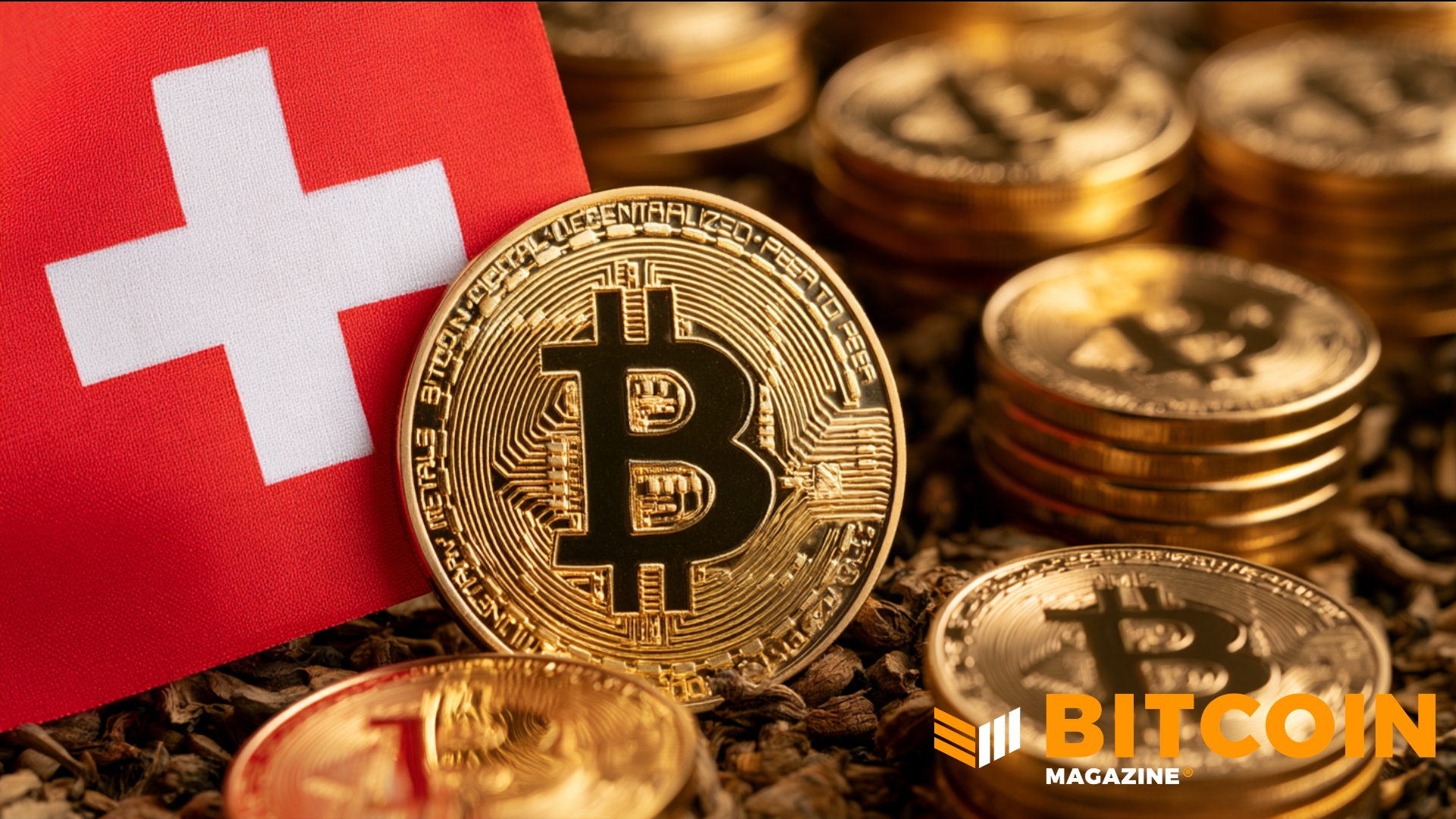
Swiss financial regulator FINMA has approved the country’s first bitcoin exchange-traded fund for retail investors.
The watchdog said Tuesday that the approval comes as people in Switzerland express a growing interest in crypto — particularly bitcoin.
Bitcoin ETFs — particularly in the U.S. — have widened the scope of investors who can buy and sell the leading cryptocurrency. Via shares that trade on the stock exchange, investors can buy exposure to the biggest cryptocurrency in a safe and regulated way.
“As early as 2021, FINMA authorised a fund for qualified investors that invests primarily in a basket of cryptocurrencies,” the announcement read.
JUST IN:
— Bitcoin Magazine (@BitcoinMagazine) October 20, 2026Switzerland's Financial Market Supervisory Authority has approved the country's first Bitcoin ETF
pic.twitter.com/AOVLGqTa5H
“As Bitcoin has a long trading history and a particularly high trading volume compared with other cryptocurrencies, FINMA has approved an exemption from the applicable risk diversification rules in this case.”
It added: “At the same time, FINMA emphasises that investments in Bitcoin — even through an approved ETF — remain highly risky.”
The announcement did not reveal which asset manager or bank would debut the product. Switzerland already has crypto ETFs limited to institutional or qualified investors on the market.
In the U.S., bitcoin ETFs had the most successful debut in the history of investment vehicles when approved in 2024.
Now, traders, institutions, and retail investors can quickly buy shares that track the price of the leading cryptocurrency and not worry about exchanges or storage of the digital coin.
The funds, managed by Wall Street giants like BlackRock, Fidelity, and Morgan Stanley, manage over $97 billion in assets, according to CoinGlass data.
This post Swiss Financial Regulator Gives Green Light to Country’s First Bitcoin ETF first appeared on Bitcoin Magazine and is written by Mathew Di Salvo.
Bitcoin Magazine
Bitcoin Treasury Strive Debuts New Preferred Stock With 15% Dividend
Bitcoin treasury Strive’s preferred stock, SATS, is now trading on the Nasdaq, according to the company.
The stock debuted Tuesday and will pay a 15% dividend every business day, according to an announcement.
Nasdaq-listed Strive said it closed its upsized initial public offering of 7,000,000 shares of SATS at a public offering price of $90 per share.
JUST IN:
— Bitcoin Magazine (@BitcoinMagazine) October 20, 2026Strive’s 'SATS' has officially IPO’d on the Nasdaq, and is raising $630 million to buy more Bitcoin and income-generating assets
It comes as public companies work to financialize bitcoin via different products. OG bitcoin treasury Strategy, which has five different preferred stocks, proposed daily dividends for its products last month.
“The successful, upsized IPO of SATS marks a critical milestone in our strategy to maximize long-term total returns for our common equity investors,” Matt Cole, Chairman and CEO of Strive, said in a statement.
The Nasdaq-listed Strive also has SATA, another preferred stock, which pays a variable dividend.
Strive debuted as an official bitcoin treasury last year and is now the fourth biggest company in the space.
Founded by former Ohio gubernatorial candidate and tech entrepreneur Vivek Ramaswamy, the company holds 36,818 BTC worth over $3 billion at today’s prices. The company on Monday announced another bitcoin buy of 4,045 BTC between October 12 and 16.
In January 2026, it completed the acquisition of Semler Scientific in an all-stock deal — the first instance of a publicly traded Bitcoin treasury company acquiring another such company.
Like with other digital asset treasuries, the idea is that investors can get amplified returns from Strive’s stock. The company buys bitcoin with equity, and maintains a debt-free balance sheet: no bonds, no credit lines, and no leveraged positions that could trigger forced liquidation in a downturn.
Strive is following in the footsteps of software company Strategy, which started buying bitcoin in 2020. Strategy is now the largest corporate holder of bitcoin, with 848,517 coins worth over $60 billion.
Its five preferred stocks are STRF, STRC, STRK, STRD, and STRE.
Strive’s stock, ASST, was trading 4% higher on Tuesday.
This post Bitcoin Treasury Strive Debuts New Preferred Stock With 15% Dividend first appeared on Bitcoin Magazine and is written by Mathew Di Salvo.
Bitcoin Magazine
Bitcoin Could Outperform Most Assets, JPMorgan Says — But the Bank Still Won’t Recommend It
JPMorganChase’s asset management division has said that while bitcoin is still too volatile to be recommended for strategic investors’ portfolios, the cryptocurrency could outperform most asset classes over the next 10 years.
In its 2027 “Long-Term Capital Market Assumptions” report, the bank said that while volatility in the biggest cryptocurrency’s price has dampened, it is “premature to consider BTC as a diversifier in a balanced portfolio.”
JPMorgan, one of the world’s biggest banks, has utilized Bitcoin’s underlying tech — the blockchain — to debut its own products. But the multinational’s CEO, Jamie Dimon, has long been a Bitcoin skeptic.
JUST IN: The largest bank in the U.S. JPMorgan is forecasting Bitcoin to outperform every major asset over the next decade.
— Bitcoin Magazine (@BitcoinMagazine) October 20, 2026
You are not bullish enough
“BTC currently lacks a clear role as a diversifier in balanced portfolios due to unstable correlations to other asset classes,” the report read.
It added: “We see bitcoin as a speculative asset and a hedge against monetary easing.”
The report went on to show a graph with a base case for bitcoin returns beating stocks, bonds and gold. But it did add that the coin’s volatility could harm its role in portfolios.
“But should volatility continue to decline and correlations to other asset stabilize, this may evolve in the future, particularly as regulation becomes clearer and liquidity and price discovery continue to improve,” it noted.
For now, the report added, bitcoin “mostly trades like a high beta risk asset that tracks global money supply growth.”
Bitcoin has become more popular on Wall Street, especially since the Securities and Exchange Commission green lighted exchange-traded funds to trade in 2024.
President Donald Trump’s pro-crypto stance has also helped: regulators under the U.S. leader have taken a far more open approach to watchdogging the space since 2025.
JPMorganChase boss Jamie Dimon has famously blasted Bitcoin, calling it a “hyper up fraud” and “pet rock” — adding that its only value is to criminals.
Still, he has praised the coin’s underlying technology, and lauded crypto products like stablecoins.
This post Bitcoin Could Outperform Most Assets, JPMorgan Says — But the Bank Still Won’t Recommend It first appeared on Bitcoin Magazine and is written by Mathew Di Salvo.
Bitcoin Magazine
BlackRock Files for Bitcoin ETF With Downside Buffer and Capped Upside
BlackRock has filed for a new bitcoin exchange-traded fund which, if approved, would cap investors’ upside while limiting their losses.
The iShares Bitcoin Managed Protection ETF, or PBIT, would aim “to create and manage bitcoin exposure,” according to a Monday filing with the Securities and Exchange Commission.
It would work buying options and fixed-income strategies to give investors regulated bitcoin exposure with capped upside and some downside protection — but not direct bitcoin ownership.
The fund would suit investors who want to invest in bitcoin but not experience all the volatility that comes with the top cryptocurrency.
Bitcoin has attracted attention for its wild price swings over the years but its volatility has dampened as more investors have bought into the space.
But 2025 was the least volatile year for the asset and the bear market of 2026 has been its most shallow on record: in past cycles, bitcoin’s price has dropped as low as 80% from its all-time high; this year it shed just 50% of its value.
BlackRock’s iShares Bitcoin Trust — IBIT — started trading in 2024 after the SEC gave the green light to 11 spot bitcoin ETFs.
The most successful of the ETFs in terms of flows, the investment vehicle has helped bring bitcoin to Wall Street. Now traders, institutions and retail investors can quickly buy shares that track the price of the leading cryptocurrency.
They don’t need to worry about exchanges or storage of the digital coin, rather, BlackRock buys and holds the bitcoin while investors simply hit the buy or sell button via their brokerage account.
IBIT has the most assets under management out of the bitcoin ETFs, currently handling $65.7 billion.
On Monday, the fund received $665.2 million in fresh investment as bitcoin buyers flooded back into the market.
That’s the biggest number of shares bought in the product since October 2025, when bitcoin notched a new all-time high, according to Farside Investors data.
This post BlackRock Files for Bitcoin ETF With Downside Buffer and Capped Upside first appeared on Bitcoin Magazine and is written by Mathew Di Salvo.
CryptoSlate
SHRINCS keeps a larger signing path for recovery, while compact signatures require reliable counters and tighter custody coordination.
Read the full story on CryptoSlate
Understand the crypto stories that matter and what to watch next. Get The Catalyst in your inbox
Deka’s launch brings crypto trading to participating savings banks, with a €0.99 order fee plus a spread and restricted transfers.
Read the full story on CryptoSlate
Understand the crypto stories that matter and what to watch next. Get The Catalyst in your inbox
FINMA permits a Swiss-law retail fund to concentrate on Bitcoin while keeping custody safeguards, risk disclosures and sales duties.
Read the full story on CryptoSlate
Understand the crypto stories that matter and what to watch next. Get The Catalyst in your inbox
September orders bind Apple and Google upon service and target unauthorized services in the AIFC; implementation remains unconfirmed.
Read the full story on CryptoSlate
Understand the crypto stories that matter and what to watch next. Get The Catalyst in your inbox
An 80-basis-point trading-fee gap changes a conditional comparison, while payouts, account access and remaining route costs determine the full price.
Read the full story on CryptoSlate
Understand the crypto stories that matter and what to watch next. Get The Catalyst in your inbox
CryptoTicker.io
Nine blockchain companies founded the Quantum Alliance on October 15, 2026, an open standards body for post-quantum security. Three things about it are documented so far: the launch itself, the alliance's count of roughly 6.04 million bitcoin, about 30 percent of the circulating supply, held in addresses whose public key is permanently exposed, and a model run by two contributors that names March 2028 as the earliest window for a cryptographically relevant quantum computer. Everything beyond that is assessment, not evidence: when such a machine will actually exist, whether it will be built at all, and whose hands it will be in by then. This piece keeps the two apart and says which address in your own holdings falls into the risk group and which does not.
What the Quantum Alliance is and who founded it on October 15
The Quantum Alliance is a standards body, not a product and not a blockchain. Its purpose is a common definition of what "quantum-ready" actually means for a blockchain, a wallet and a custodian, plus a test procedure that allows such claims to be checked. According to the report by Decrypt, the named contributors include Quantus, Postquant Labs, the Midnight Foundation, Keystone, Abelian and Hacken; the industry outlet TFTC adds American Fortress, Intmax and The Vault. The line-up therefore runs from base protocols through rollups and privacy networks to a hardware wallet maker and an audit firm.
The model is explicitly the Internet Engineering Task Force: proposals win on publicly verifiable evidence and running implementations rather than on company size or token holdings, and all results are published openly. One point matters for expectations. The alliance cannot force anyone to migrate. What it supplies is a yardstick against which providers will have to measure themselves. Sources differ slightly on the founding date, with one aggregator putting the start at October 16; the detailed reports name October 15, a Thursday.
6.04 million bitcoin: where the figure comes from and what it counts
The widely quoted number comes from a count of the blockchain as it stands today and is not a forecast. What it counts are bitcoin sitting in outputs whose public key is already permanently recorded on the blockchain. TFTC traces the figure to Glassnode data and gives 6.04 million BTC, or 30.2 percent of the circulating supply. Decrypt attributes the same order of magnitude to the alliance's own count and speaks of around 30 percent. Both values therefore come from the same measurement; no independent third survey exists so far.
A large share of that stock is old. Early balances from 2009 sit in pay-to-public-key outputs, the first bitcoin output type, in which the public key appears directly in the output. Those coins have not moved for years and some will never move again because the keys are lost. For risk purposes that means the 6.04 million describe an upper bound on the exposed stock. How much of it belongs to active holders who reuse their addresses carelessly today is something the figure does not say.
The public key is the risk, not the bitcoin address
This is the mechanism missing from most of the coverage. A bitcoin address is a hash value, a one-way function over the public key. As long as only the address is known, the public key itself is not on the blockchain, and a quantum computer would have nothing to run Shor's algorithm against. Shor's algorithm is the method by which a sufficiently large quantum computer could derive the private key from a public one.
The public key is exposed the moment funds are first spent from an address, because the signature in the input contains it. From that comes the practical rule that holds regardless of any timetable: an address that has never had anything leave it keeps its public key hidden. An address that is used repeatedly, and that retains a remaining balance after a spend, has published it permanently. Which output types expose their key is something we have broken down in our analysis of the subject.
For self-custody this is the distinction that counts. If you use a modern wallet that generates a fresh receiving address for every incoming payment and sends the change to a new change address, you are already working the way the migration debate demands. Which devices do this reliably is shown in our overview of hardware wallets.

Four alliance working groups, from migration to wallet security
The work starts in four groups. The first deals with migrating existing blockchains, that is, the question of how a live network adopts new signature schemes without devaluing old balances. The second takes on post-quantum zero-knowledge methods; a zero-knowledge proof establishes a statement without revealing the underlying data, and many of these methods today rest on the same mathematics as the vulnerable signatures. The third group works on wallet security, the fourth on cross-blockchain compatibility, so that a migrated network can keep working with one that has not migrated.
That division says more about the time required than any forecast does. Three of the four areas concern software running at third parties: exchanges, custodians, wallet makers and bridge operators. That is precisely why Coinbase has been pressing since mid-October for an early start to the switch and talks about a lead time of years.
Google's March 30, 2026 paper cuts the estimate to under 500,000 qubits
Behind the urgency sits a calculation. No working machine exists to this day. A paper from Google Quantum AI dated March 30, 2026 lowered the estimated number of physical qubits needed to break secp256k1, the curve bitcoin uses, to under 500,000. A physical qubit is a single computing element of the machine; many of them together make up one error-corrected logical qubit, which is what an algorithm actually computes with. Earlier estimates, according to the coverage of the alliance, stood at a multiple of that figure; TFTC puts the improvement at roughly one twentieth of the previous assumption.
That number describes the size of a hypothetical machine, not its delivery date. Nothing in the paper says such a machine exists; both reports examined here state explicitly that it does not. The figure is nonetheless the hardest reference point the debate has, because it replaces a moving estimate with an upper bound that can be checked.
March 2028 in the Quantum Doom Clock is an early-warning window, not a deadline
Two alliance contributors run a model that derives a date from progress in qubit counts, and according to Decrypt that model names March 2028 as the earliest window. It is a model calculation. Anyone working with it reads it as an early warning: before then, no attack is to be expected given the current state of the technology, and after it begins the range in which the model's assumptions are no longer backed by reality.
For your own planning the interval matters more than the date. Roughly 17 months lie between today and March 2028. A soft fork in bitcoin has historically taken longer than that from a mature specification to activation, and the switch at custodians and exchanges comes after. That calculation is exactly the alliance's argument for an early start, and it stands whether or not you believe the date.
BIP-360 and pay-to-merkle-root: bitcoin needs a soft fork to make the switch
Inside bitcoin the work runs separately from the alliance. The concrete proposal is called BIP-360; a BIP is a Bitcoin Improvement Proposal, the public drafting route for protocol changes. According to TFTC, BIP-360 describes an output type called pay-to-merkle-root that keeps the public key out of the blockchain for longer by having the output contain only a commitment to a quantum-resistant key hash. A revision dated July 24, 2026 added Python examples and test vectors, which makes the draft testable.
Implementation would come as a soft fork, a backward-compatible rule change under which old nodes continue to accept the new transactions. A soft fork is easier to push through than a hard split, but it needs agreement among miners, node operators and wallet makers. That the majority of the alliance's founding members do not come from bitcoin core development is the central criticism of it, and TFTC frames that as an opinion piece. For context, that means the alliance sets standards for the whole field; it does not decide bitcoin's path.
Christopher Smith, founder and chief executive of member firm Quantus, sums up the expectation: "In the future, post-quantum cryptography will simply be called cryptography, and everything else will be in a museum." The quote appears in that form in both reports examined here.

Address reuse is the point holders in Germany control themselves
Of all the areas named, exactly one is reachable without a protocol change: address reuse. Address reuse means using the same receiving address more than once, for instance as a fixed withdrawal address at an exchange or as a donation address. After the first spend from that address its public key is exposed, and every further incoming payment lands on a key that is already public.
The wallet setting comes first: does the wallet generate a new address for every incoming payment, or has it been showing the same one for months? Then there are the withdrawal addresses stored at exchanges and payment services, which often sit unchanged for years and hit the same exposed key with every deposit. And then there is the output type of old holdings: balances in very early output types belong to the group the alliance is talking about.
A word on the caution this debate requires: a demand to move funds to a supposedly "quantum-safe" address is not a step in the migration. Changes of that kind run through software updates and through your own wallet, never through an address that arrives in a message.
$15 million from BlackRock, Strategy and Coinbase for the quantum problem
The alliance is not the only answer to Google's calculation. According to Decrypt, a consortium backed by BlackRock, Strategy and Coinbase has committed $15 million to work on quantum risk. Measured against the holdings of those three houses it is a small sum, and it says nothing about success. It does say something about direction: the large custodians now treat the subject as an operational risk with a budget rather than a debate about the future.
For investors in Germany that is the more important observation. If you hold bitcoin through a security or leave it with a custodian, your exposure to the switch depends on their schedule. If you hold it yourself, you decide yourself, but you also pay for the switch yourself.
Custody at a regulated exchange shifts the switch onto the provider
If the coins sit at an exchange or a custodian, migration belongs on their list of duties. The addresses holding the balances belong to the provider, and the decision on output types and signature schemes is theirs. The useful question to put to a provider is therefore not whether it is "quantum-safe" but whether it has a published roadmap for the switch and who audits it. That is exactly what the alliance's yardstick is being built for. Which providers operate with authorisation in the EU and how their custody is structured is set out in our overview of regulated crypto exchanges.
If you hold your coins yourself, you carry the migration yourself, but you can also start immediately. The order is always the same: first secure and verify the recovery phrase, then update the software, and move balances after that. Reverse the order and start by moving, and you risk losing the funds at a point where no quantum computer is needed at all.
Holding period and records: why the wallet counts for FIFO allocation
Moving to fresh addresses creates transactions, and those have to remain traceable. The German finance ministry's letter of March 6, 2025 on individual questions of the income tax treatment of crypto assets takes individual identification as the basis for the sequence of disposals of privately held assets and, where that is not possible, permits the FIFO method as a simplification, applied per wallet. Which holdings sit in which wallet therefore forms part of the calculation.
In practice that means: if you move holdings to new addresses, record the times, addresses, amounts and prices so that acquisition and allocation can be evidenced later. A transfer between two of your own addresses is not a sale on the market, because there is no consideration and no buyer; how the transaction is to be treated in your own return is something to settle against the letter, and with a tax adviser for larger holdings. The usual tools collect the records as you go.
Our assessment: the timetable is contested, address hygiene is not
From this desk, what carries this story is the mechanics, not the date. Three documented points argue for that: the 6.04 million exposed bitcoin come from a single measurement, the qubit estimate of under 500,000 describes a machine that does not exist, and March 2028 comes out of a model run by two parties who make their living from the subject. Nothing argues against the practical consequence: a fresh receiving address per incoming payment costs nothing, requires no protocol change, and works whether or not the model is right. Selling in panic today, or moving holdings in haste, means taking on a real risk to avoid a hypothetical one. Crypto assets can swing sharply and can lead to a total loss.
Quantum Alliance: before March 2028 your choice of address decides alone
Three steps, in this order:
- Check the wallet. Open your wallet and see whether it offers a new address when you receive. If it does not, a change is due; which programs get it right is shown in our comparison of software wallets.
- Renew withdrawal addresses. Review the addresses stored permanently at exchanges and services and replace reused ones with fresh addresses. If you use a custodian, ask there about the published roadmap; the market overview is provided by the major crypto exchanges compared.
- Secure the records. Before every move, note the time, address, amount and price so the allocation holds up later; tax software and portfolio trackers help with this.
(As of October 21, 2026. This article is not investment advice. Prices and fee structures change; check the terms with the provider before you buy.)
Canary’s Litecoin ETF took in a net $581,140 on Monday. That was the first inflow after seven trading days in which the fund moved nothing at all, and it lands in a week when most large coins have lost ground. Litecoin costs $61.47 on Wednesday morning and is up 0.33 percent over seven days.
That sounds like a small number, and it is one. On a normal trading day, $581,140 is less than Bitcoin funds turn over in a minute. The figure is interesting not for its size but for its direction: money flowed out of the Solana and Zcash funds the same day. If you invest from Germany, though, a quite different question hangs on it, namely whether you can buy this fund at all. The answer comes further down, and it is no.
$581,140 flows into Canary's Litecoin ETF after seven flat trading days
The fund, ticker LTCC, is a US spot ETF on Litecoin. Spot ETF means the fund holds the coins itself rather than taking futures positions. On Monday, October 19, 2026, it booked a net inflow of $581,140, after seven trading days in which nothing went in and nothing came out. Since launch, net inflows add up to $16.88 million. The figures come from TokenPost’s flow review of October 19.
A net inflow arises when a fund issues new shares because investors are buying. The fund then has to buy Litecoin in the market. Conversely, it sells coins when shares are redeemed. That is why many investors read fund flows as a demand signal: they contain buying pressure that comes from portfolios rather than from short-term trading.
Seven flat days in a row say just as much as the inflow itself. A fund where no money moves in or out for days on end has no audience trading it daily. For a spot ETF, $16.88 million of capital raised is a small sum. Read this fund’s flows as evidence of institutional interest in Litecoin and you are stretching a thin set of data.
Litecoin's week: $61.47 between $58.78 and $61.52
Litecoin trades at $61.47 on Wednesday morning, up 2.96 percent on the previous day. Over seven days it is up 0.33 percent, over thirty days 5.33 percent. The weekly high of $61.52 was reached overnight into Wednesday, the weekly low of $58.78 last Sunday. Market value is $4.78 billion, which puts it 23rd, with turnover of around $279 million in a day. All price figures in this article refer to CoinGecko, as of Wednesday around 6 a.m. German time.
It sits 85 percent below its all-time high of $410.26 from May 2021. There are 77.74 million LTC in circulation out of a maximum 84 million that will ever exist. That makes Litecoin one of the oldest blockchains in existence, running since October 2011; the network turned fifteen this month.
A week with a gain of 0.33 percent is no news in itself. The gain only becomes news next to the other large coins.
Thirteen of twenty large coins are down over the week, Litecoin up 0.33 percent
We counted through the twenty-five largest crypto assets by market value and took out the five that are pegged to the dollar or represent a tokenised financial product, namely Tether, USDC, USDS, Ethena USDe and Figure Heloc. That leaves twenty genuine coins. Thirteen of them are down over seven days. Only four sit ahead of Litecoin: TRON, Monero, Bitcoin Cash and Uniswap. Litecoin therefore takes fifth place out of twenty over the week. Cryptoticker.io compiled this review itself on October 21, 2026, based on CoinGecko price and market value data for twenty verified coins.
That puts the fund inflow in context. Litecoin is holding up better than average in a weak week, and at the same time the associated fund is taking in money again. Together the two make for a quiet picture, not a turning point. If you want to assess the coming week, our running price analysis is in the Litecoin price prediction.

The same day, the Solana and Zcash funds lose $6.72 million and $10.45 million
October 19 was not a uniform day for altcoin funds. The Solana spot ETFs saw $6.72 million flow out, the eleventh day of outflows in a row. The Grayscale Zcash ETF lost $10.45 million, its third consecutive day. Alongside Litecoin, Bitwise’s NEAR fund booked inflows of $5.42 million. These figures also appear in the TokenPost review cited above.
That money is leaving the Zcash funds while Litecoin takes some in is notable for investors watching the privacy assets. Zcash has a rally behind it that carried the price above $1,200 this year, and a sharp counter-move since September. Litecoin has experienced neither.
Grayscale's conversion filing for NYSE Arca has sat with the SEC since January 2025
Beside the Canary fund there is a second route by which Litecoin is meant to reach ordinary securities accounts. Grayscale has run the Grayscale Litecoin Trust, a closed-end vehicle with the ticker LTCN, for years, and wants to convert it into an exchange-traded fund. On September 11, 2026, the firm filed an amended registration statement to that end, renaming the trust Grayscale Litecoin Trust ETF and providing for a listing on NYSE Arca. The document is on file as Form S-3/A in the SEC archive.
One sentence in that filing is decisive: the trust will not seek effectiveness of the registration, and will issue no shares, as long as the exchange listing approval is not in place. The corresponding NYSE Arca rule filing is dated January 24, 2025 and remains open. The regulator has named no decision date, and neither does Grayscale.
Bloomberg Intelligence analysts, specifically James Seyffart and Eric Balchunas, put the approval probability for Litecoin, Solana and XRP products at 90 to 100 percent. That is an assessment by market observers, not a commitment from an authority. It changes nothing on your statement as long as there is no decision.
Spot ETF in the US, ETN in Germany: the LTCC fund is not approved for your account
Here is the point where the American fund story becomes practical for you. A US spot ETF on a cryptocurrency is not approved for distribution to retail investors in the European Union. That comes down to the product wrapper. An ETF under European law has to be a security with risk diversification, and a fund holding only a single asset does not meet that test. That is why the European Litecoin products are called exchange-traded notes, ETN or ETP for short.
An ETN is legally a bearer debt instrument, that is, a claim on the issuer. Most crypto ETNs tradable in Germany are physically backed with coins and held separately at a custodian. Issuer risk does not disappear entirely; it gets smaller. Which of that applies to which product is set out in the key information document your broker has to show you before you buy. Which providers offer crypto ETNs and what trading costs is in our overview of crypto ETFs and ETNs for German investors.
In practice, you can reach Litecoin two ways. Either through a broker with a securities account, in which case you buy an ETN on Litecoin and hold a security. Or through a crypto exchange, in which case you buy the coin itself and decide who holds it. In both cases the flows of the Canary fund in New York reach you only as news, never as a product on your statement.

The one-year holding period applies to the coin; with an ETN, withholding tax decides
The tax difference between the two routes is larger than the price difference. Hold Litecoin as a coin and section 23 of the German Income Tax Act applies. Sell within a year of buying and the gain is taxed at your personal rate, with a 1,000 euro exemption threshold covering all private disposals in a year together. Sell after more than a year and the gain is tax-free. That one-year period is why many holders keep records of their purchase dates.
An ETN, by contrast, is a security. Gains on it are subject to withholding tax of 25 percent plus the solidarity surcharge and, where applicable, church tax, regardless of how long you held it. There is no tax-free holding period there; in return, the account-holding institution withholds the tax directly in many cases. Which route works out cheaper depends on your tax rate and your time horizon, and over a long holding period the sums turn clearly in favour of the coin. Anyone pulling together many purchases over the years cannot avoid a schedule; the common tax and portfolio tools work out the periods on a first-in, first-out basis.
MWEB and the EU anti-money-laundering regulation from July 1, 2027: the open point for LTC holders
Litecoin has carried a feature called MWEB, short for MimbleWimble Extension Blocks, since 2022. It allows the amounts and addresses of a transfer to be hidden, and its use is voluntary: skip it and you keep transacting on an openly readable blockchain. That very option makes Litecoin a borderline case in a question that affects every holder in the EU.
The European anti-money-laundering regulation provides that from July 1, 2027, supervised crypto service providers may not maintain anonymous accounts or offer crypto assets that obscure transactions. For pure privacy coins such as Monero the consequence is clear, and several trading venues have already delisted such assets. For a blockchain with switchable obfuscation it is not settled. How the supervisors classify Litecoin has not been publicly determined, and we assert no outcome here. Cryptoticker.io described the position of privacy assets under this legal framework in its own analysis of the ban from July 2027 on August 16, 2026.
What is tangible in this for you: a venue that delists an asset announces it with notice and sets a last trading day plus a withdrawal deadline. Switch off your notifications at a provider and you will be the last to hear. Quite apart from Litecoin, that is the most common reason balances get force-sold in such cases.
Leverage and liquidation: with Litecoin futures, the distance to your entry price decides
A weekly gain of 0.33 percent with a daily range between $58.27 and $62.10 describes a market moving sideways while swinging several percent a day. For leveraged positions that combination is the most awkward of all. At fivefold leverage a counter-move of around twenty percent is enough to consume the margin; at twentyfold leverage it is about five percent, and five percent sits inside Litecoin’s normal daily move. Liquidation happens automatically and does not ask whether the price comes back afterwards.
For retail investors in the EU, leverage on crypto contracts for difference is capped at twofold. Offers with forty or a hundred times leverage are aimed at customers outside that framework, and a provider that still shows them to you is saying something about its licensing.
Levels above and below: $61.52 as the weekly high, $58.78 as the weekly low
The two numbers that decided the week sit close together. On the upside, the weekly high of $61.52 is the next level, and the price is practically on it. Above that begins the area around $64, where the price last turned in early October. On the downside, the weekly low of $58.78 is the first level, then the round number of $55.
These are observation points from this week’s price series, not price targets and not a recommendation. Use them as triggers and you set them in advance, not in the middle of the move.
Litecoin at $61.47: what the fund inflow does not answer
The inflow of $581,140 shows that the Litecoin fund in New York is being traded again. It does not show that Litecoin is treated any differently in your account than before, and it says nothing about the open approval question at Grayscale. Three things are independent of all that and can be settled today:
- Settle the wrapper. Decide whether you want to hold Litecoin as a security or as a coin, because tax and custody hang on that. For the securities route, compare account costs at the crypto brokers.
- Look at your venue's licensing. A provider without a European permission can close your access at short notice. Which houses hold the licence is set out in the overview of crypto exchanges.
- Decide on custody. Hold the coin yourself and you carry the key management. The differences between the devices are in the hardware wallet comparison.
(As of October 21, 2026. This article is not investment advice. Prices and fee structures change; check the terms with the provider before you buy.)
A Bitcoin costs $82,708 on Wednesday morning, or 73,652 euros. On Monday, $526.7 million flowed into the US spot ETFs, the strongest day since September, and yet October is still negative for those funds. Two lines frame the market until the Federal Reserve decides on rates on October 28: the 50-day moving average at $81,679 below, and the 20-day average at $83,117 above.
Overnight trading: the $81,273 low sat below the 50-day average
Between Tuesday morning and Wednesday morning the price moved between $81,273 and $83,249. That is a range of $1,976, or 2.39 percent measured against the current level. The night was therefore far livelier than the three days before it, which we covered on Tuesday.
Where the low sat matters more than the range itself. In our Tuesday morning piece, the 50-day average at $81,481 was the next level on the downside. That line has since risen to $81,679, an increase of $198. The overnight low of $81,273 sat $406 below it. The price broke the line and had worked its way back $1,029 above it by the morning.
In practice, that means a single breach has triggered no follow-on selling in this phase. Only a daily close below the line would be a signal that trading systems built on moving averages react to, and that did not happen overnight.
We calculated the moving averages in this piece ourselves, from CoinGecko daily closes over the past 200 days, as of Wednesday morning. Such lines differ by a few dollars between providers and data sources, because exchanges use different closing times.
$526.7 million into the US Bitcoin ETFs, the strongest day since September
According to Farside Investors data, the US spot Bitcoin ETFs took in $526.7 million net on Monday. That is the largest inflow on a single trading day since September. A spot ETF holds the coins itself rather than tracking the price through a futures position. Every dollar of inflow therefore leads to an actual purchase in the market.
The Ethereum ETFs ran the other way the same day and gave up $103.3 million, $95.4 million of it at BlackRock’s ETHA alone. So the money did not move broadly into crypto; it went into Bitcoin specifically.
BlackRock’s IBIT brought in $665.2 million, Fidelity’s FBTC lost $83.6 million
The net figure hides how uneven the day was. BlackRock’s IBIT alone took in $665.2 million, more than the entire net inflow for the day. Fidelity’s FBTC gave up $83.6 million over the same period.
A single provider carried the day, then, while at least one other lost money. Read the net figure as a broad return of institutional buyers and you are reading in more than the breakdown supports. For the price effect that is secondary: the coins have to be bought in the market, whichever provider receives the money.

October stays around $88 million in the red despite Monday
One strong day does not turn the monthly balance. On the daily Farside Investors figures, which the financial service FXStreet reviewed on Tuesday, the US spot Bitcoin ETFs remain around $88 million in the red for October. Monday almost evened out the month, no more than that.
That fits the price picture. Bitcoin is down 1.16 percent over seven days and up 1.56 percent over 30 days. It sits 34.4 percent below the all-time high of $126,080 from October 6, 2025. The market has been moving sideways for weeks, and the fund flows are doing the same.
The 200-day average at $72,723 and a gap of 13.73 percent
The short averages sit close to the price, but the distance to the downside is wide. On our calculation the 200-day average stands at $72,723, with the price 13.73 percent above it. The 100-day average sits at $74,780, 10.60 percent below the current level.
That spread is the real state of the market: everything is tight in the short term, while there is plenty of room below before any of the long averages even comes into play. The 20-day average at $83,117 is $409 above the price, the 50-day average $1,029 below it. This week’s trading plays out between those two values.
Bitcoin’s share of the entire crypto market stands at 59.52 percent, with $26.74 billion of turnover in 24 hours. Both readings suggest the money in the market is staying with Bitcoin rather than rotating into smaller coins.
Fed meeting on October 28: the target range stands at 3.75 to 4.00 percent
The Federal Open Market Committee meets on October 27 and 28, with the decision due at 2 p.m. local time in Washington on the Wednesday, 7 p.m. in Germany. The date appears in the Federal Reserve meeting calendar. A fresh round of projections with members’ rate forecasts is not part of it; a press conference by chair Kevin Warsh is.
The target range stands at 3.75 to 4.00 percent. The Fed raised it by a quarter point in September, the first increase in more than three years. On prediction markets the probability of an unchanged range sat between 84 and 88 percent on Tuesday, and between 12 and 13 percent for a further increase. For the December meeting, an increase is priced at around 78 percent.
Phil Camporeale, chief global investment strategist at J.P. Morgan Wealth Management, writes that his team expects no move at the October meeting. His firm looks for around 50 basis points of further increases, spread out into 2027. From inside the central bank, New York Fed president John Williams set out the line that there is no rush.
How a rate-hiking cycle works on the Bitcoin price
Bitcoin has lived through falling or flat rates for most of its existence. A hiking cycle is new for this market, and it works through three channels.
First, the alternative: as the risk-free rate rises, a term deposit pays more, and an asset with no running yield has to make up that head start through its price. Second, financing: anyone invested on credit or with leverage pays more for it, and some of those positions get closed. Third, the dollar: higher rates usually support the US currency, and a strong dollar weighs on the dollar-denominated Bitcoin price.
That third channel hits euro-based holders twice. You pay in euros but convert a dollar price. If the dollar rises against the euro, your loss in euros is smaller than the dollar loss, and the other way round. At $82,708 and 73,652 euros, the implied rate is currently just under $1.123 per euro.

Funding of 0.0034 percent per eight hours equals 3.75 percent a year
The financing rate, known in trading as funding, is the payment that holders of perpetual futures make to each other every eight hours. When it is positive, buyers pay sellers, and the futures market trades above spot.
On the OKX exchange the rate for the Bitcoin perpetual stood at 0.00343 percent per eight hours on Wednesday morning. Annualised, that is around 3.75 percent. The number is notable because it sits almost exactly at the upper edge of the Fed’s target range. A leveraged long currently costs about as much as the risk-free rate in dollars, before the price has moved at all.
That leads to a calculation anyone can run: hold a long position for a year and you need roughly 3.75 percent of price gains just to pay the financing. Over a week that is 0.072 percent, over a month 0.31 percent. For a position meant to run to October 28, it is about 0.07 percent, or $58 per Bitcoin held.
Spot, ETN or perpetual: what makes the difference before October 28
There are three common routes into Bitcoin for European investors, and they behave differently ahead of a central bank date.
Buying real coins on an exchange licensed under the European MiCA regulation costs a one-off order fee and nothing after that. There is no liquidation price, and a ten percent move costs ten percent. Which providers hold a licence and what they charge per order is set out in our comparison of crypto exchanges.
An exchange-traded note, or ETN, tracks the price through a securities account and carries a running management fee. What counts is whether the paper is physically backed with coins or merely replicates the performance. That distinction, and the fee levels of the papers tradable in Europe, are set out in our overview of crypto ETFs and ETNs in Germany.
A leveraged perpetual future costs the financing described in the previous section and comes with a liquidation price. At tenfold leverage and an entry at $82,708, that price sits roughly ten percent away, around $74,400 before fees. Last night’s range was 2.39 percent. Four such nights in the same direction would be enough. What the individual platforms charge in financing is shown in our comparison of perp exchanges.
Our assessment: the inflow came from one provider, not from the market
From the newsroom’s point of view, Monday was weaker than the $526.7 million headline suggests. The evidence is above: IBIT took in $665.2 million, more than the entire net amount, FBTC gave up $83.6 million, and the month remains around $88 million in the red. The Ethereum funds lost $103.3 million the same day. A market buying broadly looks different.
Against that, the origin of the money does not matter for the price effect. A fund taking in $665 million has to buy coins, and that purchase meets the same order book as any other. The price responded with only 0.80 percent in 24 hours, and that says more about the state of the market than the inflow figure itself: there is enough supply on offer to absorb sums like these.
For the week up to the Fed meeting, that suggests fund flows are unlikely to lift the price out of its range. The October 28 decision is the date that can change it, and prediction markets expect no change there. The setback risk therefore lies less in the decision itself than in what Kevin Warsh says about December at the press conference.
Bitcoin before October 28: the line sits at $81,679
Three steps worth taking ahead of the central bank date:
- Identify the form of your position. Are you holding real coins, a security or a leveraged contract? Only the third route has a liquidation price, and only there does holding cost money on an ongoing basis. The fee models of licensed venues are set out in our comparison of crypto exchanges.
- Recalculate the distance to your liquidation price. Divide your entry price by the leverage, and you get roughly the move that wipes out your position. At tenfold leverage that is ten percent, at fivefold twenty. Platform financing rates are set out in our comparison of perp exchanges.
- Record your acquisition data. Purchase and sale dates determine how your gains are treated for tax in Germany. Use several venues and you lose track quickly; which tools take that over is shown in our comparison of tax tools.
On the downside, the 50-day average at $81,679 remains the level that decides whether the sideways phase holds. On the upside sits the 20-day average at $83,117. As long as the price stands between the two, any directional call is a bet on October 28.
(As of October 21, 2026. This article is not investment advice. Prices and fee structures change; check the terms with the provider before you buy.)
FinCEN has published a striking financial trend analysis on crypto fraud: 33,904 filings covering around $12.7 billion in reported financial activity tied to digital asset investment fraud. Press coverage usually rounds those numbers to 33,000 filings and $13 billion. FinCEN is the US agency charged with combating financial crime, and it draws on reporting data from across the financial sector. So what do these FinCEN filings really say about scam centres, crypto scams and possible money flows, and what do they not say? One point first: crypto as a whole is not under blanket suspicion. What the agency analyses is suspicious, reported activity in specific risk contexts.
The numbers are a risk signal, not a loss statement
The FinCEN analysis rests on BSA filings, reports made under the Bank Secrecy Act, submitted between September 8, 2023 and December 31, 2025. The precise values are 33,904 filings and around $12.7 billion in reported financial activity. Rounding that to “more than 33,000” and “about $13 billion” is a journalistic shorthand, not an extra finding.
That sum cannot be equated with actual fraud losses. It can include attempted and completed transactions, inflows and outflows, transfers between accounts held by the same customer, repeat or supplementary filings, erroneous entries and even lawful activity in the vicinity of a suspicious event, as FinCEN notes in its financial trend analysis. Because the agency sorts by filing date, the underlying incidents may have begun well before the window under review. For readers, that means a high volume of filings mainly shows that financial institutions are spotting recurring risk patterns. It is not a precise map of every perpetrator, victim or actual loss.

Why a suspicious activity report is not a verdict
A suspicious activity report means that an institution subject to reporting duties has informed the competent authority about a transaction where there may be knowledge, suspicion or reasonable grounds to suspect financial crime. FinCEN filings are therefore leads for analysis and investigation, not evidence, and certainly not criminal convictions. A filing can trigger an investigation, but it has to be tested against additional proof before it becomes a solid finding.
One simple test helps place any headline of this kind: is this a filing, an administrative finding or a court ruling? In earlier remarks FinCEN itself stressed that suspicious activity reports serve as starting information for investigations rather than as verified findings of fact. The $12.7 billion is therefore neither an amount seized nor a fraud loss established in court.
How cross-border fraud networks operate
Scam centres are organised, often cross-border structures that can run or support digital fraud through a division of labour. The operating model frequently follows a similar pattern, without allowing any sweeping claims about particular groups or countries: victims are approached through fake contacts or phishing, payment processing follows, and the funds are then passed on and obscured across accounts, wallets, service providers or different jurisdictions. Alongside the fraud operations themselves, FinCEN describes supporting service networks for account opening, phishing and money laundering, as well as professional launderers.
Money laundering means deliberately concealing the origin of unlawfully obtained assets. Fraud and money laundering are legally distinct areas of assessment, yet they often overlap in the practical transaction chain. That is precisely why individual wallet freezes achieve only so much: authorities and platforms also have to examine the pooling of funds, transfers across several addresses, switches between services and cross-border payout routes, as FinCEN sets out in its alert on scam centres. As a documented risk that cannot be generalised, INTERPOL also reports that scam centres have in some cases been linked to human trafficking and forced online fraud work, which cannot be read across to every site or every worker.
What prevention and controls can achieve
Consumer protection at system level covers education, transparent reporting channels, risk-based checks and cooperation between platforms, payment service providers and authorities. Concrete control measures, which are not to be read as individual investment or legal advice, include monitoring unusual transaction patterns, identity and account verification, scrutiny of unusual conversion or payout routes, and escalation to the competent bodies where risk signals are solid.
In Europe, EU Regulation 2023/1113 requires crypto asset service providers to supply information on the originator and the beneficiary for certain crypto transfers, and to apply risk-based procedures where that information is missing. Anomalies can feed into the decision on whether to file a report, and depending on the risk, suspending, rejecting or returning a transfer comes into consideration, as the relevant EU regulation provides. Prevention can lower risk and make money flows visible earlier. Criminal assessment, confiscation and prosecution, however, remain the task of the competent authorities and courts.
FinCEN data: the reading that holds up
The FinCEN report on crypto fraud points to a substantial, internationally organised risk. The 33,904 filings and around $12.7 billion in reported activity are relevant warning signals, but not a court-proof attribution of every single transaction. Crypto scams, money laundering and scam centres are connected parts of a possible payment chain that still have to be kept analytically apart. Durable consumer protection comes from prevention and robust platform processes, while unpicking complex networks additionally requires cross-border cooperation and investigations that stand up.
Memecoin factory Pump.fun has spent the past few days selling something that no longer has anything to do with memecoins: futures contracts on Bitcoin and Ethereum, with leverage of up to 40 times. Anyone trading there is no longer moving play money, but a position that can vanish completely on a price step of a few percent.
The launch came without much announcement, and that is the part that concerns you. The interface has stayed the same, the one used until now to buy memecoins in their first minute of trading. Behind it now runs a derivatives exchange whose rules assume a different audience.
Perpetual futures on Bitcoin and Ethereum: this is what Pump.fun launched
Pump.fun has enabled trading in perpetual futures on Bitcoin and Ethereum inside its app. Trade publication Cryptobriefing dates the move to October 16, 2026 and describes it as an entry into the business of leveraged positions. The provider's product page now carries a market table of its own, with columns for mark price, daily change, funding rate and open interest.
What Pump.fun did not build is just as striking. There is no matching engine of its own, no order book of its own and no settlement of liquidations of its own. All of that comes from an outside exchange, and that has consequences for the question of who is really on the other side of your trade.
40x leverage on Bitcoin, 25x on Ethereum
According to Cryptobriefing, the ceiling is 40 times leverage on Bitcoin and 25 times on Ethereum. The publication gives these figures as the result of its own reporting, without citing a source at the provider; confirmation from Pump.fun itself is not available. Read the numbers as a documented order of magnitude, then, and not as a fee schedule you can take over unchecked.
What 40x leverage means fits into one sentence: you post one fortieth of the position value as collateral. On a $500 stake you move $20,000 in Bitcoin. If the price rises 1 percent, you make $200, which is 40 percent on your stake. If it falls 1 percent, you lose the same $200.
Perpetual futures are futures contracts without an expiry date
A perpetual future, or perp for short, is a futures contract on a price that never expires. Conventional futures have an expiry date on which they settle. The perp has none; the position stays open as long as your collateral holds. To keep the contract price pinned to the real price anyway, market participants pay each other a balancing fee at fixed intervals, the funding rate.
That design is why perps are so widespread in crypto trading, and why retail investors in the EU have a legal framework of their own for them. Licensed providers in Europe may grant retail clients far lower leverage than the 40 times at issue here.
Hyperliquid supplies the order book, Pump.fun only the interface
Technically the trading runs at Hyperliquid, the largest decentralised perp exchange. Cryptobriefing describes the division of labour this way: funding rates and open interest for the Bitcoin and Ethereum contracts come straight from the HyperCore mainnet, and Pump.fun borrows order book and liquidity instead of building a derivatives engine itself.
For holders, that means your order lands in another exchange's order book. Its liquidation mechanics decide when your position is closed, and its funding rate sets what holding costs. Which providers compete in this market at all, and how they differ on fees and leverage, is set out in our perp DEX comparison.
Builder codes: at most 0.10 percent per order for the referring app
The mechanism that lets an outside app place orders at Hyperliquid and earn from them is called builder codes. Hyperliquid's developer documentation names two points worth knowing. First, you have to approve the referring app's fee explicitly, with a signature from your main wallet and a maximum amount that you set. Second, a hard ceiling applies: under the documentation, such a fee on perpetual futures may not exceed 0.10 percent.
That 0.10 percent is the ceiling for the referring app's share, not the total cost of your trade. Add to that the exchange's own trading fees and the funding rate. How much the referral at Pump.fun actually takes is not in the documentation; the app sets it when placing the order, and that is precisely why you are the one setting the maximum.

At 40x leverage, 2.5 percent is enough for liquidation
The most important calculation in the whole offering is a division. At 40 times leverage your stake equals 2.5 percent of the position value. Move the price those 2.5 percent against you and the collateral is spent, and the position is closed by force. At 25 times leverage the threshold sits at 4 percent.
Set that next to the market's daily move: Bitcoin stood at $82,923 on Tuesday evening and travelled between $81,155 and $83,249 within 24 hours, a range of roughly 2.6 percent (according to CoinGecko, as of Tuesday 22:00). A single ordinary trading range is therefore enough to end a position at 40 times leverage, and it does so even when the price afterwards returns to where it came from. Ethereum sat at $2,456.46 at the same time, with a daily range of $2,374.52 to $2,471.63.
Liquidation is the built-in normal case at high leverage, not a special case you can prepare for. A quiet Tuesday is enough; no crash is needed.
The funding rate falls due at fixed intervals
The funding rate is the running price of your position. If the contract price sits above spot, holders of long positions pay the other side; below spot, the flow reverses. The payment repeats at fixed intervals as long as the position is open. On a position you hold for weeks, this fee can eat the return even when the price moves your way.
This is the item beginners overlook most often. Leverage decides how fast a position dies; the funding rate decides what it costs day to day. Both numbers sit at Pump.fun in the same market table as the mark price.
PUMP at $0.004762, 7.78 percent above the previous day
The platform's token has reacted to the news. PUMP quoted at $0.004762 on Tuesday evening, 7.78 percent higher than 24 hours earlier (according to CoinGecko, as of Tuesday 22:00). Market value comes to around $2.20 billion, turnover over the past 24 hours to about $182 million. That puts PUMP 50th among the largest crypto assets.
The day's gain conceals a weak week, however. Over seven days PUMP is down 5.25 percent.
The week in the PUMP price: $0.003873 at the low, $0.005089 at the high
The weekly path shows a clear dip in the middle. The weekly high came on October 14 at $0.005089, the weekly low on October 18 at $0.003873. cryptoticker.io compiled this reading of the past seven days' price series itself on October 20, 2026, on the basis of CoinGecko's daily data. From the low the price has recovered by almost 23 percent up to Tuesday evening, but still sits a good 6 percent below the weekly high.
The perp launch therefore fell into the recovery phase after the weekly low. That the two coincide in time proves no connection: the whole crypto market gained on Monday and Tuesday, and Hyperliquid itself rose 2.95 percent within 24 hours to $81.18.
On the business model behind it: Pump.fun uses part of its revenue to buy back its own token. How that revenue developed in early October, we wrote up on October 10, 2026 in our piece on the turnover behind the buyback. Perp trading gives the platform an additional source of fees and feeds into exactly that calculation.

Pump.fun has no MiCA licence for the EU market
Here lies the point that weighs heaviest if you are in Germany. Since the MiCA transition period ended on July 1, 2026, a provider may offer crypto services in the EU only with an authorisation as a crypto-asset service provider. Pump.fun holds no such authorisation, and nor does Hyperliquid as a decentralised exchange. What such an authorisation demands of a company is set out in our overview of the MiCA obligations for crypto firms.
In practice you trade without the protections an authorised provider owes you. There is no segregated custody of your funds under European law, no route of complaint to a German supervisor and no compensation rule if the platform fails. The European leverage caps for retail clients do not bite here, and that is exactly why 40 times leverage is possible at all. If you want leveraged exposure and a regulated route to it, that route runs through an authorised crypto broker with far tighter leverage caps.
There is also a plain question of access. According to the reporting on the launch, leveraged trading is barred for users in the United States and further territories. Whether and how long access from Germany stays open is the provider's decision, not yours. A block can come at any time, and it hits open positions.
Perpetual futures and the holding period: two separate tax worlds
Buy Bitcoin and hold it longer than a year, and under current German law the gain is tax-free on sale. This one-year holding period under section 23 of the German Income Tax Act applies to the private disposal of the crypto asset itself.
A perpetual future is not a crypto asset but a forward transaction. The holding period therefore does not apply, and neither does the expectation of being tax-free after a year. Gains and losses from forward transactions are treated differently from a direct purchase, and losses carry offsetting rules of their own. This is no detail at the margin, because it changes the arithmetic behind a position fundamentally. How to document perp trades cleanly, and which tools prepare the data for a tax return, is shown in our comparison of crypto tax tools. Have a tax adviser check how your own trades are classified before you take positions of this size.
Levels above and below
As points of observation, not as price targets: above, the next level is the weekly high of $0.005089 from October 14, and beyond it the round $0.0055. Below, the weekly low of $0.003873 from October 18 is the reference, with the daily low of $0.004334 in between. As long as the price holds above the daily low, the recovery of the past two days stands; beneath it, the move since October 18 would be given back.
What the perp launch is worth to the platform will show not in one day's price but in the open interest of the two contracts. If it stays small, it was a headline. If it grows, the stream of fees grows with it, and so does the basis for the buybacks.
Pump.fun perps: without a MiCA licence you carry every risk yourself
The offering is new, the leverage is high, and the legal protection is missing. Three steps that clear up the situation for you:
- Work out the liquidation threshold before you open a position. Divide 100 by the leverage: 40 times leverage means 2.5 percent, 25 times means 4 percent. Compare the result with the market's ordinary daily range, which for Bitcoin on Tuesday came to around 2.6 percent. Which providers set which leverage tiers and fees is in the perp DEX comparison.
- Decide deliberately between unregulated and authorised. At Pump.fun and Hyperliquid there is no MiCA authorisation, no segregated custody under EU law and no route of complaint to a German supervisor. If that goes too far for you, the route through an authorised broker with tighter leverage caps remains.
- Keep forward transactions apart from your long-term holdings. Perps do not fall under the one-year holding period. Keep them separate in your books from coins you hold for years, so that you do not destroy the holding period by accident. The tax tool comparison shows which software reports forward transactions cleanly.
(As of October 20, 2026. This article is not investment advice. Prices and fee structures change; check the terms with the provider before you buy.)
Decrypt
A viral Claude Code prompt lets Android TV owners switch off sponsored rows and tracking software and build their own home screens, with no root access and every change reversible.
The ChatGPT maker is folding Orchestra’s drug-program agents into Rosalind, its life sciences suite, betting AI can shave time off the decade-plus it takes to bring a medicine to patients.
J.P. Morgan Asset Management’s 2027 Long-Term Capital Market Assumptions project a 10% annual return for Bitcoin over 10 to 15 years, though the firm isn’t adding it to its main portfolio models.
The North Korea-linked attacker behind April's $295 million Drift heist pushed 25,700 ETH through the mixer in two hours, and still controls roughly $198 million more.
Sixteen companies have now objected to having their shares traded on the planned OKX-ICE tokenized stock venue, up from nine just four days earlier, according to an updated public notice.
U.Today - IT, AI and Fintech Daily News for You Today
Following a severe validator lag, Ripple's David Schwartz details critical flaws in XRP Ledger architecture and its network safety margins.
Veteran trader Peter Brandt has spotted a striking similarity between Monero's (XMR) long-term chart and silver's explosive rally to nearly $125, potentially hinting at a major breakout for the privacy coin.
The market and XRP in particular is yet to decide the direction in which it's going to move.
Ripple has officially backed the SEC's proposed Regulation Crypto Assets, urging the regulator to abandon its controversial enforcement-driven approach in favor of clearer rules for the cryptocurrency industry.
The market headliners are yet to catch up wi the market growth, despite the relatively weak pressure that is coming from bears right now.
Blockonomi
TLDR
- FINMA approved the first Swiss-law retail ETF that invests directly in Bitcoin.
- The fund received an exemption from diversification rules because of Bitcoin’s long trading history and high trading volume.
- Custody rules, bankruptcy protections and FinSA sales duties still apply.
- FINMA did not name the issuer, fees or a trading start date.
- The regulator warned that investors can still lose substantial value from Bitcoin price swings.
Swiss financial regulator FINMA has approved the first retail exchange-traded fund under Swiss law that invests directly in Bitcoin. The decision was announced on Oct. 20.
The approval includes an exemption from diversification rules. This lets the fund hold concentrated exposure to Bitcoin while keeping custody and sales safeguards in place.
Why FINMA Granted the Exemption
FINMA said Bitcoin’s long trading history justified the exception. It also pointed to Bitcoin’s particularly high trading volume compared with other cryptocurrencies.
The fund falls into a Swiss category called “other funds for alternative investments.” This category covers funds that carry particular risk.
Under normal rules, a retail fund must meet diversification requirements. FINMA described this approval as an exception for this specific case.
The new fund differs from the exchange-traded products, or ETPs, that Swiss investors already know. Swiss exchange SIX describes its ETPs as collateralized debt securities, not collective investment funds.
That means the two products are separate legal arrangements. A fund holds Bitcoin directly, while a debt security is linked to Bitcoin’s price performance.
FINMA’s announcement did not name the fund’s issuer. It also did not share fees or a date when trading will begin.
The regulator said other providers have submitted or announced Bitcoin ETF applications. However, it did not report any further approvals.
Custody and Sales Rules Still Apply
FINMA said supervised institutions must still reduce operational and custody risks. It referred to custody guidance it published on Jan. 12.
That guidance calls for technical expertise, strong infrastructure and properly monitored providers. It also requires clear bankruptcy protections.
Under those rules, customers’ crypto assets must stay outside a custodian’s bankruptcy estate. Using an outside provider does not remove responsibility from the authorized financial institution.
FINMA also reminded institutions offering crypto-linked products to follow the Swiss Financial Services Act, known as FinSA. The law sets duties for how financial products are sold.
The regulator stressed the need for clear warnings about volatility and possible losses. It also called for careful suitability and appropriateness checks for buyers.
Fund documents must explain the risks in a prominent way. These rules cover how assets are held, how the product is explained and how it is sold.
FINMA said the market risk of Bitcoin stays with the buyer. It warned that investments can lose substantial value through sharp price swings, even inside an approved ETF.
The diversification exemption offers no protection against a fall in Bitcoin’s price.
At the time of reporting on Oct. 21, Bitcoin traded at about $83,188. The price was up 2.30% over 24 hours but down 0.23% over seven days and 0.65% over 30 days.
The post Switzerland Approves First Retail Bitcoin ETF Under Swiss Law appeared first on Blockonomi.
TLDR
- Qubic restarted its layer-1 blockchain after an attacker drained about $1.4 million in QU tokens from 1,404 wallets.
- The network’s Computors approved a recovery plan, and Qubic says some funds have already been returned to verified owners.
- The attack exploited weak wallet seeds created by Qubic’s web wallet on certain Apple devices and browsers.
- Users who made web wallets before version 4.26.4 must create new wallets, even if their funds were not touched.
- Affected holders can file recovery claims until May 1, 2027, through Qubic’s official reclaim platform.
Qubic has restarted its layer-1 blockchain and started returning funds to users after a wallet flaw led to a hack worth about $1.4 million.
The attacker drained roughly 2.94 trillion QU tokens from 1,404 accounts. Affected users now have until May 1, 2027, to file recovery claims.
Computors Approve Qubic Recovery Plan
In an October 20 post on X, Qubic said its Computors had approved a recovery plan. Computors are the network validators that make consensus decisions.
The project said initial funds have already reached verified owners. It did not say how much was paid or how many claims were approved.
The attack took place between late October 17 and early October 18. Qubic halted the blockchain on Sunday, October 18, at tick 85,371,949 to stop the stolen tokens from moving.
According to Qubic’s blockchain explorer, as cited by Cointelegraph, the network resumed processing at 8:00 pm on October 19. Crypto.news said it could not independently confirm the exact restart time.
Qubic estimated that 87.1% of the stolen tokens were still on the network when it stopped. The other 12.9% reached the crypto exchange MEXC, which froze the receiving account within about an hour.
During the shutdown, the affected funds were moved into protected escrow. This allowed the team to repay verified owners.
Old Qubic Wallet Seeds Remain Unsafe
The flaw involved how wallet seeds were created, not the blockchain’s consensus system. The web wallet used an insecure random number generator on some devices, which made some recovery phrases predictable.
Affected seeds included those created in browsers on iPhones and iPads, in Safari on Mac computers and in older versions of Qubic’s iOS app.
Qubic fixed the flaw in web wallet version 4.26.4, released on October 19. However, updating the app does not replace a recovery phrase made with the old software.
“If you created your wallet with the Qubic web wallet before version 4.26.4 (released 19 October), treat it as insecure, even if your funds were never touched,” the team said on Tuesday.
“Update to web wallet 4.26.4 or later, then create a new wallet,” the team added. “Move your funds to the new wallet as soon as you can, and never use the old one again.”
On Qubic’s reclaim platform, users can check an address, submit a claim and track its status. Claimants need their compromised identity, a new destination identity, a signed message and proof of ownership.
The platform says a wallet signature alone is not enough. An attacker who can rebuild a weak seed could create the same valid signature.
Supporting proof may include exchange withdrawal receipts, private transaction records or a funding trail from another wallet the claimant controls. Identity checks are optional.
Qubic warned users about scammers offering help through private messages. The team said it will never ask for recovery phrases or message users directly about claims.
Similar seed flaws have hit other wallets, including a Coldcard firmware issue disclosed in July 2026 and the 2023 Libbitcoin Explorer bug.
Qubic said it plans to publish a full technical report on the incident. Claims remain open until May 1, 2027.
The post Qubic Opens Crypto Hack Recovery Claims Until May 2027 appeared first on Blockonomi.
TLDR
- Oracle stock gains 1.20% as AstraZeneca AI agreement puts healthcare in focus.
- Non-binding Oracle-AstraZeneca deal targets faster clinical trial recruitment.
- AI tools could help clinicians identify eligible patients for clinical trials.
- Initial plans span cancer, heart, kidney, respiratory, and rare disease research.
- Partners plan shared oversight and outcome measures before any broader rollout.
Oracle Corporation (ORCL) stock rose 1.20% to $131.14, gaining $1.55 following its healthcare collaboration announcement with AstraZeneca. After-hours trading added 0.08%, bringing shares to $131.19 after a gradual afternoon pullback. The companies aim to use AI and real-world health data to improve clinical trial recruitment and medical research.
Oracle Corporation, ORCL
Oracle Stock Gains as Healthcare Partnership Expands
Oracle shares attracted strong midmorning buying interest before surrendering some gains during the afternoon session. The announcement highlighted the company’s growing involvement in healthcare technology and pharmaceutical research. Meanwhile, its proposed collaboration with AstraZeneca introduces opportunities to connect clinical data with advanced computing systems.
The agreement combines Oracle’s cloud infrastructure, healthcare software, and analytics capabilities with AstraZeneca’s pharmaceutical expertise. Oracle already provides technology that supports electronic health records, clinical workflows, and healthcare data management. Through this collaboration, both companies intend to explore practical applications that could improve research efficiency.
The companies signed a non-binding agreement covering selected healthcare applications rather than an immediate commercial deployment. Neither company disclosed financial terms, implementation schedules, or specific healthcare organizations participating in the proposed initiatives. Instead, they will evaluate potential applications before considering broader implementation across medical research programs.
AstraZeneca Collaboration Focuses on Clinical Trial Recruitment
The partnership targets patient recruitment, a persistent challenge that can delay clinical studies and pharmaceutical development. Oracle and AstraZeneca plan to use AI systems to identify patients who meet specific trial requirements. Their proposed approach could help healthcare professionals connect eligible participants with relevant research opportunities earlier.
The collaboration will explore ways to combine scientific knowledge with cloud computing and clinical information systems. These capabilities could help medical teams assess patient eligibility while maintaining established healthcare workflows. Consequently, participating organizations could improve screening processes and support wider access to clinical research.
Initial areas under consideration include oncology, cardiovascular diseases, kidney disorders, and metabolic conditions. The companies also identified respiratory diseases, immunology, and rare diseases as potential areas for exploration. However, they have not announced individual clinical studies, recruitment targets, or confirmed implementation plans.
Oracle and AstraZeneca Target Faster Medical Research
Beyond recruitment, the collaboration aims to strengthen connections between clinical research and routine healthcare services. Both companies plan to explore systems that incorporate research findings into everyday medical decision-making. This approach could support future study designs, medicine safety monitoring, and improved patient care.
The partners intend to establish shared governance structures and reusable technology components for future applications. They also plan to develop measurable outcomes that will help evaluate the effectiveness of their proposed systems. Successful testing could support wider adoption across additional disease categories and international healthcare markets.
The agreement reflects broader efforts to integrate advanced analytics and artificial intelligence into pharmaceutical research. For Oracle, the initiative creates another opportunity to expand its healthcare technology capabilities beyond traditional clinical software. Further development will depend on testing results, healthcare participation, and the practical benefits of the proposed applications.
The post Oracle Corporation (ORCL) Stock: Rises as AstraZeneca AI Partnership Targets Clinical Trials appeared first on Blockonomi.
TLDR
- Citigroup (C) gains 0.69% to $122.53 after its board approves new dividends.
- Citigroup declares a $0.67 common dividend, payable November 25 to holders.
- Citigroup approves dividend payments across 12 preferred stock series in November.
- Preferred stock holders of record on November 6 qualify for November payouts.
- Citigroup stock recovers from early losses, gaining 0.69% to reach $122.53.
Citigroup announced new payments on common and preferred shares as its stock advanced during a volatile trading session. Citigroup (C) stock rose 0.69% to $122.53, adding $0.84 after recovering from early losses. The board approved a $0.67 quarterly common dividend and distributions covering 12 preferred stock series.
Citigroup Inc., C
Citigroup Sets November Date for Common Stock Dividend
The latest common stock declaration establishes two dates for the bank’s next shareholder payment. Citigroup set November 2, 2026, as the record date for determining which common shareholders qualify. The company will distribute the quarterly dividend on November 25, 2026.
At the declared rate, four equal quarterly dividends would total $2.68 per common share over one year. That annual figure assumes the board approves the same amount during each future quarter. Each dividend requires a separate declaration, and the current announcement only establishes the upcoming distribution.
Citigroup provides banking and financial services to consumers, businesses, and institutional clients across international markets. Its common dividend delivers cash to eligible shareholders alongside the company’s wider banking activities. Meanwhile, the preferred dividend declarations address securities with different payment terms and ownership structures.
Citigroup Approves Payments Across Preferred Stock Series
Citigroup set November 16 as the payment date for its 4.150% Series Y and 7.375% Series Z. Series Y receipts carry $10.375, while Series Z receipts receive $18.4375. On that date, its 7.625% Series AA receipts receive $19.0625, the largest listed payment.
The bank declared $18.00 for 7.200% Series BB receipts and $17.8125 for 7.125% Series CC receipts. Meanwhile, 7.000% Series DD receipts carry $17.50, while 6.750% Series EE receipts carry $16.875. All four series follow the same November 16 payment schedule.
Depositary receipts for 6.950% Series FF receive $17.375, while 6.875% Series GG receipts receive $17.1875. Likewise, Citigroup declared $16.5625 per receipt for its 6.625% Series HH. Each receipt for Series Y through HH represents one twenty-fifth of a full preferred share.
Preferred Dividend Terms and Citigroup Stock Movement
Citigroup’s 6.250% Series II uses a different receipt structure, with 1,000 depositary receipts representing one preferred share. The board declared $0.390625 per Series II receipt and set November 16 for payment. The bank also declared $16.25 for 6.500% Series JJ receipts, each representing one twenty-fifth of a share.
All 12 preferred series carry a November 6, 2026, record date for determining eligible holders. Citigroup describes the preferred dividends as noncumulative, including its fixed-rate reset series and Series II. Under noncumulative terms, unpaid dividends do not accumulate as claims for payment in later periods.
Citigroup stock recovered from its early decline as trading momentum shifted during the session. The shares later stabilized, despite sharp intraday price movements that interrupted the recovery. The 0.69% increase accompanied the board’s announcement of cash distributions across common and preferred securities.
The post Citigroup (C) Stock: Rises as Board Approves Common and Preferred Dividends appeared first on Blockonomi.
TLDR
- Broadcom seals a 10-year cloud deal with NTT DOCOMO as AVGO shares dip 0.07%.
- NTT DOCOMO extends VMware support for a decade to strengthen cloud operations.
- VMware Cloud Foundation anchors DOCOMO’s push for uptime and stronger security.
- Broadcom and DOCOMO plan faster service launches using unified cloud systems.
- AVGO slips to $334.37 despite a long-term deal supporting AI and future 6G.
Broadcom secured a 10-year agreement with NTT DOCOMO to advance the Japanese telecom company’s private cloud infrastructure. The agreement covers VMware products, technical assistance, and maintenance as DOCOMO prepares for growing digital demand. Broadcom (AVGO) stock slipped 0.07% to $334.37, losing $0.22 after surrendering earlier gains.
Broadcom Inc., AVGO
Broadcom Extends VMware Partnership for Another Decade
The agreement marks Broadcom Japan’s first comprehensive 10-year contract covering VMware licenses, technical support, and maintenance. DOCOMO already uses VMware Cloud Foundation to operate its private cloud across key service systems. The new contract gives both companies a shared plan for infrastructure improvements over the coming decade.
Broadcom will provide engineering resources while DOCOMO contributes experience managing large-scale telecommunications systems. Together, they aim to improve service continuity, security, and software delivery. They will also align technology plans as demand for digital applications and computing capacity increases.
The partnership builds on seven years of technical cooperation between VMware and DOCOMO. Broadcom acquired VMware in 2023, expanding its software operations alongside its semiconductor business. The acquisition strengthened Broadcom’s presence in enterprise technology used by telecommunications and other major industries.
VMware Cloud Foundation Targets Reliability and Security
VMware Cloud Foundation will remain central to DOCOMO’s private cloud under the agreement. Its tools coordinate computing, storage, and networking through a unified operating environment. As a result, DOCOMO can adjust capacity and manage resources during periods of high demand.
DOCOMO plans to improve system upgrades and maintenance while keeping customer services running. Broadcom’s VCF Forte Support package provides enhanced support targets and technical assistance. Automated resource allocation will also help the operator respond when traffic increases across its applications.
Security forms another major part of the arrangement as cyber threats become more complex. The companies plan to use timely patches, anomaly detection, and AI-assisted system monitoring. Dedicated support managers will help DOCOMO resolve issues and introduce new security measures.
Cloud Modernization Supports Faster Services and AI
Broadcom will support DOCOMO’s efforts to speed up software development and service launches. VMware vSphere Kubernetes Service will let teams run virtual machines and containers on one platform. That setup simplifies infrastructure management and supports faster deployment of new applications.
DOCOMO plans to automate development, testing, and release processes to shorten delivery cycles. It also intends to use AI-assisted operations to identify system problems sooner. These changes aim to accelerate service updates while maintaining the reliability of existing systems.
The companies expect the platform to accommodate future technologies, including 6G and IOWN. However, Broadcom did not disclose the agreement’s financial terms or implementation budget. The contract extends its VMware relationship with a major Japanese telecom operator as digital infrastructure needs evolve.
The post Broadcom (AVGO) Stock: Secures Landmark 10-Year Cloud Deal With NTT DOCOMO appeared first on Blockonomi.
CryptoPotato
Bitcoin’s price reacted well to the recent macro pressure and rebounded from the $81,000 range to over $83,000 as of now, charting a weekly high.
The larger-cap alts have followed suit with notable recovery sessions today, including ETH’s 3.4% rise to over $2,450 and XRP’s strong rebound to $1.35.
BTC Back Above $83K
Bitcoin’s troubles intensified precisely a week ago when the US CPI numbers came out and showed inflation was still persistent and slightly higher than expected. A day later, the PPI reading confirmed this, and BTC nosedived once again. In total, the asset fell from over $84,000 to a monthly low of just under $80,000 all within 24 hours or so.
The bulls finally intervened at this point and didn’t allow another leg down. Instead, BTC bounced off to $82,500, where it stood for a day, before its breakout attempt was halted at $83,000 and it slipped to under $81,000.
The weekend was rather weird, including a $1,000 flash crash on Saturday evening. Another dip followed to $80,750 before the asset finally showed some strength and surged to $83,000 on Monday despite expectations for a Black Monday crash. However, this was a short-term relief rally, and BTC quickly dipped toward $81,000 on Tuesday.
Another major rebound took place in the evening, taking bitcoin to $83,000. Earlier today, the asset climbed above that level and tapped $83,600 for the first time since last Wednesday’s pullback began. Although it was stopped there for now, it still trades above $83,000.
Its market cap has recovered to $1.670 trillion, while its dominance over the alts is shaky at 60% on CMC.

ZEC, NEAR Pump
Today’s major altcoin rally is led by ZEC’s impressive 13% surge to $1,267. NEAR Protocol’s 11% pump and RAIN’s 13% follow suit among the mid-cap alts. Naturally, BTW is also here, with a 41% surge today, after it nosedived by a similar percentage yesterday.
Other notable price gainers on October 21 include BCH, ENA, PUMP, WLD, SUI, AAVE, PEPE, UNI, and SKY.
Ethereum is above $2,450 after a 3.4% increase; XRP is back at $1.35 following an even more impressive 4.5% jump, while SOL defended the $100 support and now sits at $106. ADA, DOGE, HYPE, LINK, and BNB are also in the green today.
The total crypto market cap is up by just over 2% since yesterday to $2.780 trillion on CMC.

The post ZEC Skyrockets by 13% in 24 Hours, BTC Price Reclaims $83K: Market Watch appeared first on CryptoPotato.
France’s National Assembly voted 38 to 37 on Friday to end the tax deferral on swaps from crypto into stablecoins, starting January 1, 2027.
That vote adopted amendment I-3898 to the 2027 budget bill, with 25 abstentions among 100 votes cast. The amendment targets the deferral that lets a crypto-to-crypto trade postpone any gain until the investor sells for euros or spends the coins.
It removes that deferral when the investor receives an e-money token, as defined in Article 3 of the Markets in Crypto-Assets Regulation (MiCA). Gains on those swaps would then fall under the 31.4% flat tax France has applied to crypto disposals since January.
That definition covers a token pegged to one official currency and says nothing about whether the issuer holds an EU authorization. Circle’s USDC is the first such token classified as significant under MiCA.
Government Asked for Withdrawal
Nicolas Sansu, a deputy from the Democratic and Republican Left group, filed the amendment on October 10, after the finance committee backed the same text on October 7. Sansu told the chamber that converting crypto into euros triggers the flat tax while converting into a stablecoin does not, and called that a gap in the law.
David Amiel, Minister for Public Action and Accounts, asked Sansu to withdraw the amendment and opposed it when he refused. Amiel said France would first need to define stablecoins, then build the ability to trace reallocations inside a portfolio.
Philippe Juvin, the finance committee’s rapporteur general, said the committee backed the amendment but he personally favored keeping the deferral because of crypto’s volatility.
Deputy Charles de Courson backed the principle and cited figures from a parliamentary inquiry he co-wrote. He said 20,000 taxpayers declared 400 million euros in taxable crypto gains for 2021, against an estimated 3.5 billion euros realized.
Cost Basis Changes Too
The amendment also rewrites how French investors compute a gain. Today that gain runs off the whole portfolio’s value and its total acquisition cost at each sale. The new method takes the sale price minus the acquisition cost of the specific assets sold, with a weighted average for units bought at different prices. Holders of pre-2027 coins would choose once, irrevocably, between actual cost per asset and a pro-rata share of portfolio cost at December 31, 2026.
In the same sitting, deputies rejected a 10-year carryforward of crypto losses by 75 votes to 18. The amendment is not law yet. It sits in the budget’s revenue section, which was due for a floor vote on Tuesday. That vote was postponed with 2,828 of 3,396 amendments still unexamined, according to parliamentary channel LCP.
The amendment’s start date falls in the same month licensed EU firms must finish winding down non-MiCA stablecoins under ESMA’s October opinion.
The post France’s National Assembly Votes 38 to 37 to Tax Crypto-to-Stablecoin Swaps From 2027 appeared first on CryptoPotato.
Ripple filed a comment letter with the SEC, voicing support for the agency’s proposed Regulation Crypto Assets and urging it to finalize the rule.
As per the company, the proposal allows replacing years of regulatory uncertainty that worked on a case-by-case basis with an established framework of laws, all the while maintaining protection for investors under existing regulations.
What Ripple Wants the SEC to Keep and Change
The proposal’s core idea is that the investment contract, not the token, is the security. Stuart Alderoty, Ripple’s chief legal officer, called that faithful to Howey, the 1946 Supreme Court case that defines an investment contract, and wrote:
“What matters is what an issuer actually promised and when those promises end, not a subjective ‘decentralized’ test.”
Rule 400, a proposed safe harbor, would let an issuer file a public Form TR certifying that the work it promised buyers is finished or abandoned. Ripple opposes an SEC suggestion to limit it to issuers that fulfilled their promises, arguing that buyers can no longer expect profits from abandoned work either.
The letter also rejects sorting tokens into “company-backed” and “network” camps, warning that the split would revive the “implicit” promise standard the SEC dropped in its 2026 interpretation.
In one example, a company sending 5% of each sale to buy and burn its own token creates an investment contract, Ripple says, because the code automates a promise to return revenue to holders.
On authority, the letter points to Section 28 of the Securities Act and Section 36 of the Exchange Act, which let the SEC exempt “class or classes” of securities. A failed 49-50 Senate vote on September 15 to advance the Digital Asset Market Clarity Act removes none of that power, according to the filing.
Ripple also wants a new Rule 400 clause stating that skipping Form TR creates no presumption that a token is tied to an investment contract, since filing could become a litmus test for a future commission. Another fix targets Rule 500(b), which overrides state law for secondary-market trades but excludes dealers with no end date, leaving registered dealers to seek state-by-state exemptions.
XRP’s Legal Fight Shows the Cost of Regulatory Uncertainty
Ripple’s argument drew heavily on its own legal dispute with the SEC. According to it, after the SEC sued in December 2020 alleging XRP was itself a security, the token fell roughly 70% within days and about $15 billion in market value disappeared, with nearly every exchange open to US customers delisting it or blocking access.
A July 2023 district court ruling that XRP is not in itself a security then added about $21 billion to its market cap, and Coinbase and Kraken restored US trading the same day, with Alderoty pointing to the financial burden of obtaining that legal clarity on X.
“Ripple spent more than $150 million to get clarity. No company should have to do that to learn what the law requires,” he wrote.
The letter also cited a National Cryptocurrency Association study that estimates that having clearer rules in place from 2022 to October 2026 would have brought 382 to 1,518 more US token offerings and $325 million to $1.117 billion in capital, mostly from projects that otherwise raised money abroad.
The post Ripple Backs SEC’s Proposed Crypto Regulation, Calls for End to Case-by-Case Enforcement appeared first on CryptoPotato.
The popular meme coin has had a tough year so far, with its price collapsing by nearly 30% since January 1. At the same time, investor interest in the token has cooled significantly, which could weigh on any potential rebound.
The resurgence of Shiba Inu’s burning mechanism is one of the few rays of hope, but it may not be as bullish as it appears at first glance.
The Burns and More
According to the X account Shibburn, the team and community have scorched almost 2.7 million SHIB in the past 24 hours, a 492% increase from the previous day. The burning program is a vital part of Shiba Inu’s ecosystem, designed to gradually reduce the token’s vast supply and potentially increase its value through scarcity.
Nearly 2.7 million coins may sound impressive, yet the USD valuation of the stash is negligible at around $13. That said, far more aggressive burns will likely be needed to meaningfully affect SHIB’s supply dynamics.
The team introduced the mechanism in 2022, and over 410.8 trillion tokens have already been sent to a null address, with Vitalik Buterin contributing a significant portion of that figure.
Another factor that could help SHIB recover some of its losses is a potential uptick in Shibarium’s activity. Daily transactions processed on the layer-2 scaling solution have exploded by roughly 370% in the past 24 hours, reaching 7,300. Still, this is nowhere near the levels seen months ago and is unlikely to be a major bullish catalyst.

Price Prediction
There has been little commentary on SHIB lately, with Crypto With Gopal emerging as one of the few analysts to offer a forecast. The X user suggested the meme coin has printed a falling Wedge formation as the price consolidates near $0.00000502, while buyers look to defend support.
The analyst said a breakout above the descending resistance could spark a bullish momentum shift, setting $0.0000060 as an upside target and identifying $0.0000047-$0.0000048 as a support zone.
“SHIB bulls are watching for a breakout – meme coin momentum could return,” he concluded.
Meanwhile, the amount of Shiba Inu stored on crypto exchanges remains relatively low at just north of 87 trillion coins, which supports the bullish perspective since it reduces immediate selling pressure.

The post Shiba Inu (SHIB) Burn Rate Explodes Nearly 500% in a Day, But There Is a Catch appeared first on CryptoPotato.
Cardano founder Charles Hoskinson has introduced Quinelings, an experimental framework built around self-replicating programs that package computations as code-based digital creatures.
The project aims to make executable tasks inspectable and reusable, with a system that lets users combine programs into new ones, though its documentation draws a clear line between its current local-computation capabilities and infrastructure that remains experimental.
Quinelings Turn Programs Into Observable Digital Creatures
“Say hello to Quinelings, self-replicating digital lifeforms made entirely of code,” Hoskinson wrote in a post on X.
A quine is a program that outputs its own source code, and Quinelings pair that idea with a mathematical body, allowing parts of a computation to be represented visually while the underlying program executes.
Bodies are drawn with mathematical attractors and geometry, and the programs do real work, including root finding and water volume calculations that users can check.
In a section called the Ranch, several creatures can be combined to produce offspring, though the project’s GitHub notes label its composition policies experimental. The 1.0.0 release is titled “Living Thoughts,” and each program carries a typed task and its mathematical body in recoverable source code. Scope is limited to local computation with simulated effects, and the package has not been published to npm.
Jason Appleton, a Cardano community member who posts as Crypto Crow, asked Grok on X what the project might be built for. The chatbot pointed to AI agents sharing and debugging workflows visually and to programs combined in the Ranch to evolve new solvers, with route planning and scheduling as examples. That, you should note, is an AI model’s interpretation, not Hoskinson’s own account of the project’s purpose.
Hoskinson Developing New Cardano Language
Quinelings arrives as Hoskinson has also discussed other development work. On October 18, he posted that he was personally building a programming language for Cardano to support intents and privacy-preserving computation using Groth16 proofs.
The market response so far has been lukewarm, with ADA trading around $0.22, down roughly 9% in seven days and over 67% in the last year. There has been bearish pressure on the asset after its early-October rebound, with analysts watching $0.21 support and $0.23 resistance.
Meanwhile, Midnight’s NIGHT token stood near $0.039, down about 17% across seven days but up more than 63% in 30 days, although it is still 66% below its all-time high of $0.1185.
The post What Are Quinelings? Charles Hoskinson’s New Digital Lifeform Experiment appeared first on CryptoPotato.