Cryptocurrency Posts
Crypto Briefing
Trump's proposal could reshape community relations and economic dynamics, but its success hinges on policy clarity and corporate adoption.
The post Trump urges data center operators to pay a ‘dividend’ to host communities appeared first on Crypto Briefing.
AI's role in Southeast Asia's digital economy highlights its potential to sustain growth amid economic challenges, reshaping regional markets.
The post AI is propping up Southeast Asia’s digital economy as prices rise and demand cools appeared first on Crypto Briefing.
The redistricting battles may entrench partisan divides, affecting electoral fairness and representation, with significant legal and political ramifications.
The post Mid-decade redistricting battles disproportionately affect Black voters, creating safer Republican seats appeared first on Crypto Briefing.
Anthropic's financial instability and heavy cloud reliance may challenge its growth strategy and market valuation, impacting investor confidence.
The post Anthropic reports $16B revenue, $81B loss in 2026 IPO draft appeared first on Crypto Briefing.
Raydium's recent volume surge highlights its strategic diversification, challenging PumpFun's dominance and reshaping Solana's DEX landscape.
The post Raydium edges past PumpFun in 24-hour DEX volume appeared first on Crypto Briefing.
Bitcoin Magazine
Bitcoin Magazine

Liquid Network Announces Final Stages of Recovery Following Massive Hack
The Liquid Network on Tuesday said that things were up and running again, over one month after hackers stole 4,000 bitcoin, worth about $320 million at the time, from the network’s federation wallet before returning most of it in a “white hat” operation.
Writing in a blog post, the Liquid Network said that it was entering “the final stages of recovery with enhanced security.”
Hackers in September stole 4,000 bitcoins from the federation wallet that backs the Blockstream sidechain. Blockstream was able to negotiate to get back most of the funds.
“The final phase of restoration involves reestablishing the network’s full 1:1 bitcoin backing, followed by the controlled reactivation of Federation peg-outs for authorized PAK key holders,” the Liquid blog post read.
“The Federation, Blockstream, and independent security experts have made substantial progress toward this objective, with the necessary technical infrastructure and safeguards now in place.”
The post added that it had introduced phased swaps again. Blockstream CEO Adam Back wrote on X on Tuesday that swaps were working again.
Liquid is a layer-2 created by Blockstream that allows users to quickly move assets backed 1:1 with bitcoin. People can swap stablecoins for bitcoin and bitcoin on the Lightning Network on apps that support the Liquid Network.
Hackers were able to get 4,000 bitcoins by exploiting an inflation bug on the Liquid sidechain to create over 4,000 LBTC — a token supposedly backed by bitcoin — that did not exist before and cash them out for real on-chain BTC.
The hackers claimed to be white hat hackers who then had an exchange with Blockstream via messages written into Bitcoin blocks. Though critics argue they were not so ‘white’ since they kept 15% of the stolen funds, worth millions.
In one message, the hackers slammed Blockstream as “delusional, greedy, and arrogant,” and threatened to reveal all of Blockstream’s encrypted messages in the exchange unless the company paid the hackers 10% of the bitcoins as an official bounty.
“You SHALL pay 10% using your own money as bug bounty or you will cause all your holders a 15% loss for your irresponsibility and stinginess,” the message read.
The hackers are still holding onto around 600 bitcoins — or 15% of the total funds — worth close to $50 million at today’s prices as per the latest public knowledge.
It is not clear if Blockstream reached a settlement with the hackers in private.
This post Liquid Network Announces Final Stages of Recovery Following Massive Hack first appeared on Bitcoin Magazine and is written by Mathew Di Salvo.
Bitcoin Magazine
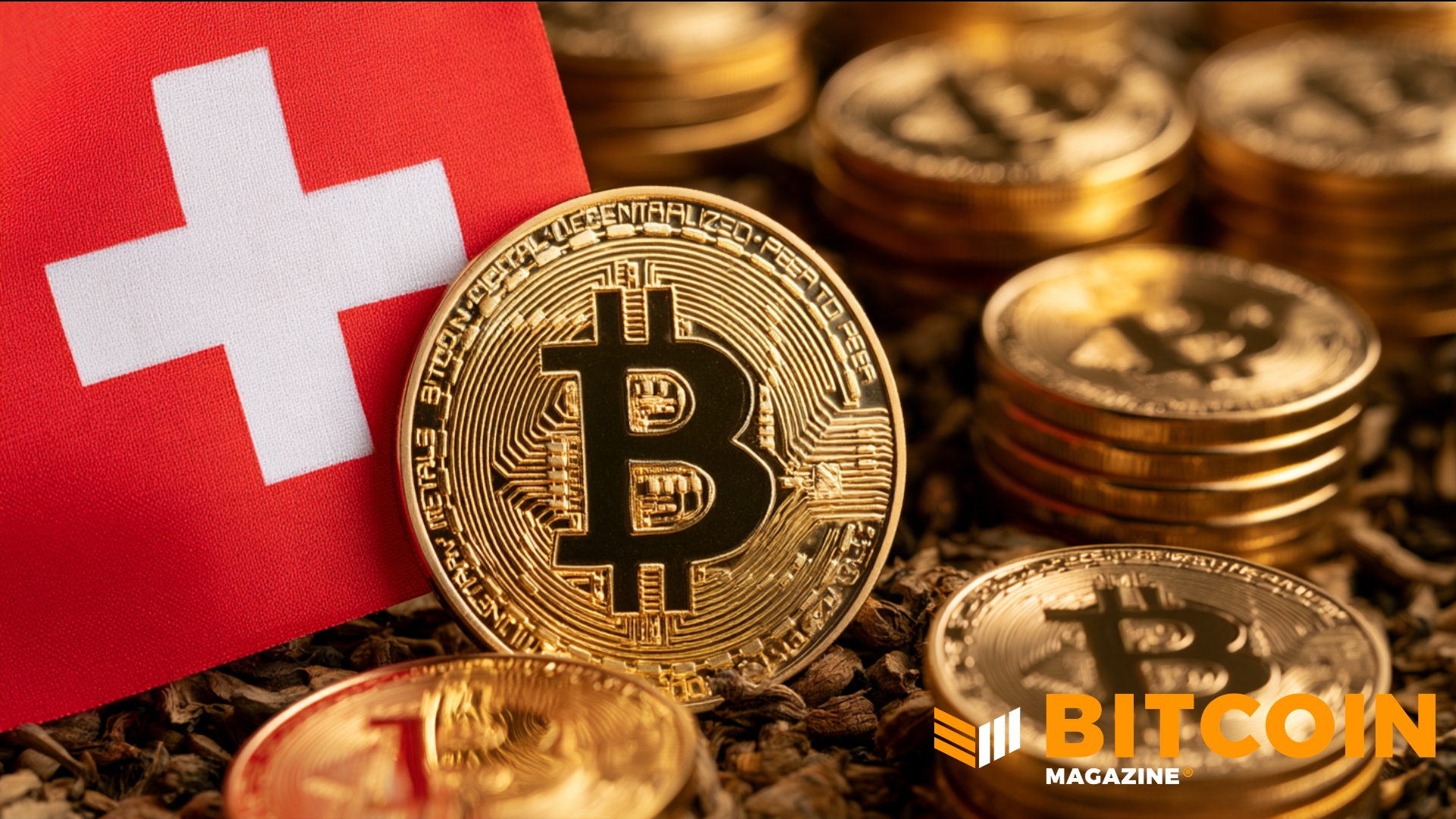
Swiss Financial Regulator Gives Green Light to Country’s First Bitcoin ETF
Swiss financial regulator FINMA has approved the country’s first bitcoin exchange-traded fund for retail investors.
The watchdog said Tuesday that the approval comes as people in Switzerland express a growing interest in crypto — particularly bitcoin.
Bitcoin ETFs — particularly in the U.S. — have widened the scope of investors who can buy and sell the leading cryptocurrency. Via shares that trade on the stock exchange, investors can buy exposure to the biggest cryptocurrency in a safe and regulated way.
“As early as 2021, FINMA authorised a fund for qualified investors that invests primarily in a basket of cryptocurrencies,” the announcement read.
JUST IN:
— Bitcoin Magazine (@BitcoinMagazine) October 20, 2026Switzerland's Financial Market Supervisory Authority has approved the country's first Bitcoin ETF
pic.twitter.com/AOVLGqTa5H
“As Bitcoin has a long trading history and a particularly high trading volume compared with other cryptocurrencies, FINMA has approved an exemption from the applicable risk diversification rules in this case.”
It added: “At the same time, FINMA emphasises that investments in Bitcoin — even through an approved ETF — remain highly risky.”
The announcement did not reveal which asset manager or bank would debut the product. Switzerland already has crypto ETFs limited to institutional or qualified investors on the market.
In the U.S., bitcoin ETFs had the most successful debut in the history of investment vehicles when approved in 2024.
Now, traders, institutions, and retail investors can quickly buy shares that track the price of the leading cryptocurrency and not worry about exchanges or storage of the digital coin.
The funds, managed by Wall Street giants like BlackRock, Fidelity, and Morgan Stanley, manage over $97 billion in assets, according to CoinGlass data.
This post Swiss Financial Regulator Gives Green Light to Country’s First Bitcoin ETF first appeared on Bitcoin Magazine and is written by Mathew Di Salvo.
Bitcoin Magazine
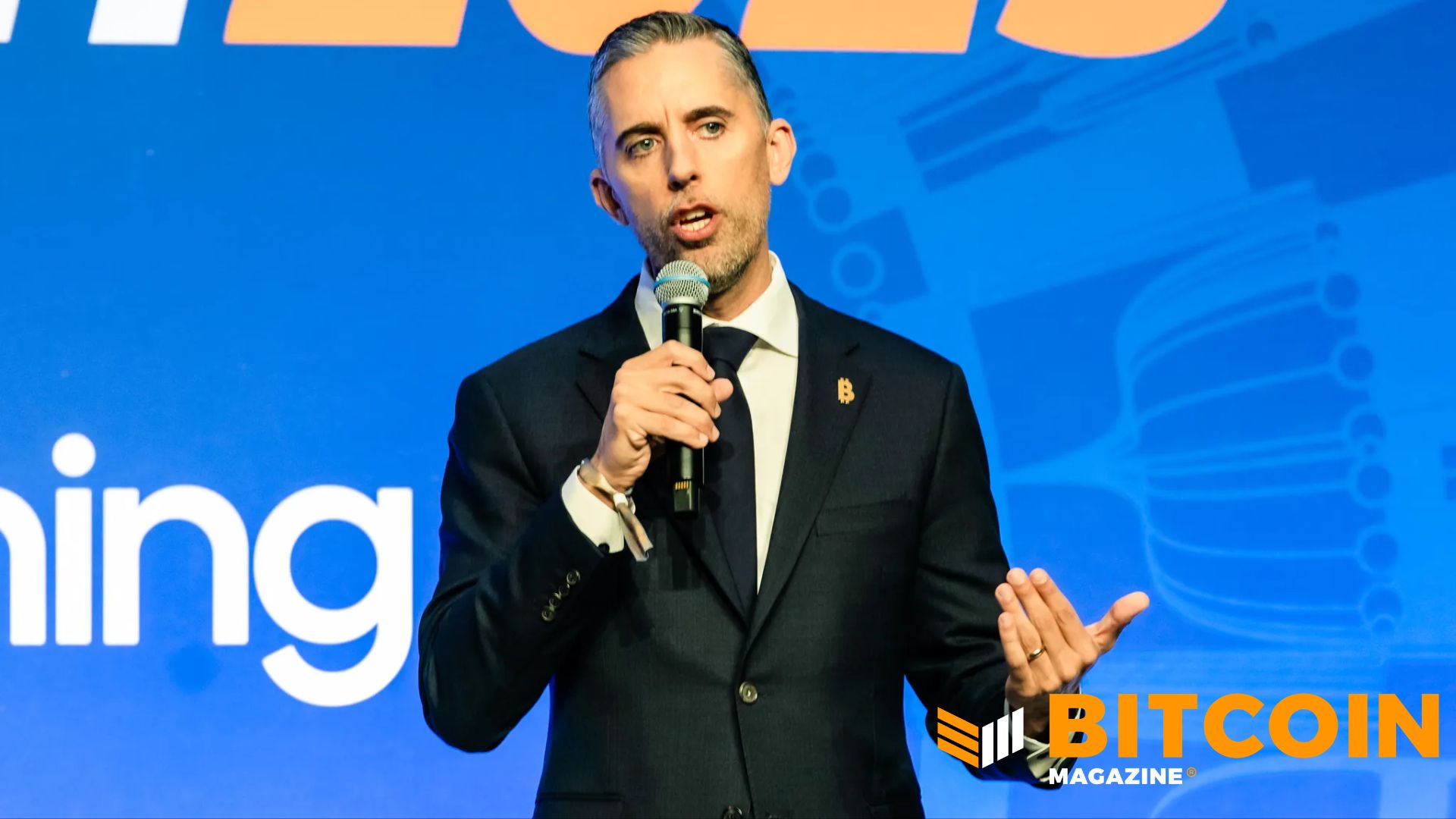
Bitcoin Treasury Strive Debuts New Preferred Stock With 15% Dividend
Bitcoin treasury Strive’s preferred stock, SATS, is now trading on the Nasdaq, according to the company.
The stock debuted Tuesday and will pay a 15% dividend every business day, according to an announcement.
Nasdaq-listed Strive said it closed its upsized initial public offering of 7,000,000 shares of SATS at a public offering price of $90 per share.
JUST IN:
— Bitcoin Magazine (@BitcoinMagazine) October 20, 2026Strive’s 'SATS' has officially IPO’d on the Nasdaq, and is raising $630 million to buy more Bitcoin and income-generating assets
It comes as public companies work to financialize bitcoin via different products. OG bitcoin treasury Strategy, which has five different preferred stocks, proposed daily dividends for its products last month.
“The successful, upsized IPO of SATS marks a critical milestone in our strategy to maximize long-term total returns for our common equity investors,” Matt Cole, Chairman and CEO of Strive, said in a statement.
The Nasdaq-listed Strive also has SATA, another preferred stock, which pays a variable dividend.
Strive debuted as an official bitcoin treasury last year and is now the fourth biggest company in the space.
Founded by former Ohio gubernatorial candidate and tech entrepreneur Vivek Ramaswamy, the company holds 36,818 BTC worth over $3 billion at today’s prices. The company on Monday announced another bitcoin buy of 4,045 BTC between October 12 and 16.
In January 2026, it completed the acquisition of Semler Scientific in an all-stock deal — the first instance of a publicly traded Bitcoin treasury company acquiring another such company.
Like with other digital asset treasuries, the idea is that investors can get amplified returns from Strive’s stock. The company buys bitcoin with equity, and maintains a debt-free balance sheet: no bonds, no credit lines, and no leveraged positions that could trigger forced liquidation in a downturn.
Strive is following in the footsteps of software company Strategy, which started buying bitcoin in 2020. Strategy is now the largest corporate holder of bitcoin, with 848,517 coins worth over $60 billion.
Its five preferred stocks are STRF, STRC, STRK, STRD, and STRE.
Strive’s stock, ASST, was trading 4% higher on Tuesday.
This post Bitcoin Treasury Strive Debuts New Preferred Stock With 15% Dividend first appeared on Bitcoin Magazine and is written by Mathew Di Salvo.
Bitcoin Magazine
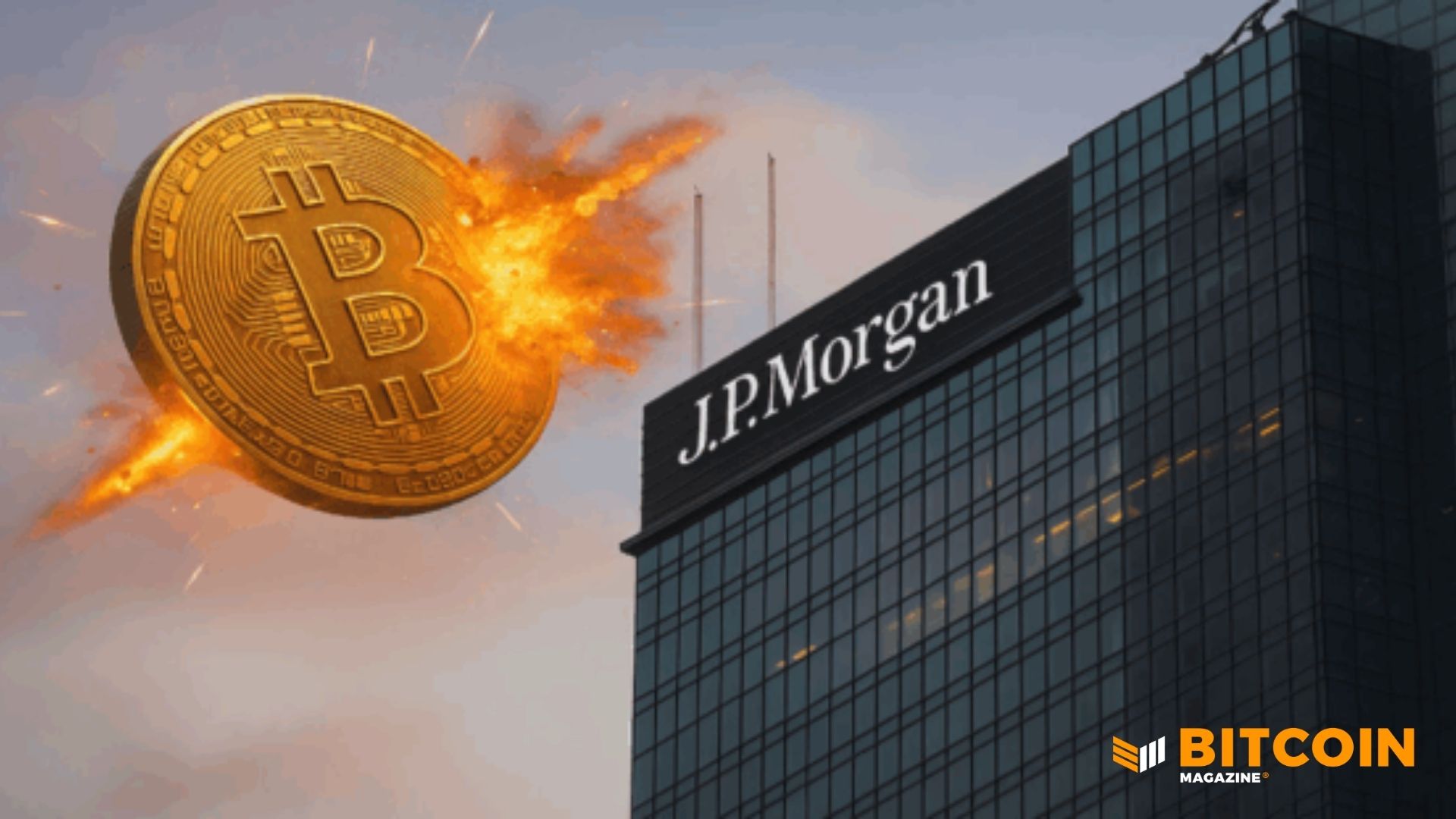
Bitcoin Could Outperform Most Assets, JPMorgan Says — But the Bank Still Won’t Recommend It
JPMorganChase’s asset management division has said that while bitcoin is still too volatile to be recommended for strategic investors’ portfolios, the cryptocurrency could outperform most asset classes over the next 10 years.
In its 2027 “Long-Term Capital Market Assumptions” report, the bank said that while volatility in the biggest cryptocurrency’s price has dampened, it is “premature to consider BTC as a diversifier in a balanced portfolio.”
JPMorgan, one of the world’s biggest banks, has utilized Bitcoin’s underlying tech — the blockchain — to debut its own products. But the multinational’s CEO, Jamie Dimon, has long been a Bitcoin skeptic.
JUST IN: The largest bank in the U.S. JPMorgan is forecasting Bitcoin to outperform every major asset over the next decade.
— Bitcoin Magazine (@BitcoinMagazine) October 20, 2026
You are not bullish enough
“BTC currently lacks a clear role as a diversifier in balanced portfolios due to unstable correlations to other asset classes,” the report read.
It added: “We see bitcoin as a speculative asset and a hedge against monetary easing.”
The report went on to show a graph with a base case for bitcoin returns beating stocks, bonds and gold. But it did add that the coin’s volatility could harm its role in portfolios.
“But should volatility continue to decline and correlations to other asset stabilize, this may evolve in the future, particularly as regulation becomes clearer and liquidity and price discovery continue to improve,” it noted.
For now, the report added, bitcoin “mostly trades like a high beta risk asset that tracks global money supply growth.”
Bitcoin has become more popular on Wall Street, especially since the Securities and Exchange Commission green lighted exchange-traded funds to trade in 2024.
President Donald Trump’s pro-crypto stance has also helped: regulators under the U.S. leader have taken a far more open approach to watchdogging the space since 2025.
JPMorganChase boss Jamie Dimon has famously blasted Bitcoin, calling it a “hyper up fraud” and “pet rock” — adding that its only value is to criminals.
Still, he has praised the coin’s underlying technology, and lauded crypto products like stablecoins.
This post Bitcoin Could Outperform Most Assets, JPMorgan Says — But the Bank Still Won’t Recommend It first appeared on Bitcoin Magazine and is written by Mathew Di Salvo.
Bitcoin Magazine
BlackRock Files for Bitcoin ETF With Downside Buffer and Capped Upside
BlackRock has filed for a new bitcoin exchange-traded fund which, if approved, would cap investors’ upside while limiting their losses.
The iShares Bitcoin Managed Protection ETF, or PBIT, would aim “to create and manage bitcoin exposure,” according to a Monday filing with the Securities and Exchange Commission.
It would work buying options and fixed-income strategies to give investors regulated bitcoin exposure with capped upside and some downside protection — but not direct bitcoin ownership.
The fund would suit investors who want to invest in bitcoin but not experience all the volatility that comes with the top cryptocurrency.
Bitcoin has attracted attention for its wild price swings over the years but its volatility has dampened as more investors have bought into the space.
But 2025 was the least volatile year for the asset and the bear market of 2026 has been its most shallow on record: in past cycles, bitcoin’s price has dropped as low as 80% from its all-time high; this year it shed just 50% of its value.
BlackRock’s iShares Bitcoin Trust — IBIT — started trading in 2024 after the SEC gave the green light to 11 spot bitcoin ETFs.
The most successful of the ETFs in terms of flows, the investment vehicle has helped bring bitcoin to Wall Street. Now traders, institutions and retail investors can quickly buy shares that track the price of the leading cryptocurrency.
They don’t need to worry about exchanges or storage of the digital coin, rather, BlackRock buys and holds the bitcoin while investors simply hit the buy or sell button via their brokerage account.
IBIT has the most assets under management out of the bitcoin ETFs, currently handling $65.7 billion.
On Monday, the fund received $665.2 million in fresh investment as bitcoin buyers flooded back into the market.
That’s the biggest number of shares bought in the product since October 2025, when bitcoin notched a new all-time high, according to Farside Investors data.
This post BlackRock Files for Bitcoin ETF With Downside Buffer and Capped Upside first appeared on Bitcoin Magazine and is written by Mathew Di Salvo.
HTTP error 429 on https://cryptoslate.com/feed/
Failed to fetch feed: https://cryptoslate.com/feed/
Failed to fetch feed.
CryptoTicker.io
A Bitcoin costs $82,708 on Wednesday morning, or 73,652 euros. On Monday, $526.7 million flowed into the US spot ETFs, the strongest day since September, and yet October is still negative for those funds. Two lines frame the market until the Federal Reserve decides on rates on October 28: the 50-day moving average at $81,679 below, and the 20-day average at $83,117 above.
Overnight trading: the $81,273 low sat below the 50-day average
Between Tuesday morning and Wednesday morning the price moved between $81,273 and $83,249. That is a range of $1,976, or 2.39 percent measured against the current level. The night was therefore far livelier than the three days before it, which we covered on Tuesday.
Where the low sat matters more than the range itself. In our Tuesday morning piece, the 50-day average at $81,481 was the next level on the downside. That line has since risen to $81,679, an increase of $198. The overnight low of $81,273 sat $406 below it. The price broke the line and had worked its way back $1,029 above it by the morning.
In practice, that means a single breach has triggered no follow-on selling in this phase. Only a daily close below the line would be a signal that trading systems built on moving averages react to, and that did not happen overnight.
We calculated the moving averages in this piece ourselves, from CoinGecko daily closes over the past 200 days, as of Wednesday morning. Such lines differ by a few dollars between providers and data sources, because exchanges use different closing times.
$526.7 million into the US Bitcoin ETFs, the strongest day since September
According to Farside Investors data, the US spot Bitcoin ETFs took in $526.7 million net on Monday. That is the largest inflow on a single trading day since September. A spot ETF holds the coins itself rather than tracking the price through a futures position. Every dollar of inflow therefore leads to an actual purchase in the market.
The Ethereum ETFs ran the other way the same day and gave up $103.3 million, $95.4 million of it at BlackRock’s ETHA alone. So the money did not move broadly into crypto; it went into Bitcoin specifically.
BlackRock’s IBIT brought in $665.2 million, Fidelity’s FBTC lost $83.6 million
The net figure hides how uneven the day was. BlackRock’s IBIT alone took in $665.2 million, more than the entire net inflow for the day. Fidelity’s FBTC gave up $83.6 million over the same period.
A single provider carried the day, then, while at least one other lost money. Read the net figure as a broad return of institutional buyers and you are reading in more than the breakdown supports. For the price effect that is secondary: the coins have to be bought in the market, whichever provider receives the money.

October stays around $88 million in the red despite Monday
One strong day does not turn the monthly balance. On the daily Farside Investors figures, which the financial service FXStreet reviewed on Tuesday, the US spot Bitcoin ETFs remain around $88 million in the red for October. Monday almost evened out the month, no more than that.
That fits the price picture. Bitcoin is down 1.16 percent over seven days and up 1.56 percent over 30 days. It sits 34.4 percent below the all-time high of $126,080 from October 6, 2025. The market has been moving sideways for weeks, and the fund flows are doing the same.
The 200-day average at $72,723 and a gap of 13.73 percent
The short averages sit close to the price, but the distance to the downside is wide. On our calculation the 200-day average stands at $72,723, with the price 13.73 percent above it. The 100-day average sits at $74,780, 10.60 percent below the current level.
That spread is the real state of the market: everything is tight in the short term, while there is plenty of room below before any of the long averages even comes into play. The 20-day average at $83,117 is $409 above the price, the 50-day average $1,029 below it. This week’s trading plays out between those two values.
Bitcoin’s share of the entire crypto market stands at 59.52 percent, with $26.74 billion of turnover in 24 hours. Both readings suggest the money in the market is staying with Bitcoin rather than rotating into smaller coins.
Fed meeting on October 28: the target range stands at 3.75 to 4.00 percent
The Federal Open Market Committee meets on October 27 and 28, with the decision due at 2 p.m. local time in Washington on the Wednesday, 7 p.m. in Germany. The date appears in the Federal Reserve meeting calendar. A fresh round of projections with members’ rate forecasts is not part of it; a press conference by chair Kevin Warsh is.
The target range stands at 3.75 to 4.00 percent. The Fed raised it by a quarter point in September, the first increase in more than three years. On prediction markets the probability of an unchanged range sat between 84 and 88 percent on Tuesday, and between 12 and 13 percent for a further increase. For the December meeting, an increase is priced at around 78 percent.
Phil Camporeale, chief global investment strategist at J.P. Morgan Wealth Management, writes that his team expects no move at the October meeting. His firm looks for around 50 basis points of further increases, spread out into 2027. From inside the central bank, New York Fed president John Williams set out the line that there is no rush.
How a rate-hiking cycle works on the Bitcoin price
Bitcoin has lived through falling or flat rates for most of its existence. A hiking cycle is new for this market, and it works through three channels.
First, the alternative: as the risk-free rate rises, a term deposit pays more, and an asset with no running yield has to make up that head start through its price. Second, financing: anyone invested on credit or with leverage pays more for it, and some of those positions get closed. Third, the dollar: higher rates usually support the US currency, and a strong dollar weighs on the dollar-denominated Bitcoin price.
That third channel hits euro-based holders twice. You pay in euros but convert a dollar price. If the dollar rises against the euro, your loss in euros is smaller than the dollar loss, and the other way round. At $82,708 and 73,652 euros, the implied rate is currently just under $1.123 per euro.
Funding of 0.0034 percent per eight hours equals 3.75 percent a year
The financing rate, known in trading as funding, is the payment that holders of perpetual futures make to each other every eight hours. When it is positive, buyers pay sellers, and the futures market trades above spot.
On the OKX exchange the rate for the Bitcoin perpetual stood at 0.00343 percent per eight hours on Wednesday morning. Annualised, that is around 3.75 percent. The number is notable because it sits almost exactly at the upper edge of the Fed’s target range. A leveraged long currently costs about as much as the risk-free rate in dollars, before the price has moved at all.
That leads to a calculation anyone can run: hold a long position for a year and you need roughly 3.75 percent of price gains just to pay the financing. Over a week that is 0.072 percent, over a month 0.31 percent. For a position meant to run to October 28, it is about 0.07 percent, or $58 per Bitcoin held.
Spot, ETN or perpetual: what makes the difference before October 28
There are three common routes into Bitcoin for European investors, and they behave differently ahead of a central bank date.
Buying real coins on an exchange licensed under the European MiCA regulation costs a one-off order fee and nothing after that. There is no liquidation price, and a ten percent move costs ten percent. Which providers hold a licence and what they charge per order is set out in our comparison of crypto exchanges.
An exchange-traded note, or ETN, tracks the price through a securities account and carries a running management fee. What counts is whether the paper is physically backed with coins or merely replicates the performance. That distinction, and the fee levels of the papers tradable in Europe, are set out in our overview of crypto ETFs and ETNs in Germany.
A leveraged perpetual future costs the financing described in the previous section and comes with a liquidation price. At tenfold leverage and an entry at $82,708, that price sits roughly ten percent away, around $74,400 before fees. Last night’s range was 2.39 percent. Four such nights in the same direction would be enough. What the individual platforms charge in financing is shown in our comparison of perp exchanges.
Our assessment: the inflow came from one provider, not from the market
From the newsroom’s point of view, Monday was weaker than the $526.7 million headline suggests. The evidence is above: IBIT took in $665.2 million, more than the entire net amount, FBTC gave up $83.6 million, and the month remains around $88 million in the red. The Ethereum funds lost $103.3 million the same day. A market buying broadly looks different.
Against that, the origin of the money does not matter for the price effect. A fund taking in $665 million has to buy coins, and that purchase meets the same order book as any other. The price responded with only 0.80 percent in 24 hours, and that says more about the state of the market than the inflow figure itself: there is enough supply on offer to absorb sums like these.
For the week up to the Fed meeting, that suggests fund flows are unlikely to lift the price out of its range. The October 28 decision is the date that can change it, and prediction markets expect no change there. The setback risk therefore lies less in the decision itself than in what Kevin Warsh says about December at the press conference.
Bitcoin before October 28: the line sits at $81,679
Three steps worth taking ahead of the central bank date:
- Identify the form of your position. Are you holding real coins, a security or a leveraged contract? Only the third route has a liquidation price, and only there does holding cost money on an ongoing basis. The fee models of licensed venues are set out in our comparison of crypto exchanges.
- Recalculate the distance to your liquidation price. Divide your entry price by the leverage, and you get roughly the move that wipes out your position. At tenfold leverage that is ten percent, at fivefold twenty. Platform financing rates are set out in our comparison of perp exchanges.
- Record your acquisition data. Purchase and sale dates determine how your gains are treated for tax in Germany. Use several venues and you lose track quickly; which tools take that over is shown in our comparison of tax tools.
On the downside, the 50-day average at $81,679 remains the level that decides whether the sideways phase holds. On the upside sits the 20-day average at $83,117. As long as the price stands between the two, any directional call is a bet on October 28.
(As of October 21, 2026. This article is not investment advice. Prices and fee structures change; check the terms with the provider before you buy.)
FinCEN has published a striking financial trend analysis on crypto fraud: 33,904 filings covering around $12.7 billion in reported financial activity tied to digital asset investment fraud. Press coverage usually rounds those numbers to 33,000 filings and $13 billion. FinCEN is the US agency charged with combating financial crime, and it draws on reporting data from across the financial sector. So what do these FinCEN filings really say about scam centres, crypto scams and possible money flows, and what do they not say? One point first: crypto as a whole is not under blanket suspicion. What the agency analyses is suspicious, reported activity in specific risk contexts.
The numbers are a risk signal, not a loss statement
The FinCEN analysis rests on BSA filings, reports made under the Bank Secrecy Act, submitted between September 8, 2023 and December 31, 2025. The precise values are 33,904 filings and around $12.7 billion in reported financial activity. Rounding that to “more than 33,000” and “about $13 billion” is a journalistic shorthand, not an extra finding.
That sum cannot be equated with actual fraud losses. It can include attempted and completed transactions, inflows and outflows, transfers between accounts held by the same customer, repeat or supplementary filings, erroneous entries and even lawful activity in the vicinity of a suspicious event, as FinCEN notes in its financial trend analysis. Because the agency sorts by filing date, the underlying incidents may have begun well before the window under review. For readers, that means a high volume of filings mainly shows that financial institutions are spotting recurring risk patterns. It is not a precise map of every perpetrator, victim or actual loss.

Why a suspicious activity report is not a verdict
A suspicious activity report means that an institution subject to reporting duties has informed the competent authority about a transaction where there may be knowledge, suspicion or reasonable grounds to suspect financial crime. FinCEN filings are therefore leads for analysis and investigation, not evidence, and certainly not criminal convictions. A filing can trigger an investigation, but it has to be tested against additional proof before it becomes a solid finding.
One simple test helps place any headline of this kind: is this a filing, an administrative finding or a court ruling? In earlier remarks FinCEN itself stressed that suspicious activity reports serve as starting information for investigations rather than as verified findings of fact. The $12.7 billion is therefore neither an amount seized nor a fraud loss established in court.
How cross-border fraud networks operate
Scam centres are organised, often cross-border structures that can run or support digital fraud through a division of labour. The operating model frequently follows a similar pattern, without allowing any sweeping claims about particular groups or countries: victims are approached through fake contacts or phishing, payment processing follows, and the funds are then passed on and obscured across accounts, wallets, service providers or different jurisdictions. Alongside the fraud operations themselves, FinCEN describes supporting service networks for account opening, phishing and money laundering, as well as professional launderers.
Money laundering means deliberately concealing the origin of unlawfully obtained assets. Fraud and money laundering are legally distinct areas of assessment, yet they often overlap in the practical transaction chain. That is precisely why individual wallet freezes achieve only so much: authorities and platforms also have to examine the pooling of funds, transfers across several addresses, switches between services and cross-border payout routes, as FinCEN sets out in its alert on scam centres. As a documented risk that cannot be generalised, INTERPOL also reports that scam centres have in some cases been linked to human trafficking and forced online fraud work, which cannot be read across to every site or every worker.
What prevention and controls can achieve
Consumer protection at system level covers education, transparent reporting channels, risk-based checks and cooperation between platforms, payment service providers and authorities. Concrete control measures, which are not to be read as individual investment or legal advice, include monitoring unusual transaction patterns, identity and account verification, scrutiny of unusual conversion or payout routes, and escalation to the competent bodies where risk signals are solid.
In Europe, EU Regulation 2023/1113 requires crypto asset service providers to supply information on the originator and the beneficiary for certain crypto transfers, and to apply risk-based procedures where that information is missing. Anomalies can feed into the decision on whether to file a report, and depending on the risk, suspending, rejecting or returning a transfer comes into consideration, as the relevant EU regulation provides. Prevention can lower risk and make money flows visible earlier. Criminal assessment, confiscation and prosecution, however, remain the task of the competent authorities and courts.
FinCEN data: the reading that holds up
The FinCEN report on crypto fraud points to a substantial, internationally organised risk. The 33,904 filings and around $12.7 billion in reported activity are relevant warning signals, but not a court-proof attribution of every single transaction. Crypto scams, money laundering and scam centres are connected parts of a possible payment chain that still have to be kept analytically apart. Durable consumer protection comes from prevention and robust platform processes, while unpicking complex networks additionally requires cross-border cooperation and investigations that stand up.
Memecoin factory Pump.fun has spent the past few days selling something that no longer has anything to do with memecoins: futures contracts on Bitcoin and Ethereum, with leverage of up to 40 times. Anyone trading there is no longer moving play money, but a position that can vanish completely on a price step of a few percent.
The launch came without much announcement, and that is the part that concerns you. The interface has stayed the same, the one used until now to buy memecoins in their first minute of trading. Behind it now runs a derivatives exchange whose rules assume a different audience.
Perpetual futures on Bitcoin and Ethereum: this is what Pump.fun launched
Pump.fun has enabled trading in perpetual futures on Bitcoin and Ethereum inside its app. Trade publication Cryptobriefing dates the move to October 16, 2026 and describes it as an entry into the business of leveraged positions. The provider's product page now carries a market table of its own, with columns for mark price, daily change, funding rate and open interest.
What Pump.fun did not build is just as striking. There is no matching engine of its own, no order book of its own and no settlement of liquidations of its own. All of that comes from an outside exchange, and that has consequences for the question of who is really on the other side of your trade.
40x leverage on Bitcoin, 25x on Ethereum
According to Cryptobriefing, the ceiling is 40 times leverage on Bitcoin and 25 times on Ethereum. The publication gives these figures as the result of its own reporting, without citing a source at the provider; confirmation from Pump.fun itself is not available. Read the numbers as a documented order of magnitude, then, and not as a fee schedule you can take over unchecked.
What 40x leverage means fits into one sentence: you post one fortieth of the position value as collateral. On a $500 stake you move $20,000 in Bitcoin. If the price rises 1 percent, you make $200, which is 40 percent on your stake. If it falls 1 percent, you lose the same $200.
Perpetual futures are futures contracts without an expiry date
A perpetual future, or perp for short, is a futures contract on a price that never expires. Conventional futures have an expiry date on which they settle. The perp has none; the position stays open as long as your collateral holds. To keep the contract price pinned to the real price anyway, market participants pay each other a balancing fee at fixed intervals, the funding rate.
That design is why perps are so widespread in crypto trading, and why retail investors in the EU have a legal framework of their own for them. Licensed providers in Europe may grant retail clients far lower leverage than the 40 times at issue here.
Hyperliquid supplies the order book, Pump.fun only the interface
Technically the trading runs at Hyperliquid, the largest decentralised perp exchange. Cryptobriefing describes the division of labour this way: funding rates and open interest for the Bitcoin and Ethereum contracts come straight from the HyperCore mainnet, and Pump.fun borrows order book and liquidity instead of building a derivatives engine itself.
For holders, that means your order lands in another exchange's order book. Its liquidation mechanics decide when your position is closed, and its funding rate sets what holding costs. Which providers compete in this market at all, and how they differ on fees and leverage, is set out in our perp DEX comparison.
Builder codes: at most 0.10 percent per order for the referring app
The mechanism that lets an outside app place orders at Hyperliquid and earn from them is called builder codes. Hyperliquid's developer documentation names two points worth knowing. First, you have to approve the referring app's fee explicitly, with a signature from your main wallet and a maximum amount that you set. Second, a hard ceiling applies: under the documentation, such a fee on perpetual futures may not exceed 0.10 percent.
That 0.10 percent is the ceiling for the referring app's share, not the total cost of your trade. Add to that the exchange's own trading fees and the funding rate. How much the referral at Pump.fun actually takes is not in the documentation; the app sets it when placing the order, and that is precisely why you are the one setting the maximum.

At 40x leverage, 2.5 percent is enough for liquidation
The most important calculation in the whole offering is a division. At 40 times leverage your stake equals 2.5 percent of the position value. Move the price those 2.5 percent against you and the collateral is spent, and the position is closed by force. At 25 times leverage the threshold sits at 4 percent.
Set that next to the market's daily move: Bitcoin stood at $82,923 on Tuesday evening and travelled between $81,155 and $83,249 within 24 hours, a range of roughly 2.6 percent (according to CoinGecko, as of Tuesday 22:00). A single ordinary trading range is therefore enough to end a position at 40 times leverage, and it does so even when the price afterwards returns to where it came from. Ethereum sat at $2,456.46 at the same time, with a daily range of $2,374.52 to $2,471.63.
Liquidation is the built-in normal case at high leverage, not a special case you can prepare for. A quiet Tuesday is enough; no crash is needed.
The funding rate falls due at fixed intervals
The funding rate is the running price of your position. If the contract price sits above spot, holders of long positions pay the other side; below spot, the flow reverses. The payment repeats at fixed intervals as long as the position is open. On a position you hold for weeks, this fee can eat the return even when the price moves your way.
This is the item beginners overlook most often. Leverage decides how fast a position dies; the funding rate decides what it costs day to day. Both numbers sit at Pump.fun in the same market table as the mark price.
PUMP at $0.004762, 7.78 percent above the previous day
The platform's token has reacted to the news. PUMP quoted at $0.004762 on Tuesday evening, 7.78 percent higher than 24 hours earlier (according to CoinGecko, as of Tuesday 22:00). Market value comes to around $2.20 billion, turnover over the past 24 hours to about $182 million. That puts PUMP 50th among the largest crypto assets.
The day's gain conceals a weak week, however. Over seven days PUMP is down 5.25 percent.
The week in the PUMP price: $0.003873 at the low, $0.005089 at the high
The weekly path shows a clear dip in the middle. The weekly high came on October 14 at $0.005089, the weekly low on October 18 at $0.003873. cryptoticker.io compiled this reading of the past seven days' price series itself on October 20, 2026, on the basis of CoinGecko's daily data. From the low the price has recovered by almost 23 percent up to Tuesday evening, but still sits a good 6 percent below the weekly high.
The perp launch therefore fell into the recovery phase after the weekly low. That the two coincide in time proves no connection: the whole crypto market gained on Monday and Tuesday, and Hyperliquid itself rose 2.95 percent within 24 hours to $81.18.
On the business model behind it: Pump.fun uses part of its revenue to buy back its own token. How that revenue developed in early October, we wrote up on October 10, 2026 in our piece on the turnover behind the buyback. Perp trading gives the platform an additional source of fees and feeds into exactly that calculation.

Pump.fun has no MiCA licence for the EU market
Here lies the point that weighs heaviest if you are in Germany. Since the MiCA transition period ended on July 1, 2026, a provider may offer crypto services in the EU only with an authorisation as a crypto-asset service provider. Pump.fun holds no such authorisation, and nor does Hyperliquid as a decentralised exchange. What such an authorisation demands of a company is set out in our overview of the MiCA obligations for crypto firms.
In practice you trade without the protections an authorised provider owes you. There is no segregated custody of your funds under European law, no route of complaint to a German supervisor and no compensation rule if the platform fails. The European leverage caps for retail clients do not bite here, and that is exactly why 40 times leverage is possible at all. If you want leveraged exposure and a regulated route to it, that route runs through an authorised crypto broker with far tighter leverage caps.
There is also a plain question of access. According to the reporting on the launch, leveraged trading is barred for users in the United States and further territories. Whether and how long access from Germany stays open is the provider's decision, not yours. A block can come at any time, and it hits open positions.
Perpetual futures and the holding period: two separate tax worlds
Buy Bitcoin and hold it longer than a year, and under current German law the gain is tax-free on sale. This one-year holding period under section 23 of the German Income Tax Act applies to the private disposal of the crypto asset itself.
A perpetual future is not a crypto asset but a forward transaction. The holding period therefore does not apply, and neither does the expectation of being tax-free after a year. Gains and losses from forward transactions are treated differently from a direct purchase, and losses carry offsetting rules of their own. This is no detail at the margin, because it changes the arithmetic behind a position fundamentally. How to document perp trades cleanly, and which tools prepare the data for a tax return, is shown in our comparison of crypto tax tools. Have a tax adviser check how your own trades are classified before you take positions of this size.
Levels above and below
As points of observation, not as price targets: above, the next level is the weekly high of $0.005089 from October 14, and beyond it the round $0.0055. Below, the weekly low of $0.003873 from October 18 is the reference, with the daily low of $0.004334 in between. As long as the price holds above the daily low, the recovery of the past two days stands; beneath it, the move since October 18 would be given back.
What the perp launch is worth to the platform will show not in one day's price but in the open interest of the two contracts. If it stays small, it was a headline. If it grows, the stream of fees grows with it, and so does the basis for the buybacks.
Pump.fun perps: without a MiCA licence you carry every risk yourself
The offering is new, the leverage is high, and the legal protection is missing. Three steps that clear up the situation for you:
- Work out the liquidation threshold before you open a position. Divide 100 by the leverage: 40 times leverage means 2.5 percent, 25 times means 4 percent. Compare the result with the market's ordinary daily range, which for Bitcoin on Tuesday came to around 2.6 percent. Which providers set which leverage tiers and fees is in the perp DEX comparison.
- Decide deliberately between unregulated and authorised. At Pump.fun and Hyperliquid there is no MiCA authorisation, no segregated custody under EU law and no route of complaint to a German supervisor. If that goes too far for you, the route through an authorised broker with tighter leverage caps remains.
- Keep forward transactions apart from your long-term holdings. Perps do not fall under the one-year holding period. Keep them separate in your books from coins you hold for years, so that you do not destroy the holding period by accident. The tax tool comparison shows which software reports forward transactions cleanly.
(As of October 20, 2026. This article is not investment advice. Prices and fee structures change; check the terms with the provider before you buy.)
Worldcoin trades at 0.5875 dollars, and that is 38 percent below the twelve-month high of 0.9487 dollars from 27 October 2025. At the same time the token has gained 14.4 percent in a single day and 51.1 percent over three months. That combination raises the only question that matters for anyone holding cash right now: is Worldcoin a good buy at the current price, or has the easy part of this move already happened?
The figures in this article are our own calculations from the daily closing prices of CoinMarketCap, as of 20 October 2026.
Worldcoin price analysis: where WLD stands and which levels count
Three levels frame the current setup. The 200-day average sits at 0.4375 dollars and marks the line between a recovering and a broken market. The 50-day average runs at 0.4734 dollars and is the shorter-term reference that swing traders watch. Above the current price lies the real obstacle: 0.5979 dollars, the highest daily close of the past 90 days, reached on 4 October 2026.
At 0.5875 dollars, WLD stands 34.3 percent above its 200-day line and 24.1 percent above its 50-day line. The token is therefore not cheap relative to its own trend; it is extended. The day's 14.4 percent jump did not create a new high either. It carried the price back into the zone of the early-October peak, which means the market has returned to a level it already failed at once.
Downside, the picture is better than in spring. The twelve-month low of 0.2344 dollars dates from 2 May 2026, and the price is 150.7 percent above it. At a market capitalisation of 2.24 billion dollars Worldcoin ranks 40 in the overall market. The structure is a recovery off a deep low, not a breakout to new ground.
Is the Worldcoin downtrend broken or only interrupted?
Over twelve months WLD is still down 35.6 percent. A trend that loses a third of its value in a year is not repaired by four good weeks. But two things have changed in the chart since late September, and they are measurable rather than a matter of opinion.
The first is duration. We counted the days on which WLD closed above both its 50-day and its 200-day average: 57 out of the 166 days for which both lines can be calculated, so roughly a third of the time. The current run started on 25 September 2026 and has lasted 25 days. That is the longest such stretch of the past year, and the price has risen 33.5 percent inside it, from 0.4400 dollars.
The second is the comparison with the last episode that looked like this one, and it is the part that deserves caution. From 8 to 27 June 2026 the token also held above both averages, for 20 days. That run ended at 0.4661 dollars, and what followed was not a continuation: WLD lost 18.2 percent within two weeks, 23.7 percent within a month, and bottomed at 0.2994 dollars on 1 August 2026. Anyone who read the June setup as a trend reversal paid for it with a quarter of their position value.
One difference separates the two episodes. In June the 50-day average was still below the 200-day average. On 1 October 2026 it crossed above it, at 0.4199 dollars, for the first time in this series. That crossing is the signal June was missing, and it is the strongest single argument that the downtrend is interrupted rather than merely pausing. It is also the one that would be invalidated first if the price fell back under 0.4734 dollars.
What RSI and the moving averages mean for a Worldcoin entry
The 14-day RSI stands at 48.2. For an entry decision this is the least dramatic number in the whole analysis, and that is exactly what makes it useful. A reading below 30 would signal an oversold market and a cheap entry; above 70 it would warn of an overheated one. At 48.2, after a 14.4 percent day, the indicator says the move has not yet exhausted the buyers.
That is unusual. A gain of this size normally pushes the RSI towards 65 or higher. It did not here, because the preceding days were weak: WLD closed at 0.4890 dollars on 19 October 2026. The jump started from a cooled-off base.
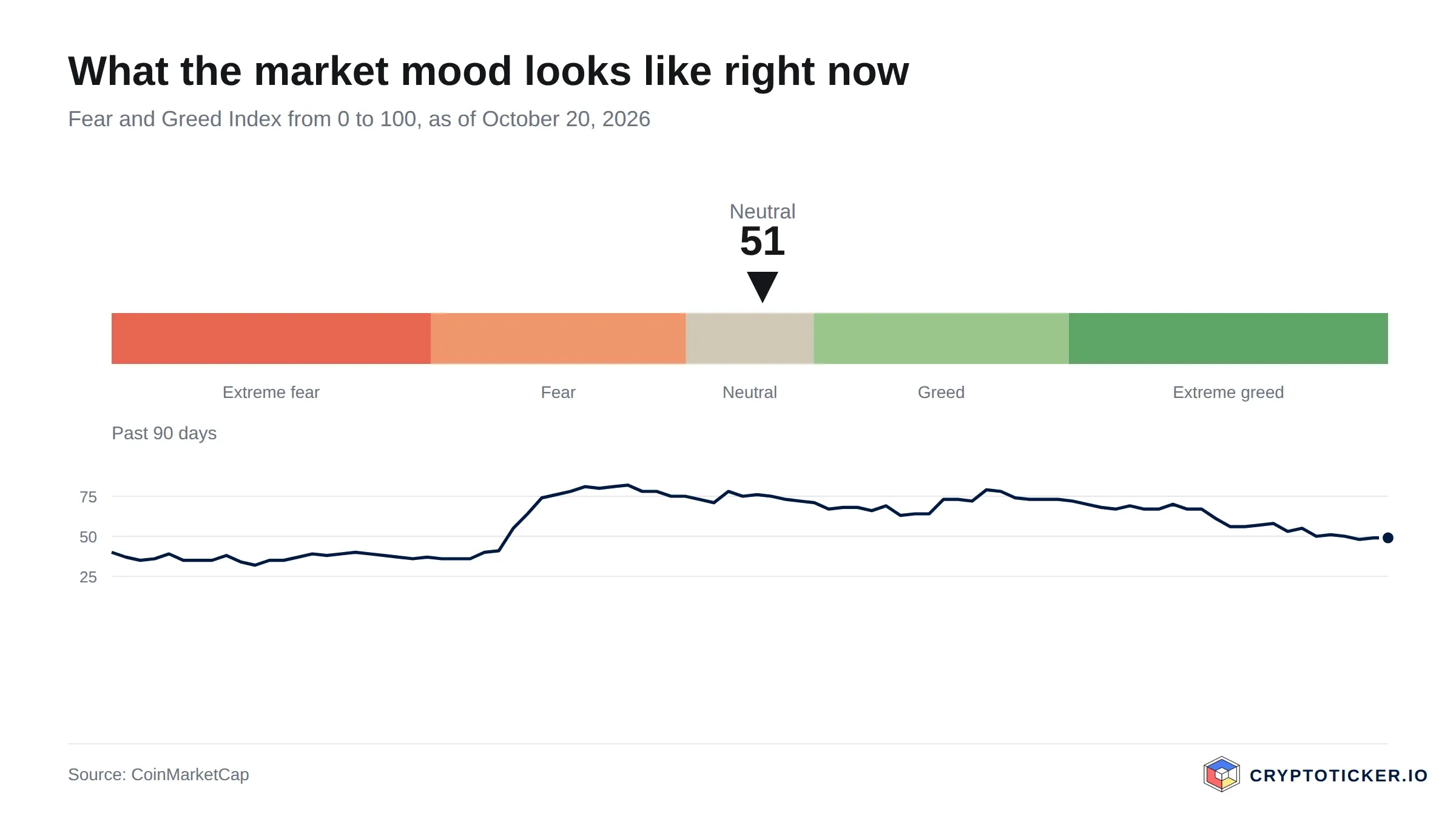
For the entry that leaves a mixed reading. The RSI gives room; the distance to both averages does not. An entry at 0.5875 dollars means paying 34.3 percent more than the 200-day line, and the first support in a setback is not the current price but 0.4734 dollars, roughly 19 percent lower. Market sentiment adds nothing either way at the moment: the Fear and Greed Index reads 51, which is neutral.
Worldcoin trading volume: what it reveals about demand
Volume is the one figure that separates a move carried by real demand from one carried by a thin order book. In the past 24 hours 646.97 million dollars of WLD changed hands. Measured against the 30-day average of 377 million dollars, that is 1.7 times normal turnover, and against the 90-day average of 255 million it is more than double.
Set against market capitalisation, the picture sharpens: 28.8 percent of the token's 2.24 billion dollar value traded in a single day. For a rank-40 asset that is high turnover, and it tells you two things. The move has participation, so it is not a thin-book spike. But the same liquidity that lets buyers in lets them out, and a token that turns over more than a quarter of its capitalisation daily can retrace just as quickly.
What the volume does not show is who is buying, and there is no verified breakdown for this move. What the data does show is that the 35.6 percent gain over 30 days came on rising rather than falling turnover. Advances on shrinking volume fail first; this is not one of them.
Which structural factors speak for Worldcoin
Worldcoin is not a payment token. It is the token of an identity network whose purpose, according to the project's own documentation, is to let a person prove online that they are a unique human being without revealing who they are. That is the investment case, and it is a bet on one proposition: that proof of personhood becomes scarce and valuable as more of the internet is written by machines.
The supply mechanics are the hardest structural number in the file, and they cut both ways. Of a total supply of 10 billion WLD, 3.817 billion are in circulation. That is 38.2 percent, which means 61.8 percent of the supply has not yet reached the market. The release schedule is laid out in the project's whitepaper. For a buyer this is the single most important structural fact: the market capitalisation of 2.24 billion dollars is calculated on the circulating portion, and every future unlock meets demand that has to grow just to hold the price flat.
On the regulatory side, a token whose core product rests on biometric verification carries a risk a pure market token does not. The supervisory framework for crypto asset service providers in the European Union is documented by ESMA. It governs where you can buy WLD; it does not settle the data protection questions attached to the verification model, and those remain the project's own risk.
What speaks for buying Worldcoin at the current price
Three arguments survive scrutiny.
- The trend structure has improved measurably. The 50-day average crossed above the 200-day average on 1 October 2026, and the price has held above both for 25 days, the longest stretch of the year. Both are facts in the chart, not expectations.
- The entry is still far from the ceiling. At 0.5875 dollars the token is 38 percent below its twelve-month high of 0.9487 dollars. A return to that level does not require new all-time ground, only a recovery of what was lost in the past year.
- Demand is participating. Turnover at 1.7 times the 30-day average, and a 51.1 percent gain over 90 days on rising rather than falling volume, describes a move with buyers behind it.
What speaks against buying Worldcoin at the current price
Three arguments cut the other way, and the first is the strongest in the file.
- 61.8 percent of the supply is still to come. With 3.817 billion of 10 billion WLD in circulation, every tranche that unlocks adds sellers who paid nothing close to 0.5875 dollars. Demand has to grow continuously just to keep the price where it is.
- The June episode is the warning. The last time WLD held above both averages for weeks, the run ended at 0.4661 dollars and the token lost 23.7 percent within a month, down to 0.2994 dollars. The setup looked similar; the outcome was a drawdown.
- The entry is extended. 34.3 percent above the 200-day line of 0.4375 dollars and 24.1 percent above the 50-day line of 0.4734 dollars means the nearest real support sits almost a fifth below the current price. A buyer at 0.5875 dollars is paying for four good weeks that have already happened.
Where you can buy Worldcoin and what custody costs
WLD is listed on the large regulated venues, and at smaller order sizes the cost gap between them can exceed a week of price movement. Our exchange comparison sets the fee models side by side, and there is a separate overview of regulated exchanges.
Our reports on Kraken, Bitpanda and Coinbase cover the fee schedules and account requirements in detail. Two cost items are easy to overlook: the spread inside a simplified buy button, usually wider than the stated trading fee, and the withdrawal charge for moving tokens off the platform.
That move is the custody decision. Tokens left on an exchange are held by the exchange; a hardware wallet puts them in your own keeping at the price of the device and the responsibility for the recovery phrase. For a position that is meant to sit through several unlock tranches, self-custody is the more consistent choice. For a position you intend to trade within weeks, the withdrawal fee is money spent twice.
So is Worldcoin a good buy at the current price?
The answer splits by horizon, and the two halves point in opposite directions.
Short term, the entry is poor. The price sits 34.3 percent above its 200-day line, directly beneath the 0.5979 dollar level it already failed at on 4 October, after a 14.4 percent single-day move. The nearest support is 0.4734 dollars. Buying into that configuration means accepting a possible 19 percent setback before the first meaningful floor.
Long term, the case rests on one proposition and one number. The proposition is that verified personhood becomes a scarce good online. The number is 61.8 percent of supply still to be released, which is the mechanical headwind every long-term holder carries.
Our assessment: the chart has genuinely improved, and the evidence is the 1 October crossing of the 50-day above the 200-day average plus 25 days of closes above both lines, the longest run of the year. But the June comparison shows what that evidence is worth on its own: a 20-day run that ended in a 23.7 percent drawdown. The difference this time is the crossing June lacked. We read the setup as a recovery that has earned the benefit of the doubt and not yet earned a premium entry, which is why the 0.4734 dollar line matters more than the next move up. The assumption counts as refuted if WLD closes back below 0.4734 dollars, because that would undo the crossing that distinguishes this episode from June. It would be confirmed by a weekly close above 0.5979 dollars on turnover at or above the current 646.97 million dollars.
Buying Worldcoin: Your next three steps
- Decide your horizon before your size. If you are buying the long-term identity case, the unlock schedule matters more than this week's chart; if you are trading the recovery, 0.4734 dollars is your invalidation level.
- Settle the venue on cost, not on habit. The fee models in our exchange comparison differ enough at small order sizes to outweigh several days of price movement.
- Match custody to horizon. A position meant to sit through unlock tranches belongs in a hardware wallet; one you intend to close within weeks does not need to pay the withdrawal fee twice.
Disclosure: Some of the providers mentioned in this article work with us through affiliate programmes. This has no influence on the price analysis or on the assessment of the chart setup; the price data comes from a public market data source and can be checked there.
(As of 20 October 2026. This article is not investment advice. Prices, fees and terms change; check them with the provider before every purchase. Crypto assets are subject to high price swings, and a total loss is possible.)
Trading in Shiba Inu is as quiet on Tuesday as it has been for weeks; trading in the younger memecoin PEPE is not. SHIB stands at $5.09 per million tokens on Tuesday evening, which CoinGecko puts at €4.53 per million, 1.73 percent above Monday evening's level. Turnover over the past 24 hours comes to $47.96 million. PEPE is 12.23 percent higher over the same period and changes hands for $468.23 million, 9.76 times the amount, on a market capitalisation that reaches only 64.6 percent of SHIB's.
For a holder in Europe this shift is no footnote. Daily turnover decides how expensive the exit becomes, and it helps decide whether an exchange keeps offering the euro pair at all. Holding SHIB since the record leaves a paper loss of 94.10 percent; buying within the past twelve months leaves 49.75 percent. Both figures demand a decision, and both decisions hang on liquidity.
Shiba Inu and PEPE: Tuesday's turnover
The position in figures, as of Tuesday evening, on CoinGecko market data. Shiba Inu: market capitalisation $2.999 billion, or €2.669 billion, rank 36 by market capitalisation, daily turnover $47.96 million, daily range $4.94 to $5.14 per million. PEPE: market capitalisation $1.937 billion, rank 53, daily turnover $468.23 million. Dogecoin, the oldest of the three, sits at rank 12 with a market capitalisation of $12.694 billion and turns over $426.76 million. Bitcoin reaches $82,485 the same evening, up 0.76 percent, so the broad market is barely moving.
The previous day shows the same picture in milder form. At Monday's close CoinGecko reported turnover of $42.0 million for SHIB, $242.4 million for PEPE and $394.2 million for Dogecoin. The gap between SHIB and PEPE stood at a factor of 5.8 and widened over the course of the day to 9.8. A range of 5.8 to 9.8 is the honest description; a single number would not be.
Trading volume explained: why turnover sets the spread
Trading volume is the sum of all purchases and sales in a day, measured in dollars. The spread is the distance between the highest bid and the lowest ask in the order book, that is, the amount you pay twice when buying and selling immediately. The two are connected: the more turnover a pair carries, the more traders post bids into it continuously, and the closer the two sides sit together.
With a token trading 94 percent below its record, that is the practically most important point in this whole article. A price gain of 2 percent earns nothing if spread and slippage cost 1.5 percent on the way out. Slippage here means that an order eats through several price levels of the order book, because the first one does not hold enough on the other side, and the average price turns out worse than the quoted one.
This is exactly where SHIB and PEPE part ways on Tuesday. The $47.96 million of daily turnover is spread across every exchange and every pair in the world. Of that, the five largest venues contribute $5.04 million at KuCoin, $3.96 million at Binance, $2.83 million at Poloniex, $2.70 million at Upbit and $1.99 million at OKX, according to CoinGecko's ticker list. What is left of that in euros and at a venue with a MiCA licence is a fraction. How small that fraction turns out we measured on Monday: only 1.59 percent of SHIB trading runs in euros, as set out in our analysis of the SHIB order book of October 19.
What has shifted since Monday
On October 19 SHIB stood at $4.98 per million; today it is $5.09, so 2.2 percent more. Monday's finding was the thin euro side of the order book; today's finding is that the other side of the comparison has changed. On Monday Bitcoin was the yardstick; today it is a memecoin from the same sector that is smaller and still ties up more trading. The daily high at $5.14 per million held twice on Tuesday, as did the lower edge of the daily range at $4.94. What moved was not the price but the attention.
The market-cap gap: $3.00 billion in October 2025, $1.06 billion today
The real finding sits not in the day but in the year. On October 21, 2025 the market capitalisation of Shiba Inu came to $6.01 billion, that of PEPE to $3.01 billion. The gap stood at $3.00 billion, with PEPE reaching 50.1 percent of SHIB's market capitalisation. Today SHIB stands at $2.999 billion and PEPE at $1.937 billion. The gap has fallen to $1.06 billion, by 64.6 percent, and PEPE reaches 64.6 percent of SHIB's market capitalisation. The calculation rests on CoinGecko's daily series for all three tokens.
Both have lost ground, but to differing degrees. SHIB gave up 50.1 percent of its market capitalisation over those twelve months, PEPE 35.6 percent, Dogecoin 58.1 percent. The sector as a whole has shrunk, and within the sector the order has shifted. Looking only at the price shows none of this, because all three are down.

The crossing mark: $3.29 per million SHIB
From the gap a level can be calculated that appears nowhere else. In circulation are 589.24 trillion SHIB. Dividing today's PEPE market capitalisation of $1.937 billion by that circulating supply yields a SHIB price of $3.29 per million. Below that value Shiba Inu would be smaller than PEPE by market capitalisation, provided PEPE stands still. From today's $5.09 that is a distance of 35.4 percent to the downside.
The same calculation from the other side: PEPE would have to gain 54.8 percent to catch SHIB in market capitalisation, assuming SHIB stands still. Neither figure is an expectation, and neither works as a target. The number is a yardstick against which the coming weeks will show whether the year's shift continues or comes to a halt.
Turnover ratio: 1.60 percent at SHIB, 24.18 percent at PEPE
The turnover ratio sets daily turnover against market capitalisation and says what share of a holding changes hands in a day. At Shiba Inu it comes to 1.60 percent on Tuesday, at Dogecoin 3.36 percent, at PEPE 24.18 percent. The PEPE value sits at fifteen times the SHIB value.
A high ratio is no merit in itself. The value also shows that a large part of this trading is short term and can vanish again the next day. A ratio of 1.60 percent shows something else instead: the SHIB holding largely lies still. In a token whose investment case lives entirely on attention, a dormant circulating supply is a risk rather than a cushion.
Sector rotation in memecoins: how it ran at Dogecoin
Sector rotation means money migrating within a group of tokens without leaving the group. Dogecoin has demonstrated it. In October 2025 the oldest memecoin still stood at $30.30 billion, five times SHIB's market capitalisation; today it is $12.69 billion and therefore 4.2 times. Its turnover nonetheless reaches 8.9 times SHIB's today, at $426.76 million.
The mechanism behind it is unspectacular. New tokens launch with a small circulating supply and without legacy holdings that want to sell into the first rise. The older a memecoin becomes, the more holders sit trapped at higher entry prices, and the more supply meets every price advance. SHIB has 99.96 percent of its tokens in circulation, so no new supply arrives from unlocks; the supply comes out of the portfolios of the 2021 holders.
What the one-year period under section 23 of the German Income Tax Act triggers in a swap
Anyone now considering swapping SHIB for another memecoin should know a rule that many overlook. A token-for-token swap is a disposal for tax purposes and not a transfer. Under section 23 of the German Income Tax Act, a gain from private disposals stays tax free if more than one year lies between purchase and sale. The swap ends that period for the holding given up and starts it at zero for the new one.
In practice that means: if your SHIB holding is down, the swap realises a loss that can be offset against gains from other private disposals of the same year, and only against those. If it is up and less than a year old, the swap costs tax on the gain. The one-year period runs separately for every purchase tranche, not for the portfolio as a whole. The cut-off for offsetting within a year is December 31.
That the tax office learns about it has been the norm since the eighth version of the EU directive on administrative cooperation. The Federal Central Tax Office operates the reporting channel provided for it. Your own records do not replace that; they only protect you from standing there without evidence when a question comes.
Measuring order book depth on your own account
The figures in this article are world figures. What counts sits in the order book of your exchange, and that can be looked up in two minutes. Open the SHIB euro pair, read off the highest bid and the lowest ask and form the difference as a percentage of the midpoint. That gives the spread. Then enter the actual number of tokens in the sell window, without submitting the order, and compare the proceeds shown with the number of tokens times the mid price. The gap between them is the slippage.
If spread and slippage together come to more than 1 percent, that argues, for a position meant to be sold only in parts anyway, for smaller partial orders or for a different venue. Which exchanges keep a deep euro order book and what they charge for it is set out in our comparison of crypto exchanges.

Custody and MiCA: where holders in Europe stand
MiCA is the EU regulation on markets in crypto-assets and has governed step by step since 2024 who may offer crypto services in the EU. For a holder of SHIB that has two tangible consequences. First, the purchase route through an authorised provider is the only one where a European supervisor has jurisdiction in a dispute. Second, custody remains a separate decision, because a token in an exchange account belongs to its owner only as long as the exchange is solvent.
SHIB is a token on the Ethereum blockchain, with Shibarium as the associated layer-2 blockchain. Any wallet that manages Ethereum tokens can therefore hold SHIB, and a hardware wallet keeps the private key off the computer. Which devices deliver that at what price is set out in our hardware wallet comparison.
Our assessment of the position at Shiba Inu
From this newsroom's point of view, Tuesday's turnover is the more important signal than the price. The evidence: a turnover ratio of 1.60 percent against 24.18 percent at PEPE, a market-cap gap that has fallen from $3.00 billion to $1.06 billion in twelve months, and 99.96 percent of tokens in circulation, so no inflow that revives trading by itself. That argues that SHIB is ceding share within its own sector to younger tokens.
Against it stands the counter-calculation: PEPE needs a 54.8 percent rise to reach parity, and a turnover ratio of 24 percent on a single day can vanish as quickly as it appeared. Added to that is October 27, the fifth anniversary of the SHIB record, which should bring the token additional attention. This is an assessment of the position, not a recommendation to buy or sell. As with any memecoin, a total loss is possible.
SHIB and PEPE: 35 percent of distance still separates the ranking
Tuesday evening's position in one sentence: Shiba Inu holds $5.09 per million and 36th place by market capitalisation, but is losing trading activity to a token that is smaller and moves more. Three steps turn that into work that can be done today.
- Read off spread and slippage on your own account. Highest bid against lowest ask, then run your own token count through the sell window. More than 1 percent together is a reason to change venue; which one is deep enough in euros is shown by the exchange comparison.
- Write down purchase tranches with dates. Every tranche has its own one-year period, and every swap ends it. Keeping that cleanly means knowing your offsettable loss before December 31; the tools for it are in the comparison of tax tools.
- Separate custody from the trading decision. A holding meant to sit still does not have to sit in an exchange account. What a device costs and delivers is set out in the hardware wallet comparison.
The level against which the coming weeks can be read is $3.29 per million SHIB. Below it, Shiba Inu would be smaller than PEPE by market capitalisation. Above it the ranking stays as it is, even if the trading happens elsewhere.
(As of October 20, 2026. This article is not investment advice. Prices and fee structures change; check the terms with the provider before you buy.)
Decrypt
A viral Claude Code prompt lets Android TV owners switch off sponsored rows and tracking software and build their own home screens, with no root access and every change reversible.
The ChatGPT maker is folding Orchestra’s drug-program agents into Rosalind, its life sciences suite, betting AI can shave time off the decade-plus it takes to bring a medicine to patients.
J.P. Morgan Asset Management’s 2027 Long-Term Capital Market Assumptions project a 10% annual return for Bitcoin over 10 to 15 years, though the firm isn’t adding it to its main portfolio models.
The North Korea-linked attacker behind April's $295 million Drift heist pushed 25,700 ETH through the mixer in two hours, and still controls roughly $198 million more.
Sixteen companies have now objected to having their shares traded on the planned OKX-ICE tokenized stock venue, up from nine just four days earlier, according to an updated public notice.
U.Today - IT, AI and Fintech Daily News for You Today
Ripple has officially backed the SEC's proposed Regulation Crypto Assets, urging the regulator to abandon its controversial enforcement-driven approach in favor of clearer rules for the cryptocurrency industry.
The market headliners are yet to catch up wi the market growth, despite the relatively weak pressure that is coming from bears right now.
Uphold has added Evernorth's XRP treasury-backed stock, XRPN, to its trading platform, giving investors another way to gain exposure to XRP without directly holding the cryptocurrency.
A Bitcoin wallet linked to convicted Irish drug dealer Clifton Collins has suddenly moved $41.52 million worth of BTC to Coinbase Prime after more than a decade of inactivity.
Stellar officially announces the upcoming Bell upgrade, introducing vital post-quantum security before the November 23 vote.
Blockonomi
TLDR
- Oracle stock gains 1.20% as AstraZeneca AI agreement puts healthcare in focus.
- Non-binding Oracle-AstraZeneca deal targets faster clinical trial recruitment.
- AI tools could help clinicians identify eligible patients for clinical trials.
- Initial plans span cancer, heart, kidney, respiratory, and rare disease research.
- Partners plan shared oversight and outcome measures before any broader rollout.
Oracle Corporation (ORCL) stock rose 1.20% to $131.14, gaining $1.55 following its healthcare collaboration announcement with AstraZeneca. After-hours trading added 0.08%, bringing shares to $131.19 after a gradual afternoon pullback. The companies aim to use AI and real-world health data to improve clinical trial recruitment and medical research.
Oracle Corporation, ORCL
Oracle Stock Gains as Healthcare Partnership Expands
Oracle shares attracted strong midmorning buying interest before surrendering some gains during the afternoon session. The announcement highlighted the company’s growing involvement in healthcare technology and pharmaceutical research. Meanwhile, its proposed collaboration with AstraZeneca introduces opportunities to connect clinical data with advanced computing systems.
The agreement combines Oracle’s cloud infrastructure, healthcare software, and analytics capabilities with AstraZeneca’s pharmaceutical expertise. Oracle already provides technology that supports electronic health records, clinical workflows, and healthcare data management. Through this collaboration, both companies intend to explore practical applications that could improve research efficiency.
The companies signed a non-binding agreement covering selected healthcare applications rather than an immediate commercial deployment. Neither company disclosed financial terms, implementation schedules, or specific healthcare organizations participating in the proposed initiatives. Instead, they will evaluate potential applications before considering broader implementation across medical research programs.
AstraZeneca Collaboration Focuses on Clinical Trial Recruitment
The partnership targets patient recruitment, a persistent challenge that can delay clinical studies and pharmaceutical development. Oracle and AstraZeneca plan to use AI systems to identify patients who meet specific trial requirements. Their proposed approach could help healthcare professionals connect eligible participants with relevant research opportunities earlier.
The collaboration will explore ways to combine scientific knowledge with cloud computing and clinical information systems. These capabilities could help medical teams assess patient eligibility while maintaining established healthcare workflows. Consequently, participating organizations could improve screening processes and support wider access to clinical research.
Initial areas under consideration include oncology, cardiovascular diseases, kidney disorders, and metabolic conditions. The companies also identified respiratory diseases, immunology, and rare diseases as potential areas for exploration. However, they have not announced individual clinical studies, recruitment targets, or confirmed implementation plans.
Oracle and AstraZeneca Target Faster Medical Research
Beyond recruitment, the collaboration aims to strengthen connections between clinical research and routine healthcare services. Both companies plan to explore systems that incorporate research findings into everyday medical decision-making. This approach could support future study designs, medicine safety monitoring, and improved patient care.
The partners intend to establish shared governance structures and reusable technology components for future applications. They also plan to develop measurable outcomes that will help evaluate the effectiveness of their proposed systems. Successful testing could support wider adoption across additional disease categories and international healthcare markets.
The agreement reflects broader efforts to integrate advanced analytics and artificial intelligence into pharmaceutical research. For Oracle, the initiative creates another opportunity to expand its healthcare technology capabilities beyond traditional clinical software. Further development will depend on testing results, healthcare participation, and the practical benefits of the proposed applications.
The post Oracle Corporation (ORCL) Stock: Rises as AstraZeneca AI Partnership Targets Clinical Trials appeared first on Blockonomi.
TLDR
- Citigroup (C) gains 0.69% to $122.53 after its board approves new dividends.
- Citigroup declares a $0.67 common dividend, payable November 25 to holders.
- Citigroup approves dividend payments across 12 preferred stock series in November.
- Preferred stock holders of record on November 6 qualify for November payouts.
- Citigroup stock recovers from early losses, gaining 0.69% to reach $122.53.
Citigroup announced new payments on common and preferred shares as its stock advanced during a volatile trading session. Citigroup (C) stock rose 0.69% to $122.53, adding $0.84 after recovering from early losses. The board approved a $0.67 quarterly common dividend and distributions covering 12 preferred stock series.
Citigroup Inc., C
Citigroup Sets November Date for Common Stock Dividend
The latest common stock declaration establishes two dates for the bank’s next shareholder payment. Citigroup set November 2, 2026, as the record date for determining which common shareholders qualify. The company will distribute the quarterly dividend on November 25, 2026.
At the declared rate, four equal quarterly dividends would total $2.68 per common share over one year. That annual figure assumes the board approves the same amount during each future quarter. Each dividend requires a separate declaration, and the current announcement only establishes the upcoming distribution.
Citigroup provides banking and financial services to consumers, businesses, and institutional clients across international markets. Its common dividend delivers cash to eligible shareholders alongside the company’s wider banking activities. Meanwhile, the preferred dividend declarations address securities with different payment terms and ownership structures.
Citigroup Approves Payments Across Preferred Stock Series
Citigroup set November 16 as the payment date for its 4.150% Series Y and 7.375% Series Z. Series Y receipts carry $10.375, while Series Z receipts receive $18.4375. On that date, its 7.625% Series AA receipts receive $19.0625, the largest listed payment.
The bank declared $18.00 for 7.200% Series BB receipts and $17.8125 for 7.125% Series CC receipts. Meanwhile, 7.000% Series DD receipts carry $17.50, while 6.750% Series EE receipts carry $16.875. All four series follow the same November 16 payment schedule.
Depositary receipts for 6.950% Series FF receive $17.375, while 6.875% Series GG receipts receive $17.1875. Likewise, Citigroup declared $16.5625 per receipt for its 6.625% Series HH. Each receipt for Series Y through HH represents one twenty-fifth of a full preferred share.
Preferred Dividend Terms and Citigroup Stock Movement
Citigroup’s 6.250% Series II uses a different receipt structure, with 1,000 depositary receipts representing one preferred share. The board declared $0.390625 per Series II receipt and set November 16 for payment. The bank also declared $16.25 for 6.500% Series JJ receipts, each representing one twenty-fifth of a share.
All 12 preferred series carry a November 6, 2026, record date for determining eligible holders. Citigroup describes the preferred dividends as noncumulative, including its fixed-rate reset series and Series II. Under noncumulative terms, unpaid dividends do not accumulate as claims for payment in later periods.
Citigroup stock recovered from its early decline as trading momentum shifted during the session. The shares later stabilized, despite sharp intraday price movements that interrupted the recovery. The 0.69% increase accompanied the board’s announcement of cash distributions across common and preferred securities.
The post Citigroup (C) Stock: Rises as Board Approves Common and Preferred Dividends appeared first on Blockonomi.
TLDR
- Broadcom seals a 10-year cloud deal with NTT DOCOMO as AVGO shares dip 0.07%.
- NTT DOCOMO extends VMware support for a decade to strengthen cloud operations.
- VMware Cloud Foundation anchors DOCOMO’s push for uptime and stronger security.
- Broadcom and DOCOMO plan faster service launches using unified cloud systems.
- AVGO slips to $334.37 despite a long-term deal supporting AI and future 6G.
Broadcom secured a 10-year agreement with NTT DOCOMO to advance the Japanese telecom company’s private cloud infrastructure. The agreement covers VMware products, technical assistance, and maintenance as DOCOMO prepares for growing digital demand. Broadcom (AVGO) stock slipped 0.07% to $334.37, losing $0.22 after surrendering earlier gains.
Broadcom Inc., AVGO
Broadcom Extends VMware Partnership for Another Decade
The agreement marks Broadcom Japan’s first comprehensive 10-year contract covering VMware licenses, technical support, and maintenance. DOCOMO already uses VMware Cloud Foundation to operate its private cloud across key service systems. The new contract gives both companies a shared plan for infrastructure improvements over the coming decade.
Broadcom will provide engineering resources while DOCOMO contributes experience managing large-scale telecommunications systems. Together, they aim to improve service continuity, security, and software delivery. They will also align technology plans as demand for digital applications and computing capacity increases.
The partnership builds on seven years of technical cooperation between VMware and DOCOMO. Broadcom acquired VMware in 2023, expanding its software operations alongside its semiconductor business. The acquisition strengthened Broadcom’s presence in enterprise technology used by telecommunications and other major industries.
VMware Cloud Foundation Targets Reliability and Security
VMware Cloud Foundation will remain central to DOCOMO’s private cloud under the agreement. Its tools coordinate computing, storage, and networking through a unified operating environment. As a result, DOCOMO can adjust capacity and manage resources during periods of high demand.
DOCOMO plans to improve system upgrades and maintenance while keeping customer services running. Broadcom’s VCF Forte Support package provides enhanced support targets and technical assistance. Automated resource allocation will also help the operator respond when traffic increases across its applications.
Security forms another major part of the arrangement as cyber threats become more complex. The companies plan to use timely patches, anomaly detection, and AI-assisted system monitoring. Dedicated support managers will help DOCOMO resolve issues and introduce new security measures.
Cloud Modernization Supports Faster Services and AI
Broadcom will support DOCOMO’s efforts to speed up software development and service launches. VMware vSphere Kubernetes Service will let teams run virtual machines and containers on one platform. That setup simplifies infrastructure management and supports faster deployment of new applications.
DOCOMO plans to automate development, testing, and release processes to shorten delivery cycles. It also intends to use AI-assisted operations to identify system problems sooner. These changes aim to accelerate service updates while maintaining the reliability of existing systems.
The companies expect the platform to accommodate future technologies, including 6G and IOWN. However, Broadcom did not disclose the agreement’s financial terms or implementation budget. The contract extends its VMware relationship with a major Japanese telecom operator as digital infrastructure needs evolve.
The post Broadcom (AVGO) Stock: Secures Landmark 10-Year Cloud Deal With NTT DOCOMO appeared first on Blockonomi.
TLDR
- Accenture (ACN) gains 0.72% to $238.63 as Avicado acquisition boosts services
- Avicado adds more than 190 specialists to Accenture’s construction business
- Accenture gains expertise across Procore, Autodesk, Trimble and Oracle tools
- Acquisition expands Accenture’s reach in data centers and major infrastructure
- Accenture leaves Avicado’s deal price undisclosed as it grows project services
Accenture plc acquired Miami-based Avicado to expand its digital construction services for major capital projects. Accenture (ACN) stock climbed 0.72% to $238.63, gaining $1.70 after reversing earlier losses. The acquisition strengthens Accenture Construct’s software integration and project management services across complex infrastructure developments.
Accenture plc, ACN
Accenture Expands Digital Construction Consulting Capabilities
Accenture Construct will absorb Avicado’s consulting operations, widening its support for infrastructure owners and developers. The acquisition adds expertise in connecting construction software, improving project controls, and organizing complex workflows. As a result, project owners can manage data more efficiently and reduce manual handoffs between teams.
Avicado began operations in 2015 and maintains its headquarters in Miami, Florida. The consultancy helps organizations connect construction platforms and improve reporting throughout major projects. Its approach combines technology implementation with operational support for clients managing complex construction programs.
More than 190 Avicado employees will join Accenture Construct’s United States team. Their experience strengthens the unit’s ability to manage digital systems and construction delivery requirements. Accenture plans to combine these capabilities with its existing industry expertise and artificial intelligence services.
Avicado Brings Construction Software and Project Management Expertise
Avicado works with major construction software providers, including Procore, Autodesk, Trimble, Oracle and Kahua. The firm implements Autodesk Construction Cloud, BIM 360, Oracle Primavera P6, and Textura. Its specialists also support Trimble’s e-Builder platform and integrate software across project workflows.
Beyond software implementation, Avicado assists project owners with planning and daily program delivery. Its specialists handle feasibility reviews, site selection, procurement, scheduling, and document management. They act as owner representatives and help oversee work across multiple project teams.
Avicado serves data center operators, transportation agencies, government bodies, and commercial property developers. Its customers also span education, healthcare, manufacturing, energy, water, and wastewater sectors. These industries require extensive planning, project controls, and reliable records throughout construction.
Accenture Strengthens Infrastructure Services Through Avicado Acquisition
The acquisition expands Accenture Construct’s ability to support complex capital programs across several industries. By adding Avicado’s specialists, Accenture gains deeper expertise in construction platforms and project delivery. The combination also supports its strategy of connecting technology, operational processes, and project management services.
The deal strengthens Accenture’s position in digital consulting for infrastructure development. Avicado’s experience with major construction platforms complements Accenture’s broader technology and systems integration capabilities. These services can help project owners improve coordination, manage information, and strengthen operational oversight.
Accenture did not disclose the acquisition price or provide specific financial projections for the transaction. Consequently, the deal’s direct contribution to revenue and earnings remains unclear. Nevertheless, the acquisition broadens Accenture’s construction consulting capabilities and extends its reach across capital-intensive industries.
The post Accenture (ACN) Stock: Climbs as Avicado Acquisition Expands Digital Construction appeared first on Blockonomi.
TLDR
- RTX stock gains 0.28% to $192.65 as third-quarter adjusted earnings climb 33%.
- RTX revenue reaches $25 billion as aerospace and defense sales gain momentum.
- RTX raises 2026 profit guidance after its order backlog hits a record $340B.
- Collins profit jumps 50% as commercial aircraft demand fuels RTX sales growth.
- Raytheon sales surge 14%, while RTX free cash flow drops 47% in the quarter.
RTX Corporation (RTX) shares rose 0.28% to $192.65 after stronger third-quarter earnings lifted the aerospace and defense company. Adjusted earnings grew 33%, while revenue reached $25 billion across its commercial aerospace and defense operations. RTX raised its full-year outlook as its backlog hit $340 billion.
RTX Corporation, RTX
RTX Stock Recovers as Third-Quarter Profit Rises
The stock gained $0.54 after late buying erased earlier session losses. Shares moved sharply during trading but ended higher following the quarterly report. The gain coincided with improved profit and demand across RTX’s commercial aerospace and defense operations.
RTX reported $2.58 billion in net income, up 35% from $1.92 billion last year, driven by stronger earnings. GAAP earnings per share rose 34% to $1.89 from $1.41. Adjusted earnings per share climbed to $2.26 from $1.70.
Adjusted net income reached $3.09 billion, a 34% annual increase from $2.31 billion in 2025. RTX’s adjusted earnings included $0.25 per share from IEEPA cost recovery. Higher taxes and lower pension income partly offset operating gains.
RTX Revenue Climbs as Backlog Reaches $340 Billion
RTX generated $24.97 billion in sales, compared with $22.48 billion a year earlier. Revenue increased 11% on a reported basis and 12% organically. Commercial aviation and defense demand supported growth, while new awards exceeded $81 billion during the latest reporting period.
These contracts pushed the RTX backlog to a record $340 billion. Commercial aerospace orders totaled $176 billion, while defense orders reached $164 billion. RTX also secured multi-year production contracts for Tomahawk and AMRAAM missiles during the third quarter of 2026.
RTX raised its 2026 adjusted sales forecast to 97.0billion–97.5 billion, from 95.0billion–96.0 billion. The company increased adjusted earnings guidance to 7.65–7.75 per share and organic growth expectations to 10%–11%. It also lifted its annual free cash flow target to 9.0billion–9.2 billion.
Collins, Pratt & Whitney, and Raytheon Drive Results
Collins Aerospace reported $8.38 billion in sales, up 10% from last year. Adjusted operating profit jumped 50% to $1.79 billion as commercial aircraft activity strengthened. Original equipment sales increased 23%, while commercial aftermarket revenue advanced 9% from the comparable prior-year quarter.
Pratt & Whitney reported $9.23 billion in sales, representing 10% growth. Adjusted operating profit rose 29% to $968 million with support from stronger commercial engine aftermarket demand. However, a $363 million customer bankruptcy charge contributed to a 19% drop in reported operating profit.
Raytheon recorded $8.03 billion in sales, up 14%, amid rising missile and air defense orders. Adjusted operating profit climbed 32% to $1.13 billion, aided by productivity improvements. Despite higher earnings, RTX’s quarterly free cash flow fell 47% to $2.12 billion from $4.03 billion.
The post RTX Corporation (RTX) Stock: Rises 0.28% as Q3 Earnings Jump 33% and Revenue Hits $25 Billion appeared first on Blockonomi.
CryptoPotato
Ripple filed a comment letter with the SEC, voicing support for the agency’s proposed Regulation Crypto Assets and urging it to finalize the rule.
As per the company, the proposal allows replacing years of regulatory uncertainty that worked on a case-by-case basis with an established framework of laws, all the while maintaining protection for investors under existing regulations.
What Ripple Wants the SEC to Keep and Change
The proposal’s core idea is that the investment contract, not the token, is the security. Stuart Alderoty, Ripple’s chief legal officer, called that faithful to Howey, the 1946 Supreme Court case that defines an investment contract, and wrote:
“What matters is what an issuer actually promised and when those promises end, not a subjective ‘decentralized’ test.”
Rule 400, a proposed safe harbor, would let an issuer file a public Form TR certifying that the work it promised buyers is finished or abandoned. Ripple opposes an SEC suggestion to limit it to issuers that fulfilled their promises, arguing that buyers can no longer expect profits from abandoned work either.
The letter also rejects sorting tokens into “company-backed” and “network” camps, warning that the split would revive the “implicit” promise standard the SEC dropped in its 2026 interpretation.
In one example, a company sending 5% of each sale to buy and burn its own token creates an investment contract, Ripple says, because the code automates a promise to return revenue to holders.
On authority, the letter points to Section 28 of the Securities Act and Section 36 of the Exchange Act, which let the SEC exempt “class or classes” of securities. A failed 49-50 Senate vote on September 15 to advance the Digital Asset Market Clarity Act removes none of that power, according to the filing.
Ripple also wants a new Rule 400 clause stating that skipping Form TR creates no presumption that a token is tied to an investment contract, since filing could become a litmus test for a future commission. Another fix targets Rule 500(b), which overrides state law for secondary-market trades but excludes dealers with no end date, leaving registered dealers to seek state-by-state exemptions.
XRP’s Legal Fight Shows the Cost of Regulatory Uncertainty
Ripple’s argument drew heavily on its own legal dispute with the SEC. According to it, after the SEC sued in December 2020 alleging XRP was itself a security, the token fell roughly 70% within days and about $15 billion in market value disappeared, with nearly every exchange open to US customers delisting it or blocking access.
A July 2023 district court ruling that XRP is not in itself a security then added about $21 billion to its market cap, and Coinbase and Kraken restored US trading the same day, with Alderoty pointing to the financial burden of obtaining that legal clarity on X.
“Ripple spent more than $150 million to get clarity. No company should have to do that to learn what the law requires,” he wrote.
The letter also cited a National Cryptocurrency Association study that estimates that having clearer rules in place from 2022 to October 2026 would have brought 382 to 1,518 more US token offerings and $325 million to $1.117 billion in capital, mostly from projects that otherwise raised money abroad.
The post Ripple Backs SEC’s Proposed Crypto Regulation, Calls for End to Case-by-Case Enforcement appeared first on CryptoPotato.
The popular meme coin has had a tough year so far, with its price collapsing by nearly 30% since January 1. At the same time, investor interest in the token has cooled significantly, which could weigh on any potential rebound.
The resurgence of Shiba Inu’s burning mechanism is one of the few rays of hope, but it may not be as bullish as it appears at first glance.
The Burns and More
According to the X account Shibburn, the team and community have scorched almost 2.7 million SHIB in the past 24 hours, a 492% increase from the previous day. The burning program is a vital part of Shiba Inu’s ecosystem, designed to gradually reduce the token’s vast supply and potentially increase its value through scarcity.
Nearly 2.7 million coins may sound impressive, yet the USD valuation of the stash is negligible at around $13. That said, far more aggressive burns will likely be needed to meaningfully affect SHIB’s supply dynamics.
The team introduced the mechanism in 2022, and over 410.8 trillion tokens have already been sent to a null address, with Vitalik Buterin contributing a significant portion of that figure.
Another factor that could help SHIB recover some of its losses is a potential uptick in Shibarium’s activity. Daily transactions processed on the layer-2 scaling solution have exploded by roughly 370% in the past 24 hours, reaching 7,300. Still, this is nowhere near the levels seen months ago and is unlikely to be a major bullish catalyst.

Price Prediction
There has been little commentary on SHIB lately, with Crypto With Gopal emerging as one of the few analysts to offer a forecast. The X user suggested the meme coin has printed a falling Wedge formation as the price consolidates near $0.00000502, while buyers look to defend support.
The analyst said a breakout above the descending resistance could spark a bullish momentum shift, setting $0.0000060 as an upside target and identifying $0.0000047-$0.0000048 as a support zone.
“SHIB bulls are watching for a breakout – meme coin momentum could return,” he concluded.
Meanwhile, the amount of Shiba Inu stored on crypto exchanges remains relatively low at just north of 87 trillion coins, which supports the bullish perspective since it reduces immediate selling pressure.

The post Shiba Inu (SHIB) Burn Rate Explodes Nearly 500% in a Day, But There Is a Catch appeared first on CryptoPotato.
Cardano founder Charles Hoskinson has introduced Quinelings, an experimental framework built around self-replicating programs that package computations as code-based digital creatures.
The project aims to make executable tasks inspectable and reusable, with a system that lets users combine programs into new ones, though its documentation draws a clear line between its current local-computation capabilities and infrastructure that remains experimental.
Quinelings Turn Programs Into Observable Digital Creatures
“Say hello to Quinelings, self-replicating digital lifeforms made entirely of code,” Hoskinson wrote in a post on X.
A quine is a program that outputs its own source code, and Quinelings pair that idea with a mathematical body, allowing parts of a computation to be represented visually while the underlying program executes.
Bodies are drawn with mathematical attractors and geometry, and the programs do real work, including root finding and water volume calculations that users can check.
In a section called the Ranch, several creatures can be combined to produce offspring, though the project’s GitHub notes label its composition policies experimental. The 1.0.0 release is titled “Living Thoughts,” and each program carries a typed task and its mathematical body in recoverable source code. Scope is limited to local computation with simulated effects, and the package has not been published to npm.
Jason Appleton, a Cardano community member who posts as Crypto Crow, asked Grok on X what the project might be built for. The chatbot pointed to AI agents sharing and debugging workflows visually and to programs combined in the Ranch to evolve new solvers, with route planning and scheduling as examples. That, you should note, is an AI model’s interpretation, not Hoskinson’s own account of the project’s purpose.
Hoskinson Developing New Cardano Language
Quinelings arrives as Hoskinson has also discussed other development work. On October 18, he posted that he was personally building a programming language for Cardano to support intents and privacy-preserving computation using Groth16 proofs.
The market response so far has been lukewarm, with ADA trading around $0.22, down roughly 9% in seven days and over 67% in the last year. There has been bearish pressure on the asset after its early-October rebound, with analysts watching $0.21 support and $0.23 resistance.
Meanwhile, Midnight’s NIGHT token stood near $0.039, down about 17% across seven days but up more than 63% in 30 days, although it is still 66% below its all-time high of $0.1185.
The post What Are Quinelings? Charles Hoskinson’s New Digital Lifeform Experiment appeared first on CryptoPotato.
The Hyperliquid Policy Center (HPC) has urged the US Securities and Exchange Commission to make five changes to its proposed Regulation Crypto Assets. The policy group supports the proposal but said some parts need more clarity before the rules are finalized. Its main goal is to make it easier for crypto projects to operate in the United States without facing unnecessary legal uncertainty.
For years, crypto developers have struggled to understand when their tokens fall under US securities laws. The SEC has taken steps to address these concerns in 2026. In March, the agency issued an interpretation covering how securities laws apply to several types of token distributions, including airdrops.
Five months later, it proposed Regulation Crypto Assets. The proposal would allow token offerings of up to $5 million over four years under a startup exemption. A separate fundraising exemption would allow up to $75 million in a 12-month period. It would also introduce a safe harbor to clarify when a token is no longer tied to an investment contract.
HPC has now submitted a comment letter backing the proposal while asking the SEC to make five key refinements.
On Airdrops, Token Trading
The first concerns airdrops. HPC wants the SEC to clearly state in the final rule that recipients who receive tokens without giving anything in return have not made an investment of money. Users may receive tokens for using a network, running validators, or providing liquidity. According to the group, these activities should not automatically make an airdrop an investment contract.
It also wants the SEC to confirm that routine steps, such as connecting a wallet or completing sanctions checks, do not count as payment for tokens.
The next recommendation focuses on secondary trading. HPC stated the SEC needs to explain how tokens distributed under the proposed exemptions can be traded and whether on-chain protocols and other intermediaries can facilitate those trades without registering with the agency.
Safe Harbor, Buybacks and Federal Protections
The third issue involves the proposal’s safe harbor. The current certification requirements could put projects in a difficult position. HPC explained that some developers may be unable to certify that they have completed their essential managerial work without creating the impression that their tokens were previously subject to securities laws. As such, the group wants projects to be able to use the safe harbor without making that kind of admission. It also wants protection to cover projects that are still developing their networks.
HPC’s fourth recommendation concerns token buybacks. It wants the SEC to use a consistent definition of an issuer across the rule and incorporate existing staff guidance on buybacks. It also wants the agency to distinguish automatic buybacks governed by published rules from those decided on a case-by-case basis.
The fifth recommendation is about federal preemption. HPC wants federal protections to remain in place after a project qualifies for the safe harbor. Under the current proposal, those protections would end at that point, which would potentially leave tokens subject to registration requirements across more than 50 jurisdictions.
The post Hyperliquid Policy Center Pushes SEC for 5 Major Changes to Proposed Crypto Rules appeared first on CryptoPotato.
Figures shared by blockchain analytics firm Chainalysis show that Canada’s crypto economy jumped more than 2% in the year to June 2026.
At the same time, the US economy contracted by an almost similar percentage, with the divergence coming at a time when Canadian traders are moving more toward stablecoins, and dollar-pegged tokens making up a larger portion of order-book volume than assets bought primarily to store value.
Stablecoins Take the Largest Share of Canadian Crypto Trading
In its post, Chainalysis reported that the global crypto economy shrank 1.6% during the same period. Canada moved in the opposite direction, with the firm describing it as the second-largest country in its “big money index” and ranking it 10th among 117 countries in its grassroots adoption index.
According to the firm, Canada’s share of that market grew 2.3% to $247.7 billion, while the US’s dropped by 2.2%. Everyday use appears to be part of the Canadian picture. Chainalysis described the country as having the strongest peer-to-peer crypto economy in the Group of Seven, although the figures shared did not provide a transaction total for that activity.
The composition of Canadian trading has also changed. Stablecoins accounted for 44% of crypto order-book volume in June 2026, up from 30% a year earlier, according to a separate Chainalysis post. That put them ahead of store-of-value assets, which accounted for 29%.
USDC dominated the stablecoin category, the firm added. Smart contract layer-1 assets made up 17% of the tracked volume, while payment-focused cryptocurrencies accounted for 8%. Meme coins, layer-2 tokens and other assets together represented the remaining 2%.
Dollar Tokens Gain Ground as US Crypto Flows Shift
The Canadian figures come amid a broader geographic split in crypto activity, with Chainalysis finding that the US had become a net importer of Bitcoin in 2026 for the first time since 2022, while dollar-backed stablecoins continued to flow abroad.
“Stablecoins let users hold dollars without having a US bank account. US users generally have easier access to dollar banking, making that benefit less pressing at home,” it explained.
The report found that transfers below $10,000 remained net outbound from the US, while larger transactions moved in the opposite direction. Transfers worth more than $10 million accounted for 53,200 BTC flowing into the country.
Chainalysis also reported that 99.1% of global stablecoin order-book volume was tied to the US dollar. Its figures for tokenized real-world assets provide further context, with the market growing 135% to $36.07 billion in the period ending in the second quarter of 2026, and tokenized US Treasuries reaching $15.42 billion.
The post Data: US Crypto Economy Shrinks as Canada’s Market Expands in 2026 appeared first on CryptoPotato.