Cryptocurrency Posts
Crypto Briefing
Nvidia's potential investment in Firmus highlights the strategic intertwining of AI infrastructure and hardware supply, impacting market dynamics.
The post Nvidia in talks to invest hundreds of millions in Australian AI cloud firm Firmus appeared first on Crypto Briefing.
Pigment's funding surge signals a shift in enterprise software, challenging established giants and potentially reshaping business planning tools.
The post Pigment raises $250M to challenge Microsoft’s Excel and PowerPoint appeared first on Crypto Briefing.
The SEC's ongoing acceptance of comments may influence future regulatory adjustments, impacting crypto market dynamics and investor strategies.
The post SEC will keep taking Reg Crypto comments after the October 20 deadline appeared first on Crypto Briefing.
The lobbying efforts highlight the tension between national security concerns and the tech industry's global market ambitions, impacting future AI innovation.
The post Nvidia, Google, Intel and Anthropic lobbied against AI chip export restrictions in Q3 appeared first on Crypto Briefing.
The documentary's portrayal of AI risks may skew public perception, potentially influencing policy and innovation in AI development and oversight.
The post Hugging Face CEO says Netflix’s AI documentary went ‘full doomer mode’ appeared first on Crypto Briefing.
Bitcoin Magazine
Bitcoin Magazine

Liquid Network Announces Final Stages of Recovery Following Massive Hack
The Liquid Network on Tuesday said that things were up and running again, over one month after hackers stole 4,000 bitcoin, worth about $320 million at the time, from the network’s federation wallet before returning most of it in a “white hat” operation.
Writing in a blog post, the Liquid Network said that it was entering “the final stages of recovery with enhanced security.”
Hackers in September stole 4,000 bitcoins from the federation wallet that backs the Blockstream sidechain. Blockstream was able to negotiate to get back most of the funds.
“The final phase of restoration involves reestablishing the network’s full 1:1 bitcoin backing, followed by the controlled reactivation of Federation peg-outs for authorized PAK key holders,” the Liquid blog post read.
“The Federation, Blockstream, and independent security experts have made substantial progress toward this objective, with the necessary technical infrastructure and safeguards now in place.”
The post added that it had introduced phased swaps again. Blockstream CEO Adam Back wrote on X on Tuesday that swaps were working again.
Liquid is a layer-2 created by Blockstream that allows users to quickly move assets backed 1:1 with bitcoin. People can swap stablecoins for bitcoin and bitcoin on the Lightning Network on apps that support the Liquid Network.
Hackers were able to get 4,000 bitcoins by exploiting an inflation bug on the Liquid sidechain to create over 4,000 LBTC — a token supposedly backed by bitcoin — that did not exist before and cash them out for real on-chain BTC.
The hackers claimed to be white hat hackers who then had an exchange with Blockstream via messages written into Bitcoin blocks. Though critics argue they were not so ‘white’ since they kept 15% of the stolen funds, worth millions.
In one message, the hackers slammed Blockstream as “delusional, greedy, and arrogant,” and threatened to reveal all of Blockstream’s encrypted messages in the exchange unless the company paid the hackers 10% of the bitcoins as an official bounty.
“You SHALL pay 10% using your own money as bug bounty or you will cause all your holders a 15% loss for your irresponsibility and stinginess,” the message read.
The hackers are still holding onto around 600 bitcoins — or 15% of the total funds — worth close to $50 million at today’s prices as per the latest public knowledge.
It is not clear if Blockstream reached a settlement with the hackers in private.
This post Liquid Network Announces Final Stages of Recovery Following Massive Hack first appeared on Bitcoin Magazine and is written by Mathew Di Salvo.
Bitcoin Magazine
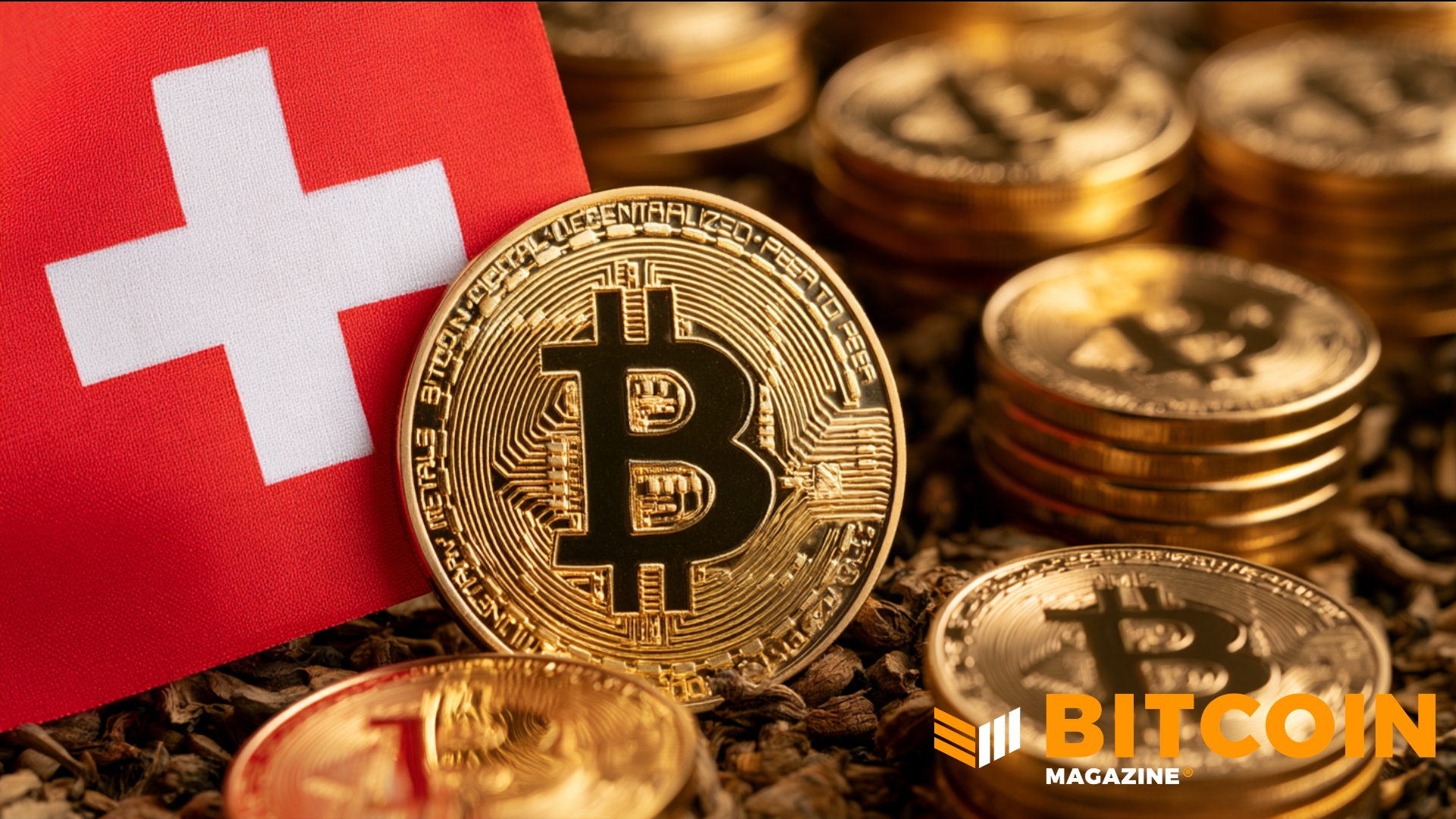
Swiss Financial Regulator Gives Green Light to Country’s First Bitcoin ETF
Swiss financial regulator FINMA has approved the country’s first bitcoin exchange-traded fund for retail investors.
The watchdog said Tuesday that the approval comes as people in Switzerland express a growing interest in crypto — particularly bitcoin.
Bitcoin ETFs — particularly in the U.S. — have widened the scope of investors who can buy and sell the leading cryptocurrency. Via shares that trade on the stock exchange, investors can buy exposure to the biggest cryptocurrency in a safe and regulated way.
“As early as 2021, FINMA authorised a fund for qualified investors that invests primarily in a basket of cryptocurrencies,” the announcement read.
JUST IN:
— Bitcoin Magazine (@BitcoinMagazine) October 20, 2026Switzerland's Financial Market Supervisory Authority has approved the country's first Bitcoin ETF
pic.twitter.com/AOVLGqTa5H
“As Bitcoin has a long trading history and a particularly high trading volume compared with other cryptocurrencies, FINMA has approved an exemption from the applicable risk diversification rules in this case.”
It added: “At the same time, FINMA emphasises that investments in Bitcoin — even through an approved ETF — remain highly risky.”
The announcement did not reveal which asset manager or bank would debut the product. Switzerland already has crypto ETFs limited to institutional or qualified investors on the market.
In the U.S., bitcoin ETFs had the most successful debut in the history of investment vehicles when approved in 2024.
Now, traders, institutions, and retail investors can quickly buy shares that track the price of the leading cryptocurrency and not worry about exchanges or storage of the digital coin.
The funds, managed by Wall Street giants like BlackRock, Fidelity, and Morgan Stanley, manage over $97 billion in assets, according to CoinGlass data.
This post Swiss Financial Regulator Gives Green Light to Country’s First Bitcoin ETF first appeared on Bitcoin Magazine and is written by Mathew Di Salvo.
Bitcoin Magazine
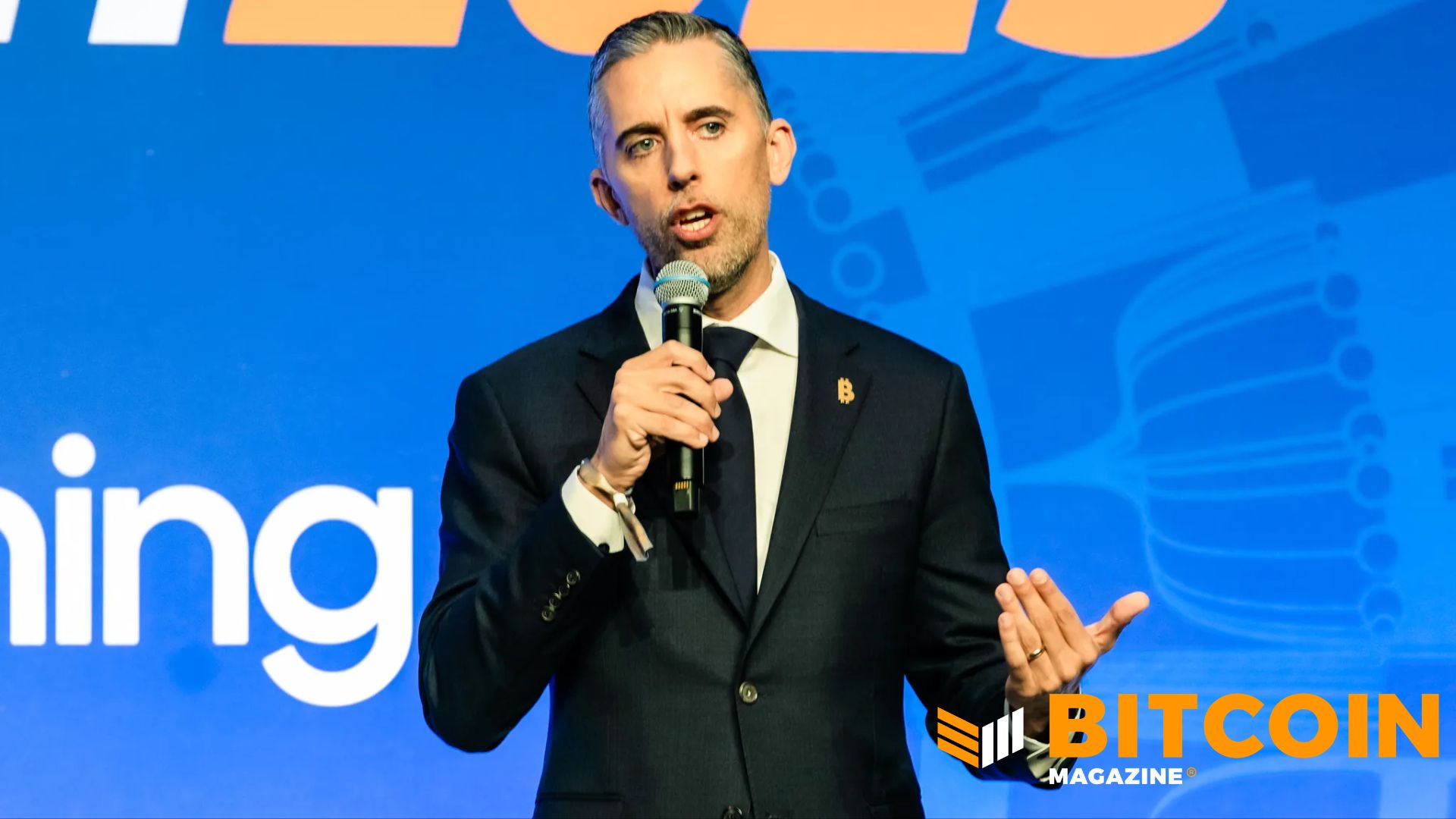
Bitcoin Treasury Strive Debuts New Preferred Stock With 15% Dividend
Bitcoin treasury Strive’s preferred stock, SATS, is now trading on the Nasdaq, according to the company.
The stock debuted Tuesday and will pay a 15% dividend every business day, according to an announcement.
Nasdaq-listed Strive said it closed its upsized initial public offering of 7,000,000 shares of SATS at a public offering price of $90 per share.
JUST IN:
— Bitcoin Magazine (@BitcoinMagazine) October 20, 2026Strive’s 'SATS' has officially IPO’d on the Nasdaq, and is raising $630 million to buy more Bitcoin and income-generating assets
It comes as public companies work to financialize bitcoin via different products. OG bitcoin treasury Strategy, which has five different preferred stocks, proposed daily dividends for its products last month.
“The successful, upsized IPO of SATS marks a critical milestone in our strategy to maximize long-term total returns for our common equity investors,” Matt Cole, Chairman and CEO of Strive, said in a statement.
The Nasdaq-listed Strive also has SATA, another preferred stock, which pays a variable dividend.
Strive debuted as an official bitcoin treasury last year and is now the fourth biggest company in the space.
Founded by former Ohio gubernatorial candidate and tech entrepreneur Vivek Ramaswamy, the company holds 36,818 BTC worth over $3 billion at today’s prices. The company on Monday announced another bitcoin buy of 4,045 BTC between October 12 and 16.
In January 2026, it completed the acquisition of Semler Scientific in an all-stock deal — the first instance of a publicly traded Bitcoin treasury company acquiring another such company.
Like with other digital asset treasuries, the idea is that investors can get amplified returns from Strive’s stock. The company buys bitcoin with equity, and maintains a debt-free balance sheet: no bonds, no credit lines, and no leveraged positions that could trigger forced liquidation in a downturn.
Strive is following in the footsteps of software company Strategy, which started buying bitcoin in 2020. Strategy is now the largest corporate holder of bitcoin, with 848,517 coins worth over $60 billion.
Its five preferred stocks are STRF, STRC, STRK, STRD, and STRE.
Strive’s stock, ASST, was trading 4% higher on Tuesday.
This post Bitcoin Treasury Strive Debuts New Preferred Stock With 15% Dividend first appeared on Bitcoin Magazine and is written by Mathew Di Salvo.
Bitcoin Magazine
Bitcoin Could Outperform Most Assets, JPMorgan Says — But the Bank Still Won’t Recommend It
JPMorganChase’s asset management division has said that while bitcoin is still too volatile to be recommended for strategic investors’ portfolios, the cryptocurrency could outperform most asset classes over the next 10 years.
In its 2027 “Long-Term Capital Market Assumptions” report, the bank said that while volatility in the biggest cryptocurrency’s price has dampened, it is “premature to consider BTC as a diversifier in a balanced portfolio.”
JPMorgan, one of the world’s biggest banks, has utilized Bitcoin’s underlying tech — the blockchain — to debut its own products. But the multinational’s CEO, Jamie Dimon, has long been a Bitcoin skeptic.
JUST IN: The largest bank in the U.S. JPMorgan is forecasting Bitcoin to outperform every major asset over the next decade.
— Bitcoin Magazine (@BitcoinMagazine) October 20, 2026
You are not bullish enough
“BTC currently lacks a clear role as a diversifier in balanced portfolios due to unstable correlations to other asset classes,” the report read.
It added: “We see bitcoin as a speculative asset and a hedge against monetary easing.”
The report went on to show a graph with a base case for bitcoin returns beating stocks, bonds and gold. But it did add that the coin’s volatility could harm its role in portfolios.
“But should volatility continue to decline and correlations to other asset stabilize, this may evolve in the future, particularly as regulation becomes clearer and liquidity and price discovery continue to improve,” it noted.
For now, the report added, bitcoin “mostly trades like a high beta risk asset that tracks global money supply growth.”
Bitcoin has become more popular on Wall Street, especially since the Securities and Exchange Commission green lighted exchange-traded funds to trade in 2024.
President Donald Trump’s pro-crypto stance has also helped: regulators under the U.S. leader have taken a far more open approach to watchdogging the space since 2025.
JPMorganChase boss Jamie Dimon has famously blasted Bitcoin, calling it a “hyper up fraud” and “pet rock” — adding that its only value is to criminals.
Still, he has praised the coin’s underlying technology, and lauded crypto products like stablecoins.
This post Bitcoin Could Outperform Most Assets, JPMorgan Says — But the Bank Still Won’t Recommend It first appeared on Bitcoin Magazine and is written by Mathew Di Salvo.
Bitcoin Magazine
BlackRock Files for Bitcoin ETF With Downside Buffer and Capped Upside
BlackRock has filed for a new bitcoin exchange-traded fund which, if approved, would cap investors’ upside while limiting their losses.
The iShares Bitcoin Managed Protection ETF, or PBIT, would aim “to create and manage bitcoin exposure,” according to a Monday filing with the Securities and Exchange Commission.
It would work buying options and fixed-income strategies to give investors regulated bitcoin exposure with capped upside and some downside protection — but not direct bitcoin ownership.
The fund would suit investors who want to invest in bitcoin but not experience all the volatility that comes with the top cryptocurrency.
Bitcoin has attracted attention for its wild price swings over the years but its volatility has dampened as more investors have bought into the space.
But 2025 was the least volatile year for the asset and the bear market of 2026 has been its most shallow on record: in past cycles, bitcoin’s price has dropped as low as 80% from its all-time high; this year it shed just 50% of its value.
BlackRock’s iShares Bitcoin Trust — IBIT — started trading in 2024 after the SEC gave the green light to 11 spot bitcoin ETFs.
The most successful of the ETFs in terms of flows, the investment vehicle has helped bring bitcoin to Wall Street. Now traders, institutions and retail investors can quickly buy shares that track the price of the leading cryptocurrency.
They don’t need to worry about exchanges or storage of the digital coin, rather, BlackRock buys and holds the bitcoin while investors simply hit the buy or sell button via their brokerage account.
IBIT has the most assets under management out of the bitcoin ETFs, currently handling $65.7 billion.
On Monday, the fund received $665.2 million in fresh investment as bitcoin buyers flooded back into the market.
That’s the biggest number of shares bought in the product since October 2025, when bitcoin notched a new all-time high, according to Farside Investors data.
This post BlackRock Files for Bitcoin ETF With Downside Buffer and Capped Upside first appeared on Bitcoin Magazine and is written by Mathew Di Salvo.
CryptoSlate
October’s burn retired about 30,369 more BNB than July’s, while most of the dollar increase reflected a higher implied valuation per coin.
Read the full story on CryptoSlate
Understand the crypto stories that matter and what to watch next. Get The Catalyst in your inbox
The address Etherscan labels “Drift Exploiter 5” made 258 deposits on October 20, nearly emptying this wallet.
Read the full story on CryptoSlate
Understand the crypto stories that matter and what to watch next. Get The Catalyst in your inbox
A report page shared by @Matt_Hougan shows the 10-to-15-year assumptions, while the firm stops short of a bitcoin allocation.
Read the full story on CryptoSlate
Understand the crypto stories that matter and what to watch next. Get The Catalyst in your inbox
The October 20 notice covers tools built using DeepSeek implementations, with a 60-day exception period tied to July issuance.
Read the full story on CryptoSlate
Understand the crypto stories that matter and what to watch next. Get The Catalyst in your inbox
Musk's 2027 promise concerns his own holdings, while Anthropic's initial allocation needs stockholder approval and future additions remain discretionary.
Read the full story on CryptoSlate
Understand the crypto stories that matter and what to watch next. Get The Catalyst in your inbox
CryptoTicker.io
Worldcoin trades at 0.5875 dollars, and that is 38 percent below the twelve-month high of 0.9487 dollars from 27 October 2025. At the same time the token has gained 14.4 percent in a single day and 51.1 percent over three months. That combination raises the only question that matters for anyone holding cash right now: is Worldcoin a good buy at the current price, or has the easy part of this move already happened?
The figures in this article are our own calculations from the daily closing prices of CoinMarketCap, as of 20 October 2026.
Worldcoin price analysis: where WLD stands and which levels count
Three levels frame the current setup. The 200-day average sits at 0.4375 dollars and marks the line between a recovering and a broken market. The 50-day average runs at 0.4734 dollars and is the shorter-term reference that swing traders watch. Above the current price lies the real obstacle: 0.5979 dollars, the highest daily close of the past 90 days, reached on 4 October 2026.
At 0.5875 dollars, WLD stands 34.3 percent above its 200-day line and 24.1 percent above its 50-day line. The token is therefore not cheap relative to its own trend; it is extended. The day's 14.4 percent jump did not create a new high either. It carried the price back into the zone of the early-October peak, which means the market has returned to a level it already failed at once.
Downside, the picture is better than in spring. The twelve-month low of 0.2344 dollars dates from 2 May 2026, and the price is 150.7 percent above it. At a market capitalisation of 2.24 billion dollars Worldcoin ranks 40 in the overall market. The structure is a recovery off a deep low, not a breakout to new ground.
Is the Worldcoin downtrend broken or only interrupted?
Over twelve months WLD is still down 35.6 percent. A trend that loses a third of its value in a year is not repaired by four good weeks. But two things have changed in the chart since late September, and they are measurable rather than a matter of opinion.
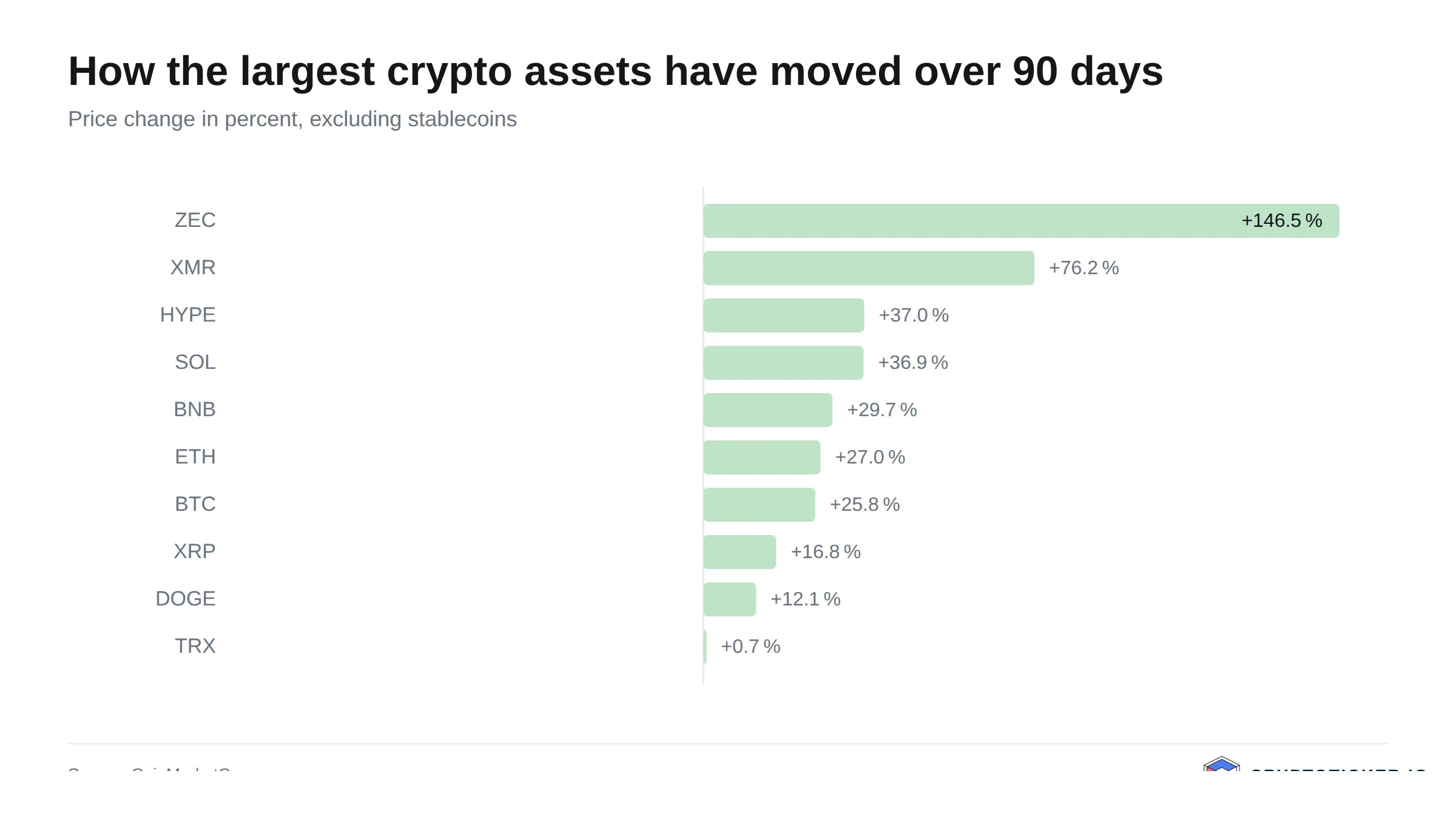
The first is duration. We counted the days on which WLD closed above both its 50-day and its 200-day average: 57 out of the 166 days for which both lines can be calculated, so roughly a third of the time. The current run started on 25 September 2026 and has lasted 25 days. That is the longest such stretch of the past year, and the price has risen 33.5 percent inside it, from 0.4400 dollars.
The second is the comparison with the last episode that looked like this one, and it is the part that deserves caution. From 8 to 27 June 2026 the token also held above both averages, for 20 days. That run ended at 0.4661 dollars, and what followed was not a continuation: WLD lost 18.2 percent within two weeks, 23.7 percent within a month, and bottomed at 0.2994 dollars on 1 August 2026. Anyone who read the June setup as a trend reversal paid for it with a quarter of their position value.
One difference separates the two episodes. In June the 50-day average was still below the 200-day average. On 1 October 2026 it crossed above it, at 0.4199 dollars, for the first time in this series. That crossing is the signal June was missing, and it is the strongest single argument that the downtrend is interrupted rather than merely pausing. It is also the one that would be invalidated first if the price fell back under 0.4734 dollars.
What RSI and the moving averages mean for a Worldcoin entry
The 14-day RSI stands at 48.2. For an entry decision this is the least dramatic number in the whole analysis, and that is exactly what makes it useful. A reading below 30 would signal an oversold market and a cheap entry; above 70 it would warn of an overheated one. At 48.2, after a 14.4 percent day, the indicator says the move has not yet exhausted the buyers.
That is unusual. A gain of this size normally pushes the RSI towards 65 or higher. It did not here, because the preceding days were weak: WLD closed at 0.4890 dollars on 19 October 2026. The jump started from a cooled-off base.
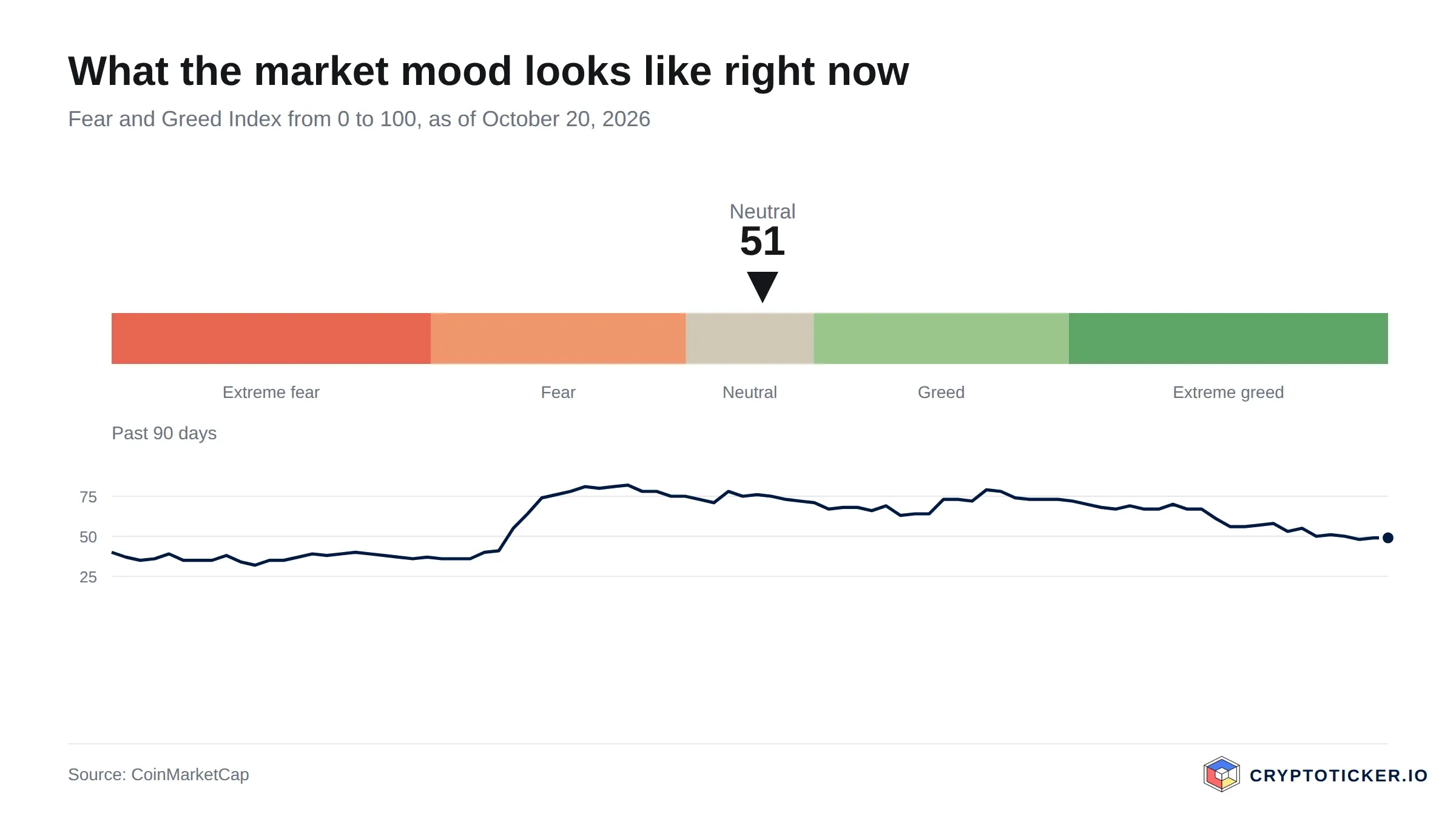
For the entry that leaves a mixed reading. The RSI gives room; the distance to both averages does not. An entry at 0.5875 dollars means paying 34.3 percent more than the 200-day line, and the first support in a setback is not the current price but 0.4734 dollars, roughly 19 percent lower. Market sentiment adds nothing either way at the moment: the Fear and Greed Index reads 51, which is neutral.
Worldcoin trading volume: what it reveals about demand
Volume is the one figure that separates a move carried by real demand from one carried by a thin order book. In the past 24 hours 646.97 million dollars of WLD changed hands. Measured against the 30-day average of 377 million dollars, that is 1.7 times normal turnover, and against the 90-day average of 255 million it is more than double.
Set against market capitalisation, the picture sharpens: 28.8 percent of the token's 2.24 billion dollar value traded in a single day. For a rank-40 asset that is high turnover, and it tells you two things. The move has participation, so it is not a thin-book spike. But the same liquidity that lets buyers in lets them out, and a token that turns over more than a quarter of its capitalisation daily can retrace just as quickly.
What the volume does not show is who is buying, and there is no verified breakdown for this move. What the data does show is that the 35.6 percent gain over 30 days came on rising rather than falling turnover. Advances on shrinking volume fail first; this is not one of them.
Which structural factors speak for Worldcoin
Worldcoin is not a payment token. It is the token of an identity network whose purpose, according to the project's own documentation, is to let a person prove online that they are a unique human being without revealing who they are. That is the investment case, and it is a bet on one proposition: that proof of personhood becomes scarce and valuable as more of the internet is written by machines.
The supply mechanics are the hardest structural number in the file, and they cut both ways. Of a total supply of 10 billion WLD, 3.817 billion are in circulation. That is 38.2 percent, which means 61.8 percent of the supply has not yet reached the market. The release schedule is laid out in the project's whitepaper. For a buyer this is the single most important structural fact: the market capitalisation of 2.24 billion dollars is calculated on the circulating portion, and every future unlock meets demand that has to grow just to hold the price flat.
On the regulatory side, a token whose core product rests on biometric verification carries a risk a pure market token does not. The supervisory framework for crypto asset service providers in the European Union is documented by ESMA. It governs where you can buy WLD; it does not settle the data protection questions attached to the verification model, and those remain the project's own risk.
What speaks for buying Worldcoin at the current price
Three arguments survive scrutiny.
- The trend structure has improved measurably. The 50-day average crossed above the 200-day average on 1 October 2026, and the price has held above both for 25 days, the longest stretch of the year. Both are facts in the chart, not expectations.
- The entry is still far from the ceiling. At 0.5875 dollars the token is 38 percent below its twelve-month high of 0.9487 dollars. A return to that level does not require new all-time ground, only a recovery of what was lost in the past year.
- Demand is participating. Turnover at 1.7 times the 30-day average, and a 51.1 percent gain over 90 days on rising rather than falling volume, describes a move with buyers behind it.
What speaks against buying Worldcoin at the current price
Three arguments cut the other way, and the first is the strongest in the file.
- 61.8 percent of the supply is still to come. With 3.817 billion of 10 billion WLD in circulation, every tranche that unlocks adds sellers who paid nothing close to 0.5875 dollars. Demand has to grow continuously just to keep the price where it is.
- The June episode is the warning. The last time WLD held above both averages for weeks, the run ended at 0.4661 dollars and the token lost 23.7 percent within a month, down to 0.2994 dollars. The setup looked similar; the outcome was a drawdown.
- The entry is extended. 34.3 percent above the 200-day line of 0.4375 dollars and 24.1 percent above the 50-day line of 0.4734 dollars means the nearest real support sits almost a fifth below the current price. A buyer at 0.5875 dollars is paying for four good weeks that have already happened.
Where you can buy Worldcoin and what custody costs
WLD is listed on the large regulated venues, and at smaller order sizes the cost gap between them can exceed a week of price movement. Our exchange comparison sets the fee models side by side, and there is a separate overview of regulated exchanges.
Our reports on Kraken, Bitpanda and Coinbase cover the fee schedules and account requirements in detail. Two cost items are easy to overlook: the spread inside a simplified buy button, usually wider than the stated trading fee, and the withdrawal charge for moving tokens off the platform.
That move is the custody decision. Tokens left on an exchange are held by the exchange; a hardware wallet puts them in your own keeping at the price of the device and the responsibility for the recovery phrase. For a position that is meant to sit through several unlock tranches, self-custody is the more consistent choice. For a position you intend to trade within weeks, the withdrawal fee is money spent twice.
So is Worldcoin a good buy at the current price?
The answer splits by horizon, and the two halves point in opposite directions.
Short term, the entry is poor. The price sits 34.3 percent above its 200-day line, directly beneath the 0.5979 dollar level it already failed at on 4 October, after a 14.4 percent single-day move. The nearest support is 0.4734 dollars. Buying into that configuration means accepting a possible 19 percent setback before the first meaningful floor.
Long term, the case rests on one proposition and one number. The proposition is that verified personhood becomes a scarce good online. The number is 61.8 percent of supply still to be released, which is the mechanical headwind every long-term holder carries.
Our assessment: the chart has genuinely improved, and the evidence is the 1 October crossing of the 50-day above the 200-day average plus 25 days of closes above both lines, the longest run of the year. But the June comparison shows what that evidence is worth on its own: a 20-day run that ended in a 23.7 percent drawdown. The difference this time is the crossing June lacked. We read the setup as a recovery that has earned the benefit of the doubt and not yet earned a premium entry, which is why the 0.4734 dollar line matters more than the next move up. The assumption counts as refuted if WLD closes back below 0.4734 dollars, because that would undo the crossing that distinguishes this episode from June. It would be confirmed by a weekly close above 0.5979 dollars on turnover at or above the current 646.97 million dollars.
Buying Worldcoin: Your next three steps
- Decide your horizon before your size. If you are buying the long-term identity case, the unlock schedule matters more than this week's chart; if you are trading the recovery, 0.4734 dollars is your invalidation level.
- Settle the venue on cost, not on habit. The fee models in our exchange comparison differ enough at small order sizes to outweigh several days of price movement.
- Match custody to horizon. A position meant to sit through unlock tranches belongs in a hardware wallet; one you intend to close within weeks does not need to pay the withdrawal fee twice.
Disclosure: Some of the providers mentioned in this article work with us through affiliate programmes. This has no influence on the price analysis or on the assessment of the chart setup; the price data comes from a public market data source and can be checked there.
(As of 20 October 2026. This article is not investment advice. Prices, fees and terms change; check them with the provider before every purchase. Crypto assets are subject to high price swings, and a total loss is possible.)
Trading in Shiba Inu is as quiet on Tuesday as it has been for weeks; trading in the younger memecoin PEPE is not. SHIB stands at $5.09 per million tokens on Tuesday evening, which CoinGecko puts at €4.53 per million, 1.73 percent above Monday evening's level. Turnover over the past 24 hours comes to $47.96 million. PEPE is 12.23 percent higher over the same period and changes hands for $468.23 million, 9.76 times the amount, on a market capitalisation that reaches only 64.6 percent of SHIB's.
For a holder in Europe this shift is no footnote. Daily turnover decides how expensive the exit becomes, and it helps decide whether an exchange keeps offering the euro pair at all. Holding SHIB since the record leaves a paper loss of 94.10 percent; buying within the past twelve months leaves 49.75 percent. Both figures demand a decision, and both decisions hang on liquidity.
Shiba Inu and PEPE: Tuesday's turnover
The position in figures, as of Tuesday evening, on CoinGecko market data. Shiba Inu: market capitalisation $2.999 billion, or €2.669 billion, rank 36 by market capitalisation, daily turnover $47.96 million, daily range $4.94 to $5.14 per million. PEPE: market capitalisation $1.937 billion, rank 53, daily turnover $468.23 million. Dogecoin, the oldest of the three, sits at rank 12 with a market capitalisation of $12.694 billion and turns over $426.76 million. Bitcoin reaches $82,485 the same evening, up 0.76 percent, so the broad market is barely moving.
The previous day shows the same picture in milder form. At Monday's close CoinGecko reported turnover of $42.0 million for SHIB, $242.4 million for PEPE and $394.2 million for Dogecoin. The gap between SHIB and PEPE stood at a factor of 5.8 and widened over the course of the day to 9.8. A range of 5.8 to 9.8 is the honest description; a single number would not be.
Trading volume explained: why turnover sets the spread
Trading volume is the sum of all purchases and sales in a day, measured in dollars. The spread is the distance between the highest bid and the lowest ask in the order book, that is, the amount you pay twice when buying and selling immediately. The two are connected: the more turnover a pair carries, the more traders post bids into it continuously, and the closer the two sides sit together.
With a token trading 94 percent below its record, that is the practically most important point in this whole article. A price gain of 2 percent earns nothing if spread and slippage cost 1.5 percent on the way out. Slippage here means that an order eats through several price levels of the order book, because the first one does not hold enough on the other side, and the average price turns out worse than the quoted one.
This is exactly where SHIB and PEPE part ways on Tuesday. The $47.96 million of daily turnover is spread across every exchange and every pair in the world. Of that, the five largest venues contribute $5.04 million at KuCoin, $3.96 million at Binance, $2.83 million at Poloniex, $2.70 million at Upbit and $1.99 million at OKX, according to CoinGecko's ticker list. What is left of that in euros and at a venue with a MiCA licence is a fraction. How small that fraction turns out we measured on Monday: only 1.59 percent of SHIB trading runs in euros, as set out in our analysis of the SHIB order book of October 19.
What has shifted since Monday
On October 19 SHIB stood at $4.98 per million; today it is $5.09, so 2.2 percent more. Monday's finding was the thin euro side of the order book; today's finding is that the other side of the comparison has changed. On Monday Bitcoin was the yardstick; today it is a memecoin from the same sector that is smaller and still ties up more trading. The daily high at $5.14 per million held twice on Tuesday, as did the lower edge of the daily range at $4.94. What moved was not the price but the attention.
The market-cap gap: $3.00 billion in October 2025, $1.06 billion today
The real finding sits not in the day but in the year. On October 21, 2025 the market capitalisation of Shiba Inu came to $6.01 billion, that of PEPE to $3.01 billion. The gap stood at $3.00 billion, with PEPE reaching 50.1 percent of SHIB's market capitalisation. Today SHIB stands at $2.999 billion and PEPE at $1.937 billion. The gap has fallen to $1.06 billion, by 64.6 percent, and PEPE reaches 64.6 percent of SHIB's market capitalisation. The calculation rests on CoinGecko's daily series for all three tokens.
Both have lost ground, but to differing degrees. SHIB gave up 50.1 percent of its market capitalisation over those twelve months, PEPE 35.6 percent, Dogecoin 58.1 percent. The sector as a whole has shrunk, and within the sector the order has shifted. Looking only at the price shows none of this, because all three are down.

The crossing mark: $3.29 per million SHIB
From the gap a level can be calculated that appears nowhere else. In circulation are 589.24 trillion SHIB. Dividing today's PEPE market capitalisation of $1.937 billion by that circulating supply yields a SHIB price of $3.29 per million. Below that value Shiba Inu would be smaller than PEPE by market capitalisation, provided PEPE stands still. From today's $5.09 that is a distance of 35.4 percent to the downside.
The same calculation from the other side: PEPE would have to gain 54.8 percent to catch SHIB in market capitalisation, assuming SHIB stands still. Neither figure is an expectation, and neither works as a target. The number is a yardstick against which the coming weeks will show whether the year's shift continues or comes to a halt.
Turnover ratio: 1.60 percent at SHIB, 24.18 percent at PEPE
The turnover ratio sets daily turnover against market capitalisation and says what share of a holding changes hands in a day. At Shiba Inu it comes to 1.60 percent on Tuesday, at Dogecoin 3.36 percent, at PEPE 24.18 percent. The PEPE value sits at fifteen times the SHIB value.
A high ratio is no merit in itself. The value also shows that a large part of this trading is short term and can vanish again the next day. A ratio of 1.60 percent shows something else instead: the SHIB holding largely lies still. In a token whose investment case lives entirely on attention, a dormant circulating supply is a risk rather than a cushion.
Sector rotation in memecoins: how it ran at Dogecoin
Sector rotation means money migrating within a group of tokens without leaving the group. Dogecoin has demonstrated it. In October 2025 the oldest memecoin still stood at $30.30 billion, five times SHIB's market capitalisation; today it is $12.69 billion and therefore 4.2 times. Its turnover nonetheless reaches 8.9 times SHIB's today, at $426.76 million.
The mechanism behind it is unspectacular. New tokens launch with a small circulating supply and without legacy holdings that want to sell into the first rise. The older a memecoin becomes, the more holders sit trapped at higher entry prices, and the more supply meets every price advance. SHIB has 99.96 percent of its tokens in circulation, so no new supply arrives from unlocks; the supply comes out of the portfolios of the 2021 holders.
What the one-year period under section 23 of the German Income Tax Act triggers in a swap
Anyone now considering swapping SHIB for another memecoin should know a rule that many overlook. A token-for-token swap is a disposal for tax purposes and not a transfer. Under section 23 of the German Income Tax Act, a gain from private disposals stays tax free if more than one year lies between purchase and sale. The swap ends that period for the holding given up and starts it at zero for the new one.
In practice that means: if your SHIB holding is down, the swap realises a loss that can be offset against gains from other private disposals of the same year, and only against those. If it is up and less than a year old, the swap costs tax on the gain. The one-year period runs separately for every purchase tranche, not for the portfolio as a whole. The cut-off for offsetting within a year is December 31.
That the tax office learns about it has been the norm since the eighth version of the EU directive on administrative cooperation. The Federal Central Tax Office operates the reporting channel provided for it. Your own records do not replace that; they only protect you from standing there without evidence when a question comes.
Measuring order book depth on your own account
The figures in this article are world figures. What counts sits in the order book of your exchange, and that can be looked up in two minutes. Open the SHIB euro pair, read off the highest bid and the lowest ask and form the difference as a percentage of the midpoint. That gives the spread. Then enter the actual number of tokens in the sell window, without submitting the order, and compare the proceeds shown with the number of tokens times the mid price. The gap between them is the slippage.
If spread and slippage together come to more than 1 percent, that argues, for a position meant to be sold only in parts anyway, for smaller partial orders or for a different venue. Which exchanges keep a deep euro order book and what they charge for it is set out in our comparison of crypto exchanges.

Custody and MiCA: where holders in Europe stand
MiCA is the EU regulation on markets in crypto-assets and has governed step by step since 2024 who may offer crypto services in the EU. For a holder of SHIB that has two tangible consequences. First, the purchase route through an authorised provider is the only one where a European supervisor has jurisdiction in a dispute. Second, custody remains a separate decision, because a token in an exchange account belongs to its owner only as long as the exchange is solvent.
SHIB is a token on the Ethereum blockchain, with Shibarium as the associated layer-2 blockchain. Any wallet that manages Ethereum tokens can therefore hold SHIB, and a hardware wallet keeps the private key off the computer. Which devices deliver that at what price is set out in our hardware wallet comparison.
Our assessment of the position at Shiba Inu
From this newsroom's point of view, Tuesday's turnover is the more important signal than the price. The evidence: a turnover ratio of 1.60 percent against 24.18 percent at PEPE, a market-cap gap that has fallen from $3.00 billion to $1.06 billion in twelve months, and 99.96 percent of tokens in circulation, so no inflow that revives trading by itself. That argues that SHIB is ceding share within its own sector to younger tokens.
Against it stands the counter-calculation: PEPE needs a 54.8 percent rise to reach parity, and a turnover ratio of 24 percent on a single day can vanish as quickly as it appeared. Added to that is October 27, the fifth anniversary of the SHIB record, which should bring the token additional attention. This is an assessment of the position, not a recommendation to buy or sell. As with any memecoin, a total loss is possible.
SHIB and PEPE: 35 percent of distance still separates the ranking
Tuesday evening's position in one sentence: Shiba Inu holds $5.09 per million and 36th place by market capitalisation, but is losing trading activity to a token that is smaller and moves more. Three steps turn that into work that can be done today.
- Read off spread and slippage on your own account. Highest bid against lowest ask, then run your own token count through the sell window. More than 1 percent together is a reason to change venue; which one is deep enough in euros is shown by the exchange comparison.
- Write down purchase tranches with dates. Every tranche has its own one-year period, and every swap ends it. Keeping that cleanly means knowing your offsettable loss before December 31; the tools for it are in the comparison of tax tools.
- Separate custody from the trading decision. A holding meant to sit still does not have to sit in an exchange account. What a device costs and delivers is set out in the hardware wallet comparison.
The level against which the coming weeks can be read is $3.29 per million SHIB. Below it, Shiba Inu would be smaller than PEPE by market capitalisation. Above it the ranking stays as it is, even if the trading happens elsewhere.
(As of October 20, 2026. This article is not investment advice. Prices and fee structures change; check the terms with the provider before you buy.)
The proceeds of the attack on Drift Protocol are moving again. On October 20, 2026, wallets that observers attribute to the attacker forwarded a large part of the stolen ether to the Tornado Cash mixer, after the addresses had lain still for around two months. Figures for the sum diverge and range between $32 million and $61.6 million. For European investors this is no distant piece of news: laundered ether ends up on the open market, and accepting it unknowingly risks a frozen deposit.
25,700 ether in two hours: the figures on the October 20 movement
The largest value comes from the analytics service Lookonchain. According to its reading, 25,700 ether worth around $61.56 million flowed into Tornado Cash within two hours on October 20. The first report of the day came from Onchain Lens and was smaller: 13,400 ether, equivalent to roughly $32 million, out of an address that observers label "Drift Exploiter 5". The security firm Salus independently counted 19,600 ether, around $46.81 million, spread across 196 individual transactions.
To put the magnitude in context: one ether costs around $2,436, or €2,168, on October 20, 2026. The 25,700 ether in the Lookonchain calculation therefore amount to roughly €55.7 million.
Three observers, three sums: the method explains the $32 million to $61 million range
The range is not a contradiction but a consequence of how it is measured. Each service watches its own groups of addresses, cuts the time window differently and converts at different prices. Onchain Lens reported early in the day; Lookonchain updated later and thereby captured more transactions. Salus evaluated a third slice. Only the range is therefore reliable, not any single number. Citing the smallest figure understates the day's movement; taking only the largest attaches you to a snapshot.
Mixer: a mixer is a contract on the blockchain that pools deposits from many users and later pays them out in equal-sized pieces, so that deposit and withdrawal can no longer be linked unambiguously.
What a crypto mixer such as Tornado Cash does technically
Tornado Cash works with fixed denominations and a cryptographic proof. Whoever deposits receives a secret note. On withdrawal, that note proves they deposited at some point without showing which of the deposits was theirs. The more participants sit in the pool at the same time, the larger the crowd in which a single sum disappears. That is precisely the point of the 196 individual transactions Salus counted: many small steps are harder to attribute than one large transfer.
The technique does not erase the trail completely. Analytics firms work with time windows, amounts and the behaviour of the addresses afterwards. The fact that three services noticed the movement independently on the same day shows how closely such addresses are now watched.

81,500 ether remain with the attacker: the rest of the proceeds
The October 20 movement has not used up the proceeds. Arkham Intelligence subsequently put the remaining balance at around 81,454 ether, roughly $194 million. Lookonchain arrived at around 81,864 ether and therefore roughly $195 million. Earlier estimates ran between 82,000 and 94,000 ether and up to $224 million. The attacker thus still commands a multiple of what passed through the mixer that day.
Two months of stillness before the movement
The rhythm stands out. The addresses lay inactive for around two months before turning active on a large scale in a single day. That pattern is familiar from other cases: waiting until public attention has faded means meeting fewer observers, and services that no longer check an address daily.
The attack of April 1, 2026: $295.4 million on a Solana platform
Drift Protocol was a trading venue for derivatives on the Solana blockchain. On April 1, 2026 it lost the bulk of the customer funds deposited with it in short order. The Drift Foundation itself speaks in its recovery report of around $295.4 million taken from users. Individual trade publications name $285 million and a sequence lasting twelve minutes; the first reports in the week of the attack came in above $270 million. The range of $285 million to $295.4 million is therefore the reliable frame.
What became of the platform was described by this newsroom in October: a successor launched under the name Velocity. The details are set out in the report Velocity replaces Drift after the hack.
Mandiant and Chainalysis both point to North Korea but name different groups
Here the investigators diverge, and that belongs in the picture. In its report of June 3, 2026 the Drift Foundation relays the investigation by Mandiant, which by its own account attributes the attack unambiguously to the group UNC6862, a North Korean threat actor. TRM Labs and Chainalysis point instead to UNC4736, also known as Citrine Sleet, likewise with a state link to North Korea. The two attributions share the origin and differ on the group named. No conclusive public finding by an authority exists.
Involved in tracing the funds, according to the foundation, are Mandiant, zeroShadow and SEAL 911. A comparable case lies only weeks back: at the exchange Bitget, Chainalysis attributed a theft of $387 million to the same origin, as set out in our report on the Bitget attribution.
$9.2 million frozen: what the Drift Foundation says about recovery
The recovery record is sober. Of the roughly $295.4 million, about $9.2 million had been frozen according to the foundation, so around 3 percent. Frozen does not mean recovered: the foundation writes that release runs through law enforcement and takes time. Proceeds had already gone through Tornado Cash in August, so the October 20 movement is not the first.
Affected users can register claims through a compensation pool that runs under the ticker DFX. The first payouts in early October came to slightly more than 1 percent of user losses, and claims were opened at one cent per token. In addition there is a public bounty of 10 percent on funds successfully recovered, which the foundation has posted jointly with Bybit.

Tornado Cash has been off the US sanctions list since March 2025
A widespread misunderstanding concerns the legal status of the mixer. The US Treasury removed Tornado Cash from the sanctions list on March 21, 2025. The notice carries the title "Cyber-related Designation Removal; North Korea Designation Update and Removal" and lists the TORNADO CASH entry together with the associated ether addresses among the deletions. It can be read in the announcement by the US sanctions authority OFAC. It followed the judgment of the Fifth US Circuit Court of Appeals in Van Loon v. Department of the Treasury of November 26, 2024.
The removal concerns the tool, not the act. Stolen funds remain stolen, whichever route they take. For one of the founders the designation under the North Korea programme even remained in place under the same notice, while the cyber designation fell away. Concluding from this that a deposit with mixer history is unproblematic confuses sanctions law with anti-money-laundering supervision.
Anti-money-laundering law: an exchange in Germany may hold a deposit back
Providers serving customers in Germany fall under the Money Laundering Act. These firms have to check the origin of assets, report suspicious activity to the Financial Intelligence Unit, and may hold a transaction back until it is clarified. In practice they work with the same analytics services that are tracking the Drift proceeds. If an incoming sum appears at a short distance from a mixer or from a flagged address, the system fires.
For the customer that means: the credit may sit unprocessed, a withdrawal is stopped, and the provider asks for evidence of origin. A case like that is resolved through documents, not through objection. Purchase receipts, bank statements and a traceable path from entry to deposit are then the only basis on which anything can be clarified. Buying through licensed firms gives you that record anyway. An overview of regulated providers is kept by this newsroom in the comparison of crypto exchanges.
Custody and deposit routes: where second-hand ether gets noticed
The risk arises not when buying at a licensed exchange but at the edges. Direct deals with unknown counterparties, swap offers in chat groups and payments from strangers for services are the usual entry points for funds with a history. Accepting ether from such sources and depositing it at an exchange later puts the burden of proof on you.
Self-custody changes nothing about origin. A hardware wallet rules out third-party access to the keys and is the most effective measure against phishing and attacks on services, but it does not turn flagged funds into unflagged ones. The devices and their handling are set side by side by this newsroom in the hardware wallet comparison. The benefit lies in protecting your own holdings, not in cleaning up a history.
With a stopped withdrawal, evidence counts for more than objection
Answer the provider's enquiry in full first, with date, counterparty and amount. Then assemble the transaction hashes that show the path of the funds back to your own entry point. If you do not know the origin yourself, say so openly, because an invented explanation weighs more heavily with a supervisor than a gap.
In context: a mixer deposit is no evidence of a sale
One distinction to close with, which gets lost in many reports. That 25,700 ether flow into a mixer says nothing about whether and when they will be sold. The funds then sit in a contract, and the destination of the withdrawal is open. No immediate pressure on the ether price can be derived from this, especially as the sum is small against daily trading volume. Reading the movement as a sell signal attributes to the data something it does not carry. The transaction is documented, the intention behind it is not.
Three points remain open: which group is actually behind the attack, when the frozen $9.2 million will be released, and where the remaining 81,500 ether or so will go.
Drift proceeds: 81,500 ether still sit with the attacker
- Check which routes brought ether into your holdings, and file purchase receipts for every entry point. For future purchases, the safe route runs through licensed providers from the exchange comparison.
- Move larger holdings into your own custody so that an attack on a service does not reach your keys. The devices in the hardware wallet comparison show the differences in handling and backup design.
- Avoid direct deals with unknown counterparties. If a deposit stalls regardless, answer the provider's questions with evidence rather than objection.
(As of October 20, 2026. This article is not investment advice. Prices and fee structures change; check the terms with the provider before you buy.)
A Nasdaq-listed company that had built its balance sheet on Solana has held no SOL at all since October 16. SkyAI, known as Sharps Technology until the rename, has sold a little over 2 million SOL, sits on roughly $223.8 million in cash and is offering its own shareholders up to $201.3 million of that in a buyback. What counts for the price is less the quantity sold than the price at which this seller got out: $107.51 on average, net of fees. SOL trades at $106.32 on Tuesday evening, 1.1 percent below that mark.
This is no footnote from the world of US balance sheets. Six listed companies hold just over 17 million SOL between them, and whatever happens to those holdings feeds into the same order book that European investors buy in. Where the price may point over a horizon of months is covered in our Solana price prediction. This article answers the question that comes before it: what happens when a holder of that size closes the door from the inside.
SkyAI sells 2 million SOL: the sequence from October 11 to 16
In September the company still reported more than 2 million SOL. On October 11 it disclosed having sold around 1 million of them. An update dated October 14 still showed 210,000 SOL on the balance sheet, alongside $204.6 million in cash. By October 16 the holding was at zero. The filings submitted to the US Securities and Exchange Commission for the buyback offer date the completion of the sales to October 15. The sequence was reported by the trade outlet coinpaper on October 19, drawing on the company's own disclosures.
The company puts the average price at $107.51 per SOL, net of fees. That figure, however, covers only the transactions completed before the October 14 update. For the remainder of the holding, the final 210,000 SOL, no separate price has been given. Reading the $107.51 as an average across the entire liquidation puts a number in the company's mouth that it never named.
Measured against supply, 2 million SOL amount to 0.34 percent of all 589.5 million coins. Measured against trading it is more than it sounds: with daily turnover of $2.67 billion, $213 million equals roughly 8 percent of a full trading day. Spread across five days that stays digestible; in a single session it would not have been.
$107.51: the price at which a seller with no choice got out
Levels usually come out of the chart. This one comes out of a balance sheet, which makes it firmer than a drawn line. A seller who had to unwind a position in full, because a buyback offer to its own shareholders depended on it, received $107.51 on average. Above that level, in other words, the market was able to absorb selling pressure of this magnitude without breaking down.
Tuesday's low was $103.66 and the high $107.93. The price is swinging right around the exit level. If SOL closes above $107.51 for several days, the selling pressure from this one firm has been worked off without the market keeping it. If the price falls below and stays there, the buyers from that period are under water, and that zone is where follow-on selling tends to sit.
The $100 level, which we described as decisive on October 14 and again on October 17, has held in the meantime. In our article of October 14, SOL stood at $103.82, and at $103 on October 15. Today it is $106.32, up 1.75 percent over 24 hours and down 1.59 percent on the week. The holding drained away, then, without breaking the support. That is the real finding of this week, and it reads more positively than the headline suggests.
Yesterday we examined the capital turnover of the Solana blockchain in this slot: 2.2 times the trading volume of Ethereum on an eighth of the capital tied up. What has been added since is the cross-check on the supply side. A market that absorbs a good 2 million SOL from a forced unwind in five days and ends 2.5 percent above its daily low confirms exactly the turnover we measured yesterday in the volume figures. The difference: yesterday it was a metric, today it is a completed sale.
Treasury companies: the discount to net asset value explains the exit
A crypto treasury company is a listed company whose business purpose is essentially to hold a cryptocurrency and fund that holding through the equity market. Investors do not buy the coin, they buy a share with coins behind it. The metric for this is mNAV: the ratio of the company's market capitalisation to the net asset value of its holdings. An mNAV of 1.0 means the market is paying exactly market value for the holding.
The model only works above 1.0. If the share trades above net asset value, the company can issue new shares, buy more coins with the proceeds and raise the holding per share. Once mNAV slips below 1.0 the mechanics invert: every new share dilutes existing holders, and the most sensible use of capital is to buy back its own stock. That is precisely where the sector stands right now.

17 million SOL sit in six balance sheets, all below net asset value
The Solana treasury tracker run by The Block lists six listed holders with 17,045,723 SOL between them. That is 2.89 percent of the circulating supply and, at today's price, around $1.81 billion. The tracker names no cut-off date, and it still shows Sharps Technology with 1,997,796 SOL, the very position the company has since sold in full. The remaining rows are therefore to be read as a snapshot rather than a current holding.
- Forward Industries (FWDI): 7,550,000 SOL, mNAV 0.73, so 27 percent below net asset value
- DeFi Development Corp. (DFDV): 2,490,304 SOL, mNAV 0.38
- Solana Company (HSDT): 2,300,000 SOL, mNAV 0.72
- Upexi (UPXI): 2,174,583 SOL, mNAV 0.25, the widest discount in the field
- Sharps Technology (STSS), today SkyAI: 1,997,796 SOL in the tracker, zero in reality
- Sol Strategies (STKE): 533,040 SOL, mNAV 0.83
None of the six trades at or above the net asset value of its holdings. The range runs from a 17 percent discount at Sol Strategies to 75 percent at Upexi. For an investor that means: buying one of these shares gets you a SOL for considerably less than on an exchange, but carries the risk that the discount never closes. SkyAI has demonstrated how it can be closed, namely by liquidation.
The buyback offer: $3.00 per share until October 29
On October 19 SkyAI tabled a cash offer of up to $201.3 million. It is bidding $3.00 per share or per warrant and will accept up to 95 percent of each eligible class. The deadline falls on October 29, unless the company extends it or terminates the offer sooner. Funding comes entirely from cash on hand, with no new debt. If the offer is taken up in full, around $22.5 million remains before transaction costs.
One condition has fallen away, and it says more about the situation than the figures do: originally the offer was to apply only as long as SOL traded above $100 during the acceptance period. The company struck that clause because it no longer holds any SOL, which leaves the price irrelevant to the funding. SkyAI has announced no return to a Solana holding; the company is repositioning towards an AI-driven financial platform.
Bastion Trading demands $3.50 and changes to the board
Opposition is coming from the shareholder base. Bastion Trading, which has disclosed just under 9.99 percent of the common stock, is demanding a buyback price of at least $3.50, an independent review of the SOL transactions and personnel changes on the board. The charge behind it is that the offer does not protect shareholders adequately. We do not have a verbatim statement from Bastion; the demands are reproduced in summarised form from press coverage.
Our assessment: for the SOL price this dispute is the better of two pieces of news. As long as the buyback price is being negotiated, the argument is about distributing cash on hand rather than about sales into the market. Selling pressure from this firm has been history since October 16, evidenced by the holding of zero and by the deleted $100 clause. There is a second point against that: five more companies still hold a good 15 million SOL, and all five trade below net asset value. What was the end at SkyAI is a viable route for them. No buy recommendation follows from this, but a requirement does: with any SOL position, know which wrapper it sits in.
Tax in Germany: a holding period on the coin, flat tax on the share
Here is the point at which the case touches European investors directly. The same economic bet on Solana is taxed entirely differently depending on the wrapper.
If you hold SOL directly, section 23 of the German Income Tax Act applies: the sale is a private disposal, and after a holding period of one year the gain is tax free. How stable that rule is remains under debate; we track the state of play in our overview of the crypto holding period. If you hold the share of a treasury company instead, it is a security: 25 percent flat tax plus the solidarity surcharge and, where applicable, church tax, due from the first euro of gain above the €1,000 saver's allowance. There is no holding period there after which nothing more falls due.
The difference becomes concrete in a cash offer. Tendering shares into a buyback realises a sale for tax purposes, even if it feels like a repayment. With a SOL that had sat in your own wallet for more than a year, the same transaction would have carried no tax at all.
How to check what your Solana exposure actually consists of
Three points count now. First the wrapper: does your statement show a coin, an exchange-traded product or a share? The holding period applies only to a coin under your own control. Second the backing: an exchange-traded product on SOL should be physically backed, and the backing ratio appears in the issuer's key information document. Third the discount: with a treasury share, the current mNAV belongs on the table before any purchase, because it decides whether you are buying SOL cheaply or a structure that keeps its discount.

The same thought applies one level down, to custody. Holding SOL directly and intending to use the one-year period requires an unbroken record of purchase date and purchase price. If the coins sit on an exchange that pools balances, that record is harder to produce than with your own wallet and a clean transaction history.
Fund flows and the date on October 21
Alongside the balance-sheet holders stands the second large source of demand, the funds. As we reported on October 10, the run of 14 weeks of inflows into Solana funds ended with an outflow of $24.8 million, of which around $21 million came from a single product; cumulatively, net inflows still stand at $1.58 billion, $816.8 million of that in the current year. Fund demand has not gone away, then, it has merely lost its streak.
On the technical side Alpenglow is pending, the largest change to the consensus of the Solana blockchain. The goal is transaction finality in the region of about 150 milliseconds instead of the current twelve seconds and change; the project page at solana.com tracks the state of play. We reported the start on October 14 for Epoch 1064 on October 21. If you stake yourself, check before the switch whether your own validator is coming along; if you stake through a provider, the information sits in that provider's status notice. The date is no trigger for the price, but it very much is one for staking yield.
Nothing changes on the route to buying. Under the European MiCA regulation, providers selling or holding crypto in Germany need authorisation; which firms have it and what they charge is shown in our comparison of crypto exchanges.
Solana treasuries: the payout is decided by October 29
The first large Solana balance-sheet holder has closed its position, the market has shrugged it off, and the price of its exit sits at $107.51. Three steps follow from that:
- Establish by October 29 which wrapper your Solana position sits in. If it is a treasury share, compare its price with the net asset value per share before you add to it. If it is a coin, the direct route runs through an authorised exchange, with terms in the comparison of crypto exchanges.
- Document the purchase date and purchase price of every SOL tranche so the one-year period stays provable. Which tools pull that automatically out of exchange exports is set out in the comparison of crypto tax tools.
- Move holdings you intend to hold beyond the one-year period into your own custody, and check the status of your staking before October 21. Suitable devices are shown in the comparison of hardware wallets.
(As of October 20, 2026. This article is not investment advice. Prices and fee structures change; check the terms with the provider before you buy.)
The TRON blockchain settled stablecoin payments worth $2.2126 trillion in the third quarter of 2026, more than in any quarter before it. Its own token is not keeping pace: the supply of TRON grew on every single day from July 1 to October 16, because the amounts burned were smaller than the amounts newly issued. For holders that is no footnote. Holding or staking TRX means earning a yield in a token whose quantity rises by a good one and a half percent every year.
This article works out where the new supply comes from, how wide the gap between issuance and burn currently is, what the new seat held by Tron Inc. in the governance set has to do with it, and what investors in Germany should take from it for the buying route, custody and tax.
Price of the week: TRX at $0.3312 and 0.75 percent up over seven days
TRX costs $0.3312, according to CoinGecko, as of 3 p.m. on Tuesday. Over seven days it is up 0.75 percent, over one day down 0.16 percent. The weekly high came on October 17 at $0.3351, the weekly low on October 14 at $0.3272. The whole week's range is therefore 2.4 percent, unusually tight for a token ranked 8 by market value.
Measured against the wider market, that small gain is notable. Bitcoin lost 2.21 percent over the same seven days and trades at $81,583; ether gave up 4.58 percent and stands at $2,395. Of the 25 largest crypto assets excluding stablecoins, only a handful closed the week higher, and TRX is among them. Market value stands at $31.46 billion, the float at 95.0 billion TRX. The record price from December 2024, $0.4313 at the time, is 23 percent away.
What the tight range says about trading
Daily volume of around $306 million equals just under one percent of market value. A token that turns over only one percent of its value a day and whose price moves 2.4 percent in a week is mostly held and used, not traded. That fits a blockchain whose main purpose is the transfer of stablecoins.
108 days in a row: TRX supply grew every day since July 1
The figure comes from an analysis of the daily data published by CryptoSlate on October 17: on all 108 days from July 1 to October 16, 2026, the newly issued amount of TRX exceeded the amount burned. In the third quarter the network issued 360,217,352 TRX and burned 234,453,624, a net addition of 125,763,728 TRX. Over the first 16 days of October, 62,650,984 issued stood against 39,778,374 burned, a net gain of 22,872,610. Across the 108 days that adds up to 148.6 million extra TRX. The full calculation is at CryptoSlate.
In percentage terms it sounds harmless. The third-quarter increase equals 0.133 percent of an opening stock of around 94.850 billion TRX. What counts is the direction, not the size of a single quarter: 108 days without a single exception are neither chance nor market mood, but the result of a fixed rule in the protocol. Treating TRX as a scarce good means having misread the protocol.
136 TRX per block: where the new supply comes from
The TRON blockchain pays out two rewards, and both are created new. The producer of a block receives 8 TRX. On top of that the protocol distributes 128 TRX per block to the elected nodes and through them to their voters. Both values sit as network parameters in the blockchain itself and are described in TRON's developer handbook. Together that makes 136 TRX, for every block, regardless of how much happens on the blockchain.
cryptoticker.io measured how often that happens. The basis is the network parameters of the TRON blockchain and two blocks 28,800 blocks apart, three checked objects in total. Between those two blocks lay 86,430 seconds, which gives a block time of 3.001 seconds and 28,790 blocks in a day. Multiplied by 136 TRX, that is 3,915,440 new TRX a day, around $1.30 million at the current price. Over a year it comes to 1.43 billion TRX, which is 1.504 percent of today's float. cryptoticker.io collected this analysis itself on October 20, 2026.
The cross-check agrees. Scaling the daily issuance up over the 108 days yields 422.9 million TRX. That same total comes out of adding the issuance CryptoSlate reports for the third quarter and the first 16 days of October. Two independent routes lead to the same amount, which settles what the increase hangs on: the running reward per block, not a one-off special distribution.
Burn against issuance: 63.5 percent coverage in October
TRON burns TRX in several places: on fees paid in TRX, on the creation of new accounts, on certain contract calls. Over the first 16 days of October those burns covered around 63.5 percent of the new issuance. In the third quarter it was a good 65 percent. Every third newly issued TRX therefore stays in circulation.
For the balance to tip, one of two things would have to happen. Either burns rise by 57.5 percent at unchanged issuance, or issuance falls by 36.5 percent at unchanged burns. The first depends on how many fees are actually paid in TRX. The second would mean changing the two reward values, and that is a matter for the governance vote the next section deals with.

$2.21 trillion in stablecoins against a $93.88 billion balance
The other side of the calculation is impressive. According to the quarterly report from TRON DAO Research, the project's own research unit, the blockchain settled stablecoin payments worth $2.2126 trillion in the third quarter of 2026, 5.1 percent more than in the second quarter. The daily average rose by 3.9 percent. The balance of USDT and USDD on TRON stood at $93.88 billion at the end of the quarter, up 5.5 percent.
A network that moves more money in three months than some national payment infrastructures, and a token whose quantity grows by 126 million units in that same time: this contradiction is the heart of the matter. Usage and token scarcity are two separate quantities at TRON, because a large part of the usage never reaches the burns at all. The section on energy and bandwidth further down explains why.
Tron Inc. has held the 27th place in the governance set since October 18
On October 19 Tron Inc., the Nasdaq-listed company trading under the ticker TRON, announced that its node had been elected into the circle of 27 Super Representatives. As of October 18 the node ranked 27th with around 0.76 billion delegated TRX. A subsidiary takes on block production, verification of transactions and participation in governance. The company also recorded the election in a mandatory filing with the US Securities and Exchange Commission.
The 27 Super Representatives are where the two reward values from the previous section could be changed. Whoever sits there votes on protocol proposals. That makes the seat more interesting for holders than the news suggests at first glance: cutting the reward of 136 TRX per block would change the supply arithmetic immediately, and it would have to be decided in that circle.
Tron Inc. gives running revenue on the blockchain as its reason. Chief executive Rich Miller points to recurring earnings from node operation and to the growth of the network. Part of the company's position is that it topped up its TRX holding by 148,607 tokens shortly beforehand and now holds more than 719 million TRX. Place 27 is the last of the 27 seats, and the delegated amount is a snapshot from October 18 that changes with every shift in votes.
Energy and bandwidth: fees that burn no TRX at all
TRON has two ways of paying for a transaction. One is a fee in TRX, and that part is burned. The other runs through energy and bandwidth, two resources obtained by freezing TRX or rented from others. Paying that way burns no TRX; it consumes a resource that refills by itself.
That explains the contradiction from the previous section. The more professional the users, the more runs on rented energy, and the less arrives at the burns. For users this is good news at first, because it makes a USDT transfer cheaper. For the token's supply arithmetic it is the bad half: growing usage does not automatically land in the burn. Sending USDT over TRON frequently therefore usually means paying through rented energy rather than in TRX.
Where things stand since October 10: Polygon, payments and the TRX price
The last German article on TRON in this slot appeared on October 10 and dealt with the opening of Polygon's payment kit to TRON. TRX traded at around $0.333 back then. Almost nothing has happened to the price since; ten days later it stands at $0.3312, down 0.5 percent. The $0.33 level has held over those ten days, and the weekly low of $0.3272 on October 14 sat only just below it.
Two things have been added since October 10 that shift the view. First, the analysis of the supply data on October 17, which turned a feeling into a number. Second, the governance seat of October 18, which shows that listed companies now treat node operation as a business model. The payments side of the story, which the October article ran on, is confirmed by the quarterly report; the token side is not.
Levels above and below: $0.3351 and $0.3272
On the upside the first well-founded level is the weekly high of $0.3351 from October 17. Above it follows the round $0.35 level, which TRX last saw in early October. On the downside the weekly low of $0.3272 from October 14 marks the floor of the current range, and below it $0.32 would be the next round level.
These are observations from the price range of the past seven days, not price targets and not a recommendation. What makes them usable is the tightness: as long as TRX moves between $0.327 and $0.335, a holder's return is decided above all by the difference between the staking yield and the annual supply growth of 1.504 percent, and only secondarily by the chart.

The date of the week: the Fed decision on October 28
There is no TRON-specific date in the coming days. The pace for the whole crypto market this week is set by the US central bank: the Federal Reserve's open market committee meets on October 27 and 28, 2026, and the decision falls on the second day. For a token with a range as tight as TRX's, that is the most likely trigger for the levels from the previous section to be tested at all.
Staking at TRON: 1.504 percent new supply against the yield
The 128 TRX per block are the source of staking earnings at TRON. Freezing TRX and delegating your vote to one of the elected nodes earns a share of them. That also means the yield does not come from fees paid by users but from newly created tokens. Your share of the total float only grows if your yield exceeds the annual supply growth of 1.504 percent.
That is the number against which every offer has to be measured. A nominal yield of two percent means a real gain of about half a percent after dilution. Delegating through a platform rather than directly deducts its share as well, and some providers add a lock-up period during which selling is impossible. Which providers carry which terms and which lock-ups is therefore worth comparing before delegating.
What happens to your rights when you freeze
Frozen TRX stays at your disposal; it is merely non-transferable for a time. The protocol sets a maximum duration for the delegation. Going through a centralised platform, by contrast, hands over the keys and adds that provider's default risk. This difference matters more than a tenth of a percent of extra yield.
Buying route, custody and holding period: TRX in Germany
TRX is listed on all the large trading venues licensed in the EU. Since the MiCA regulation there is no longer any need for a provider from outside the EU. When comparing, look at the spread and not only at the stated order fee, because with a token whose daily ranges are this tight a wide spread eats the advantage quickly. The spread is the larger cost item with TRX.
On custody, the same applies to TRX as to any other crypto asset: on an exchange your holding sits as a claim against the provider, in your own wallet with your own keys it sits as a holding. Staking means weighing the two, because convenient delegation through a platform puts the keys in someone else's hands. Which devices are suitable and what they cost is shown in our comparison of hardware wallets.
In tax terms the one-year holding period of section 23 of the German Income Tax Act still counts in Germany: sell TRX after more than a year of holding and the gain stays tax-free, below that the exemption threshold for private disposals applies. Staking earnings are to be kept separate; they arise as other income, in the year they are received. Staking therefore means collecting a running stream of tax-relevant inflows, which should be recorded as they come in rather than in the spring.
The newsroom's read: the network earns, the token dilutes
Our assessment: the two halves of the TRON story are drifting apart, and the evidence for it is in the open. For usage there are $2.2126 trillion in stablecoin settlement in the third quarter and $93.88 billion in USDT and USDD balances. Against the token there are 108 days of growing supply, burn coverage of 63.5 percent in October and 1.504 percent annual growth from the block reward. Both are documented, and both hold at the same time.
What argues against overstretching this read: 1.504 percent a year is low dilution for a crypto asset, well below that of many young networks, and the burns do catch almost two thirds. The price performance of the past week also shows that the market is not punishing the dilution at present: TRX held up better than Bitcoin and ether. The decisive question will be whether the newly filled governance set touches the reward per block. Until then TRX is a token with running supply growth and a network that earns money, and anyone holding it should know both. Crypto assets can lose their value entirely.
TRX supply: only a burn above issuance turns the balance
- Measure your staking yield against 1.504 percent. If the net return after the platform's share falls below it, your share of the float shrinks despite the yield. The terms and lock-up periods of the providers are in the comparison of staking platforms.
- Check the spread and the licence of your trading venue. With a weekly range of 2.4 percent, the spread decides more than the order fee. Which venues are licensed in the EU and what they cost is shown in the comparison of crypto exchanges.
- Record your staking inflows as they arrive. Those inflows are taxable in the year they are received, unlike a price gain after a year of holding. Tools that log this automatically can be found among the crypto tax tools.
(As of October 20, 2026. This article is not investment advice. Prices and fee structures change; check the terms with the provider before you buy.)
Decrypt
A viral Claude Code prompt lets Android TV owners switch off sponsored rows and tracking software and build their own home screens, with no root access and every change reversible.
The ChatGPT maker is folding Orchestra’s drug-program agents into Rosalind, its life sciences suite, betting AI can shave time off the decade-plus it takes to bring a medicine to patients.
J.P. Morgan Asset Management’s 2027 Long-Term Capital Market Assumptions project a 10% annual return for Bitcoin over 10 to 15 years, though the firm isn’t adding it to its main portfolio models.
The North Korea-linked attacker behind April's $295 million Drift heist pushed 25,700 ETH through the mixer in two hours, and still controls roughly $198 million more.
Sixteen companies have now objected to having their shares traded on the planned OKX-ICE tokenized stock venue, up from nine just four days earlier, according to an updated public notice.
U.Today - IT, AI and Fintech Daily News for You Today
Uphold has added Evernorth's XRP treasury-backed stock, XRPN, to its trading platform, giving investors another way to gain exposure to XRP without directly holding the cryptocurrency.
A Bitcoin wallet linked to convicted Irish drug dealer Clifton Collins has suddenly moved $41.52 million worth of BTC to Coinbase Prime after more than a decade of inactivity.
Stellar officially announces the upcoming Bell upgrade, introducing vital post-quantum security before the November 23 vote.
Wintermute catches capital fleeing crashing altcoins to seek shelter in Bitcoin, leaving Ethereum and XRP completely exposed.
Ripple's native stablecoin, RLUSD, makes a grand first-ever debut into Türkiye's crypto market following a major partnership between Ripple and Inveo Kripto.
Blockonomi
TLDR
- Oracle stock gains 1.20% as AstraZeneca AI agreement puts healthcare in focus.
- Non-binding Oracle-AstraZeneca deal targets faster clinical trial recruitment.
- AI tools could help clinicians identify eligible patients for clinical trials.
- Initial plans span cancer, heart, kidney, respiratory, and rare disease research.
- Partners plan shared oversight and outcome measures before any broader rollout.
Oracle Corporation (ORCL) stock rose 1.20% to $131.14, gaining $1.55 following its healthcare collaboration announcement with AstraZeneca. After-hours trading added 0.08%, bringing shares to $131.19 after a gradual afternoon pullback. The companies aim to use AI and real-world health data to improve clinical trial recruitment and medical research.
Oracle Corporation, ORCL
Oracle Stock Gains as Healthcare Partnership Expands
Oracle shares attracted strong midmorning buying interest before surrendering some gains during the afternoon session. The announcement highlighted the company’s growing involvement in healthcare technology and pharmaceutical research. Meanwhile, its proposed collaboration with AstraZeneca introduces opportunities to connect clinical data with advanced computing systems.
The agreement combines Oracle’s cloud infrastructure, healthcare software, and analytics capabilities with AstraZeneca’s pharmaceutical expertise. Oracle already provides technology that supports electronic health records, clinical workflows, and healthcare data management. Through this collaboration, both companies intend to explore practical applications that could improve research efficiency.
The companies signed a non-binding agreement covering selected healthcare applications rather than an immediate commercial deployment. Neither company disclosed financial terms, implementation schedules, or specific healthcare organizations participating in the proposed initiatives. Instead, they will evaluate potential applications before considering broader implementation across medical research programs.
AstraZeneca Collaboration Focuses on Clinical Trial Recruitment
The partnership targets patient recruitment, a persistent challenge that can delay clinical studies and pharmaceutical development. Oracle and AstraZeneca plan to use AI systems to identify patients who meet specific trial requirements. Their proposed approach could help healthcare professionals connect eligible participants with relevant research opportunities earlier.
The collaboration will explore ways to combine scientific knowledge with cloud computing and clinical information systems. These capabilities could help medical teams assess patient eligibility while maintaining established healthcare workflows. Consequently, participating organizations could improve screening processes and support wider access to clinical research.
Initial areas under consideration include oncology, cardiovascular diseases, kidney disorders, and metabolic conditions. The companies also identified respiratory diseases, immunology, and rare diseases as potential areas for exploration. However, they have not announced individual clinical studies, recruitment targets, or confirmed implementation plans.
Oracle and AstraZeneca Target Faster Medical Research
Beyond recruitment, the collaboration aims to strengthen connections between clinical research and routine healthcare services. Both companies plan to explore systems that incorporate research findings into everyday medical decision-making. This approach could support future study designs, medicine safety monitoring, and improved patient care.
The partners intend to establish shared governance structures and reusable technology components for future applications. They also plan to develop measurable outcomes that will help evaluate the effectiveness of their proposed systems. Successful testing could support wider adoption across additional disease categories and international healthcare markets.
The agreement reflects broader efforts to integrate advanced analytics and artificial intelligence into pharmaceutical research. For Oracle, the initiative creates another opportunity to expand its healthcare technology capabilities beyond traditional clinical software. Further development will depend on testing results, healthcare participation, and the practical benefits of the proposed applications.
The post Oracle Corporation (ORCL) Stock: Rises as AstraZeneca AI Partnership Targets Clinical Trials appeared first on Blockonomi.
TLDR
- Citigroup (C) gains 0.69% to $122.53 after its board approves new dividends.
- Citigroup declares a $0.67 common dividend, payable November 25 to holders.
- Citigroup approves dividend payments across 12 preferred stock series in November.
- Preferred stock holders of record on November 6 qualify for November payouts.
- Citigroup stock recovers from early losses, gaining 0.69% to reach $122.53.
Citigroup announced new payments on common and preferred shares as its stock advanced during a volatile trading session. Citigroup (C) stock rose 0.69% to $122.53, adding $0.84 after recovering from early losses. The board approved a $0.67 quarterly common dividend and distributions covering 12 preferred stock series.
Citigroup Inc., C
Citigroup Sets November Date for Common Stock Dividend
The latest common stock declaration establishes two dates for the bank’s next shareholder payment. Citigroup set November 2, 2026, as the record date for determining which common shareholders qualify. The company will distribute the quarterly dividend on November 25, 2026.
At the declared rate, four equal quarterly dividends would total $2.68 per common share over one year. That annual figure assumes the board approves the same amount during each future quarter. Each dividend requires a separate declaration, and the current announcement only establishes the upcoming distribution.
Citigroup provides banking and financial services to consumers, businesses, and institutional clients across international markets. Its common dividend delivers cash to eligible shareholders alongside the company’s wider banking activities. Meanwhile, the preferred dividend declarations address securities with different payment terms and ownership structures.
Citigroup Approves Payments Across Preferred Stock Series
Citigroup set November 16 as the payment date for its 4.150% Series Y and 7.375% Series Z. Series Y receipts carry $10.375, while Series Z receipts receive $18.4375. On that date, its 7.625% Series AA receipts receive $19.0625, the largest listed payment.
The bank declared $18.00 for 7.200% Series BB receipts and $17.8125 for 7.125% Series CC receipts. Meanwhile, 7.000% Series DD receipts carry $17.50, while 6.750% Series EE receipts carry $16.875. All four series follow the same November 16 payment schedule.
Depositary receipts for 6.950% Series FF receive $17.375, while 6.875% Series GG receipts receive $17.1875. Likewise, Citigroup declared $16.5625 per receipt for its 6.625% Series HH. Each receipt for Series Y through HH represents one twenty-fifth of a full preferred share.
Preferred Dividend Terms and Citigroup Stock Movement
Citigroup’s 6.250% Series II uses a different receipt structure, with 1,000 depositary receipts representing one preferred share. The board declared $0.390625 per Series II receipt and set November 16 for payment. The bank also declared $16.25 for 6.500% Series JJ receipts, each representing one twenty-fifth of a share.
All 12 preferred series carry a November 6, 2026, record date for determining eligible holders. Citigroup describes the preferred dividends as noncumulative, including its fixed-rate reset series and Series II. Under noncumulative terms, unpaid dividends do not accumulate as claims for payment in later periods.
Citigroup stock recovered from its early decline as trading momentum shifted during the session. The shares later stabilized, despite sharp intraday price movements that interrupted the recovery. The 0.69% increase accompanied the board’s announcement of cash distributions across common and preferred securities.
The post Citigroup (C) Stock: Rises as Board Approves Common and Preferred Dividends appeared first on Blockonomi.
TLDR
- Broadcom seals a 10-year cloud deal with NTT DOCOMO as AVGO shares dip 0.07%.
- NTT DOCOMO extends VMware support for a decade to strengthen cloud operations.
- VMware Cloud Foundation anchors DOCOMO’s push for uptime and stronger security.
- Broadcom and DOCOMO plan faster service launches using unified cloud systems.
- AVGO slips to $334.37 despite a long-term deal supporting AI and future 6G.
Broadcom secured a 10-year agreement with NTT DOCOMO to advance the Japanese telecom company’s private cloud infrastructure. The agreement covers VMware products, technical assistance, and maintenance as DOCOMO prepares for growing digital demand. Broadcom (AVGO) stock slipped 0.07% to $334.37, losing $0.22 after surrendering earlier gains.
Broadcom Inc., AVGO
Broadcom Extends VMware Partnership for Another Decade
The agreement marks Broadcom Japan’s first comprehensive 10-year contract covering VMware licenses, technical support, and maintenance. DOCOMO already uses VMware Cloud Foundation to operate its private cloud across key service systems. The new contract gives both companies a shared plan for infrastructure improvements over the coming decade.
Broadcom will provide engineering resources while DOCOMO contributes experience managing large-scale telecommunications systems. Together, they aim to improve service continuity, security, and software delivery. They will also align technology plans as demand for digital applications and computing capacity increases.
The partnership builds on seven years of technical cooperation between VMware and DOCOMO. Broadcom acquired VMware in 2023, expanding its software operations alongside its semiconductor business. The acquisition strengthened Broadcom’s presence in enterprise technology used by telecommunications and other major industries.
VMware Cloud Foundation Targets Reliability and Security
VMware Cloud Foundation will remain central to DOCOMO’s private cloud under the agreement. Its tools coordinate computing, storage, and networking through a unified operating environment. As a result, DOCOMO can adjust capacity and manage resources during periods of high demand.
DOCOMO plans to improve system upgrades and maintenance while keeping customer services running. Broadcom’s VCF Forte Support package provides enhanced support targets and technical assistance. Automated resource allocation will also help the operator respond when traffic increases across its applications.
Security forms another major part of the arrangement as cyber threats become more complex. The companies plan to use timely patches, anomaly detection, and AI-assisted system monitoring. Dedicated support managers will help DOCOMO resolve issues and introduce new security measures.
Cloud Modernization Supports Faster Services and AI
Broadcom will support DOCOMO’s efforts to speed up software development and service launches. VMware vSphere Kubernetes Service will let teams run virtual machines and containers on one platform. That setup simplifies infrastructure management and supports faster deployment of new applications.
DOCOMO plans to automate development, testing, and release processes to shorten delivery cycles. It also intends to use AI-assisted operations to identify system problems sooner. These changes aim to accelerate service updates while maintaining the reliability of existing systems.
The companies expect the platform to accommodate future technologies, including 6G and IOWN. However, Broadcom did not disclose the agreement’s financial terms or implementation budget. The contract extends its VMware relationship with a major Japanese telecom operator as digital infrastructure needs evolve.
The post Broadcom (AVGO) Stock: Secures Landmark 10-Year Cloud Deal With NTT DOCOMO appeared first on Blockonomi.
TLDR
- Accenture (ACN) gains 0.72% to $238.63 as Avicado acquisition boosts services
- Avicado adds more than 190 specialists to Accenture’s construction business
- Accenture gains expertise across Procore, Autodesk, Trimble and Oracle tools
- Acquisition expands Accenture’s reach in data centers and major infrastructure
- Accenture leaves Avicado’s deal price undisclosed as it grows project services
Accenture plc acquired Miami-based Avicado to expand its digital construction services for major capital projects. Accenture (ACN) stock climbed 0.72% to $238.63, gaining $1.70 after reversing earlier losses. The acquisition strengthens Accenture Construct’s software integration and project management services across complex infrastructure developments.
Accenture plc, ACN
Accenture Expands Digital Construction Consulting Capabilities
Accenture Construct will absorb Avicado’s consulting operations, widening its support for infrastructure owners and developers. The acquisition adds expertise in connecting construction software, improving project controls, and organizing complex workflows. As a result, project owners can manage data more efficiently and reduce manual handoffs between teams.
Avicado began operations in 2015 and maintains its headquarters in Miami, Florida. The consultancy helps organizations connect construction platforms and improve reporting throughout major projects. Its approach combines technology implementation with operational support for clients managing complex construction programs.
More than 190 Avicado employees will join Accenture Construct’s United States team. Their experience strengthens the unit’s ability to manage digital systems and construction delivery requirements. Accenture plans to combine these capabilities with its existing industry expertise and artificial intelligence services.
Avicado Brings Construction Software and Project Management Expertise
Avicado works with major construction software providers, including Procore, Autodesk, Trimble, Oracle and Kahua. The firm implements Autodesk Construction Cloud, BIM 360, Oracle Primavera P6, and Textura. Its specialists also support Trimble’s e-Builder platform and integrate software across project workflows.
Beyond software implementation, Avicado assists project owners with planning and daily program delivery. Its specialists handle feasibility reviews, site selection, procurement, scheduling, and document management. They act as owner representatives and help oversee work across multiple project teams.
Avicado serves data center operators, transportation agencies, government bodies, and commercial property developers. Its customers also span education, healthcare, manufacturing, energy, water, and wastewater sectors. These industries require extensive planning, project controls, and reliable records throughout construction.
Accenture Strengthens Infrastructure Services Through Avicado Acquisition
The acquisition expands Accenture Construct’s ability to support complex capital programs across several industries. By adding Avicado’s specialists, Accenture gains deeper expertise in construction platforms and project delivery. The combination also supports its strategy of connecting technology, operational processes, and project management services.
The deal strengthens Accenture’s position in digital consulting for infrastructure development. Avicado’s experience with major construction platforms complements Accenture’s broader technology and systems integration capabilities. These services can help project owners improve coordination, manage information, and strengthen operational oversight.
Accenture did not disclose the acquisition price or provide specific financial projections for the transaction. Consequently, the deal’s direct contribution to revenue and earnings remains unclear. Nevertheless, the acquisition broadens Accenture’s construction consulting capabilities and extends its reach across capital-intensive industries.
The post Accenture (ACN) Stock: Climbs as Avicado Acquisition Expands Digital Construction appeared first on Blockonomi.
TLDR
- RTX stock gains 0.28% to $192.65 as third-quarter adjusted earnings climb 33%.
- RTX revenue reaches $25 billion as aerospace and defense sales gain momentum.
- RTX raises 2026 profit guidance after its order backlog hits a record $340B.
- Collins profit jumps 50% as commercial aircraft demand fuels RTX sales growth.
- Raytheon sales surge 14%, while RTX free cash flow drops 47% in the quarter.
RTX Corporation (RTX) shares rose 0.28% to $192.65 after stronger third-quarter earnings lifted the aerospace and defense company. Adjusted earnings grew 33%, while revenue reached $25 billion across its commercial aerospace and defense operations. RTX raised its full-year outlook as its backlog hit $340 billion.
RTX Corporation, RTX
RTX Stock Recovers as Third-Quarter Profit Rises
The stock gained $0.54 after late buying erased earlier session losses. Shares moved sharply during trading but ended higher following the quarterly report. The gain coincided with improved profit and demand across RTX’s commercial aerospace and defense operations.
RTX reported $2.58 billion in net income, up 35% from $1.92 billion last year, driven by stronger earnings. GAAP earnings per share rose 34% to $1.89 from $1.41. Adjusted earnings per share climbed to $2.26 from $1.70.
Adjusted net income reached $3.09 billion, a 34% annual increase from $2.31 billion in 2025. RTX’s adjusted earnings included $0.25 per share from IEEPA cost recovery. Higher taxes and lower pension income partly offset operating gains.
RTX Revenue Climbs as Backlog Reaches $340 Billion
RTX generated $24.97 billion in sales, compared with $22.48 billion a year earlier. Revenue increased 11% on a reported basis and 12% organically. Commercial aviation and defense demand supported growth, while new awards exceeded $81 billion during the latest reporting period.
These contracts pushed the RTX backlog to a record $340 billion. Commercial aerospace orders totaled $176 billion, while defense orders reached $164 billion. RTX also secured multi-year production contracts for Tomahawk and AMRAAM missiles during the third quarter of 2026.
RTX raised its 2026 adjusted sales forecast to 97.0billion–97.5 billion, from 95.0billion–96.0 billion. The company increased adjusted earnings guidance to 7.65–7.75 per share and organic growth expectations to 10%–11%. It also lifted its annual free cash flow target to 9.0billion–9.2 billion.
Collins, Pratt & Whitney, and Raytheon Drive Results
Collins Aerospace reported $8.38 billion in sales, up 10% from last year. Adjusted operating profit jumped 50% to $1.79 billion as commercial aircraft activity strengthened. Original equipment sales increased 23%, while commercial aftermarket revenue advanced 9% from the comparable prior-year quarter.
Pratt & Whitney reported $9.23 billion in sales, representing 10% growth. Adjusted operating profit rose 29% to $968 million with support from stronger commercial engine aftermarket demand. However, a $363 million customer bankruptcy charge contributed to a 19% drop in reported operating profit.
Raytheon recorded $8.03 billion in sales, up 14%, amid rising missile and air defense orders. Adjusted operating profit climbed 32% to $1.13 billion, aided by productivity improvements. Despite higher earnings, RTX’s quarterly free cash flow fell 47% to $2.12 billion from $4.03 billion.
The post RTX Corporation (RTX) Stock: Rises 0.28% as Q3 Earnings Jump 33% and Revenue Hits $25 Billion appeared first on Blockonomi.
CryptoPotato
The Hyperliquid Policy Center (HPC) has urged the US Securities and Exchange Commission to make five changes to its proposed Regulation Crypto Assets. The policy group supports the proposal but said some parts need more clarity before the rules are finalized. Its main goal is to make it easier for crypto projects to operate in the United States without facing unnecessary legal uncertainty.
For years, crypto developers have struggled to understand when their tokens fall under US securities laws. The SEC has taken steps to address these concerns in 2026. In March, the agency issued an interpretation covering how securities laws apply to several types of token distributions, including airdrops.
Five months later, it proposed Regulation Crypto Assets. The proposal would allow token offerings of up to $5 million over four years under a startup exemption. A separate fundraising exemption would allow up to $75 million in a 12-month period. It would also introduce a safe harbor to clarify when a token is no longer tied to an investment contract.
HPC has now submitted a comment letter backing the proposal while asking the SEC to make five key refinements.
On Airdrops, Token Trading
The first concerns airdrops. HPC wants the SEC to clearly state in the final rule that recipients who receive tokens without giving anything in return have not made an investment of money. Users may receive tokens for using a network, running validators, or providing liquidity. According to the group, these activities should not automatically make an airdrop an investment contract.
It also wants the SEC to confirm that routine steps, such as connecting a wallet or completing sanctions checks, do not count as payment for tokens.
The next recommendation focuses on secondary trading. HPC stated the SEC needs to explain how tokens distributed under the proposed exemptions can be traded and whether on-chain protocols and other intermediaries can facilitate those trades without registering with the agency.
Safe Harbor, Buybacks and Federal Protections
The third issue involves the proposal’s safe harbor. The current certification requirements could put projects in a difficult position. HPC explained that some developers may be unable to certify that they have completed their essential managerial work without creating the impression that their tokens were previously subject to securities laws. As such, the group wants projects to be able to use the safe harbor without making that kind of admission. It also wants protection to cover projects that are still developing their networks.
HPC’s fourth recommendation concerns token buybacks. It wants the SEC to use a consistent definition of an issuer across the rule and incorporate existing staff guidance on buybacks. It also wants the agency to distinguish automatic buybacks governed by published rules from those decided on a case-by-case basis.
The fifth recommendation is about federal preemption. HPC wants federal protections to remain in place after a project qualifies for the safe harbor. Under the current proposal, those protections would end at that point, which would potentially leave tokens subject to registration requirements across more than 50 jurisdictions.
The post Hyperliquid Policy Center Pushes SEC for 5 Major Changes to Proposed Crypto Rules appeared first on CryptoPotato.
Figures shared by blockchain analytics firm Chainalysis show that Canada’s crypto economy jumped more than 2% in the year to June 2026.
At the same time, the US economy contracted by an almost similar percentage, with the divergence coming at a time when Canadian traders are moving more toward stablecoins, and dollar-pegged tokens making up a larger portion of order-book volume than assets bought primarily to store value.
Stablecoins Take the Largest Share of Canadian Crypto Trading
In its post, Chainalysis reported that the global crypto economy shrank 1.6% during the same period. Canada moved in the opposite direction, with the firm describing it as the second-largest country in its “big money index” and ranking it 10th among 117 countries in its grassroots adoption index.
According to the firm, Canada’s share of that market grew 2.3% to $247.7 billion, while the US’s dropped by 2.2%. Everyday use appears to be part of the Canadian picture. Chainalysis described the country as having the strongest peer-to-peer crypto economy in the Group of Seven, although the figures shared did not provide a transaction total for that activity.
The composition of Canadian trading has also changed. Stablecoins accounted for 44% of crypto order-book volume in June 2026, up from 30% a year earlier, according to a separate Chainalysis post. That put them ahead of store-of-value assets, which accounted for 29%.
USDC dominated the stablecoin category, the firm added. Smart contract layer-1 assets made up 17% of the tracked volume, while payment-focused cryptocurrencies accounted for 8%. Meme coins, layer-2 tokens and other assets together represented the remaining 2%.
Dollar Tokens Gain Ground as US Crypto Flows Shift
The Canadian figures come amid a broader geographic split in crypto activity, with Chainalysis finding that the US had become a net importer of Bitcoin in 2026 for the first time since 2022, while dollar-backed stablecoins continued to flow abroad.
“Stablecoins let users hold dollars without having a US bank account. US users generally have easier access to dollar banking, making that benefit less pressing at home,” it explained.
The report found that transfers below $10,000 remained net outbound from the US, while larger transactions moved in the opposite direction. Transfers worth more than $10 million accounted for 53,200 BTC flowing into the country.
Chainalysis also reported that 99.1% of global stablecoin order-book volume was tied to the US dollar. Its figures for tokenized real-world assets provide further context, with the market growing 135% to $36.07 billion in the period ending in the second quarter of 2026, and tokenized US Treasuries reaching $15.42 billion.
The post Data: US Crypto Economy Shrinks as Canada’s Market Expands in 2026 appeared first on CryptoPotato.
Tether CEO Paolo Ardoino pushed back on X against a US Senate subcommittee report, dated September 28, that accuses the stablecoin issuer of being slow to freeze wallets tied to Iran and its proxies.
At issue is whether Tether freezes addresses ahead of sanctions designations, as the executive claims, or behind them, as the report contends.
Tether Says It Freezes Early, While the Report Finds Delays
Ardoino put the word “analysis” in quotation marks when describing Senator Richard Blumenthal’s work. Since 2023, he wrote, Tether has frozen reported addresses an average of four weeks before formal designations by the US Treasury’s Office of Foreign Assets Control (OFAC) and Israel’s National Bureau for Counter Terror Financing (NBCTF), and in 99% of cases it did so before blockchain analytics firm Chainalysis labeled them.
The Tether chief also credited the company’s actions with a 94% decline in Iran-linked stablecoin volumes, which he attributed to “law enforcement partnerships.”
Titled “Tethered to Terrorism,” the report comes from Blumenthal and the minority staff of the Permanent Subcommittee on Investigations. It analyzed 846 wallets that OFAC or the NBCTF sanctioned or targeted for seizure and found that 84% transacted exclusively, or nearly exclusively, in USDT.
Delays are the subject of the report’s third finding. After the NBCTF designated 39 wallets linked to a Hezbollah money launderer in June 2023, Tether froze only five of them for months and blocked the other 34 in March 2024, shortly before OFAC sanctioned the same launderer.
The subcommittee’s analysis showed that more than $34.6 million in USDT left those wallets after the seizure notice was published. Babak Zanjani, a sanctioned Iranian money launderer, posted Central Bank of Iran wallet addresses on X in December 2025, and Tether had not blacklisted them as of September, according to the report.
Three wallets tied to the Modex Exchange Company, a brokerage the report links to funding Iran’s central bank, took in $575 million in USDT between April and June 2025, and Tether did not blacklist those either.
Nearly $5B Frozen
As CryptoPotato reported earlier, Tether said on September 28 that it had helped US authorities freeze nearly $550 million in Iran-linked USDT this year, including more than $344 million across two addresses tied to the Central Bank of Iran in April.
The company also reported freezing more than $22 million across over 40 cases referred by Israel’s counter-terror financing bureau, and across all cases, the stablecoin issuer says it had helped freeze more than $4.9 billion, including over $2.4 billion connected to US authorities.
The post Tether CEO Rejects Senate Claims Over Iran-Linked USDT appeared first on CryptoPotato.
PENGU, the official community token of the Pudgy Penguin ecosystem, was once among the largest meme coins, with a market cap of more than $2.5 billion. However, after months of bearish pressure, its capitalization has shrunk to under $500 million, and the token currently trades around $0.0074, down 20% over the past fortnight.
One key signal, though, suggests that PENGU might soon chart a notable resurgence.
Upswing on the Way?
Ali Martinez identified a fresh buy signal on the meme coin’s TD Sequential indicator and noted that the metric has been extremely accurate at anticipating trend shifts in the past.
For instance, buy signals at the start of August and mid-September were followed by major price increases of 77.6% and 66.9%, respectively. At the same time, a sell signal less than a month ago preceded a 31.5% pullback.
“Now, the TD Sequential has flashed a new buy signal on the daily chart, suggesting another upswing could be starting,” he added.
Martinez noted that the timing of a potential resurgence is interesting from a fundamental perspective, adding that PENGU is now available to buy, sell, and hold on SoFi, giving the token exposure to a platform serving more than 15 million members.
The official X account of Pudgy Penguins highlighted the development, saying it “marks another step toward bringing PENGU to everyone, everywhere.”
Altcoin Sherpa – a popular X user who often focuses on crypto – described the initiative as a “pretty cool partnership” for PENGU. “If there was one brand that has really escaped into the mainstream, it’s Pudgy Penguins imo. (I have a bag),” they revealed.
The Previous Signals
Martinez shared another analysis of PENGU toward the end of September. Back then, he claimed the meme coin’s Bollinger Bands had squeezed on the weekly chart, a development often seen as a precursor to a major price move (though the direction remains unclear).
Adding to the bullish case, the analyst highlighted several technical indicators that have turned positive. These include two consecutive buy signals from the Tom DeMark Sequential, a bullish flip in the Parabolic SAR, and a fresh SuperTrend buy signal, which previously preceded a 1,156% price explosion.
Since then, though, PENGU has undergone a steep correction, and it remains to be seen whether these favorable factors, coupled with the most recent indication, can reignite momentum.
The post PENGU Dumps 20% in 2 Weeks, But Analyst Predicts a Massive Rebound appeared first on CryptoPotato.
ZENDEX is a decentralized exchange that’s specifically designed for professional capital and private execution. It just announced live testnet trading and a core community-building phase following the completion of a full security audit by Hacken and Dual Defense.
The testnet will roll out gradually across multiple phases, which include points incentives. It will be followed by seeded liquidity and a live private DEX mainnet trading venue.
Mainnet and subsequent (ZENDEX V2/V3) launch phases are included in the roadmap toward private EVM liquidity aggregation and advanced on-chain ZK-DeFi execution functionality. Day-one ZENDEX DeFi operations are anchored by a permanent ZEN-denominated fee converter that converts every fee collected by ZENDEX into ZEN, the Horizen ecosystem’s legacy utility asset.
The ZENDEX fee splitter will then transparently distribute ZEN between liquidity providers, treasury operations, and Horizen’s existing ZEN Staking Contract. This is intended to create a long-term utility and tokenomic flywheel.
With ZEN serving as a legacy zero-knowledge utility asset aligned with Horizen’s long-term vision for private computation and EVM verifiability, ZENDEX is engineered to address many structural weaknesses of public on-chain trading.

The Transparency Barrier in Public-Chain DeFi
Now, it’s important to note that public blockchains expose every trade, strategy, and treasury movement. This is a well-known industry reality that this transparency has contributed to keeping significant institutional liquidity off-chain while, at the same time, putting retail traders at a disadvantage through extractive MEV practices.
ZENDEX is designed to shield trade sizes, execution intent, and sensitive trading activity in order to significantly reduce exposure to front-running, sandwich attacks, and other forms of extractive MEV while maintaining deterministic settlement. The model is intended to enable both retail and institutional participants to execute trading activity without exposing sensitive information to external observers unnecessarily.
Dual-Engine Execution: ZK-AMM & Private Order Book
ZENDEX achieves private, high-throughput execution. To do so, it unifies two core trading primitives within a single zero-knowledge framework.
The Shielded ZK-AMM
Essentially, this is a private automated market maker built on constant-product pricing. Positions, liquidity deployments, and swap volumes are represented through opaque commitments. The rules for maximum slippage are enforced through Noir-based zero-knowledge circuits.
The Private Limit Order Book
Makers submit hidden limit orders as private commitments, which brings DeFi execution that’s inspired by dark pools. The protocol is designed to reduce information leakage prior to settlement while preserving market functionality and efficient execution.
Price Discovery Through Three Market Primitives
ZENDEX combines three market primitives within a single private execution environment:
- Automated Market Maker (AMM)
- Private Limit Order Book
- Liquidity Provisioning (LP)
Together, these mechanisms enable market-driven price discovery through liquidity pools, AMM math, and private order matching. At the same time, the design reduces the information exposure typically associated with public blockchain trading.
To reduce computational cost and latency, ZENDEX utilizes Single-Epoch Inclusion Proof Reuse. By letting users verify eligibility across sequential trades without generating fresh Merkle membership proofs for every action, the protocol improves execution efficiency while minimizing gas overhead.
ZEN-Denominated Fee Engine & Foundational Liquidity
Day-one trading depth will be supported through foundational liquidity provision and carefully seeded protocol markets.
Testnet liquidity should not be viewed as representative of eventual mainnet liquidity conditions. Additional assets and market functionality will be introduced as liquidity, trading activity, and ecosystem demand develop.
While concentrated liquidity remains a potential future feature, the primary objective of ZENDEX’s next evolution is private liquidity aggregation through router-to-router connectivity and multi-protocol liquidity sourcing.
This approach allows ZENDEX to access broader liquidity networks and improve execution quality without sacrificing privacy-focused design principles, laying the foundation for deeply liquid and dynamically executing on-chain capital markets.
Compliance-Clean Privacy Architecture
Rather than relying on opaque mixing systems or manual gatekeeping, ZENDEX seeks to embed privacy-preserving due diligence directly into the execution path.
By integrating AMLBot risk scoring alongside PureFi’s recent Horizen integration, ZENDEX aims to introduce objective, privacy-preserving compliance signals into decentralized execution without abandoning the principles of self-custody and open access.
Security attestations can be validated on-chain prior to processing state changes. Transactions that fail predefined objective risk criteria may be programmatically rejected according to protocol rules, creating a transparent and rules-based security framework without introducing arbitrary enforcement mechanisms.
Testnet Activities & Onboarding
Phase one of the public testnet is now live. The testnet currently features:
- synthetic faucet assets
- non-mainnet pricing environments
- active partnership discussions
- ongoing ecosystem initiatives
- expanding community of users exploring the next generation of private EVM-native DeFi execution.
ZENDEX welcomes developers, traders, liquidity providers, ecosystem partners, and long-term supporters of privacy-preserving decentralized protocols to participate in the continuing testnet rollout and help shape the future of responsible private on-chain capital deployment.
Testnet: https://testnet.zendex.fi/
Official Hub: https://zendex.carrd.co/
Follow ZENDEX on X: https://x.com/zendexfi/
ZENDEX Disclaimer: ZENDEX is a decentralized, open-source, non-custodial software ecosystem deployed on public blockchain infrastructure. By interacting with ZENDEX protocols, you assume full responsibility for your actions, security procedures, and regulatory compliance. ZENDEX is a utility infrastructure ecosystem and does not offer financial advice.
Disclaimer: The above article is sponsored content; it’s written by a third party. CryptoPotato doesn’t endorse or assume responsibility for the content, advertising, products, quality, accuracy, or other materials on this page. Nothing in it should be construed as financial advice. Readers are strongly advised to verify the information independently and carefully before engaging with any company or project mentioned and to do their own research. Investing in cryptocurrencies carries a risk of capital loss, and readers are also advised to consult a professional before making any decisions that may or may not be based on the above-sponsored content.
Readers are also advised to read CryptoPotato’s full disclaimer.
The post ZENDEX Private EVM ZK-Privacy DEX Testnet Goes Live appeared first on CryptoPotato.