Cryptocurrency Posts
Crypto Briefing
The increased USDC minting on Solana enhances liquidity, potentially boosting Solana's market demand and influencing future price trends.
The post Circle mints approximately 3.75 billion USDC on Solana in the last week appeared first on Crypto Briefing.
The token's debut on Solana highlights growing investor interest and speculation in AI valuations, potentially influencing future IPO strategies.
The post Anthropic tokenized pre-IPO asset debuts on Solana via CoinGecko appeared first on Crypto Briefing.
Anthropic's acquisition may bolster its AI leadership in privacy-sensitive markets, potentially reshaping competitive dynamics by 2026.
The post Anthropic acquires confidential AI startup Opaque Systems appeared first on Crypto Briefing.
Investor confidence in fiscal discipline may stabilize UK economic expectations, influencing monetary policy and reducing inflation concerns.
The post UK gilts rally as investors bet on Chancellor Healey’s fiscal discipline appeared first on Crypto Briefing.
The potential tax delay in South Korea may boost short-term crypto market confidence, affecting asset prices and regulatory perceptions.
The post South Korea to meet crypto exchanges amid calls for tax delay appeared first on Crypto Briefing.
Bitcoin Magazine
Bitcoin Magazine
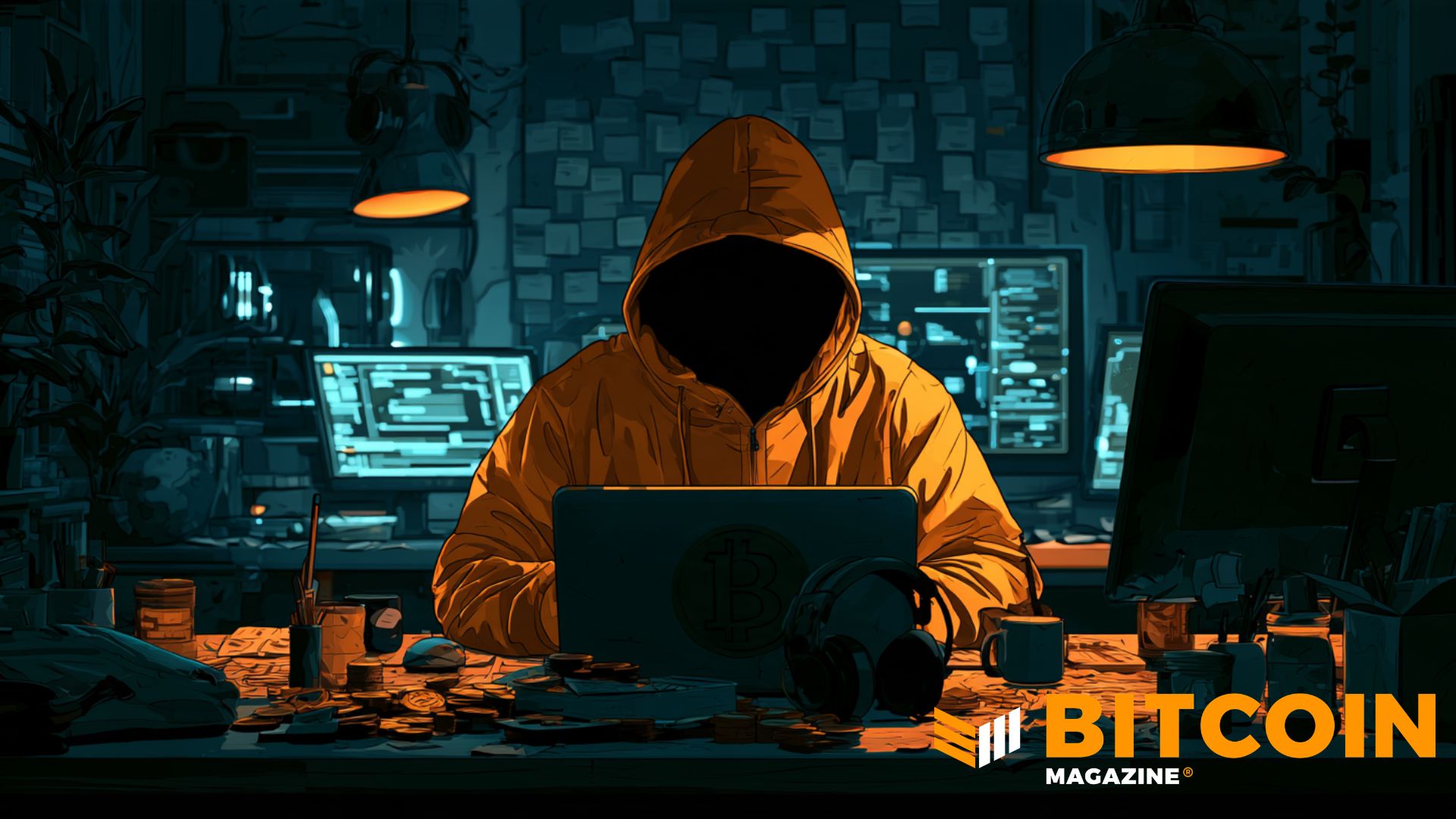
Poetic Justice: Scammer Lost $5M in Bitcoin After Being Targeted by Ledger Thieves
Call it poetic justice: one of the biggest victims of last week’s Ledger theft happened to be a scammer themself, according to blockchain analysts, and lost nearly $5 million in bitcoin.
In a post Thursday, Chainalysis wrote that a crook lost 60 bitcoins worth about $4.8 million they’d stolen via a so-called task scam.
According to Chainalysis, the address was linked with a con where people were paid to fake sales and reviews of real items. They were told to add their own money in order to get paid — and then stolen from.
But the mastermind behind the task scam moved the stolen money to Ledger addresses which were then targeted by different scammers last week.
“On Sep 22, the person behind the scam moved the proceeds into three separate Ledger addresses,” Chainalysis said. “On Oct 9, thieves emptied all three. One transfer each, into the same wallet. The wallet is reported as stolen funds.”
Paris-based Ledger last week said it had started an investigation after customers in South East Asia reported they’d lost funds after buying from Malaysia-based reseller, CryptoBilis.
Ledger has since said that the scam was a massive organized crime operation where a group installed implants into devices and put them back on the market. The implants could read users’ seed phrases so criminals could then drain wallets.
Calling it one the most “sophisticated attacks” the digital asset industry has experienced, Ledger is yet to reveal how much money has been lost — but blockchain investigator Specter said $86 million had been drained.
And the task scam conman, according to Chainalysis, was one of the victims.
Ledger has said that it is working with law enforcement to “follow the funds and dismantle the attackers’ infrastructure” and has made sure no other vendors have been targeted by scammers.
CryptoBilis has stopped selling Ledger products, the company said.
Criminals have targeted bitcoin hardware sellers this year, with a huge attack taking place in July on the popular Coldcard products.
Crooks were able to steal close to $120 million in bitcoin from Coldcard users because the devices had a firmware bug which led to faulty seed generation, allowing hackers to guess investor seedphrases.
This post Poetic Justice: Scammer Lost $5M in Bitcoin After Being Targeted by Ledger Thieves first appeared on Bitcoin Magazine and is written by Mathew Di Salvo.
Bitcoin Magazine

BFFS26 Denver: Joseph Kelly on Bitcoin Custody and Credit; Alan Lane on Banking Lessons
The Bitcoin for Financial Services Summit (BFFS26) returns to Denver October 20–22, 2026, bringing together CPAs, wealth advisors, attorneys, lenders, and finance leaders who are building Bitcoin into their practices. Now in its second year, the summit has grown to more than 30 sessions across two full program days, with a speaker lineup drawn from the firms defining Bitcoin custody, credit, and advisory.
Headlining the program are Joseph Kelly, CEO and co-founder of Unchained, who opens the summit with a keynote on custody, credit, and trust at scale; Alan Lane, former CEO of Silvergate Bank, on lessons for Bitcoin and banking; Patrick Lowry, CEO of Samara Asset Group, on holding Bitcoin as a public-company treasury reserve; and Colin Crossman, Wyoming’s Deputy Secretary of State, on the regulatory outlook for banks, exchanges, and advisors. Additional speakers include Kate Goldman of Anchorage Digital, Sam Baker of River, Eric Yakes of Epoch Ventures, Daniel Hillery of UTXO Management, Moish Peltz of Falcon Rappaport & Berkman, and CJ Konstantinos of Peoples Reserve.
Sessions focus on practical application: bringing Bitcoin into wealth planning and family offices, Bitcoin-backed lending and mortgages, treasury accounting and valuation, retirement and income planning, charitable giving strategies, mining as an asset class, and fiduciary duty when clients hold Bitcoin. Dedicated workshops will offer continuing education credit for financial advisors and CPAs.
“Last year proved that financial professionals want more than a Bitcoin primer. They want to know how to serve clients who already own it,” said Jordan Guess, CPA, co-host of the summit in a press release shared with Bitcoin Magazine. “This year’s program is built around the questions advisors and accountants are actually getting from clients, answered by the people building the infrastructure.”
The summit opens Tuesday, October 20, with the Better Money Invitational golf tournament at City Park Golf Course, hosted with Bitcoin Sports Network, followed by a welcome party at The Space sponsored by Falcon Rappaport & Berkman. Evening programming includes wine and whiskey tastings, and Thursday begins with an optional sunrise hike in the Rocky Mountains.
BFFS26 is co-hosted by Jordan Guess and Wyatt O’Rourke of BFFS Media, producers of the Bitcoin for Financial Services podcast. Sponsors include Unchained, Anchorage Digital, UTXO Management, River, SOUND HSA, SustainHash, and Stormrake.
Registration is open now at https://www.bffs.media/summit.
Media contact: Wyatt O’Rourke, wyatt@bffs.media
This post BFFS26 Denver: Joseph Kelly on Bitcoin Custody and Credit; Alan Lane on Banking Lessons first appeared on Bitcoin Magazine and is written by Juan Galt.
Bitcoin Magazine
Sazmining Now Sells Jack Dorsey’s Proto Immersion Hashboards
Bitcoin mining just got a lower barrier to entry.
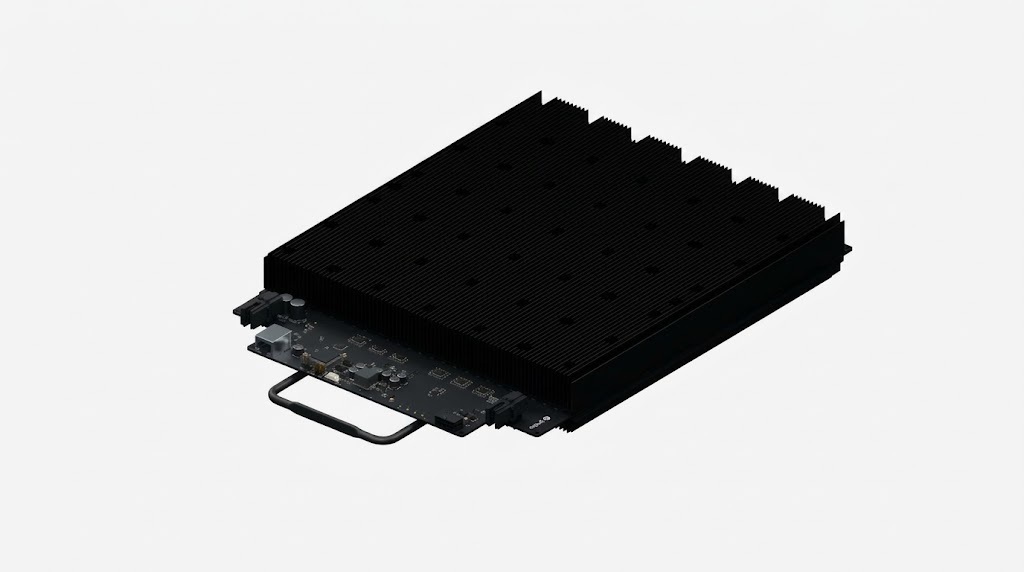
Sazmining announced Thursday that it is now selling Proto’s immersion hashboards directly to individual and institutional buyers through its mining-as-a-service platform. Previously, the hardware was mostly in the hands of large-scale operators.
Each hashboard delivers roughly 200 TH at around 15 J/TH, and buyers own them outright while Sazmining handles deployment, monitoring and maintenance at a US facility. Mining rewards go straight to the owner’s wallet.
The move follows a multi-megawatt supply deal between Sazmining and Proto — the bitcoin mining arm of Jack Dorsey’s Block (NYSE: XYZ) — which both companies expect to expand as demand grows.
“Because of our aligned-incentive model, Sazmining only earns when we produce bitcoin for our clients,” said Kent Halliburton, CEO and co-founder of Sazmining.
He also pitched mining as a form of bitcoin acquisition diversification: rather than paying the market price on the day of purchase, a miner’s costs are spread across the machine’s working life.
Wyoming-based Sazmining, founded in 2018, operates renewable-powered facilities across the US, Paraguay, and Norway. It says its fleet runs more than 20 percentage points ahead of the Bitcoin network’s carbon-free share.
Proto is Jack Dorsey’s Block’s bitcoin mining play. The Twitter founder has spent years arguing bitcoin is the foundation of “a more open financial system,” funding everything from Cash App’s buy-and-send rails to the Bitkey self-custody wallet, and he framed mining as the obvious missing piece back in 2021: “Bitcoin mining should be as easy as plugging a rig into a power source.”
Block formally announced it was building an open bitcoin mining system in January 2022, with the stated aim of making mining “more distributed and efficient.”
This post Sazmining Now Sells Jack Dorsey’s Proto Immersion Hashboards first appeared on Bitcoin Magazine and is written by Mathew Di Salvo.
Bitcoin Magazine
Hot Inflation Data Puts Bitcoin Under Pressure, but ‘Difficult’ Isn’t ‘Bearish’: CoinShares
Bitcoin’s price has dropped this week as new inflation data has come in hot.
But while the largest cryptocurrency’s near-term setup is difficult, it’s not “fundamentally bearish,” according to European asset manager CoinShares’ Head of Research, James Butterfill.
In a report Friday, the analyst said that bitcoin’s near-term challenge stems from a macro environment that’s caught in an awkward middle ground: inflation is too elevated for the Fed to ease up, while the economy is too resilient to force a policy pivot.
“Bitcoin and the broader digital asset market have moved lower on the resulting hawkish repricing, a reminder of how sensitive Bitcoin remains to monetary policy over short horizons,” he wrote.
Bitcoin’s price recently stood at $81,473, down 2% over a seven-day period.
The price of the leading cryptocurrency dropped Wednesday after data showed that U.S. consumer prices shot up more than expected in September.
Then, on Thursday, the Labor Department’s Bureau of Labor Statistics said that U.S. producer prices rose in September at the fastest pace in more than four years.
This has weighed on bitcoin’s price because higher inflation means the Federal Reserve may hike interest rates. Higher borrowing costs can restrict the liquidity the digital coin needs to rally.
The Federal Reserve hiked rates in September and will meet at the end of this month.
But Butterfill added that investors should be patient and advised investors to instead think in the long-term and not react to any single weekly data point.
“For investors, that argues for reading the coming weeks as a data-driven range rather than a trend, and for sizing digital asset exposure against a strategic allocation rather than against this week’s print,” he wrote.
Bitcoin spent the first half of 2026 in a bear market but had its best quarter in years after surging in August and September. Analysts have now said the leading cryptocurrency is now back in a bull market after trading above its 365-day moving average.
This post Hot Inflation Data Puts Bitcoin Under Pressure, but ‘Difficult’ Isn’t ‘Bearish’: CoinShares first appeared on Bitcoin Magazine and is written by Mathew Di Salvo.
Bitcoin Magazine
Deutsche Bank To Debut Bitcoin Custody Within Weeks: Report
German multinational Deutsche Bank is just weeks away from its crypto custody service, according to reports.
The lender — which is Germany’s biggest — also plans to expand the custody platform into Asia next year, according to a Friday Reuters report, which quoted its corporate banking chief.
Top banks worldwide are debuting or planning to debut crypto custody services, with BNY Mellon, State Street, Standard Chartered, U.S. Bank, and Citigroup all committing to direct crypto custody over the past 18 months.
JUST IN:
— Bitcoin Magazine (@BitcoinMagazine) October 16, 2026€732 billion Deutsche Bank to launch Bitcoin custody to its 28 million clients
pic.twitter.com/TAh9EwLkIX
Deutsche Bank first officially announced plans to debut a bitcoin custody service for European corporate and institutional clients in September, with the German multinational at the time saying service was subject to the completion of the applicable regulatory timeline.
Friday’s report added that the service will support custody of major cryptocurrencies such as bitcoin before moving to services that help clients move money into and out of stablecoins.
Gerald Podobnik, co-head of the corporate bank, was quoted by Reuters saying that the financial system will need to “offer tokenized or blockchain solutions.”
A number of top banks have started using the technology that powers bitcoin, the blockchain, for their own products in recent years.
Stablecoins and tokenization in particular have become a hot topic as traditional financial firms aim to accelerate certain services.
Crypto custody is often a starting point for banks moving into the digital asset space. BNY Mellon in 2022 became the first major U.S. bank to offer digital asset custody services.
Banks like Citi and Standard Chartered have this year debuted or announced plans for bitcoin custody around the world.
This post Deutsche Bank To Debut Bitcoin Custody Within Weeks: Report first appeared on Bitcoin Magazine and is written by Mathew Di Salvo.
CryptoSlate
The Oct. 16 notice cites unfinished creditor procedures and payment-processing issues, without assigning individual distribution dates.
Read the full story on CryptoSlate
Understand the crypto stories that matter and what to watch next. Get The Catalyst in your inbox
NU7 would leave legacy funds issued but unspendable, even with intact keys, while the mainnet activation decision remains pending.
Read the full story on CryptoSlate
Understand the crypto stories that matter and what to watch next. Get The Catalyst in your inbox
The California agreement requires notice if Fidelity ends its retail transfer feature, while preserving security restrictions and IRA exclusions.
Read the full story on CryptoSlate
Understand the crypto stories that matter and what to watch next. Get The Catalyst in your inbox
The crypto industry has finally found a way to participate in America's partisan warfare without committing to either of the (only) two available parties: help elect people who agree with it about crypto, then let them argue about everything else. Fairshake's latest House spending plans cover 32 candidates, with 19 Republicans and 13 Democrats on…
Read the full story on CryptoSlate
Understand the crypto stories that matter and what to watch next. Get The Catalyst in your inbox
Two tracked Ethereum V3 Umbrella stakes fell 9.7%, while their implied annualized reward run rate stayed near $2 million.
Read the full story on CryptoSlate
Understand the crypto stories that matter and what to watch next. Get The Catalyst in your inbox
CryptoTicker.io
In the 24 hours to Monday morning, tokens worth $1.57 billion changed hands on Solana's decentralised exchanges. On Ethereum the same period brought $706 million. Solana therefore turns over more than twice as much, even though its applications hold only an eighth of the capital. That divergence is the real finding of the week's opening, and it says more about the state of play than the price itself: SOL stood at $105.80 on Monday morning, 2.7 percent above the previous day but still 6.0 percent below its level a week ago (CoinGecko, as of October 19, 8:45 UTC).
Over a monthly view the question is not how much gets traded but whose money is being moved. Where the price can point over a span of months is set out in our Solana price prediction. This article works out the metric that connects the two, and shows what it means for your tax position and your buying route in Germany.
Solana turns over $1.57 billion in a single day
The figures come from the data at DefiLlama, queried on Monday morning. Across all decentralised exchanges on Solana combined, volume over the preceding 24 hours came to $1.566 billion. That is 25.0 percent more than the day before. Over seven days trading adds up to $14.03 billion, a rise of 22.6 percent on the previous week.
A Sunday is not a strong trading day. That turnover picked up anyway, while the price slipped on a weekly view, is the first sign that positions were being rotated rather than added. Solana's market capitalisation stood at $62.4 billion on Monday morning, with 589.4 million SOL in circulation out of a total of 636.0 million.
Ethereum reaches $706 million on eight times the capital
The same query for Ethereum returns $705.9 million over 24 hours, up 20.5 percent, and $8.07 billion over seven days, here only 1.2 percent more than the week before. Solana traded 2.22 times Ethereum's volume on Sunday, and on a weekly comparison the gap is widening.
It is the second figure that makes the comparison meaningful. In total value locked, the capital committed to a blockchain's applications, Ethereum stands at $49.86 billion and Solana at $5.89 billion. That is a ratio of 8.5 to 1 in Ethereum's favour. Two networks whose committed capital differs by a factor of eight come out in reverse order on trading volume.
The turnover: 26.6 against 1.4 percent of committed capital
Those two figures yield a metric that the usual dashboards do not carry: daily turnover. It sets a day's trading volume against committed capital and answers the question of how often the same dollar is moved in a day.
For Solana the sum is $1.566 billion divided by $5.89 billion, so 26.6 percent. Every day a good quarter of all committed capital is pushed through trading once. For Ethereum the same sum reads $706 million divided by $49.86 billion, so 1.4 percent. Turnover on Solana is therefore around 19 times as high. Both values are our own calculations from the DefiLlama figures cited above for October 19; the platform itself does not publish this ratio.
As a metric, turnover is neither good nor bad; it describes the design. High turnover means a network serves a lot of trading on little capital. Low turnover means capital sits and works there rather than being moved.
Why bots move the same capital several times a day
The explanation lies in the costs. A transaction on Solana costs fractions of a cent, and a block closes in under a second. Under those conditions a trade pays off at tiny price differences. Trading bots and aggregators buy the same token several times a day on one exchange and sell it on the next, each time for a spread of a few tenths of a percent. Every one of those passes shows up in the statistics as volume, even though no new money has entered the network.
A second data point supports that reading. The stablecoin base on Solana, the money standing ready in dollar-pegged tokens such as USDC, came to $15.49 billion on Monday (DefiLlama, October 19). That base is therefore around two and a half times the size of the committed capital of $5.89 billion. On Ethereum, $144.04 billion sits in stablecoins against $49.86 billion of committed capital, a ratio of just under 3 to 1. On Solana, then, an above-average share of money is parked in trading liquidity and a below-average share is tied up in lending and yield applications.
Total value locked describes the sum of all deposits held in a blockchain's financial applications, for instance in lending markets, liquidity pools and staking derivatives. When that figure rises, investors have brought capital into the network and committed it there. When it falls, they have withdrawn it, or the price of the deposited tokens has dropped.
Counted in SOL, the network holds less capital than in June
A TVL measured in dollars mixes two things: how many tokens are deposited and what those tokens cost. If the price falls, the dollar figure drops even when nobody has withdrawn anything. So the counter-calculation in SOL is worth doing. For that, DefiLlama's daily TVL was divided by CoinGecko's respective daily closing price, over the past 120 days.
The result: on October 19 the committed capital corresponded to 55.68 million SOL. On October 18 it was still 57.04 million, on October 10 it was 56.47 million. Ninety days ago, on July 21, 63.75 million SOL sat in the network, and the window's high dates from June 25 at 69.08 million. From that high, 19.4 percent of the deposited tokens have gone in not quite four months, and that is independent of the price. On only 20 of 120 days was the figure lower than today; the window's low falls on September 29 at 54.09 million SOL.
This calculation is not someone else's analysis but our own work from two freely available series. The counter-calculation separates the price problem from the quantity problem and shows that the decline in committed capital does not hang on the fallen price alone.

What has changed since Sunday's emission article
On Sunday evening we worked through Solana's emission here: 22.88 million new SOL a year and $1.56 billion sitting in the funds, as set out in our piece on the emission of 22.9 million SOL a year. Three things have shifted since.
First the price: on Sunday SOL averaged $103.36 over the day, on Monday morning $105.80, a rise of 2.4 percent. Second the committed capital: it fell from $5.896 billion to $5.890 billion, and counted in SOL from 57.04 million to 55.68 million. The decline in the token quantity is therefore much larger than the one in the dollar sum, because the higher price masks the difference. Third the trading: daily volume picked up by a quarter.
Taken together that means the price rise from Sunday to Monday came with more trading but less deposited capital. Sunday's emission question remains open, because no vote has been held on proposal SIMD-0550 since.
The levels: $100.48 below, $106.05 above
On October 14 we named the $100 level here as a test. The level has held since, but without much room. In the 24 hours to Monday morning the low was $100.48 and the high $106.05 (CoinGecko). The current price therefore sits 5.3 percent above the daily low and 0.2 percent below the daily high.
What justifies those two values is that they were actually traded this weekend, not a chart pattern. To the upside the next marker is the level of October 12, when SOL averaged $111.25 over the day; the figure $109.07 dates from October 10. To the downside the round $100 stands, and its defence has now been running for five days. SOL is 63.9 percent away from its all-time high of $293.31 on January 19, 2025.
$9.71 million in fees in one day, and who gets them
High turnover is not without consequence; it generates income. Fees accruing on the Solana blockchain added up to $9.71 million in the 24 hours to Monday morning and to $79.76 million over seven days (DefiLlama, October 19). Measured against committed capital of $5.89 billion, the daily figure amounts to a rate of 0.16 percent, which annualised puts it in the order of 60 percent of the capital committed today.
That extrapolation is an arithmetic check, not a forecast, because fees swing with trading. The check does show what the turnover ratio means in economic terms: a network with little committed capital and a lot of trading earns from movement, not from sitting still. Part of that income flows through the block reward to the validators and hence to the stakers, the rest to the applications the trading went through.
How to work out the turnover yourself
The metric needs no paid data source. Two values are enough, and both are freely available online.
- Open the blockchain's page at DefiLlama, for instance the overview page for Solana. It carries the current TVL and the 24-hour trading volume of the decentralised exchanges.
- Divide the volume by the TVL and convert the result into percent. For Solana on October 19: 1.566 divided by 5.89 gives 0.266, so 26.6 percent.
- Repeat that for a second blockchain and compare. The important thing is to read both values on the same day and at the same time, because the 24-hour volume shifts continuously.
Anyone recording the series over several weeks will see whether a network is drawing in capital or only trading. If volume rises while TVL falls, turnover grows and the network lives more off short-term trading. If both rise, new money is arriving. For judging a coin that is the more honest series than the volume figure alone, which projects like to advertise with.
Every swap starts the one-year period again
High turnover in the network has a tax counterpart in the portfolio, and in Germany that hits everyone who swaps actively. Gains from selling cryptocurrencies are a private disposal under section 23 of the Income Tax Act. If more than twelve months lie between purchase and sale, the gain stays tax-free. Below that it is taxed at your personal income tax rate as soon as the sum of all private disposal gains for a year reaches the exemption threshold of €1,000.
What counts as a disposal is decisive here. Swapping SOL into a stablecoin or into another token is also a disposal, and for the newly acquired holding the one-year period starts from scratch. Take part in the turnover and swap back and forth several times within a few weeks, and at the end of the year you hold not one position with one holding period but many, each with a fresh one. We track the current state of the political debate about that period on our page on the crypto holding period.
In practice that means you need a record of every swap with the date, the amount and the euro value, because the tax office assesses the holding period per acquisition. Which programs build that allocation out of exchange data is shown in our comparison of crypto tax software and portfolio trackers. A separate rule applies to staking income: staking rewards count on receipt as other income under section 22 number 3 of the Income Tax Act, with its own exemption threshold of €256 a year.

Buying route and custody: where the paths differ
Since the EU regulation MiCA came into full effect, anyone wanting to buy SOL in Germany has essentially two routes. The first runs through an authorised service provider that holds the tokens for you. There the key sits with the provider, access is simple, and losing your login details can usually be remedied. Which providers charge what and which authorisation they hold is set out in our overview of the best crypto exchanges.
The second route is self-custody on a hardware wallet. You then hold the private key yourself, nobody can freeze your holding, and you carry the risk of losing the key alone. For staking SOL the difference is concrete: with self-custody you delegate to a validator yourself and pick its commission, whereas with a custodian the custodian decides on the offer and keeps part of the income. The range of terms is shown in the comparison of staking providers.
To put the yield in context: the reward for staking SOL comes out of the emission of new tokens and out of part of the network fees. Since emission keeps falling under the schedule described on Sunday, the future yield hangs more heavily on the fees, and therefore on precisely the turnover this article is about.
Our assessment: trading without new money
From the newsroom's point of view the turnover carries the story of Solana as the fastest trading venue, but it does not carry the story of capital inflows. The evidence sits above: volume rose 22.6 percent over seven days, while committed capital counted in SOL fell from 56.47 to 55.68 million and the price lost 6.0 percent. More trading on fewer deposited tokens with a falling price is the pattern of rotation within the network.
Against that stands the fee side. $79.76 million over seven days is real income, not a bookkeeping entry, and part of it flows to the stakers. A network that earns from movement does not strictly need growing committed capital to work economically. Anyone holding SOL should therefore follow both series and not the volume figure alone, because on its own it does not answer the question of new money. This is explicitly not a recommendation to buy or sell.
Solana at $105.80: the turnover carries, the inflow is missing
Monday morning's position can be worked through in three steps.
- Work out the turnover ratio for Solana and a comparison blockchain yourself once and note it with the date, so that in two weeks you have a series of your own. The instructions are above.
- Check the purchase date for every SOL holding in your portfolio, and with it when the one-year period expires. Which programs build that out of exchange data is shown by the comparison of crypto tax software.
- Decide deliberately between custody at a provider and your own wallet, because the staking terms hang on it. Provider terms are in the overview of staking platforms.
(As of October 19, 2026. This article is not investment advice. Prices and fee structures change; check the terms with the provider before you buy.)
A token unlock is the date on which a project's locked tokens become tradable. Nothing is created in the process: the supply has existed all along, it was simply held in a contract that would not release it before a given date. What matters, then, is how that figure compares with circulating supply and the schedule under which it comes free, not the headline with the big number. Two patterns shape that schedule: the cliff, a single large release after a lock-up, and linear vesting, where the same supply trickles out in instalments over months.
The difference is not a technicality. With a cliff, the entire supply hits the order book on one day. With linear vesting, the same supply spreads across twelve or twenty-four dates, none of which stands out on its own. Tell the two patterns apart and a vesting schedule shows you when selling pressure builds and when it has already been priced in.
What a token unlock is, and why nothing new is created
When a token is issued, a project sets out how total supply is divided: to the team, to early investors, to a foundation, to reward programmes, to the open market. Only part of that is tradable on day one. The rest sits in a vesting contract, program code on the blockchain that will not hand the tokens over before a set point in time. An unlock is the moment that contract releases part of the supply.
That is why the phrase "new tokens are coming to market" misleads. Total supply does not change, only the tradable share does. Two terms keep the distinction clear. Circulating supply is the number of freely tradable tokens. Total supply covers every token in existence, locked ones included. Total supply times the price gives the fully diluted valuation, or FDV. When FDV sits far above market capitalisation, a lot of supply is still inside the contract. Why freshly listed tokens with that gap often collapse is worked through with examples in our analysis of FDV and circulating supply.
Cliff: a lock-up, then a single large release
A cliff is a lock-up at the end of which a large amount comes free in one step. Six or twelve months after trading starts is typical. The original purpose is a sound one: team and early investors should not be able to sell on day one. The price for that is a fixed date on which supply jumps.
How big that jump can get shows up in individual cases in our own coverage. At Kite a one-year lock ends in early November, and on our count of October 17, 2026 that frees 1.11 billion tokens, equal to 43 to 46 percent of circulating supply there — set out in our assessment of the Kite unlock in early November. A cliff on that scale is a different animal from a monthly tranche of two percent.
What counts is not the absolute figure but the share of circulating supply. A billion tokens sounds large, yet against a circulating supply of a hundred billion it is one percent. That same billion against a circulating supply of two billion is half. The number alone says nothing; the ratio says everything.
Linear vesting: the same supply, spread across many dates
Under linear vesting the contract releases equal portions at equal intervals, usually monthly, sometimes weekly or block by block. The total at the end is the same as under a cliff, but the effect on the price differs sharply: recurring small releases work like a steady stream of supply the market can adjust to, not like a single blow.
Many projects combine the two: a cliff first, then linear tranches. At Plasma, as we reported on October 15, 2026, a cliff became a schedule of 24 monthly tranches in which the first tranche amounts to around five percent of circulating supply — the details are in our piece on the XPL unlock on October 25. At Arbitrum, on our count of September 30, 2026, 92.6 million ARB leave the lock every month, a pattern we broke down under Arbitrum and the end of the lock-up.
For assessment purposes that means a single date in a linear schedule is rarely an event. The schedule as a whole is one, because it tells you how much supply is still to come over the next twelve months.
Who receives the tokens, and why that decides the effect
The same supply acts entirely differently depending on whose hands it lands in. Four recipient groups are typical, and each behaves in its own way.
Early investors and venture capital
These backers bought in an early round at a fraction of today's price. Even a sale well below the current level remains a profit for them, and many funds owe their own investors a duty to realise gains. This group generates the hardest selling pressure.
Team and founders
For team and founders the tokens are compensation. A partial sale is routine and no warning sign in itself. It becomes notable when the entire allocation starts moving shortly after the cliff, because that can be traced on the blockchain.
Foundation and project treasury
These tokens go into grants, partnerships and developer programmes, and reach the market with a delay, by many small routes. Effect on the price: real, but dispersed.
Rewards for users, staking and liquidity
Here tokens flow to many recipients in small amounts. Some are sold at once, some are left alone. Whether the supply can be sold at once at all hangs on a second lock that is often overlooked: the waiting period for unstaking. How long that runs at the large networks is set out in our piece on the staking lock-up period and the duration of unstaking.
Locked, incidentally, does not always mean nobody can sell. Anyone expecting locked tokens can hedge them in advance through futures or hand them on at a discount in the over-the-counter market. The selling pressure then builds before the date rather than on it. That a large locked amount shifts expectations on its own we described using the case of 700 million HYPE outside circulation.

Four numbers that make a vesting schedule readable
A vesting schedule consists of a handful of figures, and four of them are enough for an assessment.
First, the share of circulating supply. Divide the amount coming free by current circulating supply. Below two percent is a routine date, above ten percent an event, above thirty percent a doubling of supply within reach.
Second, the ratio to daily turnover. Set the cash value of the amount coming free against average daily trading turnover. If the release equals twenty times daily turnover, the market cannot absorb it in a day even if everyone wanted to sell. If it equals a fraction of it, the figure is a headline without consequences.
Third, the recipient group. Does the schedule say what share goes to early investors, to the team, to the foundation and to rewards? Without that breakdown, half the information is missing.
Fourth, what remains in the contract. How much is still locked after this date, and until when? A project with 90 percent of total supply still inside the contract has an unlock ahead of it every month.
These four numbers sit in a project's tokenomics documentation and in the unlock calendars of the analytics providers. Which tools show such calendars, circulating supply and on-chain movements together is covered in our comparison of analytics platforms.
Why the price often falls before the date rather than on it
An unlock date is public, often years in advance. So it behaves differently from a piece of news: the market can price it in. In practice a decline often shows up in the days or weeks before the date, as traders cut positions or bet against it through futures, followed by calm afterwards when the expected wave of selling fails to arrive.
No trading recipe follows from that, only a reading aid: a decline before a large unlock is no proof of a problem at the project, and a quiet unlock day is no proof that nobody sold — the sales may have happened earlier. The assessment only becomes solid once you track the movement of the released addresses on the blockchain, and at most projects that can be done a few days after the date.
Tax in Germany: when a released token starts a holding period
This is where a market topic becomes a topic for your tax return, in two distinct cases.
If you already hold a token and are merely watching a project's unlock, nothing changes for you in tax terms. What governs is section 23 of the Income Tax Act: gains from private disposals stay tax-free when more than a year lies between purchase and sale. Within that period they are taxed at your personal rate as soon as total gains for the year exceed the exemption threshold. Sell out of worry about an unlock shortly before your year is up, then, and the tax can cost more than the price decline you are trying to avoid.
If you receive released tokens yourself — from a reward programme, from staking, from an airdrop or as compensation — the case is different. What then counts is the value at which the tokens arrive and when the holding period begins. That classification depends on the type of inflow and is a matter for tax advice in the individual case; the only certainty is that you have to document the time of the inflow and the price at that moment, because you cannot reconstruct them later. A tool from our comparison of crypto tax software records that data automatically.

Tradability in Germany: an unlock is no help without a venue
A practical point that unlock reports regularly leave out: a supply being technically released does not mean you can buy or sell it from Germany. Many of the projects with large vesting schedules are young tokens listed at only a few venues, and under Regulation (EU) 2023/1114 providers may only supply crypto services in the EU with authorisation. In practice that means checking first whether the token is tradable at an authorised provider, and only then what an unlock date means for it. An overview of venues and their costs is in our exchange comparison; anyone trading mainly in large names such as Bitcoin will rarely meet the unlock question anyway, because no vesting contracts are still running out there.
The second practical point is market depth. A token traded for a few million dollars a day cannot take a release in the tens of millions without individual sales moving the price. Sell into a market like that with a large market order and you pay the discount yourself.
Our assessment of how to handle unlock dates
From the newsroom's point of view, large unlock figures are regularly overvalued in coverage and the schedules behind them undervalued. The evidence comes from the cases in our own coverage: a cliff covering 43 to 46 percent of circulating supply, as at Kite on our count of October 17, 2026, is categorically different from the first of 24 monthly tranches at Plasma at around five percent on our report of October 15, 2026 — yet both appear in reports as an "unlock" with a big number in the title. What follows is this: the two figures that carry an assessment are the share of circulating supply and the ratio to daily turnover, and neither appears in the headline. Against that stands the fact that even a perfectly read schedule says nothing about recipients' intentions; whether a fund sells only shows on the blockchain after the date. No recommendation to buy or sell follows from any of it, and with young tokens carrying large locked amounts a total loss is possible.
Token unlock: the date sits in the vesting schedule, not in the chart
An unlock creates no new money and no new tokens; it only shifts the boundary between locked and tradable. Whether that step means selling pressure comes down to three figures you can gather in a few minutes:
- Calculate the share and daily turnover. Divide the amount coming free by circulating supply and set its cash value against daily turnover. Both values come from the tools in our comparison of analytics platforms.
- Look up the remainder in the contract. Check in the tokenomics documentation how much stays locked after this date and until when. A project with a schedule running for years has a date ahead of it every month; which exchanges list the token at all is shown by the exchange comparison.
- Document your own inflows. If you receive released tokens yourself, record the date and price of the inflow, because valuation and holding period hang on them. A tool from the tax software comparison takes over the bookkeeping.
(As of October 18, 2026. This article is not investment advice. Prices and fee structures change; check the terms with the provider before you buy.)
The NEAR mainnet still mints up to 2.5 percent new tokens a year. The proposal to cut that ceiling to 1.6 percent was not part of the protocol on October 18, 2026. It still carries draft status, and by its own wording it cannot take effect through a vote alone. Anyone staking NEAR should therefore keep calculating with the old rate until a protocol upgrade lands.
The price is moving the other way. NEAR trades at $4.69, down 6.2 percent over 24 hours and 17.56 percent over the past week. That makes NEAR the weakest of the 25 largest cryptocurrencies on a weekly view, ahead of Zcash at minus 16.52 percent and Cardano at minus 15.88 percent. Bitcoin lost 3.23 percent over the same stretch, Ether 7.33 percent. Every price in this article comes from CoinGecko market data as of October 18, 2026.
The emission figure in the NEAR protocol still reads 2.5 percent
The annual ceiling for new NEAR is a protocol parameter, not a foundation pledge. The protocol holds it as a fraction: one fortieth, or 2.5 percent of total supply. The project's developer documentation describes the same value as a target and states that the target is calculated to amount to 2.5 percent of total supply per year (NEAR documentation).
That value sits unchanged in the live mainnet on October 18, 2026, in protocol version 86. In units, it works out like this: at a total supply of 1,309.3 million NEAR, up to 32.7 million new tokens may be created in a year. At a 1.6 percent ceiling it would be 20.9 million.
Why the emission rate is the more important number for stakers
NEAR staking rewards do not come out of transaction fees. Fees are burned after the contract rebate, and rewards come out of emission. If the emission rate falls, so does the pool every staker is paid from. If the amount of bonded tokens rises at the same time, that same pool is split across more stake. Together, those two figures produce the yield that actually arrives.
What the draft cut to 1.6 percent sets out
The proposal has sat in NEAR's governance forum since October 7, 2026. It was filed by Sal Ternullo for SVRN, which the document identifies as OceanPal Inc., listed on NASDAQ under the ticker SVRN. It envisages a linear glide in maximum annual emission from 2.5 to 1.6 percent over 24 months, roughly 3.75 basis points a month. Ahead of that sits a grace period the document puts at 90 days in one place and at a full quarter in another.
The reward split stays at 90 percent for staking participants and 10 percent for the project treasury under the draft; measured, the document cites 10.13 percent, correcting the often quoted 96-to-4 split. Over the 24 months of the glide path, the draft's own arithmetic has 11.8 million NEAR never created, equal to 0.86 percent of supply. Over six years the document names 66.1 million NEAR, or 4.36 percent, valued at around $284 million at a price of $4.30.
On yield, the draft's table cites 5.268 percent gross today and 3.372 percent at the 1.6 percent target, both assuming a staking ratio of 42.71 percent. A different section of the same document carries 4.80, 3.93 and 3.07 percent for the first two years. That spread stands as the document leaves it: planning with one of those numbers means planning with a figure from a draft that does its own maths two different ways.

A vote on its own does not change the emission rate
The decisive sentence sits in the draft itself: the proposal cannot take effect through a House of Stake vote alone. The ceiling is a protocol parameter, and changing it requires validators to adopt it through the usual upgrade process. The document lists two stages for that, ratification in governance and then adoption in the protocol. Formally the proposal is filed as a decision requiring a supermajority, and it still reads as a draft.
Our October 3 report described the proposal ahead of the vote. Two weeks on, the finding reads differently: the hurdle is not the vote but the upgrade behind it. Until validators run the new value, 2.5 percent stands, whatever a governance round decided.
The staking yield hangs on two figures, not one
The formula behind the draft's numbers is plain: take the emission rate, subtract the treasury share, divide the result by the staking ratio. With the document's assumptions that gives 2.5 percent times 0.9, divided by 42.71 percent, hence the 5.268 percent cited. The same formula with 1.6 percent gives 3.372 percent. The calculation holds up, but it rests entirely on the staking ratio inside it.
That ratio is no constant. It shifts with every staker who bonds or withdraws tokens, and it moves faster than a protocol parameter. So it is worth looking at where it actually stands today. If you are planning around a yield, current provider terms are in our staking platform comparison; the figures calculated here are protocol gross values, before any validator or exchange fee.
Our own survey: 601.0 million NEAR sit with 403 validators
On October 18, 2026, 601.0 million NEAR are bonded to active validators on the NEAR mainnet, spread across 403 addresses. Against total supply of 1,309.3 million NEAR that works out to a staking ratio of 45.90 percent. Because circulating supply at NEAR is effectively identical to total supply, the choice of denominator changes nothing here. From the previous epoch, a further 13 validators dropped out of the active set.
The basis is the NEAR mainnet's protocol values and the stakes of all 403 active validators, plus total supply from the latest block. That covers 403 validator stakes and four protocol values. cryptoticker.io collected this data itself on October 18, 2026.
An epoch runs twelve hours
The length of an epoch follows from the same protocol values: 43,200 blocks at one block a second, so twelve hours. The figure matters in practice, because rewards and changes in the validator set follow epochs rather than calendar days. Unstake your NEAR and you do not get them straight back; release takes several epochs. Exactly how many depends on the validator or the provider and is set out in their terms.
At today's ratio the yield comes out below the draft's figure
Feed the ratio we measured, 45.90 percent, into the draft's formula and both ends shift down. Today the calculation gives 4.90 percent gross rather than the 5.268 percent cited. At the 1.6 percent target it gives 3.14 percent rather than 3.372 percent. The reason is not a new decision but arithmetic: the same emission spreads across more bonded tokens.
The draft names no denominator for its 42.71 percent, so the two ratios are not necessarily measured on the same definition, and part of the 3.19 percentage point gap may come from that. The direction holds regardless. The more NEAR sits in staking, the less is left for each individual stake, and the yield a draft from October 7 works with is not the yield a staker sees on October 18.
Minus 17.56 percent over seven days, plus 27.91 percent over thirty
The price picture depends on the window, and both windows belong in the same view. On a weekly view NEAR is down 17.56 percent, putting it last in the top 25. Over 30 days it is up 27.91 percent. The weekly high was $5.89 on October 12, the daily high $5.05, the daily low $4.63. At a market value of $6.15 billion and daily turnover of $620.6 million, NEAR ranks 20th.
In our view the emission dispute does not account for the weekly loss on its own. Against that reading stands the breadth of the move: Zcash, Cardano and Stellar lost 16.52, 15.88 and 15.05 percent over the same period with no emission proposal of their own. For it stands the ranking: NEAR fell harder than those three, and for a token whose yield hangs on an open parameter, an unresolved position is a discount. Either way this is a correlation, not a cause, and no price target follows from it.
What has changed since our NEAR article of October 16
NEAR stood at $5.26 on October 16, when we reported on the confidential deposit route for SOL on NEAR. By October 18 that had become $4.69, down 10.8 percent in two days. The $5 level, which held at the time, broke in that window and has not been reclaimed since; the daily high of $5.05 sat just above it, the daily low of $4.63 well below.
Nothing has been added to the protocol since, and that is precisely the finding. Between October 16 and October 18 the emission rate did not move, the staking ratio stands at 45.90 percent, and the ceiling reads 2.5 percent. The only thing that changed is the price at which that yield is bought.
Buying in Germany: MiCA authorisation of the exchange, and custody after that
Since the European crypto regulation MiCA, anyone buying NEAR in Germany buys from a provider that has to be authorised for it. MiCA is the EU regulation on markets in crypto-assets; it sets out which providers may offer and hold crypto-assets in the EU. In practice, when getting in: check which authorisation your trading venue works under, and whether it will keep supporting NEAR after a protocol change. Costs differ sharply between venues, and the comparison at the end of this article puts them side by side.
Staking adds the custody question. Hand NEAR to a validator or an exchange and control over it is no longer yours for the duration of the bond. At a calculated 4.90 percent gross that is a different trade-off than at ten percent, and a different one again if the yield is meant to glide towards three percent over 24 months.
Leverage and liquidation: what a 17.56 percent weekly loss triggers
A leveraged NEAR position survives a week like this one only with room to spare above the liquidation threshold. At ten times leverage a move of roughly ten percent against you wipes out the stake; NEAR lost 10.8 percent between October 16 and October 18 alone. Daily high to daily low spanned 8.3 percent. If you trade with leverage, measure that range against your buffer, not against the closing price.

Holding period and tax: staking income runs differently from sale proceeds
For German investors, income tax law separates two events that coincide in staking. Selling NEAR falls under private disposals in section 23 of the Income Tax Act, with the one-year period set out there. Ongoing staking rewards are assessed separately and regularly land under other income in section 22.
In practice each individual reward counts in staking, with its timestamp and its value. At a calculated 4.90 percent gross and a payout per epoch, so twice a day, a few hundred individual events add up over a year. Keeping that by hand costs time; the usual tools take the counting off your hands. Your own case remains a matter for a tax adviser, and this text does not replace one.
NEAR staking: 2.5 percent emission stands until the protocol changes
- Recalculate your own yield. The protocol gross figure on October 18, 2026 works out at 4.90 percent; what reaches you sits below that after validator or exchange fees. Provider terms are in the staking platform comparison.
- Collect the records for the tax year. Every reward counts with its timestamp and value, and at two payouts a day that adds up. A tool from the tax software comparison takes the counting off your hands.
- Check the venue before you buy more. Authorisation, costs and NEAR availability differ sharply; the exchange comparison puts them side by side. You can follow the draft itself in NEAR's governance forum.
(As of October 18, 2026. This article is not investment advice. Prices and fee structures change; check the terms with the provider before you buy. Crypto-assets are highly volatile and a total loss is possible.)
When you transfer euros to a crypto exchange and leave them there until you buy, that money sits somewhere. Not with you, not in your wallet, but in an account somebody else runs. Which account that may be, and in whose name it has to be held, is what the European Securities and Markets Authority, ESMA, spelled out in a new answer on October 16, 2026. The short version: a payment service provider without a banking licence is a staging post for no more than one business day, and the account at the bank has to be in the exchange's name, not in the name of the provider in between.
What ESMA answered on MiCA article 70 on October 16
ESMA published five new questions and answers that day. Four concern crowdfunding platforms and the calculation of the active account under the EMIR 3 reform, and are of no relevance to retail investors. The fifth, Q&A 2949, is addressed to crypto asset service providers, and therefore to every exchange where you hold a euro balance.
A market participant had asked two things. First: may an authorised crypto asset service provider park client funds temporarily in an account at a payment service provider without a banking licence, such as an e-money institution or a payment institution? Second: may the funds stay there longer if the account does sit at a genuine bank but is held in the name of that payment service provider and kept technically separate from its other accounts?
ESMA answers the first question with a qualified yes and the second with a plain no. The answer is dated October 6, 2026 and was published ten days later.
MiCA article 70: the duty that holding client funds triggers
A crypto asset service provider, CASP in the rulebook, is any firm that commercially trades, exchanges, holds or arranges crypto assets in the EU and needs a MiCA authorisation for it. Every exchange you can legally buy through in Germany falls under it.
Article 70 of the MiCA regulation governs what such a firm has to do with its clients' money. Paragraph 2 requires arrangements that safeguard clients' ownership rights in their funds and prevent those funds being used for the firm's own account. Paragraph 3 then sets the actual duty: the money belongs in an account at a credit institution or a central bank.
The contrast with the crypto side matters. Different paragraphs of the same rulebook apply to your coins. Article 70 covers only the euros you have deposited and not yet invested, and the euros sitting in your exchange account after a sale. That money is precisely what raises the hardest questions if an exchange becomes insolvent. How supervision of these firms will be organised from 2027 is set out in our overview of ESMA's direct supervision of crypto providers.
The one-day limit: when the money has to sit at a credit institution
The first part of ESMA's answer is a permission on a short leash. When a crypto asset service provider receives client money, whether directly from the client or from a third party on the client's behalf, it may hold that money temporarily in a payment account at a non-bank payment service provider. Throughout that time it must continue to meet the safeguarding requirements of article 70 paragraph 2.
Then comes the deadline. By the end of the business day following receipt of the money at the latest, the provider has to place it in an account at a credit institution or a central bank. That is not a new rule, it is what article 70 paragraph 3 says. What is new is the clarification that a stop at an e-money institution neither extends nor replaces that deadline.
In practice that means: transfer on a Monday and your money should be in a bank account by the close of Tuesday at the latest. What happens at weekends and on public holidays depends on what counts as a business day in the country concerned. On this reading, a transfer on a Friday evening can be in transit until Monday evening without any rule being broken.

Why an account in the payment provider's name is not enough
The second part of the answer is the tougher one. ESMA writes that the account at the bank or central bank must be opened and maintained directly in the name of the crypto asset service provider, or in line with whichever legal regime on asset segregation applies.
An account held in the name of a non-bank payment service provider does not satisfy article 70 paragraph 3 on this reading. The authority's reasoning is a legal one, but it has tangible consequences: in that construction the crypto asset service provider would merely hold a claim against the payment service provider, instead of being the account holder vis-a-vis the credit institution itself. And according to ESMA that applies expressly even where the account was set up for that single crypto asset service provider and kept technically separate from every other account.
A claim is an entitlement against a firm. An account balance is an entitlement against the bank that holds the account. If another firm sits between you and the bank and fails, you have to join the queue in its insolvency proceedings. Keeping that chain of staging posts short is exactly what the rule is for.
How quickly that turns practical was shown by the case of the broker Trive, which we reported on in September: Trive froze client funds, and holders of crypto CFDs could not reach their money. The more staging posts lie between your money and a bank account, the longer it takes to establish who owns what.
E-money institution, payment institution, credit institution: the three terms apart
ESMA's answer hangs on a distinction almost nobody draws in everyday life. It is worth a look.
- A credit institution is what people colloquially call a bank. It holds a banking licence, may take deposits from the public and grant loans, and it belongs to a statutory deposit guarantee scheme.
- An e-money institution issues electronic money and runs payment accounts. It may not take deposits and does not lend out client money. Instead it safeguards client funds through trust accounts or insurance.
- A payment institution processes payments without issuing e-money itself. Here too there is no banking licence and no classic deposit guarantee.
All three are supervised, and all three are legitimate business models. But only the first is a permissible permanent home for your euro balance at a crypto exchange under article 70 paragraph 3. Under the new answer, the other two may only be the staging post of at most one business day.
Deposit guarantee: your euro balance on the exchange is not a bank balance
Here is the point where many investors assume something the rule does not give them. The fact that your money ends up in an account at a bank does not make you a client of that bank. Your counterparty remains the exchange.
The statutory deposit guarantee in the EU covers deposits up to 100,000 euros per client and institution. Whether and how it applies where an account is held in a provider's name and pools many clients' funds depends on the specific legal structure of that account and on national law. ESMA does not address this in Q&A 2949 and answers a narrower question: who has to be the account holder.
That is precisely why the answer matters to you. The more directly the path runs between your money and a credit institution, the fewer parties can fail in between. If you would rather not leave a euro balance sitting on a trading platform permanently, withdraw it after buying or selling, and hold the coins yourself. Which devices are suitable for that we have gathered in our hardware wallet comparison.

Interest on client funds: what Q&A 2486 awards the client
The new answer does not stand alone. It builds on an older one that shows how tightly the supervisor reads article 70 as a whole. Q&A 2486, last updated on February 18, 2026 and answered by the European Commission, dealt with interest.
The question was whether a crypto asset service provider may earn interest on client funds it places in a savings account at a credit institution. The answer is no. On that reading, CASPs are obliged to place client funds in risk-free savings accounts and may not earn interest from them for themselves. The duty serves the protection of clients alone. Any interest arising from compliance with article 70 paragraph 3 has to be passed on to the client, because the income comes from the client's money.
That differs from what some platforms do in other jurisdictions, where interest income on client deposits is a revenue line of its own. In the EU, on the Commission's reading, that income belongs to the client. Whether and how exchanges implement it is in their price and service lists, and it is a question worth asking.
What a Q&A does legally and what it does not change
Some perspective belongs here so the reach of these answers is not overstated. ESMA puts a note in front of its own Q&As: these answers explain provisions that already stand in applicable law. They do not extend rights and obligations, they introduce no additional requirements, and they are meant only to help authorities and firms with application. Only the Court of Justice of the European Union can interpret Union law bindingly.
In practice it carries weight all the same. National supervisors such as Germany's BaFin take their bearings from these answers when they examine business models. A crypto asset service provider that permanently routes client funds through an account in a payment provider's name has to expect questions after this answer.
ESMA has also declared digital finance and innovation a supervisory priority for 2027, so clarifications of this kind are unlikely to be the last. Another, considerably harder deadline is already running: for stablecoins without MiCA authorisation the authority has given platforms until January 8, 2027, which we set out in our piece on ESMA's stablecoin deadline.
Your exchange's documents: where the custodian for euros is named
You cannot look up where your money sits tonight. But you can read what your exchange commits to. Three places are worth it.
The terms and conditions almost always have a section on client funds or the holding of monies. That is where it says whether the funds sit in trust or pooled accounts and who the account holder is. The risk disclosures say whether the provider claims a deposit guarantee for euro balances, and if it makes no such claim, that is the answer. The price and service list tells you whether interest on balances is credited.
If one of those statements is missing or stays unclear, that is not an accusation but a reason to ask the provider. A list of the platforms that can show a MiCA authorisation in the EU is in our overview of regulated crypto exchanges. Anyone comparing anyway should look at that section of the documents as closely as at the trading fee.
Euro balances: after one business day the bank has to hold them
ESMA's answer changes nothing about your balance today. What it does sharpen is the question you can put to your exchange, and it hands you three steps.
- Read up on who the account holder is. Find the section on client funds in your platform's terms and check whether a credit institution is named there and in whose name the account runs. Whether your platform holds an EU authorisation at all is shown in our overview of regulated crypto exchanges.
- Keep the euro balance small. What you do not intend to invest does not have to sit on the trading platform. A current account at a bank is covered by the deposit guarantee; an exchange balance is legally something else.
- Separate trading from storage. Coins you intend to hold for longer do not belong on an exchange permanently. Which hardware is up to the job and what it costs is in the hardware wallet comparison.
(As of October 19, 2026. This article is not investment advice. Prices and fee structures change; check the terms with the provider before you buy.)
Crypto airdrops in week 43: two windows close, one exchange shuts down
This is the densest week of the month: Meteora closes the claim for its season 2 LP Stimulus on October 21, 2026, and four days later the Pharos claim portal shuts. Both deadlines fall inside this calendar week, and the same applies to both: planning for the last day is planning tight.
There is also a case this format rarely sees. StandX is not distributing a token of its own but winding the platform down and paying out the remaining proceeds as DUSD. The entitlement is real and the dates are fixed, but the claim itself only opens in November.
If you are new to the subject, what an airdrop is, how snapshots work and how to spot dubious offers are covered in our airdrop guide. Last week's situation was still shaped by the Sonic deadline; that expired on October 15 and appears here only as a footnote.
The dates at a glance
| Project | Status | Date / deadline |
|---|---|---|
| Meteora (MET), LP Stimulus season 2 | Claim open, window closing | until October 21, 2026 |
| Pharos (PROS) | Claim open, portal closes afterwards | until October 25, 2026 |
| StandX (DUSD) | Eligibility page from October 26, claim from November 1 | November 1, 2026, 00:00 UTC to December 31, 2026, 08:00 UTC |
| Grass (stage 2, paid out in USDC) | Claim open | until January 22, 2027 |
1. Meteora (MET): the season 2 claim closes on October 21
This is the next closing date, and it falls in the middle of this week. Meteora opened the claim for its season 2 LP Stimulus on July 21, 2026; the project's governance post gives the period as July 21 to October 21, 2026. No time of day is stated there, and no time zone for the claim window itself. The UTC reference in the post applies to the assessment period. The last day is therefore not a buffer you can rely on.
The distribution covers 20 million MET, around two percent of total supply, from the Ecosystem Reserve. Eligibility covers anyone who earned fees as a liquidity provider on the Solana blockchain between July 1, 2025 and June 30, 2026 (UTC). Only fees from DLMM and DAMM v2 pools count; limit orders and DAMM v1 pools are expressly not eligible.
Two thresholds decide whether anything arrives at all: at least 100,000 points are required, and the calculated allocation must come to at least 10 MET. Fall below either and the entitlement is lost, with the share redistributed among the remaining eligible wallets. What happens to allocations nobody claims by the closing date is not something the project sets out.
The conditions, the points formula and both thresholds are in Meteora's governance post on the LP Stimulus season 2. We have written up the details of the process in a separate piece on the Meteora claim deadline.
2. Pharos (PROS): the claim portal closes on October 25
The Pharos airdrop has been running since April 28, 2026 with a clearly stated duration of 180 days. That gives October 25, 2026 as the last day. What happens afterwards is in the project's FAQ: unclaimed tokens return to the Pharos Foundation, and the airdrop page is closed. Here too the project names neither a time of day nor a time zone.
Eligible, according to the project, are testnet participants, contributors to the "Stake Before the Stake" campaign, holders of certain Discord roles and users of the OKX wallet campaign. Anyone eligible across several categories has their entitlements combined automatically into a single claim.
The conditions and the closing date are in the FAQ of the Pharos claim portal, and the details of the process in our piece on the Pharos claim deadline.
3. StandX (DUSD): no token, but a payout, and a fixed schedule
This week's new entry is not an ordinary airdrop. StandX, an exchange for perpetual futures, has cancelled its planned token launch and is shutting operations down in stages. Instead of a token of its own, the remaining proceeds will be distributed to users once as DUSD. There is no lock-up attached.
The schedule is dated throughout in the project's announcement. The perpetual contracts move on October 20, 2026 into a mode in which positions can only be reduced. The page for checking your own entitlement opens on October 26, 2026 at 00:00 UTC. Claiming runs from November 1, 2026, 00:00 UTC, to December 31, 2026, 08:00 UTC; whatever nobody claims by then expires. Open positions will be closed at market price on January 15, 2027, and withdrawals and DUSD redemptions end on January 31, 2027.
How much falls to an individual address is something the project has not published, neither a total sum nor a formula. By its own account the inputs are advance deposits, participation in the alpha phase, mainnet trading, market making and referrals, and the project says it will filter out multiple accounts and wash trading. In concrete terms: whether and how much reaches you only shows on the eligibility page on October 26.
All the dates are in StandX's announcement on the payout and wind-down, which the notice banner on the exchange's home page also points to. In the same notice the project makes clear that it never contacts users by direct message and never asks for private keys.
4. Grass (stage 2): until January 22, 2027, and paid out in USDC
With Grass this is about the rewards for taking part in the network in stage 2. Eligibility covers anyone who shared bandwidth in epochs 1 to 19, the period from October 14, 2024 to June 8, 2026. The hard deadline runs to January 22, 2027; rewards that go unclaimed stay with the project.
The point many people read past: the payout is in USDC, not in GRASS. No new GRASS tokens are created, so circulating supply does not change. For you that means you are not receiving a project token whose price you have to watch, but a dollar stablecoin, and for tax purposes that is a different event from a token airdrop. Grass sets out the background in its explanation of the stage 2 distribution. Because the window stays open three months longer than the two October deadlines, this is the entry with no urgency.
Before the claim: two points that count this week
Only the genuine portal. The closer a closing date comes, the more cloned claim pages appear. Clones with similar-sounding addresses are known for Pharos, and StandX warns about them expressly in its wind-down notice. Always reach the claim address through the project's official channel, never through a link in a direct message, and check it character by character. A signature asking for more than the claim is one you cancel. How to keep entitlements and wallets apart is shown in our hardware wallet comparison.
The claim is the moment that matters for tax. Record the time, the token amount and the price at the moment of receipt, and do it immediately: a wallet transaction on its own rarely answers those questions later. Unsold airdrops can be taxable too, which catches many people out every year, and our piece on taxing crypto airdrops covers the basics. How an entitlement arises in the first place and when it expires is explained in our piece on claiming airdrops.
And afterwards? What happens to a claimed token
A freshly claimed airdrop token is almost always a low-cap token: thin trading volume, wide spreads, prices that can halve or double within hours. Total loss is a realistic outcome here, not a theoretical one. Doing nothing at all after the claim is also a decision, and often the calmer one.
If you do want to trade tokens like these, you need something other than a charting tool: Dexscreener and TradingView show you prices, they do not let you trade. The mobile app FOMO Family is built for it, with meme and low-cap tokens discovered, swiped through and traded directly in the app, and fast deposits. Download the app through the link and secure ten percent off the trading fees. The community is also speculating about a possible airdrop for active users; that is unconfirmed, there is no announcement from the provider, and it is no reason to deposit money.
What does not make the list this week
Two things are deliberately missing. Sonic (S) is done: the deadline for the season 1 and season 2 airdrops expired on October 15, 2026, around 32,690,000 unclaimed S tokens have been free for burning since then, and there is no grace period. The claim cannot be made up; the details are in our piece on the Sonic claim deadline.
And MINT (MNTD) stays out, even though the token appears in several round-ups with a launch on October 20. The project itself names only a quarter rather than a day, and the statements about the blockchain contradict each other. Missing as before are OpenSea, MetaMask, Base and Lighter: all four have been traded as likely airdrops for months, and none of these projects has published a snapshot or claim date. "Airdrop confirmed, date open" is not an entry for a deadline list.
Disclosure: some of the providers named in this article work with us through partner programmes. That has no influence on the editorial assessment.
(As of October 19, 2026. This article is not investment advice. Deadlines and participation terms change; check them with the provider before taking part.)
Decrypt
MapQuest’s app now offers an optional map layer that plots known license plate readers from Flock Safety and other vendors, as backlash against the cameras grows.
Bitcoin ETFs lost a net $228.6 million this week, following a $681.1 million drain the week before and pushing October deep into the red.
A Bank for International Settlements working paper found that stablecoin growth slows when U.S. banks raise deposit rates, with Circle’s USDC most sensitive.
An FEC filing shows the Fairshake affiliate Defend American Jobs disclosed roughly $7 million more in ads against the Ohio Democrat, pushing its total past $46 million—days after the PAC expanded its map to 32 House races.
The nine-member group, modeled on the Internet Engineering Task Force, aims to set open standards for testing quantum-resistance claims as forecasts place the first practical attack in the late 2020s.
U.Today - IT, AI and Fintech Daily News for You Today
XRP might finally recovery for the first time since September plunge.
Binance founder Changpeng Zhao (CZ) has mocked longtime Bitcoin critic Peter Schiff over his history of bearish BTC predictions, joking that the gold advocate will eventually be right only after changing his mind.
Ripple's David Schwartz has hinted at a major breakthrough in XRP Ledger-based decentralized finance.
The market's response to the Uptober is certainly disappointing with most assets struggling to beat September's highs.
Former Mt. Gox CEO Mark Karpelès has stepped in to address Ledger's security woes, developing an affordable device capable of detecting hidden spy implants in hardware wallets without opening them.
Blockonomi
TLDR
- Qubic paused its layer-1 blockchain after an attacker stole about $1.4 million in tokens from more than 1,400 wallets.
- The attacker exploited wallet recovery seeds that had been created with weak randomness.
- About 87.1% of the stolen funds remain frozen on the network, and MEXC froze the account holding the rest.
- Developers fixed the flaw in web wallet version 4.26.4, but wallets made with older software may still be at risk.
- Network operators called Computors will vote on a recovery plan, and no restart date has been set.
Qubic has stopped its layer-1 blockchain after an attacker drained about $1.4 million in tokens from more than 1,400 wallets. The project said around 2.94 trillion Qubic tokens were taken.
The network was halted at tick 85,371,949 on Sunday, Oct. 18. It remained paused on Monday.
According to the Qubic core team, the attacker targeted wallets whose recovery seeds were created with weak randomness. This made the private keys easier to work out.
Most Stolen Qubic Funds Remain Frozen
Qubic said 87.1% of the stolen funds never left its network and are now frozen in place. That equals about 2.56 trillion tokens.
The other 12.9%, or about 379.26 billion tokens, was sent to the crypto exchange MEXC. The project said MEXC froze the receiving account within about an hour.
MEXC then paused Qubic deposits and withdrawals at the project’s request. Exchange XT also suspended deposits and withdrawals on the Qubic and Kasplex networks on Oct. 18, citing wallet upgrades and maintenance.
Qubic has not confirmed that any stolen tokens have been returned to their owners. The project also has not said how recovery would work.
How the Wallet Flaw Worked
The problem came from Qubic’s wallet software, not the blockchain itself. Recovery seeds are used to create the private keys that control crypto holdings.
Affected wallets include seeds made with any browser on an iPhone or iPad before Oct. 18, 2026. Seeds made with Safari on a Mac before that date were also affected, along with seeds from the Qubic iOS app before July 2025.
Developers fixed the flaw in web wallet version 4.26.4. A GitHub update shows the team replaced JavaScript’s Math.random() function with crypto.getRandomValues(), which is built to create secure random values.
The fix covers new wallet seeds. Qubic has not said that recovery phrases made with the older software are safe.
The attack follows other cases tied to weak wallet seeds. In July 2026, attackers stole about 594 Bitcoin worth $38 million from around 500 Coldcard wallets due to a firmware bug.
In 2023, similar flaws hit Trust Wallet’s browser extension and the Libbitcoin Explorer tool. The Libbitcoin issue, known as Milk Sad, was linked to more than $900,000 in stolen Bitcoin.
Qubic is a layer-1 blockchain that supports transactions and smart contracts without fees. It uses Useful Proof of Work, which directs mining power toward training artificial intelligence.
The project’s token had a market value of about $62.6 million, according to CoinGecko.
According to AMLBot’s 2026 investigations report, hacks and exploits made up 19% of crypto crime cases in the third quarter. However, they accounted for 40% of reported losses.
The core team is now identifying affected wallets and preparing recovery options. The network’s operators, known as Computors, will vote on what happens to the frozen funds.
No recovery plan has been approved yet. Qubic said it will release a full technical report once a plan is settled, and it has not announced when the network will restart.
The post Qubic Halts Blockchain After $1.4 Million Hack Drains 1,400 Wallets appeared first on Blockonomi.
TLDR
- A Seoul court acquitted Park, a 45-year-old crypto influencer known as “Coin King Jonber Kim,” on October 15.
- Prosecutors said he ran a $253 million scheme involving the Podo coin and ATube tokens.
- Prosecutors had sought a 20-year prison sentence and the seizure of more than $14 million.
- The court said there was no proven link between his actions and token prices or investor purchases.
- Judges found the white papers deceptive, but said many buyers relied on YouTube, blogs, and friends instead.
A court in Seoul has found a South Korean crypto influencer not guilty in a fraud case tied to $253 million.
The man, a 45-year-old named Park, is known online as “Coin King Jonber Kim.” The Seoul Southern District Court acquitted him on October 15.
Prosecutors had asked for a 20-year prison sentence. They also wanted to seize more than $14 million from his estate.
What Prosecutors Claimed
Prosecutors said Park was the mastermind behind two digital tokens. The tokens were called Podo coin and ATube.
They argued that he made false promises to investors in both projects. They also said he manipulated the prices of the two tokens.
According to prosecutors, the scheme allowed Park to take $253 million from a large group of investors. The case was one of the largest crypto fraud cases in South Korea.
Park was well known on social media. He often showed off luxury cars and said he made his fortune from digital assets.
The case comes as South Korea has stepped up its actions against crypto fraud. In August, the same court sentenced Jeong Sang-ho to 15 years in prison.
Jeong is the former CEO of Delio, a digital asset bank that was declared insolvent in November 2024. The court found that he embezzled $49.2 million in customer assets.
South Korea’s Financial Supervisory Service has also started using AI tools to find price manipulation on the country’s largest crypto exchanges. The system is said to spot price changes that often appear when these schemes are carried out.
Why the Court Ruled for Park
The court said the evidence from prosecutors was not enough to convict. It ruled that prosecutors failed to show a direct link between Park’s actions and the changes in the token prices.
Judges did agree that the fake proposals in the tokens’ white papers were deceptive. A white paper is a document that explains a crypto project to possible buyers.
However, the court said it could not prove that these documents alone led people to buy the tokens. It looked at how the victims had made their decisions.
The court found that many buyers did not rely on the white papers at all. Others gave no clear details about why they bought.
“Even among the victims whose statements were confirmed, there are cases where they purchased based on blogs, Youtube, communities, or acquaintances’ introductions rather than white papers or the defendants’ materials, or where the purchasing circumstances were not revealed,” the court said.
Based on this finding, the court cleared Park of the financial crime charges in the Podo coin and ATube case.
The post South Korea Crypto Fraud Case: Jonber Kim Found Not Guilty appeared first on Blockonomi.
TLDR
- Mt. Gox has moved its creditor repayment deadline from Oct. 31, 2026, to Oct. 31, 2027, after receiving court approval.
- Trustee Nobuaki Kobayashi said many creditors remain unpaid due to incomplete procedures or problems during processing.
- Base, Early Lump-Sum and Intermediate Repayments are largely complete for creditors who met all requirements.
- The notice did not share how many creditors are unpaid or how much Bitcoin is left to distribute.
- Mt. Gox held more than 34,500 BTC in June 2026, after moving 10,422 BTC worth about $739 million.
Mt. Gox has moved its creditor repayment deadline back by one year. The new deadline is Oct. 31, 2027, after a court approved the change.
The deadline had been set for Oct. 31, 2026. The extension gives creditors more time to finish the steps needed to receive their funds.
The change was announced in an Oct. 16 notice from rehabilitation trustee Nobuaki Kobayashi. He said many creditors still have not been paid.
Why Mt. Gox Extended the Bitcoin Repayment Deadline
Kobayashi said some creditors have not completed the required procedures. Others finished the steps but ran into problems while their payments were being processed.
According to the trustee, Base Repayment, Early Lump-Sum Repayment and Intermediate Repayment are largely complete. This applies to creditors who submitted the right information and had no issues.
The court-approved extension gives the trustee 12 more months to keep making payments. Distributions will continue where repayment remains reasonably practicable.
The notice did not add a new repayment category. It also did not change the amounts creditors are entitled to receive.
The announcement did not give an updated count of unpaid creditors. It also did not say how much Bitcoin or other assets are left, or give a timetable for individual payments.
A Long History of Delays
The original repayment target was October 2023. Since then, the deadline has been pushed back several times.
In October 2024, the trustee moved the deadline to October 2025. In October 2025, it was moved again to Oct. 31, 2026. At that time, about 19,500 creditors had received payments.
Mt. Gox was a Tokyo-based exchange that once handled about 70% of global Bitcoin trading. It filed for bankruptcy in 2014 after losing about 850,000 BTC.
The exchange later entered civil rehabilitation. Repayments in Bitcoin and Bitcoin Cash began in July 2024 through exchanges including Kraken and Bitstamp. Custodian BitGo also received Bitcoin as part of the process.
Kraken confirmed it received creditor funds on July 16, 2024. It then began crediting eligible users, some of whom had waited more than a decade.
Mt. Gox still held large Bitcoin reserves this year. On June 2, it moved 10,422 BTC worth about $739 million, according to blockchain data cited by Arkham Intelligence.
At the time of that June report, Mt. Gox held more than 34,500 BTC. Those figures are historical and do not show the current balance.
The Oct. 16 notice did not disclose a new wallet balance or confirm further transfers. It also did not name any exchange set to receive another distribution.
Creditors can also use a separate inquiry form without logging in. However, the trustee said identity verification may be harder in those cases.
Creditors can send questions through the online rehabilitation claims system. The trustee warned that responses may be delayed because of the high volume of inquiries.
The post Mt. Gox Delays Bitcoin Creditor Repayments to October 2027 appeared first on Blockonomi.
TLDR
- Sam Altman’s World has launched its first industry-specific World ID suite, built for banks and financial institutions.
- The suite includes three tools backed by cryptographic proofs: Proof of Human, Proof of Presence, and Proof of Attributes.
- New features include World ID for Zoom to detect deepfakes and World ID for Agents to verify AI agents acting for humans.
- Deloitte projects AI-enabled fraud losses in the United States could reach $40 billion by 2027.
- Worldcoin rose more than 1% in 24 hours to trade at $0.49, as futures open interest climbed on several exchanges.
World, the identity project co-founded by OpenAI CEO Sam Altman, has launched a new World ID suite built for banks and financial institutions. The tools aim to help firms protect against bots, fraud, and deepfakes.
Co-founder Alex Blania announced the launch at the Money20/20 conference. It is the first World ID suite designed for a specific industry.
What the World ID Suite Includes
The suite bundles three tools. Each one is backed by cryptographic proofs, including Proof of Human, Proof of Presence, and Proof of Attributes.
The first design partners are Bain Capital, OpenExchange, Outtake, Pantera Capital, and VanEck Funds.
The World ID app works as an identity wallet. Users can store and share privacy-preserving proofs without revealing personal data.
This lets banks and other institutions confirm that a client or partner is a real person. They can do this without collecting documents or storing other personal details.
The second tool is World ID for Zoom. It checks that people on video calls are real, unique humans and not deepfakes.
To use it, participants complete a one-time World ID verification at an Orb device. They then connect the World ID app to their Zoom account to receive a Human Badge.
The third tool is World ID for Agents, offered through AgentKit. It lets a verified person pass proofs to an AI agent.
The agent can then prove, using cryptography, that it is acting for a real human. This applies when it deals with platforms or institutions.
Rising Concerns Over AI Fraud and Worldcoin Price
The launch comes as worries grow about AI-driven fraud. Deloitte has projected that AI-enabled fraud losses in the United States could reach $40 billion by 2027.
That would be up from an estimated $12.3 billion in 2023.
World also pointed to a 2024 case at engineering firm Arup. An employee transferred $25.6 million after a video call in which every other participant was a deepfake.
Worldcoin, the project’s token, rose more than 1% over the past 24 hours. It was trading at $0.49 at the time of writing.
The token’s 24-hour low was $0.459, and its high was $0.510. Trading volume also rose slightly over the same period.
Data from CoinGlass showed buying activity in the derivatives market over the last few hours. Total Worldcoin futures open interest rose almost 1% in 24 hours.
Open interest climbed on several exchanges. It rose almost 2% on Binance, 5% on OKX, and 3% on Hyperliquid.
The post Sam Altman’s World Launches World ID for Banks to Fight AI Bots and Deepfakes appeared first on Blockonomi.
TLDR:
- Qubic says an attacker drained 1,404 wallets of about 2.94 trillion QU in under two hours.
- The flaw came from weak seed generation, not the Qubic protocol, and version 4.26.4 fixes it.
- Computors halted the network at tick 85,371,949, and 87.1% of the stolen funds remain frozen.
- MEXC froze the account holding the other 12.9%, and exchanges paused QUBIC deposits and withdrawals.
Qubic attack losses reached approximately 2.94 trillion QU after an attacker drained 1,404 wallets, the Layer 1 network reported. The activity ran from 23:42 UTC on October 17 to 01:26 UTC on October 18.
Qubic traced the breach to wallet seeds created with insufficient randomness. The network protocol was not the source.
Roughly 87.1% of the stolen funds remain frozen, and the rest moved to MEXC. Exchanges have since suspended QUBIC deposits and withdrawals.
How the Qubic Attack Happened
Qubic detailed the incident in a security update on X on October 18. The post drew about 85,900 views.
It described the event as an exploit of weakly generated seeds. Based on the stated times, the attack window lasted about one hour and 44 minutes.
Qubic said the attacker used this weakness to reach the affected wallets. The seeds were weaker than they should be. In a follow-up post, Qubic then listed the seeds at risk.
Seeds created on an iPhone or iPad in any browser before October 18, 2026 are affected. The same applies to Mac seeds made in Safari before that date.
Seeds from the Qubic iOS app created before July 2025 are also included. Qubic said it fixed the cause in version 4.26.4. No new weak seeds can be created.
Network Halt and Frozen Funds
Computors coordinated a protective halt at tick 85,371,949. As a result, no transactions are processing on the network.
Qubic stated that the drained funds cannot be moved or sold during this period. This pause remains active as the matter is resolved.
Most of the stolen QU never left the network. Qubic put that share at 87.1%, and it remains frozen in place. The other 12.9% went to MEXC. Qubic confirmed this split in its update thread.
The MEXC team froze the receiving account within about an hour. Qubic said other exchanges were notified. Those exchanges have suspended QUBIC deposits and withdrawals. Qubic described the funds as contained after the Qubic attack.
Recovery Steps and User Safety
Any resolution is a decision for the Computor quorum under network rules. The Core team is identifying every affected identity.
It is also preparing options for the quorum to consider. Qubic has not announced a final outcome for the Qubic attack yet.
A community poll is open on Discord. It gives the Computors a clear view before they decide. Meanwhile, Qubic urged affected users to file reports with police or cybercrime authorities in their country.
Reports should list the wallet ID, the amount lost, and the explorer.qubic.org transaction link. Qubic said formal reports help exchanges keep funds frozen.
Qubic also issued a scam warning. Nobody from the project will message first, ask for a seed, or offer paid recovery services.
Users should report such messages. A full technical report will follow once recovery is settled. Qubic will keep users updated on X.
The post Qubic Attack Drains 1,404 Wallets as 87.1% of Stolen QU Stays Frozen After Network Halt appeared first on Blockonomi.
CryptoPotato
Crypto analyst Sykodelic posted on X early Monday that Bitcoin’s daily chart shows a breakout and retest of its previous high and its 50 EMA, a moving-average trend line, and told jittery traders to relax.
The post lands as “Black Monday” crash calls circulate online while US stock futures point higher.
Bitcoin Chart Breakout Meets Black Monday Fears
In the October 19 post, Sykodelic wrote that “the timeline has been in the depths of despair” even as Bitcoin’s daily chart appeared to show “a breakout and retest of the previous high, and 50 EMA.”
The trader called the bearish mood “emotional and irrational” and added:
“There are definitely times to be cautious of price action. But at this time, with this move, this is not one of them.”
Ash Crypto struck a similar note around the same time:
“If people are calling for a Black Monday, it probably won’t happen.”
Markets rarely move the way everyone expects, the account added, pointing out that fear is a poor basis for decisions. Hours into the supposed crash, the Kobeissi Letter pointed to Nasdaq 100 futures up nearly 1% and an S&P 500 set to add $350 billion in market cap at the open. “This aged well,” it wrote.
Meanwhile, at the time of writing, Bitcoin was recovering toward $83,000 after also gaining 1% in 24 hours, although it was down by the same percentage across seven days, with its share of the total crypto market value at over 58% in a market worth about $2.83 trillion, per CoinGecko.
Ethereum, around $2,400, is down 4.6% since last Monday, and other large altcoins have fared worse, including XRP, which, at $1.31, has lost almost 7% in seven days, while Solana, near $106, has dropped by more than 5% in the last week. Monero stands out with an 11% gain in the same period.
Recent Losses Explain the Nervous Mood
Sykodelic’s optimism comes after a difficult week for crypto. As CryptoPotato reported yesterday, Bitcoin briefly fell from around $81,600 to $80,750 during a weekend flash crash before recovering, while ETH and AI-linked stock perpetuals also dropped and rebounded.
Inflation data had already weighed on prices, with September consumer inflation coming in slightly above expectations, and producer prices posted their largest monthly increase in more than four years. Bitcoin briefly slipped below $80,000, its first dip under that level in about a month, before recovering.
The Kobeissi Letter, in an October 15 analysis, described a “stealth” bear market beneath the S&P 500’s headline performance, claiming 84% of its constituents were at least 10% below their highs and that just 10 stocks accounted for 70% of the index’s gain since March 30.
The post Analyst Dismisses Market Panic: Bitcoin’s Breakout and Retest Signal All Is Well appeared first on CryptoPotato.
World, the iris-scanning identity project co-founded by OpenAI CEO Sam Altman, announced on Sunday a set of World ID tools that let banks and financial firms confirm a real person is on the other end of a call.
The rollout targets deepfake fraud and also covers AI agents acting on behalf of verified users.
World ID Brings Human Badges to Zoom and Finance Firms
In a post on X, World pointed to a 2024 case in which an employee at engineering firm Arup transferred $25.6 million after joining a video call where every other participant was a deepfake. Impersonation has grown more convincing since, the company noted, while autonomous agents are taking on more financial activity.
Zoom participants can confirm they are the same Orb-verified human connected to their account. Those who clear the checks appear with a small blue badge, and companies decide when to require it.
“World ID for Zoom is designed to protect sensitive, high-stakes conversations by proving that a real and unique human is present,” World stated.
A second tool, World ID for agents, lets AI agents carry Proofs delegated by people. Chief Product Officer Tiago Sada likened it to a power of attorney and explained that each user can assign credentials to only one trusted agent, which merchants can treat as the person’s alter ego.
Bain Capital, OpenExchange, Outtake, Pantera Capital and VanEck Funds are the initial design partners. According to a company spokesperson, the financial firms will keep Orb devices in their offices for employees who have not yet had their irises scanned. Not every check needs a scan, though: the lowest of three tiers relies on government documents, while the top one, Proof of Human, matches a selfie against the Orb record.
The football-sized Orb encrypts each scan so World cannot read it, and no central database of individuals exists. Sada compared the wariness around iris scans to early reactions to Apple’s Touch ID and facial verification:
“People understand you don’t have to give Sam or any of us your photo… Everything is open source and auditable.”
Rival Agent Tools and WLD Price Action
Amazon and JPMorgan have started blocking bots outright, a tactic Sada claimed would limit companies in agentic commerce. Cloudflare is working on the same problem: In August, it announced an agent ID tool and a wallet for agents, and Chief Strategy Officer Stephanie Cohen tied the launch to bots being treated as a business opportunity.
Despite the integrations with Zoom and major financial firms, World’s latest announcement does not appear to have done much for its native token, WLD. The cryptocurrency was trading at around $0.49 at the time of writing, down 0.7% in 24 hours and more than 11% in seven days, although it had gained over 14% in 30 days.
Furthermore, WLD is still nearly 96% below its all-time high of $11.74. Recall that in June, it fell more than 10% to $0.34, even after a $52.5 million funding round to expand World ID infrastructure.
The post Sam Altman’s World Targets Deepfake Fraud With New Banking Tools appeared first on CryptoPotato.
After a major correction experienced in the past several days and a dip to a monthly low, bitcoin enters another potentially fluctuating week with the Fed now back in its blackout period.
Attention has shifted to Big Tech earnings, US PMI data, consumer inflation expectations, jobless claims, and developments in the oil market. Here’s what to expect for the following five days.
Tech Earnings and Oil Shake
This week’s macro calendar is lighter than last week’s CPI- and PPI-heavy schedule, but several events could still move BTC indirectly through risk sentiment, bond yields, and expectations for the upcoming FOMC meeting on October 27 and 28. Perhaps the biggest market event comes on Wednesday when Meta and Tesla will report earnings, alongside IBM and several other major companies.
The impact on crypto could stem from the recent sell-off, driven by concerns about AI spending and technology valuations, which shows similar developments aren’t isolated in the current market environment. The Nasdaq 100 just posted its worst week since April 2025, while semiconductor stocks plummeted. Weak guidance from Meta and Tesla could renew the risk-off trade and spill over into BTC.
The EIA’s weekly petroleum report is due the same day, adding oil as another key variable. Crude prices have become increasingly important because higher energy costs have helped push inflation upward. A renewed oil surge could revive fears that the Fed will need to keep rates higher for longer. This is highly unfavorable for the crypto market, as we have witnessed lately.
Key Events This Week:
1. September Pending Home Sales data – Tuesday
2. SpaceX, $SPCX, Reports Earnings – Tuesday
3. Tesla, $TSLA, and Meta, $META, Report Earnings – Wednesday
4. Initial Jobless Claims data – Thursday
5. October MI Consumer Sentiment data – Friday
6. October MI Inflation Expectations data – Friday
~15% of the S&P 500 will report earnings this week.
— The Kobeissi Letter (@KobeissiLetter) October 18, 2026
Friday in Focus
Thursday brings weekly jobless claims, one of the few fresh labor-market indicators available before the Fed’s next meeting. The direct impact on crypto will likely be minimal, but all eyes will be on Friday as S&P Global publishes its October flash manufacturing and services PMIs.
This report will offer an early look at growth and, more importantly, whether businesses continue to face elevated price pressures. Later that day, the University of Michigan will release its final October consumer sentiment and inflation-expectations figures, with preliminary data showing one-year inflation expectations rising to 4.7% from 4.6%. Five-year expectations also rose from 3.4% to 3.5%.
This could be particularly significant for markets after last week’s CPI and PPI data showed inflation remains elevated.
The post Bitcoin Volatility Ahead? These 5 Events Could Move Crypto This Week appeared first on CryptoPotato.
XRP has extended its decline into a key demand zone near $1.30, giving up more of September’s recovery. While nearby support could trigger a relief bounce, the persistent sequence of lower highs and lower lows keeps the immediate outlook bearish.
XRP Price Analysis: The Daily Chart
On the daily timeframe, XRP has fallen into the highlighted $1.24–$1.32 demand zone after failing to sustain its rebound around $1.40. Consecutive bearish candles show that sellers remain in control, with the price now approaching the region that supported September’s strong advance.
This historical reaction makes the current zone important, but buyers have yet to produce a comparable response. Stabilization followed by a sustained reclaim of $1.32 would provide an initial sign that demand is returning. Such a recovery could support a move toward the $1.38–$1.42 resistance area, where the previous rebound stalled.
Conversely, continued weakness through the lower demand boundary around $1.24 would undermine the September base and increase the risk of a deeper correction. The next highlighted daily support sits around $1.11–$1.17. For now, holding demand is essential, but a reversal requires stronger bullish follow-through.

XRP/USDT 4-Hour Chart
The 4-hour chart shows XRP continuing to trade within a descending channel. Recent recoveries have repeatedly stalled beneath its midpoint, while the latest decline has pushed the price into the $1.27–$1.31 support zone near the channel’s lower boundary.
This confluence could attract buying interest and produce a short-term rebound. However, XRP first needs to reclaim $1.31 and the descending midpoint around $1.32–$1.33 to interrupt the immediate bearish sequence. Above that, the recent $1.34–$1.35 swing highs represent another resistance area, followed by the channel’s upper boundary near $1.39–$1.40.
If buyers fail to defend $1.27, the price could revisit the earlier wick lows around $1.25. Sustained acceptance below both support and the descending channel boundary would suggest accelerating selling pressure. Until XRP breaks the sequence of lower highs, any bounce remains vulnerable to renewed supply.

The post Ripple Price Analysis: What’s Next for XRP After Holding Key Support? appeared first on CryptoPotato.
The total crypto market cap increased by $840 billion, or 39.6%, to close the third quarter at $3 trillion, per data from CoinGecko, ending three straight quarters of declines.
It was the largest quarterly rise since the fourth quarter of 2024, but prices outpaced participation with trading volumes still falling.
August Delivered More Than Half the Quarter’s Gain
Market cap peaked near $3 trillion on September 21 before closing the quarter at $2.96 trillion, which is still 4% lower year to date.
August did the heavy lifting, with a 21.8% jump worth $490 billion that followed a US Treasury announcement to at least double its planned buybacks of long-dated bonds, plus steady net inflows into spot Bitcoin ETFs. A Senate procedural vote on the CLARITY Act failed on September 15 and barely slowed the climb.
Ethereum, meanwhile, gained 71% to $2,684, beating Bitcoin and every other major coin, helped by net inflows of $3.1 billion into US spot ETH funds that erased all the outflows from the first half of the year.
However, its trading volume still fell 23.2% to $11.5 billion, and Glamsterdam, the network upgrade already delayed in the second quarter, missed mainnet again and is still reaching test networks, with Sepolia activated on October 6.
Average daily volume fell 8.6% from Q2 to $73.3 billion, a third consecutive quarterly decline, while spot volume at the top ten centralized exchanges slid 14.2% to $1.65 trillion. But leverage came back faster than buyers did, since open interest on perpetual futures, which counts the value of contracts still open, rose 40.6% and closed above $100 billion for the first time since the third quarter of 2025.
Binance Gains Share While Newer Platforms Draw Traders
Binance extended its spot share to 42.7% from 38.7% in the second quarter, and it was the only exchange in double digits. It also added $12.7 billion to open interest, while KuCoin and Deribit lost 41.2% and 18.9%, a split CoinGecko called uneven rather than broad-based.
Bitget, for its part, fell to #11 after a hack in September, having already dropped from $37.8 billion in monthly volume in June to $15.7 billion in July.
CoinGecko also tracked Robinhood Chain, which launched July 1, and recorded more than $88.9 billion in trading volume during the quarter. Although the network was built with tokenized stocks and real-world assets in mind, meme coin traders took over, becoming a major source of activity that saw transactions per day hit an average of 9.5 million in Q3, even though most newly deployed tokens failed to gain traction.
The market has since then given back some ground, with BTC falling to a monthly low of $80,200 on October 15 amid pressure from Asian stock markets and September inflation data that came in slightly above forecasts.
The post Crypto Ends Three-Quarter Losing Streak With 39% Q3 Gain: Report appeared first on CryptoPotato.