Cryptocurrency Posts
Crypto Briefing
The uncertain passage of California's wealth tax could influence future tax policy debates and impact billionaire residency decisions.
The post California billionaire wealth tax faces uncertain path in 2026 election appeared first on Crypto Briefing.
Tesla's push for EU-wide FSD approval highlights regulatory challenges and raises questions about safety claims, impacting the autonomy race.
The post Tesla pushes EU regulators on Full Self-Driving as safety claims draw scrutiny appeared first on Crypto Briefing.
AMD's AI hardware expansion hinges on overcoming supply constraints, impacting its competitive stance against Nvidia and market growth potential.
The post AMD ramps up production of HBM4-based Helios AI systems appeared first on Crypto Briefing.
AMD's massive investment in its supply chain highlights the critical need for robust infrastructure to meet surging AI-driven demand.
The post AMD plans to invest tens of billions in its global supply chain as AI demand outruns output appeared first on Crypto Briefing.
AI-driven profit growth in the S&P 500 highlights the transformative economic impact of technology investments, despite potential future risks.
The post Goldman Sachs forecasts 27% jump in S&P 500 profits as AI spending carries the load appeared first on Crypto Briefing.
Bitcoin Magazine
Bitcoin Magazine
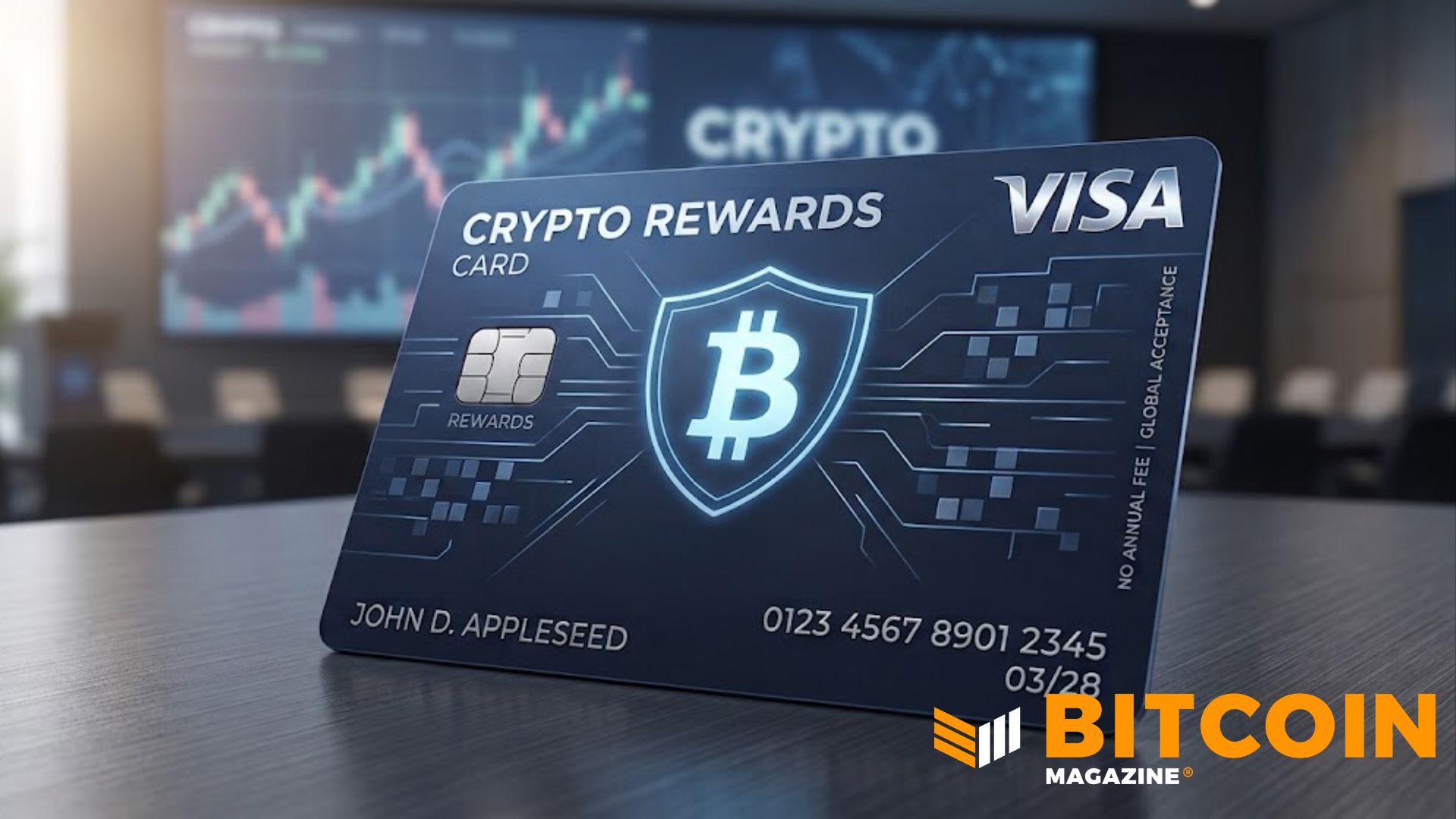
Crypto Card Payments Hit Record $12.5 Billion as Stablecoin Adoption Surges
Payment volume processed on crypto cards has climbed to a record $12.5 billion, up 140% year-to-date, according to data from paymentscan.xyz, first shared by The Kobeissi Letter.
The figure is also 247% higher than levels recorded in October 2025.
The surge is being driven by growing use of stablecoins as a payment rail and a broader push for cheaper, faster cross-border transactions, The Kobeissi Letter said.
QR-code payments are another bright spot: demand for QR-based spending helped push activated cards on Jupiter Spend, one of the largest on-chain card providers, up 55% quarter-over-quarter.
“Crypto cards are the next phase of crypto adoption,” The Kobeissi Letter said.
The figures come as major players move into the space of crypto cards. Fold Holdings (NASDAQ: FLD) announced earlier this year that it had started issuing its Fold Bitcoin Credit Card to select waitlist members, with wider access rolling out in batches over the coming weeks and months.
The card runs on the Visa network, is powered by Stripe Issuing and is accepted at 175 million merchants. It offers a base rate of 1.5% back in bitcoin, rising to as much as 4% through behavior-based boosts and partner offers. Cardholders who pay their bill in bitcoin earn an extra 0.5% back.
Aven has taken a different approach. Its Aven Bitcoin Visa Card, unveiled at the Bitcoin Conference 2026 in Las Vegas, lets holders borrow up to $1 million against their bitcoin without selling it, with rates starting at 7.99% APR and repayment terms of up to 10 years.
Collateral is held by BitGo, while Coastal Community Bank issues the card.
This post Crypto Card Payments Hit Record $12.5 Billion as Stablecoin Adoption Surges first appeared on Bitcoin Magazine and is written by Mathew Di Salvo.
Bitcoin Magazine

$350M St Cloud CEO: The First Credit Union to Put Bitcoin on Core Ledger | Jed Meyer
A credit union founded by postal workers in 1930 is now custodying real Bitcoin for its members. St. Cloud Financial Credit Union CEO Jed Meyer explains how its patent-pending hybrid custody model gives each member individual Bitcoin ownership in a multisig vault. He also covers how the credit union has grown to more than 20 BTC under custody without even trying.
Chapters:
00:00 St. Cloud Financial Credit Union’s Path to Bitcoin
01:08 Stablecoins, Dollars, and Bitcoin as New Money Networks
02:26 Bitcoin ETF vs. Credit Union Custody: The Hybrid Custody Model
03:18 Bringing Main Street Into Bitcoin With Direct Buy and Sell
04:45 Minnesota Custody Law, NCUA Exams, and the CLARITY Act
07:32 20+ Bitcoin in Member Vaults and Lightning Plans
09:38 What It Takes for a Credit Union to Own Bitcoin
10:57 The Cloud Dollar Stablecoin and the Cooperative Ownership Model
12:59 How Credit Unions Decide Which Digital Assets to Offer
14:10 Educating Skeptics and Why Credit Unions Must Own Their Rails
DISCLAIMER: The views and opinions expressed in this show are those of the participants and do not necessarily reflect the official policy or position of BTC Inc., Bitcoin Magazine, or any affiliated entities. This content is provided for informational and educational purposes only and should not be construed as investment, legal, tax, or accounting advice. Nothing contained in this show constitutes a solicitation, recommendation, endorsement, or offer to buy or sell any securities or financial instruments. Viewers should consult their own advisors before making financial or business decisions.
This post $350M St Cloud CEO: The First Credit Union to Put Bitcoin on Core Ledger | Jed Meyer first appeared on Bitcoin Magazine and is written by Patrick Green.
Bitcoin Magazine

Housingwire’s Logan Mohtashami: Real Estate vs Bitcoin & Bond Market Outlook
Mortgage rates just hit their highest level in nearly three years, and homebuyers are already pulling back. HousingWire Lead Analyst Logan Mohtashami explains why the 10-year Treasury yield keeps climbing since talks with Iran broke down, and why the Federal Reserve has turned hawkish. He also explains how mortgage spreads are keeping 30-year rates from climbing above 8%.
Chapters:
00:00 30-Year Mortgage Rates Hit 7.28%, Highest in Nearly Three Years
00:52 Iran Talks, the Fed, and Why the 10-Year Yield Keeps Rising
01:58 Mortgage Spreads Explained: Why Rates Aren’t Above 8.6%
03:28 What It Would Take to Get Meaningful Home Price Cuts
04:43 Homebuilders, Profit Margins, and Mortgage Rate Buydowns
06:17 Why Today’s Housing Market Isn’t 2008
08:13 Bitcoin vs. Real Estate: Competing for Monetary Premium?
09:52 Borrowing Against Bitcoin for a Home Down Payment
10:52 Grant Cardone’s Bitcoin and Real Estate Model
13:15 2027 Outlook for Mortgage Rates, Home Prices, and Affordability
DISCLAIMER: The views and opinions expressed in this show are those of the participants and do not necessarily reflect the official policy or position of BTC Inc., Bitcoin Magazine, or any affiliated entities. This content is provided for informational and educational purposes only and should not be construed as investment, legal, tax, or accounting advice. Nothing contained in this show constitutes a solicitation, recommendation, endorsement, or offer to buy or sell any securities or financial instruments. Viewers should consult their own advisors before making financial or business decisions.
This post Housingwire’s Logan Mohtashami: Real Estate vs Bitcoin & Bond Market Outlook first appeared on Bitcoin Magazine and is written by Patrick Green.
Bitcoin Magazine

Leon Wankum: BTC Taking on Real Estate’s $300T Monetary Premium
For generations, property has been the default place to store wealth, but Leon Wankum says that run is over. The author of Digital Real Estate, published by Bitcoin Magazine Books, explains how fiat debasement since 1971 inflated a monetary premium in real estate. He argues Bitcoin, as absolutely scarce money, is now pulling that premium away. He also explains why both residential and commercial real estate will feel the shift.
“Digital Real Estate is required reading for anyone who owns property and hasn’t yet considered how Bitcoin is set to disrupt the real estate market.” 
Buy Leon Wankum’s ‘Digital Real Estate’ now in the Bitcoin Magazine bookstore 

https://store.bitcoinmagazine.com/collections/books/products/digital-real-estate
Chapters:
00:00 Leon Wankum’s “Digital Real Estate” Thesis
00:35 Why Real Estate’s Run Since 1971 Is Over
01:39 The Monetary Premium in Residential and Commercial Real Estate
03:58 Saving in Bitcoin vs. Spending It on a Home
05:57 Bitcoin as Collateral: Borrowing vs. Renting and Stacking
08:19 Why the Housing Crisis Is a Crisis of Ownership
09:56 Pricing Real Estate in Bitcoin
10:57 Homeowners, Banks, and Bitcoin-Backed Mortgages
14:14 Bitcoin Mining and Treasury Strategies for Real Estate Developers
16:04 Why Grant Cardone’s Bitcoin Real Estate Funds Could Lead
DISCLAIMER: The views and opinions expressed in this show are those of the participants and do not necessarily reflect the official policy or position of BTC Inc., Bitcoin Magazine, or any affiliated entities. This content is provided for informational and educational purposes only and should not be construed as investment, legal, tax, or accounting advice. Nothing contained in this show constitutes a solicitation, recommendation, endorsement, or offer to buy or sell any securities or financial instruments. Viewers should consult their own advisors before making financial or business decisions.
This post Leon Wankum: BTC Taking on Real Estate’s $300T Monetary Premium first appeared on Bitcoin Magazine and is written by Patrick Green.
Bitcoin Magazine
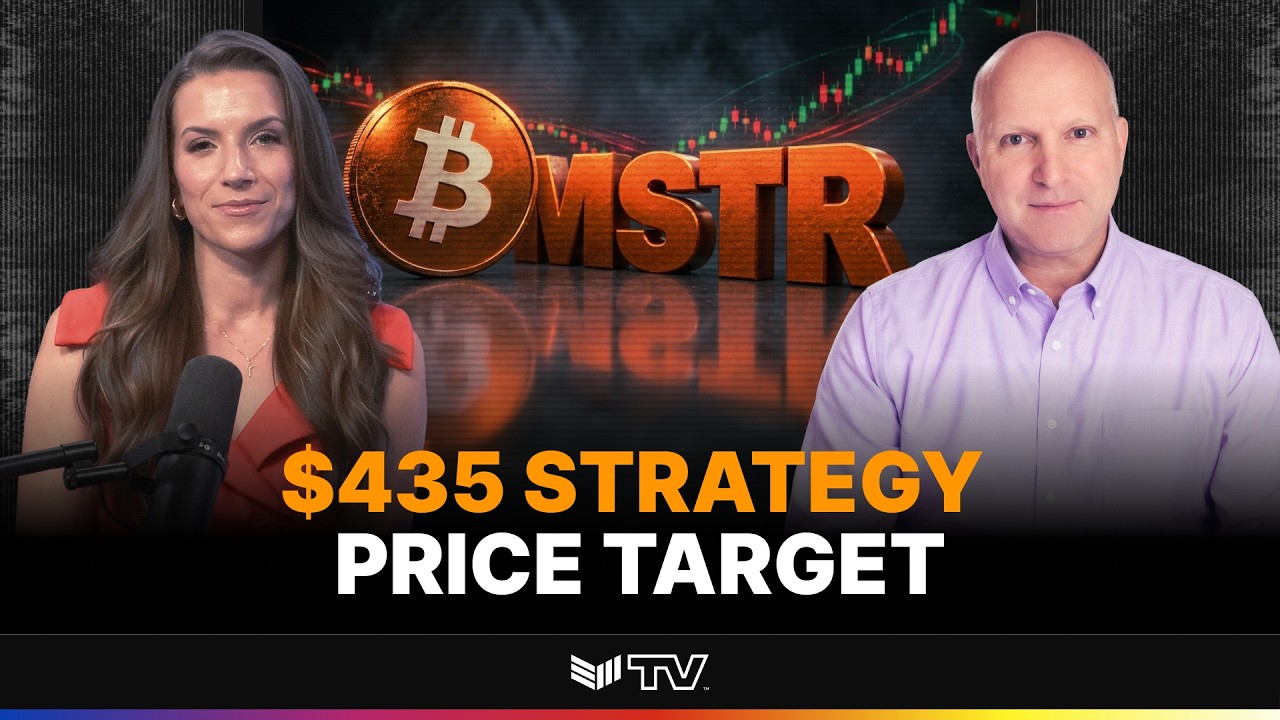
StoneX’s Mark Palmer: $435 MSTR Price Target Explained – DAT Consolidation Outlook
Strategy just spent six times more buying back Stretch than buying Bitcoin. Is that the right move for MSTR shareholders? StoneX Senior Equity Research Analyst Mark Palmer explains why STRC is foundational to Strategy’s fundraising, and how the $4.9B USD Reserve is pushing the preferred stock back toward par. He also explains why Strategy won’t simply raise the dividend rate.
Chapters:
00:00 StoneX Analyst Mark Palmer on Strategy (MSTR)
00:12 Stretch Buybacks vs. Buying Bitcoin: $176M vs. $29M
01:00 The $4.9B USD Reserve and Stretch’s Path Back to Par
01:56 Why Strategy Won’t Raise the Stretch Dividend Rate
04:17 Daily Dividends and Ex-Dividend Date Volatility
06:53 June’s Stretch Sell-Off and Institutional Investors
07:21 Where Bitcoin Treasury Balance Sheet Stress Shows Up First
09:21 Perpetual Preferreds vs. Convertible Notes: Strive’s Approach
11:54 USD Cash, Convert Paydowns, and Metaplanet’s U.S. Push
13:09 Why StoneX Cut Its MSTR Price Target to $435
DISCLAIMER: The views and opinions expressed in this show are those of the participants and do not necessarily reflect the official policy or position of BTC Inc., Bitcoin Magazine, or any affiliated entities. This content is provided for informational and educational purposes only and should not be construed as investment, legal, tax, or accounting advice. Nothing contained in this show constitutes a solicitation, recommendation, endorsement, or offer to buy or sell any securities or financial instruments. Viewers should consult their own advisors before making financial or business decisions.
This post StoneX’s Mark Palmer: $435 MSTR Price Target Explained – DAT Consolidation Outlook first appeared on Bitcoin Magazine and is written by Patrick Green.
CryptoSlate
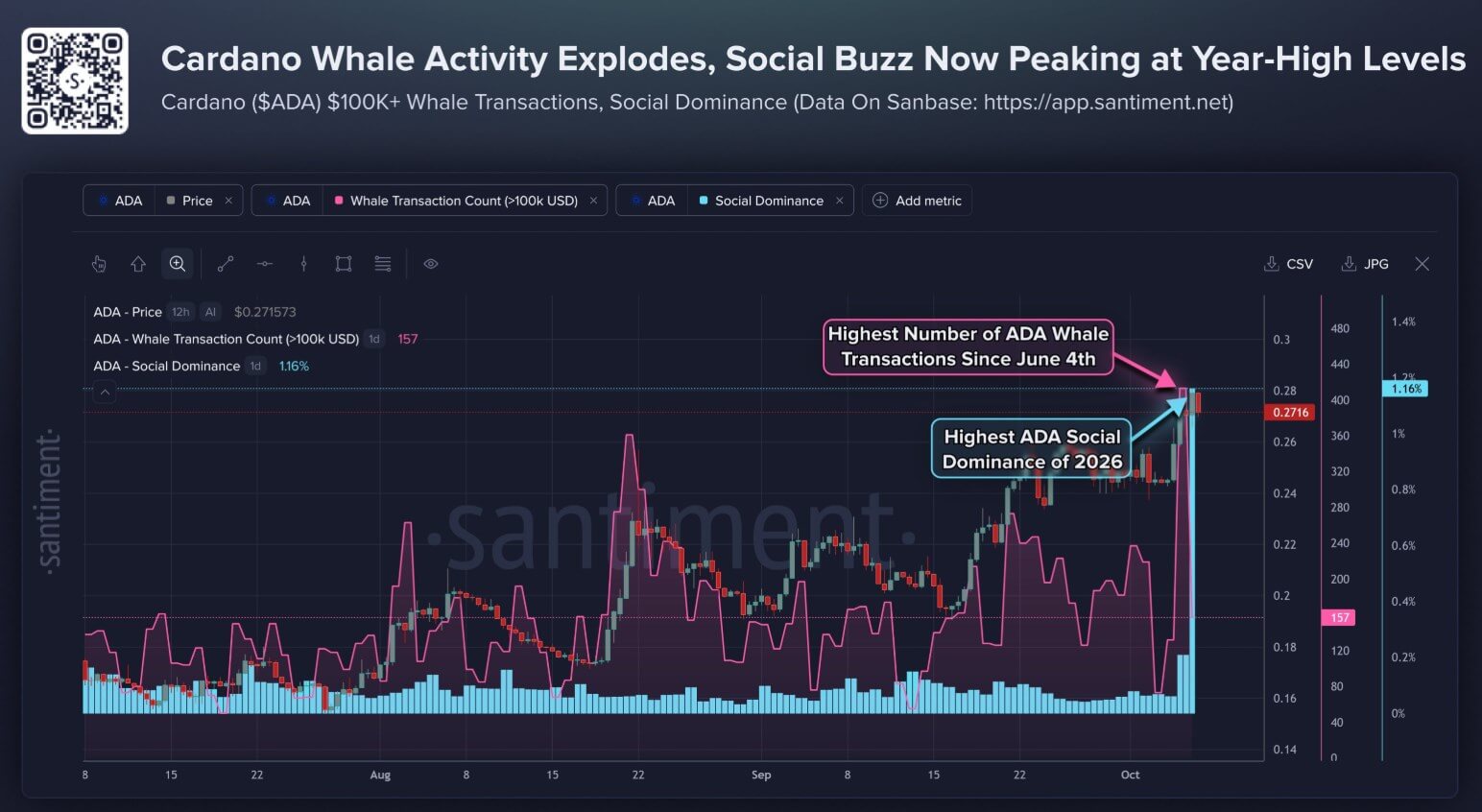
Cardano's value has climbed about 42% since Sept. 16, taking ADA from roughly $0.19 to $0.27, and the positioning behind the move has expanded faster than the dollar liquidity beneath it.
Santiment counted 413 transactions of $100,000 or more on Oct. 5, the highest since June 4 and about 2.2 times the recent weekday baseline, while social volume ran near 1.1 times its baseline.
ADA registered an intraday high above $0.28 on Oct. 6, but the zone that serves as the near-term breakout test quickly rejected it.
Traders added new bets
Santiment's data shows ADA gaining about 10% from Oct. 3 to Oct. 5 while open interest jumped about 25% to $304 million.
Measured in ADA, open interest also rose 13%, removing the effect of the higher price. Closing shorts reduces open interest, so an increase of that size points to new positions. Funding also moved from its most negative reading in a month to positive territory as ADA climbed.
DefiLlama shows Cardano's seven-day DEX volume at $42.6 million, up 147%, with DeFi TVL at $71 million. The turnover extends beyond centralized-exchange price action and confirms the move on-chain.
Cardano holds $66.8 million in stablecoins, down 0.74% over seven days, so the pool of on-chain dollars shrank through a week of surging turnover. Seven-day DEX volume equals about 64% of that stablecoin base, which fits existing liquidity turning over faster as the volume rose.
Santiment's $304 million in open interest is about 4.6 times Cardano's stablecoin supply, and comparing derivatives exposure with on-chain dollars across venues offers risk context.
What $0.28 decides
RealFi went live on Oct. 1 with USDrf and sUSDrf, credit-backed dollar-token products, and Cardano's own channels list Leios prototype work and Fireblocks support for Cardano native tokens expected by March 2027.
ADA's social dominance reached 1.16%, its highest level of 2026. These developments explain why traders returned, and the on-chain data shows what they did once they arrived: more leverage and faster turnover on a stablecoin base that slipped.
Price and open interest climbing together can confirm conviction, and the open question is whether liquidity broadens enough to carry the added exposure. If ADA clears and holds $0.277 to $0.28 while open interest stays elevated, remaining shorts get forced out and the new longs are validated.
Confirmation would come from stablecoin supply turning higher, DEX volume staying elevated beyond the initial price spike, and funding staying moderate.
If ADA stalls or reverses near that zone while funding stays positive and open interest stays high, a larger pool of leveraged longs sits exposed to liquidation.
Long liquidations could accelerate the move lower as DEX volume fades and whale transactions thin out. Stablecoin inflows would absorb some of that selling if they arrive.
Whether ADA holds $0.28, how long open interest stays elevated, and whether stablecoin supply starts climbing will show if Cardano's rally broadens into new liquidity or exposes leverage that outran it.
The post Cardano’s price breakout could trigger the next ADA squeeze or trap leveraged bulls appeared first on CryptoSlate.
The published design of Solana’s new institutional settlement program requires the full cash and asset legs of a trade to be available before it can execute the trade.
Its atomic transaction can prevent a buyer from paying without receiving the asset, but the program supplies neither the cash nor the financing needed to reach that point.
The Solana Foundation announced Solana DvP on Oct. 6 as an open-source standard for delivery-versus-payment settlement. The published design puts each side’s tokens into a separate escrow, then moves both agreed amounts together. It also explicitly excludes netting, the process of offsetting obligations before paying the remaining balance.
Institutions may benefit from a shorter wait for proceeds, while still needing to source the full amount for every trade they submit.
The announcement provides no measured capital-saving result or total-cost comparison.
Full funding and faster reuse
Under the published program limits, one trade record covers one exchange between two parties. Both legs must be token accounts on Solana, and partial fills are not allowed. A bank-account payment made on another rail falls outside this atomic exchange.
The settlement code at the documented source commit checks that each escrow balance is at least the amount agreed for that leg before transferring either agreed amount.
An underfunded side causes settlement to fail, and excess tokens are returned to the named party rather than increasing what the counterparty receives.
The economic responsibility remains with the participants and whoever finances them. A buyer must arrange the cash token, a seller must arrange the asset token, and a lender could finance either position through a separate arrangement, but that would leave the financing relationship outside the DvP program.
Funding itself uses an ordinary checked token transfer, according to the funding instructions. A custody or treasury system can supply the tokens without a special funding call.
Both balances must meet the agreed amounts at settlement, and the settlement authority must sign to exchange them.
That authority, a third address named in the trade, must sign the settlement instruction. The destinations are fixed when the record is created.
If a required transfer cannot complete, the settlement transaction reverses, and the earlier funding transfers are separate transactions.
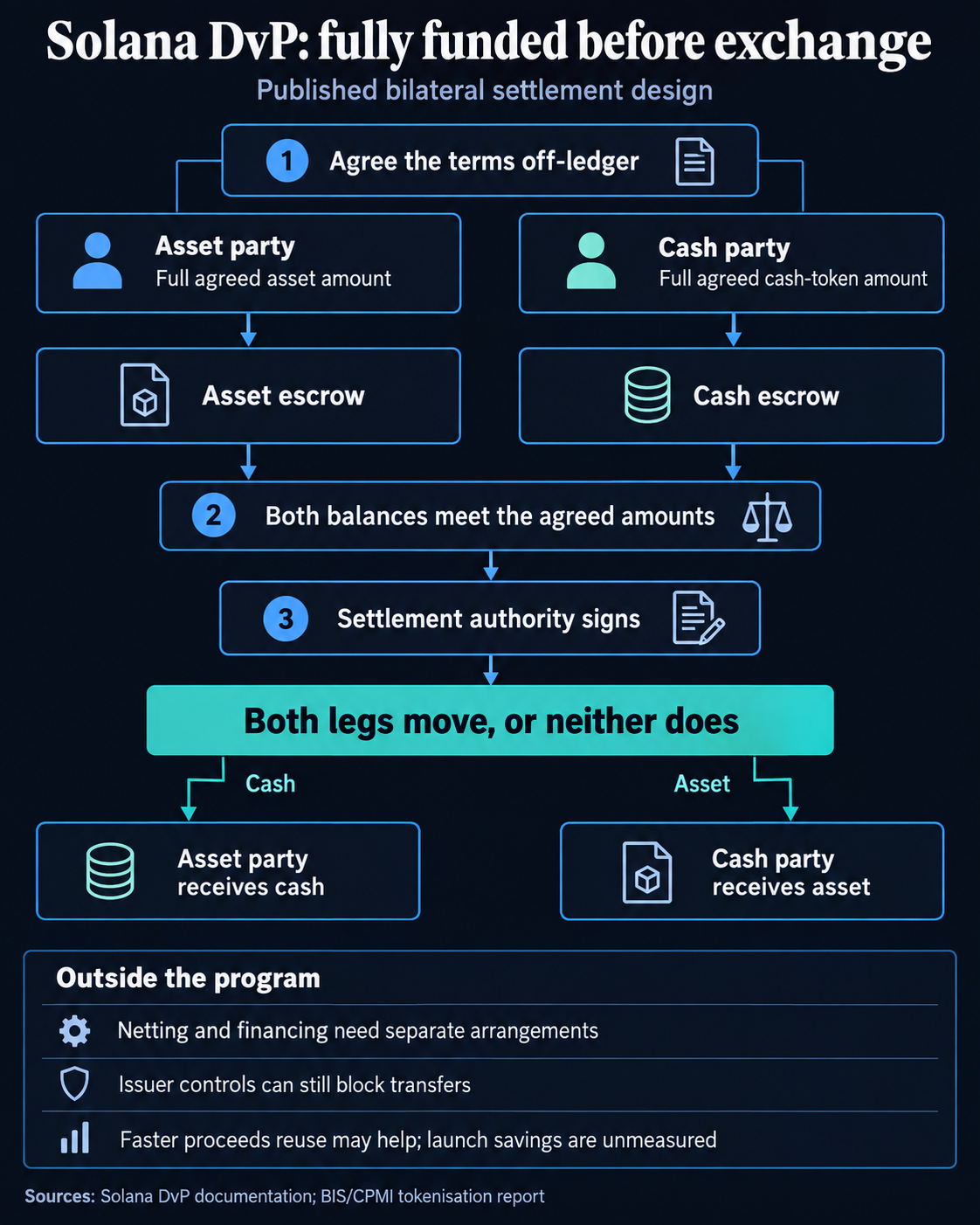
Gross funding asks how much must be available for a trade, while funding duration asks how long it remains unavailable for other uses. Solana DvP’s bilateral design requires the full amounts at settlement but does not require institutions to keep those balances idle permanently.
A participant that receives usable cash or assets sooner may be able to put them into a subsequent trade sooner. That could reduce how long it needs external financing or how much liquidity it holds against a sequence of obligations.
The benefit depends on when funding is required and when the proceeds can actually be used.
Offsetting obligations can reduce the amount that needs to move in the first place. Solana DvP does not perform that calculation across trades. Institutions that need netting or credit must arrange those functions elsewhere before deciding how much to send to their escrows.
The Bank for International Settlements and the Committee on Payments and Market Infrastructures describe this tradeoff in their October 2024 tokenization report, on pages 12 and 13. Immediate gross settlement can require more liquidity than netting arrangements.
The report also identifies the countervailing benefit: quicker access to money and assets can reduce the opportunity cost of liquidity tied up during settlement.
For Solana DvP, the resulting total cost depends on the funding arrangement and the timing of usable proceeds.
A CryptoSlate analysis of tokenized deposits examined the same distinction between moving cash faster and reducing the amount needed. Its Oct. 2 Roughrider coverage described a bank-payment arrangement on Solana in which token transfers and burning sit alongside daily netting of bank-account movements.
That service combines token movement with a separate process for offsetting obligations.
What the atomic exchange protects
The protection is principal delivery risk within the token exchange: neither side hands over its agreed leg without the other leg also moving. The source repository describes that exchange, but the broader financial relationship still depends on the instruments being exchanged.
A cash token carries its issuer’s credit and redemption risks, and a regulated asset token can also retain controls that affect transfers. Freeze, pause, and permanent-delegate powers remain relevant while tokens sit in escrow.
The unwind instructions let either party reclaim its own leg while leaving the trade open, or reject the trade and refund both legs. The settlement authority can cancel it, and a separate recovery instruction handles deposits arriving after closure, subject to the token’s transfer rules.
These powers do not override an issuer that freezes an escrow or blocks transfers. A fully funded trade can still fail to complete, and refunds can depend on issuer cooperation. The authorized settlement signer must also be available.
Under the trade-creation terms, refunds and reclaims return to the named party’s token account even when a custodian supplied the deposit. Agreed settlement destinations can receive proceeds, but the refund route may differ from the funding route.
| Function | Program behavior | Remaining dependency |
|---|---|---|
| Exchange | Both agreed token legs move atomically | Full balances and a valid authority-signed settlement |
| Funding | Separate escrows hold the agreed amounts | Participants arrange tokens, financing and any netting |
| Recovery | Parties can reclaim or reject; authority can cancel | Issuer and token transfer controls still apply |
The documentation tells operators to recognize settlement when the transaction reaches Solana’s finalized commitment. Whether that also constitutes legally final settlement depends on the parties’ agreements and applicable regimes.
Deployment, audits and institutional use
The Foundation’s documentation lists an upgradeable program on mainnet-beta and devnet using observations dated Oct. 2. The mainnet table identifies an upgrade authority, an address with the power to change the deployed program. Institutions depend on its governance and settlement rules.
The client documentation points to a specific public source revision, with the latest revision dated Sept. 30 in the public version history.
Security reviewer Cantina’s May 21-28 audit covers an earlier repository and specific fixes. Its four medium findings are marked fixed, while three low-risk and six informational findings are acknowledged.
The Foundation says the program is ready for real funds, while inviting design partners and early participants ahead of production release.
JPMorgan’s role is limited too. The bank supplied securities-settlement-practice input, and the announcement expressly disclaims any role in the program's design, development, operation, approval, endorsement, or guarantee.
For institutions, the useful next evidence would connect actual settlement use with the amount and duration of funding, the financing cost, and whether proceeds become spendable sooner.
Solana DvP offers a defined atomic exchange, and turning that exchange into a capital-saving service still depends on the cash, assets, and financing surrounding it.
The post Solana DvP settlement requires 100% upfront cash for every trade appeared first on CryptoSlate.
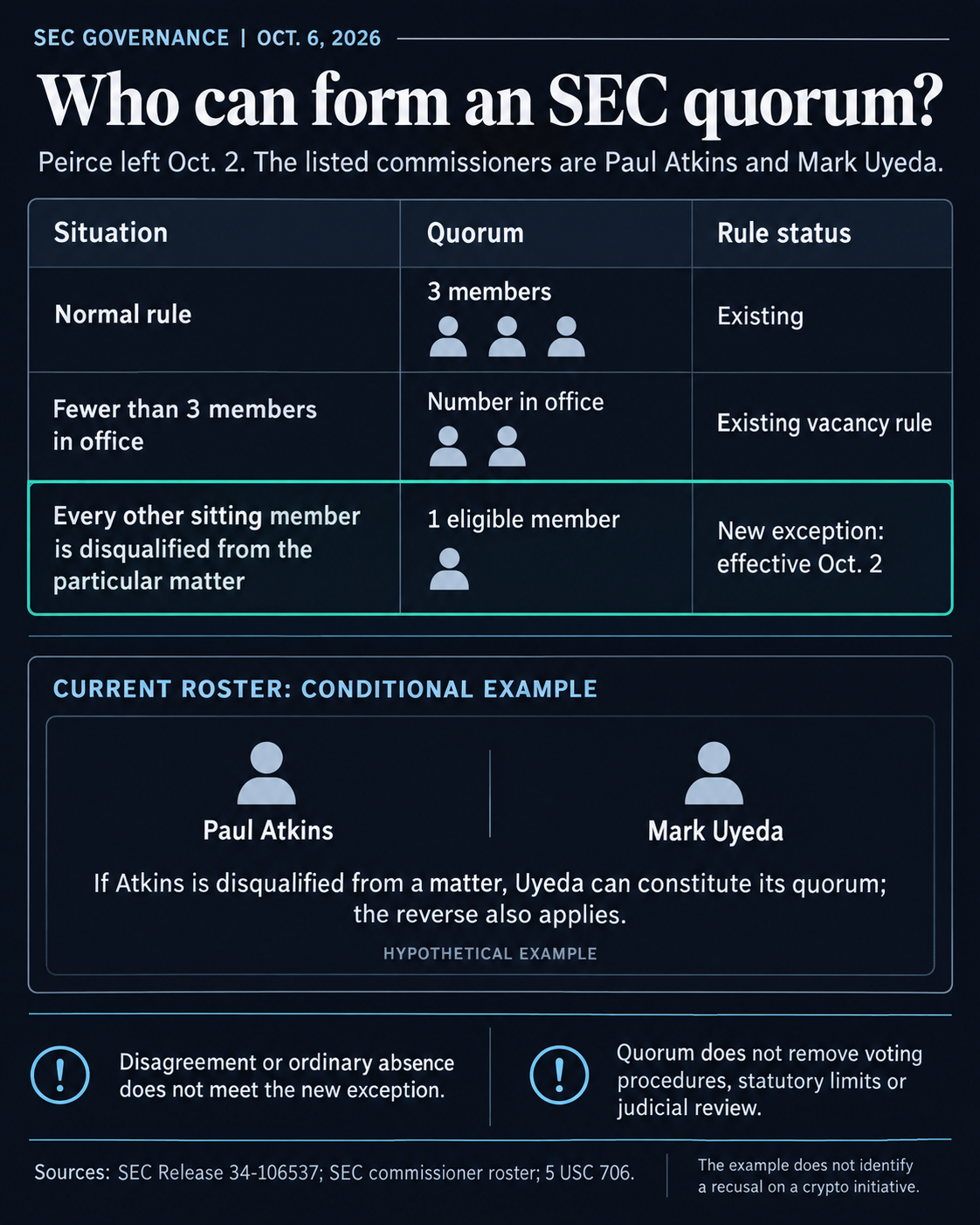
Hester Peirce’s Oct. 2 resignation has left Paul Atkins and Mark Uyeda as the SEC’s two listed commissioners. A new rule permits one eligible member to constitute a quorum when every other sitting member is disqualified from a particular matter.
Under the current roster, that combination puts future Commission decisions on crypto policy in fewer hands.
The one-member exception says it depends on disqualification from the specific matter, and it can allow either remaining commissioner to act as the Commission’s quorum in that situation.
Peirce’s resignation letter, dated Sept. 21, made her departure effective Oct. 2. The current commissioner roster, updated Oct. 3, lists Chairman Atkins and Commissioner Uyeda. The SEC’s historical service table also records Peirce’s tenure ending Oct. 2.
Custody reform and a new offering regime remain proposals, while tokenized-stock trading relief is already an issued conditional order. With the roster reduced to two members, further Commission-level decisions rest with a smaller body, subject to the rules and legal limits governing each action.
The quorum amendment, dated Sept. 30 and effective Oct. 2, changes 17 CFR 200.41, the rule defining how many commissioners must be eligible to conduct Commission business.
The existing vacancy exception already allowed the number of commissioners in office to constitute a quorum when fewer than three were serving. Two filled seats did not prevent the SEC from operating, and that exception already covered even a Commission with only one sitting member.
Previously, the separate provision for disqualifications accommodated two eligible commissioners after others were disqualified. The amendment extends that provision to one eligible commissioner, for the matter concerned, when every other member in office is disqualified.
Under the current roster, if Atkins were disqualified from a particular matter, Uyeda could constitute its quorum, and the same would apply in reverse.
The distinction keeps vacancies, nonattendance and recusal from becoming interchangeable. An eligible commissioner’s disagreement with a proposal does not meet the new provision’s disqualification condition.
In the published rule, the SEC explains that disqualifications arise and that the agency needs to continue conducting business. It describes the amendment as promoting flexibility and finality, and finds that it concerns internal management and organization rather than substantive regulation.
That administrative rationale accompanies a change with practical consequences for who can make Commission decisions. Meanwhile, Peirce’s letter expressed confidence that Atkins, Uyeda and SEC staff will continue to balance individual choice with sensible regulatory protections.
Crypto measures still require different kinds of action
One pending rulemaking is the Oct. 1 custody proposal. It addresses how regulated investment companies may custody crypto securities and similar investments, how registered advisers may custody client crypto funds and securities, and related modernization and reporting requirements.
In his October statement, Atkins placed custody reform alongside the offering proposal, Commission interpretations, and staff tokenization work. That inventory spans several kinds of regulatory action, with different roles for commissioners and staff.
The SEC’s page still classifies the release as proposed and now lists Dec. 7 for public comments. The existence of a smaller Commission, or a new quorum exception, does not turn a proposed custody framework into operative permission.
The action also supplies a concrete example of how the agenda moved before Peirce left. The October voting record shows Atkins, Peirce, and Uyeda all approving release IA-7023 on Oct. 1.
Those were approvals to propose the custody rules, before her resignation and the quorum amendment took effect.
A second pending measure is Regulation Crypto Assets, issued Aug. 18 and published Aug. 21. It would create offering exemptions for certain investment contracts involving crypto assets, alongside disclosure requirements and continuing antifraud and antimanipulation obligations. It also proposes a conditional safe harbor concerning investment-contract status.
Tokenized-stock access is at a different stage. The Sept. 17 Innovation Exemption is a temporary conditional exemptive order that covers specified tokenized National Market System (NMS) stock trading venues and certain liquidity providers.
The order’s fact sheet describes five-year conditional relief, with limits on stock symbols and volume, equivalent shareholder rights, public auditable smart contracts, and operating disclosures. For stock tokenized by an unaffiliated third party, it also requires issuer notice and an opportunity to object.
Those conditions remain part of the pathway available to qualifying participants. A future Commission decision on that relief would occur under the applicable quorum arrangements, but the new quorum rule itself neither broadens the exemption nor removes its safeguards.
A quorum does not replace voting or legal authority
For decisions circulated among commissioners, the SEC’s seriatim rule says a matter is not final until each member reports a vote or intended nonparticipation to the secretary.
Any commissioner can request that a circulated matter be withdrawn and scheduled for joint deliberation.
Under 17 CFR 200.60, commissioners should carefully weigh qualification in matters involving interests and relationships, and an individual member’s qualification rests with that member. The amended quorum clause also covers members otherwise disqualified.
Staff no-action and tokenized-securities statements are a separate part of the policy inventory described by Atkins.
The statutory delegation provision allows delegation through published orders or rules, while excluding general rulemaking from that authorization. It preserves Commission review and permits one member to bring a delegated action before the Commission for review.
The smaller body also remains constrained by applicable law. The Administrative Procedure Act provides notice-and-comment requirements for covered rulemaking, with specified exceptions. The SEC’s finding that its organizational quorum amendment did not require notice and comment is not a general exemption for future crypto rules.
Under judicial-review law, reviewing courts can set aside agency action found unlawful, beyond statutory authority or taken without required procedure. Reducing the number of eligible commissioners does not supply additional substantive authority or insulate a decision from review.
The SEC’s currently posted October tally contains the three-member custody vote, with no later one-member crypto decision listed. The agency says it generally posts votes only when the matter is final, so that tally supports a limited observation rather than an exhaustive claim about every action.
For crypto businesses, the next concrete milestones are the Oct. 20 offering-rule comment deadline, the Dec. 7 custody deadline, and any subsequent Commission decisions on those proposals or conditional trading relief.
Their legal status, recorded approvals, and participating members will show how the reduced Commission operates.
The new exception preserves an ability to act through disqualifications. Its effect on crypto policy will depend on which specific matters arise, who remains eligible to consider them, and the decisions they make.
The post SEC drops to 2 members, and 1 hidden rule shifts crypto power appeared first on CryptoSlate.
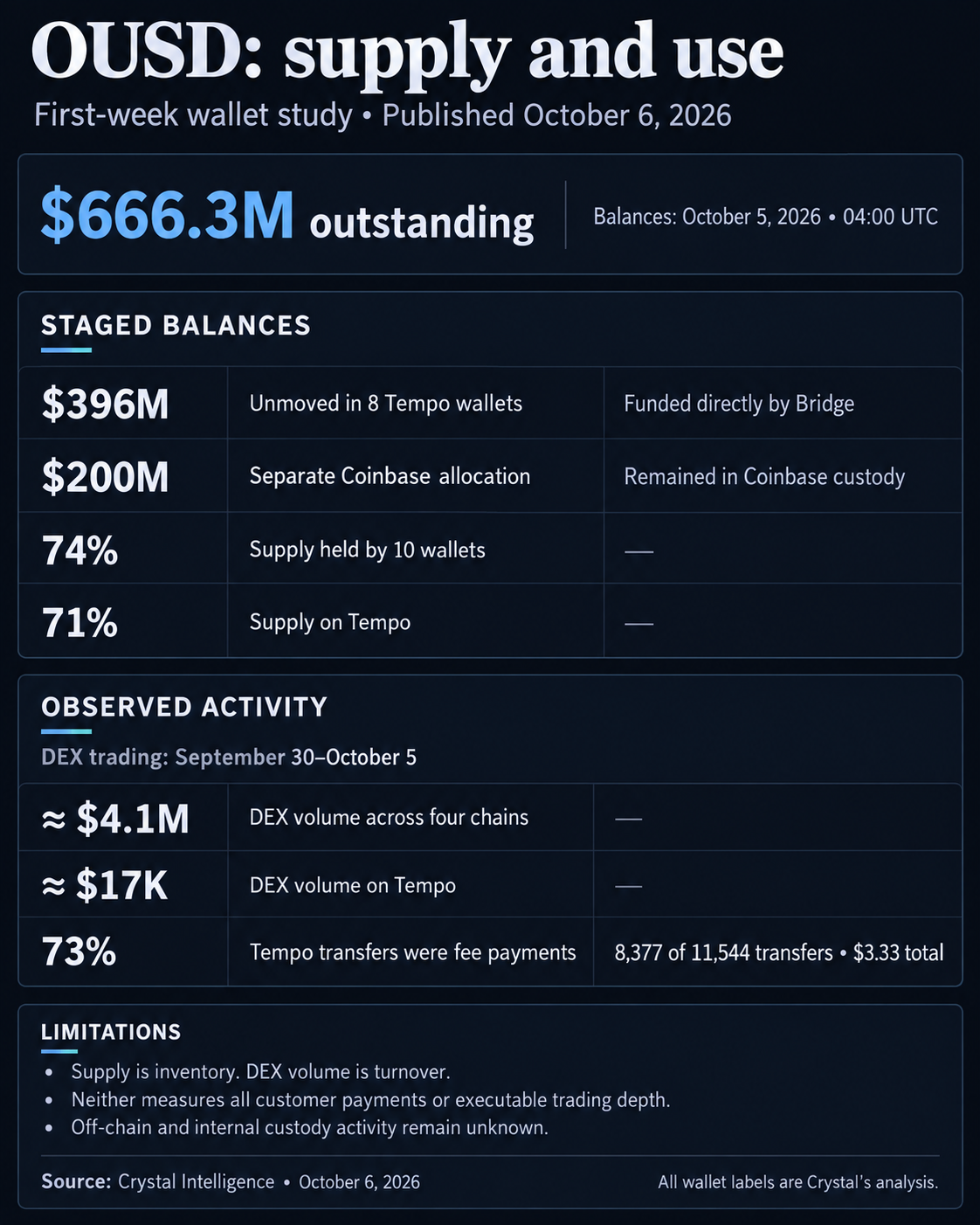
Open USD had $666.3 million outstanding on Oct. 5, but most of that supply remained in launch and custody wallets, according to Crystal Intelligence’s wallet study published Oct. 6.
The findings show substantial launch inventory, with little evidence of wider circulation yet.
Open Standard created the token OUSD, which launched Sept. 30 on Base, Ethereum, Solana and Tempo. Bridge describes Open Standard as an independent company founded by Coinbase, Mastercard, Shopify, Stripe and Visa, with more than 200 partners.
The launch distribution plans made recurring payment and treasury demand the next adoption test. Crystal’s study tracks the subsequent wallet allocation and activity, with balances measured at 04:00 UTC on Oct. 5.
Crystal identified $396 million in eight Tempo wallets funded directly by Bridge that had not moved those funds by the snapshot. In a separate allocation, it traced $200 million sent to Coinbase on Oct. 1 across the four chains and said that money remained within Coinbase custody.
Those classifications describe where tokens sit, without revealing all the beneficial owners behind custody accounts. The study leaves off-chain usage and activity inside those accounts unknown. Funding a launch wallet also does not establish that its balance has been spent on goods, services, or settlement.
Ten wallets held 74% of OUSD supply in Crystal’s snapshot, and Tempo accounted for 71% of the total. That makes the largest balances important to any assessment of subsequent circulation.
Open USD transfer counts and trading measure different activity
Crystal recorded about $4.1 million in trading on decentralized exchanges from Sept. 30 through Oct. 5. Solana accounted for $3.4 million, Base for $700,000, and Tempo for roughly $17,000, despite hosting most of the supply.
Trading turnover is also a different measure from the liquidity available to execute a trade or the value of customer payments.
Bridge says it will charge no minting or redemption fees and impose no liquidity restrictions delaying those transactions. Qualifying businesses joining Open Standard can also earn rewards on OUSD balances held at Bridge.
Tempo’s transfer count needs a further adjustment because OUSD fee payments are recorded as transfers. Of 11,544 OUSD transfers, Crystal classified 8,377 (73%) as network-fee payments worth just $3.33 in total.
These fee transfers help explain why a busy transaction count can coexist with little measured trading.
These first-week measurements also cannot establish that the launch has failed. Crystal’s next signals to watch include mints beyond founder or partner placements, transfers out of staged wallets, redemptions and Tempo exchange activity.
Sustained wider circulation would add evidence that the launch allocations alone cannot provide.
The post Open USD supply hits $666 million as 10 wallets trap most tokens appeared first on CryptoSlate.
Strategy estimated a $4.1 billion income-tax benefit after Bitcoin's fair value rose above cost as of Sept. 30, according to its Oct. 5 filing. The benefit comes from a lower estimated tax expense through an accounting adjustment.
The filing shows what can change when Bitcoin crosses a large holder’s cost basis. The next consequence depends on the position being measured: a company’s Bitcoin holdings, an ETF’s underlying assets and an investor’s ETF shares each have their own purchase history.
Strategy said it reversed a deferred tax asset related to its Bitcoin and released the associated valuation allowance. These management-prepared financial figures had neither been audited nor reviewed by KPMG.
The estimated benefit concerns the company’s own tax accounts and its September valuation-allowance adjustment.
The company disclosed 848,000 BTC at an average purchase price of $75,440.70, including fees and expenses, as of Oct. 4 at 4 p.m. Eastern time. That later acquisition figure has a separate cutoff from the Sept. 30 accounting comparison.
Fund cost and shareholder break-even are separate
An ETF acquisition estimate measures the fund’s underlying holdings. Maketo estimated the average cost of Bitcoin remaining in BlackRock’s iShares Bitcoin Trust ETF (IBIT) at $81,188 per BTC as of Oct. 2. Its model reconstructs underlying Bitcoin costs from daily money flows and prices.
An IBIT shareholder buys shares at a market price, so investors entering on different dates can have different break-even prices, even though their shares represent interests in the same pool of Bitcoin. The fund’s estimated acquisition cost measures a different position from each shareholder’s investment.
BlackRock’s Oct. 5 holdings file listed about 806,038 BTC, and its fund page reported nearly $69 billion in net assets and a Bitcoin benchmark level of $85,694.41 that day.
Its June 30 quarterly filing recorded 734,261 BTC with an investment cost of about $61 billion and a fair value of about $43.4 billion. That historical comparison places the same holdings below cost at the same cutoff.
IBIT calculates realized gains and losses on Bitcoin disposals using average cost, and the June filing records substantial activity in both directions. During the six months ended June 30, the Trust acquired 157,501 BTC and disposed of 192,970 BTC for share redemptions. Those categories include in-kind transfers.
Testing whether redemptions accelerated below cost requires daily flows, prices and cost estimates aligned to the same dates. The first-half totals leave the timing of trades relative to cost crossings, and investors’ motives, unresolved.
How a shareholder exit reaches Bitcoin
An investor can sell ETF shares in the secondary market. Redemption with IBIT is a separate transaction: only authorized participants can create or redeem baskets directly with the Trust.
IBIT’s prospectus distinguishes cash redemptions from redemptions in Bitcoin. With a cash redemption, the Trust converts underlying Bitcoin into cash, while an in-kind redemption delivers Bitcoin.
Share trading, cash redemptions and Bitcoin transfers describe different steps. The fund’s acquisition cost alone leaves those steps and the recipient’s subsequent decisions unmeasured.
US spot Bitcoin ETFs recorded net outflows of $89.8 million on Oct. 5, while Farside Investors’ data show that BlackRock’s fund recorded inflows in that same session.
That split captures a day of different flow directions across funds. Establishing whether cost-basis crossings influence those decisions requires comparing flows before and after the crossings over a longer period.
Crossing cost changes the gain-or-loss comparison on the underlying position, and Strategy’s filing demonstrates a material tax-accounting consequence.
Actual creations, redemptions, and the handling of redeemed Bitcoin are the next signals to watch for market impact. A shared price level, on its own, leaves the identity and motivation of the next buyer or seller unresolved.
The post Bitcoin rally delivers $4.1 billion tax windfall for Strategy appeared first on CryptoSlate.
CryptoTicker.io
Anyone who wants Bitcoin in a securities account has three routes available in Germany: the coin itself through a crypto exchange, an exchange-traded security tracking Bitcoin, that is an ETN, and a certificate issued by a bank. All three move with the same price. What separates them is the question of who owns the Bitcoin, who owes you the money if things go wrong, and which section of the tax code the tax office applies to your gain.
The price is the smallest difference. Bitcoin traded at $85,543 and €76,040 on Wednesday morning, down 0.43 percent on the previous day, according to CoinGecko as of 03:00 on Wednesday. That figure sits inside all three products. The gap opens up afterwards: in the tax treatment, in the costs, and in the question of what happens if the provider becomes insolvent.
What separates a Bitcoin certificate from a Bitcoin ETN
Both are debt securities, both trade on an exchange, and both sit in an ordinary securities account. They are still two different things.
An ETN (exchange traded note) is an exchange-traded debt security that tracks exactly one underlying, here the Bitcoin price, and that is backed by real Bitcoin at the common European providers. The term is usually open-ended, there is no leverage, and the ratio to the underlying stays the same over the years, less the ongoing fee.
A certificate is the umbrella term for structured securities issued by a bank that promise a payout according to a formula fixed in advance. That formula can be simple, but it can also contain leverage, a knock-out barrier or a fixed maturity. Backing with real Bitcoin is not part of it.
In practice this means an ETN is built for holding over the long run, a leveraged certificate for short phases. Lump the two together as a “Bitcoin product” and it is easy to buy the wrong one.
ETN, ETP, ETC: three words for the same product family
All three abbreviations turn up on the providers' product pages. ETP (exchange traded product) is the collective term for every exchange-traded product of this kind. ETN is the sub-form structured as a debt security, ETC (exchange traded commodity) the label that originally emerged for commodities such as gold and that some issuers also use for crypto assets. In legal terms, European crypto ETPs are almost always bearer debt securities, whichever of the three letter codes appears in the product name.
Bitcoin ETN: a bearer debt security with a redemption right
A bearer debt security is a security under which the issuer owes the holder a payment or a delivery. That is the decisive sentence about every Bitcoin ETN: you do not own Bitcoin, you own a claim against the issuer.
The large European providers soften that by backing the notes they issue with real Bitcoin and storing those coins with a separate custodian. Many products also grant the investor a redemption right, meaning the right to demand the deposited coins instead of cash. Both are set out in the key information document and in the terms of issue, and both differ from product to product.
What does not arise here is segregated fund assets. A fund holds investors' money legally separate from the fund company's own assets, and that is precisely the protection a debt security does not provide. In its place comes the collateral, which is promised by contract and not guaranteed by law.
No Bitcoin spot ETF in the EU: the UCITS limit of 20 percent
The United States has Bitcoin spot ETFs, the European Union does not, and the reason is a sober one rooted in fund law. An ETF for retail investors falls under the UCITS rules in the EU, and those rules require diversification: no single component may account for more than 20 percent of net asset value. A fund holding nothing but Bitcoin reaches 100 percent and therefore cannot be authorised.
That is why every European Bitcoin product you can hold with a German broker is not a fund but a debt security. Search engines may suggest a Bitcoin ETF, but in Germany the search inevitably ends at ETNs and ETPs. Which of these products trade on German exchanges and what matters in picking one is covered in the overview of crypto ETFs in Germany.
There is a side effect for savings plans and retirement provision: because it is not a fund, some custodian banks treat crypto ETPs differently from ETFs, for instance in savings plans, in lending against securities or inside managed portfolios. That is not a question of the price but of your provider's house rules.

Bitcoin certificate: knock-out, factor and the risk of total loss
Two designs are particularly common among certificates on Bitcoin, and both behave markedly differently from an ETN.
A knock-out certificate works with a fixed barrier. If the price touches that barrier, the note expires and the amount invested is gone, even if the price climbs again an hour later. The leverage follows from the distance between price and barrier, so it is not constant.
A factor certificate, by contrast, keeps leverage constant by resetting daily against the closing price. In choppy sideways phases that produces a loss in value even if the Bitcoin price is back at its starting point by the end of the week. The effect is called path dependency, and it is regularly underestimated.
For both designs the same holds: the certificate is likewise a debt security of the issuing bank, only without coins deposited behind it. Issuer risk is therefore added to market risk, and with leveraged products comes the possibility that the stake is wiped out entirely while the underlying still exists. Anyone looking to trade leveraged products on crypto assets will find the providers' terms in the crypto broker comparison.
The coin itself: self-custody, seed phrase and wallet risk
The third route runs through a crypto exchange and ideally ends in a wallet of your own. Self-custody means you keep the private key to your coins yourself and no company stands between you and the balance. The seed phrase is the sequence of words from which that key can be restored.
Issuer risk disappears entirely at that point. There is nobody who could become insolvent, because nobody owes you anything. Other risks take its place, and they are not smaller: a lost device with no backup, a seed phrase somebody else finds, a contract approved by mistake in a wallet app. None of these risks can be passed on to a third party.
In between sits the case most newcomers actually choose: the coins stay on the exchange. You then do own real Bitcoin, but not the keys, and you depend on a company again, this time on one that needs authorisation as a crypto-asset service provider under the European MiCA regulation. Whether a trading venue holds that authorisation can be looked up in the supervisor's public register, and that is exactly what belongs before the first deposit.
Issuer risk and physical backing: the distance to segregated fund assets
Issuer risk is the danger that the issuer of a security cannot meet its obligation. With a crypto ETN it is the central factor, because in legal terms the note is nothing other than that obligation.
Physical backing is meant to limit the damage. The issuer buys real Bitcoin for every note issued, has it stored with an independent custodian and pledges it in favour of the investors. In an insolvency that holding is meant to go to the noteholders first rather than to the other creditors. In practice the effect hinges on three points you can look up in the key information document: whether the backing is complete, who the custodian is, and whether a trust structure has been inserted in between.
None of the three routes comes with deposit insurance. The statutory protection of €100,000 per customer and bank applies to balances in accounts, not to securities and not to crypto assets. Confuse the two and you will think a note is safer than it is.
Tax on a Bitcoin ETN: 26.375 percent capital gains tax from the first euro
This is where the difference that adds up to the largest amount over the years sits. ETNs and certificates are securities, and their gains count as investment income under Section 20 of the German Income Tax Act (EStG). A separate tax rate applies to that income: under Section 32d (1) sentence 1 EStG, income tax on it is 25 percent. On top comes the solidarity surcharge, which under Section 4 of the Solidarity Surcharge Act amounts to 5.5 percent of the tax. Together that makes 26.375 percent, slightly more for those liable to church tax.
This system knows no holding period. Whether you hold the ETN for three weeks or eleven years makes no difference to the rate. The tax is usually withheld directly by the institution holding the account, and you will find it in the settlement statement.
Relief comes only from the saver's allowance. Under Section 20 (9) EStG, €1,000 a year is deductible, and €2,000 jointly for married couples filing together. That amount covers all investment income together, interest and dividends included, and it is used up quickly.
One advantage of the securities form remains: losses on ETNs can be offset against other investment income, and the bank runs the loss-offset pot automatically. With directly held coins you have to track that yourself in your tax return.

Holding period under Section 23 EStG: one year and the €1,000 threshold
Directly held Bitcoin runs under a different section. Such coins count as other assets within the meaning of a private disposal transaction, and Section 23 (1) sentence 1 no. 2 EStG only captures transactions “in which the period between acquisition and disposal does not exceed one year”. Hold for more than a year and then sell, and no income tax is due on the gain.
Within that year the personal tax rate applies, running from zero to 45 percent depending on income, rather than the flat 26.375 percent. On a high income, selling coins short term is therefore more expensive than the same gain inside an ETN; on a low income it is cheaper.
There is also a threshold that is frequently misquoted. Section 23 (3) sentence 5 EStG states: “Gains remain tax-free if the total gain realised from private disposal transactions in the calendar year was less than 1,000 euros.” That is an exemption threshold, not an allowance. If the total gain is exactly €1,000, the full amount is taxable, not just the euro above the line.
For the order in which coins are deemed sold, the allocation is decisive, in practice usually on the principle that the holdings bought first count as sold first. Anyone who has bought in tranches over several years needs a clean record of every single purchase for that.
The December 31, 2026 cut-off in the finance ministry's draft
This coexistence of two tax systems is not meant to last. On September 30, 2026, the Federal Ministry of Finance published its draft bill on reforming the taxation of certain privately held crypto assets. According to the ministry's explanatory memorandum, the current classification under other income no longer does justice to crypto markets that have grown since; the draft is in interdepartmental consultation, and consideration by the cabinet is planned.
In substance, gains on crypto assets are to count as investment income in future. The one-year holding period would fall away, and the same rate that already applies to ETNs would take effect. Several tax firms read a grandfathering provision out of the draft in the same way: the new rules are to cover only crypto assets acquired after December 31, 2026, while the current holding period continues to apply to holdings bought earlier.
Two caveats belong with that. A ministerial draft is not a law, and deadlines and details can still change during the legislative process. And even if it arrives as drafted, it bears on today's purchase decision: purchases made by the end of the year would fall into the protected existing holdings, purchases after that would not.
What that means for the comparison of the three routes
As long as the holding period stands, the directly held coin has the clear tax advantage for long-term holding. If it falls away for new acquisitions, that lead shrinks to the differences in costs, custody and loss offsetting. Anyone making a decision today for the years ahead should run the numbers on both situations, not only on today's.
How to check who stands behind your Bitcoin ETN
The details sit in two documents every issuer has to publish: the key information document and the terms of issue. Both are reachable through the product page and through the exchange page for the security.
- Issuer and domicile: who issues the note, in which country is the company based, and which insolvency law therefore applies if things go wrong?
- Degree of backing: is every note fully backed with Bitcoin, and does that appear as a commitment in the terms or only as an intention in the marketing?
- Custodian: which company holds the coins, is it independent of the issuer, and how is the holding evidenced?
- Redemption right: may you demand delivery of real coins, from what quantity upwards, and at what cost?
- Term and early redemption: is the note open-ended, and under what conditions can the issuer call it early?
With a certificate the formula components come on top: knock-out barrier, leverage, subscription ratio and maturity date. A note whose payout formula you cannot explain in a single sentence does not belong in a portfolio.
Costs per year: management fee, spread and custody charge
The costs of the three routes arise in different places, and that makes the comparison hard at first glance.
With an ETN there is an ongoing management fee that the issuer takes pro rata out of the deposited holding. You will see no statement for it; the effect sits inside the price of the note. On top come your broker's order fee, the spread between bid and ask on the exchange and, depending on the provider, a custody charge.
Buying directly, you pay the exchange's trading fee, a spread again, and a network fee when withdrawing to a wallet of your own. There is no ongoing annual fee; anyone choosing self-custody has the cost of buying a hardware wallet instead.
With a certificate, the order fee and the spread are often joined by a financing component that accrues daily on leveraged products and weighs heavily over longer holding periods. The actual rates change and differ widely; they sit in the key information document for the particular note and are to be looked up there before buying.
As a rule of thumb over long periods: ongoing fees act like a headwind that blows equally hard every year, while one-off costs lose weight the longer you hold.
Bitcoin in your portfolio: the key points for your decision
The three routes lead to the same price and to very different obligations. This order helps with the decision.
- Settle the holding period first, and with it the tax question. Anyone planning in years weighs today's holding period against the planned capital gains tax; anyone trading short term can cut the comparison down to costs and tradability. Which trading venues are authorised for direct purchases under MiCA is covered in the crypto exchange comparison.
- Set up the record before you buy. Purchase date, quantity, price and fees per tranche decide your tax return later, and with directly held coins nobody keeps that record for you. You will find tools for it among the crypto tax software and portfolio trackers.
- Decide custody separately from the purchase decision. With an ETN the issuer's custodian takes on that job; with the coin you choose between an exchange and a device of your own. The differences between the devices are set out in the hardware wallet comparison.
The sentence that holds it all together: with an ETN and a certificate you carry the risk of a company and get convenient settlement in your securities account; with the coin you carry responsibility for the key and keep the holding period for now. Which of these two burdens sits more easily with you is the real question.
(As of October 7, 2026. This article is not investment advice. Prices and fee structures change; check the terms with the provider before you buy.)
A finfluencer is someone who talks about investing on social media and recommends individual products while doing so. Whether a crypto tip of that kind has been paid for shows up in three places: in the disclosure as advertising or a paid promotion, in affiliate links and discount codes that lead to one particular exchange, and in the pattern of the pitch, which works on urgency and peer pressure. How often that lands in Germany is something the financial regulator BaFin has had in hard numbers since October 1.
Of the 1,000 crypto investors assessed, roughly half pay attention to recommendations from finfluencers. Thirty percent have acted on them when investing. And around 40 percent were not aware that finfluencers are often paid for their recommendations. That is the core of the finding: the recommendation itself is not the problem, the invisible consideration behind it is.
The BaFin survey in numbers: 4,340 respondents, 1,000 crypto investors assessed
A market research institute surveyed 4,340 people aged 18 to 59 on behalf of BaFin. The fieldwork ran online in late March and early April 2026. The answers assessed were those of the 1,000 respondents who held crypto-assets at the time or had held them in the years before. The results appear in the regulator's specialist article, “Soziale Medien treiben Kryptoinvestments”.
What gets held is mostly the obvious. Seventy-nine percent of this group had bought Bitcoin at some point, 39 percent Ether. The assets were used predominantly as an investment. On motives, 39 percent said they had wanted to “try something new”, while 30 percent each cited the prospect of high returns and the wish for a small allocation in their portfolio.
That mix matters for understanding the rest. Someone who gets in out of curiosity, with no firm expectation of the product, tends to choose on the basis of whatever crosses their path. That is exactly where recommendations do their work.
How to spot a paid crypto tip: disclosure, affiliate link, discount code
A paid recommendation online usually takes one of two forms. Either the sender receives a fixed fee for a post, in which case that post has to be labelled as advertising or a paid promotion under German media law. Or they receive a share of the revenue when you open an account through their link and trade. This second form is called an affiliate or partner link: a link with an identifier attached, by which the exchange recognises who sent you.
Four features can be checked without any prior knowledge. First, a note such as “advertising”, “ad” or “paid partnership”, often small at the start or right at the end of a post. Second, a link with an identifier after the question mark, frequently carrying abbreviations such as “ref” or “partner”. Third, a discount or voucher code that runs under the sender's name. Fourth, a bonus promise tied to a minimum deposit.
None of these features makes a recommendation wrong by itself. Advertising is allowed to advertise, but it does tell you that the sender has a commercial interest of their own in your decision, and that belongs in your assessment. If you are looking for a trading venue anyway, the comparison of regulated crypto exchanges is the more sober route there than a code from a video.
35 percent bought because the finfluencer called the right moment
BaFin also asked what made the recommendation convincing. Among those who acted on a finfluencer recommendation, 35 percent invested because the claim was that now was the right moment. That is the most frequent reason in the entire survey.
The sentence “now is the right moment” has a property that makes it so usable for advertising: it cannot be verified at the moment it is made. Whether an entry point was good only becomes visible later, and whoever calls it carries no risk if they are wrong. A verifiable statement would look different and would name a quantity you can recalculate, such as a trading volume, a flow of funds or a date in the protocol.
From that follows a simple counter-move: take the claim and find the number for it yourself. Trading volume, inflows and outflows at exchanges or the distribution of holdings are available in freely accessible data tools; which of them does what is set out in the comparison of analytics platforms. If you find no number for the claim, you already have your answer.

FOMO as a sales argument: 29 percent followed the reference to the majority
The second most frequent reason was the reference to everyone else. Twenty-nine percent of this group bought because, according to the finfluencer, many others were doing so at the time. BaFin uses the English term for this in its assessment: fear of missing out, or FOMO for short.
FOMO says nothing about the crypto-asset itself. The claim describes the behaviour of other people; it can be accurate and still leave open whether the price is worth the risk. On top of that, the claim that a lot of people are buying right now is hard to verify for small tokens, because a few large addresses can generate a trading volume that looks like broad demand.
Both findings together describe the same mechanism from two directions: urgency and crowd. Anyone who hears either one in a recommendation has a reason to let a day pass before acting.
Memecoins and gambling: what BaFin's consumer protection staff say word for word
Nineteen percent of the crypto investors surveyed have bought memecoins at some point. Among the motives they named were “fun” and “having a punt”. A memecoin is a token with no use of its own and no promise of yield, whose price results purely from demand.
The regulator's assessment is blunt. “Investing in memecoins is in fact comparable to placing a bet in a game of chance,” says BaFin consumer protection expert Dr Markus Nielsen; memecoins are therefore particularly risky. Consumer protection officer Christian Bock places the whole market in context: “Consumer interest in crypto-assets is rising,” he says, “yet most of these assets are highly speculative.” Price movements, he adds, are tied neither to a particular currency nor to a tangible asset, and with memecoins there is also no cap on supply.
For a German supervisory authority to compare an asset class with gambling is notable, and it links the finding explicitly to the subject of this article: with memecoins in particular, the danger is especially great that finfluencers move the price by talking an asset up excessively or talking it down. The leverage here is greater than with large assets, because little capital is enough to shift the price.
Concentration risk in the portfolio: 27 percent hold more than a fifth of their wealth in crypto-assets
One figure from the survey can be applied directly to your own portfolio. Twenty-seven percent of respondents said they had invested more than 20 percent of their wealth in digital assets. For 5 percent it was more than half.
The technical term for this is concentration risk: a single building block in a portfolio is so large that its performance determines the overall result. In an asset class that swings by double digits within a few days, that share decides whether a setback is merely annoying or existential. The regulator names no upper limit for it, and there is no official one either. The figure still works as a yardstick: if your own share sits well above what you could stomach losing, that is a finding in its own right, independent of any recommendation.
The connection to the rest of the survey is plain. Anyone who settles their position size in the moment of enthusiasm settles it according to that enthusiasm. Anyone who settles it beforehand already has an answer ready for the next tip.
Five features to check before acting on any crypto tip from social media
The findings of the survey boil down to a short routine that runs before a purchase and takes a few minutes.
- Look for the disclosure. Does it say “advertising”, “ad” or “paid partnership” anywhere? Look in the description under the video and in the first comment as well, because that is where it tends to be parked.
- Take the link apart. Does the recommendation run through an identifier or a code? Then money flows to the sender when you open your account.
- Look into the provider. Does the platform named hold a licence for this business in Germany? BaFin maintains a public company database for exactly this, and it publishes warnings about unauthorised providers on an ongoing basis.
- Find a second source. Does the central claim also appear somewhere that gains nothing from your buying? If nothing turns up, it remains a single opinion.
- Set the position size beforehand. Decide the amount before you finish listening to the recommendation, and stick to it. This is the only point on the list that nobody but you can influence.
This routine is no substitute for your own view of a crypto-asset; it only separates the question of whether something is a good investment from the question of who earns money when you buy it, and the second question was not on the radar at all for 40 percent of respondents.

Holding period and tax: what an impulse purchase after a finfluencer tip triggers with the tax office
One point does not come up in the survey and yet belongs to every spontaneous purchase. In Germany, transactions in crypto-assets held as private assets count as private disposal transactions under Section 23(1) sentence 1 number 2 of the Income Tax Act (Einkommensteuergesetz). If you sell at a profit within one year of buying, that profit is taxable; after a holding period of one year it is not. A threshold of 1,000 euros applies to the total of all private disposal transactions in a year. Threshold means that once it is exceeded, the entire gain is taxable, and not only the part above it.
Two things follow from this for a purchase made after a tip. First, the one-year period for this specific position begins on this specific day, regardless of how long you have already held the same cryptocurrency. Second, a quick resale, which the same dynamic of urgency and peer pressure frequently leads to, is the least favourable case for tax purposes. Someone who buys and sells three weeks later in disappointment has a taxable event if there is a gain and documentation work if there is a loss.
In practice that means recording the purchase date, quantity and price, and doing so on the day of the purchase. It costs a minute and saves back-calculating across several exchanges if there is ever any doubt. Individual tax questions belong in the hands of a tax adviser; this section is no substitute for advice.
MiCA, BaFin and advertising: which rules apply to finfluencers today and which ones ESMA wants
Since the European crypto regulation MiCA came into force, providers of crypto services in the EU need a licence, and their marketing communications have to be identifiable as such, fair and not misleading. These duties are addressed to the providers. An independent sender on social media who is not a service provider does not automatically fall under them, and that is exactly where the gap sits that the BaFin figures describe. Which obligations the regulation sets out in detail is covered in our overview of the MiCA licensing requirements for crypto companies.
The European securities regulator ESMA wants to change that. In its opinion on the review of MiCA, which reached the EU Commission at the end of September, it explicitly calls for “stricter rules for the marketing of crypto-assets, particularly when they are promoted by influencers and third parties”. Which six changes the authority proposes in total we have broken down in our article on the ESMA opinion on MiCA.
Between a demand and applicable law lies a legislative procedure that runs for months. Until then the labelling requirement from media law remains the most important lever, and its enforcement depends on someone noticing the missing disclosure. That is what makes the survey finding so uncomfortable: a protection that rests on recognition by the audience comes to nothing for 40 percent of that audience.
Two authorities have thus marked the same spot within two days, one with a demand from Paris, the other with figures from Germany.
Finfluencer tips: the key points for your decision
The survey describes the normal case: around half of the crypto investors surveyed pay attention to recommendations from social media, and two in five do not know the business model behind them. Three steps turn that into something manageable.
- Separate the recommendation from the trading venue. Decide first whether a crypto-asset convinces you, and choose the platform separately afterwards. A look at the comparison of regulated crypto exchanges shows which providers hold a licence in the EU.
- Get the number behind the claim. Every statement about timing or demand can be cross-checked. Which analytics platforms disclose volume, inflows and the distribution of holdings is set out in the comparison.
- Document on the day of purchase. Record the date, quantity and price so the holding period can be proven later. Tools for this are in the comparison of crypto tax software and portfolio trackers.
(As of October 7, 2026. This article is not investment advice. Prices and fee structures change; check the terms with the provider before you buy.)
Anyone in Germany who wants to buy Monero will no longer find the coin at the large trading venues. On October 5, 2026 we went through the publicly available trading pair lists of eight exchanges. At Bitpanda, Bitvavo, Coinbase, Bitstamp, Gate.io and OKX there is not a single XMR pair. At Kraken five XMR pairs are listed, among them XMR/EUR, but they have been blocked for customers in the European Economic Area since the end of 2024. That leaves KuCoin with four pairs, and there both a euro market and authorisation for the German market are missing.
The coin itself is untouched by this. XMR costs around €499 and reaches a market capitalisation of about €9.4 billion, up 2.8 percent on Monday. Holding and custody are permitted in Germany. What falls away is the convenient route via an authorised exchange, and there are two concrete legal bases for that, with two different dates.
Eight exchanges checked: where XMR was still in the trading list on October 5, 2026
For the count we pulled the market lists that each exchange publishes, and searched them for the ticker XMR. The list says what an exchange carries in principle. Whether a market is open to German customers is a second question that goes beyond it.
| Trading venue | Pairs in total | XMR pairs | For customers in Germany |
|---|---|---|---|
| Kraken | 1,458 | 5 | blocked in the EEA |
| KuCoin | 999 | 4 | no EU authorisation |
| Gate.io | 2,203 | 0 | not carried |
| OKX | 1,143 | 0 | not carried |
| Coinbase | 839 | 0 | not carried |
| Bitpanda | 880 assets | 0 | not carried |
| Bitvavo | 438 | 0 | not carried |
| Bitstamp | 251 | 0 | not carried |
Two notes on how to read this. First, a ticker appears at OKX that resembles Monero's, belongs to an entirely different project and is therefore not counted here. Second, Binance could not be queried from our network because access was refused on location grounds; the exchange had, however, already discontinued XMR trading worldwide in February 2024.
The Kraken case shows how a delisting works in practice
Kraken has documented the process for the European Economic Area in its own help section. On October 31, 2024 at 15:00 UTC, trading and deposits were stopped for all XMR markets held by customers registered in the EEA. Those affected could withdraw their holdings until December 31, 2024. For anyone who let the deadline pass, the exchange converted their XMR into Bitcoin at the prevailing market price and credited it in early January 2025. As justification, Kraken cites regulatory changes without naming a single provision.
For investors, that contains the most important practical lesson of this article: a delisting does not only take away your ability to buy, it also sets you a deadline for what is already there. Anyone whose coins are still sitting on the exchange after that deadline gets a forced conversion at a price they do not decide. This mechanism is no isolated case; we described it on September 19, 2026 using Monero as the example once before.

MiCA Article 76(3) excludes coins with an inbuilt anonymisation function
The Regulation on Markets in Crypto-Assets, MiCA for short, has governed the operation of trading platforms in the EU since the end of 2024. Its Article 76(3) reads: “The operating rules of the trading platform for crypto-assets shall prevent the admission to trading of crypto-assets that have an inbuilt anonymisation function unless the crypto-asset service providers operating a trading platform for crypto-assets can identify the holders of those crypto-assets and their transaction history.”
It is precisely that exception which comes to nothing with Monero. The protocol conceals the sender, the recipient and the amount of every transfer through methods that are built in: ring signatures for the sender, one-time receiving addresses for the recipient, and a procedure that hides the amount. An exchange therefore cannot trace the transaction history of an XMR holding, even if it wanted to. The exclusion applies, and the pair has to leave trading.
Important for context: the provision addresses the platform, not you. What is excluded is solely the admission to trading at an authorised provider. Holding and custody in your own wallet are untouched by it. What other duties a licence brings with it is set out in our overview of the MiCA obligations for crypto companies.
From July 10, 2027 the tougher ban from the anti-money-laundering regulation arrives
The second legal basis has drawn little attention so far and bites harder. The EU anti-money-laundering regulation, Regulation (EU) 2024/1624, provides in Article 79(1) that credit institutions, financial institutions and crypto-asset service providers may not keep anonymous crypto-asset accounts or any other accounts that allow the holder or transactions to be anonymised or heavily obscured, “including through anonymity-enhancing coins”.
Under Article 90 of the same regulation, it applies from July 10, 2027. The difference from the MiCA rule is considerable. MiCA excludes admission to trading; the anti-money-laundering regulation forbids the provider from keeping an account holding such assets at all. From July 2027, therefore, even the mere custody of XMR at an authorised European service provider would be ruled out, not only trading.
What that means for holdings on a platform
Anyone whose XMR still sits with a provider authorised in the EU should plan for July 2027 as the outer limit. Experience from the Kraken case shows what the sequence typically looks like: first a halt to trading and deposits, then a withdrawal window of a few weeks, then the forced conversion into another coin. How long that window is, the provider decides.

Which routes to XMR are left, and what is risky about them
Three routes remain that work technically. All three have drawbacks that an authorised trading venue would not have.
Exchanges without EU authorisation. Platforms outside the EU continue to carry XMR, KuCoin among them in our count. A provider without a licence may not, however, actively approach customers in Germany. For you that means: no deposit protection, no supervisor you can call, and in a dispute a place of jurisdiction that is a long way off. On top of that, a euro deposit is usually not possible at all, so you have to buy Bitcoin or a stablecoin elsewhere first anyway. How to recognise a provider authorised in the EU is set out in the overview of regulated crypto exchanges.
Atomic swaps. Here two parties exchange Bitcoin for Monero directly, secured by the two blockchains themselves, without anyone holding the coins in between. That works, but it is markedly more error-prone than buying on an exchange: you need suitable software, you have to operate both wallets correctly, and the rates often sit noticeably away from the market price because liquidity is thin. An aborted swap can leave funds temporarily locked.
Decentralised exchanges without custody. Here users trade among themselves and the software merely brokers. There is no central body keeping accounts, and therefore nobody to make good a mistake. Pricing hangs on individual counterparties, and protection against fraud is limited to whatever collateral the software holds.
What is in no case a solution: a provider who promises you a purchase without any identity check and demands payment up front. For years, operators of fraudulent sites have exploited precisely the gap a delisting leaves behind, and BaFin publishes consumer notices on this on a rolling basis. Before every transfer, check whether the provider appears in a public register.
For tax, swapping into XMR is a sale of your Bitcoin
Anyone who gets to Monero via an atomic swap or a foreign exchange generally triggers a taxable event first. Swapping Bitcoin into Monero counts as a disposal of the Bitcoin. If less than twelve months lie between their acquisition and the swap, the gain is taxable under the rules for private disposals; it remains tax-free if the total gain from such transactions in the calendar year is below €1,000.
A holding period of its own, of one year, then begins for the XMR received. The documentation is harder than usual here, because outside authorised platforms no statement is produced that the tax office knows. Record the date, the amount and the euro equivalent of every swap yourself, and keep the counterparty's receipts. There are tax tools and portfolio trackers for this that can also read in wallet addresses.
Custody: why your own wallet matters more with XMR than with Bitcoin
With most coins, self-custody is a question of caution. With Monero a second reason is added, which follows from the two provisions above: every authorised custodian in the EU will sooner or later have to give up XMR. A holding in your own wallet is unaffected, because no service provider keeps an account there.
Technically, Monero is more wilful than Bitcoin. The official wallet has to reconcile the blockchain with a node of its own or connect to someone else's node; in the second case the operator of that node sees when you synchronise. There is also the so-called view key, which allows incoming payments to be inspected without money being movable with it. Anyone who passes it on, to a tax adviser for instance, grants a view of incoming payments without giving up control. Which classes of device are candidates for custody and how they differ is set out in the hardware wallet comparison.
The network side carries on independently of the exchanges
The fact that trading in Europe is falling away does not mean the project is standing still. On October 5, 2026 a fork went live on the test network to trial a new cryptographic procedure, which we placed in context the day before. For the question of where you can buy XMR that changes nothing; for judging the project, it does.
What happens if you do nothing at all
For holdings on a European platform, waiting is the most expensive option. You leave the timing of the conversion, and with it the price at which it is settled, to the provider. A forced conversion into Bitcoin also triggers the same thing for tax as a voluntary swap, namely a disposal of your XMR, with all the consequences for the holding period, and you only find out afterwards.
For holdings in your own wallet, by contrast, there is no pressure to act from the two provisions. There only what applies anyway applies: backing up the recovery words, a tested recovery route and documentation of the purchase data for tax.
Buying Monero: Your next three steps
- Check where your XMR sits today. Everything held with a provider authorised in the EU has an expiry date that bites by July 2027 at the latest. Which providers hold a licence at all is shown by the exchange comparison.
- Set up custody before you buy. Without a working wallet and a recovery route you have tested once, every route to buying is the wrong one. The differences between the classes of device are set out in the hardware wallet comparison.
- Document every swap on the same day. Date, amount, euro equivalent and the counterparty. Outside authorised platforms no statement is created that does this for you; tax tools and portfolio trackers help with it.
(As of October 5, 2026. This article is not investment advice. Prices and fee structures change; check the terms with the provider before you buy.)
On Monday, October 12, 2026, the petitions committee of the German Bundestag will debate the tax holding period for crypto assets in public from 12 noon. The sitting is not a closed deliberation: anyone who wants to attend can register until Friday, October 9, at 12 noon, and anyone who misses that can follow the date via livestream. Nothing is decided on that Monday. What happens there is nonetheless the last dated point at which something can move in public before the cabinet takes up the matter on October 14.
This article sorts out three things: what exactly is on the agenda on October 12, what petition 201716 demands, and what the planned cutoff date of December 31, 2026 means for holdings that already sit in a portfolio or in a self-custodied wallet today.
The petitions committee debates the crypto holding period on October 12 from 12 to 2 pm
The German Bundestag has set the date and published it itself. The petitions committee will deliberate two petitions in succession in a public committee sitting. At 12 noon the item in question is the one the agenda words as “income tax – preservation of the tax holding period for private disposals of crypto assets”. At 1 pm a second, substantively unrelated item on animal testing follows. The slot runs from 12 to 2 pm, which leaves around an hour for the crypto item.
The venue is committee room 3.101 in the Marie-Elisabeth-Lüders-Haus in Berlin. In the sitting, the petitioners have the opportunity to present their case briefly and to explain it in response to questions from committee members. The most important sentence of the announcement for investors is a different one: representatives of the federal government will be available to answer questions from members of parliament. The government therefore has to speak publicly and on the record about the holding period two days before its own cabinet session. All the details are set out in the petitions committee's announcement on bundestag.de.
Petition 201716: what 44,439 co-signatories demand of the Bundestag
The petition carries the number 201716 and calls for the one-year holding period for private disposals of crypto assets to be preserved. It is therefore aimed directly at the plan to tax gains on crypto assets in future regardless of how long they were held.
A public petition to the Bundestag needs a quorum, meaning a minimum number of co-signatures within the signing period, for the committee to deliberate it in a public sitting. That threshold stands at 30,000 signatures. According to BTC-ECHO, the quorum was reached a good day after public signing opened; the final count was 44,439 co-signatures. The petition text itself and the course of the discussion are hosted by the Bundestag on its portal for public petitions under number 201716.
The signing period closed on September 15. What would come next we left open in our article on the end of the signing period, because at the time the committee had not yet set a date. The Bundestag's announcement now closes that gap.
Holding period under Section 23 EStG: the classification in one sentence
The holding period is the span between acquisition and sale after which a gain on privately held assets remains tax-free. For crypto assets held privately it is one year under current law, governed by Section 23 of the German Income Tax Act on private disposals. Anyone who holds Bitcoin or another crypto asset for more than twelve months and then sells pays no income tax on the gain. Anyone who sells earlier pays tax on the gain at their personal income tax rate, once the threshold for private disposals is exceeded.
It is precisely this mechanism that is up for disposal. If the period falls, the moment of sale no longer counts for tax purposes: a gain would then be taxable regardless of whether the position was held for two weeks or six years. For holders with a long-term horizon that is the real cut, not the level of the tax rate.

Registration by October 9 at 12 noon: how to get into the committee room
Interested members of the public and media representatives can register with the secretariat of the petitions committee by October 9, 2026, 12:00, giving their name and date of birth. Registration runs via the address vorzimmer.peta@bundestag.de.
Two points of the announcement are easily skimmed over. First: if capacity is exceeded, places are allocated solely on the basis of when the registration arrived. Anyone who wants to be there has to be early, not merely on time. Second: a valid identity card is required for admission, and the police at the German Bundestag carry out a reliability check on registered guests. The data submitted for this – surname, first name and date of birth – is deleted or destroyed after the visit.
Media representatives additionally require accreditation to enter the Bundestag buildings. Unauthorised photography and recording, for instance with a mobile phone, is not permitted; mobile phones are to be switched off in the committee room.
Livestream and parliamentary television: where to watch the sitting
Anyone who lets the registration deadline pass, or does not want to travel to Berlin, misses nothing of substance. The sitting will be broadcast live online at bundestag.de and on the German Bundestag's parliamentary television channel. The recording will then be made permanently available on the Bundestag's pages.
In practice that means: the livestream is enough for everyone who only wants to know what the federal government's representatives answer to specific questions. The permanent recording is the underrated part. Anyone unable to follow the sitting on Monday lunchtime will find the statements verifiable later in the same place, in their exact wording rather than in a summary.
What the finance ministry's draft bill says
A draft bill is a piece of draft legislation from the working level of a ministry. It first goes to associations and interest groups for comment, then the cabinet takes it up, and only a resolution by the Bundestag and the Bundesrat turns it into applicable law. At this stage, therefore, nothing is binding.
In substance, the finance ministry's draft provides for crypto assets held privately to be assigned in future to income from capital assets under Section 20 of the German Income Tax Act. With that shift the one-year holding period falls away, because Section 23 with its speculation period no longer applies. Gains would instead be charged the flat-rate withholding tax of 25 percent, plus the solidarity surcharge and, where applicable, church tax. The consultation of associations rested on a tight timetable: comments were only possible until October 6. The draft's path to the cabinet is set out in our analysis of the cabinet date.
For placing October 12 in context, it matters that the petition and the draft bill are two separate routes. The committee deliberates a request to the Bundestag. The ministry runs a legislative procedure in parallel. The two only meet in parliament, and parliament is not yet up at the time of the sitting.
Grandfathering and the December 31, 2026 cutoff date
The point on which most hangs for existing portfolios is grandfathering. Under the draft bill, the new taxation is to apply to crypto assets acquired or received after December 31, 2026. For holdings acquired earlier, the provision is that the previous legal position continues to apply, so the one-year holding period is retained for them.
From that follows an inconspicuous but consequential shift: the decisive date is no longer the sale but the acquisition. Anyone who, in case of doubt, cannot show when a holding was acquired will struggle to invoke grandfathering. For purchases via an exchange the date is on the statement; with transfers between wallets, with swaps and with inflows from staking or airdrops, the documentation quickly becomes unwieldy. A portfolio tracker with a tax function brings these moments together while the data can still be retrieved from the exchanges. Why the draft puts the cutoff at the turn of the year in the first place is something we took apart in our analysis of grandfathering.
The sequence remains important: this grandfathering has not been adopted. It stands in a draft that still has to pass the cabinet and parliament, and cutoff dates have been moved before in the legislative process.

Petition procedure: what effect a committee vote has
The right of petition is set out in Article 17 of the Basic Law: everyone may address requests and complaints to the competent authorities and to the legislature. The petitions committee examines such submissions and closes a procedure with a recommendation for a decision by the Bundestag, on which the plenary then rules.
Realistically, that means for October 12: no change to the draft bill follows from the sitting, and a committee vote does not bind the federal government. Anyone counting on the petition to save the holding period overestimates the instrument. What the public deliberation does deliver can be named: the public sitting forces government representatives to answer questions from members of parliament on camera, and it makes those answers permanently verifiable. For judging how firm the ministry's timetable is, that is worth more than any speculation about majorities.
Why the hearing falls two days before the cabinet meets on October 14
The order of the dates produces a dense picture. The starting point was the cabinet decision of July 6, 2026 on the 2027 budget bill, which contained the tax reordering of crypto assets. The petition followed, with signing closing on September 15. In parallel the draft bill went to the associations, whose comment period ran out on October 6. On October 12 the petitions committee deliberates in public; on October 14 the cabinet is to adopt the draft.
Those two days of distance are why the date is more than a parliamentary routine item for investors. After October 14 a cabinet decision exists, and from then on the discussion shifts from the question of whether the holding period falls to the question of what the transitional rules look like. Before October 14, the 12th is the only public occasion on which the government answers for this project.
What investors in Germany can check before December 31
The honest starting position is this: there is no adopted law, and nobody can seriously say in which version the rule will finally appear in the federal law gazette. Something can nonetheless be prepared, and it is precisely what will be needed in every conceivable version.
The first point is the evidence. Under the draft, the moment of acquisition decides whether a holding falls under grandfathering. Anyone whose purchases are spread over several years and several platforms should export the statements and transaction histories now, while the accounts still exist and the data can be retrieved. Exchanges shut down old accounts, switch report formats or drop trading pairs; a history that takes two clicks to pull today can cost a support request in a year's time. Which platforms supply complete tax reports and which only a raw data list is shown in our comparison of crypto exchanges.
The second point is self-custody. Anyone holding assets in a self-custodied wallet has no provider to issue confirmation of acquisition in case of doubt. Here your own documentation carries everything: the purchase receipt from the original exchange, the date and transaction ID of the transfer, the address of the destination wallet. That chain should be complete before it is needed.
The third point is restraint with reallocations driven only by tax. A swap from one crypto asset into another is, for tax purposes, a disposal and a fresh acquisition. Anyone reallocating shortly before a possible cutoff date can destroy precisely the moment of acquisition that matters later. For an individual situation the tax adviser is responsible, not an article; this text is no substitute for tax advice.
Crypto holding period: What to take away
October 12 brings no decision, but the last public exchange before the cabinet. Three steps follow from it:
- Gather your acquisition dates. Collect all purchases, swaps and inflows with their dates in one place, because the moment of acquisition decides on the planned grandfathering. A tax tool or portfolio tracker takes over the consolidation across several platforms.
- Pull the evidence from the exchanges. Export your transaction history and tax report and save them locally before accounts or report formats change. Which providers put out usable reports is set out in the exchange comparison.
- Document self-custodied holdings. For coins in your own wallet there is no provider receipt, so the purchase receipt, transfer date and destination address belong on file together. Which device is suitable for that is shown in our hardware wallet comparison.
And on the Monday itself, the livestream at bundestag.de is enough once the registration deadline has passed on October 9.
(As of October 6, 2026. This article is not investment advice. Prices and fee structures change; check the terms with the provider before you buy.)
Shiba Inu price today: $0.00000578 and €0.00000514
The Shiba Inu price is trading between $0.00000576 and $0.00000578 on the evening of Tuesday, October 6, 2026. In euros that is €0.00000511 to €0.00000514. The range exists because two queries to the same data source sit a few minutes apart, and the market kept moving in between. It is deliberately not smoothed here: with a price that carries six zeros after the decimal point, the last digit decides whole percentage points.
Against the previous day the price is down 2.0 percent in dollars and 2.35 percent in euros. Market capitalisation stands at $3.39 billion, or €3.01 billion, ranking 35th in the overall market. There are 589.24 trillion SHIB in circulation. All market figures in this article come from CoinGecko, as of October 6, 2026.
What stands out on this day is not the move itself, which at two percent stays within the normal range. What stands out is that the same move looks different depending on the currency — right down to the sign in front of it.
Euro to dollar exchange rate: the weekly balance flips the sign
Over seven days the Shiba Inu price is down 0.63 percent in dollars. Over the same period it is up 0.10 percent in euros. The week therefore closes either in the red or in the black, depending on your account currency. The gap of 0.73 percentage points does not come from the crypto market but from the currency market: the euro has weakened against the dollar this week, and every asset quoted in dollars gains in euro terms as a result.
That sounds like a technicality, but it has a concrete consequence. Almost every headline on the SHIB price, every percentage figure in a charting tool and almost every international analysis works in dollars. Your portfolio statement at a German or European provider works in euros. If you read that the price fell over the week while your portfolio shows a small gain, nobody has miscalculated.
Which figure is the right one
Both are correct; they simply measure different things. The dollar figure measures what the market pays for one SHIB. The euro figure measures what your holdings are worth in the currency you use to pay rent, taxes and the weekly shop. For an investment decision in Germany the second figure counts; for a comparison with other crypto assets, the first.
In practice: decide which currency you keep your books in, and stick to it. Anyone who takes whichever figure looks friendlier is measuring success against a moving yardstick and will at some point no longer know whether a position is working. Which currency your provider uses as a reference, and whether it offers a euro pair at all, is set out in its trading terms; a comparison of the terms at the large crypto exchanges shows where SHIB trades directly against the euro and where the route runs via the dollar.
Thirty days, two figures: 6.07 percent in dollars, 9.41 percent in euros
Over thirty days the difference is larger. In dollars the gain is 6.07 percent, in euros 9.41 percent. The gap of 3.34 percentage points is entirely down to the exchange rate. Anyone who bought €1,000 worth on September 6 is up by roughly €94 today; measured in dollars the gain is just under $61. Over a full year the relationship flips: there the dollar figure is down 55.67 percent and the euro figure down 53.88 percent, because the euro moved differently over twelve months than it did over one.
The starting value thirty days ago was therefore around $0.00000545, or €0.00000470. That value is calculated back from today's price and the reported change; nothing about it is estimated. Both numbers matter for the sections that follow, because they mark the point at which the monthly gain would be used up.

Levels on the downside: $0.00000545 and the monthly mark
The first level on the downside is the start of the month at $0.00000545. If the price falls below it, the entire gain of the past thirty days has gone — though in euro terms only at around €0.00000470. The level carries no chart-technical blessing; it is simply the point at which a good month turns into a neutral one.
Below that sits the level that the balance held at trading venues presses on. Our own analysis of October 5, 2026 on Shiba Inu exchange balances put around 88 trillion SHIB on trading venues, a good 15 percent of the circulating supply that can be sold at any time. That is not a sell signal; it is a measure of supply. The more inventory lies within reach, the faster a wave of selling meets fresh supply rather than scarcity.
Levels on the upside: $0.00000582 and the round number at $0.00000600
On the upside the first hurdle is the start of the week at around $0.00000582. As long as the price stays below it, the seven-day balance in dollars remains negative, however friendly the euro figure looks. Only above it do both signs agree again, and that matters more for market perception than it sounds, because most reporting works in dollars.
The next level is $0.00000600. Its weight is psychological: limit orders and alerts cluster at the next round number. From today's level that is about 3.8 percent away. The same holds on the downside for $0.00000550, some 4.8 percent away and close to the monthly mark from the previous section.
Round numbers carry extra weight with SHIB
With a price that carries six zeros after the decimal point there are only a few round numbers, and they lie far apart. Between $0.0000055 and $0.0000060 there is almost nine percent of price movement. With Bitcoin the distance between two round levels would be far smaller. Which means: when the SHIB price takes a round number, the move to get there has almost always been a noticeable percentage jump already.
One cent per SHIB: $5,892 billion in market capitalisation
Price targets for Shiba Inu circulate at remarkable heights, and they can be checked for plausibility in a matter of seconds. The calculation is always the same: circulating supply times target price gives the market capitalisation the market would have to put up.
With 589.24 trillion SHIB in circulation, a target price of $0.00001 produces a market capitalisation of $5.89 billion. That would be a rise of 74 percent and sits within reach. A target price of $0.0001 would produce $58.9 billion, roughly the order of magnitude Solana currently occupies. And the much-quoted one cent would produce $5,892 billion, which is 3.4 times Bitcoin's entire market capitalisation on this day.
Even the old all-time high of $0.00008616 from October 27, 2021 requires around $50.8 billion in market capitalisation at today's supply, and a fifteenfold jump in the price. The price currently sits 93.3 percent below that high, or 93.1 percent in euros. If you read a price target, the best thing to do is run the numbers yourself before adopting it as an expectation.
Trading volume at 2.0 percent of market capitalisation
Over twenty-four hours, SHIB worth $67.85 million changed hands, the equivalent of €60.26 million. Measured against market capitalisation of $3.39 billion that is 2.0 percent. The figure tells you how easily a position changes owner.
For you as a private investor with four- or five-figure amounts, that ratio is uncritical. It becomes relevant in two places: at the euro order book, which at many providers is thinner than the dollar order book, and with market orders outside the main trading hours. A limit order costs nothing extra and fixes the price at which you are willing to trade. With a price whose next decimal place already accounts for one percent, that is no detail.

Contract address on Ethereum: only one token carries the name
SHIB is an ERC-20 token, which means a token on the Ethereum blockchain. An ERC-20 token does not form a network of its own; it is an entry in a contract that runs on Ethereum. CoinGecko's database lists exactly one platform and exactly one contract address for Shiba Inu, namely 0x95ad61b0a150d79219dcf64e1e6cc01f0b64c4ce on Ethereum.
That is why the contract address belongs to the mandatory checks as soon as you buy SHIB outside a large exchange. On decentralised trading venues anyone can create a token and call it Shiba Inu. On other chains there are also bridged variants, economically tied to SHIB but technically a different instrument, carrying an additional bridge risk. Buying at a regulated exchange with a euro pair sidesteps the question; using a wallet means matching the address character by character.
To place the network side: our analysis of October 6, 2026 on the indexing status of Shibarium shows that the project's layer-2 chain is still not fully indexed. For the price of the ERC-20 token that has no immediate consequence; for judging the project, it does.
Holding period under Section 23 EStG: one year and the €1,000 threshold
For investors in Germany there is always a tax question attached to the price, and with a monthly gain it is particularly concrete. Profits from selling crypto assets held privately are private disposals under Section 23 of the German Income Tax Act. If more than one year passes between acquisition and sale, the gain is tax-free. Below that it counts as taxable income and is charged at your personal rate.
On top of that comes the €1,000 threshold per calendar year for the sum of all private disposals. A threshold is not an allowance: if you come in at €1,001, the entire amount is taxable, not just the single euro. With a token where €1,000 buys around 194.6 million units, a position often spreads across many part-purchases, and each part-purchase has its own acquisition date.
That is exactly where most hand-built records fail. Which units count as sold follows a fixed order per wallet, and with hundreds of millions of units across several tranches it is barely traceable without a tool. A tax tool with a portfolio tracker reads in the exchange's transactions and tracks the deadlines tranche by tranche. The tax return stays your job; the bookkeeping does not have to be.
Custody of SHIB: gas fees on every transfer
Because SHIB sits on Ethereum, every transfer from an exchange into your own wallet costs gas fees in ether, not in SHIB. That is the overlooked item with small positions: buy €200 of SHIB and withdraw it, and you pay a fee out of all proportion to the position, one that moves with network load.
No advice to leave holdings on the exchange follows from that. What follows is a sequence: first bring the position to a size at which a transfer is economic, then withdraw, and place the transfer in a quiet phase of the network. If you intend to hold for longer and have the one-year deadline in view anyway, you are better off with your own custody, because the holdings then do not hang on a provider's default risk.
Shiba Inu price: Your next three steps
- Fix your accounting currency. Decide whether you value your SHIB position in euros or in dollars, and keep to it. The weekly balance today reads minus 0.63 percent in dollars and plus 0.10 percent in euros; switching currency to suit the situation means you are no longer valuing yourself honestly.
- Enter the levels rather than watching them. Set alerts at $0.00000582 on the upside, where the weekly balance turns in dollars too, and at $0.00000545 on the downside, where the monthly gain would be used up. Both values come from calculating back the reported changes, not from a chart reading.
- Secure your acquisition dates. Export your exchange's transaction list before you sell anything, and note the acquisition date for each tranche. If you are planning your own custody, choose the wallet by its Ethereum support; the hardware wallet comparison shows which devices display ERC-20 tokens properly.
(As of October 6, 2026. This article is not investment advice. Prices and fee structures change; check the terms with the provider before you buy.)
Decrypt
Unveiled at TOKEN2049 Singapore, the Morpho-powered Crypto Loan feature lets users borrow stablecoins against wrapped Bitcoin while keeping private keys and final approval on their hardware device.
Google's new image model, Nano Banana 2.1, is live. It costs about half as much as its predecessor, but the performance claims come from Google's own tests.
Nothing in Circle's posts announces a sponsorship, but replies dug up Khaled's 2018 SEC settlement over a crypto fraud he promoted. The internet never forgets.
A developer posted metadata for about 5.6 billion public TikTok videos, scraped through the app's private API in a way TikTok's terms prohibit. The free dataset also doubles as a storefront.
Abstract will shut down Dec. 15, saying a chain focused solely on consumer crypto proved unsustainable, and is urging users to bridge their assets off before then.
U.Today - IT, AI and Fintech Daily News for You Today
The cryptocurrency ETF market is largely dominated by a single asset and it's not that good.
Ripple has minted another 30 million RLUSD in a single transaction.
Former BitMEX CEO Arthur Hayes believes the eventual collapse of the AI investment boom could become a major bullish catalyst for Bitcoin.
NEAR has emerged as one of the crypto market's strongest-performing major altcoins, climbing from around $1.80 in early September to above $5 as ETF demand and AI-related developments strengthen the bullish narrative.
The Winklevoss twins have filed to launch a spot Zcash ETF.
Blockonomi
TLDR
- Evernorth pushed its Nasdaq debut back four days, with shares now expected to start trading on or about October 12.
- The merger with Armada Acquisition Corp. II is now expected to close on or about October 9.
- The company called it an administrative delay that does not change the deal or the September 30 shareholder vote.
- Evernorth expects to hold about 473 million XRP at closing, including roughly 126.8 million XRP from Ripple.
- The deal is expected to raise about $300 million in gross cash before expenses.
Evernorth, a company built to hold XRP, has pushed back its Nasdaq debut by four days. The firm now expects its merger with Armada Acquisition Corp. II to close on or about October 9.
Class A shares are expected to start trading on Nasdaq on or about October 12. The stock will trade under the symbol XRPN.
CEO Asheesh Birla signed a Form 8-K filing on October 6 confirming the new dates. The company described the change as an administrative delay that is not expected to affect the outcome.
Deal Terms Stay the Same
The original plan called for the merger to close on October 7, with trading to begin on October 8. That schedule has now been replaced.
The delay does not reopen the shareholder vote or change the deal structure. The filing states this directly.
Armada II shareholders approved the merger on September 30. About 94% of the votes cast backed the deal. The S-4 registration was declared effective on August 27.
At closing, Evernorth expects to hold about 473 million XRP. That would make it the largest publicly traded company focused only on holding XRP.
Ripple is expected to contribute about 126.8 million XRP of that total. The company plans to grow its XRP per share through lending, liquidity, and decentralized finance yield.
The deal is expected to bring in about $300 million in gross cash before expenses. This includes about $225 million from private placements and $30 million in convertible notes.
Another $48 million or so is expected to come from Armada II’s trust account.
Backers of the deal include Arrington Capital, SBI Group, Ripple, Pantera Capital, Kraken, and GSR.
What Investors Are Watching
Investors can already get XRP exposure through spot XRP exchange-traded funds. These funds have drawn about $1.7 billion to $1.79 billion in total net inflows.
Even with those inflows, XRP has stayed near $1.50. The token moved after the September 30 vote, as traders prepared for an early October listing.
Goldman Sachs holds a position tied to the company, according to the report. Filings linked to the Armada II structure have also drawn attention on Wall Street.
There are still risks. Holders of the convertible notes could add more shares later, which may dilute existing owners.
The filing uses the phrase “on or about,” which means the new dates could move again. Both the October 9 closing and the October 12 trading start remain subject to standard closing conditions and Nasdaq listing approval.
The post XRP Treasury Firm Evernorth Pushes Nasdaq Stock Debut Back Four Days appeared first on Blockonomi.
TLDR
- Securitize (SECZ) shares advanced nearly 8% on Tuesday, reaching approximately $12.60 during early trading before moderating.
- The rally occurred following the announcement of a collaboration with LG CNS, a major South Korean technology company, focused on digital asset infrastructure.
- Regulatory authorities in South Korea unveiled proposed regulations for tokenized securities, including stocks, bonds, and funds, scheduled for implementation in February 2027.
- On the same day, LG CNS unveiled a proprietary blockchain infrastructure designed to facilitate stablecoin and tokenized security services for financial institutions.
- The market for tokenized equities has expanded to approximately $3.2 billion, representing an 11% increase over the last month.
Shares of Securitize (SECZ) advanced approximately 8% during Tuesday’s session, reaching levels near $12.60 in morning trading before pulling back modestly as the day progressed.
Securitize Corp., SECZ
The price movement followed the company’s disclosure of a strategic collaboration with LG CNS, a prominent South Korean technology provider.
This partnership focuses on developing tokenized asset solutions and digital financial infrastructure for institutions operating in South Korea. Securitize completed its public listing on the New York Stock Exchange last July through a merger with Cantor Equity Partners II, a special purpose acquisition company.
Details of the LG CNS Agreement
The two companies formalized a memorandum of understanding to investigate opportunities in tokenized investment funds, equity securities, and stablecoins. Their collaboration will also evaluate potential expansion across the broader Asia-Pacific geography.
Simultaneously, LG CNS introduced its proprietary blockchain infrastructure platform designed specifically for financial institutions seeking to offer stablecoin and tokenized security services. The coordinated timing of both announcements appears deliberate.
This strategic alignment coincides with significant regulatory developments from South Korea’s capital. The Financial Services Commission recently unveiled a proposed regulatory framework addressing the issuance and management of tokenized securities across stocks, bonds, and investment funds.
Implementation is scheduled for February 2027. The agreement positions Securitize to establish market presence ahead of when these regulations become operative.
Expansion in the Tokenized Equity Segment
Securitize has established itself as a prominent player in the real-world asset tokenization sector, which has expanded to approximately $40 billion. Treasury securities and private credit instruments have driven the majority of this expansion thus far.
Tokenized equities are now experiencing accelerated growth. This segment reached approximately $3.2 billion in value, climbing roughly 11% during the preceding 30-day period, based on data from RWA.xyz.
CEO Carlos Domingo has previously highlighted this emerging trend. During a presentation at ETHConf in July, he suggested tokenized stocks could serve as a catalyst driving the cryptocurrency market toward a $5 trillion total valuation.
The company’s infrastructure supports the complete lifecycle of digital securities, from initial issuance through ongoing administration. This comprehensive capability has attracted institutional clients seeking integrated solutions.
However, financial fundamentals present a contrasting picture. Securitize continues operating at a loss with ongoing cash consumption, while maintaining considerable debt obligations.
Since the beginning of the year, SECZ shares have appreciated approximately 4%. Daily trading volume averages around 2.78 million shares, with the company commanding a market capitalization of roughly $2.12 billion.
Technical indicators currently signal a strong buy rating for the stock, based on TipRanks analysis. However, the LG CNS arrangement remains a memorandum of understanding at this stage, requiring regulatory clearance before any commercial offerings can proceed.
The post Securitize (SECZ) Rallies as LG CNS Partnership Targets Korea’s $3.2B Tokenized Equities Market appeared first on Blockonomi.
TLDR
- Britain’s Treasury has appointed six banking institutions to manage its inaugural digital sovereign bond pilot.
- The consortium includes Barclays, HSBC, Lloyds, Morgan Stanley, NatWest and RBC Capital Markets.
- Named DIGIT, the instrument will operate via HSBC’s Orion infrastructure within the Digital Securities Sandbox.
- Launch is scheduled for the opening quarter of 2027, examining blockchain-based settlement for government debt.
- British and American authorities are coordinating on unified frameworks for tokenized financial instruments.
Britain’s government has appointed a consortium of six banking institutions to spearhead the launch of its first blockchain-based sovereign bond. The experimental issuance is slated for the opening months of 2027.
LATEST:
The UK has picked Barclays, HSBC, Lloyds, Morgan Stanley, NatWest, and RBC Capital Markets to lead its DIGIT pilot, the country's first digital-native government bond. pic.twitter.com/PkLvSnqr6h
— CoinMarketCap (@CoinMarketCap) October 6, 2026
The joint lead manager role has been awarded to Barclays, HSBC, Lloyds, Morgan Stanley, NatWest and RBC Capital Markets. The selection followed a formal competitive tender administered by HM Treasury.
Lucy Rigby, Economic Secretary to the Treasury, revealed the appointments on Tuesday during her address at UK Digital Assets Week.
The instrument carries the name Digital Gilt Instrument, abbreviated as DIGIT. Its purpose is to evaluate blockchain technology’s application within sovereign debt markets.
Banking Consortium Responsibilities Outlined
The six financial institutions will oversee underwriting duties, investor outreach and distribution channels. Their mandate encompasses generating market demand and orchestrating the sale process.
HM Treasury indicated that transparent and objective criteria guided the evaluation process. The formal appointment enables immediate engagement between the banks and potential investors.
Rigby characterized the appointments as progress toward the digital gilt’s early 2027 launch. She described the initiative as “a practical test of new financial market infrastructure.”
The instrument will feature a short maturity profile and be issued natively on digital infrastructure. Settlement will occur onchain, with operations confined to the UK’s Digital Securities Sandbox.
The issuance will remain isolated from the government’s conventional borrowing program. Authorities emphasized this separation maintains the pilot’s experimental nature while evaluating novel systems.
Technical Infrastructure Details
DIGIT will utilize HSBC’s Orion platform for its operations. HSBC secured the technology supplier designation in February.
In July, HSBC and the London Stock Exchange Group formalized an agreement establishing a digital securities depository connection. Rigby noted this arrangement would provide investors access to DIGIT through both systems.
Rigby further revealed that HSBC achieved approval as the inaugural operator of a live digital securities depository within the sandbox. ClearToken subsequently became the second authorized entity.
Officials intend to list DIGIT as the maiden digital asset on the London Stock Exchange Group’s principal market. Additional issuances may materialize if the pilot demonstrates success.
Market participants emphasize the necessity of integration with legacy financial infrastructure. Richard Baker from Tokenovate argued that onchain settlement requires interoperability with cash systems, custody arrangements and established frameworks.
Baker participates in HM Treasury’s Wholesale Digital Markets Industry Taskforce. He stressed that harmonized standards and regulatory certainty will ensure the bond’s compatibility with existing regulations.
Marius Jurgilas, chief executive of Axiology, suggested the initiative could expand the investor pool for British sovereign debt. He projected that regulated digital infrastructure might generate additional financing channels long-term.
The Bank of England is concurrently developing a synchronization mechanism. This service would connect digital asset platforms with the sterling payment infrastructure, targeting 2028 for completion.
Meanwhile, British banking institutions have conducted trials of tokenized deposits for alternative applications. Barclays, Lloyds and NatWest successfully executed two tokenized mortgage settlements in September.
Those experiments secured funds throughout the property transaction cycle and triggered automatic release upon completion. A separate banking coalition tested a payment mechanism linked to an e-commerce transaction.
UK Finance disclosed that banks anticipate issuing three additional digital bonds during the first quarter of 2027. Trading and settlement for those instruments would employ tokenized deposits.
British and American authorities are pursuing collaborative efforts on tokenized asset regulation. Regulators from both nations agreed in July to identify aligned approaches regarding settlement procedures and collateral utilization.
The bilateral initiative includes a year-long collaboration with a private sector working group. This consortium will examine cross-border applications of tokenized assets and deliver findings to government officials.
The Treasury announced forthcoming legislative proposals in the coming months. The regulatory framework would authorize digital services and bond issuances operating within the sandbox environment.
The post Britain Appoints HSBC, Barclays Among Six Firms for Blockchain Gilt Pilot Launching 2027 appeared first on Blockonomi.
TLDR
- On October 6, 2026, Kalshi introduced a perpetual futures contract linked to 500 major U.S. corporations.
- Unlike standard futures, this instrument never expires, eliminating the need for position rollovers.
- A funding mechanism balances payments between opposing traders to maintain price alignment with the underlying index.
- The CFTC greenlit the offering following Kalshi’s August 2026 submission.
- A crude oil perpetual contract based on West Texas Intermediate is in development as the platform diversifies from its core election and sports betting operations.
Prediction market operator Kalshi has unveiled a perpetual futures instrument designed to follow U.S. large-cap equities. The product became available for trading on October 6, 2026.
The offering references a proprietary Kalshi benchmark comprising 500 leading American corporations. This benchmark draws from the MerQube US Large Cap Index methodology.
The platform originally gained prominence by enabling participants to speculate on political contests and sporting events through its prediction market infrastructure.
Understanding Perpetual Futures Mechanics
Perpetual futures contracts—commonly shortened to “perps”—represent derivative instruments without predetermined settlement dates.
Kalshi just launched the first S&P 500 perpetual future in America. Long or short the world's largest index with leverage 24/7.
You can trade stocks on Kalshi now, with 15x leverage.pic.twitter.com/2FiQNcVX1f https://t.co/pSEtAkNkNL
— Wall Street Mav (@WallStreetMav) October 6, 2026

Traders maintain their positions indefinitely without facing expiration deadlines that would otherwise force contract closure and renewal.
Kalshi employs a funding rate mechanism to anchor the contract’s market value to its reference benchmark. This system involves scheduled transfers between participants holding opposing positions.
The structure enables participants to establish leveraged exposure, either bullish or bearish, without deploying the full capital required for direct equity ownership.
Regulatory approval came after Kalshi submitted its proposal to the Commodity Futures Trading Commission in August 2026. The submission process culminated in the product’s October rollout.
Tarek Mansour, Kalshi’s chief executive, addressed the introduction in an official statement. He characterized equity market access as a strategic milestone in transforming Kalshi into a comprehensive financial exchange.
Mansour emphasized that the perpetual structure represents the optimal format for delivering such capabilities to the platform’s user base.
Strategic Growth Beyond Core Markets
The equity index launch follows Kalshi’s recent expansion into cryptocurrency and precious metals perpetual contracts.
Company insiders revealed to Reuters last month that Kalshi intends to pursue regulatory clearance for an energy-focused perpetual tied to West Texas Intermediate crude oil pricing.
Internal testing has also explored contracts referencing individual American equities. Such instruments would similarly permit leveraged directional bets without share ownership requirements.
According to Kalshi, consolidating activity into a single non-expiring contract offers advantages over conventional futures. Traditional structures fragment liquidity across multiple delivery months throughout the calendar year.
Because perpetual contracts eliminate expiration cycles, all market activity concentrates in one venue. The company contends this concentration enhances execution quality for position entries and exits.
The US 500 instrument also simplifies bearish speculation on broad equity markets. Traders can establish short exposure directly, bypassing the complexity of options strategies.
This initiative positions Kalshi in direct competition with established futures exchanges. The company differentiates itself through contract design that departs from conventional index derivatives.
Meanwhile, competing prediction platform Polymarket has rolled out Protocol V2, representing a comprehensive overhaul of the blockchain infrastructure underlying its market offerings.
Kalshi has not specified a launch timeline for its planned petroleum contract. The firm emphasized that its equity index and metals perpetuals form core components of its evolution toward a diversified trading ecosystem.
The post Kalshi Debuts Leveraged Stock Index Contract With No Expiration Date appeared first on Blockonomi.
TLDR
- A lawsuit was filed Monday by Conduit Technology against Tether in New York’s federal court.
- The payment platform alleges Tether locked $2.76 million in USDT without justification in September 2025.
- The action appears connected to a Brazilian criminal probe involving Onix Intermediações, once a Conduit client.
- According to Conduit, Brazilian authorities confirmed the wallet was never targeted and no investigation involved the company.
- The legal filing demands return of the frozen assets along with an equal amount in compensatory damages.
A federal lawsuit filed by Conduit Technology targets stablecoin giant Tether over allegations the firm froze $2.76 million in USDT assets without providing any rationale.
JUST IN: Tether is being sued over a $2.76 MILLION USDT freeze.
Conduit says the funds, used like an operating bank account, have been LOCKED for over a year despite Brazilian authorities not ordering the freeze.
It wants the $2.76 MILLION back plus another $2.76 MILLION in… pic.twitter.com/tNaU7MDAJX
— Coin Bureau (@coinbureau) October 6, 2026
The legal action was initiated Monday in the US District Court for the Southern District of New York. According to Conduit, access to these funds has been blocked for more than twelve months.
Operating as a cross-border payment solution provider, Conduit leverages stablecoins such as USDT and Circle’s USDC to facilitate transactions spanning over 100 nations worldwide.
According to court documents, the frozen wallet functioned as the company’s primary treasury account. The loss of access has significantly disrupted routine business activities, the filing explains.
Core Allegations in the Legal Filing
The complaint states Conduit started maintaining USDT holdings in a digital treasury wallet beginning in May 2025. On September 24, 2025, Tether allegedly froze the entire $2.76 million balance.
Court documents assert Conduit has “no legal entitlement” and “no claim” connected to any illegal activity. The filing emphasizes Tether has failed to provide adequate justification for the freeze.
“Conduit owes no money to Tether and has no obligation to Tether,” states the legal complaint. The company claims multiple attempts to secure release of the funds have been unsuccessful.
The freeze appears tied to a 2024 criminal investigation conducted by Brazilian federal authorities. That inquiry targeted Bull Intermediação de Negócios and another entity called Onix Intermediações.
According to the lawsuit, Onix previously maintained a customer relationship with Conduit but ceased platform usage in April 2025—roughly one month before the disputed treasury wallet was established.
Legal documents indicate Brazilian law enforcement verified that Conduit’s wallet was never subject to a freeze order. Furthermore, a Brazilian court allegedly confirmed the payment platform was not targeted in the Onix investigation.
The complaint contends Tether implemented the freeze “on its own initiative using its own criteria.” According to Conduit, no formal legal order specifically naming the company was ever issued.
Similar Cases Involving Frozen Tether Assets
This legal action represents the second recent lawsuit challenging Tether’s freezing practices. Approximately one month prior, two individuals from Thailand filed suit over a different freeze incident.
In that matter, Tether allegedly locked $42.4 million in USDT following what plaintiffs described as an unofficial request from US Homeland Security Investigations.
That particular freeze related to a $61 million pig butchering fraud case filed in North Carolina’s Eastern District. Authorities issued a seizure warrant for those funds in February.
While Conduit’s legal filing does not mention that lawsuit, both cases present comparable allegations regarding Tether freezing customer assets without explicit legal authorization.
Conduit’s complaint argues that Tether continues generating interest income on reserves backing the frozen stablecoins. This arrangement allows Tether to profit while Conduit’s capital remains inaccessible, the company contends.
The legal petition requests court intervention to compel Tether to unlock the $2.76 million in frozen USDT. Additionally, Conduit seeks $2.76 million in compensatory damages and alleged profits earned by Tether.
Cointelegraph contacted Tether requesting comment on the legal proceedings. As of Monday, Tether had not released any public statement regarding the lawsuit.
The matter now sits before the Southern District of New York. Court officials have not yet scheduled a hearing date.
The post Payments Platform Conduit Files Federal Lawsuit After Tether Freezes $2.76M Without Explanation appeared first on Blockonomi.
CryptoPotato
BTC held on exchanges has dropped notably, according to Santiment. On Monday, about 24,073 units left exchanges on a net basis.
This is the largest daily outflow in seven months.
Fresh Bullish Hopes
The last similar move came on March 1. Data compiled by Santiment showed that exchange-held Bitcoin has now fallen to around 6.50% of the total supply. Large outflows are often seen as a positive sign because fewer coins remain readily available for selling. If demand stays steady, tighter supply could support higher prices. The analytics platform added,
“Persistent withdrawals can signal investors shifting BTC toward longer-term custody rather than preparing to sell. Outflows alone guarantee nothing, but falling exchange supply strengthens the bullish setup.”
The latest data from CryptoQuant adds to the bullish picture. Its analysis revealed that mid-size Bitcoin inflows have fallen on some major exchanges even as the crypto asset has climbed more than 33% since mid-August. On Binance, the 7-day average of mid-size inflows fell from 4,155 BTC on August 16 to 2,648 units on October 7, a decline of over 36%. Bitcoin was trading near $63,000 in mid-August and is now above $84,000.
This means the drop has come even as the price has been trading on the higher side. Coinbase Prime also saw a similar decline, with mid-size inflows falling from 1,620 to 1,370 BTC, down around 15%.
Coinbase Advanced, on the other hand, moved in the opposite direction. Mid-size inflows there increased to 4,760 from 2,520 BTC in August. But the latest reading remains below the 5,000 BTC level. Current mid-size inflows on Binance and Coinbase Prime are well below some of the bigger spikes recorded earlier this year, including those seen in February, June, and late August.
The trend is important because lower exchange inflows can point to less selling activity. Mid-size investors do not appear to be rushing to send coins to exchanges.
ETF Inflows Turn Positive
On the institutional side of things, US spot Bitcoin ETFs saw a quick change in investor mood this week. After starting Monday with almost $90 million in net outflows, the funds bounced back on Tuesday with combined inflows of $119 million.
BlackRock’s IBIT led the recovery after pulling in $122 million in fresh money and recording the biggest inflow among the ETFs. Morgan Stanley’s MSBT also attracted $7.84 million in capital. Meanwhile, the Grayscale Bitcoin Mini Trust saw the biggest outflow, losing around $11 million.
The post 24,000 BTC Just Left Exchanges: Is Bitcoin’s (BTC) Supply Crunch Heating Up? appeared first on CryptoPotato.
[PRESS RELEASE – GEORGE TOWN, Cayman Islands, October 7th, 2026]
BTCC, the world’s longest-serving cryptocurrency exchange and Platinum Sponsor of TOKEN2049 Singapore, today announced the launch of its refreshed Trust Center. The relaunch reflects a view that Alex Hung, Head of Operations, has held since BTCC’s earliest days: that security has to be built, tested, and proven over time.
15 Years of Building Trust
As BTCC marks its 15th anniversary and joins TOKEN2049 Singapore as a Platinum Sponsor this year, Hung reflects on what the exchange’s track record actually represents.
While other exchanges compete on fees and product listings, BTCC has been navigating what he calls a continuous pressure test: bull markets, bear markets, extreme volatility, and a constantly changing regulatory landscape. “Any exchange can be built to grow,” Hung said. “The harder thing to build is the resilience to last.“
Security, in his view, is the foundation of the exchange’s growth. “Users do not hand us an account. They hand us their assets and trust. That is a different kind of responsibility. And it means security has to come first, not as a selling point, but as the ground everything else is built on.”
The Refreshed Trust Center
The enhanced Trust Center brings together BTCC’s security measures, financial protections by leading partners in the industry, and transparency commitments:
- Multi-signature cold storage, 1:1 asset storage, multi-layer risk monitoring, and 24/7 AML controls
- Independent security audits by CertiK, supported by Chainalysis, Forter, and SEON
- Monthly Proof of Reserves reporting a total reserve ratio of 100% at all times
- $25.5M Risk Reserve Fund as an additional buffer against market disruptions
- $0 in hacker theft recorded since founding in 2011
Together, these form the exchange’s 0 Panic commitment, which is part of the 0-Barrier Trading theme introduced earlier as the exchange enters its 15th year in operation:
- 0 Panic: Trading with a battle-tested exchange that has never suffered losses to hacks
- 0 Fees: Zero trading fees across 380+ pairs every week
- 0 Distance: 24/7 localized support in traders’ native languages
- 0 Friction: Seamless copy trading and TradingView integration
The security foundation also supports BTCC’s expansion beyond crypto. “Traders no longer think in asset classes. They want to move between crypto, stocks, and forex without switching platforms,” Hung said. “The industry is responding, and so are we.” BTCC today offers US Stocks, Gold, Forex, Commodities, and more alongside its core crypto products. “We started in crypto, and we won’t stop there.”
Building for the Long Term
When asked whether BTCC’s goal is to become the world’s largest exchange, Hung is direct. “We don’t aim to become the biggest. We aim to be the ones that raise the standard.” For him, that means security built from the inside out and a future where the boundaries between crypto and traditional financial instruments no longer have to be as rigid as they are today.
“We want to build a platform that is more secure, more compliant, and genuinely connected to global markets,” Hung added.
BTCC’s refreshed Trust Center is now available here. Traders attending TOKEN2049 Singapore are also welcome to drop by the BTCC booth at 1F (PB1-7) to meet the team, join interactive games, and collect exclusive swag bags.
#BTCCTOKEN2049 | #BTCC15 | #BTCC0Fees
About BTCC
Founded in 2011, BTCC is a leading global cryptocurrency exchange serving over 12 million users across 100+ countries. As the official regional sponsor of the Argentine Football Association (AFA), BTCC offers secure and accessible cryptocurrency trading services, focused on delivering a user-friendly experience while adhering to applicable regulatory standards.
Official website: https://www.btcc.com/en-US
X: https://x.com/BTCCexchange
The post BTCC Exchange Launches Refreshed Trust Center: Alex Hung on 15 Years of Earning Traders’ Trust appeared first on CryptoPotato.
Although BTC was halted at $87,000 once again at the start of the business week, it still managed to hold relatively stable at over $85,600 before the bears took complete control for less than half an hour earlier this morning and drove it south by $2,000.
Naturally, such a violent move spiked the liquidations, as the total value of wrecked positions rocketed to over $550 million on a daily scale. $430 million came in the past 4 hours alone, and almost all were from longs.
Interestingly, ETH longs are responsible for the lion’s share as the altcoin’s price tumbled by roughly 4%, going below $2,600. Other alts, such as XRP, HYPE, DOGE, and ADA, were hit even harder, with losses of up to 6% on a 24-hour scale.
More than 100,000 traders were wiped-out in the past day, with the single-largest liquidation order taking place on Binance. It was worth a whopping $26 million and involved the ETH/USDC pair, according to CoinGlass.
A couple of reasons pop up in the past several hours that could have resulted in this major leg down. At first, Lookonchain reported that the US government has moved a portion of the crypto it holds. In total, they transferred 834 BTC ($71.56 million) to Coinbase Prime, while moving another 40,285 BNB.
As we have explained before, even if the authorities have sold that amount, it doesn’t translate necessarily into breaking Trump’s promise to never sell any BTC.
The second possible reason could be linked to insiders, as Lookonchain updated. 4 newly created wallets deposited $1 million USDC into hyperliquid just minutes before the crash and opened 40x shorts on nearly 150 BTC ($12.5 million).
Bitcoin has dropped below $84,000.
Just before the market dropped, 4 newly created wallets deposited 1M $USDC into #Hyperliquid and opened 40x shorts on 148.49 $BTC ($12.5M).
Insiders?
https://t.co/EzPGCixA9c
https://t.co/idcl5q2vtM
https://t.co/6cNec0Rc3Y
https://t.co/jFDTRz3l9X— Lookonchain (@lookonchain) October 7, 2026
The post Why Did Bitcoin’s Price Slump by $2K in 20 Minutes? appeared first on CryptoPotato.
XRP transfers to Binance have increased sharply, raising questions about possible selling pressure in the short term. According to CryptoQuant’s latest findings, around 1.6 billion tokens flowed into the exchange over the past 30 days.
This is the highest 30-day inflow recorded since March.
Inflows Rise, as Futures Stay Strong
Large amounts of XRP moving to an exchange can be a warning sign. Traders often send tokens to exchanges when they plan to sell. However, the inflow alone does not confirm that selling has taken place, CryptoQuant explained in its post.
It does not provide a clear bearish signal yet. For now, the data suggests a “cautious short-term” outlook. If Binance continues to receive large amounts of XRP, while its reserves increase and the price weakens, selling pressure could become stronger. On the other hand, if Binance reserves remain stable and XRP holds its price, the market could be absorbing the additional supply.
Meanwhile, XRP futures trading stayed busy in September as volumes remained close to their highest levels of the past six months. Data revealed that trading activity picked up from August.
Binance handled the biggest share of the activity. The exchange recorded around $32.36 billion in XRP futures trading volume during September. Next up was Bybit with about $12.5 billion, while OKX recorded roughly $11.32 billion. The rest of the volume was spread across other exchanges. The increase points to more money and trading activity moving through the futures market.
Volumes have cooled from earlier record highs, but they are still at fairly high levels. Higher futures volumes usually mean more traders are taking positions and moving money through the market. It can also mean stronger liquidity, making it easier to open and close trades.
Bulls Target $1.62
Ali Martinez is taking a more positive view of XRP’s chart. In a recent post, the analyst said the crypto asset appears to have broken above the descending resistance line of a triangle pattern on the four-hour chart. The move could be a sign that buyers are starting to gain some ground.
Martinez is now watching the $1.50 level closely. If XRP can hold that area as support, he sees room for the price to move toward $1.62.
The post 1.6 Billion XRP Moves to Binance: Should Investors Be Worried? appeared first on CryptoPotato.
The new federal framework was proposed by the US Commodity Futures Trading Commission for crypto exchanges that offer leveraged trading to retail customers. The move could give US crypto platforms a clearer route to federal oversight at a time when the country still lacks a broad crypto market law.
CFTC Chairman Michael S. Selig announced the proposals on October 5 during remarks at the Fordham Law Blockchain Regulatory Symposium in New York. The agency is seeking public input on proposals covering Regulation Crypto Asset Transactions (CTX) and Regulation Crypto Asset Markets (CAM).
New Federal Path for Leveraged Trading
The framework would be a federal option for crypto exchanges. Platforms would not automatically be forced into the CFTC system. They could continue operating under state licenses if their business model allows it. Exchanges offering certain types of leveraged crypto trading, however, already fall under CFTC registration requirements under existing law.
The CFTC described the crypto market through a three-level structure. Ordinary spot exchanges would remain largely under state money transmission rules, while the CFTC would continue to have anti-fraud and anti-manipulation powers. Exchanges offering retail margin, leveraged, or financed crypto trading would fall into the second category. Platforms offering derivatives such as perpetual contracts would sit in the third category. The new proposals mainly target that second group.
Under the plan, exchanges that only want to offer leveraged crypto transactions could register as a new type of derivatives exchange called a crypto asset market (CAM). Existing CFTC-registered derivatives exchanges could also offer these products under the proposed rules.
The framework would bring several customer protections into the picture. CAMs could face requirements covering market surveillance, financial safeguards, as well as customer funds. The CFTC is also considering proof-of-reserves rules for exchanges holding customer assets in omnibus accounts.
Another major piece involves futures commission merchants (FCMs). These firms would handle customer accounts and funds and would have to follow existing customer protection requirements. Their involvement would also bring anti-money laundering and customer identification rules into the process. The CFTC is looking at how the rules could work with self-custody as well. Under the proposal, crypto assets sent to a customer’s external wallet within 28 days could generally meet the agency’s interpretation of “actual delivery.”
“The framework I have outlined is an important step towards bringing crypto asset markets within the protections of the CEA. It will establish clear rules of the road for firms that want to serve American customers, strengthen the integrity of these markets, and provide a path for responsible innovation to take place here in America.”
On Onchain Finance
Selig also pointed to the agency’s wider interest in onchain finance. He said developers who simply publish software and do not control trades or hold customer assets should not automatically be treated like traditional intermediaries.
The proposal does not create a full federal crypto regime on its own. Congress would still have to decide whether all exchanges should be required to register federally.
The post CFTC Wants Clearer Rules for Leveraged Crypto Trading in Major US Regulatory Push appeared first on CryptoPotato.