Cryptocurrency Posts
Crypto Briefing
The tax breaks may not significantly boost rural economies, but they could reduce the likelihood of data center moratoriums in states like Louisiana.
The post Federal tax breaks for rural data centers spark mixed reactions appeared first on Crypto Briefing.
SoftBank's AI investments face heightened scrutiny as safety concerns and potential regulatory actions could impact financial returns.
The post SoftBank’s Masayoshi Son voices concern over AI safety risks appeared first on Crypto Briefing.
Micron's lower valuation may attract investors seeking high AI growth potential, while Broadcom's stability comes at a premium cost.
The post Micron’s cheaper valuation fuels case it could outpace Broadcom in AI growth appeared first on Crypto Briefing.
Anthropic's data-sharing request highlights the tension between AI advancement and user privacy, impacting trust and industry practices.
The post Anthropic asks Claude users to share conversations for AI training appeared first on Crypto Briefing.
Anthropic's data strategy could enhance its AI models' competitiveness, impacting its market position against major AI players like Google.
The post Anthropic prompts users to share voice data to enhance AI models appeared first on Crypto Briefing.
Bitcoin Magazine
Bitcoin Magazine
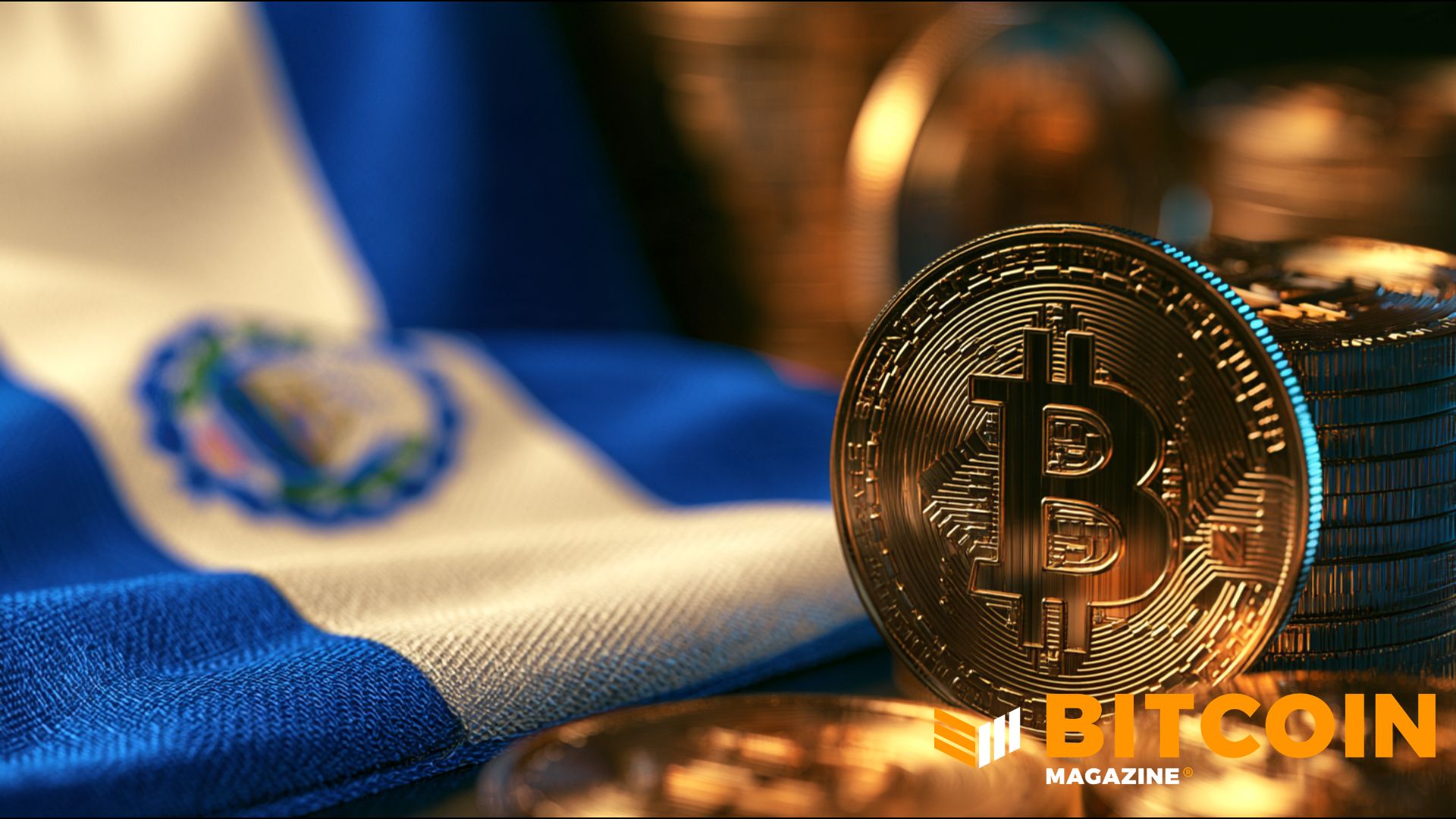
IMF Praises El Salvador — But Still Tries To Scale Back Its Bitcoin Project
The International Monetary Fund has praised El Salvador for improving its economy — but scolded it at the same time for its ongoing Bitcoin experiment.
In a statement Friday, the IMF said that it had approved a $139 million disbursement to the Central American nation while also trying to “reduce the state’s involvement in Bitcoin-related activities.”
El Salvador in 2021 made Bitcoin legal tender, much to the ire of the IMF and other major institutions. The Latin American country was at the time negotiating a development loan with the agency.
“El Salvador’s economy continues to perform strongly”
— Nayib Bukele (@nayibbukele) October 1, 2026https://t.co/Rvaerha9QA
The IMF in September said that El Salvador wasn’t buying bitcoin; the country’s Bitcoin Office has repeatedly said that it does buy the cryptocurrency.
“Economic activity has exceeded expectations, supported by sustained improvements in security and investor confidence, as macroeconomic imbalances continue to be addressed,” the IMF said.
It continued: “However, certain performance criteria were not met, including on the Bitcoin accumulation front, for which waivers were granted based on strong corrective measures and renewed commitments.”
The IMF further said that the Salvadoran state’s involvement in Bitcoin-related activities is being unwound and that “no further bitcoin accumulation is envisaged beyond the documented donations.”
Salvadoran president Nayib Bukele in 2022 said the country would buy one bitcoin per day but it was never clear where the money was coming from — or if he was actually buying at all.
The IMF said in September that El Salvador was — at least for some time —not using public funds to accumulate bitcoin but rather had received bitcoin from private donations.
El Salvador and the IMF entered a $1.4 billion loan agreement at the end of December but the fund asked for the country to scale back certain aspects of its Bitcoin strategy.
The Salvadoran state gifted its citizens bitcoin in 2021 and debuted a wallet with the hope of getting more citizens using the cryptocurrency in the dollarized country.
President Bukele in 2024 admitted that Salvadorans weren’t using the cryptocurrency to buy things as expected, but always boasted that the government was still stacking sats.
This post IMF Praises El Salvador — But Still Tries To Scale Back Its Bitcoin Project first appeared on Bitcoin Magazine and is written by Mathew Di Salvo.
Bitcoin Magazine
When the Banks Don’t Work, Bitcoin Does: Cornell University’s Adoption Index
A lot of people know little about Bitcoin and how it works.
But despite knowledge being shallow, for those holding the leading cryptocurrency, it appears to be solving a problem: getting around failing banking rails or inflation.
That’s according to new findings from the U.S. Ivy League research university Cornell, which spoke to nearly 26,000 around the globe about Bitcoin.
In its new Bitcoin Adoption Index report, the top college found that El Salvador, Venezuela and Nigeria were the countries that had the highest number of people who had ever owned bitcoin.
“Ranked by the share of all respondents who have ever owned bitcoin, the leaders are not wealthy financial centers — they are economies where the national currency has been unstable and everyday access to dollars or reliable banking is hard,” the report read.
“In each, bitcoin functions less as a speculative bet and more as a practical workaround.”
Bitcoin Advocacy Associate at Strategy and Junior Fellow at Cornell University’s Brooks School Tech Policy Institute, Ella Hough, added: “Bitcoin works the same everywhere, but people’s need for it does not.
“Across 25 countries, we found that people are more likely to see Bitcoin as a tool for financial freedom where currencies are less stable, banking access is limited, or monetary controls are tighter.”
Still, Cornell found that actually being able to explain the fundamentals of the protocol was difficult for most — including how many bitcoins would ever be minted in existence. In fact, 58% of those surveyed said they didn’t know the supply was capped at 21 million coins.
Technicalities aside, the cryptocurrency has still proved helpful to people wanting to use it, the report found.
One Venezuelan — who wasn’t named — told interviewers that Bitcoin was “faster, cleaner, and much less risky” than other methods of getting dollars in the country.
While another Salvadoran was quoted saying: “When nobody controls [bitcoin], it means we all have control of it.”
A Nigerian interviewee reportedly told Cornell researchers: “I’ve been to six African countries and whenever I go there, I don’t fear it because I know I can spend my bitcoin.”
Bitcoin adoption started growing in Venezuela ahead of other countries years ago, when hyperinflation crippled the economy and strict government currency controls meant getting dollars became difficult.
El Salvador made bitcoin legal tender — along with the dollar — in 2021. The country’s leader admitted that getting its citizens to use the cryptocurrency was difficult but the Central American nation still says it buys the asset for its government coffers.
In Nigeria, which has had some of the highest transaction volumes in the world, saving in bitcoin has been used by some to get around the collapse of the naira.
Cornell University’s research was fielded by Morning Consult in partnership with the Tech Policy Institute in Cornell University’s Jeb E. Brooks School of Public Policy, the Cornell Bitcoin Club, the Human Rights Foundation and the Reynolds Foundation.
Researchers interviewed 25,880 people in 25 countries between December 16, 2024 to March 10, 2025, asking 125 individual questions.
This post When the Banks Don’t Work, Bitcoin Does: Cornell University’s Adoption Index first appeared on Bitcoin Magazine and is written by Mathew Di Salvo.
Bitcoin Magazine
South Africa’s Absa Becomes First Bank on the Continent to Custody Bitcoin: Report
South African bank Absa has become the first African lender to custody bitcoin, according to reports.
As reported first by Bloomberg on Friday, the Johannesburg-based lender will serve institutional clients, mostly by custodying bitcoin — but other digital assets will also be a part of the service.
Banks worldwide are integrating or offering bitcoin-related products and services. A number of U.S. and European banks have started offering crypto-related services by custodying assets for institutions.
JUST IN:
— Bitcoin Magazine (@BitcoinMagazine) October 2, 2026Absa has become the first African bank to offer Bitcoin custody
pic.twitter.com/JaDza3S7Ez
Rob Downes, head of digital assets at Absa’s corporate and investment banking unit, was quoted saying that while bitcoin was the biggest asset the bank would custody, others would follow.
Absa did not immediately respond to questions from Bitcoin Magazine.
The African continent has a large crypto-native base, with data firms frequently highlighting the high adoption — particularly in countries where currencies have been significantly debased.
In Chainalysis’s 2025 report, South Africa’s $36.0 billion in on-chain value made it second in Sub-Saharan Africa. Nigeria alone received $92.1 billion, nearly three times the total of second-place South Africa.
On the global index, South Africa ranked 30th for crypto adoption.
The character of its market is different from Nigeria‘s: it’s more institutional, with regulatory clarity resulting in hundreds of licenses being issued to VASPs and attracting professional investors and traditional finance.
BNY Mellon in 2022 became the first major U.S. bank to offer digital asset custody services. And this month, German multinational Deutsche Bank said it would debut a bitcoin custody service for European corporate and institutional clients later in 2026.
This post South Africa’s Absa Becomes First Bank on the Continent to Custody Bitcoin: Report first appeared on Bitcoin Magazine and is written by Mathew Di Salvo.
Bitcoin Magazine
Bitcoin Price Surges Above $87,000 on Softer-Than-Expected Jobs Data
The price of bitcoin surged above $87,000 on Friday morning in New York, buoyed by constant exchange-traded fund flows and a jobs report showing that unemployment in the U.S. had ticked up.
Bitcoin’s price recently stood at $85,990 after a 2% jump over a 24-hour period. Over the past week, it has also risen by more than 2%.
Nonfarm payrolls increased 29,000 last month after a downward revision to the prior two months, Bureau of Labor Statistics data showed Friday.
JUST IN: Bitcoin jumps to $87,000 as U.S. Unemployment Rate comes in at 4.2%, higher than expectations
— Bitcoin Magazine (@BitcoinMagazine) October 2, 2026pic.twitter.com/jqtU8Q9zsd
Weaker-than-expected jobs data can give a lift to riskier assets like bitcoin and stocks, whose prices tend to swing more sharply.
A softer labor market typically means less consumer spending, which eases pressure on prices. That could make the Federal Reserve less inclined to keep raising interest rates to fight inflation.
Many economists and politicians have said the U.S. is in the midst of an affordability crisis, and the topic is a hot one ahead of the November midterm elections.
The Federal Reserve’s new chair, Kevin Warsh, has said that prices in the world’s biggest economy are too high and that the central bank is fully focused on making life more affordable again.
Bitcoin investors shrugged off the central bank’s interest rate hike in September, climbing on the news.
The largest cryptocurrency started rallying in August on news that the U.S. Treasury Department said it would more than double the size of its government debt repurchases. The coin had its best run in three years and third best August ever.
The coin’s price has benefited from the so-called debasement trade: when investors buy certain assets to hedge against currency being devalued. The dollar slid in value in August.
It continued to have a good September, rising nearly 6% over a 30-day period.
October has historically delivered good returns for bitcoin investors, with traders dubbing the phenomenon “Uptober.”
This post Bitcoin Price Surges Above $87,000 on Softer-Than-Expected Jobs Data first appeared on Bitcoin Magazine and is written by Mathew Di Salvo.
Bitcoin Magazine
Impacts of Daily Dividends on Digital Credit
In May 2026, Strive rebranded itself as “The Daily Dividend Company,” then moved SATA to daily cash dividends beginning June 16. Strategy has now pushed the same idea into its own digital credit engine. On September 24, its board proposed moving STRC, STRF, STRK and STRD to daily dividends, subject to shareholder approval at an October 28 special meeting. The proposal keeps the annual dividend economics unchanged and changes the cadence of cash payments.
STRC spent much of the summer below its $100 stated amount even as Strategy raised its dividend rate to 12% and deployed more than $1 billion buying back STRC. The move to daily dividends by Strategy could be seen as the latest attempt to make the security more attractive and help it trade near par.
Now that the overton window has fully shifted in favor of digital credit paying daily dividends, we should take a look at the actual impacts of daily dividends.
Daily Dividends Fit Onchain Finance
Digital credit is increasingly becoming an input for other financial products—so called “digital money” or “digital yield” products. Strategy estimated in mid-May that more than $440 million of STRC exposure had moved into DeFi through stablecoins, tokenized securities, yield products and other structures.
However, there is a cash flow mismatch. Crypto products commonly accrue and distribute yield at high frequency. A security that pays monthly or twice monthly forces the product sitting on top of it to bridge the period between economic accrual and actual cash receipt.
Daily dividends compress that gap to one day. The protocol, fund or issuer receives cash from the underlying asset at almost the same cadence that users expect to receive yield. That simplifies liquidity management and reduces the cash needed between dividend dates. This is much more impactful to a financial product funding daily distributions or redemptions than to a long term investor focused on total return. The crypto-heavy setting of the “Layer 3” products on top of digital credit raises the attractiveness of daily dividends.
Daily Dividends Are Primarily a Retail Feature
For investors focused strictly on total return, dividend payment frequency makes little difference in underlying economic value. The asset’s price accrues between distribution dates and adjusts post-payment, meaning annual, quarterly, monthly, and daily payouts produce comparable long-term results.
The true advantage of daily dividends lies in product psychology and user experience. Cash arriving every day provides immediate visibility and an engaging feedback loop. Investors can spend, withdraw, or automatically reinvest the payout while leaving their principal position intact, turning an abstract yield metric into tangible recurring cash flow.
This dynamic mirrors the strategy of Realty Income, which built a massive retail follower base by branding itself as “The Monthly Dividend Company.” As a member of the S&P 500 Dividend Aristocrats Index, Realty Income has paid and raised dividends for 31 consecutive years.
Daily dividends on digital credit extends this product concept even further: SATA pairs frequent daily payouts with a target price near $100 and a double-digit yield.
While institutional investors prioritize yield spreads, liquidity, tax structure, and balance sheet coverage, daily payments offer their strongest appeal to retail buyers. If the overarching objective is to raise capital to purchase Bitcoin, optimizing security design for retail investor preferences is the most effective approach.
Options Get Cleaner Too
Daily dividends also change options mechanics. STRC currently pays $0.50 twice monthly. SATA pays roughly five cents each business day. Larger dividend events create larger discrete adjustments in the underlying price, which affects option pricing and early exercise decisions. Daily payments spread the same annual cash flow across much smaller adjustments.
The total value of dividends over an option’s life is a key economic input. The more interesting effect comes from the price stability created by daily dividends. If daily dividends, variable rates and active par management keep SATA and STRC trading in narrower ranges, realized volatility should fall. Implied volatility can follow as the market gains confidence in that behavior.
The Biggest Test
The real test is whether daily dividends increase demand enough to eventually lower the required yield.
If investors consistently support SATA near the top of its target range, Strive can theoretically reduce the dividend rate while attempting to keep SATA near par. Success would show that a Bitcoin company can issue permanent preferred capital, manage it around a stable price, and adjust its yield with market demand. The benefit of the variable rate preferreds was, from inception, the eventual opportunity to lower the rate and reduce the cost of capital without upsetting price stability. In comparison, fixed rate credit locks in fixed rate forever.
Conclusion
Strategy adopting daily dividends would move the feature from a SATA differentiator toward a digital credit category standard. The annual economics barely change but the retail appeal and crypto composability become meaningful improvements.
This post Impacts of Daily Dividends on Digital Credit first appeared on Bitcoin Magazine and is written by Allard Peng.
CryptoSlate
Here's a hypothetical scenario: you want to use $100 out of your bank account to buy newly issued stablecoins. The company issuing the stablecoins takes your dollars, puts them in its own bank account, and gives you a balance you can send around on a blockchain.
You got the product you wanted, and somewhere in the vast and confusing realm of banking, the $100 is still there.
From a distance, this looks like something banks shouldn't worry about. Sure, they lost a deposit, but they also got a deposit back, so why do bankers keep warning that stablecoins could drain the financial system?
The thing is, your bank really liked having you as the customer. If you take your money away, now it owes that money to a company managing withdrawals for thousands of people, with someone paid to decide where the reserves should go.
The dollars came back, but they came back with a different owner, and that owner can be a much more demanding creditor.
This is the part of the stablecoin debate that gets lost when everyone starts estimating how many trillions will leave banks. The amount in the bank can stay the same while the bank gets a much worse deal, because a deposit's value to a bank depends partly on how long the customer will leave it there and what it costs to keep it.
The Bank for International Settlements' 2026 analysis used a $100 purchase to show how household deposits can return as issuer deposits while making banks' funding less dependable under regulatory measures.
If banks have to spend more to support that money, some of the cost could eventually reach people taking out loans, including people who don't even know what a stablecoin is.
Your bank likes you a little boring
The balance in your banking app is money the bank owes you. You have a right to spend it, but the bank doesn't keep every customer's balance in a separate pile waiting to be collected. Its assets also include loans repaid over years, while customers can ask for their deposits much sooner.
Banks can create deposits when they make loans, but they still need to fund the payments customers send elsewhere. Keeping a dependable base of deposits helps them do that.
That arrangement works partly because people don't usually need all their money at once.
Your salary comes in while someone else's rent goes out, and across enough customers, the bank can plan around a reasonably dependable deposit base. It still needs ready cash for payments, but it doesn't expect every account to empty on the first of the month.
That comfort has limits, as any bank run shows. Still, many individual balances used for everyday life can be easier to manage than one very large account whose owner can move the whole amount with a single decision. Bankers call the first kind retail funding and the second wholesale funding.
Stablecoin issuers also have promises to keep. If token holders redeem, the issuer needs dollars to pay them, and withdrawing reserves from a banking partner may be part of getting those dollars ready.
The bank can lose the balance even if it's perfectly healthy, because the issuer's customers need money somewhere else.
The Fed's research on stablecoins and bank deposits describes this conversion from scattered household balances into large institutional accounts. It doesn't make every household loyal or every issuer flighty, but it does explain why adding up all the deposits misses something a bank's funding team has to think about every day.
The Liquidity Coverage Ratio, under the Basel banking framework, compares assets a bank can readily turn into cash with the net cash outflows it could face during 30 days of stress. Different deposits come with different assumptions about how much might leave.
A bank with $120 million of qualifying liquid assets and $100 million of estimated net outflows has a ratio of 120%. A different mix of customers could push estimated outflows to $110 million while those assets stay the same.
The ratio falls to about 109%, even though nobody has withdrawn anything.
While that's just back-of-the-napkin math, it shows why banks can't just shrug and say total deposits haven't moved. Its estimated cash needs have increased, leaving less spare room above the required buffer.
Depending on the rules it faces, the bank may need more liquid assets or funding it can count on for longer, both of which can cost money.
The dollars don't disappear when someone buys a Treasury bond
Issuers don't always leave the money in a bank account. They can buy short-term Treasury bills to back their tokens, earning interest while holding an asset they expect to sell when customers want dollars back.
This adds another person to our $100 example: whoever sells the bill. If the issuer buys an existing Treasury from a nonbank investor, the issuer's bank balance falls by $100 and the seller's rises by $100. The money has another owner, but the banking system still has the deposit.
That doesn't tell us how dependable the new owner's balance will be, and it certainly doesn't tell us where they'll move it next. The only thing it tells us is that counting the issuer's Treasury purchase as $100 permanently removed from bank deposits skips the person getting paid for the Treasury.
Buying a bill that a bank itself owns produces different accounting. The bank gives up an asset, and the payment can extinguish a deposit liability, reducing both sides of the banking system's balance sheet.
The bank has also sold a security it might otherwise have kept available for its own cash needs.
Buying newly issued government debt adds a further step because the payment goes to the Treasury's account, with government spending later sending money back out. That's different from paying a private investor, so saying “the issuer bought Treasuries” doesn't explain the whole thing.
BIS General Manager Pablo Hernández de Cos put reserve composition at the center of the banking effects in an August speech. The route the backing takes determines what happens to banks, which is why a forecast for token supply alone can't tell you how much lending will be lost.
Our example also assumes money reaches the issuer to back new tokens. If you buy existing stablecoins from another holder, your payment goes to that seller, and it doesn't automatically create a new reserve deposit.
Then there's the difference between banks collectively and the particular bank you used to pay. Your smaller lender can lose your deposit while the issuer's larger banking partner gets the replacement account.
The national total looks unchanged, but your old bank still has to find funding or adjust its business.
The receiving bank isn't obliged to make the same loans to the same people. It has its own customers and lending standards, so money returning somewhere in banking doesn't guarantee the local business seeking a loan will find its lender just as willing to provide one.
Banks now need to compete with stablecoins
None of this entitles a bank to keep your money cheaply forever. If a stablecoin gives you a payment service your bank doesn't, moving is a reasonable choice, and protecting the bank's profit margin isn't your job.
Banks can compete by paying more interest or improving their own payment services. They can also replace lost deposits with longer-term borrowing, although lenders willing to commit money for longer will want terms that make it worth their while.
The bank then has to decide how much extra cost it can absorb and what that does to the loans it can profitably offer.
The Fed's study of how banks handled earlier financial competitors looked at adaptation to money-market funds and payment platforms. Stablecoins aren't the first product to give customers another place to keep transaction money, and banks have options beyond watching the balances leave.
One is to offer some of the technology while keeping the customer as a depositor. CryptoSlate's reporting on tokenized deposits and bank funding explained that recording a deposit on a blockchain can preserve the customer's claim on the bank.
However, the sales pitch still has to work for the customer, including whether the product can send money where they actually need it.
Issuing stablecoins is another possibility, but it comes with its own requirements. The Fed's Sept. 24 proposals would set reserve and risk-management rules for payment stablecoin issuers under its supervision, alongside a process for supervised banks seeking approval for a subsidiary to issue them.
Money committed to redeeming tokens can't be treated just as ordinary bank funding available on identical terms for a portfolio of long-term loans. Owning the issuer doesn't make the promise to token holders go away.
The BIS examples show how the accounts can work, but they don't prove stablecoins have already caused banks to cut lending. Establishing that would take evidence from the banks involved, including how they replaced deposits and what happened to their loan books.
It would also require knowing where buyers got the money, since new dollar demand from abroad needn't have the same effect as customers moving existing domestic deposits.
The trade-off is worth understanding without defaulting to the banks' side. Faster payments can be valuable, and banks having to compete harder for customers can be a good thing, even if dependable funding becomes more expensive along the way.
Your $100 can make it back into a bank while the comfortable customer relationship attached to it is gone. The bank now owes someone else, on terms that may require more cash on hand or a better interest rate, and those costs help determine what it can afford to do for the next person asking for a loan.
The post Stablecoins may not drain banks of dollars but they can still make lending more expensive appeared first on CryptoSlate.
The Independent Community Bankers of America sued the OCC in federal court in Washington on Oct. 2, two weeks after the agency approved Agora National Trust Bank, Catena Trust Bank and Bastion Platforms.
American Banker reported that the complaint asked the court to vacate the OCC's national trust bank rule and Interpretive Letter 1176. It argued the agency exceeded its authority by widening limited-purpose trust charters for fintech and crypto firms.
ICBA says the OCC has approved or conditionally approved 21 trust banks, 13 of them tied to crypto.
Banks lost the applicant-by-applicant fight against crypto firms
Banking groups objected company by company, and the OCC kept approving. Five crypto-linked national trust applications, including BitGo, Fidelity Digital Assets, First National Digital Currency Bank, Paxos and Ripple-linked applicants, won decisions in December 2025.
Bridge, National Digital Trust and Foris DAX, the parent of Crypto.com, followed in February, Coinbase in April and Laser Digital in May. Agora, Catena and Bastion arrived Sept. 18, and several of these approvals are conditional or preliminary.
The OCC finalized its national trust bank rule in February, effective April 1. It replaced the phrase “fiduciary activities” with the statute's broader wording, “the operations of a trust company and activities related thereto.”
The OCC says the language leaves its chartering authority intact and that national trust banks have long performed some nonfiduciary work, including custody. It points to 12 U.S.C. 24(Seventh) as authority for nonfiduciary custody and related activities.
ICBA's complaint reads the same rule as stretching a limited-purpose trust charter to cover non-depository, non-fiduciary crypto businesses under a lighter framework than insured banks face.
An objection to Coinbase or Ripple asks the agency to deny one applicant. A suit over the rule asks a judge to decide the scope of authority behind every charter that relies on it.
The OCC said a court would decide
In the February rule, the OCC cited the Supreme Court's Loper Bright decision. It said that when a party with standing disputes whether the National Bank Act authorizes a national trust bank charter, courts must exercise independent judgment on the statutory question.
That is the review ICBA now requests. The OCC spent 2026 approving crypto trust charters while on record that a court would settle their legal basis.
Exposure varies with business plan, with plain fiduciary custody furthest from the dispute and nonfiduciary custody, stablecoin issuance and reserves, payments, settlement, conversion, and execution nearest to it.
Coinbase's approved plan covers digital asset custody as a fiduciary plus transactional services tied to custodied assets, and the OCC defended it as trust-company operations or related activities under fiduciary authority and 24(Seventh).
Agora plans dollar-backed stablecoin issuance, reserve maintenance, nonfiduciary custody, and payment and settlement services. Catena combines custody, investment management, and trust services with conversion, clearing, and execution, and Bastion offers white-label stablecoin issuance, custodial wallets, conversion, and issuer services.
Foris DAX's plan couples custody with trade settlement and staking, and Bridge's initial approval covers custody, stablecoin issuance and orchestration, and reserve management.
ICBA seeks vacatur plus declaratory and injunctive relief. What happens to existing charters depends on the order a judge writes, including how it treats final approvals, conditional approvals and activities with independent statutory support.
The OCC said in August that it had received 40 de novo charter applications over about 18 months, and Comptroller Jonathan Gould said 23 of them involved digital assets.
The agency's digital-asset licensing page lists pending applicants, including zerohash, Dakota National Trust Bank, Payward (Kraken), Lorum National Trust Bank, EDX Trust and PAYO Digital Bank.
Whether the OCC keeps processing those applications on the same terms while the court weighs the rule is the open question for each of them.
Where the court crypto test leads
If the court sides with the OCC, the national trust bank becomes a firmer federal route for crypto custody and stablecoin infrastructure.
JPMorgan sees $500 billion by 2028, Coinbase's model centers on $1.2 trillion by the end of 2028, and Standard Chartered expects $2 trillion by then. Citi's 2030 cases run from $1.9 trillion in its base scenario to $4 trillion in its most optimistic one.
FDIC-insured banks held about $20.7 trillion in deposits in the second quarter, so $500 billion to $2 trillion equals roughly 2.4% to 9.7% of that base. For Bitcoin, a win would deepen bank-supervised custody and settlement-linked services for institutions.
If the court vacates or narrows the rule or the letter, the effect lands hardest on plans built around stablecoin issuance, reserves, nonfiduciary custody, conversion, payments and settlement.
Those firms might restructure activities into affiliates, state trust companies or partner-bank arrangements, and pending charters could face tougher review. Bitcoin custody itself could stay available, with the federal wrapper less flexible around adjacent services such as conversion, execution, settlement, staking-like services and collateral movement.
The San Francisco Fed estimates stablecoin issuers' Treasury demand could roughly double to about $400 billion by 2030, which gives the answer weight beyond crypto.
How much nonfiduciary market infrastructure can sit inside a national trust bank is now a question for a federal judge, which is where the OCC said it would land.
The post Bankers sue to overturn OCC trust-bank rule used by crypto firms appeared first on CryptoSlate.
Companies can own a mountain of US government debt without betting that bond prices will rise. Hedge funds buy Treasury securities and sell futures against them to collect a small pricing gap, borrowing most of the purchase money to make the return worthwhile.
The government gets another buyer, whose interest lasts as long as the trade pays.
The catch is that the loan can expire tomorrow while the trade needs longer to pay off. The government's ability to repay its debt doesn't solve the fund's need to repay its lender.
This is the Treasury cash-futures basis trade, and the sums involved are large enough to reach well beyond the bond desk. Morgan Stanley estimated positions had fallen 20% this year to about $1.2 trillion, according to Sept. 24 reports.
The bank hadn't found evidence of broad basis-related market stress at that point, so a smaller trade wasn't automatically a trade that would blow up.
Hedge funds love small profits when it's someone else's money
You can buy a Treasury security outright, or trade a futures contract that sets terms now for a transaction completed later. The contract specifies which securities can be delivered against it, linking their prices without making them identical.
When futures are expensive enough relative to an eligible bond, the fund buys the bond and sells the futures. Investors wanting bond-market exposure through contracts supply the other side, leaving the fund to hold the actual securities.
Selling the futures is the hedge: if bond prices fall, that short position can earn money that offsets much of the loss on the bond. The fund aims to collect the pricing gap as the contract approaches delivery, while limiting its exposure to the market's overall direction.
To pay for the bond, it uses repo, short for repurchase agreement. The fund sells the security for cash and agrees to buy it back later at a slightly higher price, which, economically speaking, looks like a loan secured by the bond.
Overnight repo means the fund must renew or replace the financing to keep the position.
Consider an illustrative $100 million position earning 0.2% annually from the strategy, net of assumed financing and trading costs. That's $200,000, which becomes a 4% return if the fund has committed only $5 million of its own capital.
But if borrowing costs on the other $95 million increase by 0.2% for the year, the extra bill is $190,000. Almost the entire expected profit has gone to the lender, without the government defaulting on anything.
The Office of Financial Research includes the cost of futures margin and the seller's options over which eligible bond to deliver and when. Calculating the return means valuing those delivery rights and accounting for financing and margin costs.
If that calculation stops looking attractive, a fund can simply stop replacing positions as they expire. Professional investors don't need a crisis to find something better to do with their money.
Being right doesn't pay today's bill
The hedge may work, but the fund can't afford the payments needed to keep it open.
Suppose the bond gains value and the short futures position loses a similar amount. The futures account can require a cash payment against that loss, known as variation margin, while the bond's gain is still tied up in a security.
The fund has to get dollars out of that asset or find them elsewhere before the payment is due.
Crypto traders with gains on one exchange and a liquidation approaching on another will recognize the problem: money in the wrong account won't meet the payment, and explaining the hedge won't extend the deadline.
The repo lender can also require more money. If it lends $98 against $100 of bonds, the fund supplies the other $2, a 2% haircut. If that haircut becomes 4%, the fund must supply twice as much of its own money against the same collateral, even before considering futures margin.
If many funds have to close positions at the same time, they sell bonds to repay loans and buy futures to close their shorts. Those trades can push bond prices down relative to futures, hurting funds still holding the same positions and making their own exits more expensive.
That forced selling is different from letting trades expire without replacing them, although both reduce outstanding positions. The reported contraction alone won't tell you which is happening.
Federal Reserve researchers estimated $830 billion of basis positions for September 2025, in research published this June. That and Morgan Stanley's newer estimate use different approaches, so treating them as consecutive readings would manufacture a comparison the data doesn't support.
Total hedge-fund Treasury holdings also include other strategies, as do their short futures positions.
Someone still has to own the Treasury bonds
Fewer trades dependent on tomorrow's loan can make the market less fragile, provided the next owners bring financing they can keep through a difficult week. Investors buying with committed capital don't face the same daily negotiation with a repo lender.
Those buyers may want a better price because they're buying the bond for its income. Cheaper bonds offer higher yields, attracting replacement demand while potentially making new government borrowing more expensive.
Dealers can hold bonds while they find buyers, but their capacity also costs money and has limits. An orderly transfer can therefore leave Washington paying more without the market breaking down.
Higher repo rates or larger haircuts become more troubling if funds must sell into a market with few willing buyers. Those financing terms and the prices sellers can obtain say more about stress than a position total alone.
The same restraint applies to Bitcoin, as hedge funds' broader balance sheets show why one strategy can't stand in for everything those firms do.
Connecting Treasury trouble to crypto requires evidence that the institutions involved are selling crypto or withdrawing financing, rather than assuming every cash need ends with a Bitcoin sale.
Borrowed money makes these funds willing to own bonds for a return that would otherwise be too small to bother with.
When that calculation stops working, replacing them can reduce the market's dependence on overnight loans, but the next owner may want a higher yield to take the debt off their hands.
The post Hedge funds built a $1.2 trillion Treasury trade on money they have to keep borrowing appeared first on CryptoSlate.
The European Securities and Markets Authority wants to extend Europe’s restrictions on non-compliant stablecoins beyond trading to the services that let customers keep and move them. If adopted as proposed, the change would remove the option of leaving such tokens with a licensed custodian after their trading pairs disappear.
In its September 30, 2026 response to a review of the EU’s Markets in Crypto-Assets regulation (MiCA), ESMA asks the European Commission to prohibit every licensable crypto-asset service involving stablecoins that fail the regulation’s applicable requirements. Custody and transfers fall within that service list. The consequence would reach existing holders who have stopped trading, as well as customers seeking to buy.
That is a further step from the regulator’s January 2025 approach, which said mere custody and transfer should remain possible. It could give compliant tokens a wider advantage in European distribution, but neither a forced conversion timetable nor a global demand shift follows from the proposal.
The permission left after delisting
ESMA’s January 17, 2025 statement distinguished services that offered non-compliant stablecoins to the public or admitted them to trading from simply holding or transferring them. Platforms were expected to stop making the tokens available for trading, and other services had to cease where they constituted an offer to the public.
Under that earlier transition, acquisition restrictions were expected by the end of January 2025, with temporary sell-only services through the end of the quarter.
For an investor, the custody distinction mattered. Losing access to a trading pair did not necessarily mean losing the service that safeguarded an existing balance or enabled its withdrawal. ESMA acknowledged that investors retaining those holdings could face worse execution conditions, even while custody and transfer remained possible.
A historical example shows the distinction. In its March 3, 2025 reporting, CryptoSlate said Binance planned to remove nine tokens’ trading pairs for European Economic Area users by March 31 while keeping deposits, withdrawals, conversions and custody available. This was the exchange’s announced approach in March 2025.
The September response would replace the activity-by-activity distinction with a broader asset-compliance test. ESMA argues that the lack of a clear prohibition creates disparities between compliant and non-compliant issuers and facilitates regulatory arbitrage.
The reach comes from MiCA’s Article 3 definitions. Custody includes safekeeping or controlling clients’ crypto-assets or their means of access, including private keys. Transfers cover moving assets on a client’s behalf from one ledger address or account to another. Both are expressly listed services, with Article 82 setting client-agreement requirements for transfers.
Provider permissions are also separate from token compliance. Article 59 requires authorization as a crypto-asset service provider, or qualifying permissions for specified financial entities, and says authorizations must identify the services permitted. A license for a provider does not by itself settle whether a particular stablecoin can be serviced.
An existing holder would therefore not avoid the proposed restriction by deciding never to trade again. If the wording became law without an exception, the custodian’s continued safekeeping would itself be covered.
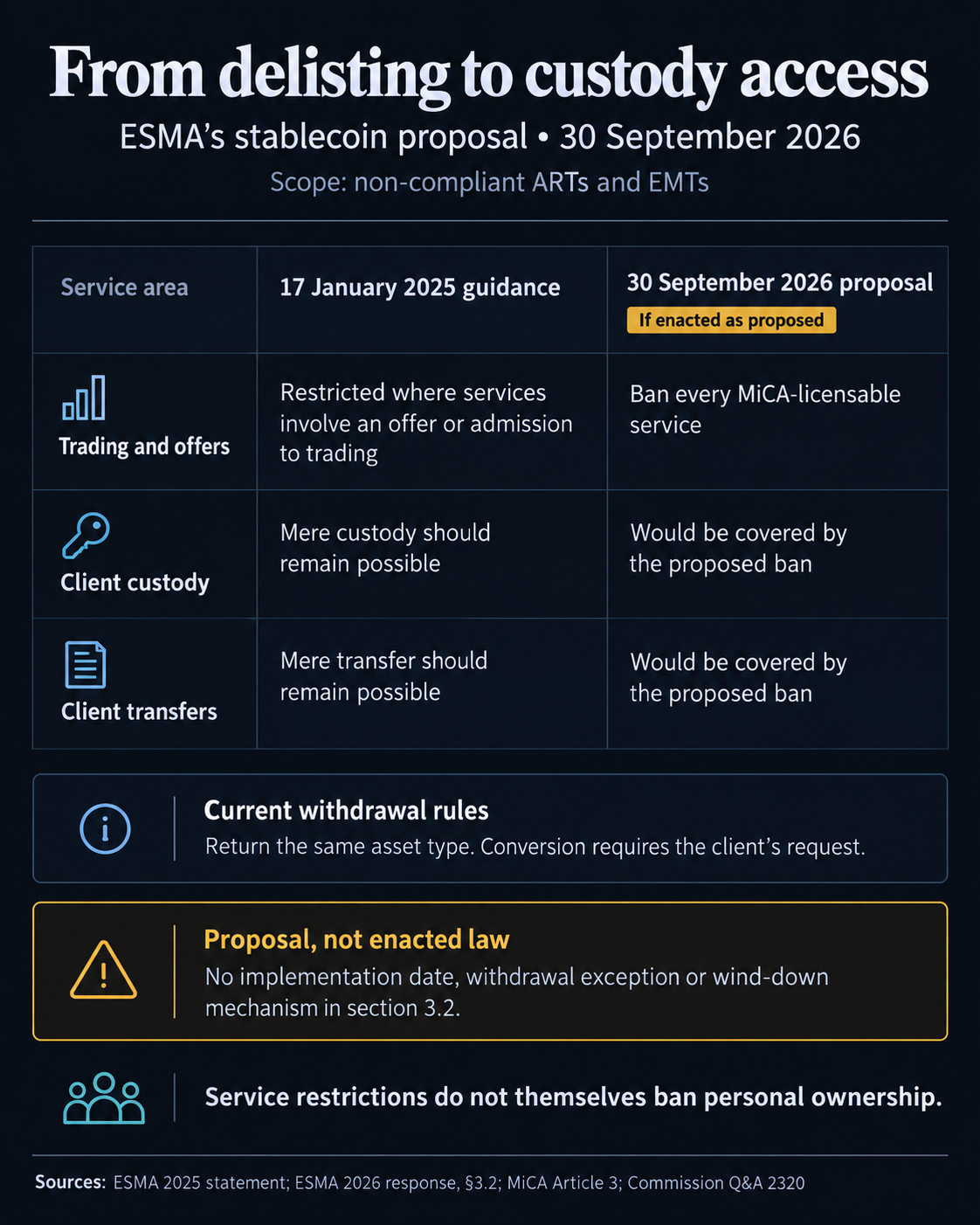
ESMA’s response is a policy submission, not an enacted amendment. The Commission’s consultation had a September 30 deadline, and its page says the resulting review report may, if warranted, be accompanied by a legislative proposal.
Section 3.2 of ESMA’s submission gives no implementation date, withdrawal exception or wind-down mechanism. That omission matters because ending custody requires a way to return assets that a provider already controls, while the proposed prohibition also reaches transfer services.
Current custody rules provide a relevant starting point. Article 75 requires procedures to return clients’ crypto-assets or their means of access as soon as possible. Client assets must also be segregated from the provider’s own holdings.
An answer from the European Commission via ESMA, dated February 18, 2026, further says the assets returned must be the same type held when the client requests withdrawal. A provider may offer conversion into fiat or another crypto-asset, but the client must request it at withdrawal and the provider must have permission for the additional service.
That existing interpretation does not settle how a future blanket service restriction would handle exits. It does explain why delisting, termination of custody and compulsory conversion cannot be treated as interchangeable outcomes. Legislators would need to resolve how any new prohibition fits the obligation to return assets.
The stablecoin proposal targets those professional services. It does not itself ban personal ownership, order tokens frozen or prescribe compulsory conversion. A holder’s ability to retain an asset and a licensed business’s ability to hold or move it for that customer are different questions.
Trading shares do not measure custody exposure
The earlier delistings show how trading can change at European-facing venues without a comparable shift across a wider market.
In a July 2026 paper, Nicola Borri and Kirill Shakhnov examine trading in the dollar-linked tokens USDT and USDC across 14 exchanges selected from CoinMarketCap’s top 30 centralized venues. Their daily pair-volume data from CryptoCompare run from January 1, 2024, through December 7, 2025.
The authors classify Bitstamp, Coinbase, Gemini and Kraken as “regulated-facing” because their Similarweb EU audience shares exceed 10%; all four also have US audience shares above 10%. The other 10 venues are classified as globally oriented, including Binance despite its EEA delistings. The audience proxy identifies neither individual EU-resident trades nor a clean division of legal exposure.
Around the study’s April 1, 2025 event date, the authors estimate that USDC’s share of combined USDT and USDC trading rose by about six percentage points on regulated-facing exchanges relative to global exchanges. The estimate covers a 30-day window and uses smoothed, detrended data; it measures a relative trading shift across venue groups.
The authors estimate USDT trading volume fell about 20% on regulated-facing exchanges relative to global venues, while the USDC-volume estimate was not statistically significant. USDC gained share primarily because USDT trading contracted in that comparison, not because the study established a corresponding expansion in USDC trading.
Aggregate USDC-to-USDT trading-volume ratios across the sample stayed nearly flat around the event. That describes sampled exchange turnover, not worldwide demand or EU custodial balances. The legal documents and study provide no total for the holdings that a future custody restriction could affect.
If the proposal became law in its present form, compliant tokens could retain access to regulated custody and transfer channels that non-compliant tokens would lose. For customers who want a provider to safeguard and move a dollar-linked balance, compliance could affect the usefulness of that asset beyond the availability of a trading pair.
The next consequential text would be a legislative amendment, particularly its scope, application date and treatment of existing balances. How it reconciles an end to custody with the return of clients’ assets would determine whether and how existing holders must leave regulated services.
The post ESMA proposes ending EU custody and transfer services for non-compliant stablecoins appeared first on CryptoSlate.
Six US banks have failed in 2026 so far, which is one more than in 2023 and enough to make another banking-crisis headline practically write itself.
But before we start reliving Silicon Valley Bank, it's worth looking at what those six banks actually held: about $1.43 billion in combined assets, compared with roughly $552.54 billion at the banks that failed in 2023, according to historical numbers from the Federal Deposit Insurance Corporation (FDIC).
Counting each bank as one gives you a perfectly accurate number and a pretty lousy sense of scale. This year's total includes a lender with $3.73 million in assets, which gets the same vote in the tally as a bank the size of SVB.
Meanwhile, FDIC's latest industry assessment shows stronger profits and fewer banks on its problem list. That doesn't mean the six failures were harmless, or that every surviving bank is doing well, but anyone selling a 2023 rerun has some explaining to do.
Nano Banc's Sept. 25 closure brought the count to six and supplied the largest failure of the year so far. The Irvine, California, lender reported $736 million in assets, and the FDIC estimated a $114 million cost to its Deposit Insurance Fund.
Someone will bear that loss, but a bill attached to one failed bank doesn't mean the rest of banking is about to follow.
Six is bigger than five (until you look inside)
The FDIC's annual totals record four failures in 2020, none in 2021 or 2022, five in 2023, and two apiece in 2024 and 2025. Through Sept. 25, this year had beaten every annual count in the 2020s, which sounds much, much worse than it actually is.
Consider Kentland Federal Savings and Loan Association, which the FDIC described as the country's smallest standalone bank when it closed. Its $3.73 million in assets counts for exactly as much as Silicon Valley Bank in a chart of bank failures, because that chart counts only institutions.
Asking it to measure financial trouble gives a very small bank a very large role.
| Failed institution | Closure date in 2026 | Reported assets |
|---|---|---|
| Metropolitan Capital Bank & Trust | Jan. 30 | $261.10 million |
| Community Bank and Trust – West Georgia | May 1 | $288 million |
| Kentland Federal Savings and Loan Association | July 10 | $3.73 million |
| Small Business Bank | July 17 | $73 million |
| Tioga-Franklin Savings Bank | Aug. 21 | $68 million |
| Nano Banc | Sept. 25 | $736 million |
| Combined | Through Sept. 25 | $1.43 billion |
Sources: FDIC failure announcements and annual summary. The unrounded sum is $1,429.83 million, using numbers from different reporting dates cited around the closures, rather than a single-date balance sheet or an estimate of losses.
The $552.54 billion number for 2023 and this year's $1.43 billion come from balance sheets with different reporting dates, so we can't turn them into an exact ratio. Luckily, we don't need one to see that the amounts belong in very different conversations, even if six is technically more than five.
The FDIC's problem-bank list adds another issue because it counts banks that are still operating, using their condition measured at a particular date. Banks get onto it when examiners assign one of the two weakest overall ratings for financial, operational, or managerial weaknesses, which is a more specific diagnosis than having an ugly week in the stock market.
The second-quarter assessment put 47 banks on that list as of June 30, down from 54 in March and 60 at the end of 2025. They made up about 1.1% of insured institutions, within the FDIC's normal 1% to 2% range outside a crisis.
That doesn't give the industry a certificate of perfect health, because a bank can leave the list by failing just as it can leave by recovering or merging. The failure count adds up closures over the year, while the problem list takes a snapshot of institutions still open, so it's not mysterious for one to get longer while the other gets shorter.
The dates also prevent us from doing some tempting mental math. Four of this year's six failures came in July through September, beyond the June snapshot, but subtracting four from 47 won't tell us how many troubled banks are left.
We don't know every bank that entered or left the list in between, and the published totals don't identify them.
Some banks were broken long before the headline
The records behind these closures describe institutions that had been struggling for quite a while. Illinois regulators said Metropolitan Capital had impaired capital and unsafe conditions, while Kansas officials described years of financial trouble at Small Business Bank.
At the Kansas lender, continuing operating losses ate through its capital until it became critically undercapitalized. Capital is the cushion that absorbs losses before creditors have to bear them, and a bank that keeps losing money can burn through that cushion while the rest of the industry has an excellent quarter.
Someone else's profits don't refill your bank's capital, and Kentland reached a similar endpoint, with the Office of the Comptroller of the Currency finding that unsafe practices had depleted its assets and earnings and that there was no reasonable prospect of restoring adequate capital.
Tioga-Franklin had its own FDIC consent order from earlier, covering weaknesses in management and capital planning, as well as liquidity and credit administration. It consented without admitting or denying the charges, so that record tells us supervisors had identified problems, without settling exactly what caused its August failure.
We know less about the full diagnosis at Community Bank and Trust – West Georgia. The state's closure notice explains the authority to take possession without supplying a detailed financial account, and the FDIC inspector general has a material loss review underway.
Giving it the same cause as the other failures would make the narrative tidier than the evidence allows.
Nano also had a lengthy regulatory history. California Business and Consumer Services Secretary Rohit Chopra described repeated violations and earlier action against mismanagement, while pointing to its large level of uninsured deposits.
Customers with money above the insurance limit have more to lose if a bank fails, which gives them a stronger reason to leave when they doubt it can pay them back.
You can take all of that seriously without treating the six banks as a chain of falling dominoes. The records describe unresolved weaknesses at individual lenders, but don't establish a common funding shock or show one closure bringing down the next.
Putting them in the same table doesn't create a financial connection.
The broader numbers don't support the small-bank-doom argument either. In the FDIC's second-quarter results, community banks earned 8.2% more than in the preceding quarter, while industry-wide profit reached $90.1 billion.
The regulator described capital and liquidity as strong, leaving plenty of room for a few badly damaged banks in an industry making more money.
The losses are real even when the apocalypse isn't
None of this makes a failed bank a non-event for the people caught in it.
Nano's estimated $114 million insurance-fund cost is a real financial consequence, even though Sunwest Bank agreed to take over substantially all its deposits and buy about $476 million of its assets.
The FDIC retained the rest for disposal and said customers could keep using checks and cards through the closure weekend.
Those customers could keep paying their bills while the receivership faced a loss, because access to deposits and the final cost of resolving a bank aren't the same thing.
The FDIC's estimate can move as it sells retained assets, and the six banks' combined $1.43 billion in assets shouldn't be treated as money that vanished. Loans can still be repaid, and securities can still be sold when their former owner has failed.
Tioga-Franklin's buyer assumed all deposits, while the West Georgia transaction transferred substantially all insured deposits, excluding certain brokered accounts.
Georgia officials said customers above the insurance limit would receive notices explaining their rights as uninsured depositors, which is a pretty different experience from being told your account now has another bank's name on it.
CryptoSlate's coverage of the year's first bank failure examined broader banking risks, but the road from a failed lender to crypto still needs spelling out. Whose money was at the bank, and what could they no longer do when it closed?
In 2023, Circle had $3.3 billion of USDC reserves at Silicon Valley Bank, giving stablecoin holders a direct reason to worry about access to part of their tokens' backing. The Federal Reserve's analysis of that failure follows that connection from bank distress into stablecoins.
This year's tally doesn't provide an equivalent connection on its own. Disclosed crypto deposits at a failed lender, or the loss of banking services needed to process customer payments, would give us something concrete to examine.
Another tick in the failure column can't tell us whose reserves are trapped or whose business has lost access to cash.
There are good reasons to keep watching the banks, including whether withdrawals spread across institutions and whether lenders have more trouble obtaining funding. The assets on the problem-bank list deserve attention too, because a shorter list can still contain more money at risk.
None of those possibilities gets answered by comparing six with five.
The case for another 2023 has to explain how trouble is spreading through the banks that are still open. Until the evidence shows that, six failed lenders tell us that six lenders couldn't keep going, and turning that into a verdict on the whole system asks a headcount to do a balance sheet's job.
The post Six US banks have failed in 2026 but the numbers look nothing like 2023 appeared first on CryptoSlate.
CryptoTicker.io
Sky costs $0.09669 on Sunday morning, the equivalent of just under 8.6 cents. That leaves the token 3.8 percent short of its record of $0.100535 from December 2024. This is the week's real story: while bitcoin sits around a third below its peak, Sky is on the verge of beating its own. Over the week the token has gained 25.8 percent, and over the month 39.7 percent.
No single announcement carries the rise. Behind it stands a series of figures from the protocol itself. The supply of its in-house stablecoin USDS has reached the $10 billion mark, the savings rate on it stands at 3.60 percent a year, and a listed asset manager placed $100 million of it in its own corporate treasury in September. At the same time the EU is working on rules that could hit precisely such stablecoins in Europe. This article puts both in context.
Sky price at $0.09669: a weekly gain of 25.8 percent and 3.8 percent short of the record
Over the past 24 hours the price ranged between $0.08724 and $0.09779. The daily high therefore marks the highest level since the record almost two years ago. The gain of 8.46 percent within a day falls in a week in which the overall market barely budged: bitcoin moved by less than one percent over the same period.
Market capitalisation amounts to $2.26 billion, which puts Sky at number 50 among the largest cryptocurrencies. Daily turnover stands at just under $21 million. That ratio is notable: less than one percent of the market capitalisation changes hands per day. A market with thin turnover moves more sharply on large orders, upwards as well as downwards.
Of a total of 23.46 billion SKY, 23.42 billion are in circulation. A large release wave that could dilute the price is therefore not pending from that direction. That sets Sky apart from many projects where an unlock defines the week.
What Sky is: MakerDAO became Sky, MKR became SKY, DAI became USDS
Sky is the renamed MakerDAO, one of the oldest lending protocols on Ethereum. A lending protocol is a program that issues loans without a bank standing in between: whoever deposits collateral is paid out a stablecoin in return.
Three things were given new names in the 2024 rebranding. The governance token MKR is now called SKY, the stablecoin DAI is called USDS, and the interest-bearing variant of that stablecoin is called sUSDS. A governance token is a token that entitles its holder to vote on the rules of the protocol, for instance on the level of the savings rate. That is precisely what defines SKY: the token embodies a voting right and a claim to part of the proceeds, and it is not intended for making payments.
Anyone still holding MKR should know that the conversion now costs money. Nominally, one MKR is exchanged for 24,000 SKY. According to our own analysis of September 2, 2026, the conversion contract withheld four percent at that point, so one MKR became 23,040 SKY. This deduction rises by one percentage point each quarter; the fourth step took effect on June 8, 2026. There is no hard deadline after which a conversion would no longer be possible at all, but the deduction keeps growing.

USDS supply at the $10 billion mark
Here the figures diverge slightly, and that is part of the picture. The news site Cryptobriefing reported on September 30, 2026 that the USDS supply had passed the $10 billion mark after $237 million was added within a day. The protocol itself currently shows $9.96 billion on its home page. The range therefore runs from just under to a little over $10 billion, depending on the reference date and the counting method; anyone adding up USDS and the legacy DAI balance arrives at different values than someone counting USDS alone.
More important than the second decimal place is the backing. Against the roughly $10 billion of USDS stand $17.16 billion of collateral according to the protocol's own figures. A stablecoin backed by considerably more value than it is itself meant to be worth is an overcollateralised stablecoin, and in credit-based models that is the rule, because the collateral itself fluctuates. Cryptobriefing additionally cites a solvency target of $150 million in reserves and several quarters in which the protocol's gross revenue exceeded $100 million.
For context it is worth looking at the surroundings. How USDS stands next to the large stablecoins authorised in Europe is shown by our overview of stablecoins with MiCA status. The difference between a stablecoin with European authorisation and one without becomes important further down.
Sky Savings Rate at 3.60 percent: how the yield on sUSDS arises
The Sky Savings Rate is the interest rate the protocol pays to holders of sUSDS. According to the protocol's home page the rate stands at 3.60 percent a year. Anyone swapping USDS into sUSDS thereby holds a token whose value rises slowly against USDS, instead of receiving an interest payment.
The money for it comes from two sources. One is the interest borrowers pay when they take out USDS against deposited collateral. The other is investments the protocol makes with its reserves, by now in conventional financial products as well. Cryptobriefing put cumulative distributions via sUSDS at more than $250 million, and the sum that so-called Sky Agents have steered into institutional strategies at $5.5 billion.
From this follows a feature that is often overlooked: the yield is not guaranteed. It is set by a vote of SKY holders and follows the protocol's earnings. If lending rates or the returns on the reserves fall, the rate can drop without a holder noticing anything before it is decided. Which platforms pay interest on crypto assets and what the terms there look like is set out in our comparison of staking and interest platforms.
SKY staking rate of 6.56 percent and stUSDS at 5.07 percent
Alongside the savings rate on the stablecoin, the protocol shows two further rates. For deposited SKY the home page names a staking rate of 6.56 percent a year, and for the token stUSDS 5.07 percent. Staking here means that the token is tied up in the protocol and in return takes part in the distribution of earnings.
These rates explain part of the price move. A governance token that is meant to carry an ongoing distribution is valued differently from one that merely embodies a voting right. If the protocol's proceeds rise, the amount available for distribution rises. The news site Tokenpost reported revenue of $436,321 within 24 hours for October 3, 2026. Extrapolated to a year that would be around $159 million, although such an extrapolation from a single day should be read with caution: one strong trading day distorts it upwards.
One point belongs clearly separated at this stage. The percentages named refer to earnings within the protocol, not to the price performance of SKY. Both can run in different directions at the same time.
Galaxy takes $100 million in sUSDS into its corporate treasury
On September 23, 2026, the asset manager Galaxy Digital announced a partnership with Sky and the Sky Frontier Foundation and placed $100 million in sUSDS in its own corporate treasury. Galaxy additionally accepts sUSDS as collateral in institutional lending, according to its own statement. Max Bareiss of Galaxy pointed out that institutional clients can thereby post sUSDS as collateral while continuing to collect the savings rate.
For investors, the interesting part is the mechanism rather than the sum. An interest-bearing stablecoin that doubles as collateral becomes, for large addresses, an instrument that replaces cash. That explains why the USDS supply grows in steps of several hundred million dollars and not in small amounts from retail business.
Caution requires looking at the other side: the more a stablecoin is carried by a few large holders, the stronger the effect when one of them exits. A concentration in a few addresses is the side effect of this kind of growth.

ESMA opinion of September 30: a ban on services around unauthorised stablecoins
In its response of September 30, 2026 to the review of the EU's MiCA regulation, the European securities regulator ESMA proposed to the European Commission that all crypto services requiring authorisation be banned where they concern stablecoins that do not meet the regulation's requirements. Custody and transfer fall expressly within that. In reporting on the opinion, USDT and USDC are named as examples.
Two qualifications matter so that no false urgency arises from this. First, this is a recommendation to the Commission and not applicable law; whether and when it becomes a legislative proposal is open. Second, on the state of reporting the proposal contains no implementation date, no exemption for paying out existing holdings and no wind-down mechanism. It is precisely this gap that is the real question for holders: how holdings get back to customers if a provider has to discontinue a service is not addressed in the opinion. We have compiled the state of the obligations for companies in our overview of the MiCA licence requirements.
What this means for USDS hangs on a question a holder can and should check themselves: whether the provider through which they hold the coin will still list it after the cut-off date. That information comes from the provider, not from the protocol.
MiCA and the purchase route: which providers list SKY and USDS in Germany
Since January 1, 2026, only authorised providers may offer services around crypto assets in Germany; the German transitional period for legacy providers ended on December 31, 2025 and thus earlier than the EU-wide deadline. In practice that means the purchase runs through a provider with CASP authorisation, and that provider's listing decides what is available at all.
For a token at number 50 that is no formality. The smaller a token, the more likely it is missing from the range of the regulated houses, and the sooner the route leads via a trading platform without European authorisation or via a decentralised exchange. Both shift the responsibility: without an authorised provider there is no complaints body in Germany, and when using a decentralised exchange custody rests entirely with the user.
Anyone considering leveraged products should calculate carefully with daily turnover of $21 million. In a thin market the execution price slips more than expected, and a liquidation thereby becomes more likely than the leverage figure alone suggests. A liquidation is the forced closure of a leveraged position when the collateral is no longer sufficient.
Holding period and tax: how earnings from sUSDS are treated in Germany
For private disposals of crypto assets, the one-year period currently still applies in Germany: anyone who holds for longer than a year pays no tax on the price gain. That remains the case as long as no new law is in force. Under the draft bill from the Federal Ministry of Finance that became known in September 2026, taxation is to cover only crypto assets acquired after December 31, 2026; the cabinet discussion was scheduled for October 14, 2026. Until then it is a draft and not applicable law.
Two things need to be kept apart with an interest-bearing stablecoin. The price gain from the sale of a token is something different in tax terms from an ongoing return that a protocol distributes. With sUSDS there is the added point that the return does not arrive as a payment but sits in the value of the token, which makes the classification harder. Anyone holding such positions clarifies the treatment with a tax adviser and documents every swap with date, quantity and price. Tools that record every transaction automatically take this work off your hands.
Levels at $0.1005 and $0.0872: weekly high, record and the round ten-cent mark
On the upside the first level to watch is the daily high of $0.09779, above that the round ten-cent mark and the record of $0.100535 from December 2024. These three values lie so close together that they effectively form a zone. If a closing price above it succeeds, the price is in unknown territory, because above it there is no history.
On the downside the daily low sits at $0.08724. Below that begins the zone from which the past week's move came. These are points to watch and not price targets; no forecast can be derived from them, and a recommendation even less so.
The dollar price is moreover not the price an investor in Germany sees. Sky trades at €0.085893. If the exchange rate moves, the euro calculation turns out differently from the dollar calculation, and in both directions.
Sky and USDS: How to proceed now
- Clarify the purchase route before you trade. Check your provider's listing to see whether SKY is carried there at all, and whether the provider holds a European authorisation. An overview is given by the overview of regulated crypto exchanges.
- Assess yield and custody separately. The savings rate of 3.60 percent and the staking rate of 6.56 percent can be changed by a vote. Check who holds your tokens in the meantime and whether you can withdraw them at any time. Comparative figures from other providers are in the comparison of staking and interest platforms.
- Document every swap. Record the date, quantity and price for every transaction, including the swap of USDS into sUSDS. That is the basis for the one-year period and for whatever the legislator still decides by the end of the year. Suitable tools are listed by the comparison of tax and portfolio tools.
To read at the source: the rates for the savings rate, staking and stUSDS as well as the USDS supply are on the home page of the Sky protocol, and the state of European regulation on ESMA's MiCA page.
(As of October 4, 2026. This article is not investment advice. Prices and fee structures change; check the terms with the provider before you buy.)
At CARV, a total of 48,530,003 tokens are released from lock-up on Saturday, October 10, 2026. The largest block of them, 38,777,778 CARV, goes in one go at 20:42 UTC to the founding team, advisers, early investors and the private round. At Sunday morning's price that is around $1.72 million. Over 24 hours, around $1.29 million in CARV was traded across all venues combined. The release of a single evening is therefore larger than a whole trading day, and it is this calculation that carries the date rather than the share of the maximum supply.
A token unlock is the moment at which contractually locked tokens of a project become transferable and can therefore be sold. For you as a holder, what counts is less how large the release is relative to the total supply than how much trading takes place at all that could absorb new units. At CARV that trading is thin, and on the two venues that settle in euros it is extremely thin.
CARV unlock on October 10, 2026: three releases in one day
The releases are spread across three points in the day. The tranches come from different pots of the vesting plan and therefore reach different groups of holders. What governs are the timestamps of the emission schedule, recalculated against DefiLlama's public emissions data set.
| Time (UTC) | German time | Pot | CARV |
|---|---|---|---|
| 00:00 | 02:00 | Nodes | 4,395,083 |
| 11:37 | 13:37 | Community | 5,357,143 |
| 20:42 | 22:42 | Founding team and advisers | 21,621,111 |
| 20:42 | 22:42 | Early investors | 9,043,333 |
| 20:42 | 22:42 | Private round | 8,113,333 |
| Total | 48,530,003 |
Why some calendars list October 11
Schedule overviews frequently bucket releases into whole days and in doing so push an evening slot onto the following day. For CARV, some calendars therefore show October 11. The timestamp of the emission schedule, however, falls on October 10 at 20:42 UTC, which in Germany is Saturday evening at 22:42. Anyone wanting to place an order beforehand has half a day less time than a calendar with a daily grid suggests.
The tranche at 22:42: 38.8 million CARV for the founding team, early investors and the private round
Vesting is the term for the staggered release of tokens that a project allocated to its team, advisers and capital providers at issuance. These groups received their units before the market launch, as a rule at a price far below today's level or as compensation for work. The cost basis of these groups therefore differs fundamentally from that of a buyer who steps in on the exchange today.
The evening tranche consists of three such pots. With 21,621,111 CARV, the lion's share falls to the founding team and advisers, joined by 9,043,333 CARV for early investors and 8,113,333 CARV for the private round. Together that is 38,777,778 units and around 80 percent of the day's volume. The day's two other releases, Nodes and Community, go to more widely spread groups of recipients and are considerably smaller at 9,752,226 CARV combined.
What distinguishes an insider tranche from a community release
A community or nodes release is spread across many thousands of addresses that each receive small amounts. Some of it is sold, some stays put, and the selling pressure is distributed over days. An insider tranche, by contrast, lands in a few large wallets. Whether and when selling pressure arises from it hangs on a handful of decisions instead of thousands, and that makes the path after the date harder to assess.

Release volume against daily turnover: the yardstick that makes dilution tangible
Dilution describes the effect whereby new tokens enlarge the existing supply and the share of each individual unit in the project falls as a result. The usual figure, how many percent of the maximum supply is released, says little about trading. More informative is the comparison with turnover, because it shows how much demand is standing ready at all.
On Sunday morning, 24-hour turnover across all recorded venues stood at around $1.29 million. At about $1.72 million, the evening tranche is 1.33 times that figure, and the full day's release, at around $2.16 million, is 1.67 times it. Even if only a fraction of the released units is sold, that fraction meets a market that moves considerably less on a normal day.
How to set up this calculation yourself for any token is written out step by step in our guide to recalculating token unlocks. You need only three values for it: the released number of units, the current price and the daily turnover.
Why CARV's vesting falls precisely on October 10
The CARV token came to market on October 10, 2024. The project documentation sets a total supply of one billion tokens, which becomes accessible over four years from that launch day. October 10, 2026 is therefore the two-year cut-off date on which several pots release an annual tranche at the same time. The distribution by group is set out in the project's tokenomics documentation: Nodes and Community together 50.000 percent, founding team and advisers 19.459 percent, Ecosystem and Treasury 9.000 percent, early investors 9.246 percent, private round 8.295 percent and liquidity 4.000 percent.
The emission schedule also shows how far the individual pots have already been emptied. Of the insider share held by the founding team and advisers, around 55.6 percent had been released before the date, and of the pot for the private capital rounds around 60.9 percent. Both groups therefore still have several annual tranches ahead of them, and the date in October 2026 is neither the first nor the last of its kind.
Circulating supply of 662.9 million CARV: 5.85 percent is added in one evening
The circulating supply is the number of tokens that are already freely tradable. At CARV it stood at 662,877,916 units out of one billion in total on Sunday morning. Measured against that, the evening tranche is 5.85 percent of the float and the full day's release 7.32 percent. An increase on that scale within one day is no marginal event for a token of this size.
To place the size: the market capitalisation stood at around $29.4 million, the price at $0.0444 or just under €0.04, and in the ranking by market capitalisation CARV therefore sits beyond position 700. The price has gained a good 30 percent in 30 days, yet it remains around 96.7 percent below the peak of $1.36 from November 2024. The release thus meets a token that has risen recently rather than a price lying on the floor.
Where CARV is tradable in euros: Kraken and Bitvavo with thin books
The most practically important question for investors in Germany is where a position can actually be unwound again. CARV is listed on two venues that settle in euros and are supervised in the European Union, and on both the order books are very thinly populated.
- Kraken lists the pairs CARV/EUR and CARV/USD, both in the state "online", with a minimum order size of 120 CARV. In the 24 hours to Sunday morning, CARV/EUR saw 9,764 tokens in 44 trades, worth around €380. The gap between bid and ask was about 0.6 percent.
- Bitvavo lists CARV/EUR in the state "trading", with a minimum order of five euros. There, 57,505 tokens changed hands for around €2,263 over 24 hours. The buy side of the book held 2,258 tokens and the sell side 8,563.
Taken together that is about 67,000 CARV over 24 hours. On that arithmetic, the evening tranche of October 10 corresponds to what the two euro venues turn over together in more than 500 trading days. Anyone wanting to sell a larger position in euros moves the price on these venues with their own order.
The turnover takes place elsewhere: HTX accounted for around $638,000 over 24 hours, Upbit for around $193,000 in South Korean won and Bybit for around $87,000. Toobit, Bitunix, XT.com, MEXC, Gate and Bitget follow, each with less than $75,000 a day. Trading there requires an account outside the European authorisation framework, and that is precisely the point at which the question of the provider arises. Which platforms are authorised for German customers and what matters in a comparison is set out in our overview of regulated crypto exchanges.

MiCA authorisation and venue choice: the framework for investors in Germany
MiCA is the European regulation on markets in crypto-assets. The regulation requires trading venues and custodians to hold an authorisation as a crypto-asset service provider, which is granted in an EU member state and then applies across Europe. For you that means above all: an authorised provider is subject to requirements on own funds, segregation of client money and complaints procedures, while an unauthorised one is not. We have compiled the obligations the regulation places on companies and how long the transitional periods run on our page on the MiCA licence.
The status is best verified with the provider itself and in the public registers of the supervisor. For a token such as CARV, whose turnover takes place predominantly outside the EU, that leads to a trade-off: either the regulated venue with the thin book or the larger market without a European protective framework. A third possibility is self-custody, since CARV exists as a token on several networks, among them Ethereum, Base, BNB Chain, Arbitrum and Solana. Self-custody does not solve the liquidity problem, however; it merely shifts it to the moment at which you do want to sell.
Holding period and exemption threshold: Section 23 of the Income Tax Act on a sale of CARV
If you sell before the date, the tax position in Germany is the same as for any other crypto asset held privately. What governs is Section 23 of the German Income Tax Act: a sale within a year of the purchase is a private disposal transaction, and the gain counts towards taxable income. Once a year has elapsed, the gain remains free of tax.
On top of that comes an exemption threshold: if the total gain from all private disposal transactions of a calendar year stays below €1,000, no tax is due. Once the mark is reached, the entire gain is taxable and not only the excess part. Anyone holding several tokens and selling in the same year therefore adds up across all sales. Properly documented purchase dates, quantities and prices are half the battle here; which tools automate that is shown by our comparison of crypto tax software and portfolio trackers. This section is no substitute for tax advice, and with larger amounts a visit to a specialist adviser is worthwhile.
What an unlock does not say about the price: bull and bear case side by side
A release is not a price event with a predetermined direction, and nobody can seriously predict how the market will react on October 10. Two readings stand side by side, and both have their merits.
The cautious case rests on the recipients' cost basis. Anyone who received tokens for work or at an early price still realises a gain even at a price of four cents. If that willingness to sell meets an order book that moves less in a whole day than the tranche is worth, small sales suffice for large swings. The price has also risen a good 30 percent in 30 days, which tends to favour profit taking.
The relaxed case rests on the fact that release dates have been public in the emission schedule for years. Anyone trading professionally knows the date and has priced it in before the first token is moved. Moreover, not every released tranche makes its way to the market: some stays put in wallets, some goes into market-making contracts, some is tied up for the operation of the network. That can be observed by whether the released volumes actually flow to trading venues after the date.
The October unlock series: CARV compared with RAIN and Arbitrum
CARV is not the only token with an October date, and the comparison shows why the absolute sum on its own is of little use. Our analysis of October 3 puts the October release at the prediction-market token RAIN at more than $785 million, as set out in the analysis of the RAIN unlock and its dilution. That is a multiple of the CARV tranche, but it meets an incomparably larger market.
Conversely, Arbitrum stands for the case of the regular instalment: our analysis of September 30 names 92.6 million ARB that come free there month after month; the context for that is in the article on the end of the Arbitrum lock-up. A monthly recurring instalment distributes the pressure, while an annual lump such as CARV's concentrates it into one evening. Anyone comparing several such dates therefore always calculates against the turnover of the token in question and never against the dollar sum of another.
The next date after October 10: November 9, 2026
After the cut-off date the plan continues on a monthly rhythm. On November 9, 2026 the next two releases follow: 4,395,083 CARV from the Nodes pot at 10:29 UTC and 5,357,143 CARV from the Community pot at 22:06 UTC. Together that is just under 9.8 million tokens and thus around a fifth of the October volume, because the large insider tranches do not come round again until October 2027.
For observation that means: the October date is the outlier of the year, and the months after it bring the smaller routine. Anyone following the development of the circulating supply sees early, from the ratio of turnover to release, whether the market in CARV is deepening or staying thin.
CARV unlock: How to proceed now
- Clarify venue and authorisation. Check which venue your CARV sits on and whether that provider is authorised for customers in Germany. The candidates with European authorisation are in our overview of regulated crypto exchanges.
- Look at market depth before the order. Open the order book of your venue and compare the size of your position with the amounts standing on the opposite side. With thin books a limit order is superior to a market order. Which platform offers which order types and fees is shown by the comparison of the best crypto exchanges.
- Calculate the tax position before the sale. Check the purchase date of every position and the gain to date in the calendar year before you trigger an order. For ongoing documentation, the tools from our comparison of crypto tax software help.
A look at the larger market helps with the context: how a thinly traded small-cap behaves next to a liquid market can be read well from the price development of bitcoin, where a single sale of this magnitude disappears into the noise.
(As of October 4, 2026. This article is not investment advice. Prices and fee structures change; check the terms with the provider before you buy.)
Worldcoin (WLD) costs around $0.59 on the morning of Sunday, October 4, 2026 (according to CoinGecko). That is a gain of around 50 percent in 30 days and of just under 13 percent in a week. The token is trending on CoinGecko, and searches for the worldcoin price are picking up. For the worldcoin forecast, what is striking is what is missing: a piece of news that explains the rise.
A rally without a trigger
Neither Worldcoin nor the World Foundation nor the developer company Tools for Humanity published an announcement during the days of the rise that could count as a trigger, Finwire notes. The data instead show a turn in the exchange flows: after three days in which holders withdrew WLD from exchanges, a net total of around 911,000 WLD flowed back onto trading venues on October 3. That fits investors looking to take profits better than it fits new buyers.
On top of that comes a warning about trading volume. According to the same analysis, a large part of the reported turnover looks artificial, and Finwire estimates the actual 24-hour volume at around $44 million instead of the reported $649 million. A price that rises on thin genuine trading can fall back just as quickly.
Worldcoin price: the levels on the chart
The one-year chart puts the rise in perspective. A year ago WLD cost considerably more; over twelve months the token is down around 55 percent, and it is around 95 percent below the record high of $11.74 from March 2024 (CoinGecko). The price does, however, sit above the 50-day moving average (around $0.44) and the 200-day moving average (around $0.43), both calculated from CoinMarketCap daily closing prices.
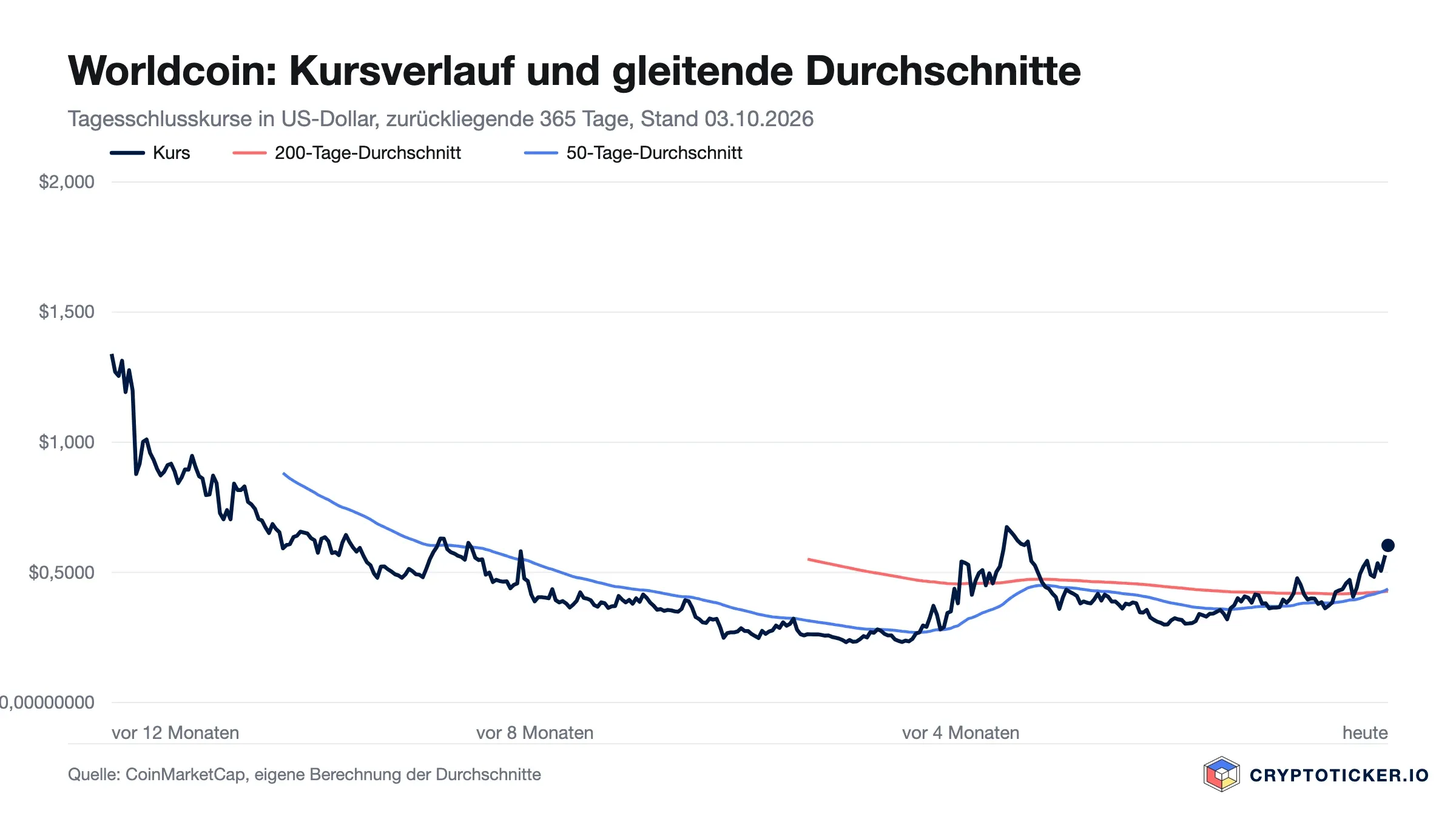
Around $0.62 is the level on the upside, the high of the 24 hours to Sunday morning. The closing price of $0.604 on October 2 was the highest for at least a month.
Around $0.55 and $0.48 are the levels on the downside. WLD closed at $0.545 on September 26, and between $0.48 and $0.49 on September 27 and 28, when the price gave way for a time.
Around $0.44, where the two average lines run close together, is the zone from which the rise in mid-September started. On September 14, WLD still closed at $0.362.
What the supply means for the price
Of a maximum of 10 billion WLD, around 3.8 billion are in circulation (CoinGecko). The remainder is released gradually, among others to employees and investors. Every new tranche is additional supply that a price rise first has to absorb. That explains part of the long downtrend since 2024.
What applies to the iris scan in Germany
Worldcoin ties the token to World ID, a proof that a human being stands behind an account. For that, the iris is scanned with a device called the Orb. The Bavarian data protection authority ruled in December 2024 that Worldcoin must delete iris codes from the period July 24, 2023 to December 13, 2024, and it requires explicit consent going forward; the decision is published by the European Data Protection Board. Worldcoin has appealed against it.

For investors that means: anyone who only wants to buy WLD needs no iris scan, as the token is tradable on large exchanges; our crypto exchange comparison compares fees and authorisation. Anyone who does want to go through the scan should read carefully beforehand what the data are used for.
Worldcoin: What to take away
Three points sum up the situation. First, the rise of around 50 percent has no known trigger, and the exchange flows point to profit taking. Second, a large part of the reported trading looks artificial, so the swings can be wide in both directions. Third, around six tenths of the possible WLD supply is not yet in circulation, and new supply weighs on the price.
Gains on WLD held for less than a year are taxable on sale in Germany once the exemption threshold of €1,000 a year is exceeded. Crypto assets fluctuate heavily, and a total loss is possible. This article puts price data and news in context; it is not a recommendation to buy or sell worldcoin.
Dogecoin price at $0.0929: the 200-day line sits at $0.0878
The starting position in figures, all based on data from CoinGecko on the morning of Sunday, October 4: dogecoin trades at $0.0929. Over 24 hours that is a gain of 0.01 percent, over the week a loss of 2.86 percent, over the month a gain of 6.37 percent. The all-time high of $0.7316 is 87.3 percent above the current price.
The same measurement across the larger assets: bitcoin stands at $84,978, up 0.70 percent over the week and up 4.74 percent over the month; ethereum at $2,692.97, up 0.11 percent and up 7.41 percent; solana at $120.89, up 0.59 percent and up 16.33 percent; XRP at $1.49, down 1.02 percent and up 2.88 percent. Dogecoin is therefore the only one of these five assets that has given back ground over the week. Over the month it sits in the middle of the field.
A 200-day moving average is the mean of the last 200 daily closing prices, and it shifts forward by one day with every new session. It smooths out the daily noise and shows where the average price level lies. The reason it is currently falling for dogecoin is mechanical: the high prices of the spring, when the coin still traded above $0.11, are dropping out of the window. Every day on which such an old value leaves the window pulls the average down, regardless of what happens today.
Recalculated from 366 daily closes: how the 200-day moving average is built
The calculation is set out in full so that you can follow it. The basis is 366 daily closing prices from CoinGecko covering October 5, 2025 to October 4, 2026. The mean of the last 200 of those values comes to $0.0878. The mean of the last 50 values, the shorter line, comes to $0.0875. Both lines run at practically the same level, and both sit below the current price.
The frequently quoted figure of $0.093 reflects the price level of recent days rather than the average. How the discrepancy arises cannot be established from the outside. Some providers calculate with hourly data, others with the closing prices of a single exchange, others again with an exponentially weighted average that gives more weight to recent days. For you as a reader the lesson is a simple one: a line quoted without its data basis is a claim rather than a measurement.
The most recent crossover came on September 22. On that day the price rose to $0.0998 and thus moved back above the line for the first time since September 10, when the average stood at $0.0878. It has not dropped below it since. In the 120 days before that, price and line crossed five times, among them on August 22, August 26, September 6 and September 10. A line that is crossed that often does not work as an alarm bell, and serves only as a rough description of the situation.
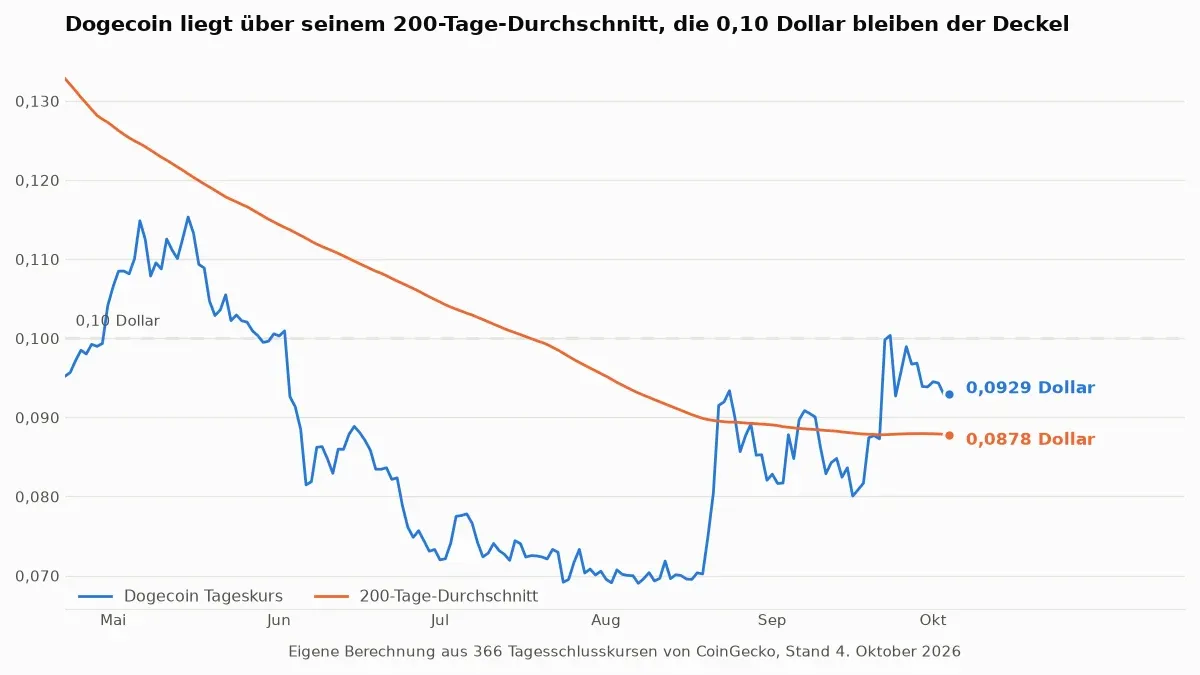
The $0.10 level: a single day above the threshold in 66 days since August 1
What is holding the price back is the round number above it rather than the line beneath it. Since August 1 there have been 66 days in the series. On exactly one of them did dogecoin close at or above $0.10, namely on September 23 at $0.1004. The low of the same period dates from August 7 at $0.0690. Between that low and the high lies 45 percent, and even so the price has touched the round figure only once.
Round numbers carry weight in markets because sell orders cluster there. An investor who bought at $0.11 or $0.12 in the spring and has been underwater ever since will often place an exit at precisely the next round mark. That supply has to be worked through before a breakout can hold. One day above the threshold in a little over two months says that it is still there.
Trading volume of $381 million against $969 million on the monthly average: turnover is thinning out
The second measure explains more than the price itself. On October 4, dogecoin worth $381 million changed hands. The 30-day average stands at $969 million, the 90-day average at $706 million. Current daily turnover therefore amounts to a little over 39 percent of the monthly average.
Part of that is the weekend, when trading on crypto exchanges is traditionally lighter. The rest is a loss of participation. Thin turnover means two things for you. First, smaller orders move the price more, the spread between bid and ask widens, and a market order for a larger sum costs more than it would on a Tuesday afternoon. Second, breakouts are less durable when trading is thin: a jump above $0.10 carried by only a few million dollars tends to fall back quickly.
Anyone moving larger amounts is better served placing a limit order rather than a market order on days like this. Which trading venues in Germany offer which order types and which fee models is set out in the crypto exchange comparison; the differences in execution weigh more heavily on small coins than on bitcoin.

BWOW converts all its dogecoin into cash on October 14, with payment following on October 22
Part of the missing turnover has a name. On September 10, Bitwise resolved to wind up its dogecoin fund BWOW. According to the filing with the US Securities and Exchange Commission, October 14 is the last day of trading on NYSE Arca. On that day the fund converts its dogecoin holdings into cash. No new shares will be issued before the market opens on October 15, and on October 22 the remaining shareholders receive the net asset value of their shares as of October 21 in cash. Bitwise cites the ongoing optimisation of its own product range as the reason.
Investors in Germany cannot buy this fund directly, because US spot products carry no key information document under the PRIIPs Regulation and are therefore not offered through regulated brokers. The episode is nonetheless instructive, for two reasons. For one, the fund takes a channel of demand with it that was weak in any case: fund assets had fallen below $1 million after the launch in November 2025. For another, the mechanics show what a product liquidation means for the holder.
And that is precisely the point that concerns holders of European products too: in a liquidation the provider determines the moment of sale, and the investor does not. Anyone holding a fund or a certificate that is being liquidated sells compulsorily on the day the issuer sets. In tax terms that date can fall very awkwardly, which is the subject of the next section.
The holding period under Section 23 of the Income Tax Act: the draft bill affects only purchases from January 1, 2027
A clear rule has applied to private investors in Germany so far. Anyone who holds crypto assets for longer than a year sells the gain free of tax under Section 23 of the German Income Tax Act, with no upper limit. Anyone who sells earlier pays income tax on the gain at their personal rate as soon as the total of all private disposal gains in a year reaches €1,000. That €1,000 is an exemption threshold and not a tax-free allowance: on a gain of €1,001, it is not €1 that becomes taxable but the full €1,001.
The Federal Ministry of Finance has sent a draft bill to the industry associations that would delete this one-year period for so-called exchange crypto assets. Gains would then fall under investment income and thus under the flat-rate withholding tax, irrespective of the holding period. The associations' consultation period ends on October 6, and the cabinet is scheduled to take up the draft on October 14. The decisive element is the cut-off date in the draft: the new rules are to apply exclusively to crypto assets acquired after December 31, 2026. For everything sitting in a securities account or a wallet by the end of the year, the existing legal position would remain.
A draft is not yet a law, and the federal government can move the cut-off date as the process continues. Even so, it raises a question you can check for yourself: if you intend to build a position over the coming months anyway, the calendar year of the purchase suddenly appears in a different light. Moving the acquisition into January may mean giving up a grandfathering that a purchase in December still captures. You should therefore document the acquisition data of every single tranche cleanly; which tools take that over is set out in the comparison of crypto tax software and portfolio trackers.
Crypto ETPs in Germany: without physical backing and a delivery claim, the flat-rate withholding tax applies
Many investors in Germany buy dogecoin through an exchange-traded product, an ETP or ETN, rather than directly. In tax terms that is not on a par with a direct purchase; it depends on how the note is constructed. Under the line taken by the tax authorities, physically backed products that grant the holder a claim to delivery of the coins are treated like a direct investment. The one-year period then applies, and a sale after twelve months remains free of tax.
If either of the two conditions is missing, the note falls under investment income. The flat-rate withholding tax of 25 percent then applies, plus the solidarity surcharge and church tax where relevant, regardless of how long you have held. You can verify this in the key information document and in the terms of issue of the product concerned. Two terms decide the matter: full physical backing, and a redemption or delivery claim held by the owner.
Alongside that sits the running fee. Annual management fees on dogecoin products in Europe are well above what is familiar from the ETF market. A fee of 2.5 percent a year costs around seven percent of the stake over three years if the price moves sideways, without anything having changed in the price itself. On an asset that has lost 63 percent over twelve months, that is an item that belongs in the calculation.
DogecoinVM on the Metal Blockchain: the bridge runs as a capped beta with no external audit
On the technical side there is the only genuinely new development of recent days. Metallicus released version 0.1.0 of DogecoinVM on September 24. Behind it stands a dogecoin environment that runs as a separate layer on the Metal Blockchain and is connected one to one with the dogecoin mainnet through a bridge. Instead of proof of work, a faster consensus mechanism secures the transactions, which allows short confirmation times. In parallel, the public testnet of DogeOS went live in late September, allowing applications modelled on ethereum with DOGE as the fee currency.
More important for you than the technology is the warning contained in the release itself. The developers expressly describe the launch as a capped beta using real dogecoin, advise moving only small amounts, and record that the code has not been through an external security review and that the signing keys are not yet held by independent operators. A fee of 0.01 DOGE per transaction is also deducted on deposit.
A bridge without an audit has historically been the most vulnerable point in crypto infrastructure. Anyone who wants to hold a position for the long term has no business in a beta of this kind and is better off in self-custody. Which devices come into question for that, and how they differ in recovery and handling, is shown by the hardware wallet comparison.
545 million dogecoin in a single day: the figure comes from a post with no named data provider
In recent days a claim has circulated that large addresses bought more than 545 million dogecoin within 24 hours, worth a little over $50 million. The figure goes back to a single post on a social network. No data provider is named there, nor is it defined from what holding size an address counts as a large address. There is so far no confirmation from any analytics service named in full.
Claims of this kind deserve reserve, whether or not they fit your own picture. A movement between two addresses belonging to the same owner looks like a purchase on the blockchain while being nothing of the sort. Reshuffling between an exchange's custody addresses regularly produces readings like these. Take note of the figure as an unconfirmed claim, then, and treat it as no grounds for a position.
Two levels for the dogecoin price: next target $0.10
On the upside the picture is unambiguous. The $0.10 mark is where it will be decided whether the recovery since the August low turns into something more. A daily close above it, carried by turnover above the 30-day average of $969 million, would be the first durable signal since the spring. The one day above the mark on September 23 was precisely not that: the price fell back within a day.
On the downside the first support sits at $0.0878, where the 200-day moving average runs. Below that, at some distance, follows the low of August 7 at $0.0690. Between those two values lies 21 percent, and that describes the room to fall better than any forecast. Anyone holding a position should know that a slide below the average line has historically not stopped immediately: in June and July of this year the price spent weeks beneath it.
The news flow argues against a quick resolution either way. The winding-up of BWOW runs to October 22, the cabinet discussion on the holding period falls on October 14, and the technical developments remain at beta stage. None of these events changes the supply of dogecoin, which grows by around five billion units a year because the protocol knows no upper limit.
Custody and purchase route under MiCA: an exchange account and a hardware wallet separate two risks
Since the European Markets in Crypto-Assets Regulation came into full effect, providers targeting German customers need authorisation as crypto-asset service providers. For you that is first of all a checkpoint before opening an account: is the provider listed in the register of the competent supervisor, and is the registered office in the European Union? A provider without authorisation may not advertise actively in Germany, and in a dispute the route to a supervisory authority is considerably shorter when that authority has jurisdiction.
The second checkpoint concerns custody. Coins in an exchange account belong to you economically, but they sit within the exchange's power of disposal. That is practical for active trading and an additional dependency for a holding period of twelve months and more. Anyone wanting to use the one-year period sensibly separates the two functions: trading balance on the exchange, long-term balance on a device whose recovery words only you know. The acquisition data remain untouched by that, since a transfer between your own addresses is not a sale and does not restart the period.
Dogecoin price: How to proceed now
- Check the data basis before you follow a line. Recalculate the 200-day average using a source whose period and price type you know. The difference between $0.0878 and $0.093 decides whether the price stands above its average price level or on it. Which exchanges deliver clean historical prices is shown by the exchange comparison.
- Record the acquisition date and the product form. Note the purchase date, quantity and price for every tranche, and in the case of an ETP read in the key information document whether it is fully physically backed and grants a claim to delivery. That determines whether the one-year period applies or the flat-rate withholding tax. A portfolio tracker with a tax function takes over the documentation.
- Separate custody from the trading platform. Move the part of your holdings you intend to hold for longer than a year onto a device under your own control, and stay out of unaudited bridges. The hardware wallet comparison ranks the devices by recovery, handling and price.
(As of October 4, 2026. This article is not investment advice. Prices and fee structures change; check the terms with the provider before you buy.)
With October 1 the same word comes back every year: Uptober, the claim that October is the reliably strong month in the crypto market and the fourth quarter the strong season. We ran the numbers for the four largest tradable coins over nine years, in each case from the September 30 close to the December 31 close, and additionally for October on its own. The result splits in two. For Bitcoin the claim does hold up in October, with seven of nine years in the black. For the full quarter it barely holds, and for XRP it does not hold at all.
This calculation is not a forecast. What has been counted is how often something happened in the past and, above all, how far the individual years lie apart. Base a decision on a season and you are basing it on an average that never arrived in any single year.
What Uptober claims, and how the claim can be measured
Behind the word sits a seasonality thesis: certain months deliver better returns on average than others, because capital flows, tax deadlines and expectations repeat over the course of the year. Seasonality in statistics means that a time-series value depends systematically on the calendar and not only on chance.
Two measures make that testable, and the order matters. The first is the hit rate: in how many years did the period end in the black? The second is the median, the value in the middle of all years. The median says more here than the average, because a single extreme year shifts the average at will while leaving the median alone. That is exactly what happens regularly in the crypto market, and further down you will see how strongly.
Bitcoin in October: seven of nine years in the black, median 10.9 percent
For October on its own, the picture at Bitcoin is as clear as the word promises. From 2017 to 2025 the month closed higher than it opened seven times; only 2018 and 2025 ended in the red. The median sits at plus 10.9 percent.
- 2017: plus 48.5 percent · 2018: minus 4.6 · 2019: plus 10.3
- 2020: plus 28.1 · 2021: plus 40.0 · 2022: plus 5.5
- 2023: plus 28.5 · 2024: plus 10.9 · 2025: minus 4.0
Seven out of nine is a rate nobody can argue away. What it is not is a guarantee for the tenth case. Two losing years in nine means that on average every fourth or fifth October runs against the thesis, and the most recent one did.
The full quarter comes out much weaker than October alone
Here the picture tips. Measure not to October 31 but to December 31, and only five of nine years at Bitcoin remain in the black, with the median shrinking from plus 10.9 to plus 5.4 percent. In plain terms: what October often brought in, November and December frequently took back.
- 2017: plus 219.5 percent · 2018: minus 44.1 · 2019: minus 13.7
- 2020: plus 168.9 · 2021: plus 5.4 · 2022: minus 14.9
- 2023: plus 56.8 · 2024: plus 47.5 · 2025: minus 23.3
Anyone who aligns a decision with the quarter rather than the month therefore faces a coin-flip rate historically, with a slight tilt to the upside. Which dates are actually due in the current quarter we have put together in our overview of crypto dates for the fourth quarter.

Why the 44.7 percent average misleads
The arithmetic average of the nine Bitcoin quarters stands at plus 44.7 percent. That figure appears in many seasonality tables, and as an expected value for a coming quarter it is worthless. It comes almost entirely out of two years: 2017 with plus 219.5 percent and 2020 with plus 168.9 percent. Take those two out and an average of roughly plus 2 percent over seven years remains.
Both exceptional years followed a halving of the Bitcoin reward, in 2016 and 2020, and fell into phases of strong inflows. A season that draws its statistics from two special years describes those special years, not the calendar. The median of plus 5.4 percent is the more honest figure, and it is unspectacular.
Ethereum: six strong Octobers, but a median of 0.7 percent
At Ethereum you can see how little a hit rate is worth on its own. Six of nine Octobers closed in the black, so the rate sounds good. The median, however, is just plus 0.7 percent, because the winning months were mostly narrow and the losing months clear: minus 15.2 percent in October 2018, minus 7.2 in October 2025, against plus 0.6 and plus 0.7 percent in two of the winning years.
Over the full quarter the relationship reverses: five of nine years in the black, but a median of plus 22.5 percent, the highest of the four coins. Ethereum delivered less often in the fourth quarter, yet more powerfully when it did. How the two largest coins stand against each other this quarter we have broken down in our direct comparison of Bitcoin and Ethereum.
XRP breaks the pattern: only three of nine years in the black
At XRP the Uptober thesis does not hold. In October only three of nine years ended in the black, and the median is negative at minus 0.9 percent. Over the full fourth quarter it is likewise three of nine, with the median falling to minus 12.9 percent. Six of the nine quarters ended in the red, four of them consecutively from 2019 to 2022.
The average says something altogether different here, namely plus 111.9 percent, and that shows the trap in its purest form: it stems practically alone from the fourth quarter of 2017 with plus 899.5 percent and from 2024 with plus 240.1 percent. Reckon on seasonal strength for XRP and you are reckoning with two years against six.
Solana has only five quarters of history, and they swing wildly
Solana has been quoted continuously on the major venues only since 2021, so the series covers just five fourth quarters. Three of them ended in the black. The spread makes any averaging questionable: plus 376.1 percent in the fourth quarter of 2023 stands against minus 70.0 percent in the fourth quarter of 2022, the quarter of the FTX collapse.
Five observations are statistically too few for a seasonal statement. That is no criticism of the coin but a limit of the data. With a coin of short history, a quarterly statistic mainly describes the major events that fell into those quarters.

What 2025 showed: four coins, four minus signs in the fourth quarter
The most recently completed fourth quarter ran against the thesis at all four coins, and clearly so: Bitcoin minus 23.3 percent, Ethereum minus 28.4, Solana minus 40.4, XRP minus 35.4. October 2025 itself was negative at all four as well.
That does not refute a seasonality; a single year never can. It does place it, though: the most recent case, the one everybody still remembers, is the counter-example to the slogan. When you read in October 2026 that October is historically strong, last October lies in between, and it was not.
Where the four coins stand in early October 2026 against previous years
On October 3 Bitcoin stands at around $84,900, Ethereum at about $2,684, Solana at roughly $120 and XRP at about $1.49. Against September 30, barely anything has moved in the first days of the quarter: Bitcoin is a good 1.6 percent higher, Solana around 1.5 percent, Ethereum and XRP practically unchanged.
For comparison: in the strong Octobers of 2017 and 2021, Bitcoin was clearly ahead after the first trading days already. A quiet start says nothing in itself about how the month ends, but it does show that the season does not switch on automatically just because a date has been reached. The current prices of the individual markets you will find directly at the venues, for instance in the XRP market at Bitstamp.
Seasonality is no law: what statistics say about single years
Nine observations are a small sample. With a hit rate of seven to two, nine cases do not cleanly separate whether a calendar effect sits behind it or a clustering of the kind chance produces regularly in short series. On top of that, the nine years are not independent of one another, because all nine lie within two market cycles, and inside a cycle the quarters run alike.
In practice that means a seasonal statistic is an argument for humility, not for timing. A statistic of this kind is good for dampening an expectation that arises from a slogan. For justifying a purchase date it is not. Anyone buying regularly and in fixed amounts sidesteps the question entirely; what that looks like in practice is shown by our comparison of savings plan providers.
Holding period and tax: the German calendar counts twice
For investors in Germany the fourth quarter carries a second, very concrete calendar layer, and it has nothing to do with seasonality. Under Section 23 of the German Income Tax Act, cryptocurrencies held as private assets fall under a one-year holding period: sell at a profit within a year of buying and that profit is taxed at your personal rate. Once the year is up it is tax-free. For gains inside the period an exemption limit of 1,000 euros a year applies, covering all private disposal transactions together; exceed it and the entire amount becomes taxable.
From that follows a calculation that beats any seasonal consideration: if your purchase date falls in December of the previous year, a sale a few weeks before the anniversary can cost more than any price move you avoid by it. Conversely, losses inside the period can be offset against gains from other private disposal transactions of the same year. For your own case a tax adviser is the right address, not a calendar saying.
Uptober: Your next three steps
- Put your own figure in place of the slogan. For the coin you hold, look at the hit rate and the median, not the average. At Bitcoin that is seven of nine Octobers and a median of 10.9 percent, at XRP three of nine and minus 0.9 percent. That spread decides more than the word does.
- Check holding periods before quarterly arithmetic. Pull the purchase date and purchase price of your positions from the trading history and note which ones are approaching the anniversary. A tax deadline is a fixed quantity; a season is a probability.
- Set a buying rhythm rather than a buying date. If you want to add during the quarter, you are better off fixing an amount and an interval than a date. The costs for that differ markedly by provider, as set out in our comparison of crypto exchanges.
(As of October 3, 2026. This article is not investment advice. Prices and fee structures change; check the terms with the provider before you buy.)
Decrypt
The firm says the Sept. 24 breach pushed North Korea's 2026 crypto haul past $1 billion, and detailed how it used in-house AI to trace the stolen funds across four blockchains in a race against the attackers.
The YouTuber says OpenAI suspended his account twice while he trained a small, uncensored model built to run on your own computer.
The TRUMP meme coin project is inviting its top 185 holders to a Nov. 22 gala dinner with President Trump two weeks after ethics disputes over his crypto interests helped stall the Clarity Act in the Senate.
The pontiff says algorithms "lack the spark of humanity," and the Vatican wants to renew an alliance with artists and cultural institutions to protect it.
California's attorney general wants answers from OpenAI about AI models that escaped a locked test environment and hacked Hugging Face—and whether the company can be held legally accountable.
U.Today - IT, AI and Fintech Daily News for You Today
Stellar blockchain outpaces retail chains with $36.4 million in daily inflows, securing 37% of global RWA growth.
Near Protocol might not be as bullish as it was before, following the major correction around local heights.
XRP Ledger set to ship new upgrades in response to growing demand for complex financial operations on-chain.
Hyperliquid market makers are certainly pivoting towards more bearish market outlook.
Crypto whales have snapped up roughly $3.6 million worth of PUMP as the token extends its explosive rally.
Blockonomi
TLDR:
- Ethereum price holds above $2,600, with $3,400 identified as a conditional liquidity target and resistance near $2,750 to $2,800.
- Binance futures volume reached roughly 12.5 times spot turnover on October 1, despite ETH gaining approximately 73% since late June.
- CryptoPatel projects $10,000 to $15,000 during a future altseason, while his roadmap requires resistance breaks and intact structural support.
- U.S. spot Ethereum ETFs lost a provisional $118 million over the latest week, while Glamsterdam awaits a confirmed mainnet activation date.
The Ethereum price is holding above $2,600 after reclaiming a liquidity zone, with $3,400 identified as a potential target. ETH traded near $2,740.20 in the October 4 analysis, while resistance remained around $2,750 to $2,800.
However, Binance futures continue to dominate trading activity despite the recovery from late June. Analyst Amr Taha found that spot volume equaled only 8% of futures volume on October 1.
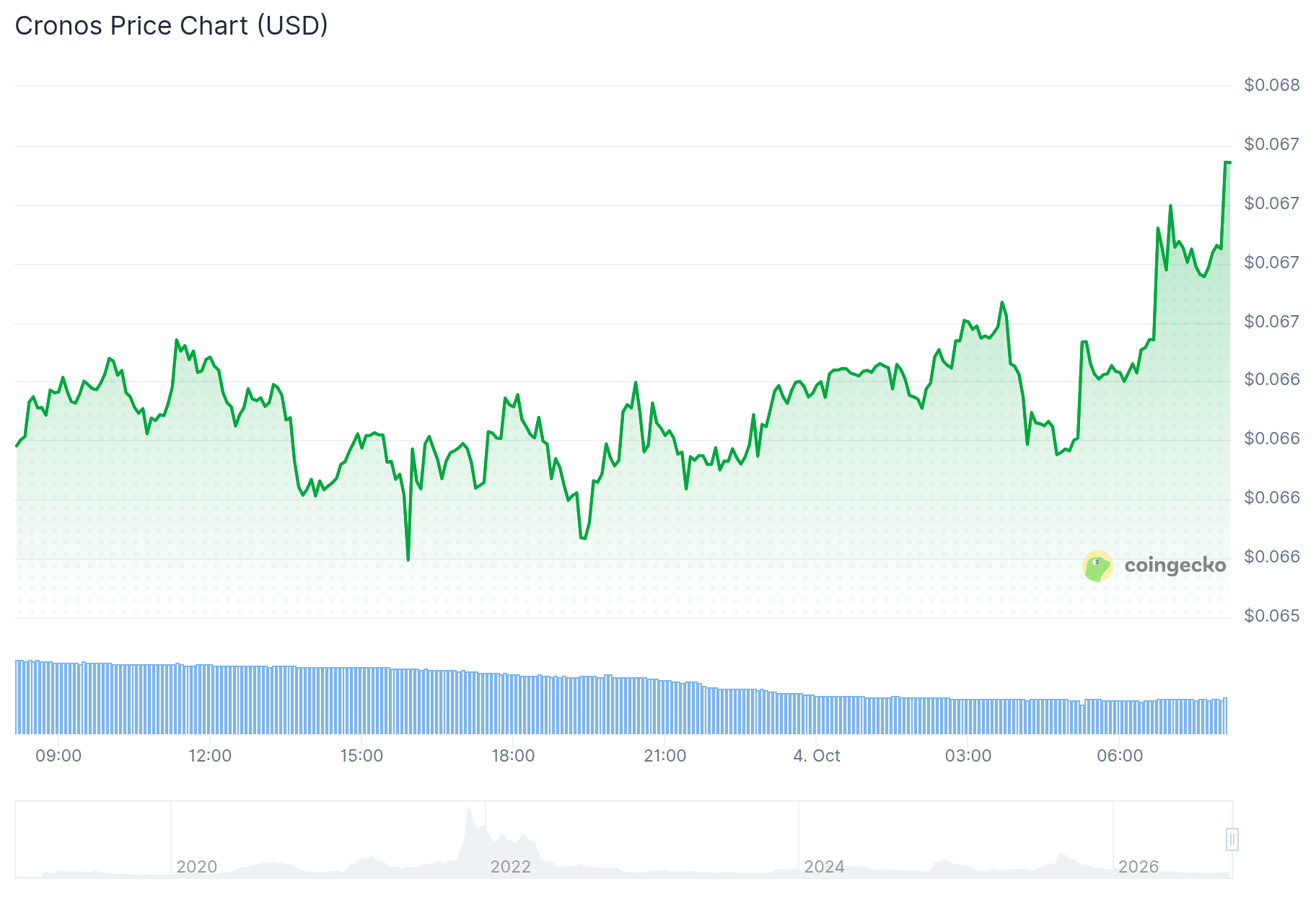
That trading mix adds context to the immediate support test, while CryptoPatel projects higher levels during a future altseason. Meanwhile, Ethereum ETFs face withdrawals as upcoming network changes add a separate development factor to the outlook.
Ethereum Price Tests Support as Binance Futures Lead Activity
Taha’s CryptoQuant review shows ETH advancing from $1,560 on June 27 to $2,700 on October 1. That represents a gain near 73%, or about $1,140, over the period.
Over the same interval, the Binance spot-to-futures volume ratio rose from 6.5% to 8%. This compares two trading volumes; it does not measure spot activity as a share of their combined total.
At an 8% ratio, Binance futures volume was approximately 12.5 times spot volume. Calculated across both markets, spot represented roughly 7.4% of combined turnover, assuming the same measurement window.

The Ethereum price recovery coincided with a small increase in spot trading’s relative contribution. However, the ratio alone cannot establish whether absolute spot volume increased, decreased, or stayed flat.
Differences in market size also limit what can be inferred about directional positioning. High futures turnover can reflect repeated trading or hedging, so it does not prove excessive leverage.
Taha identified earlier ratio peaks of 45% on April 13, 2026, and 114% on November 14, 2025. Subsequent declines reached approximately 36% and 45%, respectively. Those sequences show historical association without establishing that higher spot participation caused either decline.
For the Ethereum price, continued support above $2,600 would preserve the breakout case outlined in the analysis. A move below that zone would weaken the rationale for the $3,400 liquidity target.
Ethereum ETFs Reverse Flows as Cycle Targets Face Resistance
CryptoPatel’s longer-term Ethereum price forecast points toward $10,000 to $15,000 during a future altseason. His roadmap also marks $16,000 as a possible cycle peak around 2027 to 2028.
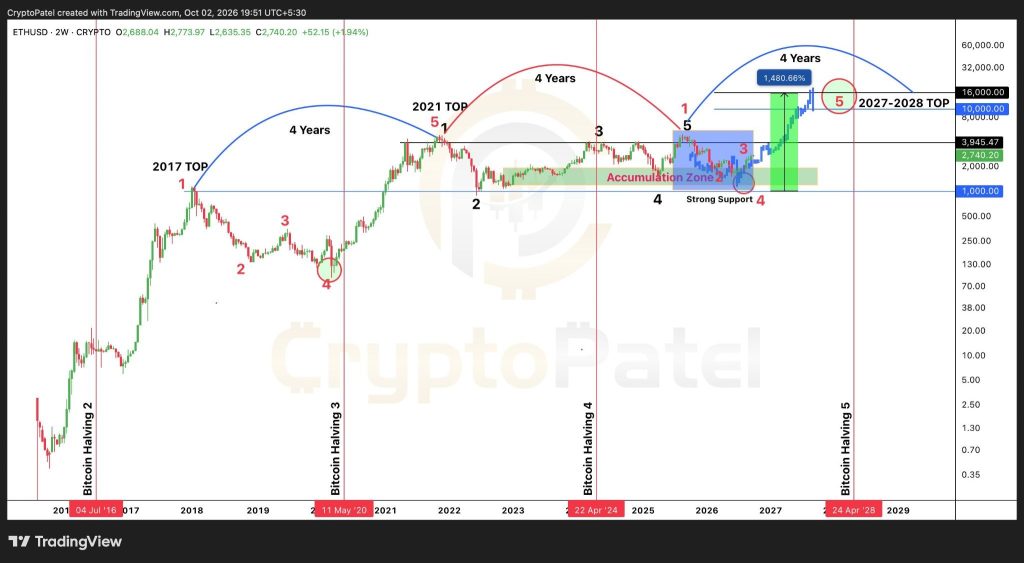
The two-week candle gained 1.94%, with a $2,773.97 high and $2,635.35 low. Calculated from $2,740.20, reaching $15,000 would require an increase of about 447%.
Earlier cycles carried ETH from roughly $10 to $1,400 in 2017, then down to $80. The subsequent recovery peaked near $4,800 in 2021 before reversing toward $880 in 2022.
The model links Ethereum’s previous advances to Bitcoin’s four-year halving pattern. It labels the current phase Wave 4, followed by a projected Wave 5 expansion.
Within that framework, $3,945 is a major resistance level before potential moves toward $8,000 and $10,000. More distant labels at $32,000 and $60,000 sit outside the immediate trading setup.
The Ethereum price roadmap includes an accumulation area near $2,000 and structural support around $1,000. CryptoPatel’s bullish wave count would fail below the latter level.
U.S. spot Ethereum ETFs recorded approximately $118 million in net outflows for the week ending October 2. Farside’s provisional daily totals show a reversal from $689.8 million in inflows during the previous week.
Lookonchain figures show wallets holding 1,000 to 10,000 ETH controlling more than 14.2 million tokens. That holding total alone does not show when purchases occurred or identify the wallets’ owners.
Network development provides another factor for the Ethereum price outlook. Ethereum’s official roadmap places Glamsterdam in the fourth quarter of 2026, while leaving the mainnet date unconfirmed.
The Ethereum Foundation has scheduled Sepolia activation for October 6. Planned changes include enshrined proposer-builder separation and block-level access lists, which prepare the network for greater throughput and parallel processing.
The post Ethereum Price Holds $2,600 as Binance Futures Dominate Trading appeared first on Blockonomi.
TLDR:
- The Cronos token burn removes 228 million CRO from the community pool. Community approval lifts this program to 428 million tokens.
- All Ult and Cronos Launch revenue will fund CRO buybacks and monthly burns. Published transaction hashes allow public verification.
- Staking rewards keep their current terms, with Strategic Reserve support maintaining payouts as emissions decline under existing policy.
- CRO trades near $0.0669 after a roughly 1.56% daily gain. Future purchase amounts depend on product revenue and execution costs.
The Cronos token burn removed 228 million CRO from the community pool after voters approved two governance proposals. Cronos Network announced the decision on October 3, bringing burns under the community program to 428 million tokens.
CRO traded near $0.0669, gaining approximately 1.56% over 24 hours, according to Coingecko market data. The destroyed tokens carried an estimated market value of about $15 million.
The approved framework directs all revenue from Ult and Cronos Launch toward open market purchases and monthly burns. Cronos will publish transaction hashes, while staking rewards retain their existing terms and funding support through the Strategic Reserve.
Cronos token burn lifts community total to 428 million
Proposal 36 authorized the latest community pool transfer to a burn address on Cronos POS. Four previous rounds each removed 50 million CRO, making this fifth round considerably larger.
The Cronos token burn therefore exceeded the combined size of those earlier rounds by 28 million tokens. The 428 million total describes this community initiative, rather than every historical destruction of CRO.
The immediate operation used tokens already held by the community pool. It did not require purchasing the entire 228 million CRO from exchanges, an important distinction when assessing market demand.
Future CRO buybacks introduce a separate source of purchases because they use product revenue to acquire tokens. Their size will vary with platform earnings and the market price when transactions execute.
Although the Cronos token burn reduces available supply, it does not establish a guaranteed price increase. Liquidity, demand, reserve distributions, and broader market conditions still influence how CRO trades.
Coingecko listed daily trading volume near $5.82 million and market capitalization around $3.31 billion. These figures show that the burn announcement arrived alongside relatively limited turnover compared with the token valuation.
That leaves a practical distinction between governance approval and sustained trading interest. A smaller token supply alone cannot reveal whether demand will grow enough to support a lasting advance.
CRO Buybacks Tie Monthly Burns to Revenue From Trading
Proposal 37 commits 100% of Ult and Cronos Launch revenue to token purchases and destruction. Cronos Labs says existing capital will cover operations, infrastructure, and growth spending instead of those product receipts.
The Cronos token burn framework links supply reduction directly to activity on both products. Ult generates trading revenue, while Cronos Launch collects fees associated with tokens created and traded through its launchpad.
Monthly burns provide a schedule for removing purchased tokens, and published transaction hashes allow independent verification. Community members can check execution amounts rather than relying solely on announcements about future commitments.
Under the Cronos token burn plan, published records can help compare revenue commitments with the tokens actually purchased and destroyed. A transaction record verifies execution, while separate revenue reporting would explain whether purchases reflect all earnings from the two platforms.
The revenue percentage is fixed, but the purchase budget is not. As an illustration, $100,000 would acquire about 1.5 million CRO near $0.0669 before fees and execution costs.
That calculation highlights why product revenue remains a central measure for future CRO buybacks. More usage can generate larger purchases, although lower revenue would reduce the number of tokens acquired.
Staking rewards retain their current parameters, including existing lock periods and bonus structures. The Strategic Reserve will support payouts as emissions decline, keeping reward funding separate from revenue committed to monthly burns.
The Cronos token burn does not change the review process for potential Crypto.com listings. The published strategy says qualifying tokens enter an ongoing assessment, with Crypto.com controlling criteria and final decisions.
Cronos Launch opened on September 15, followed by Ult on September 17. The September governance document listed the purchasing contract as being developed. Subsequent execution hashes will show the amounts bought and burned.
The post Cronos Token Burn Removes 228 Million CRO as Voters Back Buybacks appeared first on Blockonomi.
TLDR:
- Cathie Wood challenges Bill Ackman on inflation, arguing that stronger real growth and falling technology costs can explain higher rates.
- Bill Ackman questions whether higher borrowing costs can slow AI infrastructure investment when companies expect exceptionally large returns.
- Wood cites a 99.99% annual decline in AI inference costs at constant performance, presenting the figure as support for benign deflation.
- Wood links cheaper AI to expanding usage, citing OpenAI revenue run rate growth from $20 billion to $70 billion in her economic argument.
The ARK Invest CEO, Cathie Wood, has challenged Bill Ackman over whether artificial intelligence will fuel lasting inflation. She argues falling AI inference costs could support stronger economic growth while limiting pressure on consumer prices. Her response follows concerns that Federal Reserve rate increases could fail to restrain continued investment in computing infrastructure.
Wood also places the 10-year Treasury yield near its historical median, citing records dating to 1790. The disagreement highlights how cheaper technology and heavy construction spending could push inflation in different directions. Both investors question conventional assumptions, but they offer sharply different readings of the economic consequences.
Cathie Wood Challenges the Inflation Case Behind Rate Hikes
The Federal Reserve raised its benchmark rate by 25 basis points on September 16, 2026. That increased the target range to 3.75%–4.00%, following a unanimous vote. Officials said inflation remained elevated and reaffirmed their commitment to a 2% target.
Bill Ackman questioned that decision in a September 25 post on X. He suggested demand for computing capacity and energy could remain strong despite more expensive borrowing. Companies pursuing major AI breakthroughs may keep investing because they expect unusually large returns.
His concern centers on financing costs becoming embedded in goods and services. If AI investment stays resilient, tighter policy could raise costs without reducing that spending sufficiently. He warned that this could create a cycle of rising costs and further rate increases.
Cathie Wood offered a different interpretation on September 29, pointing to real yields and growth exceeding expectations. Real yields represent returns after adjusting for inflation. Under her argument, higher rates can reflect stronger economic prospects while productivity improvements help contain prices.
The Fed also reported solid economic expansion, strong productivity growth, and robust capital investment in September. Its statement still identified elevated inflation as a continuing problem. This combination suggests efficiency gains can coexist with price pressures while companies build infrastructure and expand their operations.
For Cathie Wood, the historical yield comparison provides context for evaluating those increases. However, a historical median alone cannot establish whether current policy is restrictive. Inflation expectations, borrowing conditions, and productivity trends also matter when assessing the economic effects of higher rates.
Falling AI Inference Costs Reshape the Inflation Debate
In the October edition of ARK’s In The Know, Cathie Wood highlighted sharply falling technology costs. She cited a 99.99% annual decline in AI inference costs at a constant performance level. Inference refers to running a trained model to generate outputs, including answers and predictions.
That estimate compares the expense of delivering similar capabilities as models and computing systems improve. Its broader economic impact depends on how widely businesses adopt those efficiencies. Potential savings could support automation, lower service costs, and expand access to tools previously considered expensive.
Cathie Wood linked those changes to OpenAI’s revenue run rate rising from $20 billion to $70 billion. She presented that increase as evidence that cheaper AI can encourage substantially greater usage. A run rate expresses revenue on an annualized basis, rather than a completed year of reported sales.
She describes the potential result as benign deflation, with productivity gains supporting output as production costs fall. That differs from falling prices caused by weakening demand. Yet cheaper inference can coexist with expensive electricity, land, and construction during a rapid infrastructure buildout.
Bill Ackman’s concern involves demand for data centers and other physical infrastructure that support AI services. Cheaper inference could increase usage, adding pressure to electricity supplies and computing capacity. That makes the speed of new supply relevant alongside the pace of technological improvement.
Cathie Wood also cited US money supply growth near 5.7%, arguing it had not triggered renewed inflation. ARK’s briefing placed 90% of global data center financing in the United States.
The post Cathie Wood Challenges Bill Ackman Over AI Driven Inflation Fears appeared first on Blockonomi.
TLDR:
- Trump Dividend proposes $5,000 per adult citizen if Republicans retain Congress, subject to congressional approval and unresolved financing.
- The estimated $1.2 trillion payout exceeds projected annual tariff revenue, prompting concerns about federal borrowing and inflation.
- CMS schedules $90 rebates for 20.8 million eligible Medicare beneficiaries, with most direct deposits expected around October 8.
- Published research estimates a 0.6% Bitcoin price increase from initial pandemic checks, without predicting effects of future payments.
The Trump Dividend proposal promises $5,000 per adult U.S. citizen if Republicans retain Congress in the November 3 elections. President Donald Trump repeated the pledge on October 3, leaving the estimated $1.2 trillion cost and its funding unresolved. Congress would need to approve funding before the administration could distribute the proposed stimulus checks.
Bitcoin traded near $84,850 on Sunday after retreating from Friday’s advance above $87,000. Separately, Medicare beneficiaries have a funded $90 rebate scheduled this month under an existing federal program. Those payments cover more than 20 million eligible people and carry no condition involving the midterm election results.
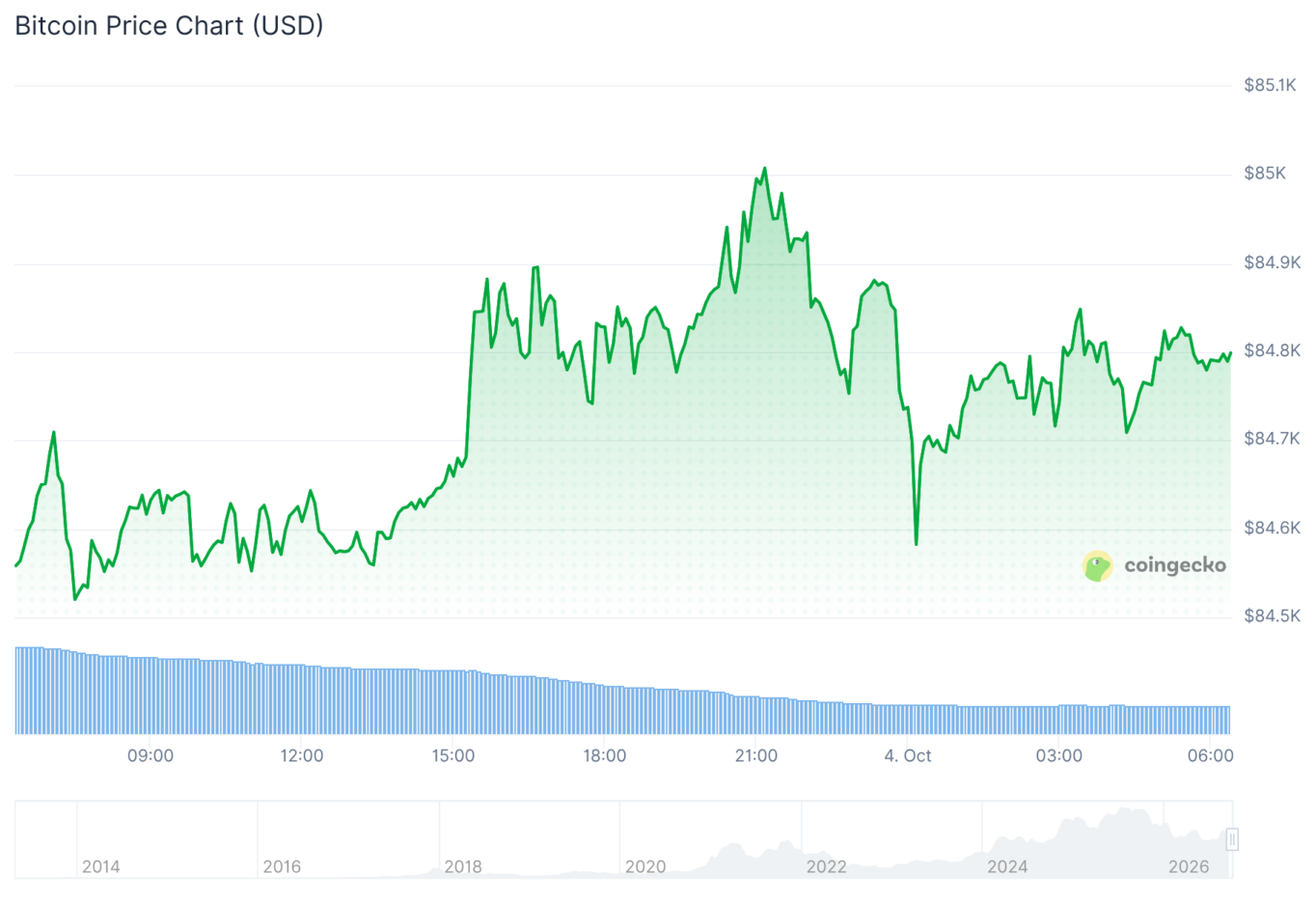
Trump Dividend Faces Funding Hurdles and Congressional Review
Trump first announced the Trump Dividend at a Republican convention in Dallas on September 9. He framed the payment as sharing economic gains, conditional on Republican control of the House and Senate.
Using roughly 245 million adult citizens, the proposed nationwide payout would cost approximately $1.23 trillion. That calculation assumes universal adult eligibility before any income limits reduce the recipient count.
Trump and Vice President JD Vance have pointed to tariff revenue to fund it. Private investment pledges do not automatically become federal revenue available for household payments.
Tax Foundation economist Erica York projects $125 billion in net revenue from new tariffs during 2027. That would cover one-tenth of the Trump dividend, requiring almost a decade to meet the cost.
The Committee for a Responsible Federal Budget warns that tariff revenue already appears in deficit projections. It says the payout could increase borrowing and inflation without spending cuts or additional income.
Congress controls federal spending through appropriations, so an election victory would not itself authorize the proposed stimulus checks. Ohio Senator Bernie Moreno says he intends to prepare legislation for consideration after the November 3 vote.
The election condition has drawn accusations of vote buying, although that criticism does not establish a criminal violation. Legal experts cited by PolitiFact suggest a payment benefiting all Americans could be legally permissible.
Officials have not published final eligibility rules or a payment timetable for the Trump Dividend. Earlier proposals involving DOGE savings and $2,000 tariff payments also failed to produce nationwide checks.
Medicare Rebates Advance as Bitcoin Stimulus Debate Grows
The Medicare rebate draws from the Medicare Improvement Fund, holding $2 billion authorized by Congress. CMS identifies 20.8 million eligible beneficiaries, putting total payments at approximately $1.87 billion.
Most recipients should receive direct deposits around October 8, while paper checks will arrive later in October. Eligibility covers qualifying Original Medicare Part B enrollees living in the United States.
Medicare Advantage members do not qualify, nor do people receiving Medicaid premium assistance or paying income-related premium adjustments. The rebate operates separately from the Trump Dividend and does not require Republicans to win Congress.
Past stimulus checks offer evidence about household Bitcoin purchases, although they cannot establish how recipients would invest future payments. A Management Science study estimates initial pandemic payments increased Bitcoin buying volume against the U.S. dollar by 3.8%.
The researchers estimated a 0.6% Bitcoin price increase attributable to those payments. The finding concerns the first payment round and does not explain Bitcoin gains across 2020 and 2021.
The pandemic period also included near zero interest rates and substantial Federal Reserve asset purchases. Those simultaneous policies complicate efforts to separate the influence of cash payments from broader liquidity conditions.
The Trump Dividend could send money toward digital assets if enacted, but the share households would invest remains unknown. If tariff revenue falls short, borrowing costs and monetary policy could influence Bitcoin alongside household investment.
Saturday’s trading followed losses in leveraged positions across the crypto market. Liquidations reached approximately $434 million over 24 hours, including about $322 million in long positions.
The post Trump Dividend Pledge Ties $5,000 Checks to 2026 Midterm Victory appeared first on Blockonomi.
TLDR:
- Bitcoin crash warning links Monday fears to Fed policy and yields. The Benner cycle comparison does not establish a scheduled crash.
- Bitcoin Cash gained 1.59% to $317.75, outperforming Bitcoin. Rotation into established forks remains a possible explanation for the divergence.
- BCH holds above its seven-day moving average with RSI at 63.52. Trading volume fell about 37%, weakening confirmation of the advance.
- BCH faces support at $306.59 and resistance around 328–330. A support break could expose $288.93 as Bitcoin and ETF flows shape sentiment.
The Bitcoin crash warning circulating on X links possible Monday turmoil to Federal Reserve policy and tightening liquidity. The post compares the S&P 500 with the Benner cycle, a historical framework for interpreting market fluctuations. However, that comparison does not establish that a crash will occur on October 5.
According to recent market data, Bitcoin Cash rose 1.59% to $317.75 over 24 hours, outperforming Bitcoin’s 0.25% gain. The divergence has fueled discussion about interest in established Bitcoin forks. Yet falling trading volume complicates the bullish picture. The warning offers a possible scenario rather than evidence of an imminent market breakdown.
Bitcoin Crash Warning Links Fed Policy to Yield Pressures
The Bitcoin crash warning argues that the Fed faces conflicting pressures from inflation, borrowing costs, and slowing growth. Higher rates could increase financing expenses, while easing could strengthen demand and revive inflation risks.
The post claims long-term Treasury yields have reached their highest levels since 2007. It also cites roughly $40 trillion in U.S. debt and compares potential American policy constraints with Japan. Those claims belong to the account’s forecast and require checking against specific Treasury maturities and reporting dates.
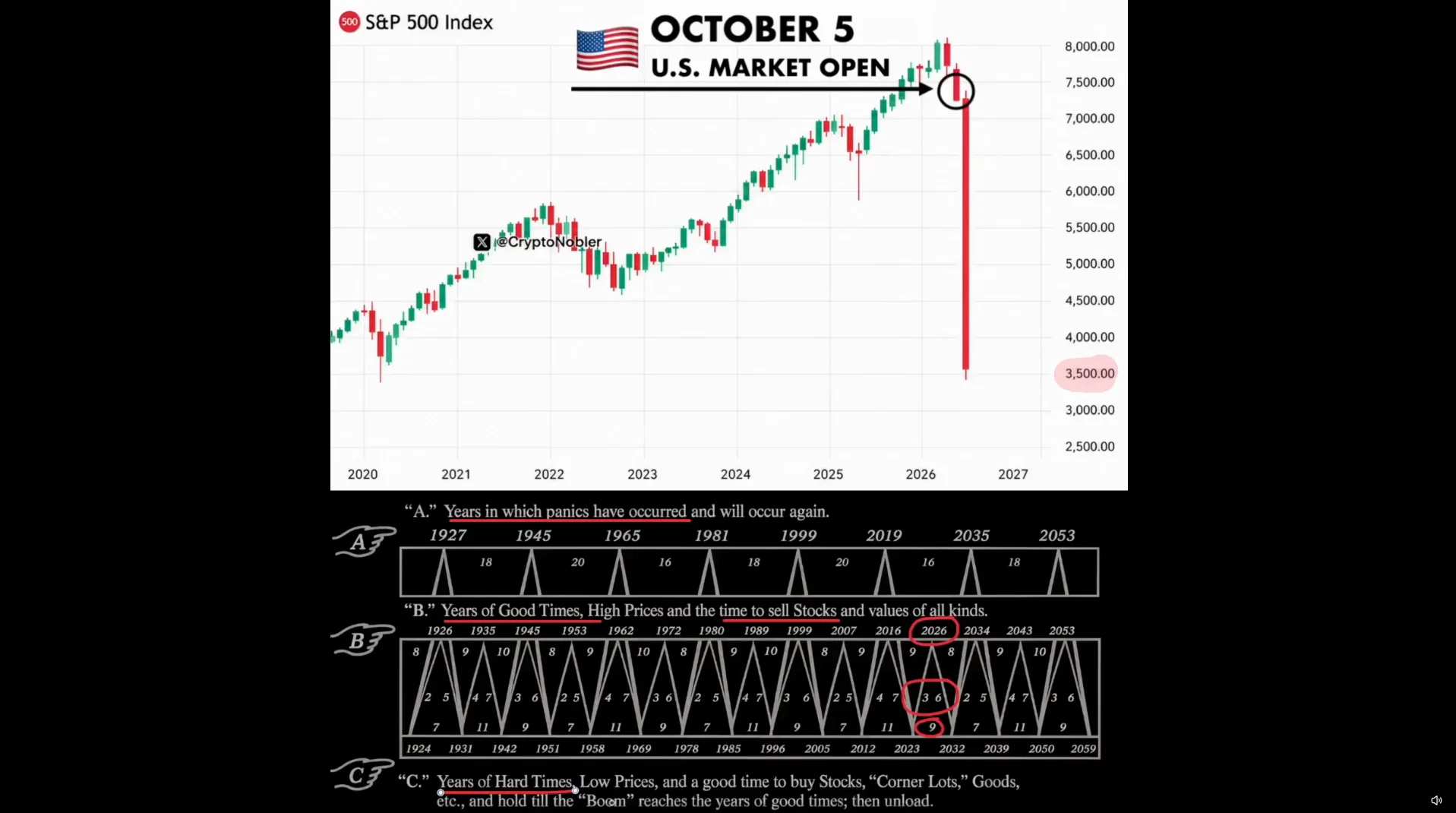
Long-term yields differ from the overnight policy rate. Treasury publishes market-based readings across maturities rather than one universal yield. U.S. Department of the Treasury
Official Federal Reserve guidance describes a broader process. Policy changes affect borrowing costs and financial conditions, but their economic effects are neither direct nor immediate. That weakens any suggestion that one rate decision automatically produces a crash.
For the Bitcoin crash warning, the proposed transmission mechanism is tighter liquidity followed by falling asset values. The account includes stocks, bonds, silver and Bitcoin among assets vulnerable to forced selling.
Such selling can occur when investors need cash or leveraged positions breach margin requirements. However, identifying that possibility does not establish its scale, timing or likelihood.
Another distinction concerns the calendar. The Fed lists its next scheduled policy meeting for October 27–28, rather than October 5. Markets can still move before meetings as investors reassess inflation and growth.
The Benner cycle comparison therefore remains an interpretation of past patterns. The Bitcoin crash warning supplies no demonstrated link between that pattern and a particular Monday selloff.
BCH Gains as Thinner Trading Volume Clouds Bullish Momentum
The Bitcoin crash warning contrasts with relative strength in Bitcoin Cash, although that strength does not remove broader risks. Social commentary has linked interest in BCH and Bitcoin SV to derivatives headlines and possible rotation.
$BSV MARKET UPDATE | OCT 2026
Bitcoin SV ($BSV) trades near $19.30 – $19.70, consolidating its recent 20% gains triggered by capital rotation into established forks!
Key Catalysts right now:
Fork Sympathy Surge: Capital rotated heavily into BCH and BSV following…
— Lucky (@Lucky_m_X) October 3, 2026


That explanation remains tentative. Differences in returns do not prove investors sold Bitcoin to fund purchases of its forks. The rally also lacks a clearly identified BCH-specific announcement in the accompanying market commentary.
Technical readings place Bitcoin Cash above its seven-day simple moving average at $313.88. Its 14-period relative strength index stands at 63.52, indicating positive momentum below the conventional overbought threshold.
However, 24-hour trading volume fell approximately 37% to about $152.9 million. Less turnover provides weaker confirmation of the advance, although volume alone does not measure available market liquidity.
The nearest outlined support is $306.59, corresponding to the 38.2% Fibonacci retracement. Holding that area could support another test of $328.44, followed by the wider 328–330 resistance band. These Fibonacci levels trace the latest correction from a recent BCH swing high of $363.75.
A sustained move through resistance would need stronger participation to improve the technical case. Losing $306.59 would expose the 50% retracement at $288.93.
The Bitcoin crash warning also keeps attention on Bitcoin’s stability and spot ETF flows. Sustained inflows could improve sentiment, while outflows could add pressure across related assets.
Bitcoin Cash remains sensitive to those broader conditions despite its daily outperformance. Bitcoin holding above $84,000 remains a near-term reference point, alongside BCH volume and its response around Fibonacci support.
The post Bitcoin Crash Warning Flags Monday Risk as Bitcoin Cash Gains appeared first on Blockonomi.
CryptoPotato
Bitcoin entered its most successful month with a bang, surging past $87,000 on Friday after the release of the weak US jobs report. Institutional demand has improved significantly over the past few months.
Meanwhile, Hyperliquid, Zcash, and Kaspa each have important protocol or market catalysts in play. Here are the key levels and developments to watch.
BTC: This Level Remains Key
Softer US inflation data, strong institutional demand, and the weaker-than-expected jobs report on Friday helped BTC recover some of the recent losses, with the asset challenging the key $87,000 resistance once again at the end of the business week.
The latest PCE data showed core inflation rising 0.2% month-over-month and around 3.0% annually, both of which were below expectations. That, alongside the relatively small number of only 29,000 added jobs in September, reduced some concerns about the need for additional monetary tightening from the US Federal Reserve.
The setup, though, is not entirely bullish. Glassnode recently cited data showing relatively limited profit-taking compared with previous market tops, but selling by long-term holders has recently increased. Trading volumes remain comparatively weak, suggesting BTC may need stronger buyer participation before confirming another major leg up.
The $87,000-$87,500 resistance remains the first notable obstacle in bitcoin’s path, as a decisive break above it could open the door toward the next big selling zone at around $95,000.
Hyperliquid’s Case
Hyperliquid’s native token has been among the strongest market performers lately, reaching consecutive all-time highs as protocol activity and ecosystem development continue to expand. One of those was the introduction of manual borrowing through HyperCore. Since September 18, users have been able to use HYPE and BTC as collateral to borrow USDC or USDT, with borrowing volume reaching almost $270 million on the first day.
The project has also introduced trailing-stop orders for perpetual markets, while its tokenomics continue to generate persistent buy-side pressure. 99% of platform fees are directed toward the Assistance Fund to repurchase HYPE from the open market.
From a technical perspective, the next important question is whether the $90-$92 region can turn into sustained support. If it does, the bullish structure remains intact. In contrast, $85 could serve as the first major support in case of a pullback.
Zcash: Privacy Meets Network Upgrade
When we talk about massive price gainers, it’s difficult to leave ZEC out of the conversation. It has been frequently posting major gains, up by over 1,000% in the past year or so, and recently topped $1,600 for the first time in a decade.
The biggest development is the network’s seventh major upgrade, which received overwhelming support from voters and is scheduled to activate on November 5. It will reduce block time from 75 seconds to 25, effectively tripling the rate of block production. Participants also voted to retain Zcash’s existing halving structure, which resembles Bitcoin’s issuance model.
Another notable metric is the amount of ZEC held in shielded pools, as recent updates on the matter indicated that 29% of the existing supply is currently shielded. Another 4 million tokens have moved into the newer Ironwood pool.
Kaspa: Adoption Being Tested
Kaspa’s recent developments have focused more heavily on expanding what developers can actually build on the network, such as the Tokata hard fork. It introduced UTXOs, covenants, transaction introspection, and native zero-knowledge verification, pushing the project beyond its original role as a high-throughput proof-of-work payments network.
Released in September, Silverscript 1.0 added higher-level tools for building covenant logic, including vaults, escrow, mechanisms, and time locks. The .k name service also launched during the same month, allowing Kaspa addresses to be replaced by readable names, with several thousand registrations recorded within the first few days.
In terms of price movements, KAS has soared by roughly 50% in the past month, bringing the psychological $0.50 level back into focus. The question now is whether the network usage can catch up with the technological development.
The post 4 Cryptocurrencies to Watch This Week: BTC, HYPE, ZEC, and KAS Face Crucial Tests appeared first on CryptoPotato.
During the recently concluded conference in Asia, Ripple highlighted how the XRP Ledger is being prepared for a new wave of institutional and developer adoption, with confidential transfers, transaction batching, and dedicated infrastructure for AI agents among the key upgrades.
The company aims to expand the network beyond simple payments and toward more complete institutional and automated use cases.
Privacy and Scalability
Among the most important new developments are confidential transfers powered by zero-knowledge proofs. According to a presentation published on X by an account dedicated to covering conference news, full on-chain transparency has historically created difficulties for traditional financial institutions that cannot publicly expose every detail of complex transactions.
The planned confidential-transfer functionality lets institutions keep sensitive transaction workflows private while still proving their validity to the network and relevant regulators.
The company behind XRP is also working on making its network more suitable for complex financial operations through formal verification, adversarial testing, and transaction batching. This would allow multiple transactions or operations to be bundled together and executed on an all-or-nothing basis, which could improve efficiency for developers and institutions building more sophisticated applications on top of the XRP Ledger.
XRPL for AI Agents
While the aforementioned announcement might not come as a surprise to many following the latest Ripple and XRPL developments, the involvement of artificial intelligence could catch others off guard. Ripple’s Senior Director of Engineering, Ayo Akinyele, said AI agents have already generated substantial activity on XRPL, with related network volume surpassing 11 million transactions.
Ripple is also developing infrastructure specifically designed for autonomous agents to boost growth further. This includes verifiable identities, permissions and spending controls, and secure smart wallets capable of holding both XRP and stablecoins.
The goal is to allow AI agents to transact autonomously while still operating within predefined safeguards. The XRP Ledger’s settlement speed, described during the keynote as roughly three to five seconds, could make it particularly suitable for machine-to-machine payments and other automated financial activity.
These XRPL-tailored developments follow a working paper from the Bank of International Settlements that explored using it to on-chain verify official statistics and strengthen data integrity without alerting existing systems.
The post Major Ripple (XRP) Reveal From Seoul: XRPL Gets Privacy, AI Agent Upgrades, and More appeared first on CryptoPotato.
Robert Kiyosaki, who has frequently put BTC, ETH, silver, and gold into the same investment bracket, has compared owning some of these assets to carrying insurance against financial trouble.
The author of best-sellers such as “Rich Dad, Poor Dad” said preparing for monetary instability is not the same as predicting disaster. Moreover, he used the opportunity to lash out against government-issued money.
Financial Prepper
In his latest post on X, the renowned author called himself a “financial prepper,” arguing that holding gold, silver, and bitcoin is like buying insurance: people don’t buy car insurance because they want to crash, but because they want protection if something goes wrong.
He framed the argument around a conversation with a woman who reportedly questioned whether preparing for economic trouble was overly pessimistic.
“Do you own any gold, silver, bitcoin?” Kiyosaki asked, then reiterated one of the central themes of his investment philosophy: “I only want money government cannot print.”
His concerns are familiar, including the loss of purchasing power caused by inflation and monetary expansion. In his view, holding scarce assets outside government-issued currencies provides a degree of protection against those. Bitcoin fits that thesis particularly well because its supply is capped at 21 million coins, though scarcity alone does not guarantee the asset will preserve purchasing power over any specific period.
Kiyosaki’s BTC Bull Case
It’s worth noting that Kiyosaki’s latest comments are significantly less apocalyptic than some of his other recent warnings, but the underlying strategy has barely changed.
As we previously reported, the renowned investor warned that rising debt, inflation, energy-related geopolitical tensions, and weaknesses in traditional retirement systems could converge into a much larger financial crisis. As usual, he proposed owning BTC, gold, and silver, which he regards as alternatives to traditional fiat-based savings.
He has also continued buying during periods of market weakness. After sounding the alarm a few months ago that the financial crash “accelerates,” the author said he was accumulating assets including BTC and ETH rather than retreating into cash. However, his public stance has changed a few times on the topic. In June, for example, he explained why he wasn’t buying the BTC and ETH dip yet, even though prices bottomed within a week or so.
The post Why Robert Kiyosaki Treats Bitcoin and Gold Like Insurance appeared first on CryptoPotato.
PeckShield counted 55 major crypto hacks in September, totaling $766.49 million in losses.
That is about 462% above August’s $136.3 million, and two incidents account for nearly all of it.
Two Breaches Dominate the Month
The Bitget incident, at about $387 million, and the Liquid Network theft of about $320 million, of which $285 million was returned, are now the largest and second-largest crypto thefts of the year to date, PeckShield noted. They moved past the Drift and KelpDAO/LayerZero exploits. But take them out and the other 53 hacks add up to about $59 million, under half of August’s total.
As CryptoPotato reported earlier, Bitget stated that its security systems flagged unauthorized transfers from parts of its hot wallets at 18:31 UTC on September 24. CEO Gracy Chen explained that the attacker got into a backend system in the wallet infrastructure, spoofed transaction data, and tricked the authorization process into releasing funds.
The CEO ruled out a private key compromise and noted that cold wallets, which hold most of the exchange’s assets, were not touched. The exchange plans to cover the loss from its User Protection Fund, which holds more than $464 million.
“We will not run away from this, and every dollar will be accounted for,” Chen wrote on X.
The Liquid Network loss came earlier, on September 6, when purported white-hat hackers withdrew roughly 4,000 BTC from the Liquid Federation wallet. The withdrawal used the SideSwap peg-out authorization key, though Liquid noted that the key itself was not compromised.
In on-chain messages to Blockstream, the hacker promised to send the money back once every node was patched. Ledger CTO Charles Guillemet was skeptical, pointing out that legitimate security researchers would not typically drain a bridge and then ask to be contacted on-chain.
Laundering Trail and Smaller Losses
SlowMist wrote in a September 29 update that North Korea-linked hackers are laundering the stolen Bitget funds by pairing CoW Protocol orders with Chainflip deposit addresses, converting the proceeds to BTC and then using CoinJoin to obscure the movements.
Cos, SlowMist’s founder, argued that anti-money laundering checks are falling behind automated scripts. Chainflip is trying to block the flows and has rejected at least one deposit but refunded the money instead of freezing it.
The other eight entries in PeckShield’s top 10 ran from $3.15 million to $7.81 million. The largest was a front-run involving the MEV bot “yoink,” which was returned.
Payment Processor V2, the LimitBreak contract at the center of a September 25 white-hat rescue, accounted for $6.6 million, with $3.4 million returned. In that operation, security researcher Quit moved 23,155 NFTs worth nearly $6 million out of exposed wallets, while a separate exploit path left 660WETH unrecovered.
The post Crypto Hacks Hit $766M in September With Bitget and Liquid Leading Losses appeared first on CryptoPotato.
The Independent Community Bankers of America has sued the Office of the Comptroller of the Currency over rules allowing crypto-focused firms, such as Circle, Ripple, BitGo, and Paxos, to obtain national trust bank charters.
This comes just as a few of those companies secured final approval for their own federally supervised trust bank charters and could have broader implications for the growing number of digital asset entities pursuing similar licenses.
Side Door
The press release shared by the ICBA says that the center of the dispute is the final rule published by the OCC in March 2026 clarifying that national banks limited to trust-company operations can also conduct related non-fiduciary activities. The regulator noted at the time that the rule neither expanded nor contracted its existing chartering authority.
President and CEO Rebeca Romero Rainey said her organization strongly disagrees and argued that Congress never intended the national trust charter to become a “side door” through which crypto companies could receive the credibility of a federal bank charter while also avoiding requirements such as FDIC insurance, Community Reinvestment Act obligations, and the capital and liquidity framework applicable to insured depository institutions.
The lawsuit asks the US District Court for the District of Columbia to declare both the OCC’s final rule and the related Interpretive Letter N1176 unlawful.
Crypto Companies Go Deeper Into Banking
The lawsuit comes just months after several major developments for the crypto industry. As reported recently, Circle received the OCC’s final authorization to establish First National Digital Currency Bank, N.A., which will operate as Circle National Trust. The development allowed the USDC issuer to provide fiduciary crypto custody to itself and affiliates and could eventually bring parts of its stablecoin reserve management under direct OCC supervision.
However, the escalating situation now is not isolated to Circle. Ripple previously secured approval to establish Ripple National Trust Bank. Other crypto-focused firms, including BitGo and Paxos, have also been involved in the OCC’s recent trust-bank approval process.
ICBA’s lawsuit argues that the OCC may be creating a pathway for digital asset firms to gain the credibility and benefits of federal banking supervision without being regulated the same way, not just that one crypto company received the green light.
The post US Banking Group Sues OCC After Wave of Crypto Trust Bank Approvals appeared first on CryptoPotato.