Cryptocurrency Posts
Crypto Briefing
Labour's AI regulator vote highlights growing tensions over AI governance, emphasizing the need for robust oversight to address security and rights.
The post Labour conference to vote on new AI regulator amid cabinet concerns appeared first on Crypto Briefing.
The BOJ's split decision introduces uncertainty, impacting yen stability and signaling cautious future rate hikes, affecting global markets.
The post Yen plunges to two-week low after BOJ’s split rate hike decision appeared first on Crypto Briefing.
Zcash's growing privacy adoption and upcoming quantum-resistant upgrades could enhance its appeal amid increasing regulatory clarity.
The post Delphi Digital unlocks Zcash report highlighting privacy advantages appeared first on Crypto Briefing.
China's declining public expenditure could hinder economic growth, affecting infrastructure and industrial sectors, and prompting cautious investor sentiment.
The post China’s public expenditure declines sharply in August appeared first on Crypto Briefing.
Helberg's AI diplomacy could reshape global tech alliances, reducing reliance on China and potentially altering geopolitical power dynamics.
The post State Department’s Jacob Helberg leads US AI diplomacy against China appeared first on Crypto Briefing.
Bitcoin Magazine
Bitcoin Magazine

Dan Hillery: Digital Credit Could Rival BTC’s $1.5 Trillion Market Cap
Two years ago, Bitcoin-backed digital credit barely existed. Today it’s a roughly $16 billion market and Dan Hillery of UXTO thinks the financialization layer on top of Bitcoin could one day rival the network itself. In the debut episode of The Allocators Edge, Hillery breaks down how variable-rate preferred securities like STRC and SATA are priced, why buybacks keep them anchored near $100 par, and what separates digital credit risk from digital equity risk. He also walks through the structured credit fund he’s building, including its senior and junior tranches.
0:00 — Digital Credit Is the Fastest-Growing Part of Bitcoin’s Capital Structure
1:18 — Why STRC’s Variable Rate Design Has No Precedent in Market History
2:59 — What Flat or Falling Bitcoin Prices Mean for Strategy and Strive
4:17 — Short-Duration Bitcoin-Backed Notes and the Next Five Years of Products
5:45 — The Biggest Misconceptions Investors Have About Preferred Securities
6:58 — How Buybacks and Capital Markets Activity Anchor STRC Near $100 Par
8:09 — Why Major Fund Classes Still Can’t Touch Digital Credit Today
9:10 — Inside the UXTO Credit Fund: Senior and Junior Tranche Structure
10:35 — Where the Leverage Comes From and How Volatility Risk Gets Transferred
11:50 — Liquidity, Redemptions, and Digital Credit in a 60/40 Portfolio
This video is for informational purposes only and does not constitute an offer to sell or a solicitation of an offer to buy any securities. Past performance is not indicative of future results. Investments in digital assets involve significant risk and may result in loss of capital. Both UTXO Management and BTC Inc., producer of BMTV, are owned by Nakamoto Inc. (NASDAQ: NAKA)
DISCLAIMER: The views and opinions expressed in this show are those of the participants and do not necessarily reflect the official policy or position of BTC Inc., Bitcoin Magazine, or any affiliated entities. This content is provided for informational and educational purposes only and should not be construed as investment, legal, tax, or accounting advice. Nothing contained in this show constitutes a solicitation, recommendation, endorsement, or offer to buy or sell any securities or financial instruments. Viewers should consult their own advisors before making financial or business decisions.
This post Dan Hillery: Digital Credit Could Rival BTC’s $1.5 Trillion Market Cap first appeared on Bitcoin Magazine and is written by Patrick Green.
Bitcoin Magazine
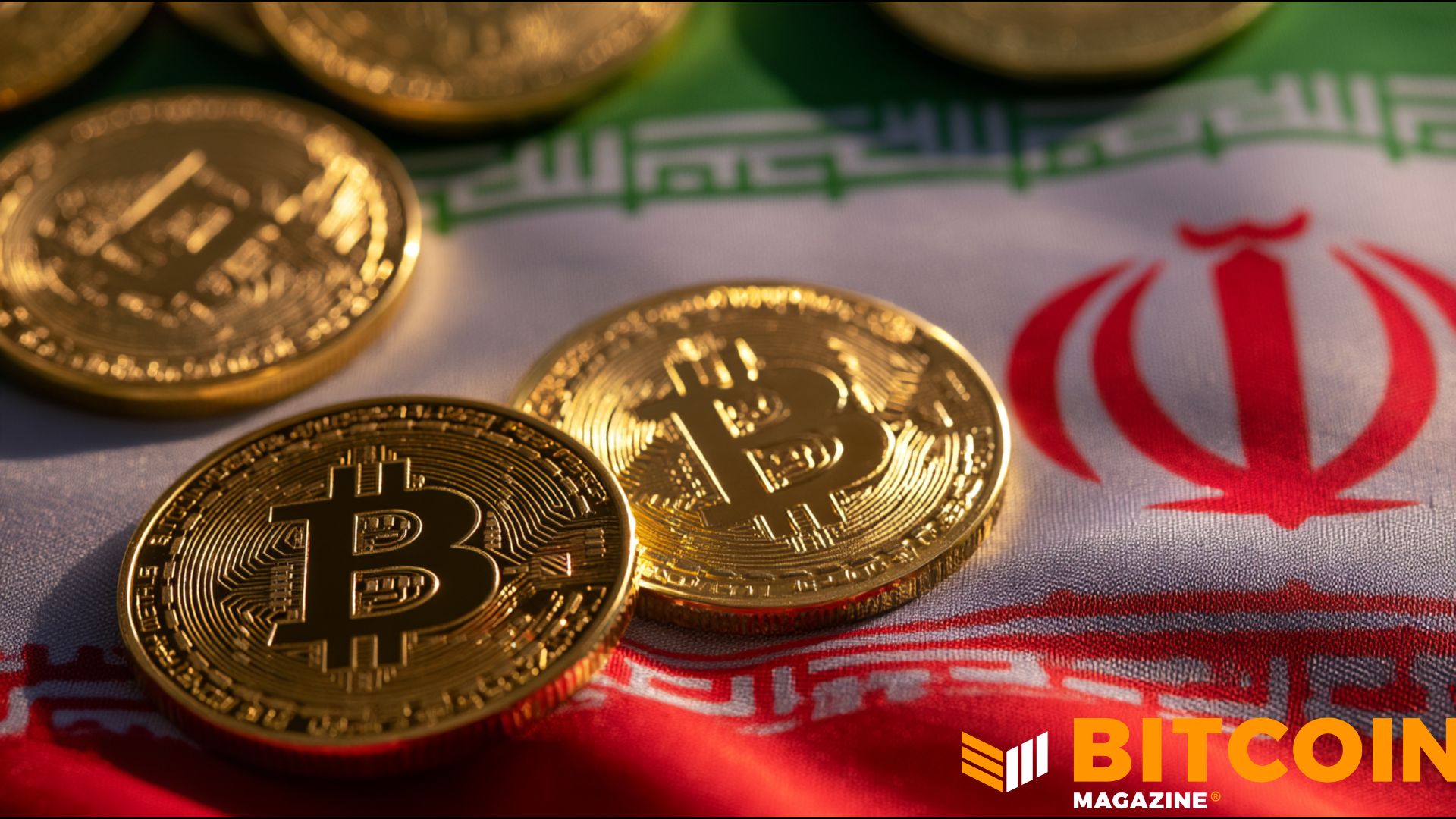
Treasury Sanctions Iranian Crypto Exchange BitBank Over Bitcoin Transfers to IRGC
The U.S. is continuing to target Iran’s use of bitcoin.
In a Thursday statement, the U.S. Department of the Treasury designated BitBank, an Iranian crypto exchange, as part of Operation Economic Outcast — the Trump Administration’s whole-of-government economic campaign against the Islamic Republic of Iran and its enablers.
The U.S. has sanctioned Iran for decades. This year, the Middle Eastern country has stepped up its use of cryptocurrencies — including bitcoin — in order to skirt around economic penalties.
“Today’s designations of Iranian digital asset infrastructure make perfectly clear that efforts to finance the Iranian regime using cryptocurrencies are not beyond OFAC’s reach,” Secretary of the Treasury Scott Bessent said in a statement.
“If you support the Iranian regime, the Department of the Treasury will sanction you.”
The sanctions target designated Iranian financier Babak Zanjani, along with its software developer, Pishtaz Simorgh Electronic Trade Company, and three of Zanjani’s associates: Hossein Ali Zaker Hossein, Mohammad Mahdi Zaker Hossein, and Seyed Adel Heidari.
Since June, the Iranian Hormuz Safe Marine Services Authority has used BitBank to move bitcoin to the Iranian regime, according to the Treasury.
Thursday’s sanctions aim to hit the “architecture Zanjani built to launder funds,” it added.
“The Department of the Treasury will continue to not only target the Iranian digital asset ecosystem, but also international entities and actors which help facilitate it,” the statement continued.
Iran started a bitcoin-backed insurance service for its counties shipping companies earlier this year.
The U.S. in July said that it had frozen crypto linked to the Iranian regime, mostly in the form of Tether’s stablecoin.
Stablecoins like Tether’s USDT can be frozen by the company that issues the asset. But bitcoin, being decentralized and having no single issuer, cannot.
The U.S. Treasury’s Office of Foreign Assets Control in July said Iran had been dodging sanctions by accepting pay in bitcoin from ships passing through the Strait of Hormuz.
OFAC said at the time that Hormuz Safe, developed by Iran’s Ministry of Economy, “accepts payment in Bitcoin and other digital assets” so it can bypass sanctions.
This post Treasury Sanctions Iranian Crypto Exchange BitBank Over Bitcoin Transfers to IRGC first appeared on Bitcoin Magazine and is written by Mathew Di Salvo.
Bitcoin Magazine
Bitcoin Price Unlikely To Be Bothered by Interest Rate Hike: Grayscale
The Federal Reserve hiked interest rates for the first time since 2023 on Wednesday and it sent the bitcoin price — briefly — all over the place.
But then it settled and currently sits a modest 1% higher over a 24-hour period.
And according to asset manager Grayscale’s crypto research team, bitcoin is unlikely to be bothered by the Fed’s decision.
“We believe yesterday’s move was a mid-cycle adjustment, not a cyclical change,” wrote the firm’s head of research, Zach Pandl, in a Thursday note.
“And we doubt the one or two rate hikes expected for 2026 will lead to much change in capital allocation.”
Bitcoin has — in the past but not always — done well in a low interest rate environment. And when the Federal Reserve has in the past increased borrowing costs, the price of the leading digital asset has slid.
That’s because low interest rates means more liquidity for investors to take risks and buy assets like bitcoin.
Pandl added that when the Fed in 2022 started ramping up interest rates to contain inflation, it “probably weighed on the price of bitcoin” because it “meaningfully affected the opportunity cost of holding non-interest-bearing assets.”
But this time feels more like 1997, argued Pandl, when the Federal Reserve did a one off hike and the Nasdaq kept moving higher.
Bitcoin’s price recently stood at close to $76,581, up 18% over the past 30 days. The coin in August benefited from news that the U.S. Treasury would at least double the size of its liquidity-support buyback operations.
The U.S. is currently in the grips of an affordability crisis and inflation is hurting households as oil prices surge.
Federal Reserve Chair Kevin Warsh said the central bank was focused on bringing down inflation.
“The plain fact is that inflation is too high, and has been for too long,” he said on Wednesday.
U.S. President Donald Trump has repeatedly said that he wants interest rates to be lower. Writing on his Truth Social platform on Wednesday, he said: “Interest Rates in the United States should be 1%, or less, because we are the Best Credit in the World — BY FAR.”
This post Bitcoin Price Unlikely To Be Bothered by Interest Rate Hike: Grayscale first appeared on Bitcoin Magazine and is written by Mathew Di Salvo.
Bitcoin Magazine
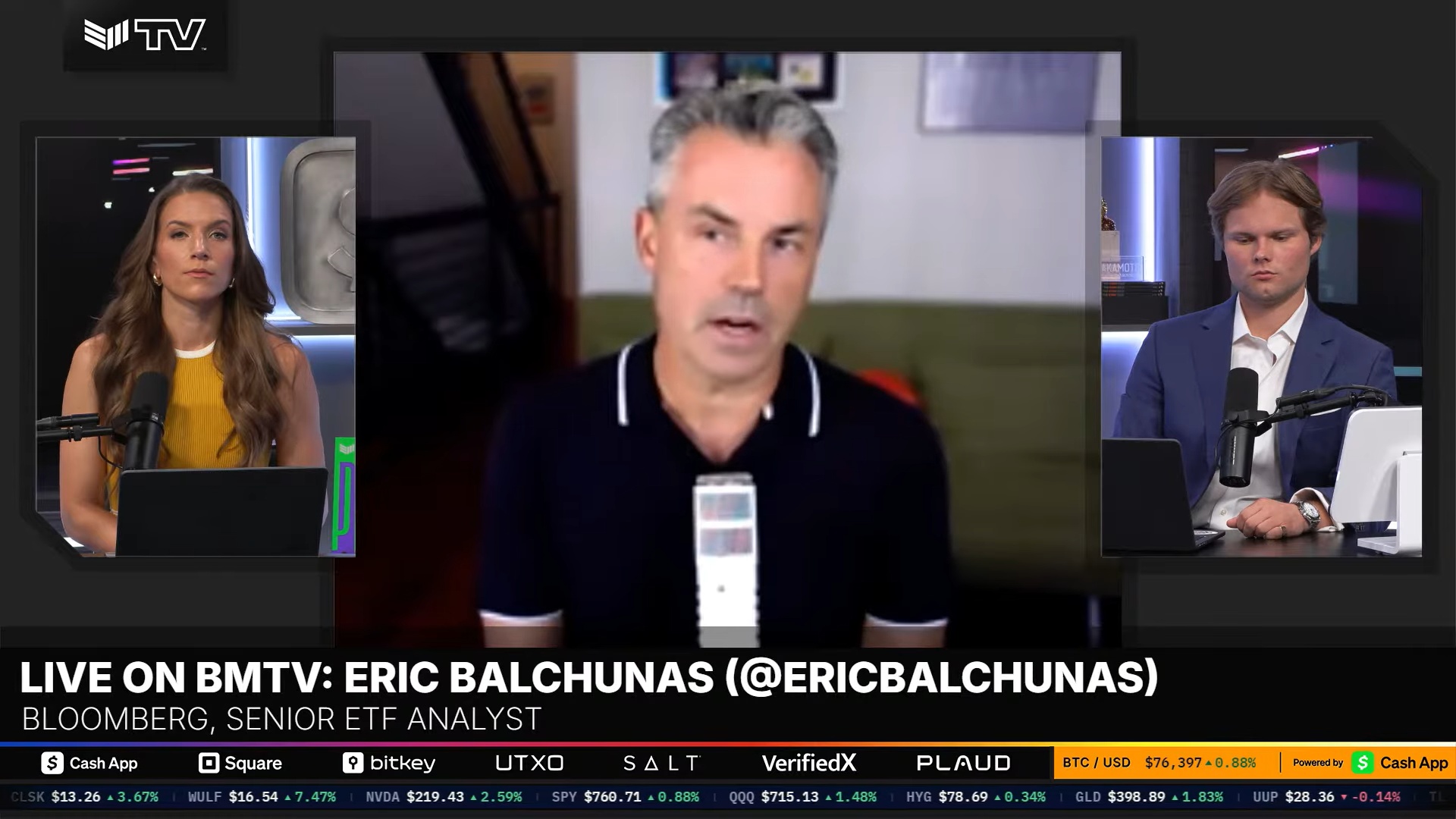
Bitcoin ETFs Could Triple Gold Counterparts as Asset Matures: Expert
Bitcoin exchange-traded funds could be three times bigger than their gold counterparts as younger investors grow up, an ETF expert has said.
Speaking to Bitcoin Magazine TV on Thursday, Bloomberg senior ETF analyst, Eric Balchunas, said that while bitcoin’s price is currently volatile, things would change in the future.
Bitcoin ETFs debuted in 2024 after a decade of denials from the U.S. Securities and Exchange Commission. The ETFs had the most successful launch in the history of the products and currently manage nearly $100 billion in assets, according to Coinglass data.
JUST IN: Bloomberg Senior ETF Analyst Eric Balchunas says Bitcoin ETFs will ultimately triple gold
— Bitcoin Magazine (@BitcoinMagazine) September 17, 2026
"I think as the younger investors get more money and grow up with Bitcoin as their store of value, I do believe that Bitcoin ETFs will triple gold in assets." pic.twitter.com/GU3lp3KIuf
“I do believe the Bitcoin ETFs will triple gold in assets,” said Balchunas.
“I always say Bitcoin is like gold as a teenager — you know, gold is 5,000 years old, it was mentioned 450 times in the Bible. I mean that’s old, and Bitcoin is 17 years old.”
Balchunas went on to say that younger generations could end up being drawn to Bitcoin as the government continues to spend wildly and things become to expensive.
He said that right now, Generation Z is rebelling against government deficits and inflation by voting for socialist politicians, but Bitcoin might be a better bet — because the government can’t confiscate it.
One of Bitcoin’s selling points is its censorship resistance but investors appear to be more focused on buying the asset as a way of hedging against currency debasement.
The so-called debasement trade was hot last year and is becoming popular again in 2026 as investors buy non-yielding assets like gold and bitcoin while the dollar becomes weaker.
Balchunas added that as bitcoin’s price becomes less volatile, big institutions will be more interested in buying the asset as a store of value.
Bitcoin in 2025 has its least volatile year in its short history.
“As that volatility and correlation get closer to gold — look out,” he said.
“I think that’s when you have the inflection moment where even the big institutions are like, okay, it’s finally ready for me to use as a sort of reliable store of value, possibly even a safe haven and an alternative.”
This post Bitcoin ETFs Could Triple Gold Counterparts as Asset Matures: Expert first appeared on Bitcoin Magazine and is written by Mathew Di Salvo.
Bitcoin Magazine
SEC Green Lights Tokenized Stock Trading Despite Clarity Act Fail
The U.S. Securities and Exchange Commission has approved tokenized stocks trading in a move indicating that the regulator will push ahead with rulemaking despite the Clarity Act not moving forward.
Wall Street’s top regulator said Thursday that it was offering a five-year exemption to platforms that facilitate trading of tokenized stocks. Major crypto companies have long wanted to get such assets on the blockchain.
Lawmakers blocked the Clarity Act in a procedural vote on Tuesday. Regulators had said before the vote that regardless of whether the landmark legislation passed, they’d still start regulating the crypto industry.
Today, we are taking a significant step forward, within our statutory authority, to bring America’s capital markets into the digital age by facilitating onchain trading of certain tokenized stocks through the "Innovation Exemption."
— Paul Atkins (@SECPaulSAtkins) September 17, 2026https://t.co/BQK0cS70lH
“Congress was unsuccessful in advancing the Clarity Act despite the tireless efforts of many,” SEC Chairman Paul Atkins said in a statement.
“So today, the Securities and Exchange Commission is taking a significant step forward, within its statutory authority, to bring America’s capital markets into the digital age by facilitating onchain trading of certain tokenized stocks.”
Jamie Selway, Director of the SEC Division of Trading and Markets, added: “Today’s approval of exemptive relief for on-chain secondary trading on a TSV–known as the ‘Innovation Exemption’–marks an important milestone for the Commission’s work to open our capital markets for tokenized securities.”
The SEC’s move is the latest by regulators pushing ahead despite major crypto legislation stalling. The Commodity Futures Trading Commission Chair Mike Selig on Wednesday said that the top regulator would use its powers to advance crypto legislation despite the Clarity Act being blocked.
The Clarity Act aims to formally divide oversight between regulators, distinguishing which digital assets are securities, commodities or stablecoins.
President Donald Trump last month urged lawmakers to pass it but senators mostly voted against advancing the legislation — 49 for and 50 against — that the digital asset industry has long called for.
Republicans for months have accused Democrats of deliberately holding back the bill. Some lawmakers had issues with Trump’s family making money from crypto ventures. Trump and the White House have always denied any conflicts of interest.
This post SEC Green Lights Tokenized Stock Trading Despite Clarity Act Fail first appeared on Bitcoin Magazine and is written by Mathew Di Salvo.
CryptoSlate
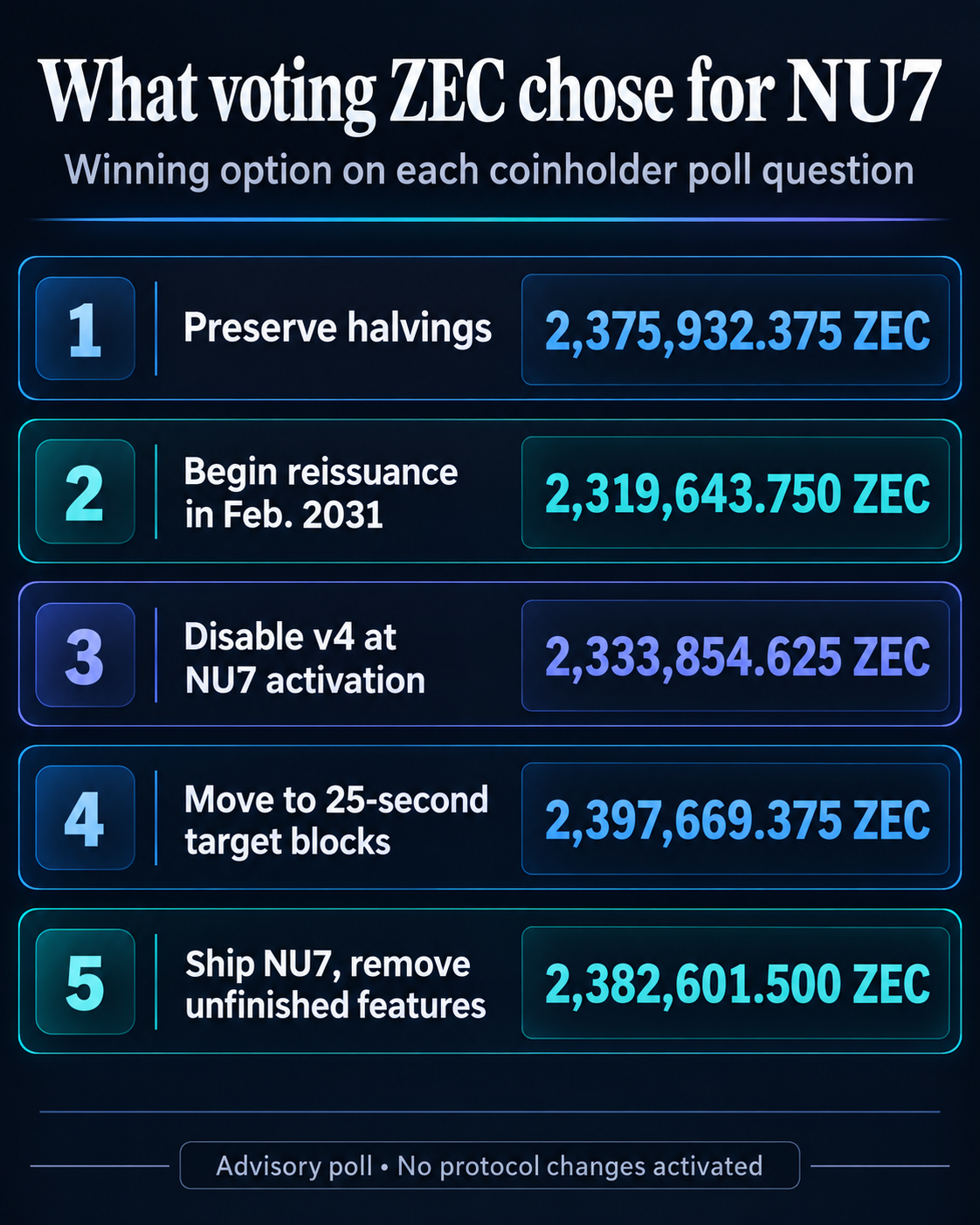
Participating Zcash coinholders have overwhelmingly favored keeping scheduled halvings and waiting until February 2031 to begin returning ZEC collected by the Network Sustainability Mechanism to future block rewards.
The choices were part of a five-question poll on NU7, Zcash's next network upgrade. Between 2.399 million and 2.404 million ZEC participated in each question. All five cleared 1 million ZEC, although the poll rules required only one question to reach that threshold for the overall poll to be considered representative.
The result gives implementers a strong signal from participating economic stake. It does not activate any change, schedule NU7 or guarantee that every preferred feature will ship.
ZEC poll favors halvings over smoother issuance
The largest monetary-policy result came on whether the Network Sustainability Mechanism should replace periodic halvings with a smoother issuance curve. The final tally put 2,375,932.375 ZEC behind preserving halvings, compared with 22,384.875 ZEC for smoothing issuance.
A separate timing question put 2,319,643.75 ZEC behind February 2031 as the date to begin recycling funds that the mechanism removes from circulation. Starting as soon as possible drew 70,239.625 ZEC, while February 2027 received 6,283 ZEC. That preference selects a timetable, but the advisory poll neither encodes the date nor commits the network to activating it.
The remaining questions also produced clear results. About 2.33 million ZEC supported disabling Sprout-era v4 transactions at NU7 activation. Nearly 2.4 million ZEC favored cutting target block spacing from 75 seconds to 25 seconds alongside per-pool action limits. Another 2.38 million ZEC supported shipping NU7 without any applicable feature that misses a Sept. 30 implementation deadline.
Other Zcash constituencies showed less unanimity on the monetary questions. The Zcash Community Advisory Panel, a group that provides community input to the Zcash Foundation, drew 135 of 198 eligible members for a 68% response rate. A community-authored recap characterized ZCAP as narrowly favoring smoother issuance and other panels collectively as preferring recycled issuance to begin as soon as possible. Those signals differ from the ZEC-weighted poll and remain separate advisory inputs.
On Sept. 15, a public post in the results discussion said Shielded Labs, Project Tachyon, ZODL, the Zcash Foundation and Valar Group had aligned on February 2031 as the most conservative interpretation of the outcome. It added that another poll could revisit the timing if conditions change.
As of Sept. 17, Zcash's official NU7 page said the upgrade's activation height had not been set. The preserve-halvings specification work also remained open, with relevant deployment values unassigned.
The next consequential step is therefore implementation rather than another tally. Specifications, code, review, testing and a final activation decision will determine which preferences reach mainnet and when.
The post Zcash holders vote to preserve halvings and defer recycled ZEC until 2031 appeared first on CryptoSlate.
Two days after the US Senate failed to advance the CLARITY Act, federal regulators opened two narrower routes for crypto-linked market access under existing law.
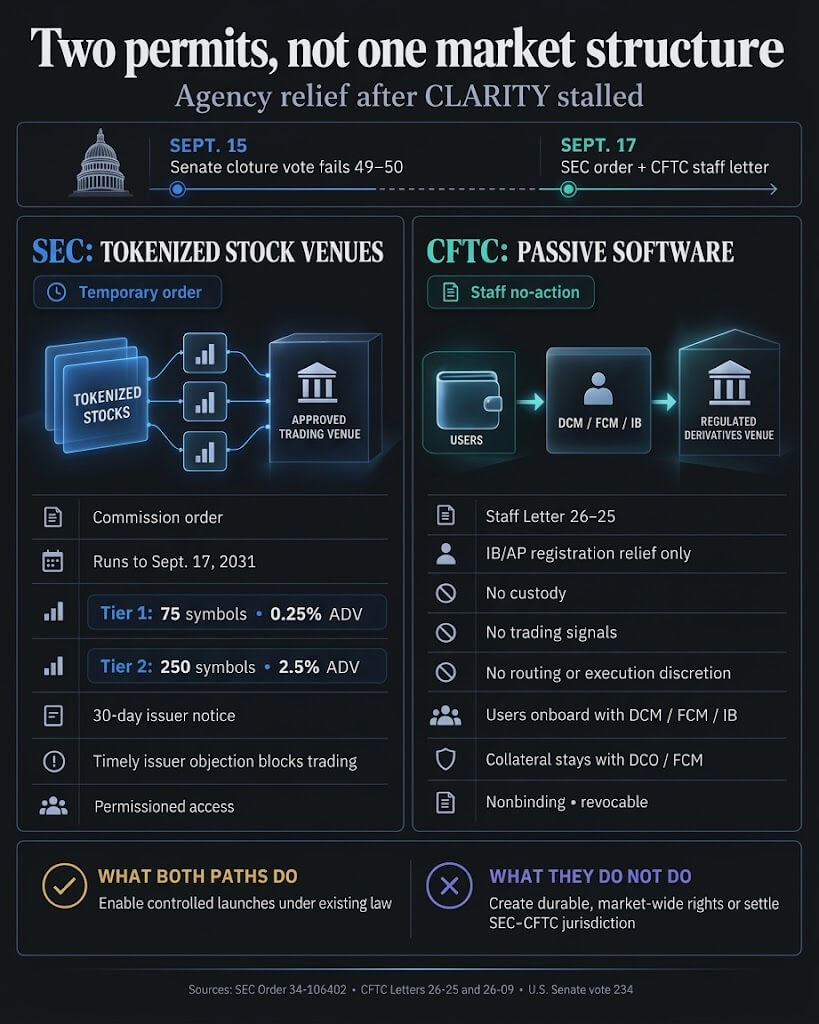
The Securities and Exchange Commission created a five-year path for permissioned venues to trade tokenized US stocks through automated market makers. The Commodity Futures Trading Commission broadened staff no-action relief so qualifying software providers can connect users to regulated derivatives markets without registering as introducing brokers for the covered activity.
The actions can support real products, but they do not recreate market-structure legislation. The SEC route is capped and conditional. The CFTC route still relies on registered derivatives firms for onboarding, trading and custody, and it rests on a staff position that can change.
The SEC turns existing authority into a five-year test
The timing was direct. On Sept. 15, senators voted 49-50 against cloture on the motion to proceed to H.R. 3633, according to the official roll call. That was a procedural failure to advance the CLARITY Act, not a final vote on the bill's merits.
On Sept. 17, SEC Chairman Paul Atkins connected the congressional setback to the Commission's next move. In a statement accompanying the Innovation Exemption, Atkins said the agency was acting within its existing statutory authority. He also characterized the exemption as a bridge that should be followed by durable rulemaking.
The SEC order creates a new category called a Tokenized Securities Venue, or TSV. A qualifying venue can bring buyers and sellers together through permissioned automated market maker liquidity pools without being treated as an exchange under the Exchange Act. Certain firms that supply tokenized stock from proprietary accounts can also receive conditional relief from the dealer definition for that activity.
The exemptions run through Sept. 17, 2031, unless the SEC modifies them. Their limits make the experiment deliberately small relative to the US equity market.
Across a TSV and its affiliates, Tier 1 stocks are limited to 75 symbols and no more than 0.25% of the prior month's average daily share volume in each relevant stock. Tier 2 stocks are limited to 250 symbols and 2.5% of average daily share volume.
Eligible tokenized stocks must preserve the economic and governance rights attached to equivalent traditional shares, including dividend and voting rights. Synthetic-exposure tokens, rights, warrants, primary issuances and initial offerings do not qualify.
Issuers also receive a direct control point. Before a TSV can trade stock tokenized by an unaffiliated third party, the venue must notify the issuer and wait at least 30 calendar days after receipt. An objection delivered within that window blocks the tokenized stock from trading on that TSV.
The blockchain may be public and permissionless, but the market is permissioned. TSVs must set access standards, verify participants or wallet addresses, and disclose when access can be denied or limited. Smart contracts must be public and auditable, while the venue remains responsible for delegated verification.
The order replaces full exchange oversight with tailored conditions rather than removing market safeguards. TSVs must publish transaction data, keep records, stop trading when the underlying stock is halted on its primary exchange, disclose operational risks and report significant systems events.
Other laws still apply. The order preserves Securities Act requirements, federal antifraud and antimanipulation rules and sanctions compliance. SEC, self-regulatory organization and anti-money laundering duties can still apply to participants based on their activities. The exemption covers the defined TSV model, not securities activity outside it.
The CFTC opens an interface while registered firms keep control
The Commodity Futures Trading Commission‘s Market Participants Division moved on the same day with Letter 26-25. The letter generalizes relief that the division granted to Phantom in Letter 26-09 in March. The earlier position applied only to Phantom; the new one is available to passive software providers on substantially the same terms and is not limited to crypto wallets.
A qualifying provider can display market and position data, market particular derivatives contracts and registered firms, solicit users, receive revenue sharing or transaction-based fees, and transmit user-directed orders. Those activities could otherwise trigger introducing-broker or associated-person registration.
The relief is narrow. The software provider cannot hold customer assets, generate express buy or sell signals, or exercise discretion over order routing or execution. Letter 26-25 addresses only whether the division will recommend enforcement for failure to register as an introducing broker or associated person for the covered activities. It does not provide a general exemption from other registration categories or laws.
Users must be onboarded directly with a designated contract market, futures commission merchant or introducing broker. They must be able to reach that registered firm independently of the software provider. Funds securing derivatives positions remain with a derivatives clearing organization and/or a clearing-member futures commission merchant.
The provider also assumes conditions covering conflict and risk disclosures, marketing controls modeled on National Futures Association rules, recordkeeping, regulatory notices and joint liability with each participating registrant for violations connected to the covered activity.
This creates a clearer role for wallets and other interfaces without moving the regulated market's core functions into the software layer. A provider can make derivatives easier to discover and access, but the designated market handles trading, registered firms onboard users, and a DCO or FCM holds collateral.
The legal foundation is also less durable than the SEC's time-limited Commission order. Letter 26-25 represents the views of one CFTC division, is not binding on the Commission and may be modified, suspended or terminated. Unless changed earlier, it runs only until relevant Commission rulemaking or guidance takes effect.
Useful permits still fall short of market structure
The SEC and CFTC actions solve different registration problems. Their shared feature is that both create conditional operating space without establishing general market-wide rights.
For tokenized stocks, access depends on a TSV's permissioning standards, symbol and volume caps, issuer objections and continuing compliance with the order. For regulated derivatives, the interface provider must remain passive while users, collateral and execution stay inside registered market infrastructure.
That distinction makes the new routes useful for controlled launches. A firm can build to specified conditions instead of waiting for Congress. Users may gain easier paths to tokenized stocks or regulated derivatives. Regulators can observe activity before writing permanent rules.
The same design creates uncertainty. Neither action settles the broader allocation of authority between the SEC and CFTC. Neither grants an unconditional right for a venue, wallet or user to enter these markets. Other applicable federal and state obligations remain outside the narrow relief, and future agency interpretations could change the economics of relying on it.
No company is named in the SEC order or CFTC Letter 26-25 as committed to launch under the Sept. 17 pathways. The CFTC letter says only that unnamed similarly situated providers and their counsel made inquiries after the Phantom relief.
The first practical test will be public commitments. For the SEC route, that means notices from operators willing to accept the caps, disclosure duties and issuer-objection process, followed by evidence that liquidity can develop within those limits. For the CFTC route, it means software providers signing agreements with registered derivatives firms, filing the required undertakings and offering an interface that remains passive in practice.
Market behavior will then reveal whether conditional access can scale. Issuer objections, participant onboarding, liquidity, transaction volumes and any regulatory modifications will show whether the pathways become durable market channels or remain experiments.
The agencies have demonstrated that US crypto access can grow without a new act of Congress. They have not shown that temporary exemptions and revocable staff relief can provide the certainty, uniformity or jurisdictional settlement that legislation could deliver.
The post SEC and CFTC bypass Congress to open crypto access after CLARITY fails – with a catch appeared first on CryptoSlate.
Two wallet incidents this week exposed a growing weakness in crypto self-custody: the systems surrounding hardware devices.
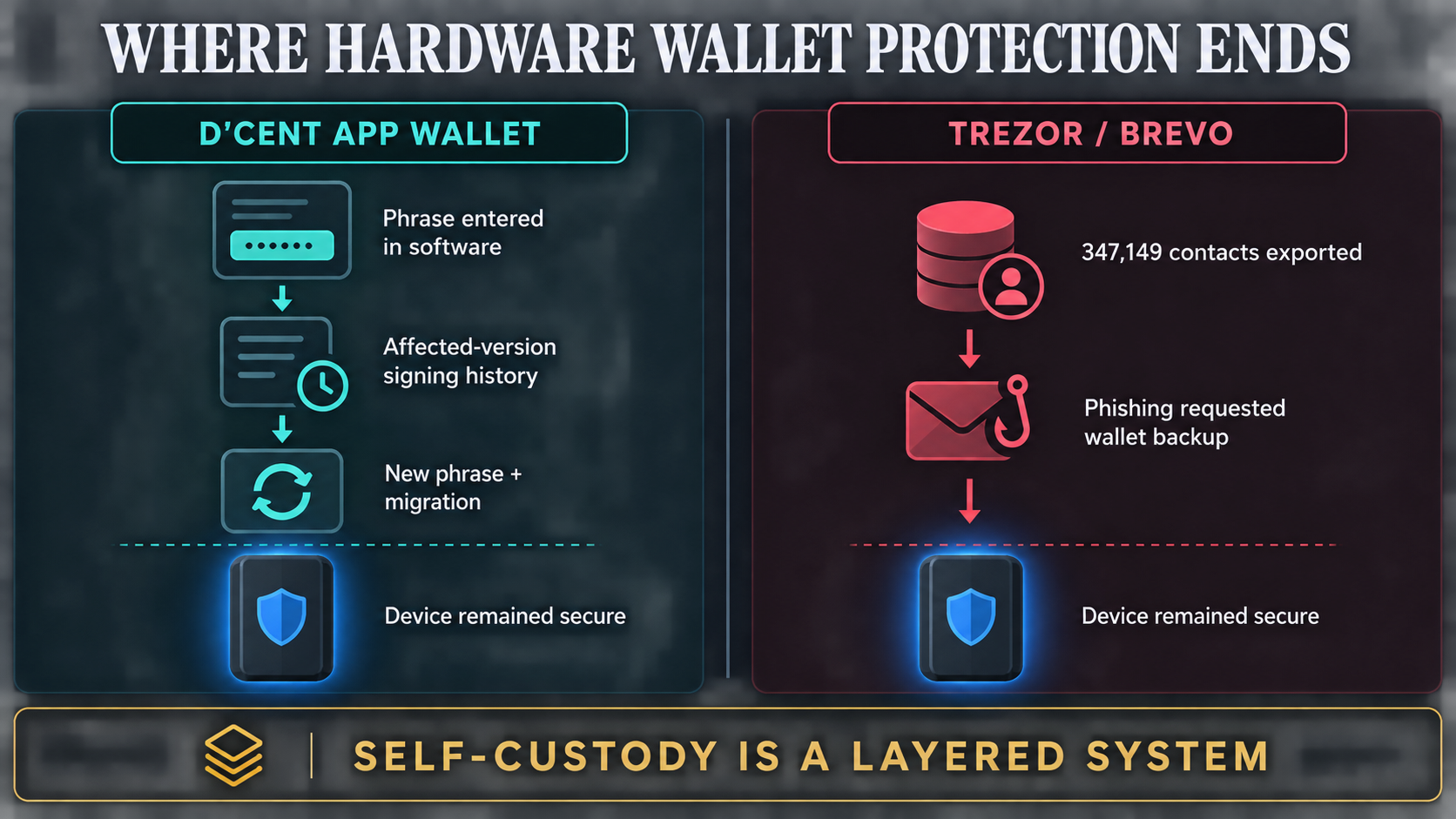
D’CENT, a popular hardware wallet in South Korea, said it is investigating unauthorized transfers from some users of its software-based App Wallet, while Trezor, another crypto hardware firm, disclosed that attackers exported 347,149 customer email contacts after breaching third-party marketing provider Brevo.
Neither company has reported a compromise of its hardware-wallet security.
Yet both incidents created routes to the same prize: the recovery phrase that can reconstruct a wallet and control its assets.
D’CENT phrase reuse pulls hardware assets into software risk
D’CENT’s investigation shows how moving a recovery phrase into software can extend risk beyond the device where the wallet was originally created.
The company first received reports of unauthorized transfers on Sept. 16 and found that most affected users were operating its App Wallet, which stores or imports keys on a phone. D’CENT has not confirmed a compromise affecting its hardware products and continues to investigate the cause and total scope of the transfers.
Its current criteria focus on wallets whose recovery phrases were entered into the App Wallet and that had transaction-signing history on versions earlier than 8.1.0, released Nov. 5, 2025. The potential exposure spans Bitcoin, Ethereum, XRP Ledger, Tron, and other EVM-compatible networks.
That creates a potential crossover for hardware users. A recovery phrase generated on a D’CENT device can reconstruct the same private keys elsewhere if the user later imports those words into the software wallet. D’CENT said connecting a hardware device to its app normally does not transfer the recovery phrase onto the phone; manually importing the phrase into App Wallet does.
The company is advising users who meet its criteria to update the app before signing another transaction, create a wallet backed by a new recovery phrase, and transfer affected assets rather than restoring the old phrase onto another device.
D’CENT is also working with exchanges, law enforcement and blockchain investigators to trace and potentially freeze stolen assets.
Trezor breach turns customer data into an attack surface
Trezor’s incident began further from the wallet itself, showing how information about who owns a device can become useful infrastructure for attackers.
Brevo said an attacker exploited a flaw in its SAML single-sign-on implementation to reach 138 customer accounts. Contacts were exported from 43 accounts, while six were used to send phishing emails through legitimate customer infrastructure. The messages therefore passed normal email-authentication checks and appeared to originate from trusted systems.
For Trezor, the breach exposed 347,149 marketing email contacts. Attackers sent a message claiming a critical hardware vulnerability and requiring customers to download an application that then requested their wallet backup. About 2,500 recipients reached the malicious domain before Trezor disabled it.
Trezor said clicking the link alone did not expose funds. However, the risk arose if a user entered the backup into the malicious application, allowing an attacker to recreate the wallet elsewhere.
The exported email list creates a longer-lived problem even after the first phishing domain has disappeared. Verified contact details for hardware-wallet users can be reused in follow-up campaigns tailored around future security alerts, software updates, or support requests.
Trezor had already confronted a related exposure in August when a shipping-provider incident disclosed customer identity and order information. The company said that breach exposed phone numbers and shipping addresses while leaving its wallets unaffected.
The two events show how vendors outside a hardware maker’s direct infrastructure can supply attackers with information needed to identify likely crypto holders and build more convincing approaches.
Wallet makers face a wider security burden
The incidents are likely to increase pressure on wallet companies to treat customer databases and software workflows as part of the same security program as their devices.
Trezor said it has suspended its Brevo account and is reviewing vendor relationships and security requirements following the breach. Brevo closed the SSO route used by the attacker, reset active sessions, and said it was deploying a permanent fix that restricts authentication to the organization that owns each SSO configuration.
D’CENT, meanwhile, said it is adding safeguards and pre-release verification procedures while its investigation continues. Its immediate challenge is determining the full set of affected addresses and whether assets already moved can be recovered through exchanges or law enforcement.
Both companies still depend on users keeping recovery phrases offline. Once those words are entered into compromised software or surrendered through phishing, the attacker no longer needs to defeat the hardware device.
That shifts part of the competitive burden for wallet makers beyond secure chips and signing architecture.
Companies selling self-custody products will increasingly have to show how they limit retained customer data, vet outside vendors, and design companion software so a compromise elsewhere in the stack doesn't provide another path to the keys their hardware was built to protect.
The post Your crypto hardware wallet can stay secure while everything around it fails appeared first on CryptoSlate.
State-linked hackers are increasingly using public blockchains to keep malware connected to infrastructure that traditional takedowns cannot easily disable.
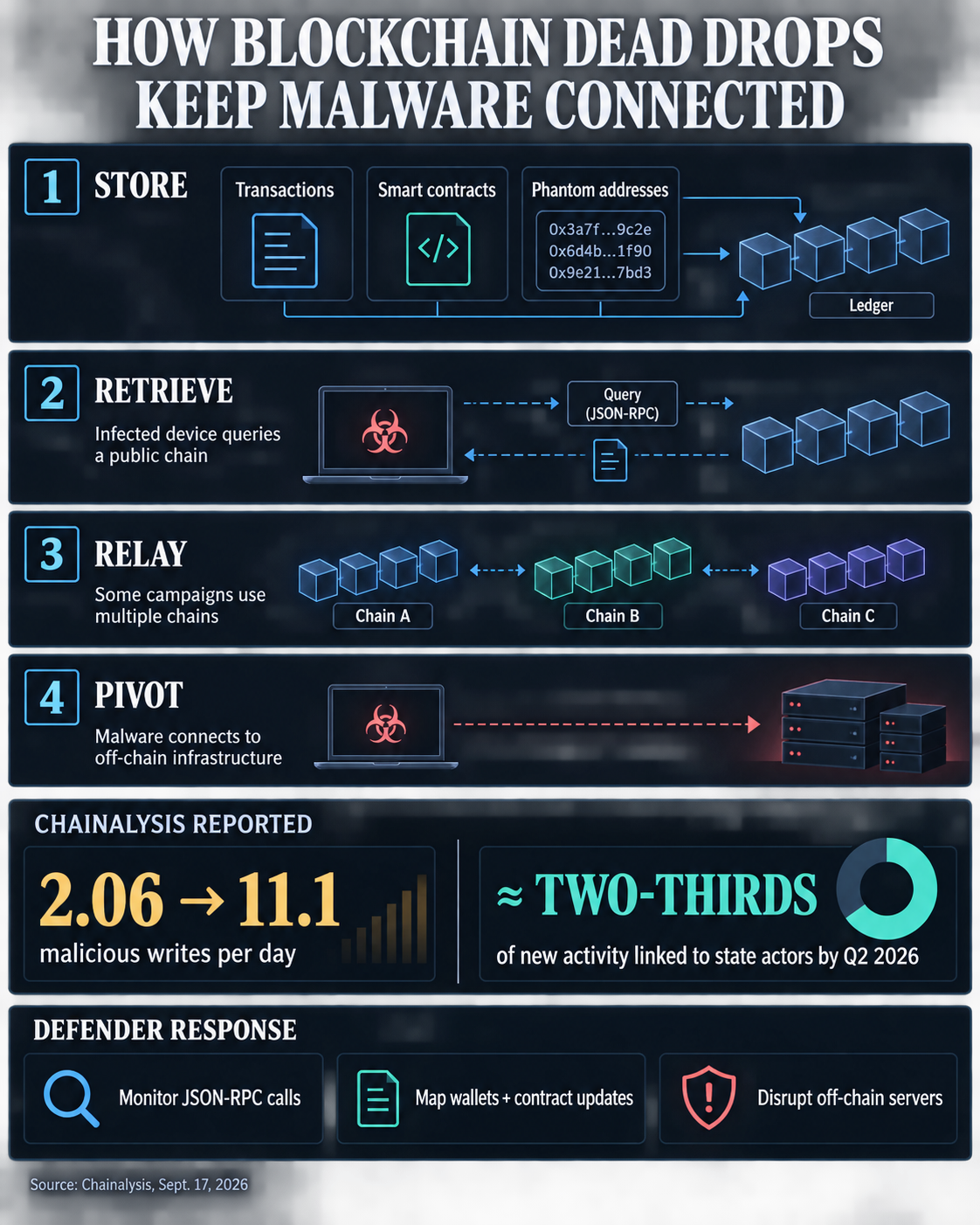
Groups tied to North Korea and Iran accounted for roughly two-thirds of newly observed blockchain-dead-drop activity each quarter by the second quarter of 2026, Chainalysis said. State-linked operators now represent about half of all activity the analytics firm tracks, up from a negligible share in early 2024.
The technique, known as a blockchain dead drop, stores malware instructions, command-and-control addresses or pointers inside transactions and smart contracts. Compromised devices can repeatedly query those public records for updated instructions, letting attackers change servers without reinfecting victims.
Chainalysis said malicious blockchain writes rose from 2.06 a day to 11.1 after the emergence of high-capacity open-weight Chinese artificial-intelligence models, a 440% increase in less than a year.
The firm said those models lowered the expertise required to build the infrastructure, though its measurement does not identify a single model or establish that AI alone caused the increase.
The shift adds another security challenge for crypto companies, developers and enterprises that increasingly rely on public chains for legitimate applications. Blocking access to an entire network would also disrupt wallets, decentralized-finance platforms and other services using the same infrastructure.
North Korea adds cross-chain redundancy
North Korean-linked operators are already showing how blockchain infrastructure can make a malware campaign more resilient after defenders identify its components.
Chainalysis connected the threat group UNC5342 to a previously unattributed setup that uses TRON and Aptos as redundant routes into BNB Smart Chain. Encoded pointers on the first two networks direct infected devices toward malware instructions stored on BSC. The malware queries TRON first and switches to Aptos if that route fails.
Attackers can rotate their off-chain infrastructure by posting another transaction, after which previously infected machines automatically retrieve the updated location. Chainalysis said disrupting the operation would require action across all three chains at the same time.
Google Threat Intelligence began tracking UNC5342 in February 2025, when it used blockchain-based malware delivery in fake-job campaigns aimed at cryptocurrency and technology developers. The group used smart contracts to help deliver credential-stealing malware targeting browser data, passwords, and crypto wallets.
The approach extends a tactic attackers adopted after conventional hosting providers began shutting down malicious infrastructure. EtherHiding campaigns appeared on EVM-compatible networks in 2023 after operators shifted code into smart contracts that could remain accessible even when websites or servers were removed.
Iran-linked operators have taken a different route. Chainalysis said suspected actors connected to Iran's Ministry of Intelligence have embedded command-and-control routing information inside Bitcoin transactions sent to a well-known address historically associated with Satoshi Nakamoto. The address itself has no connection to the attackers and functions as a permanent public reference point for infected machines.
AI lowers the barrier for smaller operators
The same techniques are spreading beyond state-backed groups as artificial-intelligence coding tools reduce the specialist knowledge once required to build blockchain-based command infrastructure.
Chainalysis said it now tracks blockchain-dead-drop activity across five major networks and more than a dozen named malware strains. Russian-language criminal groups have also deployed smart contracts on Polygon as command resolvers, with infrastructure marketed to other operators through a malware-as-a-service model.
That creates a path for attackers to rent blockchain-based infrastructure rather than design it themselves.
In one operation, Chainalysis identified a primary wallet controlling multiple resolver contracts, with individual contracts apparently serving separate customers or campaign variants. Related addresses were also linked to fraudulent tokens and clipboard-hijacking campaigns targeting crypto users.
The economics favor continued adoption. Posting small amounts of data on public chains can be inexpensive, while the underlying record remains globally available and hard to remove. Attackers can then keep most of the actual compromise off-chain, using the ledger primarily to tell infected machines where to connect next.
Defenders shift from takedowns to surveillance
The permanence that gives attackers resilience also leaves a record that cybersecurity teams can monitor.
Every transaction used to rotate infrastructure remains timestamped and publicly visible. Chainalysis said defenders can map operator wallets, resolver contracts, funding relationships, and update histories, potentially linking campaigns that would appear unrelated when viewed only through their domains or servers.
Organizations can also monitor outbound JSON-RPC requests, the calls software uses to query blockchain nodes, for signs that infected machines are contacting suspicious contracts or addresses. Centralized API providers and RPC gateways remain potential intervention points even when the underlying blockchain cannot be taken offline.
Protocol developers have limited options to remove the underlying capability without restricting legitimate blockchain use. Chainalysis said preventing arbitrary data from being written on-chain would require changes with consequences that could outweigh the security benefit.
That leaves exchanges, infrastructure providers and cybersecurity firms with a growing monitoring problem. As more malware treats public chains as persistent coordination layers, defenders will need to follow activity across wallets, contracts and multiple networks while preserving access for legitimate users.
The next pressure point is likely to fall on RPC and API providers sitting between infected devices and blockchains. Their ability to identify and block malicious queries without disrupting ordinary applications could determine how much of the attackers' new resilience survives once the technique becomes more widely tracked.
The post Blockchain malware activity jumps 440% as AI lowers the barrier for North Korea and Iran-linked hackers appeared first on CryptoSlate.
Seven Democratic senators said Sept. 16 that CLARITY's failed Senate vote was not the end. The crypto market-structure bill fell short 49-50 the previous day on a procedural motion that needed 60 votes to advance.
Getting from that statement to a law now depends on a compressed legislative calendar, still-unresolved policy disputes, and a House of Representatives that would need to accept whatever the Senate eventually produces.
Even if all seven signatories switched from “No” to “Yes,” the count would move from 49 to 56, four short of 60. Adding North Carolina Republican Thom Tillis, whose “no” vote was a procedural move preserving his ability to bring the measure back for reconsideration, would push the total to 57, still three votes shy.
The statement shows real political will to keep negotiating, but it falls far short of describing a coalition capable of clearing the floor.
| Scenario | Yes Votes | Still Short of 60 | What It Shows |
|---|---|---|---|
| Sept. 15 cloture result | 49 | 11 | The bill failed to advance |
| Seven Democratic signatories switch to yes | 56 | 4 | Their support alone would not be enough |
| Seven Democrats plus Thom Tillis switch | 57 | 3 | Tillis helps reopen the path but does not solve it |
| Minimum needed for cloture | 60 | 0 | Supporters still need a broader deal |
Getting CLARITY passed requires clearing several separate gates
Tillis's procedural “No” gives Senate leadership a live vehicle to bring CLARITY back. From there, the Senate would first need 60 votes to formally proceed to the bill, a step distinct from passing it.
Once CLARITY is on the floor, leadership must decide whether the negotiated text stays locked or opens to floor amendments, since ethics, stablecoin, and consumer-protection language could all be rewritten during that window.
Opponents can then mount a second filibuster against the underlying bill itself, meaning supporters may need 60 votes twice over before a simple majority can finally pass it.
Passage in the Senate would still leave the House needing to accept that text or negotiate a reconciled version, since both chambers must approve identical language before it ever reaches the president's desk.
A state work period runs from Oct. 5 through Nov. 6, leaving only the days before that recess for an immediate attempt to pass CLARITY, and no confirmed agreement exists to fill that window yet.
The chamber returns for a stretch from Nov. 9 through roughly Nov. 20, competing directly against nominations, appropriations, defense authorization, and tax legislation for scarce floor time.
A Thanksgiving break follows before a final push toward the Senate's Dec. 18 target for adjournment, a soft internal marker well short of a hard legal cutoff, since the current Congress technically runs into early January 2027.
Any Senate action inside that final stretch would still need to reach the House with enough time left for identical text to clear both chambers before the session effectively winds down.
| Gate | What Must Happen | Main Risk |
|---|---|---|
| Reconsideration or renewed floor attempt | Senate leadership brings the measure back | No confirmed agreement or schedule |
| Cloture on motion to proceed | 60 senators agree to start formal consideration | Vote count still short |
| Floor management | Leaders decide whether text is locked or open to amendments | Ethics, stablecoin, and consumer language could reopen |
| Cloture on the bill itself | Supporters may need 60 votes again to end debate | Second filibuster point |
| Senate passage | Bill clears the chamber after debate ends | Final text may differ from House version |
| House action | House accepts or reconciles Senate text | Calendar may be too compressed |
| Presidential presentment | Both chambers approve identical language | Cannot happen until House-Senate text matches |
What a workable deal has to resolve
Republican sponsors say their latest draft folds in 126 changes Democrats requested, including new ethics restrictions tied to presidential crypto holdings and a Treasury mechanism meant to respond to stablecoin-related deposit flight.
Democratic negotiators, including Mark Warner and Ruben Gallego, have continued flagging unresolved objections specifically about President Donald Trump's crypto interests. The ethics language exists but has not yet satisfied the senators whose votes matter most.
Banking associations separately argue the Treasury backstop responds only after harmful deposit flight has already occurred, and are pushing for tighter limits on the underlying stablecoin rewards themselves.
A July statement from Democratic negotiators also flagged consumer protection, illicit finance and market-integrity provisions as insufficient, and nothing in the September statement specifies which of those objections have since been resolved.
If Congress cannot finish this in 2026, federal regulators can still fill parts of the CLARITY gap through existing rulemaking authority. That kind of agency action is far less permanent than a statute passed by Congress, and other jurisdictions are moving ahead regardless.
The European Union's transition period for crypto-asset service providers under MiCA ran through July 1, giving European firms a completed framework while the American process remains open-ended.
| Issue | Current Status in Article | What Would Signal Progress |
|---|---|---|
| Ethics restrictions | New language exists, but key Democrats still object to Trump-related crypto interests | Revised text that Warner, Gallego, or other holdouts publicly accept |
| Stablecoin rewards | Banking groups say the Treasury backstop acts too late | Tighter reward limits or a revised backstop acceptable to banks and senators |
| Consumer protection | Democrats flagged earlier deficiencies | Clearer investor-protection language in the next draft |
| Illicit finance | Still listed among unresolved Democratic concerns | Updated compliance or enforcement provisions |
| Market integrity | Concerns remain around conflicts and trading rules | Stronger market-structure safeguards |
| House alignment | Senate changes may differ from House-passed text | House leadership signals willingness to move the Senate version quickly |
The window is closing quickly
The bull case has a revised ethics and stablecoin agreement landing before the Oct. 5 recess, locking in the seven signatories, Tillis and several additional senators at once.
Under that path, Senate leadership can schedule reconsideration either just before the break or immediately upon return in November.
CLARITY's remaining test becomes a House execution problem well beyond a Senate vote-counting one, since the chamber would then need to move quickly on whatever the Senate sends over.
The bear case has negotiations still unsettled when the Senate returns Nov. 9, with ethics and stablecoin language remaining the sticking points while floor time gets consumed by other must-pass legislation.
In that scenario, any eventual Senate agreement arrives too close to the Dec. 18 target for the House to act on identical language in time, and CLARITY carries into the next Congress as an unfinished project well short of a completed law.
The clearest signs that CLARITY is moving again will be a public revision to the text, a named coalition of senators beyond the current seven, and a scheduled reconsideration or cloture vote.
A House willing to act on whatever the Senate eventually sends its way would complete the picture.
The post CLARITY Act needs 3 more senators and a race against the clock for a 2026 revival appeared first on CryptoSlate.
CryptoTicker.io
Ethereum spent most of this year looking like the coin everybody had given up on. Then one candle in August changed the entire picture, and ETH has been quietly building a launchpad ever since. The $3,000 level is no longer a fantasy number. It is roughly 19% away, and the chart is doing exactly what it needs to do to get there.
Where Is the ETH Price Right Now?
$Ethereum is trading at $2,510 on the daily, up 2.65% on the session, after opening at $2,445 and tagging $2,518 intraday. The low of the day was $2,435, which is the important part, because that is the third time in a month buyers have shown up in that exact zone.
Step back and the year looks brutal. ETH ground sideways through April near $2,400, rolled over in May, and collapsed through June into a low around $1,550. That is a drawdown of more than 65% from the August 2025 all-time high near $4,946. July was a slow repair job above $1,600. August was a boring drift between $1,900 and $2,050.
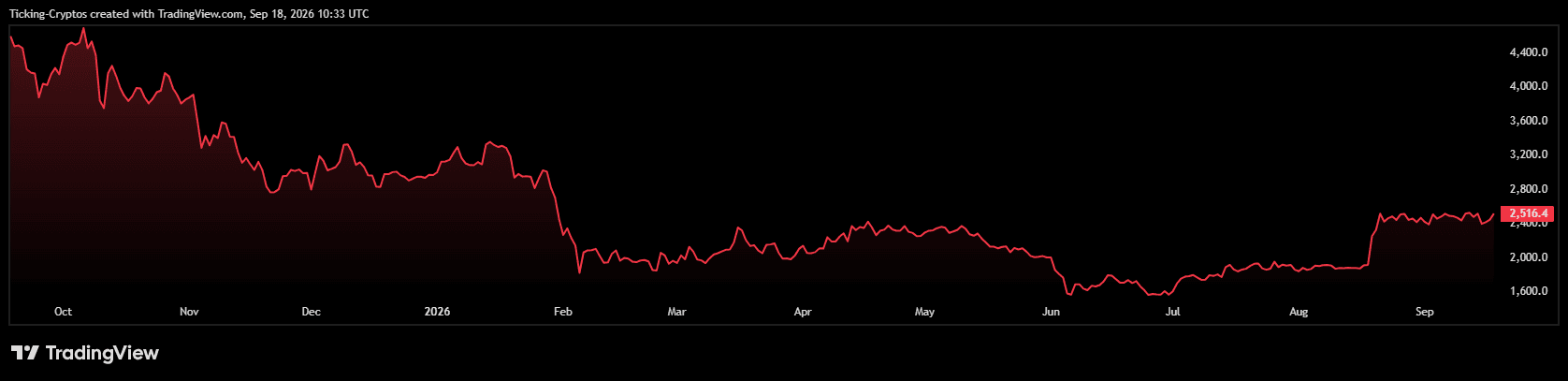
Then came the candle. In mid-August, Ethereum went vertical in a single daily session, ripping from roughly $1,950 through $2,000, through the 200 EMA, through $2,400, and closing near $2,500. That is a 28% expansion move in one bar, and it did not retrace. Everything since has been consolidation, not distribution.
What Does the ETH Chart Say About $3,000?
The structure right now is a textbook range. $2,400 is the floor. $2,600 is the ceiling. Ethereum has been locked between them for a full month, and neither side has broken.
That matters more than it sounds. When a market makes a violent vertical move and then goes sideways at the highs instead of giving the move back, it is usually absorbing supply rather than topping out. Sellers who wanted out at $2,400 have been getting filled for four weeks, and price has not cracked.
The measured move math is clean. The $1,600 to $2,000 base was 400 points wide, and the breakout above $2,000 projected $2,400. That target was hit almost exactly. The current $2,400 to $2,600 range is 200 points wide, so a clean daily close above $2,600 projects $2,800. From there, $3,000 is the next horizontal level on the chart, and it is the level that was acting as resistance through the entire first half of the year.
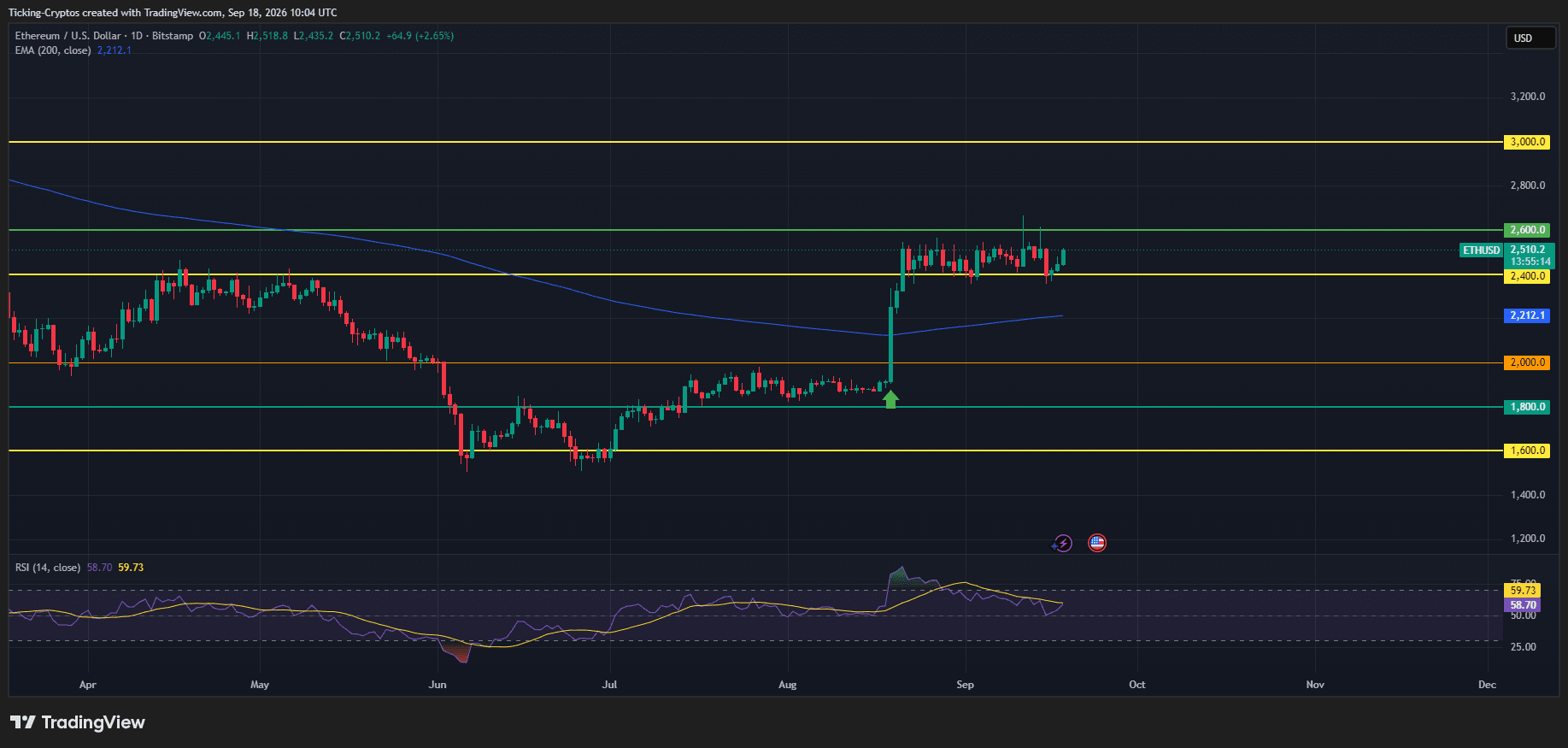
So the path is not a single leap. It is two steps: reclaim and hold $2,600, then run the gap to $2,800 where there is almost no historical resistance, then attack $3,000.
Is the 200 EMA Turning Bullish for Ethereum?
The 200-day EMA sits at $2,212. For eight straight months it pointed down, and every rally in spring and summer died against it. Ethereum is now trading roughly 13% above it, and more importantly, the line itself has flattened and hooked upward for the first time this year.
A rising 200 EMA underneath price is what separates a dead-cat bounce from a trend reversal. As long as ETH stays above it, the medium-term bias flips from bearish to constructive, and pullbacks become buyable instead of terrifying.
RSI backs this up without screaming. The 14-period reading is 59.73, sitting just above its own signal line at 58.70. That is the bullish half of the range with no overbought condition anywhere in sight. Ethereum can rally another 15% before RSI even starts flashing warnings, which is exactly the kind of fuel tank you want before a breakout attempt.
Are ETF Inflows Strong Enough to Push ETH to $3,000?
The chart is not moving in a vacuum. Institutional flow has flipped hard in Ethereum's favor.
US spot Ethereum ETFs pulled in roughly $1.75 billion to $1.85 billion in August 2026, their best month since August 2025, after more than $1 billion had left the funds in May and June. The week ending September 11 added another $197 million, a fourth consecutive positive week, while Bitcoin ETFs bled $463 million over the same stretch. A single session on September 11 brought in $216 million, the largest daily total of that week.
That divergence is the story. Money is not leaving crypto, it is rotating from Bitcoin into Ethereum, and the staking yield inside the newer ETH products is a large part of why. Ethereum spot ETFs now hold $16.31 billion in total net assets, around 5.28% of Ethereum's entire market capitalization.
One caveat worth being honest about: the buying is heavily concentrated, with BlackRock's ETHA accounting for roughly 72% of the inflow streak that began in mid-August. A trend carried by one issuer is a trend with a single point of failure.
The other catalyst is on the roadmap. The Glamsterdam upgrade has slipped to Q4 2026, with the Sepolia testnet fork scheduled for 28 September. A delayed catalyst is still a catalyst, and it lands right in the seasonal window where crypto tends to get interesting.
What Would Invalidate This Ethereum Price Prediction?
$2,400 is the line. It is the breakout level, it is the range floor, and it has now been defended three separate times. Bitfinex analysts also flagged the September 11 daily low near $2,432 as the level to watch on pullbacks.
A daily close below $2,400 kills the range and puts the $2,212 EMA directly in play. Lose that, and the August candle starts looking like a liquidity event rather than a trend change, with $2,000 the next real shelf underneath.
The bearish case is not just technical. ETF flows can stop as fast as they started, and the macro backdrop around Fed policy has been the single biggest driver of crypto beta all year.
Ethereum Price Prediction: How Soon Can ETH Hit $3,000?
Analyst targets are scattered across a wide band, which tells you the market genuinely does not know. CoinDCX puts September at a $2,800 target with a $2,405 to $2,950 range. LongForecast is far more aggressive, modelling a September close near $2,959 and October at $3,432. Messari's base case is $3,200 to $3,800 by December, with VanEck pointing to $4,500 if macro conditions improve. Prediction markets are more sober, giving roughly a 31% chance of a $3,500 touch before year end.
Strip out the noise and the chart gives a cleaner answer. Ethereum does not need a miracle to see $3,000. It needs one daily close above $2,600 with volume, and the structure opens up. Given the range has already compressed for four weeks with a rising 200 EMA underneath and RSI holding the bullish band, a breakout attempt in October is the base case, not the moonshot case.
Fail at $2,600 again and $ETH simply keeps grinding between $2,400 and $2,600 until something forces a decision. Ranges do not last forever.
This week was supposed to be the one that ended the rally. The Senate killed the crypto industry's biggest legislative push in years on Tuesday. The Federal Reserve raised interest rates for the first time since 2023 on Wednesday. Two catalysts, 24 hours apart, both pointing down.
$Bitcoin is trading near $77,900 as of Friday, after a previous close of $76,559 and a day range between $76,289 and $78,051. It gave up ground, took it back, and is now sitting almost exactly where it started the week. That is not weakness. That is consolidation, and there are three solid reasons behind it.
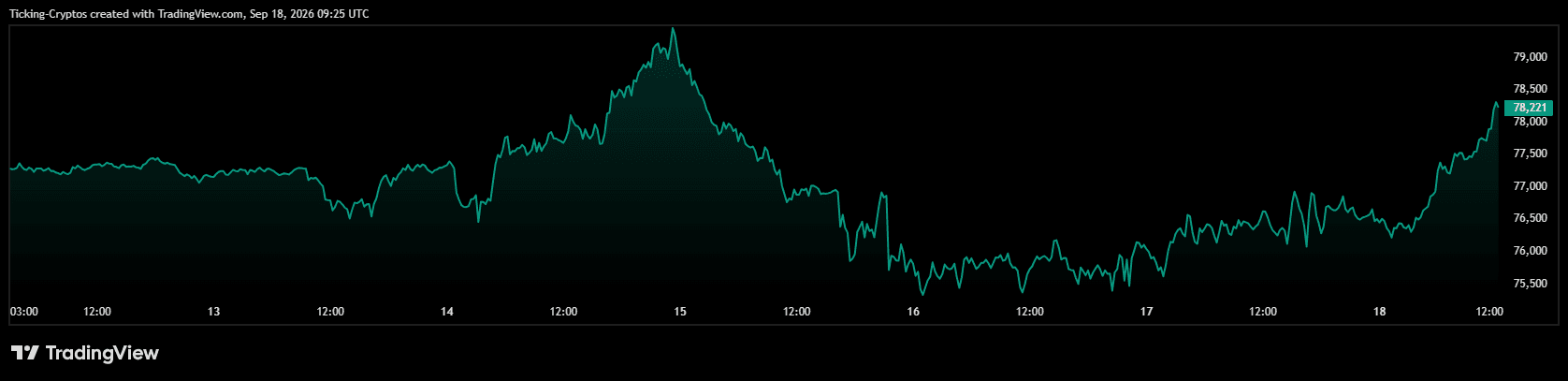
What Is Actually Happening in the Crypto Market Right Now?
Over the past 30 days Bitcoin is up 20.5%, having run from roughly $64,000 in mid-August to the high $70,000s, with an average price of $77,286 across the period. August alone delivered a 25% gain.
A market that has just added a fifth of its value in a month does not usually push straight through. It ranges, it shakes out leverage, and it waits for the next input. That is exactly what the $75,000 to $78,000 band has been doing.
Reason 1: The Bad News Was Already in the Price
The Fed hike was priced at roughly 93% odds in futures markets going into the meeting. When the 12-0 decision landed, Bitcoin spiked to about $76,500 within five minutes and gave the move back within half an hour. A market that barely reacts to a confirmed hawkish event has already absorbed it.
The CLARITY Act was a similar story. Bitwise's CIO had already revised his outlook on the bill and argued the bull market can continue without legislation, pointing out that Bitcoin climbed above $80,000 in early September even as the odds of passage were falling. Traders had been repricing the legislative path for weeks before the vote.
Reason 2: Institutional Demand Has Not Left the Table
This is the strongest leg of the argument. Total Bitcoin ETF assets sit above $103 billion after August pulled in $3.52 billion, the best month of 2026.
The altcoin funds tell the same story. On days when spot prices fell, $Ethereum, $Solana and XRP ETFs still posted net inflows of $10.95 million, $10.19 million and $14.38 million, and $XRP funds ran 11 consecutive days of net buying worth roughly $170 million. Nasdaq put $100 million into Payward, Kraken's parent, on September 10 at a $21 billion valuation, and the Canary staked TRX ETF launched on September 9 as the first spot staked crypto fund in the US.
Positioning adds to the case. JPMorgan noted on September 16 that gold ETFs have recovered all of their 2026 outflows while Bitcoin ETFs have recovered only about half, and that short interest in BlackRock's IBIT remains near its highest level of the year. If that hedging pressure unwinds, it becomes fuel rather than drag.
Reason 3: Regulation Is Moving Without Congress
The CLARITY Act failing 49-50 looked like a wall. It is closer to a detour.
The SEC put Regulation Crypto Assets out for comment in August and has since opened a five-year pathway for tokenized US stock trading. The CFTC chair had already instructed staff to build a market-structure regime under existing Commodity Exchange Act authority. Neither depended on the Senate.
Congress has not gone quiet either. The House Financial Services Committee advanced the American Reserve Modernization Act, H.R. 8957, by 28-21, keeping the US Bitcoin reserve idea alive. Outside the US, Canada's financial regulator clarified that tokenized bank deposits are legally equivalent to traditional deposits. The direction of travel has not reversed, only the vehicle has changed.
What Could Still Break the Bull Case?
Being honest about the other side matters. Bitcoin remains roughly 39% below its October 2025 all-time high of $128,198, and the 52-week range runs from $57,833 to $126,186, so this is still a recovery, not a breakout.
The Fed is the real risk. Sixteen of eighteen officials project at least one more hike this year and four expect two, which puts December in play. With the 10-year Treasury yield near 5% and Bitcoin carrying a 0.89 correlation to the S&P 500 and 0.91 to the Nasdaq, crypto is trading as a risk asset right now, not as a hedge. If equities crack, crypto follows.
The short answer first: if you hold Bitcoin privately and move away from Germany, the move itself triggers no tax on your capital gains. There is no deemed sale on the day you deregister and no taxation of unrealised gains on your wallet balance. The exit tax that so many emigrants warn about catches something other than crypto assets.
The move can still become expensive if you overlook the four places where German tax law reaches you even after departure: the moment your tax residence genuinely ends, the one-year holding period that keeps running when you sell, the legal form of your crypto investment, and the question of what your tax office will learn automatically from the 2026 reporting year onwards. This article works through those points in order, under German law, with the statutory references you can put in front of your tax adviser if in doubt.
Does the exit tax under Section 6 AStG apply to Bitcoin held privately?
Exit taxation means the state treats an asset as if you had sold it on the day you left and taxes the increase in value, although not a single euro has reached you. That is a hard intervention, and it is precisely why the legislator drew the scope narrowly.
Section 6 of the Foreign Transactions Tax Act attaches to shareholdings within the meaning of Section 17(1) sentence 1 EStG, meaning holdings in corporations from a stake of one percent upwards. Shares in a German GmbH fall under it, and so do equity blocks above that threshold. A Bitcoin, an Ether or a stablecoin in your own wallet is not a holding in a corporation. The wording of the provision leaves no room here, and that is why there is no German exit tax on directly held crypto assets in private hands. You can read the statute yourself if you want to: Section 6 AStG on the portal of the Federal Ministry of Justice.
The distinction matters in both directions. Anyone holding their coins through their own GmbH is not safe merely because the underlying asset is crypto. In that case the GmbH share is the asset that triggers the exit tax, and the value of the coins inside it helps determine how much tax falls due. The structure is widespread among German investors, and it turns the outcome on its head. Readers interested in the motives behind such departures will find the reasons and the destination countries set out in our survey of why crypto investors emigrate.
When does your unlimited tax liability end: residence under Section 8 AO and habitual abode under Section 9 AO
The decisive question when you leave is not when you boarded the plane but when your unlimited tax liability ends. You are subject to unlimited tax liability for as long as you have a residence or your habitual abode in Germany. The German tax authorities then capture your worldwide income, including gains made on a crypto exchange in Singapore.
Residence: the key counts, not the deregistration certificate
Section 8 of the Fiscal Code defines residence by the facts on the ground: you keep a dwelling under circumstances suggesting that you will retain and use it. Deregistering at the residents' registration office is evidence of that and nothing more. Anyone who leaves the old flat standing empty, who keeps a room in the family home available at any time, or who has held on to the key to a shared flat risks the tax office treating the residence, and with it full tax liability, as continuing. A genuine tenancy agreement solves the problem. An accommodation arranged as a favour among relatives usually does not.
Habitual abode: the six-month line
Section 9 of the Fiscal Code adds the habitual abode: anyone staying in Germany for more than six consecutive months is subject to unlimited tax liability even without a dwelling, and short interruptions count towards the period. For emigrants with a German client base this is the most common trap. Spend every summer in Germany without ever documenting the days and you will have nothing to set against a tax audit later. Keep a plain travel log from day one, with dates, border crossings and evidence.
If your unlimited tax liability ends mid-year, you also need a tax report that separates the periods cleanly. Many portfolio tools default to full calendar years. Which programs handle partial periods and several tax jurisdictions is set out in our comparison of crypto tax software and portfolio trackers.
The one-year holding period under Section 23 EStG keeps running when you leave
For as long as you are subject to unlimited tax liability in Germany, gains on the sale of crypto assets are private disposal transactions under Section 23(1) sentence 1 no. 2 EStG. If more than a year lies between acquisition and sale, the gain stays tax-free. Below that it counts as taxable income and is charged at your personal rate. An exemption limit of 1,000 euros applies to all private disposal transactions of a year taken together. An exemption limit is not an allowance: one euro above it makes the entire gain taxable.
Leaving the country does not interrupt that period, it only shifts who taxes at the end. What counts is the actual sale or swap, and where you are tax resident at that moment. From this follows the most practical rule in this article: do not sell while your change of residence is still incomplete. Cash in coins inside the one-year period two weeks before you deregister and you pay the full German rate on the entire gain.
The reverse holds as well. Your acquisition data does not disappear because you leave the country. Your new country of residence will ask, by its own rules, when you bought and at what price, and some states use the value at the time of arrival. Which records support a German holding period is something we have written up in detail elsewhere, and the same paperwork will serve you abroad.

Crypto ETPs, ETFs and fund units: where the exit tax under Section 19 InvStG does bite
This is where matters turn unexpectedly serious for many German investors. Since 1 January 2025 the Investment Tax Act has had its own exit tax for fund units held privately. Under Section 19(3) InvStG, the end of unlimited tax liability through giving up a residence or a habitual abode is treated as a disposal at fair market value. The tax authorities therefore act as though you had sold your fund units on the day you left.
That is triggered only above two thresholds, either of which suffices: you held at least one percent of a fund's issued units at some point in the past five years, or your units in that fund carry acquisition costs of at least 500,000 euros. Anyone with a larger portfolio of broad equity ETFs alongside a crypto allocation breaches the second threshold sooner than they would like.
Whether your crypto position itself falls under this depends purely on the legal form of the product. An investment unit is a unit in an investment fund within the meaning of the Investment Tax Act. The crypto ETPs common in Europe, by contrast, are mostly structured as debt securities, meaning ETNs, and therefore precisely not fund units. A US spot ETF on Bitcoin, on the other hand, is a fund. Check each position individually for what you actually hold, and use the terms of issue or the key information document for that, not the product name on your brokerage statement. On departure this distinction decides a five-figure tax bill.
Extended limited tax liability under Section 2 AStG: when a low-tax country holds you for ten years
Extended limited tax liability is a run-on. Germany continues to tax you after you leave, though only on certain categories of income and only under narrow conditions. It is governed by Section 2 AStG and catches only those who meet every criterion at once.
First, in the ten years before the end of your unlimited tax liability you must have been subject to unlimited income tax as a German national for at least five years in total. Second, you must be resident in a low-tax territory or in no state at all; the law measures this against a comparative income of 77,000 euros and a burden of less than two thirds of the German income tax. Third, you need substantial economic interests in Germany, which Section 2(3) AStG assumes among other things where domestic income exceeds 62,000 euros or domestic assets exceed 154,000 euros. Where all of that applies, the run-on lasts until ten years after the end of the year of departure, and it takes effect only above 16,500 euros of income subject to limited tax liability in an assessment period.
For crypto investors the point is delicate, because Section 2 AStG captures all income that does not constitute foreign income within the meaning of Section 34d EStG. A gain on the sale of coins can be allocated neither to foreign real estate nor to a foreign permanent establishment, so the classification has to be settled case by case. Anyone moving to Dubai, Paraguay or a similarly taxing country while keeping German rental income or a stake in a German company should settle that question with a tax adviser before the move rather than after it.
Commercial trading and business assets: deemed disposal instead of exit tax
If you hold your crypto assets as business assets, a different system applies. Deemed disposal means that Germany treats an asset as withdrawn as soon as the German right of taxation over it is excluded or restricted; the legal basis is Section 4(1) sentence 3 EStG. Move your business abroad and cessation of business under Section 16(3a) EStG comes into play on top.
So anyone trading commercially, mining commercially or running a trading structure can well trigger taxation of unrealised gains on departure, and that without Section 6 AStG being needed at all. The line between private asset management and a trade depends on scale, external financing, organisation and outward appearance. If that question gives you pause, that in itself is a sign that a case-by-case review is needed.
Double tax treaties: who taxes when both states see you as resident
In the first months after a move it often happens that two states treat you as tax resident at the same time. German double tax treaties provide an order of precedence for this, modelled on Article 4 of the OECD Model Convention: first the permanent home, then the centre of vital interests, then the habitual abode, and finally nationality.
The centre of vital interests is where most emigrants come unstuck, and it is measured by mundane things. Where does your family live, where is your doctor, where is the sports club, where is the current account that pays the running costs. You do not change country with a passport alone. Most treaties, incidentally, allocate gains on the sale of crypto assets to the state of residence, because they fall under the catch-all clause for other property. That too is what makes a clean determination of residence so important.

Where your coins sit: self-custody, exchange accounts and the duty to cooperate under Section 90 AO
The location of your coins is irrelevant for tax purposes; the location of your records is not. The Federal Ministry of Finance circular of 6 March 2025 on individual questions of the income tax treatment of certain crypto assets regulated the duties to cooperate and to keep records explicitly for the first time, and it replaces the older circular of 10 May 2022. Anyone buying or selling through centralised trading platforms run by foreign operators is subject to the extended duty to cooperate in cross-border matters under Section 90(2) AO. In plain terms, you have to establish the facts and obtain the evidence yourself, and the tax office may estimate if you cannot. The full text is available as a PDF from the Federal Ministry of Finance.
That creates a practical difference between the forms of custody. An exchange account is tied to an identity and to a country: many providers block or restrict accounts when the registered address changes to a country they do not serve, and exporting the trading history then becomes difficult. A self-custody wallet moves with you and needs nobody's consent. The price is that nobody else keeps your records. If you are switching to self-custody, do it before you leave rather than after, and download every transaction history first. Which device suits you is covered in our hardware wallet comparison.
What the tax office learns about your crypto accounts from 2026: DAC8 and the KStTG
DAC8 is EU Directive 2023/2226 on cooperation between tax administrations, which obliges providers of crypto services to report on their customers. Germany implemented it through the Crypto Asset Tax Transparency Act, which came into force on 1 January 2026. The first reporting period is the 2026 calendar year; providers transmit the data by 31 July 2027 to the Federal Central Tax Office, which exchanges it with partner states.
For a departure that has two consequences. First, your master data and aggregated transactions for 2026 are reported even if you move away in the course of that year, and the comparison with your final German tax return does take place. Second, the report follows the country of residence that you give your provider. An out-of-date address in your customer account therefore generates reports to the wrong country, and untangling that costs more time than updating it in good time. How the reported amount is arrived at, and why it does not correspond to your gain, is explained in our piece on crypto reporting duties and the difference between the gross amount and the gain.
The misconceptions that get expensive when you emigrate with Bitcoin
“I have deregistered, so I am out.” Deregistration is registration law, not tax law. What counts is dwelling and abode under Sections 8 and 9 AO.
“Crypto falls under the exit tax.” For directly held coins in private assets it does not arise. For fund units above the thresholds of Section 19 InvStG, and for shares in corporations, the picture is different.
“After the move I can sell tax-free.” That holds only if your unlimited tax liability had genuinely ended at the time of sale, no run-on under Section 2 AStG applies, and your new country of residence does not tax the transaction itself.
“My exchange is abroad, so nobody finds out.” Since the 2026 reporting year that is a mistaken assumption made with fair warning, and the cross-border element triggers the stricter duty to cooperate on top.
“I will sort that out after the move.” Almost every planning option in this article requires you to use it before the cut-off date. After that, all you are doing is documenting.
Which records to secure before you move
The burden of proof for the date and the cost of acquisition lies with you, and it does not lapse with your residence. Before you leave, download the complete transaction export as a CSV from every platform, along with the annual statements, the bank's deposit and withdrawal receipts, and the account statements showing the euro inflows.
What is usually missing once it is needed
Records from trading venues that have since closed. Wallet addresses you never wrote down and whose link to you only you know. Documentation of swaps between two coins that never touched a euro account and are therefore absent from the bank statement. Evidence of staking and lending income, which many platforms keep for only twelve months. And the record of which units were disposed of in a partial sale, which you have to keep per wallet anyway once you use more than one.
Put the export on a medium that survives the move and keep a second copy separately. A tax report that cleanly closes out your German period is the best investment of this move.
Bitcoin and moving abroad: what to take away
- Settle the cut-off date first, not the tax. Determine the date on which your dwelling and abode in Germany demonstrably end, and place every sale deliberately before or after it. Keep your position data cleanly separated as you go; the tools that handle partial periods are in the comparison of crypto tax software.
- Check every position for its legal form. Directly held coins are not caught by the exit tax, while fund units from 500,000 euros of acquisition costs and holdings in corporations are. At the same time, move your custody into a form that travels with you: the options are in the hardware wallet comparison.
- Secure the records before you go. Complete transaction export, bank records, wallet addresses and a closing report for your German period. If you notice that a year has gaps, close it now with one of the portfolio trackers and not when the tax office asks.
This article sets out the legal position and does not replace tax advice in an individual case. On departure in particular the outcome turns on details that only someone who knows your paperwork can judge.
(As of September 18, 2026. This article is not investment advice. Prices and fee structures change; check the terms with the provider before you buy.)
On September 29, 2026 at 14:06:41 UTC, a protocol upgrade on the XRP Ledger arms itself: the batch amendment carrying the internal name BatchV1_1. If you hold XRP on an exchange or in a custodial wallet, there is nothing for you to do. If you run a node of your own, or run a service against a node of your own, this date is a hard deadline, after which your server drops out of the network.
This article explains what the amendment changes, where the date comes from, how to check the status yourself and which caveats are attached to the date. Every figure in this article comes from the validated ledger and from the protocol documentation, not from announcements.
What an amendment on the XRP Ledger is and why it needs no shutdown date
An amendment is a change to the rules of the XRP Ledger protocol that the network's trusted validators vote on, rather than a company scheduling it. That is what separates the process from a classic hard fork with an announced block height: there is no calendar entry that somebody sets, only a condition that the network either meets or does not.
The rule behind it is written into the protocol documentation and it is short. An amendment needs the approval of more than 80 percent of the trusted validators, and it has to hold that approval continuously for two weeks. Only then is it activated. Should approval slip below the threshold at any point during those two weeks, even briefly, the count starts again from the beginning.
For you as a reader that means two things. First, a date of this kind can be verified, because it sits in the ledger and not in a press release. Second, it is not immovable while the two weeks are still running. Both points are the heart of the matter for the date at issue here.
What the BatchV1_1 batch amendment changes technically
Batch is a new transaction type that bundles several individual transactions into one package processed together. According to the protocol reference, a package holds at least two and at most eight inner transactions, which may also come from different accounts. Until now the XRP Ledger required you to submit every step on its own and to hope, with each one, that it went through.
The practical gain lies in the certainty. Anyone submitting two steps one after the other today, say an approval and then a swap, carries the risk that the first step succeeds and the second fails. A package closes that gap, because the network knows the processing rule and enforces it.
Do I have to do anything if my XRP sits on an exchange?
No. That is the most common situation, and the least dramatic one. If your XRP sits with a trading platform or in a custodial wallet, the provider runs the infrastructure and the duty to upgrade is theirs. You do not have to move holdings, sell, or change an address. Shuffling balances in a hurry because of a protocol date mainly produces fees and, in case of doubt, a taxable event that was never needed.
The occasion is still worth a calm inventory that has nothing to do with the date. Do you know which provider holds which part of your balance, how high the withdrawal fee is there, and whether the provider is supervised in the EU? Regardless of the protocol date, those are the more important questions.
What to check if you hold your XRP in self-custody
Even in self-custody the case is usually a simple one. A hardware wallet stores your private key and signs transactions with it; as a rule it reaches the network through the servers of the wallet provider. The keys themselves are never affected by an amendment, because an amendment changes the rules of the chain, not your address and not your access.
What you can do is keep the software you use to reach the wallet up to date, and check once before the date that your recovery words are where you believe them to be. That is basic hygiene and it is right independently of September 29. If you are still undecided about which device to pick, our hardware wallet comparison helps.

Amendment-blocked: what happens to an outdated xrpld node on September 29
Amendment-blocked is the state a server falls into when it does not know an activated protocol rule. The protocol documentation describes the consequences unambiguously: a blocked server can no longer validate ledgers, can no longer submit or process transactions, can no longer take part in consensus and can no longer vote on future amendments.
The decisive sentence stands right beside it: a server's voting configuration has no bearing on this. Anyone who has set their xrpld to vote against the amendment is just as blocked after activation as someone who voted in favour. What gets a server blocked is the missing code that understands the new rule. There is no carrying on against an activated majority decision.
The server does not crash while this happens, and it throws no conspicuous error message on the wall. It keeps answering, only no longer with valid data from the running chain. That is exactly what makes the state dangerous for services that query a node of their own in the background: the application looks healthy and serves a data state that has stopped moving.
Where the September 29, 2026 date comes from and how it is arrived at
The date is calculated, neither derived nor estimated. The validated ledger holds an object that tracks the state of every amendment. It contains a field called Majorities, and for every amendment that has reached the threshold, that field records the point in time from which the two-week period runs.
This editorial team queried the object on September 18, 2026 at around 00:35 UTC through a public XRP Ledger node (ledger index 107058182, response HTTP 200). The Majorities field held exactly one entry: the amendment with the identifier 9F287AED3CDB50A7BD1ACEC24296A30C9B5230CCD136219317AC790E3B884377 and the CloseTime value 842796401.
The XRP Ledger counts time from January 1, 2000. Converting that value gives September 15, 2026, 14:06:41 UTC as the start of the period. Two weeks later falls September 29, 2026, 14:06:41 UTC. The cross-check through the feature query on the same node returned the name BatchV1_1 for the same identifier, along with the values enabled: false and supported: true. The amendment is therefore known to the network and supported, but not yet active.
How to check the status of the amendment yourself
You do not need a node of your own for this. A public XRP Ledger endpoint answers the question with a single request. Anyone comfortable with the command line sends a feature request carrying the identifier above to a public node and reads three fields out of the answer:
enabled: if this readsfalse, the amendment is not yet active. Once the value flips totrue, activation has taken place.supported: if this readstrue, the software of the node you asked already knows the rule. If it readsfalse, that very node will be blocked at activation.majority: the timestamp from which the two-week period runs. Should this field disappear again, the majority has slipped and the countdown has been reset.
That third point is precisely why you should look at the status once more shortly before the date, instead of writing the date down and ticking it off. The same route applies to a node of your own, with one important difference: send the feature query to your server, not to somebody else's. Only the answer of your own node tells you anything about your own node.
Which software version brings the new rule with it
The server software of the XRP Ledger is called xrpld and is published as open software. The current release is 3.4.0, published on September 17, 2026; before that came 3.3.0 of August 6, 2026 (both dates taken from the release dates of the official source code archive, retrieved on September 18, 2026).
Copying a version number out of an article is still the weaker route. The reliable answer comes from your own server through the supported field: it answers the question of whether the running software actually knows the rule. Which version you believe you are running plays no part in it. If false stands there, only an update helps, and it has to happen before September 29.
Why the date carries a caveat
The two-week period runs for as long as approval stays above 80 percent. Should it fall below, the counter is reset and September 29 lapses. That clause is no theoretical footnote; it is the safety mechanism built into the procedure. It leaves the validators the option, right up to the last moment, of stopping a change if a problem surfaces in the meantime.
For your planning, one simple stance follows from this. Treat September 29 as the deadline you prepare for, and treat its arrival as unsettled. Anyone who updates a node loses nothing if the countdown is reset. Anyone who postpones the update because the date might still fall through ends up, in the opposite case, with a system cut off from the chain.
The four modes of a batch package and what they mean in daily use
A package is given a mode when it is submitted, and that mode determines how the network deals with failures. The protocol reference names four:
- AllOrNothing: every single transaction in the package has to succeed. If one fails, the whole package fails. This is the mode for sequences that only make sense in full.
- OnlyOne: as soon as the first transaction has succeeded, the remaining ones are skipped. It allows alternatives to be submitted of which exactly one should take effect.
- UntilFailure: the transactions run in order until one fails; everything after that is dropped. This suits sequences that build on one another.
- Independent: all transactions are processed independently of one another, regardless of whether individual ones fail. This is pure bundling without chaining.
As a holder you will rarely set these modes yourself. The difference becomes visible where applications make use of it: in wallet interfaces that gather several steps into one confirmation, and in trading applications, where a half-executed sequence has so far been the most awkward case of all.

What services, wallet providers and payment processors should clarify now
Anyone who reaches the XRP Ledger through infrastructure of their own rather than through an outside provider is affected. That includes payment services, trading applications, accounting tools with their own data feed and every wallet whose provider runs a node. For this group, three questions need answering before the date.
- Does the feed run against a node of your own or against an outside endpoint? With an outside endpoint the duty lies with its operator, and you should ask there instead of acting yourself.
- Does your own node report the value
supported: truefor BatchV1_1? If not, an update is due, with the usual lead time for testing and a maintenance window. - Would a data state that has stopped moving show up in your monitoring at all? A blocked node keeps answering. Monitoring that only checks reachability notices nothing of it. Whoever monitors the gap between the last validated ledger and the current time notices it immediately.
Experience says the third question is the one on which everything hangs. An outage that disguises itself as normal operation is discovered late, and in the meantime bookings and displays carry on working with old data.
How this date fits into the run of amendments so far
The procedure is routine on the XRP Ledger and runs several times a year. Most recently, on September 9, 2026, we described the activation of the previous amendment; anyone who wants to read the sequence through from the start again will find it in our article on which points to check on wallet, node and position. The mechanics are the same, only this time a concrete date and an open condition hang on it.
For placing the network as a whole, a look at what is being built on it remains more telling than any single protocol step. One example from February 2026 is the euro stablecoin of Société Générale, which is issued on the XRP Ledger. Applications of that kind are the reason binding transaction packages are in demand at all: anyone automating payment sequences wants no half-executed chains.
XRP Ledger batch amendment: what you take away from it
- If your XRP sits with a provider, you do nothing. Use the date at most for a calm check on whether the provider still suits you: the overview of the best crypto exchanges puts fees and withdrawal routes side by side.
- If you hold your own coins, check access and recovery, not the protocol. Your keys are not affected by an amendment. Which device is up to the job is shown by the hardware wallet comparison.
- If you run a node of your own, send the
featurequery before September 29. Ifsupported: falsestands there, update the software. Anyone who also needs an overview of their holdings and how they are recorded for tax will find the tools for it under crypto tax software and portfolio trackers.
The primary sources for this article: the description of the amendment procedure and the protocol reference for the batch transaction, both in the official documentation of the XRP Ledger.
(As of September 18, 2026. This article is not investment advice. Prices and fee structures change; check the terms with the provider before you buy.)
Anyone who sells a bitcoin position at a loss in order to use that loss for tax purposes, and buys the same quantity back shortly afterwards, triggers two things at once in Germany. The loss is realized and remains deductible. At the same time, the one-year holding period starts again from scratch for the quantity bought back. That is the price of the decision, and it hangs on a single date: the acquisition date of the new units.
The occasion is this week's slide. On September 17, 2026, Bitcoin stood at $76,555, or €66,712, and Ethereum at $2,453 and €2,138. Cryptoticker.io retrieved these figures on the same day through CoinGecko's public price interface. Many positions opened over the past year are therefore under water, and the question of whether to take the loss and get straight back in is coming up in a great many German portfolios at the same time.
Selling at a loss and buying back: what really happens for tax
In Germany, crypto assets count as other economic assets. Selling them therefore falls under private disposal transactions in section 23 of the Income Tax Act, not under the flat withholding tax. That sounds like a technicality, but it determines everything that follows.
A private disposal transaction is a sale within one year of acquisition. The gain from it is taxed at your personal income tax rate, and in return the loss from it can be offset. Anyone who sells after the year has elapsed stays tax-free, and that cuts both ways: the gain goes untaxed, but the loss is equally without effect.
That second half is routinely overlooked. A position bought eighteen months ago and sitting 30 percent under water today no longer carries any usable tax loss. That position is outside the period. Selling it brings nothing except liquidity.
The three figures you need for every lot
For each individual lot in your holdings, three pieces of information count: the acquisition date, the acquisition cost and the quantity. The acquisition date tells you whether the one-year period is still running. The acquisition cost tells you whether there is a loss at all. The quantity tells you how much of it you can move without touching other lots. Crypto tax software with portfolio tracking shows you these three values separately for each purchase, and without them the decision about a loss sale cannot be taken cleanly.
The one-year period in section 23: why a buyback starts a new clock
The holding period is the time between the acquisition and the disposal of a particular unit. That period attaches to the unit, not to the coin and not to the account. Every purchase starts its own clock.
From this follows the central point of this article. If you sell 0.3 bitcoin today that you bought in January 2026, and buy 0.3 bitcoin again ten minutes later, you have not restored the same position. You have a new position with a new acquisition date. The old eight months of holding time are not transferable; they were used up by the sale. The new unit does not become tax-free until September 2027.
On a position that is only a few weeks old anyway, this costs almost nothing. On a position that would have reached the one-year mark in three months, it costs those three months plus another twelve. That is the real calculation, and it comes out differently for every lot.

Is there a wash sale rule in Germany as there is in the US?
No. Under US tax law, a wash sale is a loss-making sale in which the same or a substantially identical security is bought back within thirty days before or after the sale. Section 1091 of the Internal Revenue Code denies the deduction of the loss in that case; it is added to the cost basis of the new position instead.
German income tax law has no equivalent for private disposal transactions. Section 23 contains no blocking period for re-entry, and there is no provision that shifts the loss into the new acquisition cost. The loss stays where it arose, in the year of the sale.
Anyone reading American guides or using an international tax tool should know this difference before deriving rules for the German tax office from them. The thirty-day window that regularly appears in such texts has no bearing on a German tax return.
Section 42 of the Fiscal Code and the same-day buyback: what the Federal Fiscal Court decided
That leaves the objection tax offices occasionally raise in such cases: abuse of legal structuring. Under section 42 of the German Fiscal Code, this exists where a legal arrangement essentially serves to obtain a tax advantage not provided for by law.
There is a decision directly on point, and it concerns precisely the provision discussed here. In a judgment of August 25, 2009, case reference IX R 60/07, the Federal Fiscal Court held that there is no abuse of structuring where a taxpayer sells securities at a loss within the one-year period and buys back securities of the same type and number at a different price on the same day. Sale and buyback, the court held, are to be assessed as separate transactions. The matter in dispute was a private disposal transaction under section 23, that is, the same provision crypto assets fall under today.
The judgment was handed down on shares and not on crypto assets, and it is not a blank cheque. It is, however, the closest thing to a supreme court statement on this constellation, and it supports the view that re-entry as such does not endanger the loss. Anyone wanting full certainty should have the case reviewed by a tax adviser before filing; a binding ruling from the tax office is the only route to genuine legal certainty in an individual case.
FIFO: why the bitcoin you buy back joins the back of the queue
FIFO stands for first in, first out and means that the unit acquired first counts as the one disposed of first. For crypto assets, the German Federal Ministry of Finance set out this consumption order in more detail in its circular of March 6, 2025, together with the record-keeping and cooperation duties attached to it. The circular carries the file number IV C 1 - S 2256/00042/064/043 and replaces the version from May 2022. It is publicly available from the Federal Ministry of Finance.
In practice that means your purchases stand in a line, ordered by date. When you sell, the line is cleared from the front. The buyback joins the end of that line.
This creates a trap that springs particularly often in a drawdown. The units at the front of the line are the oldest, and therefore often the ones with the longest holding time and the best tax position. Anyone triggering a partial sale in order to realize a loss reaches, under FIFO, for exactly those old units first, and those may well not be under water at all. A loss sale that hits the wrong lot produces a taxable gain instead of a usable loss.
How to keep them apart in practice
The wording of the law can be read in the full text of section 23 of the Income Tax Act. The consumption order can only be controlled cleanly if holdings are kept separately per wallet and per exchange account, because under the ministry circular the assessment is made in principle per individual wallet or per individual account. Anyone holding the same coin on three platforms has three separate lines and not one shared one. Which exchange gives you which export formats differs considerably; a look at our crypto exchange comparison is worth the time before you plan a loss sale spanning several accounts.
The price of the buyback: when you trade an almost tax-free lot for a loss
The decision can be boiled down to one question: which is worth more, the loss today or the remaining holding time?
On a lot that is only two months old, the answer is usually clear. Ten months of remaining period is a manageable stake, and the loss takes effect immediately. On a lot that is eleven months old, the picture flips. One month separates it from tax exemption; a buyback resets it to twelve months and extends the window in which a later gain would be taxable by eleven months.
On top of that comes a point easily lost in the arithmetic: a loss is only worth something if a gain from a private disposal transaction stands against it in the same year or in a later one. Losses under section 23 land in their own offsetting pot. They cannot be set against employment income, rental income or investment income from shares. Anyone not expecting corresponding gains realizes a loss that sits unused for years. We set out the mechanics of this offsetting and the deadlines in detail in our article on crypto losses before the one-year period expires of September 9, 2026.

The 1,000 euro exemption threshold: when a loss sale is worth it at all
An exemption threshold is a limit at which the entire amount becomes taxable once it is exceeded, not just the excess. For private disposal transactions it stands at €1,000 of total gains in a calendar year.
For the buyback decision this means two things. If your annual gain from private disposal transactions stays below the threshold anyway, an additionally realized loss is worthless for tax, because there is nothing to reduce. And conversely: if you are just above the threshold, a targeted loss sale can push the total gain below €1,000 and thereby make the entire amount tax-free. That is the only case in which a loss sale pays off in a jump rather than proportionally.
Grandfathering at December 31, 2026: what a buyback next year could change
A draft bill on the future taxation of crypto assets is on the table, providing for a switch to the flat withholding tax from 2027 and for grandfathering of holdings acquired before then. It is a draft and not applicable law; none of it has been adopted, and the cut-off date may move or disappear entirely.
But if it does come to pass, the acquisition date takes on a second meaning beyond the one-year period. Units you buy back today would have been acquired before the cut-off date. Units you only buy back in January would not. Anyone already weighing a loss sale with a subsequent buyback therefore has an argument for not pushing it into next year. We gathered the state of the draft and the open questions in our piece on the holding period and grandfathering of September 8, 2026.
What matters is the order of certainty: the one-year period applies today and is law. Grandfathering is an expectation. A decision resting on the expectation alone stands on one leg.
What proof the tax office wants for the loss and the buyback
The ministry circular of March 6, 2025 framed the record-keeping and cooperation duties considerably more sharply than its predecessor. For a loss sale with a buyback this means, concretely: both transactions must be individually documented, with time, quantity, price and platform.
In practice you need the exchange's transaction export for the sale and for the buyback, each with a timestamp. If the position came from your own wallet, proof of origin is required on top. A statement showing the holding only as a total is not enough, because the one-year period attaches to the individual lot.
The mistake that is hardest to correct
Export the data promptly. Anyone who discovers after a delisting, an account closure or a change of provider that the history is no longer retrievable has lost the proof and with it the loss. That is not a theoretical risk: in the past few weeks alone, several trading venues have set deadlines for withdrawing balances, after which the account interface was no longer reachable.
Three cases from the current drawdown worked through
The amounts below are freely chosen worked examples and not a price forecast. The cases only show how the variables interact.
Case one, a young lot at a loss. Bought in July 2026 for €8,000, current value €6,400. Loss €1,600, remaining period around ten months. A sale with an immediate buyback realizes the loss and resets the clock to twelve months. Anyone with gains from other crypto sales in the same year comes out clearly ahead here.
Case two, an old lot just short of the finish line. Bought in October 2025 for €10,000, current value €8,500. The loss of €1,500 is real, but the period runs out in a few weeks. A buyback trades an almost achieved tax exemption for a loss that is only worth something if there are enough offsettable gains. In most portfolios, waiting is the calmer option here.
Case three, a lot outside the period. Bought in February 2025, current value well below. Nothing happens for tax on a sale, neither a gain nor a usable loss. A sale here is a pure investment decision with no tax effect. We worked through a similar constellation on the gains side for Ethereum profits and the holding period on September 14, 2026.
Bitcoin losses and buybacks: what to take away
- Sort by acquisition date first, not by price. Check for each lot whether the one-year period is still running. Only within the period is a loss worth anything at all, and only there does a buyback cost you holding time. Tax software with portfolio tracking compiles this list automatically for each purchase.
- Weigh the loss against the remaining period. Young lots at a loss are the obvious candidates, lots just short of the anniversary the most expensive. And check beforehand whether you have any gains from private disposal transactions in the same year for the loss to be offset against.
- Secure the records the same day. Export the sale and the buyback with timestamps, separated by wallet and account. Which exports your exchange offers is shown in our crypto exchange comparison; if the proof is missing later, the loss goes with it.
(As of September 17, 2026. This article is not investment advice. Prices and fee structures change; check the terms with the provider before you buy.)
Decrypt
Internal memos warned of a "doom loop" threatening the quality of the very models it was building with OpenAI.
It came just hours after S&P Global announced its acquisition of OpenZeppelin, as everything TradFi moves onchain.
Investigators say tracing the network's crypto transactions exposed links to organized crime and murder-for-hire.
OFAC says hundreds of millions of dollars in Bitcoin moved through BitBank to the Revolutionary Guards in two months.
OpenAI's new transparency framework reveals AI models that invented fake "breach alerts," coached themselves to hide mistakes, and smuggled a file onto the public internet to talk to each other.
U.Today - IT, AI and Fintech Daily News for You Today
XRP whales moving big with Binance inflows reaching 1.6 billion tokens.
Following a record ATH, Hyperliquid hits the top 10 as analyst Aksel Kibar predicts a 3-digit price tag.
XRP Ledger payment volume has surged above 1.1 billion XRP, more than twice the 30-day average, as XRP attempts to recover from its latest decline.
Bloomberg strategist Mike McGlone reveals why 5% US Treasuries are now worth selling Bitcoin and gold for.
Ripple CTO Emeritus David Schwartz suggests reasons why exchanges are holding back from listing a Bitcoin-split asset, while they had previously supported other Bitcoin forks.
Blockonomi
TLDR:
- Pi Network cleared duplicate-account KYC restrictions for more than 417,000 Pioneers, allowing them to continue required verification steps.
- About 497,000 Fast-Track wallets should become eligible for Mainnet migration within a week after Pi fixes gas-fee related claim failures.
- Pi expanded liveness checks to older devices, added KYC resubmissions for affected users, and started a one-month palm-print verification trial.
- PI trades near $0.084 with market cap below $1 billion, while the four-hour chart shows resistance near $0.0918, $0.0986, and $0.10.
Pi Network has released new technical fixes for KYC and Mainnet migration problems that blocked more than 900,000 Pioneers. The update clears duplicate-account restrictions for over 417,000 users and targets 497,000 Fast-Track wallets with migration problems. PI price trades near $0.084, while market capitalization sits below $1 billion after an 11.8% weekly decline.
The fixes arrive as Pi Network continues processing migration cases in batches and expands identity checks for users facing device, document, or account-specific verification barriers.
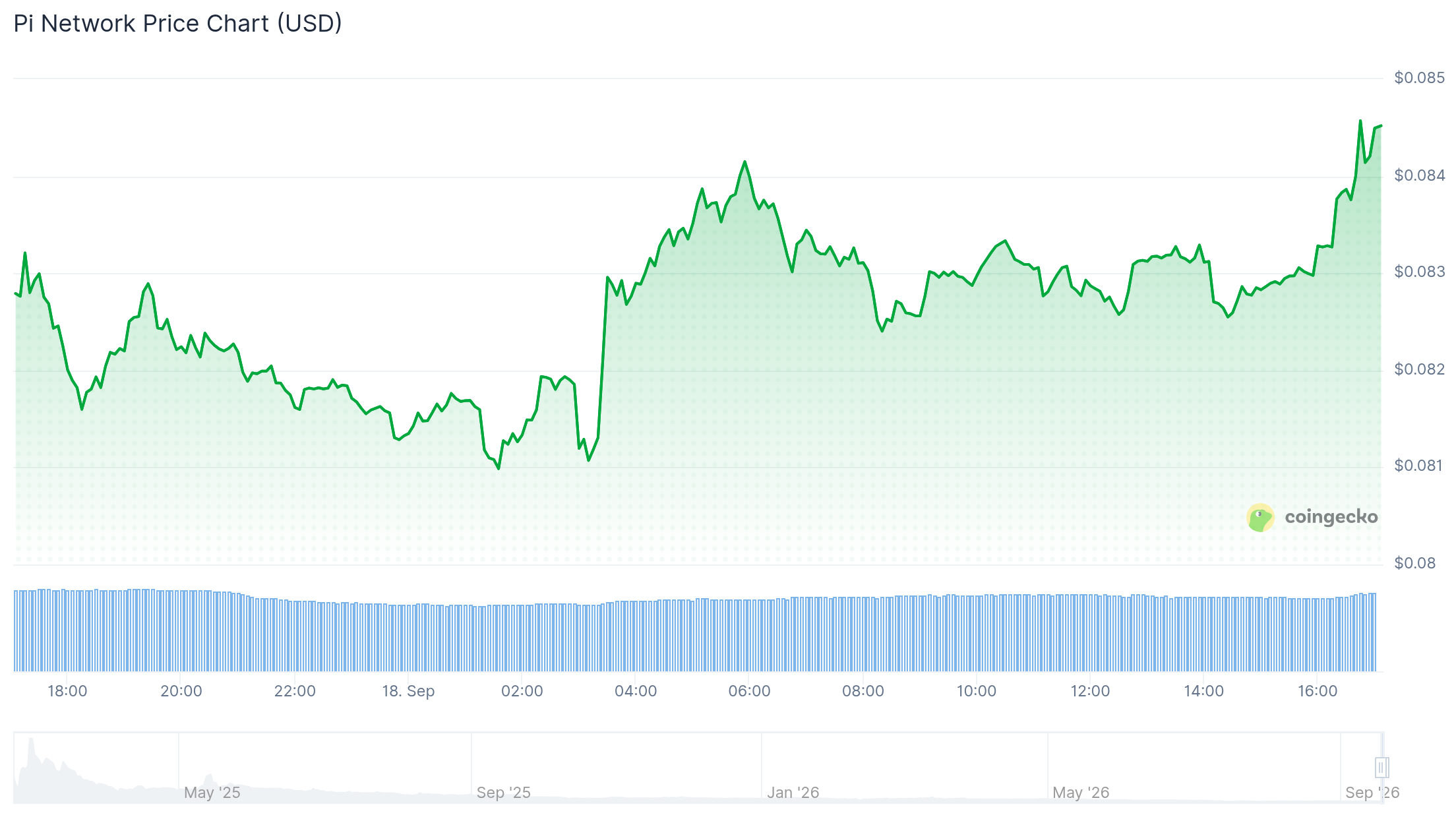
Pi Network KYC Fixes Clear Duplicate Account Restrictions
Pi Network says more than 417,000 Pioneers can continue KYC after further evaluation cleared duplicate-account flags. The review found these users were not duplicate accounts. Those users must still satisfy any other KYC requirements before final approval.
The Core Team says some KYC cases need separate technical solutions instead of one broad system change. That approach can leave groups blocked until engineers complete additional review, testing, and deployment.
The update also covers users from Pi’s earlier Yoti verification process. Some applications lacked required liveness data and could not advance. Affected Pioneers can now resubmit those KYC requests. Pi also optimized machine-learning workloads used for video processing and automated checks. The Core Team says the changes should reduce resource-related errors that previously caused some applications to stall.
Pi expanded liveness-check support for older or lower-specification mobile devices. The network adjusted face-angle capture and video processing to reduce failures on weaker devices.
A one-month palm-print authentication trial is also running for selected Pioneers who need multiple liveness checks. Pi will use the added biometric input as another human-verification method. Wider deployment depends on results from the trial.
Pi Network is also letting affected Indonesian users resubmit KYC with another supported identity document. This applies to users whose earlier KIA submissions no longer meet current KYC requirements.
Mainnet Migration Fix Targets 497K Fast Track Wallets
A second fix addresses Fast-Track wallets that could not claim migrated balances due to insufficient Pi for gas fees. Pi Network says an update should unblock about 497,000 affected Pioneers within one week. The change also aims to prevent the same issue for future users entering through the Fast-Track route.
The Fast-Track route generated those wallets through a different KYC path from the standard migration process. The Core Team says the update reconciles both routes, allowing eligible users to claim Mainnet balances after deployment.
Migration activity continues alongside second transfers for eligible users. These steps apply only to affected eligible Pioneers. Pi previously said second migrations would include referral mining bonuses tied to referral-team members who completed KYC.
Market data show PI price under pressure despite the technical update. Its market capitalization is about $942 million, with around 11.24 billion PI circulating. The token has traded between roughly $0.0809 and $0.0842 over 24 hours. Its seven-day range extends from about $0.0804 to $0.0987.
On the four-hour chart, PI broke below the $0.0844 August swing low, confirming a bearish structure shift. The $0.0918 Fibonacci retracement marks the next rebound area, while $0.0986 and $0.10 form nearby resistance. The daily chart still places $0.07 as the lower swing boundary.
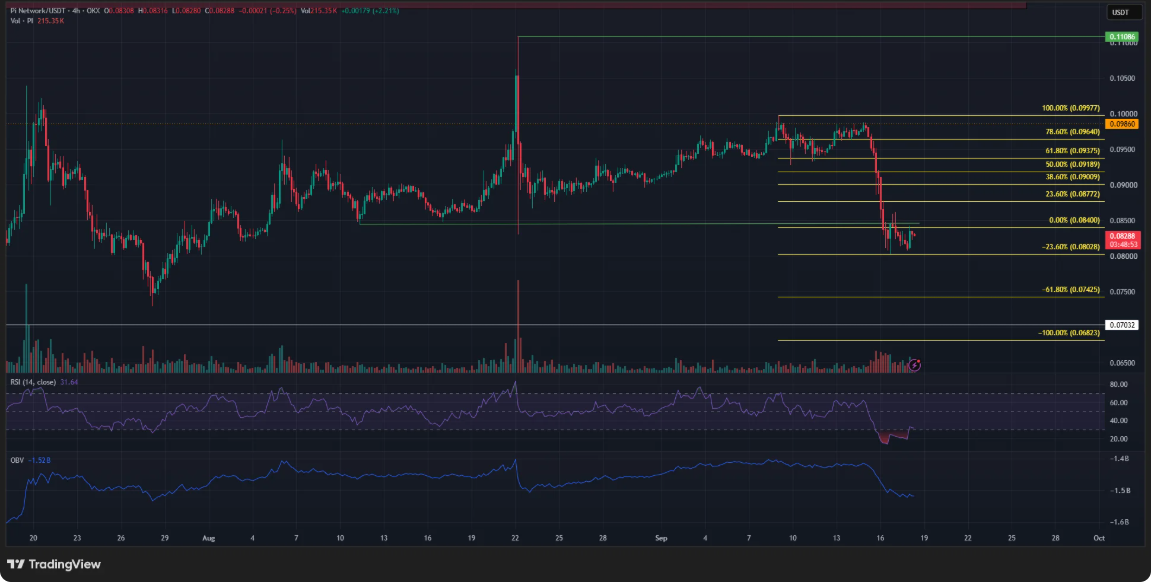
Trading volume stands near $8.6 million over 24 hours, down from the prior day. CoinGecko shows the market cap below $1 billion after exceeding that level earlier this week. Pi has not set one completion date for unresolved KYC cases, since different accounts can still require checks, resubmissions, or fixes before migration.
The post Pi Network KYC Fixes Target 914K Users as PI Trades Near $0.08 appeared first on Blockonomi.
Key Takeaways
- Shares of Nucor declined more than 5% following the company’s Q3 2026 earnings forecast of $5.55 to $5.65 per diluted share, which missed analyst expectations of $5.99
- Peer steelmaker Steel Dynamics experienced a similar decline after projecting Q3 earnings of $5.34 to $5.38 per share, also below consensus
- Q3 outlook excludes two significant one-time benefits from the previous quarter: a $61 million valuation increase in Helion investment and approximately $130 million in raw material procurement credits
- Warren Buffett’s Berkshire Hathaway trimmed its Nucor holdings in Q2 2026
- Market analysts interpret the guidance as cautious positioning, anticipating Q4 improvements from delayed pricing effects and strengthening steel market conditions
Shares of Nucor stock tumbled over 5% during Friday’s trading session after the North Carolina-based steel producer issued third-quarter 2026 earnings guidance that fell short of analyst projections. The stock retreated to $255.16 in extended trading hours, a decline from its intraday peak of $268.08, yet still significantly above its yearly low of $131.32.
Nucor Corporation, NUE
Management forecasted net earnings between $5.55 and $5.65 per diluted share for the quarter concluding October 3, 2026. Wall Street consensus had anticipated $5.99 per diluted share. This shortfall triggered the selloff, even though the projected results still mark a substantial improvement over the $2.63 per share reported in the comparable quarter of 2025.
𝗝𝗨𝗦𝗧 𝗜𝗡: $NUE Nucor Guides Q3 EPS to $5.55–$5.65, Above Q2 Earnings
𝗞𝗲𝘆 𝗛𝗶𝗴𝗵𝗹𝗶𝗴𝗵𝘁𝘀:
➤ 𝗡𝘂𝗰𝗼𝗿 expects Q3 diluted EPS between $𝟱.𝟱𝟱 and $𝟱.𝟲𝟱.
➤ Q2 diluted EPS was $𝟱.𝟬𝟰, with adjusted EPS of $𝟰.𝟴𝟰.
➤ Year-ago Q3 earnings were…
— Hardik Shah (@AIStockSavvy) September 17, 2026
Steel Dynamics experienced parallel pressure, declining 2.1% to $240.21 during premarket hours. The competitor issued Q3 guidance ranging from $5.34 to $5.38 per share, similarly falling below market expectations. Cleveland-Cliffs experienced a modest 0.2% decrease to $12.74.
Absence of Previous Quarter’s Special Benefits
Much of the market’s reaction centers on the absence of certain favorable items from Q3. During the second quarter, Nucor recorded a $61 million non-cash benefit from an increased valuation of its stake in fusion energy startup Helion, plus approximately $130 million in retroactive raw material procurement adjustments that reduced expenses. These items will not recur in the current quarter.
Nucor’s raw materials division is anticipated to report reduced profitability in Q3 due to softer pricing dynamics and lower shipment volumes. This headwind persists despite sequential growth expectations for both the steel mills and steel products divisions.
Steel Dynamics offered a more optimistic assessment of its primary operations. The company anticipates substantially higher profits from its steel operations segment on a sequential basis, powered by expanding metal margins, elevated average selling prices, and declining scrap input costs. The company also projects increased shipment activity.
Steel Market Fundamentals Remain Strong
Notwithstanding the guidance disappointments, underlying steel market conditions remain robust. U.S. benchmark hot-rolled coil prices have surged nearly 30% year-to-date to $1,237 per ton as of Thursday’s close, representing a 49% increase over the trailing twelve-month period. This favorable pricing environment has been a substantial catalyst for both companies’ stock performance.
Nucor shares have appreciated 63% year-to-date through Thursday’s market close. Steel Dynamics has posted gains of 45% during the identical timeframe.
Wall Street analysts predominantly characterized the Q3 forecast as prudent rather than concerning. The fourth quarter is projected to capture benefits from pricing lag effects and increasingly tight steel supply-demand dynamics, potentially enhancing profit margins.
Industry observers highlighted that tariff policy changes and potential steel price corrections represent ongoing risks for the sector.
Berkshire Hathaway decreased its Nucor stake during the second quarter of 2026, a transaction that generated discussion among investors monitoring institutional positioning in steel sector equities.
At its current level of $255.16, Nucor trades considerably below its 52-week peak of $280.11, yet the company’s core business fundamentals, especially the favorable steel pricing backdrop, remain supportive as the company enters the latter half of the year.
The post Nucor (NUE) Stock Tumbles 5% Following Weak Third Quarter Earnings Forecast appeared first on Blockonomi.
Quick Summary
- Steel Dynamics (STLD) shares declined approximately 3.5% following Canada’s announcement of 50% retaliatory tariffs on American steel and aluminum products
- STLD and competitor Nucor (NUE) both released third-quarter profit forecasts that fell short of analyst projections
- The company’s Q3 earnings per share forecast of $5.34 to $5.38 came in under Street estimates
- Despite the downturn, JPMorgan upgraded its STLD price target from $260 to $273
- American steel benchmark pricing has surged 30% year-to-date, reaching $1,237 per ton
Shares of Steel Dynamics tumbled approximately 3.5% during Friday’s session, pressured by two negative catalysts: Canada’s retaliatory imposition of 50% tariffs on American steel and aluminum products, coupled with quarterly profit projections that disappointed market expectations.
Steel Dynamics, Inc., STLD
During Friday’s premarket session, STLD declined to $240.21 after finishing Thursday’s trading with a 3% gain. Industry peer Nucor (NUE) experienced a steeper decline of approximately 4.6%, while Cleveland-Cliffs (CLF) registered a modest 0.2% decrease to settle at $12.74.
The tariff announcement from Canada sparked immediate worries about Steel Dynamics’ ability to compete in the Canadian market, with investors fearing compressed profit margins in what represents a critical North American trading partner.
Compounding the tariff concerns, Steel Dynamics projected third-quarter earnings between $5.34 and $5.38 per share. This forecast significantly underperformed the consensus estimates from Wall Street analysts.
Nucor similarly disappointed, providing adjusted earnings guidance of $5.55 to $5.65 per share, which also trailed market expectations.
The steel producers have been grappling with elevated input costs for raw materials, creating headwinds for short-term profit margins.
Wall Street Views Forecasts as Cautious
Notwithstanding the underwhelming projections, financial analysts characterized the guidance as deliberately conservative rather than indicative of fundamental business deterioration.
JPMorgan elevated its price objective on STLD to $273 from the previous $260 target, emphasizing the company’s durable competitive advantages despite near-term challenges.
Steel Dynamics management indicated expectations for substantially improved profitability from steel operations in Q3 versus Q2, driven by expanding metal margins, elevated average selling prices, reduced scrap material expenses, and increasing shipment volumes.
Nucor similarly anticipates sequential earnings improvement across nearly all business segments, with the exception of raw materials where pricing dynamics have weakened.
Steel Market Fundamentals Remain Robust
The underlying steel market environment continues to provide support. Benchmark steel pricing in the United States has escalated nearly 30% during the current year, standing at $1,237 per ton as of Thursday’s market close. On a trailing twelve-month basis, prices have appreciated 49%.
This powerful pricing momentum has delivered substantial benefits to both equities. Through Thursday’s close, STLD had appreciated 45% year-to-date. NUE demonstrated even stronger performance with a 63% gain during the identical timeframe.
Steel Dynamics’ developing aluminum operations provide strategic diversification opportunities over the long term, although this business segment is currently generating losses during its expansion phase.
Market analysts continue to identify tariff exposure and potential steel price corrections as primary risk factors for the sector heading into the fourth quarter.
Steel Dynamics maintains a market capitalization of $34.29 billion, with year-to-date share price appreciation exceeding 41%.
The post Steel Dynamics (STLD) Stock Drops 3.5% on Canadian Tariffs and Disappointing Q3 Outlook appeared first on Blockonomi.
Key Points
- UBS reduced its 12-month forecast for the KOSPI index to 8,000 from 8,800, representing an almost 10% reduction
- Rising interest rates, an appreciating Korean won, and crude oil exceeding $100 per barrel are primary headwinds
- Earnings-per-share consensus revisions shifted into negative territory in September, marking the first decline this year
- The bank maintains expectations for robust KOSPI earnings expansion of 256% in 2026 and 38% in 2027
- Shares of Samsung Electronics and SK Hynix advanced following gains in a major US chip benchmark
Investment bank UBS has revised its 12-month forecast for South Korea’s KOSPI index downward to 8,000 from a previous estimate of 8,800. The adjustment, which represents nearly a 10% reduction, comes as the market faces mounting challenges from elevated borrowing costs, currency appreciation, and surging energy prices.
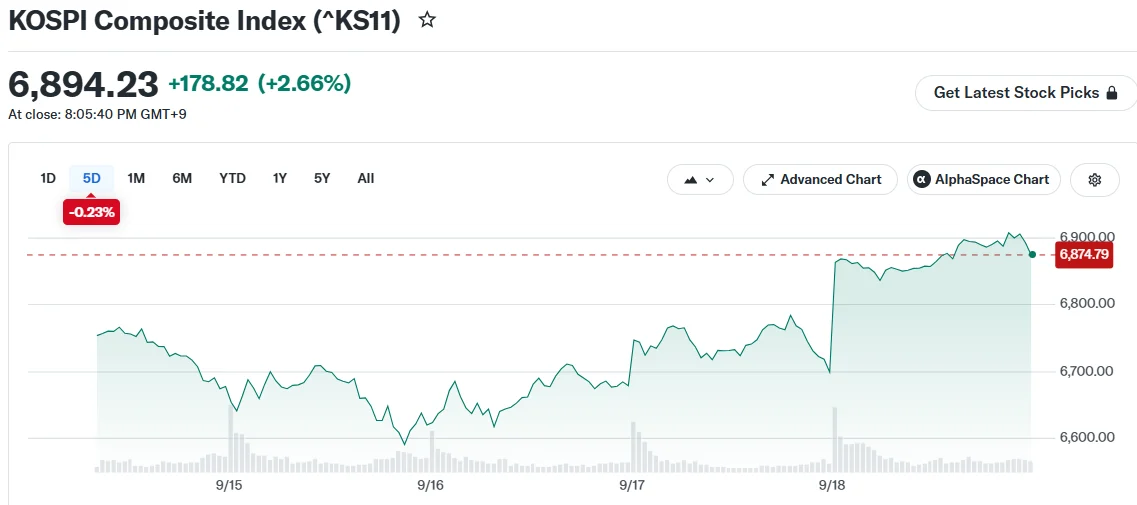
In a research note released on Friday, UBS analyst Yong-Suk Son outlined the rationale behind the downgrade. The revision includes a lower implied price-to-earnings ratio of 7 times, down from 8 times previously, as macroeconomic challenges intensify despite continued strength in corporate profit growth.
A significant warning sign emerged in September when consensus earnings-per-share projections turned negative for the first time in 2023. The month-over-month decline of 0.7% marks a reversal from the positive momentum seen throughout earlier months, with previous upgrades in the memory semiconductor sector now being unwound.
However, UBS maintains an optimistic long-term view on profitability, projecting earnings-per-share expansion of 256% for 2026 and 38% for 2027. Son indicated that the index is likely to trade within a narrow range until third and fourth quarter earnings releases provide additional insight into whether these growth projections remain achievable.
Monetary Tightening and Energy Costs Drive Bond Yields Up
South Korea’s central bank has implemented two rate increases since July. As a result, the yield on 10-year government bonds has surged to 4.5% from 3.4% at the beginning of the year. Meanwhile, crude oil prices hovering above $100 per barrel continue to fuel inflationary pressures.
Currency strength presents an additional challenge for exporters. UBS calculations suggest that each 1% appreciation in the Korean won corresponds to approximately a 1.1% decline in KOSPI earnings.
The investment bank established an optimistic scenario target of 9,200 and a pessimistic scenario target of 5,100 for the KOSPI, a broad range that underscores the high degree of uncertainty surrounding the market’s trajectory.
From a sector perspective, UBS continues to favor memory chip manufacturers. The firm identifies Samsung Electronics and SK Hynix as preferred holdings. Nevertheless, the bank is gradually rotating toward value-oriented and quality names that provide shareholder distributions, acknowledging weakening market momentum and tightening financial conditions.
Regional Markets and Semiconductor Stocks Advance
Meanwhile, Asian equity and fixed-income markets recorded modest gains on Friday as energy prices retreated. Brent crude decreased 0.8% to approximately $104 per barrel, providing some relief from inflation concerns.
Samsung Electronics and SK Hynix shares both posted gains following a rally in a prominent US semiconductor benchmark. US equities had recorded their strongest performance since August in the previous session, recovering from declines that followed the Federal Reserve’s first rate increase since 2023.
The yield on 10-year US Treasury securities dropped nine basis points to 4.93% as oil prices eased. Earlier in the week, the yield had reached 5.02% in the aftermath of the Fed’s policy decision.
MSCI’s Asia-Pacific equity benchmark advanced 0.5%, although declining stocks outnumbered advancing ones, indicating that the rally lacked broad market participation.
The pullback in energy costs could provide monetary authorities with additional time to evaluate the effects of restrictive policy measures, potentially offering near-term support for both equity and bond markets.
The post UBS Slashes KOSPI Forecast to 8,000 Amid Rising Rates and Energy Costs appeared first on Blockonomi.
TLDR
- KIDZ AI secured $1.9 million to support KIDZBot production and wider deployment.
- Classover Robix will lead robotics hardware development and campus distribution.
- KIDZBot combines coding tools, robotics software, curriculum, and teacher support.
- Android apps are now operational, while iOS versions remain under development.
- KIDZ stock fell 5.81% pre-market after closing the prior session 2.99% higher.
KIDZ AI (KIDZ) shares secured $1.9 million in new financing to support KIDZBot manufacturing and commercial deployment. The company also created Classover Robix Inc. to manage robotics hardware development and institutional distribution. KIDZ stock fell 5.81% pre-market to $2.92 after closing 2.99% higher at $3.10.
KIDZ AI Inc., KIDZ
KIDZ AI Funding Supports KIDZBot Expansion
KIDZ AI raised the capital through its previously announced $500 million senior secured convertible note financing facility. The company plans to direct net proceeds toward KIDZBot production and broader commercial rollout. Placement fees and other offering expenses will reduce the final amount available for operations.
KIDZBot serves as the company’s educational robotics platform for coding, robotics, and hands-on technology learning. The company plans to expand manufacturing capacity as it prepares the platform for wider distribution. KIDZ AI also expects the funding to support development across its wider education ecosystem.
The company recently presented KIDZBot at the 2026 EdTechX Awards, where the product reached finalist status. That recognition gave KIDZ AI additional visibility as it develops the robotics platform. The company now aims to move from product development toward broader classroom and institutional use.
Classover Robix Targets Hardware and School Distribution
KIDZ AI formed Classover Robix Inc. as a dedicated subsidiary for hardware development and distribution. The unit will focus on original equipment partnerships, campus sales, and expanded robotics offerings. Management also plans to use the subsidiary to support future hardware sourcing and product development.
The company may explore partnerships covering humanoid robots, robotic arms, quadruped robots, and wheeled autonomous platforms. These products could support the company’s software, curriculum, and classroom programs. However, KIDZ AI has not announced specific hardware partners or commercial agreements.
KIDZ AI has started introducing KIDZBot to existing registered users and educational partners. It has also opened discussions with multi-state high school networks about possible classroom deployments. Those discussions could provide early distribution channels as the company develops its institutional sales strategy.
KIDZBot Software and Curriculum Build Out
KIDZ AI has completed Android versions of its Kidzqbot and Kidzbricks applications. The company continues developing iOS versions for both applications. Each app supports visual block coding, robotics interfaces, and guided technology experiments.
The company is also building a KIDZBot curriculum around robotics, coding, and practical technology skills. It plans to pair that curriculum with educator training and classroom onboarding materials. This approach combines hardware, software, lessons, and teacher support within one education package.
KIDZ AI also secured a presentation slot at the 2026 AI in Education Conference. The December event will feature the company’s work on hands-on learning systems and measurable outcomes. The presentation adds academic exposure as KIDZ AI develops KIDZBot for secondary education markets.
The post KIDZ AI (KIDZ) Stock: Surge as $1.9M Funding Backs KIDZBot Expansion appeared first on Blockonomi.
CryptoPotato
Just a few days after receiving major blows from the US Federal Reserve and the Senate, bitcoin’s price suddenly skyrocketed by a few grand and topped $80,000 for the first time in over ten days.
The altcoins have followed suit, with ETH surging past $2,550, while XRP has rocketed to over $1.35. Naturally, the liquidations are on the rise.
Recall that the primary cryptocurrency slumped to $75,000 on Tuesday evening after the CLARITY Act setback in the US Senate. Although the asset defended that zone, more volatility ensued a day later when the Fed hiked rates for the first time since July 2023.
However, BTC rebounded almost immediately after the initial shock and went past $76,000. It kept fluctuating in the following days, but the bulls appeared to be in control. Today’s decision by the Bank of Japan to increase the rates to a 31-year high was well received by the cryptocurrency, which jumped to just over $78,000.
It remained there for hours before it went on the offensive minutes ago, skyrocketing to over $80,000. This level was last breached on September 7.
Most altcoins have marked substantial 2-3% gains over the past hours as well. Ethereum has seemingly reclaimed the $2,550 level after a 2.3% hourly jump, while XRP is above $1.35 after a 3% increase. SOL and BNB have marked slightly more modest gains.
Data from CoinGlass shows that $192 million worth of over-leveraged positions were wrecked in the past hour, with shorts responsible for more than $183 million. BTC holds the lion’s share ($119 million), followed by ETH ($36 million).
On a daily scale, the numbers are even higher, with $450 million wrecked. $390 million was from shorts. In total, more than 100,000 traders have been wiped out within this timeframe.
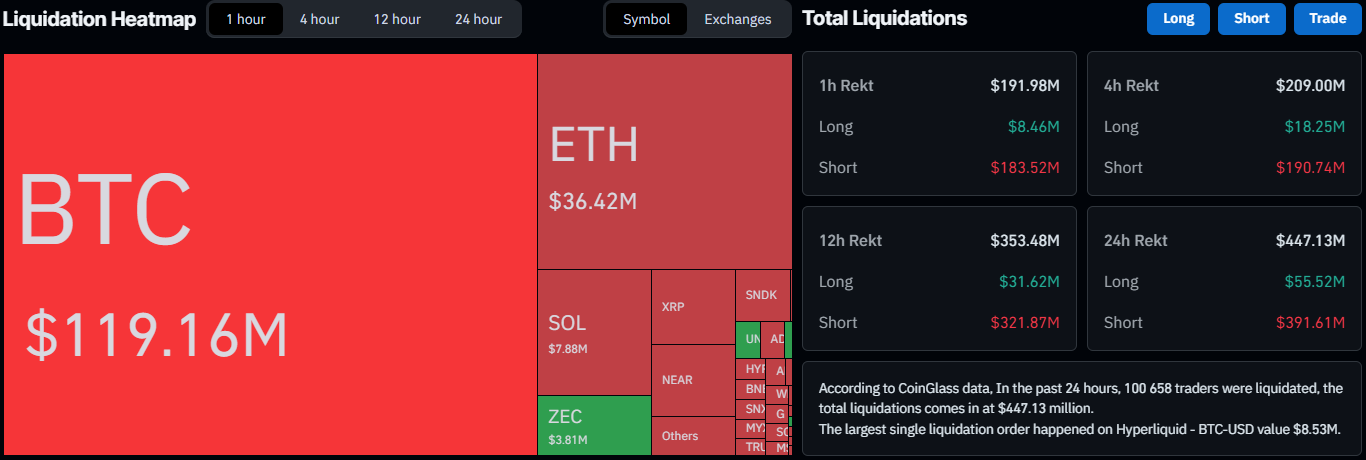
The post Bitcoin Price Suddenly Rockets Past $80K Leaving $180M in Shorts Liquidated appeared first on CryptoPotato.
NEAR exploded 25% in the past day to reach about $3.60, its highest level since the start of 2025.
Many analysts have praised its strong performance and expect further short-term gains. At the same time, two important indicators suggest a correction is just as plausible.
‘Phenomenal’ and ‘Fabulous’
The broader cryptocurrency market has flashed green today (September 18), and NEAR is among the top performers. However, the sector’s revival isn’t the sole reason for the asset’s rally.
Several hours ago, NEAR Protocol revealed on X that users can now trade perpetual futures by default. Specifically, they can open a position from the account they already use, and no one can trace their actions. The feature is powered by Hyperliquid.
Michael van de Poppe classified the asset’s price chart following the resurgence as “absolutely phenomenal.” He suggested NEAR is nearing its final point of resistance and said it’s just a matter of time before it reaches $5. Shortly after, he used another superlative to describe what has happened to the token:
“NEAR is such a fabulous chart. Probably we’ll be getting near towards a short-term top on this one, and therefore, buying the dip is the game. Next target remains to be $5 for me.”
Other market observers who recently chipped in include X users CW and Altcoin Sherpa. The former claimed that NEAR has three sell walls up to $4.80, with the first almost broken. The latter said they are waiting for a potential dip to $3.20 to enter but think “this goes decently higher in the future.”
The Bearish Signals
NEAR’s sudden price explosion has pushed its Relative Strength Index (RSI) into overbought territory at 82. This typically indicates the asset may be gearing up for a pullback, while ratios below 30 are often seen as buying opportunities.

Another cause for concern is NEAR’s exchange netflow. Over the past few days, inflows have significantly outpaced outflows, suggesting some investors have shifted from self-custody to centralized platforms, increasing immediate selling pressure.

The post NEAR Hits Highest Price in 20 Months: Why One Analyst Calls the Chart ‘Phenomenal’ appeared first on CryptoPotato.
XRP whale activity on Binance has increased sharply. In fact, large XRP holders have moved around 1.6 billion tokens to Binance over the past 30 days.
According to CryptoQuant, this is the highest level seen in roughly six months.
Whales On The Move
The rise indicates that more XRP is being transferred by large wallets compared with previous months. Whale inflows had been falling steadily after March. The metric also reached low levels in May, June, and July. However, the trend started to change in August. In recent weeks, whale inflows have gained momentum.
The movement is important because XRP sent to an exchange becomes easier to trade. This can increase the amount of the crypto asset available in the market in the short term.
However, large transfers to Binance do not automatically mean whales are preparing to sell. This cohort of investors may move tokens to exchanges for several reasons. They could be preparing for trades, or they may also be managing liquidity or moving funds between wallets and exchanges.
XRP had a strong run last month. The token gained around 70% during its August 17-21 rally. The move came as large wallets increased in number. Santiment found 85 new wallets holding at least 1 million XRP just two days before the sharp move, which suggested stronger demand and reduced available supply. But the rally came to an end after the US Senate failed to advance the CLARITY Act. It was among the biggest losers this week after an 8% plunge on September 15th.
The token briefly neared $1.25 before stabilizing near $1.33.
Opportunity?
CasiTrades said XRP’s recent move below the 0.5 Fibonacci retracement invalidated the wave structure she was tracking. The setup had pointed to a possible final move toward $1.78. The asset now needs to reclaim and hold the macro 0.618 level at $1.65 to improve the outlook.
Until then, lower Fibonacci levels remain in play. The macro 0.786 level near $1.10 remains a significant area. The analyst said the level could act as a potential C-wave target. However, she also warned that XRP could fall toward $0.87 if selling pressure continues.
Even ChartNerd speculated that another drop remains on the cards. While short-term traders lose patience during this weakness, long-term holders may see the current price as an “opportunity.” Along similar lines, EGRAG CRYPTO said that XRP trading below $2 could be a “life-changing opportunity” for investors.
The post 1.6 Billion XRP Sent to Binance as Whale Activity Explodes to a Six-Month High appeared first on CryptoPotato.
UNI is the best-performing cryptocurrency (from the top 100 list) today (September 18), posting a whopping increase of 30% and reaching a 10-month high of nearly $9.20.
Here’s what fueled the rally and what the next potential targets are.
The Catalysts
Perhaps the main driver of the move is the US Securities and Exchange Commission. The regulator issued its Innovation Exemption, which gives temporary relief for on-chain trading of certain tokenized stocks. Hayden Adams (inventor of the Uniswap Protocol and CEO at Uniswap Labs) said the most bullish news is not the official statement, but the comment letter from SEC Commissioner Hester Peirce, which reads:
“Truly decentralized systems that are driven by autonomous software… do not need an exemption.”
Adams said this sort of immunity applies to permissioned pools on Uniswap v4, creating a pathway for compliant trading in the US for assets and users where that is necessary.
Another catalyst is the broader recovery of the cryptocurrency market, which, despite the CLARITY Act’s failure and the interest rate hike in the United States, is in green territory today. Bitcoin (BTC) surpassed $78,000, Ethereum (ETH) reclaimed $2,500, while popular altcoins like NEAR, WLD, DOT, and HYPE have jumped by double digits over the last 24 hours.
What’s Next?
According to multiple analysts, UNI has much more fuel left to post additional gains. X user Altcoin Sherpa believes the next area is around $11 if BTC remains steady.
CW anticipates the asset’s upward trajectory to proceed “smoothly” up to $12.75, where the long-term trend line and a sell wall exist. “It will encounter strong resistance thereafter,” they added.
For his part, Crypto With Gopal noted that UNI is pushing toward the $10 resistance after a long consolidation inside a rectangle structure. He thinks a clean breakout above this level could signal a major momentum expansion to the $20 target.
Meanwhile, the token’s Relative Strength Index (RSI) suggests a short-term pullback may be coming. The ratio has increased to 88, signaling that UNI has entered an extreme overbought zone and could be due for a correction. Conversely, readings below 30 are typically seen as buying opportunities.

The post Why Is Uniswap (UNI) Up 30% Today? appeared first on CryptoPotato.
This Friday, we examine Ethereum, Ripple, Cardano, Binance Coin, and Hyperliquid in greater detail.
Ethereum (ETH)
This week, Ethereum is up 2% after buyers defended support at $2,400. As long as this key level holds, the price has a good chance to make higher highs in the near term.
Previously, sellers returned at $2,500 and pushed ETH into a pullback, which appears to be ending at the time of this post. Another test of this level could lead to a breakout and a renewed rally, as long as the buy volume supports it.
Looking ahead, Ethereum remains in an uptrend with clear higher lows. This places bulls at an advantage, which they can capitalize on by breaking above $2,500. That would also allow ETH to expand all the way to $2,800 before sellers make their presence known again.
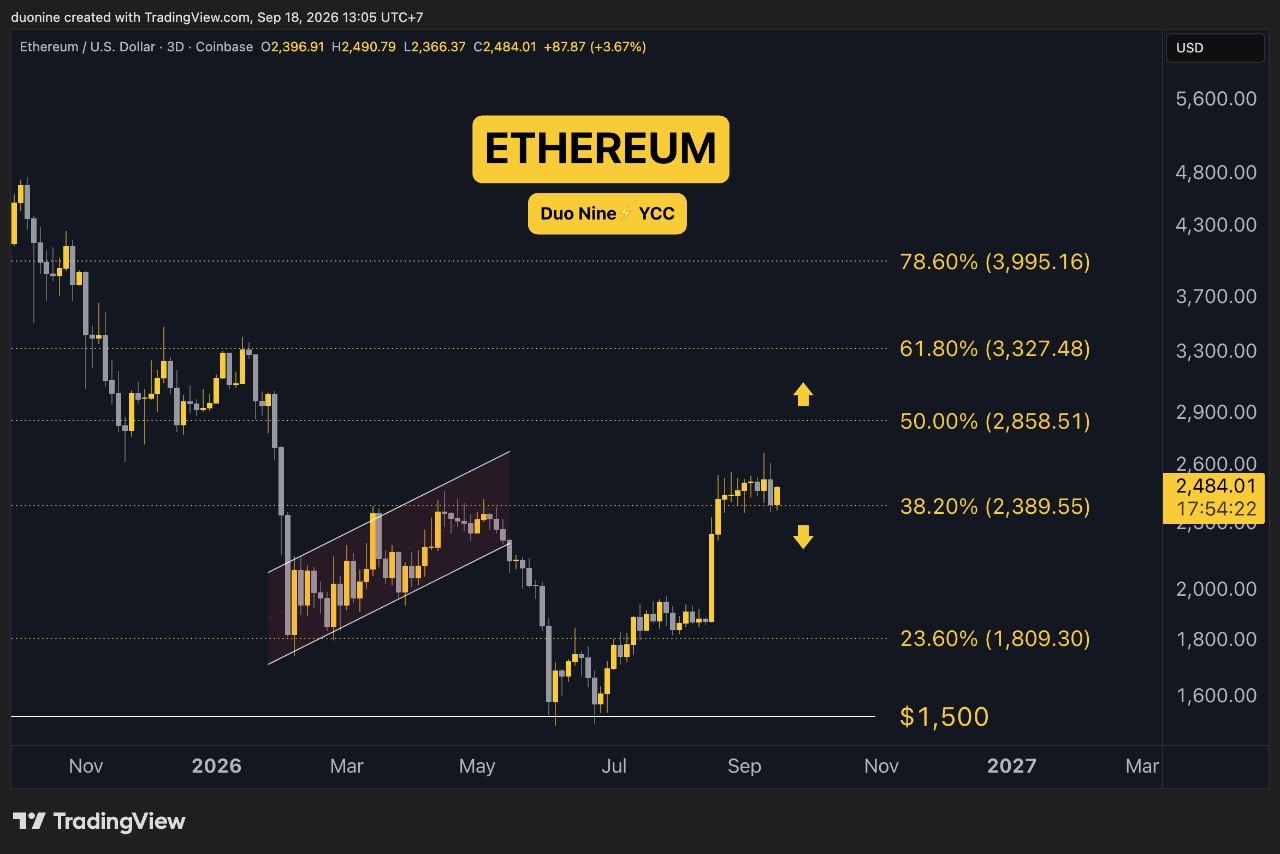
Ripple (XRP)
XRP also closed the week in green, albeit with a modest 1% gain. Still, this allowed buyers to push it above the support at $1.3, which was momentarily lost. This recovery is a positive sign and could encourage further gains in the near future.
The recent correction was also somewhat expected considering that this cryptocurrency rallied to $1.6 in less than a week. Forming a strong base around $1.3 is also critical if XRP wants to break $1.6.
Looking ahead, XRP is forming a clear bullish pattern with higher highs and lows. If the current resistance breaks, then $2 becomes the next major target and will likely act as a magnet for buyers.
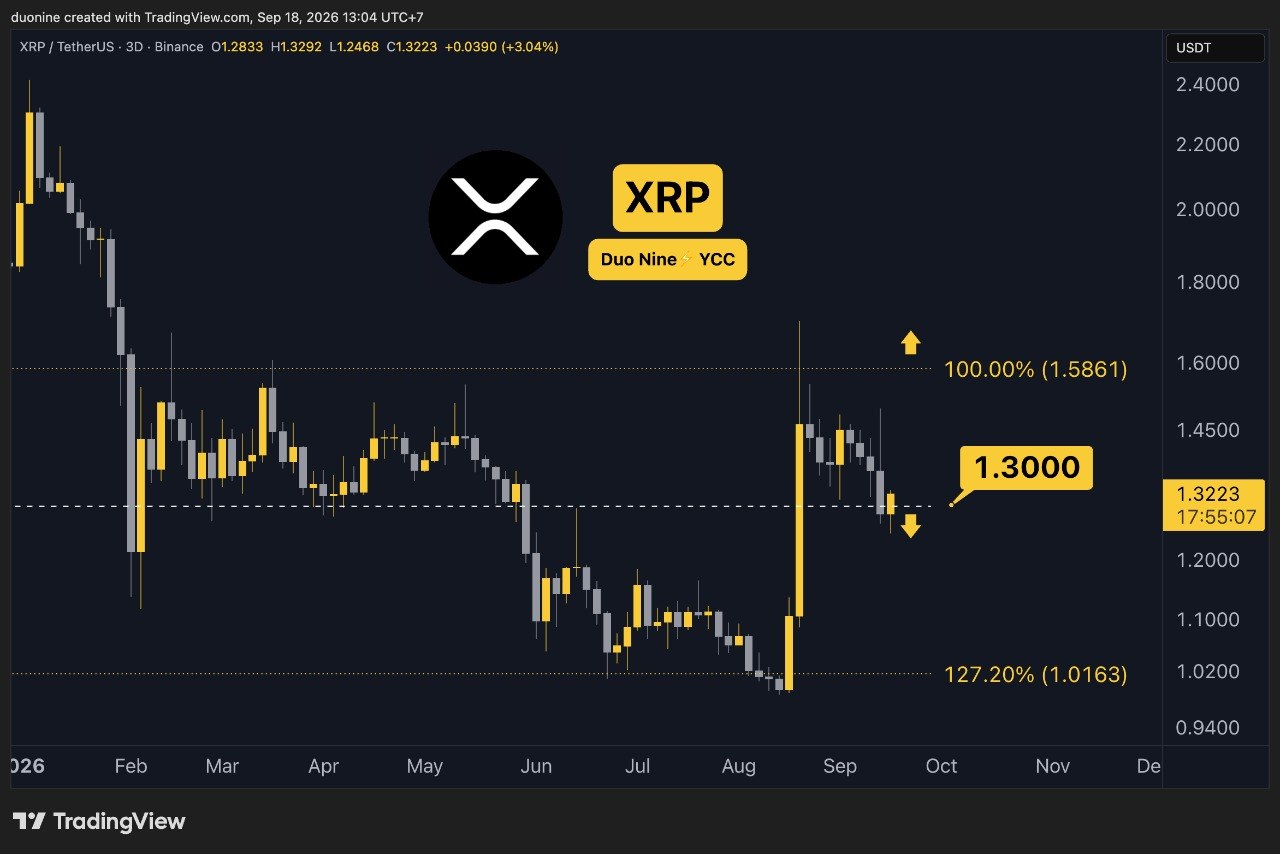
Cardano (ADA)
ADA had a good week with an 8% rally that saw the price reverse the recent losses and return on the offensive, with the $0.23 resistance as its major target. Should $0.23 break on a renewed push, this cryptocurrency will aim for $0.30 next.
The current support is just under $0.20 and held well in the recent test. This allowed Cardano to attract new buyers, who are currently dominating the chart. The question is if sellers will return again at $0.23.
Looking ahead, ADA needs to break the current resistance to confirm its bottom under $0.15 and allow the price to expand quickly toward $0.30 and beyond. For that to happen, buyers will have to bring stronger volume.
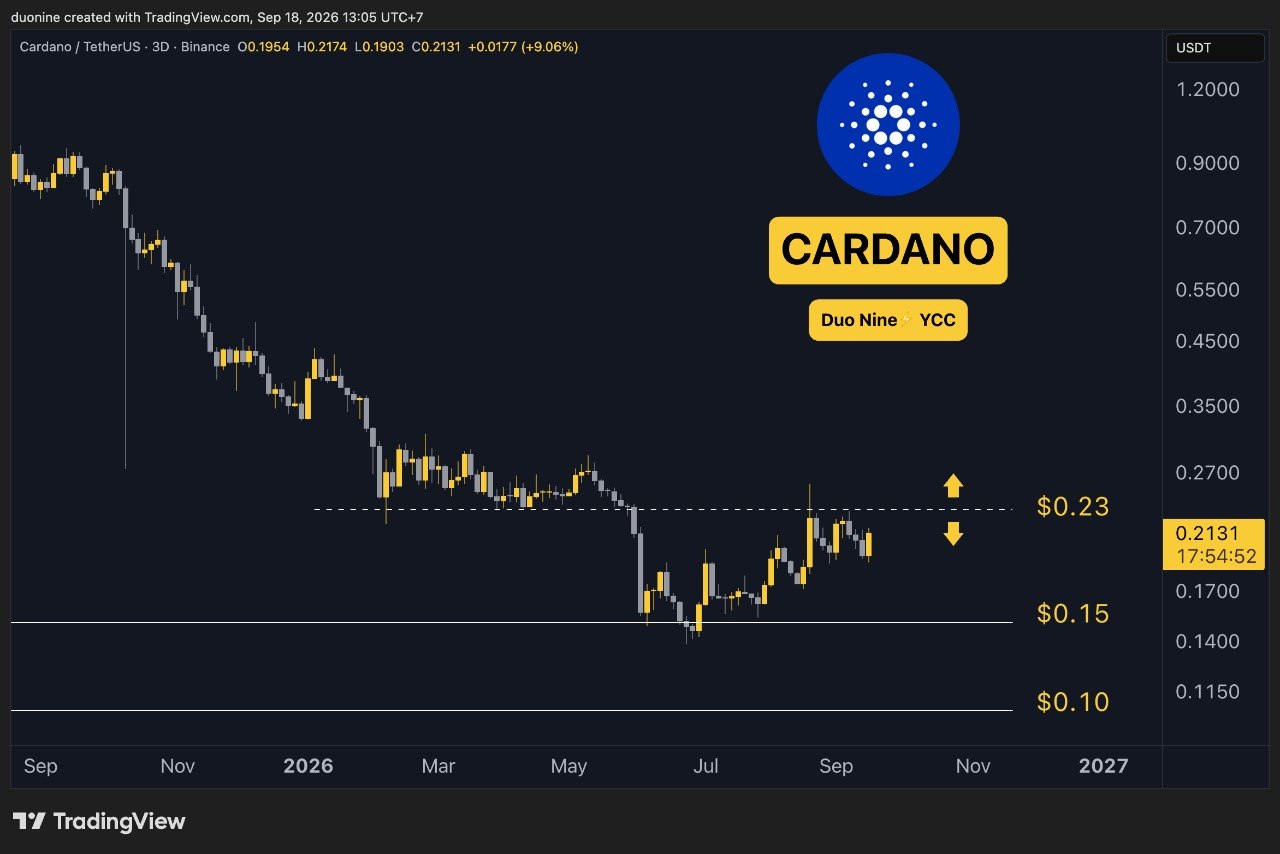
Binance Coin (BNB)
Binance Coin closed 4% higher after buyers managed to re-confirm the support at $690. This returned confidence in the price action, which is now aiming to make a higher high and, hopefully, aim for $900 next.
This also suggests that the drop under $580 in July was a bearish trap and local low. That’s because, since then, the price has been going up only, despite any pullbacks, which are normal.
Looking ahead, it is likely that BNB will continue its rally and revisit the price levels from early 2026 at around $900. That’s where buyers and sellers will become very active, and the winner will decide how this cryptocurrency closes the year.
Source: TradingView

Hype (HYPE)
This week, Hyperliquid concluded its correction and pumped by 11%, making it the best performer on our list. While the price did not make a new record, it’s very close to doing so and may soon move beyond $90, if this momentum persists.
Hopefully, buyers will turn $85 into a key support. That would allow the price to expand further and eventually aim for $100, which is a key psychological level that everyone is waiting for.
Looking ahead, HYPE’s rally has a good chance to continue, but it is likely to face difficulties as soon as it approaches a three-digit valuation. That’s because sellers could return there to book profits just as another record price is made.

The post Crypto Price Analysis Sep-18: ETH, XRP, ADA, BNB, and HYPE appeared first on CryptoPotato.