Cryptocurrency Posts
Crypto Briefing
This incident underscores the urgent need for stricter AI regulations and oversight to prevent misuse and enhance public safety.
The post Mindgard says it jailbroke Moonshot AI’s Kimi models into giving sarin and terror attack instructions appeared first on Crypto Briefing.
Shopify's Canvas could democratize custom store creation, enhancing merchant autonomy and potentially increasing platform loyalty.
The post Shopify debuts Canvas, an AI-powered store builder that runs on conversation appeared first on Crypto Briefing.
Amazon's Strands Decider 2B highlights the growing trend towards efficient, open-source AI tools, impacting AI development and competition.
The post Amazon unveils Strands Decider 2B as an open-source rival to Jev appeared first on Crypto Briefing.
Amazon's Strands Decider 2B could reshape AI market dynamics, challenging competitors like Anthropic and influencing future AI innovations.
The post Amazon unveils Strands Decider 2B for rapid AI decision-making appeared first on Crypto Briefing.
Solana's transaction surge highlights its potential as a robust settlement layer, but increased validator strain poses sustainability challenges.
The post Solana logs over 14 billion transactions in Q3 2026, its busiest quarter yet appeared first on Crypto Briefing.
Bitcoin Magazine
Bitcoin Magazine
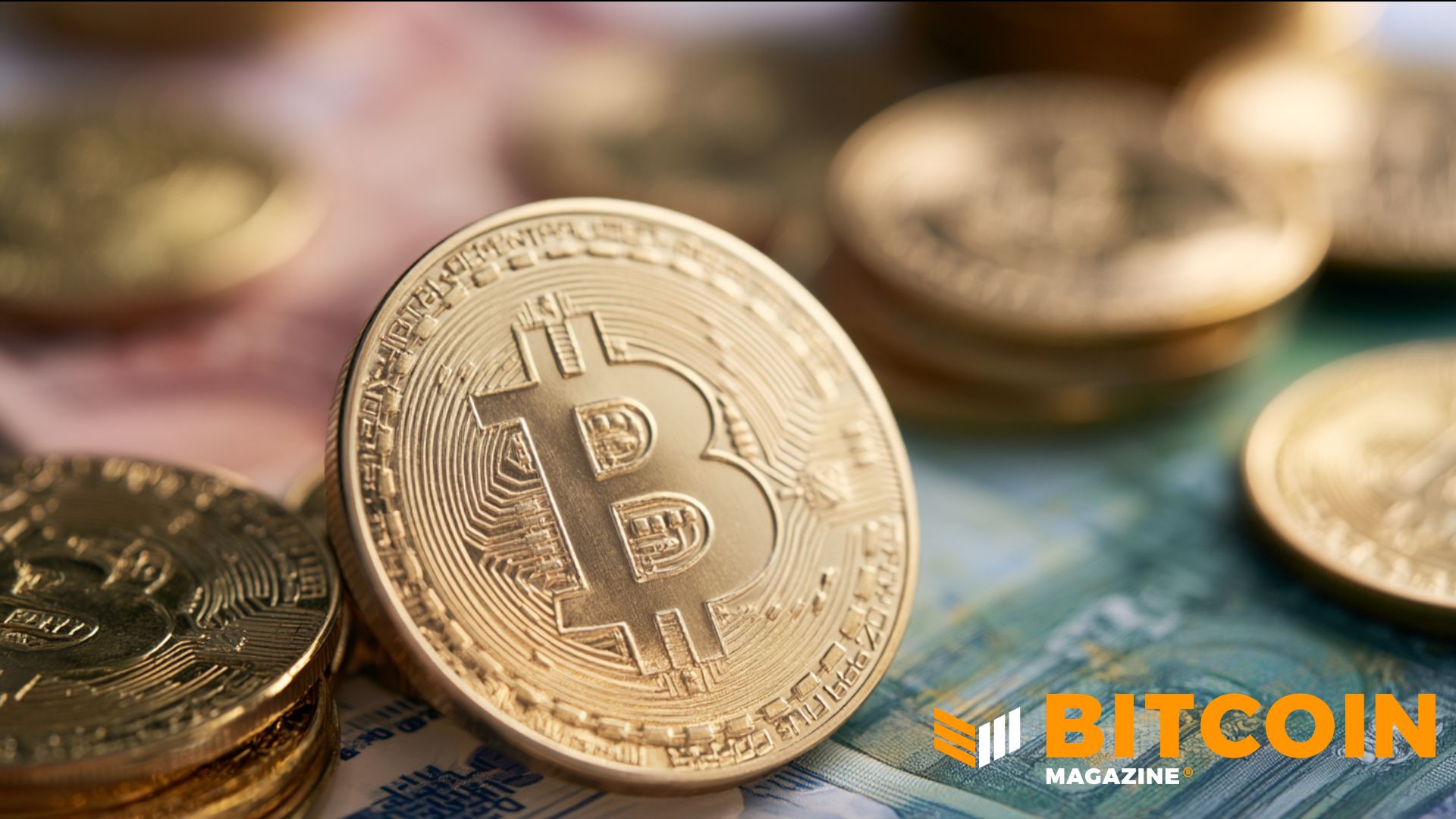
21bitcoin Now Pays Interest on Idle Euros, Payable in BTC
Austrian Bitcoin platform 21bitcoin will start paying 1.21% annual interest on customers’ uninvested euro balances from today — and letting them collect it in BTC, with no conversion fee.
The company says it’s the first provider in Europe to pay savings interest directly in Bitcoin.
The interest covers every euro in the account, including cash waiting for the next savings-plan purchase or reserved for an open limit order, the company said. There’s no minimum deposit and no lock-up.
21bitcoin präsentiert den Bitcoin Bonus
— 21bitcoin
Ab sofort erhältst du auf Euro-Guthaben variable Zinsen von 1,21% p.a.*
Und das Beste: Wir tauschen sie auf Wunsch direkt & ohne zusätzliche Gebühren in Bitcoin um.
Aktiviere Zinsen jetzt direkt auf dem Startbildschirm in deiner… pic.twitter.com/nTVOfSZnuk&
(@21bitcoinApp) October 1, 2026


“Building wealth with Bitcoin does not begin with the purchase itself, but with the euros set aside for it,” said co-founder and CEO Daniel Winklhammer.
The money is paid by Volksbank Raiffeisenbank Bayern Mitte eG, a German bank that has owned a stake in 21bitcoin since 2023.
Customer euros sit in a segregated trust account at the bank as instant-access savings. 21bitcoin says it passes the interest on in full and keeps no margin. The company is pitching this as a deliberate contrast to the high-yield promises that brought down several crypto lenders.
The rate is variable, and interest is subject to German withholding tax.
The launch follows 21bitcoin’s zero-fee Bitcoin savings plan, introduced earlier this year. The company last year teamed up with VR Bank Bayern Mitte eG and Sopra Financial Technology GmbH to launch a pioneering European pilot project in hopes to develop an institutional-grade Bitcoin-backed credit product.
Bitcoin-backed loans, insured cold storage, and multisig inheritance custody are slated for 2027.
Founded in 2021, 21bitcoin holds a MiCAR licence in Austria and is authorized by Germany’s BaFin. It reports more than 100,000 users and over €650 million in trading volume.
This post 21bitcoin Now Pays Interest on Idle Euros, Payable in BTC first appeared on Bitcoin Magazine and is written by Mathew Di Salvo.
Bitcoin Magazine

The Quantum Issue: Quantum Isn’t Coming For Your Bitcoin
For as long as Bitcoin has existed, new forms of FUD (fear, uncertainty, and doubt) have been used to predict its demise. Despite this, Bitcoin has grown into a multi-trillion dollar asset and begun to take its place in the global monetary order. In recent months, the specter of a cryptographically relevant quantum computer (CRQC) enabling an attacker to recreate secret keys from public keys and sign Bitcoin transactions moving other people’s coins has returned as an evolved form of FUD. Is this a realistic threat to Bitcoin’s continued growth? In a word, no. There is no evidence that a CRQC will be built within a decade, and it remains unknown whether such a machine will ever be built. The quantum threat remains FUD.
State of the Art
To date, no quantum computing machine has computed anything out of reach of a precocious 6-year-old (confirmed empirically). Quantum computers are remarkable technology and showcase the truly science fiction worthy capabilities of the modern world. These devices harness foundational technologies such as optical tweezers, laser cooling, superconducting flux qubits, electromagnetic traps, dilution refrigerators, and many more. Within these devices individual qubits are coerced into specific subatomic states (different for each candidate technology), entangled into superpositions, manipulated to represent computations, and then their subatomic properties are read and interpreted. The astounding truth is that these devices exist, and can be manipulated to produce meaningful computations across a handful of inputs. The cold reality check is that (for an example candidate tech.) to do a computation that a small child can do requires enough power to air condition a Texas high school, many hours of setup, and further hours of post-processing.
Reading the Future
I know what you’re thinking, “but there’s so much money flowing into quantum computing”. Does money flowing into a field correlate with the rate of real-world technological progress in that field? Not really. In fact, it can be argued that until the correct underlying technology has been developed and the product-market fit confirmed, money flowing into an area has a negative correlation with the likelihood of applicable technology being developed. This can be clearly seen by comparing NASA’s Space Shuttle program to SpaceX’s Falcon 9. SpaceX took (mostly) known science and reduced it to practice to satisfy a demonstrable market need for reliable and lower cost access to space, at a program cost of less than $5 billion to first crewed mission. The Space Shuttle cost roughly $50 billion to reach its first crewed mission. Not only did Falcon 9 cost an order of magnitude less to develop, but it has a perfect crew safety record to date. There are many reasons for these differences, but it goes to show that no amount of money makes a technology that is not ready practicable. Translating this to quantum computing: we can see that with tons of money being thrown at the problem, technology demonstrations at massive cost are possible. But this tells us nothing about whether more money will bring us the holy grail of stable, low-error qubits (like the reliability of the Falcon 9). No amount of continued development on the Space Shuttle program would ever have produced the low cost, high reliability of Falcon 9, and it’s entirely probable that no amount of continued development, at any cost, will ever make any of the current quantum computing technologies reliable enough to break a single key pair.
Now, you might be thinking, “but what about all the recent advancements?” There are two important things to keep in mind about recently published advancements. First, many of these advancements have been advancements in pure mathematics only. For example, the recent Google paper which had such an important result that they chose to redact the theoretical quantum circuit rather than risk it being used to break important cryptographic systems. This may seem like massive progress toward the future of CRQCs, but in fact it changed nothing. Unless (or until) the quantum hardware has its Falcon 9 moment, there simply is no device which comes anywhere near the stability and scale needed to run the redacted circuit. It’s pure theater to hide a circuit designed for a device which may never exist. Second, on the hardware side itself, we see many new results and bits of progress published in a given year, but how many of these relate to the same quantum computing candidate technology? How many represent merely a starting over after a prior result ended in a dead end? The reality is that these advancements do not represent some linear track toward eventual success. They represent the breadth-first search of an infinite possibility space within which quantum researchers are hoping to find a path along which they can proceed for even a modest distance without reaching yet another dead end.
When we look at the reality of the future of quantum computing, it’s hazy at best. There are promising technological developments. Especially, to my eye, in the area of neutral atom devices. But it’s far too early to tell if there’s a path open toward an eventual CRQC along any of the currently known branches or if more restarts are in our future. If, at some point, we see many iterations of the same candidate technology implementing progressively more capable devices, and computing meaningful results that a precocious child cannot also compute, we can revisit this discussion with different evidence.
In Theory
There are two possible explanations for the repeated failure of quantum research to develop a CRQC over many decades. It’s possible that it’s just a hard problem and we’re continuing to apply science and engineering to solve it and one day the ingenuity of the human species will prevail as it has in the development of the Internet, the smart phone, social media, and Bitcoin (left to the reader to decide which of these are positive developments). On the flip side, it may be that developing a CRQC is either impossible or will remain forever outside our grasp. Consider what it would mean for a CRQC to exist: the machine would have to represent within its superposition a field of possibilities the same size as the complexity of the cryptographic problem to be solved. I.e. to break the 128-bit security of the elliptic curve discrete log on Bitcoin’s secp256k1 curve, the quantum superposition would have to represent all possible values of a 128-bit number. In classical computing, representing all such values would require more computer storage (by many orders of magnitude) than humans have ever produced. If there is even the slightest granularity to the quantum superposition (i.e. the quantum superposition is not perfectly continuous across all possible values) then the quantum computer cannot ever become cryptographically relevant. If the energy required to hold a superposition scales with the complexity of the field being represented then a quantum computer cannot ever be cryptographically relevant. The contemporary understanding of quantum physics does not rule out either of these possibilities.
Conclusion: Bitcoin Cannot Rest
Despite all of the preceding, Bitcoin development toward new cryptographic algorithms must continue. While a quantum attack on Bitcoin’s cryptography is not imminent by any means, it’s entirely possible that another flaw could be found through other means. We know that certain elliptic curves have been found to have weaknesses, and secp256k1 could be next. Bitcoin has survived as long as it has because attacks on the system have strengthened it and that will continue to be true as the quantum FUD attack plays out. The development of P2MR or P2TRv2, of SHRINCS, SPHINCS, IBC, ML-DSA, and more post-quantum signature schemes will eventually lead to improvements to Bitcoin’s resilience in the face of future attacks even if an actual CRQC is never developed.

This piece is featured in the latest Print edition of Bitcoin Magazine, The Quantum Issue. We’re sharing it here as an early look at the ideas explored throughout the full issue.
This post The Quantum Issue: Quantum Isn’t Coming For Your Bitcoin first appeared on Bitcoin Magazine and is written by Brandon Black.
Bitcoin Magazine
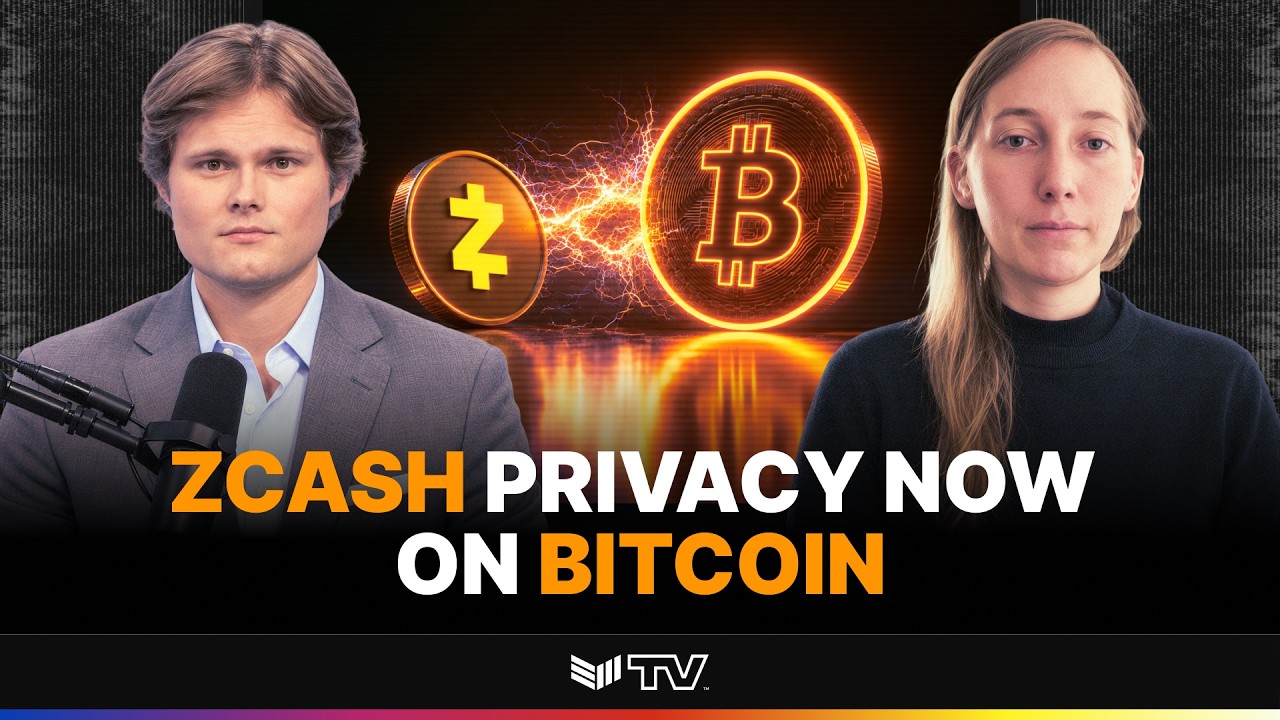
Bitcoin Privacy Breakthrough a Zcash Killer? | Misha Komorov, Alloc Innit
Researchers have proposed a way to make Bitcoin private without changing Bitcoin itself. Misha Komarov, co-founder of alloc/init, explains Shielded Bitcoin: zero-knowledge proofs that hide the sender, receiver, and amount of a Bitcoin transfer, with no soft fork, no custodians, and no bridges. He covers how Bitcoin PIPEs make it possible and what the proposal still needs. It is a research proposal, not a finished product.
Chapters:
0:00 Shielded Bitcoin: Private Bitcoin Transactions With Zero-Knowledge Proofs
0:38 How Bitcoin PIPEs Make Privacy Possible Without a Soft Fork
1:42 Do Indexers and ZK Rollups Require Trust?
3:16 Shielded Bitcoin vs. Monero and Zcash
4:21 What Privacy Shielded Bitcoin Protects
5:59 How Private Are Early Users? The Small Privacy Set Problem
7:37 Is Shielded Bitcoin an Altcoin Killer?
9:12 Fees, Block Space, and Larger Shielded Transactions
10:50 Who Needs Private Bitcoin? Wrench Attacks and Corporate Treasuries
12:20 Dark Pools, Governments, and the Next Wave of Bitcoin Buyers
DISCLAIMER: The views and opinions expressed in this show are those of the participants and do not necessarily reflect the official policy or position of BTC Inc., Bitcoin Magazine, or any affiliated entities. This content is provided for informational and educational purposes only and should not be construed as investment, legal, tax, or accounting advice. Nothing contained in this show constitutes a solicitation, recommendation, endorsement, or offer to buy or sell any securities or financial instruments. Viewers should consult their own advisors before making financial or business decisions.
This post Bitcoin Privacy Breakthrough a Zcash Killer? | Misha Komorov, Alloc Innit first appeared on Bitcoin Magazine and is written by Patrick Green.
Bitcoin Magazine

Bitcoin’s Institutional Era Has Arrived | Robinhood VP of Crypto Institutions Nicola White
Robinhood is bringing crypto perpetual futures to US customers, with up to 10x leverage on Bitcoin and Ether. Nicola White, Robinhood’s vice president of institutional crypto, explains how the CFTC no-action letter, the Bitstamp exchange, and Robinhood Derivatives made it happen, and why the company wants markets to be always on.
Chapters:
0:00 Robinhood’s Hood Summit: 24/7 Stock Trading and US Crypto Perps
0:40 Why Robinhood Wants Markets That Never Close
1:32 Bitstamp Perps and the CFTC No-Action Letter
2:19 Tokenized Stocks, the Basis Trade, and the Path for US Perps
3:20 Bitstamp’s Volume and the Retail–Institutional Merger
4:54 What Institutions Want to Do With Bitcoin
6:00 Institutional Bitcoin Depth and Large Block Trades
6:49 AI Trading Agents and Robinhood’s Sub-Account Controls
8:29 Lessons From the 2022 Meltdown and US Leverage Limits
10:12 How Bitcoin Changes Finance in 10 Years and What’s Next for Tokenized Stocks
DISCLAIMER: The views and opinions expressed in this show are those of the participants and do not necessarily reflect the official policy or position of BTC Inc., Bitcoin Magazine, or any affiliated entities. This content is provided for informational and educational purposes only and should not be construed as investment, legal, tax, or accounting advice. Nothing contained in this show constitutes a solicitation, recommendation, endorsement, or offer to buy or sell any securities or financial instruments. Viewers should consult their own advisors before making financial or business decisions.
This post Bitcoin’s Institutional Era Has Arrived | Robinhood VP of Crypto Institutions Nicola White first appeared on Bitcoin Magazine and is written by Patrick Green.
Bitcoin Magazine
Mark Moss: The Bitcoin Endgame – BTC to $1 Million by 2030
The Fed just raised rates, yet Bitcoin keeps climbing. Mark Moss, host of the Market Disruptors podcast, explains why he thinks most people are misreading why long-term rates are rising, how a booming economy could be part of the answer, and why he says Bitcoin benefits from both the debasement trade and a bullish technological future.
Chapters:
0:00 Mark Moss on the Fed’s “Token Raise” and an October Pause
1:54 The Flat Yield Curve, Bank Lending, and the 5.1% 10-Year
2:56 Why Bitcoin Is Rising as Rates Rise: “Price Is Truth”
5:40 Bitcoin vs. Gold: The Debasement Trade and a Bullish Future
6:19 Can the US Grow Its Way Out of $40 Trillion in Debt?
10:30 The Monetary Reset Is a Process, Not an Event
13:33 Four Ways Out of the Debt Problem and What Happens in 2029–2030
16:27 Stablecoins, the Genius Act, and Why 6 Billion People Want Dollars
20:14 Institutions Are Buying Bitcoin While Retail Sells
24:29 Bitcoin’s S-Curve, Its CAGR, and a $1 Million Price Target
DISCLAIMER: The views and opinions expressed in this show are those of the participants and do not necessarily reflect the official policy or position of BTC Inc., Bitcoin Magazine, or any affiliated entities. This content is provided for informational and educational purposes only and should not be construed as investment, legal, tax, or accounting advice. Nothing contained in this show constitutes a solicitation, recommendation, endorsement, or offer to buy or sell any securities or financial instruments. Viewers should consult their own advisors before making financial or business decisions.
This post Mark Moss: The Bitcoin Endgame – BTC to $1 Million by 2030 first appeared on Bitcoin Magazine and is written by Patrick Green.
HTTP error 429 on https://cryptoslate.com/feed/
Failed to fetch feed: https://cryptoslate.com/feed/
Failed to fetch feed.
CryptoTicker.io
Ripple released one billion XRP from its escrow accounts on Thursday morning, spread across four transfers of 400, 300, 200 and 100 million tokens. Measured at Thursday afternoon's price, that is worth around $1.49 billion. The price itself barely reacted: XRP traded at $1.48 to $1.49 on Thursday afternoon, just under one percent below the previous day, according to CoinGecko data. Anyone wanting to derive a forecast from this release therefore needs less of the chart and more of an understanding of what this money actually does over the next 24 hours.
The escrow is no secret compartment, but a series of trust accounts on the XRP Ledger that Ripple set up in 2017. At the start of each month part of it expires, and the company can dispose of the amount that comes free. What matters is that Ripple has put most of this monthly release back into new trust accounts in recent years. That return is the number which decides supply pressure, not the billion in the headline.
1 billion XRP out of escrow: what actually happened on October 1
It was the tenth monthly release of 2026 and it followed the familiar pattern. Four transactions, one billion tokens together, settled over the course of the morning. The specialist service U.Today puts the holding that remained in the trust accounts afterwards at 31.845 billion XRP. With a total supply of 100 billion tokens, just under 32 percent therefore remains locked.
Escrow explained briefly
An escrow on the XRP Ledger is a payment fitted with a time lock: the tokens sit on the ledger but cannot be moved until a set point in time. That is not a promise of trust and not a bank's undertaking, but a function of the protocol. Anyone can read which locks exist and when they expire.
31.85 billion XRP stay locked: the arithmetic behind the circulating supply
This is where it gets uncomfortably precise for investors, and for a good reason. The figures for the circulating supply differ markedly depending on the source. U.Today gives a circulating supply of 68.126 billion XRP for the point after the release. CoinGecko, by contrast, reports around 63.09 billion XRP as the circulating amount on Thursday afternoon. The gap of about five billion tokens is not sloppiness on either side.
Why two sources give different circulating supplies
The difference arises at the definition. Count everything that is not in escrow as circulating and you arrive at the higher figure. If a data provider additionally deducts holdings that demonstrably sit with Ripple itself and are not on the market, the figure comes out lower. For your assessment that means market capitalisation and any metric built on the circulating supply carry an uncertainty of several percent in the case of XRP. See two services with different market capitalisations and you have not necessarily found an error.
The second number in this arithmetic is the distance to the peak. The all-time high stands at $3.65 from July 17, 2025. From Thursday afternoon's level, around 59 percent is missing before that value would be reached again. The quarterly comparison looks friendlier: XRP traded at $1.05 at the end of June, which means the third quarter ended with a gain of about 41 percent, calculated on the CoinGecko values for June 30 and October 1.

Return to escrow within 24 hours: where the state of play sits in the ledger
This is the one point in this story you can work out for yourself, without waiting for a report. The XRP Ledger is public, and the escrow holdings of the Ripple accounts can be inspected there. The balance overview at XRPSCAN lets you follow how much of the released billion goes back into new trust accounts within the next day.
As an order of magnitude for placing it: in recent months the return has typically been 700 to 800 million tokens, leaving 200 to 300 million XRP for ongoing purposes and ecosystem programmes. If the return stays in that range, the actual increase in supply is small against a daily turnover that stood at around $2.3 billion on Thursday. Should the return come out markedly smaller, that would be the real story of the month, and it was in none of the morning's headlines.
XRP at $1.49: the next price target sits at $1.70
The range the price has moved in for days is narrow. On Thursday the daily high was $1.51 and the daily low $1.48, with a gain of 0.6 percent over the week and 8.8 percent over the month. In euros that came to about €1.31 per token on Thursday afternoon.
On the upside, the common market commentaries name two levels. The nearer one sits at $1.50 and is the threshold XRP failed at repeatedly through September. The further one sits at $1.70 and counts as the resistance capping October's range. On the downside the area around $1.25 is named. The forecast ranges of the data services diverge, and that is part of the picture: DigitalCoinPrice expects an average of around $1.37 for October, LongForecast month-end prices around $1.13, and CoinDCX a channel between $1.48 and $1.94. These are the respective providers' model calculations and not undertakings.
What you can practically take from this is less a direction than a size. A range of $1.25 to $1.70 means, at an entry of $1.49, around 16 percent of room on the downside and around 14 percent on the upside. Anyone working with leverage should set that width against their own liquidation distance before the next monthly release falls due on November 1.
US spot ETFs hold 1.18 billion XRP: why fund assets are shrinking all the same
On the demand side something shifted in September that has nothing to do with the escrow. The seven American spot ETFs on XRP hold around 1.18 billion tokens between them, which is about 1.18 percent of total supply. In the week from September 21 to 25, a net $75.59 million flowed in, $58.99 million of it into Bitwise's product alone, which with around 413.1 million XRP is the largest holder among the funds. Across September as a whole, net inflows added up to $121.4 million.
The apparent contradiction in this: despite those inflows, the funds' assets under management fell in September. That is no arithmetic error, but a consequence of valuation. A fund that buys new tokens while the price of those tokens falls can be worth less on balance than before. Inflows and fund assets are two different measures, and only the first says anything about institutional investors' willingness to buy. Cumulatively since the products launched at the end of 2025, net inflows stand at about $1.79 billion.

Fed decision on October 28: the date that decides October's range
The date the market commentaries point to most often for October is the US Federal Reserve's interest rate decision on October 28. For XRP that is no coin-specific event, but the usual connection: a market that lives strongly off risk appetite reacts to the rate path. That the commentaries put the date so clearly in the foreground has an uncomfortable side effect for the forecast. It means that expectations for XRP in October are barely driven by XRP itself.
For you this yields a sober order of dates in this quarter: the return to escrow over the coming 24 hours, the Fed decision on October 28, the next monthly release on November 1, and, as the last and most important date for your tax bill, December 31, 2026.
XRP ETN versus direct purchase: 25 percent withholding tax or free of tax after a year
Before the deadline itself, the difference many only notice on selling. There are two ways to bet on XRP in Germany, and they are treated completely differently for tax.
On a direct purchase you hold the tokens yourself, at an exchange or in your own wallet. The sale is a private disposal under section 23 of the Income Tax Act. If more than twelve months lie between purchase and sale, the gain is free of tax, whatever its size. Under one year, a threshold of 1,000 euros a calendar year applies to all private disposals together. The word threshold is to be taken literally: one euro over, and the entire gain becomes taxable, not merely the part above the limit.
An exchange-traded certificate on XRP, so an ETN or ETP at a German trading venue, works differently. The gain from it is investment income. On that, 25 percent withholding tax plus the solidarity surcharge and church tax where applicable fall due, and from the first day. There is no holding period there after which anything becomes free of tax. In return the saver's allowance of 1,000 euros applies, and the custodian usually remits the tax automatically. The running costs of such products are also to be considered, given as 0.95 to 2.50 percent a year depending on the provider. Which products are tradable in Germany and what they cost is set out in the overview of crypto ETFs and ETNs in Germany.
The American spot ETFs are not available to you
The US funds named above, with their 1.18 billion XRP, are in practice not accessible to you as a retail investor in Germany. These funds are not UCITS funds and supply no key information document under the PRIIPs regulation that a broker would have to present to retail clients in the EU. The inflow figures are therefore a sentiment indicator for you, not a route to investing.
Deadline of December 31, 2026: the draft bill and the one-year holding period
This is the number that decides more about your return this quarter than any price level. Since September 8, 2026 a draft bill from the federal finance ministry has been on the table that would bring the taxation of crypto assets closer to that of shares. The one-year holding period would fall away, and withholding tax would apply instead. The draft names a deadline for this: crypto assets acquired after December 31, 2026 are to be covered. For holdings acquired earlier, the existing rule is to continue to apply.
The placing of this matters, and in both directions. A draft bill is not a law. None of it is decided, and the deadline and its design can change in the further process or fall away entirely. At the same time the deadline, should it arrive as described, cannot be made up later. An XRP holding you buy in December 2026 would be free of tax after a year; the same holding bought in January 2027 would not. That is no argument for buying now, and none against it either. It is the point that with XRP this quarter the purchase date has a meaning of its own that the chart does not show.
What you have to document for it
The burden of proof for the time of acquisition and the acquisition cost falls on you. Without a purchase receipt the tax office can estimate the acquisition cost, and such estimates regularly turn out to your disadvantage. In practice that means saving the exchange's transaction overviews as a file rather than leaving them sitting in the account, keeping the order traceable where there are several part purchases, and noting the transaction identifiers when transferring between your own wallets. Tools that keep this record as you go are in the overview of tax tools and portfolio trackers.
Destination tag and MiCA licence: two stumbling blocks when buying XRP in Germany
Two things go wrong more often with XRP than with other coins, and neither has anything to do with the price.
The first is the destination tag. Exchanges keep many customers' XRP at a shared address and distinguish the accounts by a number attached to the transfer. If that tag is missing on a deposit, the payment lands in the pooled account without an allocation. The money is usually recoverable, though it takes a support case with evidence, and that takes time. On a withdrawal from the exchange to your own wallet the tag is as a rule not needed.
The second is the reserve on the XRP Ledger. An XRP address of your own has to keep a minimum balance that is not transferable. Set up a new wallet and transfer exactly the amount you want to hold, and you cannot activate the address with it. That is protocol design and not a fault of the wallet.
One point of context that has applied since MiCA: trading venues offering crypto assets in the EU need an authorisation as a crypto-asset service provider. Whether a provider holds that licence is in the supervisor's registers and not in the provider's advertising. And one more distinction, because it is regularly confused with XRP: the XRP Ledger has no protocol staking. Anyone offering you a yield on XRP is lending out your tokens or deploying them some other way, with the counterparty's corresponding default risk. There is no network reward here as there is with Ethereum or Solana.
XRP price prediction: The key points for your decision
The release of one billion XRP is the occasion of this day, but not the number that determines your result. Three steps follow from it:
- Read the return before you judge the release. If it stays at 700 to 800 million tokens, the supply effect is small. If you need an account at a regulated trading venue for that anyway, compare the terms beforehand in the overview of crypto exchanges, because the fee on the purchase costs you something for certain, while the monthly release only might.
- Decide the route before the timing. Direct purchase and ETN differ for tax by 25 percent withholding tax and on an ongoing basis by up to 2.50 percent in costs a year. What is tradable in Germany is set out in the overview of crypto ETFs and ETNs.
- Save the receipts from today, not in March. Should the December 31, 2026 deadline become law, your purchase date decides the taxation of your entire holding, and you have to prove it yourself. How to keep that record as you go is shown in the overview of tax tools.
(As of October 1, 2026. This article is not investment advice. Prices and fee structures change; check the terms with the provider before you buy. Tax information is not tax advice; the draft bill mentioned is not law in force.)
The token of the layer-1 blockchain Sui (SUI) cost €1.028 on Thursday, October 1, according to CoinGecko. Seven days earlier it was €0.843, a gain of 21.9 percent. Over 30 days SUI is up around 60 percent. With a market capitalisation of around €4.2 billion, Sui sits at number 28 on CoinGecko.
The week is remarkable for two reasons. On September 24 the Phantom wallet, through which many users managed their SUI, ended its support for the network, and the price rose all the same. And on October 7 and 8, Sui Basecamp in Singapore brings the project's most important conference, together with a publicly announced speed test.
The SUI price over the week: from €0.83 to €1.03
The low of the week was €0.828 on Wednesday, September 24, at around 12:00, according to CoinGecko's hourly data, so on the day Phantom pulled out. From there SUI climbed to the weekly high of €1.119 in the night into Sunday, September 28. Since then the price has given back around 8 percent of that, and over the past 24 hours it has barely moved.
The long view helps with placing all this: the all-time high of €5.19 dates from January 4, 2025. Today's price sits around 80 percent below it. The recovery of recent weeks therefore starts from a low base.
The capital in Sui applications is growing again
A second number is moving in the same direction as the price. The capital locked in Sui applications, known as total value locked, stood at $551 million on September 30 according to the data service DefiLlama. At the end of August it was $440 million, a rise of around a quarter in a month.
The distance to the peak remains large, however. In October 2025 the figure stood at $2.64 billion, and today's level is around 79 percent below that. Part of that decline goes back to fallen prices, because the value is measured in dollars, and part to capital withdrawn. September's recovery is therefore a first sign and not yet a return to the old level.

Phantom left Sui on September 24
Phantom announced the step on August 24 and described it as a joint decision with Sui, saying the door remains open for later cooperation. Since September 24 the wallet no longer displays Sui balances, and sending and swapping are no longer possible there. The details are in Phantom's help article, and our report on the announcement is in the piece on the end of Sui support in Phantom.
Important for anyone who missed the date: the tokens are not lost. They sit on the Sui blockchain and depend on the recovery phrase, not on the app. Enter the same phrase in another wallet with Sui support and you see the same addresses and balances. Phantom itself names Slush, the Sui Foundation's wallet, as an alternative.
The price marked its weekly low on the day of the exit and rose again afterwards. A month lay between the announcement on August 24 and it taking effect on September 24. Whether the market priced the step in during that time cannot be read from the price history alone.
Sui Basecamp on October 7 and 8 in Singapore
The in-house conference takes place on October 7 and 8 at Marina Bay Sands in Singapore, alongside the large industry conference TOKEN2049. According to Sui's programme, the focus is on automated payments by AI agents, along with instant settlement, private transactions and stablecoins.
A public speed test is announced for October 7. Kostas Chalkias, co-founder and chief cryptographer of the developer firm Mysten Labs, intends to push the network to its limit live on the main stage. Sui gives its existing record as 6,086,766 transactions per second, reached on July 4, 2026. Figures like that arise under test conditions and say little about everyday life on the network, but they are a date on which a lot of attention rests on Sui.
21Shares pays staking income for its Sui fund
A smaller signal came out of the United States on September 30. The provider 21Shares paid a distribution of $0.052939 per unit for its Sui staking fund TSUI, with September 29 as the ex-date. For investors in Germany the product is as a rule not available to buy, because a key information document is missing. Why that is and which routes exist via Xetra is explained in our piece on the 21Shares distributions.

These levels show the course of the week
The round level of one euro lies directly below the current price, and SUI crossed it in the second half of the week. Below that comes the weekly low at €0.828. On the upside, the weekly high at €1.119 is the first level. These values describe where the price last turned. Price targets they are not, and a conference with announced news can shift the course in either direction.
Buying and holding SUI in Germany
SUI is listed on large exchanges that operate in the EU with an authorisation under the MiCA regulation, among them Coinbase, Kraken, Bitvavo and Bybit EU according to CoinGecko's venue list. An exchange without EU authorisation is an additional risk with a token that rises 60 percent within a month, and it is a risk that can be avoided.
Anyone wanting to hold SUI themselves needs a wallet that explicitly supports the network after Phantom's exit. That is the real lesson of the week: a wallet can drop a network at any time, while the recovery phrase stays valid. Keep it safe and you can move at any time.
On tax in Germany: gains from selling SUI are free of tax after a holding period of one year. Sell earlier and you pay tax on the gain at your personal rate, provided all private disposal gains of the year together reach the threshold of 1,000 euros. Staking rewards are taxable on receipt but do not extend the holding period.
Perpetual futures on SUI exist on many exchanges. Ahead of a conference date with announced news, leverage is especially risky, because expectations can reverse quickly. At five times leverage, the margin is used up by a counter-move of 20 percent.
The risk behind the recovery
Around 4.1 billion of the 10 billion SUI in total are in circulation according to CoinGecko, so 41 percent. The remaining tokens are released under a plan running to 2030, and according to the data service Tokenomist the next release was due on October 1, in favour of the community reserve. Every release brings additional supply that the market has to absorb.
On top of that comes the distance to the peak in locked capital. A price gain of 60 percent in a month with a total value locked that sits around 79 percent below its high shows a change in mood, but not yet a broad return of users. Whether that follows can be checked week by week in DefiLlama's figures.
Sui showed in May 2025 how sensitive a young network can be. Back then the decentralised exchange Cetus, the largest trading venue in the Sui ecosystem, was relieved of around $223 million. A large part of the haul could be frozen, because the network's validators jointly blocked the affected addresses. For those harmed that was good news, and at the same time it showed how much influence a manageable group of validators has over the network. Both belong to the picture when SUI rises as quickly as it has in these weeks.
Sui: Your next three steps
- Check whether your exchange holds a MiCA authorisation and lists SUI, in the comparison of regulated crypto exchanges.
- If your SUI were still in Phantom, move them with your recovery phrase into a wallet with Sui support. Suitable apps are in the comparison of software wallets.
- Record the purchase date and the purchase price so that you can document the one-year holding period. The programmes in the comparison of crypto tax tools help with that.
(As of October 1, 2026. This article is not investment advice. Prices and fee structures change; check the terms with the provider before you buy.)
The Solana price prediction for October hangs on one number from the previous day: the US spot ETFs on Solana lost money on net on September 30 instead of taking any in. That ends a run which carried the price through September. The price stands at $117.66, or €104.21, at around 14:47 German time on October 1, after a daily high of $122.60. Over seven days there is still a gain of 4.1 percent, and over 30 days one of 15.3 percent. That contradiction is the real question of the day.
What is behind it can be pinned down in three places: the figures from the fund houses, the rhythm of a network that is switching its consensus in October, and the question of what an investor in Germany can actually do with any of it. All three have a date, and all three have a number.
ETF outflow of $11.1 million: Solana's run of inflows has snapped
On September 30, investors pulled a net $11.10 million out of the American spot ETFs on Solana. The figure comes from SoSoValue and was reported by Chaincatcher among others. The largest single item was the Bitwise Solana Staking ETF with an outflow of $8.94 million, while the Fidelity Solana Fund ETF took in $2.77 million. A second tally for the same day arrives at around $12.5 million and additionally names outflows of roughly $3.2 million each at the VanEck and Morgan Stanley products. The range of $11.1 million to $12.5 million stands here as it is, because the two houses draw their boundaries differently.
Spot ETF means the fund holds the coin itself and not merely a futures contract on it. An outflow therefore means the fund has redeemed units and given up SOL to do so. That is genuine selling pressure and not a bookkeeping entry.
The contrast with the preceding days is what makes the number interesting in the first place. In the week to September 29, the same products took in a net $188 million, their highest weekly figure since launch. On September 25 alone, $86.7 million flowed in, the strongest single day of the year. Cumulatively, around $1.6 billion in net inflows stand on the books since trading began, and assets under management come to just under $1.96 billion. Measured against that, $11 million is tiny. The message lies in the sign rather than the size: the first red day after a run forces anyone who bet on the run to examine their assumption.
Anyone wanting to understand how these products can be reached from Germany at all will find the market overview in our guide to crypto ETFs in Germany. Further down is the reason an American spot ETF is as a rule out of reach for a German brokerage account.
Solana price between $117 and $122: the 120 mark as the seam
The daily range on October 1 runs from $117.08 to $122.60 according to CoinGecko. The price has therefore touched 120 and given it up again, repeatedly in this week. The 24-hour loss comes to 3.0 percent. Market capitalisation stands at $69.2 billion, and turnover over the past 24 hours at $3.9 billion.
The price is 59.9 percent short of the all-time high of $293.31 from January 19, 2025. That number belongs in every Solana price prediction, because it sets the yardstick: the current advance is a recovery inside a multi-year decline and not a continuation of the old trend. Anyone counting on a swift return to triple-digit percentage gains is counting against that gap.
In practical terms: 120 is no magic line, but the place where supply met demand three times most recently. A daily close above it would make the area around 122.60 the next test. Should the price fall below the daily low of $117.08, the next notable floor lies where the price stood before the advance of the past four weeks, so in the area around $110.
Alpenglow in October: finality from 12.8 seconds to 150 milliseconds
The second half of the answer lies in the network itself. Solana is switching to the new Alpenglow consensus in October with version Agave 4.3. Finality is the point from which a transaction can practically no longer be reversed. Today that takes around 12.8 seconds; with Alpenglow it is meant to become around 150 milliseconds. The official overview sits on Solana's upgrade page.
The date is softer than it sounds. Cryptoticker reported on September 28 that the activation did not come about on that day; the head of research at Anza spoke there of a rush that failed to materialise. The switch runs over epoch boundaries in October rather than over a date in the calendar. For the price question that matters, because every participant who bet on a fixed date has to readjust their plan.

Frankendancer loses support: the migration window hits validators
The switch ends support for Frankendancer, the transitional client from the Firedancer team at Jump Crypto. A validator client is the software an operator uses to take part in consensus and confirm blocks. Firedancer is meant to support Alpenglow from the start, with one exception: the client does not cover the brief migration window of a few thousand slots. Operators have to switch to the Agave client for that span and back again afterwards.
On top of that comes the Validator Admission Ticket, or VAT. It checks an operator's key before that operator may vote under the new procedure. As long as too few operators have deposited their keys, the switch does not happen.
Anyone who has delegated their SOL runs no validator themselves, but depends on one. If the chosen operator drops out during the window or misses the switch, the rewards stop for that time. A look at your own validator's readiness is therefore worth more over the coming weeks than it usually is.
Epoch 1046 was 97 percent through: when a stake really comes free
For this article, the state of the network was queried directly at the public mainnet node at around 12:48 UTC on October 1. The result: the network stood in epoch 1046, of which 419,958 of 432,000 slots had been worked through, so 97.2 percent. Around 12,000 slots, or about 80 minutes, remained until the epoch change.
An epoch is the network's accounting period and covers 432,000 slots, in practice a good two days. That size is the reason staking on Solana does not work like an instant-access savings account: deactivate your stake and the coins only come free at the end of the current epoch, not immediately. Anyone who wants to sell on a particular date therefore has to allow for the lead time and not the day itself.
The same mechanics explain why Alpenglow has no calendar date. The switch happens at an epoch boundary, and that boundary moves with the actual block time. For October's milestones, the epoch number is therefore the more precise quantity than the date.
Staking yield of 4.8 percent gross: 440 million SOL are staked
The same query supplies the order of magnitude of the yield. 671 active validators took part in consensus, and twelve more counted as delinquent. Together, 440.5 million SOL stood staked. With 588.0 million SOL in circulation, that corresponds to a stake ratio of 74.9 percent, one of the highest figures among the large networks.
The network's emission rate in the same epoch was 3.62 percent a year. That emission is distributed across the staked amount and not across the whole circulating supply. From this follows a gross yield of around 4.8 percent a year, from which the validator's fee is deducted; single-digit percentages of the reward are usual there. What arrives at the end therefore sits closer to 4.4 than to 5 percent.
That number is the quiet counterpart to the price. Hold SOL and stake it, and you earn something even when the price moves sideways. Invest through a product on an exchange, by contrast, and you have to check whether the staking rewards land in the product or stay with the issuer. Our comparison of the best staking platforms gives an overview of providers and terms.

Staking rewards on the tax return: the 256 euro threshold and the moment of receipt
For investors in Germany, a duty hangs on those 4.8 percent. The tax authorities treat income from passive staking as other income under section 22 number 3 of the Income Tax Act. The authoritative text is the federal finance ministry's circular of March 6, 2025. Tax falls due at the moment of receipt, at the market value of the coins received on that day, at your personal tax rate.
A threshold of 256 euros a year applies to this. A threshold is not an allowance: break it and you pay tax on the full amount and not merely on the excess. At a gross yield of 4.8 percent, the limit is arithmetically reached at around 5,300 euros of stake volume, so at a SOL price of €104.21 at about 51 SOL.
A different provision applies at a later sale. Private disposals are governed by section 23 of the Income Tax Act: after a holding period of more than one year the gain stays free of tax, and below that a threshold of 1,000 euros a calendar year applies to all private disposals taken together. On the current view of the authorities, staking does not extend that one-year period.
In practice this means the date of receipt, the amount and the price of every single reward belong in your records, and on an ongoing basis. Reconstruct it in March of the following year and you are estimating. Our comparison of crypto tax tools shows which tools keep that ledger automatically.
US spot ETF versus crypto ETP on the German exchange
The ETF figures from the United States move the price, but they are not a route to buying for a German brokerage account. An American spot ETF does not come with a key information document under the European PRIIPs regulation, and without that document brokers in the EU are as a rule not allowed to sell the product to retail investors. The record week changes nothing about that.
The route in Germany therefore runs through two doors. One is exchange-traded notes that track the price and trade on Xetra and other German venues. There, the total expense ratio, the spread and the question of whether staking rewards are credited to the product are what count. The other door is direct purchase through a trading venue licensed in the EU, since the MiCA regulation with a single authorisation. Which providers charge which fees is set out in our comparison of the best crypto exchanges.
The difference is not only a question of cost. The one-year period from section 23 applies only to a direct purchase, and only there can you stake yourself. A note in a brokerage account follows the rules for investment income instead, with withholding tax on sale and without the holding-period privilege. Compare the two routes and you are weighing two different tax logics against each other, not just two fee models.
Two scenarios for October: what hangs on $122 and on $110
The following levels come from the daily data measured above and not from somebody else's price target. In the friendly case the ETF inflows return, the switch to Alpenglow runs without a major outage, and the price closes above today's daily high of $122.60. The next area then lies where the price last traded for a longer stretch before this year's correction.
In the unfriendly case the redemptions continue, the migration window brings visible outages at validators, and the price loses today's daily low of $117.08. Attention then falls on the area around $110, where the advance of the past four weeks began. Half of the 15.3 percent gain over 30 days would be given up with it.
Both cases hang on the same observation. The price currently follows the direction of fund flows more closely than the news from the network. The daily flow figure is therefore the quantity that carries a Solana price prediction in October, and the epoch number the quantity that sets the technical date.
Solana price prediction: Your next three steps
- Read the flow figure daily. A single red day is noise, three red days in a row are a pattern. If you hold Solana through an exchange-traded product, also look at the spread and the total expense ratio; the market overview for that is in our guide to crypto ETFs in Germany.
- Keep your validator and the epoch in view. Ahead of the migration window it is worth checking whether the chosen operator is running and when the next epoch boundary falls. Anyone wanting to sell on a fixed date deactivates the stake at least one epoch beforehand. Providers' terms and minimum amounts are in the comparison of the best staking platforms.
- Book the rewards straight away. Every staking credit needs a date, an amount and a price, because the 256 euro threshold hangs on the value at receipt and not on the sale proceeds. Our comparison of crypto tax tools shows which tools handle that as you go.
(As of October 1, 2026. This article is not investment advice. Prices and fee structures change; check the terms with the provider before you buy.)
MetaMask confirmed a security incident in parts of its infrastructure on September 30, 2026 and has since been pulling the affected validators of its staking operation out of the network. For you as an ordinary wallet user, nothing changes on the company's account: it says it has found no immediate threat to MetaMask wallets. Anyone who has staked Ethereum through an operator, however, should know which part of their balance will earn nothing over the coming weeks, and why the stake itself is still not at risk.
The case is unusual because the quantified loss is tiny and the countermeasure is enormous. On one security researcher's analysis, less than a thousand dollars in rewards was siphoned off. What is being taken offline in response is a stake that runs into the hundreds of thousands of ether on the same estimate. That imbalance follows from the way Ethereum staking is built, and it is the real lesson of this incident.
What MetaMask disclosed on September 30
The notice on the company's own site is short. MetaMask says it is responding to an ongoing security incident affecting part of its infrastructure and is working on remediation internally, together with external partners and security advisers. As of the notice, no immediate threat to MetaMask wallets was apparent. As a precaution, the company says it is actively exiting the affected validators of its non-custodial staking operation, in coordination with customers and partners.
One sentence in the notice matters most for placing the case: the staking operation is non-custodial, and MetaMask does not manage the withdrawal keys for its customers' stake. Non-custodial means the company runs the machines that do the work on the network, while control over the staked balance stays with the customer. The withdrawal key is the key that determines where a validator pays out its balance when it leaves the network.
What MetaMask did not disclose is just as notable. There is no information on which systems were compromised, by what route that happened, how many validators are affected, or whether user data was taken. The company announced further updates without naming a date. Until then, every concrete figure on this incident comes from outside analysis rather than from the operator.
0.36 ETH redirected: the finding of security researcher Kaden
The only quantified trail so far comes from Ethereum security researcher Kaden, who published his analysis on X. On his account, 18 of 19 MetaMask-operated validators that received a reward for producing a block in the period in question sent that payment to an unexpected address. He puts the sum at roughly 0.36 ETH, which at the price of about $2,695 per ether on October 1, 2026 works out to just under a thousand dollars.
Several reports add that the receiving address had been funded through the Tornado Cash mixer. That is a strong sign of outside access rather than a configuration error. All that is established, though, is the redirection of the payments. Neither MetaMask nor Lido has reported that any balance beyond that was moved.
The order of magnitude is almost insignificant in itself. Its weight lies elsewhere: it shows that someone had the permissions to change a setting on the validators. Which setting that is, and what else it allows in the worst case, decides how hard the response has to be.
Fee recipient: how block rewards can be redirected without touching the stake
A validator is the machine that checks and confirms transactions and is paid by the network for doing so. For that payment, Ethereum keeps two entirely separate addresses, and that separation is what explains this case.
The address for the running rewards
The fee recipient is the address that transaction fees flow to when a validator produces a block. It is set by whoever operates the software and it can be changed. Change that setting and you redirect the running reward, from the moment the next block is produced.
The address for the stake itself
Where the staked balance goes when the validator leaves the network is held in the withdrawal credentials. Ethereum manages that entry independently of the fee recipient. An attacker who controls only the fee recipient can take the rewards but cannot redirect the stake. That is why MetaMask talks about wallets not being under immediate threat, and why the reported loss has stayed so small.
The catch in that reassurance: whoever controls a validator's signing keys can make it attest to contradictory statements. The network has a penalty for that, and the penalty hits the stake.
17,000 validators and 523,000 ETH: an estimate, not a confirmation
Kaden's analysis puts the precautionary exit at roughly 17,000 validators holding about 523,000 ether. At the price on October 1, 2026 that would be worth something in the order of $1.4 billion. MetaMask had neither confirmed nor denied these figures as of the afternoon of October 1.
So treat them as what they are: an extrapolation from publicly visible network data, made by a third party. It is plausible, because a validator's data is there for anyone to see, and it is the only figure on the scale so far. Firmly confirmed it is not. For your own position the total hardly matters anyway. What matters is whether your stake ran through this operator.
Slashing: why the harshest penalty is not an issue so far
Slashing is the penalty Ethereum imposes on a validator that demonstrably behaves in contradictory ways, for instance by attesting to two mutually exclusive blocks. The network destroys part of the staked balance and removes the validator from service. It is the only mechanism through which an attacker with access to the signing keys could actually harm the stake without ever owning it.
Neither MetaMask nor Lido has reported that this happened. The precautionary exit is exactly the measure that ends the risk: a validator that leaves the network properly can no longer be penalised afterwards. That an operator will idle a nine-figure sum in rewards for weeks to achieve this says something about how it reads the risk, and in this case it is the conservative call.

October 7 and the 45 days after: what Lido says about the exit
Lido, the service that pools many users' ether for staking, has made the timetable public. The validators operated by MetaMask have begun to leave the system, and the last of them are to cease staking by October 7, 2026. The balance is not yet paid out on that date, however.
For the full path from exit through withdrawal and back into staking, Lido gives a range of up to around 45 days. The reason lies with the network rather than the parties involved: Ethereum admits new validators only at a throttled rate, and this entry queue is currently long. In the meantime the affected stake earns nothing, and if a validator is switched off before its exit has fully completed, downtime penalties can accrue on top.
For holders of stETH, the token that represents the pooled stake along with accrued rewards, Lido states explicitly that no action is required. Rewards across the whole pool come out slightly lower during this phase, because some of the validators are paused. That is not worth acting on.
Three routes to staked ether: where your stake sits in this case
Whether the incident touches you at all depends on the route by which your ether is staked. Three routes are common in Europe, and they differ in exactly the point at issue here.
Through an exchange or a provider
Anyone staking their ether on a trading platform holds no validator relationship of their own. Here the balance sits with the provider, and the MetaMask incident touches you only if that provider used the same operator. How providers differ on rewards and lock-up periods is set out in our comparison of staking platforms.
Through a pooled protocol
Anyone holding stETH is affected indirectly, but has nothing to do. The pool spreads the work across many operators. If one drops out, the reward falls for a while and the balance remains.
With your own validator
Anyone who has staked 32 ether themselves and runs the software themselves is untouched by this incident, but carries the same structural risk on their own account. Key management then belongs in an environment that does not sit on the same machine as the validator. How that can be solved with a separate device is set out in our comparison of hardware wallets.
Phishing after the incident: the trick with the supposed security warning
Every significant security report pulls a second wave behind it that has nothing to do with the original attack. The pattern is always the same. A message invokes the incident that has become known, warns of a supposed risk to your own balance and offers a quick way to secure it. At the end comes the demand to enter the recovery phrase or approve a transaction in the wallet.
Two points help reliably here. First, no reputable provider ever asks for the recovery phrase, for any reason and through any channel. Second, MetaMask's notice contained no call to action for wallet users at all, so anyone who receives one did not get it from the company. Reports on this incident are best read on the company's own site, not through a link in a message.
Running your own validator: the fee recipient as a recurring weak point
The incident exposes a gap that exists independently of this operator. The address for the running rewards is a setting in the operating software, not a cryptographically protected property. It is set during setup, rarely looked at afterwards, and a change does not stand out in day-to-day running because the validator keeps working as if nothing had happened. Only a reconciliation between the blocks produced and the payments actually received reveals a discrepancy.
Anyone running their own should do that reconciliation at regular intervals rather than rely on the software's success display. The data for it is public, and every block produced and every payment is traceable. That is precisely the route Kaden took, and it is why the incident was visible from outside before any company said anything about it.
What the incident says about the operator model in staking
The separation between signing and disposal worked on this day. An attacker with access to the infrastructure of one of the largest operators got at the running rewards and not at the stake. That is no side note, but the difference between a thousand dollars of damage and damage in the billions.
At the same time the case shows the price of this design. Because the stake only leaves the danger zone through an orderly exit and the network throttles re-entry, a precautionary measure costs weeks of rewards. That price is priced in once you know it, and it surprises only those who take staking for an account with an interest rate. For your own records it mainly means this: during the exit phase there simply are no rewards to log.
One further point belongs to the picture. Other market participants reacted to the report before any details were known. Ethena, the company behind the dollar-pegged token USDe, is reported to have pulled funds from the lending platform Morpho as a precaution, among them about $75 million from a vault holding Ripple's RLUSD and $60 million from a vault holding PayPal's PYUSD. Once the situation was clarified, on-chain data shows the funds were deployed again. Such reflexes are normal in a closely interlinked market and say little about the incident itself.
The two sources to read in full: the MetaMask notice in its own words and the CoinDesk write-up with Lido's statements and Kaden's analysis.
MetaMask staking: The key points for your decision
- Establish your staking route. Work out which provider your ether is staked through. If it runs through a platform, the answer is in that platform's status notice; how the providers differ on rewards and lock-up periods is shown in the comparison of staking platforms.
- Separate key custody from operation. Anyone running a validator or holding larger amounts keeps the recovery phrase on a device that is not connected to the network. The device classes for that are set out in the comparison of hardware wallets.
- Record the reward gap. Note the period in which your stake is paused, so that your annual overview does not flag the missing rewards as an error. Tools that carry this through are in the comparison of tax and portfolio tools.
(As of October 1, 2026. This article is not investment advice. Prices and fee structures change; check the terms with the provider before you buy.)
Open USD has been in circulation since September 30, 2026. Behind the dollar stablecoin stand Coinbase, Mastercard, Shopify, Stripe and Visa, and it is issued by Bridge, Stripe’s stablecoin subsidiary. For you in Europe, though, a different question counts more than the partner list: may this token be offered publicly here? On October 1, 2026 the answer is no. The issuer holds its European authorisation; the token itself is not notified in the MiCA register.
This is not a detail for lawyers. It decides whether an exchange regulated in the EU may offer you Open USD, what rights you would hold against the issuer, and whether you will ever see a yield for holding it. This article separates three things that blur together in the launch coverage: what actually went live, what MiCA demands of a dollar stablecoin, and how much of that was in place on October 1, 2026.
Open USD (OUSD): the dollar stablecoin from Stripe’s subsidiary Bridge
A stablecoin is a crypto token whose price is pegged to a currency. Open USD, ticker OUSD, is pegged to the US dollar and stood at $0.9995 on October 1, 2026 according to CoinGecko. The peg therefore held at launch; a deviation of 0.05 percent is unremarkable for a stablecoin.
OUSD is issued by Bridge. Stripe acquired the company in 2024 for $1.1 billion. The organisation behind the token is called Open Standard; Coinbase, Mastercard, Shopify, Stripe and Visa hold equal founding stakes there as the five founding partners and have jointly pledged more than $1 billion to build liquidity over the coming months.
How many companies are involved in total differs between sources. Reports from July 2026 named more than 140 partners, while Open Standard’s own launch statement spoke of over 200 financial institutions, fintechs, banks and companies. Both figures stand here side by side deliberately, because it cannot be established which counting method each follows.
Technically OUSD runs on four networks from the outset: Ethereum, Solana, Base and Tempo. According to the launch announcements the token traded at Coinbase, Kraken and Uniswap from the start, with Coinbase support due to begin on October 1.
E-money tokens under MiCA: why a dollar stablecoin needs authorisation in the EU
The EU regulation MiCA has a category of its own for stablecoins. A token that references a single official currency is an e-money token, EMT for short. Open USD references the US dollar and therefore falls into this category, even though the issuer is based in the United States.
E-money tokens face a double hurdle. Under Article 48 MiCA, an e-money token may be offered publicly or admitted to trading in the Union only if the offeror is the issuer of the token, is authorised as a credit institution or as an electronic money institution, and has notified and published a crypto-asset white paper with the competent authority for this precise token. Both conditions have to be met, not one of the two.
In practice that means an exchange with a MiCA licence in the EU cannot simply list a dollar stablecoin because it is successful in the United States. It is on exactly this rule that several large dollar tokens have come unstuck in the European market in recent years. The obligations the regulation places on companies are set out at length in our overview of the MiCA licensing duties for crypto companies.
The MiCA register on October 1, 2026: the issuer is listed, Open USD is not
On October 1, 2026 we went through the register of electronic money institutions authorised under MiCA and the e-money tokens they have notified, and compared it against the MiCA page of ESMA. All 25 issuers listed there were checked, with 50 notified white papers from 14 countries between them, each entry individually for a token named Open USD or OUSD. This analysis was carried out by cryptoticker.io itself on October 1, 2026.
The result has two sides. The issuer is present: Bridge Building S.A., registered in Luxembourg, authorised by the Luxembourg supervisor CSSF as an electronic money institution, entered since July 23, 2026. This company is the European entity of the Stripe-owned Bridge, and the legal entity identifier reads 254900MVWQXMF77YZP65.
The second side is the decisive one. Exactly one notified white paper was recorded for this issuer, and it concerns a euro token with the ticker EURR. No white paper for Open USD was entered, and OUSD appeared under none of the 50 notified tokens.
One discrepancy belongs in the picture: reports from July 2026 described Bridge as the forty-second authorised issuer of e-money tokens. The register we examined lists 25 issuers. The figures evidently follow different counting methods, for instance because authorisations as a crypto-asset service provider and as an electronic money institution are combined. For the question about Open USD this is immaterial, because there the token decides and not the issuer’s place in a ranking.
Whitepaper notification: the difference between an authorised issuer and an authorised token
This distinction is the most important insight for you, and launch coverage blurs it regularly. The authorisation attaches to the company. The white paper attaches to the individual token.
An authorised electronic money institution can issue several tokens, and for each one it has to notify and publish a white paper of its own. Bridge Building has done so for a euro token. The fact that the same group is launching a dollar token in the United States does not automatically extend the European permission. Anyone who reads that Bridge is MiCA-licensed and concludes from it that Open USD is tradable in the EU is drawing an inference the register does not support.
How to spot it yourself
You need no legal database for this. The ESMA register lists for every issuer the notified tokens together with the publication date of the white paper. If the token you want to buy is not there, it is not notified as an e-money token in the EU. That is a two-minute look, and it answers more than any partner list.
Reserves at BlackRock, Lead Bank and BNY: monthly attestation as the only evidence
According to the issuer, the backing for OUSD sits with BlackRock, Lead Bank and BNY. Bridge has undertaken to publish confirmations on the reserves monthly.
An attestation is an auditor’s confirmation as at a reporting date, not an annual audit. It says that certain funds were present on a particular day. About the days in between it says nothing, and about the quality of the internal processes it says less than a full audit does. That is customary in the industry and is nonetheless the point at which you should keep apart what you demand of a regulated euro stablecoin and what you demand of a US dollar token.
Under MiCA the standard would be tighter. An electronic money institution has to hold the corresponding value in full and separately from its own assets, and holders have a claim to redemption at par. As long as a token is not notified, that framework does not apply to it, and what remains is the issuer’s contractual promise.
Article 50 MiCA: holders get no interest, the yield goes to the merchants
The economics of Open USD are unusual and are readily sold as an advantage. After deduction of a small management fee, the income from the reserves goes to the participating companies, measured by the circulation and transaction activity they contribute. Equity is distributed to founders and network participants over four to five years. The five founding partners receive no separate preferential share of the proceeds.
Read that sentence again and note who does not appear in it: you. The yield flows to merchants and platforms that generate circulation, not to private holders. Anyone who leaves OUSD sitting in a wallet gets nothing for it under this model.
Under MiCA they could not either. Article 50 prohibits issuers of e-money tokens from granting interest, and prohibits the same for the crypto-asset service providers that offer services relating to such tokens. Interest here covers every remuneration and every other benefit tied to the length of holding, even when it comes from third parties. The legislator wanted to prevent stablecoins from becoming interest-bearing savings deposits and competing with bank deposits.
For you that yields a clear classification: an e-money token is a means of payment and a parking space, not an investment with a return. Anyone looking for dollar income inevitably ends up with other products carrying other risks. Anyone wanting to use the token for paying will find the routes actually available in Europe in our comparison of crypto credit cards.

Coinbase, Kraken and Uniswap: the trading launch and the open EU question
The launch announcements name Coinbase, Kraken and Uniswap as the first venues. These are globally active providers, and it does not follow that a customer in Germany sees the same offering as one in the United States. Large exchanges maintain separate listings for the European market, because MiCA compels them to.
We did not examine in this round whether and where OUSD is shown to German customers, and so we assert nothing in either direction. What you can look at yourself is quickly done: search for the token in your account’s trading list, and look in your exchange’s asset overview to see whether it is enabled for customers in the European Economic Area. If you do not find it, that is the expected state for a non-notified e-money token and not a fault in your app.
Which providers hold European authorisation at all is shown by our overview of regulated crypto exchanges. With a token whose European status is open, a look at the venue’s licence is worth twice as much.
Swapping into a stablecoin and the holding period: when the German tax office sees a disposal
This is where it gets expensive for many people, and it concerns every stablecoin, not just this one. If you swap Bitcoin or another coin into a stablecoin, that is not a pause for tax purposes but a disposal. Under the law as it stands the swap triggers a private sale transaction, with everything that hangs on it: calculating the gain as at the time of the swap, and the question whether the coin given up had completed the one-year holding period.
Anyone moving into a stablecoin and back several times during volatile weeks creates a chain of tax-relevant events that has to be documented by the end of the year. This is precisely where self-declarations regularly fail, because the records are scattered across several platforms. Which tools keep that chain traceable is set out in our comparison of crypto tax tools and portfolio trackers.
There is also a caveat with a date on it. The German finance ministry has put forward a draft bill on the taxation of certain crypto assets which, according to our report of October 1, 2026, is due to go before the cabinet on October 14, 2026 and provides among other things for a substitute assessment where a purchase record is missing. Whatever is decided there shifts the legal position for the years from 2027. We have written up the details and the state of the procedure in our article on the substitute assessment without a purchase record. We deliberately name no figure for the exemption threshold here, because it can only be stated reliably with reference to the particular assessment year.
Custody and depeg: the redemption right is the real protection
With a stablecoin the first thing people think of is the price. The real protection lies elsewhere, namely in the claim against the issuer. MiCA gives holders of an e-money token a claim against the issuer and the right to return the token at par at any time. That right is why the peg holds under pressure with regulated tokens: someone who can redeem does not sell in a panic below value.
Where that framework is absent, what remains is the issuer’s promise and the reserve structure it discloses. With OUSD that means three well-known custodians and a monthly confirmation. That is respectable and still something other than an enforceable redemption claim under European law.
Where you hold the token
If a stablecoin sits in an account at an exchange, you additionally carry the risk of that house. If it sits in a wallet of your own, you carry responsibility for the keys but not the default risk of the exchange. With a token whose European status is still open, the question carries extra weight: if a venue discontinues the offering for EEA customers, a position in self-custody is not directly affected by that.
40 working days’ notice: the earliest possible date for an EU offering
Anyone waiting for Open USD to arrive in Europe can work out the time frame. MiCA requires the issuer of an e-money token to notify the competent authority of its intention at least 40 working days before the planned public offer or admission to trading. The white paper itself has to be notified at least 20 working days before publication.
Forty working days is around eight weeks. Even if Bridge Building were to file the notification for Open USD immediately, a European offering would therefore not be in place before the end of November 2026. On October 1, 2026 no such notification was recorded in the register. Whether and when it comes is a decision for the company, and nothing can be demonstrated about it here.
That the issuer already holds the Luxembourg authorisation does, however, shorten the path considerably. The laborious part, authorisation as an electronic money institution including supervision by the CSSF, is done. What is missing is a procedural step for a further token, and that is a different order of magnitude from an authorisation procedure started from scratch.
Open USD in Germany: How to proceed now
- Look at the status instead of the headline. Check in the ESMA register whether a notified white paper is entered for Open USD, and look in your venue’s asset list to see whether the token is enabled for EEA customers. Whether your provider holds European authorisation at all is shown by the overview of regulated crypto exchanges.
- Reckon with the tax consequences before you swap. Every move into a stablecoin and back is a separate event with a date and a value. Set up the documentation beforehand, not in May of the following year; the suitable tools are in the comparison of crypto tax tools.
- Expect no income from holding. The revenue model of Open USD serves merchants and platforms, and MiCA forbids interest on e-money tokens in any case. If your aim is paying, compare the available routes among the crypto credit cards.
(As of October 1, 2026. This article is not investment advice. Prices and fee structures change; check the terms with the provider before you buy.)
Decrypt
Illinois officials and crypto groups jointly asked a state court to delay the 0.2% Digital Asset Tax from Jan. 1 to July 1, 2027, while a legal challenge continues.
Near Intents froze its cross-chain swaps after a bug let an attacker drain about $3.8 million. The company promised to repay every user.
The guidelines exclude cryptocurrencies, leaving tokens outside a regime written for currencies bought with real money inside games.
Plus, a major MetaMask security event has crypto natives on edge as details trickle out.
The bank has revised its 12-month target for BTC up from $82K, though it remains about 10% below Bitcoin's October 2025 record.
U.Today - IT, AI and Fintech Daily News for You Today
Wall Street banking giant Citi has dramatically raised its 12-month Bitcoin price target to $113,000, reversing a major bearish revision made only three months ago as renewed ETF inflows.
NEAR Intents isolates 11 blockchains for emergency fixes following a $3.8 million exploit that caused a 7.5% token drop.
Ripple returns 700 million XRP to escrow wallets after unlocking up to a billion tokens from escrow a few hours earlier.
Zcash cofounder names an unexpectedly positive development in the aftermath of the AI bug crisis.
Midnight (NIGHT) token is extending a stunning rally, rising for the eighth straight day.
Blockonomi
TLDR
- Infosys stock gains 5.72% after announcing its Columbia University AI partnership.
- New research center will focus on enterprise AI, governance and sustainability.
- Columbia Engineering will lead research from Infosys’ New York City office.
- Program targets AI-driven business processes, marketing and customer experiences.
- Partnership expands Infosys’ enterprise AI research and client innovation strategy.
Infosys Limited shares rose 5.72% to $11.38 after the company announced a new Columbia University collaboration. The agreement expands Infosys’ artificial intelligence research and enterprise development efforts in New York. It also adds a dedicated research center focused on practical business uses for advanced artificial intelligence.
Infosys Limited, INFY
Infosys Expands Enterprise AI Research With Columbia
Infosys and Columbia University will work together on artificial intelligence research, workshops, and business-focused development programs. The partnership will connect university researchers with Infosys teams and corporate clients across several industries. It will also support new projects that move academic research toward commercial applications.
The companies created the Infosys Topaz Columbia University Enterprise AI Center to support this work. Columbia Engineering will lead the center while Infosys provides industry access and enterprise technology experience. The center will operate from Infosys’ One World Trade Center office in New York City.
The program will bring company leaders, researchers, students, and technology teams into the same development environment. That structure should help participants test ideas against real business requirements and operating challenges. It also gives Columbia students direct exposure to large-scale technology projects and enterprise use cases.
Research Program Targets Business Processes and Responsible AI
The research agenda will focus on user experiences, business processes, responsible systems, sustainability, and marketing applications. One workstream will study simpler technology interactions through voice, natural language, and automated workflows. Another will examine how companies can redesign business processes around faster digital services.
The program will also study governance, cybersecurity, regulation, explainability, and energy use across artificial intelligence systems. These areas have become central concerns as companies deploy advanced models across major business functions. The research will examine ways to improve control, transparency, and efficiency during enterprise adoption.
Marketing will form another core research area under the partnership. Teams will study personalization, campaign automation, predictive analysis, and content production across customer operations. The work aims to help companies connect artificial intelligence spending with measurable business results.
Infosys Builds on Wider Enterprise Technology Strategy
Infosys has expanded its artificial intelligence services as companies increase spending on automation and data tools. The Columbia partnership adds academic research to that broader commercial strategy. It also gives Infosys another venue for testing enterprise applications with external specialists.
The company already works with global businesses on consulting, software development, cloud services, and digital transformation programs. The new center adds a research layer that can support future client projects. It may also help Infosys develop new services around governance, operations, marketing, and enterprise automation.
The collaboration also strengthens Infosys’ presence in New York through its One World Trade Center office. Meanwhile, Columbia gains another industry partner for applied research and student engagement. Together, both institutions will focus on practical development rather than purely theoretical artificial intelligence research.
The post Infosys Limited (INFY) Stock: Surge 5% as Strategic Columbia University Partnership Expands AI Push appeared first on Blockonomi.
TLDR
- UiPath joins NCQA’s AI program focused on improving prior authorization workflows.
- NCQA aims to guide responsible AI adoption across complex healthcare operations.
- UiPath will contribute case studies from real-world healthcare automation projects.
- The program targets stronger governance, efficiency and measurable health outcomes.
- UiPath will attend NCQA’s Health Innovation Summit from October 4 through October 7.
UiPath (PATH) stock rose 2.88% to $13.21 after the company joined an NCQA healthcare technology program. The collaboration focuses on improving prior authorization through responsible artificial intelligence use and stronger operational controls. UiPath will contribute practical experience as healthcare groups prepare for changing regulatory and administrative requirements.
UiPath Inc., PATH
UiPath Joins NCQA Healthcare Collaboration
UiPath joined the National Committee for Quality Assurance’s AI Learning Collaborative for Prior Authorization. The program helps healthcare organizations evaluate and apply artificial intelligence within complex administrative processes. It also supports clearer governance, consistent operations, and measurable results across healthcare systems.
NCQA designed the initiative around practical use cases rather than broad technology experiments. Participants will share implementation experiences and develop guidance based on operational challenges. Meanwhile, the program will initially focus on prior authorization because the process remains resource intensive.
UiPath will participate as a case study contributor within the collaborative program. The company plans to share lessons from healthcare automation projects and related implementation work. Therefore, participating organizations can compare approaches while developing more structured methods for technology adoption.
Prior Authorization Takes Center Stage
Prior authorization remains a major administrative function for health plans and healthcare providers. The process requires organizations to review treatment requests before certain services receive approval. However, complex workflows can increase processing time and create additional administrative work.
The NCQA program aims to help organizations introduce technology without weakening transparency or accountability. Participants will examine governance methods and operational controls that support responsible implementation. They will also assess how new systems can improve consistency across authorization workflows.
UiPath brings automation experience from industries that depend on structured processes and large data volumes. Its healthcare work includes systems that support repetitive administrative tasks and coordinated workflows. As a result, the company can provide practical examples from operating environments.
Collaboration Expands UiPath Healthcare Strategy
The initiative adds another healthcare use case to UiPath’s broader business automation strategy. The company has expanded beyond basic task automation toward tools that coordinate larger business processes. Healthcare offers significant opportunities because organizations handle complex administrative workloads and strict compliance requirements.
Structured automation can help reduce repetitive work while maintaining required human oversight. NCQA’s program also creates a setting for organizations to test approaches against practical healthcare needs. Consequently, participants can identify operational barriers before expanding technology across wider workflows.
The collaboration gives UiPath access to discussions with healthcare organizations and industry specialists. Those exchanges can highlight challenges affecting technology deployment across health plans and related organizations. UiPath will also attend the NCQA Health Innovation Summit from October 4 through October 7.
The post UiPath, Inc. (PATH) Stock: Gains as NCQA AI Collaboration Advances appeared first on Blockonomi.
Quick Summary
- Micron issued robust AI-focused guidance with customer obligations reaching $32 billion.
- Treasury yields on 10-year bonds reached 5.34%, marking the highest point in over two decades.
- Oracle secured a reported $7 billion agreement with Tencent for AI chip infrastructure access.
- Synopsys announced major partnerships with both OpenAI and Amazon worth over $1 billion.
- Bitcoin maintained stability around $84,000 following a brief surge above $85,000.
This week’s market activity centered around escalating artificial intelligence investments and climbing Treasury yields. Multiple technology firms released announcements demonstrating the substantial capital continuing to pour into AI-related infrastructure.
Meanwhile, Bitcoin remained relatively stable within a tight trading band as market participants evaluated robust institutional demand against an environment of elevated borrowing costs.
Micron Reports Surging AI-Driven Revenue
Micron delivered one of the quarter’s most impressive financial updates. The semiconductor manufacturer specializes in memory components essential for AI-powered data centers.
The company projected first-quarter revenues approaching $61.5 billion. This forecast significantly exceeds Wall Street consensus estimates of approximately $57 billion.
Quarterly revenues surged more than fourfold to $54.23 billion. Long-term supply agreements with customers expanded to $32 billion, representing substantial growth from the $22 billion reported in June.
Outstanding performance obligations increased to approximately $150 billion. These figures underscore the increasingly constrained supply environment for cutting-edge memory chip technology.
Oracle Secures Massive Tencent Partnership
Oracle finalized a significant partnership with Tencent, the prominent Chinese technology conglomerate. Reports indicate Tencent will invest approximately $7 billion throughout a five-year period.
This arrangement provides Tencent with access to roughly 100,000 sophisticated AI processors. The hardware infrastructure is housed within Oracle’s data center facilities distributed across Southeast Asia.
American export restrictions create substantial obstacles for Chinese companies attempting to acquire this technology directly. This partnership offers Tencent an alternative pathway to access critical computing resources.
The agreement further solidifies Oracle’s expanding presence in the artificial intelligence cloud services marketplace.
Synopsys Announces Amazon and OpenAI Partnerships
Synopsys revealed two significant collaborative agreements. The Amazon partnership encompasses more than $1 billion in value spanning multiple years.
This arrangement involves chip design software utilized for Amazon’s proprietary processors, including specialized hardware deployed throughout AWS infrastructure.
The OpenAI collaboration focuses on developing GPT-Synopsys, an innovative tool designed to assist engineers with semiconductor design processes using Synopsys platforms.
Company shares experienced upward momentum following these partnership announcements.
Treasury Yields Climb to 22-Year Peak
The yield on 10-year Treasury securities temporarily reached 5.34 percent during the week. This represents the highest reading recorded since 2002.
Market participants have been liquidating government debt holdings amid mounting worries about persistent inflation and expanding fiscal deficits. Rising yields translate to increased financing costs for corporations.
Elevated yields can also enhance the relative attractiveness of fixed-income securities compared to equities, particularly growth-oriented technology stocks. Robust artificial intelligence earnings reports have helped counterbalance some of this headwind thus far.
Bitcoin Stabilizes Around $84,000 Mark
Bitcoin fluctuated within a range of $83,000 to $84,000 throughout the week. The cryptocurrency momentarily reached $85,500 following a more moderate inflation data release.
Those price advances subsequently retreated as Treasury yields maintained elevated levels. Citigroup analysts increased their 12-month Bitcoin price target to $113,000, citing enhanced ETF inflows and evolving regulatory frameworks supporting digital assets.
Bitcoin currently finds itself positioned between compelling institutional demand and challenging interest rate conditions. Market observers are monitoring whether sustained AI infrastructure spending and persistent bond yield pressure continue exerting divergent forces on asset prices as October approaches.
The post AI Investment Surge: Micron, Oracle, and Synopsys Announce Billion-Dollar Deals appeared first on Blockonomi.
Key Takeaways
- Major U.S. equity indices surrendered early session gains and closed lower on Thursday.
- Treasury yields continued their ascent, with the 10-year reaching approximately 5.3%, marking fresh multidecade peaks.
- Micron delivered better-than-expected quarterly results and upgraded guidance, though shares remained flat.
- Manufacturing sector data revealed weaker expansion alongside accelerating price pressures.
- Weekly unemployment claims declined for the fourth consecutive period, signaling labor market resilience.
U.S. Stocks retreated Thursday as climbing Treasury yields dominated market sentiment, outweighing positive corporate news from memory chip manufacturer Micron. The decline kicked off October’s trading on a cautious note.
The Dow Jones Industrial Average shed approximately 0.5% during the session. The S&P 500 declined 0.3%, while the Nasdaq Composite registered a similar 0.3% loss.
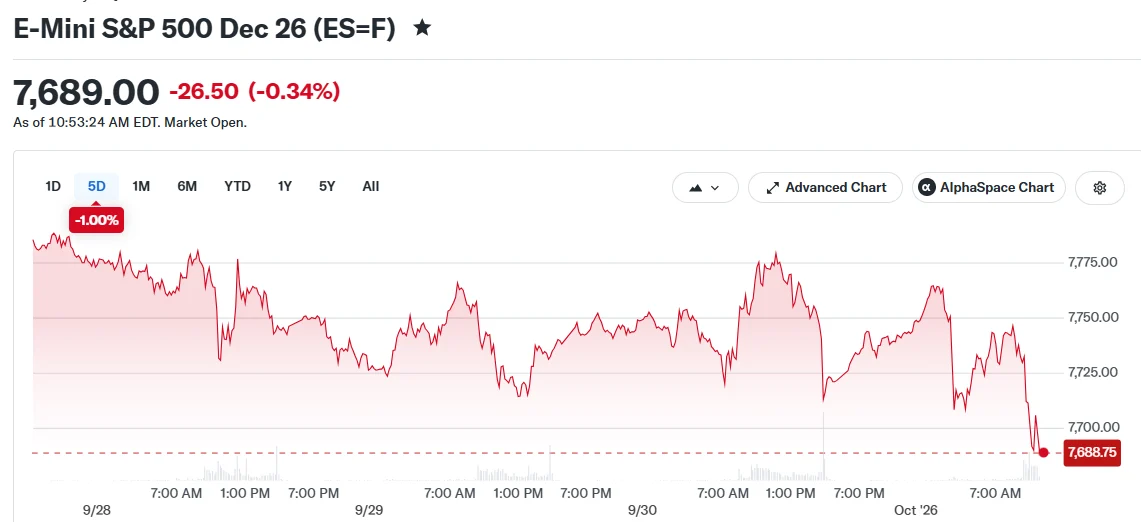
Each of the three major benchmarks had traded in positive territory during early hours. However, those advances evaporated as fixed-income market pressures intensified throughout the morning session.
Treasury Yields Continue Relentless March Higher
The benchmark 10-year Treasury yield extended its climb Thursday, pushing toward the 5.3% threshold. This level represents the highest reading in multiple decades for the closely watched rate.
The advance follows a particularly challenging three-month period for fixed-income investors. Bond markets had just concluded one of their worst quarterly performances in recent history as October began.
Elevated yields increase borrowing costs throughout the economy. They simultaneously diminish the relative appeal of equities versus bonds, as investors can secure higher returns from lower-risk instruments.
Rate-sensitive market segments bore the brunt of Thursday’s selling pressure. Materials, real estate, and financial services companies posted some of the session’s steepest declines.
Energy and technology were the sole sectors maintaining positive ground. At one point during morning trading, fewer than one-third of S&P 500 constituents were advancing.
Disappointing Manufacturing Metrics Add to Concerns
A pair of manufacturing sector reports released Thursday painted a picture of decelerating momentum paired with inflation pressures.
The S&P Global Manufacturing Purchasing Managers Index registered 55.9 for September. This reading fell short of the preliminary estimate of 57.
Separately, the Institute for Supply Management documented a significant jump in manufacturing input prices during September. Escalating costs for raw materials can compress corporate margins and reignite inflation worries.
These data releases followed a challenging conclusion to the third quarter. The Dow registered declines for both September and the full three-month period, though the Nasdaq managed quarterly gains.
Micron announced fourth-quarter financial results that surpassed analyst projections. The semiconductor company also elevated its first-quarter guidance above market expectations.
MICRON $MU Q4’26 EARNINGS HIGHLIGHTS
Revenue: $54.23B (Est. $51.07B)
; +379% YoY
Q1 FY27 Guide:
— Wall St Engine (@wallstengine) September 30, 2026
Surprisingly, Micron shares barely budged despite the encouraging news. Market participants appeared preoccupied with bond market dynamics rather than company-specific developments.
Performance among other semiconductor and technology names varied widely. One prominent chipmaker registered modest gains following a strong September performance, while another semiconductor company retreated after climbing 30% the previous month.
Employment data pointed to continued labor market strength. First-time unemployment benefit applications decreased for a fourth consecutive week in the most recent reporting period.
An additional workforce report from Challenger, Gray & Christmas revealed that corporations announced fewer position eliminations in September. However, businesses have not accelerated their hiring activity.
These employment indicators arrive ahead of Friday’s comprehensive monthly jobs report. That data release will provide broader insights into hiring trends and unemployment dynamics.
Nike is scheduled to announce quarterly results following Thursday’s market close. The athletic apparel giant’s shares have been hovering near decade-low levels, placing additional scrutiny on the company’s performance update.
As late-morning trading progressed, the 10-year Treasury yield stood at 5.33%, while the 2-year yield retreated to 4.852%. The Dow was lower by approximately 328 points, with the S&P 500 declining 0.36% and the Nasdaq dropping 0.31%.
The post Major Stock Indices Decline as Treasury Yields Reach Historic Peaks Despite Strong Micron Report appeared first on Blockonomi.
Key Takeaways
- SNPS shares surged 11% to reach $483.59, leading the Nasdaq 100 index during Thursday’s trading session.
- The chip design software firm introduced GPT-Synopsys, an AI-driven design model created through a multiyear revenue-sharing agreement with OpenAI.
- A custom chip development contract with Amazon valued at over $1 billion was announced.
- Synopsys elevated its revenue growth forecast to midteens annually through the end of fiscal 2030.
- Analysts at Rosenblatt Securities increased their price objective to $620, suggesting 43% potential upside from previous trading levels.
Shares of Synopsys advanced 11% to $483.59 during early Thursday trading, positioning it as the strongest performer within the Nasdaq 100 for that session.
Synopsys, Inc., SNPS
This significant move followed Wednesday’s 4.8% increase. Combined, these two consecutive sessions marked the company’s strongest two-day performance since September 2025.
The momentum originated from the company’s Investor Day presentation held in New York on Wednesday, where Synopsys unveiled two significant AI-focused strategic partnerships.
The first collaboration involves OpenAI. Together, they’re introducing GPT-Synopsys, a purpose-built artificial intelligence model designed specifically for semiconductor design applications.
While specific financial terms weren’t disclosed, both organizations confirmed the arrangement operates on a multiyear revenue-sharing framework.
According to Synopsys, discussions are already underway with leading semiconductor manufacturers regarding adoption of this innovative design tool.
Amazon Partnership Details
The second major announcement centers on Amazon. Synopsys secured an agreement valued above $1 billion to collaborate with Amazon on proprietary chip development.
This arrangement builds upon Amazon’s current utilization of Synopsys software platforms and intellectual property assets. It also represents a fundamental change in the company’s compensation structure.
The contract employs a license-plus-royalty framework, meaning revenue will scale proportionally with manufacturing volume rather than remaining static.
Both collaborations address a persistent concern that has shadowed Synopsys recently. Market participants had expressed anxiety that AI capabilities might enable chip manufacturers to internalize more design functions, potentially reducing demand for Synopsys services.
CFO Shelagh Glaser dismissed these concerns in a conversation with Barron’s. “Everybody’s building their own chips, and we have insatiable demand,” she said.
Elevated Growth Projections
Synopsys also upgraded its forward-looking financial targets. The organization now anticipates midteens compound annual revenue expansion through fiscal 2030, representing an increase from its earlier double-digit projection.
For fiscal 2027 in particular, Synopsys forecasts approximately 15% revenue growth. The company also projects adjusted operating margin will climb to roughly 50% by fiscal 2030, compared to 44% expected in fiscal 2027.
Management announced plans to repurchase approximately $1 billion worth of shares in upcoming months, contingent upon market conditions.
StoneX analyst Gary Mobley maintained his Buy recommendation and $570 price objective, noting that AI agents are designed to assist engineers rather than displace fundamental design platforms.
Rosenblatt Securities elevated its price target to $620 from $575 following the investor presentation. This target represents 43% upside potential from the stock’s pre-rally price of $434.94.
Rosenblatt also highlighted Synopsys’ recent operational performance, noting 46% revenue growth over the trailing twelve months alongside an 83% gross margin.
Despite Thursday’s rally, Synopsys stock remained down 7.4% year-to-date entering the session. Competitor Cadence Design Systems has posted a 5.6% gain during the same period and also climbed 6.1% Thursday.
Glaser attributed the stock’s previous underperformance to concerns about AI-driven disruption and the ongoing integration of Ansys, which Synopsys acquired last year in a $35 billion transaction.
“We had said 2026 was going to be a transitional year,” Glaser explained, citing the Amazon partnership as evidence of that strategic plan materializing.
Additional analysts have recently adopted more optimistic positions as well. HSBC elevated the stock to Buy with a street-leading $700 price target, while both Morgan Stanley and Baird upgraded their ratings during the current year.
The post Synopsys (SNPS) Stock Surges 11% on OpenAI Partnership and Amazon’s $1B+ Chip Deal appeared first on Blockonomi.
HTTP error 429 on https://cryptopotato.com/feed/
Failed to fetch feed: https://cryptopotato.com/feed/
Failed to fetch feed.