Cryptocurrency Posts
Crypto Briefing
The lack of a clear US strategy in the Iran conflict heightens geopolitical tensions, reducing prospects for diplomatic resolutions.
The post Criticism mounts over US strategy in Iran conflict amid strained relations appeared first on Crypto Briefing.
Market resilience suggests geopolitical tensions alone may not significantly disrupt oil prices without substantial supply threats.
The post Iran tanker seizures, Trump order fail to impact oil markets appeared first on Crypto Briefing.
Bitcoin's decline and $TRX's rise highlight shifting investor sentiment, impacting market dynamics and future cryptocurrency investment strategies.
The post Bitcoin falls 24% in Q1 2026; $TRX gains 9% appeared first on Crypto Briefing.
The Iran conflict underscores the volatility of oil markets, complicating global efforts to transition away from fossil fuels.
The post Iran conflict drives oil prices above $120 amid global fossil fuel talks appeared first on Crypto Briefing.
Solana's inflow and Bitcoin's surge highlight market volatility, suggesting traders await stronger signals for significant price movements.
The post Solana sees $31.8M inflows as Bitcoin hits $79K, April $150 target unlikely appeared first on Crypto Briefing.
Bitcoin Magazine
Bitcoin Magazine

Strive Expands Bitcoin Treasury With $61.4 Million Purchase, Holdings Reach 14,557 BTC
Strive Inc. has expanded its Bitcoin treasury with a fresh purchase of 789 BTC valued at roughly $61.43 million. The Nasdaq-listed firm disclosed the acquisition in a recent filing, reporting an average purchase price of about $77,890 per bitcoin.
The transaction lifts Strive’s total holdings to 14,557 BTC as of April 24, 2026, with the stack valued at roughly $1.1 billion based on current market prices.
The latest buy marks a continuation of Strive’s treasury strategy, which centers Bitcoin as a core balance sheet asset rather than a peripheral allocation. The company has framed Bitcoin as a benchmark for capital deployment, positioning it as a hurdle rate for investment decisions and long-term value preservation.
The company’s accumulation comes amid an accelerating trend of corporate Bitcoin adoption. Public companies now hold more than 1.15 million BTC combined, worth an estimated $85 billion, while Bitcoin exchange-traded funds collectively control about 1.28 million BTC, Strive said.
Also today, Strategy bought 3,273 BTC for $255 million, pushing its holdings to 818,334 BTC worth about $63.7 billion while lifting its Bitcoin yield to 9.6% and reinforcing its position as the largest corporate holder.
Strive is stacking BTC
Strive’s balance sheet reflects this shift. Alongside its Bitcoin holdings, Strive reported $90.5 million in cash and cash equivalents and additional exposure to Bitcoin-linked financial instruments, including preferred equity tied to Strategy Inc. This structure indicates an effort to combine direct Bitcoin ownership with yield-generating instruments tied to the broader Bitcoin capital stack.
Strive’s recent activity builds on earlier purchases throughout 2026. In March, the company added 179 BTC, bringing its holdings at the time to over 13,000 BTC, while also expanding its exposure to structured credit products designed to support income generation tied to Bitcoin markets.a
Beyond balance sheet expansion, the company is also investing in education tied to corporate Bitcoin adoption. Its subsidiary, True North, plans to host a “Bitcoin for Business” summit in Oregon aimed at CFOs, founders, and treasury managers seeking to integrate Bitcoin into financial operations.
The initiative reflects a broader push to normalize Bitcoin within corporate finance frameworks.
In March, B. Riley Financial initiated coverage on Strategy Inc. and Strive, Inc., arguing both stocks were undervalued relative to their Bitcoin treasury holdings.
The firm pointed to compressed valuations, with Strategy trading near 1.2x NAV and ASST around 0.9x modified NAV, framing the discounts as an opportunity amid a broader pullback in Bitcoin.
This post Strive Expands Bitcoin Treasury With $61.4 Million Purchase, Holdings Reach 14,557 BTC first appeared on Bitcoin Magazine and is written by Micah Zimmerman.
Bitcoin Magazine
Strategy (MSTR) Expands Bitcoin Holdings by $255 Million as Treasury Yield Surges to 9.6%
Strategy disclosed on April 27, 2026 that it acquired 3,273 Bitcoin for $255 million during the week ending April 26, bringing the company’s total holdings to 818,334 BTC valued at approximately $63.7 billion at current market prices.
The purchase was executed at an average price of $77,906 per Bitcoin, funded through the sale of 1.45 million shares of Class A common stock via its at-the-market (ATM) equity program.
The Virginia-based business intelligence firm reported that its Bitcoin Yield metric reached 9.6% year-to-date 2026, up from 9.5% disclosed in the prior week.
This proprietary metric measures the percentage change in the ratio between Bitcoin holdings and assumed diluted shares outstanding, providing insight into the company’s efficiency in acquiring Bitcoin relative to shareholder dilution. Strategy’s cumulative Bitcoin position carries an average acquisition cost of $75,537 per coin, representing a total investment of $61.81 billion.
Strategy now controls nearly 4% of total bitcoin supply
With 818,334 Bitcoin in its treasury, Strategy now owns approximately 3.9% of the cryptocurrency’s fixed 21 million supply cap. The latest acquisition extends the company’s position beyond the holdings of BlackRock’s iShares Bitcoin Trust (IBIT), which holds approximately 802,823 BTC.
Strategy’s Bitcoin reserves account for over 60% of all Bitcoin held by publicly traded companies worldwide, cementing its status as the dominant corporate holder of the digital asset.
The purchase represents the company’s continued execution of its Bitcoin treasury strategy under executive chairman Michael Saylor, who has stated a goal of accumulating between 5% and 7% of the total Bitcoin supply.
Funding through common stock ATM program
The $255 million purchase was financed through Strategy’s $21 billion Class A common stock ATM program, with no preferred stock issuance during the April 20-26 period.
In March 2026, the company filed to establish dual $21 billion ATM programs for both MSTR common stock and STRC preferred stock, plus an additional $2.1 billion program for STRK preferred shares, providing the firm with $42 billion in total capital-raising capacity.
The common stock ATM program allows Strategy to sell shares into the market gradually without the need for traditional equity offerings, providing flexible funding for ongoing Bitcoin acquisitions.
Strategy’s Class A common stock (MSTR) traded at $172 at the time of writing, reflecting a year-to-date gain of approximately 12.55%. However, the shares have declined roughly 47.5% to 51% over the trailing 12-month period, underperforming Bitcoin’s price movement during the same timeframe.
The stock experienced consistent monthly losses from July through December 2025, including declines of 16.78% in August, 16.36% in October, and 34.26% in November.
Despite the recent volatility, MSTR shares have delivered returns of approximately 134.9% over the past five years.
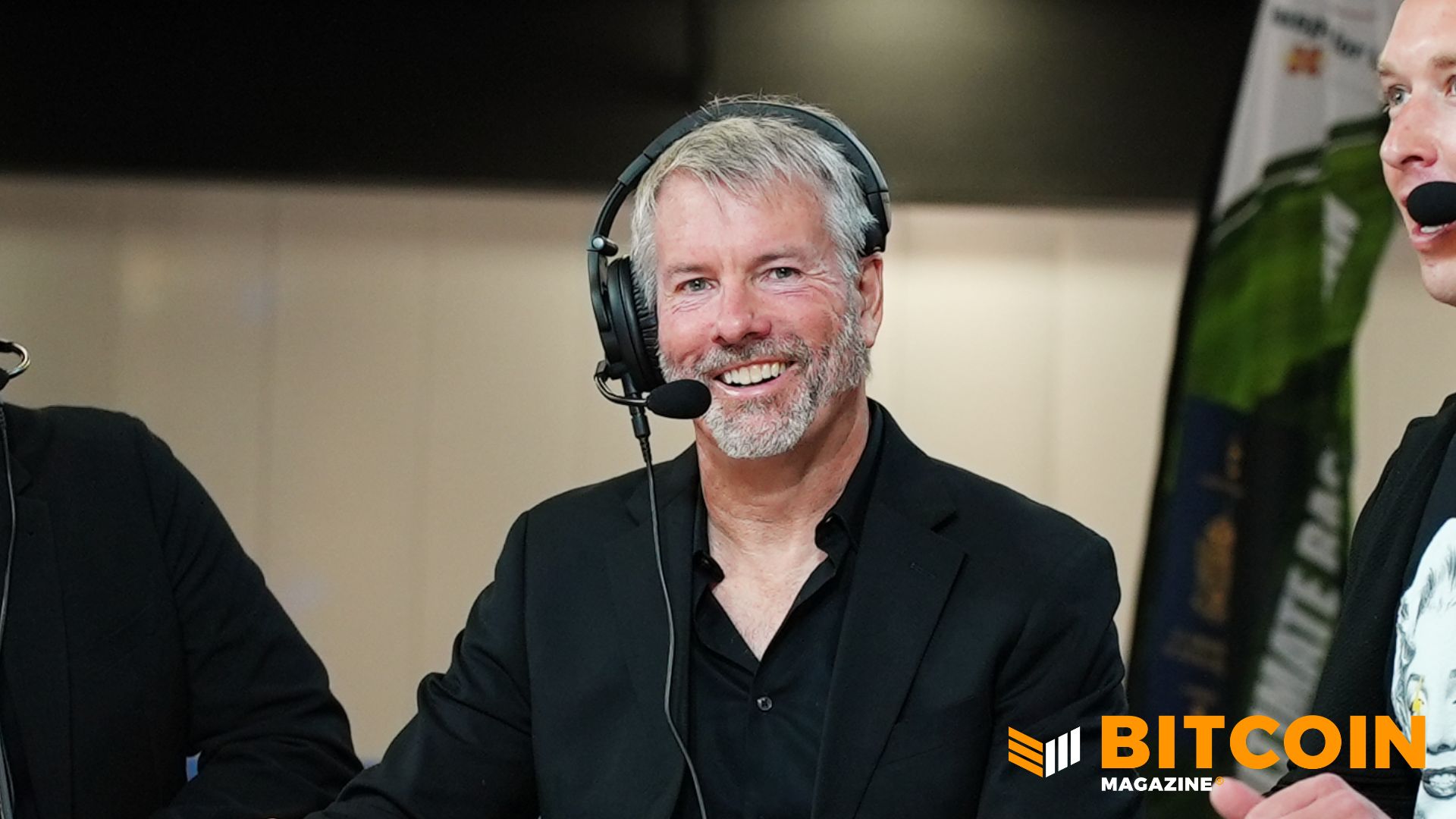
Michael Saylor, Strategy’s Founder & Executive Chairman, is speaking at The Bitcoin Conference later today and this week.
This post Strategy (MSTR) Expands Bitcoin Holdings by $255 Million as Treasury Yield Surges to 9.6% first appeared on Bitcoin Magazine and is written by Micah Zimmerman.
Bitcoin Magazine
Satori Coin Enters U.S. Market With Physical Bitcoin Collectibles
Satori Club Pte Ltd will enter the U.S. market today, expanding access to physical Bitcoin collectibles as demand for self-custody tools grows among American users.
The Singapore-based company will align the launch with its virtual sponsorship of Bitcoin 2026 in Las Vegas. The event presence includes upcoming flyer distribution during keynote sessions, aimed at introducing attendees to its product lineup and custody model.
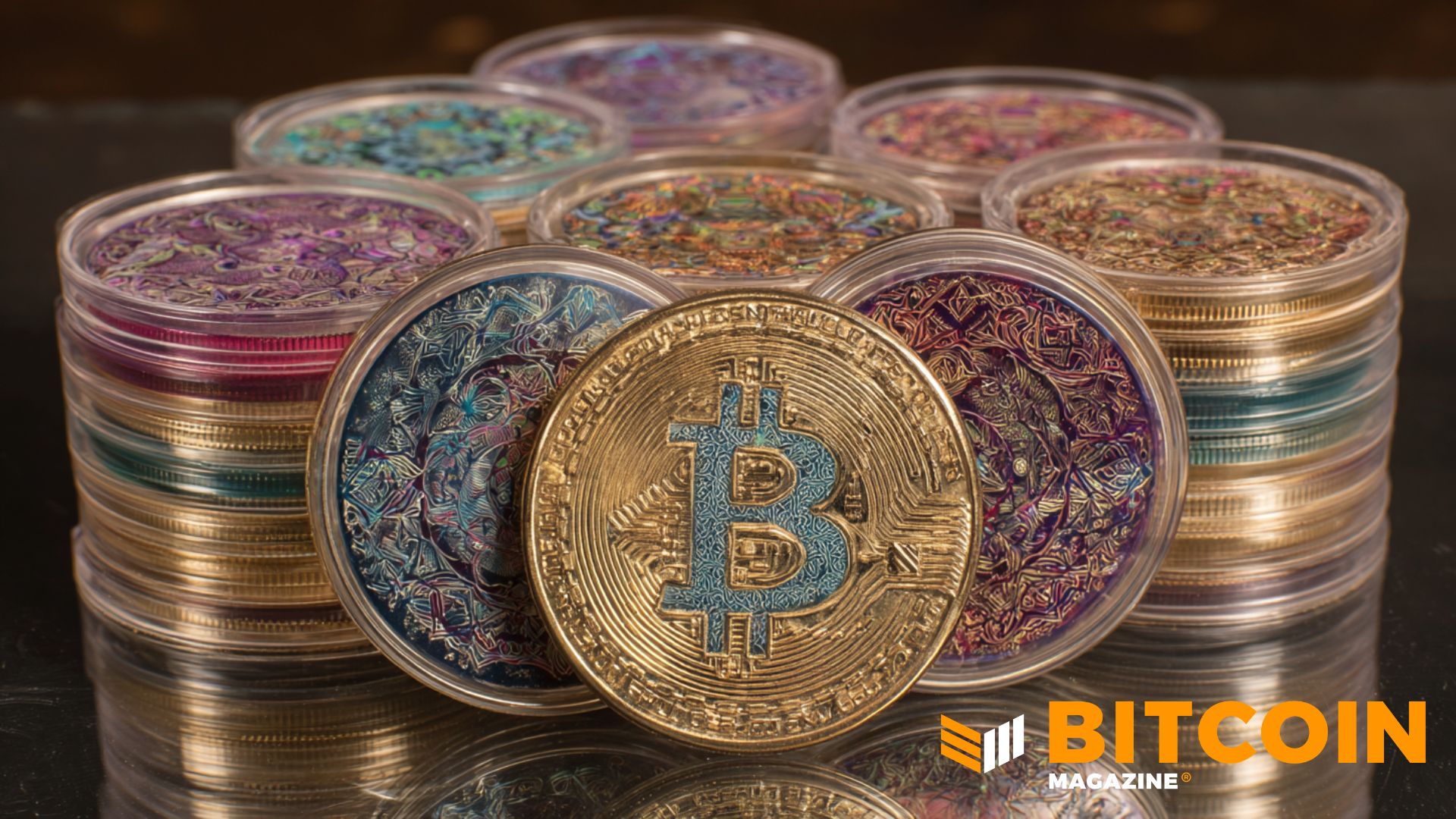
Satori Coin offers physical coins embedded with mechanisms that allow users to store or transfer Bitcoin in tangible form. Each product incorporates tamper-evident features and structured redemption processes designed to balance usability with security.
The current lineup reflects a staged rollout over the past year. The Satori Coin Gi, released in September 2025, serves as the flagship model and uses a 2-of-2 multi-signature design. In February 2026, the company introduced the Satori Coin Chi, positioned as an entry model that users can load after delivery. A silver version, the Satori Coin Chi Silver, features .999 fine silver construction and targets collectors seeking a premium format.
The company traces its roots to 2015 and draws on the concept of “satori,” a term associated with awakening and discovery. That theme shapes its approach to product design, which aims to make Bitcoin more accessible through physical interaction while maintaining core security principles tied to private key management.
Satori Coin first emerged in 2016 and has focused on bridging the gap between digital assets and physical ownership. The U.S. expansion reflects rising interest in self-custody following increased awareness of exchange risks and custody failures across the crypto sector.
Satori Coin products
Satori Coin offers a range of physical Bitcoin-themed collectibles designed to merge tangible craftsmanship with digital value. The lineup includes three main models: Chi, Chi Silver, and Gi, each catering to different levels of security, material quality, and Bitcoin storage capacity.
The Chi model is the entry-level option, designed to hold 0.001 BTC. It uses a single-key system concealed under a hologram and ships unloaded, with funds added after delivery. The Chi Silver version upgrades the experience with 1oz of 999 fine silver while maintaining the same Bitcoin capacity and redemption process.
At the higher end, the Gi model is built for 0.01 BTC and emphasizes security through a 2-of-2 multisig structure, where one key is held by the user. It also includes NFC functionality, allowing users to check balance and verify authenticity. Gi ships loaded and uses a dedicated redeem kit for secure transfers, positioning it as a more trustless and advanced option.
Products will be available to U.S. customers through the company’s website starting today. The launch positions Satori Coin within a niche segment that blends collectibles, hardware security, and Bitcoin education.
This post Satori Coin Enters U.S. Market With Physical Bitcoin Collectibles first appeared on Bitcoin Magazine and is written by Micah Zimmerman.
Bitcoin Magazine
Samourai Letter #6: Two Years In
Dear Reader,
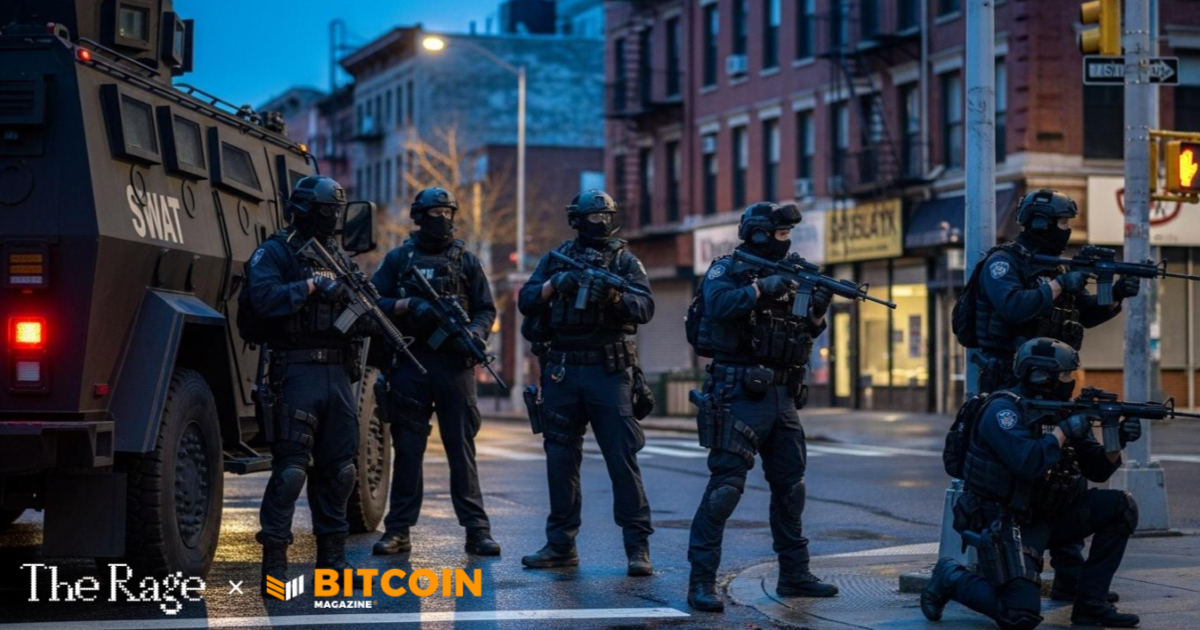
I write this letter to you before the sun has made her first appearance. The moon still reigns on this day, April 24th 2026. At this same exact time, 5:00 AM, only two years prior, my wife Lauren and I were both awaken dramatically to sirens, flashing lights, and brisk commands shouted over a megaphone.
“Keonne Rodriguez, this is the FBI, come out with your hands up IMMEDIATELY!” was repeatedly shouted. Over 50 armed FBI tactical agents pointed their assault rifles at our chests. Drones, armored vehicles, assault rifles, men dressed like GI-JOE, all swarmed the quiet humble small town where we lived. Once arrested, handcuffed, placed in the back of a police cruiser, Biden’s lackeys descended on my home like a swarm of ants hopped up on adrenaline.

The drone was flown through the house first to clear the way, the GI-JOEs followed, finally the army of blue haired DEI hires and the puny men who looked like they would be defeated by the thought of a single push-up shuffled their way in. I knew the tech team the moment I saw them.
They would be going through my hard drives and USB sticks. I was most worried about my wife who at this point was still detained in handcuffs. I was relieved when they let her leave and my worry immediately was directed toward my cat who I knew would quite happily take advantage of the hubbub and the wide open doors to go on one of her unmonitored adventures around the village.
That is how my day started on April 24, 2024. Two years later, I start my day markedly differently. I wake up at FPC Morgantown. Federal prison. I am told when I can sleep, when I can wake, when I can eat, when I can shower, what I can wear, and even to some degree what I can think.
My days are structured around shouted commands over a loud speaker and a book of regulations I am expected to follow. In prison your identity is stripped from you. In here it is ‘us and them’, convicts and guards, inmates and CO’s. Don’t get me wrong, most of the CO’s are decent enough, they are here to do a job, and they do it well. Treat them with respect and don’t mess around with contraband (mostly cellphones and vapes) and they will generally treat you well enough. But at the end of the day, they go home and you don’t. So here I am, inmate # 11404-511, a federal prisoner.
Two years ago today an overzealous and politicized FBI under corrupt leadership, under a corrupt presidential administration, acting under a corrupt Department of Justice that empowered a corrupt US Attorney that delegated authority to corrupt AUSA’s; indicted, raided, and arrested me and Bill, two American software developers. Just another two casualties in the Biden ‘War on Crypto’.
Two small fishes with no political friends or influence. Two guys who wrote software and gave away code that worked so well they had no choice but to change the rules of the game and go after us with the full force and might of the United States government.
And by God, their calculations were correct. Barely anyone cared. Bill and I couldn’t even raise enough money for our legal defense. We were left high and dry to fend for ourselves against an adversary with unlimited resources. The government took out the only effective non custodial, open source, privacy tool in the entire space and there was barely a whimper of protest. From some corners of the industry there was even celebration. This wasn’t a war on crypto, in a war both sides have a fighting chance. This was a massacre.
There is no doubt that the ‘War On Crypto’ was started and waged fiercely under Joe Biden. But Biden himself has proven to be a ship without a rudder. He was clearly a man who did not know his ass from his elbow. He was nothing more than a marionette puppet whose strings were being pulled by aides and henchmen receiving orders in secret from the likes of Elizabeth Warren and her self described ‘anti crypto army’. The War On Crypto truly belongs to her.
The Trump administration inherited this war, and won the election partly because the democrats couldn’t steal it in the same way they did in 2020 – that was a trick that would only work once – but also because Trump appealed to young men of every race.
A major reason for this appeal was 1) His promise to free Ross and 2) his promise to end the war on crypto. In many ways he has made good progress. Ross was freed as promised and the administration began to dismantle the levers of power that were the big guns in the ‘war on crypto’. The SEC was reigned in, the tide had begun to turn against the luddite candlestick makers in favor of the electric lightbulbs.
The deputy attorney general – now the acting attorney general – Todd Blanche issued a memo early in the administration intended to reign in rogue prosecutors, explaining in exquisite detail that America does not regulate by prosecution and does not hold responsible software developers for the acts of their end users. Blanche and the new administration drew a line in the sand. The war appeared to be ending.
What most people miss about this ‘War on Crypto’ is that it is not an ordinary war. It is not an us versus them war. It is very much a civil war. An us versus us war. As such, when Blanche published his memo, when Trump ordered the end of the war, the infantry on the ground tasked with obeying those orders – the line prosecutors, the AUSA’s, the army of unelected bureaucratic lifers – ignored them. Willfully and explicitly.
They continued just as they have always done, perhaps change a charge from (b) to (c), or change the language they use to make sure that they get away with blatant insubordination. The administration has been dealing with this treachery from day one, in all areas, not just crypto.
Trump identified the problem during his first term. He called it the swamp or the deep state. I call it the administrative state. The administrative state was a problem for him during his first term. It orchestrated the biggest election heist ever witnessed in 2020.
It then came after Trump attempting to put him in prison for life. And it continues today unabated during the second administration. Dismantling of the administrative state followed by the full scale liquidation of the army of apparatchiks that lord over us, will be, if he is able to achieve it, Trump’s lasting legacy.
So where do we stand now? The ‘War On Crypto’ is half won. The SEC has largely been reigned in. The DOJ under Bondi and now Blanche has not brought forward new charges under these novel theories conjured up during the last administration, so to some degree Blanche’s memo did work.
Elizabeth Warren and her ‘anti crypto army’ have decidedly lost, just as the luddites did, just as the horse carriage men protesting the automobile did. She was always going to lose, it was just about how much damage she could do on the way down. With the war half won, a problem remains, combatants have been left behind.
One of the US Military’s guiding principles is that no man gets left behind. Heaven and earth will be moved at extraordinary expense to retrieve a single American behind enemy lines (as has just been witnessed in Iran).
Well, in the ‘War on Crypto’, men have been left on the battlefield. Forgotten and left to bleed out. The war will not be won until Bill and myself are extricated from behind enemy lines.
The war will not be won until Roman Storm stops being shot at with ammunition provided by the last corrupt administration and carried forward by the wolves in the hen house of this administration. When we are all home with the threat of retribution by the most powerful and mighty state bearing down on us no longer credible, then we can celebrate the victory of this war.
Until the crypto prisoners are free, none of us are free.
Write to Keonne:
Keonne Rodriguez
11404-511
FPC Morgantown
FEDERAL PRISON CAMP
P.O. BOX 1000
MORGANTOWN, WV 26507
Mailing Guidelines:
Please note: You can only send letters (no more than 3 pages long). No packages or other items are allowed. Books, magazines, and newspapers must be sent directly from the publisher or an online retailer like Amazon. All letters must include a full return address and sender name to be delivered.
This is a guest post by Keonne Rodriguez. Opinions expressed are entirely their own and do not necessarily reflect those of BTC Inc or Bitcoin Magazine.
This post Samourai Letter #6: Two Years In first appeared on Bitcoin Magazine and is written by Keonne Rodriguez.
Bitcoin Magazine

UTXO Management Launches Dual-Class Digital Credit Income Fund
UTXO Management, a subsidiary of Nakamoto Inc. (NASDAQ: NAKA), announced the formation of UTXO Preferred Income Strategies LP, a Delaware limited partnership structured to provide access to income from preferred digital credit securities.
The fund introduces a dual-class structure designed to serve different allocator objectives within a single vehicle.
The structure includes a Senior Income Class and a Total Return Class. The Senior Income Class targets a fixed annual coupon paid monthly as return of capital sourced from preferred dividend streams, according to a company release.
Distributions flow first to this class, ahead of fees and junior allocations. The structure seeks to deliver yield above short-term U.S. Treasury bills, supported by a junior equity cushion. This class carries no management or performance fees.
The Total Return Class targets return through residual income after senior distributions. The strategy includes disciplined leverage, relative value positioning across the preferred digital credit stack, and participation in new issuance. This class absorbs first loss and captures upside tied to spread compression and income growth.
The fund’s initial portfolio is expected to include digital credit instruments such as the Strategy Variable Rate Perpetual Stretch Preferred Security (STRC). These instruments form part of a growing segment within capital markets that blends features of fixed income with digital asset exposure.
Chief Investment Officer Tyler Evans said the digital credit market has reached a stage of development that supports structured products, though access remains limited across institutional channels.
“We designed our first structured credit product, UTXO Preferred Income Strategies LP, to give allocators access to these dividend-paying securities, with the capital structure enhancements, institutional servicing, and operational transparency they require,” Evans said.
UTXO’s expansion into credit
Since 2019, UTXO Management and its affiliates have launched and managed several investment vehicles across the Bitcoin ecosystem. These include the Bitcoin Ecosystem Fund, focused on venture investments, and 210k Capital, LP, a hedge fund strategy centered on Bitcoin and related instruments. The launch of UTXO Preferred Income Strategies LP marks the firm’s entry into structured credit, extending its platform into income-oriented strategies.
UTXO Management operates as a Bitcoin-native asset manager across public and private markets. The firm allocates capital across liquid securities, venture investments, and strategic partnerships tied to Bitcoin infrastructure and adoption. Nakamoto Inc., its parent company, holds and operates a portfolio of Bitcoin-native businesses.
The fund will be offered to accredited investors who also meet the definition of qualified purchasers under applicable securities laws. Interests will be sold through private placement and will not be registered under the Securities Act of 1933. Investment decisions must rely on the fund’s offering documents, which contain full details on terms, risks, and structure.
The strategy involves a high degree of risk. Digital credit securities face regulatory uncertainty, liquidity constraints, and valuation challenges. The fund may employ leverage, which can increase losses. The dual-class structure depends on the performance of underlying assets and the sufficiency of the junior equity layer to protect senior distributions.
No capital has been deployed under the strategy at the time of announcement. Target yield and return figures represent internal objectives based on modeled scenarios and do not constitute forecasts or guarantees. Actual performance may differ based on market conditions, issuer credit quality, and broader economic factors.
Disclaimer: Bitcoin Magazine is published by BTC Inc, a subsidiary of Nakamoto Inc. UTXO Management is also a subsidiary of Nakamoto Inc. (NASDAQ: NAKA)
This post UTXO Management Launches Dual-Class Digital Credit Income Fund first appeared on Bitcoin Magazine and is written by Micah Zimmerman.
CryptoSlate
AAVE, the native token of the Aave DeFi platform, is now available on the Solana blockchain network.
The move will give Solana users access to one of the largest lending protocols in decentralized finance without leaving the network.
This came less than two days after the Solana Foundation revealed that it would deploy part of its treasury into Aave.
Through this action, the non-profit joined a broader industry effort to contain the fallout from the KelpDAO rsETH $292 million exploit and restore confidence in decentralized lending markets.
Solana Foundation aids Aave recovery
On April 25, Lily Liu, chair of the foundation, said the nonprofit is lending USDT to Aave to support recovery efforts after the exploit left major DeFi protocols exposed to unbacked collateral and liquidity stress.
The step marks an unusual cross-chain intervention by Solana, which has spent years building its own DeFi economy around native lending, trading, and liquid staking applications.
It also gives the foundation a direct role in a recovery effort centered on Aave, a protocol more closely associated with Ethereum and its layer-2 networks.
Liu framed the move as support for the broader open-finance market, saying blockchain economies do not operate in isolation and that Solana’s long-term health depends on a functioning DeFi sector beyond its own ecosystem.
For Solana, the intervention signals that competition among chains does not preclude coordination when a failure threatens the market structure on which they all depend.

A bridge failure becomes a DeFi problem
The April 18 $292 million exploit began with KelpDAO’s rsETH, a liquid restaking token, after attackers allegedly exploited a weakness tied to its LayerZero bridge configuration.
According to reports, the attackers were able to redeem 116,500 unbacked rsETH tokens on Ethereum before depositing the assets as collateral across Aave, Compound, and Euler, then borrowing roughly $292 million in ETH and other assets.
This action caused broader contagion, especially in Aave's lending markets, where platform users exited en masse, and resulted in WETH utilization reaching 100% within hours of the exploit.
Galaxy Research explained:
“At full utilization, Aave's design doesn't allow withdrawals, because there is no idle liquidity in the pool to redeem against. Whoever withdraws first is made whole, while whoever comes later must wait for new supply to arrive or borrowers to repay.”
Oak Research, a crypto intelligence firm, said the mass exit led to a 17% decline in total value locked in DeFi, with Aave experiencing more than $12 billion in outflows.
The firm argued the episode could have become a defining failure for DeFi because it combined a bridge misconfiguration, a systemically important lending venue, and lenders unable to withdraw funds from depleted pools.
The liquidity crunch also showed how lending protocols can operate as designed while still importing risk from outside infrastructure.
Aave pools depend on borrowers, collateral, and liquidations functioning normally. When collateral quality collapses suddenly, lenders can be left waiting for liquidity until borrowers repay, liquidations occur, or new deposits enter the market.
Can ‘DeFi United' restore investors' confidence?
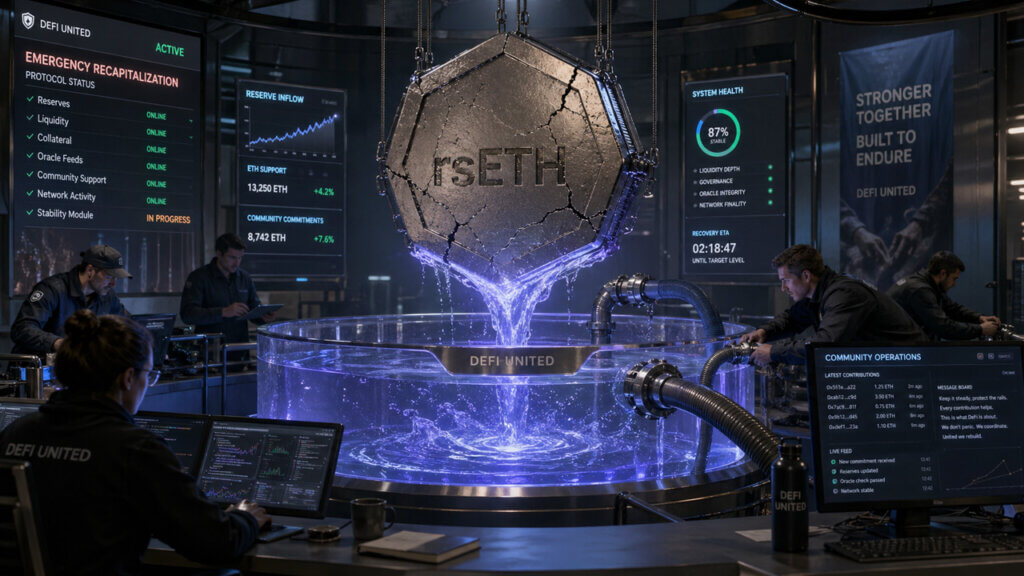
In response to the incident, Aave and KelpDAO helped organize DeFi United, a recovery vehicle aimed at replenishing rsETH reserves and making affected users whole.
According to DeFi United's official website, the effort has drawn commitments of nearly $240 million from several major DeFi participants, including Aave DAO, Arbitrum DAO, Mantle, Ether.fi, Lido, Kelp, Golem Foundation, and individual contributors.
Oak Research said this recovery effort is working because Aave was the protocol at risk.
In its view, the response may have been different if the losses had been isolated to a smaller restaking protocol or a bridge without broader systemic importance. Aave, as the largest DeFi lending venue, had stronger incentives to preserve its reputation and avoid a precedent in which lenders take losses from collateral accepted by the protocol.
That is what makes Solana’s support notable. The foundation is stepping into a sector-wide effort to prevent a bridge-linked collateral failure from damaging confidence in DeFi’s largest lending venue.
The move also gives Solana a strategic opening. Bringing AAVE to Solana could deepen cross-chain liquidity, broaden access for Solana users, and give Aave another distribution channel at a time when lending protocols are reassessing collateral risk, bridge dependencies, and emergency backstops.
Meanwhile, the recovery may still leave governance questions unresolved. Aave tokenholders must weigh the cost of using treasury assets against the reputational risk of allowing users to absorb losses.
While DeFi United can help close the immediate shortfall, the KelpDAO exploit has already shown that collateral standards, bridge design, and protocol risk controls are no longer separate issues.
The post Latest $290M exploit hit DeFi so hard it forced Aave onto Solana as part of rescue efforts appeared first on CryptoSlate.
Bitcoin traded below $78,000 on Monday as EU markets opened for the week.
BTC price hit $77,819, down 0.28% over 24 hours, with a market capitalization near $1.56 trillion and 24-hour volume of around $32.1 billion. Total crypto liquidations stood near $295 million over the previous 24 hours on CoinGlass.
Bitcoin had been pressing the $80,000 decision area, then quickly slipped back under $78,000 before any clear fresh macro, regulatory, exchange, ETF, or issuer headline had emerged.
The immediate test is whether the drop was a short-lived leverage flush or the start of a broader risk-off move.
The distinction is substantive. A leverage flush can reset crowded positioning while leaving the larger market structure intact. A broader risk-off move usually needs follow-through across risk assets, weaker liquidity, or a new catalyst that changes how traders price the next several sessions.
For now, the evidence points to market structure first. Liquidation pressure was evident, the price level was fragile, but the cause has yet to be resolved into a single clear explanation.

The $80,000 area was already loaded
The latest move landed in a zone that had already drawn attention. On Apr. 23, Bitcoin traded as high as $79,470 while moving toward the $80,000 threshold, before retracing to about $78,200.
The push was linked to forced liquidations and a more constructive macro and geopolitical setup.
Bitcoin was already testing a level where recent buyers, short sellers, and macro-sensitive traders had reasons to react. When price moves into that kind of area, the first rejection often says more about positioning than conviction.
A later CryptoSlate market-structure analysis gives the same zone a more tactical map. Bitcoin had failed to hold the upper-$78,000s after reaching the $80,000 level, while risk appetite and equities were doing more immediate work than crude oil.
The same analysis placed the constructive path around a hold of the $77,000 to $77,500 area followed by a reclaim of the upper-$78,000s.
That gives Monday's move a clean test. If buyers absorb the drop near the mid-$77,000s, the decline can remain a clearing event. If price fails there, the break starts to point to a broader reduction in risk.
The pattern also helps separate price action from explanation. Traders did not need a new headline to see why stops, hedges, or fast exits could cluster around a round-number level that had just rejected momentum. A market that has challenged $80,000 can reverse quickly when leverage is high, and the next buyer is waiting for a lower price.
That makes the first response around $77,000 to $77,500 more important than the search for a tidy headline. A fast reclaim would show demand absorbing forced flows. A stalled bounce would tell traders that the drop was spilling into spot conviction and broader risk appetite.
Recent CryptoSlate coverage explains why the $80,000 zone was crowded, why liquidations had helped shape the prior move, and why risk appetite could influence the next leg. It leaves the Apr. 27 drawdown as a live test, rather than a settled reaction to one event.
That framing separates the level from the narrative. The price zone can be real, and the catalyst can remain unresolved. Bitcoin had a clear technical pressure point, while the available evidence still leaves the trigger open.

Liquidations define what the evidence can support
The liquidation data adds pressure to that interpretation. Total crypto liquidations reached about $294.9 million over 24 hours, up sharply from the prior reading on the page.
CoinGlass also showed 89,011 traders liquidated and the largest single order on Binance's ETHUSDT pair at about $11.98 million.
The Bitcoin-specific page was more nuanced. BTC liquidations were about $95.55 million, split between about $38.8 million in longs and $56.75 million in shorts.
That split complicates the easy version of the move. A falling Bitcoin price often invites a simple long-liquidation explanation. The BTC-specific reading was short-heavy at the time checked, which suggests the liquidation backdrop was mixed and not a one-direction wipeout.
Still, liquidations were large enough to show forced position closure across the market, while the Bitcoin page showed activity clustered around the same hours as the European open. That supports a leverage and liquidity frame, with the immediate trigger still unresolved.
Market-cap data sets a second boundary. Global crypto market capitalization is near $2.59 trillion, and Bitcoin's dominance was around 60%. CryptoSlate's coins page shows Bitcoin's market capitalization is around $1.559 trillion.

Macro pressure sets the next test
The macro backdrop gives the move context. The Federal Reserve calendar shows a two-day FOMC meeting scheduled for Apr. 28 and 29, with a press conference on Apr. 29.
A separate Federal Reserve notice shows an Apr. 28 closed Board meeting to discuss monetary policy issues.
CryptoSlate's macro preview also framed the week as unusually compressed. Traders would get the Fed first, then GDP and PCE data shortly after, creating a tight test for rates, growth, inflation, and risk appetite.
That setup can explain why buyers may be less willing to step in aggressively. Bitcoin often trades as a liquidity-sensitive asset over short macro windows. When the market is heading into a packed policy and data sequence, traders have fewer reasons to add risk into a fast drop.
Still, the calendar is background pressure. During the Apr. 27 review window, no new Fed decision, fresh inflation print, regulatory action, exchange failure, ETF shock, or issuer announcement had emerged to explain the move.
The market had a plausible reason to be cautious, while the visible move looked more consistent with positioning and liquidity stress than a fully explained headline response.
The most defensible reading is that Bitcoin's drop below $78,000 looks like a leverage flush inside a risk-sensitive market, with no obvious fresh catalyst. That holds if the move stabilizes near the mid-$77,000s and buyers can push price back toward the upper-$78,000s.
A reclaim would suggest the market cleared excess exposure while preserving the larger range. It would also fit the pattern CryptoSlate mapped earlier: hold the $77,000 to $77,500 area, regain the upper-$78,000s, and put $80,000 back into play.
A deeper break would change the question. If Bitcoin loses the mid-$77,000s while equities weaken, yields firm, or the Fed week turns more hostile for risk assets, the same liquidation data would begin to resemble the first leg of a broader risk reduction.
That leaves the market with a precise test. The liquidation wave has shown where leverage was vulnerable. The next price reaction will show whether spot demand is strong enough to absorb the damage.
The post Bitcoin flash crashes below $78,000 at Europe market open with nearly $295 million in crypto liquidations appeared first on CryptoSlate.
The Bitcoin ETF trade sold investors a simple promise: crypto exposure inside a wrapper that looked and felt like mainstream finance. Advisors could buy it, compliance teams could understand it, and institutions could route capital into digital assets through a product that fits the rest of their strategy.
That promise worked, and the US spot Bitcoin ETF complex had reached $91.71 billion in assets under management by April 8, according to CryptoSlate data.
Given the size of the spot Bitcoin ETF market, we can clearly see that there's no lack of demand. The main problem the industry is faced with now is infrastructure.
On April 20, Grayscale amended its proposed Hyperliquid ETF filing and named Anchorage Digital Bank as custodian in place of Coinbase.
On its own, that looks like a modest filing change tied to a newer crypto product, but in context, it's a sign that issuers are starting to think harder about how much of the regulated crypto ETF market still runs through one back-office gatekeeper.
As CryptoSlate reported on April 12, funds whose launch documents name Coinbase as custodian or primary custodian account for about $77.10 billion of the market, or 84.1% of total US spot Bitcoin ETF AUM. A stricter method that excludes multi-custodian arrangements or unclear split allocations still leaves roughly $74.06 billion, or 80.8%, tied to Coinbase in some custody role. Those numbers make custody concentration part of the institutional appetite for Bitcoin, not a side detail buried in the documents.
A single filing doesn't establish a migration trend, and the market shouldn't turn one amendment into a sweeping break. Even so, custody choices inside ETFs carry real informational value because issuers, lawyers, and boards tend to repeat the safest available template. When a market that has spent years making the same custody decision starts to show variation, it's worth paying attention.
The ETF boom built a custody market around one default choice: Coinbase
Coinbase became dominant in crypto ETF custody for practical reasons that made sense from the start.
When spot Bitcoin ETFs won approval in January 2024, issuers needed a provider with a recognizable compliance profile, institutional operating history, and an infrastructure stack that already looked credible to boards, auditors, market makers, and regulators. Coinbase had that advantage. Once the largest issuers chose it, the rest of the market inherited a strong template effect.
That pattern kept extending into 2026. Morgan Stanley’s updated filing in March named Coinbase Custody and BNY as custodians for its proposed Bitcoin exchange-traded product, which later launched as the Morgan Stanley Bitcoin Trust.
Another blue-chip institution entered the market and plugged into the same custody backbone already supporting much of the ETF complex. That's how concentration deepens in financial infrastructure, with each new entrant reinforcing the same operational standard.
Coinbase’s own regulatory trajectory has only strengthened that position. On April 2, the company said it had received conditional approval from the Office of the Comptroller of the Currency to charter Coinbase National Trust Company. That was an important milestone, because a federal trust framework offers a cleaner supervisory map for the custody business that sits underneath products like ETFs.
Coinbase’s scale reflects institutional trust, launch readiness, and regulatory familiarity. Those strengths are also what made it the market’s central operational node. Crypto has spent years arguing about decentralization at the asset layer, while the institutional wrapper built around Bitcoin moved toward a highly concentrated custody structure. We can now clearly see that product variety expanded faster than infrastructure variety.
ETF investors spend most of their time looking at inflows, fees, and price action, though it's custody that shapes how the system functions day to day. If the wrapper is supposed to make digital assets legible to mainstream finance, then the resilience of that wrapper matters almost as much as the underlying asset. The live question now is whether the market has reached the point where resilience requires more redundancy.
Grayscale’s Anchorage switch points to a market thinking harder about redundancy
Grayscale’s amended Hyperliquid ETF proposal names Anchorage Digital Bank as custodian in place of Coinbase. Anchorage brings a different regulatory and institutional profile to crypto custody. It's the first federally chartered crypto-native bank in the United States, and it's already been moving deeper into the institutional stack. Grayscale had previously tapped Anchorage as a secondary custodian for part of its Bitcoin and Ethereum trusts, while BlackRock added Anchorage in April 2025 to support its spot crypto ETFs.
That makes the Grayscale amendment look like part of a slow broadening in the custody field. The important point is that issuers now have stronger reasons to add alternatives into the mix as the category grows larger and the cost of concentration becomes easier to quantify. A market carrying more than $90 billion in spot Bitcoin ETF assets starts to look different when more than four-fifths of that exposure still depends on one custody provider in some form.
The biggest risks are in operations, reputation, and market-wide spillover.
ETF assets are segregated, custody agreements impose fiduciary duties, and the legal structure around these funds differs sharply from the exchange failures and balance-sheet collapses that shaped crypto’s earlier crises.
That architecture is important, but so is the fact that a dominant provider can still become a choke point if it faces outages, settlement disruption, licensing complications, or regulatory pressure. The larger Coinbase’s role becomes, the larger the consequences become for any event that interrupts its ability to perform that role across multiple issuers at once.
Markets mature by building backups, widening their vendor maps, and reducing the number of points where one institution’s disruption can spill across an entire category. Crypto ETFs have already done the first part of institutionalization by attracting demand and embedding themselves in mainstream portfolios.
The next part is about whether the system underneath those products can carry that growth without leaning so heavily on a single provider, even when that provider remains strong and increasingly well connected to regulators.
Hyperliquid is a newer and more politically sensitive product than a plain spot Bitcoin ETF, and its core perpetuals venue remains ring-fenced in the US.
That alone may have given Grayscale an extra reason to lean on a federally chartered custodian. Even if that turns out to be the narrow explanation, the choice still reveals something important: when issuers encounter a product with more regulatory edge, they may see value in bringing a different type of custodian into the structure. And once that habit enters the market, broader diversification becomes easier to imagine.
That is why this launch belongs in the bigger conversation around Coinbase, Anchorage, and the institutional path of Bitcoin ETFs. The category no longer needs to prove that investors want regulated crypto exposure. It needs to show that the infrastructure underneath that exposure can evolve beyond the first template that worked.
Wall Street’s relationship with crypto keeps moving through familiar stages. First came access, then came legitimacy, and the next stage is resilience. Grayscale’s switch to Anchorage doesn't settle that transition, but
it does make the direction easier to see. The ETF boom made Bitcoin legible to traditional finance. What comes next will determine how durable that wrapper looks at scale.
The post Grayscale moves away from Coinbase for new ETF product – Is Wall Street building a post-Coinbase custody map? appeared first on CryptoSlate.
Bitcoin is heading into a rare macro window where the first reaction may age fast.
The Federal Reserve is scheduled to conclude its April meeting on April 29, with the FOMC decision and press conference landing that afternoon. The next morning, the US Bureau of Economic Analysis is scheduled to release the first quarter GDP and March Personal Income and Outlays, the report that includes PCE inflation.
That gives traders a two-step test with almost no pause between the steps. First, they get the Fed's view on rates, growth, and inflation. Then they get fresh data that can support that view, complicate it, or force a quick rewrite.
For Bitcoin, this setup is much more important than a regular Fed preview.
Bitcoin traders watch the central bank for the same reason equity traders do: rates shape liquidity, liquidity shapes risk appetite, and risk appetite shapes how much investors are willing to pay for volatile assets. When easier policy looks closer, Bitcoin usually gets a better backdrop. When rates look higher for longer, the market starts charging more for risk.
Next week compresses that entire process into roughly 48 hours. The Fed will speak first, but the data will get the last word.
This is a sequence trade
A normal Fed week gives markets time to build a take, but this time the market gets a much shorter runway.
GDP tells traders how strong the economy looked in the first quarter. Strong growth can support the idea that the economy can handle tight policy. Weak growth can raise concerns that the Fed is staying restrictive into a slowdown.
PCE gives traders the inflation read the Fed watches most closely. Hotter PCE pushes the market toward a higher-for-longer rate path. Cooler PCE gives rate-cut expectations more room.
Bitcoin is exposed to both. Growth affects risk appetite, and inflation affects rate expectations. A strong economy with sticky inflation can tighten financial conditions. A soft economy with cooling inflation can make easier policy feel more plausible. A messy combination can create volatility because traders have fewer clean signals to price.
The danger for Bitcoin is being right on the Fed and wrong the next morning.
A dovish Fed followed by soft data is the easiest bullish mix. The central bank sounds open to easing, and the data gives it cover. A dovish Fed followed by hot data is the dangerous version. Traders hear patience on Wednesday, then get numbers on Thursday that make that patience hard to defend.
A cautious Fed followed by soft data creates confusion, and the market may start asking whether policymakers are moving too slowly. A cautious Fed followed by hot data is the clean higher-for-longer setup, and likely the hardest version for Bitcoin.
We’ve seen this sensitivity around prior FOMC windows, PCE releases, and inflation surprises. Next week puts those pressure points into one tight sequence.
The second reaction to PCE may decide the move
Bitcoin is a scarce digital asset with its own long-term thesis. But in short macro windows, it also trades like a high-beta expression of liquidity expectations.
It’s that second identity that will get tested next week.
If the Fed sounds comfortable and Thursday's data cooperates, traders can lean back into the idea that rate relief remains alive for later in the year. That would support bitcoin through the same channel that often supports growth stocks: lower expected rates, easier financial conditions, and a stronger appetite for risk.
If the Fed sounds calm and the data arrives hot, the market has to revise quickly. Rate-cut expectations move further out, and Bitcoin has to absorb that reset alongside the broader risk complex.
If the Fed sounds cautious and the data is weak, the reaction can get choppy. Traders may price more cuts while also worrying about slower growth. Bitcoin can benefit from the liquidity side of that trade, then struggle if risk appetite fades.
The bearish version is simple: cautious Fed, resilient growth, sticky PCE. That gives traders fewer reasons to expect near-term relief. It suggests the economy still has enough strength to keep inflation pressure alive, while the Fed has little reason to soften its stance.
The bullish version runs the other way: Fed language leaves room for cuts, GDP shows cooling demand, and PCE gives policymakers more confidence on inflation. We've already seen how cooler inflation data can support Bitcoin. A compressed version of that trade could move fast if the numbers line up.
Bitcoin is heading into a week where markets may price the Fed, sleep on it, and wake up to data that changes the meaning of the first move. That creates a 48-hour stress test of rates, growth, inflation, and the near-term case for risk.
The post This week Bitcoin will face major volatility across a key 48 hour period: Fed first, GDP and PCE right after appeared first on CryptoSlate.
The official DeFi United site shows over 69,550 ETH raised from 222 wallets across 1,623 transfers, all aimed at restoring rsETH backing, acting as DeFi's emergency recapitalization desk.
The effort is the closest thing the industry has built to a lender of last resort, assembled without a regulator, a central bank, or a mandate.
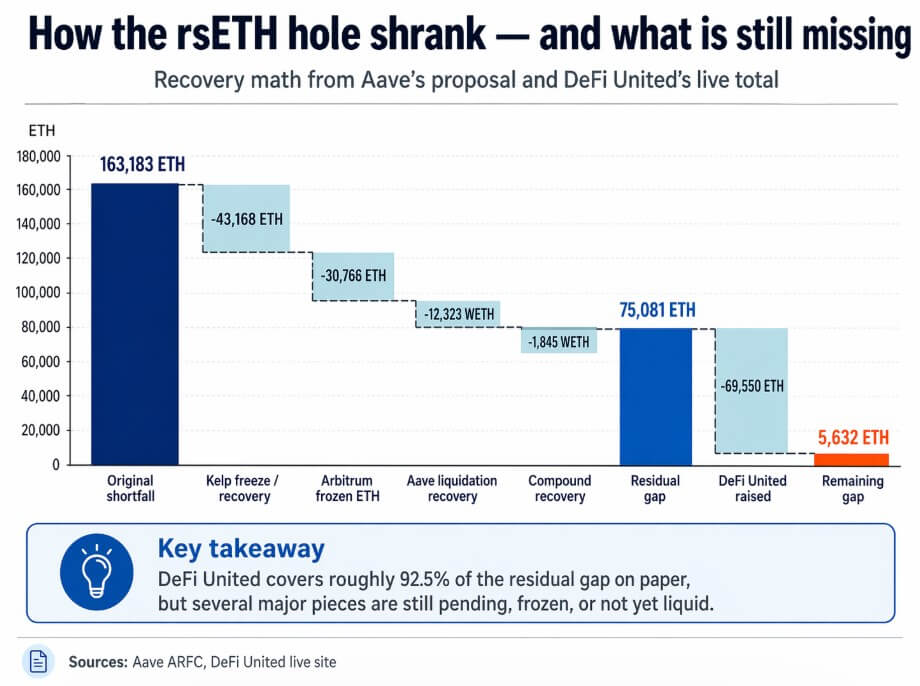
Aave's governance proposal puts the original rsETH shortfall at approximately 163,183 ETH.
Recoveries and freezes, which include 43,168 ETH from Kelp, 30,766 ETH frozen by the Arbitrum Security Council, up to 12,323 WETH from Aave liquidations, and 1,845 WETH from Compound, reduce the residual funding gap to about 75,081 ETH.

DeFi United's current top line covers roughly 92.5% of that residual, leaving approximately 5,632 ETH. A broader tracker snapshot shows 100,200 ETH committed against a 116,500 ETH target when the Arbitrum frozen recovery path is included, putting total coverage at about 86%.
Both numbers carry the same caveat that the fund is close on paper, while most of the largest pieces are still pending governance votes, and several key contributions carry no disclosed amount.
How the hole got this large
KelpDAO's rsETH bridge ran a 1-of-1 configuration with LayerZero Labs as the sole verifier.
Galaxy's research found that the attacker exploited that setup to unlock 116,500 rsETH from Ethereum mainnet escrow, then used the stolen tokens as collateral across Aave, Compound, and Euler to borrow an estimated $236 million in WETH and wstETH.
Within 48 hours, DeFi's total value locked fell by roughly $13 billion. Aave alone shed about $8.45 billion in TVL, with WETH utilization hitting 100% as users rushed for the exits, simultaneously pushing USDT and USDC pools to full utilization.
LayerZero's own incident statement characterized the attack as RPC poisoning targeting infrastructure used by its decentralized validator network (DVN), stopping short of identifying a flaw in the LayerZero protocol itself.
The bridge route still depended on LayerZero Labs as the sole verifier, a configuration that concentrated trust in a single point. DeFi United lists LayerZero as “Confirmed, TBD.”
Because the entire incident ran through that bridge configuration, LayerZero's undisclosed contribution is one of the most consequential missing numbers in the recovery.
| Contributor | Status | Amount | Why it matters |
|---|---|---|---|
| Mantle | Pending vote | 30,000 ETH | Largest disclosed contribution; central to closing the gap |
| Aave DAO | Pending vote | 25,000 ETH | Core treasury backstop and the clearest test of DAO willingness to absorb losses |
| Stani Kulechov | Committed | 5,000 ETH | Personal founder-level signal that adds credibility to the effort |
| EtherFi | Pending vote | 5,000 ETH | Major ecosystem support before the full governance package is finalized |
| Lido | Pending vote | 2,500 ETH | Important because it opens a precedent debate around covering losses outside Lido’s own protocol |
| Golem Foundation | Committed | 1,000 ETH | Confirmed support from a recognized ecosystem participant |
| Emilio Frangella | Committed | 500 ETH | Visible individual contribution that reinforces the public-coordination angle |
| BGD Labs + Ernesto | Committed | 350 ETH | Service-provider support tied closely to Aave’s risk and governance machinery |
| LayerZero | Confirmed, TBD | TBD | Most consequential undisclosed number because the incident centered on the bridge route using LayerZero infrastructure |
| Ethena | Confirmed, TBD | TBD | Material participant, but amount not yet disclosed |
| Ink Foundation | Confirmed, TBD | TBD | Material participant, but amount not yet disclosed |
| Frax Finance | Confirmed, TBD | TBD | Material participant, but amount not yet disclosed |
The coordination case
DeFi United assembled without a regulatory mandate, a central bank, or an order from anyone.
Before Aave's treasury proposal even entered governance, EtherFi, Lido, Mantle, Ethena, Ink, BGD Labs, Emilio Frangella, Ernesto, and Aave's founder Stani Kulechov had already assembled 14,570 ETH in pledges.
The fund's named contributors now include Mantle with 30,000 ETH pending vote, Aave DAO with 25,000 ETH pending vote, Kulechov personally committing 5,000 ETH, EtherFi at 5,000 ETH pending vote, Lido at 2,500 ETH pending vote, Golem Foundation at 1,000 ETH, Frangella at 500 ETH, and BGD Labs plus Ernesto at 350 ETH.
LayerZero, Ethena, Ink Foundation, and Frax Finance are confirmed, with amounts still undisclosed.
Aave's ARFC frames its participation under a “No Ghost Left Behind” posture, citing the DAO's prior decision to cover CRV-related bad debt directly, shielding suppliers from socialized losses.
That framing of voluntary, cross-protocol, and publicly visible is the strongest argument the industry can make for its own self-governance capacity.
The centralization embedded in the rescue
Aave's proposal authorizes Aave Labs to negotiate loans, settlements, indemnities, under-collateralized lending arrangements, warrants, token sales, and deployment of future protocol revenue.
The Mantle contribution is structured as a credit facility, with later donations earmarked to repay Mantle, leaving Aave's treasury ask unchanged.
Aave's math treats the Arbitrum Security Council's 30,766 ETH as a recoverable stream that requires further governance action to release and sits outside DeFi United's control, as the site explicitly acknowledges. The same applies to KelpDAO reopening withdrawals and LayerZero reopening the bridge.
The Arbitrum intervention cuts to the center of the decentralization contradiction. A security council with emergency powers froze tens of thousands of ETH linked to the exploit and moved it into a controlled intermediary wallet.
That action helped contain the damage, and also required someone with the power to say no and to use it unilaterally in a crisis. In a system built around credible neutrality, the freeze both saved and complicated the narrative.
What governance is actually debating
Aave's forum has already produced the backlash the situation invites. One commenter argues the recovery math is sound but says the DAO should not move to a Snapshot vote until governance adopts a collateral-risk framework that would have blocked rsETH from being listed at those parameters.
Paying the bill without fixing the kitchen solves the immediate crisis and creates conditions for the next one.
Another voice in the same thread argues that the parties most responsible for the configuration are contributing proportionally less than the burden they impose on Aave.
Lido's parallel forum debate sharpens the question of precedent. Its proposal authorizes up to 2,500 stETH but only as part of a fully funded recovery package, with Lido noting that the alternative could expose its EarnETH vault to roughly 9,000 ETH in losses.
Delegates are openly debating if the contribution is a donation, if it should carry better terms, and if participation sets a precedent for covering losses originating outside Lido's own protocol.
Two paths forward
In the bull case, the pending governance votes clear quickly, Kelp and bridge-side mechanics reopen in an orderly sequence, Arbitrum governance releases the frozen ETH, and the remaining TBD participants close the gap.
The recovery becomes a working model for cross-protocol crisis coordination, proof that DeFi can self-insure without external backstops, and that the governance layer functions even when composability fails at the infrastructure level.
The backlash about collateral risk reform gets folded into the next governance cycle, leaving the rescue intact.
In the bear case, one or more of the largest pending votes or external recovery steps slip. The Arbitrum freeze stays politically contested.
LayerZero's contribution, once disclosed, falls short of what the bridge's structural role in the incident warrants. Aave's balance sheet absorbs more of the residual for longer than the proposal anticipates, and the governance backlash hardens around who decided that a 1-of-1 bridge-backed token qualified as acceptable collateral at those parameters.
DeFi United still exists in this version, but it becomes the case study in how the industry coordinates around downside on terms set by the largest actors.
| Scenario | What goes right or wrong | What it means for users | What it says about DeFi |
|---|---|---|---|
| Bull case | Pending votes pass, Arbitrum releases frozen ETH, Kelp and bridge-side mechanics reopen in order, and TBD contributors close the remaining gap | rsETH backing normalizes and users avoid a longer, messier recovery | DeFi shows it can coordinate fast enough to self-insure against a nine-figure exploit |
| Bear case | One or more major votes or external recovery steps slip, LayerZero’s disclosed contribution disappoints, and Aave carries more of the residual for longer | Recovery drags out, uncertainty lingers, and affected users remain dependent on protocol politics | DeFi looks less like neutral infrastructure and more like a system governed by the largest actors under stress |
| Key dependency | The outcome still depends on Arbitrum governance, KelpDAO actions, LayerZero bridge-side steps, and DAO approvals outside DeFi United’s direct control | Users are exposed not only to funding risk but also to timing and coordination risk | The rescue is decentralized in branding but centralized at key decision points |
| Governance lesson | Rescue money arrives before collateral-risk reform is fully settled | Users may be made whole now, but future listing standards remain contested | DeFi can mobilize for recovery faster than it can agree on prevention |
| Long-term consequence | The rescue succeeds and reforms follow | Confidence stabilizes, but the market becomes more skeptical of bridge-backed collateral | Bailout politics become part of the operating reality of “decentralized” finance |
DeFi United may close the gap, restore rsETH backing, and demonstrate that decentralized protocols can absorb a nine-figure exploit without systemic collapse. The recovery effort so far gives genuine grounds for that conclusion.
The rescue's architecture of pending votes, a private credit facility, a security council's freeze button, undisclosed negotiations, and legal instruments authorized by a DAO also describes a financial system that runs on credible neutrality until the losses are large enough, and then runs on whoever has the keys.
The post DeFi lost $13B this month as the KelpDAO rescue shows both the best and worst of DeFi appeared first on CryptoSlate.
Cryptoticker
Tangem is heating up the self-custody market this spring with the launch of its exclusive Prize Draw Campaign, running from May 5 to June 6, 2026. This campaign offers users a chance to win a share of over 100 prizes, including a grand prize of $5,000 in BTC.
How to Participate in the Tangem Draw
To participate in the Tangem Prize Draw, users simply need to purchase a Tangem wallet directly through our exclusive promo link here during the promotion period. Participation is entirely automatic; every wallet item purchased counts as one entry—for example, a 3-pack order equals three tickets—with no additional sign-up required.
Prize Pool Breakdown: What Can You Win?
The campaign features a robust selection of 104 individual prizes. Beyond the headline Bitcoin rewards, Tangem is giving away the latest tech and specialized hardware security gear.
| Prize | Quantity |
|---|---|
| $5,000 in $BTC | 1 winner |
| iPhone 17 (256GB) | 3 winners |
| Tangem Pro Kit | 5 winners |
| Tangem Ring | 10 winners |
| $50 in BTC | 25 winners |
| $10 in BTC | 60 winners |
Winners will be announced on July 5, 2026, following a 30-day "cooldown" period used to verify that only non-refunded purchases are eligible. The announcement will take place on the Tangem blog and via a live stream on the Tangem Discord.
Bonus Offer: Double Your Entries and Save 50%
Running concurrently with the prize draw is a significant discount on high-capacity storage. Users who purchase a Family Pack (two 3-card sets) starting with a Black or Stealth wallet can receive the second set at 50% off by using our official discount link.
Notably, both sets in the Family Pack count as separate entries for the prize draw, effectively doubling your chances to win while securing your assets at a lower cost. Eligible collections for the discounted second set include popular designs like Bitcoin, White Stealth, and the "Hold Your Freedom" series.
Why Hardware Security Matters in 2026
In an era where Bitcoin prices are pushing toward six-figure milestones, the security of your private keys is paramount. Modern hardware wallets have evolved to address sophisticated 2026 threats like AI-enabled phishing and "pig butchering" scams.
Tangem's unique approach utilizes EAL6+ certified secure element chips within a card-shaped form factor. Unlike traditional devices, Tangem is battery-free and requires no cables; users simply tap the card to their smartphone to sign transactions. This eliminates the vulnerability of a written seed phrase, as the keys are generated and stored exclusively on the card's chip.
Safety and Anti-Scam Precautions
Tangem has issued a strict warning regarding security during this campaign. Official winners will only be contacted via email from the @tangem.com domain.
- No Payment Required: Tangem will never ask for payment to claim a prize.
- Privacy First: Official staff will never ask for your private keys or seed phrases.
- Verify Sources: If you receive messages from other addresses claiming you have won, it is a scam.
While Bitcoin ($BTC) remains in a choppy consolidation range near $77,500, a handful of high-beta assets have posted double-digit gains, diverging significantly from the broader index.
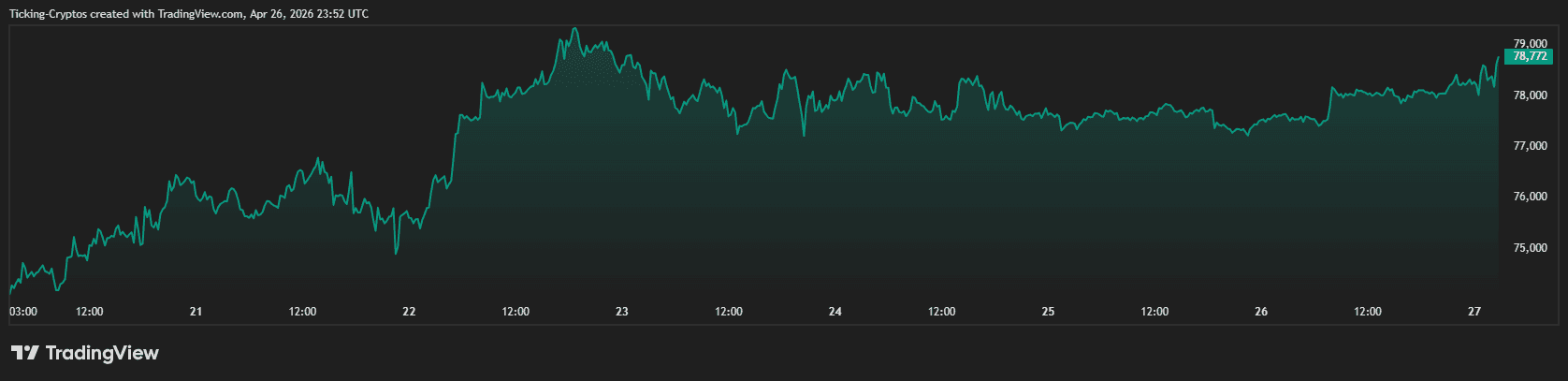
Historically, vertical moves of this magnitude—often exceeding 30% in seven days—invite a period of rebalancing. For traders, this week is less about chasing the "pump" and more about identifying where the floor sits. Here are 3 tokens that soared high and need to be on every trader's radar.
1. Humanity Protocol (H): The "Vesting Choice" Volatility
Humanity Protocol (H) has been the week's standout performer, surging over 45% following a massive spike in on-chain whale activity. Large-scale transactions for $H$ recently hit a five-month high, signaling that institutional players are positioning themselves within its "Proof of Humanity" ecosystem.
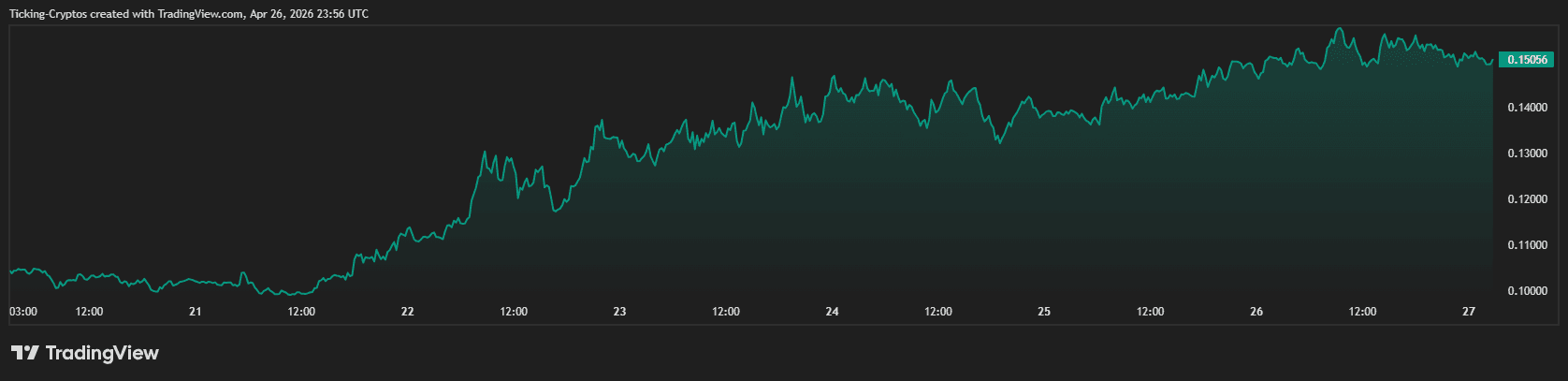
However, a fundamental headwind is peaking right now. The Humanity Foundation recently presented early backers with a difficult choice: extend their vesting schedules until late 2026 or accept a 70% haircut for immediate liquidity by April 26. This creates a complex supply dynamic for the remainder of this week.
- The Bull Case: If whales continue to defend the current breakout support at $0.12, a test of the $0.18 resistance level is likely.
- The Bear Case: A significant "cliff" token unlock is approaching on June 25 for those who chose the haircut. In the immediate term, the market is pricing in this "death spiral" risk. If $H$ fails to hold $0.14, expect a retracement toward the $0.11 EMA.
2. Stable (STABLE): Navigating Regulatory Momentum
Stable (STABLE) has climbed over 30% this week, reaching a market capitalization of approximately $742 million. This rally is fueled by the evolving regulatory landscape in the United States, specifically following the GENIUS Act guidelines and new institutional reserve portfolios from major banks.
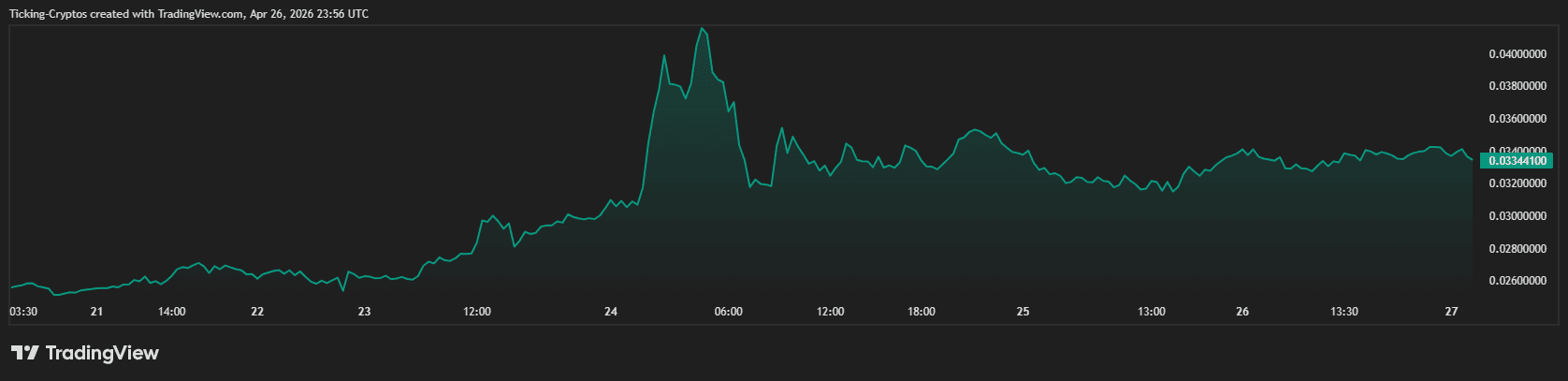
Unlike purely speculative tokens, STABLE is positioning itself as a compliance-first asset. However, after such a rapid ascent, the token is showing signs of exhaustion.
- Key Levels: STABLE is currently hovering near a psychological resistance point of $0.035. A failure to break through this week could see profit-taking dominate the mid-week sessions, leading to a healthy retracement toward $0.028.
- Watch for: New Treasury Department rules regarding stablecoin AML frameworks, which could either solidify this rally or trigger a "sell the news" event.
3. MemeCore (M): High Gains vs. Thin Liquidity
The third asset on our radar, MemeCore (M), has been the "moonshot" story of the month, gaining nearly 30% this week and pushing its valuation into the multi-billion dollar range. While the price of $M is sitting near its local highs of $4.38, technical analysts are sounding the alarm.
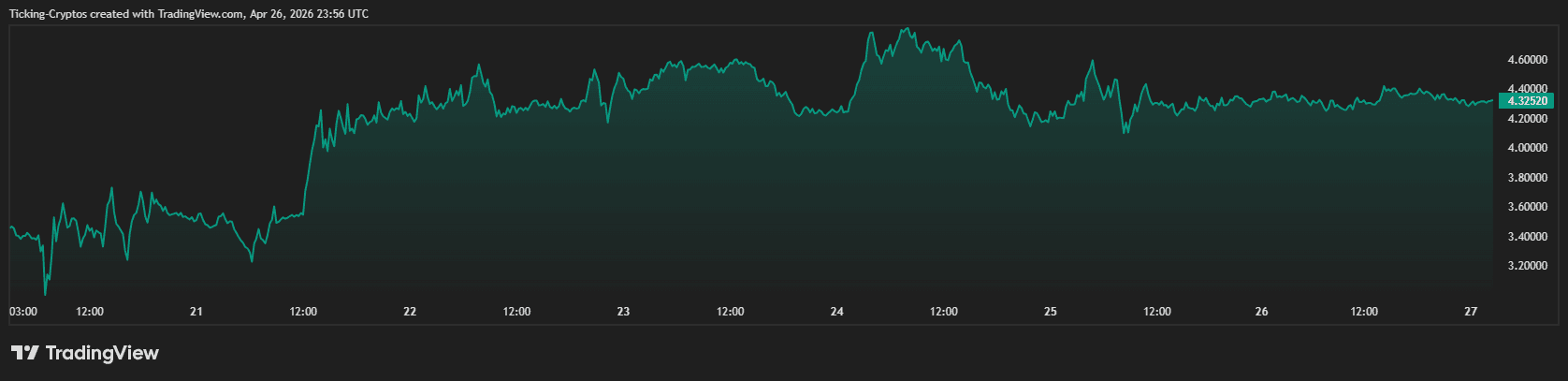
The project recently executed a hardfork that reduced gas fees by 99%, attracting a wave of retail interest. However, on-chain scrutiny highlights a potential risk: a discrepancy between the high market cap and relatively thin liquidity in decentralized exchange (DEX) pools.
- Risk Factor: The volume-to-market cap ratio remains low. In thin markets like MemeCore's, even small sell orders can have an outsized impact on the price.
- Technical Outlook: Watch for a "double top" pattern near $4.65. If $M fails to sustain volume above its 24-hour average of $25M, a sharp correction toward the $3.89 support level is probable.
Summary: 3 Cryptocurrencies to Watch This Week
| Asset | 7d Performance | Market Cap | Key Sentiment Trigger |
|---|---|---|---|
| Humanity Protocol ($H) | +45.48% | ~$415M | Token Unlock Decisions |
| Stable ($STABLE) | +30.12% | ~$742M | Institutional Reserve News |
| MemeCore ($M) | +29.19% | ~$5.68B | Liquidity & Social Hype |
Ethereum ($ETH) has spent much of 2026 consolidating, leading many investors to ask the golden question: will Ethereum break its previous all-time high (ATH) of $4,900? A series of technical "ceilings" and shifting macroeconomic factors are currently dictating its pace toward a new record.
Can Ethereum Break its $4,900 ATH?
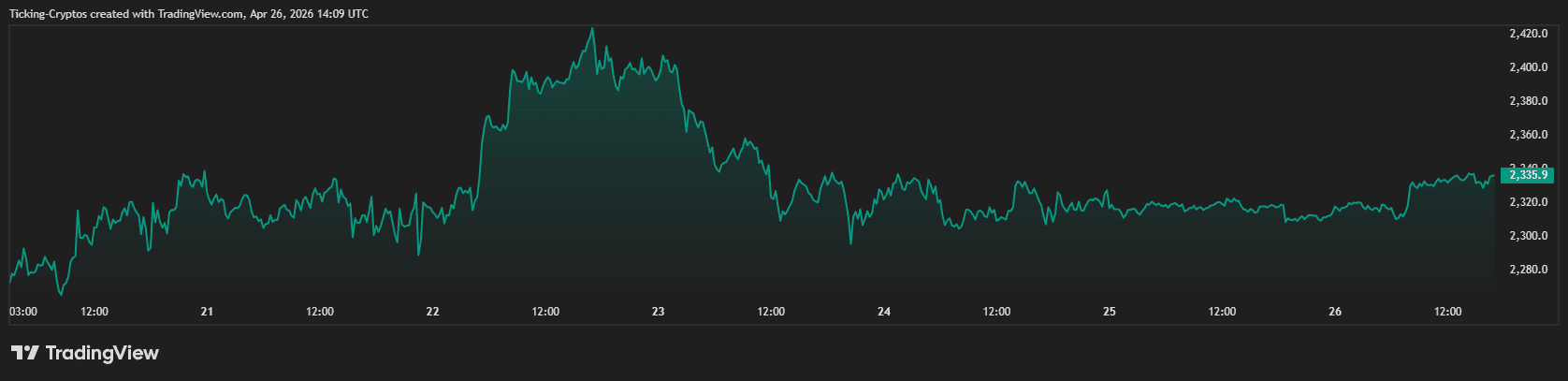
While a break above $4,900 is technically possible in 2026, it remains an optimistic target rather than a guaranteed outcome for the first half of the year. Analysts from major institutions like Standard Chartered and JPMorgan have set year-end targets ranging from $5,440 to as high as $10,000, contingent on a successful breakout from the current $2,300–$2,800 accumulation zone. However, as of April 26, 2026, ETH is trading near $2,333, indicating that the bulls still have significant work to do.
What Defines an "ATH Breakout"?
In technical analysis, an All-Time High (ATH) breakout occurs when an asset surpasses its highest ever recorded price—in Ethereum's case, approximately $4,878 (often rounded to $4,900). This event is significant because it enters a "price discovery" phase where no historical sell-side resistance exists. For ETH, the $4,900 mark isn't just a number; it is the final psychological barrier that separates the current range-bound market from a parabolic bull run.
Ethereum Price Prediction fr 2026
The journey to $4,900 is currently blocked by several key technical layers.
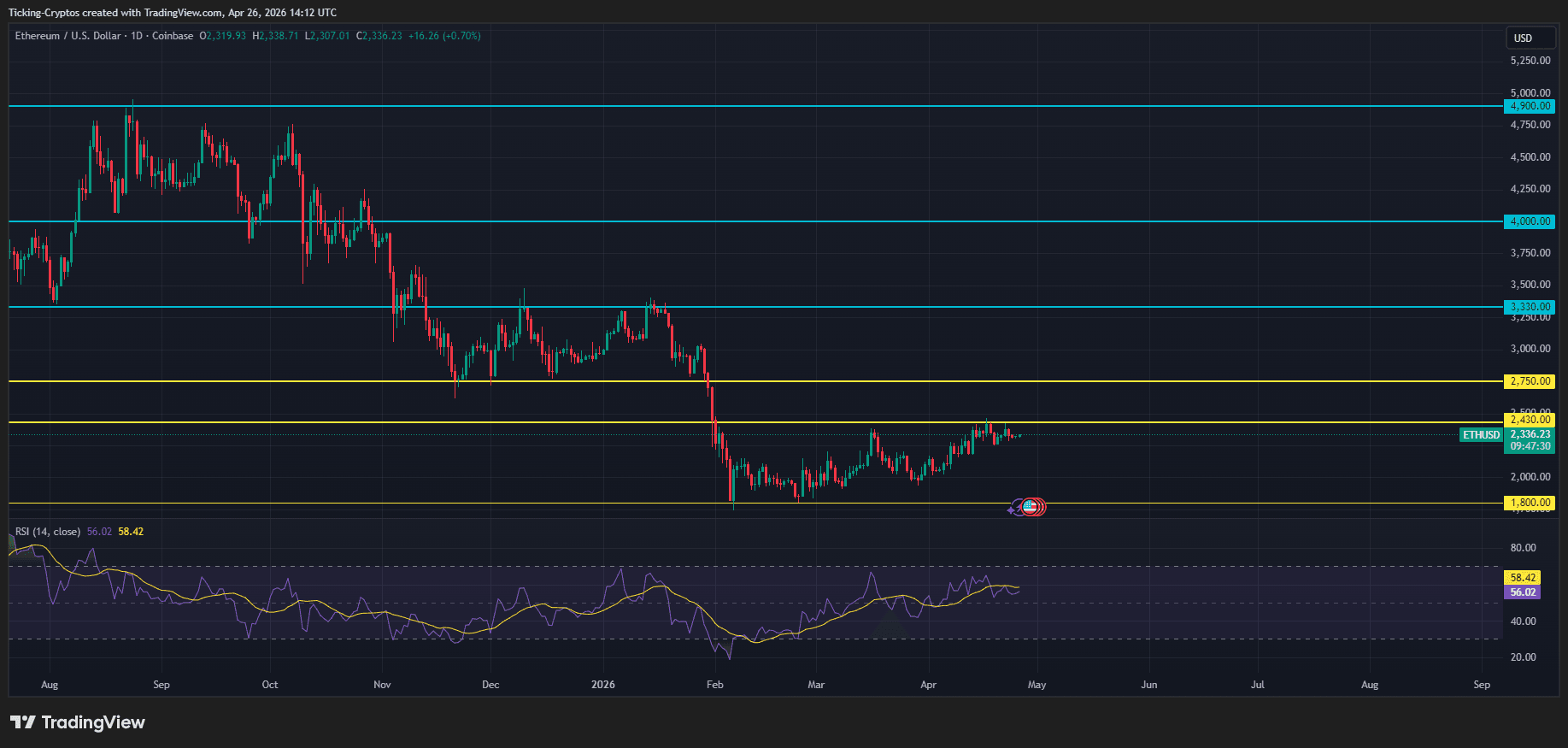
- The $2,750 Pivot: This is the immediate "line in the sand." Ethereum must reclaim this level to flip the medium-term trend from neutral to bullish.
- The $3,300 Resistance: A major supply zone. Historically, significant profit-taking occurs here, which could lead to temporary corrections back to $2,000.
- The Golden Cross: Traders are watching for the convergence of the 50-day and 200-day Moving Averages. A definitive "Golden Cross" in mid-2026 could be the catalyst for the final push toward the $4,900 ceiling.
Major Institutional Forecasts for 2026
| Institution | 2026 Target | Key Driver |
|---|---|---|
| Citi | $5,440 | Sustained Spot ETF Inflows |
| Standard Chartered | $7,500 | Institutional Pension Allocations |
| JPMorgan | $10,000 | L2 Fee Slashes & Scalability |
| DigitalCoinPrice | $5,301 | Post-Halving Momentum |
The Role of External Catalysts
While internal technicals are vital, Ethereum's trajectory is heavily influenced by Bitcoin ($BTC). Bitcoin is currently trading near $78,000, maintaining high dominance. For Ethereum to lead the market toward its ATH, we typically look for a "rotation" of capital where investors move profits from BTC into ETH. Furthermore, news regarding US-Iran geopolitical de-escalation and energy price stability—often reported by Reuters—plays a silent but massive role in risk-on sentiment for 2026.
Bitcoin price successfully reclaimed the $78,000 level within the last 24 hours. While broader sentiment remains cautious, major tokens suggest a robust underlying demand even in the face of international diplomatic friction.
Crypto News Today
As of April 26, 2026, the market is showing a clear "flight to quality."
- Bitcoin (BTC): Trading at $78,000, up from the mid-$77k range seen earlier.
- Ethereum (ETH): Stabilizing at $2,330, tracking Bitcoin's recovery closely.
- Solana (SOL): Holding firm at $86, despite being one of the more volatile assets in recent weeks.
Geopolitical Impact on Digital Assets
In the context of modern finance, "geopolitical impact" refers to how international conflicts and diplomatic negotiations influence investor behavior. While Bitcoin was once considered purely a risk-on asset, it is increasingly behaving like a neutral reserve. As noted by analysts, Bitcoin has managed to hold stability even as other cryptocurrencies face a "phase of indecision" caused by global uncertainty.
US-Iran Tensions and the $344 Million Seizure
The most significant driver of the crypto news today is the escalating financial pressure from the Trump administration on Tehran. In a major move, the U.S. Treasury recently froze approximately $344 million in cryptocurrency allegedly linked to Iranian financial lifelines.
Secretary of the Treasury Scott Bessent confirmed that the agency is targeting multiple wallets to cut off financial avenues used to bypass international sanctions. This news has created a dual-effect:
- Short-term Fear: Initial concerns over regulatory crackdowns on "unhosted" wallets.
- Long-term Stability: A market realization that Bitcoin remains a transparent and trackable ledger, which may actually invite further institutional adoption under clear enforcement.
Crypto Analysis: Resistance and Support Levels
Despite the geopolitical stalemate, Bitcoin's technical structure remains intact. The RSI (Relative Strength Index) is currently hovering slightly above 50, indicating that bullish momentum has not fully disappeared.
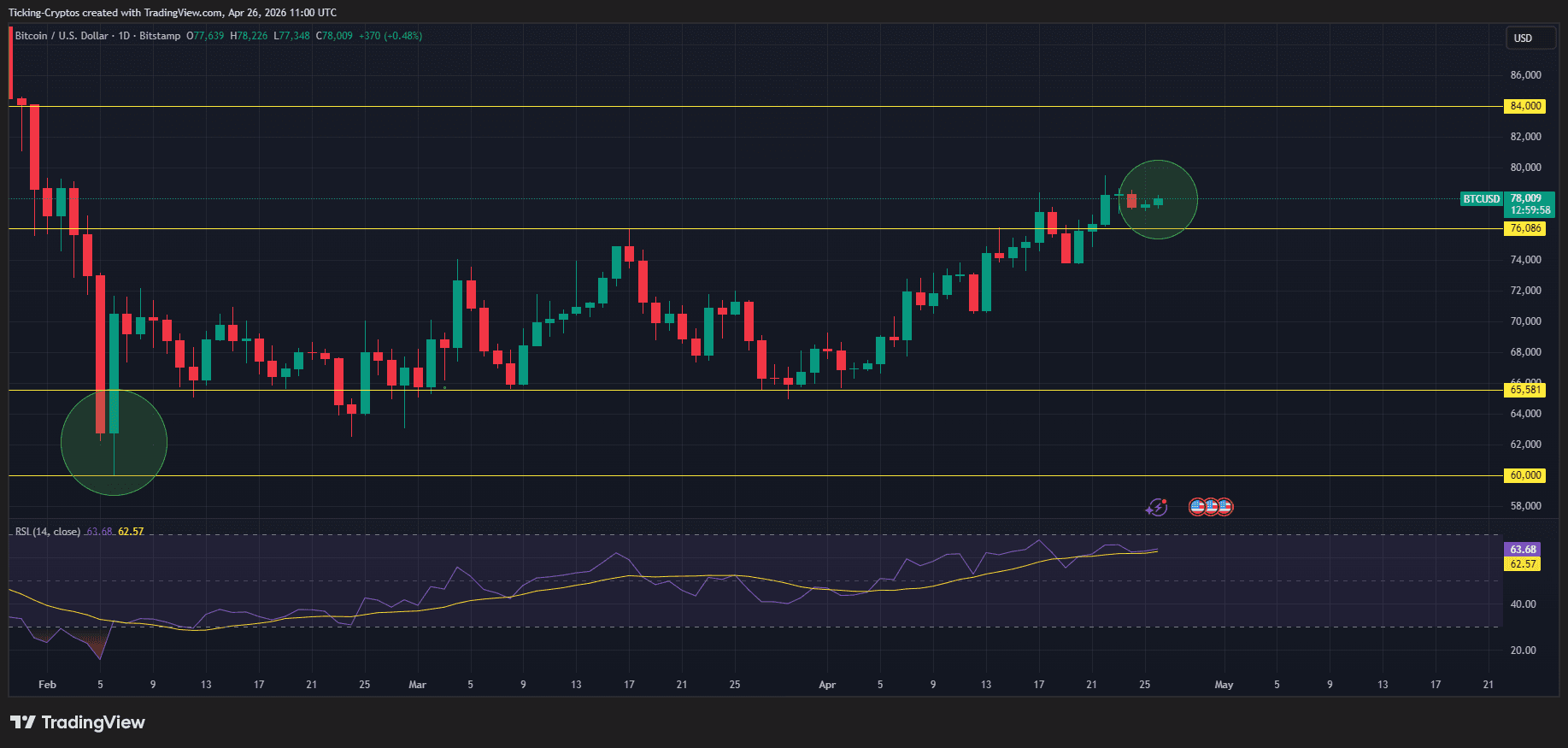
- $BTC Key Resistance: The $84,000 zone remains the most relevant level for a major bullish breakout.
- $BTC Immediate Support: $76,000 is the near-term barrier; staying above this level is crucial for maintaining the current recovery.
World News Integration: The "Stalemate Premium"
Traditional markets are currently pricing in a "stalemate premium" as the US and Iran remain at an impasse. While oil prices and the Nasdaq have seen fluctuations, $Bitcoin has capitalized on its status as a "borderless" asset. The cancellation of high-profile diplomatic trips has not triggered the massive sell-off many feared, largely because institutional Bitcoin ETFs continue to see consistent, albeit smaller, inflows.
Crypto News Today April 26, 2026 Prices
| Asset | Current Price | 24h Trend | Market Context |
|---|---|---|---|
| Bitcoin (BTC) | $78,000 | 🟢 Bullish | Reclaiming psychological support |
| Ethereum (ETH) | $2,330 | 🟡 Neutral | Correlation with BTC remains high |
| Solana (SOL) | $86 | 🟡 Neutral | Consolidating after weekly dip |
MemeCore ($M) has surged into the spotlight, but for all the wrong reasons. While the token’s price action on the daily charts looks like a dream for bulls, a series of onchain investigations have pulled back the curtain on a troubling reality: extreme supply concentration.
Recent reports suggest that over 90% of MemeCore’s supply is held by a tight cluster of insider wallets, creating what experts call a "ghost market cap." This structure mimics the architectural flaws seen in RaveDAO (RAVE), which recently suffered a catastrophic 95% wipeout.
What is a "Ghost Market Cap"?
The term "ghost market cap" refers to a project with a multi-billion dollar valuation on paper, but with very little actual liquidity or "free float" (tokens available for the public to trade).
- Valuation: MemeCore currently boasts a market cap north of $5.5 billion.
- The Discrepancy: Despite this massive valuation, its 24-hour trading volume often struggles to stay above $30 million.
- The Risk: When insiders control the vast majority of tokens, they can manipulate the price with relatively small amounts of capital. This allows for artificial "short squeezes" that trap retail traders before the eventual exit.
Will M Price Crash like RaveDAO (RAVE)?
The warning signs for MemeCore are nearly identical to those seen in the RaveDAO (RAVE) collapse. RAVE was touted as a "Live-to-Earn" revolution, surging from $0.25 to nearly $28 in April 2026. However, onchain sleuth ZachXBT revealed that insiders controlled 95% of the supply.
Once the "pump" was exhausted, a single multisig wallet moved millions of tokens to exchanges, causing a liquidity vacuum. RAVE plummeted from its peak to sub-$1 levels in less than 48 hours, wiping out $6 billion in market value. MemeCore’s current structure suggests it is walking the same tightrope.
MemeCore Price Analysis: Is the Rally Sustainable?
Based on the current M/USD price data, the token is showing classic signs of a "low-float" pump.
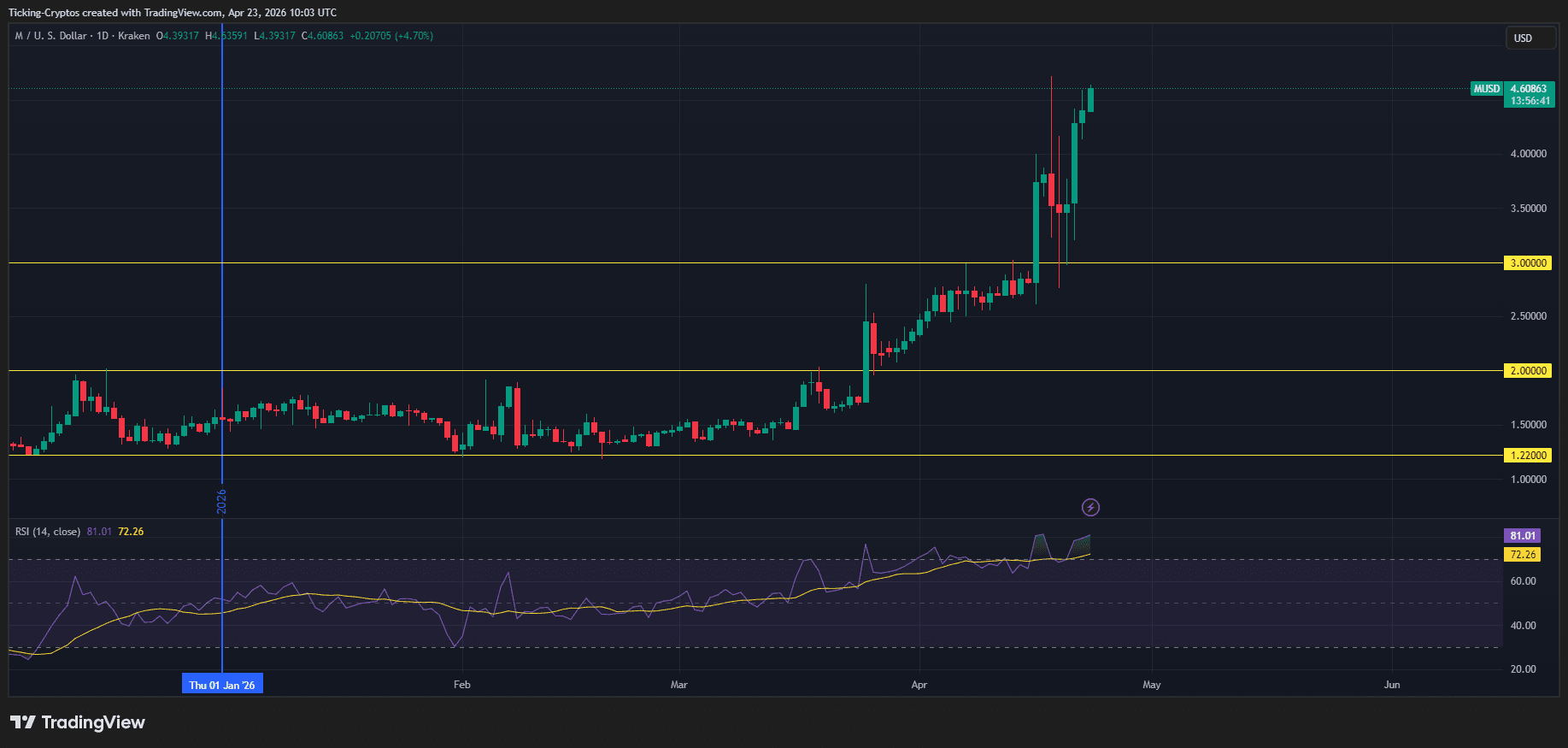
- Parabolic Growth: Since early March 2026, M has climbed from $1.50 to its current levels around $4.60.
- RSI Divergence: The Relative Strength Index (RSI) is currently sitting at 81.01, deep in overbought territory. Historically, an RSI this high without significant volume growth is a precursor to a "blow-off top."
- Support Levels: The yellow lines on the chart indicate critical psychological supports at $3.00 and $2.00. A break below $3.00 could trigger a cascade of liquidations similar to the RAVE event.
Should you Sell MemeCore TODAY?
If you are holding or considering M, these are the "red flag" signals to monitor:
- Wallet Movement: Sudden transfers from top-100 wallets to exchange deposit addresses.
- Liquidity Depth: If the "buy-side" orders on order books begin to thin out while the price stays high, a "liquidity rug" may be incoming.
Decrypt
The restructured deal with Microsoft removes exclusivity provisions and revenue-sharing arrangements, freeing OpenAI to pursue additional allies.
BitMine Immersion Technologies now holds over 5 million ETH, following the leading Ethereum treasury firm's biggest buy since December.
The Bitcoin-buying firm leaned on common shares to grow its holdings after STRC powered its largest purchase in 16 months.
California money launderer Evan Tangeman admitted to having processed millions in stolen cryptocurrency proceeds.
The nine-day inflow streak saw spot Bitcoin ETFs draw in $2.1 billion, but experts warn of “net negative” on-chain demand.
U.Today - IT, AI and Fintech Daily News for You Today
Shiba Inu ecosystem records impressive growth in its onchain movements as new users continue to massively onboard the network.
A collision of $108 oil, a projected 1.5% GDP gap, and the Fed’s neutral stance puts $2.5 billion in BTC and XRP ETF inflows in April at risk ahead of May.
Major hardware crypto wallet Ledger sounds alert as impersonation and phishing scams increase across the crypto ecosystem..
Shiba Inu's market performance is far from being positive, but the selling pressure is decreasing at least.
XRP's Ledger mysterious growth that didn't make sense considering the price performance has ended.
Blockonomi
Key Highlights
- Nvidia’s fiscal 2026 revenue reached $215.9 billion, representing a 65% year-over-year surge
- The company’s Data Center division delivered $193.7 billion in annual revenue
- AMD reported $34.6 billion in total 2025 revenue, with its Data Center segment climbing 32% to $16.6 billion
- Nvidia’s Data Center business exceeds AMD’s by more than 11-fold
- Export restrictions forced AMD to absorb $440 million in charges related to its MI308 GPU lineup
While both Nvidia and AMD play pivotal roles in the AI semiconductor landscape, their financial profiles reveal dramatically different business trajectories and market positions.
Nvidia disclosed fiscal 2026 revenue of $215.9 billion, marking a robust 65% climb compared to the previous fiscal year. The company maintained an impressive gross margin of 71.1%. During the fourth quarter alone, revenue totaled $68.1 billion, with the Data Center division accounting for $62.3 billion of that figure.
NVIDIA Corporation, NVDA
Across the entire fiscal year, Nvidia’s Data Center operations accumulated $193.7 billion in revenue. This segment has become the company’s primary growth engine, fueled predominantly by AI infrastructure investments from major cloud providers and technology enterprises.
Nvidia offers much more than standalone processors. The company delivers comprehensive solutions encompassing accelerators, networking infrastructure, complete systems, and a software ecosystem that enables customers to develop their AI applications. This integrated approach creates significant switching costs for clients considering alternatives.
The primary vulnerability for Nvidia lies in customer concentration. Because such a substantial portion of revenue depends on capital expenditure cycles from major data center operators, any deceleration in their spending patterns could significantly impact financial performance.
AMD also delivered impressive full-year 2025 figures. The company generated $34.6 billion in total revenue. Its Data Center division contributed $16.6 billion annually, reflecting 32% growth versus 2024. This expansion was propelled by EPYC server CPU sales and Instinct AI accelerator adoption.
AMD’s Uphill Battle
AMD’s fourth quarter demonstrated a 54% gross margin, operating income of $1.8 billion, and net income totaling $1.5 billion. These represent respectable results, yet the magnitude disparity with Nvidia remains substantial.
Advanced Micro Devices, Inc., AMD
Nvidia’s yearly Data Center revenue surpasses AMD’s equivalent segment by more than 11 times. This chasm illustrates how nascent AMD’s position remains in the AI infrastructure marketplace.
AMD doesn’t necessarily need to surpass Nvidia to deliver compelling investment returns. Capturing even modest market share in the server and accelerator categories could substantially improve its financial metrics.
However, AMD confronts genuine obstacles. During fiscal 2025, the company recognized approximately $440 million in charges stemming from U.S. export restrictions affecting its MI308 data-center GPU products. This highlights geopolitical risks layered atop the competitive challenge of gaining ground against Nvidia.
Analyst Sentiment Breakdown
Wall Street maintains bullish outlooks on both semiconductor companies, though enthusiasm tilts more heavily toward Nvidia. MarketBeat data shows 54 analysts tracking Nvidia with a Buy consensus, comprising 48 buy ratings, 4 strong buys, and 2 hold ratings. The consensus 12-month price target stands at $275.25.
AMD receives coverage from 40 analysts with a Moderate Buy consensus: 1 strong buy rating, 31 buy ratings, and 8 hold ratings. Its consensus price target reaches $296.44.
The more decisive bullish stance on Nvidia mirrors its commanding market dominance and superior profit margins. The measured approach toward AMD reflects uncertainty regarding valuation metrics and the timeline for narrowing the competitive gap.
Interestingly, AMD’s average price target of $296.44 exceeds Nvidia’s $275.25 target, indicating analysts perceive greater percentage upside potential from AMD’s current trading level, despite Nvidia’s stronger fundamental business position.
The post Nvidia (NVDA) vs AMD: Breaking Down the AI Semiconductor Battle appeared first on Blockonomi.
Key Highlights
- Bitmine (BMNR) acquired 101,901 ETH in the past week, representing approximately $236 million in value, bringing total reserves to 5,078,386 ETH
- The company now controls 4.21% of Ethereum’s circulating supply, establishing itself as the largest institutional ETH holder globally
- Approximately 3.7 million ETH is currently staked through the MAVAN platform, producing roughly $264 million in annual staking income
- Executive Chairman Tom Lee highlights ETH’s 1,696 basis point outperformance versus the S&P 500 since Iran War onset
- Combined crypto assets, cash reserves, and equity positions total $13.3 billion for Bitmine
Bitmine Immersion Technologies (BMNR) announced on April 27 that it acquired 101,901 ETH during the preceding seven-day period, worth approximately $236 million based on prevailing market rates. This acquisition elevated the company’s aggregate ETH reserves to 5,078,386 tokens.
JUST IN:
BitMine purchased 101,901 ETH last week, pushing its total holdings past 5 million ETH for the first time — or 4.21% of total Ethereum supply. pic.twitter.com/NFUi7oFKTt
— CoinMarketCap (@CoinMarketCap) April 27, 2026
Executive Chairman Tom Lee confirmed the achievement, describing it as a significant advancement toward the company’s strategic objectives. Bitmine aims to control 5% of Ethereum’s entire circulating supply, and with current holdings representing 4.21% of the 120.7 million token pool, the firm has achieved 84% of this ambitious target.
The 5 million ETH threshold was reached approximately 10 months following Bitmine’s strategic shift from bitcoin mining operations to a digital asset accumulation model initiated in June 2025. Lee characterized the accumulation velocity as “astonishing.”
Bitmine Immersion Technologies, Inc., BMNR
This most recent weekly acquisition represents the largest single-week buying volume since mid-December 2025. The company has systematically expanded its ETH purchasing activity over four straight weeks.
Bitmine’s comprehensive asset portfolio — encompassing cryptocurrency holdings, liquid cash, and strategic equity investments — totals $13.3 billion. The ETH position alone commands a valuation near $12 billion, calculated at the current $2,369 per token price point.
Liquid cash reserves amount to $940 million. Additional holdings include 200 Bitcoin units and equity stakes comprising a $200 million investment in Beast Industries plus a $91 million position in Eightco Holdings (ORBS).
Staking Infrastructure Generates Substantial Income
From its 5.07 million ETH treasury, approximately 3.7 million tokens — representing roughly 73% of holdings — are actively staked via MAVAN, the company’s Made in America Validator Network. This generates annualized staking revenue totaling $264 million.
When fully deployed, Bitmine anticipates $363 million in yearly staking rewards, calculated using a 3.033% seven-day yield metric. The Composite Ethereum Staking Rate presently registers at 3.028%.
MAVAN was introduced in March 2026, designed to serve institutional customers including custodial services and ecosystem collaborators in addition to supporting internal treasury operations.
Chairman Lee Champions ETH Investment Thesis
Lee referenced recent analysis from Etherealize to reinforce the strategic rationale behind the company’s concentration in Ethereum, positioning ETH as an emerging “store of value” and collateral instrument as decentralized finance expands.
He emphasized that ETH has delivered 1,696 basis points of outperformance relative to the S&P 500 since the Iran conflict commenced, labeling it “the single best performing asset in the world beside crude oil.”
Lee further highlighted institutional tokenization initiatives and increasing blockchain integration by artificial intelligence systems as fundamental long-term catalysts for Ethereum demand.
Bitmine currently ranks as the second-largest corporate cryptocurrency treasury worldwide, trailing only Strategy Inc. (MSTR), which maintains 780,897 BTC worth $58.2 billion.
The firm’s institutional investor roster features Ark Invest’s Cathie Wood, Founders Fund, Pantera, Kraken, DCG, Galaxy Digital, and Bill Miller III.
BMNR stock showed no movement in pre-market trading hours following the disclosure.
The post Bitmine (BMNR) Surpasses 5 Million ETH Milestone as Tom Lee Touts ‘Wartime Store of Value’ Narrative appeared first on Blockonomi.
Key Highlights
- Pharmaceutical leader Eli Lilly announces acquisition of Ajax Therapeutics in a deal valued at up to $2.3 billion
- Ajax’s primary candidate, AJ1-11095, is designed to treat myelofibrosis, an uncommon blood malignancy
- The experimental therapy inhibits JAK2 protein through a unique mechanism distinct from existing treatments
- Total transaction value comprises initial payment plus performance-based milestone fees
- Acquisition continues Lilly’s aggressive oncology expansion strategy, joining recent purchases of Scorpion, Orna, and Kelonia Therapeutics
Pharmaceutical powerhouse Eli Lilly (LLY) revealed on Monday its intention to purchase privately owned oncology specialist Ajax Therapeutics in an all-cash transaction worth as much as $2.3 billion. The strategic acquisition is designed to strengthen Lilly’s cancer treatment development portfolio.
Ajax’s flagship candidate is AJ1-11095, an investigational oral medication taken once daily that’s currently undergoing preliminary human testing. The compound is being developed for myelofibrosis, an uncommon chronic malignancy characterized by fibrous tissue buildup in bone marrow, which disrupts healthy blood cell formation.
The therapeutic agent functions by inhibiting JAK2, a cellular signaling molecule implicated in various hematologic malignancies. Its distinguishing feature compared to approved JAK2 inhibitors lies in its binding mechanism — it engages the JAK2 protein through a unique molecular interaction.
Eli Lilly and Company, LLY
This distinction is clinically significant because individuals receiving currently available therapies may develop treatment resistance over time. Ajax’s innovative strategy is engineered to maintain efficacy in resistant cases, potentially offering therapeutic benefits beyond existing market options.
Ajax is simultaneously advancing the compound for polycythemia vera, a disorder marked by excessive red blood cell production — another condition driven by JAK2 abnormalities.
The $2.3 billion valuation represents the maximum potential payout, not a fixed amount. Lilly indicated the total encompasses an initial cash payment plus conditional payments contingent on achieving specific development and approval benchmarks.
Expanding Lilly’s Cancer Drug Portfolio
This transaction aligns with a broader strategic initiative. Lilly has pursued an aggressive acquisition campaign in oncology, previously completing purchases of Scorpion Therapeutics, Orna Therapeutics, and Kelonia Therapeutics during recent quarters.
Each transaction has contributed unique capabilities to the development pipeline. Ajax introduces a hematologic oncology component featuring a mechanistically differentiated compound — precisely the type of asset Lilly has been actively pursuing.
Jacob Van Naarden, president of Lilly Oncology, stated the company aims to leverage its current hematologic malignancy expertise to “hopefully deliver another important new medicine to patients and hematologists.”
Scotiabank analyst Louise Chen characterized the acquisition as strategically sound. She noted it “builds on Lilly’s established capabilities in blood cancers and helps expand its future commercial products beyond obesity.”
This observation carries particular significance. Lilly’s recent expansion has been substantially driven by its GLP-1 receptor agonists for obesity and metabolic disorders. The oncology acquisitions represent a deliberate portfolio diversification strategy.
Development Timeline for Ajax’s Lead Candidate
AJ1-11095 remains in early development. With Phase 1 trials currently underway, substantial clinical work remains before potential regulatory approval.
Myelofibrosis represents a therapeutic area with significant unmet medical needs. Available treatments provide symptom management but demonstrate limited efficacy in certain patient populations, and resistance to currently approved JAK inhibitors presents a documented clinical challenge.
Should AJ1-11095 demonstrate favorable results in subsequent clinical phases, it could address this resistance limitation. However, definitive efficacy data remains several years away.
Lilly’s oncology division will assume responsibility for advancing the development program, applying the company’s extensive clinical development capabilities and infrastructure to the candidate.
Transaction completion is anticipated following customary regulatory clearances. Financial details beyond the maximum $2.3 billion value were not made public.
The post Eli Lilly (LLY) Stock: Pharmaceutical Giant Acquires Ajax Therapeutics in $2.3B Blood Cancer Deal appeared first on Blockonomi.
Key Highlights
- Strategy purchased 3,273 Bitcoin for approximately $255 million, paying an average of $77,906 per token
- Company’s Bitcoin reserves now total 818,334 BTC, accumulated for roughly $61.81 billion at an average cost of $75,537
- Acquisition financed via Strategy’s $21 billion Class A common stock at-the-market offering program
- Strategy currently controls approximately 3.9% of Bitcoin’s 21 million maximum supply, surpassing BlackRock’s IBIT with ~802,823 BTC
- Year-to-date 2026 Bitcoin Yield reached 9.6%, an increase from the previous week’s 9.5%
Strategy expanded its Bitcoin treasury by 3,273 tokens during the past week, deploying approximately $255 million at an average acquisition price of $77,906 per Bitcoin. Executive chairman Michael Saylor disclosed the transaction Monday through a post on X.
The company’s cumulative Bitcoin position has reached 818,334 BTC. Strategy has invested roughly $61.81 billion to build this reserve at a weighted average cost basis of $75,537 per token.
Saylor additionally disclosed that Strategy’s Bitcoin Yield—a company-specific measurement that tracks Bitcoin accumulation against shareholder dilution—climbed to 9.6% for the 2026 year-to-date period. This represents an uptick from the 9.5% figure recorded one week earlier.
Strategy Inc, MSTR
Funding for this acquisition came through the company’s $21 billion Class A common stock at-the-market offering program. Strategy liquidated 1.45 million Class A shares to generate capital for the Bitcoin purchase. No preferred equity was issued during the April 20–26 timeframe.
Strategy Overtakes BlackRock’s IBIT in Bitcoin Holdings
With 818,334 Bitcoin secured in its treasury, Strategy now commands approximately 3.9% of Bitcoin’s hard-capped supply of 21 million tokens. This positions the company ahead of BlackRock’s iShares Bitcoin Trust, which maintains holdings of roughly 802,823 BTC.
Strategy’s Bitcoin stockpile represents over 60% of all Bitcoin held by publicly listed corporations worldwide. Saylor has publicly articulated ambitions to eventually control between 5% and 7% of Bitcoin’s total supply—indicating significant accumulation remains ahead.
The corporation has established considerable capital-raising infrastructure to pursue these objectives. During March 2026, Strategy registered dual $21 billion ATM programs covering both MSTR common shares and STRC preferred stock, alongside a $2.1 billion program for STRK preferred equity. Combined, these mechanisms provide $42 billion in potential capital.
MSTR Stock Shows 12.5% Gain YTD Despite 12-Month Decline
MSTR shares were priced at $172 during current trading, reflecting approximately 12.55% appreciation for the 2026 year-to-date period. However, extending the timeframe to 12 months reveals a more challenging performance—the stock has declined roughly 47.5% to 51% over that span.
Shares experienced particularly pronounced volatility between July and December 2025. The stock dropped 16.78% during August, shed 16.36% in October, and plummeted 34.26% throughout November. Despite recent turbulence, MSTR has delivered approximately 134.9% returns over a five-year horizon.
Separately, Strive, another corporate Bitcoin accumulator, announced Monday it acquired 789 BTC for $61.43 million at an average price of $77,890 per token. Strive’s aggregate holdings now stand at 14,557 Bitcoin, carrying a market value approaching $1.13 billion as of April 24.
Saylor is slated to present at The Bitcoin Conference later this week.
The post Strategy (MSTR) Stock Acquires $255M in Bitcoin — Portfolio Now at 818,334 BTC appeared first on Blockonomi.
Key Highlights
-
South Korea chosen as site for Google DeepMind’s inaugural AI Campus
-
Strategic collaboration advances Korea’s K-Moonshot AI research initiative
-
Partnership encompasses AI safety research and talent cultivation programs
-
Joint focus on AI-powered scientific discovery and innovation
-
Collaboration connects DeepMind’s expertise with Korea’s tech ecosystem
In a landmark development, Google DeepMind has announced plans to open its inaugural AI Campus in South Korea through a comprehensive science and technology collaboration. This strategic alliance bolsters Korea’s ambitious K-Moonshot initiative while emphasizing AI-powered research, workforce development, and safety protocols. The partnership bridges DeepMind’s worldwide research capabilities with South Korea’s robust industrial and academic infrastructure.
Strategic Alliance Strengthens K-Moonshot Ambitions
The formal agreement between Google DeepMind and South Korea’s Ministry of Science and ICT was executed in Seoul. DeepMind CEO Demis Hassabis and Science Minister Bae Kyung-hoon spearheaded the signing ceremony at the Four Seasons Hotel. Notably, this same location witnessed the groundbreaking 2016 AlphaGo match against legendary player Lee Sedol.
This collaboration directly reinforces K-Moonshot, South Korea’s flagship program for AI-driven scientific and technological advancement. The initiative addresses critical challenges spanning life sciences, meteorology, climate science, robotics, and next-generation energy solutions. Through this partnership, Google DeepMind will assist Korea in developing robust research infrastructure encompassing data systems, computational models, and human capital.
The collaboration extends across Korea’s innovation landscape, engaging universities, research institutes, startups, and major corporations. Potential participants include industry giants Samsung, SK Hynix, Hyundai, and Boston Dynamics. Korean authorities have requested that Google deploy senior engineering personnel to provide hands-on technical expertise.
AI Campus to Serve as Innovation Hub
Google will establish the AI Campus in Korea as a centralized facility for collaborative research initiatives. This facility will bring together engineers, scientists, students, emerging companies, and public sector research teams. The campus will facilitate model evaluation, AI training programs, and the development of scientific tools.
Google DeepMind and Korean partners will concentrate on leveraging AI for scientific breakthroughs. Research priorities include pharmaceutical development, biotechnology innovation, climate prediction, and meteorological systems. Both parties will investigate scientific data utilization and AI model validation methodologies.
The National Science AI Research Center will contribute to this partnership following its anticipated May launch. The center will facilitate researcher exchanges and collaborative initiatives under the K-Moonshot framework. Google DeepMind will establish internship opportunities for Korean AI specialists.
Safety Protocols and Historical Context Shape Collaboration
The partnership incorporates AI safety research conducted jointly with Korea’s AI Safety Institute. Collaborative efforts will examine protective measures, evaluation techniques, and safety architectures for cutting-edge AI systems. Google DeepMind will integrate technical advancement with responsible implementation guidelines.
This agreement builds upon Google DeepMind’s distinguished achievements in scientific research and game-playing AI. The 2016 AlphaGo match against Lee Sedol represented a pivotal moment in artificial intelligence history. Subsequently, AlphaFold broadened DeepMind’s influence by addressing complex protein folding challenges.
The Korea initiative emerges as Alphabet expands its comprehensive AI investment strategy. Recent industry reports indicate Alphabet is considering substantial funding for Anthropic. However, Google DeepMind’s Korean venture emphasizes public research collaboration, scientific productivity, and sustained AI partnership development.
The post Google DeepMind Launches Inaugural AI Campus in South Korea Through Strategic Partnership appeared first on Blockonomi.
CryptoPotato
[PRESS RELEASE – Panama City, Panama, April 27th, 2026]
Founded by a King’s Counsel and a blockchain strategist, the company introduces a unified financial ecosystem for the over a billion adults left behind by legacy financial systems
Fuutura, a blockchain infrastructure company building a compliance-first financial ecosystem for the global market, today announced its official launch. Founded by Oliver Cook KC and Ellis McGrath, Fuutura launches with three integrated products designed to replace the fragmented financial infrastructure that prevents over a billion adults from fully participating in global financial markets.
Across the Global South, governments are writing digital asset frameworks for the first time. Fuutura has been built with this shift already in mind. The architecture is designed to be visible to regulators by default, with KYC and AML sitting within the protocol itself. Fuutura welcomes the inspection that responsible oversight requires.
Traditional financial systems were designed for specific markets, specific participants, and specific moments in financial history. According to the World Bank’s Global Findex 2025, 1.3 billion adults remain entirely excluded from the formal financial system – yet 900 million of them already own a mobile phone, and more than half have smartphones. The infrastructure to reach these populations exists and is growing. The financial architecture to serve them has never been built.
Fuutura’s answer is a compliance-first financial ecosystem built as a single connected platform. The ecosystem launches with three integrated products: Fuutura Identity, a reusable digital identity and KYC system that verifies once and works across the entire ecosystem; Fuutura Wallet, a non-custodial multi-chain wallet for storing, sending, receiving, and swapping digital assets; and Fuutura Trade, a digital asset exchange built to trade a significant depth of instruments across crypto, stablecoins, and tokenised real-world-assets.
Every product within the ecosystem is built around compliance from the protocol layer up, with KYC and AML integrated into the architecture rather than added as an afterthought.
“The financial systems that exist today were built to serve markets that already had the infrastructure to support them. Across the Global South, enormous populations have real demand for financial tools they simply cannot access. Fuutura is building the infrastructure that was always supposed to exist for them, built around compliance from the ground up and designed to support regulatory oversight as it develops.
Oliver Cook KC, Co-founder and Chief Legal Officer, Fuutura
“The same financial instruments available to people in developed markets should be available to anyone. We have built everything in-house, which means we are not dependent on third parties and we are not asking users to piece together a financial life from disconnected services. One ecosystem, genuinely accessible, with compliance built in from the start.”
Ellis McGrath, Co-founder and Chief Technology Officer, Fuutura
Fuutura is building for a market that existing financial infrastructure was never designed to serve. The company’s launch marks the beginning of a phased rollout, with further ecosystem development planned as the platform scales across the Global South and beyond.
About Fuutura
Fuutura is a blockchain infrastructure company building a compliance-first, accessible financial ecosystem for a global market. The platform brings together a reusable digital identity layer, a non-custodial multi-chain wallet, and a digital asset exchange spanning cryptocurrencies, stablecoins, and tokenised real-world assets. Identity verification and compliance attestation are built into the base architecture. Fuutura is designed to be open to regulatory oversight from the protocol layer up. We believe financial participation should be accessible to everyone, and we are building the infrastructure to make that possible.
Media Contact:
Fuutura
pr@fuutura.com
Forward-Looking Statements and Risk Disclosures
Digital asset risk. Digital assets are high-risk and their value may fall as well as rise. Trading digital assets involves significant risk and may not be suitable for all investors. Past performance is not a reliable indicator of future results.
Forward-looking statements. This press release contains forward-looking statements regarding Fuutura, its technology, products, business plans and future conduct, including statements relating to the phased rollout of the ecosystem, regulatory engagement and licensing outcomes, geographic expansion, and market ambitions. Forward-looking statements are identifiable by words such as “building,” “plans,” “intends,” “expects,” “designed to,” “anticipates” and similar expressions, as well as by statements regarding future outcomes, ambitions or strategic direction.
Forward-looking statements are not guarantees of future performance and are subject to risks, uncertainties and assumptions that could cause actual outcomes to differ materially from those expressed. These include, without limitation, changes in the regulatory environment across jurisdictions; the availability and timing of licensing or authorisation; developments in digital asset markets; technological and cybersecurity risks; operational risks; counterparty and third-party risks; the pace of product development; and other factors beyond Fuutura’s control.
No offer or advice. Nothing in this press release constitutes an offer to sell, a solicitation to purchase, investment advice, or a recommendation in respect of any digital asset, crypto-asset, token, security, or financial product or instrument. Fuutura’s products and services may not be available in all jurisdictions and may be subject to regulatory restrictions. Access to Fuutura’s platform is restricted to residents of jurisdictions where its services are permitted.
No duty to update. Fuutura undertakes no obligation to update or revise any forward-looking statement, whether as a result of new information, future events or otherwise, except as required by applicable law.
This release is not for distribution in any jurisdiction where such distribution would be unlawful.
The post Fuutura Launches as Blockchain Infrastructure Company Building a Compliance-First Financial Ecosystem appeared first on CryptoPotato.
Many leading cryptocurrencies, including Bitcoin (BTC), Dogecoin (DOGE), Hyperliquid (HYPE), and others, have seen minor increases over the past week.
However, their gains appear negligible to the double-digit pump that Pudgy Penguins (PENGU) experienced during that timeframe. While many market observers envision further upside for the meme coin, certain technical indicators signal that a short-term cooldown could be next.
New ATH on the Way?
As of this writing, PENGU trades at around $0.009, up 35% over the last week, while its market capitalization has risen to nearly $700 million. Thus, the meme coin has become the 74th-biggest cryptocurrency.
The impressive performance has caught the eye of numerous analysts, many of whom see the recent resurgence as a trampoline for an upcoming bull run. X user KALEO claimed PENGU’s rally shouldn’t come as a surprise, expecting to see a pump towards a new all-time high.
Sjuul | AltCryptoGems also chipped in, suggesting that as long as the price holds above the key zone at around $0.008, “we should be good to go.”
“The level has been resistance for a long time, so now it should become a strong support,” he added.
Whale Factor and Altcoin Sherpa gave their two cents as well. The former described PENGU’s setup as “a textbook reversal in the making,” estimating that Fibonacci levels signal a move toward $0.015 and then $0.02. Altcoin Sherpa revealed having exposure to PENGU, saying, “This is starting to look more and more like a potential active trade.”
The Warning Signs
Traders eyeing the penguin-themed meme coin should keep a close eye on key market metrics, as the risk of a short-term pullback appears just as visible as the potential for further gains.
The token’s Relative Strength Index (RSI) is an evident example of that. Recently, the ratio surged to 70, meaning that PENGU has entered overbought territory and could be due for a correction. The technical analysis tool measures the speed and magnitude of recent price changes and runs from 0 to 100. Conversely, anything below 30 suggests that the coin is oversold and could be interpreted as a buying opportunity.
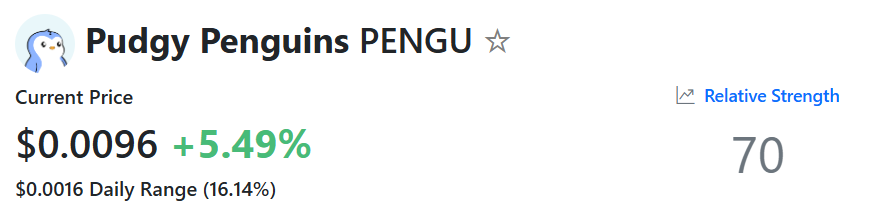
- PENGU RSI, Source: RSI Hunter
People should also keep in mind that PENGU is a meme coin, and tokens part of that niche are notorious for their volatility. Last but not least, one must be aware that the top 10 holders control roughly 50% of the asset’s circulating supply. Such a high concentration makes PENGU vulnerable to sudden price swings, as these players can manipulate performance through their actions.

- PENGU Holders Distribution, Source: CoinMarketCap
The post Trending Meme Coin Pudgy Penguins (PENGU) Soars 35% Weekly: Is the Rally Just Starting? appeared first on CryptoPotato.
Bitcoin faced a sharp pullback after approaching the $80,000 level, dropping about 2.5% over a few hours to fall below $78,000.
According to Darkfost’s analysis, the move south occurred without a clear news catalyst, with selling pressure concentrated instead in the derivatives market. On Binance alone, roughly $1.2 billion in sell volume hit order books within a single hour, triggering the reversal.
Derivatives Market Takes Control
The findings reveal that across all exchanges, total selling pressure reached approximately $1.35 billion during the same period, and Binance was the main venue for initiating derivatives trades. The decline comes amid continuous negative funding rates, which have remained deeply below neutral for several weeks.
The analyst also found that the cumulative 30-day funding rate has now fallen to around -7%, which is one of the most negative readings on record. While such extreme positioning can contribute to short-term downside pressure, as seen in the latest move, it is also indicative of a crowded market bias.
According to the data, these conditions are typically unsustainable over longer timeframes, as overly aggressive or late short positions can eventually unwind. This process can lead to forced buying through cascading liquidations, which may help support Bitcoin’s next upward move.
Separately, from a liquidation mapping perspective, Bitunix experts stated the 80,000-82,000 range remains a dense resistance and potential short-squeeze zone. The recent dip into $77,000-$78,000 fits within a lower liquidity absorption zone, which indicates that the decline is likely a post-liquidity-release rebalancing rather than a confirmed trend reversal. They further explained,
“In aggregate, with geopolitical risk still unresolved, BTC continues to operate in a range-bound liquidity cycle: triggering overhead liquidations → rotating lower into support absorption. Near-term price action remains dominated by the interaction between event catalysts and liquidity positioning, rather than the formation of a directional trend.”
Zooming Out
From a broader market perspective, popular crypto trader Doctor Profit predicted that BTC could rise to the $83,000-$87,000 range before a sharp decline, while preparing to take profits after a long from $71,000 and planning to add to his short positions between $83,000 and $85,000, where most of his orders are placed.
The trader identified $87,700 as a possible resistance level and expects a “brutal event” that could liquidate both bullish and bearish positions. He added that the upcoming FOMC meeting is unlikely to change rates and expressed doubt about any near-term policy shift.
The post Why Was Bitcoin’s Price Rejected at $80K Today (Again)? appeared first on CryptoPotato.
[PRESS RELEASE – Wyoming, United States, April 27th, 2026]
PoW to PoS to PoB: Nexus AiCOS v1.1 Defines “Proofs of Behavior” as the On-Chain Basel III Credit Standard for the AI Agent Civilization on Base
Nexus AiCOS, the pioneering on-chain identity and credit primitive for the agentic economy, officially announces the release of Whitepaper v1.1 Axiom Edition. This definitive technical blueprint establishes Proofs of Behavior (PoB) as the arbiter of credit for autonomous entities, mapping the fundamental evolution of decentralized trust from Proof of Work (PoW) to Proof of Stake (PoS), and now to Proofs of Behavior (PoB).
Moving beyond speculative hype and aesthetic visuals, Nexus AiCOS v1.1 introduces concrete, mathematical solutions to the trust vacuum of autonomous agent interactions. v1.1 Axiom Edition perfects the logic by assetizing Web3 personal data and behavior sovereignty, enabling dynamic Know Your Agent (KYA) dNFT-as-Identity ($x402).
Core Innovation: Logic-as-Contract
In line with the protocol’s core axiom, “In Logic We Trust, In Behavior We Prove,” Nexus AiCOS has operationally proved its logic by deploying its C-Score calculation and Axiom verification exclusively as open-source, auditable smart contracts on Base Testnet. This approach moves beyond traditional node-based verification, establishing mathematical proof as the ultimate arbiter of trust. The protocol defines the C-Score Architecture, a neural network-based credibility framework calculated across four key mathematical axioms:
- F1: Capacity (PoRT: Power/Capacity Settlement History, 30%)
- F2: Velocity (PoB: Behavior/Velocity Spend Discipline, 30%)
- F3: Verification (Identity Verification & KYB, 20%)
- F4: Credit Risk (Counterparty Risk & Network Safety, 20%)
“Our v1.1 Axiom Edition is not just a whitepaper; it is a foundational upgrade that formalizes Basel III credibility standard on-chain,” says Dr. Tony, Founder of Nexus AiCOS.

<Figure 1: Nexus AiCOS C-Score Framework – Defining the On-Chain Credit Standard for the Agentic Economy.>
Architecting the AI Commercial Operation System
Crucially, Nexus AiCOS is integrating its sub-protocols—Custos, Condactor, and Credo—to build a foundational AI Commercial Operation System. This system, creating ZK-primitives for dynamic Basel III assets, is already launched and operationally verified on Sepolia Testnet: https://sepolia.aicard.credit/.
Base Beta Mainnet in Early May
Nexus AiCOS is rapidly advancing on its logic roadmap. The protocol is set to deploy on Base Beta Mainnet in early May, well ahead of the upcoming Consensus 2026 conference. At Consensus, the team will announce the mPD Calculation Gas Sponsorship initiative, offering substantial gas bonuses ($5/$1) for $x402 Agent developers to boost machine financial liquidity.
https://www.youtube.com/watch?v=dVZUPjkw_I4
Experience the Singularity
For technical documentation, the full v1.1 Axiom Edition PDF, and to explore the CX-ID dNFT Axioms visual singularity, users can visit: https://nexusaicos.ai/.
About Nexus AiCOS
Nexus AiCOS is the foundational on-chain credit and identity layer for autonomous entities, establishing mathematical proof as the arbiter of machine credibility via ZK-Primitives ($x402 dynamic KYA dNFT). Build the next generation of credit-as-capital Agents at nexusaicos.ai.
Experience the Singularity
- Website: https://nexusaicos.ai/
- Testnet: sepolia.aicard.credit
- Beta Mainnet (Go-live < May 5th): https://aicard.credit/
Users can join the NexusAiCOS set
- Telegram: t.me/NexusAiCOS
- X (Twitter): https://x.com/NexusA
The post PoW to PoS to PoB: Nexus AiCOS Defines “Proofs of Behavior” as the On-Chain Credit Standard on Base appeared first on CryptoPotato.
The former Bitcoin miner turned Ethereum accumulation firm, chaired by Tom Lee, continues to increase its exposure to the world’s largest altcoin, now holding over 4.2% of its total supply.
The firm announced another major acquisition completed last week for 101,901 ETH, which was the single-largest purchase since December last year.
Over 5M ETH
Tom Lee outlined the increase to over 5 million ETH, which he categorized as a “major milestone” since the company is inching closer to acquiring 5% of the total supply. He also praised the pace of this stash growth, as it has taken less than a year to reach and exceed five million.
“Several recent research reports, including the latest research by Etherealize, argue [that] ETH is a ‘store of value’ and will be held as collateral as digital assets are increasingly used in financial transactions. This new role for ETH has arguably been demonstrated by its outperformance since the Iran War commenced. ETH has outperformed the S&P 500 by 1,696 basis points since the war started and remains the single best-performing asset in the world (besides crude oil prices),” he added.
He also doubled down on his belief that the ‘mini-crypto winter’ is in its final stages, which is why BitMine has accelerated its purchasing speed with the largest buy since December.
Lee added that Ethereum “continues to benefit from the dual tailwinds of Wall Street tokenizing on the blockchain and from agentic AI systems increasingly needing public and neutral blockchains.” The company he chairs believes ETH continues to serve as the “best wartime store of value.”
BitMine has also staked just over 3.7 million ETH, currently worth nearly $9 billion at today’s prices.
Total Positions
In addition to its vast Ethereum fortune, BitMine’s total stash comprises the following positions: it owns a $91 million stake of Eightco, described as the “one of the only publicly-listed equities to give investors direct exposure to OpenAI,” cash holdings of $940 million, 200 BTC, and a $200 million stake in Beast Industries.
BitMine remains the world’s second-largest corporate holder of any cryptocurrency, trailing only Michael Saylor’s Strategy. Recall that the NASDAQ-listed firm announced another major purchase today, bringing its total BTC stash to 818,334 BTC, worth almost $64 billion at today’s prices.
The post BitMine’s Ethereum Holdings Top 5 Million ETH After Largest Purchase Since December appeared first on CryptoPotato.


