Cryptocurrency Posts
Crypto Briefing
SpaceX's innovative data center strategies could redefine digital asset infrastructure and boost its market valuation.
The post Jordi Visser: SpaceX’s valuation hinges on Musk’s unmatched data center construction, the complexities of terrestrial versus space facilities, and the critical role of energy storage innovation | The Pomp Podcast appeared first on Crypto Briefing.
A potential US-Iran peace deal could stabilize geopolitical tensions, impacting global markets and fostering diplomatic relations in the region.
The post Pakistan PM expects US-Iran peace deal signing within 24 hours appeared first on Crypto Briefing.
The peace framework could stabilize global markets, easing energy prices and boosting investor confidence, particularly in risk assets like crypto.
The post Iran and US agree on peace deal framework as crypto markets react to geopolitical shift appeared first on Crypto Briefing.
Johnston's World Cup participation elevates SPFL's global visibility, potentially attracting more international talent and investment.
The post Celtic’s Alistair Johnston becomes first SPFL player in 2026 World Cup appeared first on Crypto Briefing.
The disparity in losses highlights the risks retail investors face in celebrity-backed ventures, emphasizing the need for cautious investment strategies.
The post Investors lose over $200M on American Bitcoin shares while Eric Trump’s stake holds at $70M appeared first on Crypto Briefing.
Bitcoin Magazine
Bitcoin Magazine

Standard Chartered Calls Crypto Bottom as Bitcoin Price Recovers From $59,000 Low
Standard Chartered’s head of digital asset research, Geoff Kendrick, declared Friday that the crypto market has seen its cycle low, with Bitcoin’s recent dip to approximately $59,000 marking the bottom of the latest downturn — a 53% drawdown from its October all-time high of $126,000.
“Winter is over. Welcome back to crypto spring,” Kendrick wrote in a Friday note, adding, “I think we have now seen the low in crypto asset prices for the cycle.”
Bitcoin had recovered to around $64,000 at the time of Kendrick’s note, representing a roughly 5% gain over the prior week. The bank maintains a $100,000 price target for Bitcoin by year-end — projections it first issued in February.
SpaceX IPO drains crypto liquidity — then frees it
One of the two primary catalysts Kendrick cited is the historic Nasdaq debut of Elon Musk’s SpaceX, which priced its $75 billion IPO at $135 per share under the ticker SPCX on June 12.
Shares opened sharply above their IPO price, gaining roughly 20% on debut day. Kendrick argued that a significant portion of recent Bitcoin ETF outflows — totaling more than $5.72 billion since the second week of May, among the sharpest “since inception” — was driven by investors liquidating crypto positions to secure SpaceX allocations. With the IPO now live, that specific selling pressure may lift, he said.
The overlap between crypto and SpaceX demand was already playing out in real time. On Hyperliquid, perpetual contracts for SpaceX (SPCX) had accumulated over $240 million in open interest and $220 million in 24-hour volume ahead of the debut — ranking it as the eighth-largest asset on the platform.
Iran is a wildcard
The second catalyst involves geopolitics. A potential peace deal between the U.S. and Iran, timed ahead of next week’s G7 summit, could reduce pressure on global oil supplies that have remained tight since Middle East hostilities began.
Lower oil prices would subsequently cool elevated U.S. Treasury yields — which have weighed on risk assets like crypto by making risk-free government debt more attractive.
West Texas Intermediate crude fell roughly 1.5% on Friday to around $85–$86 per barrel. However, the peace deal narrative remained fragile.
President Trump stated Thursday that a breakthrough could come this weekend, only to later post on Truth Social that the deal made public was not what had been agreed, warning Iranian officials to “get their act together” — adding uncertainty to the macro outlook.
Three bitcoin price signals to watch
Kendrick outlined three confirmation signals that would validate his call. First, he is watching for Strategy to announce an additional Bitcoin purchase on Monday, as CEO Michael Saylor’s buying history has served as a reliable demand signal for institutional appetite.
Second, he is expecting U.S. spot Bitcoin ETFs to return to net-positive daily inflows on Friday.
Third, he wants to see continued declines in global oil prices as the Iran diplomatic situation evolves.
If all three materialize, Kendrick’s crypto spring thesis gains its clearest validation yet — suggesting institutional and macro forces are finally aligning to push Bitcoin back toward the bank’s $100,000 year-end target.
This post Standard Chartered Calls Crypto Bottom as Bitcoin Price Recovers From $59,000 Low first appeared on Bitcoin Magazine and is written by Micah Zimmerman.
Bitcoin Magazine

Blockworks Acquires Messari in Deal Highlighting Crypto’s Data Consolidation Race
Blockworks, the New York-based crypto data and investor relations platform, has acquired rival Messari in a deal that underscores the growing consolidation pressure reshaping the digital asset industry — and the steep valuation resets facing once high-flying crypto startups.
The acquisition brings together two of the industry’s largest crypto information businesses. Messari, founded in 2018, built a comprehensive data platform covering more than 40,000 digital assets, along with APIs, market intelligence, research tools, and AI-powered workflows used by funds, exchanges, regulators, and developers.
Blockworks, also founded in 2018, has focused on the issuer side of crypto capital markets, offering standardized disclosures through its Token Transparency Framework and a full-stack investor relations platform for onchain assets.
Blockworks paid more than $10 million for Messari — a steep discount from Messari’s approximately $300 million valuation when it raised a $35 million Series B led by Brevan Howard’s crypto arm in 2022, with Point72 Ventures also among its backers, according to the Wall Street Journal.
The markdown reflects both Messari’s recent difficulties — including the 2024 departure of co-founder and longtime CEO Ryan Selkis and subsequent staff reductions — and broader headwinds gripping the crypto sector.
“This acquisition connects the two sides of the market,” said Jason Yanowitz, co-founder of Blockworks. “Issuers maintain a trusted record of their business, and investors, exchanges, and regulators consume that record through research, APIs, and automated workflows.”
Blockworks raise to consolidate fragmented crypto data market
The deal was funded in part through Blockworks’ recently closed Series A extension, which valued the company at $192 million. That round was co-led by ParaFi and Reciprocal Ventures and included participation from Coinbase Ventures, among others.
Blockworks said it raised capital specifically to consolidate crypto’s fragmented data and information market, drawing comparisons to how Wall Street’s information layer eventually coalesced around dominant platforms like Bloomberg, FactSet, and S&P Global.
Messari CEO Diran Li, who took over following Selkis’s departure and had been repositioning the firm as an “AI-first company,” will join Blockworks as a senior leader under co-founders Yanowitz and Michael Ippolito.
The deal arrives as crypto M&A activity remains elevated despite challenging market conditions. Crypto companies have completed 144 deals totaling $11.8 billion in transaction value so far in 2026 — up roughly 3.5% from the same period last year — according to data from advisory firm Architect Partners.
Still, Eric Risley, founder of Architect Partners, warned that sustained pressure on trading volumes and token prices could force more distressed sales. “We are in the midst of the creation of the haves and the have-nots,” Risley said, per WSJ.
Both Blockworks and Messari executives said the combined platform would prioritize deeper data coverage, stronger APIs, enhanced compliance workflows, and AI-native research tools as digital assets increasingly migrate onchain.
This post Blockworks Acquires Messari in Deal Highlighting Crypto’s Data Consolidation Race first appeared on Bitcoin Magazine and is written by Micah Zimmerman.
Bitcoin Magazine

SpaceX Officially Joins Public Bitcoin Leaderboard as 8th Largest Holder With 18,712 BTC
Elon Musk’s SpaceX launched trading on the Nasdaq today under the ticker SPCX — and it didn’t arrive empty-handed.
The company officially entered the public Bitcoin treasury leaderboard as the 8th largest holder with 18,712 BTC, a position that had been building for years before its historic IPO debut confirmed the full size of the stash.
SpaceX’s S-1 filing with the Securities and Exchange Commission first disclosed the 18,712 BTC position back in May, valued at approximately $1.29 billion at the time of filing.
The total cost basis was reported at $661 million — an average acquisition price of roughly $35,324 per coin — suggesting the company began accumulating Bitcoin in late 2023 or earlier. At today’s prices near $63,000, the position is worth approximately $1.19 billion.
The disclosure somewhat surprised the market. Blockchain analytics firm Arkham Intelligence had previously tracked SpaceX’s holdings as low as 6,095 BTC, and the BitcoinTreasuries.net May 2026 Corporate Adoption Report noted that its pre-IPO private estimate stood at just 8,285 BTC.
JUST IN: Elon Musk's SpaceX officially becomes 8th largest public Bitcoin holder with 18,712 BTC
— Bitcoin Magazine (@BitcoinMagazine) June 12, 2026pic.twitter.com/04n3AyFC3T
The actual confirmed figure — more than double those estimates — made SpaceX’s reveal the second-largest Bitcoin treasury disclosure of May, trailing only Strategy’s 25,404 BTC in monthly purchases and accounting for more than one-third of all public treasury growth before sales.
“We expect SpaceX to rank among the top ten publicly traded Bitcoin treasuries after its anticipated June 12 IPO,” BitcoinTreasuries.net wrote in its May report — a forecast that has now materialized.
The live leaderboard, updated as of June 11, confirms SpaceX at rank #8, slotting in just behind Strive (19,032 BTC at #7) and just ahead of Coinbase Global (16,492 BTC at #9).
SpaceX shares debut higher than initial pricing
The IPO itself is historic, even without the Bitcoin angle.
SpaceX priced its shares at $135 on June 11, raising roughly $75 billion and valuing the company at about $1.75 trillion.
Reports now indicate the stock could debut at $171 per share with other reports saying $155 a share. At that price, SpaceX’s valuation would climb to approximately $2.2 trillion, potentially making Elon Musk the world’s first trillionaire.
The listing, led by Goldman Sachs and Morgan Stanley, ranks as one of the largest stock market debuts in U.S. history, surpassing Saudi Aramco’s $29 billion IPO in 2019.
The timing of SpaceX’s entry into the public crypto arena is notable given broader market headwinds. Bitcoin has shed more than 50% from its all-time high above $126,000, hovering around $64,000 in recent sessions, with spot Bitcoin ETFs bleeding $2.26 billion in outflows over two weeks.
Still, SpaceX’s Bitcoin position appears to be a long-term balance-sheet allocation rather than a trading posture. The S-1 stated: “The Company has ownership of and control over its digital assets, which consist of Bitcoin, and utilizes, and expects to continue to utilize third-party custodians to hold its Bitcoin.”
Analysts at Grayscale noted that SpaceX is poised to become the most valuable public company holding Bitcoin by market capitalization — even as Strategy remains the largest by coin count with over 843,000 BTC.
This post SpaceX Officially Joins Public Bitcoin Leaderboard as 8th Largest Holder With 18,712 BTC first appeared on Bitcoin Magazine and is written by Micah Zimmerman.
Bitcoin Magazine

Sam Bankman-Fried Loses Appeal to Overturn FTX Fraud Conviction
One of Sam Bankman-Fried’s last credible paths to freedom closed Friday as a federal appeals court upheld his fraud conviction and 25-year prison sentence, ruling that the case against him was, in the court’s own words, “conservatively stated, robust.”
A three-judge panel of the Manhattan-based 2nd U.S. Circuit Court of Appeals handed down the 42-page opinion on June 12, rejecting every argument Sam Bankman-Fried’s legal team advanced to undo the November 2023 conviction that cemented one of the largest financial collapses in crypto history, according to Reuters.
At the heart of the appeal was a claim that the U.S. District Judge Lewis Kaplan had stripped Sam Bankman-Fried of a fair defense by barring evidence that FTX held enough assets to cover customer withdrawals.
Defense attorney Alexandra Shapiro told the appellate panel in November 2025 that “Mr. Bankman-Fried’s trial was fundamentally unfair because the jury only got to hear one side of the story.”
Prosecutors countered that Kaplan’s ruling was correct: fraud charges hinge on misappropriation, not on the possibility that assets could have covered liabilities under different circumstances. The appellate panel agreed, finding the trial court’s evidence rulings sound and the government’s case against Sam Bankman-Fried overwhelming.
How FTX Fell
The exchange, once valued at $32 billion, collapsed in November 2022 once it was exposed that the balance sheet of Alameda Research — Bankman-Fried’s affiliated hedge fund — was built on FTX’s own exchange token rather than independent assets. The disclosure triggered a customer run that ripped open an $8 billion hole in FTX’s accounts.
Three of Bankman-Fried’s former deputies — Alameda CEO Caroline Ellison, FTX co-founder Gary Wang, and engineering head Nishad Singh — each pleaded guilty and testified against him. Ellison, the trial’s star witness, told jurors Bankman-Fried gave her the instruction to divert customer deposits to Alameda to repay loans from crypto lenders. “Sam directed me to commit these crimes,” she said from the stand.
The court ordered an $11 billion forfeiture and three years of supervised release following Bankman-Fried’s March 2024 sentencing. Ellison received two years and was released in January 2026 after serving 14 months.
The appeals court ruling lands just weeks after Bankman-Fried also filed a formal clemency petition with the DOJ’s Office of the Pardon Attorney, requesting a presidential pardon from Donald Trump. The application is listed as a “pardon after completion of sentence” — not a commutation — and Trump has said publicly he will not grant it.
Judge Kaplan denied a separate Rule 33 new trial motion in April 2026, calling Bankman-Fried’s claim that witnesses had been threatened by the government “wildly conspiratorial and entirely contradicted by the record.” Bankman-Fried withdrew an earlier version of that motion on April 22 without prejudice.
With the 2nd Circuit now closed, his legal options narrow to a habeas petition — a route with a lower success rate than direct appeals — or a Supreme Court petition.
What’s next for Sam Bankman-Fried
Sam Bankman-Fried remains at a low-security federal prison near Santa Barbara, California, and is not eligible for release until 2044.
In a prison interview with Fox Business this month, he maintained his position: “I didn’t steal user funds.” He pointed to the FTX bankruptcy estate’s recovery of crypto assets, which have allowed the estate to pay creditors more than 100 cents on the dollar — a figure he frames as proof of FTX’s underlying solvency, though courts at every level have rejected that framing.
The Friday ruling closes the chapter on what federal prosecutors called a “fraud of epic proportions” — a case that shook institutional confidence in crypto markets, triggered congressional hearings, and forced exchanges across the industry to overhaul proof-of-reserves practices.
Back in January, President Donald Trump said he would not pardon former FTX CEO Sam Bankman-Fried, rejecting clemency for the convicted crypto executive.

This post Sam Bankman-Fried Loses Appeal to Overturn FTX Fraud Conviction first appeared on Bitcoin Magazine and is written by Micah Zimmerman.
Bitcoin Magazine
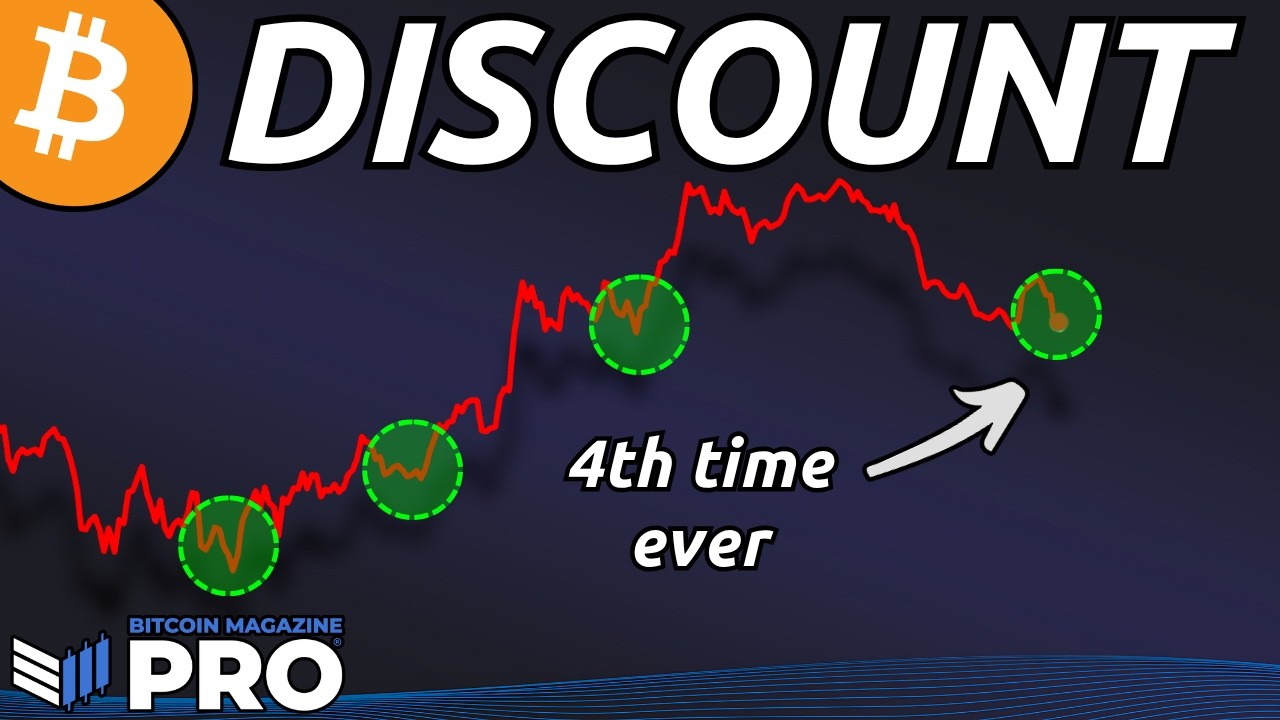
Strategy Stock MSTR Offers Bitcoin Exposure At 18% Discount
I’ve been vocal about accumulating Bitcoin aggressively at current levels. Now I’m starting to look seriously at Strategy too. The same kind of confluence that flagged Bitcoin as a sizeable accumulation opportunity is appearing on MSTR, and in some cases, the readings are even more extreme.
This week at a glance:
- The RSI has only been lower on a handful of occasions since Strategy adopted a Bitcoin standard.
- The Mayer Multiple for MSTR has just reached the lower percentiles.
- The BTC vs MSTR ratio is close to entering a zone that has historically preceded sustained MSTR outperformance.
- At the previous Bitcoin all-time high with a 1x net asset value premium, the fair value of MSTR shares would be over $300.
Discount
Strategy currently holds approximately 845,000 BTC with an Average Cost Basis in the mid-$70,000s. That means, at current Bitcoin prices, they’re sitting at a pretty massive loss on their holdings.
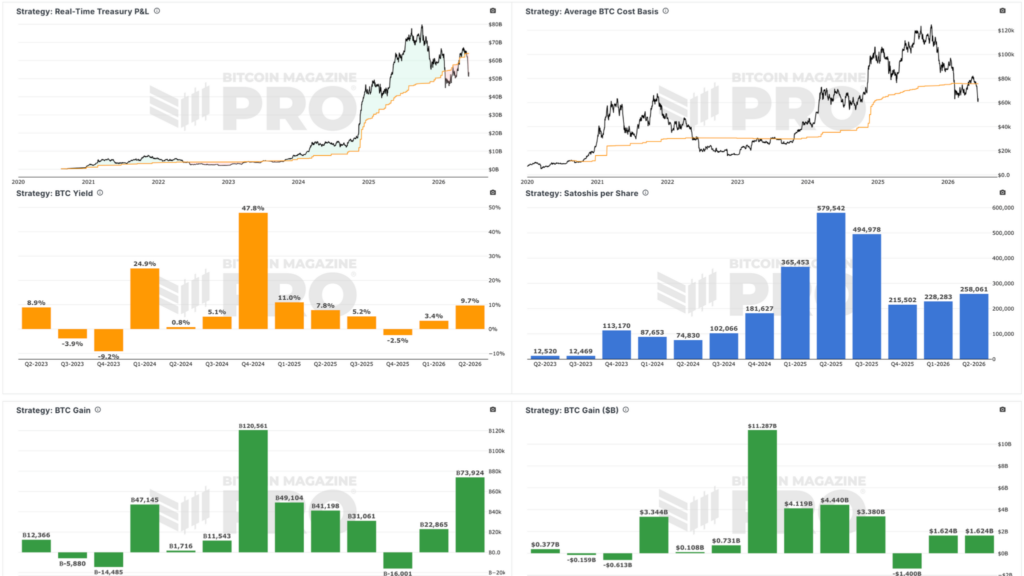
Figure 1: Strategy’s Average BTC Cost Basis and other key metrics.
View Live Charts
This has coincided with the NAV dropping even deeper beneath 1.00x; with MSTR’s market cap currently sitting approximately 18% below the USD value of its Bitcoin holdings. In other words, buying MSTR at current prices is the equivalent of buying $1 of Bitcoin for $0.82.
Support
The 200-week moving average is usually pretty notable support for assets, especially those that typically trend to the upside. Strategy’s share price is currently sitting right on this level, the same level that has previously marked significant accumulation zones.
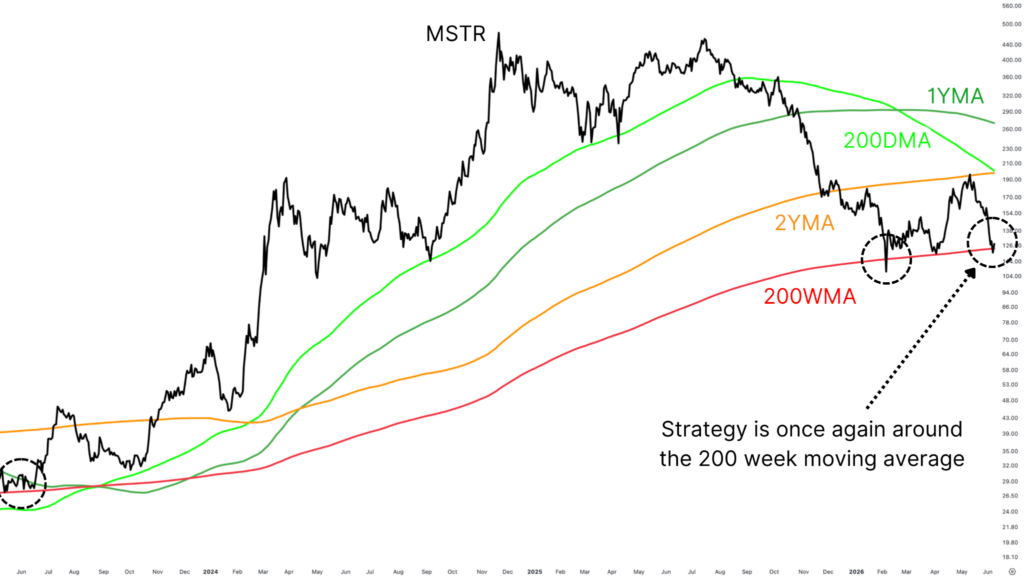
Figure 2: Strategy’s share price tests the 200-week moving average.
A sustained hold and reclaim of this level, combined with Bitcoin showing any upward momentum, historically sets up the conditions for meaningful MSTR recovery. The level is being tested. Whether it holds will be one of the key signals to watch over the coming weeks.
RSI
Since Strategy adopted a Bitcoin standard, the RSI for MSTR has only been lower on a handful of prior occasions, both during previous Bitcoin bear market cycle lows, when the share price was in the low teens. The current reading isn’t quite at those depths, but it’s approaching them, and the direction of travel is continuing downward.
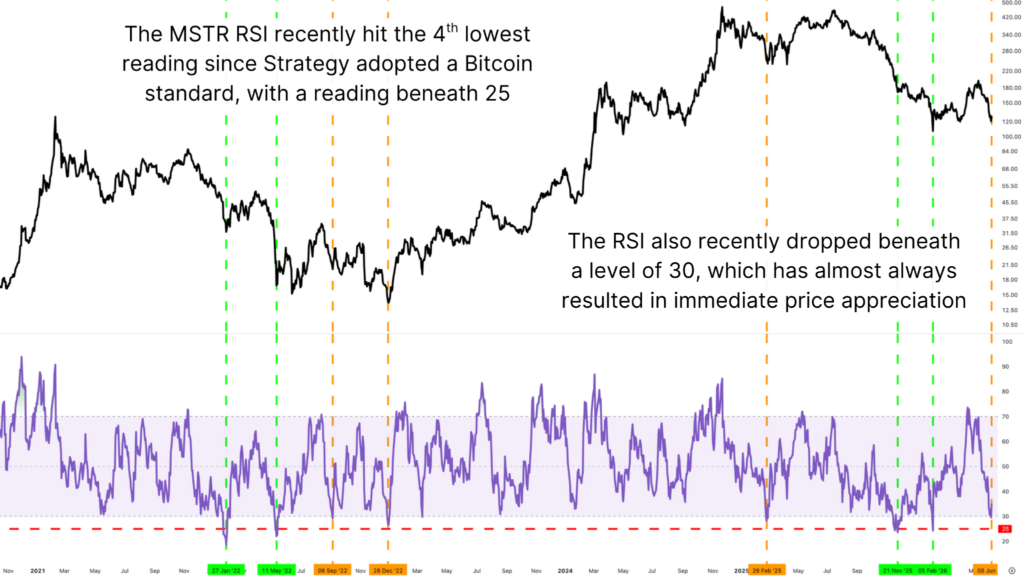
Figure 3: MSTR’s RSI drops beneath 25. Historically, such levels have preceded price appreciation.
The Mayer Multiple, simply the ratio between MSTR’s closing price and its 200-day moving average, recently registered a reading where 99.2% of all prior data points were higher. That’s a historically extreme level of underperformance relative to its own moving average, and it’s occurred at broadly the same time as the RSI signal. Giving two independent momentum indicators, both flashing readings only seen at the most significant cycle lows in MSTR’s history.
MSTR Or BTC?
The ratio between Bitcoin’s price and MSTR’s share price is one of the cleaner ways to gauge whether exposure should be in Bitcoin directly or rotated toward the higher-beta proxy. When the ratio is in the green upper zone, MSTR has historically been positioned to outperform. When it’s in the red lower zone, Bitcoin tends to lead.
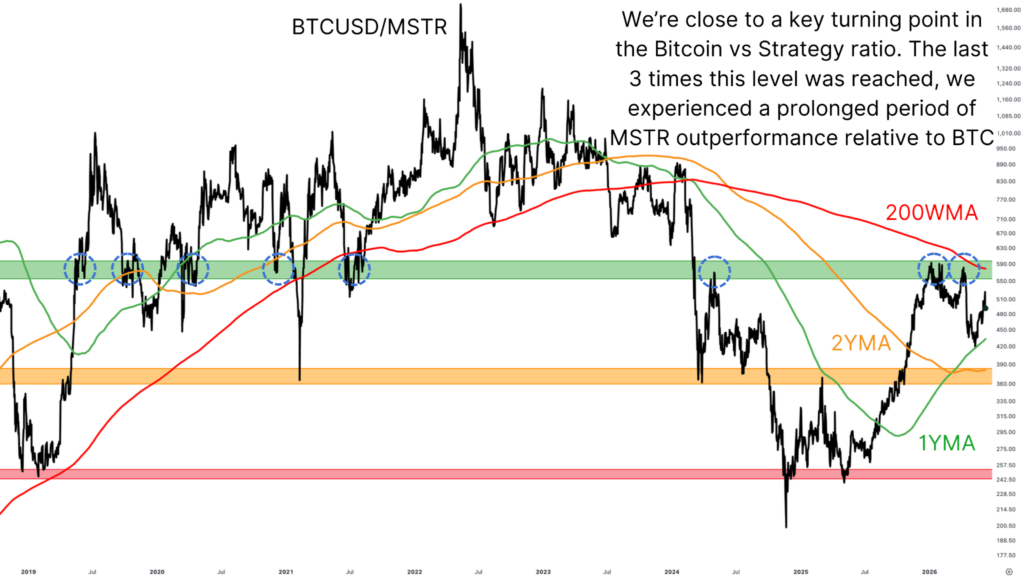
Figure 4: The BTCUSD/MSTR ratio is close to the green zone, a level that has previously preceded sustained MSTR outperformance.
The ratio is currently close to entering that green zone again. Previous instances of this were followed by extended periods of significant MSTR outperformance relative to Bitcoin. The ratio is also making lower highs on the long-term trend, indicating the general trajectory is shifting toward MSTR becoming increasingly favorable relative to direct Bitcoin exposure.
Fair Value
At the previous all-time high of around $126,000 and with no additional accumulation priced in, a 1x net asset value premium on MSTR would imply a share price of over $300. That’s roughly a 2.5x from current levels just to reach fair value at Bitcoin’s last peak.
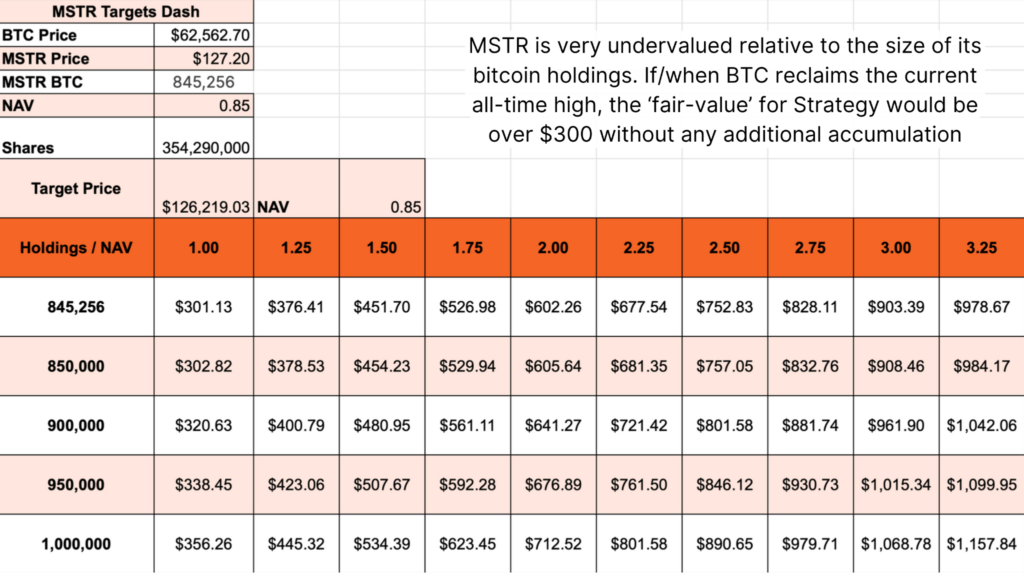
Figure 5: MSTR price targets modeled across varying BTC holdings and NAV premium scenarios.
If MSTR continues accumulating toward the 900,000 BTC range and the NAV premium moves modestly higher toward 1.25x or 1.5x, well below the 3x+ levels seen in the previous cycle, the numbers become pretty enticing! Crucially, the MSTR dilution that drove bitcoin accumulation is increasingly being funded through STRC rather than common share issuance, reducing that particular headwind.
Where Are We?
I’ve been accumulating bitcoin aggressively. I’m now also looking to add more MSTR. The combination of extreme momentum readings, the 200-week moving average support, an implied discount to the underlying Bitcoin holdings, and the BTC vs MSTR ratio close to entering historically favorable territory makes this feel like a no-brainer for a short-term play to increase my own BTC stack.
That said, MSTR is a high-beta Bitcoin play. If Bitcoin continues to struggle, MSTR will struggle more. I’m not treating this as a replacement for Bitcoin exposure, but as an additional asymmetric position at a point where the data suggests the risk-reward is historically favorable.
For more data, charts, and insights into bitcoin price trends, visit BitcoinMagazinePro.com.
Subscribe to Bitcoin Magazine Pro on YouTube for more expert insights!

Disclaimer: This article is for informational purposes only and should not be considered financial advice. Always do your own research before making any investment decisions.
This post Strategy Stock MSTR Offers Bitcoin Exposure At 18% Discount first appeared on Bitcoin Magazine and is written by Matt Crosby.
CryptoSlate
DraftKings told investors on June 9 that its prediction markets business is scaling fast, and the market liked what it saw. The company's Form 8-K reported that May 2026 annualized consumer volume in its Predictions offering rose 24% month over month to $1.3 billion, while annualized total volume traded climbed 34% to $3.1 billion. Shares of DraftKings jumped roughly 10% in early trading on the news.
Those figures are enormous for a product line that's barely six months old, since DraftKings only launched Predictions in December 2025. Seen against the broader category, though, they show a company that's arriving late to a market prediction-native platforms have already built into something far larger.
That $3.1 billion is an annualized run rate, which translates to roughly $258 million in actual volume in May. Kalshi, by comparison, processed $17.9 billion in May alone.
The gap between DraftKings $258 million and prediction markets' $24 billion
Prediction markets let people trade contracts tied to the outcome of future events, anything from elections and inflation data to sports results and crypto prices. Each contract pays out $1 if the event happens and $0 if it doesn't, and the price in between works like a live probability gauge: a contract trading at 65 cents means traders collectively give the outcome a 65% chance.
You can hold until the event resolves or sell early at the going price, just as you would with a stock. That structure essentially makes these platforms behave like financial exchanges, with order books and constantly moving prices, which is a large part of why so many companies are rushing in.
It also helps to decode one piece of accounting in the DraftKings announcement. “Annualized” means the company took one month of activity and multiplied it by 12, which is a standard way to show momentum but makes the headline number 12 times bigger than what actually happened.
Strip that out, and DraftKings handled about $258 million of trading in May. The established platforms operate on a different scale entirely. Combined monthly trading volume on Kalshi and Polymarket, the two biggest names, climbed from under $5 billion in September 2025 to about $24 billion in April 2026, according to a Pew Research Center analysis.
May data, released after the Pew study, showed the two platforms moving in opposite directions: Kalshi notched its ninth straight monthly record at $17.91 billion, while Polymarket fell to $7.08 billion, its second consecutive monthly decline.
For perspective, all legal US sportsbooks combined took in around $14 billion in wagers per month across 2025. The prediction markets category DraftKings just entered already moves more money than the industry DraftKings came from.
However, it's important to note that every platform measures volume differently. Robinhood skips dollars altogether and reports the number of contracts traded, a figure that sounds astronomical because contracts almost always cost less than a dollar each.
Its CEO, Vlad Tenev, said over 12 billion contracts were traded on the platform in 2025 and predicted the business could eventually drive “trillions” in annual volume, while Deutsche Bank counted more than 16 billion contracts so far in 2026. The measures vary, but every version of the math leads to the same place: DraftKings' May volume is roughly what Kalshi moves in a week.
Sports are the engine pulling all of this forward, which explains why a sportsbook felt compelled to show up. Sports alone account for roughly 80% of Kalshi's volume, and together with politics and crypto, it has driven about 91% of Kalshi's activity and 90% of Polymarket's since July 2024, as CryptoSlate has reported.
DraftKings timed its disclosure well, landing days into the 2026 World Cup and just after the NBA Finals, and one estimate put potential World Cup prediction market activity as high as $2.5 billion.
What the sportsbooks are really chasing
Each side of this fight has weapons that the other lacks. Sportsbooks bring millions of existing customers, famous brands, payment infrastructure, huge marketing budgets, and years of experience in pricing live odds.
The prediction-native platforms bring deep pools of traders ready to take the other side of any contract, a much wider menu of events, and, crucially, a legal structure that lets them operate where sportsbooks can't.
DraftKings CEO Jason Robins told investors the company intends to establish a leadership position in sports predictions before year-end, and the company has raised its estimate of the total market it can address to between $55 billion and $80 billion.
That legal structure is the whole reason this category exists. Sports betting in America is governed state by state, and each sportsbook needs a license in every state where it operates. Event contracts take a different legal route: they're classified as derivatives, financial instruments overseen only by the CFTC, the same regulator that watches over futures on oil and corn. A federal license means one approval covers the whole country. It's how DraftKings launched Predictions in 38 states, including several where online sports betting remains illegal.
Whether that route survives is now the central legal fight in American gambling. A federal appeals court ruled on April 6 that Kalshi's sports contracts likely fall under exclusive federal jurisdiction, shielding them from New Jersey's gambling enforcement.
Ten days later, a different appeals court, hearing Nevada's case, seemed inclined to rule the opposite way. If the courts split, the Supreme Court usually has to settle it, and prediction market traders themselves price a 64% chance the high court takes a case by year-end.
Meanwhile, the enforcement keeps escalating in both directions: the CFTC sued Arizona, Connecticut, and Illinois in April to stop them from going after Kalshi and Polymarket, courts in Maryland and Massachusetts have sided with state regulators, Kalshi faces more than a dozen federal lawsuits, and CryptoSlate's reporting shows the same tension spreading abroad, from user probes in South Korea to platform blocks in Brazil.
The next ruling to watch comes from the Sixth Circuit, where Kalshi is appealing an Ohio decision that went against it, and the coalition lining up against the company there just increased.
Former CFTC Chairman Gary Gensler, who ran the agency when Dodd-Frank was implemented in 2010, filed an amicus brief on June 11 arguing Congress never intended his agency to become a national sports-betting regulator, and that sports bets are not swaps under the law he helped write.
He filed alongside the American Gaming Association, 30 Native American tribes, the Indian Gaming Association, and Better Markets. In a parallel Massachusetts case, 38 state attorneys general have already lined up behind the state.
The split also runs through the sportsbook industry itself. DraftKings and FanDuel quit the AGA in November 2025, days before DraftKings launched Predictions, after the trade group moved to bar members that operate prediction markets. The same association is now arguing in court that the product DraftKings just built is illegal gambling.
There's one more thing worth understanding before taking any of these numbers at face value: volume is how much money changes hands, but revenue is the small slice the platform keeps. The slice comes from fees of a few cents per contract, so a billion dollars in trading might produce only a few million in actual income.
The whole sector generated about $31 million in fees in April, and Polymarket collected $29 million of it despite trailing Kalshi badly on volume, because its traders place larger bets. DraftKings hasn't said how much its Predictions volume earns, so its $3.1 billion run-rate only measures traction, and the profit question stays open.
DraftKings' prediction markets growth is huge, and the 34% monthly jump is the kind of number that moves a stock. But the more important point is that legacy sportsbooks are following a category they didn't invent, one where Kalshi, Polymarket, and Robinhood have already shown that event contracts can generate billions in monthly volume and have spent years building both the trading depth and the legal arguments to defend it.
Whether DraftKings can turn its sports audience into exchange-style traders before those platforms grow too liquid to catch is the open question, and the answer will say a great deal about whether the sportsbook model absorbs prediction markets or gets absorbed by them.
The post Legacy sportsbooks are chasing prediction markets that already trade billions each month appeared first on CryptoSlate.
Wall Street got to trade Bitcoin around the clock just in time to watch the market fall apart. CME Group launched 24/7 trading for its crypto futures and options on May 29, and over the first weekend, more than 7,200 contracts changed hands, worth roughly $50 million in notional value.
Within days, Bitcoin had slid below $70,000 for the first time in two months, and the market had to absorb one of its sharpest deleveraging waves of the year, with almost $10 billion in long-futures liquidations over a single week.
Could CME's always-on market become the volatility equalizer Bitcoin has needed for years, giving institutions regulated tools to hedge through the exact windows that used to belong to offshore exchanges, perpetual futures, and retail leverage? Possibly, but the first week of 24/7 trading left us only with more questions.
Wall Street opened its weekend hedge window in the middle of a leverage shakeout, and it remains genuinely unclear whether professional access calmed weekend crypto risk or simply made it trade faster.
CME crypto futures and options now trade continuously on Globex, with a weekly maintenance window, while weekend and holiday trades carry the following business day's trade date, clearing, and regulatory reporting.
As CryptoSlate reported ahead of the launch, execution goes 24/7 while the back office stays tied to business days, which means the famous CME gap effectively dies, and the quality of liquidity and Monday post-trade processing become the biggest problems.
Given the amount of money that changes hands when it comes to crypto futures, it's no wonder CME jumped onto the 24/7 bandwagon. CME's crypto futures and options generated $3 trillion in notional volume in 2025, and 2026 average daily volume reached 407,200 contracts, up 46% year over year, with average daily open interest of 335,400 contracts, up 7%.
Tim McCourt, CME's global head of equities, FX, and alternative products, said the company was “bridging the gap between regulated venues and the always-on nature of crypto assets.”
Launching 24/7 futures in a deleveraging market
The equalizer thesis could have played out in CME's favor if it weren't for the volatility.
The first weekend's $50 million in notional volume looks respectable until you set it against the broader derivatives market. CME Bitcoin open interest had been rolling over since late May, sliding from the 115,000 to 120,000 BTC area toward roughly 100,000 BTC by June 9, and open interest across crypto exchanges fell sharply over the same stretch. Positioning was shrinking, leverage was being forced out, and the new weekend trading window opened directly into that unwind.
The liquidation data showed a concrete sequence of forced exits. Between June 1 and June 5, daily liquidations repeatedly spiked toward and above the $1 billion mark, with the worst days approaching $1.8 billion, and long positions dominated the wreckage.
Bloomberg reported nearly $1.5 billion in liquidations in a single 24-hour window on June 2 as Bitcoin sank to a two-month low, the heaviest forced selling we've seen since February.
CryptoSlate has covered this before: falling prices combined with collapsing open interest usually signal positions being closed through liquidation rather than choice, and that's the pattern the first 24/7 week produced.
The result is a far more interesting natural experiment than a clean institutional debut would have been, because the new weekend market got tested under stress from its very first session.
The volatility we've seen in options won't help in the coming weeks and months either. Deribit's expiry calendar shows large notional clusters around June 26, Sept. 25, and Dec. 25, with the max pain for key expiries near the $75,000 level.
Investing.com reported that the May 29 Deribit expiry alone involved about $7.5 billion in BTC and ETH options notional, including $6.2 billion tied to Bitcoin contracts, with the spot price trading below its $75,000 max-pain level at the time.
Max pain is a positioning map, a snapshot of where options sellers face the least payout pressure. Traders watch it because strike concentration and dealer hedging can pull attention toward certain price zones around big expiries, and that influence tends to fade once the expiry passes.
CME's 24/7 Bitcoin futures: qualizer or accelerant?
The optimistic case for 24/7 regulated derivatives is pretty strong. For years, Bitcoin traded around the clock while institutional hedging tools kept banker's hours, which meant a Saturday crash had to be absorbed by offshore venues and crypto-native liquidity until CME reopened Sunday evening. Continuous access lets desks hedge, roll, and adjust exposure in real time instead of compressing every weekend move into a violent Monday repricing.
That should, in theory, reduce panic gaps, improve price discovery, and narrow the structural distance between regulated markets and the offshore perpetuals complex, a shift CryptoSlate flagged when the plan was first announced last October.
The pessimistic case comes, funnily enough, from CME's own chief executive. Terry Duffy said during a Piper Sandler conference on June 4 that the CFTC's approval of perpetual crypto futures was “a disaster waiting to happen,” warning that products carrying leverage as high as 50-to-1, combined with automatic liquidation models, pose a systemic threat and a particular danger to retail traders who underestimate funding costs.
While Duffy was aiming at competitors' perps rather than his own products, the warning cuts both ways. More trading hours can mean faster hedging and can equally mean faster selling into thin weekend liquidity, with professional leverage now participating in windows when order books have historically been at their shallowest.
The industry is expanding round-the-clock access at the same moment its most prominent executive warns that always-on leveraged crypto products magnify stress.
Alongside the 24/7 rollout, CME made its new Bitcoin Volatility futures available around the clock starting June 1. These contracts settle to the CME CF Bitcoin Volatility Index, a forward-looking measure of 30-day implied volatility derived from CME's own Bitcoin options order books, and they allow traders to take positions on how violently Bitcoin will move without taking a view on direction.
So, the weekend launch and the volatility contracts describe a single project: CME is building a regulated stack around Bitcoin's turbulence itself, turning one of its more infamous traits into a money-making product line.
So the early verdict has to stay honest about what the evidence can and can't support. The equalizer thesis is plausible, the infrastructure now exists, and the first weekend's volume proves there's quite a bit of demand even in the most volatile conditions.
What the first week can't prove, though, is that institutional access smooths anything, because the data shows a market still ruled by deleveraging, liquidation cascades, and offshore options positioning.
Bitcoin's weekend risk survived Wall Street's arrival fully intact; what has changed is that the risk now trades on Wall Street's clock, and the next ugly Saturday will reveal whether the danger zone has become safer or just busier.
The post Are 24/7 CME Bitcoin futures a volatility cure — or a new leverage trap? appeared first on CryptoSlate.
The Securities and Exchange Commission (SEC) is moving to dismantle a stock-trading rule that has governed Wall Street for two decades.
On June 11, the agency submitted a proposal that would rescind Rule 611 of Regulation NMS, the trade-through rule that requires trading centers to prevent stock trades from executing at prices worse than protected quotes displayed elsewhere. It would also eliminate Rule 610(e), which restricts locked and crossed quotations, along with related definitions.
For most of Wall Street, the proposal is a market-structure fight over routing, exchanges, wholesalers, displayed quotes, and execution quality.
For crypto firms and banks exploring tokenized shares, it is something more specific: the SEC is targeting one of the rules that made blockchain-based stock trading difficult to reconcile with the national market system.
A rule built for routed markets
Rule 611 was adopted in 2005 as part of Regulation NMS, a broad overhaul of US equity-market rules. The goal was to protect investors from having their orders executed at inferior prices when a better displayed quote was available on another exchange.
In practice, that system tied stock trading to the National Best Bid and Offer (NBBO), the best displayed bid and offer across protected venues. Broker routers, exchanges, and trading firms built systems around that obligation.
However, that framework is harder to apply to automated market makers (AMMs), the software-based trading pools that power much of decentralized finance.
AMMs do not work like Nasdaq, NYSE, or Cboe. They price trades through liquidity pools, bonding curves, slippage, and block-time execution.
Alex Thorn, Galaxy Digital’s head of research, pointed out that the rule was one of the largest structural barriers to DeFi-based trading of tokenized equities.
“An AMM cannot comply with 611 by construction,” Thorn said. It executes against a bonding curve at the pool price, with slippage and block-time granularity.
The issue is not simply a technical inconvenience. An on-chain pool cannot easily route intermarket sweep orders, ingest consolidated market data with the latency guarantees expected in US equities, or halt a swap because a better quote briefly appears on Nasdaq.
Under the current framework, a pool trading a tokenized version of an NMS stock could repeatedly print prices that differ from protected off-chain quotes. That creates the risk that the pool would be viewed as constantly violating the trade-through rule or functioning as an unlawful trading center.
Rule 610(e) raises a related problem. AMM prices can drift as liquidity shifts and trades move through a pool. That means on-chain prices could lock or cross the displayed NBBO, something current market rules are designed to prevent.
Why crypto sees an opening
Tokenized stocks are blockchain-based representations of company shares or share-linked claims. Supporters argue they could allow around-the-clock trading, fractional ownership, faster settlement, collateral mobility, and broader international access.
The market has been small compared with traditional equities, but interest has increased as banks, crypto exchanges, and asset managers look for ways to bring regulated financial instruments onto public or permissioned blockchains.
Christopher Perkins, chief executive of 250 Digital Asset Management, said Regulation NMS and the NBBO have been among the biggest obstacles to unlocking tokenized equities. If Rule 611 is rescinded, he said, “it’s a whole new ballgame.”
He added:
“Major unlock for DeFi. Incumbents won’t be happy.”
That reaction reflects a view spreading among digital-asset firms: tokenized equities do not need a technological breakthrough as much as a regulatory pathway. Securities are already largely electronic.
In the US, ownership is recorded through a system of depositories, brokers, and transfer agents. Tokenization would change the ledger and settlement architecture, not the economic concept of a share.
The harder question is whether that new architecture can satisfy the obligations embedded in securities law and market-structure rules.
That is where the SEC proposal becomes important. If the trade-through rule is rescinded, the focus would likely shift more heavily toward best execution, the broker-dealer obligation to use reasonable diligence to obtain favorable terms for customers under prevailing market conditions.
Indeed, Thorn said that the framework is more compatible with blockchain trading than a per-trade NBBO protection requirement. A broker routing to an on-chain pool could review execution quality over time, compare venues, and document its routing process.
He said:
“That framework can accommodate an AMM. The old one never could.”
A broader market-structure fight
Meanwhile, the proposal also reaches beyond tokenized shares.
Max Resnick, lead economist at Anza, a Solana-focused development firm, said rescinding Rule 611 could affect long-running debates over exchange design, including asymmetric speed bumps.
Speed bumps are delays used by some trading venues to reduce the advantage of ultra-fast market participants. Asymmetric speed bumps treat different order types or market participants differently, which has made them contentious in the US market structure.
Resnick said Rule 611 made those models harder to approve because a venue with an asymmetric speed bump could post tighter quotes than venues without one. If those quotes were included in the consolidated tape, other exchanges could be forced to match prices they could not economically support.
His point underlines why the SEC move is not only about crypto. Rule 611 has influenced how venues compete, how liquidity is displayed, and how firms route orders. Removing it would change the incentives for exchanges and brokers across the equity market.
SEC Chairman Paul Atkins has framed the proposal as an overdue review of a rule he believes created unintended consequences. The agency said the change is intended to simplify market structure, reduce costs, and allow competition and innovation to shape equity trading.
That language has drawn attention from tokenization advocates because it overlaps with the SEC’s broader digital-asset agenda.
Atkins and Commissioner Hester Peirce have previously discussed an innovation exemption that could allow limited experimentation with tokenized securities trading through automated market makers and other on-chain systems.
Such an exemption could include safeguards such as volume limits, whitelisting, and a temporary framework while the agency considers permanent rule changes.
Thorn said the sequencing is important. In his view, the SEC is first seeking to remove one of the hardest market-structure obstacles and then address venue-registration issues through an innovation exemption.
At a high level, he said, the agency appears to be following the “Project Crypto” playbook.
The caveats remain large
Despite this potential rulemaking, the risk for investors is that tokenized stocks can mean many different things.
A token may represent a direct share, a custodial claim, a depositary receipt, a derivative, or a synthetic instrument that tracks a stock price without giving the holder voting rights, dividends, or a claim on the underlying security. Those distinctions matter, even if the token trades at a price close to the public share.
That is why rescinding Rule 611 would not, by itself, legalize tokenized equities. Firms would still need to answer questions about whether the product is registered, where it trades, who holds the underlying asset, how corporate actions are handled, whether investors receive shareholder rights, and how settlement works.
Thorn stated:
“Tokenized NMS stocks still face a host of other questions re: exchange/ATS registration questions, clearance and settlement, and many other rules not designed for defi or peer-to-peer trading.”
In view of this, Anthony Bassilli of Coinbase Asset Management described the SEC proposal as a clearing hurdle for tokenizing stocks in the US, while adding that the process remains important to watch.
That caution is shared by traditional-market groups. SIFMA, the trade group representing broker-dealers, investment banks, and asset managers, welcomed the SEC’s review but warned that the US market structure is made up of many interconnected pieces.
It said regulators should study the effect of any changes on investors, execution quality, transparency, and the development of overnight trading and tokenized securities.
Those concerns are likely to shape the public comment period. Critics may argue that removing Rule 611 could fragment markets, weaken displayed quotes, or make it harder for ordinary investors to know whether they received a fair price.
On the other hand, crypto supporters will argue that best execution, competition, and better market design can replace a rule they view as overly rigid.
The post SEC targets 20-year-old rule standing between Wall Street and blockchain trading appeared first on CryptoSlate.
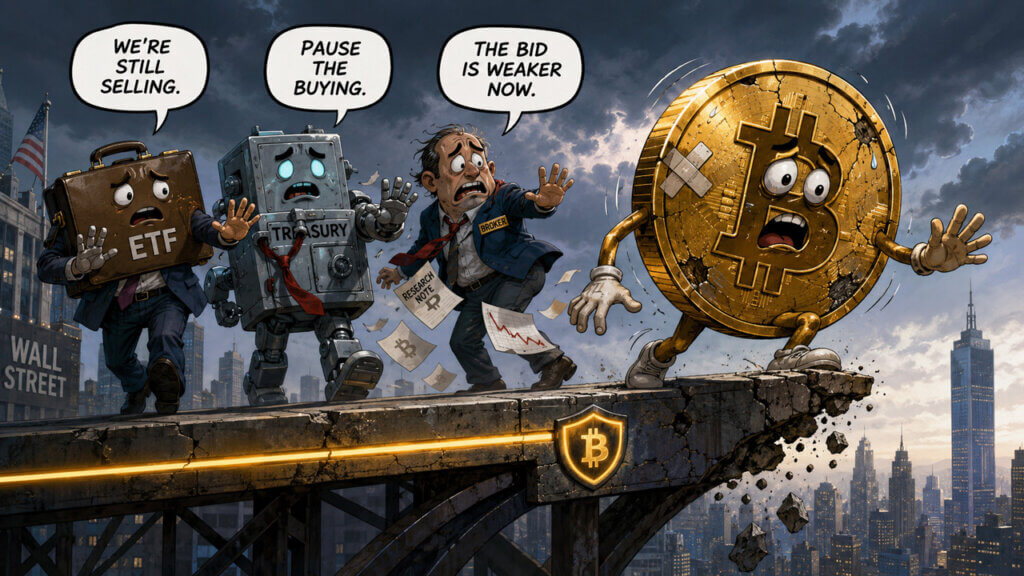
Bitcoin’s largest buyers are no longer behaving like a reliable backstop for the largest cryptocurrency.
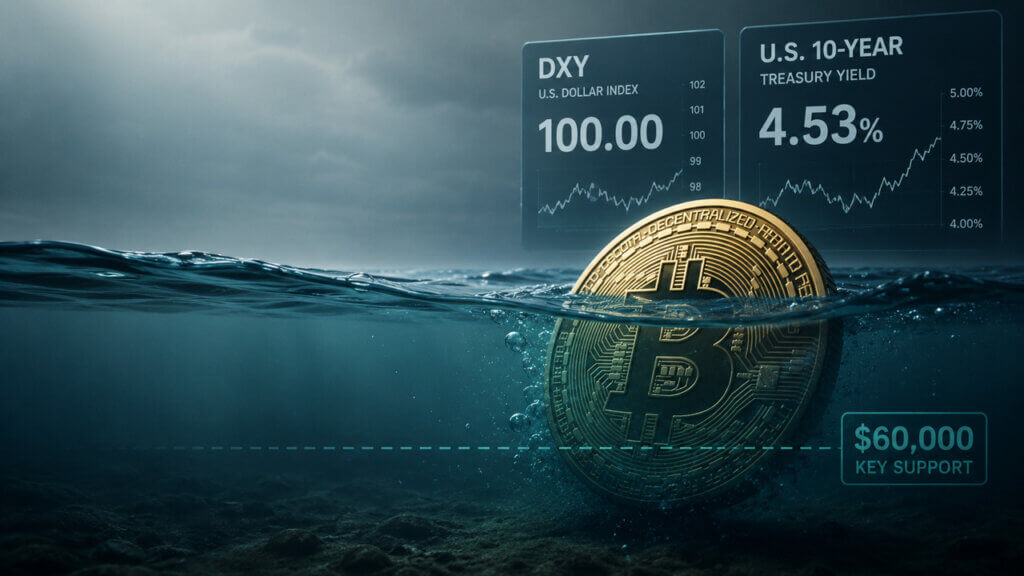
The exchange-traded funds, public-company treasuries, and Bitcoin-linked equities that helped define the market’s institutional era are showing signs of strain, just as the world’s largest digital asset struggles to hold above $60,000, one of its most closely watched price levels.
This persistent drawdown has prompted a broader reevaluation of the cryptocurrency’s role in institutional portfolios, raising questions about whether the current environment reflects a temporary profit-taking exercise or a structural retreat from digital assets.
Bitcoin ETF demand turns into a headwind
The clearest reversal has come from US spot Bitcoin ETFs, which entered 2026 as one of the market’s most important drivers of demand.
For much of the period after their January 2024 debut, the funds were treated as evidence that traditional financial investors were steadily adopting Bitcoin.
Their inflows helped create a simple bull-market thesis that showed that access to Wall Street would bring more capital into a fixed-supply asset, giving Bitcoin a durable source of upward pressure.
However, that thesis has been tested heavily in recent weeks.
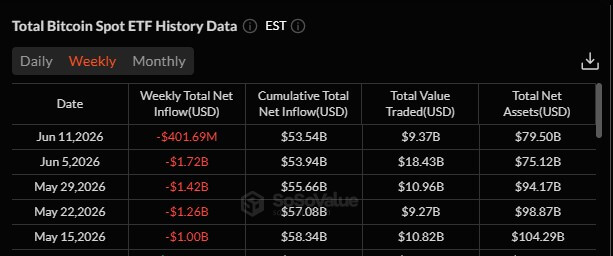
Data from SoSoValue shows US spot Bitcoin ETFs have recorded a five-week outflow streak totaling more than $5 billion.
This is further corroborated by Glassnode data, which shows the 30-day moving average of net ETF flows has fallen to -2,450 BTC per day, the fastest sustained pace of outflows since the products launched.
The size of that flow is significant because it exceeds the network's daily supply of newly created Bitcoin.
After the 2024 halving, miners produce about 450 BTC per day. A sustained ETF outflow of 2,450 BTC a day is more than five times that new supply, turning what had once been a source of absorption into a source of pressure.
Short bursts of ETF selling are not unusual in volatile markets. A negative 30-day moving average carries more weight because it smooths out daily noise and captures broader changes in positioning. Until that trend improves, institutional flows are less likely to provide support for Bitcoin prices.
Moreover, trading in the ETFs has also cooled. The 30-day moving average of daily volume in US spot Bitcoin ETFs has fallen to about $960 million from $4.4 billion in October, a 78% decline, Glassnode reported.
That decline points to more than simple profit-taking. It shows that speculative demand from traditional market participants has thinned even as redemptions have accelerated.
Lower volume can make price moves harder to absorb because fewer buyers are available when selling intensifies.
BTC DATs lose momentum
The ETF reversal has coincided with a slowdown in another major source of Bitcoin demand: digital asset treasury companies.
These firms, often listed publicly, raise capital or use balance-sheet resources to accumulate Bitcoin as a treasury asset. Their rise helped extend institutional adoption beyond ETFs, giving investors another way to express demand for Bitcoin through equity markets.
Like the ETFs, their buying has faded in June.
Glassnode analysts noted that while these companies remain net buyers overall, their daily accumulation has slowed to a fraction of the pace seen earlier in the quarter.
According to them:
“Corporate treasury accumulation has slowed sharply, with net inflows falling from peaks above $500 million per day to near-zero levels since June.”
This slower buying removes one of the market’s clearest sources of incremental demand at a time when ETF flows are also negative.
Some of the concerns have centered on Strategy, the largest public corporate holder of Bitcoin. The company disclosed that it sold 32 BTC in the final week of May, a small amount relative to its overall holdings but a symbolically important move because of its role in popularizing the corporate Bitcoin treasury model.
Strategy later returned to the market during the selloff, buying about $100 million worth of Bitcoin. However, the purchase did not stop the price from falling below $60,000.
Other BTC-focused companies have also drawn attention. Fold and Nakamoto have sold part of their Bitcoin holdings, adding to concern that the treasury-company trade is becoming less one-directional than it appeared during the rally.
While these sales do not amount to a broad retreat by corporate buyers, they show that some treasury firms are becoming more selective, more liquidity-conscious, and more willing to adjust positions as market conditions worsen.
That shift matters because the corporate treasury model depends partly on confidence. When share prices are strong, and investor demand is high, companies can raise capital, buy Bitcoin, and benefit from the perception that they are leveraged proxies for the asset.
However, when Bitcoin falls and demand for equities weakens, the model becomes harder to sustain.
Meanwhile, that slowdown is also evident in trading activity in these companies' equities.
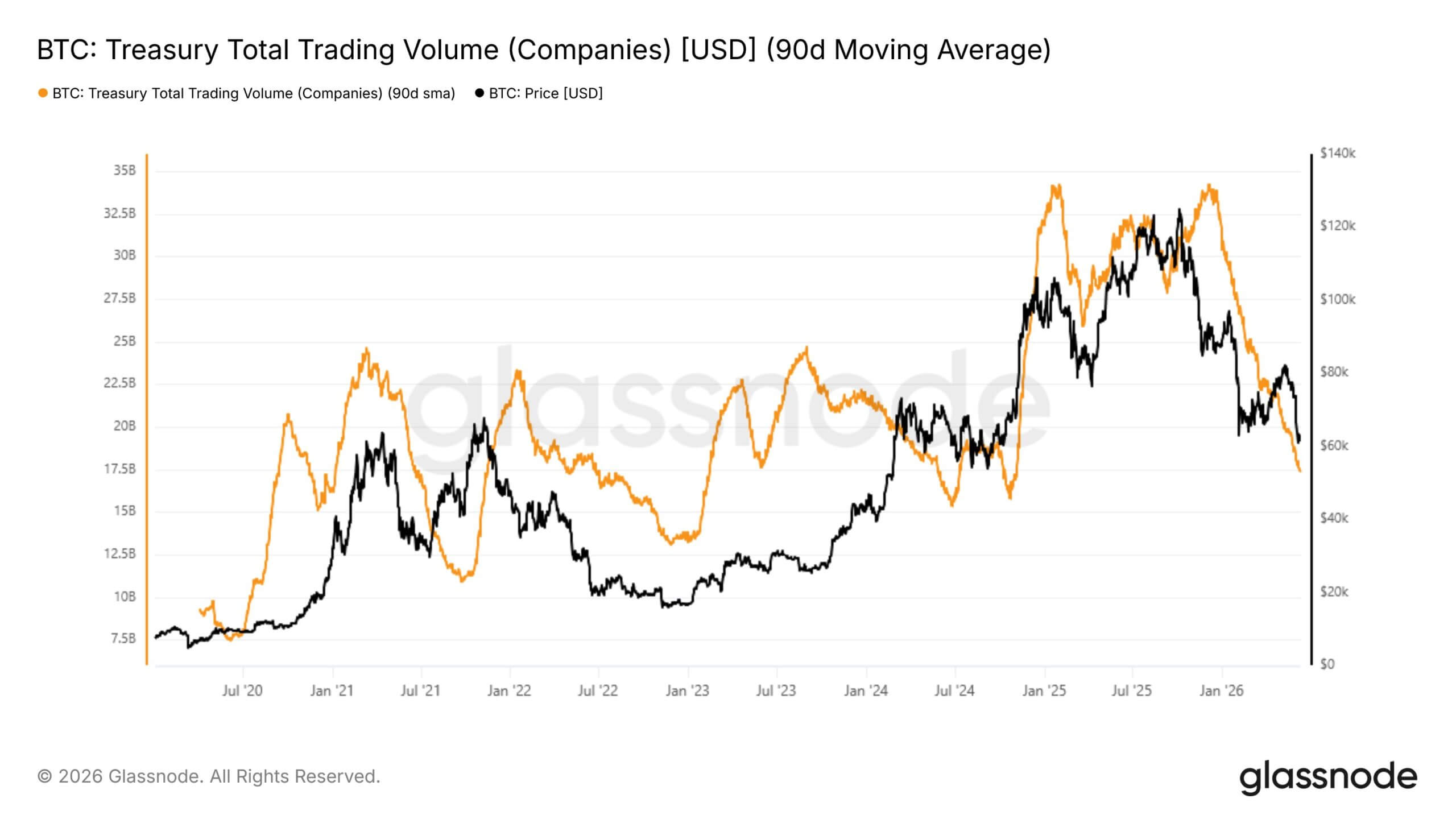
Glassnode data show that the total daily trading volume for major publicly listed Bitcoin-holding companies, measured by the 30-day simple moving average, has dropped by 49% over about six months. Their volume fell from $34.2 billion in December to $17.4 billion as of press time.
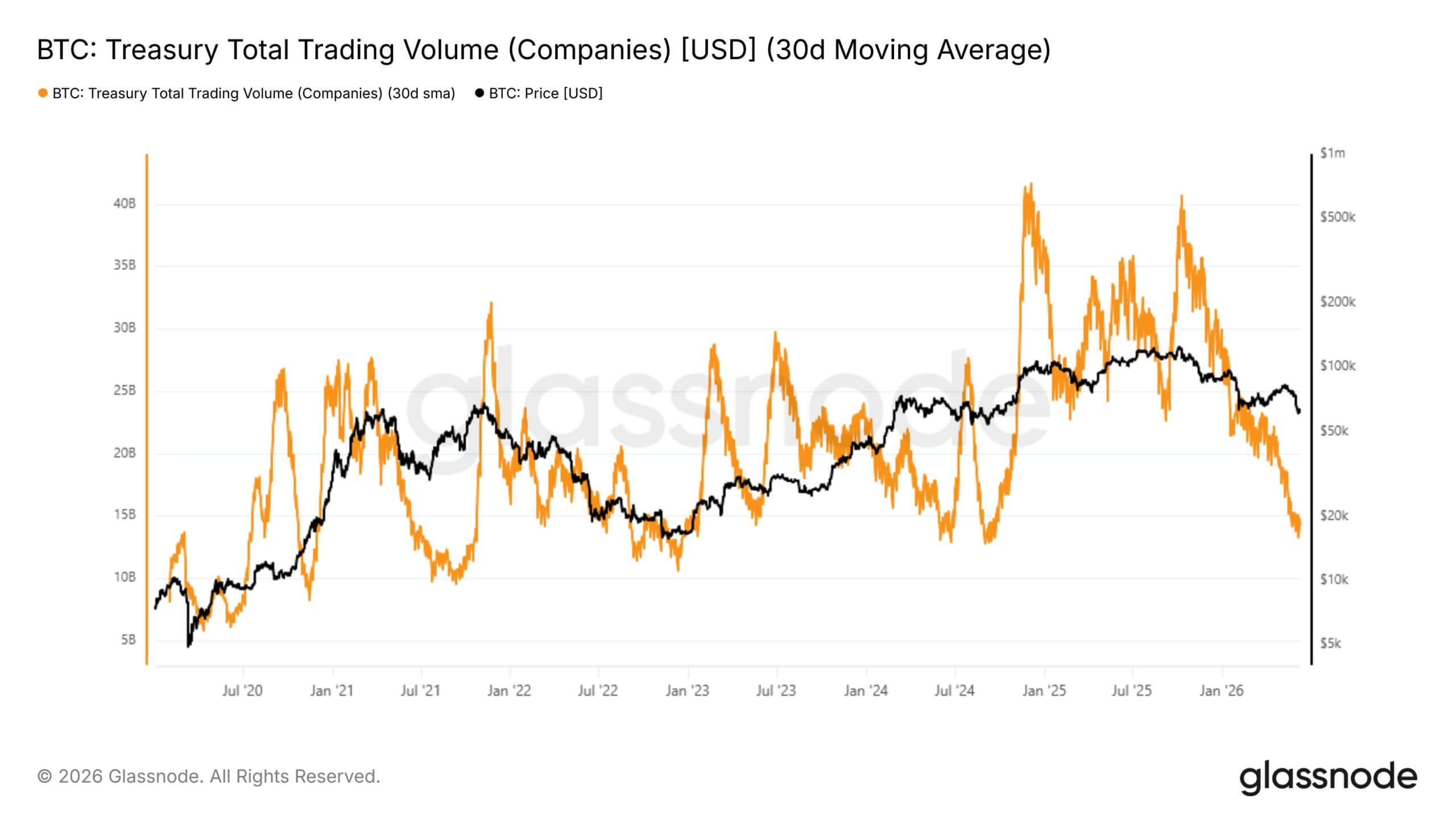
That decline suggests investors are pulling back from the broader Bitcoin proxy trade, not just from the asset itself.
During stronger market periods, public Bitcoin holders often attract investors seeking leveraged exposure. Their shares could rise faster than Bitcoin's when sentiment improves because they combine treasury holdings, operating businesses, and capital-market optionality.
That made them popular vehicles for traders who wanted equity-market exposure to crypto without directly holding tokens. But as Bitcoin corrected, that demand has significantly weakened.
Exchange inflows signal broad market anxiety
The institutional distribution has created a climate of widespread market unease, affecting participants across the wealth spectrum.
Data from CryptoQuant indicates a significant rise in exchange deposits from both large-scale holders and retail investors. Typically, such deposits are associated with an intent to sell.
As Bitcoin briefly breached the $60,000 floor, large holders, or “whales,” accelerated their movement of assets to trading platforms.
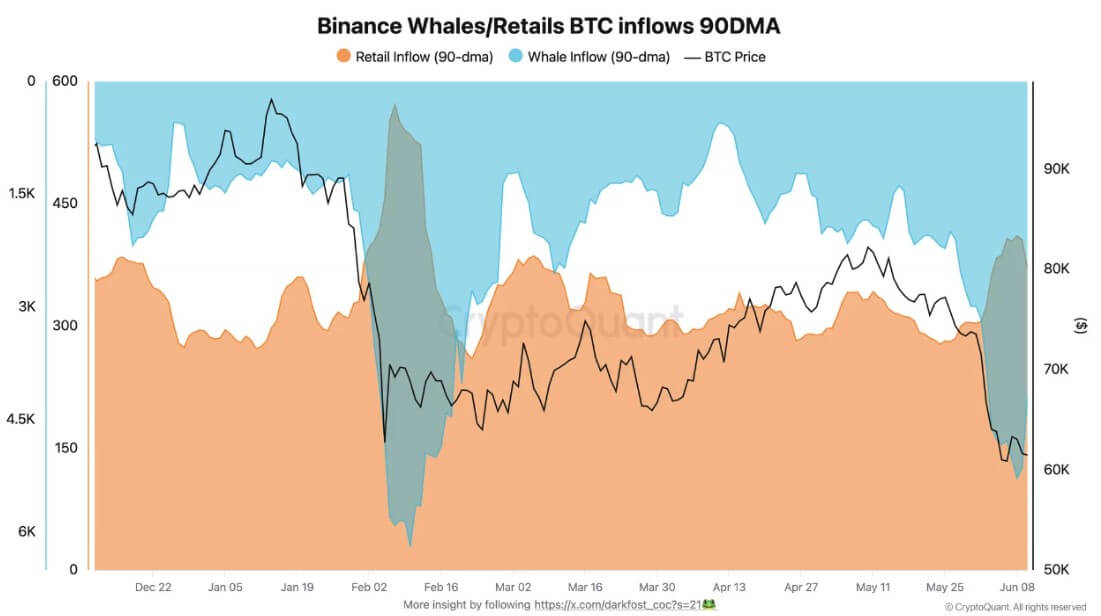
Over the past three months, whale inflows to the Binance exchange have averaged 5,280 BTC per day, a sharp increase from the 1,900 BTC daily average observed in March. Retail investors have mirrored this behavioral shift, with their average daily exchange inflows climbing to 410 BTC.
This parallel movement highlights how macroeconomic uncertainty levels the playing field regarding investor psychology.
The current environment marks the second major episode of elevated exchange deposits this year. A similar pattern emerged in early February, when Bitcoin tested the $60,000 threshold, with whale inflows spiking to 6,200 BTC and retail inflows reaching 570 BTC.
Such periods of heightened market stress historically facilitate the transfer of assets from short-term speculators to long-term holders, though the immediate effect is substantial downward price pressure.
A thinner market waits for a catalyst
This overall market has arrived as broader crypto trading activity has also cooled.
Santiment data show trading volume across the largest non-stablecoin crypto assets has fallen to levels last seen in mid-2024. The decline reflects a market in which many traders appear unwilling to chase prices higher or sell aggressively amid recent liquidations, macro uncertainty, and geopolitical risks.
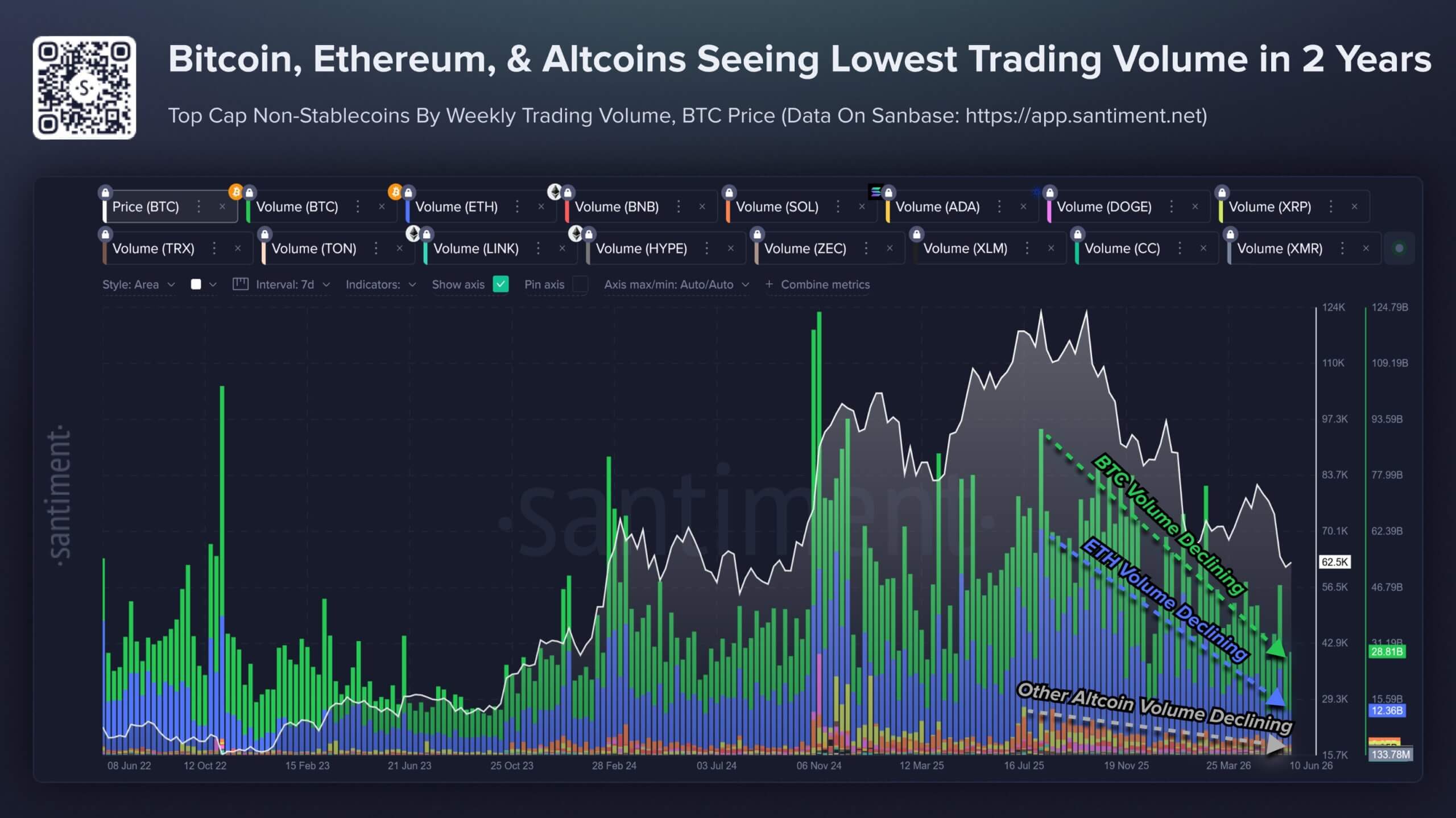
For Bitcoin, that creates a two-sided setup.
On one side, a thin volume can leave the market vulnerable. When participation is low and large buyers are less active, even moderate selling can have an outsized effect on price. A negative ETF flow trend, slower treasury accumulation, and weaker proxy-stock demand can therefore weigh more heavily than they would in a stronger liquidity environment.
On the other side, low volume can also indicate exhaustion. Some of crypto’s stronger rebounds have followed periods when trading activity, attention, and conviction were weak. Markets often recover when positioning has already been reduced and sidelined capital begins to return.
That possibility keeps the current setup from being a straightforward bear-market call. Bitcoin continues to have institutional holders, public-company buyers, and long-term investors. Development across the broader digital asset industry has not stopped, and the ETF market remains an established bridge between Bitcoin and traditional finance.
But the immediate question is narrower. Bitcoin does not need institutions to abandon it to face pressure. It only needs the largest buyers to slow down, sell selectively, or stop absorbing supply at the same pace.
That is what the market is confronting now.
Until ETF flows stabilize, treasury-company demand recovers, or trading activity returns to Bitcoin-linked equities, the market may remain exposed to a more difficult reality: the institutional bid is still there, but it is no longer strong enough to carry the trade on its own.
The post Bitcoin price faces new risk as big buyers lose conviction appeared first on CryptoSlate.
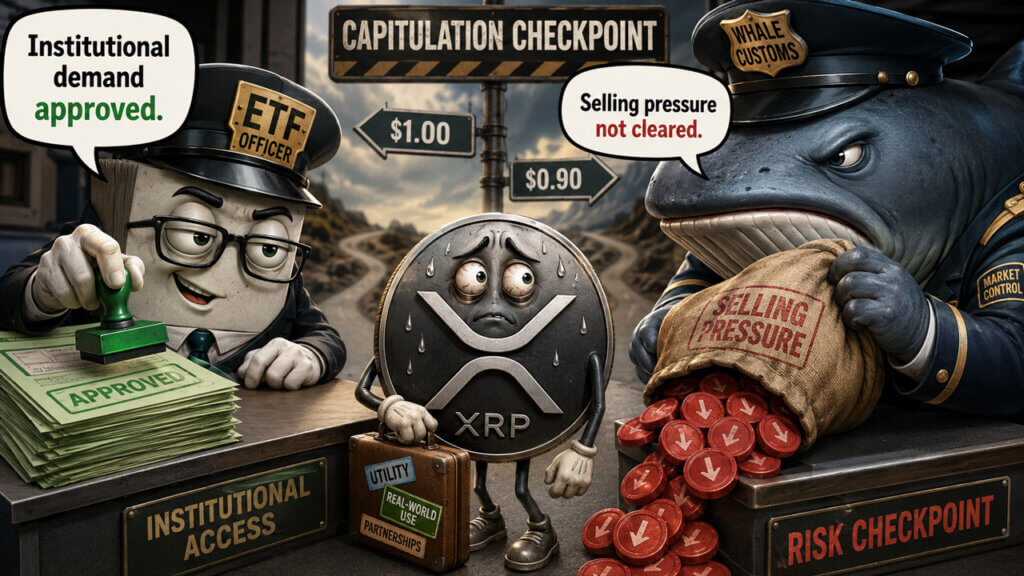
XRP is trading at $1.11, down roughly 17% from its June opening, having set a new 2026 low on June 5 and shed $8 billion in market cap over three sessions.
The correction happens as the asset posted its strongest ETF inflow month of the year, with $131.94 million captured in May, ahead of both Bitcoin and Ethereum products.
Glassnode's June 9 data points to loss realization as the primary pressure on XRP's price, with the token's 90-day realized profit-to-loss ratio falling to 0.38, meaning holders are booking roughly 38 cents in profit for every dollar of realized loss.
At the speculative peak in 2025, that ratio reached 50, with gains outpacing losses by 50 to 1.
Glassnode described the current reading as intense capitulation, with XRP's aggregate realized price sitting near $1.48, placing the average holder underwater at current prices.
On the XRP Ledger, the 90-day average of total fees paid fell from 5,900 XRP in February 2025 to 500 XRP by June 9, a 91.5% decline that Glassnode attributed to a near-total contraction in organic transaction demand since the prior speculative phase ended.
| Signal | Latest reading | Direction | What it means |
|---|---|---|---|
| XRP price | $1.11 | Bearish | Down roughly 17% from June open and at fresh 2026 lows. |
| May ETF inflows | $131.94M | Bullish | Regulated demand remains active despite price weakness. |
| 90-day realized profit/loss ratio | 0.38 | Bearish | Holders are realizing far more losses than profits. |
| Aggregate realized price | $1.48 | Bearish | Average holder is underwater at current prices. |
| XRP Ledger fees | 5,900 XRP → 500 XRP | Bearish | Organic transaction demand has collapsed 91.5%. |
What whales are actually doing
CryptoQuant’s exchange-flow analysis shows XRP whale outflow dominance reached 91.4% on Binance and 90.5% across centralized exchanges.
Whales dominate XRP's exchange flows, and the data describes that structural control without resolving whether it reflects selling pressure or accumulation.
A separate CryptoQuant post frames declining XRP inflows to Binance as a possible sign of growing whale confidence, arguing that subdued exchange inflows could keep available selling supply limited.
Large-holder accumulation has historically preceded recoveries, and Glassnode's loss-realization and fee data show that the current supply of loss-realizing sellers and the collapse in organic network demand are absorbing that accumulation before it reaches price.
| Data source | Metric | Reading | Bearish interpretation | Bullish interpretation |
|---|---|---|---|---|
| CryptoQuant | XRP whale outflow dominance on Binance | 91.4% | Whales dominate exchange flows, so large holders can pressure price. | Outflow dominance does not prove whales are selling into exchanges. |
| CryptoQuant | XRP whale outflow dominance across CEXs | 90.5% | Centralized-exchange flows are structurally whale-driven. | Concentrated flows may also reflect custody movement or accumulation behavior. |
| CryptoQuant | XRP inflows to Binance | Declining | Weak demand may reduce the need to send coins to exchanges. | Lower inflows may mean reduced available selling supply. |
| Santiment | Wallets holding 10M+ XRP | 45.83B XRP | Concentration risk remains high. | Largest wallets held the most XRP since May 2018. |
| Santiment | Wallets holding 10K+ XRP | 332,230 | Accumulation has not yet created a price floor. | Mid-to-large wallet count reached an all-time high. |
Santiment's May data note that wallets holding at least 10 million XRP controlled 45.83 billion XRP, the most since May 2018. The number of wallets holding at least 10,000 XRP reached an all-time high of 332,230.
Large-holder accumulation has historically preceded recoveries, and Glassnode's loss-realization and fee data show that the current supply of loss-realizing sellers and the collapse in organic network demand are sufficient to absorb that accumulation without forming a price floor.
The ETF layer
Seven US spot XRP ETFs are now live, holding approximately 923.7 million XRP in custody as of June 10, with combined AUM near $1 billion.
Cumulative net inflows since the November 2025 launch have approached $1.45 billion, and May's $131.94 million monthly inflow was the strongest since December and ran for 20 consecutive days before a $5.34 million outflow on June 3 broke the streak.
CoinGlass ETF data show that regulated demand for XRP exists and has been persistent, while price action indicates that demand has been absorbed by spot market selling or loss realization, without producing a sustained rebound.
Standard Chartered has projected $4 billion to $8 billion in XRP ETF inflows for 2026 if the CLARITY Act passes, a figure far above cumulative inflows to date.
That upside depends on a Senate floor vote, which Polymarket currently prices at a 47% likelihood of passing in 2026.
Goldman Sachs liquidated its entire $154 million XRP ETF position in the first quarter, a reminder that institutional positioning on XRP runs in both directions simultaneously.
Two ways this resolves
In the bull case, ETF inflows continue to expand as the CLARITY Act advances toward a floor vote, the 332,230 large-wallet holders who accumulated amid price weakness provide a bid at current levels, and Glassnode's loss-realization ratio begins to recover as capitulating sellers exhaust their supply.
XRP stabilizes above $1.00, network fees find a floor, and the ETF bid becomes visible in price.
Under that sequence, $0.90 stays a reference point on the chart where a multi-year rising trendline sits, with the ETF bid absorbing sell pressure before that level is reached.
In the bear case, the Glassnode capitulation metrics persist long enough for the ETF bid to prove insufficient to defend the $1.00 psychological level. Loss-realization selling continues at a higher rate than profit-taking, network fees stay depressed, and the gap between institutional demand and organic on-chain demand widens further.
If $1.00 fails, $0.90 becomes the next zone where accumulation would be tested, roughly 19% below current prices and near the cost basis of long-term holders who built positions through the 2024-2025 cycle.
Polymarket's June crowd prices the bear case as the most probable outcome, assigning a 47% probability to XRP losing $1.00 before month-end.
| Scenario | What needs to happen | Key level | Confirmation signal | Market meaning |
|---|---|---|---|---|
| Bull case: ETF bid absorbs supply | ETF inflows continue, CLARITY odds improve, and loss-realization pressure fades. | Above $1.00 | Realized profit/loss ratio rises from 0.38, fees stabilize, ETF inflows remain positive. | XRP forms a floor before testing $0.90. |
| Base case: weak range chop | ETF demand persists, but organic network activity remains depressed. | $1.00–$1.11 | Price fails to reclaim higher levels, but $1.00 holds. | ETF demand offsets selling, but does not create a rally. |
| Bear case: $1.00 breaks | Capitulation metrics persist and ETF inflows are absorbed by spot selling. | $0.90 | XRP loses $1.00, fees remain near lows, realized losses keep dominating. | $0.90 becomes the next accumulation test. |
| Stress case: ETF bid reverses | ETF outflows, broader crypto weakness, or CLARITY failure hits during capitulation. | Below $0.90 | ETF demand turns negative and large exchange inflows rise. | XRP shifts from reset risk to structural breakdown risk. |
ETF inflows show that regulated buyers exist and have been accumulating at steadily lower prices. Glassnode's data shows that spot holders are capitulating, and organic network demand has contracted sharply.
Both conditions can coexist until one overwhelms the other, and at a 90-day realized profit-to-loss ratio of 0.38, the capitulation arithmetic still has further to run.
The post XRP aims for $0.90 as ETF demand battles selling pressure from whales appeared first on CryptoSlate.
CryptoTicker.io
Kraken's SpaceX moment didn't fully collapse the way Binance's, Bybit's, and Bitget's did — but it didn't go cleanly either. Kraken had acquired xStocks (the tokenized-equity provider behind the SPCXx token) and used the SpaceX IPO as the debut listing for its new "IPO Access" product. When demand massively outstripped the shares xStocks could actually source, Kraken's own customers received only a fraction of what they'd requested, and unfilled funds were refunded. The token still launched — but the allocation promise wobbled.
What Kraken Was Actually Offering
It helps to separate two different Kraken products, because they behaved very differently on the day.
Kraken's US listing routes share procurement through Payward Securities, Kraken's affiliated broker-dealer, and never touched the xStocks pipeline. That side worked. The problem was on the other side: the non-US offering, SPCXx, the same xStocks tokenized product that Binance, Bybit, Bitget and MEXC were also relying on to source physical shares from the IPO. That shared dependency is exactly where things broke.
Why Kraken Failed to Deliver
The cause was simple and structural: demand crushed supply. An xStocks spokesperson said that "due to overwhelming demand, requests to buy IPO access to SpaceX were not able to be fully fulfilled," that client funds tied to unfilled orders had been returned, and that SpaceX was live on xStocks as SPCXx and tradable through the first weekend.
Crucially, Kraken didn't get zero — it got squeezed. Binance, Bybit and Bitget received no shares and canceled outright, while customers of Kraken and xStocks received only a fraction of the allocations they requested. And this wasn't unique to crypto: data compiled by Access IPOs showed some retail investors at traditional brokerages also received only a portion of the shares they sought.
The deeper issue is that distribution scale gave Kraken no leverage where it mattered. The affected platforms all route through xStocks, the framework issued by Backed Assets, which Kraken acquired in December 2025 and which had passed $25 billion in volume across more than 100 tokenized stocks by March — yet that scale bought no leverage with the underwriters. SpaceX was the debut listing for the program, and while the demand side passed, the supply side fell short.
Why It Matters
This was the first large-scale stress test of tokenized IPO access, and it drew a clean line. The lesson that surfaced across the industry was blunt: creating a token is easy; securing the real asset behind it is the crucial part. As a Dinari spokesperson put it, what went wrong was that demand significantly exceeded the available supply of underlying shares.
Kraken's outcome — partial fills plus refunds, with the token still going live — actually sits in a middle tier: better than the exchanges that delivered nothing, but well short of "every order filled." And the fine print had always hedged this. xStocks' own disclaimers stated that its IPO tokens did not guarantee an allocation and provided price exposure only, not direct ownership. For anyone counting on a guaranteed slice of a blockbuster IPO through a tokenized campaign, that's the takeaway: the token can launch on time and you can still walk away with a fraction — or a refund.
Is Kraken Reliable?
Kraken didn't "fail" in the headline sense — its US route via Payward worked and SPCXx did go live — but its flagship IPO Access debut delivered only partial allocations because the underlying SpaceX shares simply weren't there in the quantity retail demanded. The episode confirmed that the hard part of tokenized equity isn't the blockchain; it's securing inventory in a four-times-oversubscribed deal.
SpaceX did what a heavily oversubscribed mega-IPO is supposed to do — it popped, held most of the gain, and closed comfortably above its offer price. The more interesting story sits one layer down, in the tokenized and crypto-native products that launched alongside it. There, the day split cleanly into two outcomes: products that actually controlled the underlying shares worked, and the one model that relied on a middleman to find shares at the last minute did not. That divide, more than the stock's 19% gain, is what this debut will be remembered for.
How SPCX Actually Traded
The headline numbers were strong without being euphoric. Shares opened at $150, peaked at $176.52 intraday, and closed at $160.95 — up about 19% from the $135 offer price. That close translated to roughly a $2.1 trillion market cap, making SpaceX the seventh-largest public company in the world on its first day. The raise itself — about $75 billion on more than 555 million shares — locked in the record as the biggest IPO in history.
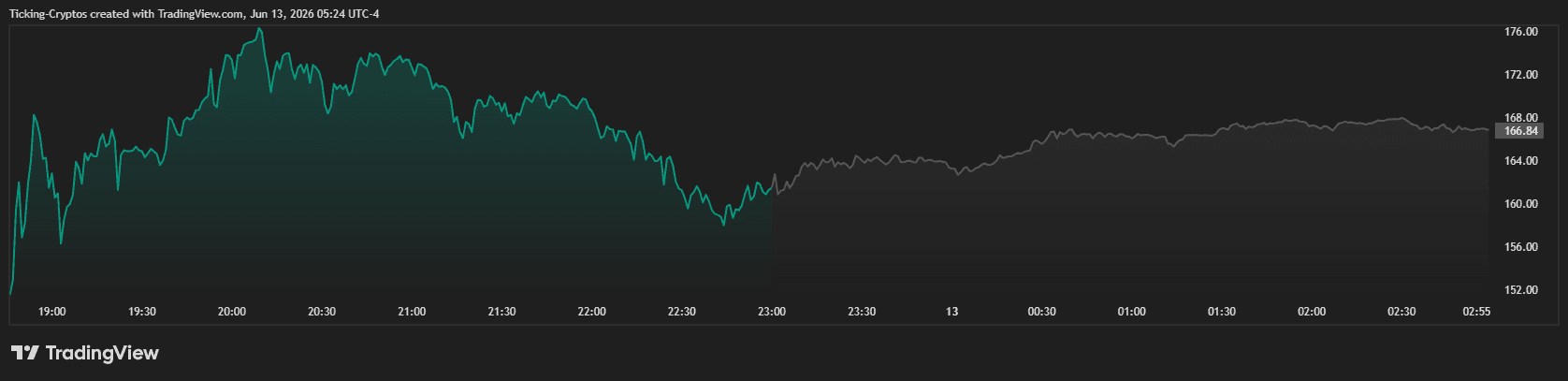
What's worth reading into the shape of the day: the stock hit its high in the early afternoon and then gave back a chunk into the close. Shares pared gains heading into the closing bell but still finished up around 19%, and analysts framed the day as a success given the healthy gain, limited volatility, and record retail demand. A debut that opens high, spikes, and settles back is the textbook signature of strong-but-rational demand — not the kind of disorderly first-day mania that often unwinds painfully in week two.
The Gap Nobody's Talking About: Expectations vs. Reality
Here's a nuance most recaps gloss over. A 19% pop is excellent by historical IPO standards — but it landed below what speculative markets had been signaling for weeks. IPO researcher Jay Ritter called the open "disappointing relative to what betting markets had been predicting," while noting it was still clearly positive, and that if the price holds, the dollar value of early returns would exceed any IPO in history.
That gap is the tell. In the run-up, pre-IPO perpetual futures had priced SpaceX as much as 60% above the offer at one point. By debut day, the Hyperliquid SPCX-USDC perpetual was trading around $176, roughly 30% above the IPO price, before easing toward $172. So the public market essentially met the floor of crypto's expectations but undercut its earlier highs. The speculative premium was real, and it compressed as the actual print arrived — a useful reminder that pre-IPO derivative prices are sentiment gauges, not forecasts.
And the valuation question the market shelved for a day hasn't gone away. SpaceX remains unprofitable, with $18.7 billion in revenue last year and an $8.7 billion loss between the start of 2025 and the end of March 2026. A $2 trillion price tag on those fundamentals is a bet on Starlink and Starship execution, not current earnings — which is exactly why the Monday open and the weeks after matter more than Friday's fireworks.
How the Crypto Market Reacted
The crypto angle here isn't incidental — for two weeks, SpaceX had been actively pulling money out of digital assets. Capital rotation into the listing compressed crypto liquidity for over two weeks, and analysts expected sidelined capital to gradually rotate back into risk assets once SPCX began trading. So when the overhang finally cleared on Friday, the majors caught a bid.
Bitcoin ($BTC) held the line as the market's anchor. Bitcoin traded near $63,262, up about 0.4% on the day; it briefly retraced after a hot US Producer Price Index print of 6.5% year-over-year, but buyers defended the demand zone and BTC recovered. Ethereum ($ETH) was steadier than spectacular. Ether sat broadly flat at around $1,653.
The standouts were further down the cap table. XRP ($XRP) put in its best session in a week. XRP added about 2.39%, its strongest session in over a week, as improving legal clarity and institutional appetite returned to the asset. And Solana ($SOL) was the most directly tied to the SpaceX story, since it hosted the tokenized stock. Solana advanced about 2.84%, supported by the tokenized SPCX share launch and elevated FIFA World Cup fan-token volumes on its network.
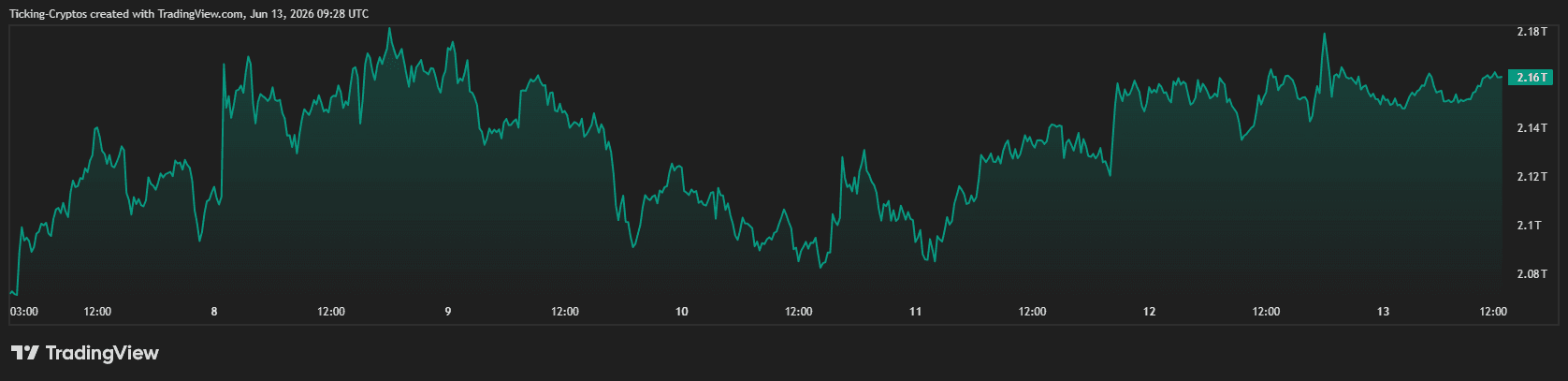
The bigger read: the market shifted from two weeks of relentless selling to cautious optimism, helped by easing US-Iran tensions and the SpaceX IPO finally pricing. The relief was real, but worth keeping in perspective — the hot inflation print and the June 17 Fed meeting are the next macro tests, so Friday's green board is a tone shift, not an all-clear.
Where the Tokenized SpaceX Trade Split in Two
This is where the debut got genuinely instructive. Several tokenized versions of SPCX were built to go live the moment the stock did, letting non-US and crypto-native traders get exposure without a traditional brokerage. Most of them delivered. The products that issued tokens against shares they actually held — onchain or via a regulated broker-dealer — opened and traded as planned.
Then there was the route that didn't hold any shares of its own. Four platforms had to scrap their allocation campaigns outright. Binance, Bybit and Bitget canceled their tokenized SpaceX allocation campaigns and refunded subscribers in full after xStocks, the provider routing the deals, could not source the underlying shares — even as xStocks' own onchain token and rival protocols launched the same morning. MEXC was caught in the same shortfall.
*Investments carry risks. Trade responsibly.
The amount of money that got parked and then unwound is the part that should make exchanges think twice. Binance's campaign alone had taken in over $557 million in USDC before being cancelled for "circumstances outside of our control." Bybit told users that "due to xStocks' inability to deliver the underlying assets, no SpaceX allocations were received," and Bitget said it couldn't secure and distribute the tokens it had promised. The consolation packages tell you how much goodwill was at stake: Bybit added a 10% reward and Bitget offered fee refunds plus future whitelisting and a gas voucher, while Binance pledged $1 million in shares via its own bStocks product, with CZ posting "Protect users when things don't go as planned."
--> Check out here all the options to Trade SpaceX stocks
Why This Is the Real Headline
Strip away the branding and the failure maps the architecture of tokenized equity perfectly. The deciding variable wasn't whether a product was onchain, decentralized, US-listed, or a perp — it was who controlled the shares. Everything backed by real, held inventory settled. The one design that outsourced share-sourcing to an intermediary at the last moment is the one that collapsed under demand.
That matters because the usual pitch for tokenized stocks is access and speed. As industry participants put it, the problem wasn't tokenization itself but getting the underlying asset — SpaceX's retail demand simply overwhelmed the shares available, leaving many orders unfilled. And the fine print had warned about exactly this: xStocks' own disclaimers stated its IPO tokens offered price exposure only, with no guaranteed allocation and no direct ownership. The lesson for the next blockbuster listing — Anthropic and OpenAI are both circling the public markets — is concrete: allocation-campaign tokens now carry a proven sourcing risk that platforms will either have to price honestly or stop offering.
What to Watch Next
Friday answered the easy question (does SpaceX pop?) and left the harder ones open. Three things worth tracking: whether SPCX holds above its $160 close once first-day euphoria fades, the index-inclusion buying wave that could hit as early as July as trackers are forced to add the stock, and whether the refunded crypto exchanges return for the next mega-IPO with a share-backed model instead of a promise to source. As one outlet put it, when markets reopen Monday, SPCX will be closely watched all over again
SpaceX has officially entered public markets, and its long-awaited IPO is already one of the biggest market events of 2026. After years of speculation around when Elon Musk’s space and satellite giant would finally go public, SpaceX shares began trading today under the ticker SPCX, immediately attracting massive investor attention.
The stock opened around $152, already well above its IPO price of $135, before climbing further during early trading. At the time of writing, SpaceX stock is trading around $172, marking a strong first-day jump and showing just how intense demand has become for one of the most anticipated listings in market history.

Why Is SpaceX Stock Surging Today?
The first-day rally is mainly being driven by a mix of hype, scarcity, and long-term growth expectations. SpaceX is not just viewed as a rocket company anymore. Investors are also pricing in the future of Starlink, satellite internet, space infrastructure, government contracts, possible AI-related expansion, and Elon Musk’s broader tech ecosystem.
The IPO has also created a strong fear of missing out among retail and institutional investors. With SpaceX now trading publicly, many investors who were previously unable to access the private company are rushing to gain exposure.
This strong demand helped push the stock from its IPO price of $135 to an opening level near $152, before the rally continued toward the $170 zone.
Is a SpaceX Crash Coming After the IPO Pump?
The big question now is whether SpaceX stock can continue climbing or whether the first-day excitement could quickly turn into a sharp correction.
A short-term pullback is definitely possible. IPO stocks often experience extreme volatility during their first trading sessions, especially when the opening price rises far above the original IPO price. Early investors may take profits, traders may exit after the initial hype, and valuation concerns could pressure the stock if momentum slows.
SpaceX is already trading at a massive valuation, which means expectations are extremely high. If the market starts questioning whether the company can justify that valuation through revenue growth, profitability, and future expansion, SPCX could face a strong correction.
In that scenario, the stock could fall back toward the $150 opening area, or even retest levels closer to the $135 IPO price if selling pressure increases.
*Investments carry risks. Trade responsibly.
Could SpaceX Stock Keep Going Higher?
On the other hand, SpaceX could continue moving higher if demand remains strong. The company has a rare position in the market, combining space exploration, satellite internet, defense contracts, and futuristic growth narratives. Few public companies offer the same level of exposure to the commercial space economy.
If buyers continue to dominate and the stock holds above the $170 level, the next psychological target could be the $180 to $200 range. A move above $200 would likely confirm that investors are willing to pay a significant premium for SpaceX’s long-term potential.
However, the higher SPCX climbs in the first days of trading, the greater the risk of a sharp correction if momentum fades.
What Should Investors Watch Next?
The most important levels to watch now are the $170 area, the $150 opening zone, and the $135 IPO price.
If SpaceX holds above $170 and continues gaining volume, bullish momentum could stay in control. But if the stock drops below $150, it may signal that the IPO hype is cooling down and that early buyers are starting to take profits.
Investors should also watch broader market sentiment. If tech stocks remain strong, SpaceX could benefit from continued risk appetite. But if the market turns cautious, highly valued IPO stocks like SPCX could be among the first to see heavy selling.
3 Ways to Buy SpaceX Stock
For investors looking to gain exposure to SpaceX after its IPO, there are several platforms to consider. Availability may depend on the user’s country, regulations, and the type of product offered.
1. Buy SpaceX Through XTB
XTB is one of the platforms investors can use to access major listed stocks and market opportunities. For those looking to trade or invest in SpaceX after its Nasdaq debut, XTB may offer a simple way to gain exposure to SPCX depending on regional availability.
-> Start with XTB here
2. Buy SpaceX Through Bitpanda
Bitpanda is another option for investors who want easy access to stocks, crypto, and other assets from one platform. If SpaceX trading is available in your region, Bitpanda may allow users to gain exposure to SPCX with a beginner-friendly interface.
-> Start with Bitpanda here
3. Buy SpaceX Through Coinbase
Coinbase has also been expanding beyond traditional crypto exposure, including pre-IPO and tokenized market products in some regions. For users looking for crypto-native access to SpaceX-related exposure, Coinbase may be another platform to watch.
-> Start with Coinbase here
SpaceX IPO Could Be Just Getting Started
SpaceX’s IPO is already making market history. With the stock opening near $152 and trading around $172, investors are clearly showing strong demand for Elon Musk’s space company.
Still, the next move remains uncertain. The stock could continue climbing if hype and demand remain strong, but a sharp correction is also possible if early investors start taking profits or if the valuation becomes too stretched.
For now, SpaceX remains one of the most important stocks to watch in 2026. Whether SPCX becomes the next mega-cap winner or faces a post-IPO crash will depend on how the stock performs after the initial excitement fades.
When Is the SpaceX IPO and What's the Valuation?
After more than two decades as the world's most closely watched private company, SpaceX is going public. The stock begins trading on the Nasdaq on June 12, 2026, under the ticker SPCX, with 555.56 million Class A shares offered at a targeted IPO price of $135. SpaceX set that fixed price of $135 per share, putting the valuation at roughly $1.77 trillion — which would make Elon Musk's firm the seventh-biggest company in the U.S., ahead of Tesla.
The scale is unprecedented. The offering aims to raise about $75 billion, with underwriters holding a 30-day option to buy up to an additional 83.3 million shares at the IPO price. By deal size, that makes it the largest IPO in market history — comfortably topping Saudi Aramco's 2019 record.
One detail makes this IPO unusually accessible. SpaceX set aside about 30% of its public shares for everyday retail investors instead of the usual 5% to 10% — which is why brokerage apps suddenly have a "request shares" button for a company that stayed private for 24 years.
SpaceX IPO Valuation: What Drives the $1.75 Trillion Valuation?
The number rests heavily on one division: Starlink. SpaceX operates across launches, Starlink connectivity, and AI, with Starlink generating roughly 61% of total 2025 revenue. The company generated $15 billion to $16 billion of revenue in 2025, which implies a valuation of roughly 109x to 116x trailing revenue.
That multiple is the heart of the debate. At $1.75 trillion, SpaceX would trade at around 100 times its 2025 revenue — a multiple that assumes sustained exceptional growth across both its launch business and Starlink for years to come. Investors are effectively pricing in years of near-flawless execution, with the main risks being governance concentration, Starship execution, and reliance on government contracts.

What to Expect During the First Hours of Trading
Here's where a common assumption needs correcting. Many people expect a stock to crash right after its IPO as early investors cash out — but that's not the typical pattern. The classic IPO dynamic is often the opposite: a first-day "pop," where the stock opens well above its offer price because demand far exceeds the shares available. Sharp drops do happen, but for a heavily oversubscribed deal like this one, an opening price above $135 is the more likely outcome. In fact, some analysts think it may end up topping $2 trillion or more on its first day.
A few things worth knowing for the big day:
- There's no fixed opening time. There is no set time for trading to begin — companies often wait a while after the market opens before the first trade prints, and the share price is likely to fluctuate heavily once it does.
- Expect serious volatility. June 12 is the first day of trading, and high volatility is expected. Some experienced traders deliberately wait it out — a common approach is to let the first 30 to 90 minutes of trading define a clear structure rather than buying at any price into the hype.
- A structural buying wave is coming weeks later. This is the most underappreciated factor. Nasdaq shortened the waiting period for Nasdaq-100 membership to just 15 trading days for the largest megacap IPOs, so based on a June 12 listing, SpaceX would be eligible to join the index around July 7 — forcing every Nasdaq-100 tracker fund and ETF to buy SPCX and creating a wave of mandatory institutional buying that could substantially offset early selling pressure.
- Selling pressure is real, but scheduled. A friends-and-family carve-out means up to $3.75 billion of unlocked stock could be sold on day one, while the main insider lockups release in stages from late July onward. So the "early investors cashing out" effect you'd expect is genuine — it's just spread across months of unlock windows rather than concentrated on day one.
The honest summary: nobody can predict the first print. Expect a volatile open, a real possibility of a price well above $135, and a known calendar of buying and selling pressures over the following weeks.
The 3 Best Platforms and How to Buy SpaceX (SPCX)
Not every platform offers the same thing. Two of the three below give you the actual Nasdaq-listed share; one gives you crypto-native price exposure. Here's how they break down.
1. XTB — Buy the Actual SPCX Share
XTB is a regulated broker offering access to real SPCX stock on the open market once trading begins. From the first day of trading, SPCX becomes available at brokers giving access to US stocks, including XTB.

What you need to get started: open an account and complete identity verification (KYC). How to fund it: download the XTB app, open an account, then choose your preferred funding method and deposit funds — XTB typically supports bank transfer and card. What to do during the IPO: once SPCX lists, search the ticker and place your order. One reality check: you won't get the $135 IPO price — that's only for investors in the formal bookbuilding process; buying on the open market from June 12 means paying whatever price the market sets, which could open substantially higher.
👉 Open an XTB account
*Investments carry risks. Trade responsibly.
2. Bitpanda — Trade SpaceX from the First Trading Day
Bitpanda is a European, Austria-based platform that lets you invest in stocks (including fractional shares), $crypto, ETFs, and more from one app — well suited to beginners who want a straightforward way in without large minimums. Bitpanda is offering SPCX from the very first NASDAQ trading day, at just €1 per trade.

What you need to get started: register and complete verification (KYC). How to fund it: Bitpanda supports bank transfer, card, and several instant-payment methods in EUR. What to do during the IPO: once SPCX goes live on the first trading day, search the ticker and place your order — at €1 per trade, and with fractional investing, you can put in a fixed euro amount rather than buying a whole share if the price opens high.
👉 Open a Bitpanda account
3. OKX — Crypto-Native SpaceX Exposure
OKX approaches SpaceX from the crypto side rather than via traditional equity. OKX is launching perpetual futures contracts that track the valuations of high-profile private companies including SpaceX, alongside tokenized stock trading via a link-up with Ondo Finance. This is exposure to SpaceX's price, not ownership of the underlying share — and these products carry leverage, funding costs, and liquidation risk.
What you need to get started: a verified OKX account with KYC completed. How to fund it: deposit crypto from an external wallet, or buy crypto directly on OKX via card or bank transfer to fund your trading balance. What to do during the IPO: if you want pre-listing or synthetic exposure, you can trade the SpaceX perpetual or tokenized product directly — just understand you're trading a derivative, not a Nasdaq share, and these can diverge sharply from the real price in thin, volatile windows.
👉 Open an OKX account
What's Going to Happen during SpaceX IPO?
The SpaceX IPO is a genuine market milestone — the largest in history, with unusually generous retail access. But the $135 figure is an offer price most readers won't get, the opening days will be volatile, and the three platforms above give you different products: a real share via XTB and Bitpanda, and crypto-native exposure via OKX. Whichever route you choose, only invest what you can afford to lose — buying into day-one hype is one of the higher-risk ways to enter any stock.
What Is the World Venture Forum 2026?
The World Venture Forum (WVF) 2026 is an exclusive, investor-led gathering set high in the Austrian Alps under the theme "Vectors of Change." Built around the idea of understanding and shaping the forces transforming industries and societies, the forum brings together global thought leaders, capital allocators, and innovators for a week of meaningful dialogue and collaboration. This is a community designed by investors, for investors — meaning the conversations and opportunities genuinely resonate with the people in the room.
Rather than a typical conference, WVF positions itself as a place to navigate the dynamic currents of change, build lasting connections, and stay ahead in an ever-evolving world. If you're looking for board-level conversations rather than buzz, this is the room to be in.
When and Where: Kitzbühel, Austria, 6–11 July 2026
The forum takes place from 6 July to 11 July 2026 in Kitzbühel, Austria, one of the Alps' most iconic destinations. Discussions happen at 1,000+ metres above sea level, across four luxurious mountaintop chalets, each dedicated to a distinct focus area. The alpine setting is part of the point: it combines elevated discourse with informal networking in a genuinely memorable environment.

The Four Focus Topics
WVF 2026 organizes its program around four broad themes, each hosted in its own dedicated chalet for tightly curated conversations:
- Web3 — Explore the future of digital assets.
- Family Offices — Connect with global investment leaders.
- Corporate Innovation — Dive into cutting-edge business strategies.
- Impact — Discuss sustainable solutions in Green & Life Sciences.

What to Expect: The WVF Experience
The week balances substance with lifestyle. Beyond panel discussions with global thought leaders on innovation, impact, and investment, there's daily networking, an elegant Gala Dinner, and movement activities to recharge — including a golf tournament, guided city tours, and yoga sessions.
The agenda flows naturally across the week. Monday and Tuesday open with registration, networking, and the Web3 and Family Office chalets, alongside a Crypto Cocktail and a Family Fizzes reception. Wednesday brings a golf tournament or trekking, Scale Up networking, and the headline WVF Gala Dinner. Thursday and Friday cover the Corporate Innovation and Impact chalets, a Sponsors' & Speakers' Soirée, and a guided city tour or yoga session, before a Champagne Brunch sends everyone off on Saturday. (Note: some formats require an add-on ticket.)
Who You'll Meet: A Room Full of Decision-Makers
This is where WVF stands apart. The attendee profile skews heavily toward people with real capital and real authority:
- 92% are senior decision-makers — CEOs, owners, investors, management, and C-level.
- 70% control capital ownership.
- Roughly 2 in 3 attendees are capital allocators, including corporate investors, venture capital, private equity, family offices, and angels.
For founders, investors, and innovators alike, that density of decision-makers is the real draw — every conversation has a genuine chance of leading somewhere.
Get 15% Off Your WVF Ticket
Our CryptoTicker readers can claim an exclusive 15% discount on registration. Use the promo code WVF26_CRYPTOTICKER at checkout.
If you want to spend a week among investors and innovators shaping the next wave of Web3, family office strategy, corporate innovation, and impact — in one of the most beautiful settings in Europe — World Venture Forum 2026 is built for exactly that.
Decrypt
President Trump’s upcoming UFC fight will provide several crypto firms with an unprecedented opportunity for corporate branding.
A new benchmark study found AI agents remain vulnerable to prompt injection attacks as companies increasingly roll out the technology to the public.
Kimi Work lets an AI agent loose on your local files, your browser, and your schedule—without routing everything through the cloud.
Anthropic's AI survey showed Americans are afraid of job losses, hopeful for health breakthroughs, and distrustful of firms behind the tech.
Participants were refunded and did not receive shares in the record-breaking SpaceX IPO from Elon Musk's rocket company.
U.Today - IT, AI and Fintech Daily News for You Today
U.S. spot Bitcoin ETFs recorded nearly $86 million in net inflows on June 12, with all 12 funds finishing the day without a single outflow and BlackRock accounting for the largest share of new capital.
Over 13 billion DOGE have been committed to active futures contracts as traders begin to show optimism for a potential price recovery for Dogecoin.
Analysts point to a growing list of signals that have accompanied past market bottoms, with a key Bitcoin support level now being watched.
XRP stops falling at $1.15, but repeating 2022 chart patterns point to two full years of boring sideways action.
More than 64 billion SHIB tokens moved across exchanges in just 24 hours.
Blockonomi
Key Takeaways
- Craig Ellis from B. Riley increased Marvell’s price target to $345 from $240, representing a 43.75% boost, while maintaining a Buy recommendation.
- Dan Durn, Adobe’s CFO with over three decades of finance expertise, has been appointed as Marvell’s new chief financial officer.
- Adobe shares dropped 8% following the CFO departure announcement, adding to a 51% year-over-year decline, while Marvell has surged 312% during the same timeframe.
- Jensen Huang, CEO of Nvidia, publicly declared Marvell could become “the next $1 trillion company” during the Computex conference.
- The chip designer’s addition to the S&P 500 index on June 22 is anticipated to expand institutional investor interest.
Craig Ellis, an analyst at B. Riley, has significantly increased his price target for Marvell Technology (MRVL) shares, pushing it to $345 from the previous $240 mark—representing an increase of approximately 44%. He continues to maintain a Buy recommendation on the semiconductor company. At the time of publication, shares were hovering near $228.
Marvell Technology, Inc., MRVL
The analyst cited three key catalysts behind his revised valuation: the appointment of a new chief financial officer, a high-profile endorsement at Computex involving Nvidia’s leadership, and the semiconductor firm’s imminent entry into the S&P 500.
This past Thursday, Marvell announced that Dan Durn, who currently holds the CFO position at Adobe (ADBE), will transition to Marvell beginning next Monday. He will succeed Willem Meintjes, who is departing after serving in the position for over three years.
Durn arrives with more than 30 years of financial leadership credentials, having held CFO positions at major technology firms including Adobe, Applied Materials, NXP, Freescale Semiconductor, and GlobalFoundries. Additionally, he has been a member of Marvell’s board of directors for the past two years.
Ellis characterized Durn as “a strong financial leader with a clear strategic focus and strong operational grasp,” drawing on previous professional interactions during Durn’s tenure at Applied Materials.
The announcement had adverse consequences for Adobe. Its stock tumbled 8% on Friday, compounding a 51% decrease over the past twelve months. The CFO’s exit follows earlier news that CEO Shantanu Narayen intends to step down from his position, with no replacement yet identified.
Jefferies analyst Brent Thill noted that Durn’s decision to join Marvell “suggests problems may be deeper at Adobe,” while raising concerns about the software company’s capacity to retain top executive talent.
Nvidia’s CEO Projects Trillion-Dollar Valuation for Marvell
During the Computex technology conference, Marvell CEO Matthew Murphy appeared alongside Nvidia CEO Jensen Huang. This public collaboration prompted Ellis to assess that the strategic partnership between Nvidia and Marvell has accelerated substantially.
Huang’s public statement identifying Marvell as “the next $1 trillion company” generated significant market attention. Ellis interprets this endorsement as validation of Marvell’s expansive market opportunity and its capacity to transform that potential into actual revenue. The two technology giants are currently collaborating on custom artificial intelligence processors, NVLink Fusion technology, Celestial platforms, and proprietary optical solutions.
Index Addition Scheduled for Late June
Marvell’s inclusion in the S&P 500 is confirmed for June 22. Ellis considers this a significant driver, projecting it will broaden the company’s investor profile both through passive index fund purchases and increased visibility among institutional money managers.
The Street’s consensus rating on MRVL stands at Strong Buy, supported by 24 Buy recommendations and four Hold ratings.
The mean analyst price target across Wall Street is $252, which trails the current trading price—indicating that the stock’s remarkable 229% gain year-to-date has exceeded most analyst projections.
The semiconductor sector ETF (SOXX) has climbed 99.7% year-to-date, while the software sector ETF (IGV) has declined 14.3%, highlighting the stark valuation divergence between these two technology subsectors.
Marvell shares were trading approximately 2% higher approaching Friday’s market close.
The post Marvell (MRVL) Stock Soars on Adobe CFO Hire and Nvidia Endorsement Ahead of S&P 500 Addition appeared first on Blockonomi.
Key Takeaways
- ARK Invest acquired 3.29 million SpaceX shares valued at $444M during the company’s Nasdaq launch
- The SpaceX public debut generated $75 billion, setting a new record for the largest IPO ever
- ARK liquidated $39.3M worth of Advanced Micro Devices stock across three ETFs simultaneously
- ARK reduced holdings in Rocket Lab — a company SpaceX identified as a competitive rival in regulatory filings
- The acquisition came after ARK divested positions in 20 firms totaling $222.87M one day earlier
On Friday, June 13, 2026, Cathie Wood’s ARK Invest executed a substantial strategic investment. The investment management firm acquired 3,291,184 SpaceX shares distributed across four exchange-traded funds, coinciding with the aerospace company’s historic Nasdaq listing.
The aggregate investment reached $444,309,840, allocated among the ARK Innovation ETF, ARK Autonomous Technology and Robotics ETF, ARK Next Generation Internet ETF, and ARK Space Exploration and Innovation ETF.
Space Exploration Technologies Corp., SPCX
Prior to going public, SpaceX represented ARK’s most significant position in its Venture Fund, accounting for more than 11% of net assets — surpassing both OpenAI and Anthropic.
ARK initially backed SpaceX through its Venture Fund in late 2023, when the aerospace manufacturer was valued under $200 billion. The company now commands a market capitalization of $2.11 trillion.
Historic Public Market Debut
The SpaceX IPO generated $75 billion through the distribution of 555.6 million shares, establishing it as the most substantial initial public offering on record.
Within ARKX, the SpaceX allocation immediately became a top-tier holding, constituting 6.89% of the fund’s composition.
ARK has consistently championed SpaceX’s business approach. “The company’s ability to re-use rockets results in structurally lower launch costs than competitors that will prove difficult to match,” the firm articulated in its investment rationale.
Portfolio Rebalancing: AMD and Rocket Lab Exit
To accommodate the SpaceX investment, ARK executed divestitures across numerous portfolio companies.
Concurrent with the SpaceX acquisition, ARK divested 80,536 shares of Advanced Micro Devices distributed across ARKQ, ARKW, and ARKX ETFs. The transaction yielded $39,337,809.
ARK simultaneously reduced its Rocket Lab exposure across ARKQ and ARKX, generating $5,824,625 from the sale.
The Rocket Lab divestiture timing proved noteworthy. SpaceX explicitly identified Rocket Lab as a competitive threat in its S-1 registration, characterizing it as a firm transitioning from small-lift capabilities into medium-lift payload services.
The preceding day, ARK had liquidated stakes in 20 separate entities worth $222.87 million. Teradyne represented the largest disposal at $76.6 million. Twist Bioscience, Iridium Communications, and Robinhood Markets were additionally reduced, combining for $64.2 million.
Further divestitures encompassed Tesla, Baidu, Roku, CrowdStrike, Cloudflare, and Veracyte holdings.
ARK disposed of 98,835 Roku shares for $11,824,619 and 39,850 Tesla shares valued at $15,906,127.
The consecutive two-day liquidation campaign created capacity throughout ARK’s ETF suite for the SpaceX allocation, which now ranks among the firm’s most substantial publicly traded equity positions.
The post ARK Invest Acquires $444M SpaceX Stake on IPO Day, Exits AMD and Rocket Lab Positions appeared first on Blockonomi.
TLDR:
- LG Electronics is piloting an onchain ad network on Arbitrum to record verifiable delivery data.
- The pilot ran in Japan with Hakuhodo, testing real-user engagement and operational performance live.
- WARC projects global ad spend at $1.3 trillion in 2026, raising pressure for provable performance.
- LG targets fraud, tightening privacy rules, and falling engagement as the three core ad problems.
LG Electronics is testing an onchain advertising network built on the Arbitrum blockchain. Developed by the company’s Blockchain Research Lab, the pilot runs in Japan alongside advertising firm Hakuhodo.
The project records ad delivery data in a verifiable, tamper-resistant format. It targets three persistent problems in digital advertising: fraud, privacy, and declining engagement. Results from the live trial are currently under evaluation.
LG Electronics and Arbitrum Take On Digital Ad Fraud
LG Electronics Arbitrum pilot addresses one of digital advertising’s most enduring problems. The industry measures impressions, clicks, and conversions inside closed systems.
Settlement arrives weeks later through processes neither advertiser nor publisher can inspect. Disputes ultimately come down to contracts and third-party audits rather than shared evidence.
WARC forecasts global advertising spend at $1.3 trillion in 2026. At that scale, the gap between reported performance and provable performance shapes where budgets flow.
LG’s Blockchain Research Lab designed its system to record ad delivery as evidence — who served an advertisement, when, and how.
The lab identified fraud as one core pressure point. Advertising is bought and sold automatically at high volume. Bot-generated traffic blends with genuine performance and gets counted the same way.
The onchain system makes that data difficult to alter after the fact, creating a record both sides can reference.
Samuel Byungsun Park, Blockchain Research Department Leader at LG Electronics, described the project’s dual focus.
“We are exploring how blockchain technology can help improve transparency in advertising workflows while supporting a privacy-conscious approach to consumer data,” Park said.
“We are also evaluating whether this approach can deliver meaningful value to advertisers, publishers, and audiences.”
The third factor driving the pilot is audience engagement. Ad volume keeps rising while response rates fall. Performance metrics explain less on their own.
The Japan trial with Hakuhodo put the system in front of real users to assess whether interacting with the advertising felt natural and whether the operational model held together under live conditions.
Programmable Infrastructure Shapes the Advertising Market
The case for public blockchain infrastructure in advertising comes down to ownership of the scoreboard. If the layer that proves performance belongs to one participant, every number it produces carries that participant’s interests. A measurement system controlled by one of the teams convinces no one on the other side.
Arbitrum’s role in the pilot reflects that logic. LG’s Blockchain Research Lab can configure the execution environment, fee structure, and governance to match its objectives.
At the same time, the network runs on public infrastructure that no single company controls. Steven Goldfeder, Co-Founder and CEO of Offchain Labs, connected that structure to the broader market shift.
“Advertising has long been measured by how many impressions are served. The industry is shifting toward verifiable performance and blockchain is the architecture built for it,” Goldfeder said.
“This is the programmable economy applied to advertising — markets and transactions running automatically in software, with cryptographic proofs every participant can verify.”
Harry Kalodner, CTO of Offchain Labs, noted that large enterprises consistently seek the guarantees of public infrastructure without surrendering control of their own environment. “Arbitrum was built to support exactly this kind of work, where new categories emerge because the underlying infrastructure is finally ready for them,” Kalodner said.
LG’s published strategy keeps the system alongside the demand-side and supply-side platforms already in use. Verification arrives as an addition to the existing stack rather than a replacement. Switching costs stay low, and existing relationships between advertisers and publishers remain intact.
Brendan Ma, Head of Investment Strategy at the Arbitrum Foundation, pointed to growing enterprise interest across sectors. “Since the launch of Arbitrum, we have seen rising demand from leading enterprises and publicly listed partners across global markets, from trading and finance to now the global advertising industry, the largest media market in the world,” Ma said.
LG has outlined continued deployment in live advertising environments as its next step, along with work toward technical standards covering data reliability, privacy-conscious operation, and cost efficiency.
The post LG Electronics Launches Onchain Advertising Pilot on Arbitrum to Fix Digital Ad Fraud appeared first on Blockonomi.
Key Highlights
- Shares of Roku climbed 20% to reach $143.66 on Friday, marking the best closing price since February 2022
- Reports emerged that Roku has entered preliminary discussions with at least one major U.S. media organization regarding a possible acquisition
- Company leadership has not finalized any decisions, and a transaction remains uncertain
- The streaming platform recently topped 100 million active users and exceeded first-quarter projections, with advertising revenue climbing 27% and subscription income rising 30%
- Out of 29 Wall Street analysts, 25 recommend buying the stock, which has gained 32% in 2024
Shares of Roku (ROKU) experienced a dramatic 20% rally on Friday, closing at $143.66—the streaming company’s strongest single-session performance since 2023 and its highest finish since mid-February 2022.
Roku, Inc., ROKU
The dramatic price movement followed a Bloomberg report indicating that Roku has begun exploring strategic alternatives, including preliminary conversations with at least one prominent U.S. media entity about a potential merger or acquisition.
According to the report, these discussions remain in their infancy. Neither Roku’s executive team nor its board of directors has reached any definitive conclusions, and there’s no guarantee these exploratory talks will culminate in an actual transaction.
Roku has not issued a response to media inquiries about the potential sale.
The stock has experienced a 10% increase during June and has appreciated 32% since the beginning of the year. Looking back over the trailing twelve months, ROKU shares have surged 93%.
Extended trading hours saw additional gains following the initial Bloomberg disclosure.
Impressive First Quarter Performance Fuels Momentum
Prior to Friday’s acquisition-driven surge, Roku had already demonstrated strong upward momentum. On April 30, the streaming technology company reported first-quarter results that surpassed analyst expectations and simultaneously increased its full-year financial outlook.
Advertising revenues jumped 27% compared to the same period last year. Subscription-based revenues advanced 30% year-over-year.
For calendar year 2024, Roku projects EBITDA of $675 million on total revenues of $5.54 billion.
Earlier this year, the company announced a significant milestone: its platform now serves more than 100 million active households globally. Management noted that Roku devices are present in over half of all broadband-connected homes throughout the United States.
International expansion continues as a priority, with the company reporting sustained growth across Canada, Mexico, Brazil, the United Kingdom, and additional Latin American markets.
Analyst Community Maintains Positive Outlook
Before Friday’s acquisition news, Wall Street analysts already held a predominantly bullish view. Among 29 analysts tracking the company, 25 maintain Buy ratings, three recommend holding shares, and just one advises selling, based on Koyfin data.
Roku faces competition in the streaming hardware space from Amazon’s Fire TV platform, Google TV, and Apple TV. Amazon disclosed in February that cumulative Fire TV device sales have exceeded 300 million units.
Roku’s business model generates revenue through multiple channels: selling streaming hardware, licensing its operating system to television manufacturers, selling advertising inventory on The Roku Channel, and collecting platform fees from subscription services purchased through its ecosystem.
The Bloomberg article did not identify which media company or companies might be engaged in acquisition discussions with Roku.
The post Roku (ROKU) Stock Soars 20% on Acquisition Speculation appeared first on Blockonomi.
Key Highlights
- Brent crude tumbled 3.4% to reach $87.33 per barrel, marking its weakest performance since March 5, concluding the week with a 6.2% decline
- Diplomatic negotiations between Washington and Tehran are progressing toward an agreement that may reopen the critical Strait of Hormuz
- Pakistani officials confirmed that a finalized text has been established and are coordinating next steps with both nations
- Tehran’s top diplomat stated a memorandum of understanding has reached unprecedented proximity to completion amid mixed signals
- The oil cartel reduced its 2026 demand growth projection from 1.2 million barrels daily to 1 million
Energy markets experienced a significant downturn on Friday, with Brent crude plummeting to its weakest position since the beginning of March. The decline was fueled by mounting expectations that Washington and Tehran are nearing a diplomatic resolution that would restore access through the Strait of Hormuz.
Brent benchmark prices closed at $87.33 per barrel, representing a daily decline of 3.4% and a weekly drop of 6.2%. The West Texas Intermediate benchmark decreased 3.2%. Natural gas prices across Europe plunged as much as 8.4%.
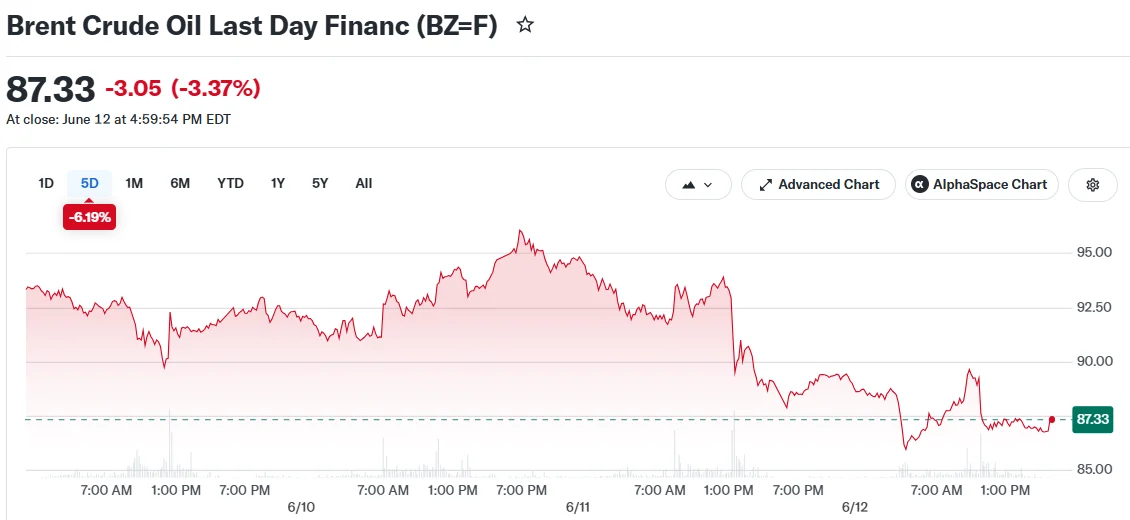
The strategically vital Strait of Hormuz has remained essentially blocked since hostilities erupted between Washington and Tehran in late February. Prior to the outbreak of conflict, this critical chokepoint facilitated approximately one-fifth of global petroleum and natural gas shipments.
President Trump announced Thursday that negotiators had achieved a breakthrough and suggested formal signatures could follow shortly. He indicated the arrangement would restore passage through the strait, terminate the American naval embargo against Iran, and guarantee Tehran abandons nuclear weapons development.
Nevertheless, Trump expressed criticism toward Iran on Friday, stating that Tehran’s public declarations bore “no resemblance to the conditions that were mutually accepted in documented form.” He emphasized there exists “no legitimate expectation of honest negotiations” with Iranian leadership.
Diplomatic Momentum Builds
Iranian Foreign Minister Abbas Araghchi countered the escalating rhetoric, asserting that a memorandum of understanding between the nations had “reached its closest point to finalization.” He urged journalists to refrain from conjecture regarding the agreement’s provisions until formal completion.
Pakistan, serving as primary intermediary, provided the most definitive indication of advancement. Prime Minister Shehbaz Sharif announced that a completed agreed-upon document had been established and that Islamabad was coordinating implementation phases with both parties. He declared “diplomatic resolution has never approached this closely.”
Despite encouraging developments, financial markets maintain a skeptical stance. Multiple previous announcements of major progress ultimately proved inaccurate, and the contradictory messaging between Washington and Tehran has introduced additional volatility.
Production Constraints Persist
Oil values remain approximately 30% below the conflict’s peak levels. However, market observers caution that prices may face downside limitations as production capacity remains restricted.
Chevron’s chief executive Mike Wirth cautioned Friday that petroleum stockpiles are declining toward “concerning” thresholds. The United States continues exporting crude from strategic emergency reserves at unprecedented rates.
Macquarie energy analyst Vikas Dwivedi attributed the recent $11 per barrel decline to market enthusiasm surrounding a potential agreement. He noted that crude valuations maintain support levels as long as the strait remains inaccessible.
Certain vessels have navigated the strait with tracking transponders disabled, and global markets have developed alternative mechanisms to address the supply interruption. However, industry experts suggest that even following strait reopening, purchasers may demonstrate preference for American crude over Persian Gulf supplies for an extended period.
Rob Haworth from U.S. Bank noted that tanker vessels traveling the strait to Asian destinations would require two months for complete round-trip voyages. Scott Shelton of ICAP predicted markets would probably “shift procurement patterns away” from Persian Gulf sources in the immediate term.
The oil cartel revised downward its 2026 petroleum demand growth projection to 1 million barrels daily, reduced from 1.2 million. It increased its 2027 forecast. Alternative forecasting organizations, including the IEA and EIA, maintain more conservative outlooks, with both anticipating demand contraction in 2026.
The European Central Bank referenced the Iran-related petroleum price surge as a primary factor influencing its determination to increase interest rates this week.
The post Oil Prices Plunge to Four-Month Lows Amid U.S.-Iran Diplomatic Breakthrough appeared first on Blockonomi.
CryptoPotato
For the fifth consecutive week, the spot exchange-traded funds tracking the world’s largest cryptocurrency have ended in the red with more outflows than inflows.
However, the numbers are nowhere near as painful as they were during the previous week, and Friday was actually in the green.
5 in a Row
CryptoPotato has repeatedly reported in the past few weeks the poor performance of the spot Bitcoin ETFs, especially during the previous business week (the first for June). At the time, investors pulled out over $1.7 billion from the funds, making it the second-worst in the ETFs’ history.
Four out of the five business days last week were also in the red. The net withdrawals were $91.37 million on Monday, $77.44 million on Tuesday, $213.85 million on Wednesday, and $19.03 million on Thursday. The first silver lining is that net inflows finally dominated on Friday, with $85.85 million, according to data from SoSoValue.
Nevertheless, the week still ended in the red, with total net outflows of almost $316 million. The second silver lining, if it could be described as such, was the fact that the net withdrawals were nowhere near the billions recorded during the previous four weeks. However, the negative streak continues, as the ETFs have bled out over $5.7 billion since the week that ended on May 15.
The cumulative net inflows have declined even further, going from $59.34 billion on May 8 to $53.62 billion on June 12.
ETH ETFs in Red, Too
The landscape with the spot Ethereum ETFs is quite similar and painful. SoSoValue shows that the funds have been in the red for five consecutive weeks as well, but the last one was not as crushing as many of the previous.
In fact, Monday was a highly positive day, with investors inserting $82.37 million into the funds. However, the trend changed in the following days, with $40.85 million in net outflows on Tuesday, $35.59 million on Wednesday, $15.89 million on Thursday, and $4.95 million on Friday.
Consequently, the week ended with just under $15 million in net outflows, which is significantly lower than the $173 million withdrawn during the previous week.
The cumulative total net inflows dropped to under $11.20 billion on Friday after peaking at $12.09 billion on May 8.
The post Bitcoin ETFs Extend Major Red Streak, But There Is a Light at the End of the Tunnel appeared first on CryptoPotato.
Bitcoin’s price tried to break out above $64,000 yesterday, but it was stopped, and it still trades close to that level on Saturday morning.
Most larger-cap alts have posted minor gains over the past day, including ADA and HYPE, both up around 3%. In contrast, XMR has dumped hard.
BTC Calms at $64K
The primary cryptocurrency reacted well to the massive price decline observed during the first week of June, culminating that Friday in a nosedive to $59,100. After dumping to this 19-month low, the asset rebounded and jumped toward $64,000 on June 8.
The controversial developments on the US-Iran war front, which included new attacks against numerous countries in the region, halted bitcoin’s attempted recovery. So did the May CPI numbers, which were the highest in years.
BTC dipped below $61,000 on a couple of occasions during the week, but managed to defend that level and aimed at a more profound recovery. The highest price came yesterday, just hours before SPCX went live for trading on Wall Street, with a surge to almost $64,500. However, the bears intervened, and BTC now trades just under $64,000.
Its market capitalization has climbed to almost $1.280 trillion on CG. Its dominance over the alts, though, has increased further to 56.4%.

XMR Dumps
Ethereum continues to inch closer to $1,700 after another minor daily increase. BNB, XRP, and TRX have marked similar increases of under 1%. DOGE and SOL are up by 1.6%-1.7%, while HYPE has jumped by more than 3% to $59. Cardano’s native token continues with its recovery attempts. The token is up by 3% to well above $0.17 after the recent massacre.
In contrast, XMR has erased all the gains from earlier this week, dropping by more than 12% to $340. NEAR and ZEC are also slightly in the red. In contrast, BEAT, TAO, and ICP have marked substantial gains of up to 11%.
The total cryptocurrency market cap has remained near $2.270 trillion on CG.

The post Bitcoin (BTC) Calms Close to $64K, Cardano (ADA) Eyes Recovery: Weekend Watch appeared first on CryptoPotato.
Following last week’s market-wide calamity in which the cryptocurrency markets shed over $400 billion and all major assets plummeted to yearly lows, many analysts have started speculating on where the bottom is.
The latest to do so was Ali Martinez, who outlined the lowest targets during this cycle for BTC, ETH, and XRP. Hint: there’s more pain ahead for all, according to his findings.
Bitcoin Bottom
The analyst with over 165,000 followers on X began with the largest cryptocurrency by market cap, indicating that the asset is “approaching a market bottom.” He noted that the MVRV Pricing Bands suggest the ultimate capitulation zone, and that level has historically been around the 0.8 MVRV Band.
If history repeats itself, it would represent another major leg down that will drive BTC toward $43,000. The other, less painful option would be a nosedive to the 1.0 MVRV Band, which is currently at $54,000.
Interestingly, another recent analysis on BTC’s potential bottom suggested that it could arrive during the ongoing World Cup in North America. BIT Research justified their prediction with bitcoin’s A-B-C structure it has been following since the October 2025 rejection and subsequent bear market.
ETH Major Decline
While the leg down for bitcoin could see a more modest 32% drop from the current levels to bottom out, ETH’s projected crash is a lot worse. Basing his analysis on Ethereum’s Delta Price model, which measures the relationship between investor cost basis and miner production costs, Martinez warned that the largest altcoin can plummet to $700.
This level has “consistently flagged generational accumulation floors.” If such a major decline indeed transpired, then ETH will dump by another 60%. Moreover, its crash from last year’s all-time high at almost $5,000 would be north of 85%, which will be ‘shitcoin’ territory.
XRP Bottom Closeby
The landscape for ETH seems the most grim given Martinez’s projections. XRP, on the other hand, might be a lot closer to his targeted bottom. He noted that a dominant rising trendline on the monthly chart has “successfully defined every major cycle bottom for nearly a decade.”
If XRP is to find its bottom again there, it could drop to somewhere between $0.70 and $0.90. The lower target would mean a 40% decline, while the higher one is only 21% away from XRP’s current price tag of around $1.15.
5/5 If these projections fully mature, I will be executing a heavy spot-layering strategy directly inside these deep-value windows:$BTC: $43,200$ETH: $700$XRP: $0.90
Pacing capital at these levels keeps the portfolio aligned with structural-cycle data.
— Ali Charts (@alicharts) June 12, 2026
The post BTC vs. ETH vs. XRP: Which Is Closest to a Major Reversal? Analyst Explains appeared first on CryptoPotato.
The Core Team behind the controversial project has updated the participation and flow model for the Pi Launchpad in a move to strengthen community ties and engagement.
It has opened the doors for Pioneers to participate in testing a second token called ‘SLICE,’ which will run for two more weeks.
Pi Launchpad Update and SLICE Testing
The latest post from the team on X indicated that Pi Launchpad incorporates data and feedback from the first testnet token that commenced testing on PiDay 2026 (March 14) after the new update. Almost 480,000 Pioneers took part in the Launchpad testing and “generated valuable feedback on the Launchpad mechanism.”
According to the team, the feedback has been incorporated into a simpler participation flow, updated Launchpad mechanics, and an improved user experience. Pi Network has now launched its second such test token called ‘SLICE.’ The testing has now commenced and will remain open until Pi2Day (June 28).
Pioneers who want to participate need to follow these steps:
• Open Pi Launchpad in Pi Browser
• Review the SLICE test token and project
• Choose a commitment amount in Test-Pi
• Confirm participation
• Engage with the Slice of Pi app and provide feedback
The testing will help evaluate if the updates can achieve the major goals and provide Pi Network users with another chance to “learn the new ecosystem token mechanics.” The team asserted that SLICE will never go onto Mainnet, as it will only be a Testnet token.
PI Price Update
Despite some other protocol updates and product launches, the project’s native token has remained highly depressed in its price moves. Recall that the overall market-wide crash harmed it severely in the past few weeks, pushing it to a new all-time low of under $0.12, marked on June 6.
It has managed to recover some ground since then and now sits about 7% higher. Nevertheless, the macro scale remains severely painful, with a 95.7% drop since the all-time high seen in late February 2025.
Some on-chain metrics and the upcoming token unlock schedule, on the other hand, suggest that PI’s worst days might be behind it. The RSI is also deep in oversold territory, which could mean a major reversal is upon it, but there’s no clear breakout attempt yet.
The post Major Pi Network (PI) News: Here’s What All Pioneers Need to Know appeared first on CryptoPotato.
Ripple CEO Brad Garlinghouse has criticized JPMorgan Chase CEO Jamie Dimon over his recent remarks attacking the CLARITY ACT.
He reminded that Dimon has consistently dismissed the crypto industry for years while misrepresenting the purpose of the legislation.
Clash Over Crypto Regulation
Speaking during an interview with Fox Business host Maria Bartiromo, Garlinghouse responded directly to comments Dimon made earlier this month, where the banking executive accused Coinbase CEO Brian Armstrong of pushing the bill in Washington and claimed the proposed legislation weakens protections against money laundering and Bank Secrecy Act violations.
The Ripple exec said that Dimon was either intentionally trying to undermine support for the bill or misunderstanding what the legislation actually does.
“As much as we can talk about whether or not Brian Armstrong is representing the industry, he is not; he is representing Coinbase, and in certain ways he is going to look out for Coinbase’s best interest. But at the end of the day, I think what Jamie Dimon did was a disservice. He’s representing that this reduces compliance concerns, that it makes it easier to do bad things. That’s just not true. It’s either intentional misrepresentation or even negligent to try to make support for the Clarity Act go away.”
Even during his appearance at the Reagan National Economic Forum last month, Dimon said banks would not accept the current form of the bill and lashed out at Armstrong.
“He’s the only one, and he’s spending hundreds of millions of dollars in Washington on this thing. He’s full of shit.”
Economist Peter Schiff also slammed Dimon’s comments and said that stablecoin issuers should not face the same banking rules as traditional lenders. Despite being a longtime crypto critic, Schiff said that banks operate with FDIC insurance and risky lending practices, while fully backed stablecoins invested only in US Treasuries serve a legitimate purpose.
CLARITY Act Progress So Far
The CLARITY Act is moving through Congress but is facing growing opposition from major banks. The bill aims to clarify which US regulator oversees different types of cryptocurrencies by dividing responsibilities between the Securities and Exchange Commission (SEC) and the Commodity Futures Trading Commission (CFTC). It is designed to reduce confusion around crypto regulation in the United States.
After passing the House in 2025, the legislation advanced through the Senate Banking Committee last month, but it still faces additional debate in the full Senate. One of the major sticking points involves stablecoin yield provisions that banks argue could allow crypto firms to offer interest-like rewards without following the same regulatory requirements imposed on traditional financial institutions.
The post Ripple’s Garlinghouse Fires Back After Jamie Dimon Targets Coinbase and CLARITY ACT appeared first on CryptoPotato.