Cryptocurrency Posts
HTTP error 429 on https://cryptobriefing.com/feed/
Failed to fetch feed: https://cryptobriefing.com/feed/
Failed to fetch feed.
Bitcoin Magazine
Bitcoin Magazine
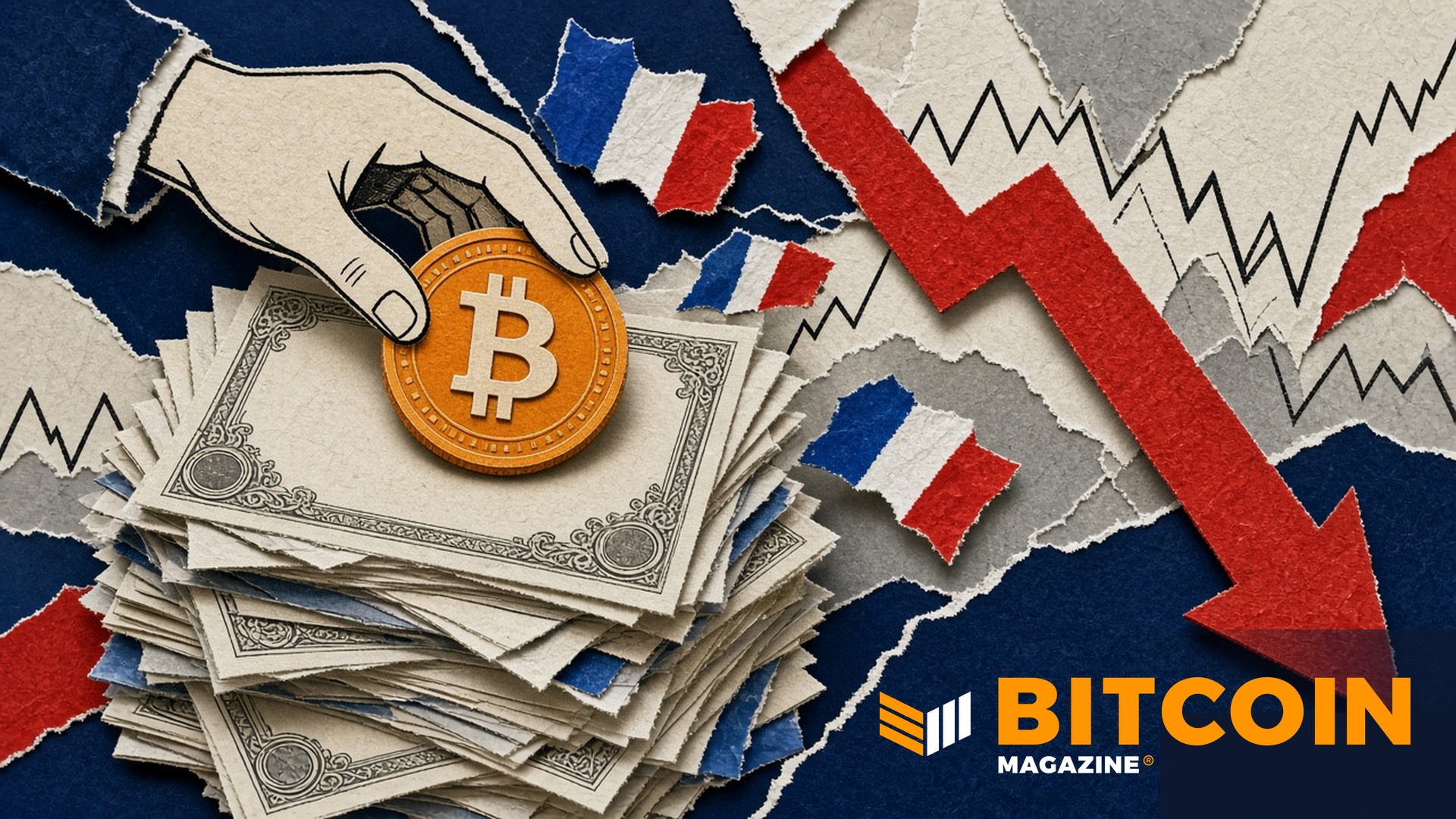
Amundi Boosts Strategy (MSTR) Stake 44% to $291 Million as Shares Slide
Amundi, Europe’s largest asset manager, raised its stake in Strategy (MSTR) by about 44% in the third quarter, a Form 13F filed Nov. 6 shows, lifting the position to 1,903,725 shares worth $291.4 million at Sept. 30 prices.
That is up 579,672 shares from the 1,324,053 Amundi reported at June 30, when the same holding was valued at about $115.1 million. The Paris-based firm managed €2.579 trillion in assets at the end of September, up 11% year over year, and described itself as Europe’s leading asset manager.
The filing lands as MSTR has given back much of its third-quarter run. Strategy shares closed at $153.09 on Sept. 30 and near $126 on Monday, an 18% drop that would put Amundi’s disclosed stake near $239 million at the latest close, Yahoo Finance data show.
A 13F is a snapshot, not a trading diary. Amundi filed a combination report that folds in 17 other managers across its group, so the Strategy line can include client, fund and discretionary positions rather than a single proprietary bet, and the firm may have changed the holding since Sept. 30.
Strategy keeps buying while the stock slides
Strategy itself kept stacking. The company bought another 1,036 bitcoin last week for $81.9 million at an average of $79,012, a Monday 8-K filing and company release show, lifting its treasury to 850,364 BTC acquired for $64.16 billion at an average of $75,456.
That average cost now sits above the spot bitcoin price, leaving the stack underwater on paper even after the firm added 811 bitcoin the prior week. Strategy’s public ledger still ranks it as the largest corporate bitcoin holder, with the stack equal to roughly 4% of bitcoin’s 21 million supply cap.
MSTR roughly doubled during the third quarter itself. The June 30 13F valued Amundi’s then-smaller stake at an implied $86.93 a share, against the $153.09 Sept. 30 close, so the dollar value of the position rose faster than the share count. Since then the stock has tracked bitcoin’s slide into the mid-$70,000s, wiping out a large share of that mark-to-market gain for anyone still holding the Sept. 30 position.
The timing matters because Strategy funds most of its bitcoin buys by selling new MSTR common under an at-the-market program. A weaker share price raises more dilution for every coin purchased, which is the feedback loop that has defined the stock’s moves this year.
Banks loaded bitcoin proxies in the same quarter
Amundi was not the only large European name adding bitcoin exposure on the quarter. Barclays’ own 13F, also filed Nov. 6, shows 3,942,900 shares of BlackRock’s iShares Bitcoin Trust (IBIT) worth $186.7 million at Sept. 30, up 48% from 2,658,147 shares three months earlier, SEC records show.
That Barclays line carries the same caveat: a 13F gathers client, managed and trading book positions, not proof the bank put its own capital into bitcoin. Still, the two filings together sketch the same picture of Q3: traditional European managers kept adding exposure to bitcoin proxies even as the spot market cooled into the fall.
The institutional adds sit against a weaker tape since quarter-end. Bitcoin has slipped into the mid-$70,000s, Strategy stock has followed it down, and the value of Amundi’s disclosed MSTR stake has compressed even as the share count on the filing stayed fixed. At Monday’s close the disclosed stake was about $52 million below its Sept. 30 mark.
Whether Amundi kept buying, trimmed, or simply held through October’s slide will not show up until the next 13F. For now the Nov. 6 filing is the record Europe’s biggest asset manager left: nearly 1.9 million Strategy shares, up 44%, at a $291 million quarter-end mark.
This post Amundi Boosts Strategy (MSTR) Stake 44% to $291 Million as Shares Slide first appeared on Bitcoin Magazine and is written by Micah Zimmerman.
Bitcoin Magazine
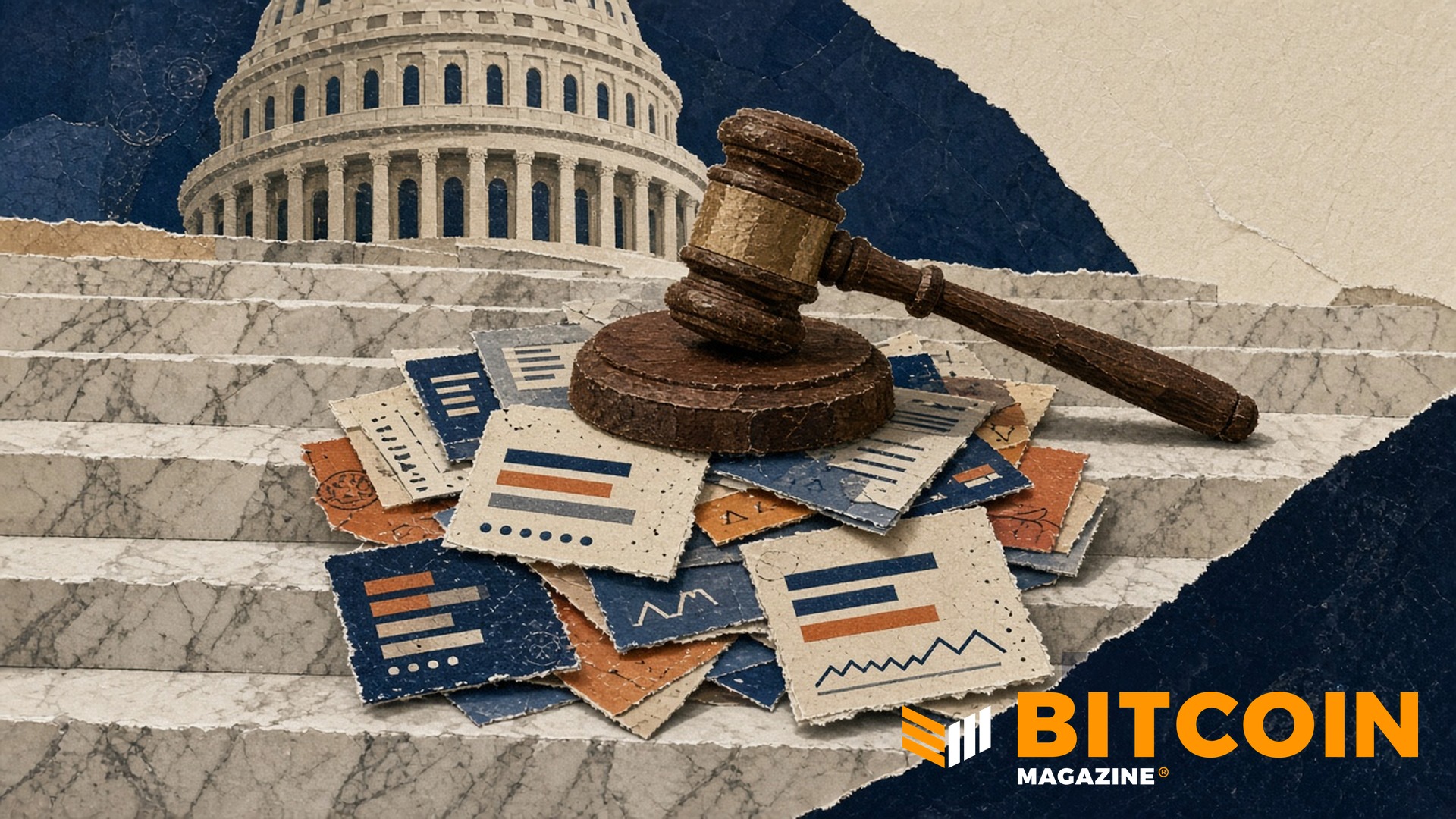
Elizabeth Warren Plans Prediction Market Crackdown as She Prepares to Chair Senate Banking
Sen. Elizabeth Warren plans to crack down on prediction markets once she takes the Senate Banking Committee gavel in January, with a banking aide telling Punchbowl News that Warren would seek to stop the sector’s “Wild West-style lack of oversight.”
The Massachusetts Democrat is poised to chair the panel after Democrats swept both chambers of Congress last week, putting her in charge of a portfolio that covers banking, housing, the Federal Reserve and cryptocurrency. Punchbowl published the aide’s rundown of her agenda on Monday.
Warren intends to use the committee’s investigative powers for oversight of prediction markets and election betting platforms, aimed at insider trading and platform manipulation — the same fight she opened before the midterms.
That earlier push was bipartisan. On Oct. 28, Warren and Sen. John Curtis, R-Utah, wrote to Kalshi CEO Tarek Mansour and Polymarket CEO Shayne Coplan asking how the companies stop candidates, campaign staff and others with material nonpublic information from trading election contracts.
What Warren and Curtis asked Kalshi and Polymarket
“We are particularly troubled by election-related event contracts,” the senators wrote. “Event contracts tied to elections receive prominent coverage and are treated by some observers as indicators of political momentum. There are also documented cases of candidates betting on their own races, which undermines the overall integrity of the American electoral process.”
The letter cited candidates who traded on their own contests on Kalshi, including a February 2026 California gubernatorial race, and pointed to research alleging wash trading and volume manipulation on Polymarket. It also referenced an NPR investigation of campaign insiders who said they traded ahead of polling releases.
“The identification of isolated instances of improper trading does not demonstrate that these markets are adequately protected,” Warren and Curtis wrote. “Instead, it raises serious questions about how much similar activity may be going undetected.” They asked for written answers by Election Day, Nov. 3.
Kalshi’s head of enforcement, Robert DeNault, told Business Insider that the company “proactively blocks candidates and campaign staff from trading to protect market integrity.” Polymarket did not respond to that request for comment.
Crypto sits inside the same Banking gavel
Prediction markets are not a side show for bitcoin readers. Polymarket is a crypto-native venue that settled U.S. access through a CFTC-registered exchange after years offshore, while Kalshi operates as a designated contract market under the Commodity Futures Trading Commission. Both sit in the orbit of the same committee Warren is about to run.
Under Chairman Michael S. Selig, the CFTC has spent 2026 defending those platforms against state gambling laws, suing Wisconsin, New York and others to assert exclusive federal jurisdiction over event contracts on registered exchanges. A Democratic Banking chair targeting what her aide called a Wild West lands as the counterweight to that stance.
Warren has been one of crypto’s sharpest critics on the Hill. She opposed the CLARITY Act market structure bill, which failed a Senate cloture vote 49-50 on Sept. 15, and analysts have argued a Democratic Congress leaves little path for a Republican rewrite. House Democrats are already sketching their own package with a bigger SEC role.
The aide’s broader agenda for Warren also includes affordability legislation, a push to cap credit card interest rates, AI chip export controls, and oversight of Trump administration officials, Wall Street CEOs, Big Tech executives and anyone tied to the Trump family’s crypto ventures.
The test for prediction markets is no longer whether Trump-era regulators will keep clearing the way. It is whether Warren, with subpoena power and the Banking gavel, turns the Kalshi and Polymarket letter into hearings that rewrite how election and event contracts are policed.
This post Elizabeth Warren Plans Prediction Market Crackdown as She Prepares to Chair Senate Banking first appeared on Bitcoin Magazine and is written by Micah Zimmerman.
Bitcoin Magazine
North Korea Is Minting Its Own Meme Coins to Launder Binance Hack Loot
North Korean launderers are creating their own worthless meme coins and pushing stolen Binance funds through them so the coins never move directly from one wallet to another, blockchain analytics firm Elliptic said Monday.
Between Nov. 5 and 7, the operators minted at least six new tokens on the NEAR blockchain — named FUK, OLCCL, MEILI, MMLI, DABI and SINU — paired each with NEAR in its own liquidity pool, then bought the tokens with stolen NEAR and sold them back out through a second set of wallets. About 117,000 NEAR, or roughly $430,000, passed through the six tokens, Elliptic wrote.
The trail sits inside the broader laundering of the Oct. 29 Binance theft, which the exchange has put at $6.34 billion and which the FBI has attributed to North Korea’s TraderTraitor group. Elliptic’s wider update now puts roughly 3,000 BTC — about $225 million — in new bitcoin addresses converted from other stolen assets, while about 11.8 million NEAR, or $43.7 million, from the theft has still not moved.
“Most people think of meme tokens as joke coins whose prices rise and fall on hype,” Elliptic co-founder and chief scientist Dr. Tom Robinson wrote. “North Korea’s launderers have found a different use for them.”
How the homemade token trick works
The technique is a four-step hop. The North Korea launderers create a token with a public launch tool, open a liquidity pool pairing it with a real asset such as NEAR or a stablecoin, buy the new token with stolen funds from one set of wallets, then sell it back into the same pool from a second set of wallets that collect the real asset.
At no point do the stolen funds transfer directly from a buying wallet to a collecting wallet, because the pool sits in between. To a casual observer, the collecting wallets look like ordinary traders who sold a token at a profit.
Each of the six NEAR tokens cost about 25 NEAR, or around $90, to create. Each was traded heavily within hours using stolen NEAR and then abandoned. None has traded since Nov. 8, and that afternoon the creators of four of them withdrew what liquidity was left. Five of the six token creators were funded by a wallet that had just sold an earlier token, between two and 13 minutes before the next launch, so the tokens form a chain.
Elliptic first reported the same approach in the laundering of the February 2025 Bybit theft, also attributed to North Korean group TraderTraitor, when a worthless Tron token helped move at least $24 million. In the Binance case the firm has also seen the technique on Tron and a close variant on Solana that used existing thinly traded tokens rather than homemade ones.
A slowing tactic, not a disappearing act
The meme coins do not hide the funds. Every step is public on-chain. What they buy is time. Each extra hop slows investigators while launderers race to move funds before they are flagged, and at about $90 apiece the tokens are cheap enough to throw away.
That fits the larger pattern Elliptic has tracked since the theft: more than 20,000 wallets on 16 blockchains, at least 36 services and at least 65,000 transactions. Binance has said the attack began with a fake job interview and ran for five months before any coins moved. Blockchain firms linked the breach to TraderTraitor within a day.
The conversion into bitcoin is the bigger dollar story. All of the stolen SOL has already been swapped, bridged or mixed, and much of the XRP route has fed into bitcoin as well. About $2.85 billion of the original haul has been frozen. A negligible amount has likely been cashed out so far, Elliptic said.
North Korea’s crypto theft machine is not new. Elliptic put the North Korean regime’s 2025 haul above $2 billion, driven by the $1.46 billion Bybit exploit, and its cumulative known total above $6 billion even before Binance.
Binance has reopened withdrawals in stages and said it covered customer losses from its own funds. The test for investigators is whether homemade liquidity pools keep multiplying faster than the blocklists catching up to them.
This post North Korea Is Minting Its Own Meme Coins to Launder Binance Hack Loot first appeared on Bitcoin Magazine and is written by Micah Zimmerman.
Bitcoin Magazine
TD Cowen Gives Stablecoin Yield Ban 10% Odds as Banks Plan Push in Democrat-Led Congress
Banks will try again to stop crypto platforms from paying yield on stablecoin balances, but TD Cowen’s Washington analyst Jaret Seiberg puts only a 10% chance on Congress enacting such a ban over the next two years, he wrote in a Monday policy note shared with Bitcoin Magazine and clients.
The issue is whether exchanges and other platforms can offer yield or rewards to investors who keep dollar-pegged stablecoins on their platforms. Seiberg views action as unlikely, though he sees a “narrow path” for a ban.
His rationale is procedural as much as political: it may be easier to find 60 Senate votes on stablecoin yield alone than on the broader crypto market structure bill, which failed a cloture vote 49-50 on Sept. 15 and which he already called effectively dead for this Congress after the Democratic midterm sweep.
A ban, he wrote, would benefit banks. He expects them to renew the push in the next Congress on the theory that Democratic wins open a path.
Why Seiberg still sees a path
That path rests on a shift in the Senate. Key crypto advocates retired or lost, while skeptics are being elevated. Sen. Elizabeth Warren is likely to chair the Banking Committee, and Sen. Sherrod Brown, a longtime critic of the industry, regained his Ohio seat after crypto-backed spending of about $64 million failed to stop him, Seiberg wrote before the votes were counted.
It is not his base case. Crypto politics are “complex,” he wrote, which is why the probability starts at 10%.
Some Democrats will resist treating stablecoin yield outside a broader package. Seiberg again sees no path for the Clarity Act, arguing Democrats will insist on ethics and investor-protection provisions President Trump would reject. That split, he wrote, makes Democrats unlikely to unite behind a yield-only bill.
Democrats are not united on the substance either. Sen. Angela Alsobrooks, a lead Democrat on crypto policy, has backed paying rewards for using stablecoins rather than for passively holding them, a distinction that shaped the Tillis-Alsobrooks compromise text during Clarity talks.
There is also a perception problem. Congress would be asked to stop voters from earning a return on stablecoin holdings even though they can earn one on savings accounts and money market funds. Seiberg questions whether Democratic leaders want a vote that could be framed as taking money from retail investors.
What GENIUS already banned, and what it left open
The fight is leftover business from the GENIUS Act, which President Trump signed on July 18, 2025, as Public Law 119-27. The statute bars permitted and foreign payment stablecoin issuers from paying “any form of interest or yield” solely for holding, using or retaining a payment stablecoin.
It does not explicitly cover exchanges and other intermediaries. That gap is what banks call the loophole. The American Bankers Association and state bankers associations urged Congress late last year to treat platform rewards as banned interest, and the ABA and Independent Community Bankers of America later pressed the Senate to harden Clarity language against balance- and tenure-based rewards. ICBA has warned that yield-bearing payment stablecoins could pull deposits from community banks and cut local lending.
Stablecoins are the main trading pair for bitcoin on most exchanges, so the yield fight lands on how bitcoin markets settle and how platforms attract dollar balances. The OCC’s final GENIUS rules, effective in January 2027, left the third-party rewards question for case-by-case review after banks had hoped the agency would close it.
House Democrats are already sketching their own market structure approach with a bigger SEC role. Seiberg’s note treats a narrow yield ban as the one bank ask that might still clear 60 votes even if Clarity does not.
The reason the odds are not zero, he wrote, is that community banks are effective at arguing that stablecoin yields pull funds out of banks and hurt local lending, and small banks have a record of getting Congress to act. He remains dubious.
The test for the next Congress is whether banks can peel yield off the broader crypto fight, or whether Democratic splits and the retail-investor optics keep the probability where Seiberg put it Monday: one in ten.
This post TD Cowen Gives Stablecoin Yield Ban 10% Odds as Banks Plan Push in Democrat-Led Congress first appeared on Bitcoin Magazine and is written by Micah Zimmerman.
Bitcoin Magazine
BlackRock: Security Fears Are Driving Bitcoin Whales Into IBIT
Large bitcoin holders are swapping coins they guard themselves for shares of BlackRock’s iShares Bitcoin Trust (IBIT) at a record pace, the firm’s head of digital assets said Monday, as kidnappings and hacks push security to the top of their list.
“The current moment is the highest we’ve seen at any point,” Robbie Mitchnick told Barron’s, adding that demand for the swaps “has sort of been one way — up.” Of all the reasons clients give, he said, “the single largest one is security and peace of mind.”
The trades are in-kind conversions. A holder delivers bitcoin to the fund through an intermediary and receives newly created IBIT shares, without first selling the coins for cash. BlackRock relies on Galaxy Digital, Talos and Virtu to handle the transactions, and those firms set the minimum size.
Barron’s put the volume BlackRock has seen at $3.6 billion, noting the real figure could be larger because the firm does not process every conversion itself. Mitchnick cited a bigger number in August, telling Bloomberg that IBIT had facilitated more than $5 billion of such swaps, up from more than $3 billion in October 2025.
In that August interview, BlackRock’s Mitchnick named the threats outright: “People see things happen in the outside world — whether it’s kidnappings, ransom, custody failures — that motivate them to make this switch for all or some of their holdings.”
He told Barron’s the recent Binance hack was not news to big holders. “Most large Bitcoin holders were already acutely aware of the risk of holding on an exchange and in a hot wallet,” he said.
How BlackRock’s swaps became possible
The SEC voted on July 29, 2025, to let spot bitcoin and ether funds create and redeem shares in kind, ending the cash-only structure it required when the funds launched in January 2024.
Access has widened since. BlackRock’s minimum started around $30 million and now hovers between $1 million and $2 million, Barron’s reported.
Taxes are part of the pitch. Converting appreciated bitcoin into IBIT in kind “generally isn’t seen as a sale that would trigger capital-gains taxes,” Barron’s wrote, while Bloomberg cautioned that avoiding an immediate bill depends on the investor’s circumstances. Mitchnick also pointed to estate planning, calling it “much, much simpler” to hold the exposure “within the confines of their private bank.”
Once inside, the coins sit with IBIT’s custodian, an affiliate of Coinbase Prime, in what Mitchnick called an “institutional-grade cold-storage model.” The fund held 795,921 BTC, worth about $60.4 billion, as of Nov. 6.
Why the flow numbers overstate demand
An in-kind creation adds IBIT shares and counts toward the fund’s reported flows, but no bitcoin is bought on the open market. The coins already existed and simply changed wrappers, so headline flow figures overstate new cash.
Cash has been moving the other way. U.S. spot bitcoin ETFs lost about $1.28 billion in the week ended Nov. 6, their worst week since June, and IBIT accounted for about $1.21 billion of that, Farside Investors data shows.
Self-custody under pressure
The fears behind the trade are documented. French authorities have recorded 77 crypto-linked kidnappings, extortion cases and home invasions so far in 2026, more than in all of 2025, the OCCRP reported, citing the national organized crime prosecutor. Reuters reported last year that Ledger’s co-founder lost a finger after being kidnapped with his wife.
The U.S. has its own cases, including a failed Connecticut plot to force a family to hand over bitcoin. Bitcoin security researcher Jameson Lopp maintains a public list of physical attacks on holders dating back to 2014, and the Coldcard bug in August put hardware wallets under scrutiny too.
The shift cuts against bitcoin’s founding pitch of holding money without a bank. Holders who convert give up their private keys for a brokerage claim, trading the risk of guarding coins themselves for reliance on BlackRock, its custodian and the market makers in between.
This post BlackRock: Security Fears Are Driving Bitcoin Whales Into IBIT first appeared on Bitcoin Magazine and is written by Micah Zimmerman.
CryptoSlate
Ng says the transition took months and describes tokenization interests after five years as CFO, without naming a venture.
Read the full story on CryptoSlate
Understand the crypto stories that matter and what to watch next. Get The Catalyst in your inbox
Budget 2026 proposes bringing bank subsidiaries and foreign financial institutions outside Canadian prudential supervision under the Stablecoin Act.
Read the full story on CryptoSlate
Understand the crypto stories that matter and what to watch next. Get The Catalyst in your inbox
The share class announced Nov. 5 represents fund units, while Amundi's release leaves investor access, transfer and redemption terms unspecified.
Read the full story on CryptoSlate
Understand the crypto stories that matter and what to watch next. Get The Catalyst in your inbox
Kevin Hammond’s proposed emergency exceptions would retain governance approval, while the current constitutional draft still forbids the required zero setting.
Read the full story on CryptoSlate
Understand the crypto stories that matter and what to watch next. Get The Catalyst in your inbox
A Nov. 8 ledger snapshot offered just 96.80 EURGH to direct XRP sellers, exposing a conversion limit before GateHub's announced SEPA redemption.
Read the full story on CryptoSlate
Understand the crypto stories that matter and what to watch next. Get The Catalyst in your inbox
CryptoTicker.io
Crypto slang is the jargon of the scene around bitcoin, altcoins and memecoins: abbreviations such as HODL, FOMO or WAGMI that come from forums, Telegram groups and Crypto Twitter and describe price moves, moods and roles in a handful of letters. If you know them, you understand more than just the comments under a sudden price spike; you can also tell when a post is stirring up sentiment rather than informing. This glossary explains 60 terms, sorted by what they are used for in everyday trading talk.
The link to your own portfolio is more direct than it seems. Many of these words surface precisely when prices swing hard, and they are used deliberately to lure buyers in or to stop sellers from leaving. Before you buy a coin on the back of a post full of rocket emojis, it is worth looking at the crypto exchanges with a MiCA licence, because in the EU they are bound by clear rules against market manipulation.
What is crypto slang? Jargon between forums, Telegram and Crypto Twitter
Crypto slang is the informal technical language of the crypto community, mostly English abbreviations, typos and memes that have hardened into fixed terms. Unlike the terminology of financial regulators, which speaks of crypto-assets, issuers and service providers, this jargon grows from the bottom up: one user writes something, others pick it up, and a few months later the word appears in every other comment.
The main sources have been the same for years. The Bitcointalk forum coined the early terms around bitcoin; Reddit, Telegram, Discord and X followed later. The scene on X calls itself “Crypto Twitter”, or CT for short, and is still regarded as the place that sets the pace for new words. From 2021 onwards, NFT collectors brought their own wave of greetings and in-jokes, which memecoin traders on Solana later carried on.
Two features make the slang stand out. It is almost entirely English, even in German-speaking groups, and it is emotional: many expressions describe feelings such as greed, fear and defiance, while hardly any describes a sober metric. That is exactly why it pays to know the words. They reveal what mood a market is in at a given moment, and sometimes also who wants to profit from it.
HODL, diamond hands and paper hands: crypto terms for holding and selling
The oldest and best-known terms revolve around a single question: hold or sell? This is the slang that separates long-term investors from nervous traders.
HODL: Holding on even when the price falls. The term goes back to a post by the user GameKyuubi, who on December 18, 2013 explained on the Bitcointalk forum under the headline “I AM HODLING” why he was not selling his bitcoin despite the price crash. The typo for “holding” was later reinterpreted as “Hold On for Dear Life”. The full story is in our explainer on the meaning of HODL.
HODLer: Someone who acts on this principle and leaves coins untouched for years instead of reacting to short-term swings.
Diamond hands: Investors who do not sell even when sitting on large paper losses. The phrase describes an attitude that refuses to be driven by panic, often with a wink at one's own stubbornness.
Paper hands: The opposite, hands made of paper. This is what the scene calls investors who sell at the first pullback. The term is derogatory and is readily used to talk others out of selling.
Buy the dip: The call to buy more after a price drop because the price supposedly looks cheap. The cruder version is BTFD. What the phrase does not tell you is whether a dip stays a dip or marks the start of a longer downtrend.
DCA: Short for dollar-cost averaging. If you invest a fixed amount at regular intervals, for instance through a savings plan, you buy more coins when prices are low and fewer when they are high.
In Germany, holding has a concrete reason that the slang does not mention. Gains from selling crypto-assets held as private assets are tax-free under Section 23 of the German Income Tax Act (EStG) if more than one year passes between purchase and sale. If you sell earlier, the gain is taxed at your personal income tax rate, provided that all private disposal gains for the year reach the exemption limit of 1,000 euros. In Germany, then, HODL is not just an attitude but often a tax question as well.

FOMO, FUD and cope: sentiment terms in the crypto market
A large part of crypto slang describes feelings. That is no coincidence: crypto markets trade around the clock, prices swing more sharply than on the stock market, and news spreads within minutes. The following terms turn up in almost every market commentary.
FOMO: Fear of missing out. It drives buyers into rising prices, often shortly before a rally ends.
FUD: Fear, uncertainty and doubt. The term refers to negative news or rumours that unsettle investors. It is often used as a blanket response to any criticism, including justified criticism. How both terms relate to the Fear and Greed Index is explained in our article on FOMO and FUD.
Fear and greed: The Fear and Greed Index sums up market sentiment in a single number from 0 to 100. The index from Alternative.me stood at 29 points on November 9, 2026, placing it in the “Fear” zone.
Cope: From the English verb “to cope”. Used mockingly for the excuses someone makes to talk a loss into something better.
Copium: The exaggerated form of cope, a portmanteau of cope and opium. Anyone on copium keeps believing in a quick recovery whatever the numbers say.
Hopium: A relative of copium: pure hope without evidence, for example for a price rally that no news supports.
For investors, these words make a useful thermometer. When FOMO comments and rocket emojis pile up, sentiment is overheated. When FUD and copium dominate, many market participants are sitting on losses. Neither signal is a substitute for a buying decision.

To the moon, ATH and Lambo: crypto slang for rising prices
Rising prices have a particularly large number of names in crypto jargon. Most of them are exaggerated, and that is precisely the point.
To the moon: The expectation that a price will rise sharply. The rocket emoji is the shorthand. Mooning means that a coin is already climbing strongly.
ATH: All-time high, the highest price a coin has ever reached. Its counterpart is ATL, the all-time low.
Pump: A rapid, strong price rise, often without any identifiable news. The opposite is a dump.
Lambo: Short for Lamborghini. The sports car is the symbol of the quick riches that many hope the crypto market will bring. The question “Wen Lambo?” is meant ironically.
Wen: A deliberate misspelling of “when”. “Wen moon?” or “Wen listing?” are impatient questions about the next price jump or the next exchange listing.
10x and 100x: A tenfold or hundredfold return on a stake. Those who advertise with such figures rarely mention the risk of a total loss alongside them.
Flippening: The moment, which has not yet happened, when Ethereum overtakes bitcoin by market capitalisation.
Rekt, liquidation and bagholder: crypto terms for losses
The crash is described just as vividly as the climb. You will hear these terms after every price slump.
Rekt: A corruption of “wrecked”. If you are rekt, you have lost a large part of your stake, usually through a leveraged trade.
Liquidation: The forced closure of a leveraged position when the collateral posted is no longer sufficient. With perpetual futures, that is futures contracts without an expiry date, this can happen within minutes. How trading venues for such contracts differ is shown in our comparison of perp DEXs.
Bagholder: Someone left holding a coin whose price has collapsed and who can no longer get rid of it without a heavy loss. The bags are the pockets full of tokens that have become worthless.
Capitulation: The moment when many investors give up and sell at the same time. It often marks the end of a downward move, but can only be identified with certainty in hindsight.
Bear and bull: A bear market is a longer phase of falling prices, a bull market a phase of rising prices. Bearish and bullish describe the corresponding expectation.
Crab market: A sideways market. Like a crab, the price moves sideways without a clear direction.
Whale, degen and normie: who is called what in the crypto market
The slang also sorts the participants. If you know the roles, you will grasp more quickly who is speaking in a discussion.
Whale: A large investor holding so many coins that their purchases and sales can move the price. Smaller holders are accordingly called shrimps, crabs or fish.
Degen: Short for degenerate. A self-mocking label for traders who take high risks, for instance with new memecoins or heavy leverage.
Ape: To “ape” into a coin means to buy in large size without doing any checks.
Normie: A mocking term for people outside the scene who only know crypto from the news.
OG: Original gangster, meaning a veteran of the scene who was there early on.
Fren and ser: Deliberately mangled versions of friend and sir. Both forms of address reflect the familiar tone in many groups.
Anon: Short for anonymous. Many developers and traders appear only under a pseudonym. Someone who is anon is hard to pin down in a dispute, which investors should bear in mind with new projects.
GM, WAGMI, NGMI and LFG: greetings of the crypto community
Since the NFT boom of 2021, greetings and rallying cries have been part of the standard tone on Discord servers and on X. The formulas create a sense of community, but they also generate peer pressure.
GM and GN: Good morning and good night. The daily greeting with which many accounts signal that they are present.
WAGMI: We're all gonna make it. A rallying cry for weak phases.
NGMI: Not gonna make it. A jibe at someone who is supposedly trading the wrong way, often aimed at sellers.
LFG: Let's f***ing go, an exclamation of excitement at rising prices or fresh news.
HFSP: Have fun staying poor. A condescending retort aimed at sceptics who do not want to buy.
Few: Few understand. The implication is that only insiders recognise the significance of a development.
WAGMI and NGMI in particular show how slang steers behaviour: anyone who sells is quickly branded NGMI. This social control often keeps prices in groups artificially stable until the first large holders get out.
DYOR, NFA and shill: abbreviations around crypto recommendations
Many posts about coins end with an abbreviation designed to deflect responsibility. Reading these acronyms correctly is part of every investor's basic toolkit.
DYOR: Do your own research. The advice is sensible, but it is often tacked onto calls to buy as a fig leaf.
NFA: Not financial advice. The addition is meant to make clear that the author is not providing investment advice. It changes nothing about the content of the post.
Shill: Anyone who aggressively promotes a coin, usually because they are invested themselves or are being paid for it, is shilling. Paid promotion by influencers is also known in the scene as a paid shill.
Alpha: Exclusive information that gives you a head start, for example about an upcoming listing. Paid “alpha groups” promise exactly that, but often deliver nothing more than shills.
CT: Crypto Twitter, the scene on X. Many of the terms explained here originated there.
Bullposting: Posts that deliberately spread expectations of rising prices, often without any evidence.
Rug pull, pump and dump and honeypot: crypto slang for scam patterns
Some crypto slang terms describe not moods but schemes through which investors lose money. If you know these patterns, you are best placed to protect yourself.
Rug pull: Literally pulling the rug out. A project's developers withdraw the liquidity or sell their tokens in one go, and the price falls towards zero.
Pump and dump: A group buys a thinly traded coin, drives the price up with promotion and then sells to the latecomers. In the EU, Article 91 of the Markets in Crypto-Assets Regulation (MiCA) prohibits market manipulation in crypto-assets; in Germany, BaFin is the competent supervisor.
Honeypot: A token whose smart contract allows buying but blocks selling. Buyers see rising prices and cannot get out.
Exit scam: A project raises money and then disappears with the investors' funds.
Ponzinomics: A mocking term for a token model that can only pay returns out of new buyers' deposits.
These patterns are especially common with new memecoins. If you are interested in this part of the market, our memecoins overview tracks projects with ongoing analysis. A total loss remains possible at any time with such tokens.
Sats, gas and airdrop: technical crypto terms in everyday jargon
Part of crypto slang is technical vocabulary that has become colloquial through daily use.
Sats: Short for satoshi, the smallest unit of a bitcoin. One bitcoin consists of 100 million satoshi. The unit is named after the pseudonymous inventor of bitcoin, Satoshi Nakamoto, whose white paper is dated October 31, 2008.
Stack sats: Buying small amounts of bitcoin regularly in order to build up a holding over time.
Gas: The fee charged for transactions on the Ethereum blockchain. It is quoted in gwei; one gwei equals one billionth of an ether.
Airdrop: The free distribution of tokens to wallet addresses, usually as a reward for a project's early users.
Farming: Targeted activity on a network in order to qualify for an expected airdrop or a yield.
Bitcoin Pizza Day: On May 22, 2010, the programmer Laszlo Hanyecz paid 10,000 bitcoin for two pizzas. The day is regarded as the first documented purchase of goods with bitcoin and is celebrated every year.
Halving: The halving of the block reward for bitcoin miners, which happens roughly every four years. It reduces the supply of new coins.
Funds are SAFU and not your keys: crypto sayings with a history
Some sayings come with a backstory that explains more than any definition.
Funds are SAFU: SAFU stands for Secure Asset Fund for Users, an emergency fund that the exchange Binance set up in July 2018 and tops up with part of its trading fees. The phrase became famous in May 2019, when attackers drained 7,000 bitcoin from one of the exchange's hot wallets and Binance announced that it would cover the damage from the fund. Today SAFU generally stands for “the money is safe”.
Not your keys, not your coins: If you leave your coins on an exchange, you legally hold a claim against the exchange, but you have no control over the private keys. Only those who store the keys themselves, for instance in a hardware wallet, have control.
Probably nothing: An ironic comment posted under a piece of news that the writer considers very important.
Touch grass: Go outside and touch some grass: advice for someone who spends too much time in front of price charts.
Crypto slang: know the words and you will spot the sales pitch
The scene's jargon is entertaining, but it is also a tool. Terms such as FOMO, NGMI or HFSP create pressure, while abbreviations such as NFA and DYOR push the responsibility onto you. Three steps help you get practical use out of this glossary.
- Check the trading venue: Only buy coins through providers whose fees and licensing you know. Our comparison of crypto exchanges shows costs and licences side by side.
- Sort out custody: If you want to act on the principle “not your keys, not your coins”, you need your own wallet. Our hardware wallet comparison lists devices for secure storage.
- Document the holding period: Whether your HODL stays tax-free depends on the purchase date of each individual coin. A tool from our comparison of crypto tax software keeps track of the deadlines for you.
(As of November 9, 2026. This article is not investment advice. Prices and fee structures change; check the terms with the provider before you buy.)
Is Coinbase safe? For most people, yes: Coinbase is one of the most heavily regulated crypto exchanges in the world, a listed company on Nasdaq since April 2021, licensed in the European Union under MiCA and supervised by financial regulators on both sides of the Atlantic. There is no known case in which attackers drained Coinbase’s own wallets. The weak spots lie elsewhere: in customer data that leaked through bribed support contractors and suppliers, in phishing scams that use this data, and in the simple fact that crypto on an exchange is held for you rather than by you. This guide shows what protects your Coinbase account, every major incident from 2021 to November 2026, what the insurance really covers, and the steps that make your own account safe.
Coinbase safety: the key facts
- Regulation: in the EU, crypto services come from Coinbase Luxembourg S.A., licensed under MiCA since 20 June 2025 and supervised by Luxembourg’s financial regulator CSSF. In the US, Coinbase holds state money transmitter licences and received conditional approval for a national trust charter from the OCC in April 2026.
- Custody: Coinbase says it holds customer assets 1:1 and does not lend them or act with them without your permission.
- Insurance: crime insurance protects a portion of the digital assets in Coinbase’s storage systems against theft. Crypto is not covered by the FDIC or SIPC.
- Incidents: no hack of Coinbase’s wallets, but several data incidents, the largest in May 2025 with 69,461 affected customers, and two fines from the Central Bank of Ireland.
- Your part: most stolen funds are lost through phishing and fake support calls. A security key or passkey, a unique password and a hardware wallet for long-term holdings close most of these gaps.
For fees, the product range and our rating, read our Coinbase review. Here the question is safety alone.
Is Coinbase legit? Licences, regulators and the public company behind it
A crypto exchange is a platform that buys, sells and holds crypto assets for its customers. Whether it is safe starts with who supervises it, because a licence obliges the firm to keep customer assets separate, to monitor transactions under anti money laundering rules and to report to a regulator that can fine it. Coinbase is not one company but a group of licensed entities, each responsible for a different part of the service.
| Entity | Regulator | What it covers | Status November 2026 |
|---|---|---|---|
| Coinbase Luxembourg S.A. | CSSF, Luxembourg | Crypto services in the EU | MiCA licence since 20 June 2025, valid across the EU |
| Coinbase Ireland Limited | Central Bank of Ireland | Euro balances as electronic money | E-money institution; fined 3,252,618 euros for safeguarding breaches (October 2026) |
| Coinbase Europe Limited | Central Bank of Ireland | Crypto services from Ireland, 2021 to 2025 | Fined 21,464,734 euros for transaction monitoring failures (November 2025) |
| Coinbase, Inc. | US state banking departments | Crypto and dollar balances in the US | State money transmitter licences, regular examinations |
| Coinbase National Trust Company | OCC, United States | Federal custody and fiduciary services | Conditional approval, April 2026 |
| Coinbase Global, Inc. | SEC, United States | Parent company | Listed on Nasdaq (COIN) since April 2021 |
Sources: Central Bank of Ireland (press release of 6 November 2025), our reports on the Coinbase Ireland fine and the OCC approval, and the Coinbase help centre on US licences.
As a public company, Coinbase publishes financial statements every quarter and is audited once a year by an independent third party, as the law requires for listed firms. That does not make the exchange risk free, but it means losses, incidents and lawsuits have to be disclosed. The two Irish fines show both sides: the supervision works, and it found real weaknesses. In the larger case, from 23 April 2021 to 19 March 2025, 30,442,437 transactions worth more than 176 billion euros were not fully and properly monitored, about 31 percent of Coinbase Europe’s transactions in that period. In the smaller case, Coinbase Ireland broke its duties to safeguard client funds between November 2020 and August 2025. In the safeguarding case the regulator alleged no loss of client money, and Coinbase settled both cases.
Key security features: how Coinbase protects your account
The Coinbase security model has two layers. The first protects the platform: encryption at the core of its systems, a security team that watches for misuse, which is how the contractor cases below were found, and a Bug Bounty programme that pays researchers for reporting vulnerabilities. The second protects your Coinbase account, and here you decide how strong it is. According to the Coinbase help centre, these are the most important security measures:
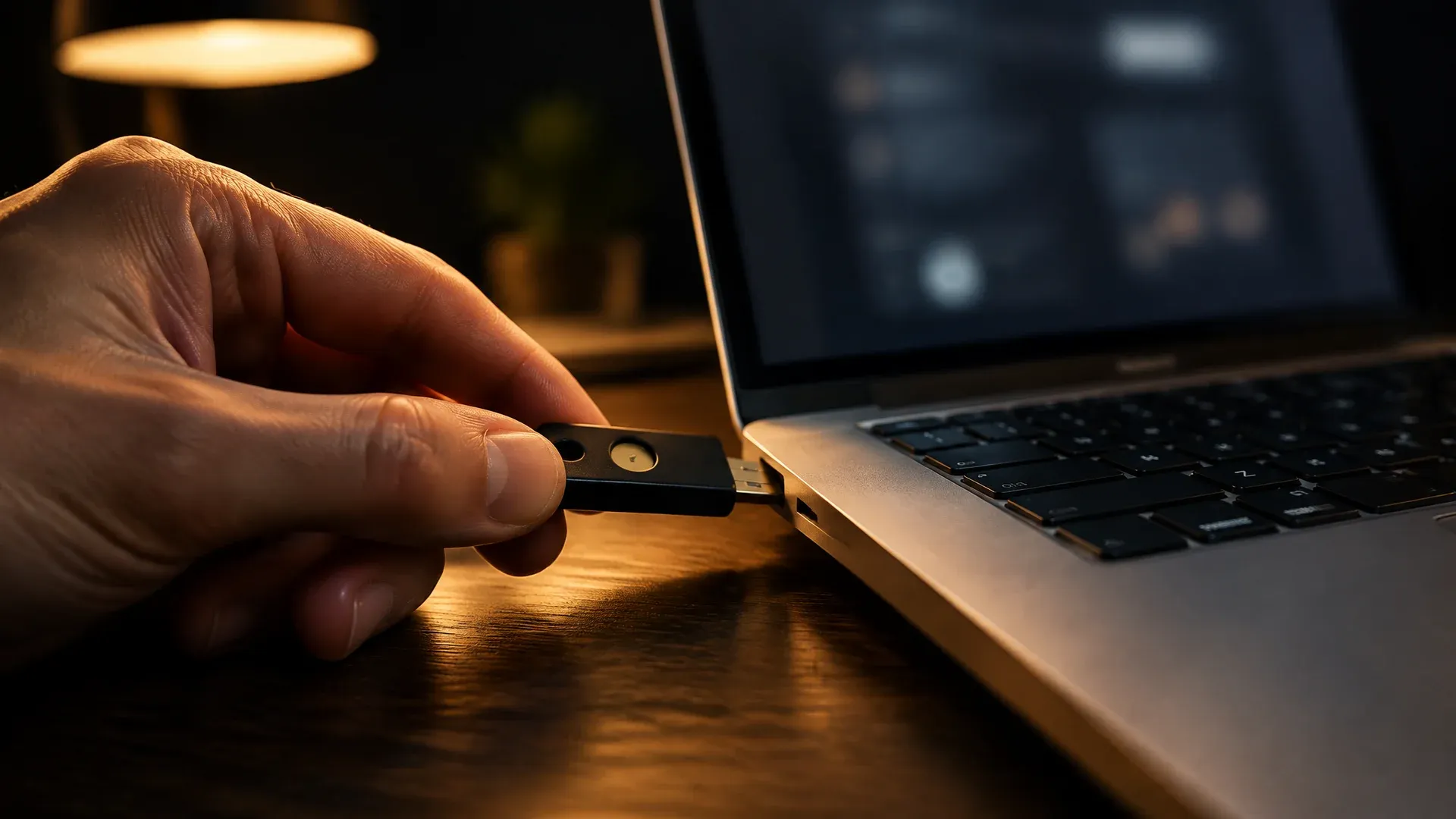
- Two factor authentication (2-step verification): every login needs a second factor besides the Coinbase password. Coinbase recommends a security key or a passkey, because both are bound to the real Coinbase website and cannot be phished like a code sent by SMS. Security key support covers hardware keys such as YubiKey.
- PIN and biometric authentication: the mobile app can be locked with a PIN, Touch ID or Face ID, so a stolen, unlocked phone does not open your account.
- Devices and sessions: under the security settings you see every authorised app, all web sessions and confirmed devices, and you can remove any of them at once.
- Email confirmation: new devices are confirmed by email, which is why your email account needs the same protection as your Coinbase account.
- Password rules: at least eight characters with upper and lower case letters, a number and a symbol. A password manager creates and stores a strong password that you use nowhere else.
Coinbase employees will never ask for your password. Coinbase also never asks for your 2FA codes and never asks you to move crypto to a new address or another account. Anyone who does is not Coinbase, whatever the caller ID shows.
What is protected: 1:1 custody, crime insurance and your bank account balance
On the Coinbase security page the exchange states that it holds customer assets 1:1: your crypto is your crypto, and Coinbase does not lend it out or act with it without your permission. This matters because the collapse of FTX in 2022 happened exactly where an exchange used customer deposits for its own business.
The insurance is narrower than many users think. According to Coinbase, crime insurance protects a portion of the digital assets held across its storage systems against theft, including cybersecurity breaches. Total losses may exceed what the insurance pays, and the policy covers a breach of Coinbase’s systems, not the loss of your own account to a phishing scam. Crypto assets are not insured by the FDIC or SIPC and may lose value.
Cash is treated differently, depending on where you live:
- US dollars: Coinbase keeps customer dollars in FDIC insured bank accounts, credit union accounts and short term investments such as US Treasuries. Through pass-through insurance, a customer’s deposits are protected up to $250,000 per insured bank if that bank fails, together with any money the customer holds at the same bank directly.
- Euros: a euro balance in the EU is not a bank deposit but electronic money issued by Coinbase Ireland. The firm must keep it safeguarded and separate from its own money. This is exactly the duty the Central Bank of Ireland found breached in October 2026.
Has Coinbase been hacked? Every major incident from 2021 to 2026
When people ask whether Coinbase has been hacked, they usually mean one of two things: an attack on the exchange’s wallets, or an attack on customers and their data. The first has not happened at Coinbase. The second has, several times, and the pattern is clear: the data leaves through people and suppliers around the exchange, then criminals use it to call or email customers with great precision.
| Date | What happened | Affected users | Customer assets |
|---|---|---|---|
| March to May 2021 | Attackers abused a flaw in Coinbase’s SMS account recovery to take over accounts | At least 6,000 customers | Coinbase reimbursed the affected customers |
| February 2023 | An employee’s login was stolen through SMS phishing | Limited employee contact data | No customer funds affected |
| December 2024 to May 2025 | Bribed support contractors outside the US copied customer data; Coinbase refused a ransom of $20 million | 69,461 customers | No access to passwords, private keys or 2FA codes; Coinbase reimbursed customers tricked into sending funds |
| December 2025, disclosed February 2026 | A contractor improperly accessed customer information | About 30 customers | No confirmed loss; identity theft protection offered |
| 8 May 2026 | Outage of more than five hours after a physical failure at an AWS data centre | All users, no trading | No cyberattack, no loss reported |
| 28 October 2026 | Analytics vendor Amplitude exposed email addresses and phone numbers | Some customers | Passwords, keys, balances and transaction histories untouched |
Sources: Coinbase’s Form 8-K of 14 May 2025, the breach notice to the Maine Attorney General, BleepingComputer (3 February 2026) and our reports on the AWS outage and the Amplitude breach.
The incident of May 2025 is the one that matters most for the question whether Coinbase is safe. Criminals paid support agents to photograph customer records and then demanded $20 million from Coinbase to keep quiet. In its statement Coinbase refused, fired the agents involved, set up a reward fund of $20 million for information leading to the attackers and promised to reimburse customers who had been tricked into sending crypto to the scammers. The customer data in the leak included names, addresses, phone numbers, email addresses, the last four digits of Social Security numbers, masked bank account details, images of identity documents and account balances. Coinbase estimated the cost of remediation and reimbursement at $180 million to $400 million. Login credentials and private keys were not part of it, which is why the exchange itself was never at risk. Its customers were, because whoever holds such data can call you, quote your balance and sound exactly like Coinbase support.
What the Binance hack means for Coinbase users
On 29 October 2026, attackers drained Binance’s hot wallets. Blockchain analytics firm TRM Labs counted $6.36 billion leaving Binance wallets on ten blockchains, most of it within about 20 minutes, and attributes the attack with high confidence to TraderTraitor, the North Korean unit the FBI also blamed for the Bybit hack (details in our report on the Binance hack). Coinbase was not the target. The lesson still applies to every crypto exchange: hot wallets are wallets connected to the internet so that withdrawals can be paid out quickly, and they are the part an attacker aims for. What protects you is an exchange that keeps only a small share of customer assets in hot wallets, insurance for that share, and your own decision how much you leave on any exchange at all.
Where the real risk sits: phishing scams, SIM swaps and fake support
For a normal Coinbase user the greatest danger is not a hack of Coinbase’s systems but a stolen account. The methods are always the same three:
- Phishing scams: fake emails, text messages and search ads that lead to a copy of the Coinbase login page. Whoever types the Coinbase password and the 2FA code there hands both to the attacker in real time. Stolen logins from other online accounts are tried on Coinbase as well, which is why a password you reuse elsewhere is a risk.
- SIM swaps: the attacker persuades your mobile carrier to move your phone number to a new SIM card and then receives your SMS codes. A security key or passkey ends this attack, because neither depends on your phone number.
- Fake support and remote access: a caller who knows your name, address and balance warns you of a hack and asks you to move your crypto to a “safe” address or to install a remote access tool. Coinbase never does this. Malware such as keyloggers and remote access trojans can also steal login credentials from an infected computer.
Since the leaks of 2025 and 2026, these approaches are more convincing than before, because the criminals often work with real customer data. The defence is simple: never act on an inbound call or message, close it, open the Coinbase app yourself and check there.
Step by step: how to make your Coinbase account more secure
- Use a unique, strong password from a password manager, used nowhere else.
- Switch 2-step verification to a security key or passkey and remove SMS as a method once the key works.
- Protect your email account with its own security key or authenticator app, because Coinbase confirms new devices by email.
- Turn on PIN and biometric authentication in the Coinbase app.
- Check your sessions and confirmed devices once a month and remove anything you do not recognise.
- Keep your operating system and browser updated and install apps only from the official stores.
- Treat every inbound call as a scam. Coinbase support never calls to ask you to move funds, share codes or install software.
- Move long-term holdings to a hardware wallet and leave on the exchange only what you plan to trade.
If you notice unauthorised transactions or a login you do not recognise, lock your account at once through Coinbase’s account recovery and help pages, change your Coinbase password and email password, and report the case to Coinbase customer support from inside the app.
Is Coinbase Wallet safe? Exchange account versus self custody
Coinbase offers two very different products, and the answer to “is Coinbase safe” differs for each. The Coinbase exchange account is custodial: Coinbase holds the private keys for you, you log in with email, password and 2-step verification, and if you lose access, Coinbase can restore it after identity verification. Coinbase Wallet is a self custody wallet: the private keys are created and stored on your own device, not on Coinbase servers, and only you can move the coins. Instead of a password reset there is a 12 word recovery phrase. Whoever has it controls the wallet, and whoever loses it without a backup loses access for good.
That shifts the risk. A self custody wallet is not affected if Coinbase’s systems or Coinbase employees are compromised, and Coinbase cannot freeze it. In return you are solely responsible: there is no insurance, no reversal of a transaction sent to the wrong address, and the most common losses come from a recovery phrase typed into a fake website or from approving malicious smart contracts on the decentralized web. Keep the recovery phrase offline on paper or metal, never as a photo or in cloud storage, and read every approval before you sign it.
Is it safe to keep money on Coinbase? Exchange, wallet app and hardware wallet compared
| Coinbase exchange account | Coinbase Wallet (app) | Hardware wallet | |
|---|---|---|---|
| Who holds the private keys | Coinbase | You, on your phone or browser | You, on an offline device |
| Lost login or device | Account recovery through identity verification | Only with the recovery phrase | Only with the recovery phrase |
| If Coinbase is hacked or fails | Your assets depend on Coinbase’s custody | Not affected | Not affected |
| Main threat | Phishing of your login, stopped by a security key | Stolen recovery phrase, malicious contracts, malware | Lowest: every transaction is confirmed on the device |
| Insurance | Crime insurance for a portion of the assets in Coinbase’s storage | None | None |
| Best for | Buying, selling, trading | Apps, DeFi and NFTs | Long-term holdings |
The practical answer for most people is a combination: keep on the exchange what you trade and move what you hold for years to a hardware wallet. A hardware wallet stores the private keys offline and signs every transaction on the device itself, so neither a hacked computer nor a phishing page can move your coins without your confirmation on its screen. Coinbase Wallet supports Ledger devices for this. How such a device works is explained in our guide What is a hardware wallet?, and current models with prices are in our hardware wallet comparison.
For the crypto you leave on an exchange, the EU adds a layer of protection that did not exist before 2025: under MiCA, an exchange that holds crypto for its customers must keep it legally separate from its own assets, so that creditors cannot claim it if the firm becomes insolvent (Article 75 of the MiCA Regulation). This is a duty Coinbase Luxembourg has to meet for its EU customers, and the reason why a MiCA licence is the first thing to check at any crypto exchange.
Is Coinbase safe, and what does it cost? Fees for a $1,000 purchase
Safety and price come together at Coinbase: the exchange is regulated and well protected, but not cheap. On Coinbase Advanced, the order book for trading, the trading fee at the entry level is 0.6 percent, which is $6 on a purchase of $1,000. The simple buy button in the app costs more, because Coinbase adds a fee that depends on the payment method, up to 1.875 percent, plus a spread built into the price. All routes, with withdrawal and staking costs, are in our guide to Coinbase fees.
Our verdict: is Coinbase safe?
Coinbase is a safe crypto exchange by the standards that can be measured: MiCA licence in the EU, supervision in the US, 1:1 custody, a listed parent company that has to disclose incidents, and no known theft from its own wallets. Its record on customer data is weaker, and the fines from Ireland show gaps in compliance. For you this means: Coinbase is a sound place to buy and trade crypto, provided you protect your Coinbase account with a security key, treat every call claiming to be Coinbase support as a scam, and keep long-term holdings in self custody.
If you decide on Coinbase, you can open an account at Coinbase and set up the security key right after sign up. If you want to compare first, our comparison of regulated crypto exchanges lists the MiCA licensed alternatives with their fees, and our Kraken review covers the closest competitor.
Solscan is a free search engine for the Solana blockchain: you enter a wallet address, a transaction signature or the name of a token and see in real time what has happened there. That lets you establish whether a transfer has arrived, what fee it cost, which tokens an address holds and whether a token is the original or a copy. You do not need an account, and Solscan itself cannot move any coins.
The technical term for such a tool is block explorer: a website that reads in all the data of a blockchain, organises it and makes it searchable. Solscan launched in 2021, said it had more than three million monthly users at the time of its acquisition and has belonged since January 2024 to Etherscan, the best-known explorer for Ethereum, as Blockworks reported at the time. If you hold SOL, USDC or a memecoin on Solana, you will need Solscan at the latest when a payment gets stuck or an exchange asks for proof of a deposit. Our comparison of crypto analytics platforms shows which tools are useful beyond the explorer itself.
What is Solscan? The block explorer for the Solana blockchain
Every transaction on Solana ends up in a block, and every block is public. A validator, meaning a computer that checks transactions and produces blocks, stores this data, but in a form that is barely readable for humans. Solscan translates it into pages with fields, amounts and timestamps. The explorer is therefore a reading device: it shows what has happened on the network, but it cannot reverse anything, block anything or recover lost coins.
For newcomers, the key point is the difference from a wallet. A wallet such as Phantom or Solflare manages your keys and signs transactions. Solscan, by contrast, knows no keys and requires no connection to your wallet. If a site posing as Solscan asks for your seed phrase or wants a wallet connection, it is not genuine. The explorer's only address is solscan.io. A Google search for the name also brings up pages on other domains calling themselves "Official Site"; you are better off not clicking on such results.
For day-to-day use, the website is enough. Anyone who needs data in larger quantities, for example for their own dashboard, can access the same blockchain data for a fee through the Solscan Pro API. According to the help pages, there is now also a command-line tool and an interface for AI agents. For private investors this is irrelevant.
The Solscan search bar: signature, address, token and domain
Everything starts with the search bar at the top of the home page. Solscan recognises on its own what you have entered:
- Transaction signature: a long string of around 88 characters that uniquely identifies each transaction. On Ethereum, the equivalent is called a transaction hash.
- Address: a string of 32 to 44 characters in Base58 format. This can be a wallet, a token account, a program or a token's mint address.
- Token name or ticker: Solscan suggests matching tokens, often including several with the same name. More on that later, because this is exactly where fakes lurk.
- Domain: Solscan resolves Solana Name Service names ending in .sol to the underlying address.
- Project or exchange: if you enter the name of a large exchange, the search shows addresses that Solscan has assigned to that name.
You will find the signature in your wallet, usually via the detail view of a transaction and a "View on Solscan" link. Exchanges often call it the TxID for withdrawals. If you copy it in full into the search bar, you land directly on the transaction page.
Reading a transaction on Solscan: signature, slot, status and fee
The transaction page is the most important view. At the top is an overview whose fields are described one by one in the Solscan documentation. The most important ones, in the order in which you check them:
- Result: Success or Failed. Only "Success" means that the transfer or swap was actually executed.
- Confirmation status: "Finalized" means that enough validators have confirmed the block and the transaction will no longer be rolled back. If it still says "Confirmed", it has almost certainly gone through but is not yet final.
- Block: the slot number. A slot is the time window in which a validator may produce a block; on Solana it lasts about 400 milliseconds.
- Timestamp: the time of processing. Solscan shows either the elapsed time or the date and time.
- Signer: the address that signed and paid for the transaction.
- Fee: the fee paid in SOL.
The fee consists of a base fee per signature and an optional priority fee. On September 28, 2026, a simple SOL transfer cost 5,000 lamports, or 0.000005 SOL, according to our guide at the time; a lamport is the smallest unit of a SOL, and one billion of them make one coin. Our guide to Phantom Wallet, Solscan and the cost of a Solana transfer explains in detail how the costs are made up and why a small amount of SOL is also locked up the first time you receive a token.
One point surprises many users: a failed transaction also costs the fee. The network processed it; only the intended result did not materialise. If the Result field says "Failed", your balance is unchanged apart from the fee, and you can start the process again.

Instructions and TX Map: what happens inside a Solana transaction
Below the overview comes the "Main Actions" section. It summarises what the transaction did, for example "Transfer 2 SOL to …" or "Swap 100 USDC for 0.6 SOL on …". For a quick look, that is enough. If you want to know in more detail what happened, open the instructions.
A Solana transaction consists of one or more instructions. Each instruction calls a program, meaning a smart contract, and names the accounts that are read or changed in the process. A simple swap on a decentralised exchange can thus consist of five or more instructions: setting a priority fee, creating a token account, swapping via an aggregator, returning surplus amounts. Solscan shows each instruction with the program called, the accounts involved and the data. For non-specialists, Solscan itself recommends leaving these details collapsed.
The TX Map is more helpful. The map draws the path of the values as a flow: which token went from which address, in what quantity, to which address. For swaps across several liquidity pools, this is often the only way to see at a glance where your money has travelled. With a free Solscan account, you can also add your own note to any transaction, such as "Purchase via exchange X", which helps later at tax time.
Wallet address on Solscan: SOL balance, token accounts and history
If you search for a wallet address, Solscan first shows the overview: the SOL balance with its current value and, below it, all SPL tokens that the address holds. SPL is Solana's token standard, comparable to ERC-20 on Ethereum. Below that are tabs for transactions, SOL movements and token transfers, each with signature, block, time, sender, recipient and amount.
One Solana quirk belongs here. Tokens do not sit directly on your wallet address but in a separate token account for each token, which belongs to your address. Solscan calls this account the "Associated Account", and your wallet address appears there as the "Authority" or "Owner". If someone sends you a token you have never held before, the wallet or the sending program creates this account automatically. That is why you sometimes see a "Create Associated Account" instruction in your history that you did not trigger yourself.
In practice, this means that if you want to check whether a USDC payment has arrived, you search for your wallet address and open the token transfers tab. You only need the token account address if an exchange explicitly asks for it. Our comparison of software wallets shows which wallets handle Solana well and how they display token accounts.
A Solscan account also lets you set up a watchlist: you store addresses, such as your own wallets, and get notified of movements. This does not replace your wallet's security features, but it makes unexpected outflows visible more quickly.
Token page on Solscan: mint address, supply and holder distribution
Every token on Solana has a mint address. This address is its unique ID: anyone can choose a name, ticker and logo freely, but not the mint address. On the token page, Solscan shows this address at the top, along with the price, market capitalisation, total supply, meaning the number of all units issued, and the number of holders.
Below are three tabs that are useful for your own due diligence:
- Transfers: the token's most recent movements with block, time and instruction. Sudden large sales show up here first.
- Holders: the largest holders with token account, owner address, share of supply and value. If 40 or 50 percent sits with a few addresses that belong to neither an exchange nor a liquidity pool, that is a warning sign of the risk of a sudden sell-off.
- Analysis: a chart of the number of holders over time and a pie chart showing how much the top 10, 20, 50 or 100 addresses hold. Alongside it, Solscan lists the trading venues where the token is traded, with pair and trading volume.
The holder list needs context. A large address may be an exchange wallet holding the coins of thousands of customers, or a pool on a decentralised exchange. Solscan marks many such addresses with a label. If the label is missing, the concentration is not automatically harmless.
Mint authority and freeze authority: the rights behind every SPL token
Two fields on the token page say more about a token's risk than any price chart. The mint authority is the address that is allowed to create new tokens. If it is set, the holder can increase the supply at any time and thereby dilute the value of all existing tokens. With many memecoins, this right is given up after launch; Solscan then no longer shows an account in this field.
The freeze authority can freeze token accounts. Holders of a frozen account can neither send nor sell their tokens. With regulated stablecoins such as USDC, this right is deliberately set because the issuer wants to be able to block stolen or sanctioned funds. With an unknown token without an issuer, there is usually no good reason for it. A token with an active freeze authority and an anonymous team is one of the familiar patterns behind traps in which purchased tokens can no longer be sold.
You can read both values in a few seconds. For a purchase that does not take place on a regulated exchange, this is the first check, even before looking at price or market value.

Fake tokens and address poisoning in your Solscan history
On Solana, creating a token with any name you like costs a few cents. Accordingly, there are many copies of well-known names. If you search for "USDC" on Solscan, several results appear. Circle's genuine USDC has the mint address EPjFWdd5AufqSSqeM2qN1xzybapC8G4wEGGkZwyTDt1v. Any other token with the ticker USDC has nothing to do with the stablecoin. The safe habit is therefore to copy the mint address from an official source of the project and compare it with Solscan, never relying on name and logo alone.
A second scam is called address poisoning. Fraudsters send you tiny amounts or worthless tokens from an address whose beginning and end resemble your own or a frequently used address. The aim: the next time you send funds, you copy the wrong address from your history. On Solscan, you can recognise such entries by unknown senders, tiny amounts and often tokens with enticing names. You should therefore copy recipient addresses from your address book or directly from the exchange, never from your transaction history.
Labels on Solscan: exchanges, projects and flagged hacker addresses
Many addresses carry a label next to them. Solscan assigns these according to a fixed order of priority: first a name from the Solana Name Service, then a project name, then an exchange name, then a flag as an exploiter or hacker, and only after that its own behavioural categories. These are based on an address's behaviour, such as the number of its NFT purchases or its swap volume, and range from beginner to frequent trader.
Labels are useful, but they are not a seal of approval. An exchange label shows that Solscan attributes the address to an exchange; it says nothing about whether the exchange is licensed in Germany. A hacker flag helps to trace outflows after a known attack. If a label is missing, it only means that Solscan does not know the address. With your own account, you can also add private labels that only you can see.
Home page and dashboards: TPS, DeFi and NFT activity on the Solana network
If you open Solscan without a specific search, you land on a home page with network-wide metrics that update in real time. At the very bottom, the blockchain explorer shows the TPS, meaning transactions per second, and the average ping time over various periods. Next to it is a figure called True TPS. It counts only actions that users have signed themselves and leaves out validators' voting transactions, which make up a large part of network activity. True TPS is therefore the more meaningful figure for gauging how heavily Solana is actually used.
Above that are two dashboards. The NFT dashboard shows the most popular collections of the past 30 days, and the DeFi dashboard shows trading volume and its distribution across the major decentralised exchanges and protocols. For traders and investors, this is a quick overview of where activity and capital are moving in the ecosystem; it is not a buy recommendation. In the Blockchain tab, Solscan also lists the latest blocks with slot, blockhash, number of transactions and the validator that produced the block, together with its SOL reward. If you want to delegate SOL to a validator by staking, you will also find a list of validators there as a starting point for comparison.
Programs on Solscan: smart contracts with an upgrade authority
On Solana, programs are what are called smart contracts on Ethereum. The program page on Solscan shows whether the program is executable, whether it may be changed later and which address holds this upgrade authority. The holder can replace an upgradeable program at any time. For large protocols this is standard and usually secured by multi-signature arrangements; for small projects it is a risk you should know about before depositing money.
Below that, Solscan lists the transactions that have called the program and, for programs built with the Anchor developer framework, the interface description. For investors, this section is mainly of interest if they have granted an approval to a decentralised application and want to know which program is behind it. For reading gas, logs and contract code on Ethereum, our Etherscan guide is the counterpart.
Solscan CSV export as evidence for your crypto taxes
For tax purposes in Germany, Solscan is a record, not a calculator. Gains from selling or swapping cryptocurrencies are taxable under Section 23 of the German Income Tax Act if less than a year passes between purchase and sale. Every swap on Solana counts as the sale of one token and the purchase of another and restarts the holding period. If you swap a lot on Solana, you quickly accumulate dozens of taxable events.
Solscan offers a CSV export for this. According to the help page, you open the page for your address, select "Export CSV" in the Transfers or token holdings tab, set the transaction type and period and confirm a CAPTCHA. If the download breaks off, a shorter period helps. According to the same help page, the export only contains data from July 7, 2021 onwards.
The file does not replace a tax calculation. The export shows movements, but no acquisition costs in euros and no order of consumption across several wallets. If your coins sit on several exchanges and wallets, the order in which you bought them applies; our article on the FIFO method across multiple exchanges and wallets explains how the German tax office sees this. It is more practical to import the address directly into a tax tool that supports Solana; the Solscan file then serves as a cross-check and as evidence if the tax office asks. Our comparison of crypto tax tools shows which programs reliably import Solana addresses.
Solscan, Solana Explorer and SolanaFM compared
Solscan is not the only explorer for Solana. The Solana Explorer at explorer.solana.com comes from the circle of the network's developers and presents the raw data more plainly, with fewer labels and no market data. It is useful as a second opinion when Solscan shows a transaction with a delay or a page fails to load. SolanaFM is another independent explorer with its own presentation of instructions.
All explorers read the same blockchain. If two explorers differ, this is due to delays in reading in the data or to the way it is presented, never to different data on the network. For investors, Solscan is usually the first choice because of its token pages, holder analysis and CSV export, with Solana Explorer second.
All of them share one limit: an explorer shows what has happened on the blockchain. What happens inside an exchange, such as a purchase on the trading venue or a transfer between customer accounts, cannot be seen on Solscan. Only a withdrawal to your own address appears there.
Solscan: the signature is the proof of every Solana payment
Whether a payment is stuck, a token looks suspicious or the tax office asks for evidence: with the signature, the address and the mint address you can answer most questions yourself. Three steps make you independent of customer support:
- Buy through a vetted provider: if you are buying SOL or USDC, it is best to start with an exchange licensed in the EU and only then withdraw to your own address. Our comparison of crypto exchanges shows which providers are suitable.
- Store with oversight: use a wallet that displays Solana tokens and their mint addresses clearly, and add your own addresses to the Solscan watchlist. You will find suitable wallets in the software wallet comparison.
- Keep records for tax: export the CSV file for each address once a year and reconcile it with your tax tool. Suitable programs are listed in the comparison of tax tools.
(As of November 9, 2026. This article is not investment advice. Prices and fee structures change; check the terms with the provider before you buy.)
Noticeably less is moving on the Dogecoin blockchain. The record shows that from November 6 to 8, an average of 7.96 billion DOGE a day passed across the network, against 12.62 billion in the week of October 10 to 16. That is a 37 percent decline, measured in coins and therefore independent of the price. Our assessment follows further down: the figures point to fading interest rather than an imminent sell-off.
The analysis is based on block data for all 42,351 blocks produced between October 10 and the evening of November 9, retrieved from the blockchain database Blockchair. For each calendar day we counted the sum of all outputs, the number of transactions, the fees and the miners' reward. cryptoticker.io compiled this analysis itself on November 9, 2026.
Dogecoin news for November 9: 7.96 billion instead of 12.62 billion DOGE a day
The sum of outputs is the simplest measure of how much value is being shuffled back and forth on a blockchain. It also includes change returned to the sender and therefore overstates real trading volume. It still works for comparing two periods, because the error is the same size in both.
In mid-October the figure never fell below 11.3 billion DOGE on any day, and on October 16 it reached 15.55 billion. Since then the line has been falling, with occasional spikes. On November 2, a total of 15.95 billion DOGE changed hands once more; after that it went downhill: 9.36 billion on November 6, 6.66 billion on November 7, the lowest reading of the past 31 days, and 7.86 billion on November 8. By late Monday evening, 8.36 billion DOGE had been recorded in 1,289 blocks, with the day not yet complete.
Measured in dollars, the decline is even steeper
Converted into dollars at the prevailing price, the daily total shrinks from an average of $1.06 billion in mid-October to $570 million from November 6 to 8, a fall of 46 percent. The price explains the gap to the 37 percent measured in coins: according to CoinGecko, Dogecoin traded at $0.0700 on Monday evening, 18.7 percent below its level 30 days earlier. Monday's intraday low was $0.0679.
Why activity on the Dogecoin blockchain has dropped
Block data cannot reveal a single cause, but it does show several traces. The first leads to the broader market. Bitcoin lost 9.7 percent over the same 30 days and cost $75,223 on Monday evening. Dogecoin therefore fell almost twice as hard as the largest cryptocurrency. When prices fall, traders move fewer coins between exchanges, and it is precisely these transfers that make up a large share of the total on Dogecoin.
The second trace is sentiment. The Fear and Greed Index from alternative.me stood at 29 points on Monday, in fear territory, after 28 on Sunday. Our overview of the Fear and Greed Index shows the trend. In phases like this, holdings tend to sit in wallets rather than being moved.
The third trace concerns the companies around the coin. The Dogecoin Foundation ended its exclusive brand agreement with House of Doge, and 21Shares parted ways with the partner for its TDOG ETF. We covered both on October 25 and November 6. No new impetus has come from that direction since.
Outlier on November 5: 174,641 transactions in a single day
One figure stands out. On ordinary days the Dogecoin blockchain records between 21,400 and 25,100 transactions. On November 5 it logged 174,641, more than seven times as many. Fees that day rose to $3,227, compared with a usual range of $540 to $730 a day. Yet hardly anything was moved: at 9.11 billion DOGE, the sum of outputs was below the October average.
Many small transactions with little value suggest a technical process, such as an exchange consolidating tiny balances or automated test transactions. The data does not name a sender, so neither do we. For the purposes of this analysis it is enough to note that on Dogecoin the number of transactions is a weak gauge, and the volume of coins moved a better one.

What has changed since November 7: price and activity compared
Our last Dogecoin news item on November 7 dealt with a warning about wallets with social login. Dogecoin cost around $0.072 that morning. On Monday evening it is $0.0700, and the $0.0690 level, still regarded as a floor at the weekend, was breached during the day with a low of $0.0679. What is new since then is the view of the blockchain: with 6.66 billion DOGE, November 7 was the quietest day of the entire analysis. The price weakness and the lull on the network therefore coincide.
Dogecoin miners: below $1 million in daily revenue for the first time in 30 days
The reward for a new block on Dogecoin has been fixed since 2015: 10,000 DOGE plus fees. Because around 1,369 blocks are produced per day on average, miners pay out roughly 13.7 million new DOGE a day. In dollar terms this revenue moves with the price. From October 10 to 16, it came to between $1.11 million and $1.20 million a day. On November 6 the figure fell to $965,000, on the 7th to $993,000 and on the 8th to $980,000. In the 27 days before that it never dropped below $1.02 million.
Dogecoin is mined almost entirely together with Litecoin, in what is known as merged mining. A miner performs the work once and receives the reward from both blockchains. How this works in practice and what it costs is covered in our guide to Dogecoin mining. What matters for the price is that many miners sell part of their new coins to pay for electricity and equipment. If revenue in dollars falls, they have to give up more DOGE to cover the same costs.
13.7 million new DOGE a day: fixed issuance on an annual basis
Over a year this adds up to around 5.0 billion DOGE. According to Blockchair, 156.68 billion DOGE are in circulation. Annual issuance therefore stands at about 3.2 percent and edges down slightly every year, because the fixed amount meets a growing supply. There is no cap as with Bitcoin. Anyone holding Dogecoin is diluted a little every year, regardless of how much is happening on the blockchain.

Withdrawing from an exchange: how to check the fee before you transfer
There is good news in the lull: transactions on the Dogecoin blockchain currently cost almost nothing. According to Blockchair, the median fee over the past 24 hours was $0.0035 and the average $0.026. Anyone moving DOGE from an exchange to their own wallet therefore pays the network a fraction of a cent.
The exchange itself often charges considerably more for a withdrawal, usually as a fixed amount of DOGE. Before the transfer, compare your exchange's withdrawal fee with the network fee. If the exchange charges several DOGE, a withdrawal only makes sense for larger amounts. The first time, send a small test amount and confirm in the block explorer that it has arrived before sending the rest. For long-term storage, our hardware wallet comparison is a useful starting point; Dogecoin is supported by the common devices.
Buying Dogecoin under MiCA: the exchange needs an EU licence
If you are considering buying at prices around $0.07, settle the route first. Since the European MiCA regulation took effect, crypto service providers in the EU need authorisation as a crypto-asset service provider. Whether an exchange holds one is shown in the register of the European Securities and Markets Authority, ESMA. A selection of platforms with EU authorisation can be found in our comparison of regulated crypto exchanges. Leveraged products on Dogecoin are particularly risky given current swings of several percent a day: at ten times leverage, a 3 percent decline already wipes out 30 percent of the stake.
Dogecoin holding period: losses and gains after twelve months
For private investors in Germany, Dogecoin falls under the same rule as other cryptocurrencies for private disposal transactions under Section 23 of the German Income Tax Act. If you sell within a year of buying, the gain is taxable once all private disposal gains for the year together reach the exemption limit of 1,000 euros. After more than twelve months the gain remains tax-free. Losses from sales within the period can be offset against gains of the same kind.
Now is a good moment to check your own portfolio: anyone who bought in November 2025 is well in the red and reaches the twelve-month mark these days. Selling before the deadline makes the loss usable for tax purposes; selling afterwards no longer does. We track the planned reform of the holding period on our page on the status of the holding period reform. A tax tool calculates the deadlines for each purchase automatically.
Our assessment: the Dogecoin blockchain shows restraint, not flight
In the editorial team's view, the data paints the picture of a market that is waiting. In favour of this reading: the amount of DOGE moved has fallen by 37 percent, while the number of transactions on normal days barely changes. In a sell-off, large holdings would flow towards exchanges and the sum of outputs would rise. In fact it is falling. Against it: miners have to make do with less than $1 million a day and are likely to part with more coins if prices keep falling. This selling pressure is small but steady.
Without new demand, whether from the broader market with Bitcoin or from a fresh catalyst around the coin, Dogecoin lacks the fuel for a recovery. This is expressly not a recommendation to buy or sell. Dogecoin remains a cryptocurrency without a fixed intrinsic value, and a total loss is possible.
Dogecoin blockchain: 12 billion DOGE a day as the benchmark
Whether the lull ends can be read from a single number: only when around 12 billion DOGE a day move across the blockchain again will the mid-October level be reached. Until then, three steps help.
- Check the exchange: Buy Dogecoin only on a platform with EU authorisation. You will find a selection in the comparison of crypto exchanges.
- Sort out storage: Move larger holdings to your own wallet while the network fee is a fraction of a cent. Suitable devices are listed in the hardware wallet comparison.
- Record the dates: Note the date of every purchase so you can keep track of the twelve-month holding period. The crypto tax tools help with this.
(As of November 9, 2026. This article is not investment advice. Prices and fee structures change; check the terms with the provider before you buy.)
Zcash is falling much harder than the rest of the crypto market on Monday. The price of Zcash (ZEC) stands at around $1,165 in the evening, roughly €1,041, and 7.9 percent below the previous day. According to CoinGecko, no other coin among the 25 largest cryptocurrencies is falling more. At the same time, a new proposal from the developers is on the table: with the next small network upgrade, NU7.1, the block time is to drop from 25 to 20 seconds.
The two are not causally linked. The decline follows the broad sell-off in ether and XRP and meets a futures market in which many traders had bet on rising prices. The proposal, by contrast, is a draft that the community still has to vote on. If you hold Zcash or want to buy it, you should know both threads, because they play out over different time frames.
Zcash price on Monday: $1,165 and a daily low at $1,164
According to CoinGecko, Zcash traded at $1,165.20 at around 19:50 on Monday evening. The high over the past 24 hours was $1,266.72 and the low $1,163.94, so the price ended the evening almost at the bottom of the daily range. Over seven days it is down 5.1 percent. Zcash is around 63 percent below its all-time high of $3,191.93 from October 2016.
A report from TokenPost captures the sharpest part of the move: by 18:26, Zcash had fallen 3.72 percent within four hours on the Binance spot market, to $1,171. In the hour before, long positions worth $1.54 million were forcibly closed across Binance, Bybit and OKX, against only around $50,000 in shorts. A liquidation is the automatic closure of a leveraged position once the posted collateral no longer covers the loss. The total is modest, but the split shows the direction: it was mainly leveraged buyers who were hit.
By comparison, bitcoin slipped only 1.7 percent over the same period to around $74,600. The Fear and Greed Index from alternative.me, a sentiment gauge from 0 (extreme fear) to 100 (extreme greed), stands at 29, in fear territory.
Block time of 20 instead of 25 seconds: what the NU7.1 proposal sets out
The block time is the average interval at which a new block is added to the blockchain. Only with that block is a payment considered confirmed once. With the NU7 upgrade, which activated on November 6 at block 3,543,405, this interval on Zcash fell from 75 to 25 seconds; we explained the switch in our article on the NU7 block time.
At 21:56 on Sunday evening, the developer ValarDragon proposed the next step in the Zcash community forum. He sees it as a continuation of ZIP 218, the Zcash Improvement Proposal that introduced the 25 seconds. A ZIP is a formal change request for the protocol, comparable to a draft bill. The key points of the draft:
- The target block time falls from 25 to 20 seconds.
- The caps on shielded actions per block are scaled by a factor of 4/5: the shared budget and the Orchard and Ironwood actions from 330 to 264, Sapling inputs and outputs from 300 to 240.
- The maximum block size of 2 MB stays.
- The default expiry of a transaction rises from 120 to 150 blocks, so that it stays the same in minutes.
The developers want to bring the proposal to the next vote and earmark it for NU7.1. The draft gives no date for the upgrade. It describes NU7.1 as a very small, low-risk upgrade.
Why shorter blocks: payments at the till and swaps via NEAR Intents
The reasoning in the forum is simple. Every transaction waits for the next block, even when blocks are almost empty. That slows down payments at the shop till, exchange deposits and swaps between blockchains. NEAR Intents is named explicitly: market makers there only trade once a payment has at least one confirmation. Five seconds less waiting per block adds up when several confirmations are needed.
In the discussion, one participant asked whether 20 seconds was really the best figure, or whether 17 or 21 seconds would fit better. ValarDragon replied that the block time is only part of the solution. Sub-second confirmations would need other approaches; after the 20 seconds, a doubling of the block size should come next. Another participant raised a change of consensus mechanism, but considered it hard to push through without a split.
Orphaned blocks: why the orphan rate decides the block time
The price of shorter blocks is the orphan rate. An orphaned block arises when two miners find a valid block almost simultaneously and the network settles on only one of them. The other drops out and its computing work is lost. The shorter the block time, the more often this happens, because a new block has not yet reached the whole network before the next one is found. If the rate rises too far, well-connected large miners gain an advantage and security suffers.
So the developers measured it. On a test network with 80 miners at twelve locations worldwide, including New York, Singapore, London and Bangalore, full 2 MB blocks at 20-second intervals produced an orphan rate of 1.9 percent when all nodes ran the Zakura software. With a mix of Zakura and Zebra-Andele, the rate was 3.3 percent. For the 25 seconds, a measured rate of 4.68 percent was considered acceptable in May. According to the draft, the new interval therefore meets the same security threshold as the old one. ValarDragon also writes that the actual orphan rate on mainnet has been lower since NU7 than before the upgrade.
The load remains low. According to figures from the discussion, Zcash processes around 80 kilobytes per second at peak times; with 20-second blocks it would be about 100 kilobytes.
Issuance and halving: the block reward falls, the daily amount stays
One point matters most for holders: the number of new ZEC per day is not meant to change. Because 20 percent more blocks are produced, the reward per block falls to four-fifths. Counted in blocks, the halving, the regular halving of the block reward, moves from 5,040,000 to 6,300,000 blocks. In calendar time it therefore stays on the same date. The window over which the network readjusts mining difficulty is also stretched from 102 to 128 blocks, so that it stays the same length in minutes.
The proposal does not, then, expand supply. Monday's price drop cannot be derived from the draft; the evidence for it lies in the market.
Open interest at OKX: new positions opened into the decline
Open interest measures the total value of all open futures contracts on a coin. If it rises while the price falls, traders are opening new positions into the move. If it falls, positions are being closed or liquidated. For the perpetual ZEC-USDT contract at OKX, 25 hourly readings from 19:00 on Sunday to 19:00 on Monday give the following picture:
- Open interest fell from $185.8 million to $154.4 million. In ZEC terms it dropped from 146,744 to a low of 123,767 ZEC at 16:00.
- It then climbed back to 132,250 ZEC by 19:00, even though the price fell from $1,226 to $1,167 over those three hours.
- The ratio of accounts with long positions to accounts with short positions rose from 1.05 to 1.36.
- The funding rate, the balancing payment between the long and short sides every eight hours, was most recently plus 0.01 percent. On Sunday afternoon it was still negative at minus 0.028 percent.
cryptoticker.io compiled this analysis itself on November 9, 2026. It is based on OKX's public market data on open interest, account ratio, funding and hourly prices for the ZEC-USDT perpetual.
The figures match the picture from the liquidations. On Sunday and Monday morning, positions were reduced. Since the afternoon, new ones have been added, and more and more accounts are betting on a recovery. If the price keeps falling, it is exactly this side that is in the firing line. The ratio counts accounts, though, not capital: a few large short positions can outweigh many small long accounts.

Ether, XRP and Zcash: the sell-off ahead of the US inflation data
Zcash is not falling alone. According to CoinGecko, ether is down 4.9 percent to around $2,125, XRP 5.6 percent to $1.09 and Solana 3.4 percent. At 14:30 on Tuesday, the US Labor Department publishes consumer prices for October. If they come in higher than expected, the prospect of rate cuts by the Federal Reserve fades and risk assets come under pressure. Many traders reduce their risk ahead of such dates.
The decline is also the second within a few days. Over the weekend, after the NU7 launch, Zcash had already given back some of its gains. Fund-flow figures for November are not yet reliable, so we do not cite them here as a cause.
Buying Zcash in Germany: MiCA exchange, holding period and shielded addresses
If you want to use the decline as an entry point, check the trading venue first. In the EU, crypto exchanges may only offer their services with authorisation under the MiCA regulation, the European market rules for crypto assets. Not every exchange lists Zcash, because some providers avoid privacy coins on account of anti-money-laundering rules. Our crypto exchange comparison shows which platforms trade ZEC and at what fees.
Zcash has two types of address. Transparent addresses work as they do on Bitcoin, and every payment is publicly visible. Shielded addresses hide the sender, recipient and amount using zero-knowledge proofs. Before you move ZEC from an exchange to your own wallet, it is worth checking the provider's help pages to see which address type it pays out to.
For tax purposes in Germany, Zcash is treated the same as other cryptocurrencies. Under Section 23 of the Income Tax Act, a gain is tax-free if more than one year passes between purchase and sale. Below that, gains from private disposals remain tax-free only as long as they stay below the €1,000 exemption limit in total for the year. Losses from a sale within the holding period can be offset against such gains. If you sell at a loss now, you will need a clean record of all purchases and sales for your tax return.
Leverage and liquidation: the levels at $1,120 and $1,050
At $1,163.94, the daily low is only just below the current price. The next levels come from the daily candles of the past 45 days on the OKX spot market. On November 3, Zcash turned higher at $1,121.60, and on November 2 the low was $1,127.68. The area around $1,120 is therefore the first zone where buyers have recently stepped in. Below that lies the lowest level of the entire period: on October 18, Zcash fell as far as $1,048.53. On the upside, the daily high at $1,266.72 marks the area Zcash would have to reclaim to make up Monday's decline. cryptoticker.io also compiled these levels itself on November 9, 2026, from OKX daily prices.
If you trade with leverage, you should know your position's liquidation price and not place it near these levels. At ten times leverage, a decline of around ten percent is enough to wipe out the collateral. Ahead of a date like the inflation data in particular, prices often jump in both directions before one prevails. Low leverage and a firmly set stop-loss protect against a forced closure at the worst possible moment.
Zcash below $1,200: before November 10, protection comes first
All told, a market-wide decline meets a futures market that is filling up with long positions again. The proposal for 20-second blocks changes nothing about issuance and still has to pass the vote. Three steps help put it in context:
- Before buying, check whether your exchange holds a MiCA licence and lists Zcash at all. Our comparison of regulated crypto exchanges offers an overview.
- Use leverage sparingly ahead of Tuesday's US inflation data and know your liquidation price. The comparison of perp DEX providers shows which platforms offer which safeguards for perpetuals.
- Record purchases and sales with date and price, so that the holding period and exemption limit can be proven later. Crypto tax software helps with this.
(As of November 9, 2026. This article is not investment advice. Prices and fee structures change; check the terms with the provider before you buy.)
Decrypt
Anthropic's latest AI can build complex software and even design physical objects. Users are producing impressive results, and estimated bills large enough to make developers wince.
A shortage of new gas turbines is pushing AI developers toward refurbished power equipment and jet-engine-based generators, even as high prices, pollution concerns, and permitting delays threaten their expansion plans.
Google’s TPU 8tx protects sensitive AI workloads, while the dual-chip TPU 8i Max targets memory-hungry AI agents.
Elliptic says the hackers are minting their own worthless tokens—complete with cartoon animal and Elon Musk logos—and routing stolen funds through liquidity pools to break the trail.
U.S. stocks rallied as oil fell, but Bitcoin hovered near $75,000 after a wave of liquidations, with Tuesday’s inflation report set to test bets on a December Fed rate hike.
U.Today - IT, AI and Fintech Daily News for You Today
XRP, ZEC, HYPE and XLM are under pressure as key support levels are tested across the market.
Former Ripple CTO David Schwartz has debunked a popular XRP price myth, arguing that the token's use for transaction fees is not a major driver of its value as frustration among XRP holders continues to mount.
Charles Schwab has expanded its crypto trading platform by adding Solana, Avalanche and Chainlink, but XRP remains conspicuously absent despite the brokerage giant's aggressive push into digital assets.
Shiba Inu tops its holder count with over 2,025 new wallets as adoption continues to grow despite the broader crypto market drawdown.
North Korea is using freshly minted NEAR meme coins to launder funds from the $6.4 billion Binance hack.
Blockonomi
TLDR
- Kamada stock climbs 6.92% to $7.73 as a new plasma contract supports growth.
- Kamada secures a three-year, $50 million supply deal for U.S. source plasma.
- Q3 gross margin reaches 45% as KEDRAB, VARIZIG, and HEPAGAM strengthen sales.
- Distribution revenue rises 35% following new biosimilar launches in Israel.
- Kamada lifts 2026 revenue guidance to 205M-208M and declares a Q4 dividend.
Kamada Ltd. surged 6.92% to $7.73, gaining $0.50 as the company reported stronger business performance. The specialty plasma manufacturer secured a $50 million supply agreement and raised its full-year 2026 financial guidance. Higher demand for key treatments and expanding distribution operations also supported the company’s growth outlook.
Kamada Ltd., KMDA
Kamada Secures $50 Million Plasma Supply Agreement
Kamada signed a three-year agreement worth $50 million to supply normal source plasma through its U.S. collection operations. The contract marks an important commercial milestone for the company’s strategy to expand its plasma supply capabilities. The agreement establishes a revenue stream from operations that support its broader manufacturing and supply network.
The company continues developing its U.S. plasma collection centers to strengthen control over its raw material supply. This vertical integration strategy aims to improve production efficiency and support long-term growth across its specialty plasma portfolio. Kamada has not yet incorporated the benefits of internally sourced specialty plasma into its reported margins.
Management confirmed that validation batches remain underway as the company advances its internal plasma utilization plans. Kamada continues investing in collection infrastructure while maintaining its commercial operations and product development activities. The company also considers acquisitions an important part of its strategy to expand beyond existing organic growth opportunities.
Specialty Plasma Demand Drives Strong Q3 Performance
Kamada reported a 45% gross margin during the third quarter, reflecting improvements in its product sales mix. Stronger demand for KEDRAB in the United States contributed to performance across its core commercial portfolio. VARIZIG and HEPAGAM supported sales growth as the company maintained its focus on specialty plasma treatments.
KEDRAB benefited from increased U.S. demand following a health advisory from the Centers for Disease Control and Prevention. Kamada maintained sufficient manufacturing capacity and product availability to meet the additional demand from healthcare providers. The company continued strengthening its market presence through existing commercial relationships and reliable product supply.
The distribution business recorded 35% revenue growth as Kamada expanded its product offerings and regional agreements. During the quarter, the company launched Ustekinumab-Kamada and Enoxaparin-Kamada in Israel to strengthen its biosimilar portfolio. It also expanded distribution agreements across the Middle East and North Africa, creating additional opportunities for future sales.
Kamada Raises 2026 Revenue Guidance and Dividend
Following its latest performance, Kamada increased its 2026 annual revenue forecast to between $205 million and $208 million. Management also raised its adjusted EBITDA guidance to a range of $52 million to $54 million. The revised outlook reflects stronger commercial demand, distribution growth, and improved profitability across the business.
Kamada expects double-digit revenue and profitability growth throughout 2027 as its business continues expanding. The company plans to introduce at least two additional biosimilar products during 2027 to strengthen distribution revenue. Management projects annual biosimilar sales of approximately $10 million by 2028 and $20 million to $25 million by 2030.
Kamada also announced a fourth-quarter cash dividend of $0.14 per share, continuing its shareholder return program. The payment will bring total shareholder distributions for 2026 to approximately $32.3 million, according to management. The company plans to balance dividend payments with organic expansion, plasma collection investments, and potential acquisitions.
The post Kamada Ltd. (KMDA) Stock: Secures $50 Million Plasma Deal as Revenue Growth Accelerates appeared first on Blockonomi.
TLDR
- SMX shares jumped 23.21% to $6.07 after unveiling a plastics passport platform.
- SMX’s four-layer system links plastic materials, digital records and trade.
- Molecular marking technology aims to track plastic across recycling and reuse.
- SMX plans circularity credits backed by verified plastic recycling outcomes.
- SMX offers global companies free trials to test plastic marking and verification.
SMX (Security Matters) shares surged 23.21% to $6.07, gaining $1.14 as the company introduced its four-layer plastics platform. The stock recovered from intraday lows near $4.40 as buying momentum strengthened during the session. Meanwhile, the new platform connects plastic identification, digital records, material trading, and recycling credits through one system.
SMX (Security Matters) Public Limited Company, SMX
SMX Introduces Four-Layer Digital Passport Platform for Plastics
SMX unveiled the plastics application of its Digital Material Passport Platform, expanding its existing material tracking technology. The system combines four connected components covering physical materials, digital passports, trading markets, and circularity credits. Through this structure, the company aims to improve how businesses identify, verify, and manage recycled plastic.
The first component uses molecular marking technology to assign plastic materials a persistent physical identity. This identification follows materials through manufacturing, collection, processing, recycling, and subsequent reuse. Consequently, businesses can track plastic across multiple production cycles without relying entirely on conventional documentation.
The second component connects identified materials with digital passports containing verified information about their history. These records can include material origin, composition, recycled content, manufacturing details, and recycling activities. Additionally, the platform links physical identification with digital evidence to support supply-chain transparency and sustainability reporting.
SMX Targets Recycled Plastic Trading and Circularity Credits
The third component focuses on developing trading infrastructure for recycled plastics with verified material characteristics. SMX plans to support transactions using authenticated information about composition, origin, recycled content, and lifecycle history. This approach could help buyers assess recycled materials through documented evidence rather than supplier claims alone.
Meanwhile, the fourth component connects verified recycling activities with potential Plastic Circularity Credits. These credits would represent qualifying recycling or reuse outcomes supported by material identification and verification records. SMX intends to develop this infrastructure under applicable financial, regulatory, and exchange requirements.
The initiative also supports the company’s broader strategy for connecting physical commodities with digital assets. Under this model, recycled plastic could generate value through material transactions and verified circularity outcomes. Commercial deployment and credit trading will depend on further development and relevant regulatory requirements.
SMX Expands Plastics Strategy With Global Trial Program
The announcement builds on SMX’s existing digital passport infrastructure and its recycled plastic economic strategy. Previously, the company outlined scenarios where recycled plastic could cost approximately $1,430 per ton. Those projections compared virgin plastic prices near $1,840, suggesting a potential recycled material cost advantage of 20% to 25%.
SMX announced a global client experience program to demonstrate the platform’s four-layer structure. Participating companies can explore molecular marking, digital passport creation, authentication, and potential circularity credit generation. The company will also provide free trials using participants’ plastic materials for marking and certification.
The program targets plastic producers, packaging manufacturers, consumer brands, retailers, recyclers, and waste management companies. Through these trials, SMX aims to demonstrate its technology across different stages of the plastics supply chain. The latest announcement extends the company’s material verification strategy as SMX stock records strong daily gains.
The post SMX (SMX) Stock: Surges 23% as Company Unveils Four-Layer Plastic Digital Passport Platform appeared first on Blockonomi.
TLDR
- LLY stock jumped 4.50% to $1,414.93 following positive Foundayo Phase 3 results.
- Foundayo cut sleep apnea events by 43.8% among participants without PAP therapy.
- Patients using PAP therapy saw a 27.5% decline in sleep apnea breathing events.
- Foundayo delivered average weight loss exceeding 11% across both patient groups.
- Eli Lilly plans an FDA submission for Foundayo’s sleep apnea use by year-end 2026.
Eli Lilly and Company (LLY) shares surged 4.50% to $1,414.93 on Monday, gaining $60.93 following positive Phase 3 clinical results. The stock rebounded from intraday lows near $1,360 as buying pressure strengthened throughout the session. The company reported significant improvements in sleep apnea severity and weight reduction among patients receiving Foundayo.
Eli Lilly and Company, LLY
Eli Lilly Stock Rallies as Foundayo Meets Phase 3 Primary Endpoint
Eli Lilly announced positive results from its ATTAIN-OSA clinical program evaluating Foundayo, also known as orforglipron. The Phase 3 studies examined adults with moderate-to-severe obstructive sleep apnea and obesity or overweight. Researchers evaluated participants who used positive airway pressure therapy and those who received no such treatment.
After 52 weeks, Foundayo met its primary endpoint by significantly reducing the apnea-hypopnea index. This measure tracks breathing interruptions during sleep and helps determine the severity of obstructive sleep apnea. The company presented its findings at the American Heart Association Scientific Sessions 2026 and published them in JAMA.
Obstructive sleep apnea affects approximately 936 million adults worldwide, although many cases remain undiagnosed. The condition repeatedly interrupts breathing during sleep and increases risks associated with cardiovascular disease. Meanwhile, Eli Lilly continues expanding its cardiometabolic portfolio beyond obesity treatments, including Zepbound.
Foundayo Reduces Sleep Apnea Events and Supports Weight Loss
Among participants without PAP therapy, Foundayo reduced sleep apnea events by 43.8% after 52 weeks. The treatment lowered breathing interruptions by 21.1 events hourly from an average baseline of 50.7. Additionally, 47.2% of participants achieved reductions of at least 50% in their apnea-hypopnea index.
Participants using PAP therapy recorded a 27.5% decline in sleep apnea events during treatment. Furthermore, 33.7% achieved reductions of at least 50%, while 19.6% reached remission or mild disease. Foundayo also reduced oxygen-related sleep apnea burden across both treatment groups.
The treatment delivered average weight reductions of 11.5% without PAP therapy and 11.2% with PAP therapy. Participants also recorded improvements in systolic blood pressure and inflammatory markers during the studies. These findings demonstrated benefits across several measures associated with obesity and cardiovascular risk.
Eli Lilly Plans FDA Submission Following Positive Trial Results
Eli Lilly plans to submit Foundayo for FDA approval in obstructive sleep apnea by December 2026. The company seeks to expand treatment options for adults with moderate-to-severe disease and excess weight. However, regulators must review the clinical findings before granting approval for this additional indication.
The studies identified gastrointestinal symptoms, including nausea, diarrhea, constipation, indigestion and vomiting, as the most common adverse events. Among participants without PAP therapy, 12.2% discontinued Foundayo because of adverse events, compared with 3.8% receiving placebo. Discontinuation rates reached 6.8% with Foundayo and 0.6% with placebo among PAP users.
The positive findings strengthen Eli Lilly’s clinical evidence across obesity-related health conditions. Meanwhile, the company’s shares advanced as the results supported another potential treatment opportunity within its cardiometabolic portfolio. The planned FDA submission represents the next regulatory milestone for Foundayo’s sleep apnea indication.
The post Eli Lilly and Company (LLY) Stock: Surges 4.50% as Foundayo Delivers Positive Phase 3 Sleep Apnea Results appeared first on Blockonomi.
TLDR
- Morgan Stanley shares surge 4.41% to $189.44 following the Vinyl Equity deal.
- Vinyl Equity acquisition aims to bring IPO share transfers directly in-house.
- IPO-linked flows drove over half of $380 billion in recent wealth asset inflows.
- Morgan Stanley serves over 1,000 private firms, including most unicorns today.
- Vinyl brings blockchain tokenization tools, but rollout plans remain unclear.
Morgan Stanley shares climbed 4.41% to $189.44 on Monday as the bank announced plans to acquire Vinyl Equity. The $8.00 gain accompanied a deal designed to strengthen its services for private companies entering public markets. The acquisition will expand Morgan Stanley’s control over share transfers and support its wealth management business.
Morgan Stanley, MS
The bank already manages stock plans for employees across corporate America, including workers at major private companies and startups. Those relationships can produce additional assets when businesses launch initial public offerings and employees gain access to tradable shares. By integrating transfer services, Morgan Stanley aims to keep more of those assets within its existing platform.
Morgan Stanley Expands Services for Private Companies
Morgan Stanley expects to complete the Vinyl Equity acquisition during the first quarter of 2027, subject to closing requirements. The bank did not disclose the purchase price or other financial terms of the agreement. Vinyl Equity provides technology that supports the administrative work behind share ownership and transfers.
The transaction will bring another stage of the transition from private ownership to public trading under Morgan Stanley’s control. Currently, outside transfer agents can handle parts of that process for companies preparing to list their shares. With Vinyl’s technology, the bank plans to reduce its reliance on those third parties and streamline the process.
Morgan Stanley at Work already provides administration services to more than 1,000 private companies, according to its leadership. The bank estimates that these clients represent nearly 70% of existing unicorns, or private companies valued above $1 billion. Its current corporate relationships will provide an initial customer base for Vinyl’s services after the deal closes.
IPO Activity Supports Wealth Management Asset Growth
Morgan Stanley’s latest strategy builds on substantial asset inflows from companies entering the public market. During the second and third quarters, its wealth management division attracted $380 billion in combined net new assets. Executives said IPO-related stock flows contributed more than half of that amount over the two quarters.
These flows highlight the financial value of relationships that begin before a company lists its shares. When employees receive publicly tradable stock, they can sell holdings or move assets into managed accounts. Morgan Stanley wants its workplace business to handle more of these transactions and maintain the resulting client relationships.
The bank sees share transfer services as another connection between corporate stock plans and personal wealth management. More direct control could simplify administrative steps for companies and employees during the listing process. It could also improve asset retention and create additional opportunities for fee-based services across the bank’s wealth division.
Vinyl Platform Adds Blockchain Share Transfer Capabilities
The deal also extends Morgan Stanley’s efforts to build a broader platform for private market services. Earlier in 2026, the bank acquired EquityZen, a marketplace that connects participants in private company share transactions. Vinyl Equity adds ownership transfer technology to that growing range of services and expands the bank’s operational capabilities.
Vinyl’s cloud-based platform includes capabilities for tokenized securities, which record financial asset ownership using blockchain technology. These tools could eventually support companies that issue shares directly through blockchain networks. Such arrangements could give issuers another way to manage shareholder records and facilitate ownership transfers.
The development of tokenized share markets depends on future rules, industry practices, and demand from companies. Morgan Stanley has not announced a timetable for launching blockchain-based share issuance through Vinyl’s technology. For now, the acquisition primarily expands the bank’s infrastructure for IPO transitions and workplace wealth management.
The post Morgan Stanley (MS) Stock: New Acquisition Targets $380 Billion Wealth Management Growth appeared first on Blockonomi.
TLDR
- Uber shares climb 3.13% to $70.74 as the company launches its parking service
- Uber brings parking reservations to 15 U.S. cities through its SpotHero deal
- Drivers can compare parking prices, reserve spaces, and pay in the Uber app
- Uber One members can earn 10% back in credits on eligible parking bookings
- Uber plans parking areas for robotaxi staging to reduce empty vehicle trips
Uber Technologies (UBER) stock rose 3.13% to $70.74 as the company announced parking reservations across 15 U.S. cities. Shares gained $2.15, and the new service expanded Uber’s offerings for commuters driving their own vehicles. The launch follows Uber’s February acquisition of parking app SpotHero.
Uber Technologies, Inc., UBER
Parking Launch Targets City Commuters
Uber will initially offer parking bookings in major markets, including New York City, Los Angeles, Chicago, and Washington, DC. The rollout also covers Atlanta, Austin, Boston, Dallas, and Denver. Miami, Nashville, Philadelphia, San Diego, San Francisco, and Seattle complete the initial list.
Through SpotHero, Uber gained access to 13,000 garages, lots, and valet services across more than 400 cities. However, the initial launch covers only the 15 named markets. Uber will first target commuters seeking parking for their personal vehicles.
Chief Executive Dara Khosrowshahi outlined the commuter strategy during Uber’s third-quarter earnings call earlier this month. He described commuting as one of the company’s largest categories. Parking joins rides and passes, offering protection from surge pricing within that broader push.
App Offers Booking and Payment Tools
Customers can open Uber Parking directly from the app’s home screen and enter their destination. They then select their parking date and time before reviewing locations on an interactive map. Filters help users compare self-parking, valet services, garages, and surface lots.
Uber displays prices upfront, and customers enter vehicle details before completing their reservations. They can then pay through their existing Uber wallet payment method. This process brings parking searches, bookings, and payments into the same app.
At participating locations, drivers scan a unique QR code or enter through license plate recognition. Uber also allows free cancellations until each reservation’s start time. These booking and entry options form the service’s initial customer experience.
Membership Rewards Support Broader Expansion
Uber One members can earn 10% back in credits on eligible parking reservations through the new service. Members can later spend those credits on Uber rides and Uber Eats orders. The subscription program exceeded 55 million members as of September 30.
Uber plans to use parking locations to support its autonomous vehicle partners. The company sees potential staging and waiting areas across the parking network. Such locations would support efforts to reduce congestion and vehicle travel without passengers or cargo.
The parking launch adds another service to Uber’s growing app portfolio for customers. Its offerings already include food, groceries, package delivery, car rentals, and hotel bookings. Uber also connects users with public transit and robotaxi services through its platform.
The post Uber Technologies (UBER) Stock: Rises 3.13% as Parking Service Launches in 15 Cities appeared first on Blockonomi.
CryptoPotato
Security firm SlowMist has said that a cracked version of TradingView Premium promoted on X since mid-October is actually a Windows malware designed to steal sensitive information.
The lure was free access to paid charting features, with one of the posts pushing the free download passing more than 360,000 views.
How the Fake Premium Software Works
Cryptotrice, who identifies themselves on X as an on-chain dev, has been repeatedly promoting a guide to what they call a reverse-engineered TradingView Premium build, version 3.3.0, released in October.
In the posts, they asked users to download a password-protected archive, run the program, and click “generate” in a KeyGen window, a small tool that produces license keys. The guide claimed the build contained paid features such as 8 charts per tab and 400 price alerts and called the software “for educational purposes only.”
However, earlier today, SlowMist issued an alert saying the sample was an infostealer that collects browser login details and cryptocurrency wallet data as well as Telegram information before sending it to a command-and-control server through Windows’ WinINet interface.
While Cryptotrice had described the project as open source and pointed users to a GitHub repository, SlowMist discovered that the download link in the promotional articles did not lead to GitHub. And when one follower asked why the repository and Discord were only accessible through the local application, the promoter claimed that the repository had gone private and that links in the app expired after one use.
According to SlowMist, the malware uses Telegram and Steam to retrieve and rotate its command-and-control servers, with the download site, arche-hypnose[.]com, appearing to be an actual legitimate website that had been compromised to distribute the malicious file.
The security company said that even though it obtained and analyzed the Windows version of the product, the macOS link at the time of writing was returning a 404 error, meaning it couldn’t get any sample and could therefore not confirm whether that version also had the same malware.
Interestingly, when someone in the replies in one of the posts pushing the cracked TradingView Premium download asked Grok if it was safe, Cryptotrice responded, saying it was actually safer than the official TradingView “because absolutely no credentials (email, passwords, etc.) ever leave your system.”
What You Need to Do if You May Have Run the Program
For anyone who may have run the program, SlowMist says they should disconnect the affected machine from the network and move their assets to a clean device with a new wallet and seed phrase. They must also change the passwords for exchanges they use, as well as those of their browsers, emails, and Telegram accounts, including ending any of the messaging platform’s active sessions.
“Cracked software, KeyGens and password-protected archives are among the most common ways infostealers are distributed. Don’t install them,” the firm warned.
Last week, SlowMist issued another warning to iPhone users regarding DarkSword, an exploit it said was able to pull wallet files and recovery phrases from their mobile devices when they browsed compromised websites.
The post Security Firm Warns of Infostealer Posing as Cracked TradingView Premium appeared first on CryptoPotato.
Coinbase has secured full approval for its national trust bank charter as the biggest US crypto exchange moves beyond the conditional status it received earlier this year.
The US Office of the Comptroller of the Currency (OCC) has signed off on the Coinbase National Trust, allowing the exchange to operate under a fully approved federal trust charter.
Firms Line Up for Bank Charters
The company received provisional approval in April, which opened the door to federally regulated custody and payment services, but did not allow it to take customer deposits or issue loans like a traditional bank. Coinbase said it spent the following months building compliance systems, hiring the required staff, and going through regulatory reviews before receiving the final approval.
The latest development also puts Coinbase alongside Ripple, which secured full OCC approval last month for its own national trust bank charter, following conditional clearance in December 2025. Ripple had initially applied in July 2025.
More and more firms are moving to bring their services under US banking regulations. The trend has picked up following the passage of the GENIUS Act. Under President Donald Trump, the Office of the Comptroller of the Currency (OCC) has also shown greater openness toward crypto businesses and stablecoin providers, including granting conditional trust status to World Liberty Financial, linked to Trump’s family.
Circle Internet Group has already received final approval to use the federal framework for its USDC stablecoin operations. Several other major players are still working through the process.
For instance, Stripe-owned Bridge received conditional approval to establish a national trust bank for its USDB stablecoin, reserve management, and digital asset custody services. Crypto.com also secured conditional approval for its national trust bank, covering custody, staking, and trade settlements. Paxos, BitGo, and Fidelity Digital Assets have received similar preliminary conditional grants.
Approvals Spark Lawsuit
The growing number of clearances drew significant pushback from the Independent Community Bankers of America (ICBA), which recently filed a lawsuit against the OCC. The dispute centers on an OCC rule published in March 2026, which clarified that national trust banks can also carry out certain non-fiduciary activities.
ICBA President and CEO Rebeca Romero Rainey said that Congress never intended these charters to become a shortcut for crypto firms to gain the credibility of a federal banking license without meeting the same requirements as traditional banks.
These include FDIC insurance, Community Reinvestment Act obligations, and stricter capital and liquidity rules. The group believes the OCC’s approach gives crypto companies an unfair advantage while avoiding important banking requirements. Through the lawsuit, ICBA urged a federal court in Washington, DC, to strike down the OCC’s final rule and related Interpretive Letter N1176.
The post Coinbase Joins Ripple as OCC Gives Green Light to Trust Bank Charter appeared first on CryptoPotato.
US President Donald Trump has defended his co-ownership of World Liberty Financial (WLFI), rejecting questions about potential conflicts of interest involving his family’s crypto businesses.
He framed the concerns as something that every president before him has had to deal with and argued that his sons should not have to suspend their business activities just because he is holding office.
What Trump Told 60 Minutes
In an interview with 60 Minutes at the White House over the weekend, Trump was asked about his co-ownership of World Liberty, which is being managed by his sons and has among its backers foreign investors connected to the UAE.
The interviewer, Ross Douthat, suggested that the Emirati investors could be seeking influence through their involvement in the company and asked the president why that would look different had the positions been reversed and it was the Biden family business with Middle Eastern backers.
“You would say that sounds corrupt, right?” Douthat asked, and Trump responded that his not knowing how WLFI is run was the difference.
Pressed on why he does not simply divest from companies that are invested in by people in foreign countries so as not to raise accusations of corruption, Trump pointed out that most of his money sits with large Wall Street firms in index funds, with his children running the family business, and he had little knowledge of what was being traded.
“My sons run the company. It’s hard to say to them, ‘Don’t do anything anymore for four years because I’m president,'” he explained.
Senate Probe Adds to Scrutiny
It isn’t the first time Trump has had to defend his crypto ventures, with similar questions raised in July in a CNBC interview where the president said he “could know about it,” but there was “nothing illegal” or wrong with that.
Recall that he made more than $1.2 billion from his crypto businesses last year, including nearly $600 million from WLFI and $636 million from the sale of meme coins tied to his name, and when Douthat pointed out that no earlier president had owned a crypto company, Trump replied that his predecessors owned “whatever crypto was at the time,” including oil, suggesting that cryptocurrencies are merely this era’s version of whatever big assets heads of state have always held.
“Every president has had this problem,” Trump insisted.
The interview came with scrutiny on the first family’s crypto interests moving a notch higher after Senator Richard Blumenthal sent letters to World Liberty and Fight Fight Fight LLC, a key entity behind the Trump meme coin, as well as Binance and USDT issuer Tether, demanding they hand over records requested from them by the Senate Permanent Subcommittee on Investigations by January 4, 2027.
The inquiry into WLFI and Fight Fight Fight reportedly concerns possible conflict of interest in the Trump family’s digital asset operations, although no final conclusion has been made.
The post Trump Defends WLFI Stake, Says Every President Faces Conflicts Over Business Interests appeared first on CryptoPotato.
Crypto millionaire and investor Evan Luthra shared harrowing details of an alleged kidnapping in Oxford, England, last November, claiming five masked men forced him to hand over more than $2 million in cryptocurrency within just 30 minutes.
The attackers allegedly punched him, stole his special-edition Richard Mille watch, and used Face ID to unlock his phone before accessing his Binance and Gate accounts.
Oxford Trip Turns Into Nightmare
The incident reportedly took place on November 4, 2025, while Luthra was visiting the UK for Halloween. His trip included receiving an award at the House of Lords and delivering a speech at Oxford University. Luthra was returning to London with four friends after attending the event. Their private driver, who had been taking him around for several days, suddenly turned into a secluded lane lined with trees. According to his account, five masked men then entered the vehicle, punched him and told the others they were only there for him.
He said he quickly realized what was happening and decided not to fight back. The attackers first took his special-edition Richard Mille watch, which police valued at around £450,000 (worth over $6 million). They then used his Face ID to unlock his phone and gain access to his exchange accounts.
Luthra claims the attackers withdrew several crypto assets worth more than $1.5 million from Binance. They also took approximately $600,000 in Ethereum from his Gate account before attempting to access his bank accounts. After around 30 minutes, the men reportedly left with the group’s phones.
Police identified the Five Mile Drive area of north Oxford as the location where the vehicle was abandoned. Luthra believes the attackers already knew who he was. He suspects the person who arranged his driver may have been involved in planning the kidnapping, although he has not provided proof of this.
Wrench Attacks Are Escalating
The Oxford incident comes amid other cases involving criminals targeting people over cryptocurrency. In France, the problem appears to be growing. Interior Minister Laurent Nuñez revealed on June 30 that authorities had recorded 77 cryptocurrency-related cases involving kidnappings, extortion and attempted kidnappings since the beginning of the year, up from 45 in 2025.
Speaking to the Association of Digital Asset Holders (ADAN), he said around 200 people had been arrested either after attacks or before they could be carried out. Meanwhile, 724 people working in the industry have registered on government identification platforms, an 11% increase.
The problem is not limited to Europe. In September, two armed brothers allegedly held a Minnesota family hostage for nine hours and forced the father to transfer around $8 million in cryptocurrency.
Earlier, in January, former Ukrainian banker Alexandru Adarici was killed in Milan during an alleged kidnapping plot involving a €250,000 crypto ransom. Another French victim, a 74-year-old man, was held captive for 16 hours as attackers demanded €3 million from his son.
The post 30 Minutes, 5 Masked Men and $2 Million in Crypto: Evan Luthra Recounts Oxford Kidnapping appeared first on CryptoPotato.
The primary cryptocurrency has slipped nearly 10% over the past month, casting doubt on the prospects of a near-term bull run while raising concerns about further downside.
Here’s how some popular analysts view the situation.
What Can Stop the Freefall?
BTC ended the business week above $75K, but the new one started with more pain for the bulls as the asset briefly tumbled to roughly $73,500. As of press time, it trades around $74,700, and some market observers see this as a dangerous zone that could precede a deeper correction. Among them is X user Friedrich, who claimed that BTC must reclaim $77,600 or risk dropping to as low as $60,000.
“Next few weeks will give a clear signal where we’re heading. Any close above 77.6K is a win for bulls, and you can long towards a new ATH from there,” he added.
Ted noted that BTC closed its fifth straight week in the red and also fell below the 50-week moving average (MA). He argued that if the asset doesn’t reclaim the important level “soon,” it may drop to $70,000. CRYPTO XLARGE also identified the plunge below the 50-week MA and presented two scenarios.
The bullish one includes a quick reclaim of the zone, which would signal a potential bear trap and suggest the breakdown was designed to shake out weak hands. On the other hand, the analyst warned that another weekly close below this level would increase the downside risk, with the low $60K region becoming a key area to watch.
Ali Martinez also weighed in recently. He suggested that BTC appears to be trading within a channel on the three-day chart, with the key level being its mid-range near $73,000.
“If Bitcoin loses that support, the channel’s lower boundary around $60,000 becomes the next area I’m watching.”
The Silver Lining
X user Wealthmanager disagreed with the overwhelmingly pessimistic predictions, saying that in a few weeks many people will wish they had gone long on BTC at current levels. The analyst noted that more and more crypto enthusiasts have been calling for a return to the bear market, presenting this as a bullish signal. The crypto market is indeed unique and tends to defy broader expectations.
According to Wealthmanager, a drop below the $73,000 level would invalidate the bullish thesis, but the analyst believes that outcome is highly unlikely.
The declining amount of BTC stored on crypto exchanges supports the optimistic outlook. CryptoQuant’s data shows that the figure has fallen to around 2.82 million coins, the lowest since May. This suggests investors have moved away from centralized platforms and toward self-custody, reducing immediate selling pressure.

However, the recent $6.3 billion Binance hack may have undermined trust in crypto exchanges, which could have contributed to the trend.
The post Bitcoin (BTC) in Danger Zone: What Can Prevent Another 20% Crash? appeared first on CryptoPotato.